2025 Aluminum Alloy Design Competition Group 2: 6010 T6 Aluminum
by MSEGroup2 in Workshop > Molds & Casting
45 Views, 0 Favorites, 0 Comments
2025 Aluminum Alloy Design Competition Group 2: 6010 T6 Aluminum

In the Aluminum Alloy Design Competition, teams were tasked with creating a single tensile bar of an aluminum alloy of their choice to compete against other teams in three categories: yield strength, elongation at fracture, and electrical conductivity. The rules were the competition were simple. The alloy must be at least 90% aluminum and the final thickness of the material must be between 2-3mm. Available alloying elements included Si, Mg, Fe, Ni, Cu, Zn, Ti, Cr, and Mn.
This Instructables follows Group 2 creating and testing their 6010 T6 aluminum. This process includes: weighing out components, casting a billet, homogenizing, hot rolling, cold rolling, heat treatment, metallography, and testing. The final sample is then tested to maximize yield strength, elongation, and electrical conductivity. Later, the group also conducted corrosion testing on their various commercial alloys and their own.
Supplies
Metals used
- Pure Aluminum - 692.9g
- 100% Copper - 3g
- 50% Magnesium in Al - 13.5g
- 50% Manganese in Al - 7.52g
- 50% Silicon in Al - 16.5g
Casting
- Induction Furnace
- 6"x4"x.5" Billet Mold
Thermomechanical Processing
- Oven
- Hot/Cold Rolling Mill
- Reheating Furnace
- Push Rod
- Metal Tongs
- Aluminum Cutting Saw
Metallography
- Buehler Mounting System
- Bakelite
- Metallographic Belt Grinder
- 125, 240, 320, 400, 600 Grit Sand Paper
- Metallographic Polishing Wheel
- 6um Diamond Paste With Diamond Extender, 3um Diamond Paste With Diamond Extender, 0.05um Colloidal Silica
Optical Microscopy
- Optical Microscope
- PAXcam Camera and Software
Tensile Bar Fabrication
- Mechanical Sheer
- Tensile Bar Vice
- Aluminum Cutting Shaper
Testing
- Wilson Hardness Tester
- Electrical Conductivity Meter
- MTS Electromechanical Test System
6010 Aluminum Component Calculations


The competition requires the groups to create an aluminum alloy of at least 90% Al. All other constituents were added as desired for each team to achieve their desired alloy.
For a 6010 aluminum you need an approximate composition of 97Cu-1.1Si-0.9Mg-0.6Mn-0.4Cu in weight percent. To have enough material for the 6x4x.5 inch billet cast, you need 692.9g 100% Al, 16.58g 50% Si in Al, 13.5g 50% Mg in Al, 7.52g 60% Mn in Al, and 3g 100% Cu. This value of aluminum includes the 16.75g of Al foil the Mg was wrapped in prevent any dangerous reactions when mixed with the other molten metals. You can see the image above the all of the components weighed out and ready for the induction furnace.
Casting


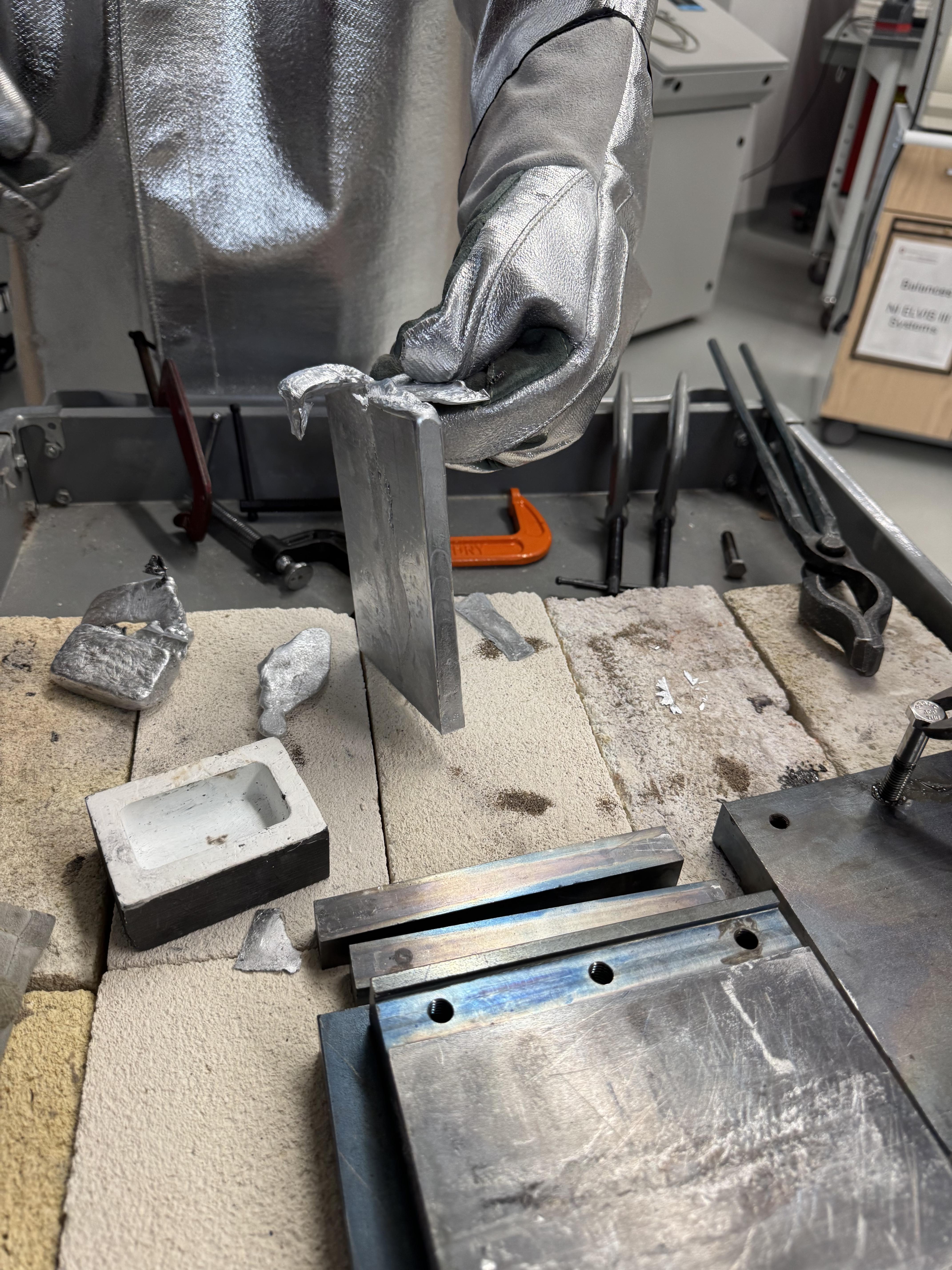


To start the casting process, the pure aluminum was placed in the crucible first. Once in the molten state, all components except for Mg were added. Shortly after, Mg was added, this was to ensure no bad reactions occurred. Once all components had molten together and the mold was prepared, crucible tongs were used to lift and pour the molten material into the mold. Appropriate safety precautions were made such as the gear seen in the video above. Once the metal had cooled and hardened, the billet was removed from the mold. The top section of the billet where the molten metal was poured was cut off to limit abnormalities within the billet.
Homogenization


The billet was homogenized in an oven at 520°C for 18 hours. The billet was then removed and cooled naturally in air.
Hot Rolling


To successfully hot roll the homogenized sample, the furnace's temperature was set to 480°C and roller temperature to 180°C. To satisfy tensile bar conditions the samples thickness needed to be less than 3mm. Starting with an original thickness of 12.45mm, the large billet was rolled in 2mm increments for 5 passes and then cut in half. Each half passed through the mill once more until the final thickness was achieved. Final thickness of the samples were 2.55mm and 2.67mm.
Heat Treatment

)


First, both samples underwent a solution heat treatment by being placed in an oven at 560°C. After 20 minutes, both samples were removed from the oven and then quenched in a bucket of water for several seconds. Following the solution heat treat both samples were then left to age in an oven at 205°C for an artificial aging heat treatment. After 50 minutes they were removed and cooled in air. The images above show the two samples.
Cold Rolling
The final step in thermomechanical processing for the samples was a small amount of cold rolling to slightly increase samples yield strength. After a few passes in the mill, the first sample thickness went from 2.55mm to 2.32mm, a 9.01% reduction. The second sample was rolled from 2.67mm to 2.47mm, a 7.49% reduction.
Metallography

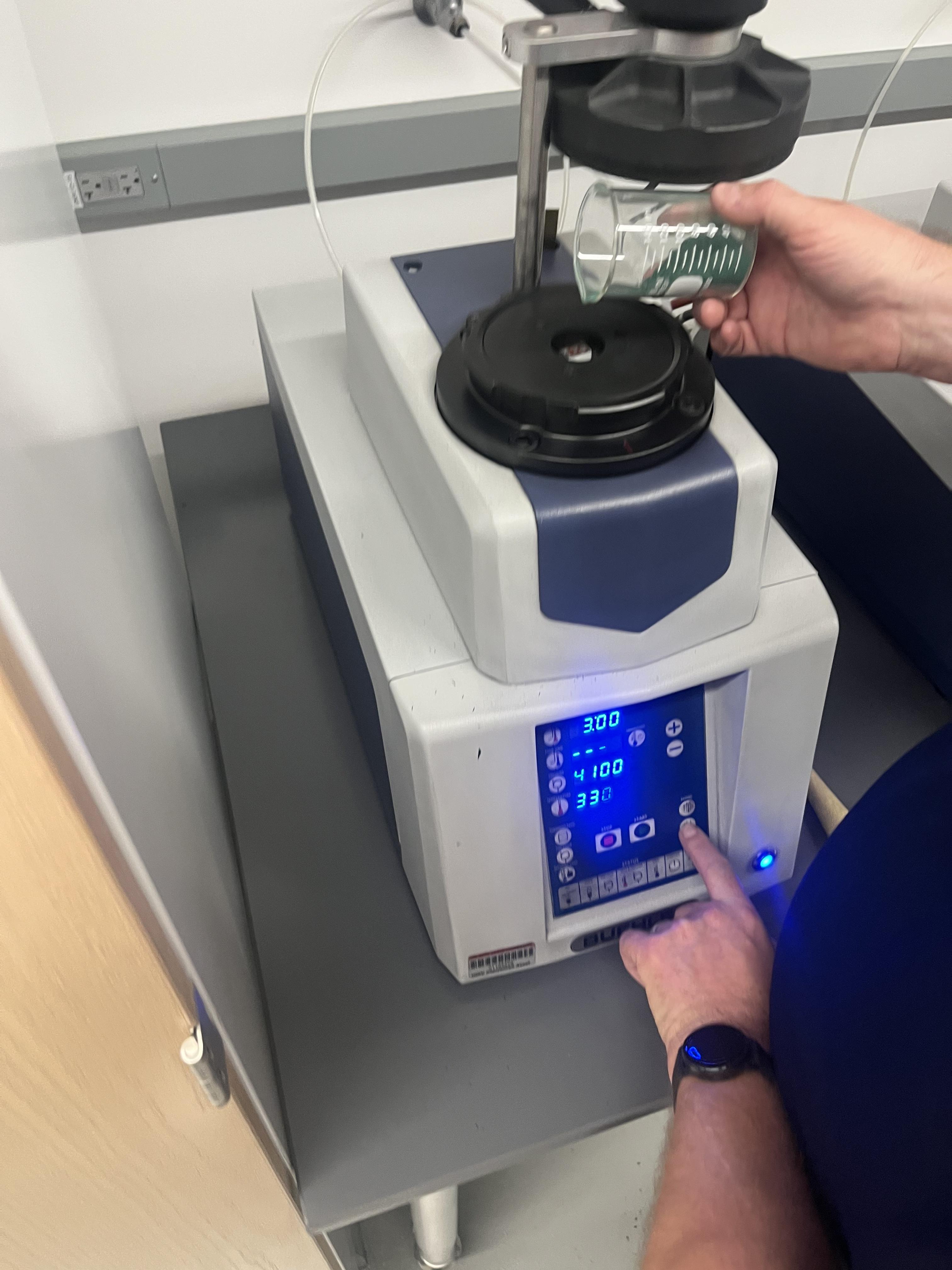


All samples were prepared for optical microscopy following ASTM E3-11 procedure. First, appropriately sized samples for metallography were cut using the saw from the as casted, homogenized, and final condition sample. Each sample was then mounted using the Buehler Mounting System and approximately 20g of Bakelite. Samples were then grinded in the order of 125, 240, 320, 400, 600 grit sand paper being rinsed between each paper. Samples were then polished on a metallographic polishing wheel in the order of 6um diamond paste with diamond extender, 3um diamond paste with diamond extender, and a final polish with 0.05um colloidal silica. Between each polish the mount was rinsed with water, ethanol, and dried using warm air.
After initial optical microscopy, the homogenized and final condition mounts were etched using the Papageorge 2-Step Etching Procedure which uses a modified Keller's and Wick's reagent. The 6010 aluminum mounts followed the etching procedure of the 6061 T6 aluminum in the literature. Etching reveals the grain structure of the sample under optical microscopy.
Optical Microscopy
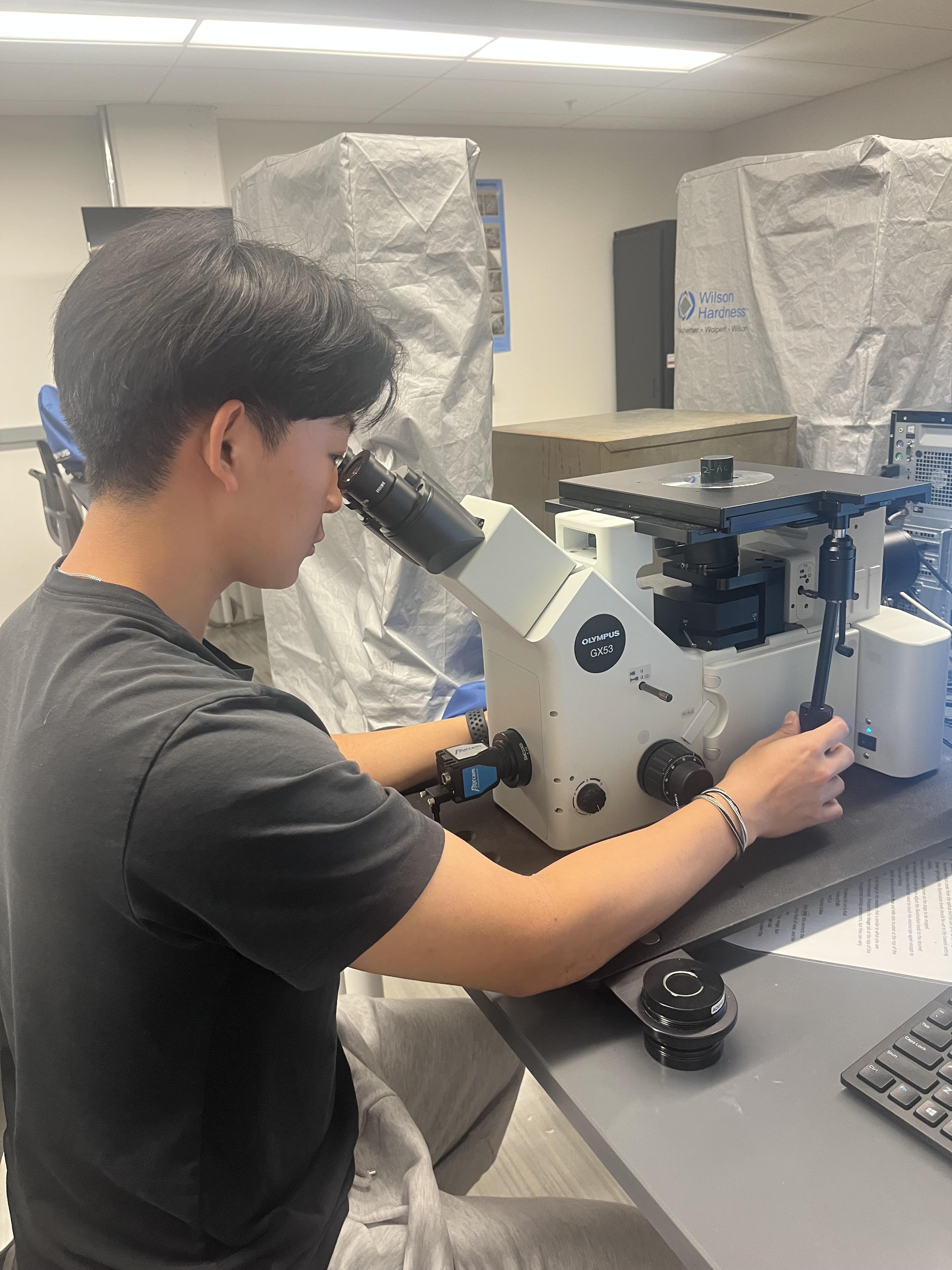


An optical microscope was used in brightfield mode alongside a PAXcam camera and its software to capture images of each sample. Each sample had multiple images captured at 100x, 200x, 500x, and 1000x magnification to capture the difference at each step. The images above show unetched and etched images of the final condition sample at 100x and 500x. It is important to note for final condition sample the etching process was unsuccessful and grains did not become as clear as expected, though the cause of failure is unknown.
Tensile Bar Fabrication
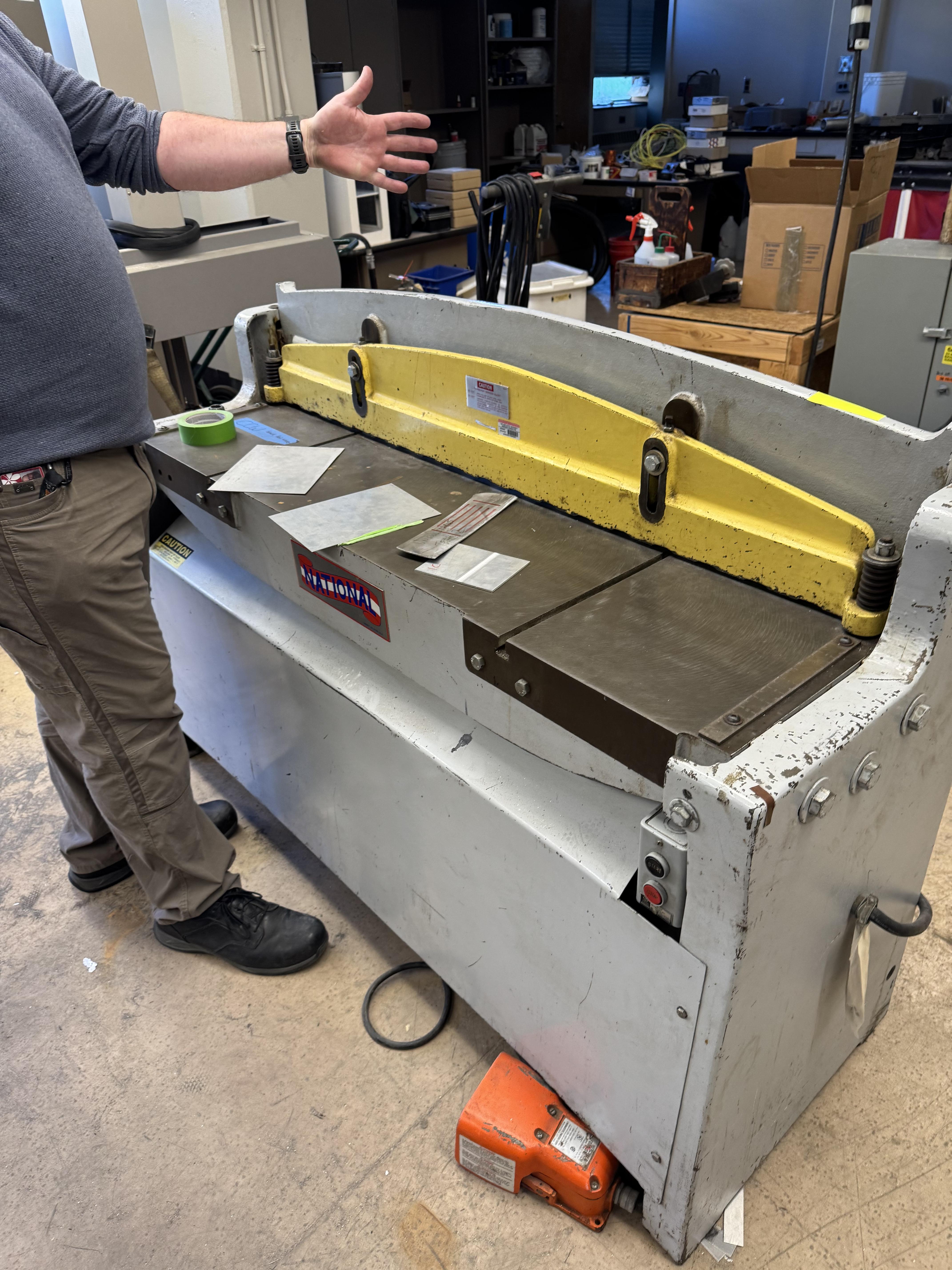

)

To create tensile bars for testing, the mechanical shear was used to cut rectangular pieces from the final condition piece of aluminum. The rectangular pieces were then loaded into the tensile bar vice which was used as a guide to cut out the tensile bars using the shaper. Finally, the tensile bars were unloaded from the vice and ready for testing.
Testing

)

Electrical conductivity test were done by cleaning the surface of the tensile bar and using an electrical conductivity meter tester. To measure elongation at fracture and yield strength, the tensile bar was loaded into the MTS electromechanical test system shown in the above image. For the competition, the team chose a single tensile bar to compare and compete against other the aluminum alloys of the other groups. The results of the competition for Group 2's 6010 tensile bar are shown above.
For the competition, each category was scored on a scale of 100. The group who had the best test in that category received an 100 while other groups received a score proportional to them. Scores for each team were totaled by multiplying the score of each category. Group 2's 6010 aluminum alloy received third place overall.
Corrosion


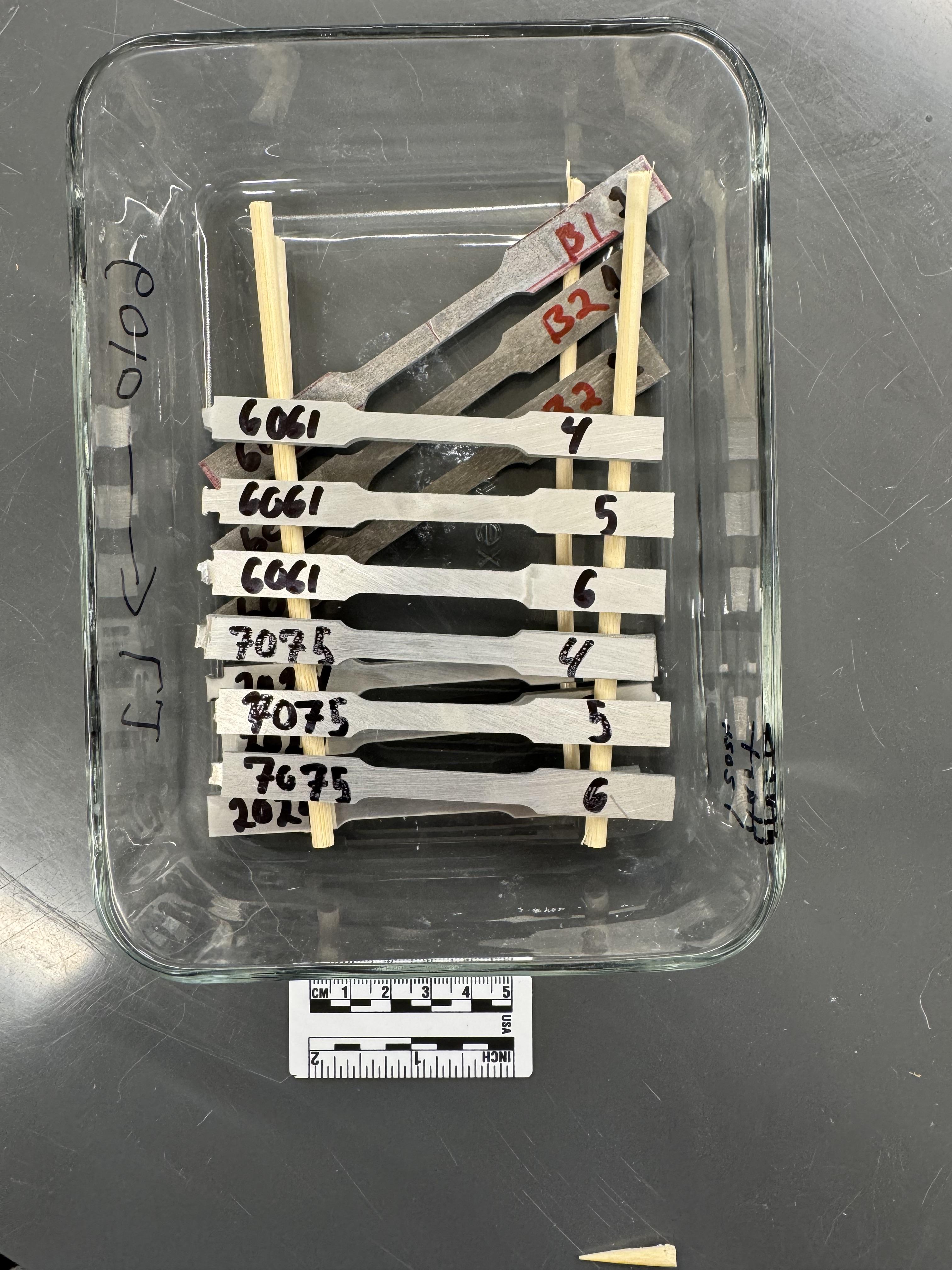
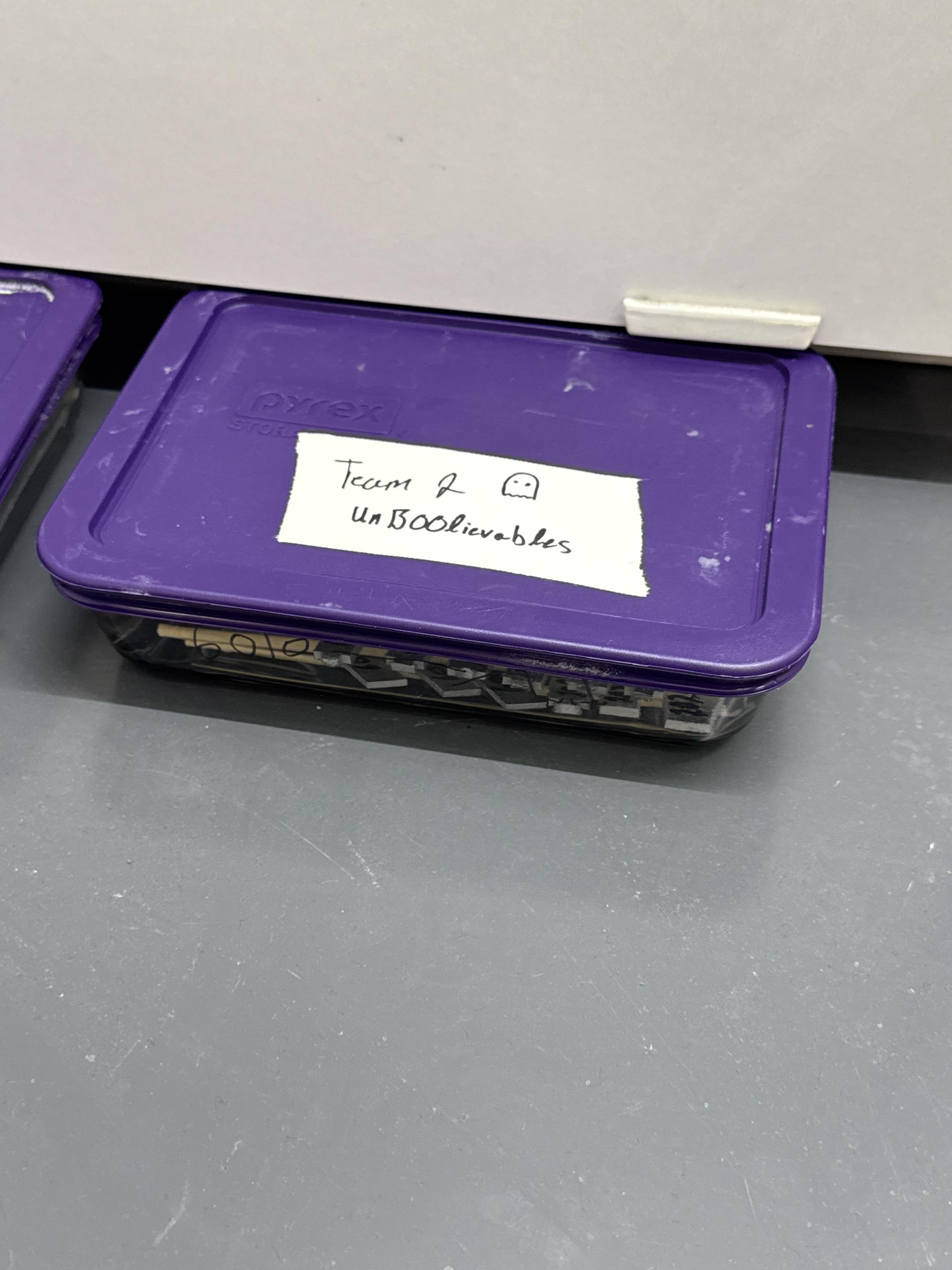


The corrosion test included three different commercial Al alloys alongside the groups 6010. The commercial aluminum alloys were 2024, 6061, and 7075. Each alloy had three tensile bars. The width, thickness, and mass were recorded for each bar and then were added in a salt-water container. After two weeks, they were cleaned, rinsed, and new measurements were taken. Additionally, they were tested using the MTS electromechanical test system and compared to nominal. Comparing results, the 6061 corrodes the least while 2024 corroded the most as it saw the largest change in values. This was the final step in the aluminum alloy design competition.