3D Printed Prosthetic Model
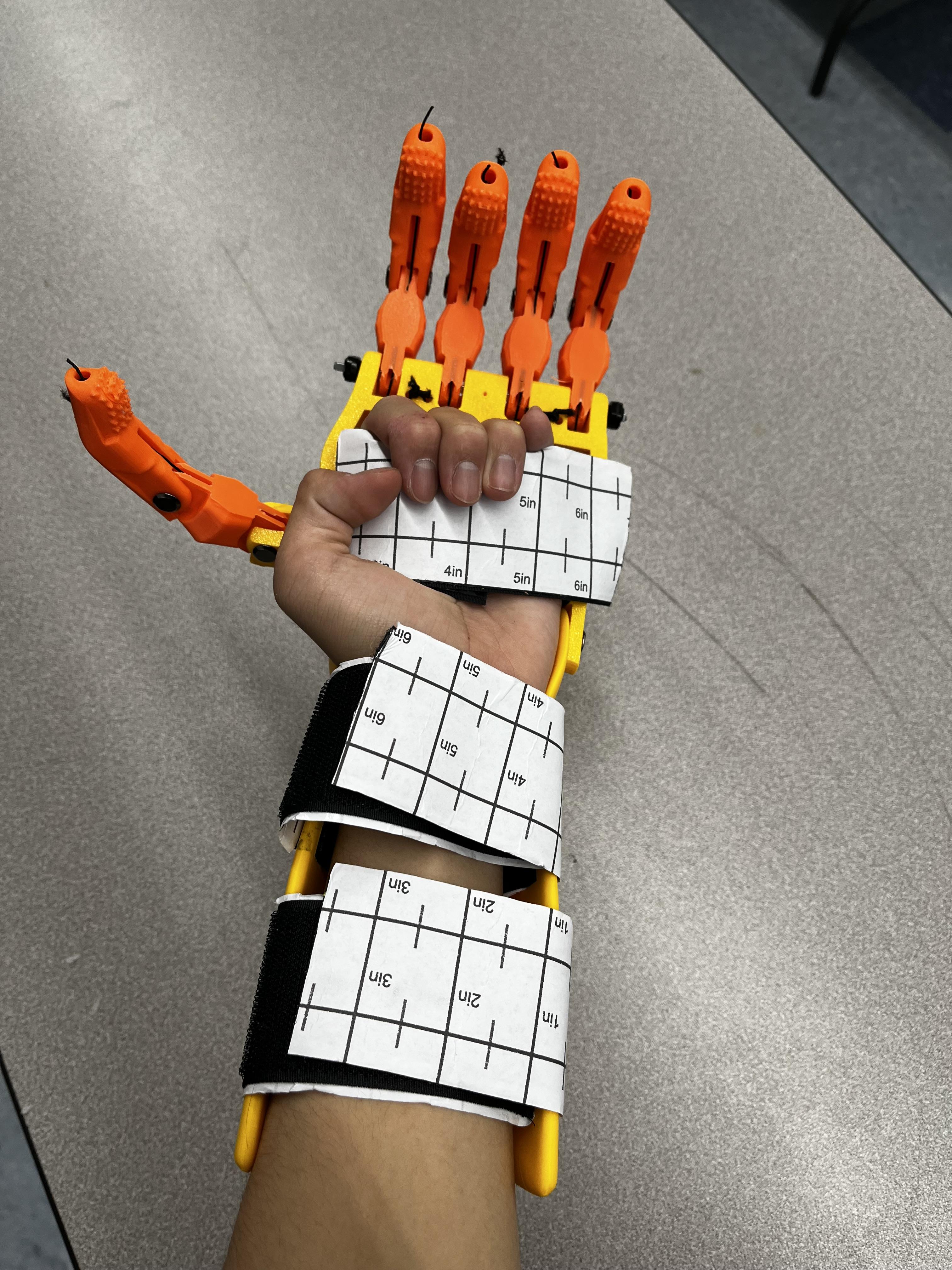
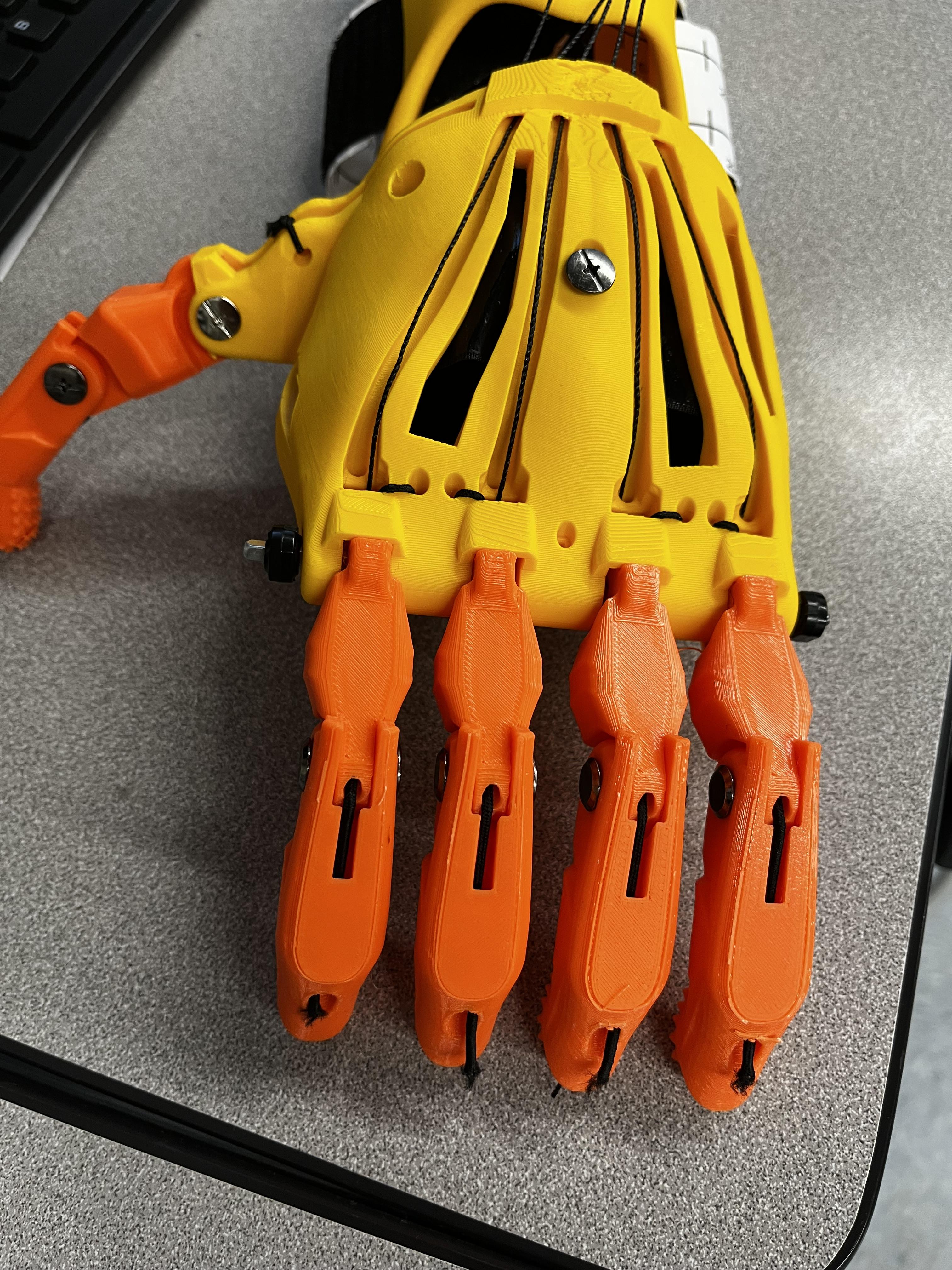
According to the World Health Organization, only 1 in 10 people who need assistive products, like prosthetic limbs, actually have access to them. This is due to a multitude of reasons such as high costs and a lack of accessibility, awareness, and resources. Traditional prosthetic arms can cost thousands of dollars for anything with remotely decent quality. This places even the idea of them out of reach for individuals with disabilities who rely on the product and especially medical students struggling financially who are studying the technology or how it aids others. The problem we tried to address with our project is the financial barrier that limits easy access. Our project explores the development of a 3D printed alternative prosthetic arm model designed to be affordable, customizable, and accessible for a larger amount of people.
By Nathan D, Srikar K, and Vedant T.
Supplies


Pieces
- Finger Phalanges
- Fingers and Thumbs with bumps to allow for a strong grip
- Palm Mold
- Wrist/Arm Gauntlet with velcro slits
- Tensioner Bricks
Materials
- Stainless Steel Chicago Screws - 3" to 3¼" 1 needed per hand, ³⁄₁₆" or ¼" 6 needed per gauntlet, ⅜" 2 needed for wrist hinge, ½" 5 needed for fingers.
- Velcro 30' x 2" or around 24" inches
- Shade/Life Cord .9mm
- Elastic Bead Cord 2mm
- Optional: Padding, Arm sleeves (both for comfortability during use)
Understanding the Mechanism of a Prosthetic

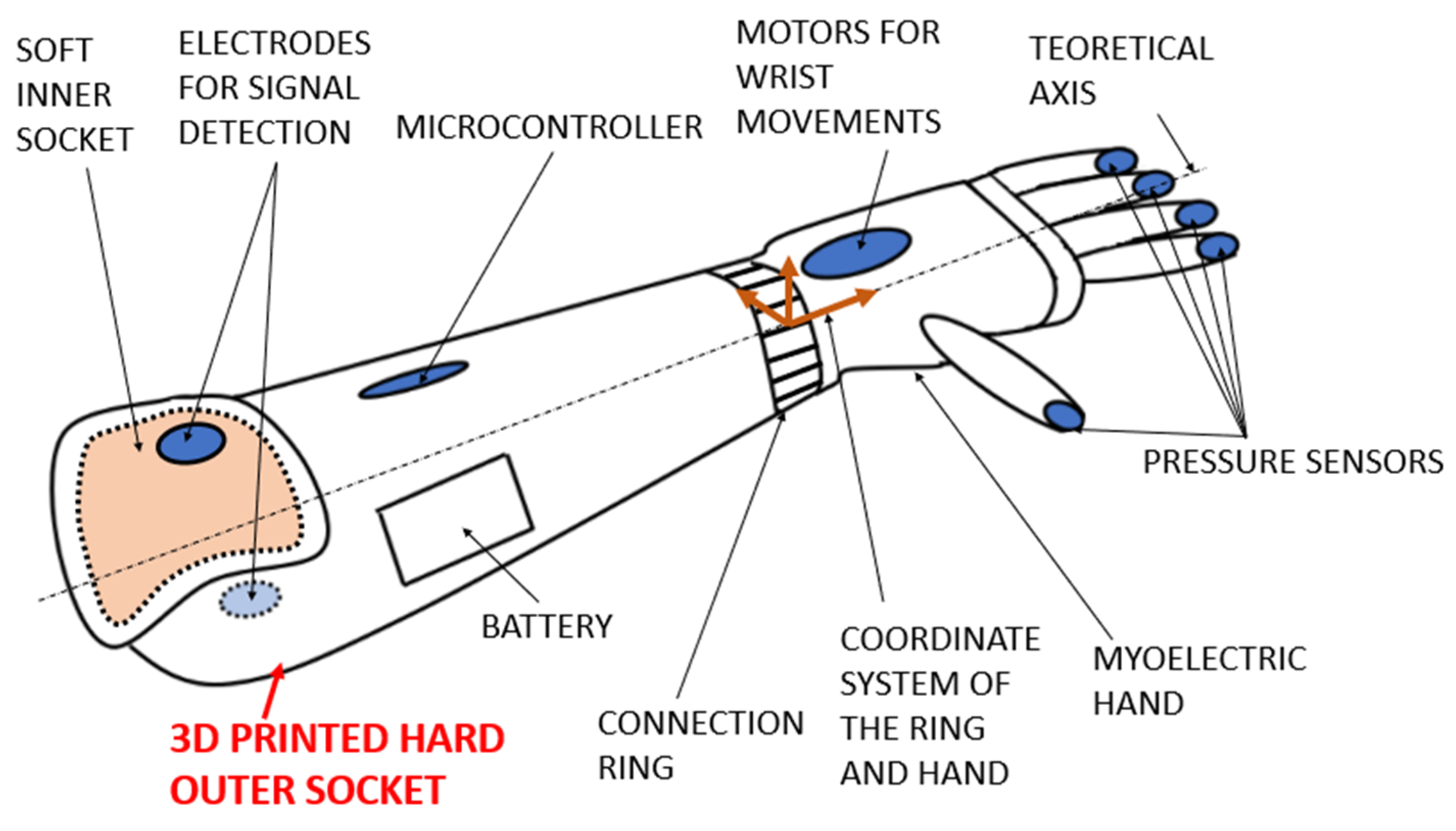
Our first step in addressing the issue of financial barriers that make prosthetics less accessible is understanding what makes them so expensive. Through research from the World Health Organization, medical research papers such as those from the Cleveland Clinic, and engineering videos online, we came to the understanding that the intricate mechanisms, expensive, comfortable materials, and hefty manufacturing costs all contributed to the high prices of prosthetic arms. Additionally, many arms are tailored to the specific needs of individual patients. Each patient has different sized limbs, specific wants, and different uses for their prosthetic. Creating one that satisfies a patient is no short term task and no corners should ever be cut. However prosthetic models like the one we want to create allow anyone to simply understand the mechanisms behind a prosthetic or learn how it could affect the lives of others
First Prototype


For our initial prototype, we decided to research compatible files that related to the idea we wanted to achieve. We looked through Thingiverse and Google and ultimately stumbled upon various versions of hand prosthetic pieces which inspired us to create and make specific parts in our own design. The hardest part of our design was adjusting the scaling in the final product, fixing the hole sizes, and making sure the files were compatible with the cheaper filaments we planned to use.
Further Adujustments


After printing out and analyzing the pieces, we realized they needed further work. We had a specific plan on how to construct the hand to make it functional and we needed to make further adjustments to make those goals a reality. We made 2 major adjustments. We imported the files back into fusion and cut out slitted sections on the wrist gauntlet in order to allow adhesive velcro tape we purchased to easily slide in and out of the area. Moreover, we chose to include tensioner bricks that were labeled as optional in order to make sure the string we used could be as tight as possible. We imported them to fusion, adjusted the hole sizes to fit the size of the string and scaled it up to the correct size once we exported it. After we printed out these new pieces at a scale larger than the original, we attempted to construct the prosthetic to fit anybody that tried it on. We realized that with our current scaling, it wouldn't fit even our teammate. We finally decided on a scale of 173.95%, basing it on the size of Srikar's arm and wrist.
Final Construction
Finally, we were able to print out the proper pieces at the proper scale with the proper materials after encountering many other unmentioned challenges such as a lack of access to printers and print failures. We utilized the materials and pieces listed previously to construct our hand prosthetic. It is designed to sit on top of a users forearm and closed fist in order to allow anyone, especially medical students who struggle to gain access to a real prosthetic, the chance to feel what it is like to be in these unfortunate scenarios. Due to the tension of the strings, the fingers can close and open at will, allowing the user to control the arm as if it were really attached to their body. With our final product we finally achieved our goal of addressing a problem that we felt strongly about.