Aluminum Alloy Design- 6009 Series
by kzxiao16 in Workshop > Metalworking
78 Views, 0 Favorites, 0 Comments
Aluminum Alloy Design- 6009 Series

The purpose of this competition, in our Material Science and Engineering 3331 Lab, is to create an aluminum alloy by casting and thermomechanical processing.
Criteria:
1. Alloy must be at least 90.0% aluminum.
2. Maximize the 0.2% offset yield strength (YS)
3. Maximize the total elongation (%EL)
4. Maximize the electrical conductivity
5. Thickness of final material for testing during the competition must be in the range of 2 - 3 mm
Aim is to have the highest comparative multiple of 0.2% offset yield strength, electrical conductivity and elongation. Team with highest score out of 1,000,000 will win the competition.
Supplies
Materials Available:
• Aluminum (Al)
• Silicon (Si)
• Magnesium (Mg)
• Iron (Fe)
• Nickel (Ni)
• Copper (Cu)
• Zinc (Zn)
• Titanium (Ti)
• Chromium (Cr)
• Manganese (Mn)
Note: 90%≤ of alloy should be Aluminum. No minimum requirement for any other material. No other material permitted.
Thermomechanical Processes Available:
• Hot Rolling
• Cold Rolling
• Homogenization
• Annealing
• Solution Heat Treating
• Aging
Alloy Selection


Our criteria's to select an alloy were:
• 0.2% Yield Strength > 310 MPa
• Elongation > 8%
• Electrical Conductivity > 40%
• Simple thermomechanical processes
The goal of this aluminum alloy design competition is to develop an alloy that simultaneously satisfies high yield strength, elongation, and electrical conductivity. As a result of the Granta CES analysis, the 7xxx series has excellent strength, but the elongation is low, and the 2xxx series has a lot of copper, which greatly reduced electrical conductivity. The 8xxx series contains insufficient aluminum content and the three properties did not achieve the required balance. The 5xxx and 3xxx series showed excellent characteristics, but the trade-off between electrical conductivity and strength was large. On the other hand, the 6xxx series has the best balance of three performances, and in particular, the 6009-T6 alloy showed high yield strength and elongation relative to its electrical conductivity and was finally selected. Through this, Si was maintained at about 0.9 wt.% and Mg2Si formation was promoted, and Mg was set at 0.6 wt.%. Cu was limited to about 0.20 wt.% to prevent a decrease in conductivity, and Fe was adjusted to about 0.15 wt.% to help to promote grain refinement. A small amount of Cr, Ti, and Ni was added to induce crystal grain control and strength improvement. Thus we selected 6009 - T651 as it matched or surpassed our criteria's.
Casting


The materials were adjusted to a total of 750g according to the crucible available. After all materials were weighed out, they were added to the crucible set at 660°C until all materials had melted. The liquid alloy was poured into a mold to cool.
Homogenization

The mold was cut due to a crack which formed at the top due to error while pouring liquid alloy in the mold. The unaffected piece was kept to homogenize in an oven at 558°C for 10 hours and air cooled. No cracks or deformations were observed post homogenization. The piece was further cut into 2 pieces for further processes.
Hot Rolling
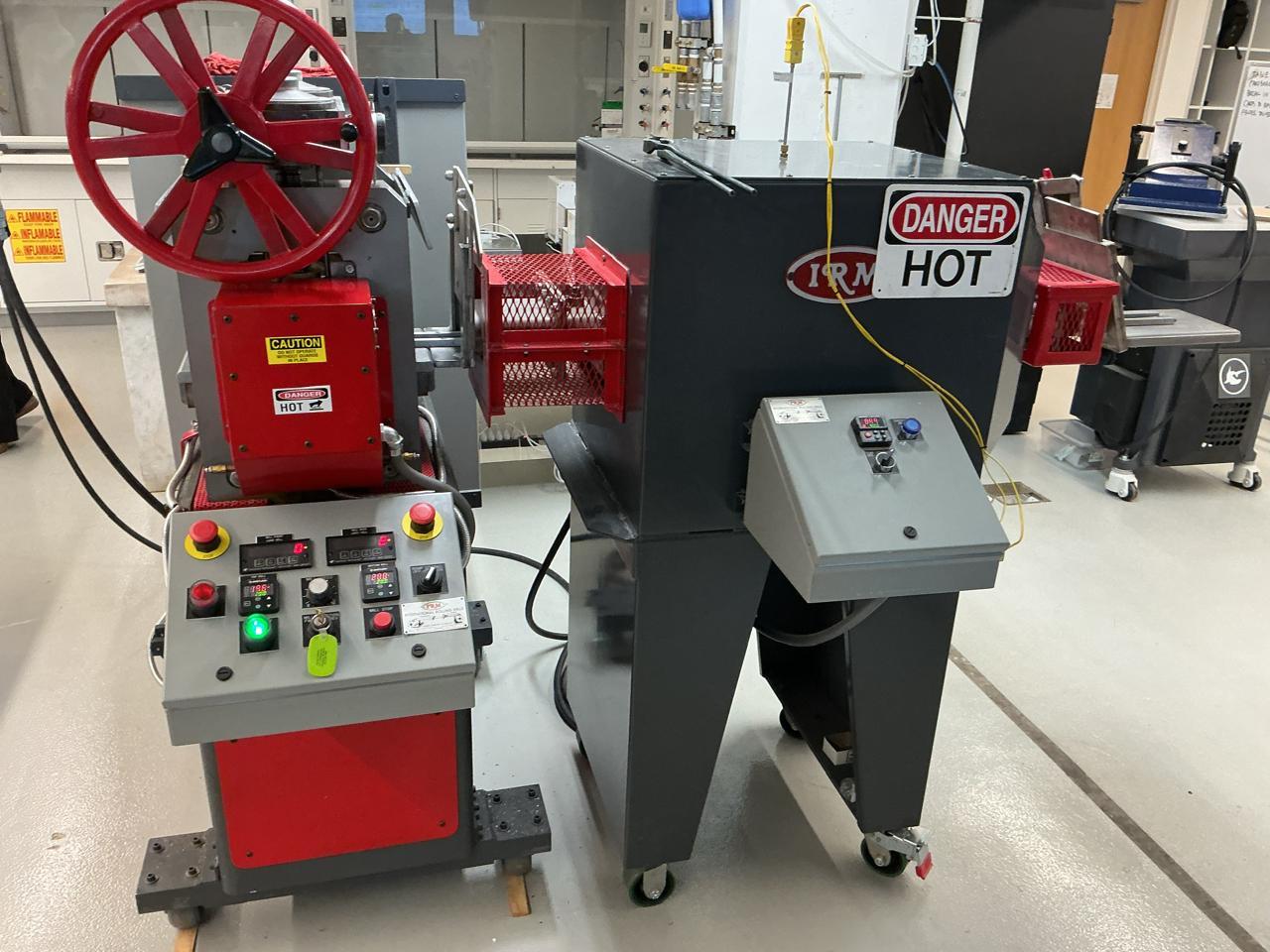
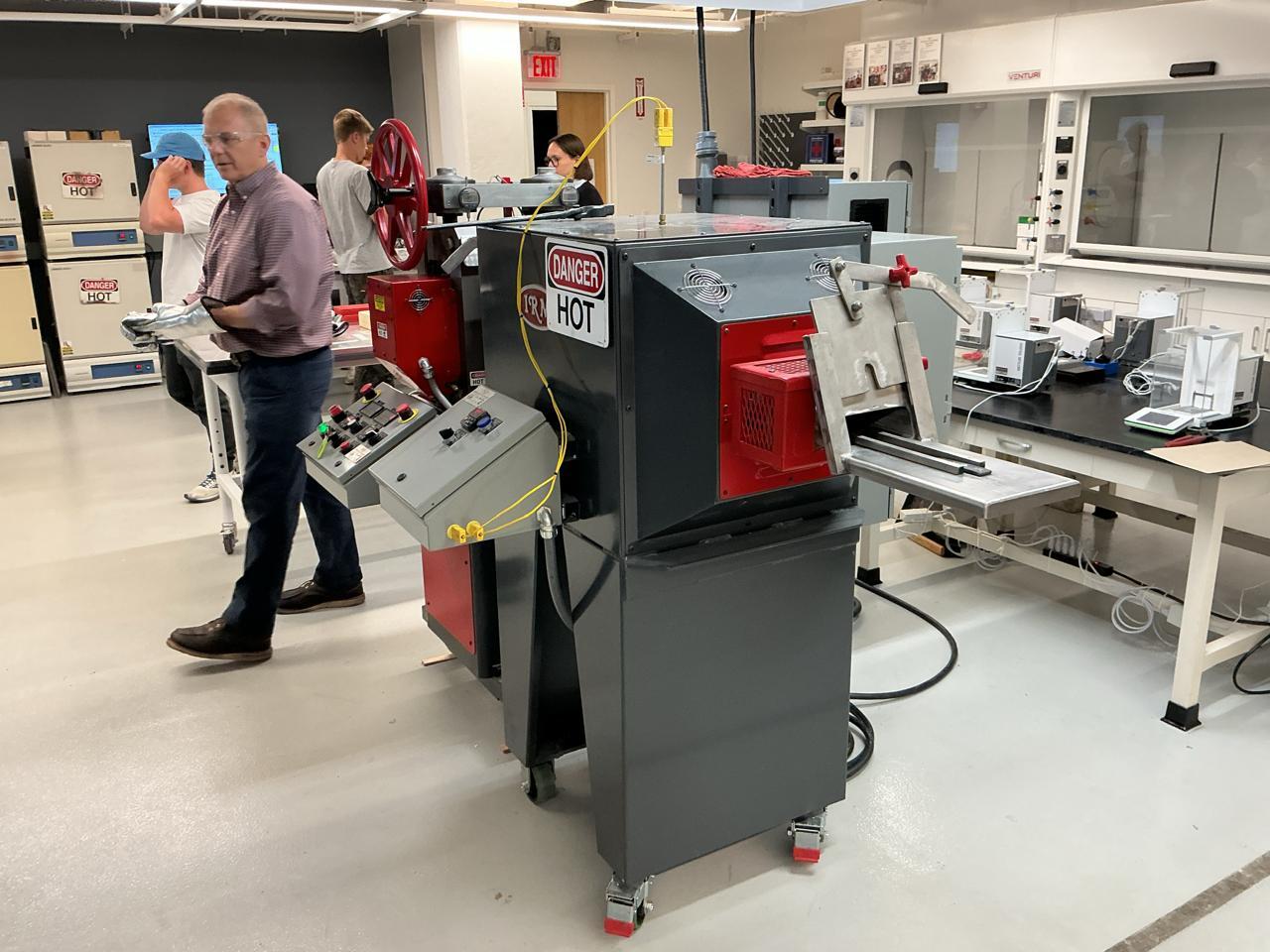
The pieces were preheated to 490°C.
Piece 1 was heat rolled from 12.75mm average thickness to 5.05mm thickness.
Piece 2 was heat rolled from 12.75mm average thickness to 4.40mm thickness.
Both pieces were subjected to 1mm passes until 6.5mm and passes were reduced to 0.5mm or less.
Both pieces were flat and showed no cracking or other defects, post hot rolling.
Cold Rolling
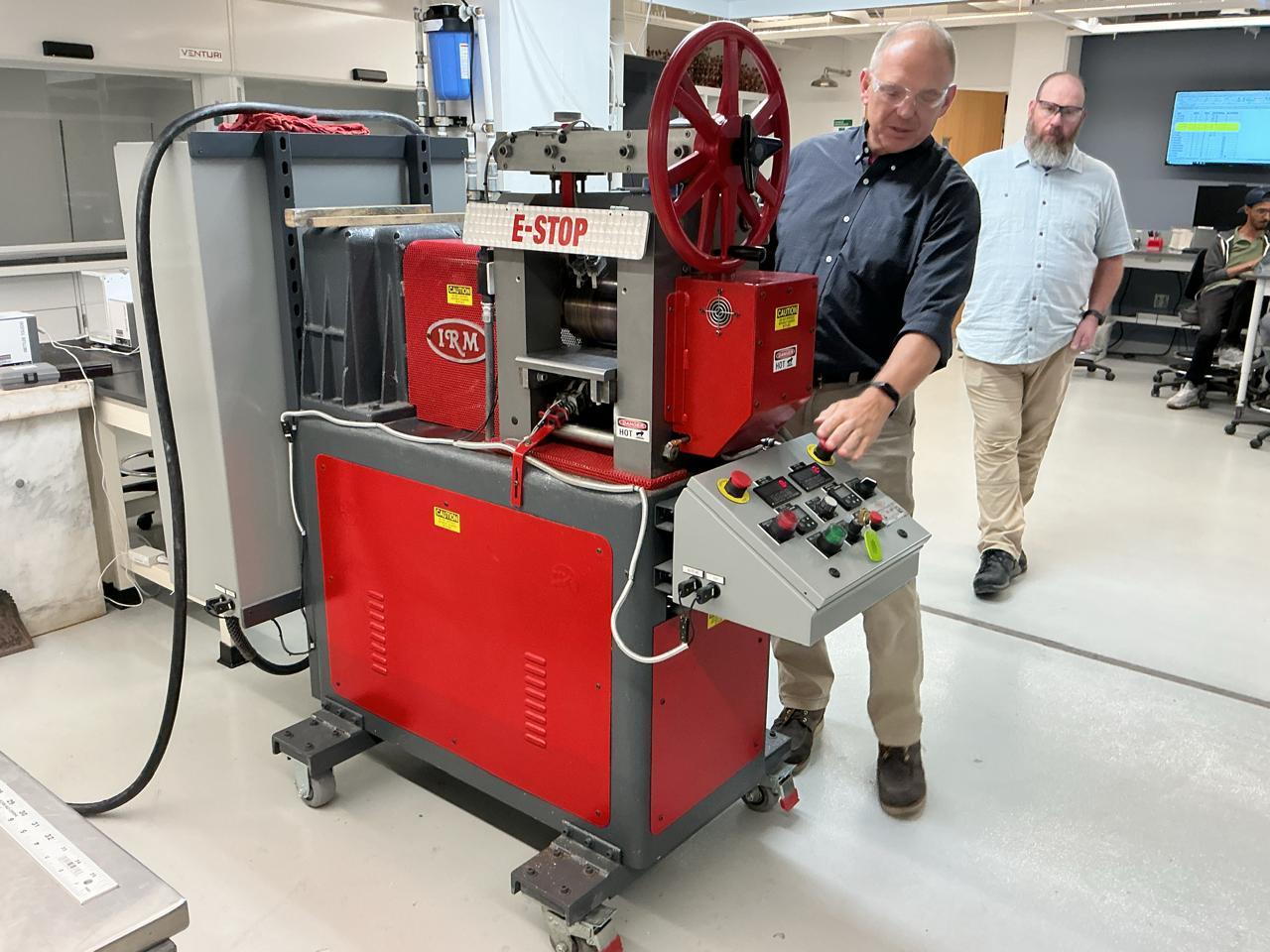

Piece 1 was cold rolled from 5.05mm average thickness to 2.50mm thickness.
Piece 2 was heat rolled from 4.40mm average thickness to 2.45mm thickness.
Both pieces were subjected to 0.5mm passes.
Both pieces were flat and showed no cracking or other defects, post cold rolling.
Heat Treat, Quenching and Aging
Both pieces were heat treated by placing in an oven at 540°C.
They were quenched by placing in water directly after taking out of the oven.
Further, they were stretched(cold rolled) by ~0.1mm to relieve internal stresses.
Both pieces were aged in an oven for 8 hours at 175°C.
After all processes, all pieces did not show any cracking or physical defects.
Tensile Bars and Testing

The samples were cut into multiple tensile bars which we tested hardness, electrical conductivity, elongation, and 0.2% offset yield strength. Each sample was sheared and milled using a template to get a tensile bar shape for testing elongation and yield strength
Hardness Testing
Hardness tests were done on the HRH scale for the as cast and homogenized samples while the final sample was done on the HRB scale. We tested 5 random points for each sample to take an average reading.
Hardness for as cast (HRH): 84.46
Hardness for homogenized (HRH): 68.66
Hardness for final (HRB): 42.24
Electrical Conductivity
All 3 samples were ground to remove any surface contamination that could affect the readings and to provide a flat surface for the tester to maximize contact with the sample. The tester has to be calibrated before any testing, and we tested 15 different points on the sample to take an average reading.
As cast: 38.35
Homogenized: 47.66
Final: 43.06
Elongation/Yield Strength
Our samples were put into the tensile testing machine, and an extensometer was attached. Data was obtained from the TWS Elite software and the MTS tensile testing machine.
Elongation (Piece 1): 10.2%
Elongation (Piece 2): 12.5%
MPa (Piece 1): 125MPa
MPa (Piece 2): 116 MPa
The values from the samples we tested exceeded our elongation and electrical conductivity expectations but were less than half of the yield strength that we expected to achieve.
Metallography


Samples were made for the as cast, homogenized, and final steps in our alloy process. All samples were mounted using Bakelite powder, ground, and polished to a mirror finish. The homogenized and final samples have both etched and non-etched metallography pictures.
Etching
Etching the samples provides detailed orientations of grain boundaries, crystals, and grain size and distribution by revealing the internal microstructure. This process highlights the sample so that we can better see defects, different phases, and precipitates by highlighting the contrast between them. This process was only done for the homogenized and final samples.
As Cast Metallography


The as cast metallographic images showed good grain structure with distinct boundaries between the alloying elements. The grains are not equiaxed and have varying sizes from when it solidified. The different alloying elements can be seen in the 1000x magnification.
Homogenized Metallography


The homogenized sample showed less distinction between the alloying components. The elements were more incorporated into the sample after our processing which allowed the atoms to diffuse more evenly. The refined microstructure helps the hot rolling and cold rolling processes produce more equiaxed and stretched grains respectively.
Etched sample
The higher contrast shows the distinct phases and alloying components. It shows that after homogenizing; the elements have diffused into the main grain structure while still maintaining the grain boundaries.
Final Metallography


After final processing, the samples without etching show little to no defects and no distinct grains that would indicate poor ductility or yield strength. The samples show the grains have an even distribution of the alloying components compared to the as cast and homogenized samples.
Etched
Final etched samples show a more equiaxed grain structure compared to the homogenized and as cast samples and shows the larger chunks or alloying elements distributed within the grains. The larger chunks of elements could have made our sample have less yields strength.
Competition Sample


We used a tensile bar from piece 2. Our final results were 122.0 MPa , 47.5% Electrical Conductivity, 14.2% Elongation. We were the highest for elongation and second highest for electrical conductivity, but 8th position for yield strength. This was the best tensile bar compared to the one's we had tested. Our result got us 6th position in the competition overall
Summary and Conclusion
The 6009 alloy was selected for the Aluminum Alloy Design Competition in order to maximize yield strength, total elongation, and electrical conductivity. After casting their alloy, there was a crack in which we had to cut a large chunk of the sample off. The sample was then homogenized at 558°C for 10 hours. After homogenization was complete, the sample underwent hot rolling, where the sample was held at 490°C, and then cold rolling in order to relieve internal stresses. The samples were then heat treated in an oven at 540°C, and then quenched in water immediately after taking them out of the oven.
The samples were cut into tensile bars so they can undergo hardness, electrical conductivity, and elongation/yield strength testing. The final statistics were 122.0 MPa yield strength, 47.5% electrical conductivity, and 14.2% elongation.
Our projected scores were 320MPa yield strength, 43% electrical conductivity and 8.5% elongation. On consulting with faculty, we were told that there could be 2 reasons: 1) Gases trapped while casting; 2) Fe(Iron) not homogenizing throughout the alloy. Potential solutions could be to heat roll the alloy more to remove all gases trapped which would increase yield strength.
The best thing to do to optimize all of the properties is tune the heat treatment process, and then after do a small amount of cold working for more strain hardening. These two processes will increase the yield strength of the alloy, creating a better overall balance of the material's properties.