Aluminum Alloy Design Competition 2025 Frankenstein's Alloy Al 6009T6
by FrankensteinsAlloyTeam9 in Workshop > Metalworking
18 Views, 0 Favorites, 0 Comments
Aluminum Alloy Design Competition 2025 Frankenstein's Alloy Al 6009T6
The aluminum alloy design competition is a annual competition between junior materials science and engineering students where a teams select and produce a custom Aluminum alloy and put it to the test against the other teams produced alloys.
Rules of the competition:
- Alloy must be at least 90.0% Aluminum.
- Final thickness must be between 2-3mm.
Goals:
- Maximize 0.2% offset yield strength
- Maximize the total elongation
- Maximize the electrical conductivity
Scoring:
Highest yield strength, elongation, and electrical conductivity will be assigned 100 points and all scores will be normalized based on the 100 point sample. The product of all three scores will determine the winner.
Supplies
Alloying Material Compositions:
Aluminum -> Commercially Pure Aluminum Pieces and Shot
Copper -> 99.9% Cu (Shot)
Zinc -> 99.9% Zn (Shot
Silicon -> 50% Si - 50% Al
Magnesium-> 50% Mg - 50% Al
Iron -> 10% Fe - 90% Al
Titanium -> 6% Ti - 94% Al
Nickel -> 20% Ni - 80% Al
Chromium -> 20% Cr - 80% Al
Manganese -> 60% Mn - 40% Al
Equipment:
Induction Furnace
Mold
Pre-Heating Furnace
Rolling Mill
Heat Treatment Furnace
Imaging-capable optical Microscope
Electrical Conductivity Tester
Tensile Tester
Metallography equipment
Band saw
Tensile bar shaped die
Alloy Selection


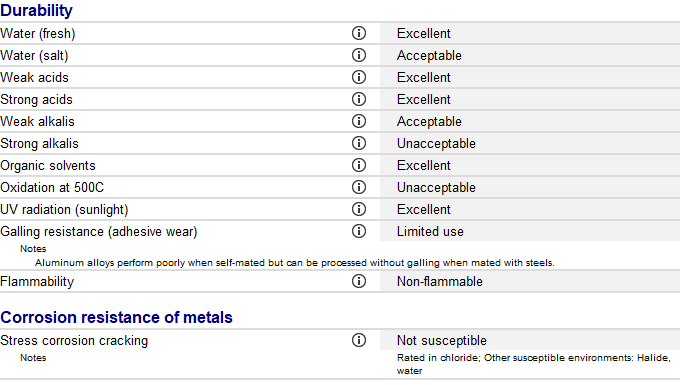
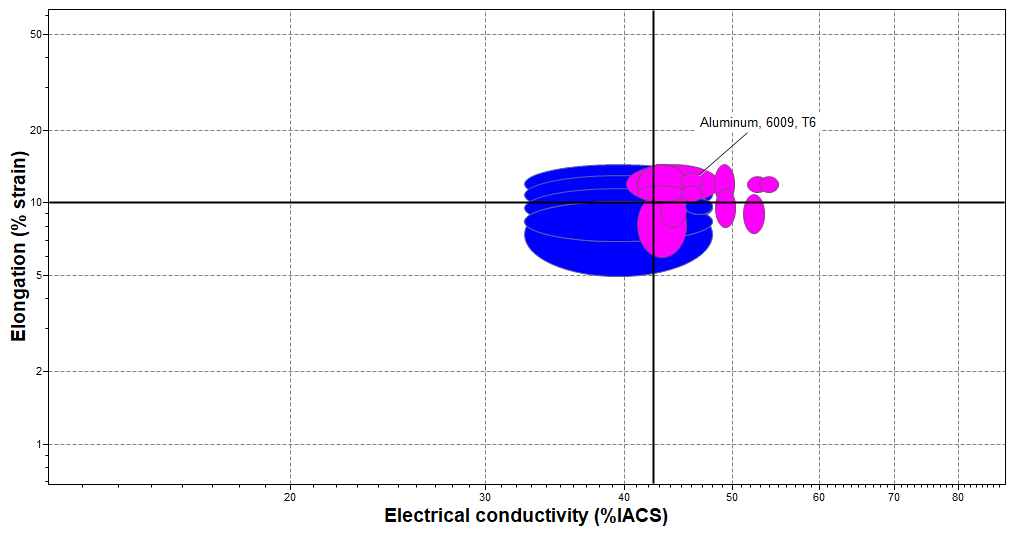

The 6009-T6 alloy was selected by the team for its above average performance in the categories being tested (yield strength, percent elongation, electrical conductivity, and corrosion resistance). The weight percent composition of the alloy is 96.8% Al, 0.6% Cu, 0.8% Mg, 0.8% Mn, and 1% Si. The idea behind the composition being high weight percent Al would provide above average percent strain (elongation) and above average conductivity while the temper would provide yield strength. The 6009 alloy was also chosen due to its more forgiving nature in thermomechanical processing.
Thermomechanical Processing Selection
For the 6009 alloy, the first choice was to run an extended homogenization at about 570 °C. That temperature and timeframe were picked to clean up the segregation left from casting and dissolve any coarse phases, giving the billet a more even start before any deformation.
Hot rolling was selected for the deformation step. Since 6000-series alloys recover and partially recrystallize during high-temperature rolling, this approach avoids the severe strain hardening that happens in cold rolling. The goal was to break up the cast structure and refine the grains while still keeping good ductility and elongation.
To begin the T6 temper, a solution heat treatment at 550 °C for roughly forty minutes was chosen. This temperature is high enough to pull the strengthening elements (mainly Mg and Si) back into solid solution without risking approaching the melting point. A rapid quench afterward sets the alloy into the state needed for aging.
For the final strengthening step, artificial aging at 190 °C for four hours was carefully selected. This aging condition produces a fine distribution of precipitates, which are responsible for the T6-level strength in 6000-series alloys, without over aging the sample.
Casting
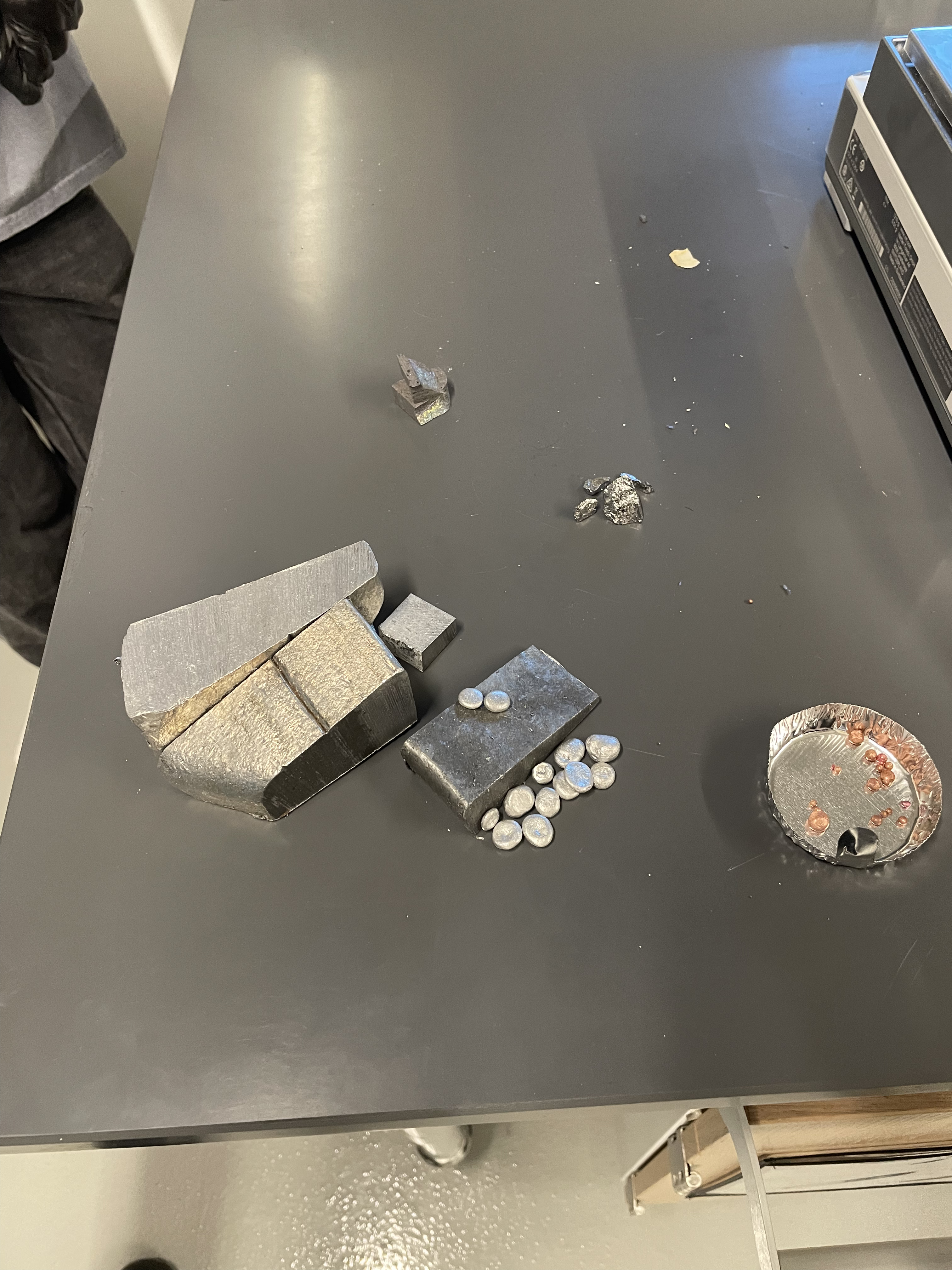

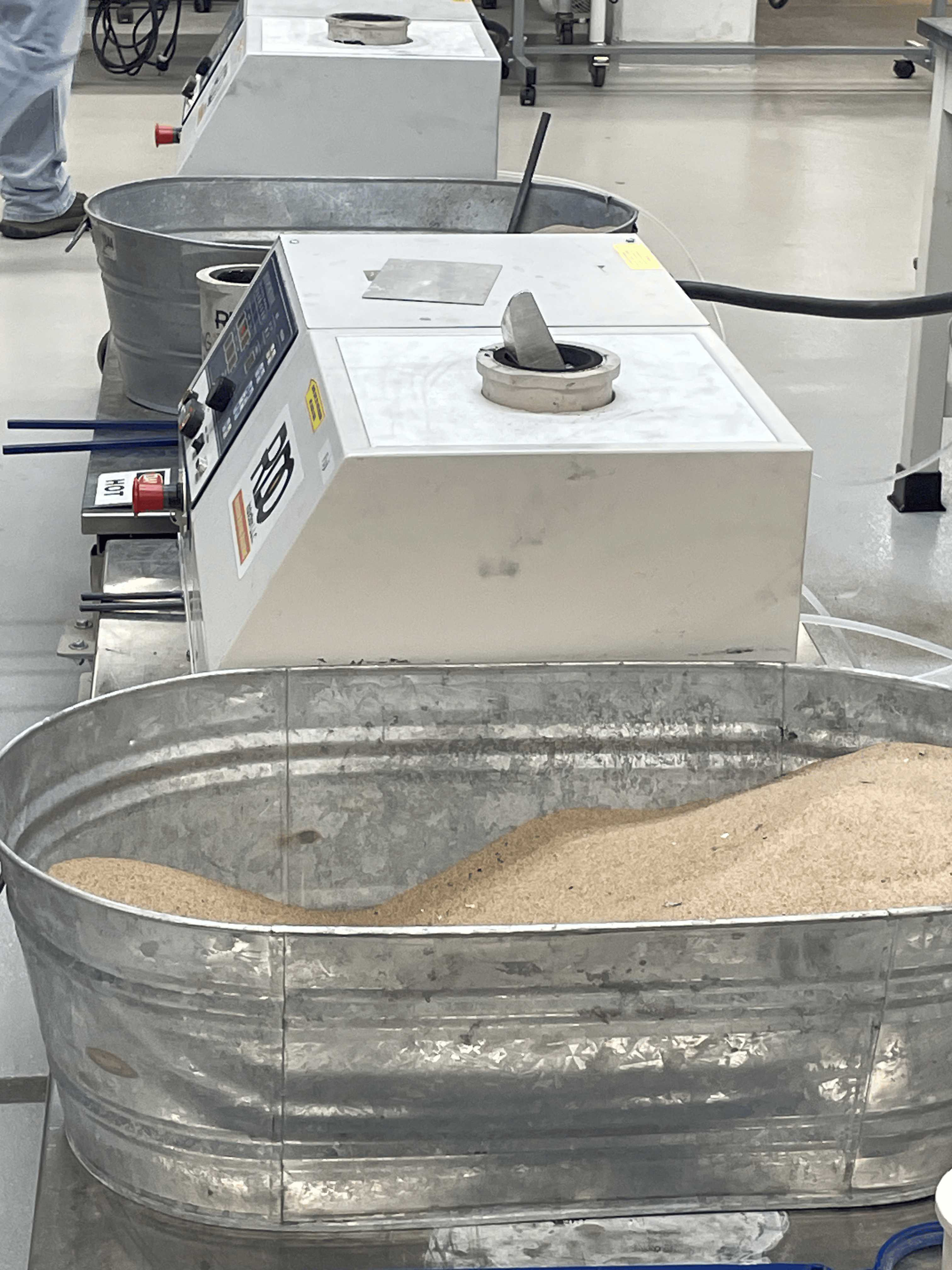

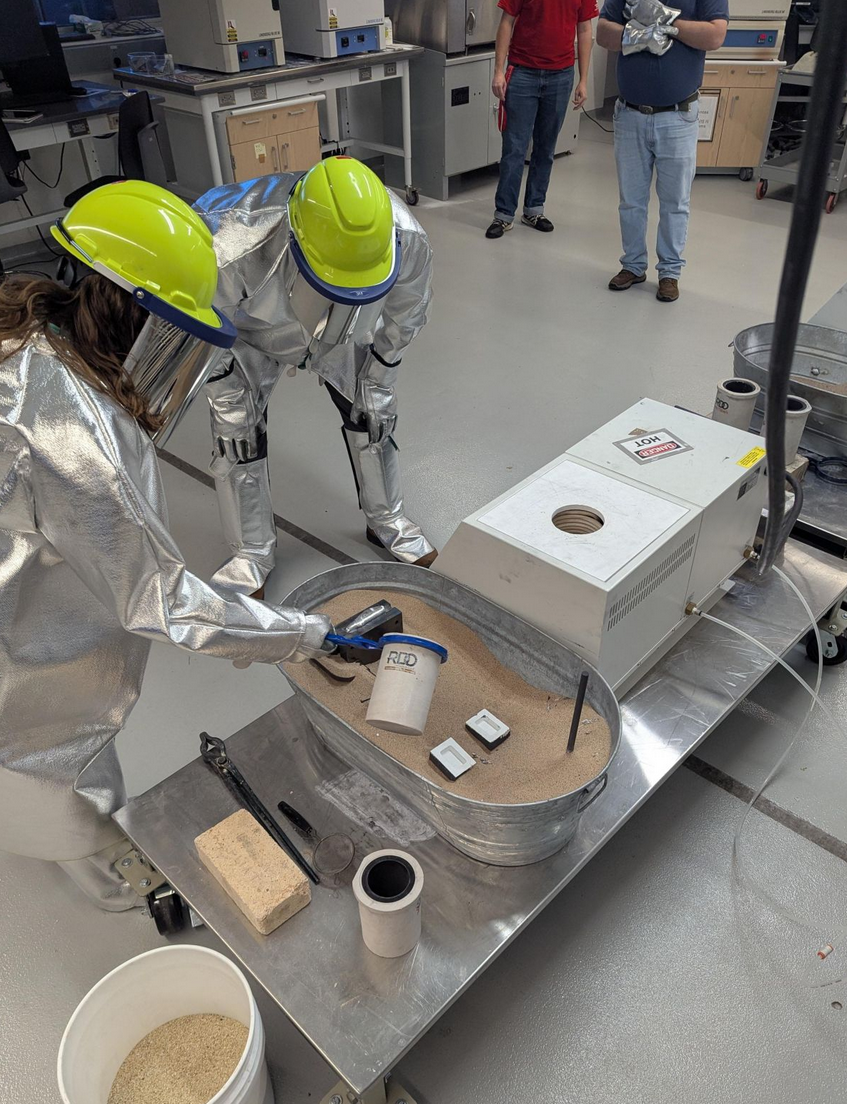
The master alloys chosen in step 1 were measured out and prepared to be added into an induction furnace. Magnesium had to be wrapped in aluminum foil to avoid a violent reaction with air upon addition to the furnace. The weight of foil used was considered when adding together the masses of each metal.
The aluminum was melted in the crucible of the induction furnace. Once melted, all of the minor components were added.
A member of the team then poured the metal into a steel mold that was preheated to avoid damage to the mold and cast.
Homogenization
The casts were put in the furnace for about eight hours at roughly 570 °C to let the alloy homogenize. Sitting at that temperature gives the Mg and Si time to spread out more evenly and break up some of the leftover phases from casting. The idea was just to start with a cleaner, more uniform structure before moving on to the rest of the processing.
Hot Rolling
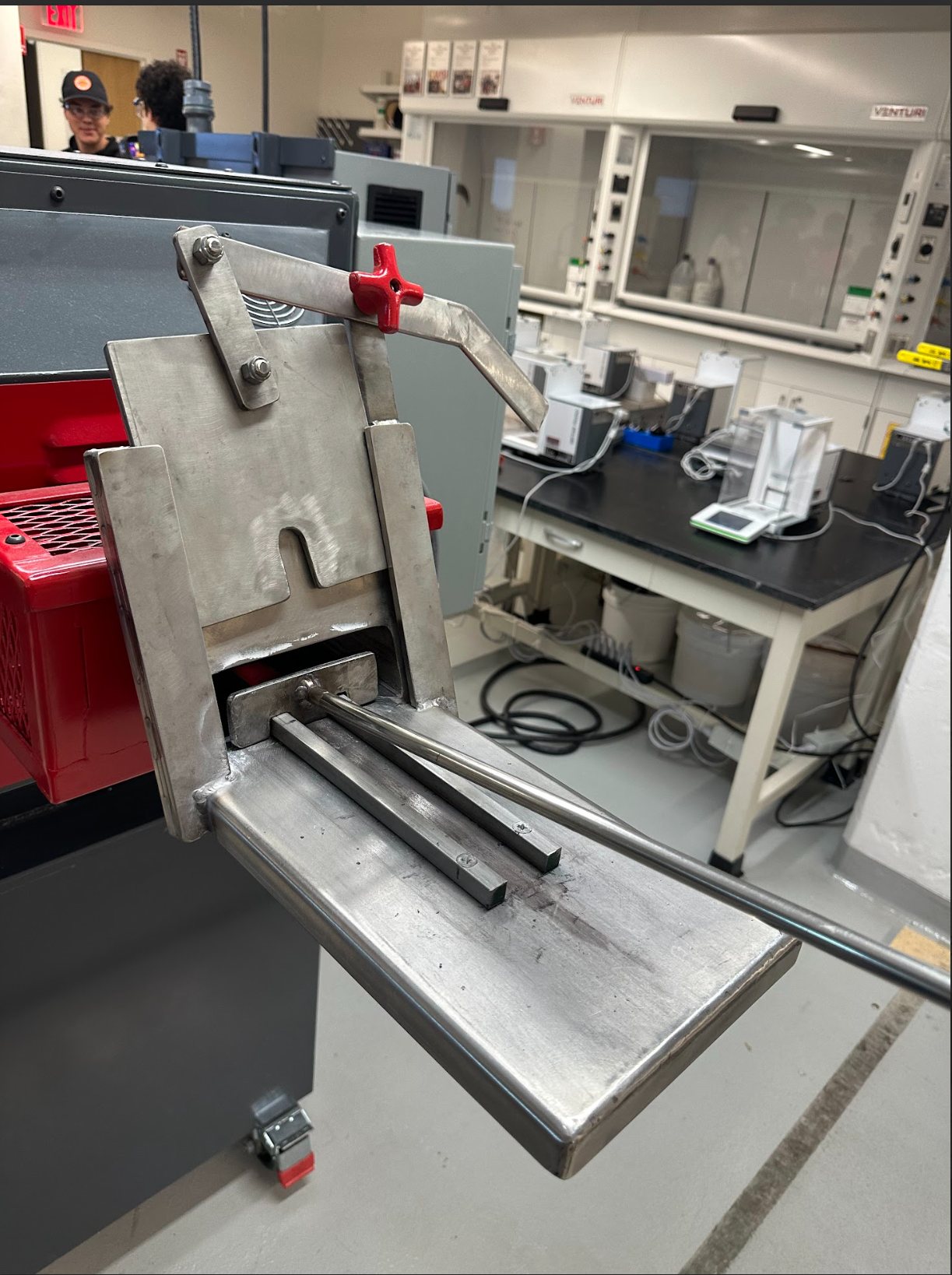


The alloy was heated to 500°C in the furnace before hot rolling. The starting thickness of the alloy was 12.6mm. The metal was reduced by 2mm per pass through the rolling mill for a total of 5 passes. The final thickness was 2.88mm, which satisfied the 2-3mm thickness requirement. The alloy was left to cool at room temperature once rolling was complete.
Solution Heat Treat
The billets were then heated to about 555 °C for roughly forty minutes and immediately water-quenched. Holding them at that temperature lets the main alloying elements dissolve back into the matrix, and the quick quench locks everything in place. This sets the alloy up in the supersaturated state needed before aging.
Aging
After quenching, the billets were aged at about 190 °C for four hours. Keeping them at this temperature lets fine strengthening particles slowly form throughout the alloy, which is what gives the 6009 its T6-level strength.
Metallography and Microscopy


Slices are cut of the alloy in the as cast, homogenized, and final form. These slices are then mounted, ground, and polished to a level allowing the microstructure of the alloy to be viewed by optical microscopy. The homogenized and final microstructures are etched using the Papageorge two-step etching process to display grains. Thermomechanical processing changes can be seen in the grain structure with homogenized having coarse equiaxed grains as opposed to the final state in which the grains are fine and elongated due to hot rolling.
Preliminary Testing


Before the final test, the team performed three preliminary tests on the sample. These tests included Rockwell hardness, electrical conductivity, and tensile testing.
Using a tensile bar shaped die and band saw, tensile bars were then carefully cut out of the samples to use for testing
Tensile tests were performed on three of the cut tensile bars. Each bar was measured for width and thickness before being loaded until failure. The data recorded gave the team an idea of the projected yield strength and elongation at fracture that the thermomechanically processed alloy would record in the final test. The average yield strength was 320.6 MPa, and the average elongation at fracture was 11.6%.
Competition Results


The 6009 T6 aluminum alloy scored third in electrical conductivity at 44.70 %IASC (91.04% of the highest scoring team), fourth in yield strength at 310.8 MPa (72.7% of the highest scoring team), and fifth in elongation with a fracture at 8.5% (59.4% of the highest scoring team). Overall, this sample placed first with a score of 393,418 total points. The overall success was due to an above average score in all three categories.