Art From Recycled Packaging Foam
by emilycanhelp in Living > Decorating
1183 Views, 20 Favorites, 0 Comments
Art From Recycled Packaging Foam

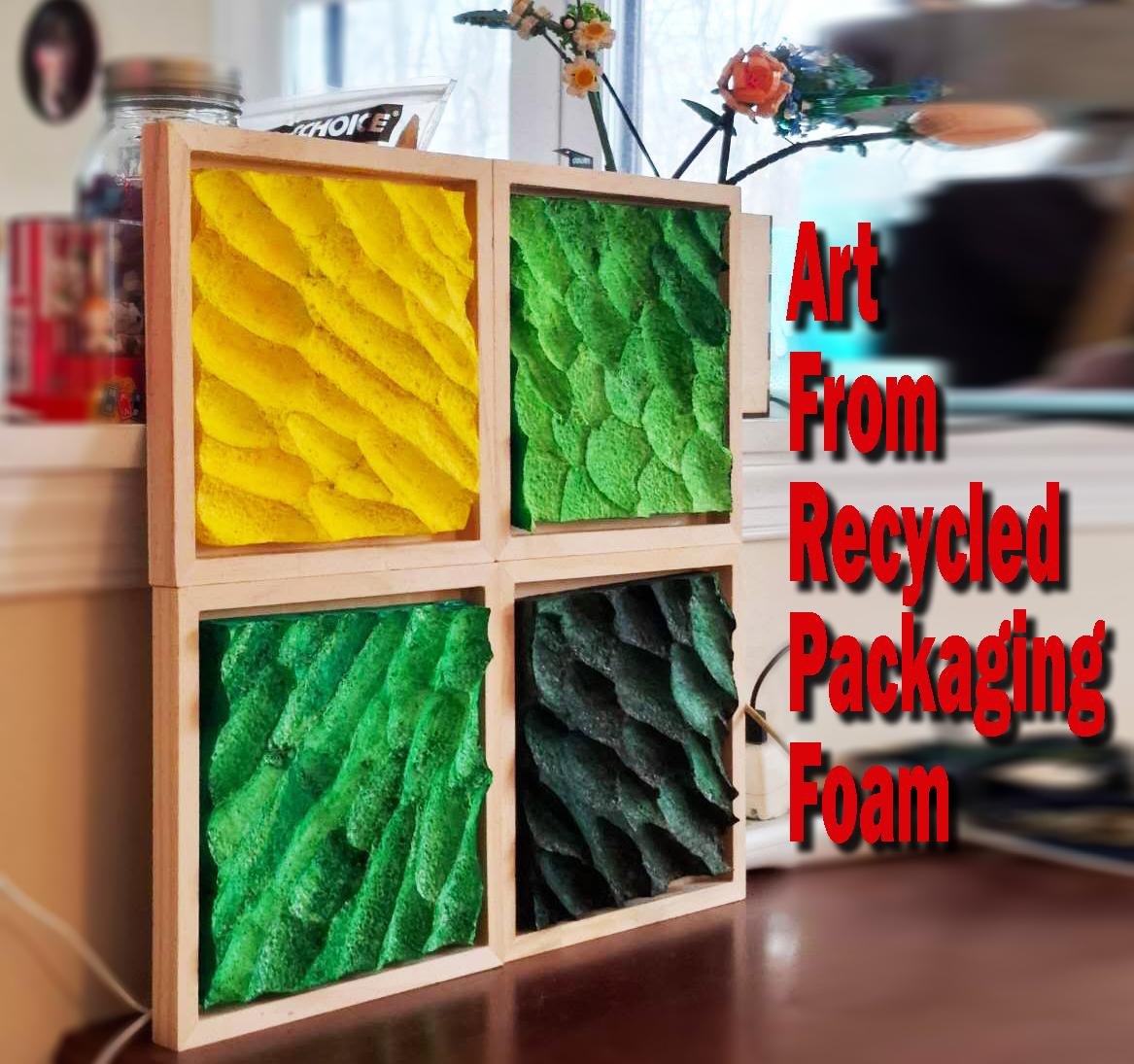
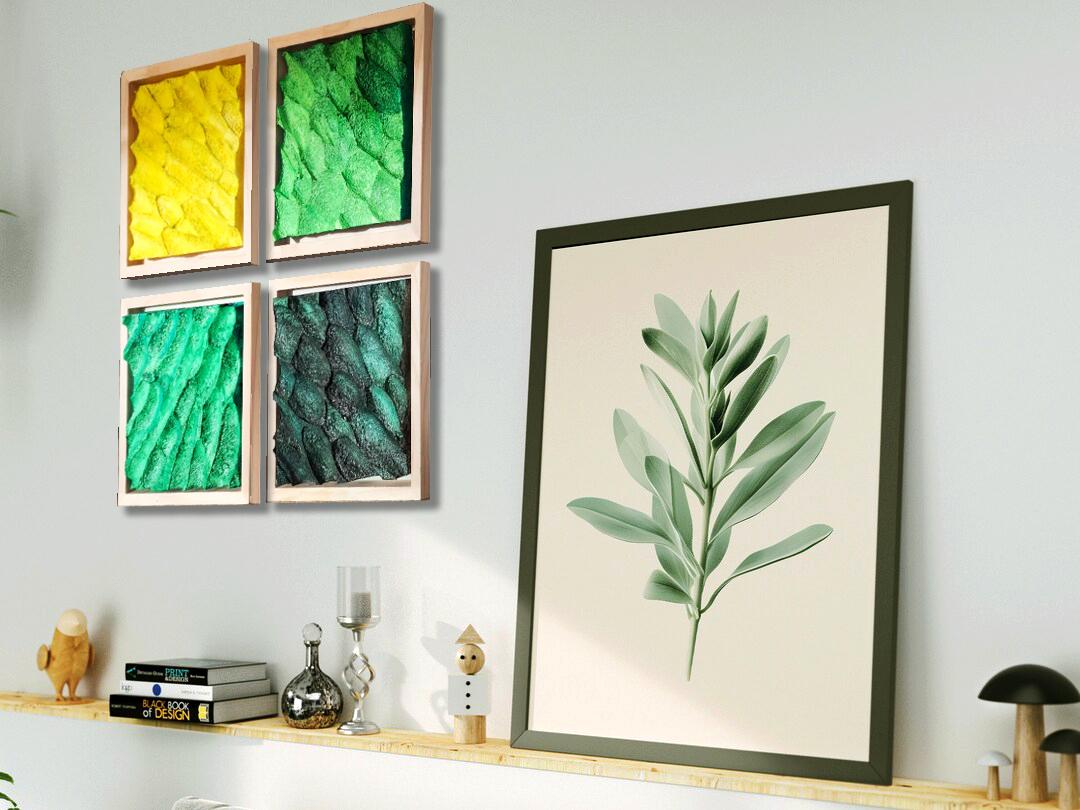
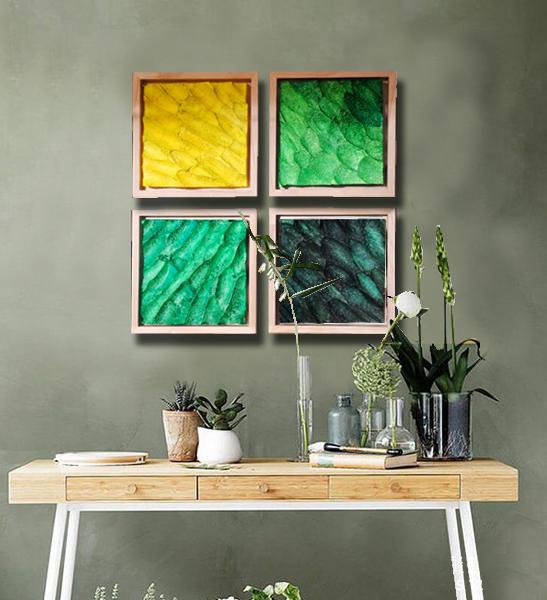

This piece began with a simple idea: transforming overlooked, everyday packaging materials into something visually striking and unexpectedly elegant. I wanted to take the foam sheets that usually end up in the trash and give them a second life—as modern, textural wall sculptures that play with light, shadow, and color. By pairing carved foam with a minimal wooden box frame, I created a small “landscape” of ridges, valleys, and organic marks. It’s a playful experiment in material reuse, but also a reminder that beauty often hides in the things we throw away.
Supplies




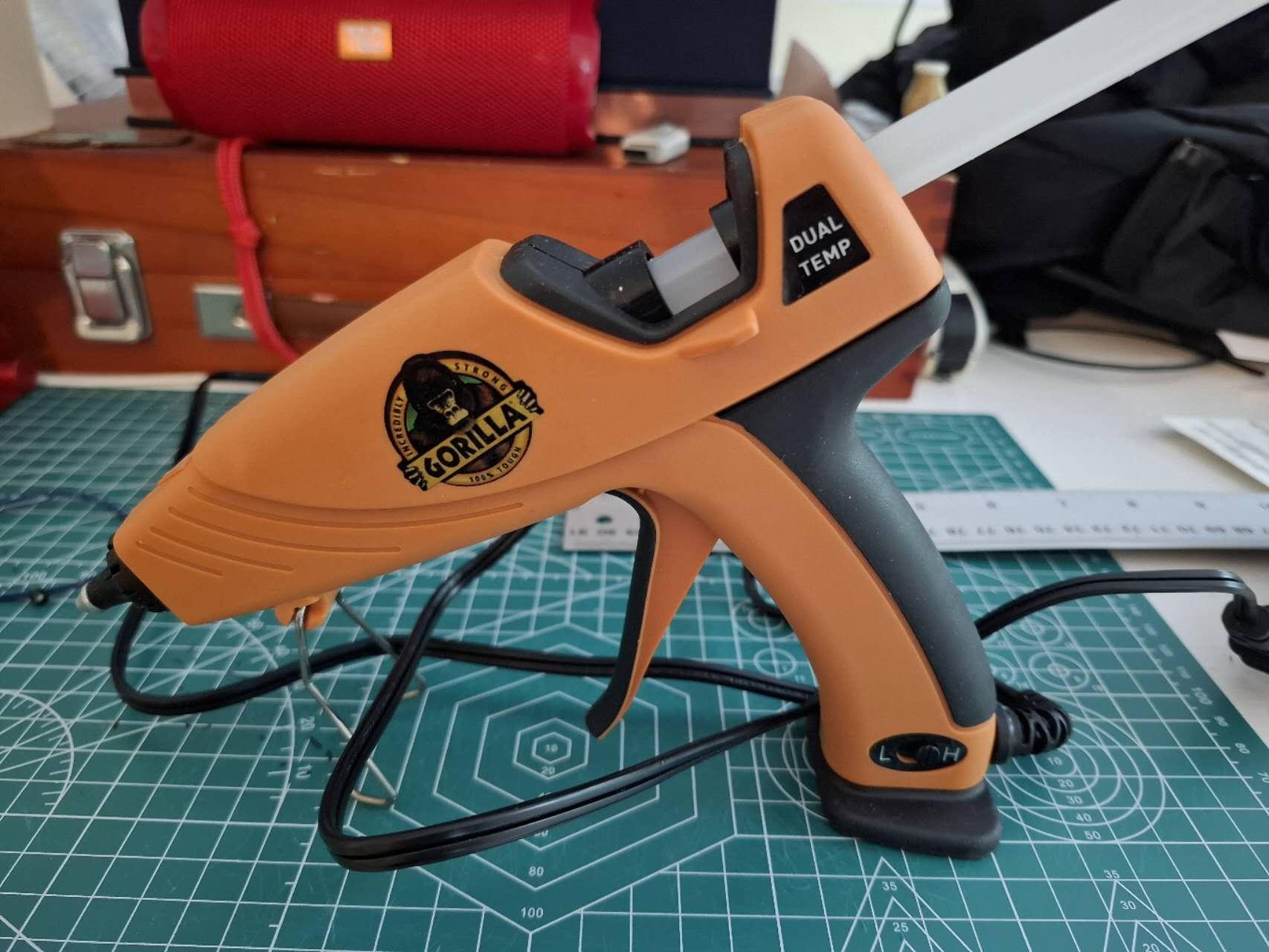
Materials:
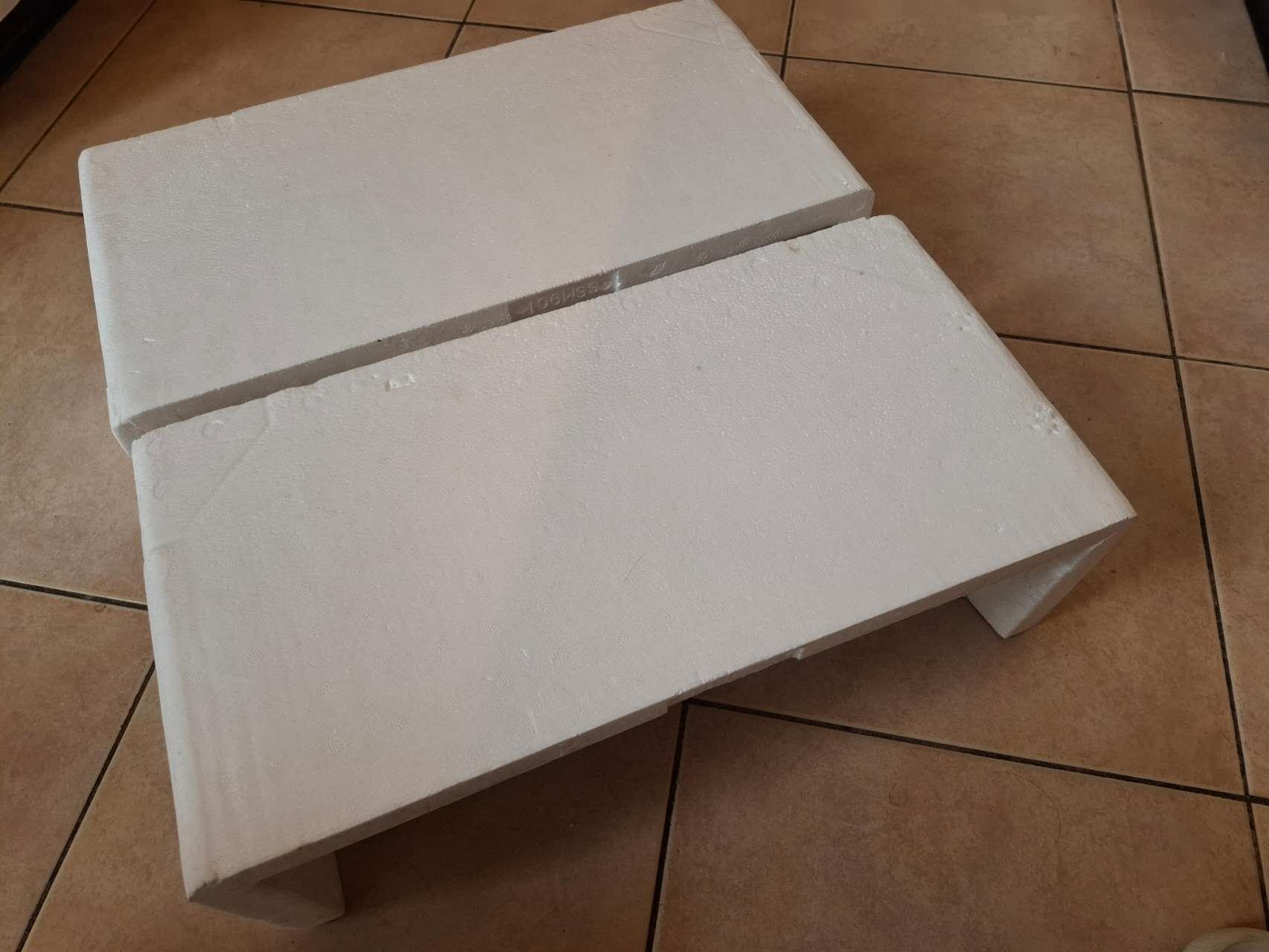
1,Recycled foam sheets from furniture packaging
2,8" x 8" x 1" shallow wooden box (inner size 7" x 7")
3,Hot knife foam cutter / hot wire cutter
4,Acrylic paints + brushes
5,Hot glue gun
6,Pencil + ruler
Measuring & Cutting the Base


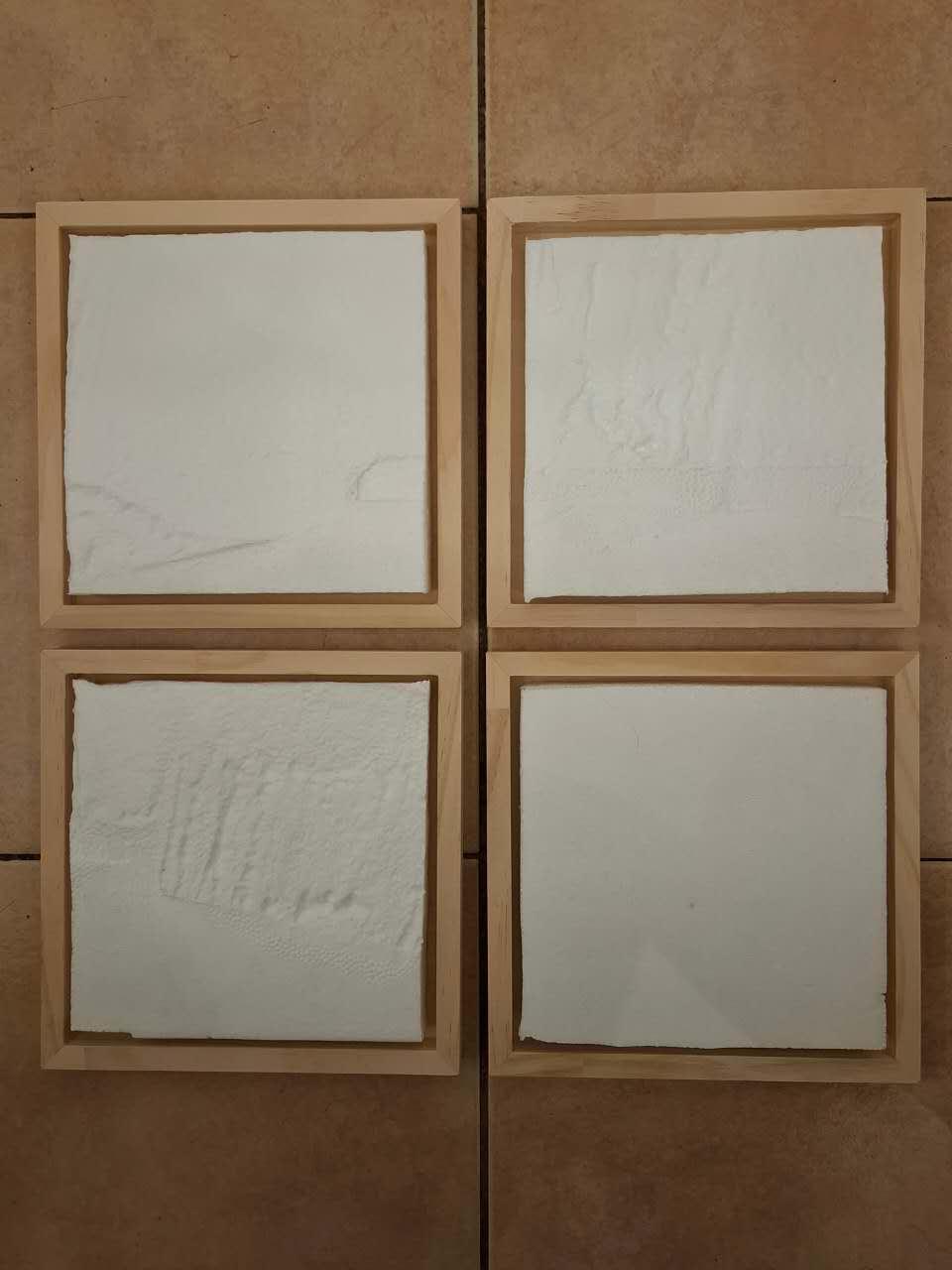

I first measured the inside of the wooden box—7" x 7".
To make sure the foam fits comfortably, I drew a 6 ¾” × 6 ¾” square on the recycled foam sheet.
Then I used the hot knife cutter to slice it out. I tried my best to cut neatly… but honestly, it doesn’t matter too much. The surface won’t stay smooth anyway—we’re about to carve a whole landscape into it.
Carving Texture (“The Fun Part”)
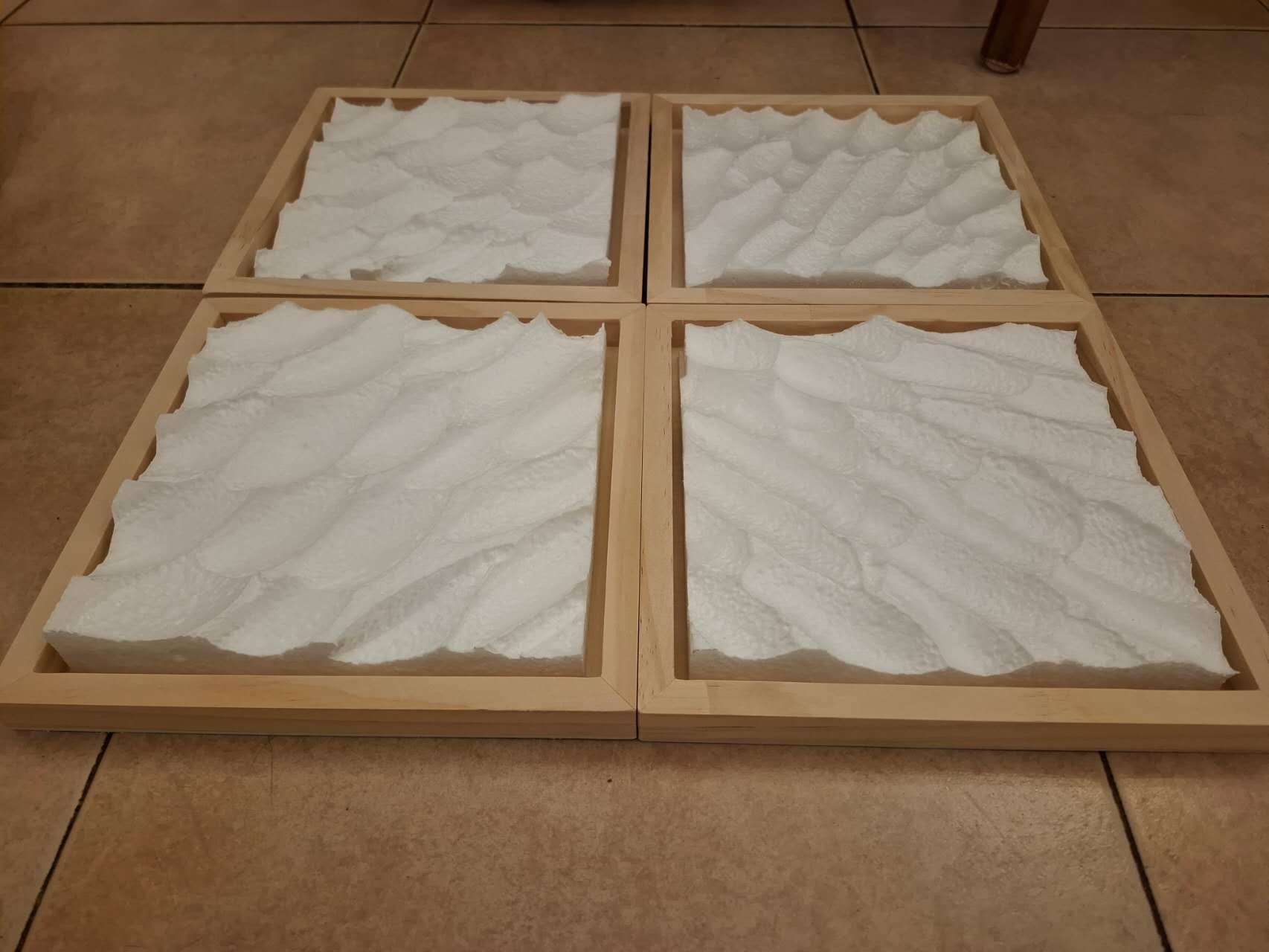


I bent the hot wire into different shapes: a gentle curve, a sharp angle—each one creates a different texture.
After heating it up, I started carving random grooves, dents, and ridges across the foam. Think of it like drawing, but in 3D.
To avoid spreading foam dust everywhere and triggering a “Mom-level household emergency,” I placed a shoebox underneath to catch all the scraps.
The foam does smell a little burnt during cutting, so I worked under the kitchen range hood with it turned on. A garage works too, if you prefer not to scent your home with “Eau de Melted Styrofoam.”
Painting & Assembly


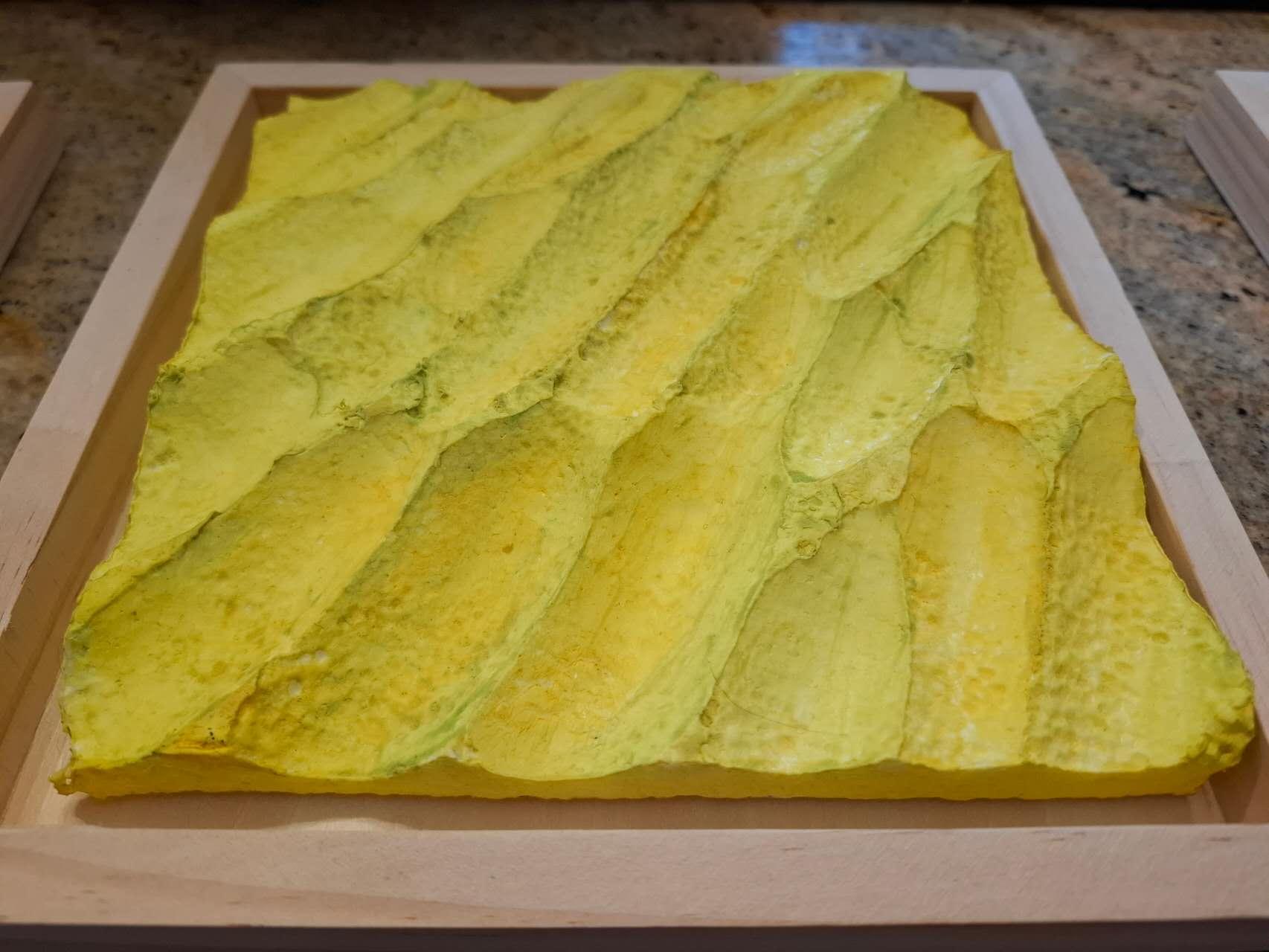

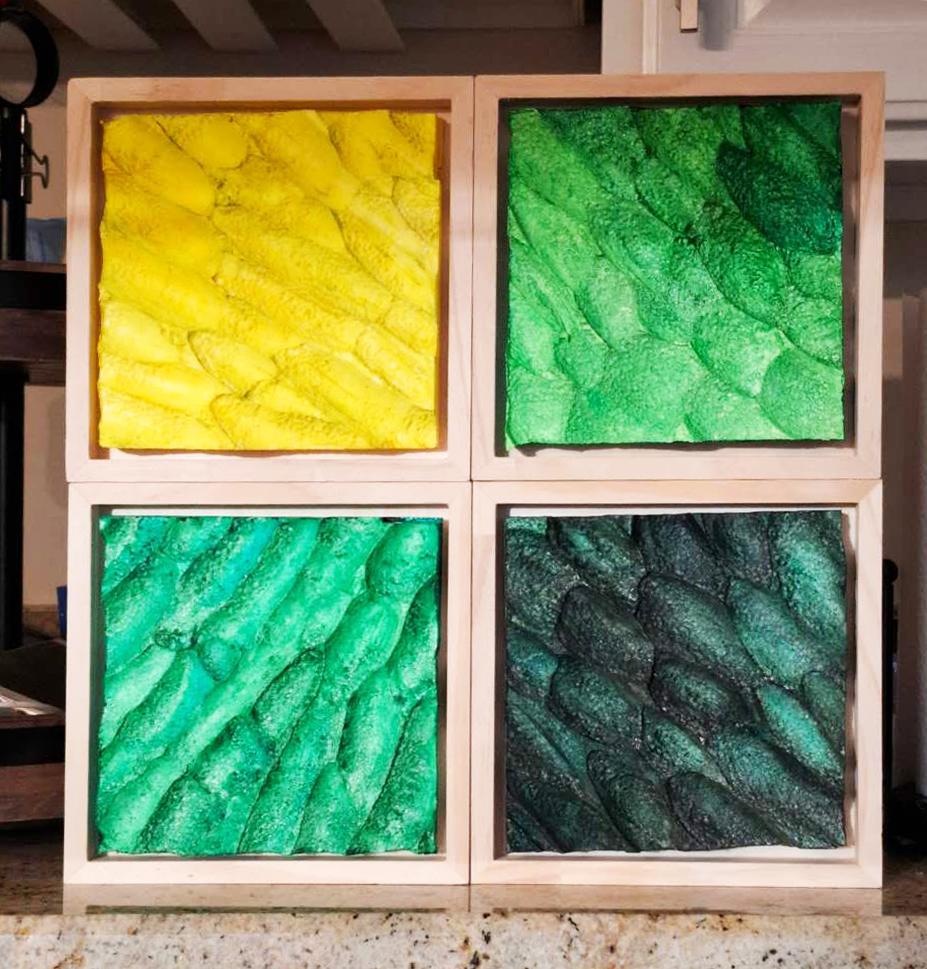
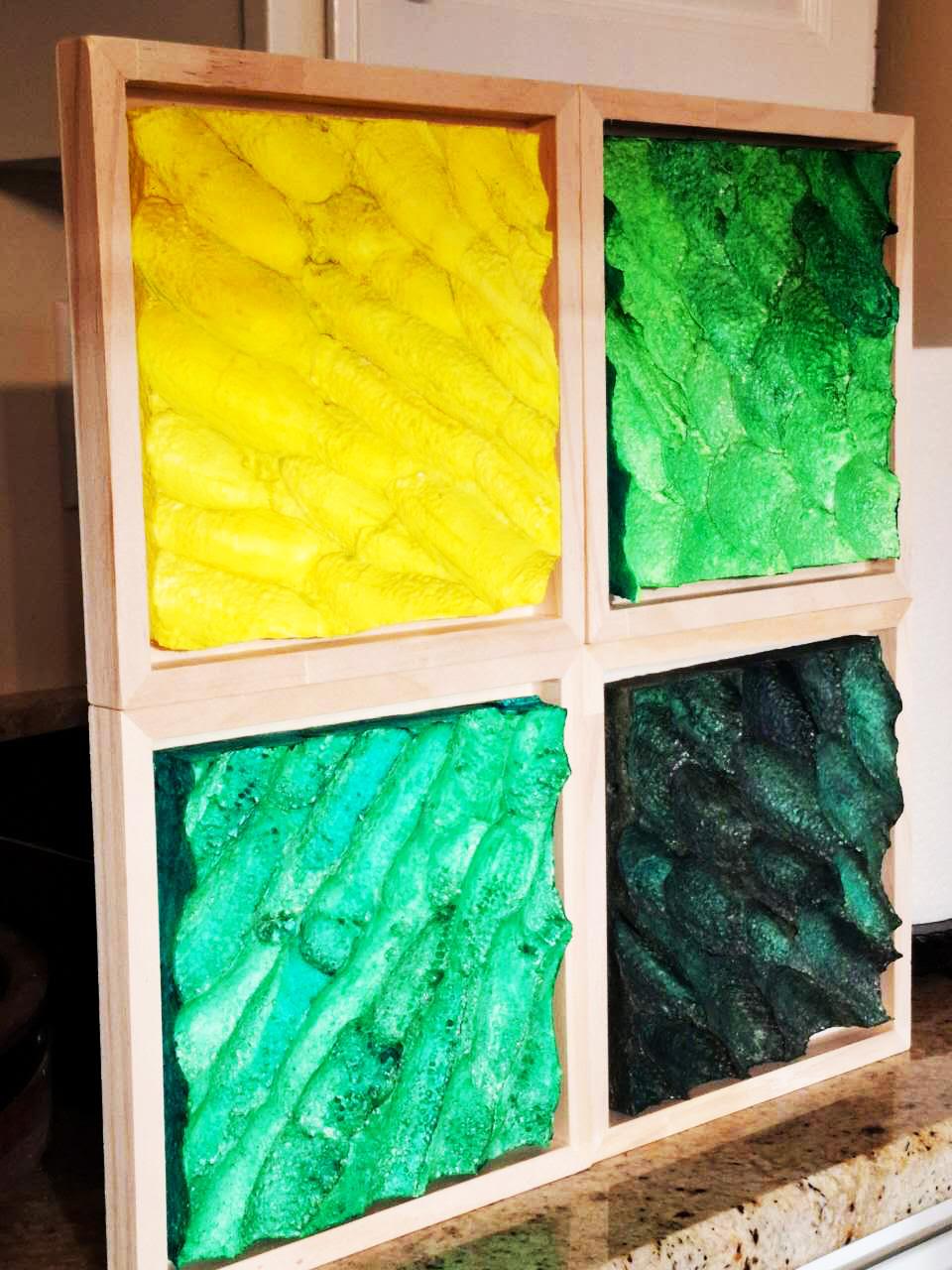
Once the texture felt right, I painted the foam with acrylics.
I used greens for a natural, stone-like look, adding darker and lighter tones to emphasize the depth.
But any color works—red, orange, blue—whatever mood you want. The key is variation: subtle shifts that make the ridges and shadows pop.
After the paint dried, I used a hot glue gun to secure the foam block inside the wooden box.
The result is a clean, modern-looking framed sculpture.
Display

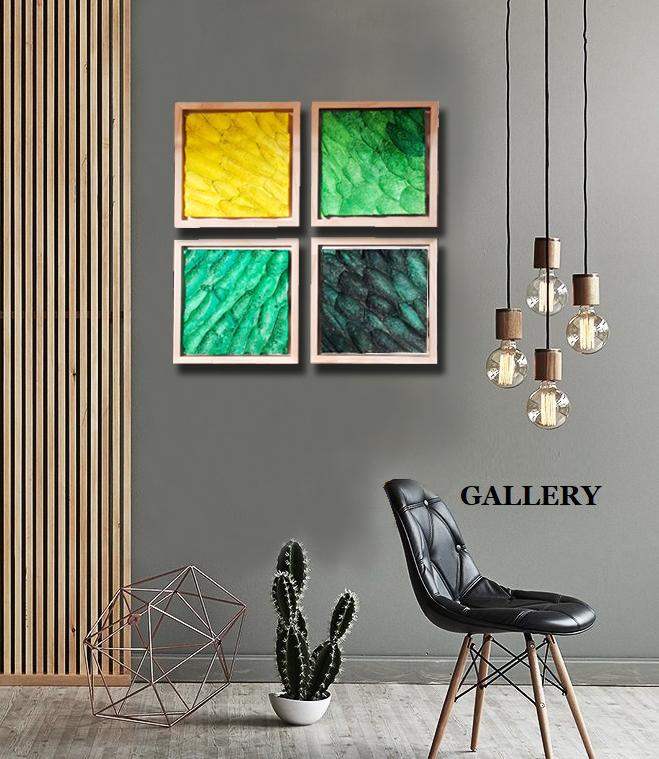


Now the piece is ready to hang anywhere—your bedroom, hallway, studio, or wherever you want an affordable dose of modern art.
With proper lighting, the carved textures look dramatic and almost sculptural.
In sunlight, the pattern changes throughout the day, giving the artwork a sense of movement.
It’s simple, sustainable, and surprisingly beautiful. Give it a try—you might end up making a whole series.