Backpack Chair: a Foldable Seat You Can Carry Anywhere
by ayushmaan45 in Workshop > Furniture
296 Views, 6 Favorites, 0 Comments
Backpack Chair: a Foldable Seat You Can Carry Anywhere

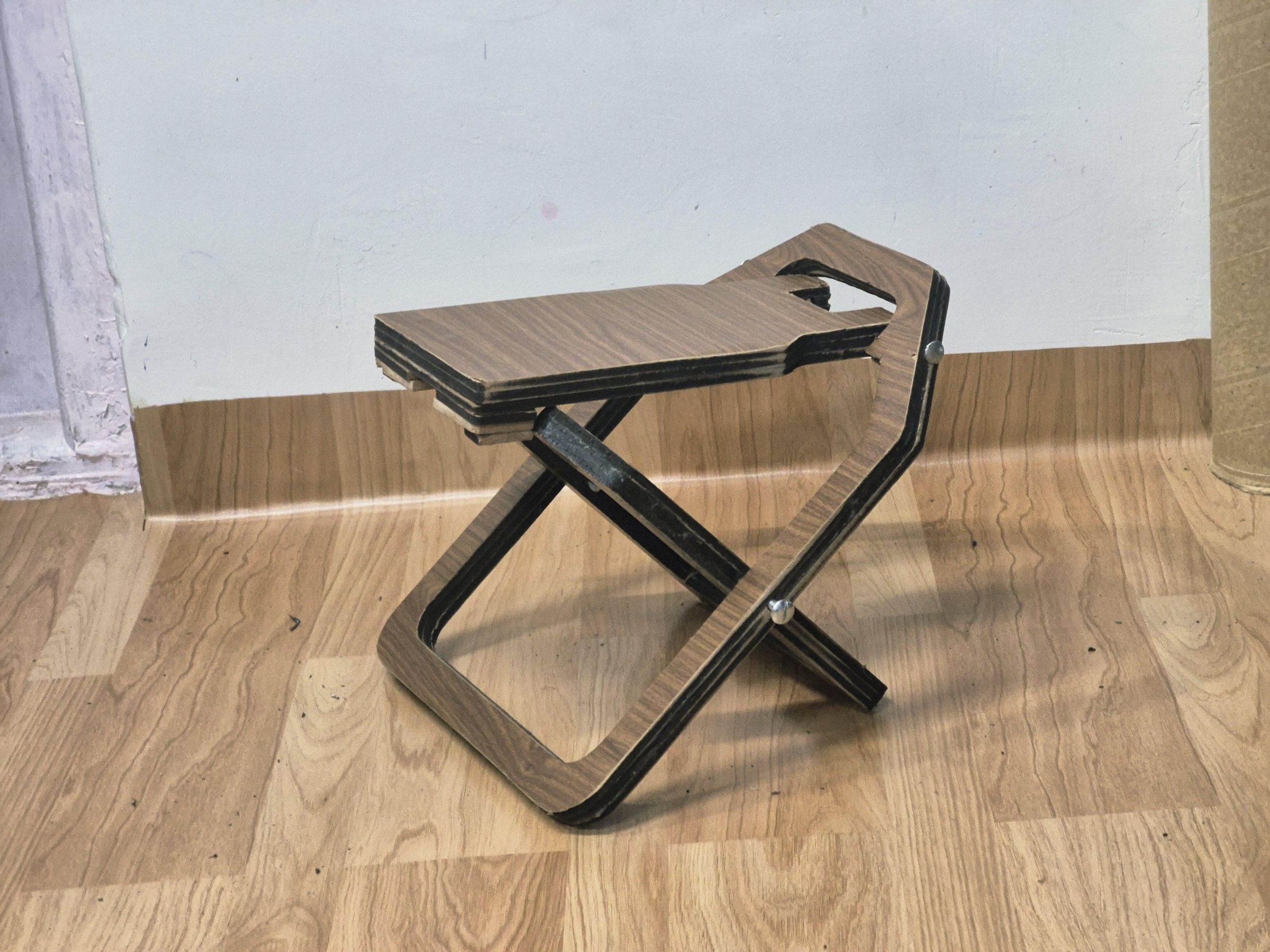


Hi, I’m Ayushmaan, a B.Tech Electrical and Electronics student who enjoys building practical things that solve small but real problems.
Most of my projects start the same way — I notice something slightly inconvenient, and instead of ignoring it, I start thinking about how to design around it.
This one began with a very simple frustration: not having a place to sit.
During college events, exhibitions, workshops, or long hours in the lab, you eventually end up sitting on stairs or leaning against walls. I’ve done that more times than I can count. And one day I thought — what if I could just carry my own chair?
Not a bulky camping chair. Not something fragile. I wanted something minimal, engineered, and flat enough to slide inside a backpack — but strong enough to actually use.
That idea turned into this project: a laser-cut, foldable backpack chair designed from scratch in Fusion 360 and built using layered MDF. The goal wasn’t just to make something that looks good in photos — it was to build something practical, portable, and functional.
Sometimes the simplest ideas are the most useful ones.
Supplies


Supplies For this project
Materials:
- 6mm MDF board (3 sheets for stacking)
- Wood glue
- Nut and bolt set (as per your design holes)
- Sandpaper (for smoothing the edges and surface)
- Vinyl sheet (for surface finishing)
Tools:
- Laser cutter
- Clamps (to hold the stacked layers tightly while the glue sets)
Sketching the Idea
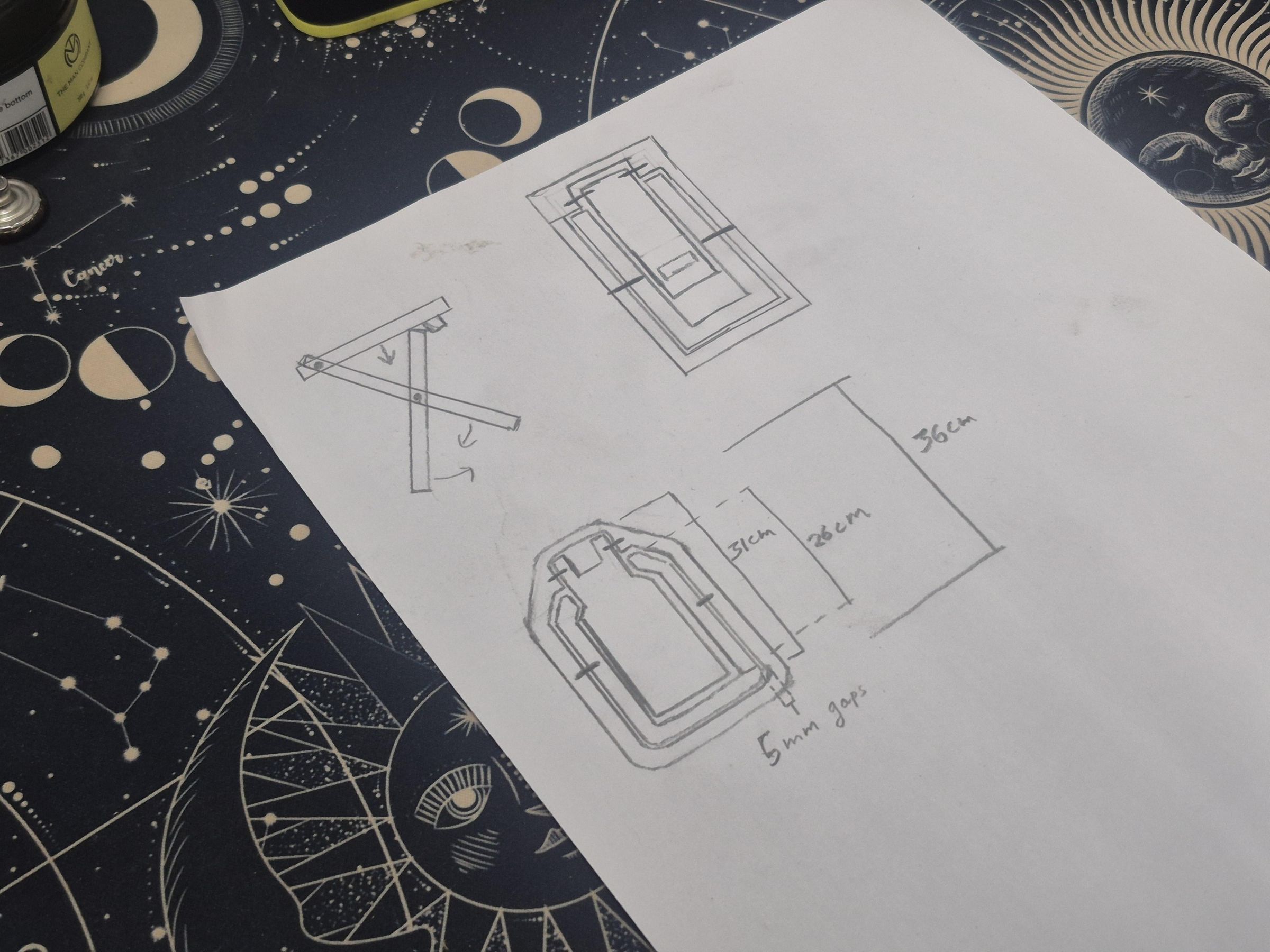
I started by just drawing random versions of the chair in my notebook.
Nothing too detailed. Just different side shapes and folding ideas to see what could work. At the same time, I was scrolling a bit on Pinterest to see how other folding chairs are structured, just to get a general idea of proportions.
I kept my laptop next to me while doing this. Since I wanted the chair to fit inside my backpack, I used the laptop’s size as a rough limit. If the sketch looked bigger than that, I knew it wouldn’t work.
Some of the early drawings were clearly too wide. A few looked unstable. So I kept changing small things until the overall shape felt compact enough.
After that, I opened Fusion 360 and started building it properly.
Designing in Fusion 360


After finalizing the rough proportions on paper, I opened Fusion 360 and started laying everything out in 2D.
Since this was going to be laser cut, I didn’t spend time making a detailed 3D assembly first. I directly created the parts as flat sketches. The side frames were done first because they define the structure. Then I adjusted the seat piece according to that.
Because the MDF I had was 6mm thick, I decided to stack three layers together to get enough strength. So I made two slightly different layouts. The top and bottom layers were just the normal profiles, and in the middle layer I added small slits where the bolts would go. Once all three layers are stacked, those slits line up and form proper bolt holes.
I kept checking the overall folded size while designing to make sure it stayed within the backpack limit I had in mind.
After everything looked aligned and proportional, I exported the sketches as cutting profiles for the laser machine.
I’ve attached the design file below if you want to download and modify it.
Laser Cutting


.jpg)

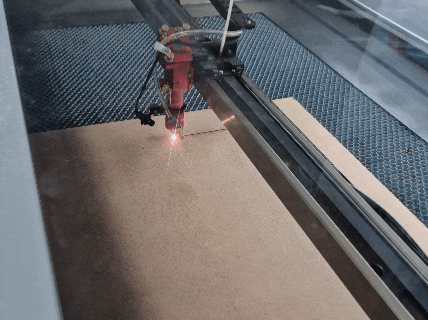
After finishing the layout in Fusion 360, I exported the sketches as DXF files and imported them into LaserCAD.
For cutting the 6mm MDF, I set the power to 80% and the speed to 10% to get a clean cut.
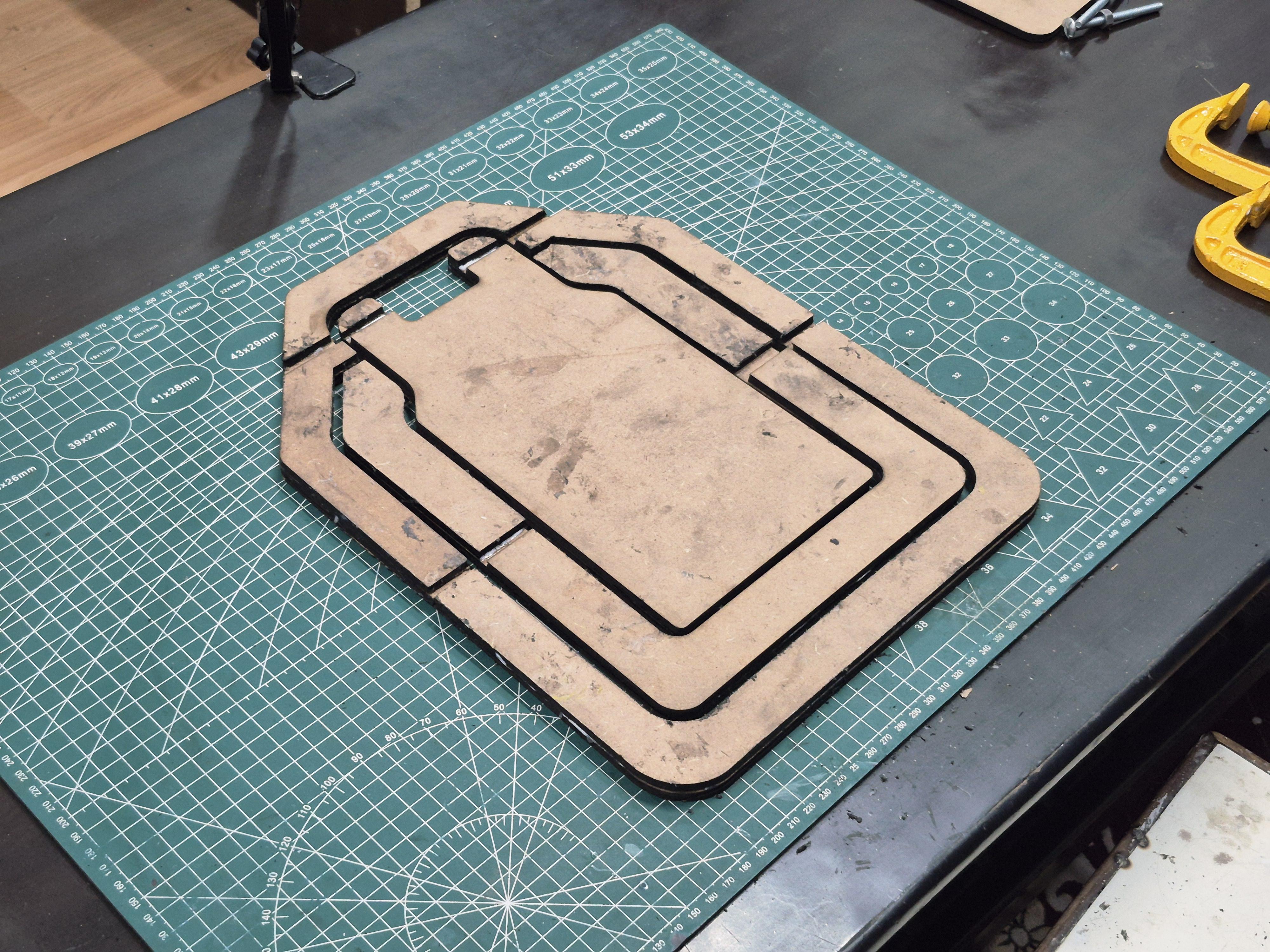
Since I had already planned the stacking layout earlier, I cut the plain profile parts twice (for the top and bottom layers) and the middle slit profile once.
After cutting, the edges had slight burn marks, which is normal with MDF and would be cleaned later during sanding.
Stacking the First Two Layers




.jpg)
Once the cutting was done, I started assembling the layers. Since the final strength depends on proper bonding, this step needed a bit of patience. I began by joining the base layer and the middle layer first.
Process:
- Place the first layer flat on a clean surface.
- Apply an even coat of wood glue (Fevicol) on the surface.
- Spread it properly so there are no dry patches.
- Carefully place the second layer on top, aligning all edges and cutouts.
- Use clamps to press the layers tightly together.
- Leave it clamped for a few hours to let the glue set properly.
After the glue dries, the two layers start behaving like a single thicker piece, which makes the structure much stronger for the next step.
Adding the Final Layer


After the first two layers were properly bonded and dried, I moved on to attaching the final layer. The process was mostly the same, but this time I also added nails for extra strength.
Process:
- Apply an even layer of wood glue on top of the stacked two-layer piece.
- Carefully place the final layer on top, aligning all edges and bolt slots properly.
- Use clamps again to press everything tightly together.
- Check alignment once more before leaving it to dry.
- After clamping, add small nails at suitable positions to reinforce the bond.
I let the entire piece dry properly before removing the clamps. At this point, the three 6mm sheets effectively behave like a solid 18mm structure, making the frame much stronger and more stable.
Sanding the Edges and Surface

After the glue had fully dried, I sanded the entire structure to smooth out the edges and remove the burn marks left by the laser.
I used 120-grit sandpaper for this. It was enough to clean the surface and make the edges smoother without removing too much material.
I mainly focused on the outer edges and joints where the layers were stacked, so everything felt even and clean before moving to the finishing stage.
Assembly


After sanding, I assembled the chair using long bolts and nuts.
Instead of passing the bolt fully through and tightening it at the very end, I positioned the long bolt inside the slit of the middle layer. This keeps it secure and avoids unnecessary extra length sticking out.
Assembly Process:
- Insert the nut from the outer side toward the inside.
- Place the long bolt inside the slit of the middle layer.
- Align both structural pieces properly.
- Tighten everything securely.
Once tightened, the structure becomes stable and ready for use.
Applying Vinyl Finish

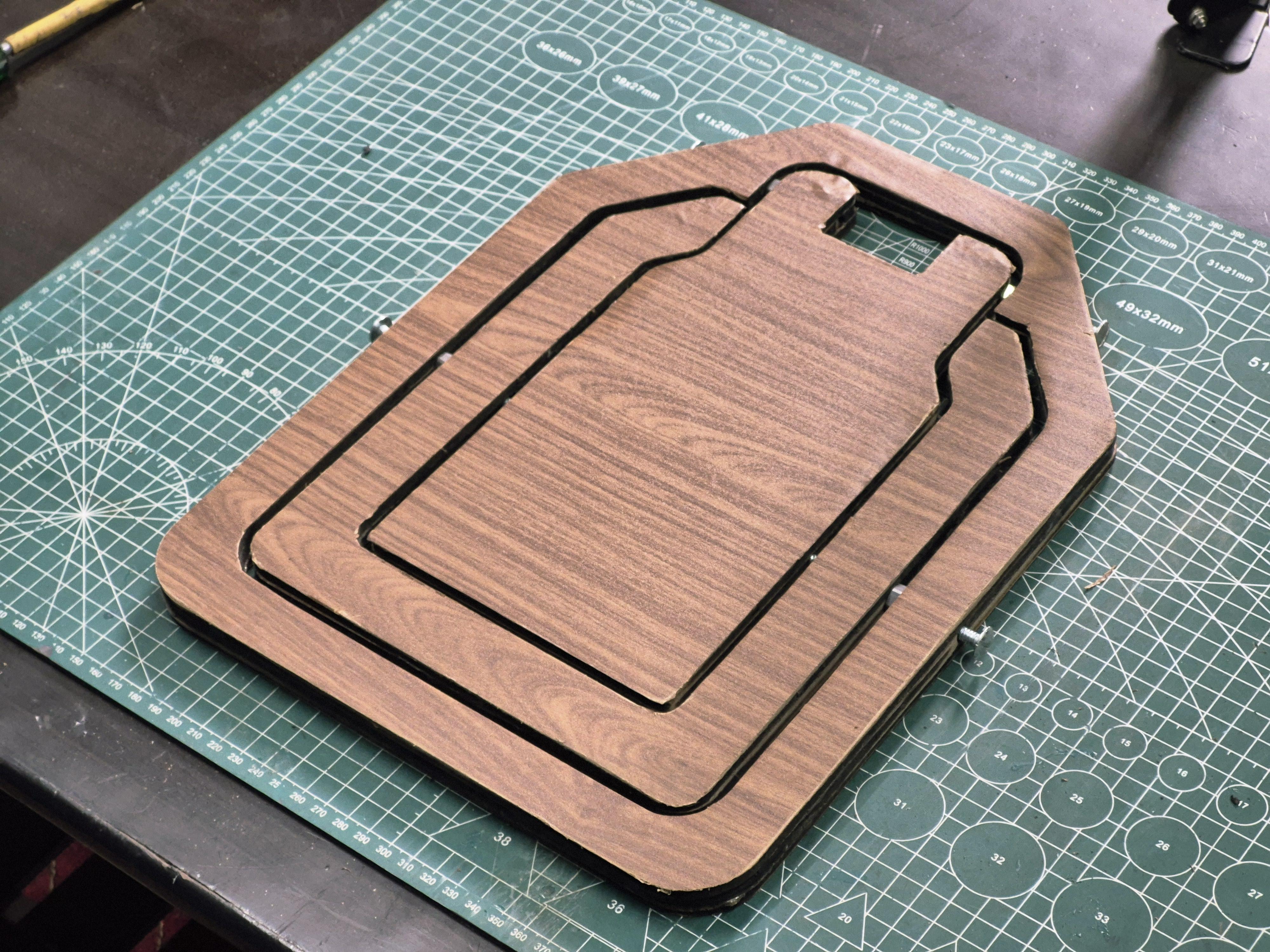
After the assembly was complete, I moved on to finishing the surface using vinyl instead of paint.
I chose vinyl because it gives a cleaner look and doesn’t require drying time like paint. It also helps cover minor surface imperfections.
Process:
- Clean the surface properly to remove dust.
- Cut the vinyl according to the required size.
- Carefully apply it from one side to avoid air bubbles.
- Press and smooth it evenly across the surface.
- Trim the extra vinyl from the edges.
After applying the vinyl, the chair looked much cleaner and more finished compared to raw MDF.
Final Thoughts




This project started as a simple idea — making a chair that could actually fit inside my backpack. From rough sketches to CAD, laser cutting, stacking layers, and assembling everything, the focus was always on keeping it compact but strong.
Using three 6mm MDF layers gave the structure enough rigidity without needing thicker material. The bolt placement inside the middle layer kept the assembly clean and functional, and the vinyl finish improved the overall look.
After testing, the chair was able to handle around 80 kg of weight, which makes it practical for regular use.
In the end, it’s lightweight, foldable, and easy to carry — exactly what I intended it to be.