Barely a Chair: the 60‑Second Self‑Ejecting Seat
by jfunky1111 in Living > Health
66 Views, 1 Favorites, 0 Comments
Barely a Chair: the 60‑Second Self‑Ejecting Seat
.jpg)
Solving Back Pain the Dumbest Way Possible
Americans spend an incredible amount of time sitting—at desks, in cars, on couches, in meetings that should’ve been an email—and then wonder why their backs feel broken.
There are good solutions: better chairs, standing desks, stretching. This project is not one of them.
The One‑Minute Chair is a barely‑cooperative seat that gives you exactly 60 seconds before it tips you out. Sit down, get comfortable, and right when you settle in… the chair decides you’ve sat long enough.
Supplies

As I fall under the too naturally occuring hobbyist stereotype, I am poor, and thus have no funds to make this project. These are theoretical parts only!
Electronics (for a real build)
- Arduino Nano (or similar)
- HC‑SR04 ultrasonic distance sensor
- MG90S (or similar small hobby servo)
- 5V regulated power supply (USB phone charger or 5V DC adapter, ≥1A)
- Breadboard or perfboard
- Jumper wires and connectors
Chair Mechanism (for a real build)
- Basic chair or simple wooden frame
- Hinges for the back edge of the seat
- Wood or plywood for the front‑heavy seat
- Small metal or 3D‑printed parts for the latch
- Springs or elastic for latch return
- Screws, nuts, and bolts
How the One-minute Chair Works

The core idea: if you want people to sit less, don’t let them stay seated.
- Tipping seat
- Seat pivots on a back hinge.
- The front is a bit heavier, so its natural state is “trying to dump you.”
- Latch
- A small hook or tab catches a pin under the seat in the flat position.
- While latched, it behaves like a normal chair.
- Timer brain
- An HC‑SR04 sensor looks for someone in front of the chair.
- When the distance drops (someone sits), an Arduino starts a 60‑second timer.
- Release
- At 60 seconds, the Arduino tells an MG90S servo to move.
- The servo tugs the latch clear.
- The front‑heavy seat tips forward, and you are strongly encouraged to stand up.
The animation shows this whole chain: from innocent sitting to mechanical betrayal.
Frame, Seat, and Motion

This is a design/animation project: no splinters, no stripped screws, just motion.
Frame
- Simple side frames for legs and back support.
- A few crossbars.
- A backrest so it still reads as a proper chair.
Tipping seat
- Mounted on a hinge at the back edge.
- Slightly front‑heavy, so when it’s not latched it wants to tip.
- Rear stop = normal flat sitting angle.
- Forward stop = max tip angle so it doesn’t flip you into orbit.
In the animation, the seat rotates between those two stops so you clearly see the “before and after” of the ejection.
Latch + Servo Concept

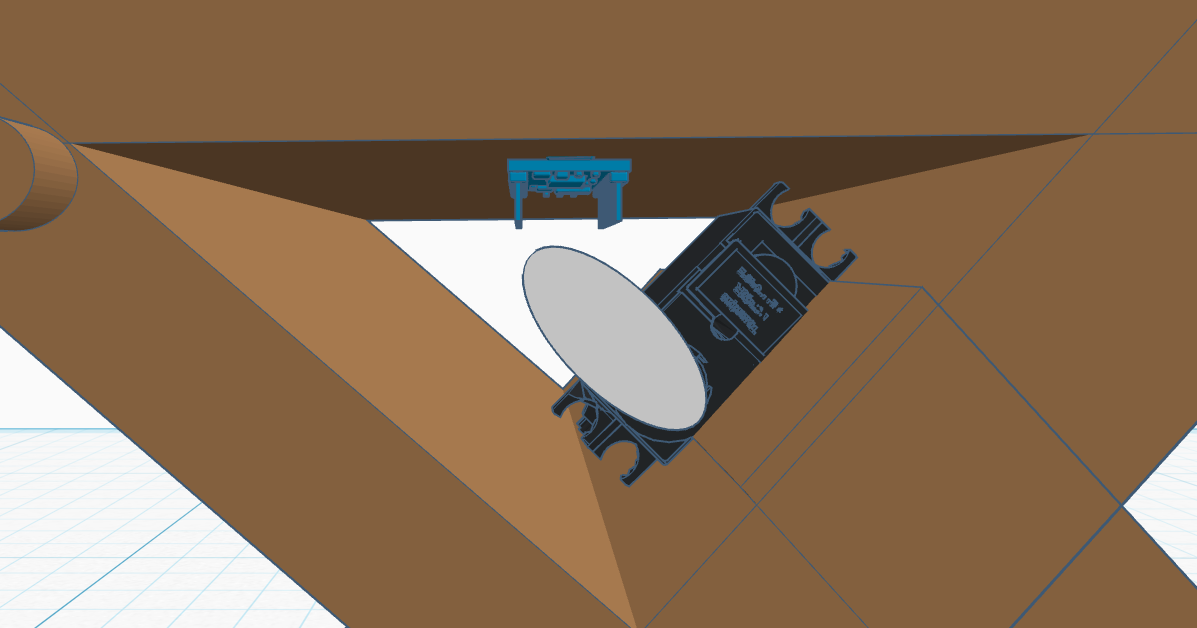
The servo never fights your weight; it just moves a tiny piece of hardware.
Latch
- A nudge from a tab under the seat releases a bar when the seat is flipped.
- A little bit of gravity brings it back toward “engaged” when you reset the seat.
Servo
- A small MG996R servo is mounted on the frame, with a small tab that pushes the front support of the seat.
- Rotating the servo about 45° pushes the bar off its resting spot.
Story Mode Electronics

If you turned this into real hardware, the behavior would look like this:
- Chair is waiting; seat latched, sensor seeing empty room.
- Someone sits; the HC‑SR04 reads a shorter distance.
- The Arduino Nano decides “someone’s here” and starts a 60‑second countdown.
- When time’s up, Arduino drives the servo to move the latch.
- Latch clears, seat tips, the user gets a dramatic reminder to stop sitting so much.
Theoretical Animation!
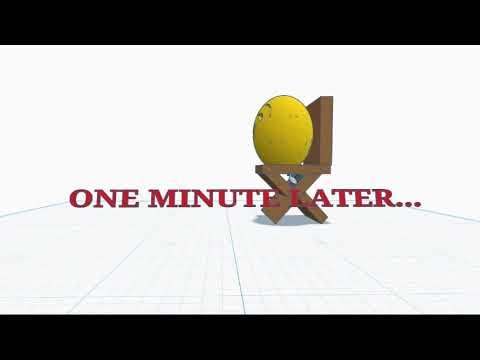
I made this animation using Tinkercad's amazing and efficient modeling software. I have said it before, and will say it again, Autodesk's Tinkercad is the BEST for quick and easy modeling.
Don't Trust Your Chair

The One‑Minute Chair is a joke with a point: if your seat kicks you out after 60 seconds, you suddenly notice how long you usually sit.
You can turn this idea into a real build, add sounds or lights, or just keep it as a silly reminder to stand up more.
If you make your own version—or an even dumber anti‑sitting device—share it. Until then, stand up, stretch, and remember: some chairs have trust issues.