Bauhaus Armchair-Stainless Steel-No-drill
by Us Cushion in Workshop > Furniture
148 Views, 0 Favorites, 0 Comments
Bauhaus Armchair-Stainless Steel-No-drill


$2000 Aesthetic for Under $200?
My DIY Bauhaus Stainless Steel Chair Journey
Introduction:
Have you ever stared at a designer furniture piece, falling in love with its sleek lines, only to be heartbroken by the $2,000 price tag? That was me three weeks ago.
After moving into my new home, I was faced with a classic dilemma: a beautiful living space but a very tight "new-homeowner" budget. As a long-time fan of Bauhaus design, I refused to settle for bland, disposable furniture. So, I grabbed my sketchbook, did some deep-dive research, and ordered a pile of stainless steel pipes.
Why DIY?
Because a home should be a reflection of your taste, not just your tax bracket. This project is my attempt to "democratize" classic design using industrial materials.
What to Expect:
The Process The build process is surprisingly straightforward—it’s essentially like playing with heavy-duty Legos. However, be prepared for a workout!
The Challenge Winding the core-spun cords for the seat support was the most tedious part. It requires patience and a bit of grip strength to get that perfect tension.
The Finish I hand-sewed the cushions myself. They might have a few "character" wrinkles, but they are incredibly comfortable.
If I can do this in my living room, so can you. Let’s get building!
Supplies


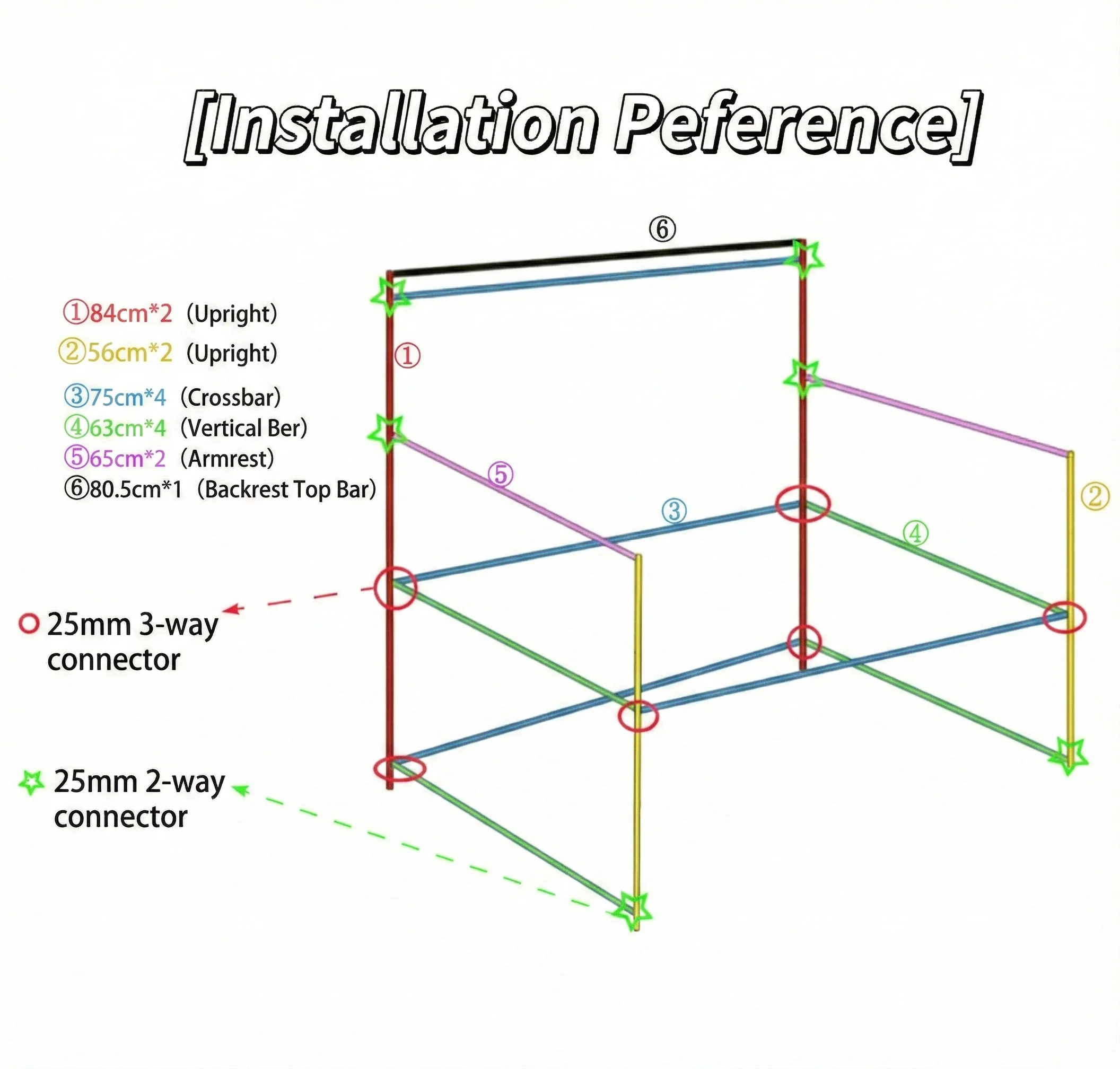
(Stainless Steel Pipes - 25mm)
- 84cm * 2 (Back pillars)
- 56cm * 2 (Front pillars)
- 75cm * 4 (Crossbars)
- 63cm * 4 (Vertical bars)
- 65cm * 2 (Armrests)
- 80.5cm * 1 (Support bar)
(Connectors)
- 2-way connectors * 6
- 3-way connectors * 6
- L-shape connectors (25mm ID) * 4
- M8 Plastic plugs * 4
(Soft Goods)
- Corduroy Fabric: 4 meters
- Filling: Pearl Cotton & High-elastic PP Cotton
- 7cm Sofa Elastic Webbing & 4mm Core-spun Cord


Step 1: Assemble the Framework (The "Big Lego" Phase)
Ready to see your chair take shape?
Before we dive into the soft stuff, we need to build a solid foundation. Think of this step as playing with a giant LEGO set. We’re going to assemble all the stainless steel pipes into the main skeleton of the Bauhaus chair.
Assembly Guide: Follow the Numbers
Lay out your pipes on a flat surface and match them with the numbers in the diagram above. Here’s the sequence I recommend for maximum stability:
Tip: The "Tighten Later" Rule
Do not tighten the bolts 100% until the entire frame is standing. Assemble everything "finger-tight" first, place it on a level floor to ensure there’s no wobbling, and then give every bolt a final turn with your wrench. This prevents the frame from being slightly skewed.
A Note on Connectors
Make sure each pipe is pushed fully into the Two-way and Three-way connectors. If a pipe feels stuck, a small drop of lubricant or a firm tap with a rubber mallet will do the trick. We want zero gaps for that professional, high-end look.


Step 2: The Support System (Tension & Webbing)
Now that the skeleton is ready, it’s time to give it some "muscle." Without proper tension, your beautiful chair will just be a saggy mess. We need to create a rock-solid base for your cushions.
1. The Base Layer: Winding the Cord
Start with the 4mm core-spun cord. Follow the winding pattern shown in the diagram below.
- Pull it TIGHT: This is the most important rule. Use your weight to pull the cord as tight as humanly possible before securing it. If the cord is loose, the seat will sag the moment you sit down.
- Consistency: Keep the spacing between each wrap even for uniform support.
2. The Top Layer: Elastic Webbing
Once the cord is finished, install the 7cm elastic webbing over it. This layering is the secret to a stable, flat seat that doesn't wobble.
- Order Matters: Always wrap the cord first, then the webbing. This combo provides both strength and comfort.
- Follow the Diagram: Refer to the visual guide to ensure you’re crossing the webbing correctly for maximum stability.
Coach's Tip: Use Gloves
Your hands will thank you! Pulling the cords tight enough to provide real support can be rough on your skin. Grab a pair of work gloves before you start this "finger-workout."
Once your support system feels like a firm drumhead, you're ready for the final touch: the cushions!
.jpg)
Step 3: Sewing the Cushions (The Final Soft Touch)
The hard work is over! Now we just need to craft the cushions. I kept the sewing simple—no complex upholstery skills required. It’s all about the math and the fabric.
1. The Golden Formulas
Before you cut your corduroy fabric, use these calculations to ensure a perfect fit. Remember to leave a 1cm seam allowance on all sides.
- Seat Cushion: (Seat Width + Armrest Height * 4) * Seat Depth
- Backrest: (Backrest Height * 2) * Width
💡 Pro Fluff Tip:
If you’re like me and love a "cloud-like" feel, add Backrest an extra 10cm to your width measurements. This allows the cushion to stay plump even when packed with lots of filling.
2. Sewing & Filling
- Direction Matters: Corduroy has a "nap" (the direction of the fuzz). Make sure the grain of the fabric runs the same way for both the seat and backrest so the color looks consistent.
- The Bag Method: Sew the fabric pieces with the "right sides" facing each other, leaving a 15-20cm opening on one side.
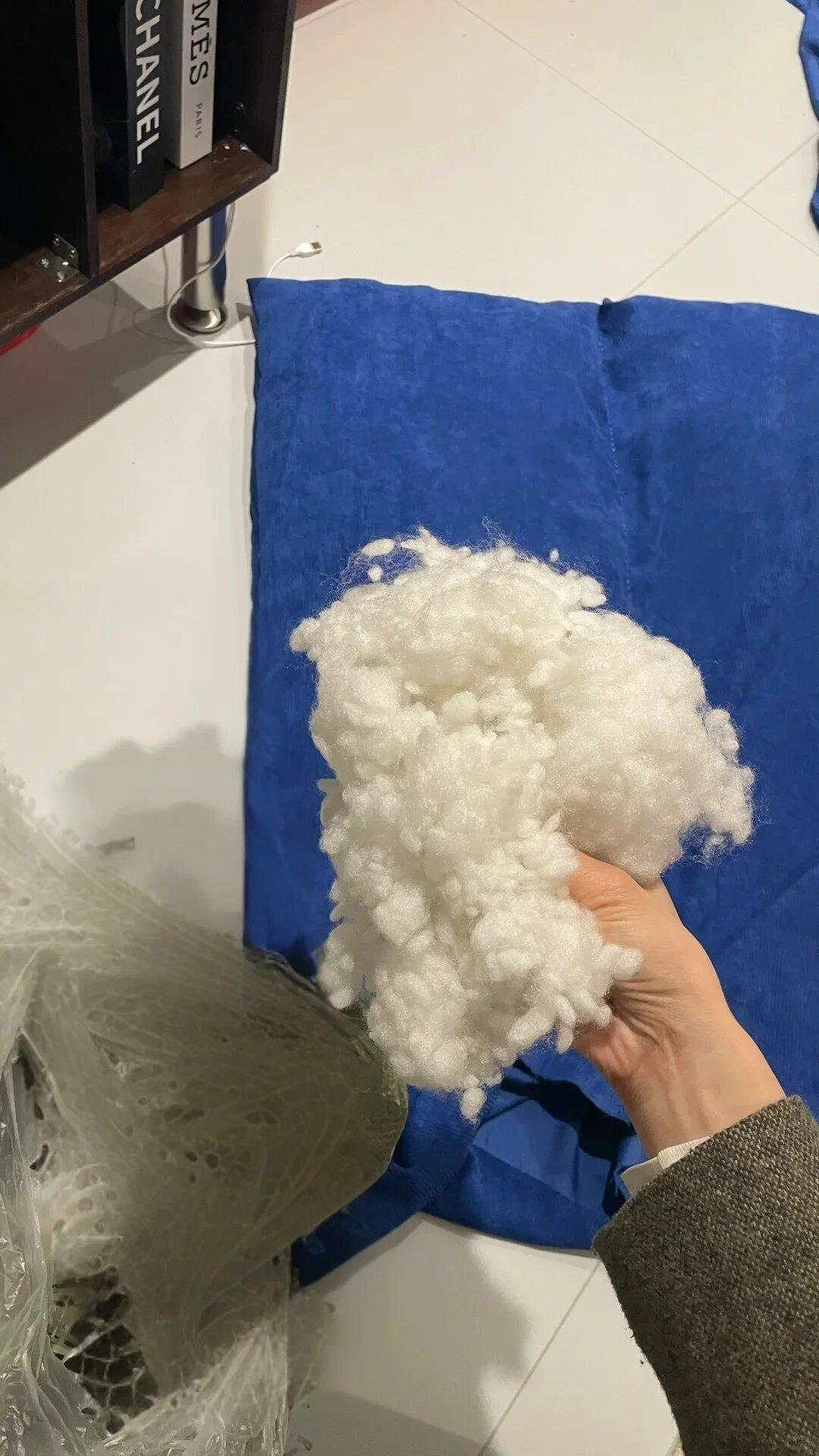
- Turn & Stuff: Flip the cover right-side out and stuff it with your Pearl Cotton and High-elastic PP cotton. Mix them together for the best balance of softness and support.
- Close it up: Hand-stitch the opening closed using a hidden stitch (ladder stitch).
3. The Finishing Setup
Place your cushions onto the frame. Because we built the support system with high tension in Step 2, these cushions should sit flat and stay in place without sliding.
Congratulations! You’ve just turned a pile of industrial pipes into a designer-grade Bauhaus chair. Time to grab a coffee and take your first well-deserved sit!
