Beaded Spider Including Capped Feet, Pedipalps, and Sternum.
by SheSpider in Craft > Jewelry
126 Views, 1 Favorites, 0 Comments
Beaded Spider Including Capped Feet, Pedipalps, and Sternum.

There is no one right way to make a beaded spider. I present here a deconstructed example of a beaded spider in my style which includes capped feet, pedipalps, and a sternum along with explanations in hope that it will serve as inspiration to other bead artists and crafters. Some of these steps may not be suitable for beginners, however there are some tips a beginner may find useful mixed in along the way.
Happy beading!
Supplies
Headpin
Assorted beads and findings
3mm crimp covers
Wire
Pliers for cutting, curling, and crimping wire
Nylon pliers
Tape
Craft glue
Fine thread or filament and a needle
Scissors
Cord, ribbon, hook, or chain to hang ornament
Magnification light or magnification glasses (recommended for capping feet and securing legs)
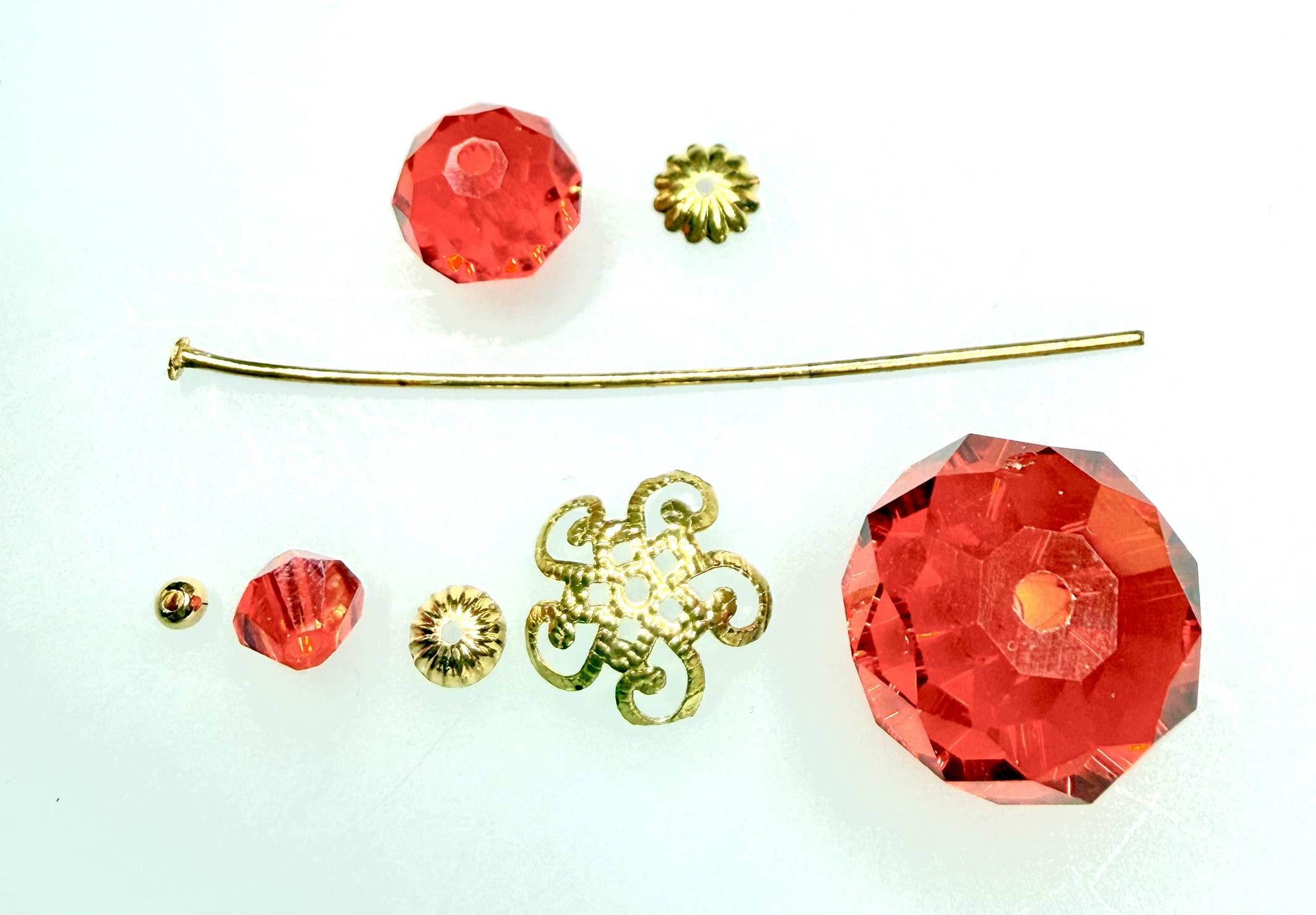
Select a headpin, beads, and findings for the body.

Cut tape to size and wrap around the headpin so beads with larger holes fit snug. I use clear tape for transparent beads and masking tape for opaque beads.
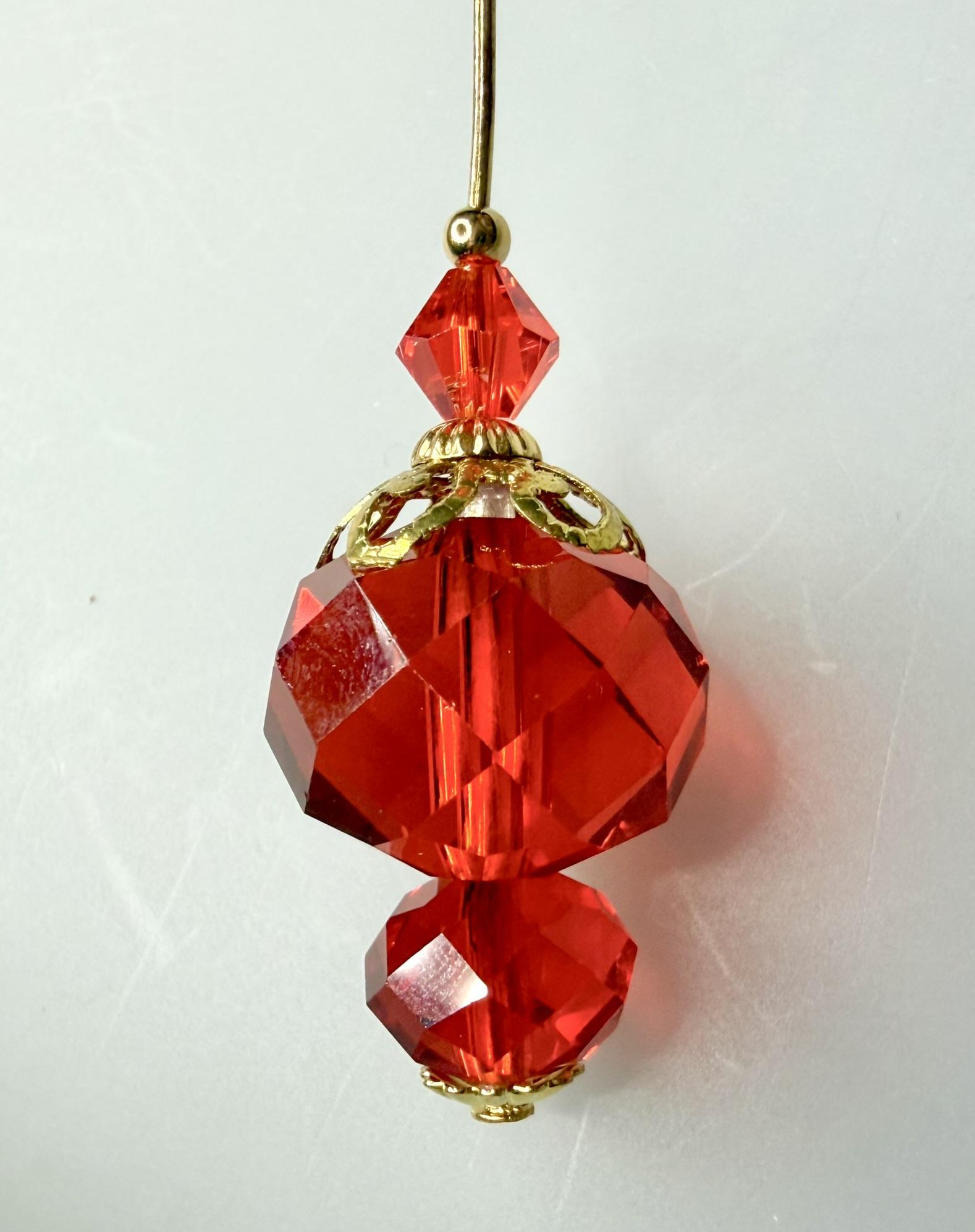
Arrange beads on the headpin.
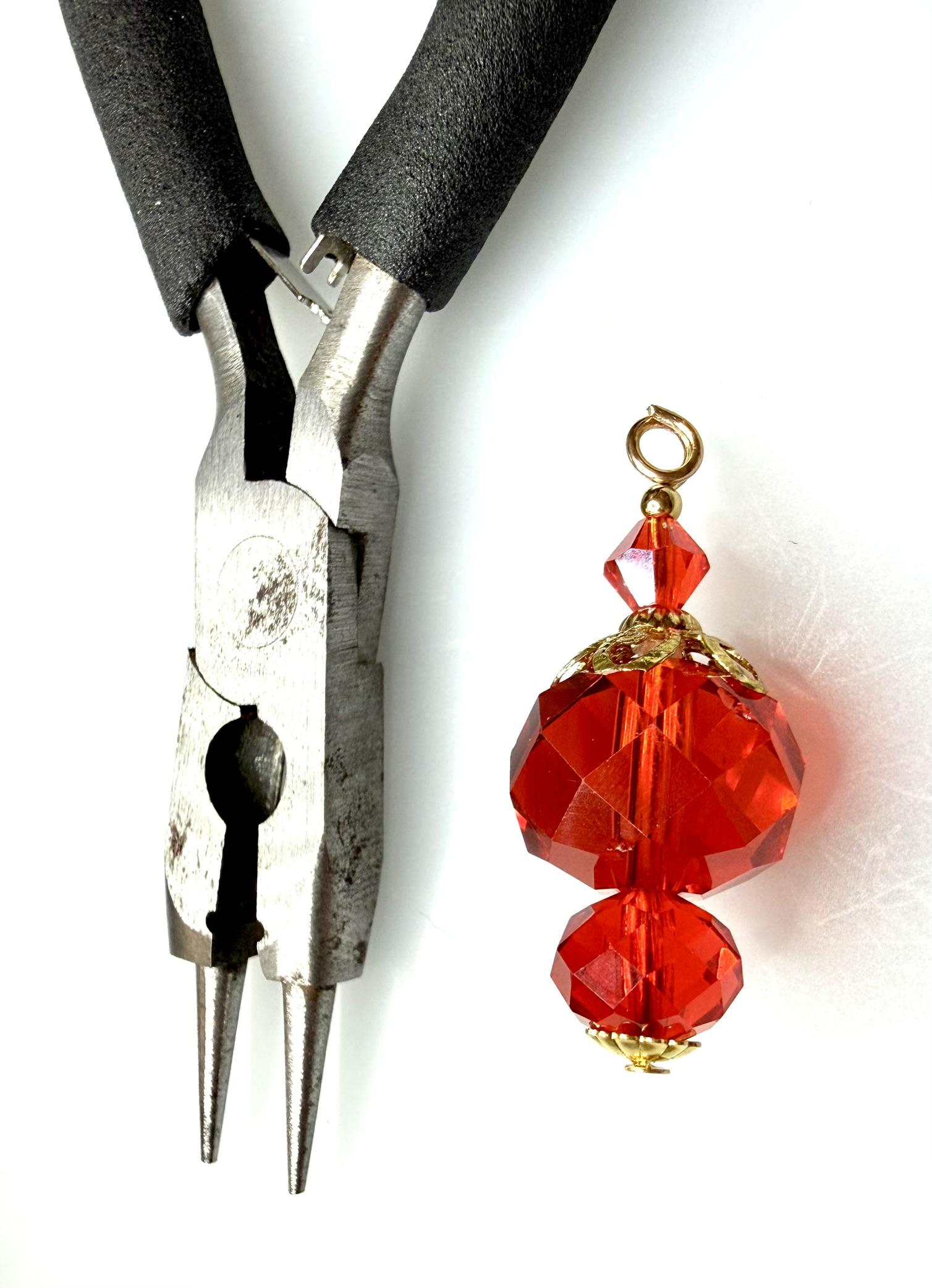
Loop the end of the headpin. The small metal bead I've included here protects the bead below it from chipping during this step.

Cut four 6" and one 3.5" lengths of wire. Bend them in half. I use 26 gauge brass wire. Brass is the material, not the color. It is harder and springier than copper. If using copper (copper comes in more colors) try 24 gauge. Heavier gauges may not work well for this style. For extra-long legs I use ~13" of wire. Materials and measurements can be adjusted to suit your needs.

Wrap two wires one time each tightly around the middle of the body forming the front and back legs. Use nylon pliers to shape the legs. If using copper wire you may want to spend extra time doing this to harden the wire, careful not to over do it though as eventually the wire may break. The front legs are legs 1 and back legs are legs 4.

Choose a bead that will be suitable for the sternum. This bead needs to have a hole big enough to accommodate four pieces of wire. I usually twist the wires together a little in the middle but this is not required. Loop the wires through the bead. These will be legs 2 and 3.

Slide the loop over the front legs and head. Tighten the wires around the middle with the bead placed underneath. Separate the legs and shape them with nylon pliers.

Choose the beads you want to use on the legs. I start with five small seed beads on all the legs. Arrange the beads. Tape the end of the wire to prevent beads from spilling off as you work.
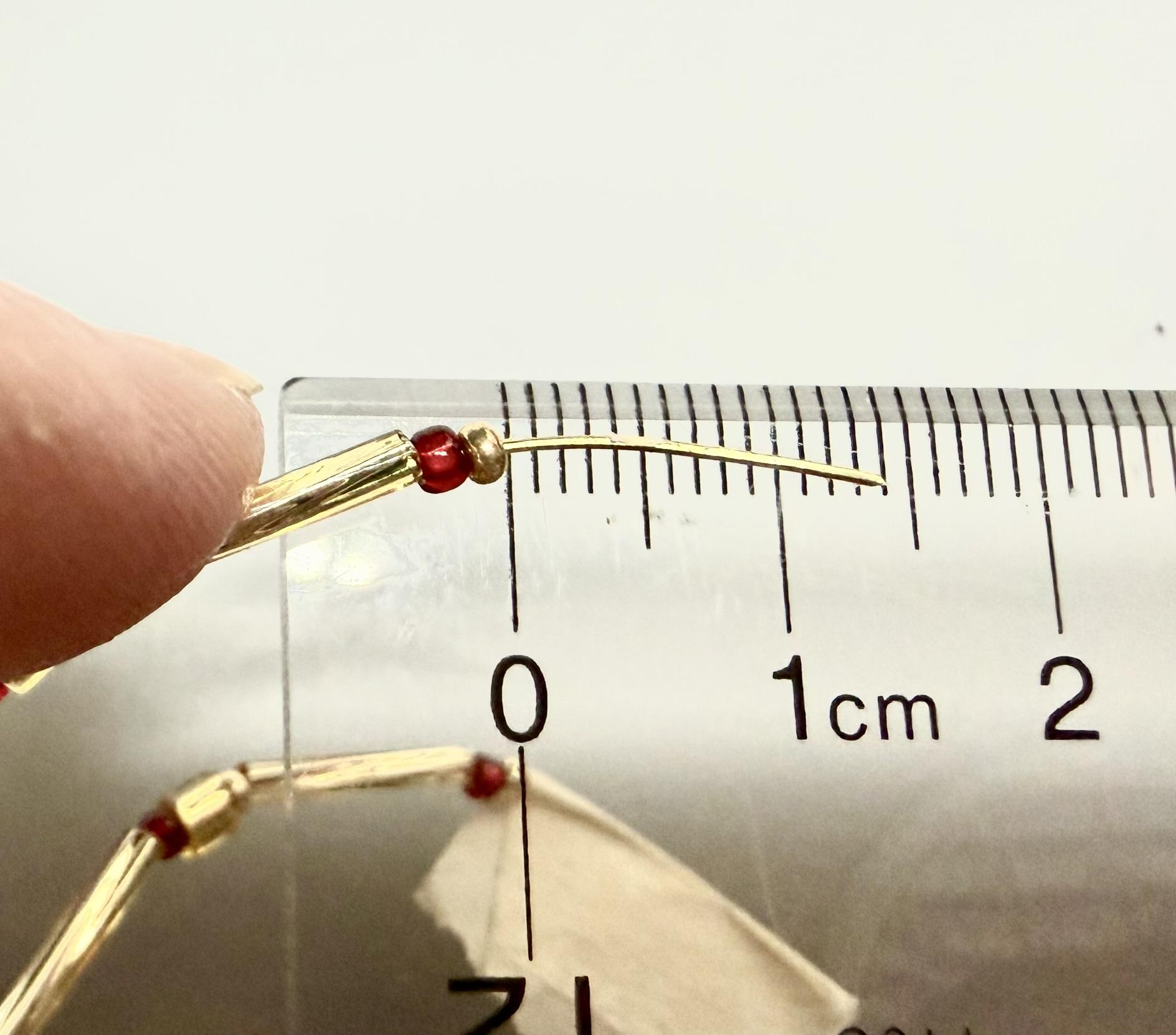
Remove the tape and trim the wire to 1.5 cm. This may need adjusting when using a heavier wire.


Use the pointed tip of your tool to make a small tight coil. It should be around 2mm if you want it to fit into a 3mm crimp cover. Repeat this on all of the legs.

Bend the tip of the folded end of the last piece of wire slightly. See where the arrow in the photo points.
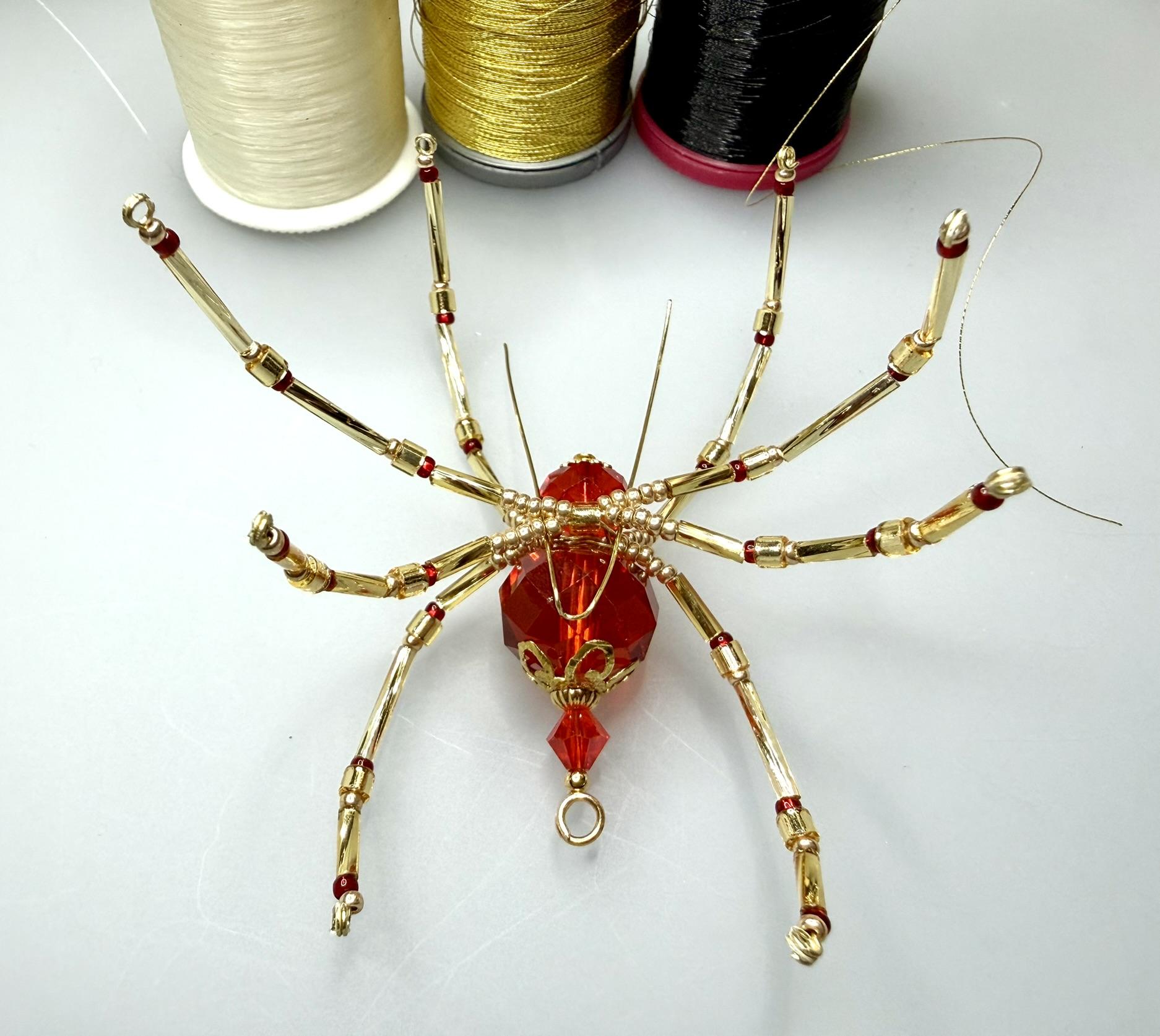
Slide the 3.5" wire between the legs with the bent portion pointing towards the spider. Legs 2 and 3 on one side and legs 1 and 4 on the other. See photo. Pull it all the way in. For the next step you will need fine thread or filament.

Thread needle, tie the ends together. Loop knot the thread over one of the wires. See photo. Weave the thread around the leg wires between the second leg bead from the middle on each leg on one side. Keep legs 1 and 4 above legs 2 and 3. Be mindful not to let the thread become tangled in the legs. If you do get into a bad tangle, cut and pick out the thread. Start over. This becomes easier with practice. A magnification light or glasses may be helpful. Do this a few times and loop knot the thread. The beads should hide the thread. Repeat on the other side.

Closely trim the loose ends of thread.

Choose and place beads for your pedipalps (some people call this detail "feelers" or mistake them for fangs). Coil the ends the same as the legs.

Make adjustments as needed, retighten anything that may have shifted while working.

To ensure a tight fit for the crimp covers, add a small drop of craft glue to each coil end on the appendages and let dry.

Select 10 3mm crimp covers. If you are using bargain brand crimp covers like I am here you may need to adjust some of the wonky ones with pliers first.

Push a coil all the way into the crimp cover. If the coils are facing out the crimp cover may not be able to close all of the way. I strongly recommend using a magnifying light or magnifying glasses for this step.

If using a metal tool to crimp your bead covers, add masking tape to the surface to avoid marring them. Very slowly and carefully crimp the cover closed. Some crimp beads are harder than others, slowly increase pressure and be very careful not to crush any beads. Do this for each appendage. I use a combination of metal and nylon pliers along with a magnifier to smoothly close my crimp covers.

Choose something to hang your spider by. This loop was made with 9" of cord. I use a drop of clear craft glue on the ends of similar cord and ribbon to prevent it from fraying. Push the cord loop through the headpin coil and loop it through itself to knot.
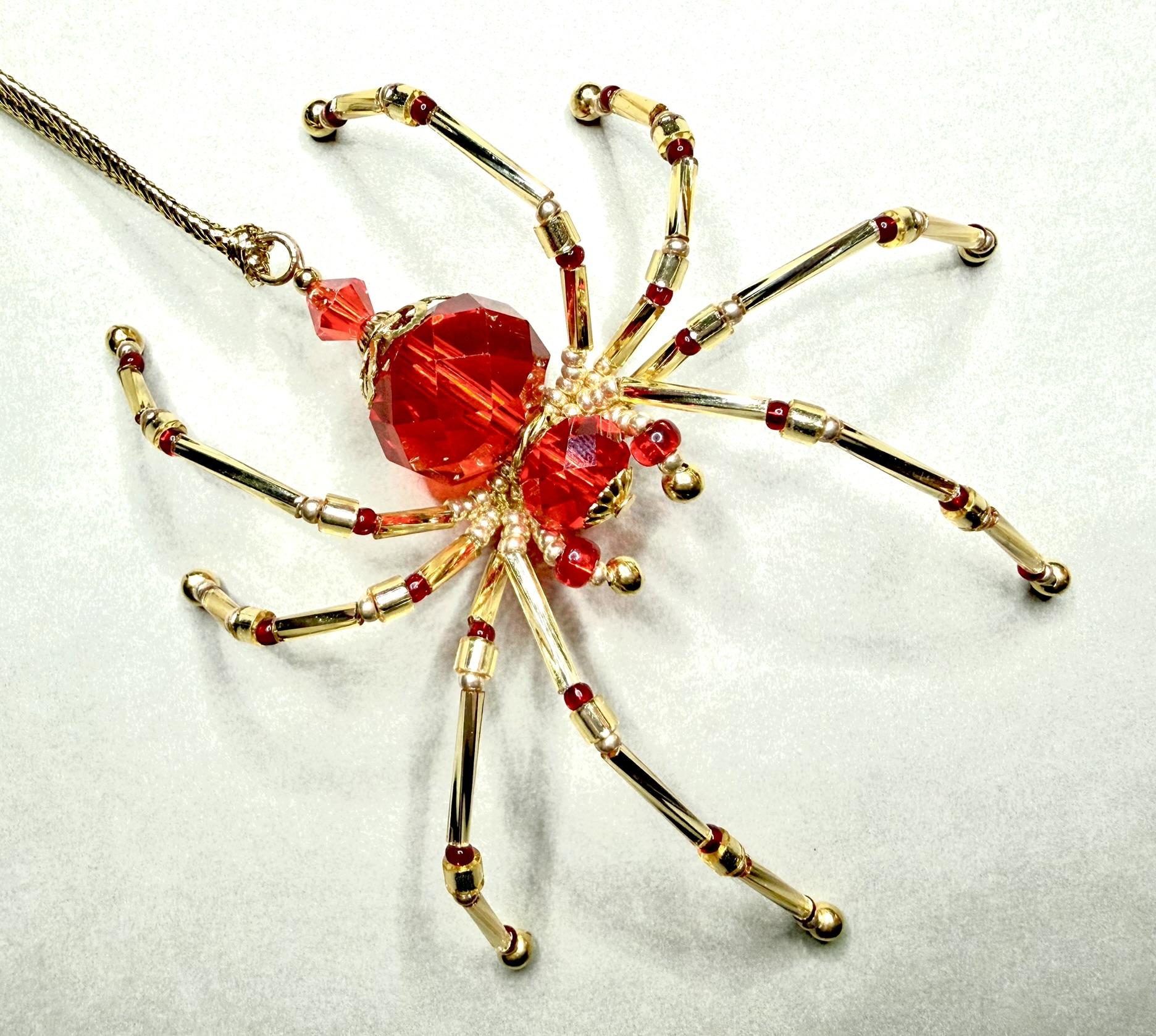
The finished beaded spider.