Boring Closet to Mini-Mudroom
by jfranklin04 in Workshop > Home Improvement
21 Views, 0 Favorites, 0 Comments
Boring Closet to Mini-Mudroom


Face Your Fears Contest!?!?
What better excuse do you need to mess something up!
Speaking of Messing Up. . .
The Fear of Messing Up. That haunts a lot of people this day and age. Doubt creeps in and prevents you from trying something new. . . Some of us feel like the risk of messing up far outweighs the potential reward for trying, others want to emulate the "perfection" we see online.
I read a quote a year or so ago and it has stuck with me ever since:
"Don't let perfection be the enemy of Good"
Don't live in the cycle of trying to come up with the perfect plan or concept. You could spend hours/days/months in that cycle. Sometimes you have to just have to "Do".
Don't get me wrong, planning, concepting and initiation of an idea are important! But messing around with new things, doing things with your hands, creating thinks that don't work, MESSING UP builds, are all but lessons waiting to be had. Only if you are willing to. . .
"Take chances, make mistakes, get messy" - Mrs. Frizzle
This Instructable dives not just into great things about the project but the mistakes and the messes, all to get the point across that it's okay to "Mess up"!
Supplies
Supplies
- Qty 2 : 2x4 or 2x2s (Width of Closet Doorway)
- Qty 3: 2x4 or 2x2s (~Depth of Closet)
- Qty AN : Wall Anchors + Screws
- Qty 2 : 2x3 (~Depth of Closet)
- Qty 1 : 2x3 (~ Width of Closet)
- Qty 2 : Sheet wood, Planks, left-over HW Floors (Closet WxD)
- Qty 1 : Sheet wood, Planks, left-over HW Floors (Desired Seat Height)
- Qty 2 : 1" L-Brackets (If needed)
- Small Nails
Optional/Décor
- Hanging Hooks
- Storage Bins
- Paint/Stain
- Any Decorations
Tools
- Saw (Hand/Circular/1950s Sears Table Saw)
- Drill
- Level
- Stud-Finder
- Hammer/Crowbar
- Tape Measure
- Level
- Square
- Hammer
Initial Concept


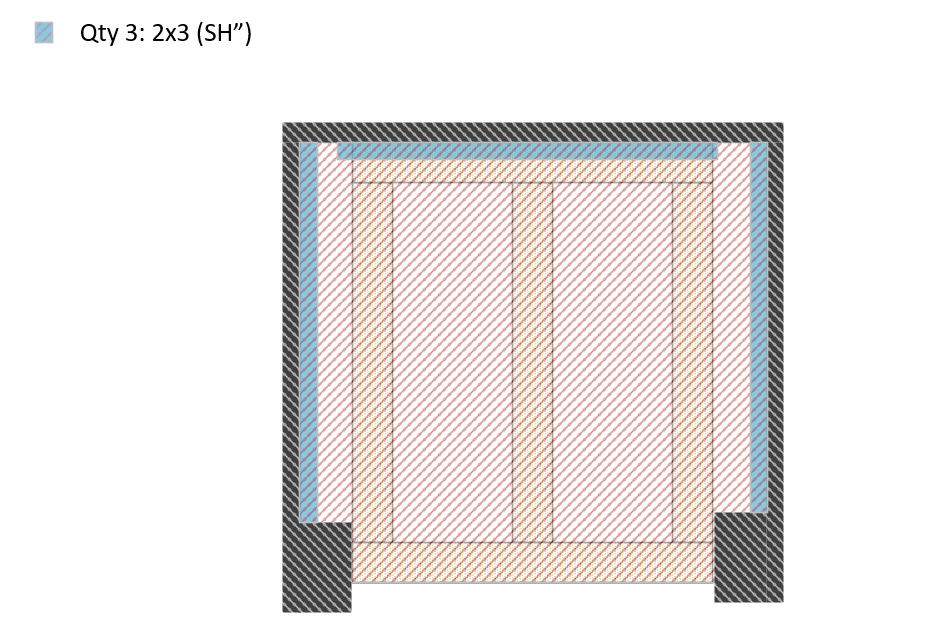
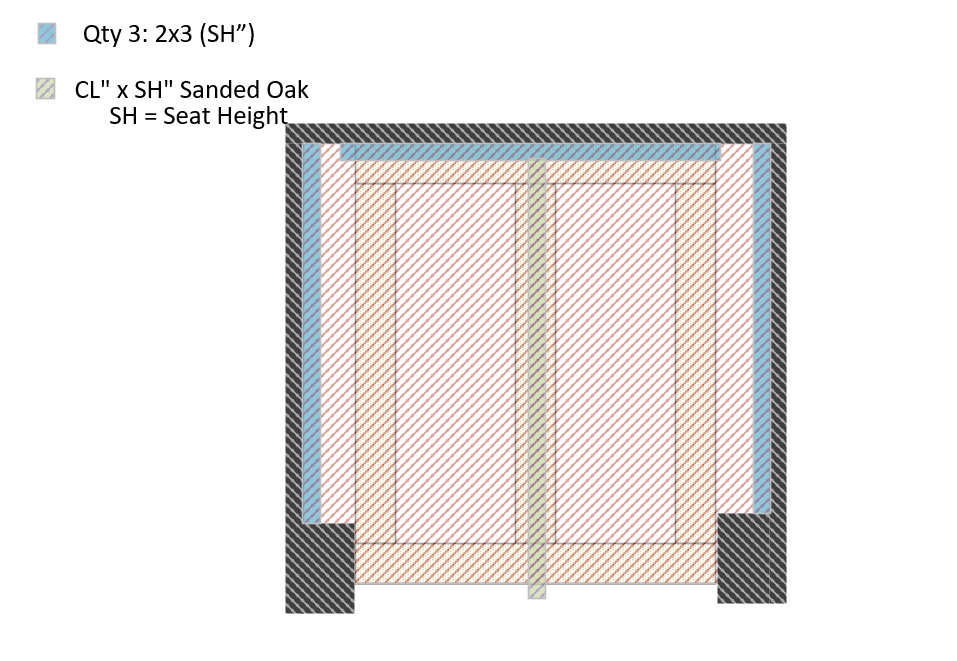

I made diagrams to show the process of the build (Click the pictures to scroll through each step). The black outline is the closet outline looking from above, with the opening at the bottom being the doorway.
The design flow is as follows:
- Create a Frame for the Base:
- Size/Cut/Layout
- Attach
- Install the Base Board(s).
- Install the Seat Support Studs.
- Add Center Wall/Divider.
- Install Seat Board(s).
- Install Front Supports.
DEMO/PREP WARNINGS!

IMPORTANT : Initially I took off the whole inner door frame because I wanted to make nice 90° cuts for my base and seat boards (When having to fit the wood into the door frame). However, door jambs use the frame for support, I did NOT know this!! I messed up. . . And that's okay! Because we took our time disassembling it, we kept the whole frame intact! So we were able to just nail it back in.
So the solution was to just cut the inner door frame from the seat height, down to the floor! This way the door frame and jambs still have the majority of their structural integrity, and I get to do my 90° cuts!
Note* I recommend using a Sawzall if you have it. . . I do not so I got to work the old fashioned way.
Note* A Good cheat if your closet has holes from previous hooks/shelves is cheap wallpaper!
Okay, now time to get into the build!
Size/Cut/Layout a Frame for the Base


Purpose:
Check the sizing of the 2x4s and how they fit in the closet before I screw things in.
Items Required:
- Saw
- 2x4s
- Tape Measure
Steps
- Measure, Measure and Cut 2, 2x4's the width of your Closet Door.
- Lay the first 2x4 in the doorway and the other on the back wall.
- Take a 3 Measurements between the front and back 2x4s.
- One flush with the right ends
- One in the middle
- One flush with the left ends
- Measure, Measure and Cut 3, 2x4's to the lengths measured in the step above.
- Place the 2x4's cut in previous step.
- One flush with the right ends
- One in the middle
- One flush with the left ends
Mistakes were made. . .
- Don't assume your closet is perfectly 90°, ours was not! Hence why we take 3 measurements Left, Right Center (love that game) to ensure we are good!
- I tried building the base, then installing it in the doorway. The 2x4s were warped, so I undid the screws and decided to build it in the closet.
Attach the Frame for the Base


Purpose:
Install the base frame in the closet.
Items Required:
- Drill
- Screws (I think I used 1 1/2")
- Drill Guide/Pocket Hole Jig (If you have it)
- 2x4s from previous step
- (Optional) Weight or Partner if 2x4s warped
Steps (Drill Guide/Pocket Hole Jig)
- Start with the layout in the previous step
- Using your drill guide, drill at a shallow angle. We just need enough to bite into the second board:
- Attach the horizontal front board to the 3 middle ones (1 screw per connection).
- Attach the 3 middle ones to the horizontal board on the back wall (1 screw per connection).
- If you want it to be attached to the wall you can use a 2x2 and longer screws for this one.
- Also if you don't mind screws being seen in the front you could screw through the 2x4 in the door frame, It just wont be as aesthetically pleasing.
Steps (No Drill Guide)
- Start with the layout in the previous step.
- Do a Pilot Hole first (Vertical just enough to get a grip on the wood, so your drill bit doesn't walk on you)
- Then angle the drill to drive the actual pilot hole that the screw will follow.
- (Optional)You could bore a hole, the size of your screw head to give it a nice tunnel, So that the screw head isn't protruding and make your base boards creaky/uneven. (Recommended).
- I just cranked the torque setting on my drill to max and sent it (Not Recommended).
Doh!
- I was about to buy 2x4s so that I could browse and find the best ones in the store (not mangled, not warped). I realized the base is the only thing using 2x4s, and I only need one part of the 2x4 to be aesthetically acceptable (The one in the doorway). Everything else will be covered by my base wood, so i didn't care how gnarly those pieces looked.
- My wood would occasionally lift as I was screwing it in. Get a weight or a partner to hold down the wood so it doesn't rise on you when drilling.
- My Manual drill guidance was mistake heavy, I found that a shallower angle was better because this wood is going to be connected to a base plank. It didn't need to be perfect.
- Honestly, I probably could have wedged the 2x4 in the door frame and liquid nails/wood glued everything else!
Install Base Boards

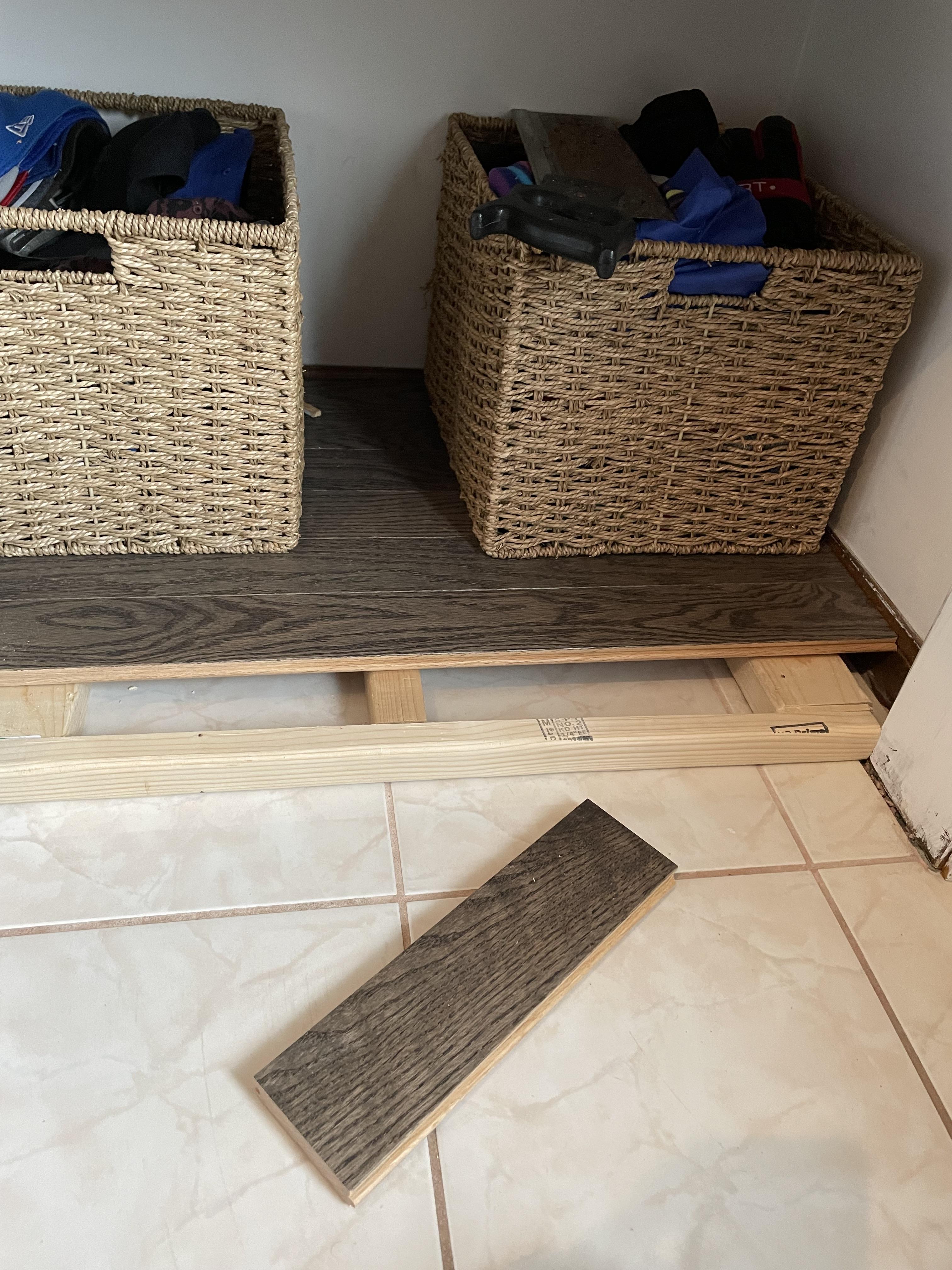
Purpose:
Install the base board(s) in the closet. If you are using planks/multiple boards you probably don't need to fasten anything down until the later steps.
Items Required:
- Saw
- Nails/Liquid Nails
- Hammer (If Solid Nails)
- Planks, Ply Board, Oak Sheets, Leftover Hardwood Floor
- Tape Measure
- Cardboard (Optional)
Steps
- We had leftover Hardwood flooring that was gathering dust in our storage (Wife's Great Idea, not my own). So we decided to use that! But boards, planks, sanded plywood are all acceptable.
- For a single piece, measure the dimensions of you closet + doorway.
- Before the hardwood floor idea - I was planning on actually cutting a piece of cardboard to act as my stencil before cutting into 4x8 sanded board.
- For planks, measure the wall-to-wall width and cut accordingly.
- Whenever you decide to fasten, a couple of liquid/solid nails into the base frame should do the trick!
- For single board, probably do it now
- Planks or multiple boards, now or later.
Note* Because I was using hardwood floors I installed my base and my seat during the last step. It's a good idea to cut them to size and do your fitting before fastening.
Note* If you are using a single board for the base and seat, It may be a bit harder to get your base in there if any subsequent steps are completed.
Blunders!
- Measure twice cut once. Having planks or HW Floor slats are definitely more forgiving than a single board (with regards to cutting and having gaps). The smaller the floor boards the more forgiveness you'll have! We used 3" boards.
- I have tried a thousand times in woodworking to "eyeball" something. I have NEVER been successful. Take your time: Measure, Measure, Mark, Measure and Cut.
Seat Support Studs


Purpose:
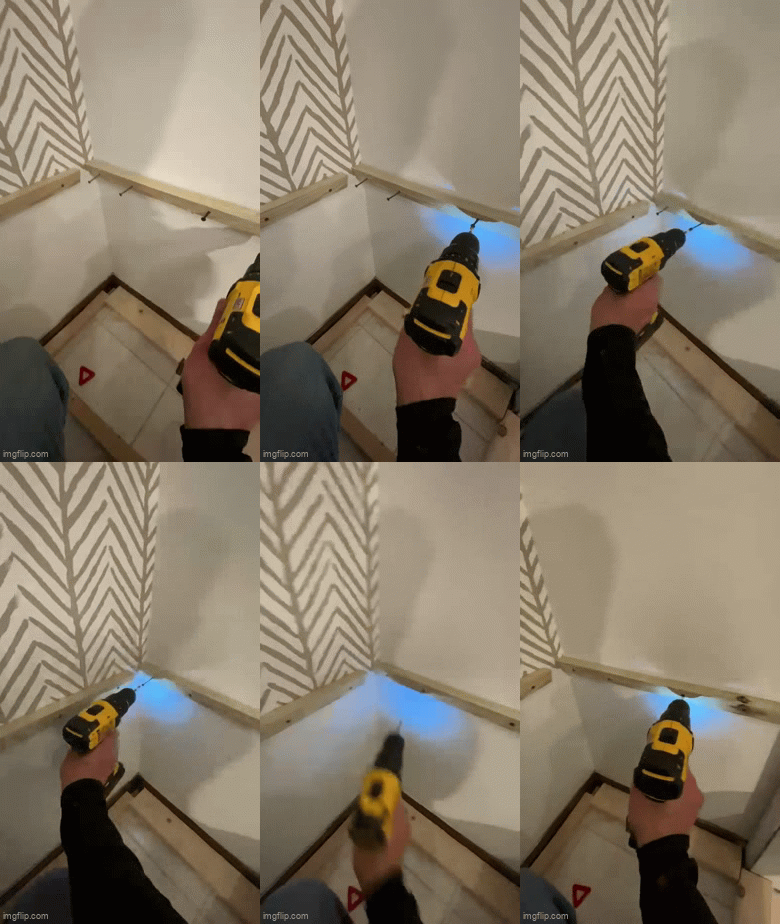
Install the seat support studs. These are going to attach on the wall of the closet (Seat height) to give a ledge for the seat planks to be on.
Items Required:
- Saw
- Screws
- Wall Anchors
- Drill
- 2x3s
- Tape Measure
- Level
- Stud Finder (Optional)
- Hammer/Mallet
Steps
- Use your Stud Finder to locate your studs. If you don't have more than 3 studs I would recommend using wall anchors as well.
- There are neato Stud Finders that can detect wiring!
- Measure the left wall depth, back wall width and right wall depth (subtract ~4 inches from the back wall measurement so the left and right 3x2s can slide into the corner.
- Cut 2x3s to the measured lengths.
- Hold the back wall 2x3 at the desired seat height (~ 2ft)
- Place the level on your 2x3 to ensure it is level during the next step!!
- I'm using wall anchors, so I drilled through the 2x3 and into the wall with a 1/4" drill bit.
- I drilled every 5-6 inches (extra support).
- Now move the predrilled 2x3 out of the way and tap the wall anchors into the wall.
- You may have to tap with a hammer or mallet to ensure it is flush with the wall.
- Align and attach the predrilled 2x3 using screws.
- Repeat for the left 2x3 and the right 2x3.
Oops!
- I didn't have enough 2x3 to fill the entire perimeter. Unfortunately, I pushed the left and right supports up against the BACK wall, instead of the FRONT wall. Not mission critical but, most of the weight bearing will be towards the front. Keep that in mind when adding the side supports!
Center Wall/Divider
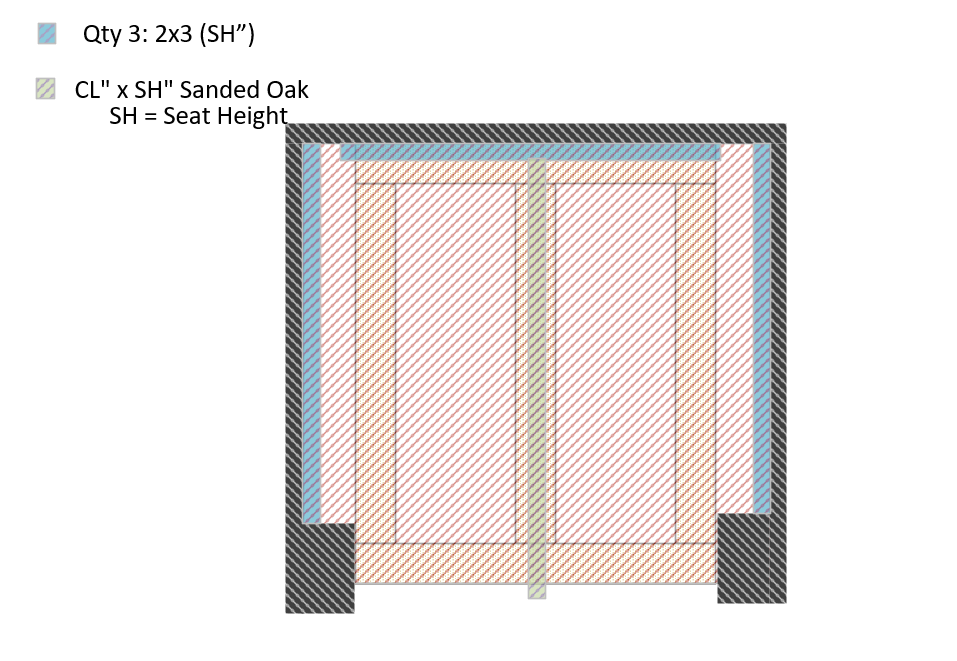


Purpose:
Divider for bins but also, the structural support for the middle.
Items Required:
- Saw
- Plank, Ply Board, Oak Sheet (Seat Height x Closet Depth)
- Tape Measure
- Cardboard (Optional)
Steps
- Hardwood floors wouldn't save us here, but boards, planks, sanded plywood are all acceptable.
- Measure the depth of your base. Keep in mind there is the 2x3 back there, You may want to cut a 45°Angle to be flush against the back wall.
- Optional - Cut a piece of cardboard to act as my stencil before cutting into my board.
- Cut the board to size.
- Sand/Paint/stain board prior to attaching.
- I think you could get away with doing the other boards while they are installed, this one is vertical so it may be a bit tricky.
For our project we are planning on having the wood wedged between the seat and the bottom. Then tapping nails in the top.
Close Call!!
- When I cut the stencil I forgot about my seat supporting studs !! Hence the angle cut in the first picture!
Install the Seat Boards


Purpose:
Install the seat board(s) in the closet.
Items Required:
- Saw
- Small Nails
- Hammer
- Square Tool
- Planks, Ply Board, Oak Sheets, Leftover Hardwood Floor
- Tape Measure
- Cardboard (Optional)
Steps
- Again we used the leftover hardwood floors, but boards, planks, sanded plywood are all acceptable.
- For a single piece, measure the dimensions of you closet + doorway.
- You may be able to use the same stencil as the base board, but double check first!
- For planks, measure the wall-to-wall width and cut accordingly.
- Jigsaws are helpful for cutting the bit near the door.
- Once all your boards are in, slide and attach the divider from the previous step using a square to ensure you have 90° angles:
- Divider to base
- Divider to seat
- Use small nails to connect the seat to the divider.
Shucks!
- When adding the seat and base planks, we realized the door frame was going to make our lives interesting. I didn't have a Jigsaw, I only had a 1950 Sears Table Saw. So to make our cuts a nice 90°, we removed the inner door frame from the seat down.
Front Support (If Overhang + Planks)
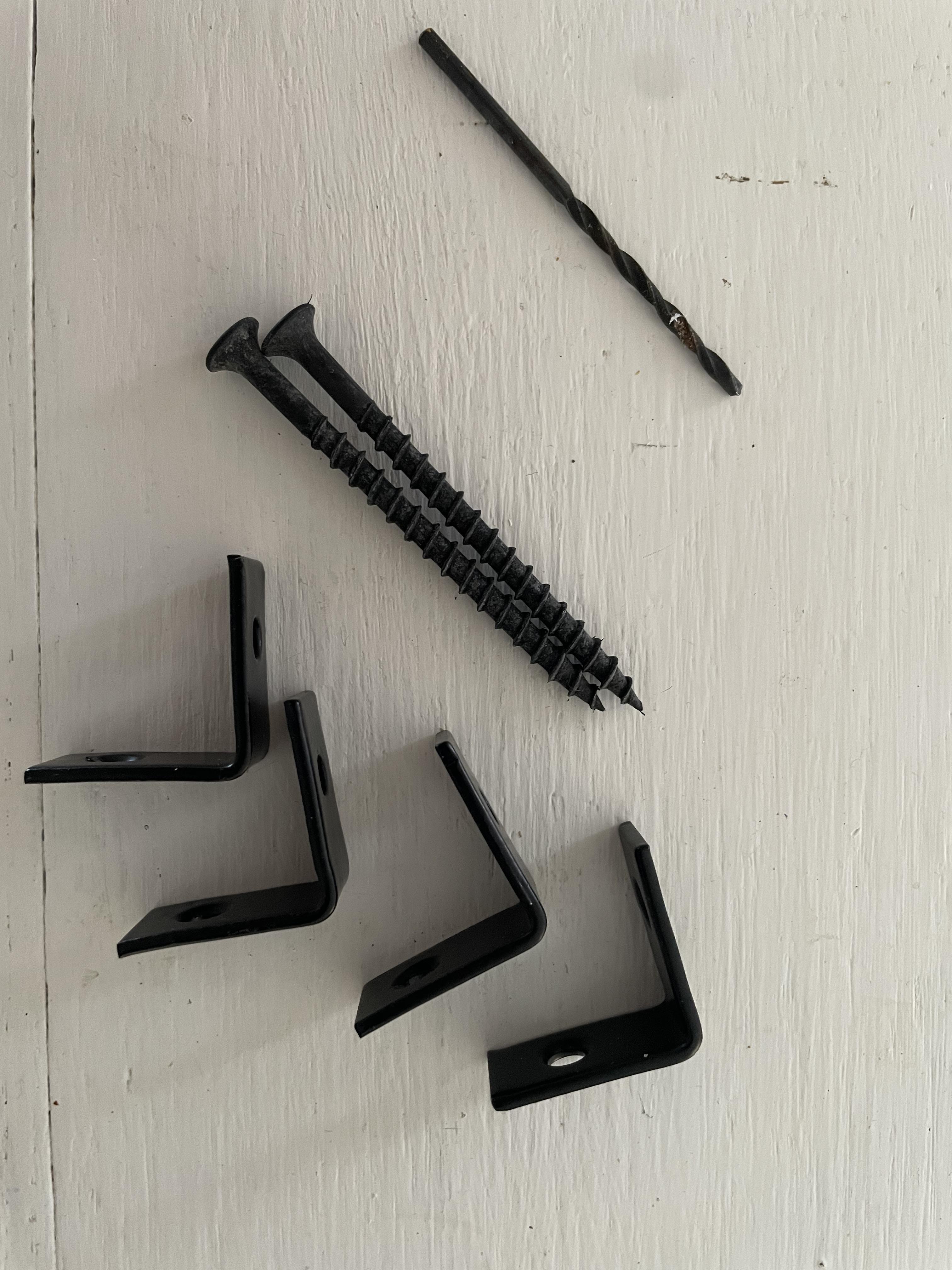
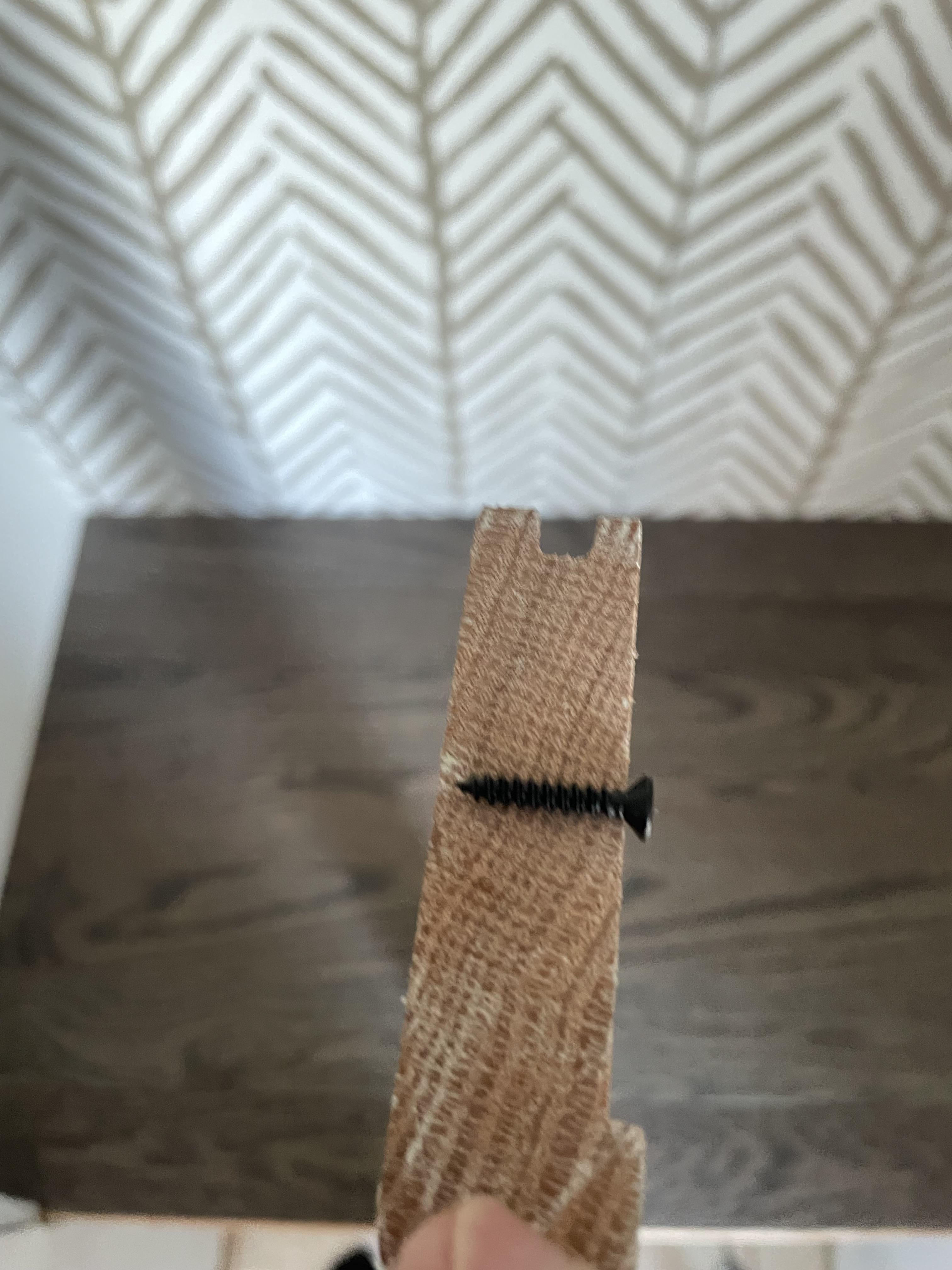

Purpose:
If you are doing a overhang with planks/Hardwood planks.
Items Required:
- Qty 2: ≥1" screw to mount to wall
- Qty 2: ≤ The board thickness
- End piece cut to size (Routed + sanded + stained if you want it smooth)
- Drill
- L-Bracket
- Level
- Tape
Steps
- Check your screws before drilling, ensure that the smaller screws are smaller than the board thickness.
- Lay your end piece on top of the center wall/divider to align it (Use your level).
- Fit your l brackets underneath the board, ensure that it is flush against the wall and the bottom of your end board.
- Mark with a pencil where your pilot holes on the wall and plank.
- Drill your pilot holes.
- I put a piece of tape on my drill bit as an indicator that I've drilled 3/4 of the screw length.
- Screw in your L-Brackets
Decorate

Hooks, Shelves, Wreaths, give your closet Mudroom some life!
Thank You!
If you made it this far into the Instructable, thanks for the support. I think all of us as creators, builders, artists and engineers already realize that messing up can be scary. However, if we can find the courage to take the risk, the rewards are endless!!
As always comments, notes, and criticisms are always welcome and encouraged!