Combat Sport Wearables: Force Measuring + Energy Generating
by katiecallo in Circuits > Wearables
100 Views, 1 Favorites, 0 Comments
Combat Sport Wearables: Force Measuring + Energy Generating


My Nerdy Approach to Personal Training
As a personal trainer and biometrics-geek, I have always been curious about ways we can better track training performance progress and ultimately, speed up the process in picking up/testing a new skill. Since my freshman year at UCLA and throughout my time leading CruX@UCLA (the largest undergraduate neurotechnology club) I have been working to integrate various forms of sensors with athletic clothing/ gear ranging from EMG for understanding muscular contractions, EEGs for measuring brain activity, IMUs for measuring movement, MEGs for finer tune electrical signals, and piezo sensors where athletic energy can not only be analyzed but harvested. When I found out about the "Let There be Speed" Autodesk Competition, I knew I wanted to create a training wearable and began exploring the specific sensor(s) and sport(s) I wanted to focus on.
Energized to Box
Recently, I have fallen in love with boxing, Muay Thai, and mixed martial arts, even teaching a Boxing and Conditioning class for graduate students at UCLA. However, I have noticed that getting into these sports can be daunting for many and require precise attention to detail for coaches. While some form cues are easy as the trainer or individual to spot and correct, other insights about a student's power, the precise distribution of weight in their foot work and punches, etc. are much harder to track with the naked eye (especially if one does not have the means to pay for classes or a personal coach).
Inspired by the potential to both accelerate the learning curve in combat sports and gain deeper insights into movement patterns, I began developing boxing training insoles and gloves. These prototypes aim to capture data on foot pressure, impact force, and strike distribution, while also exploring the longer-term possibility of generating usable energy from the force produced during training.
Instructable Overview
This intractable goes over an early prototype for Smart Combat gear (2 MMA gloves + a sole insert) that track force/ distribution between sensors. While there are many additions I am excited to make in future iterations of this project (and maybe even future instructables), readers should walk away from this guide with the ability to build this piezo-embedded gear that can connect to computers and even to mobile devices (bluetooth optional addition).
Supplies

Electronics:
- 1 package of piezo sensors
- 3 x ESP32 development boards (ESP-WROOM-32)
- 4x 100 kΩ resistors (series protection)
- 4x 1 MΩ resistors (signal stabilization / bleed resistor)
- a roll of conducive copper tape
- micro USB to USB converter
- conducive thread
- optional: USB to HDMI converter (if using Mac)
- optional: Portable USB battery pack
Apparel Elements:
- a pair of boxing or MMA gloves
- a pair of insoles
- EVA foam or padding
- 2 x (5 in by 1in) rectangles
- 2 x (3 in by 1/2in) rectangles
- Spare fabric for sole wraps (I used straps from a old tote bag but anything flexible will suffice)
Equipment:
- soldering iron
- recommended: fan (if soldering inside for vent)
- flux (for soldering)
- soldering wire
- scissors
- hot glue gun (for reinforcement)
- optional: sewing kit (for reinforcement)
- optional: measuring tape (for more precise foam cuts)
- optional: pen/pencil (for customizing insole to your foot)
Software:
- Arduino IDE
- ESP32 board package (Espressif)
- USB-to-serial driver (CP2102)
- optional: React Native for UI/UX
Concept + Planning



Why Piezoelectric Sensors?
The first step in developing the smart boxing gear was identifying the appropriate sensing technology and determining optimal sensor placement for a minimum viable prototype. Among several possible sensing options, piezoelectric sensors were selected over inertial measurement units (IMUs). While IMUs are commonly used to detect motion and orientation, piezoelectric sensors convert mechanical pressure into electrical signals, allowing physical movements such as foot strikes or punches to be detected and quantified. This made them more suitable for capturing the force of strikes and foot impacts while also supporting the project’s longer-term goal of exploring energy harvesting from human movement. By converting mechanical stress into electrical signals, piezo sensors enable both impact detection and the potential recovery of small amounts of energy generated during athletic activity. When force is applied, the piezo material slightly deforms, generating a small voltage that can be read by a microcontroller. This makes piezos particularly useful for capturing rapid changes in force, such as impact timing and distribution. In wearable systems like smart insoles or boxing gloves, these sensors enable the translation of biomechanical movement into interpretable data about power, balance, and movement patterns.
Concept Design
Initial prototype designs focused on strategically placing sensors in high-impact regions. For the boxing gloves, this meant positioning piezo sensors near the primary strike zones of the front two knuckles closest to the thumb to capture punch force and distribution. For the footwear prototype, sensors were placed at the heel and toe areas of the insole to capture the most common pressure points during gait and athletic movement.
One major change from the early design, was the insole was initially going to be a 3D printed sandle-like shoe; however, as I wanted to prioritize an athletes comfort and safe mobility I eventually bought premade insoles on Amazon. These soles were a little more elevated than I would have hoped for a boxing shoe; however, they do maximize comfort for the wearer and future iterations can support a more diverse range of podiatric and athlete-specific needs.
Electronic Component Selection
Early circuit designs (like the Tinkered pdf attached below) were initially developed with an Arduino microcontroller in mind due to its accessibility and large ecosystem of educational resources. However, further research into wearable system requirements revealed that the Arduino form factor would be less suitable for compact integration into athletic gear. As a result, the design shifted to the ESP32 development platform. The ESP32 provides a smaller footprint while offering significantly greater functionality, including built-in Wi-Fi and Bluetooth connectivity, higher processing capability, and multiple analog input channels for sensor data collection. These features make it particularly well suited for wearable prototypes that may eventually transmit data wirelessly to mobile devices or cloud-based analytics platforms.
Testing the Piezos


Soldering
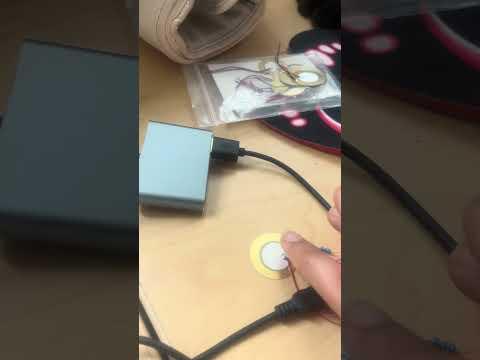
To test my sensors, I soldered (with flux, iron wire, and my soldering gun) a single circuit most similar to the circuit used for the boxing glove introduced in step one. I connected my anode directly to the ground of the ESP32 and then connected my cathode to an ESP32 analog input through a 100 kΩ series resistor, while the same input node is stabilized with a 1 MΩ resistor to ground and protected by two diodes (1N4148) that clamp voltage spikes to the 3.3 V supply and ground, ensuring the signal remains within the safe operating range of the microcontroller.
Testing with Arudino IDE
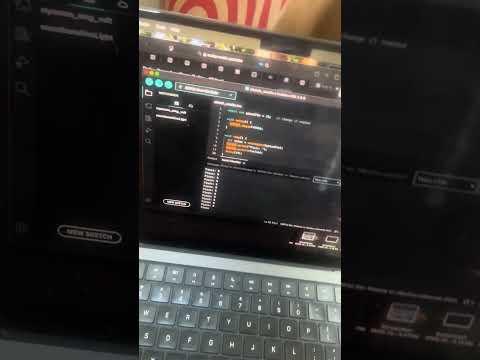
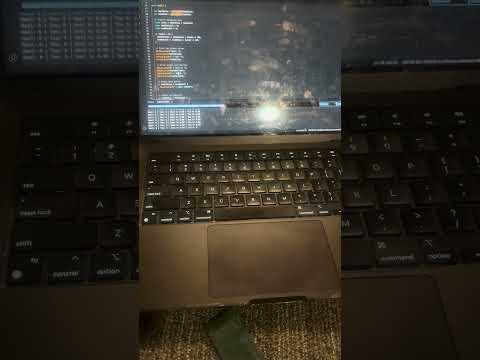
I plugged in a micro USB --> USB converter into the ESP32 and than plugged this into my MacBook with a USB to HDMI converter. After downloading the ESP32 dev package and making sure in tools that I connected to the right port etc., I loaded and ran the above code. Opening the Serial Monitor, I could tell that the sensor was working the way I wanted it to as the 0s would change to higher values whenever I pressed the sensor proportional to the force I was using.
Integrating Into Gloves


Marking the Layout
I positioned the piezo on the knuckle closest to the thumb and placed the ESP32 on the wrist portion closest to the thumb as well as this is the position in sparring that would be least likely to be hit. I placed and connected the resistors/electronics with conducive copper tape. Once happy with my circuitry, I reinforced the connections and copper tape with conducive thread to make it more resilient. For the right glove, I used the pre-soldered ESP32 that I initially tested (this also allowed me to run the same code as before), and for the left glove, I experimented with not soldering and only using the conducive tape which also worked but was far less durable (the code is also the same just connected to a the left ESP32).
Refinements
To reinforce the durability of the sensors and electronics, I insulated the MMA gloves with the 5x1inch foam rectangle secured with hot glue.
I connected the ESP32 to bluetooth rather with the help of this tutorial: https://www.instructables.com/ESP32-Bluetooth-Tutorial-How-to-Use-Inbuilt-Blueto/.
Integrating Into Soles


Marking the Layout
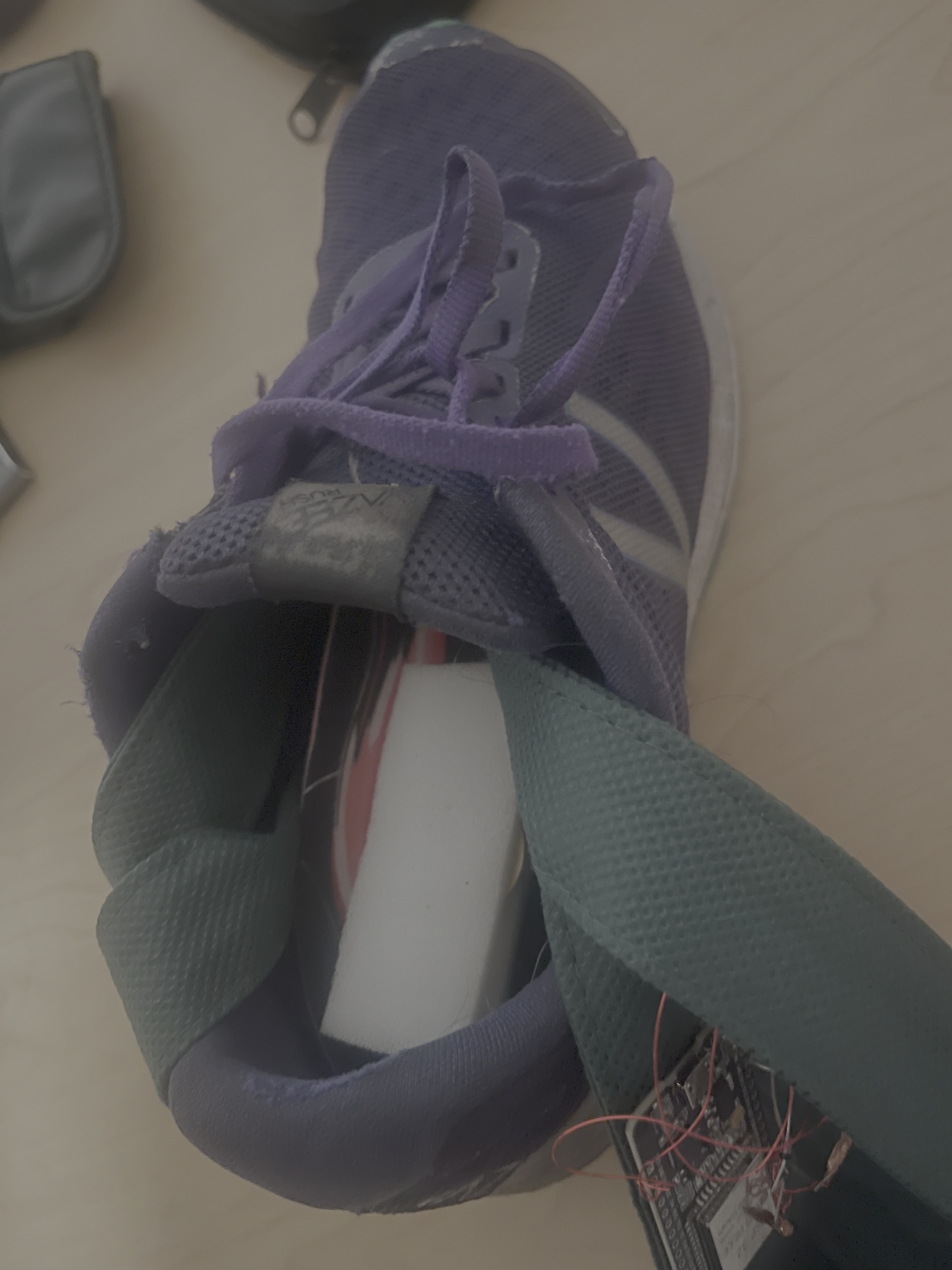
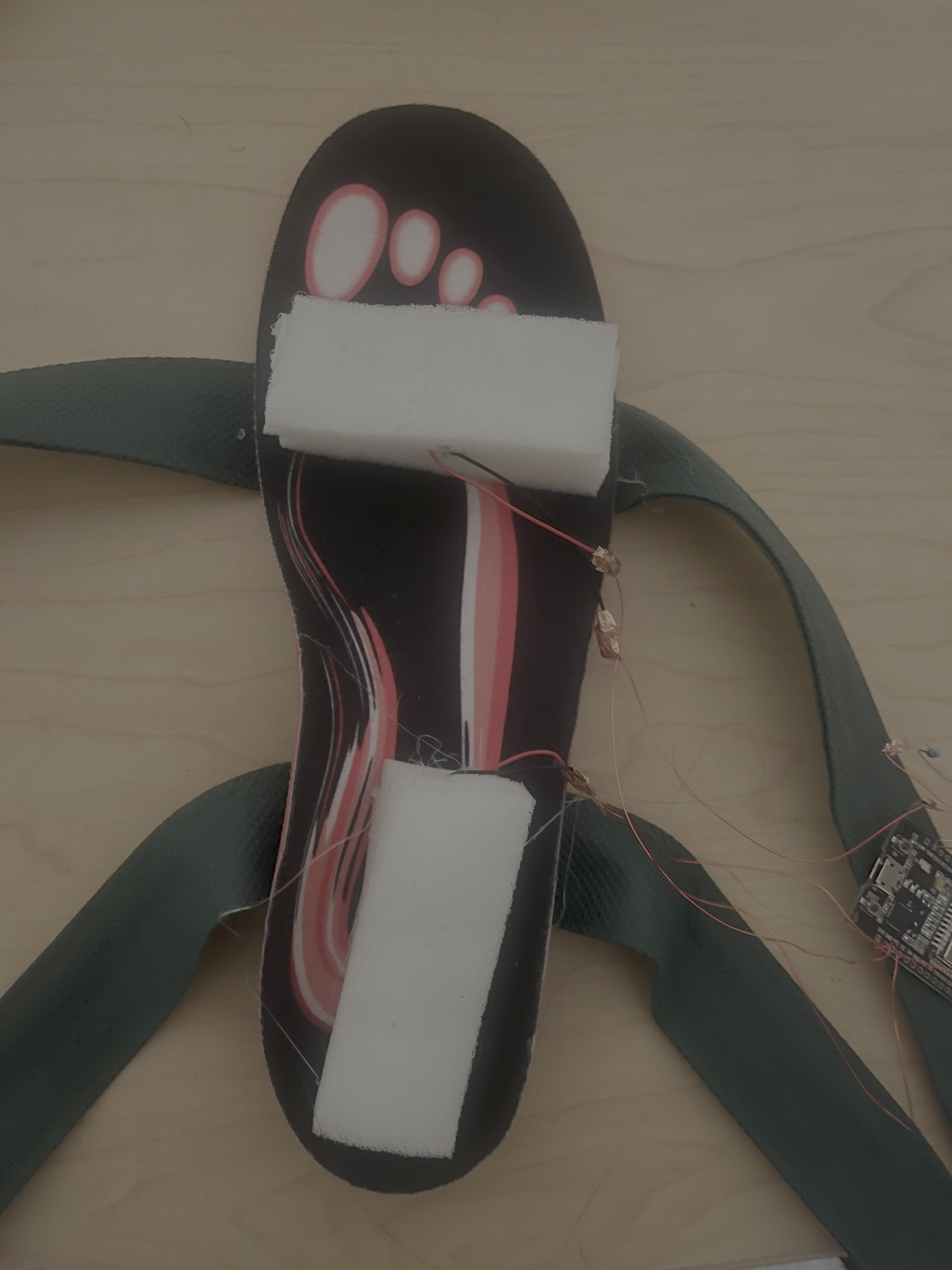
As with the gloves, the initial step in integrating the sensors into the insoles was to prototype the layout using conductive copper tape before permanently securing the components (soldering electronics/reinforcing with conducive tape and thread and hot gluing everything together). This approach allowed for quick adjustments to sensor placement and wiring paths while testing the system. To ensure the ESP32 was not in the way to moving around, I used the conducive thread and copper tape to elongate the length of the piezo wires. The piezo sensors were cushioned with foam padding to protect them from repeated mechanical stress and potential damage caused by continuous walking, running, and athletic movement. The foam layer also helped distribute pressure more evenly across the sensor surface, improving durability and consistency of readings. As seen above, the insole can be used with or without shoes.
Refinements
A key design consideration was determining where to house the electronics module. Rather than embedding the ESP32 directly within the sole, which could introduce rigidity and discomfort, the final design integrates the microcontroller into a flexible fabric wrap that can be worn around the ankle or attached to the shoe. This approach allows athletes to adjust the positioning based on comfort and sport-specific movement patterns. In most cases, positioning the electronics near the heel is recommended, as it is less likely to experience direct impact during activity. However, the modular wrap design provides flexibility, allowing the system to adapt to different athletic contexts and user preferences while maintaining sensor functionality. For the wrap, I used straps from an old tote bag however any long, rectangular piece of fabric should be sufficient and through wrapping the fabric, one can personalize it to their own foot/leg dimensions.
-----------
Sole Arduino IDE Code
const int heelPin = 35; // heel sensor
const int toePin = 34; // toe sensor
const int threshold = 1500; // impact detection threshold
void setup() {
Serial.begin(4800);
}
void loop() {
int heelValue = analogRead(heelPin);
int toeValue = analogRead(toePin);
// Prevent divide-by-zero
float total = heelValue + toeValue;
float heelPercent = 0;
float toePercent = 0;
if (total > 0) {
heelPercent = (heelValue / total) * 100;
toePercent = (toeValue / total) * 100;
}
// Print raw sensor values
Serial.print("Heel: ");
Serial.print(heelValue);
Serial.print(" | Toe: ");
Serial.print(toeValue);
// Print weight distribution
Serial.print(" | Heel %: ");
Serial.print(heelPercent);
Serial.print(" | Toe %: ");
Serial.print(toePercent);
// Detect heel strike
if (heelValue > threshold) {
Serial.print(" | HEEL STRIKE");
}
// Detect toe push-off
if (toeValue > threshold) {
Serial.print(" | TOE PUSH");
}
Serial.println();
delay(10);
}
Creating an Interface


For a proof of concept, I experimented with several rapid prototyping and “vibe-coding” tools to build a simple React Native mobile application. The goal was to create an interface that could surface immediate insights from the sensors embedded in the boxing gear—such as force distribution or foot placement—that athletes could review in real time. In addition to these short-term performance metrics, the design also considers longer-term environmental and behavioral markers that could reveal patterns in training over time.
Ultimately, the longer-term vision is to integrate the data captured from the boxing gloves and insoles directly into my ongoing Digital Health AI Twin project. This platform, built mainly in React as well, already aggregates data from multiple wearables, health tests, and biometric sources that I use. By feeding training data from the boxing equipment into this system, the goal is to expand the dashboard and chatbot interface to provide a more holistic view of personal health, performance, and recovery across multiple dimensions. For security reasons, I have disabled the ability for people to edit/view biometrics/chat with my Digital Health Twin (rather one must access it locally), but here is a link for anyone interested: https://personal-health-twin.vercel.app.
Next Steps

Limitations
While happy with the final product, certain design limitations became apparent during the prototyping process. One challenge involved the structure of the insole prototype. The addition of sensors and cushioning materials slightly elevated the heel, which may affect performance for athletes who prefer a flatter stance. In boxing, maintaining a stable and level foot position is important for balance, mobility, and quick directional changes. Because of this, the current insole design may not perfectly align with the movement preferences of all athletes.
Another limitation relates to the training environments of different martial arts. While boxing is typically practiced with shoes, other disciplines such as Muay Thai often train barefoot. In these contexts, an insole based system may not be the most practical solution. An alternative approach could involve integrating sensors into grip socks or other wearable fabric based equipment. However, these environments introduce additional engineering challenges. Sensors and electronics would need to withstand repeated impacts from kicks, grappling, and contact with training partners. Protective gear such as shin guards may ultimately provide a more durable platform for sensor integration in striking sports.
A further limitation involves the requirements of the copper tape used and number of piezoelectric sensors used in the prototype. While the copper tape proved effective, it had to be reinforced after each use session.
Additionally, the current design uses a minimal number of sensors to demonstrate proof of concept functionality. While this is sufficient for detecting impacts and basic force patterns, greater precision would require a larger sensor array. This is particularly important for boxing gloves, where multiple sensors distributed across the knuckle area could improve the measurement of strike localization and force distribution. Increasing the number of sensors would also be necessary to more meaningfully explore the project’s longer term goal of energy harvesting from athletic movement.
Next Steps
• Design and fabricate a customized printed circuit board that reduces wiring complexity and allows the electronics to become smaller, more compact, and potentially flexible for wearable integration. Along these lines, use a smaller battery like this rather than the direct plug in option.
• Improve integration between the sensor system and the user interface by developing a mobile application that displays real time training data and personalized feedback
• Reinforce the glove foam with a leather cover (also for aesthetic reasons) and the soles with either cotton or gel cover
• Utilize ML models to better analyze data from the piezos and longer term, generate recommendations
• Expand the number of piezoelectric sensors used in both gloves and footwear to improve measurement accuracy and allow more detailed mapping of force distribution
• Explore the addition of a universal battery module capable of storing small amounts of harvested energy from movement and potentially repurposing it to power small devices such as mobile phones
• Continue developing the platform as part of a broader Digital Health Twin framework where biomechanical and training data can contribute to personalized insights related to performance, injury prevention, and recovery
Conclusion

Ultimately, smart combat gear has the potential to help athletes of all levels better understand their biomechanical patterns during training. The prototype developed in this project demonstrates how wearable sensors can provide insights into factors such as strike force, weight distribution, footwork, strain, and overall movement efficiency. By making these metrics visible, the technology could accelerate learning for beginners while also giving experienced athletes more precise feedback to refine their technique. Moving forward, I am excited to continue expanding these designs to support my personal training clients and explore applications for athletes across a wider range of disciplines.
Thank you for reading :)