Complete House Redecoration: Tips & Techniques to Give Your Home a Facelift.
by steve-gibbs5 in Living > Decorating
414 Views, 3 Favorites, 0 Comments
Complete House Redecoration: Tips & Techniques to Give Your Home a Facelift.

Welcome dear reader.
The Project:
Whether you are looking to decorate part of a room, a full room, or an entire house, this Instructable is for you. I will be showing you how to decorate a three bedroom, two garden house using the best DIY practices, techniques and tips from painting, carpet laying, plastering and dressing different rooms and living areas. So if you're looking to decorate part of a room, a full room, or an entire house like I did, or if you're just interested in the process, hopefully you will find the following steps helpful. I am using my late parents house as an example as I did all of the work myself in about three months, and wanted to share what I already knew and things I had learned during the process. So if you want to decorate for personal use, for someone else, or to flip a property, I hope this helps.
The Inspiration:
Actually not so much 'inspiration' here to do the project, but rather necessity as both my parents had passed away and the house needed to be sold for inheritance reasons. But it was looking a little tired and dated and needed a facelift in order to get the best price and to make the house more desirable by making it ready to move in to and live in, with little to no work needed straight away. The new owners could move in to a clean and tidy home, then later on redecorate to make it their own at a later stage if they desired.
But there is same inspiration to mention, partly from some TV shows I watched about DIY home decoration either for personal choice or for home resale and picked up a few good tips I used, especially about dressing a home. And the rest of the inspiration is actually about writing this Instructable, because I wanted to share the process in an aim to help others who may not be confident in DIY home decorating. I'm no professional by any means, but being an all rounder at DIY who is prepared to give things a go, I know there are times where it's helpful to read about other peoples experiences and see how they did their own work.
What's Included:
I have broken down each of the following steps into different the jobs I did, and most of the rooms were done the same, but each had little differences here and there, so each job explains a different task for each of these rooms/areas... three bedrooms (one was a converted shower room), upstairs bathroom and landing area, downstairs hallway, living room, dining room, extended kitchen (which had a converted toilet), and the front and rear gardens that I will briefly touch on as I have another Instructable about giving the front garden a make over which you can read about here. A list of the steps can be found below under 'Supplies'.
I have included breakdowns of how I completed each task with accompanying before and after photos for you to study which hopefully will help you visualise what I have written to aid you on your decorating quest. As well as 'How to's' I have also included some useful tips that will hopefully save you a little time, money and head scratching.
On with the decorating.
Supplies
This is not a definitive list as the supplies used may differ for the jobs you undertake, but it should give you a good general idea of what is needed.
Tools for Redecorating:
- Paintbrushes (various sizes)
- Rollers and roller trays
- Paint scrapers
- Sandpaper or sanding blocks
- Wallpaper striper and scraper
- Paint stripper heat gun
- Putty knife
- Tape measure
- Spirit level
- Screwdrivers and drill
- Hammer and nails
- Utility knife
- Staple gun
- Caulking gun
- Paint mixer or stirrer (either a solid stick of wood or a proper drill gun stirrer)
- Drop cloths or protective sheets
- Step ladder
- Vacuum cleaner
- Floor brush and dustpan & brush
Supplies & Materials:
- Paint (various colours and finishes)
- High Gloss wood paint (for skirting boards)
- Primer
- Wallpaper or backing paper
- Wall filler/putty
- Masking tape
- Wood filler (if refurbishing furniture or trims)
- Varnish or sealant
- Sanding sponges
- Cleaning cloths/rags
- Protective gloves
- Refuse sacks
- Adhesives (wallpaper paste, glue, etc.)
- Floor protection sheets or cardboard
- Carpet and underlay
- Self-adhesive vinyl Floor planks (wood effect)
- Turf (for the front garden)
- Wood (for various uses such as radiator covers and garden boarders)
- Wood stain paint/treatment (for protecting and colouring outside wood)
List of Steps:
- Step 1 Design Aspects
- Step 2 Clean, Tidy, Empty, Prep
- Step 3 Plastering Walls and Ceilings
- Step 4 Appling Backing Paper & Painting
- Step 5 Tiling
- Step 6 Brightening Dark Areas
- Step 7 Laying Carpet and Underlay
- Step 8 Laying Laminate Flooring
- Step 9 Removing Wallpaper
- Step 10 Dressing a Room
- Step 11 Outside Spaces
- Step 12 Conclusion
Design Aspects
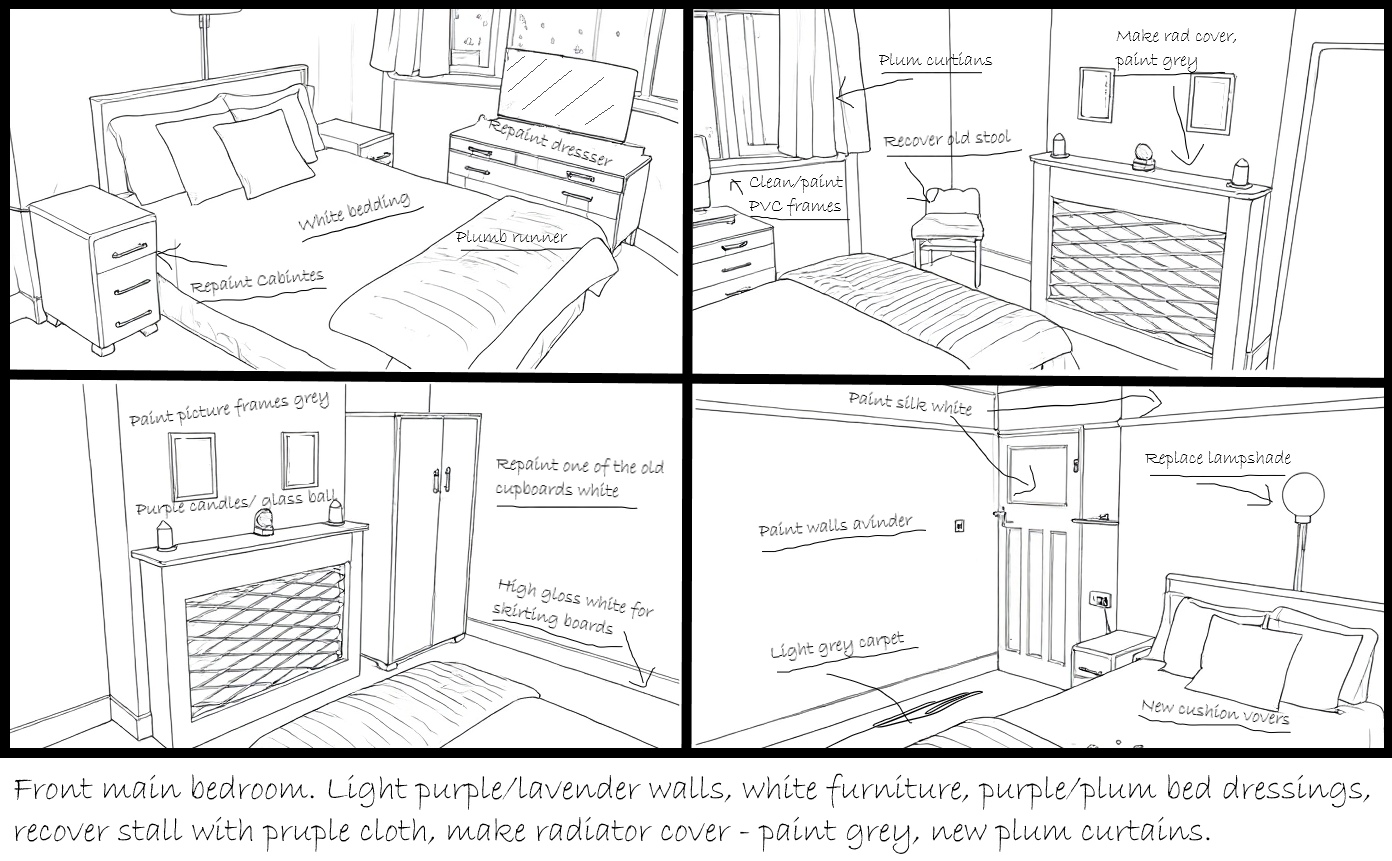
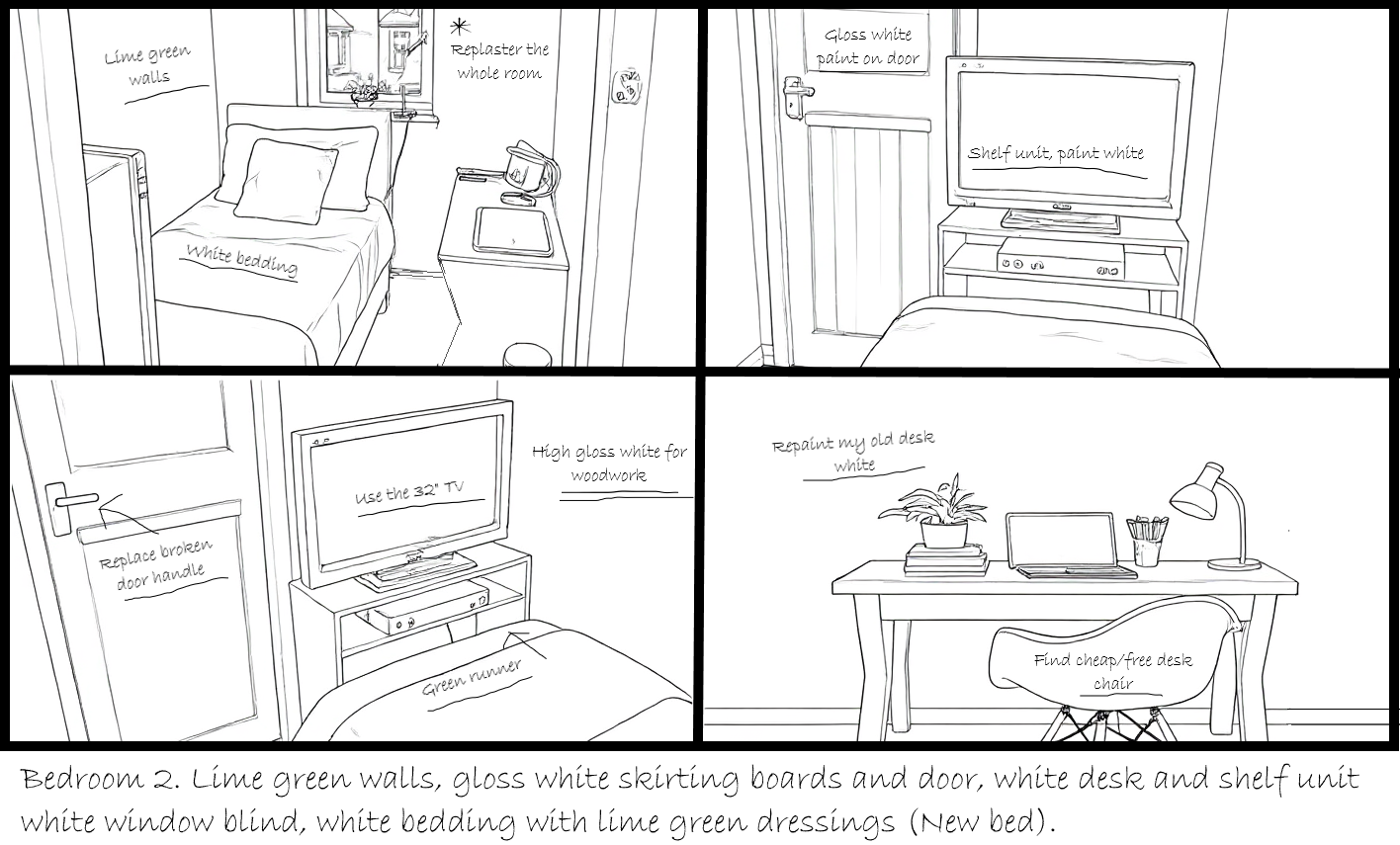
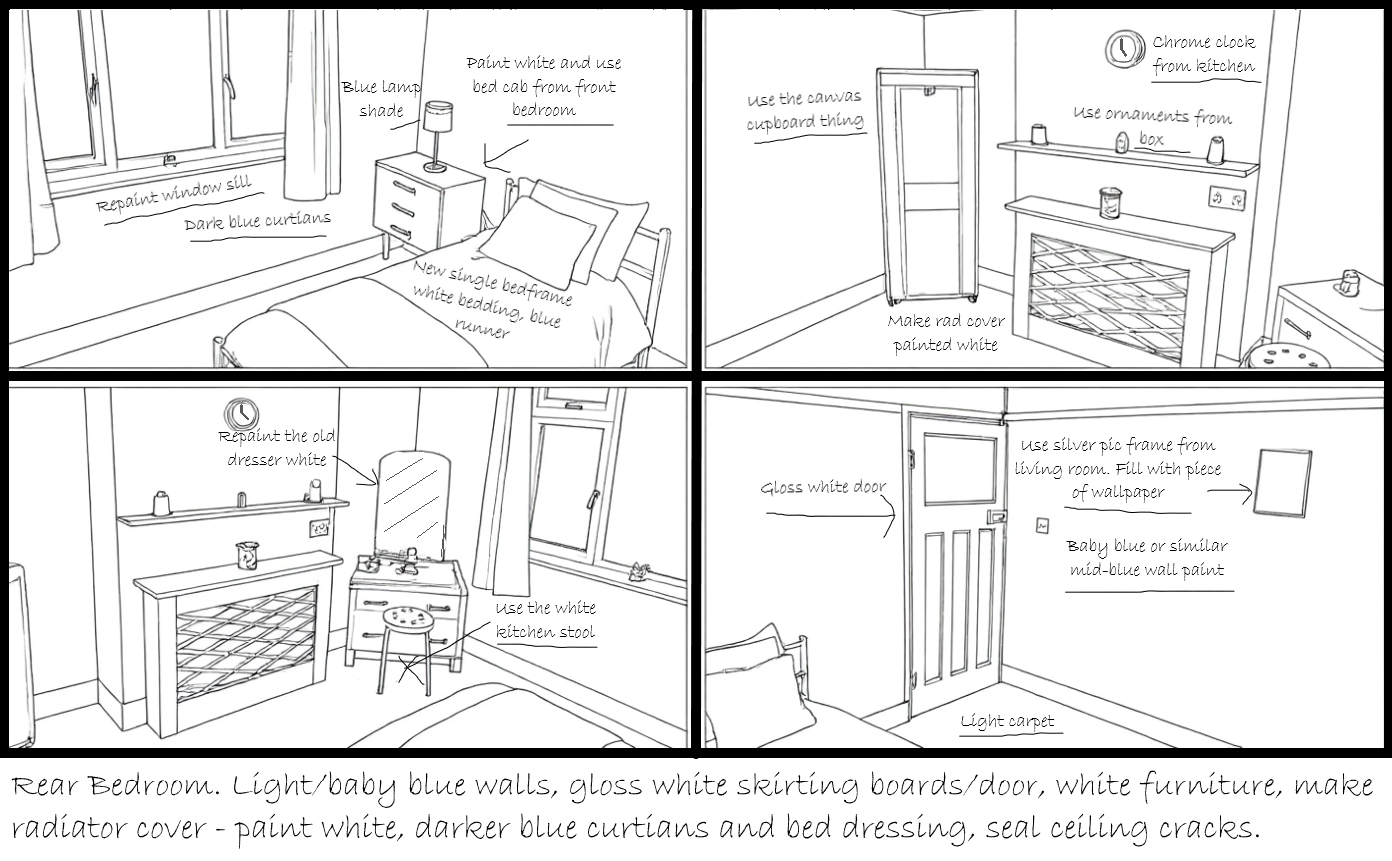
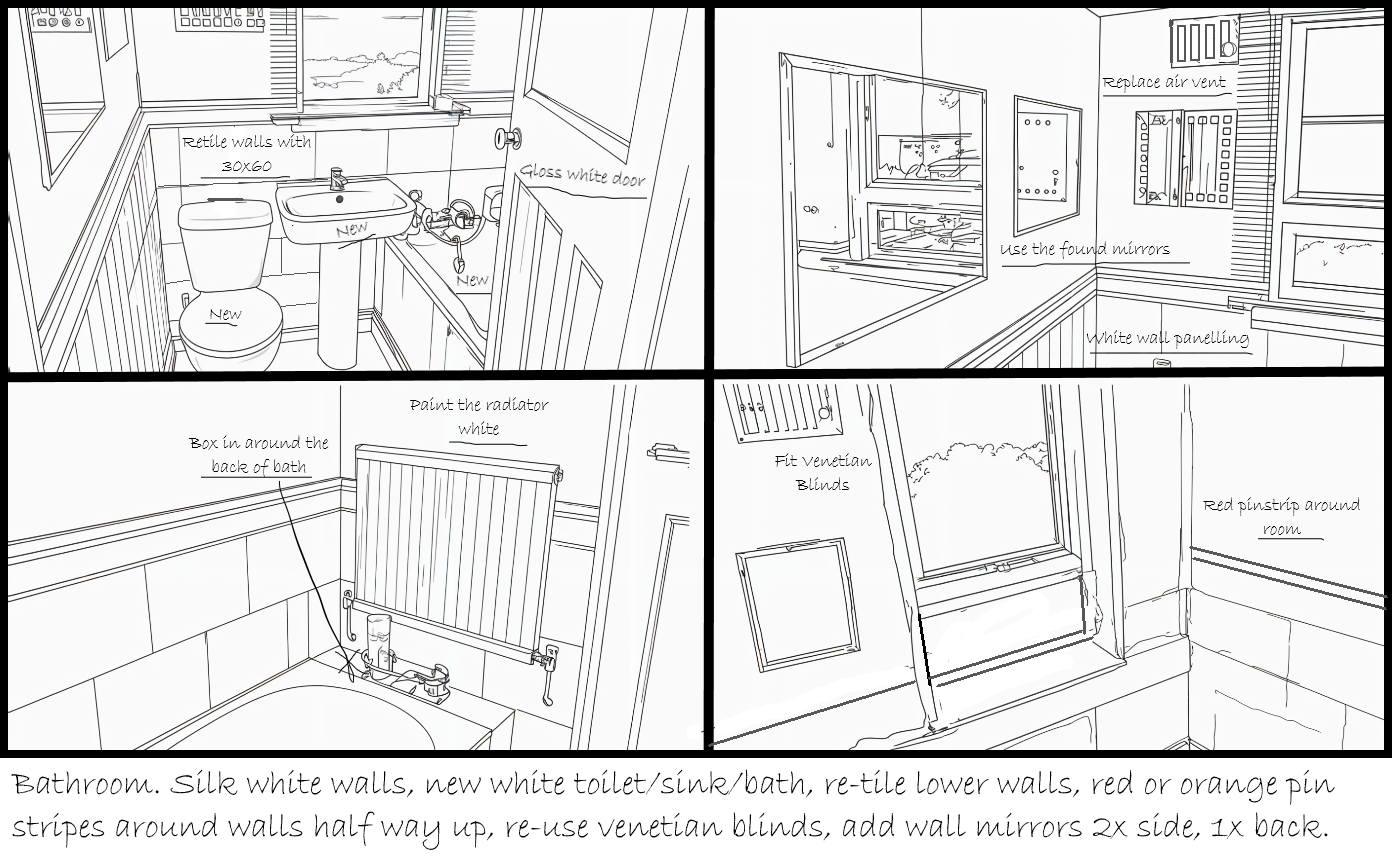
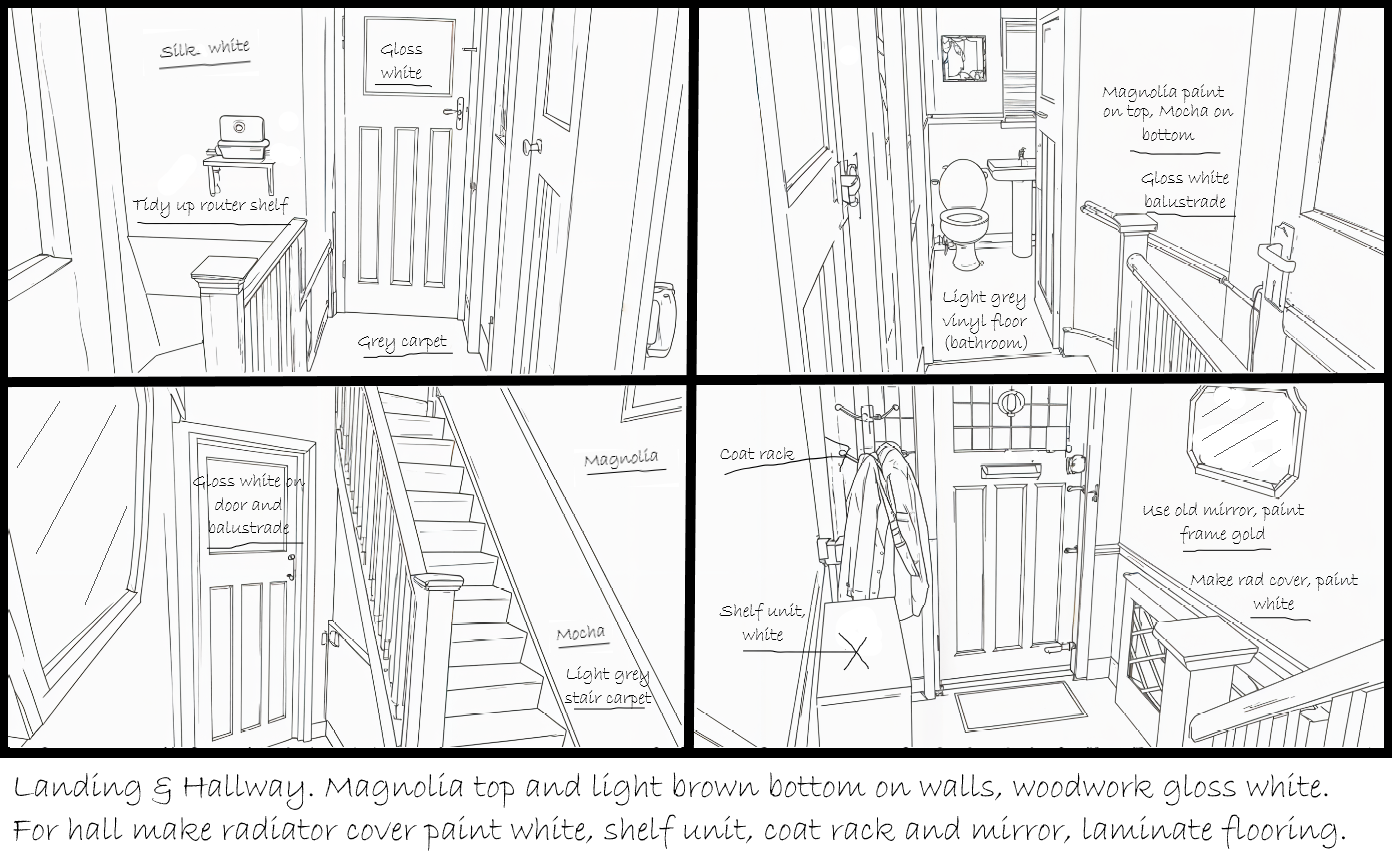
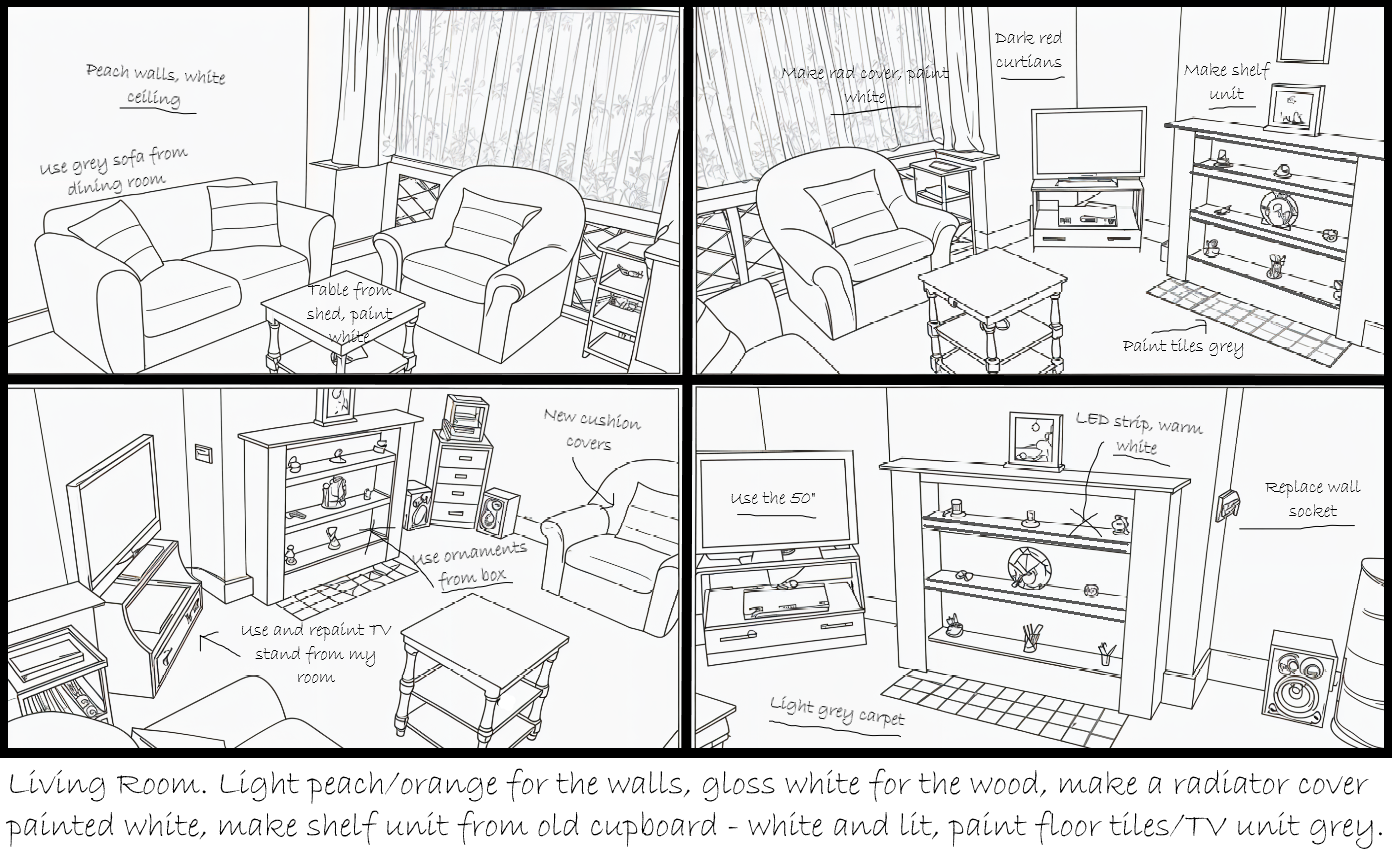
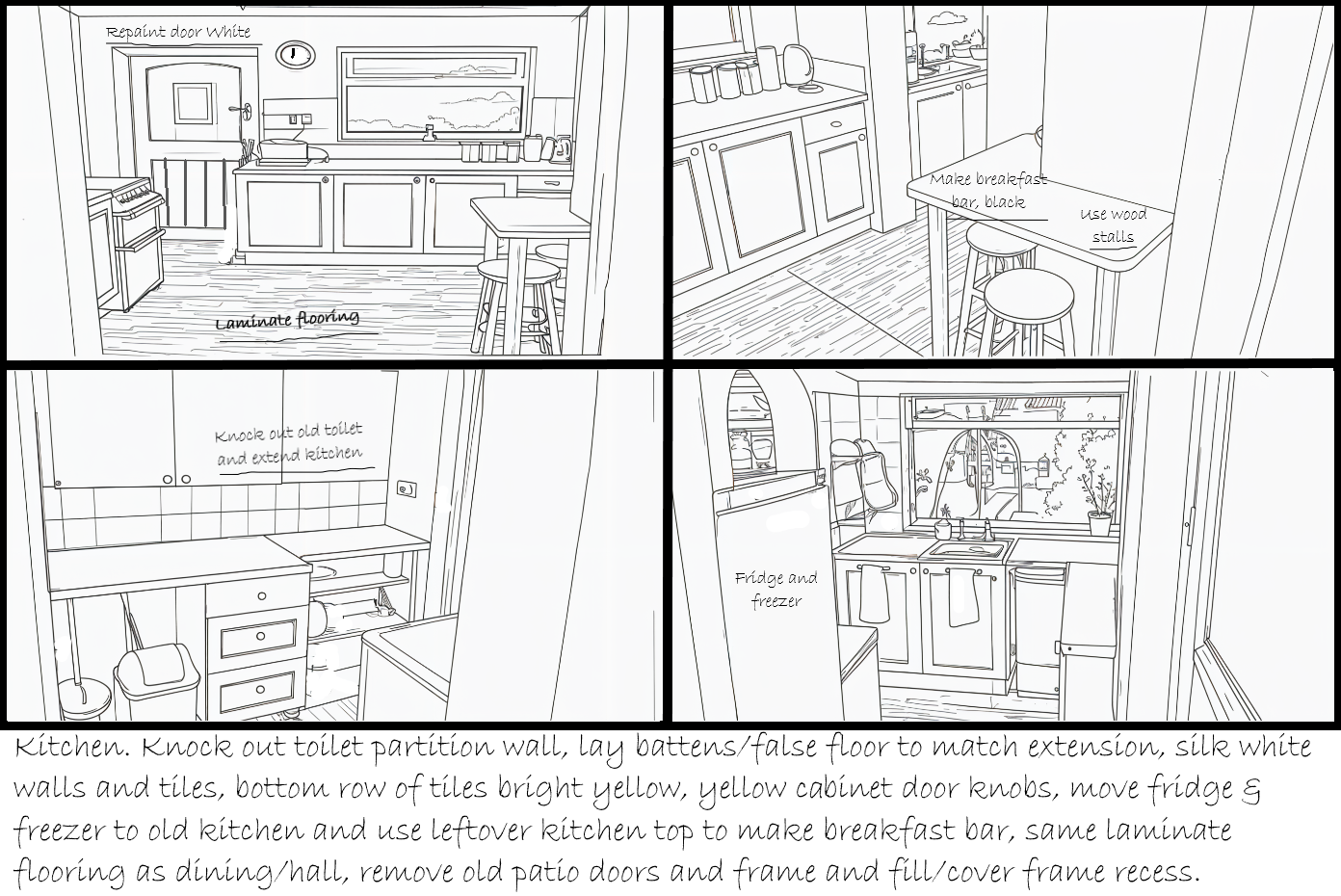
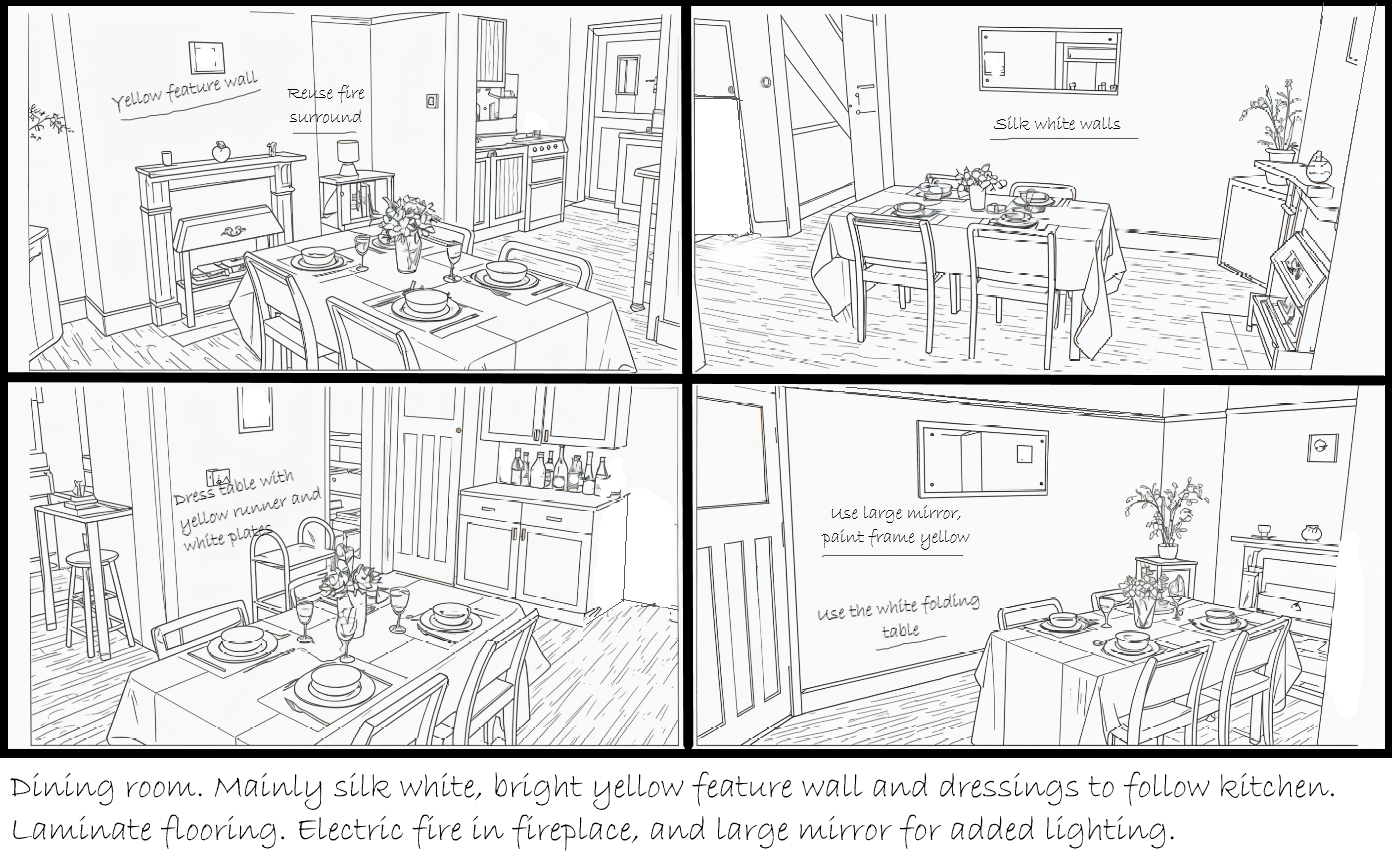
Before lifting a paint brush, it’s worth stepping back and thinking about the design as a whole rather than jumping straight into the doing. Redecorating works best when there’s a clear plan, whether that’s rough sketches, a written list, or a mood board built from magazines, websites, or saved photos. This helps you visualise the end result, keep decisions consistent, and avoid costly changes halfway through. It’s also important to define the scale of the project early on, whether you’re refreshing part of a room, redecorating an entire room, or tackling the whole house, and realistically estimate how long it will take, especially if you’re working around daily life.
With my Dad already passed on, I moved back into the house to be my mothers carer when she became ill, and stayed there when she passed to sort out what needed to be done. As I was living in the house on my own at the time and knowing my limits, I planned for around three months to finish the house and came in about a week or two over which I was pleased with... but all of this started with thinking (a lot of thinking), then some careful planning, not just of designs, but order of operation, and then some sketches.
Planning also means thinking practically... choosing finishes, colours, and materials that suit the space, and checking and which tools and materials you already have versus what you’ll need to buy, borrow, or hire. Factoring these things in before you start keeps the project efficient, controlled, and far less stressful, which will help you in the long run. I did all of the work on my own with the exception of a couple of jobs I needed help with, some plumbing work and to move some large cupboards from upstairs to downstairs. So factor in these kinds of things before you make a start. Below are two lists that outline things to consider before you start your decorating journey...
Design considerations for personal enjoyment:
- How you use each room day-to-day (relaxing, working, entertaining)
- Colour schemes that suit your taste and mood
- Lighting conditions and how colours will look at different times of day
- Existing furniture and décor you plan to keep
- Comfort, warmth, and personal character
- Willingness to experiment with bolder colours or finishes
- Long-term durability and ease of maintenance
- Budget versus quality of materials
- Time available to complete the project without rushing
Design considerations when redecorating to sell:
- Neutral, widely appealing colour schemes
- Creating a bright, clean, and spacious feel
- Consistency or following design styles across rooms
- Avoiding overly personal or niche design choices
- Cost versus return on investment
- Speed and efficiency of completion
- Minimising disruption while work is underway
- Choosing materials that photograph well for listings
- Ensuring the finish looks fresh, tidy, and well cared for
- Using silk finish paints and the use of mirrors to lighten up rooms, especially darker ones
A little forethought turns redecorating from chaos with a roller into a controlled and rather satisfying operation, especially when taking before and after photos from the same angles and positions/corners of the rooms.
Clean, Tidy, Empty, Prep
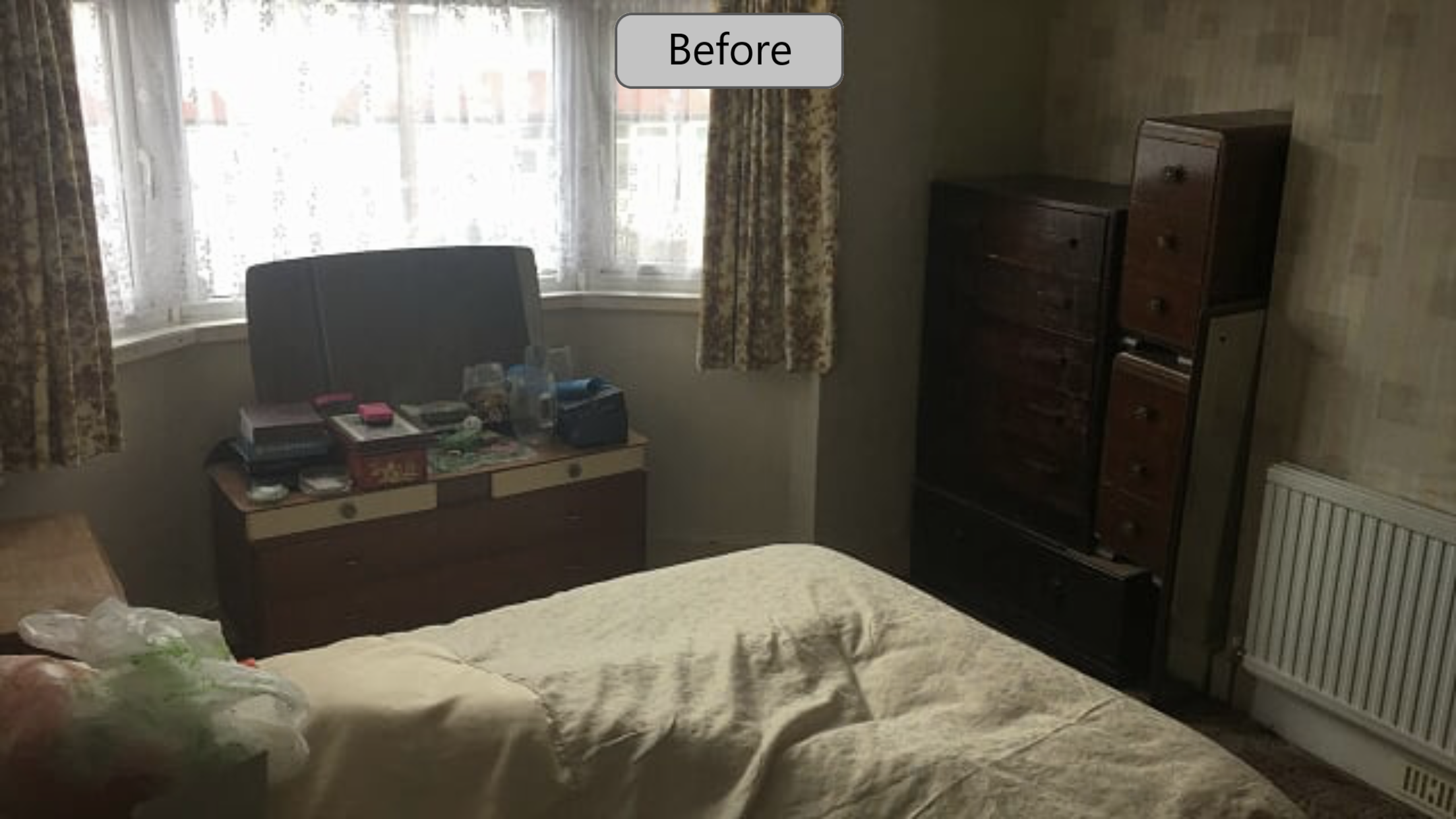
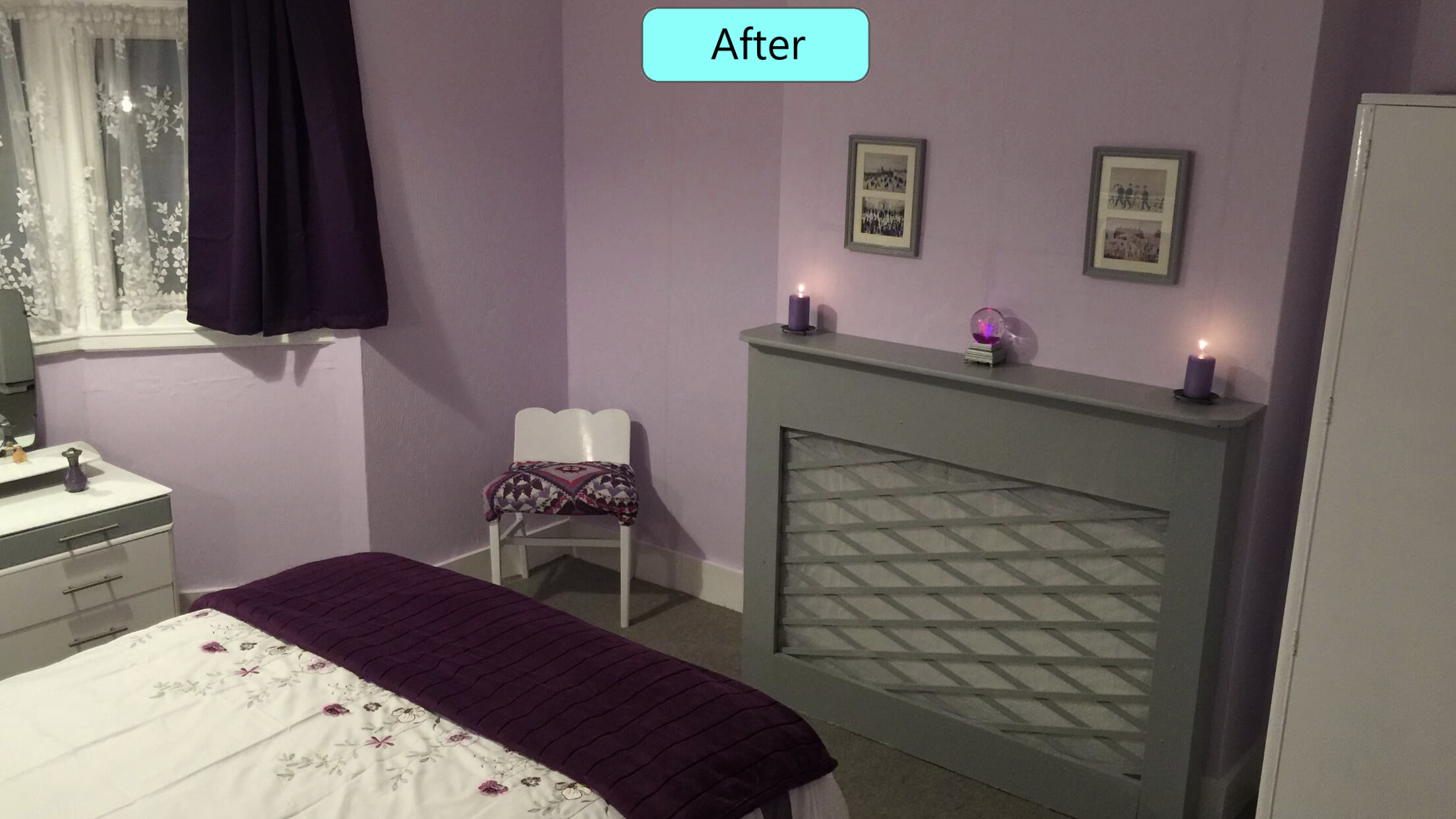
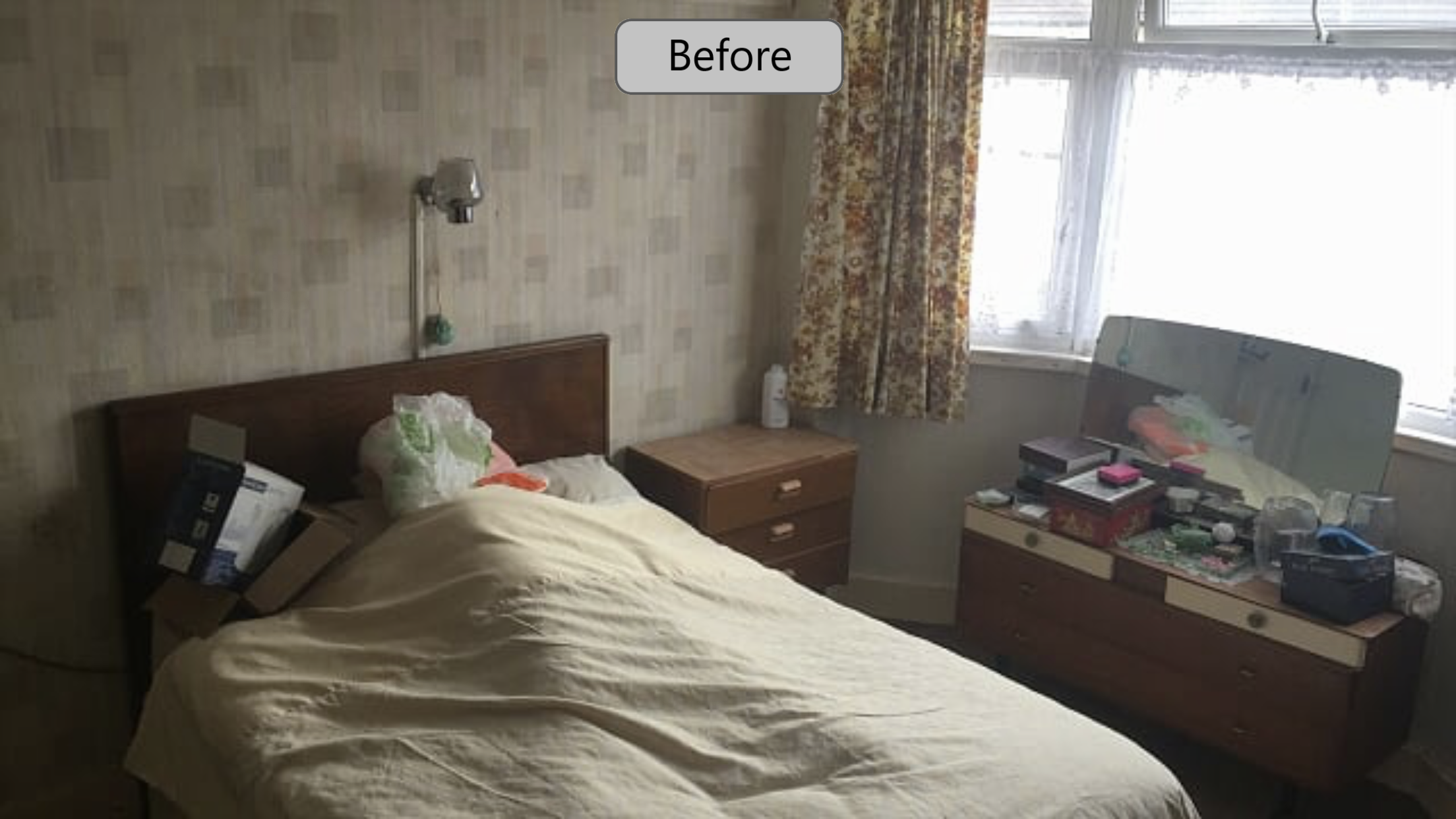
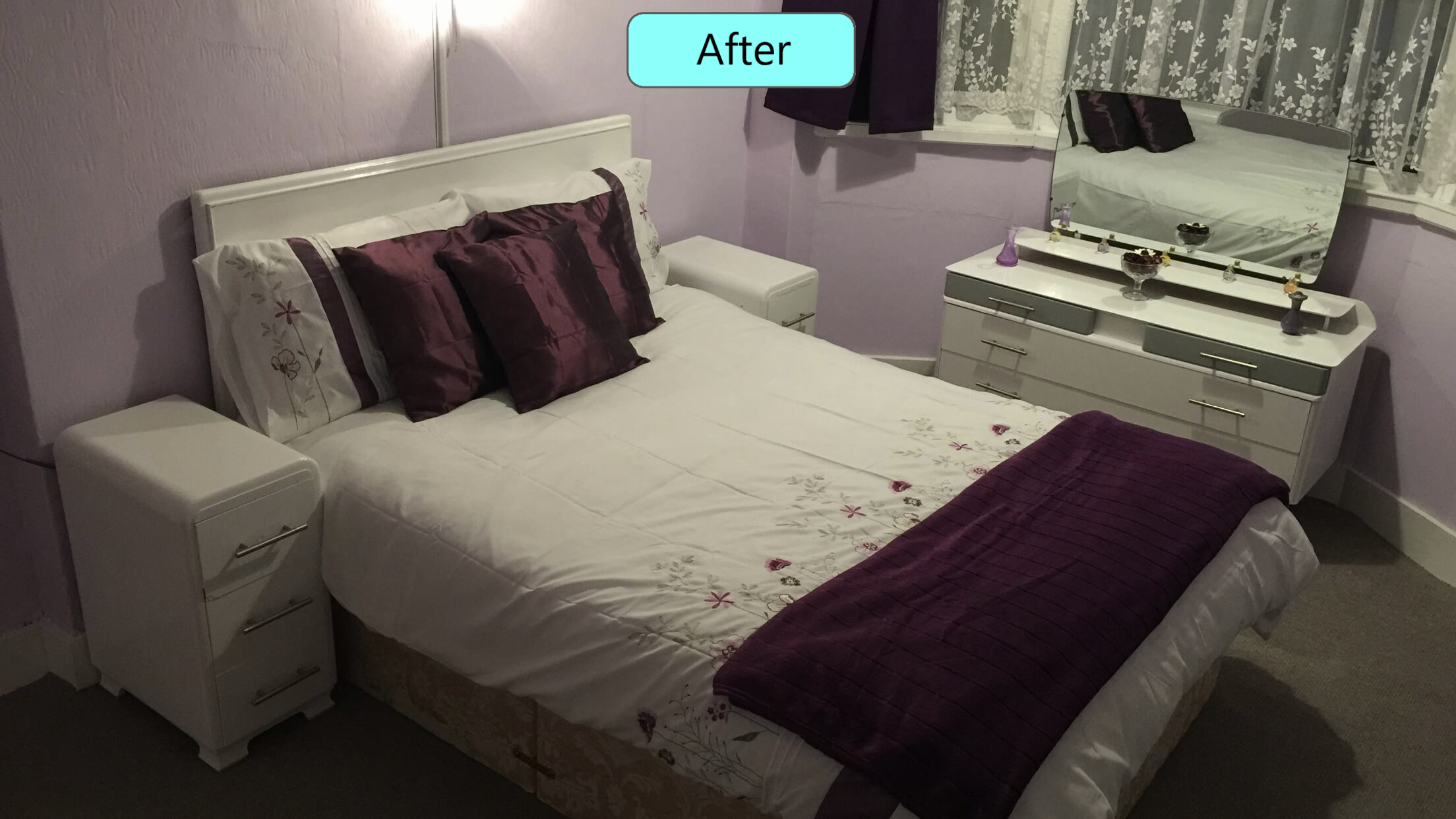

The Main Front Bedroom:
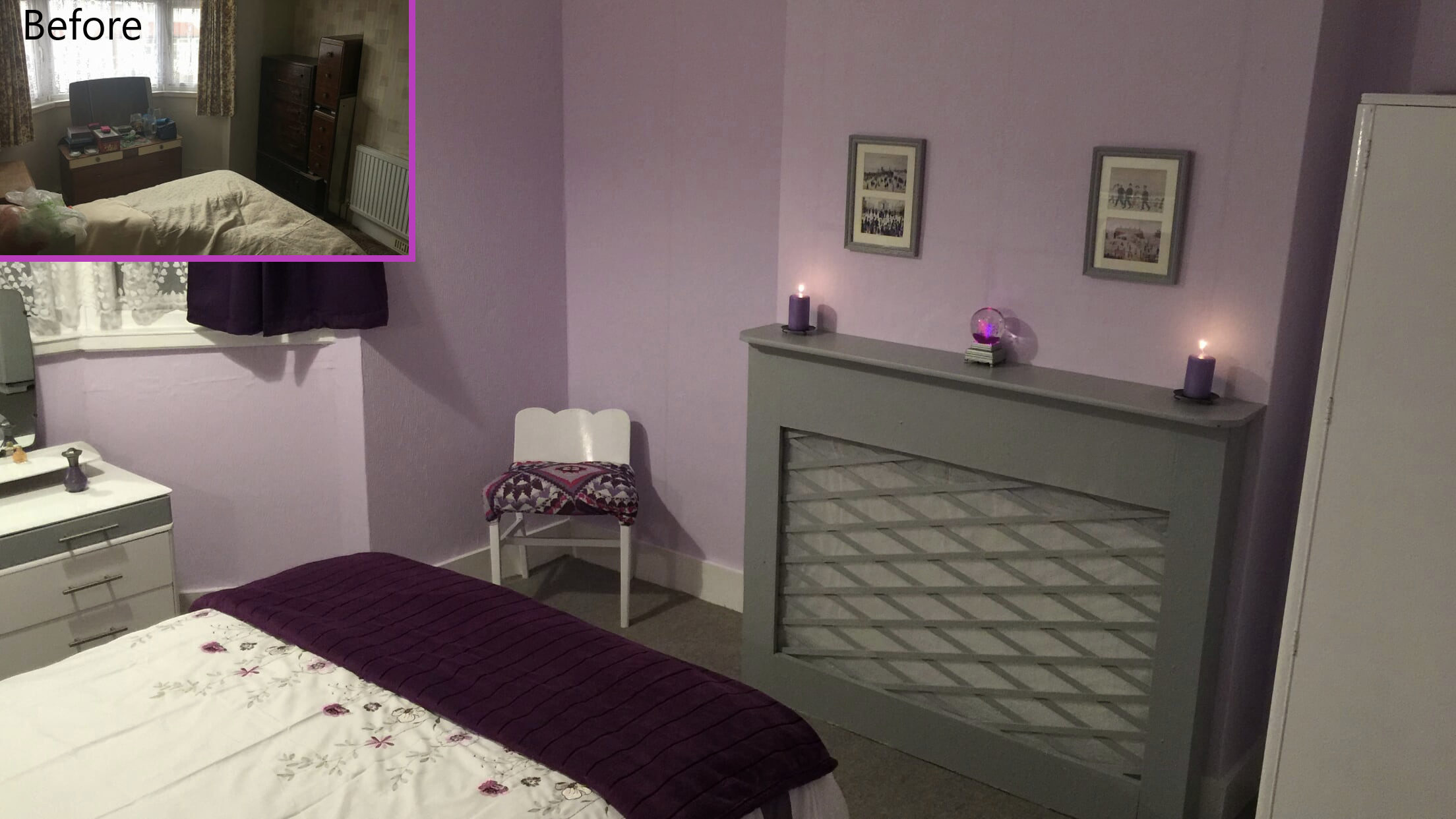
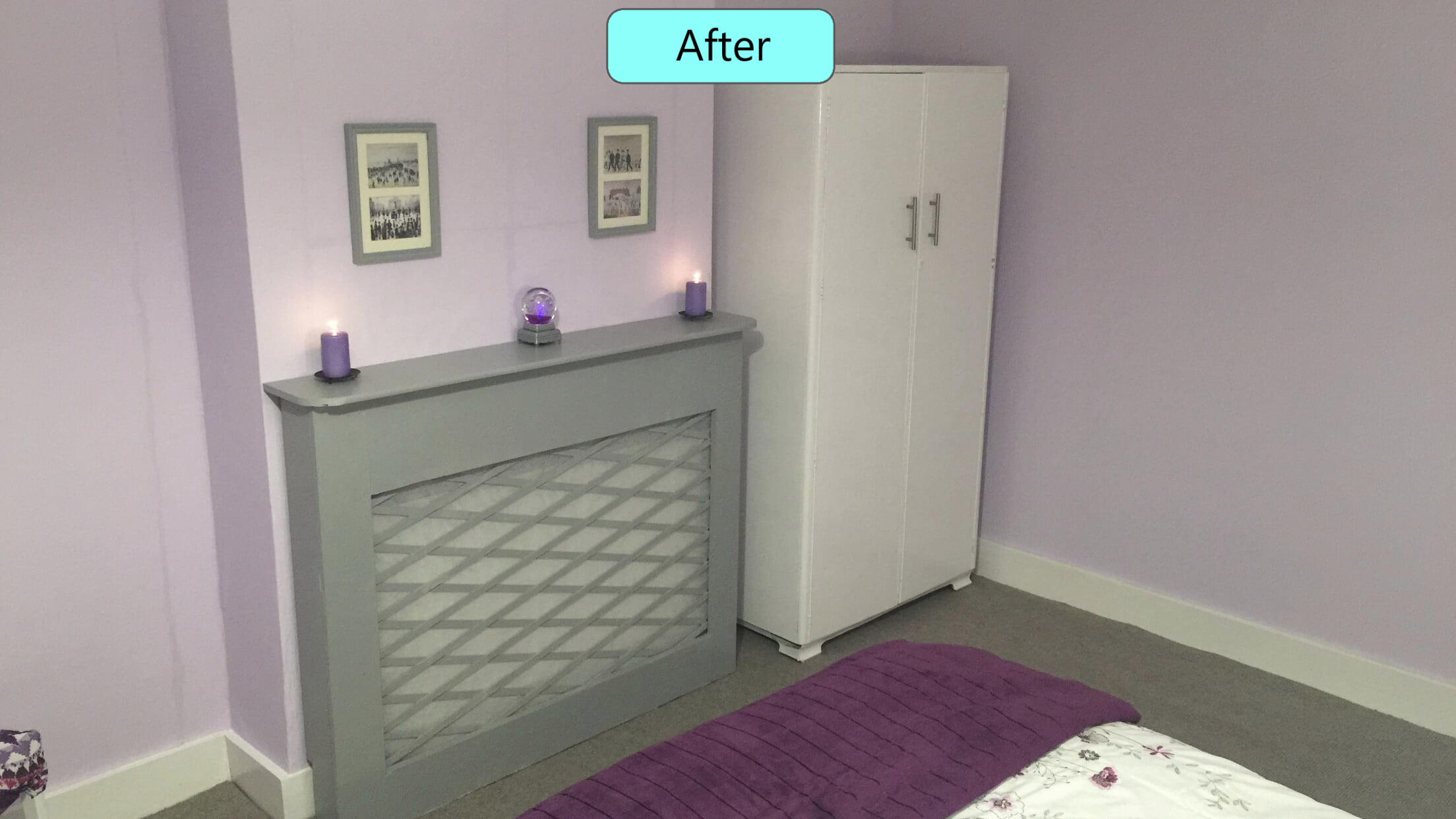
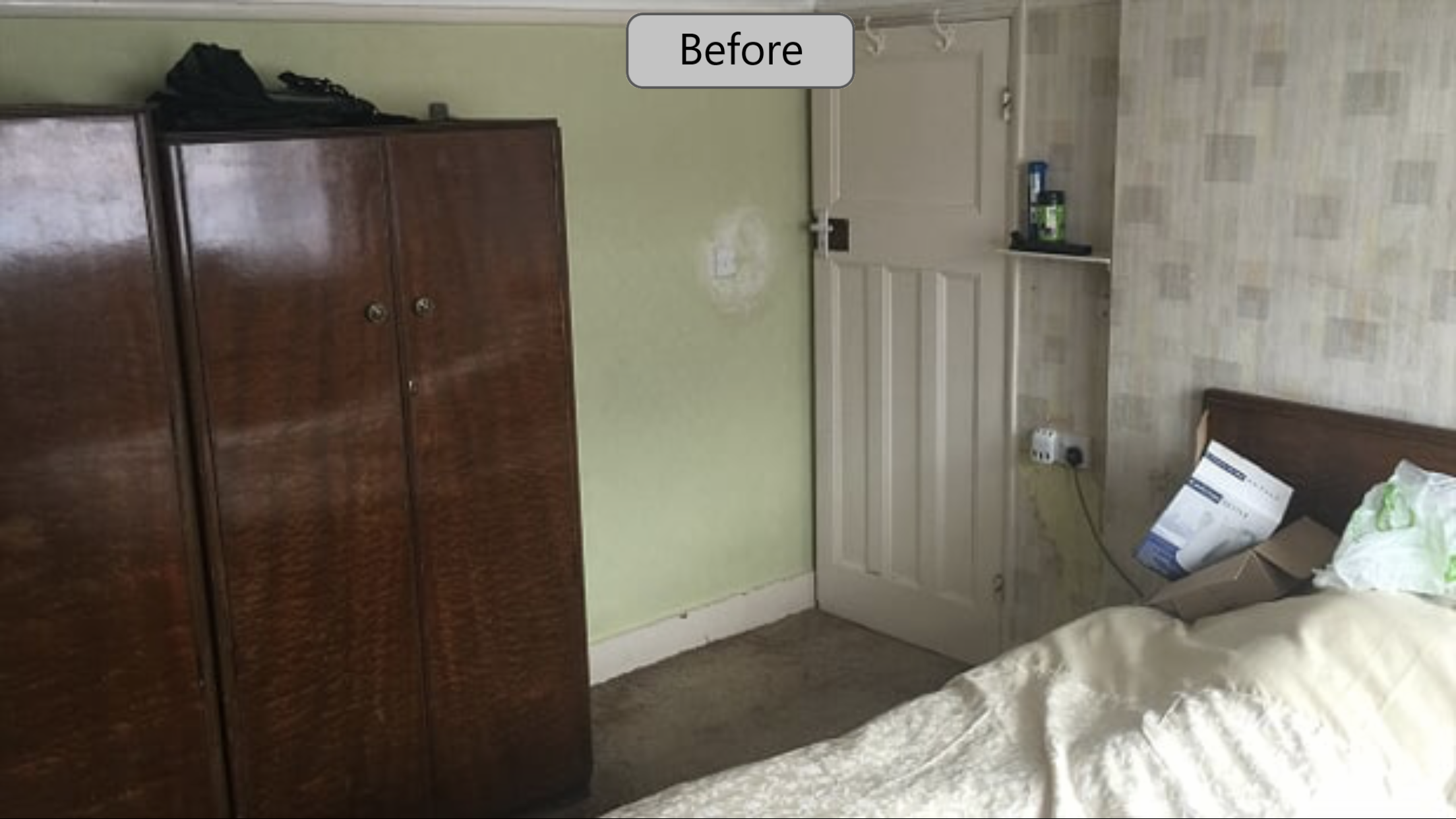
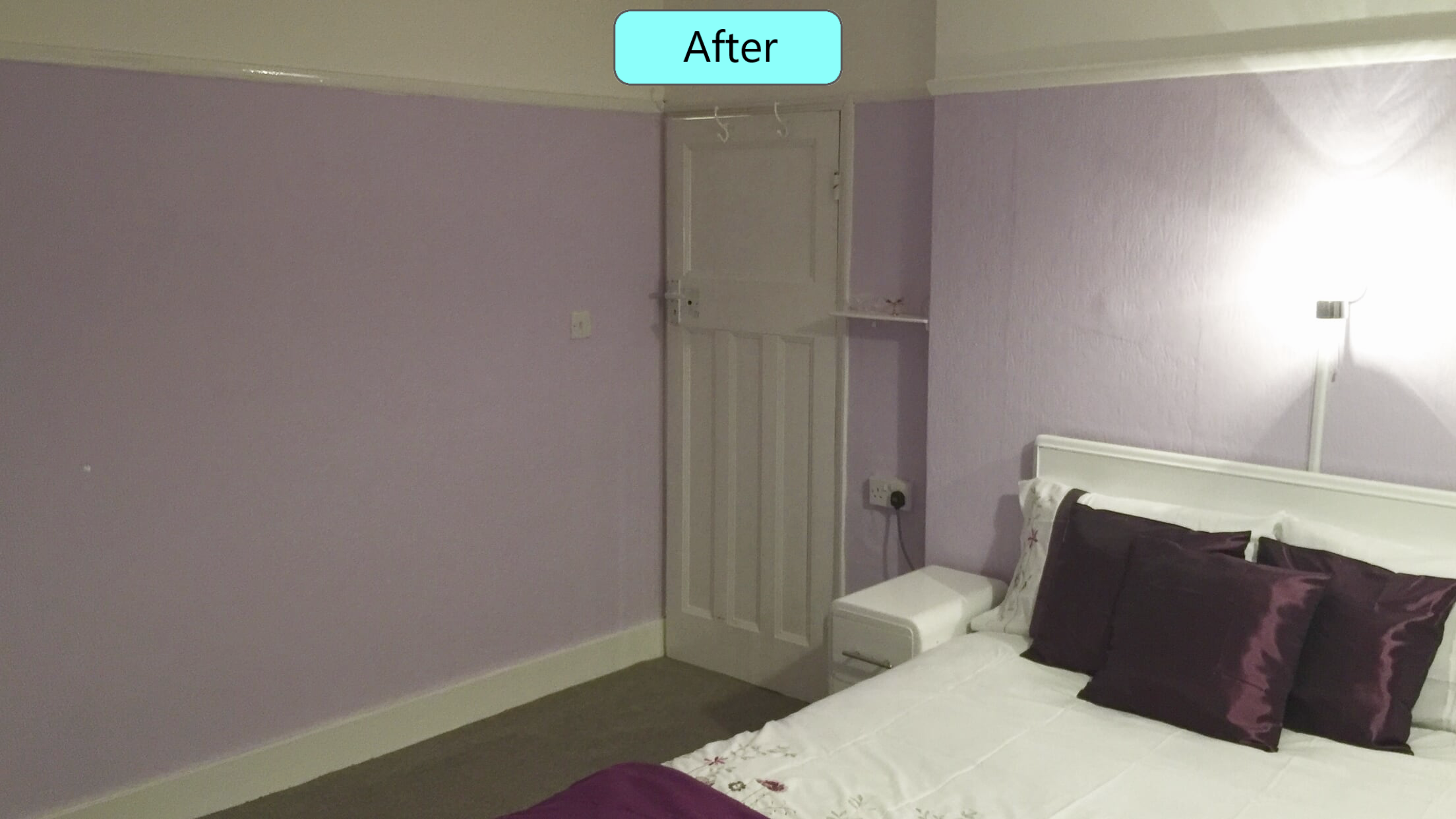
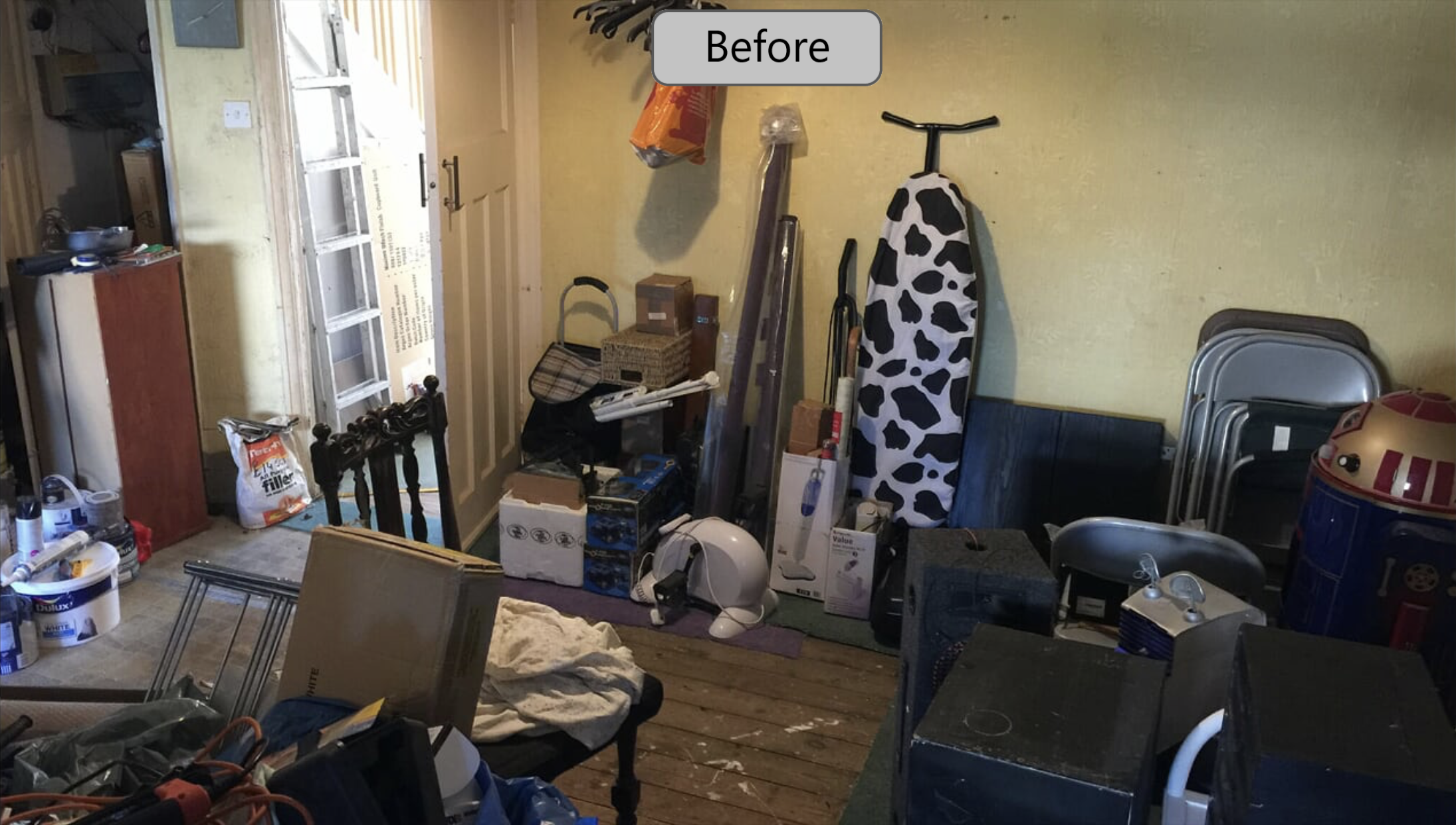
This step deals with the prep work before any decorating began. With my plan set out, I started work in the main front bedroom, but as with all the other rooms, the first thing to start with is a tidy and clean up. As this was a whole house redecoration, I designated the downstairs dining room as a temporary storage area... a place to put things from the other rooms that were not needed anymore. This is where I also went through everything and picked out what I wanted to use to dress the house... furniture items, ornaments, picture frames etc. I also used this room as a workshop to paint furniture, make radiator covers etc.
The work started with emptying all of the cupboards, dresser, bedside cabinets and anything else in the room, then clearing the furniture, pulling up the old carpet and underlay, then a step that some people miss or don't bother with when they decorate... cleaning. years old dust, especially from removing the old underlay holds smells and is easily kicked up into the air when walking around... not something you want when laying down fresh paint on skirting boards. So here are the tasks carried out, and the order of operation they were done.
- Empty all furniture and storage units: Begin by removing everything from the room’s furniture, drawers, cupboards, wardrobes, shelves, and any built-ins. This reduces weight, prevents items being damaged or covered in dust, and makes furniture far easier to move. Box items logically, label them clearly, and move them to another room so they’re completely out of the work area. You can also either take the time now, or do it later, to sort through what you want to keep and clear out what you don't.
- Clear all loose items from the room: Remove curtains, blinds, pictures, mirrors, shelves, light shades, rugs, electronics, and decorative items. Anything left behind will collect dust, get in the way, or risk accidental damage.
- Remove all furniture from the room: Once emptied, move all furniture out of the room entirely if possible. Working in an empty space is faster, safer, and produces a far better finish than trying to work around obstacles. If large items cannot be removed, place them in the centre of the room and fully protect them with dust sheets, but complete removal is always preferable.
- Lift and remove old carpet and underlay: Carefully pull up the existing carpet, starting at a corner and working methodically across the room. Remove the underlay underneath, followed by gripper rods if they are no longer needed. I suggest to wear gloves during this stage as old grippers and staples are sharp, and carpets often conceal years of debris.
- Remove fixings and floor debris: Go over the exposed floor and remove any remaining staples, nails, tacks, or adhesive residue. This prevents damage to footwear, tools, and future flooring, and allows you to inspect the subfloor properly. Sweep as you go to keep debris under control. If you have a concern about breathing in old dust, wear a mask when you sweep/vacuum.
- Thoroughly clean the room: Vacuum the entire space, floors, skirting boards, corners, and edges, to remove dust, grit, and loose plaster. Follow this with a damp wipe of surfaces if needed. Decorating over dust leads to poor paint adhesion and a gritty finish, so this step is not optional, however tempting it may be to rush ahead.
- Inspect surfaces and note repairs: With the room clean and empty, inspect walls, ceilings, woodwork, and floors for cracks, holes, stains, or damage. Make a clear list of repairs needed before decorating begins. This is the ideal time to identify problems, not halfway through painting when you're in the flow.
- Final protection and setup: Once prep and cleaning is complete, lay fresh dust sheets or floor protection if needed, mask off areas not being worked on (light switches, power sockets, door hinges, Window frames etc.), and ensure good lighting and ventilation. At this point, the room is officially ready for decorating.
Preparation may not be thrilling, but trust me when I say that it’s the difference between “that’ll do” and “that looks properly done”. After doing some small filler repairs, I painted the front bedroom, laid new underlay and carpet, and dressed the room. As this was the same for the other rooms, I will cover these jobs in the following steps.
Plastering Walls and Ceilings
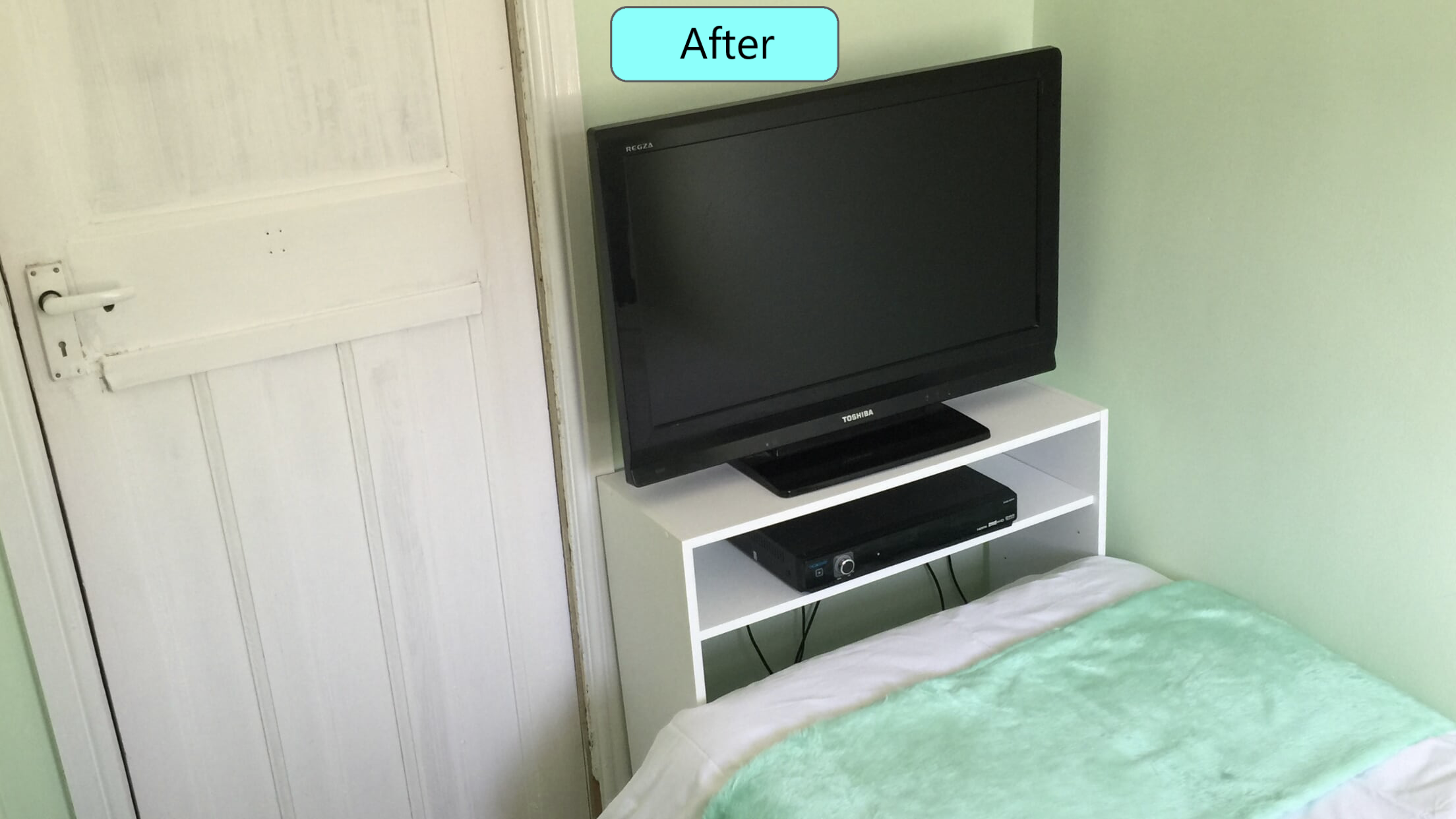
The Box Room:
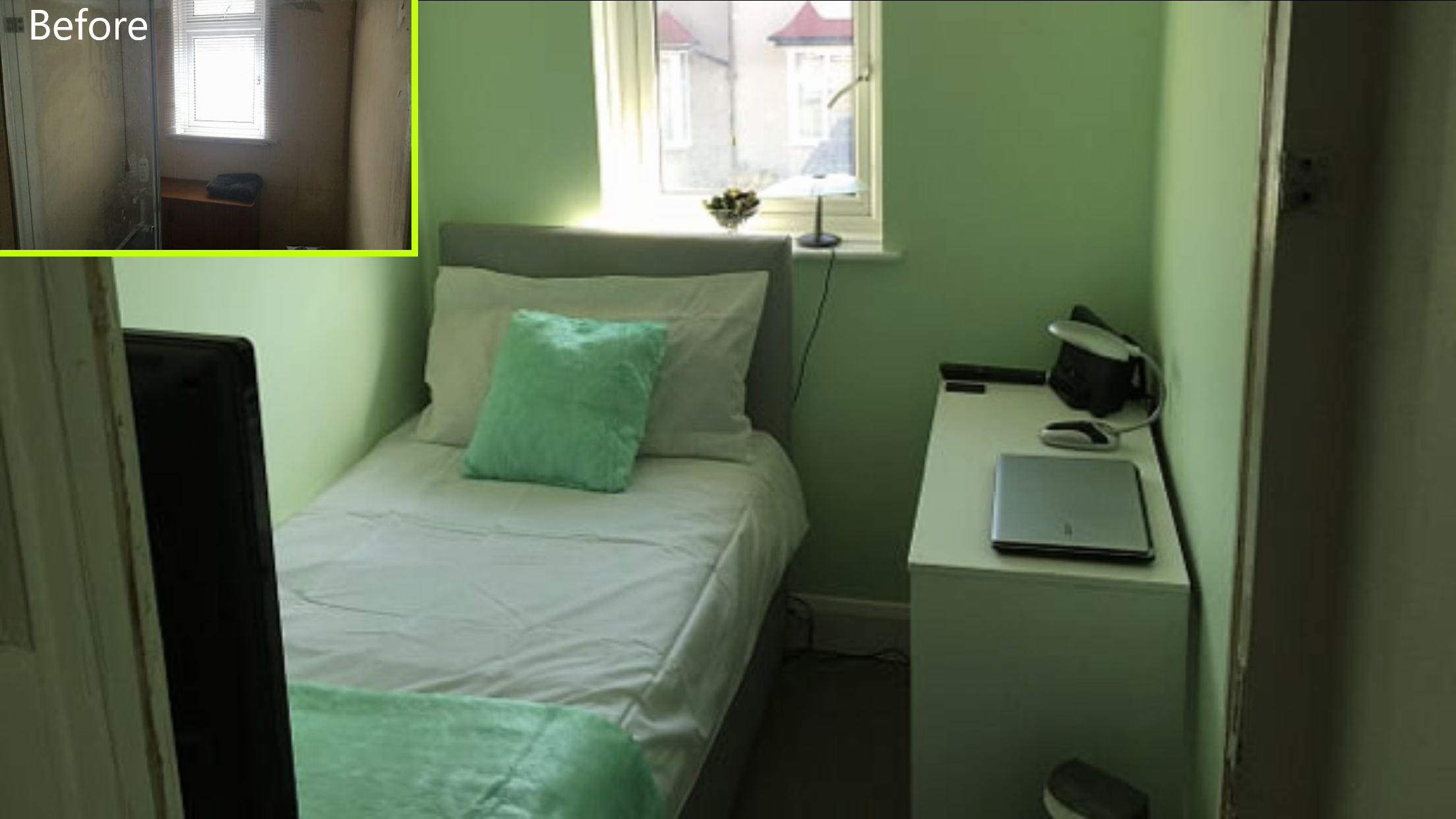
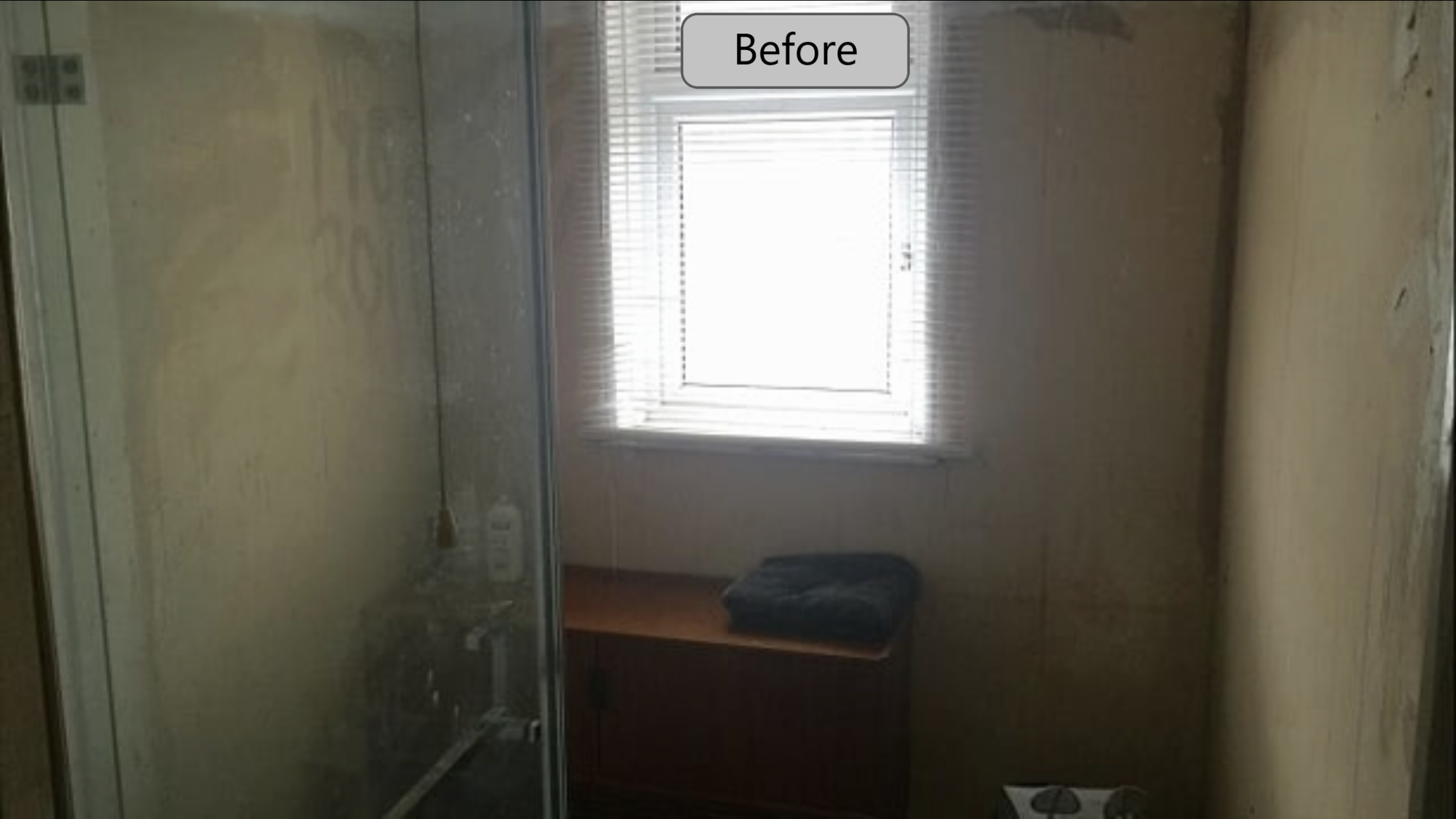
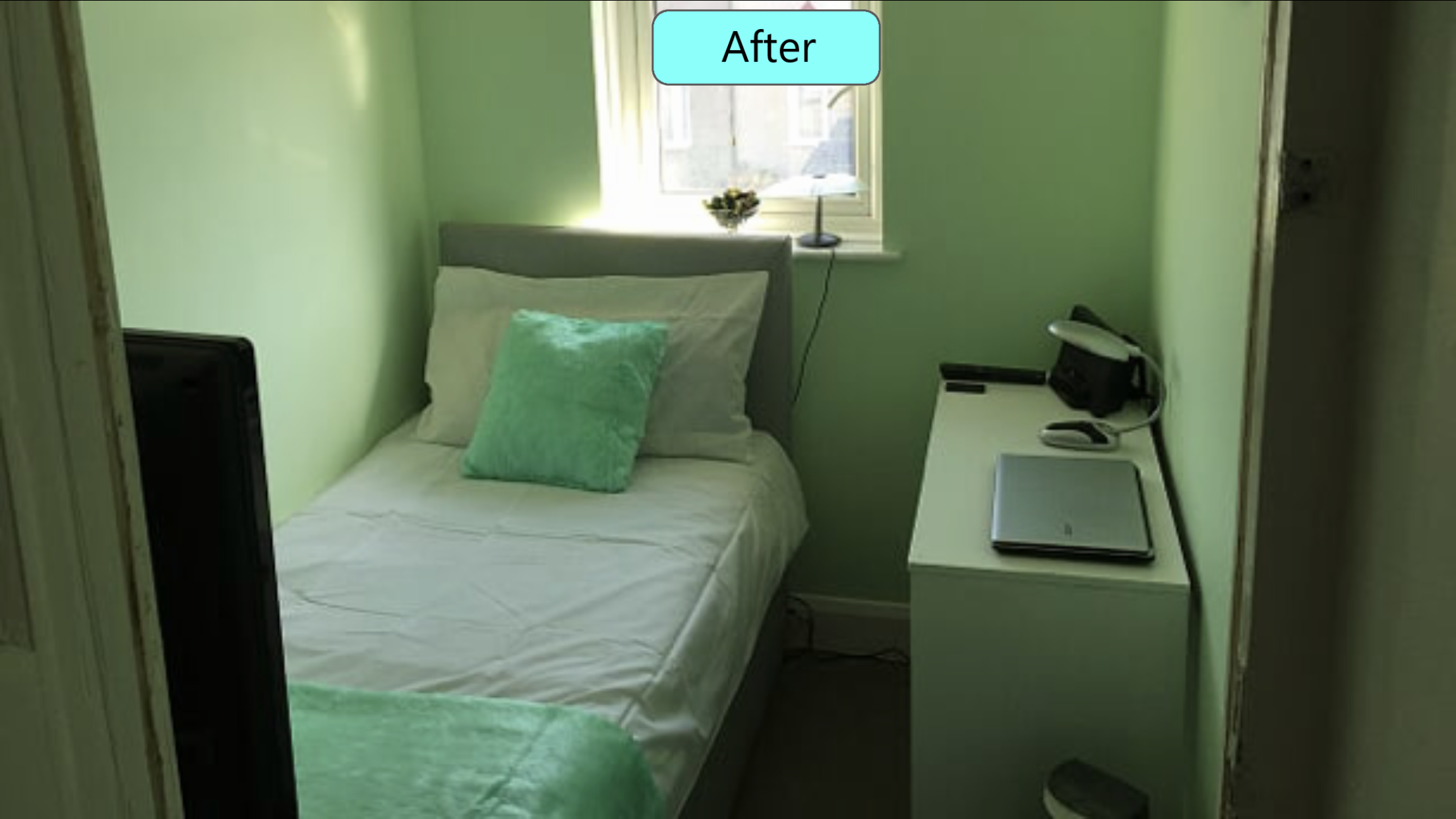
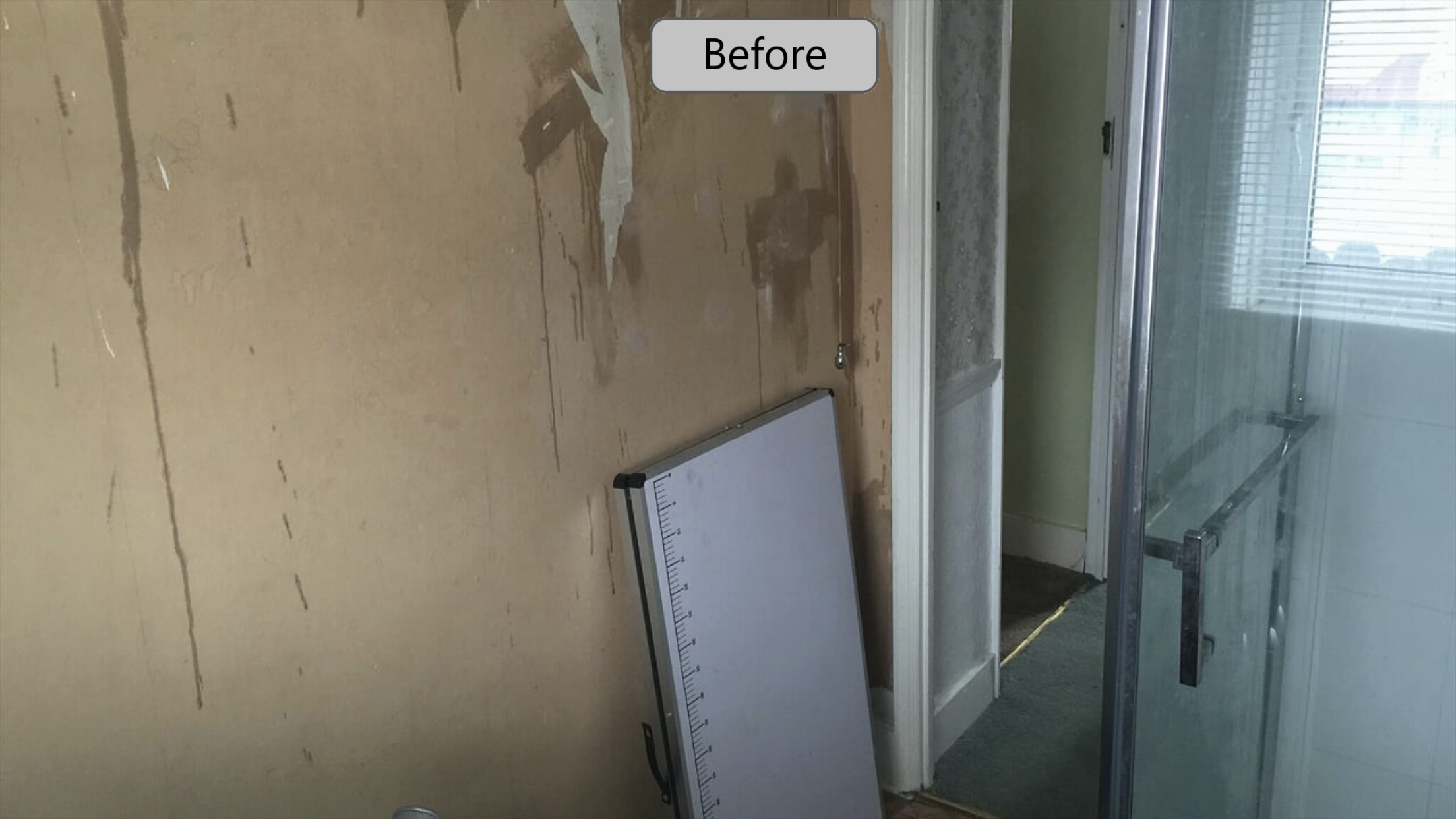
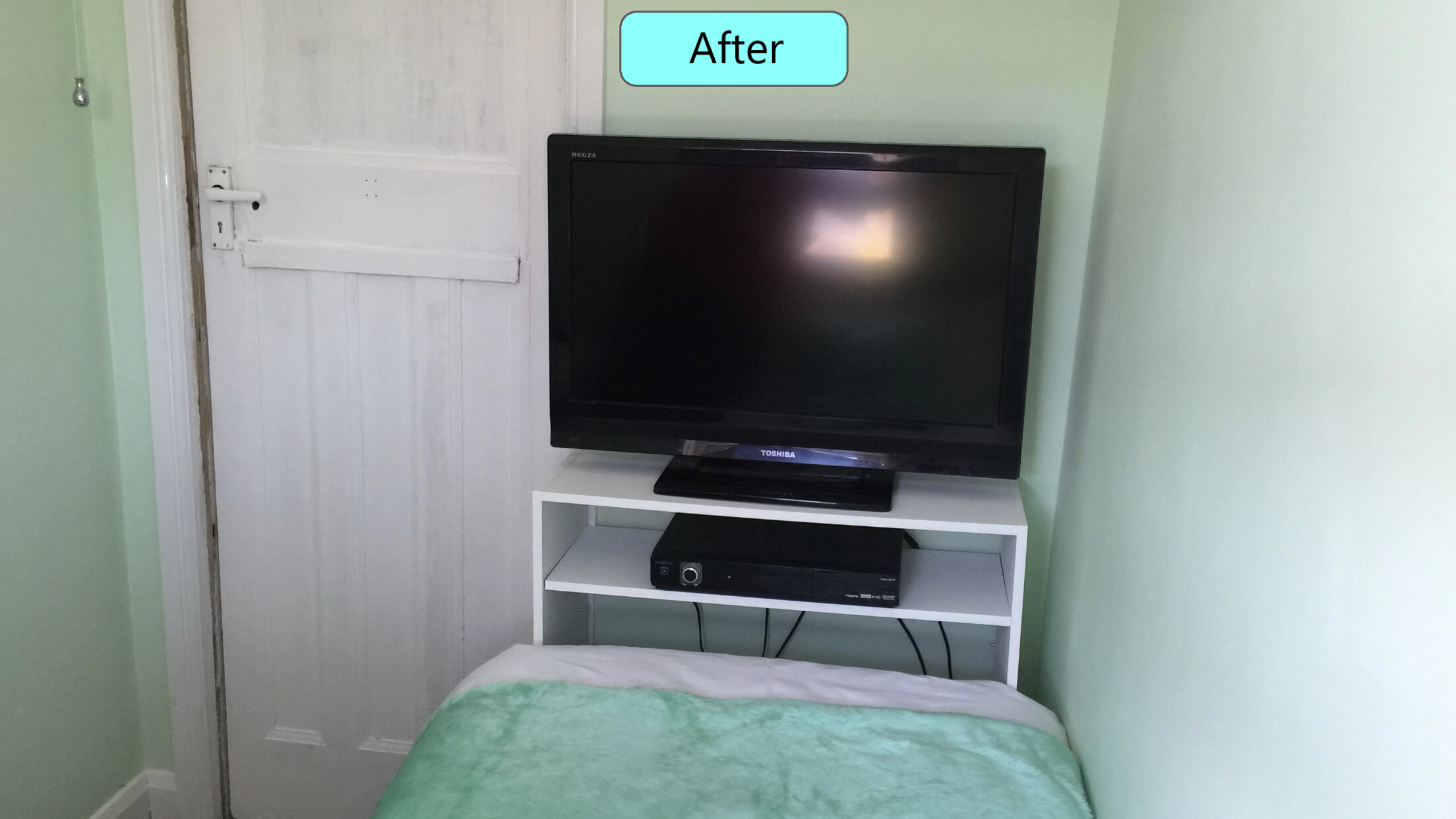
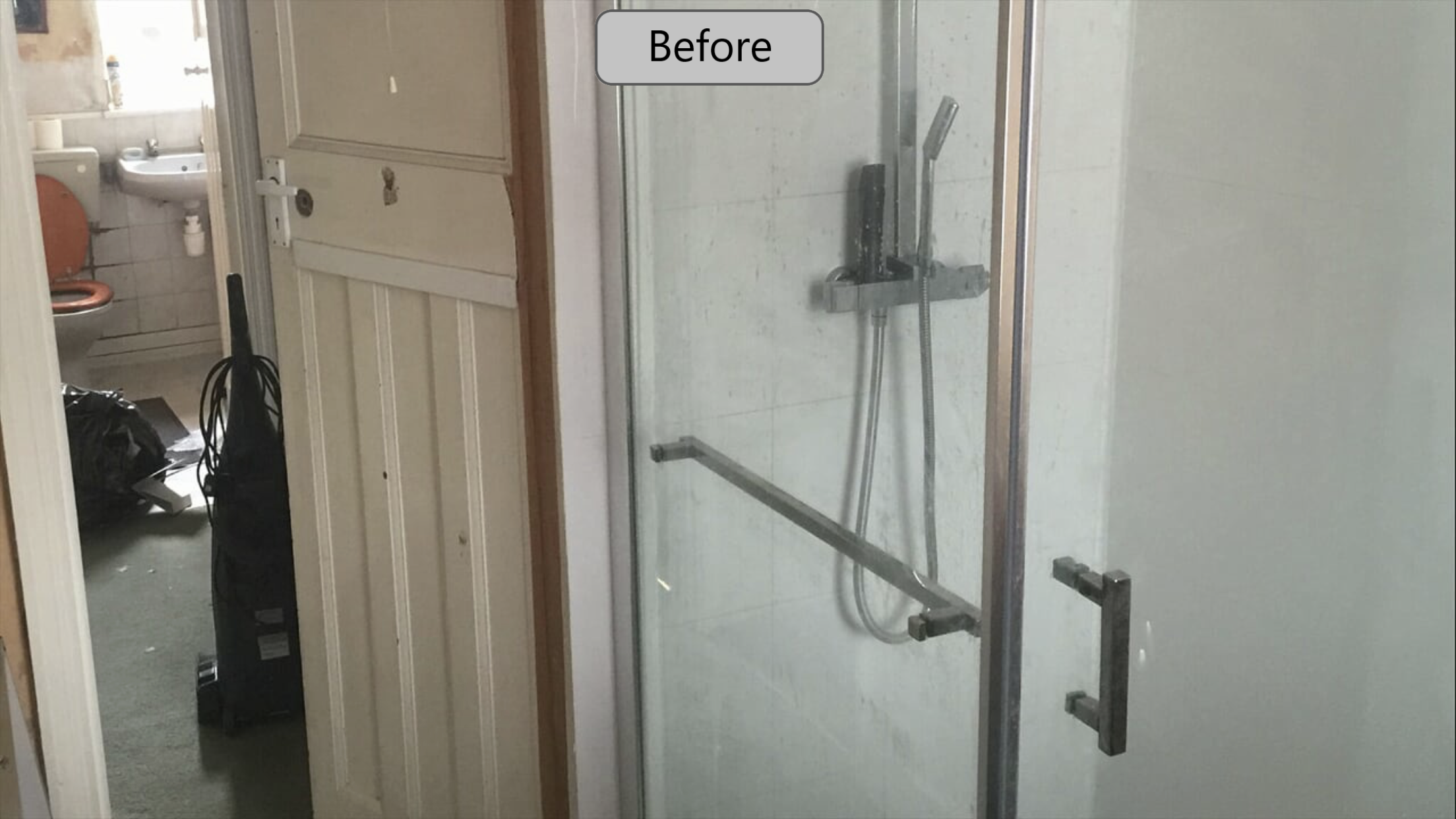
This was originally a bedroom, but my parents converted it into a shower room when my dad became ill to save him from stepping over the bath in the bathroom to have a shower, which my mum later came to rely on. I made the decision to turn it back into a third bedroom again so I removed the shower cubical and tray. It was at this point I realised that some of the plaster on the walls had blown and was falling away from the walls when I removed the shower. Also noticeable was cracks in the ceiling plaster, so a unplanned job was needed... replaster the whole room, luckily it was a small one.
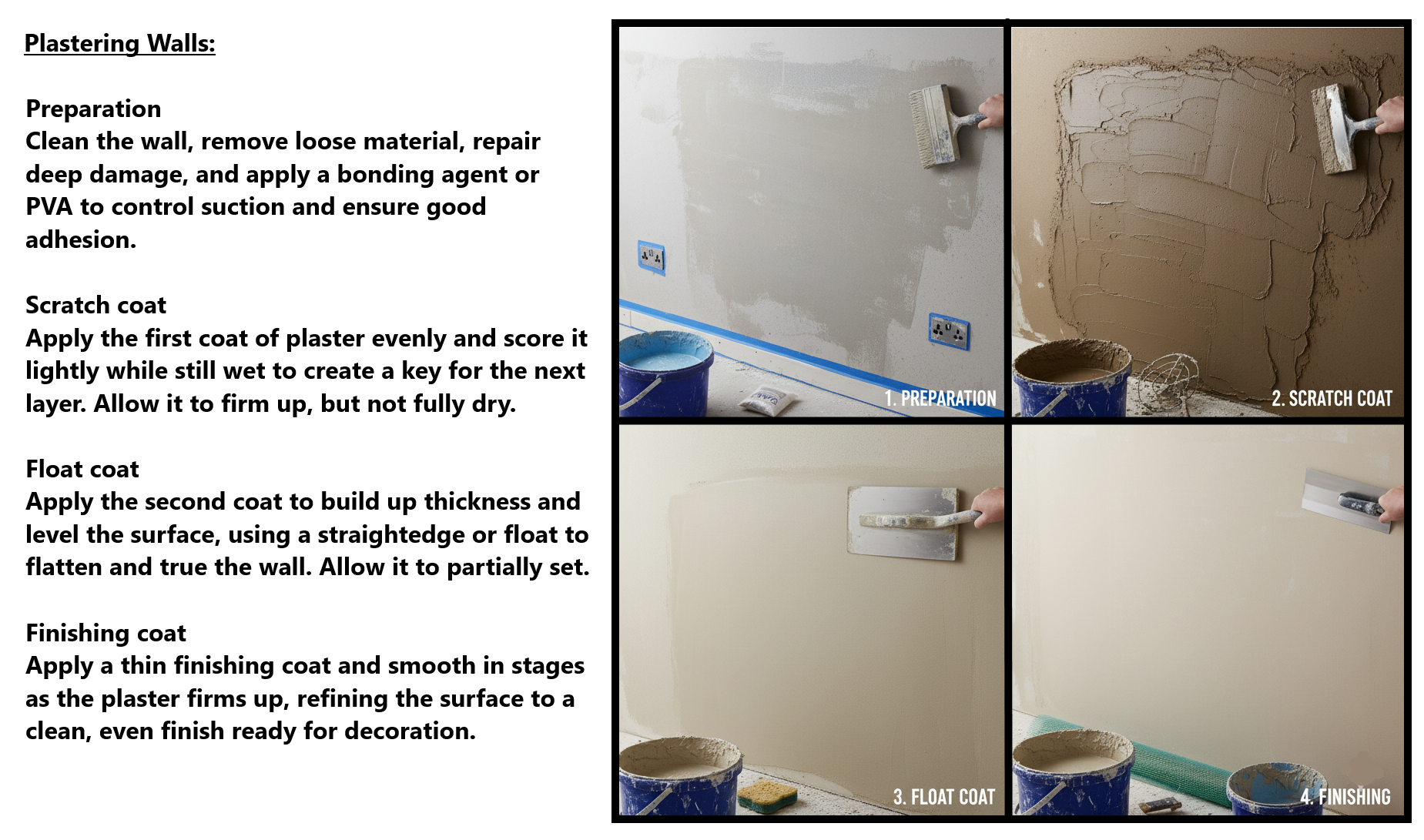
I had done some plastering before, although it had been a while but was prepared to give it a go but with one caveat, I would get a friend to plaster the ceiling for me as I knew this was beyond my scope to get a good finish working at a difficult angle. Anyway we did the work, was pleased with the finish, and cracked on with the third bedroom and a few other jobs while I waited for the plaster to fully dry before painting... about 3 weeks when the darker, patchy brown plaster turned to a consistent, pale, uniform pink or off-white color, and felt dry to the touch, not cool or damp. So if you are willing to give plastering a go, here's how...
Preparation:
- Clear and protect the workspace by removing as much furniture as possible and covering remaining items with heavy duty dust sheets or plastic sheeting. Protect floors edge to edge, as plaster splashes are unavoidable. Ensure good lighting and ventilation.
- Remove loose material and old finishes, including flaking plaster, paint, wallpaper, and adhesive residue. Pay close attention to cracks, blown areas, corners, and edges where failures commonly occur.
- Clean walls and ceilings thoroughly by brushing and vacuuming to remove dust and debris. In greasy or previously painted areas, lightly wash down surfaces if required.
- Inspect surfaces and carry out repairs to deep cracks, holes, or damaged sections using suitable filler or bonding plaster. Allow all repairs to dry fully before continuing.
- Seal porous backgrounds with diluted PVA or a suitable bonding agent, applied evenly and allowed to become tacky to control suction.
- Protect edges and fixtures by masking around sockets, switches, door frames, windows, and skirting boards. Remove faceplates where possible for a cleaner finish.
Scratch Coat:
- Mix plaster correctly by adding plaster to water and mixing to a smooth, lump-free consistency.
- Apply the scratch coat evenly, working methodically from top to bottom with steady pressure.
- Lightly score the surface while the plaster is still wet to create a key for the next coat.
- Allow the scratch coat to firm up before applying the float coat, without letting it fully dry.
Float Coat:
- Apply the float coat to build up thickness and level the surface.
- Use a float or straightedge to flatten and true the wall, aiming for evenness rather than a perfect finish.
- Work methodically and check regularly for high and low spots.
- Allow the float coat to partially set before moving on to the finishing coat.
Finishing:
- Apply a thin finishing coat evenly over the surface.
- Smooth and refine the plaster in stages as it firms up, removing trowel marks and imperfections.
- Allow plaster to dry naturally, avoiding forced drying or excessive heat which can cause cracking.
- Clean tools immediately and remove splashes from floors and fittings before the plaster hardens.
- Carry out an honest self-assessment — if confidence, timing, or finish quality is a concern, especially on ceilings or visible areas, consider hiring a professional plasterer to avoid costly corrections later.
I cover painting in the following step, but in regards to painting a newly plastered wall or ceiling, you'll need to start off with a mist coat (diluted paint) followed by two to three top coats of emulsion paint for a durable, even finish, ensuring proper drying between each layer for best results, as the plaster is very absorbent and needs sealing. New underlay and carpet followed, then a bed, shelf unit and freshly painted desk was added along with a little room dressing to finish the room off.
Appling Backing Paper & Painting
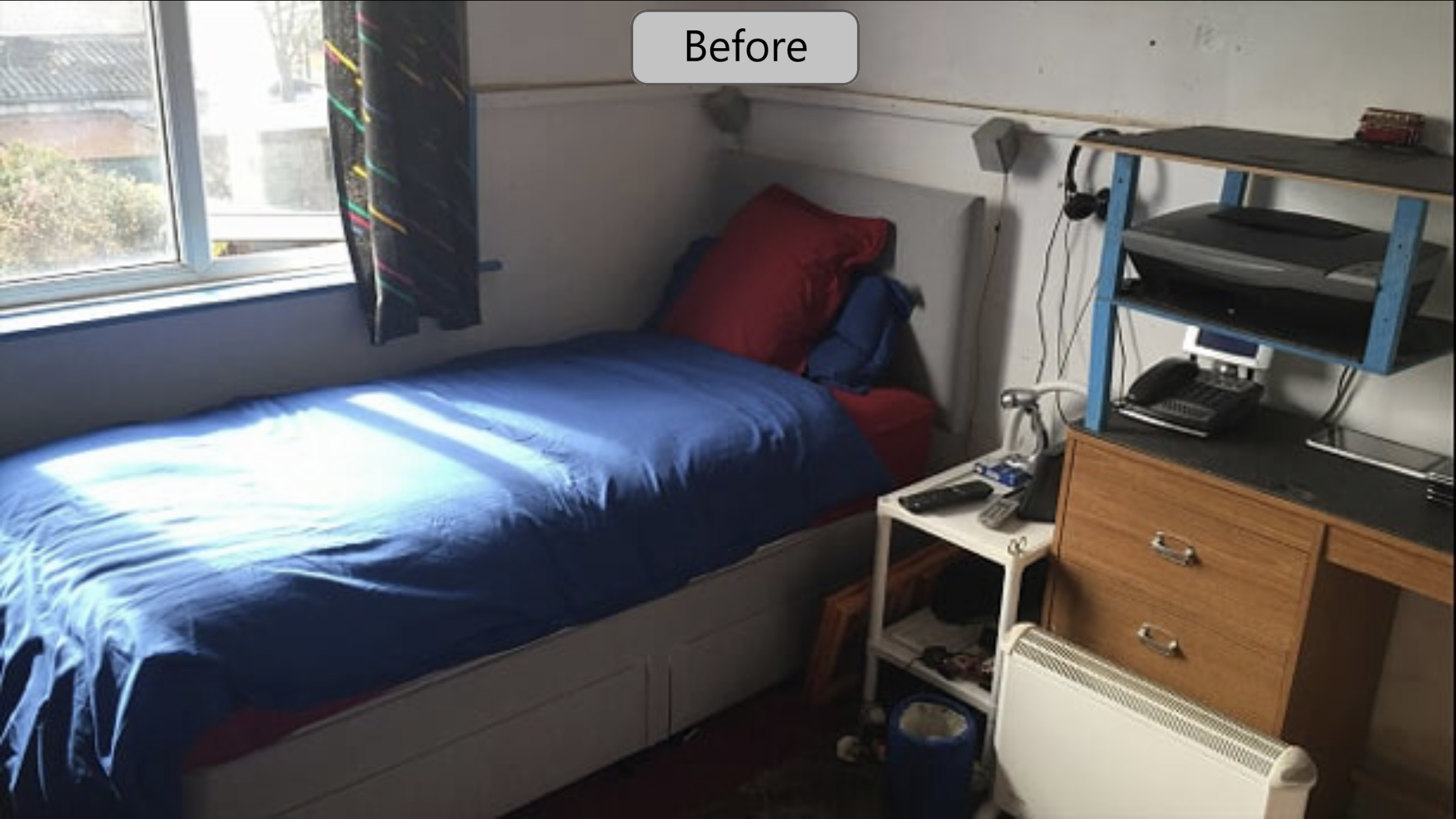

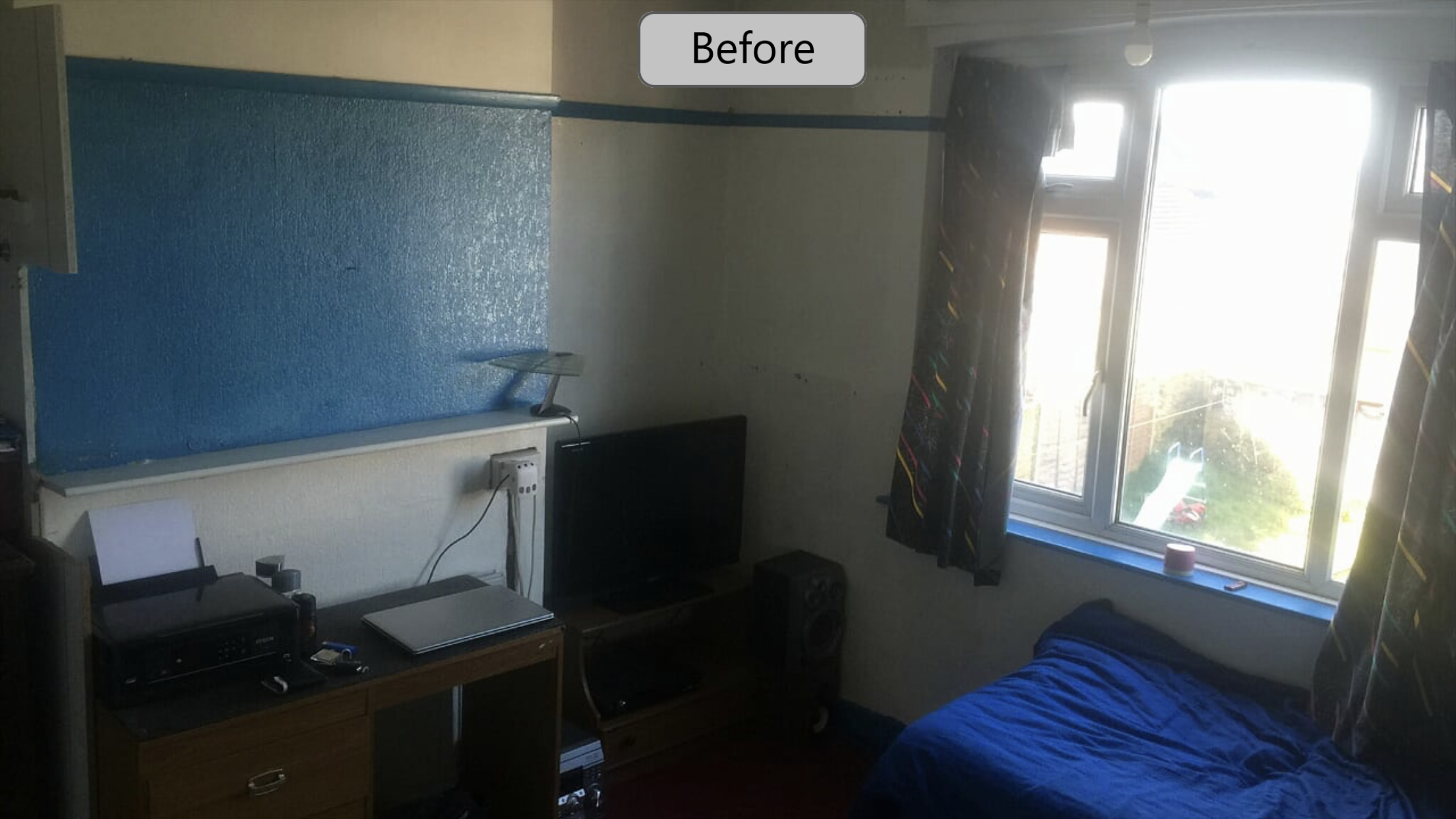

Rear Bedroom:
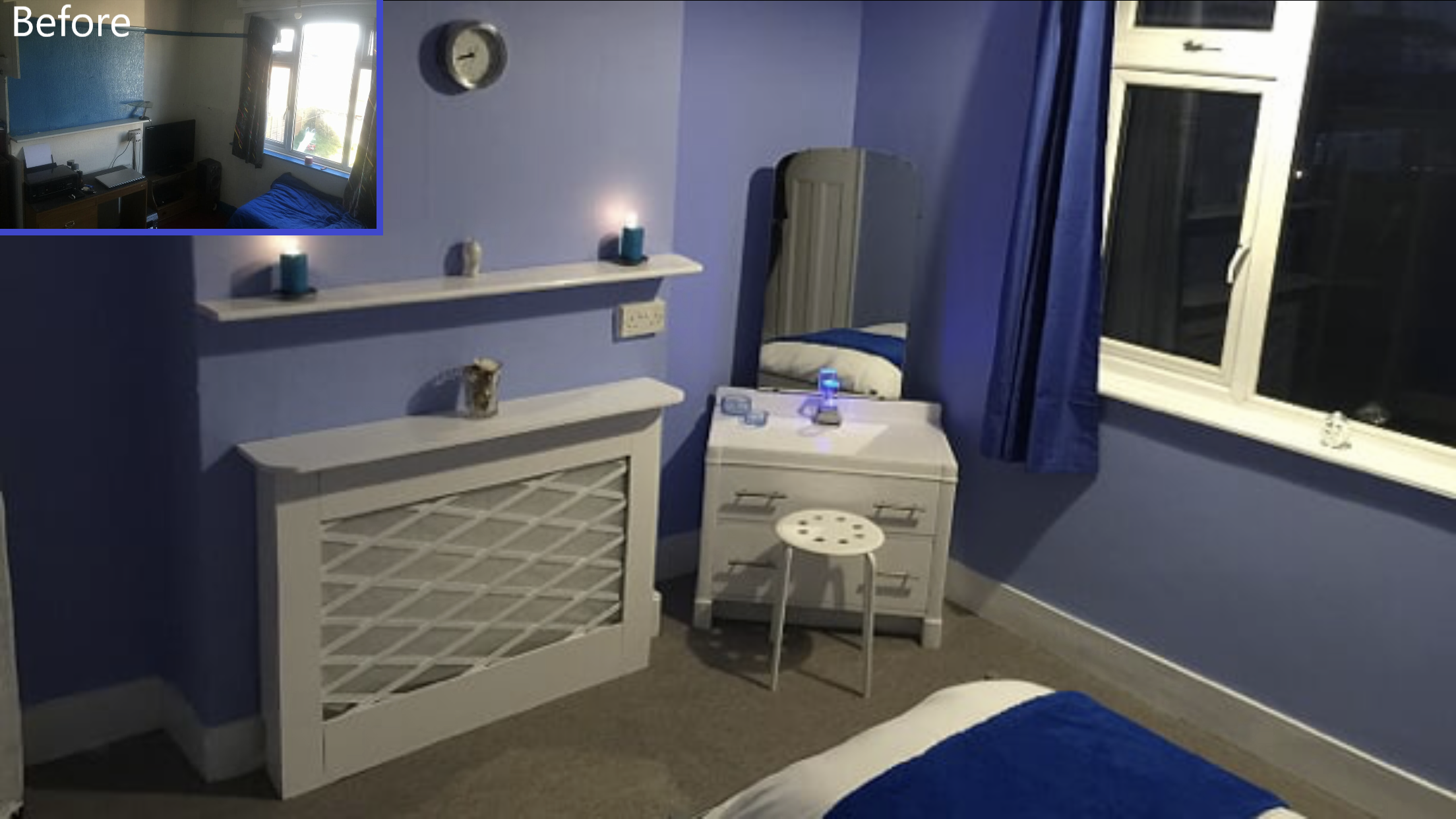
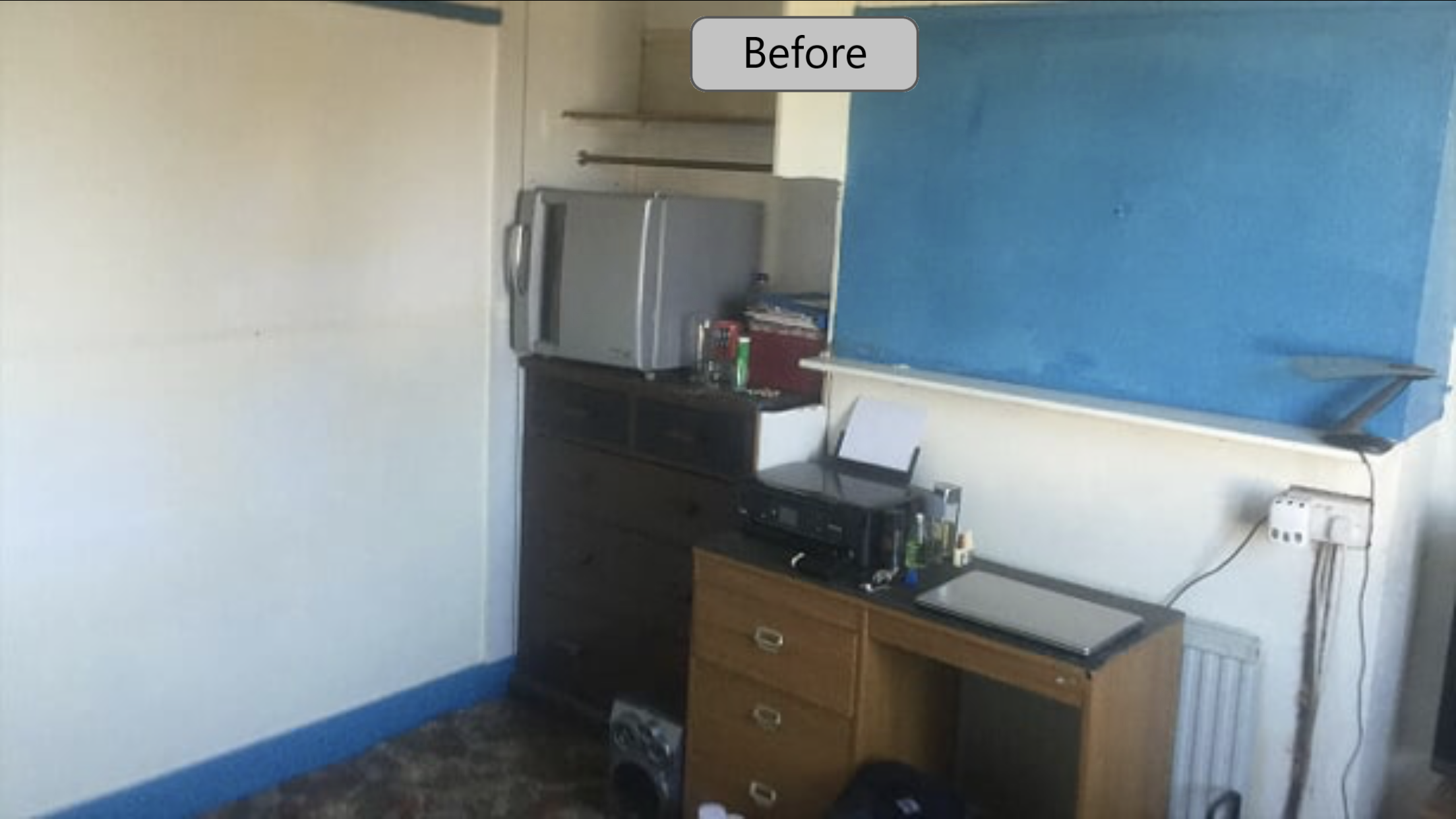
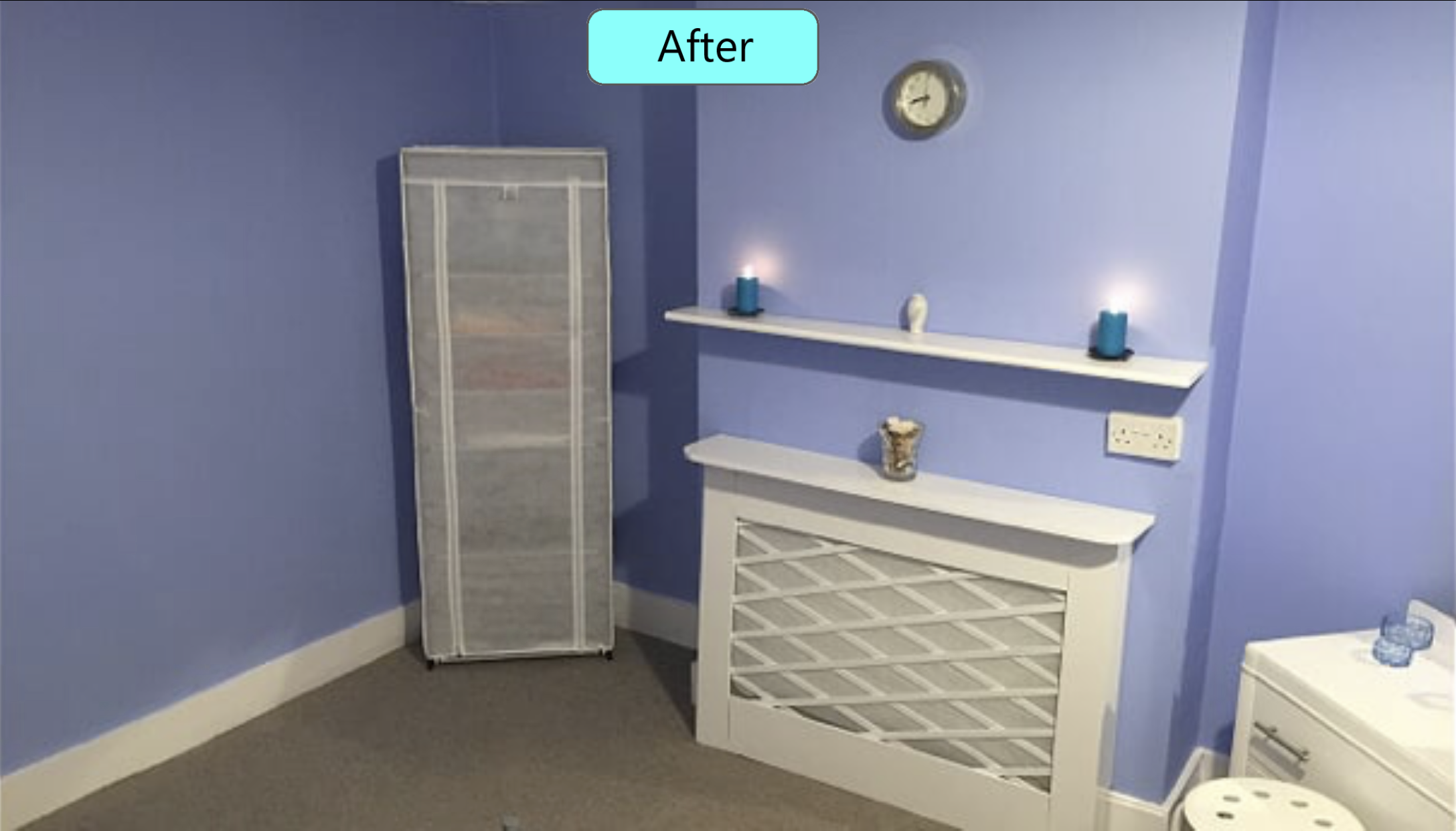
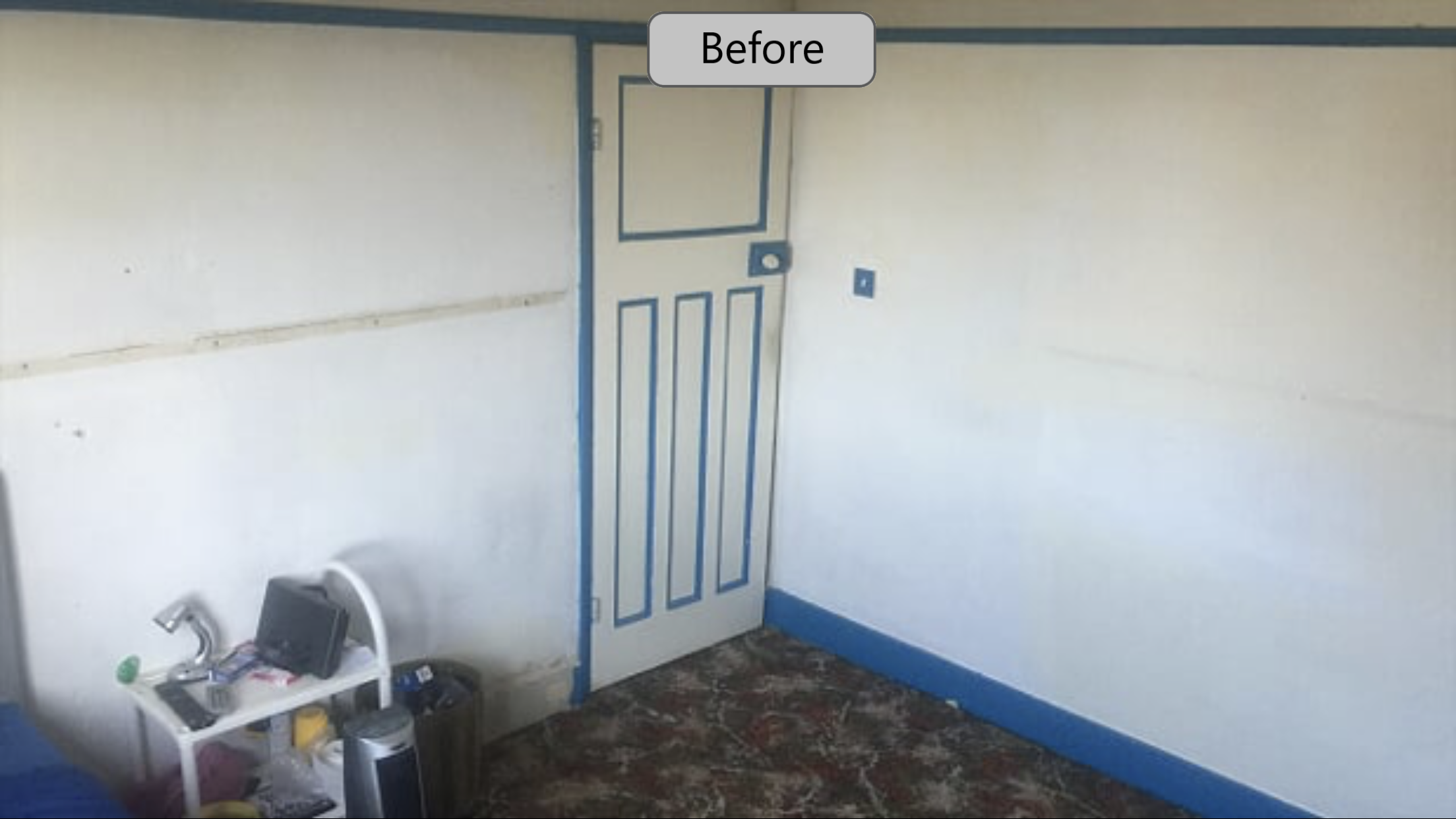
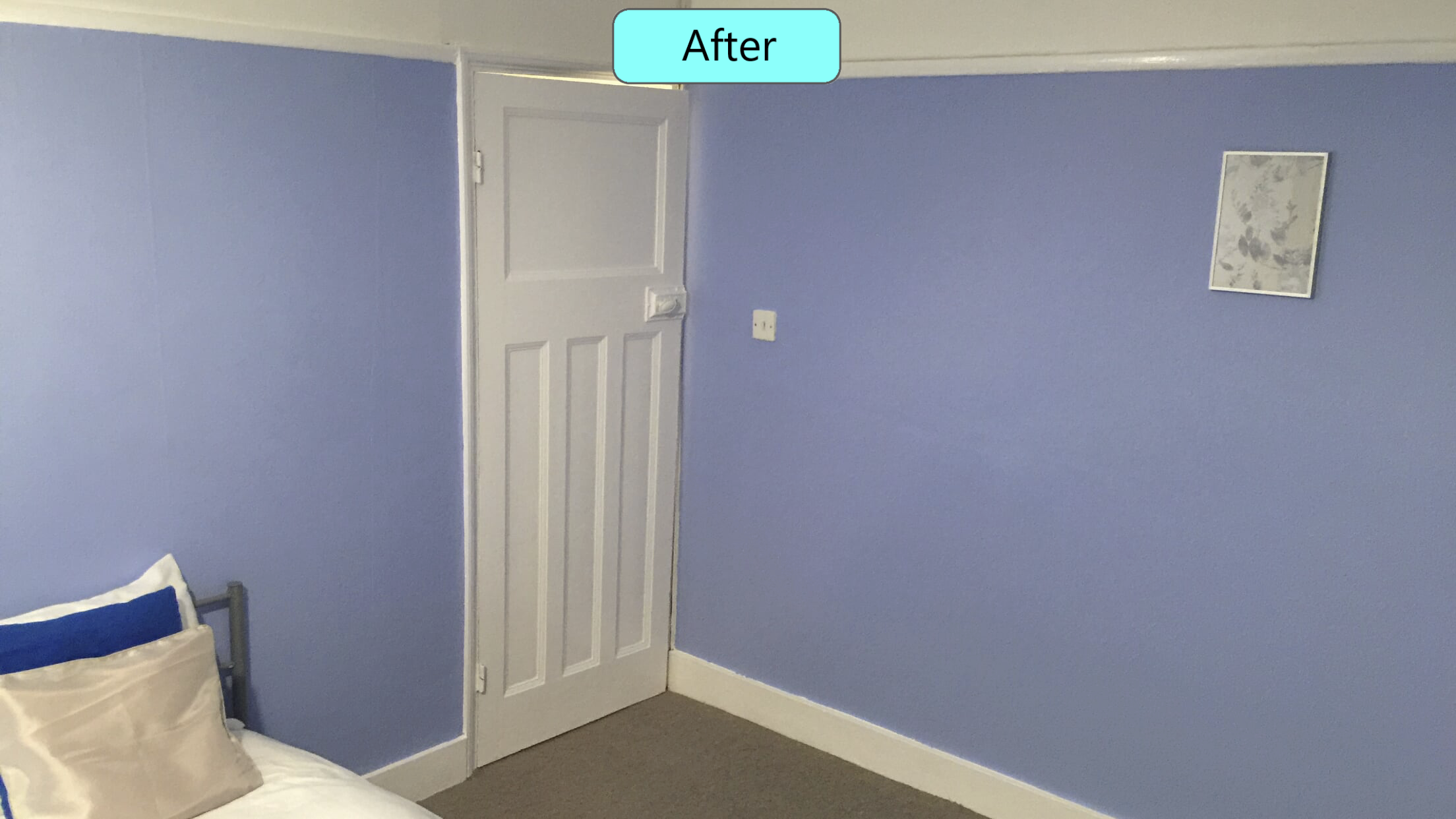
While I was waiting for the plaster to dry in the box room, I set to work in the rear bedroom (my old bedroom). Everything removed, carpet taken up then a good clean, I set to work with a few repairs, using filler to get rid of small cracks in the ceiling and dings on the walls, then covering the walls with a think backing paper as the walls, although in good shape, were not exactly smooth. When the paper was up, I could get on with the painting. Throughout the house decoration, I also picked out the furniture I wanted to use o dress the rooms and gave them a freshen up by painting them. The following are the order of operation and best practices to get the best results.
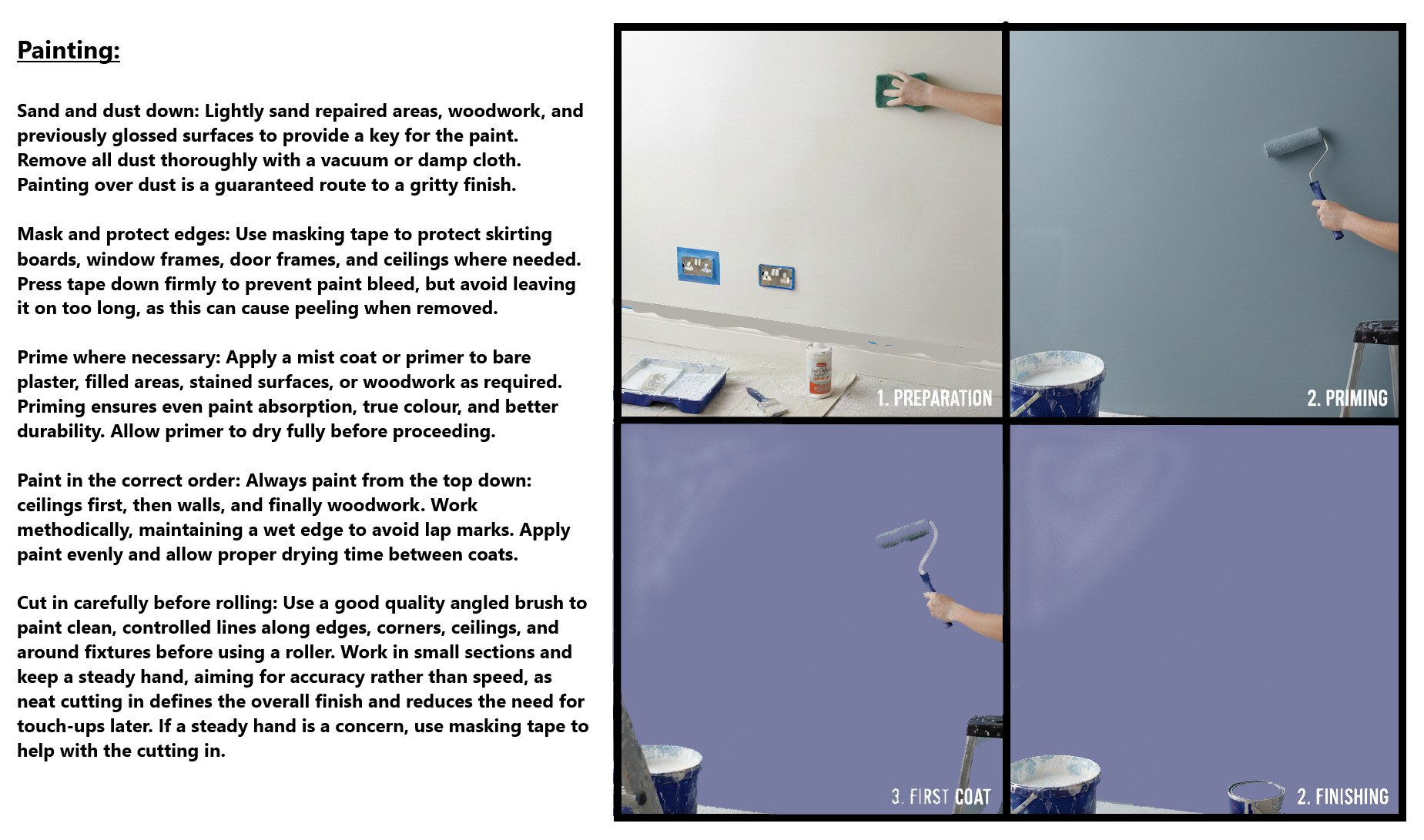
Painting:
- Inspect surfaces and carry out repairs: Carefully check walls and ceilings for cracks, holes, dents, or flaking areas. Fill imperfections using appropriate wall filler, applying in thin layers and allowing each to dry fully. Once dry, sand smooth and feather the edges so repairs disappear into the surrounding surface.
- Prepare existing wallpaper: If painting over old wallpaper, ensure it is firmly bonded with no lifting edges or bubbles. Re-adhere loose areas and seal them properly. Lightly clean the surface, then apply a suitable primer or sealer to prevent the wallpaper pattern or adhesive staining from bleeding through.
- Apply backing paper where needed: For uneven walls or previously patterned surfaces, apply lining or backing paper before painting. This creates a uniform surface, improves the final finish, and hides minor imperfections. Allow backing paper to dry completely before applying any paint (see below).
- Sand and dust down: Lightly sand repaired areas, woodwork, and previously glossed surfaces to provide a key for the paint. Remove all dust thoroughly with a vacuum or damp cloth. Painting over dust is a guaranteed route to a gritty finish.
- Mask and protect edges: Use masking tape to protect skirting boards, window frames, door frames, and ceilings where needed. Press tape down firmly to prevent paint bleed, but avoid leaving it on too long, as this can cause peeling when removed.
- Prime where necessary: Apply a mist coat or primer to bare plaster, filled areas, stained surfaces, or woodwork as required. Priming ensures even paint absorption, true colour, and better durability. Allow primer to dry fully before proceeding.
- Paint in the correct order: Always paint from the top down: ceilings first, then walls, and finally woodwork. Work methodically, maintaining a wet edge to avoid lap marks. Apply paint evenly and allow proper drying time between coats.
- Cut in carefully before rolling: Use a good quality angled brush to paint clean, controlled lines along edges, corners, ceilings, and around fixtures before using a roller. Work in small sections and keep a steady hand, aiming for accuracy rather than speed, as neat cutting in defines the overall finish and reduces the need for touch-ups later. If a steady hand is a concern, use masking tape to help with the cutting in.
- Final checks and clean-up: Once painting is complete, remove masking tape carefully while the paint is still slightly soft. Clean brushes and rollers immediately. Inspect the room under good light and carry out any minor touch-ups as needed.
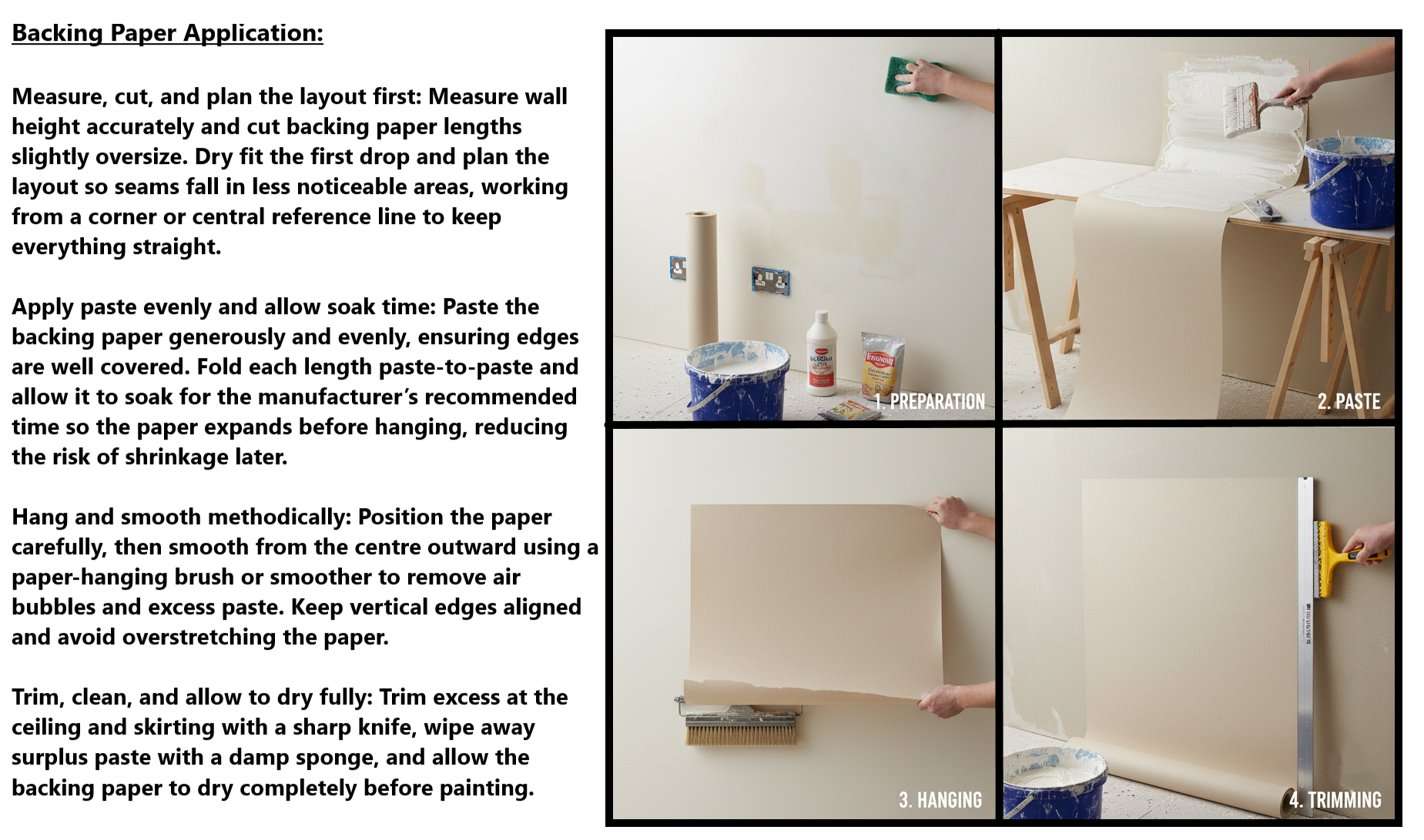
Backing Paper Application.
If the walls you want to paint are uneven like this room was, here is how to apply backing paper to the walls to get a smooth finish when painted.
- Measure, cut, and plan the layout first: Measure wall height accurately and cut backing paper lengths slightly oversize. Dry fit the first drop and plan the layout so seams fall in less noticeable areas, working from a corner or central reference line to keep everything straight.
- Apply paste evenly and allow soak time: Paste the backing paper generously and evenly, ensuring edges are well covered. Fold each length paste-to-paste and allow it to soak for the manufacturer’s recommended time so the paper expands before hanging, reducing the risk of shrinkage later.
- Hang and smooth methodically: Position the paper carefully, then smooth from the centre outward using a paper-hanging brush or smoother to remove air bubbles and excess paste. Keep vertical edges aligned and avoid overstretching the paper.
- Trim, clean, and allow to dry fully: Trim excess at the ceiling and skirting with a sharp knife, wipe away surplus paste with a damp sponge, and allow the backing paper to dry completely before painting. Painting too soon can cause lifting, blistering, or visible seams.
Painting Furniture Tips:
- Clean and degrease thoroughly: Remove dirt, grease, polish, and wax using a suitable cleaner before doing anything else. Paint will not adhere properly to contaminated surfaces, no matter how optimistic the brushwork.
- Sand to key the surface: Lightly sand all surfaces to remove shine and create a key for the paint. Pay special attention to edges and corners, as these are common failure points where paint tends to wear first.
- Repair and prepare before painting: Fill dents, scratches, and joints with an appropriate wood filler, allow it to dry fully, then sand smooth. A flawless finish is built at this stage, not painted on later.
- Prime appropriately: Apply a suitable primer based on the furniture material and previous finish. Priming improves adhesion, blocks stains (especially good for old furniture), and ensures the final colour appears true and even.
- Use thin, controlled coats: Apply paint in thin, even layers, allowing proper drying time between coats. Thick coats may look efficient but often lead to drips, brush marks, and a soft, easily damaged finish.
- Allow proper curing time: Once painting is complete, allow the furniture to cure fully before use. Dry to the touch does not mean fully hardened, and premature use can mark or damage the finish.
With new carpet, freshly painted furniture, new self-made radiator cover and room dressings added, I was over the half way mark for the upstairs.
Tiling
The bathroom:
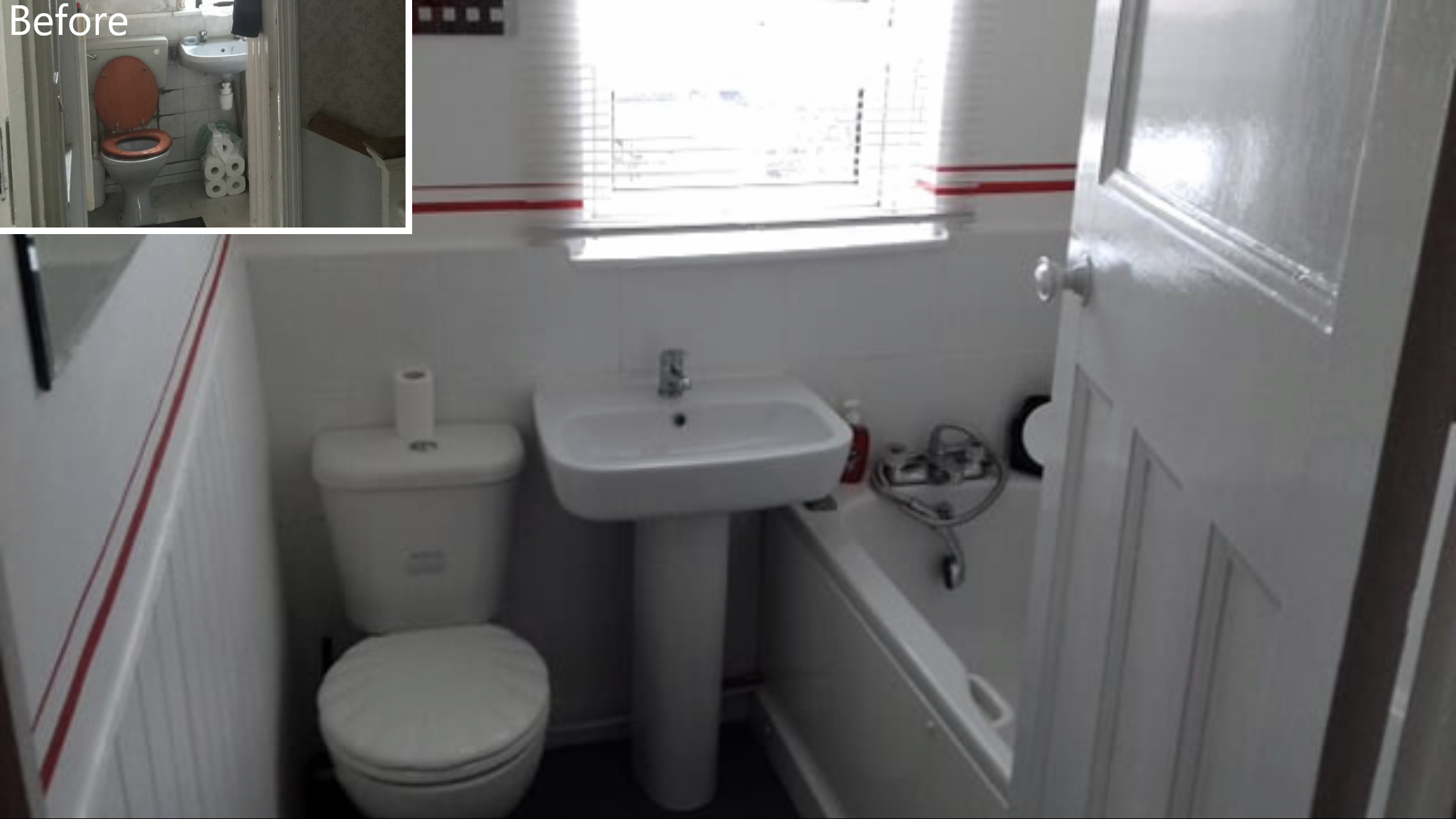
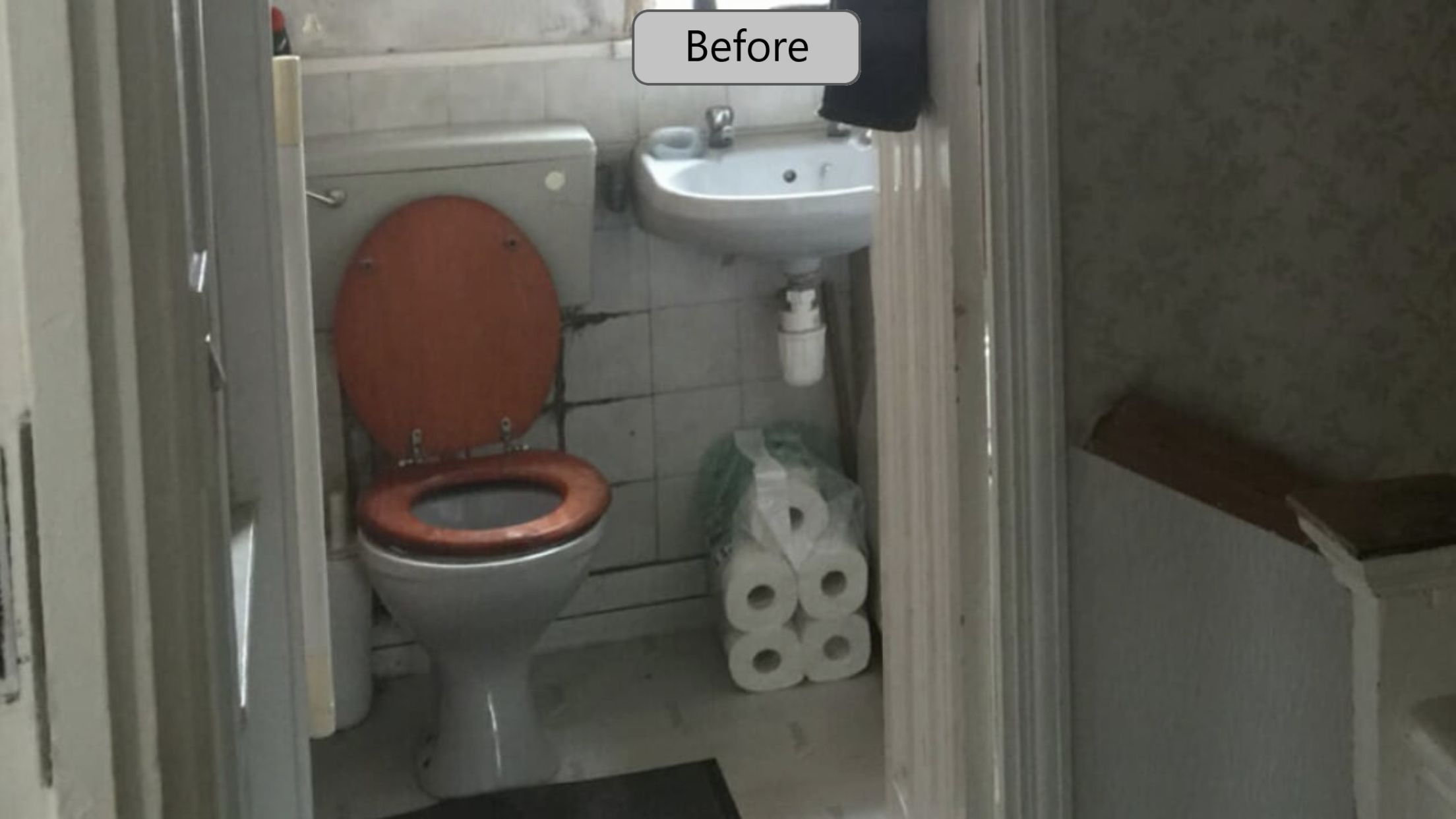
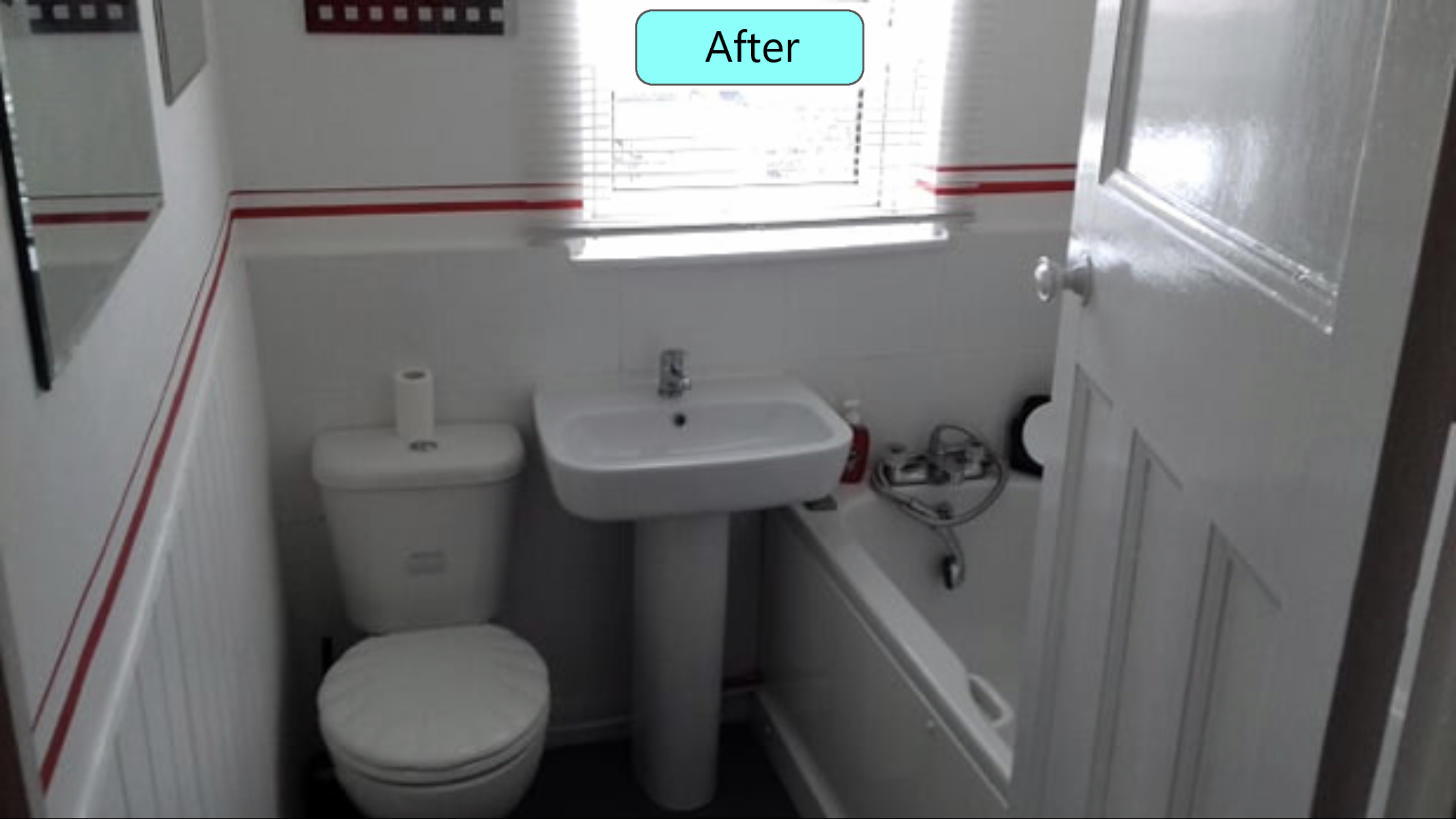
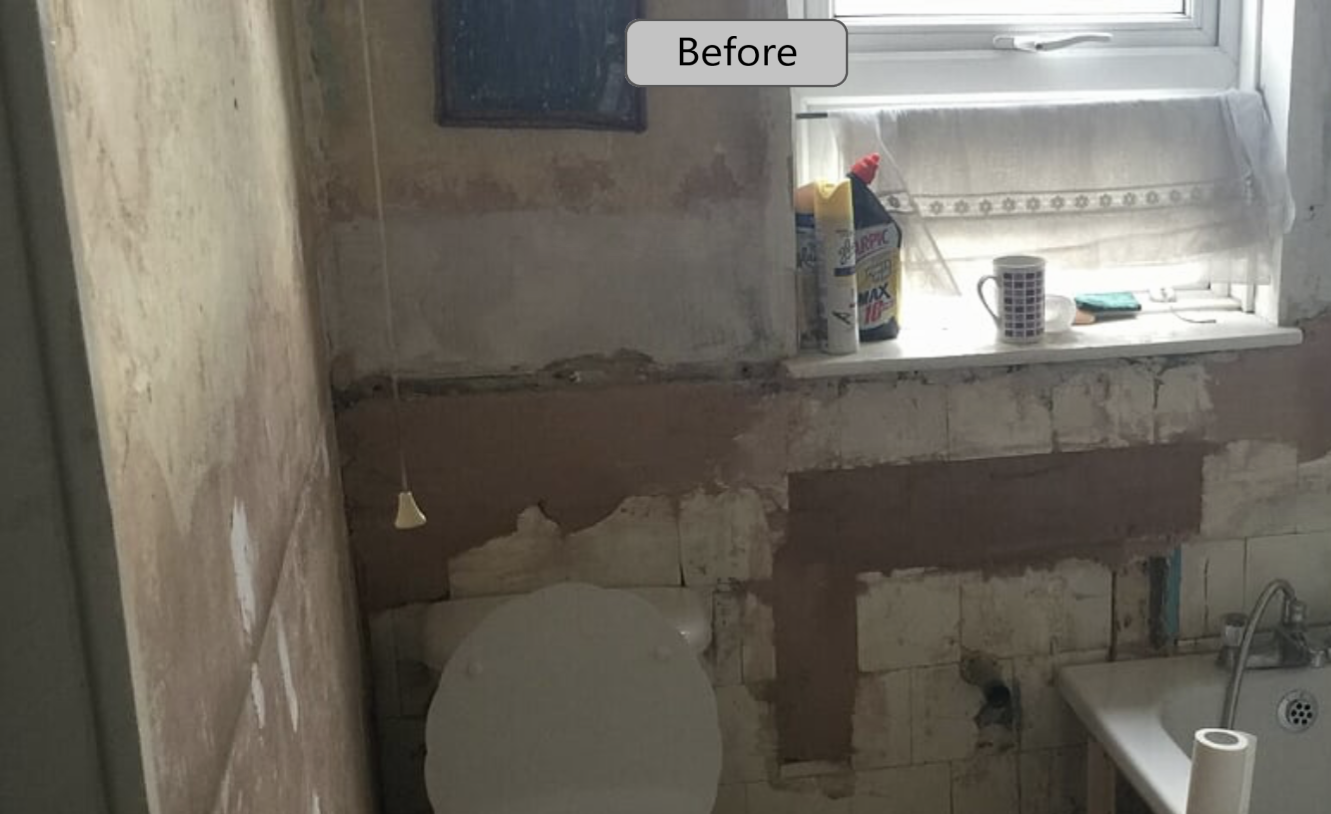
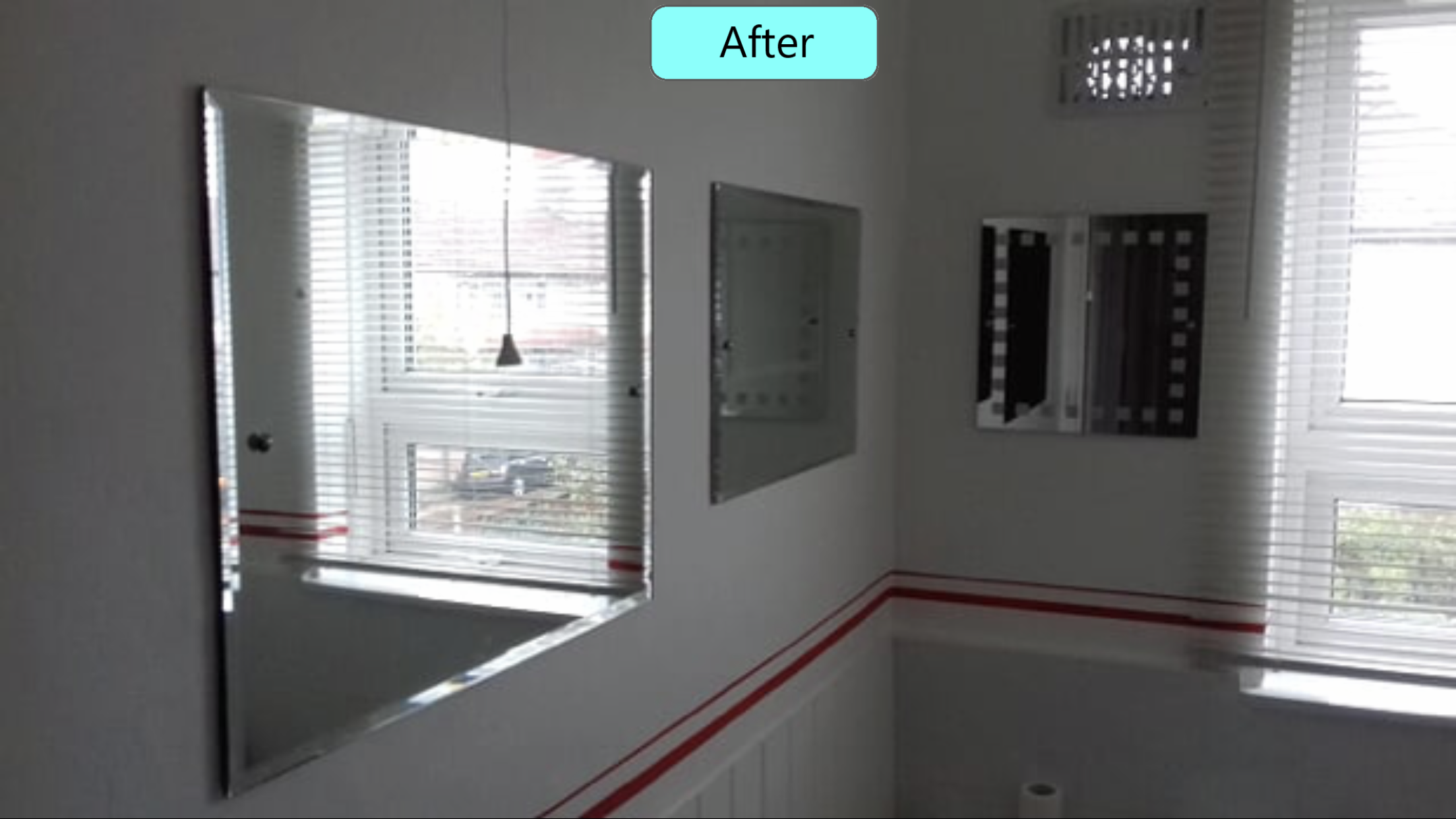
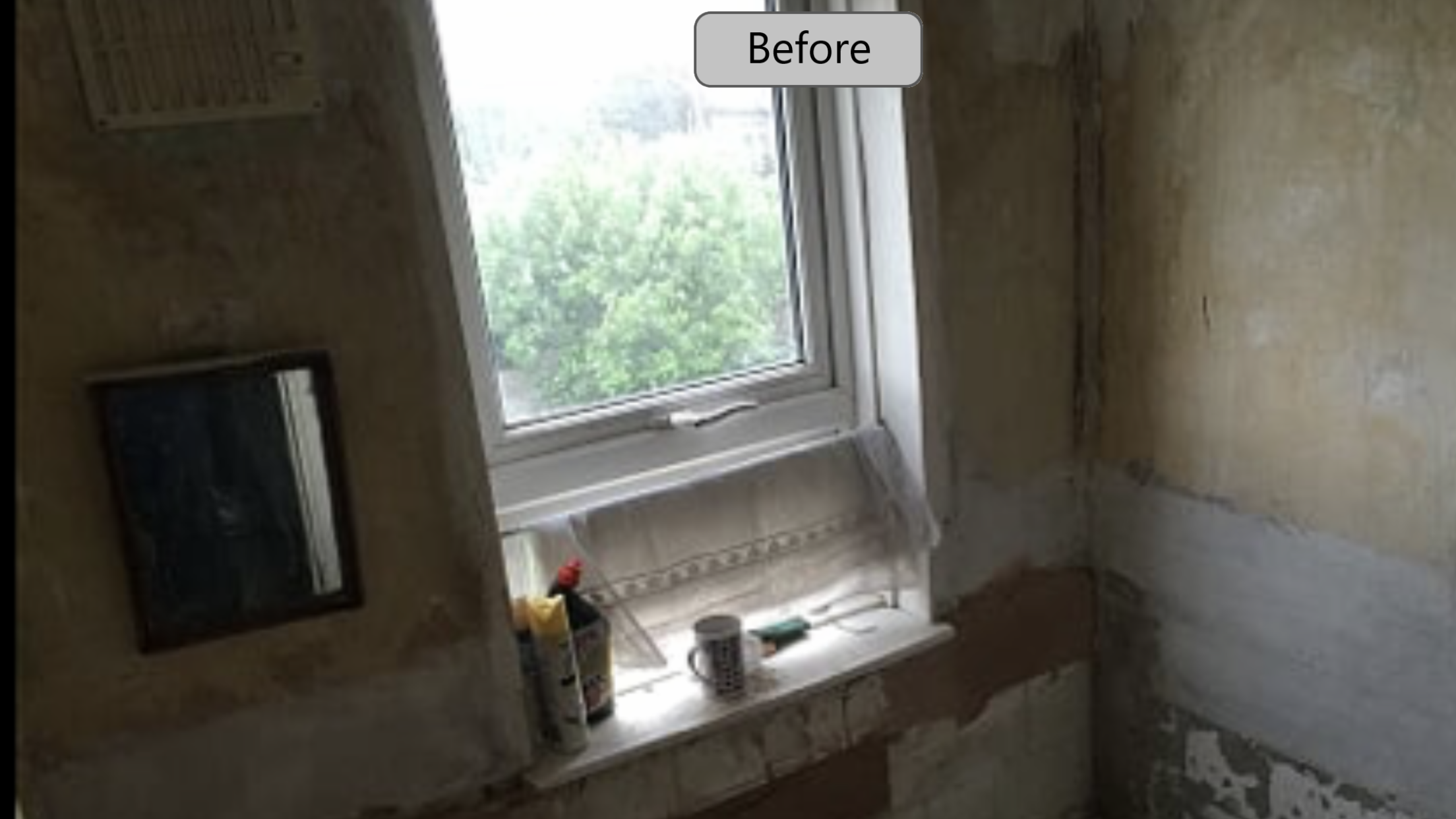
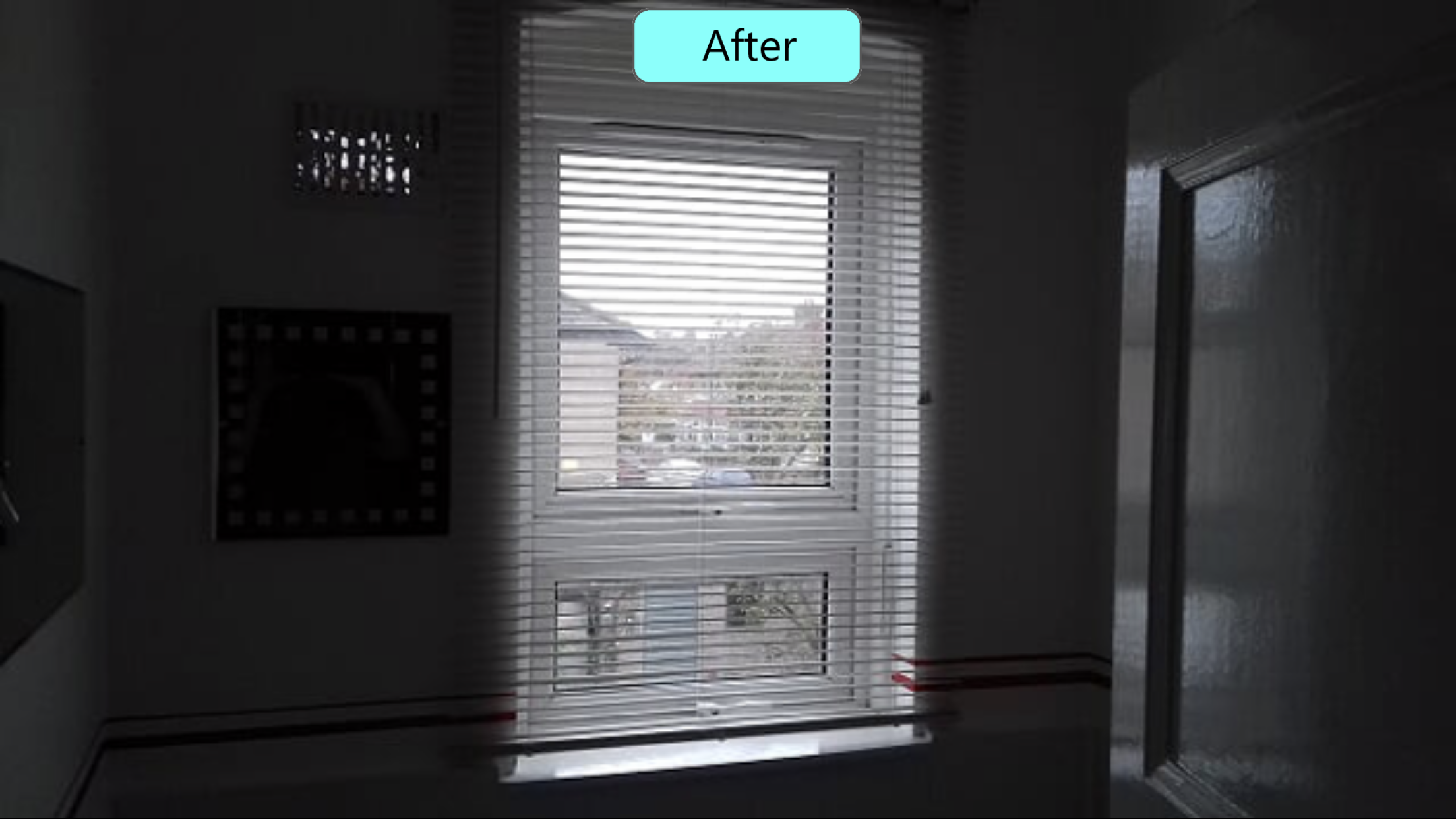
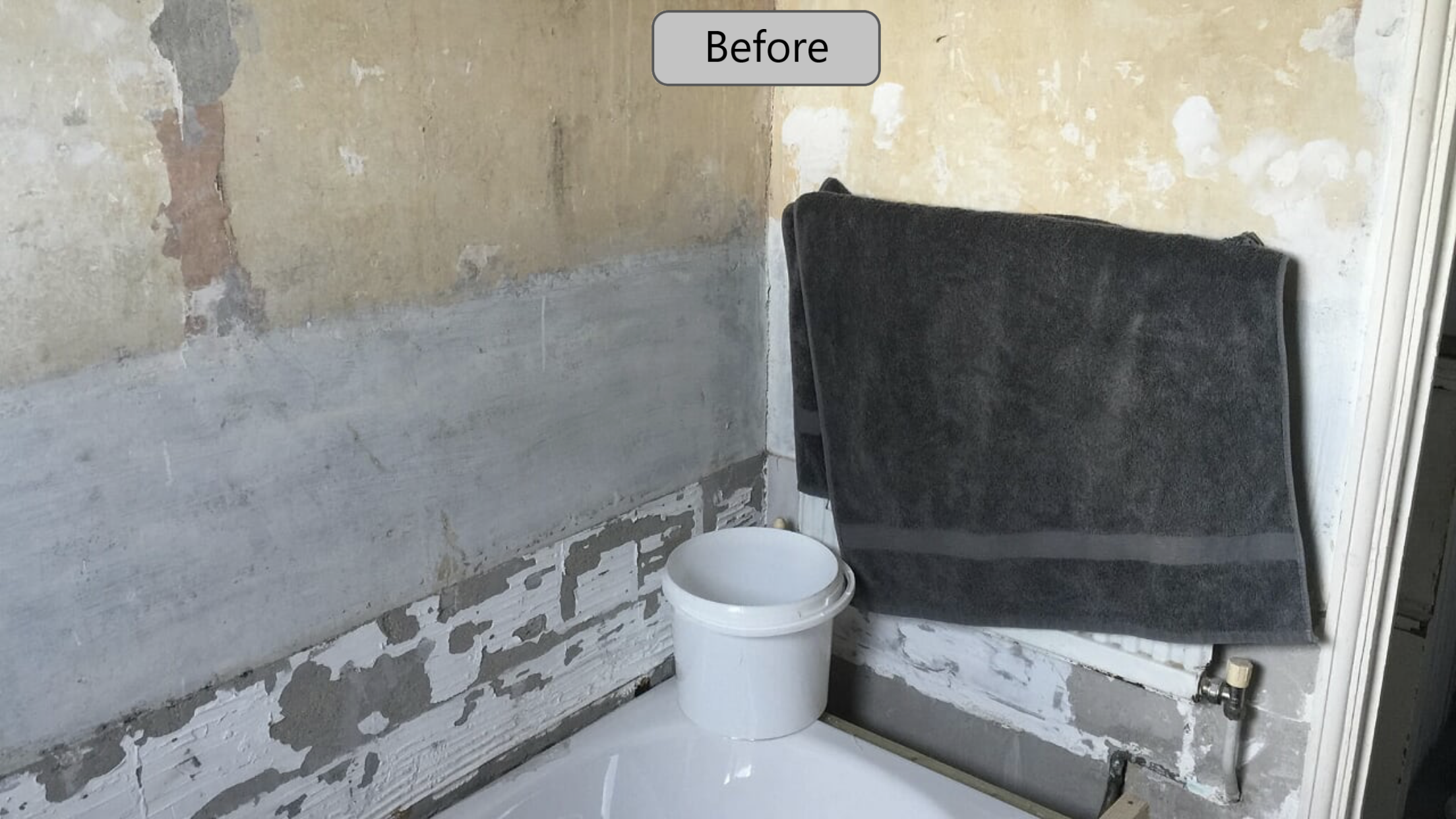
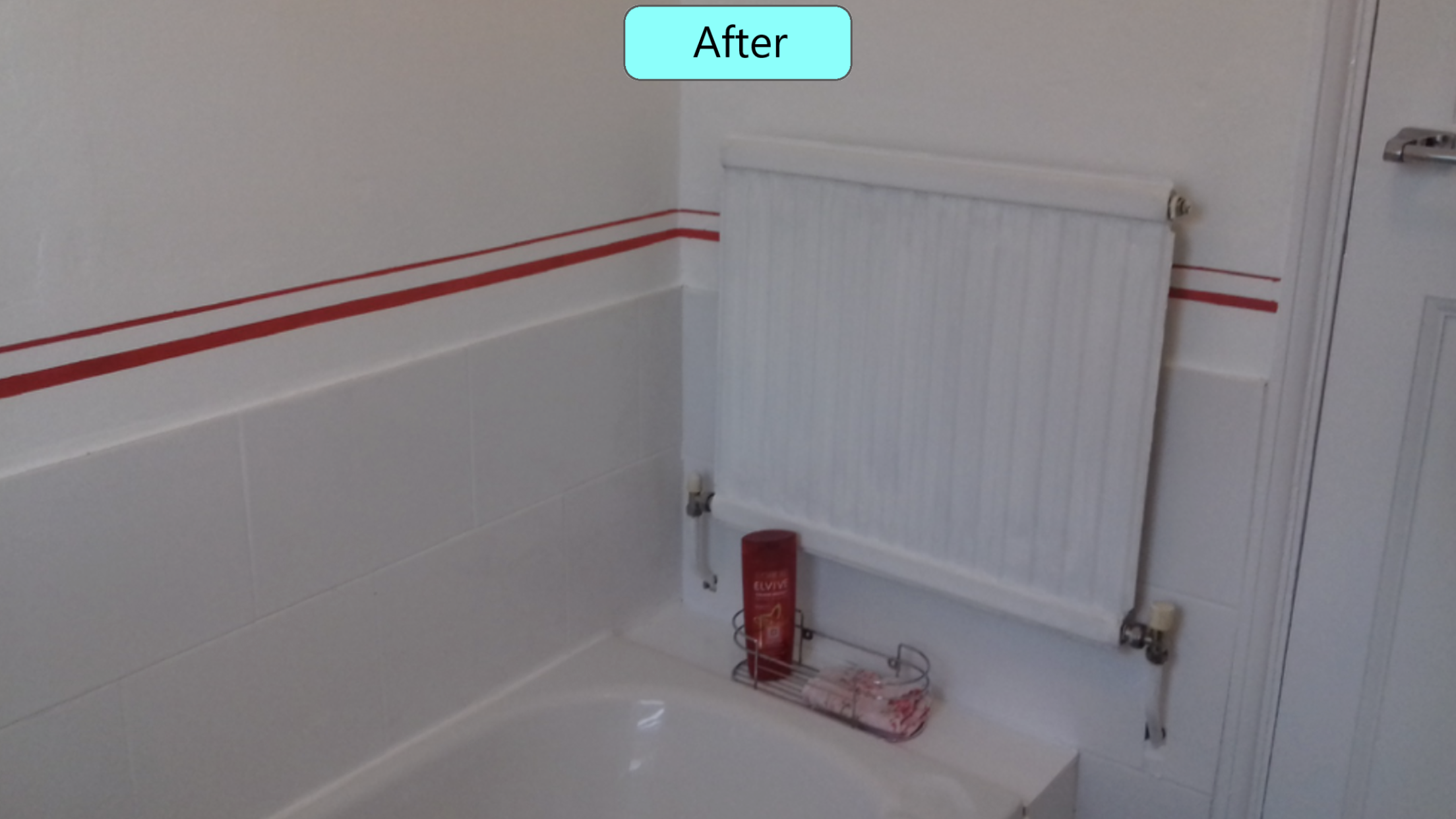
The upstairs bathroom was next on the list of room to decorate. Here I removed the old bath, sink and toilet which looked a little dated, and replaced them with a new budget friendly suite. As it was a small room, I purchased a white suite, painted the walls and ceiling with a silk white and added some mirrors to better reflect any light. For a little stylising, I masked off a large and thinner line around the walls and painted the gaps with red pinstripes to add a touch of colour. That with some red consumables such as soap and shampoo bottles, added a little extra flourish to break up the white.
But apart from the new suite and before painting, I wanted to replace the ceramic tiles around the batch and sink/toilet walls with some larger more stylish ones as some of the existing ones were either cracked or coming away from the wall. Here is how to re-tile a room.
- Prepare the area and isolate services: Remove or protect nearby fixtures, cover sanitaryware, and protect floors with heavy-duty sheets. If tiles are near electrical fittings or plumbing, isolate power and water where necessary. Good ventilation is essential, tile dust and adhesive are not fond of lungs.
- Remove fittings and sealants: Take off accessories such as towel rails, shelves, mirrors, and shower fittings where necessary. Carefully cut away old silicone sealant along edges using a sharp knife. This prevents tiles tearing surrounding surfaces as they come away.
- Remove old tiles carefully: Starting at a loose tile or an edge, use a bolster chisel and hammer to prise tiles away from the wall. Work methodically and wear eye protection, ceramic tile shrapnel is a real possibility. Try not to damage the underlying wall more than necessary, particularly around corners and plumbing penetrations.
- Strip back old adhesive: Remove as much old tile adhesive as possible using a scraper or chisel. A flat, clean surface is critical for new tiles to sit properly. Leaving ridges or lumps will cause uneven tiles and alignment issues later.
- Inspect and repair the wall surface: Check the wall for damage, moisture issues, or crumbling plasterboard. Repair or replace damaged areas and ensure the surface is solid, flat, and dry. In wet areas, consider using tile backer boards for improved moisture resistance.
- Clean and prime the surface: Remove dust and debris, then apply a suitable primer or bonding agent if required. This improves adhesive grip and reduces suction, giving you more working time when fixing tiles.
- Plan the tile layout before fixing: Dry-lay tiles or mark guide lines to plan the layout. Aim to avoid thin cuts at edges and corners where possible, and centre feature areas for balance. This stage makes for a better, cleaner finish.
- Apply adhesive and fix tiles methodically: Use the correct tile adhesive for the bathroom environment. Apply with a notched trowel and fix tiles in small sections, using spacers to maintain consistent gaps. Check alignment regularly with a spirit level.
- Allow adhesive to cure fully: Leave tiles undisturbed for the manufacturer’s recommended time before grouting. Moving too quickly risks tiles shifting or loosening, undoing hours of careful work.
- Grout and clean: Apply grout evenly, pressing it fully into the joints. Wipe away excess with a damp sponge before it sets, rinsing frequently. Once dry, polish off any grout haze with a clean cloth.
- Seal and refit fittings: Apply fresh silicone sealant to corners, edges, and around fittings once grout has cured. Reinstall removed fixtures carefully, avoiding overtightening which can crack tiles.
When I finished the tiling, I fitted some grooved wooden wall paneling along the lower part of the wall opposite the bath. I applied an instant bond adhesive and fixed the panels into place, pressing them to the wall. These were then painted silk white. After laying a new vinyl flooring, fitting a venetian window blind and dressing the bathroom, I moved onto the upstairs landing.
Brightening Dark Areas
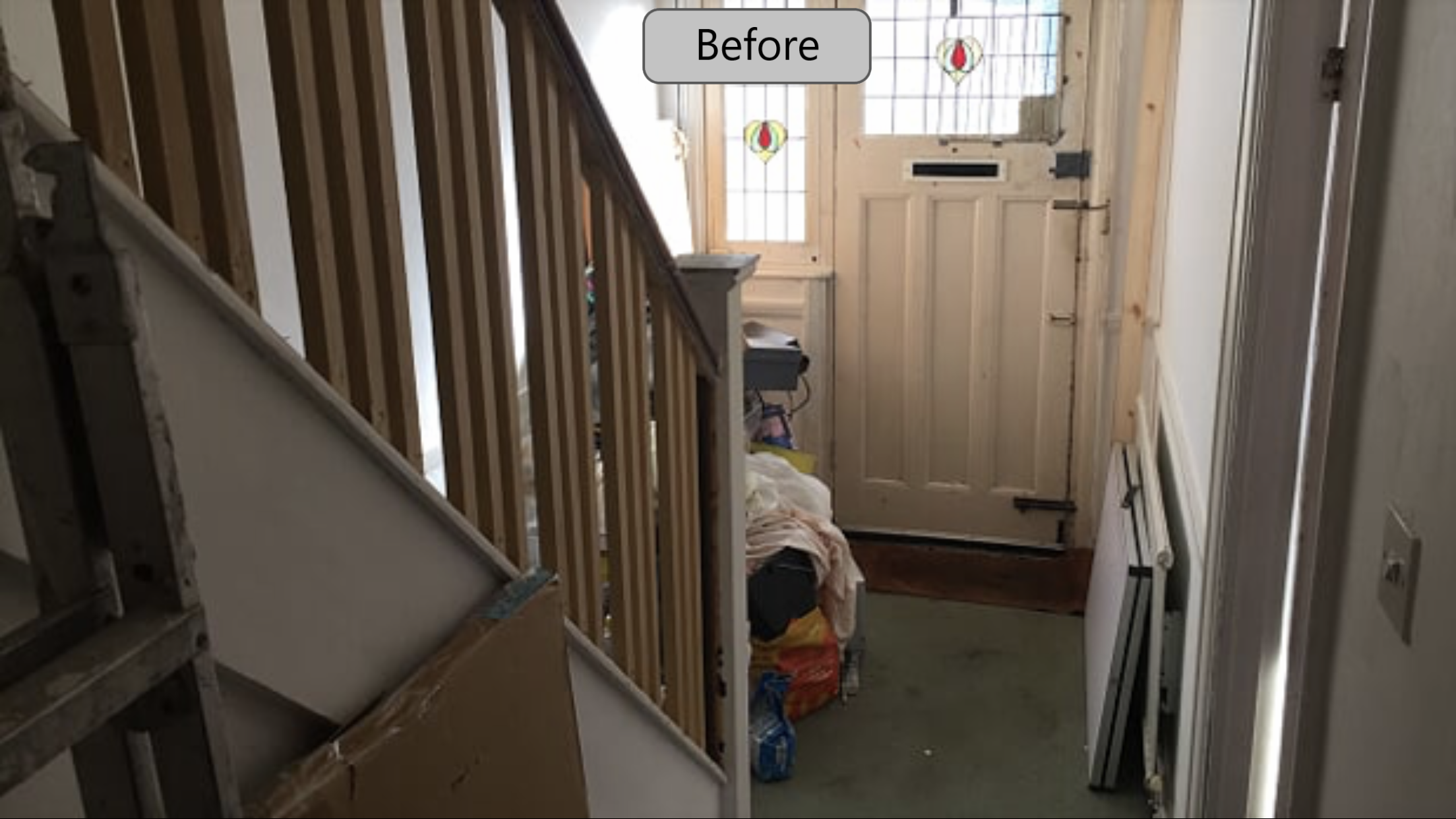
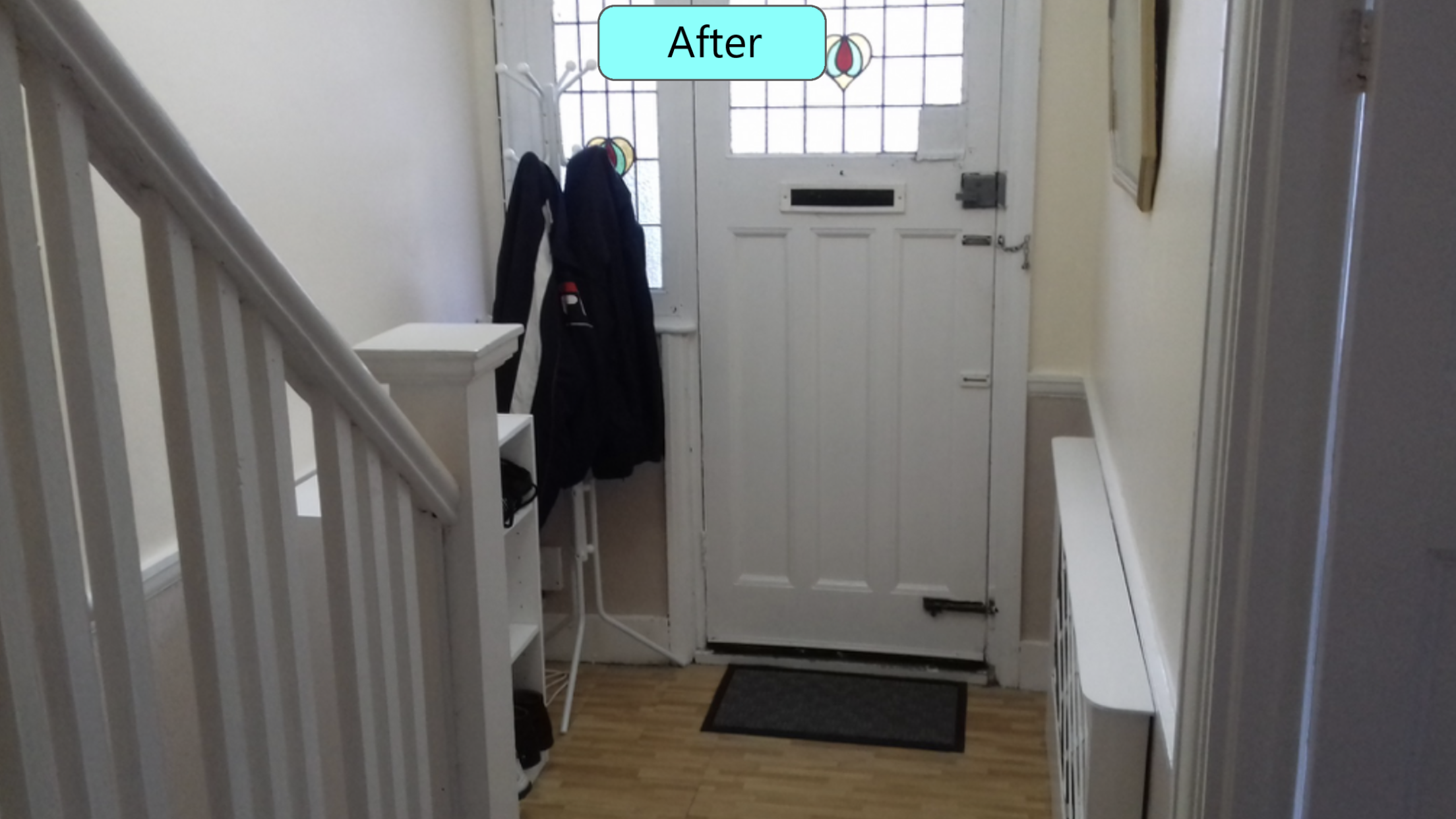
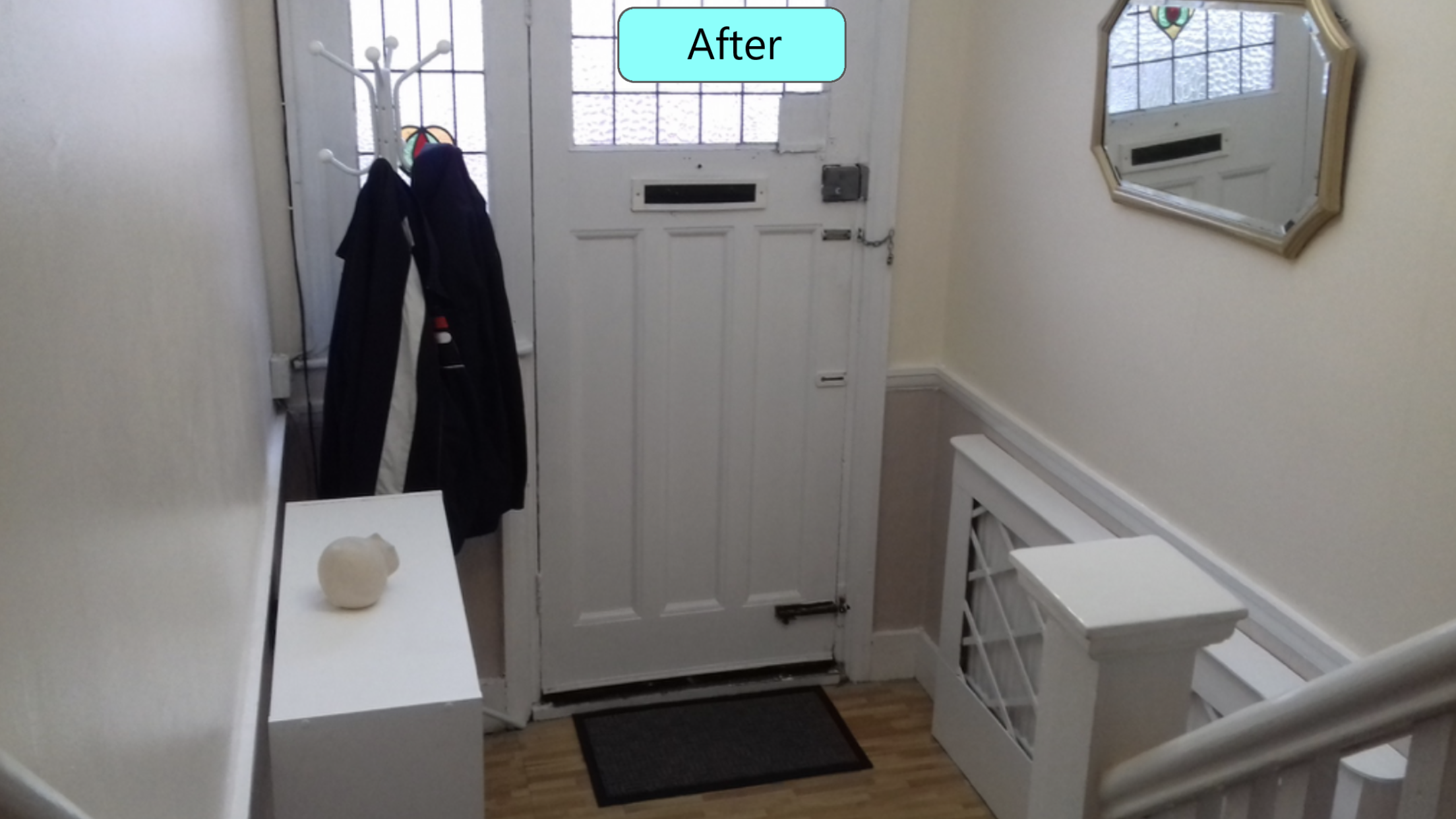
Upstairs Landing, Staircase & Downstairs Hallway:
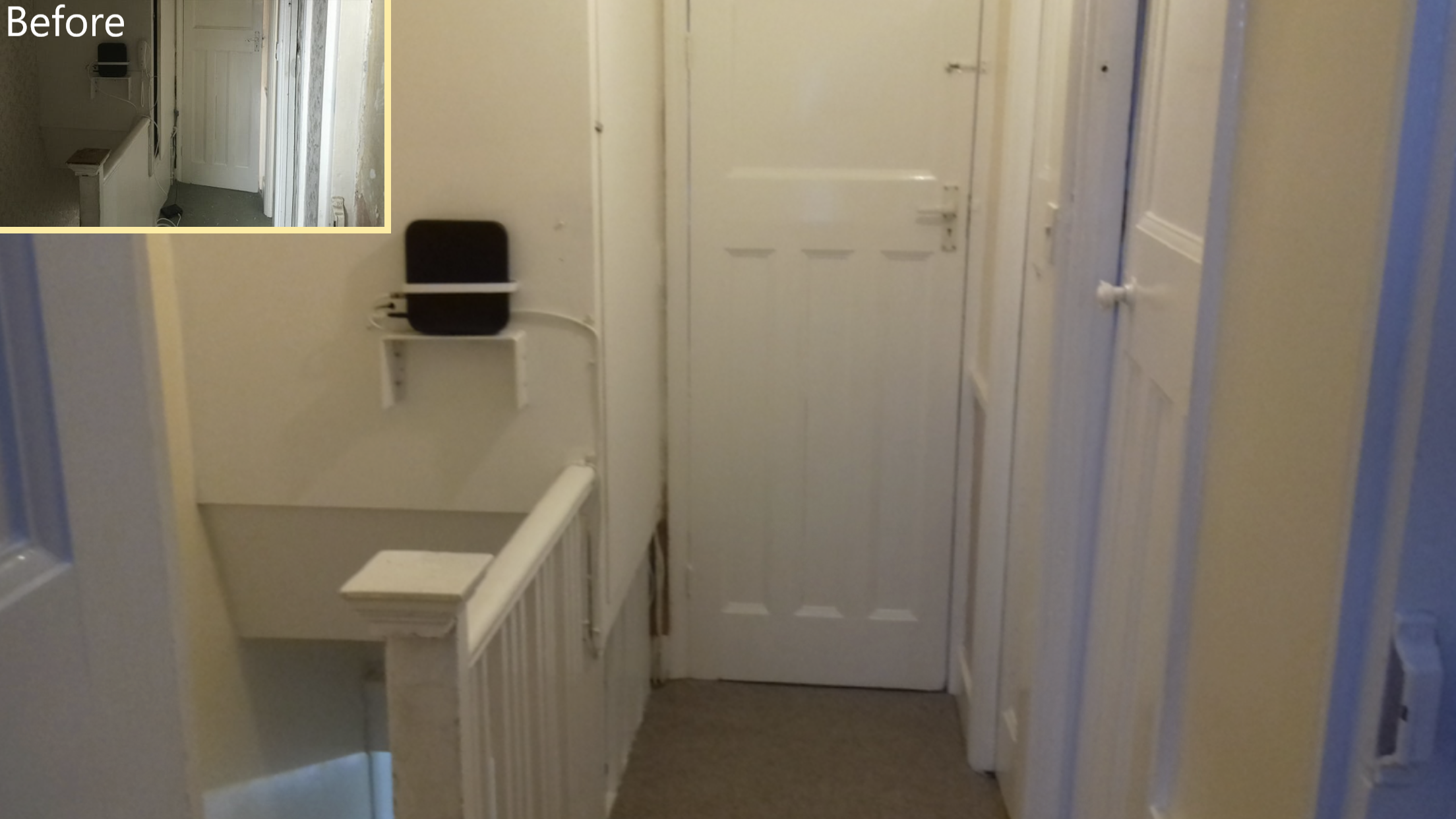
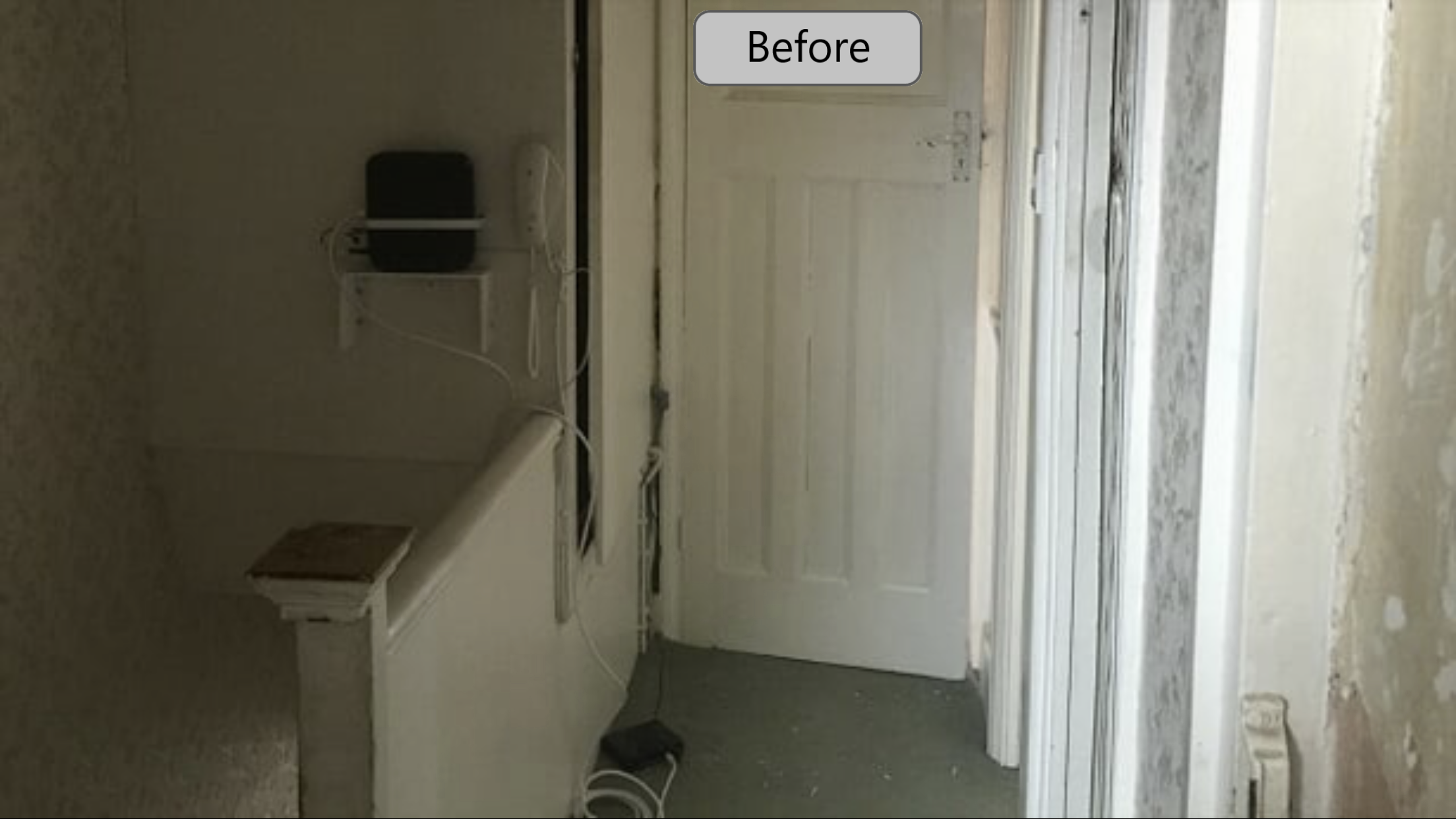
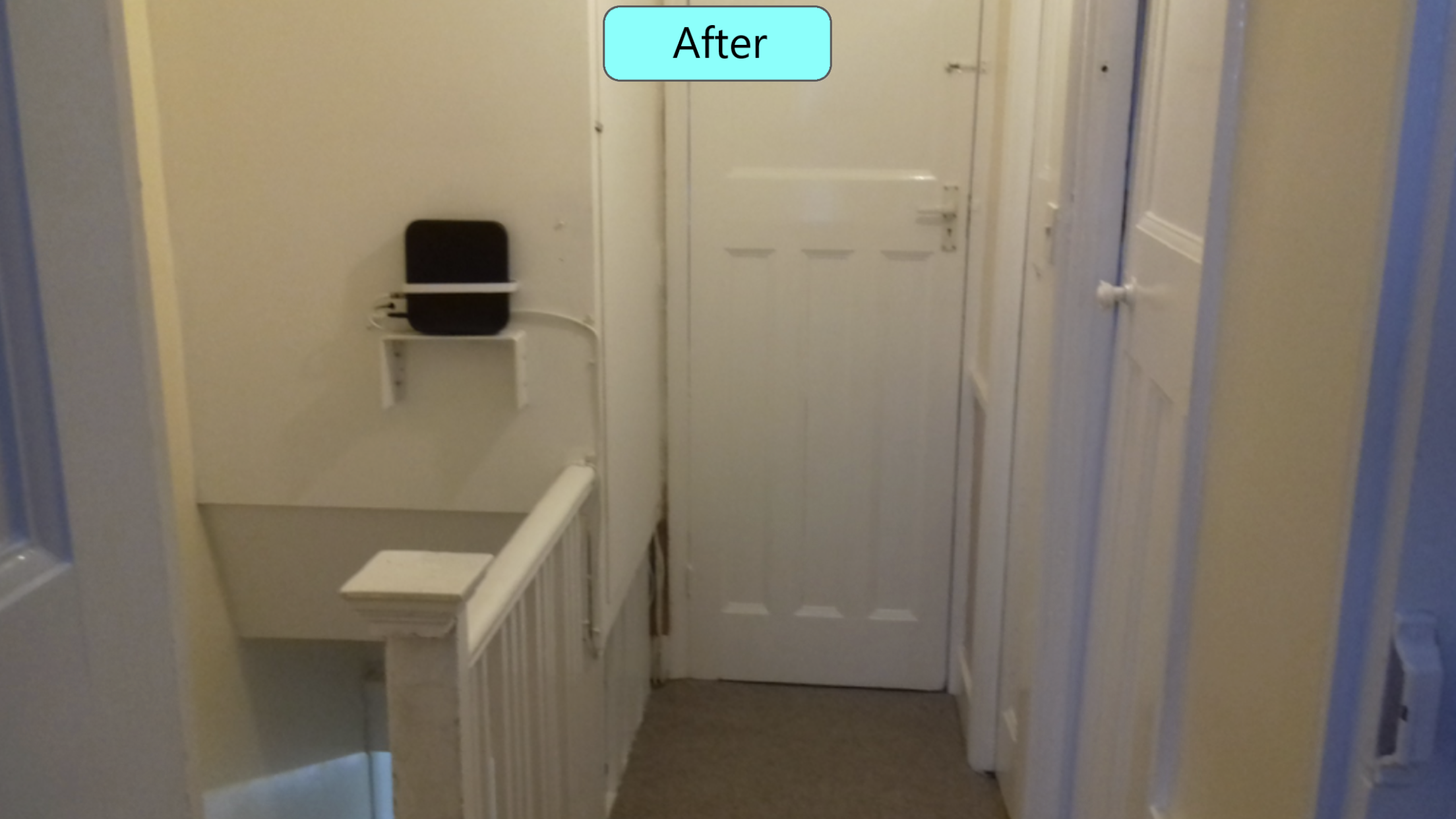
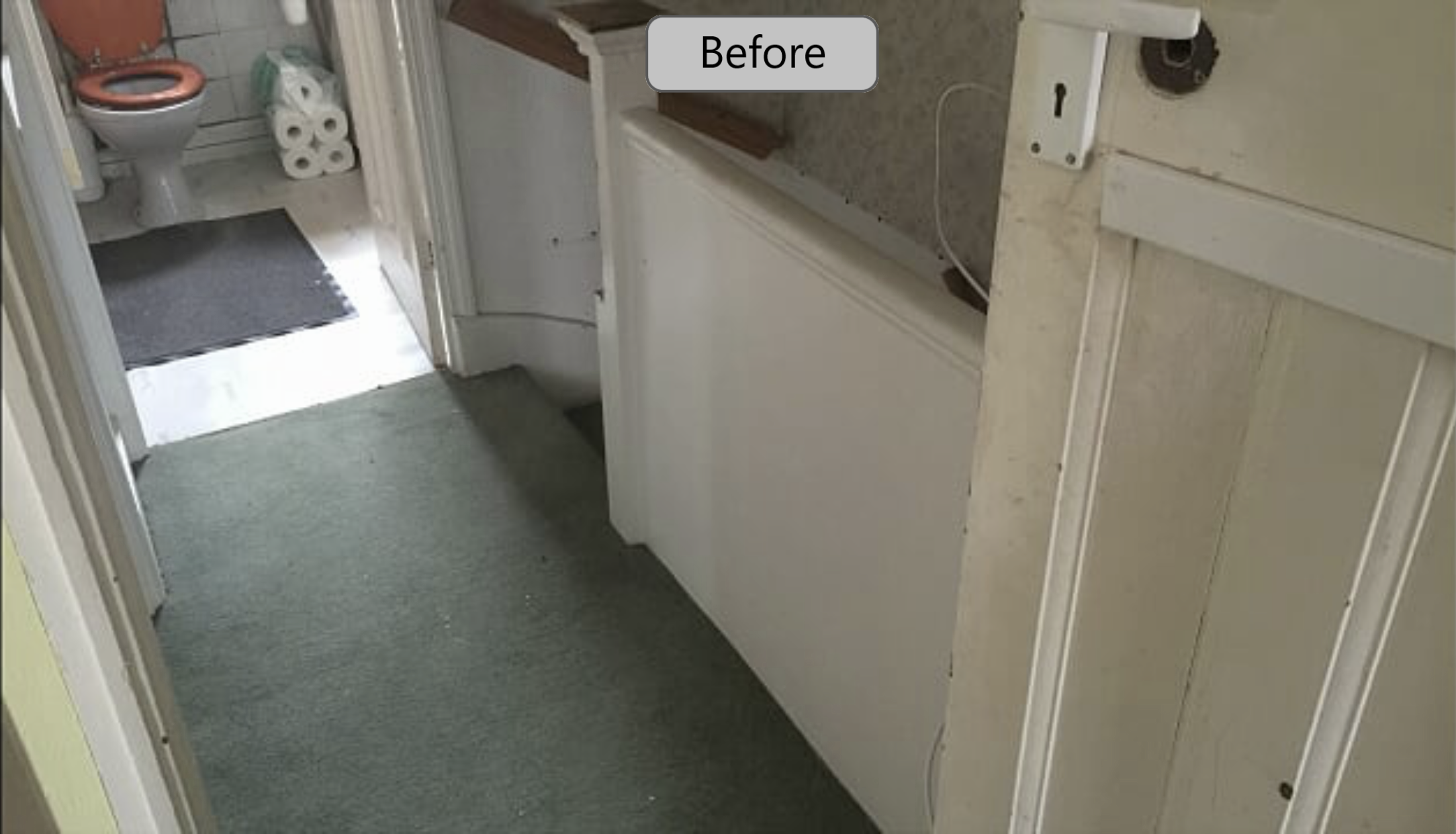
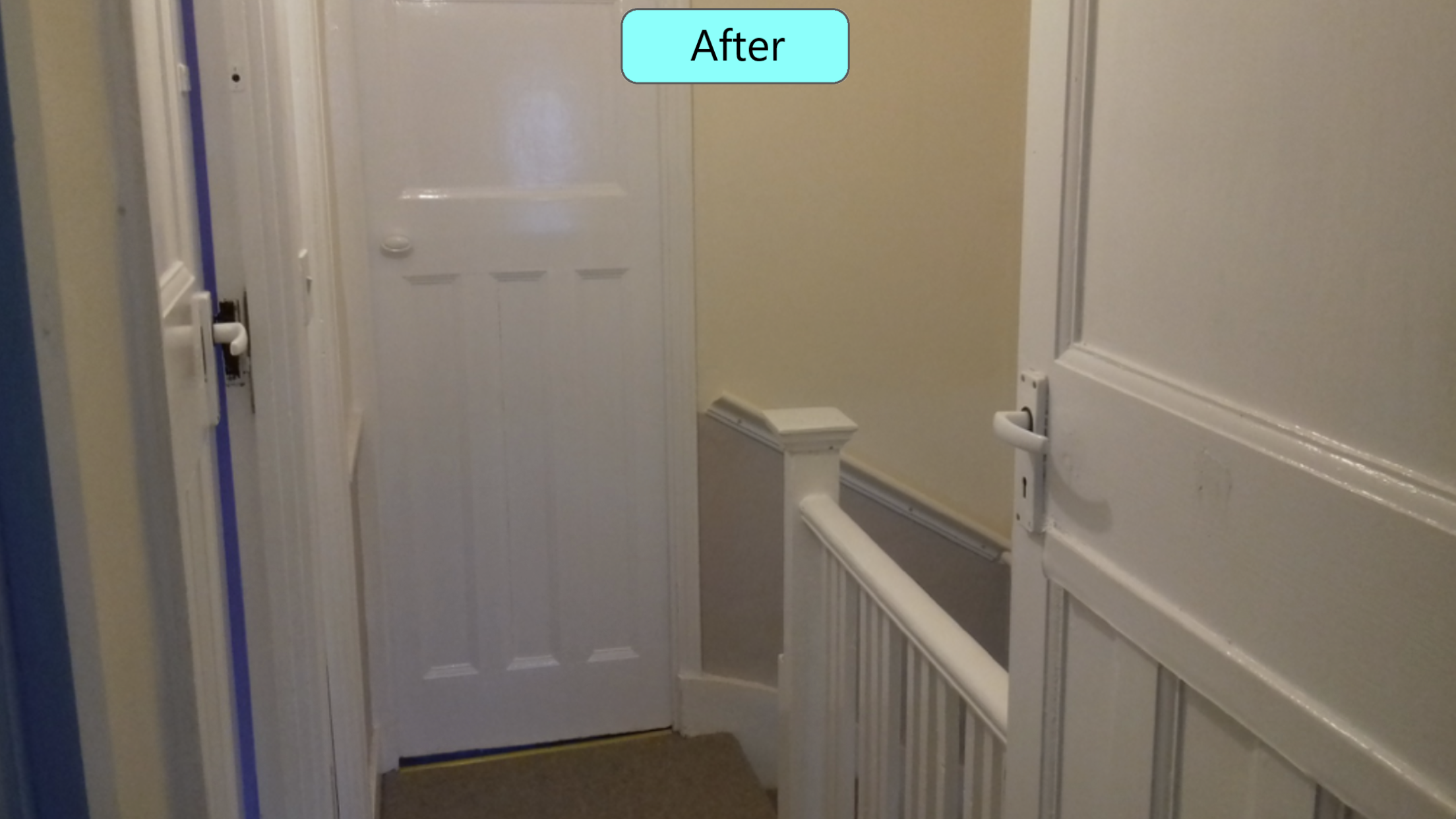
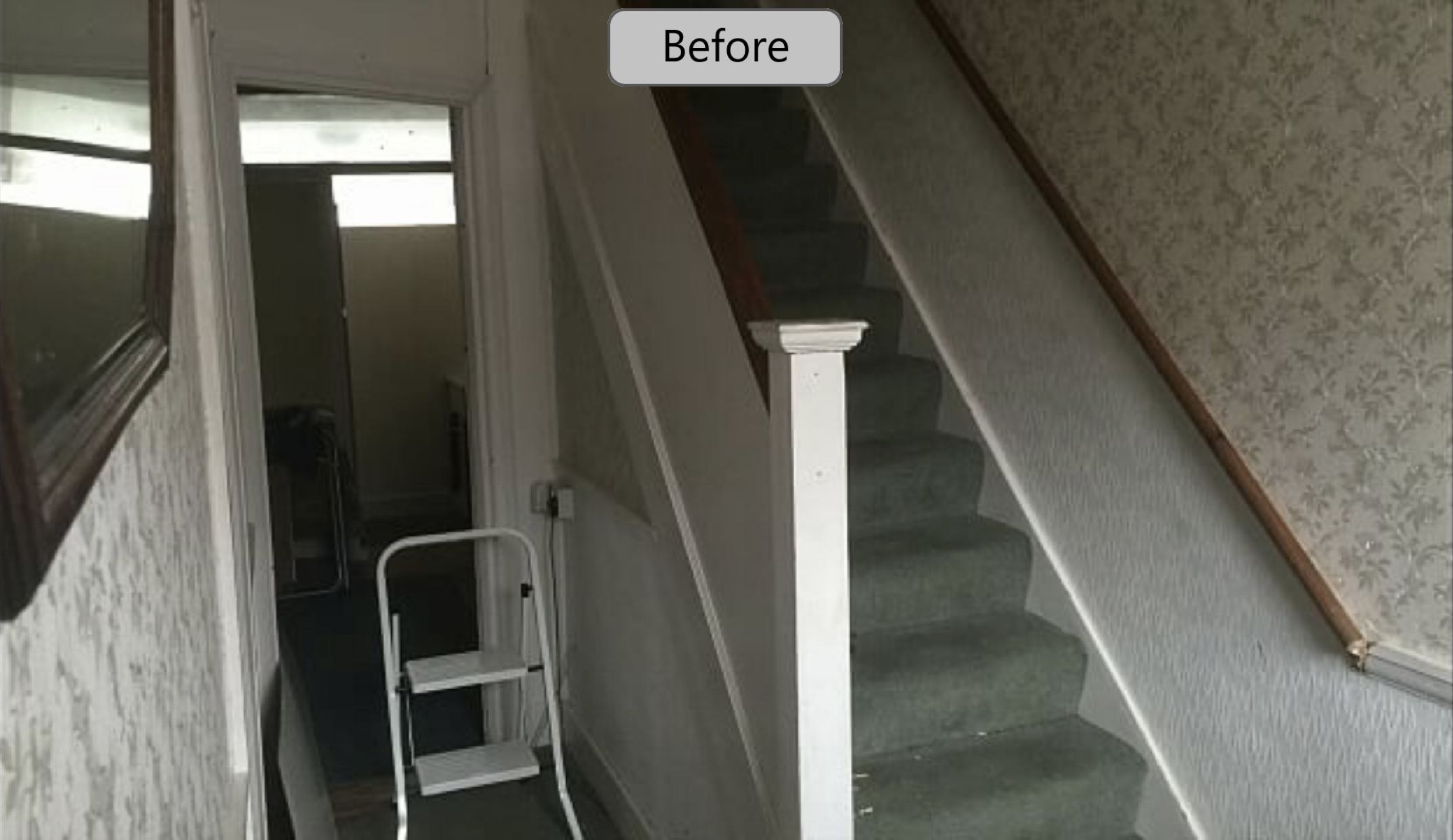
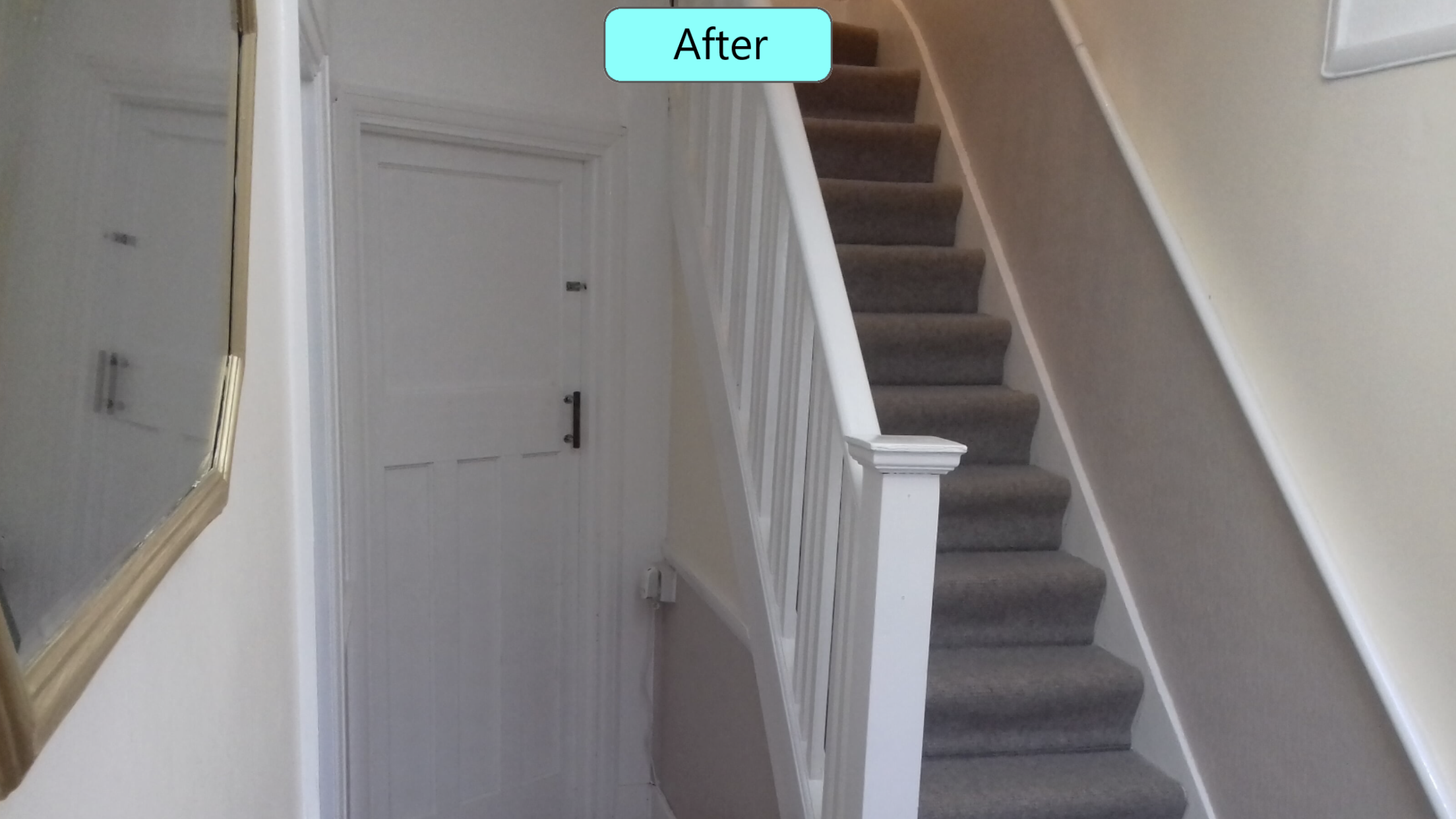
I finished off the upstairs by painting and laying new carpet on the upstairs landing and staircase. The paint colour scheme was then followed onto the downstairs hallway, but this time using a wood effect laminate flooring planks which is explained in Step 8. These areas had very little natural light unless room doors were open. For the paint I went for a white silk for the ceilings, and a two tone magnolia silk paint for the larger upper walls, a mocha light brown for the lower walls.
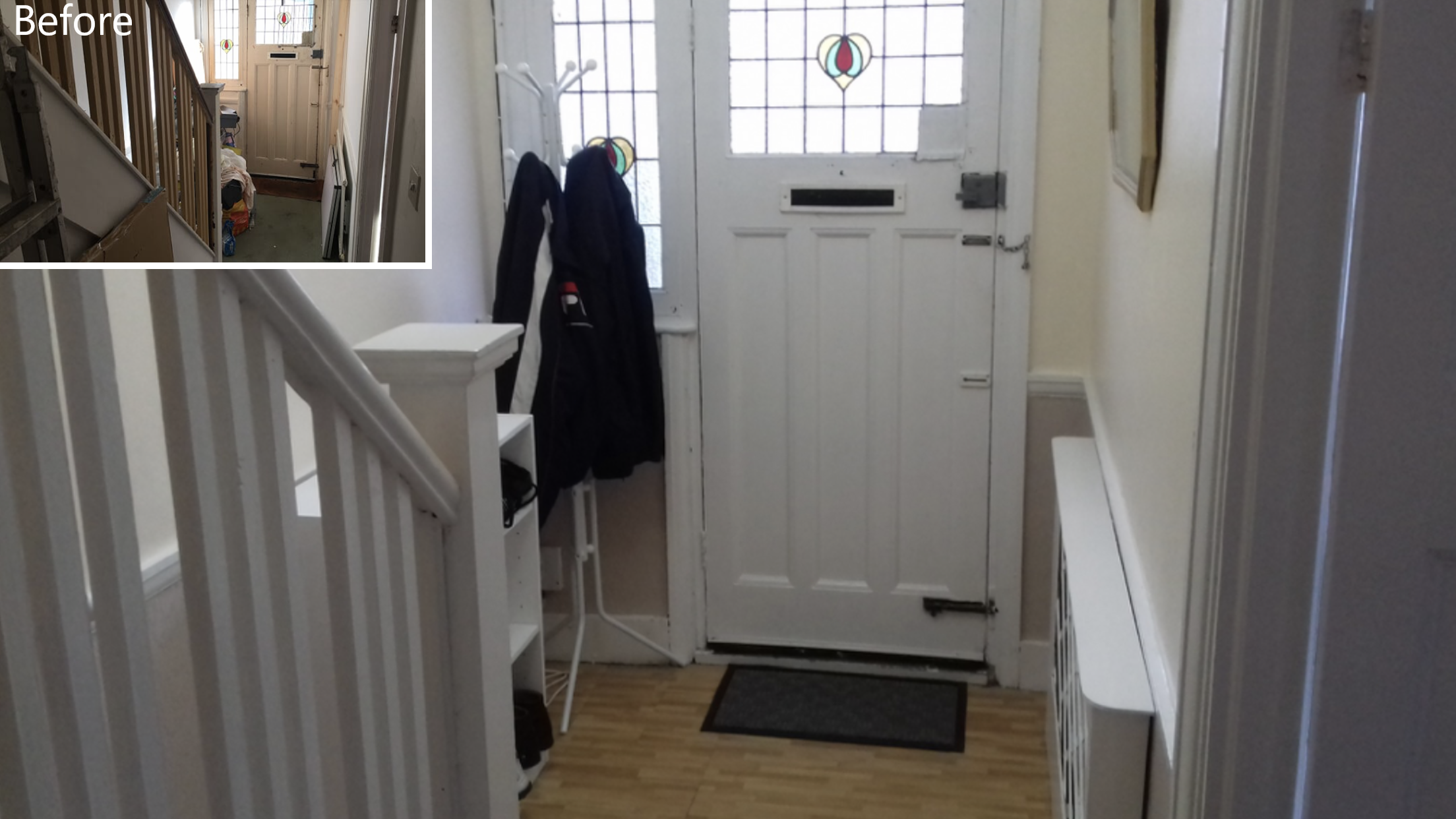
The staircase was an interesting one... For as long as I can remember, the balustrade up the stairs and along the landing were boarded with a white hardboard (I cannot remember if it was that way when we moved in way back in 1987 or if my dad fitted them), but they were obviously held on by something and I wanted to see what that was. So I pried off the hardboard to discover railings which were in really good shape. So I removed all of the boards, sanded off the varnish and gave them a few coats of high gloss white wood paint. Removing these boards, along with a bright silk paint colour, lighter colour flooring and a mirror in the hallway made the areas much brighter and feel more spacious.
The use of mirrors which I used in the bathroom, here and later in a darkish dining room helps make darker room lighter and feel more spacious, and the use of lighter paint colours with a shiny finish like silk or satin helps with this too. Minimal furnishings and lighter coloured flooring also helps making an area look larger than it actually is.
A small shelf unit, coat stand and a radiator cover I made and painted white were added to the landing, and an old mirror with a wood frame I found I painted gold was hung near the front door where the only window was. Oh, and if you noticed the missing frosted glass panel in the front door window, I did replace this by taking a photo of the original frosted glass patten, went to a local glassier with the photo and measurements, got a very close match, and fitted it to the door, removing the wood beading, cleaning out the recess, fitted the glass and replaced the wood beading and lead flushing.
Laying Carpet and Underlay

Front Living Room:
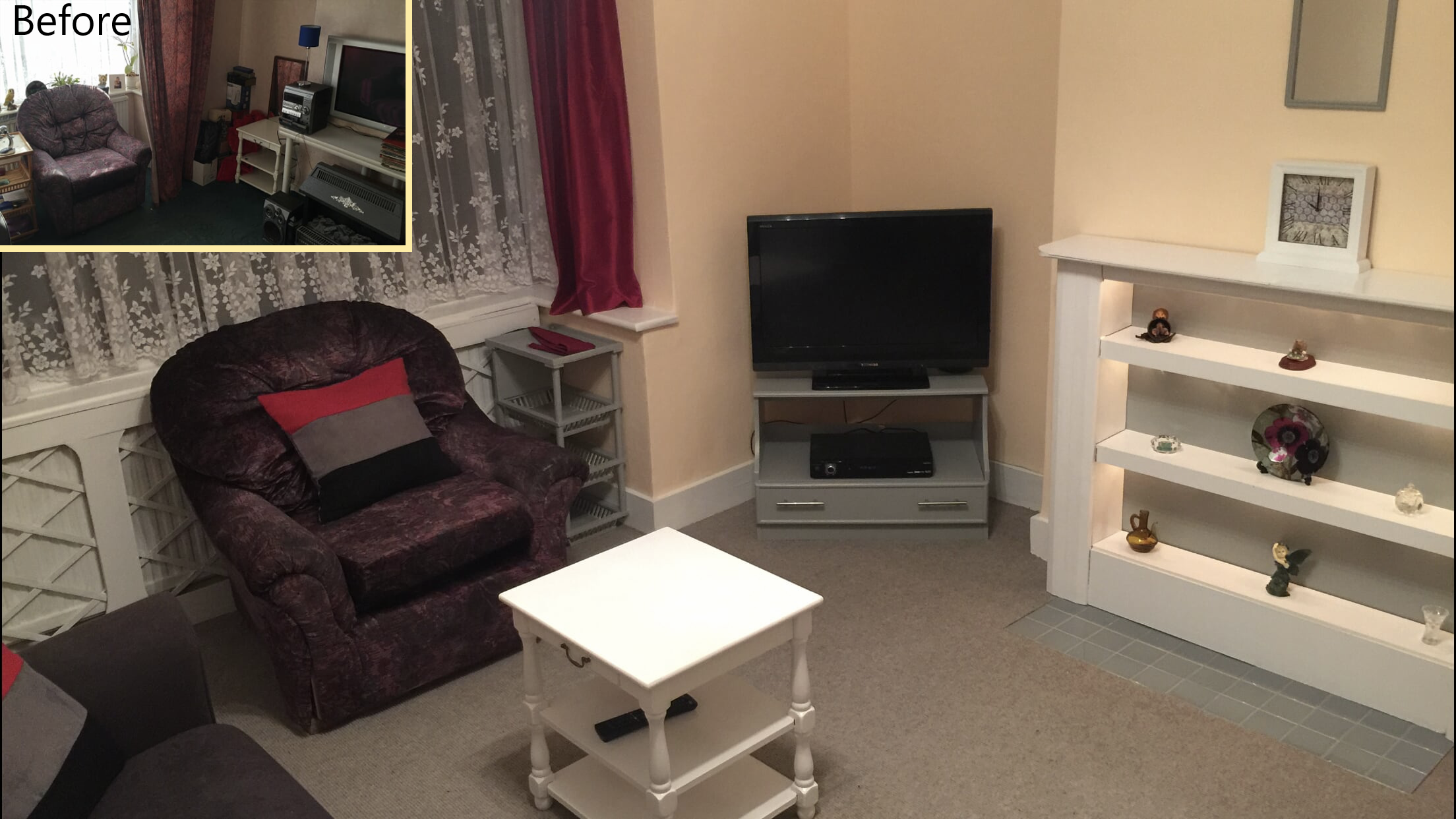
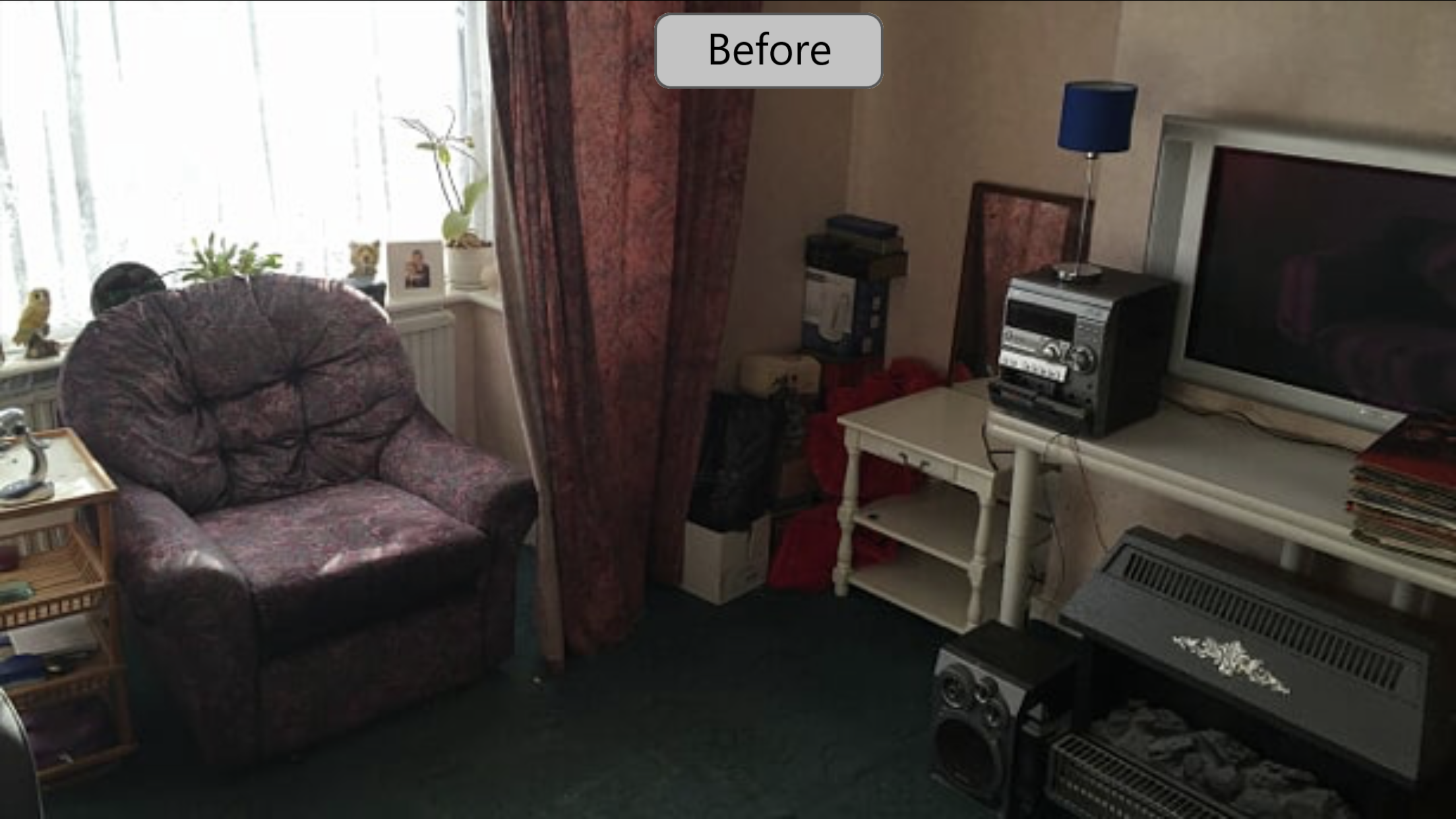
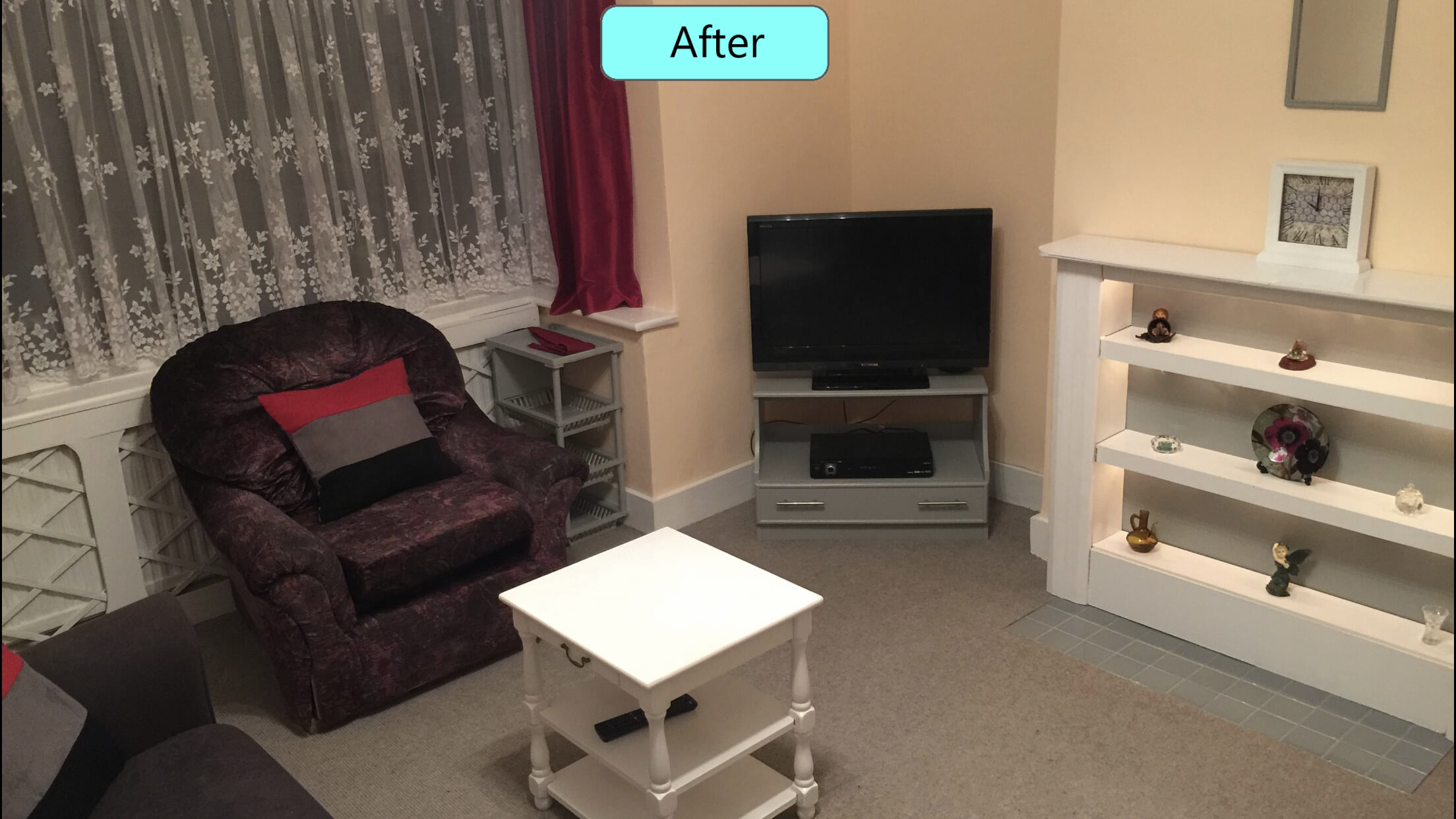
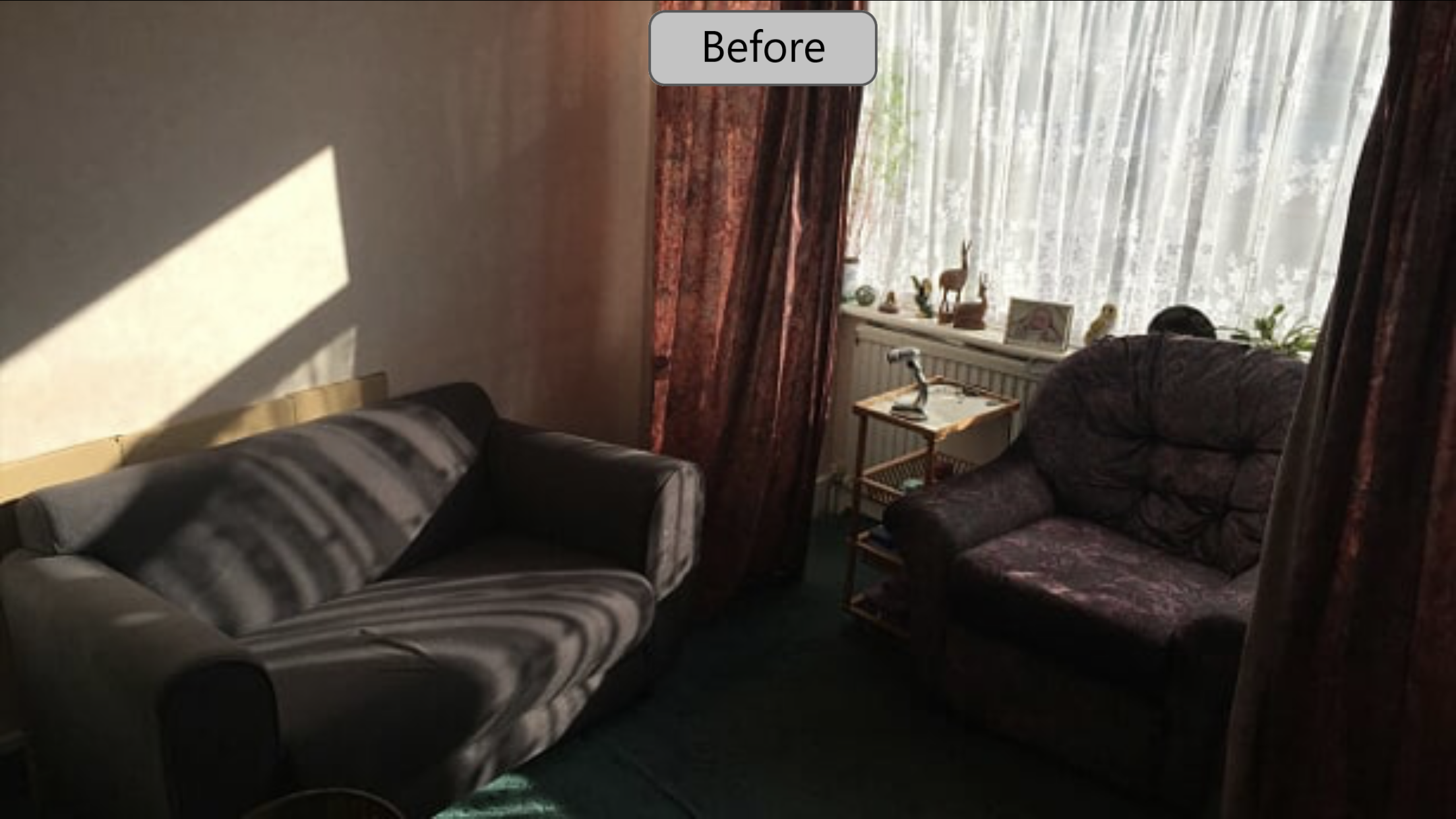
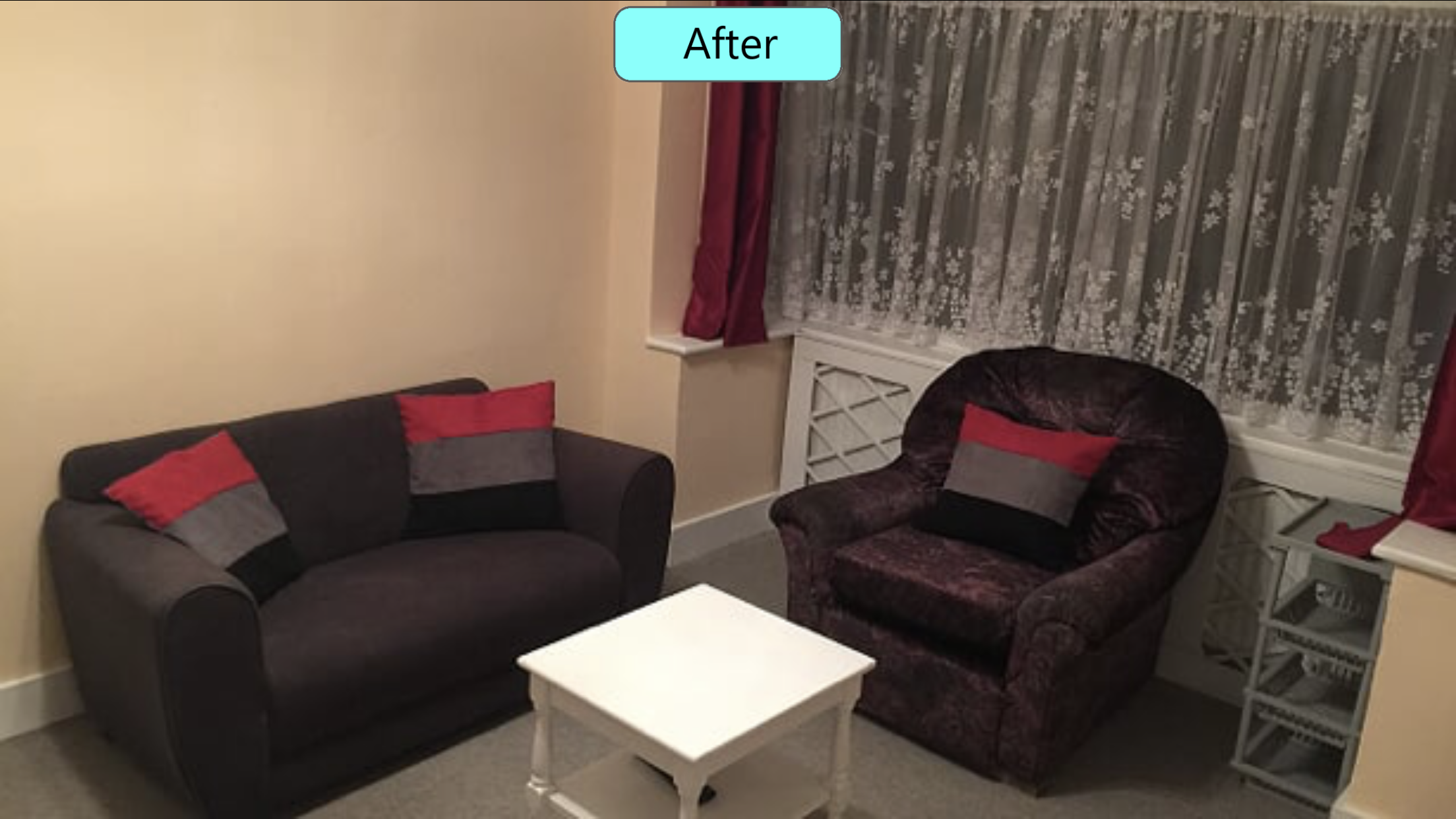
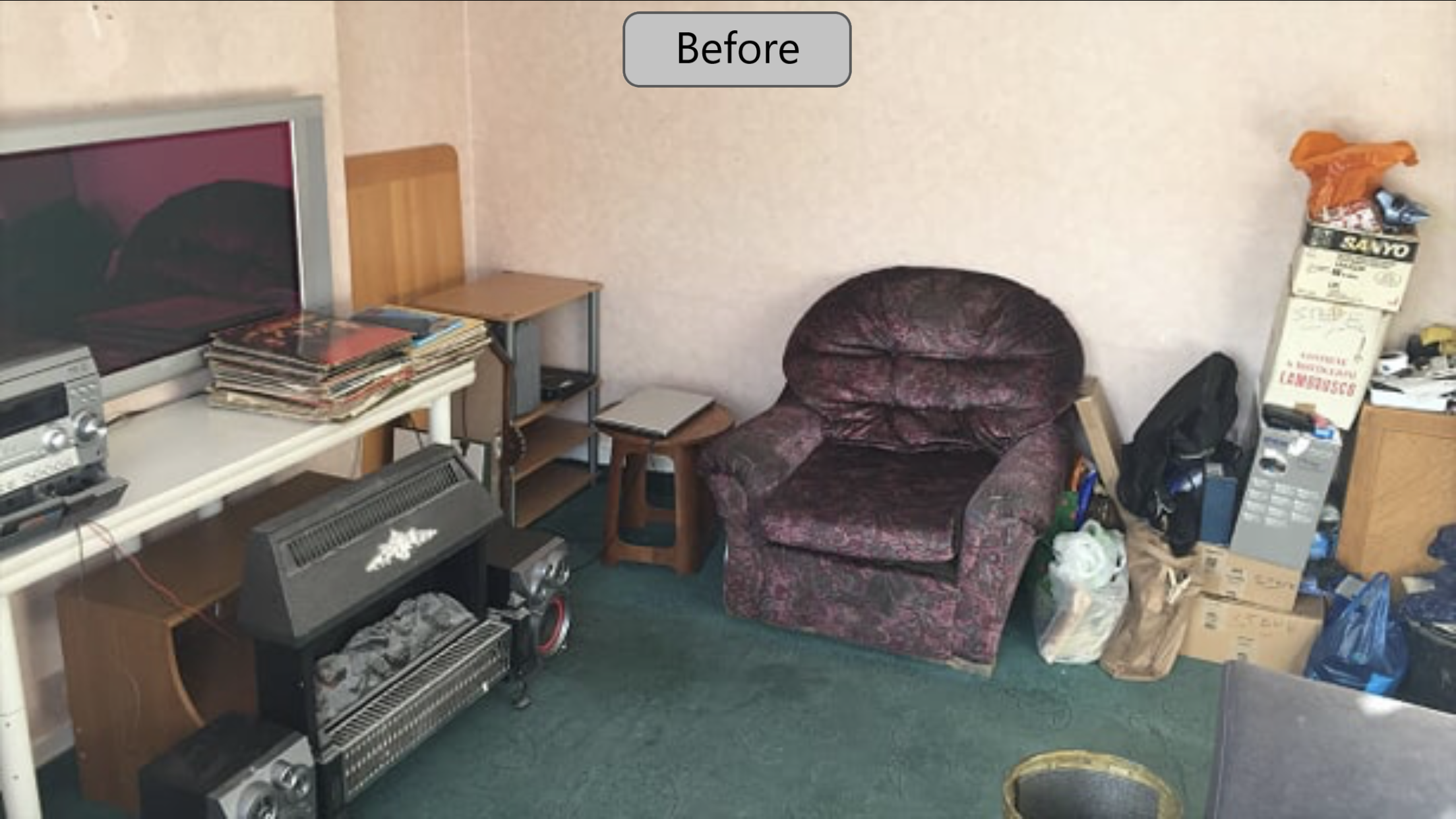
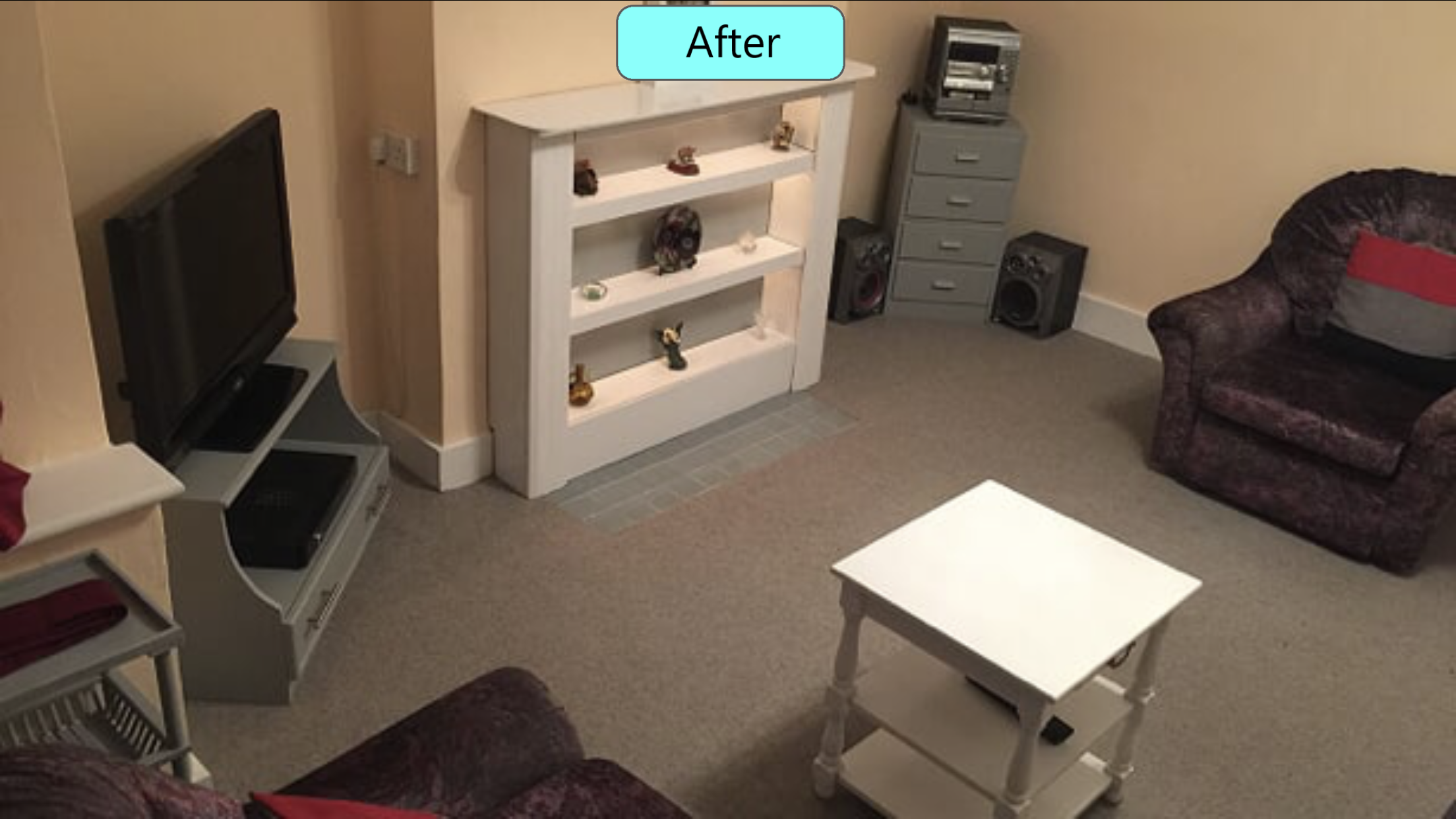
I moved onto the living room where the same processes were followed when decorating the other rooms. Here I used a peach silk paint for the walls (white silk for the ceilings and woodwork/door) which gave a bright yet warm feel. Then came the flooring, which would be the same underlay and carpet I used in the bedrooms, landing and stairs. I left the original carpet grip rods in place (I removed the ones from the hallway and dining room), and set to work laying the new flooring. Here's how.
- Inspect the bare floor and perimeter: After removing the old flooring and giving the floor a good clean, inspect the subfloor for damage, uneven areas, or protruding fixings. Ensure gripper rods are secure, correctly positioned, and facing the right direction (angled pins pointing toward the wall). Replace or refit any damaged sections before proceeding.
- Fit or adjust gripper rods: If there are none, install gripper rods around the room perimeter, leaving a small gap (about the thickness of a finger) between the rod and the wall. Mitre corners neatly and ensure rods are firmly fixed, as they are critical for tensioning the carpet properly.
- Lay the underlay: Roll out the underlay with the correct side facing up, fitting it tightly between gripper rods without overlapping. Trim neatly around edges and obstacles. Join sections using underlay tape, keeping seams flat and secure. A well fitted underlay improves comfort, insulation, and carpet lifespan.
- Secure the underlay: Staple or tape the underlay to the subfloor as appropriate, ensuring it remains flat and does not move underfoot. Avoid fixing underlay over gripper rods, as this prevents the carpet from gripping properly later.
- Position and rough-cut the carpet: Lay the carpet loosely over the room, allowing it to relax before fitting. Ensure the pile direction is correct and consistent with adjoining rooms if applicable. Rough cut the carpet to size, leaving excess for all the edges.
- Fix and tension the carpet: Starting at one wall, hook the carpet onto the gripper rods, then use a knee kicker or carpet stretcher to tension it across the room. Work methodically from wall to wall to achieve an even, tight fit with no ripples or slack areas.
- Cut the carpet carefully and methodically: Always cut carpet from the backing side using a sharp carpet cutter or knife, applying steady, controlled pressure rather than force. Make small, incremental cuts and regularly change blades, blunt blades tear fibres and leave ragged edges. When cutting around corners, door frames, or protruding and recessed areas, make relief cuts and trim gradually, checking the fit often. It’s far easier to remove more material than to explain why there’s suddenly less carpet than wall.
- Trim and tuck edges: Trim excess carpet carefully using a sharp knife, then tuck the edges neatly into the gap between the gripper rods and the wall using a carpet tucker or blunt tool. Take your time here, this stage defines the final appearance.
- Finish edges and doorways: Fit threshold strips at doorways and transitions, ensuring a clean and secure join. Check that doors open freely and trim if necessary.
- Final check and tidy up: Walk the room to check for movement, ripples, or loose edges. Vacuum the carpet to lift the pile and remove any debris, leaving the room ready for use.
Carpet fitting is a game of tension and patience. Get those right, and the result will quietly feel professional every time you cross the room.
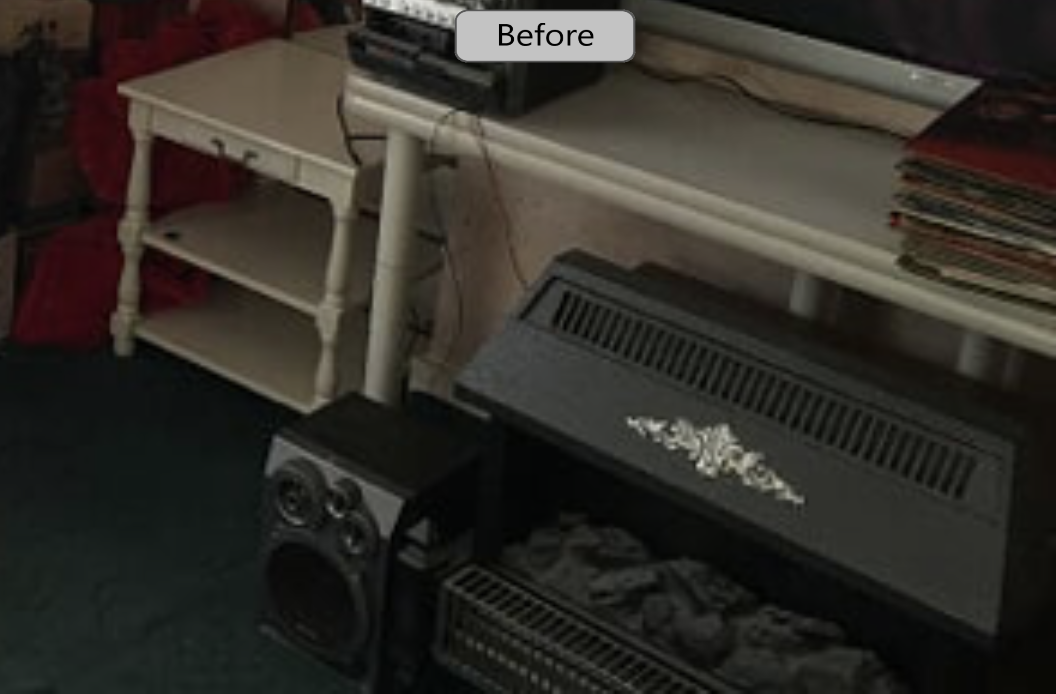
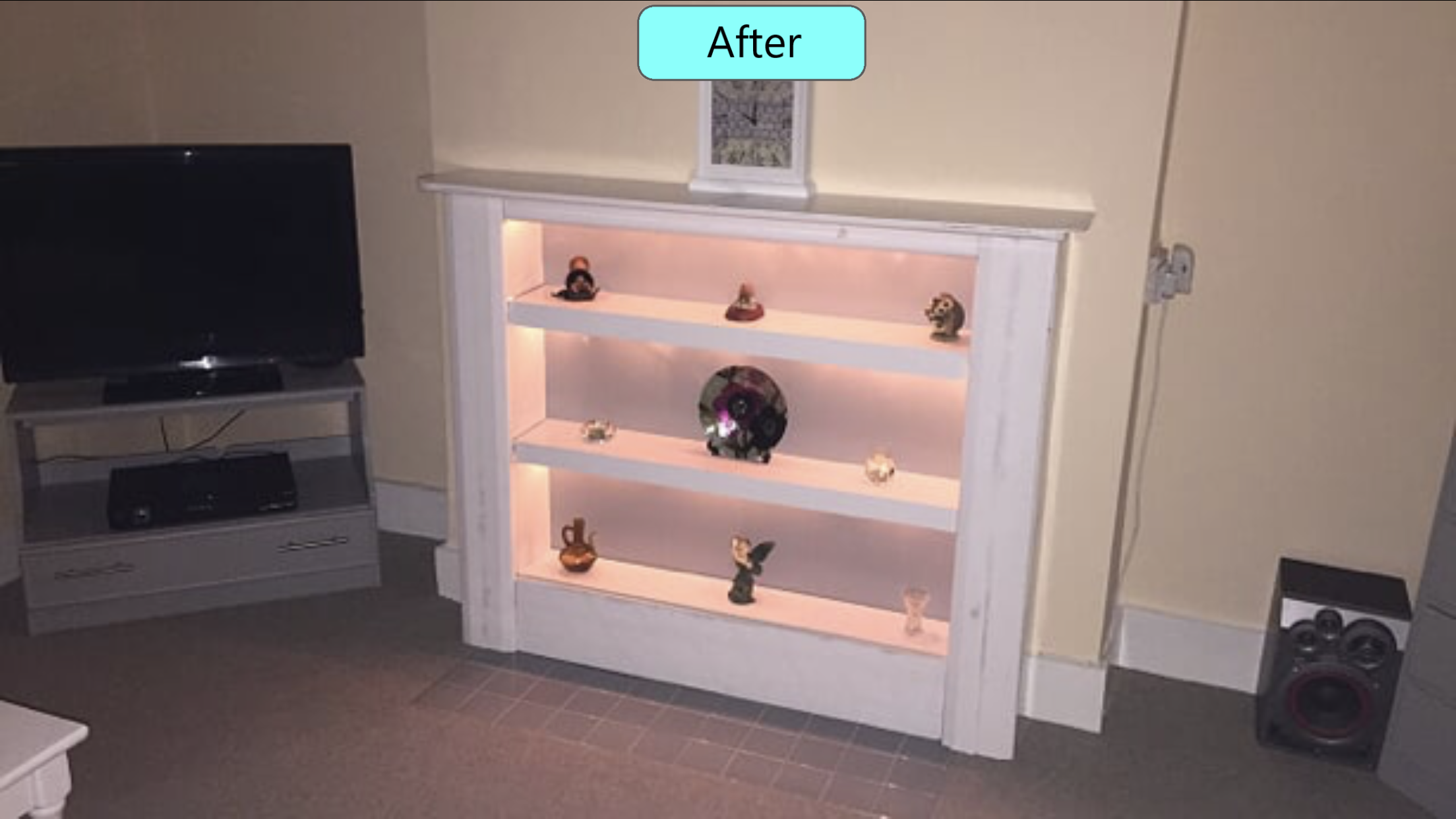
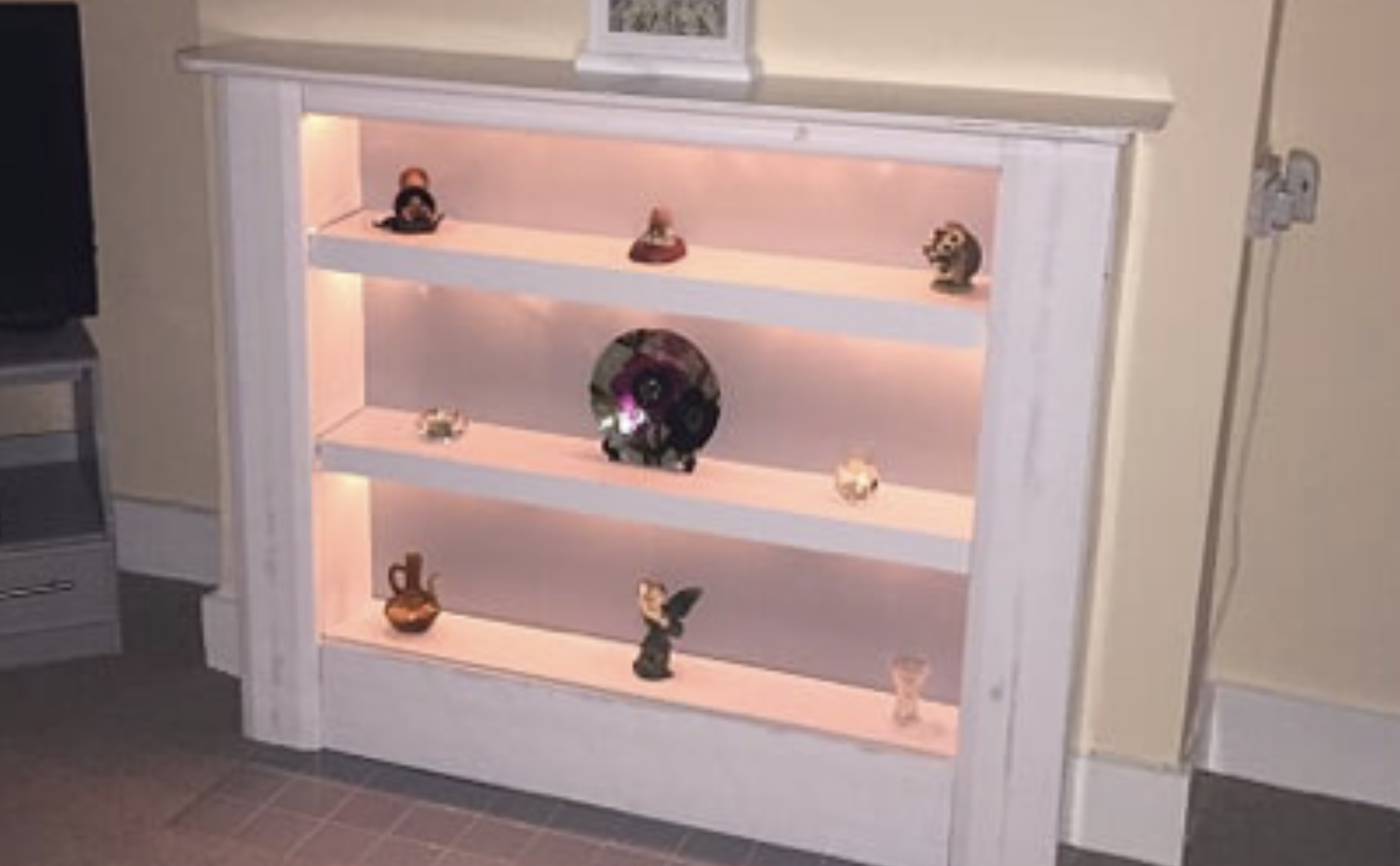
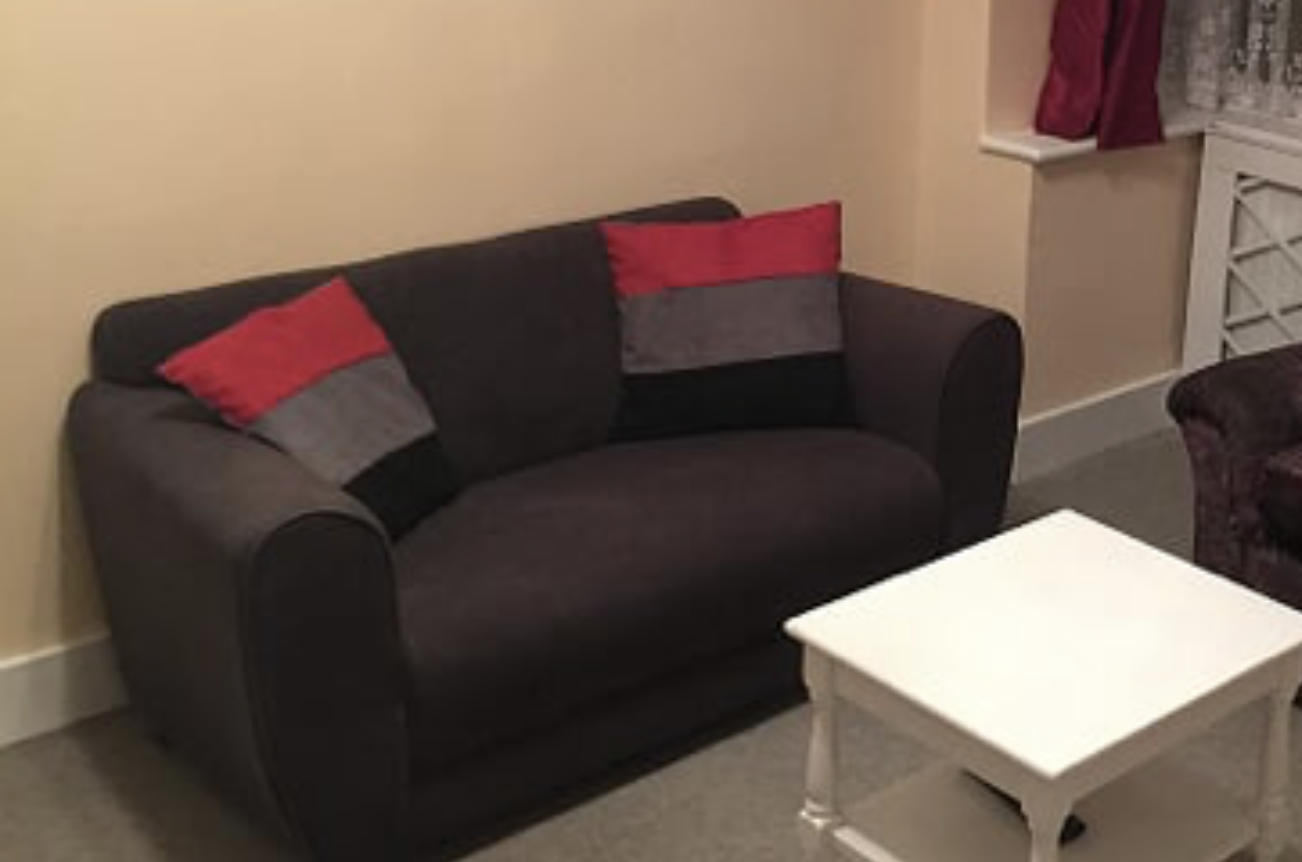
So with the carpet now laid and smelling great (I've always loved the smell of new carpet), I also made a shelf unit for the old fireplace using some scrap wood, a top and base panel and two sides glued and nailed together, a backboard fitted, then a couple of fixed shelves, and backlit with a warm white LED strip. A larger top shelf was cut with rounded front corners and some front paneling added to hide the LED strip, then it was painted white. When I removed the old carpet, I discovered fireplace tiles on the floor. I decided to show these off so I cut the carpet around the tiles and painted them grey with some ceramic paint. New plum curtains and some new cushion covers were purchased to help dress the room.
Laying Laminate Flooring
The Kitchen:
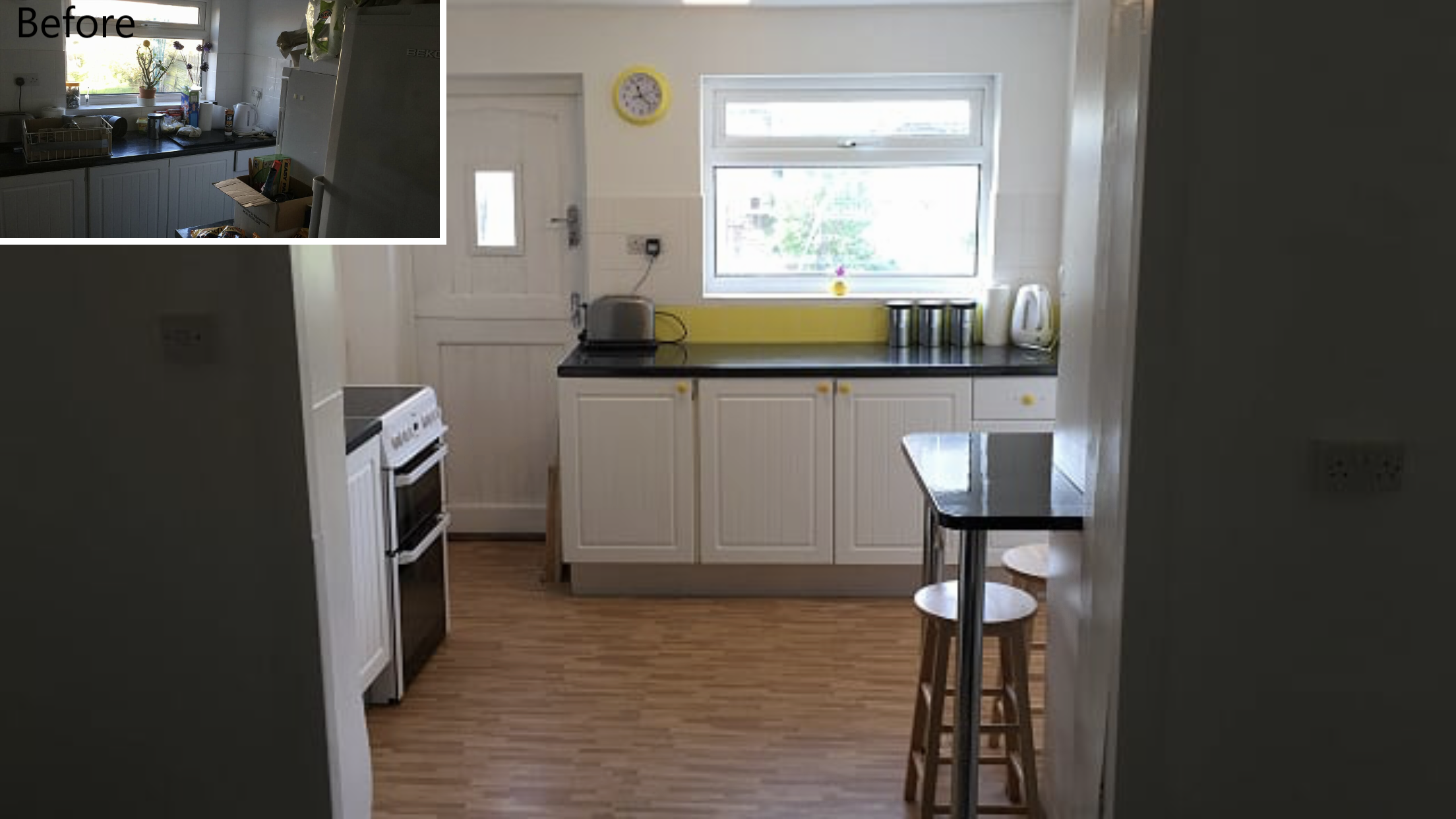
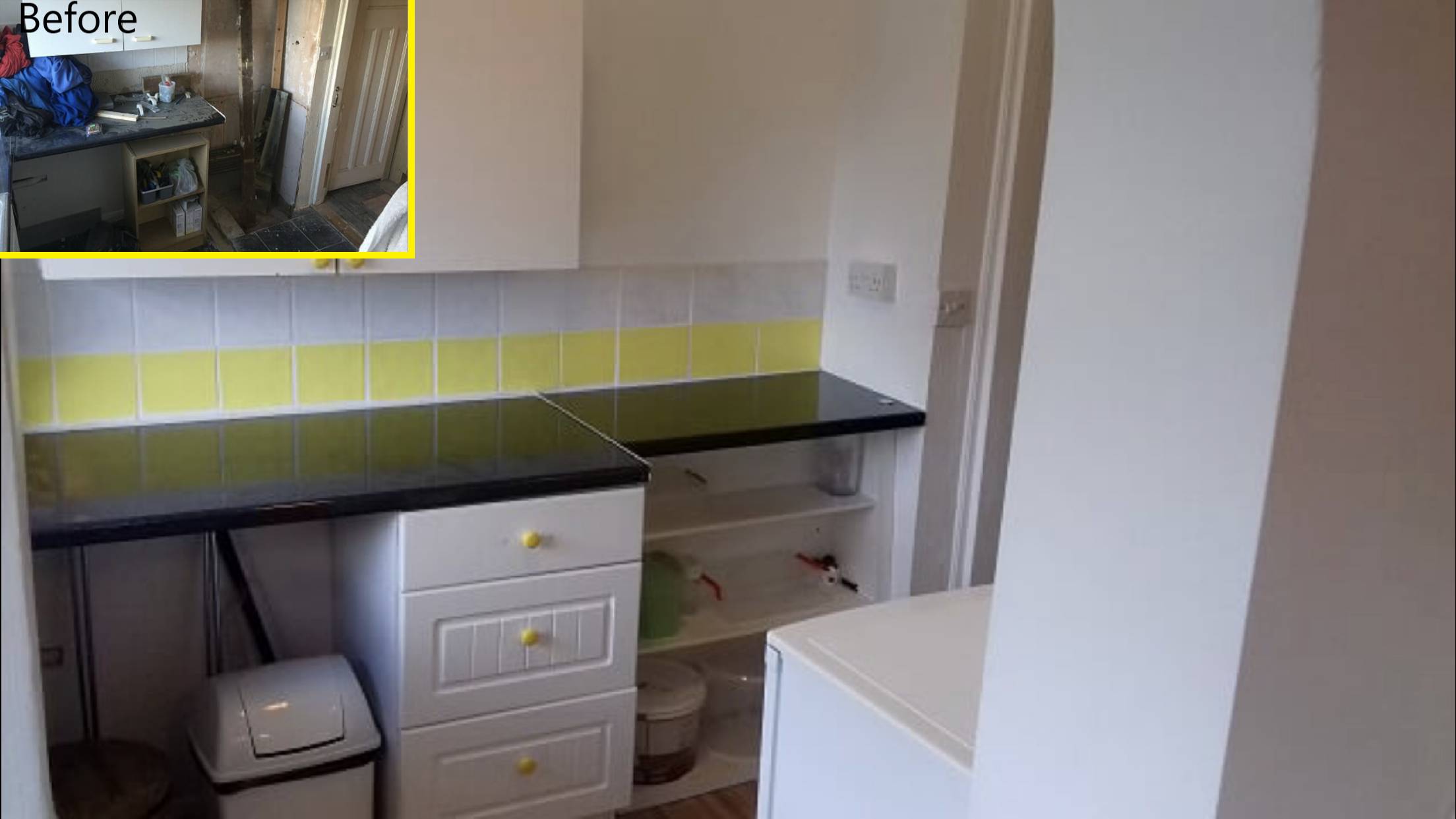
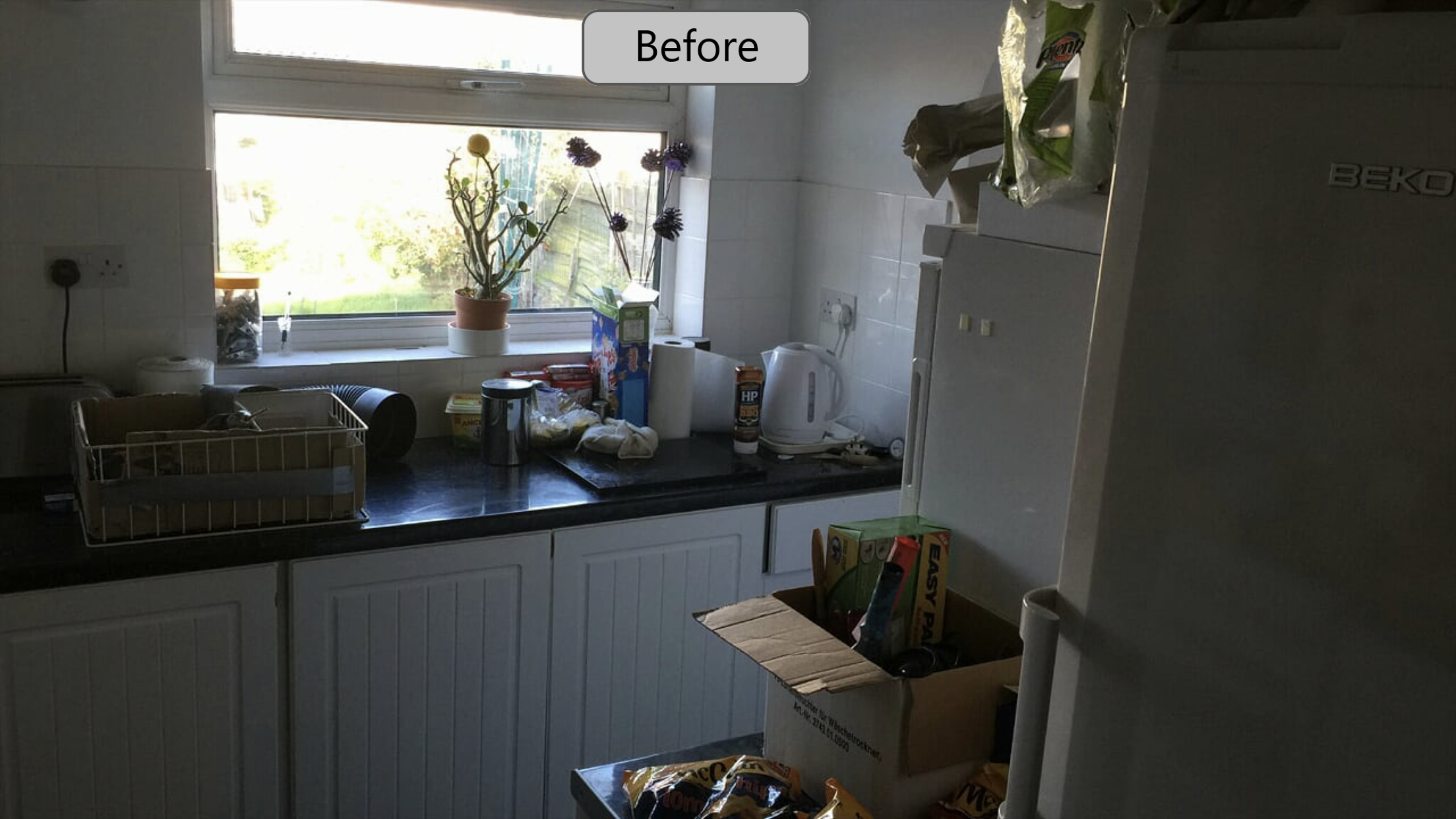
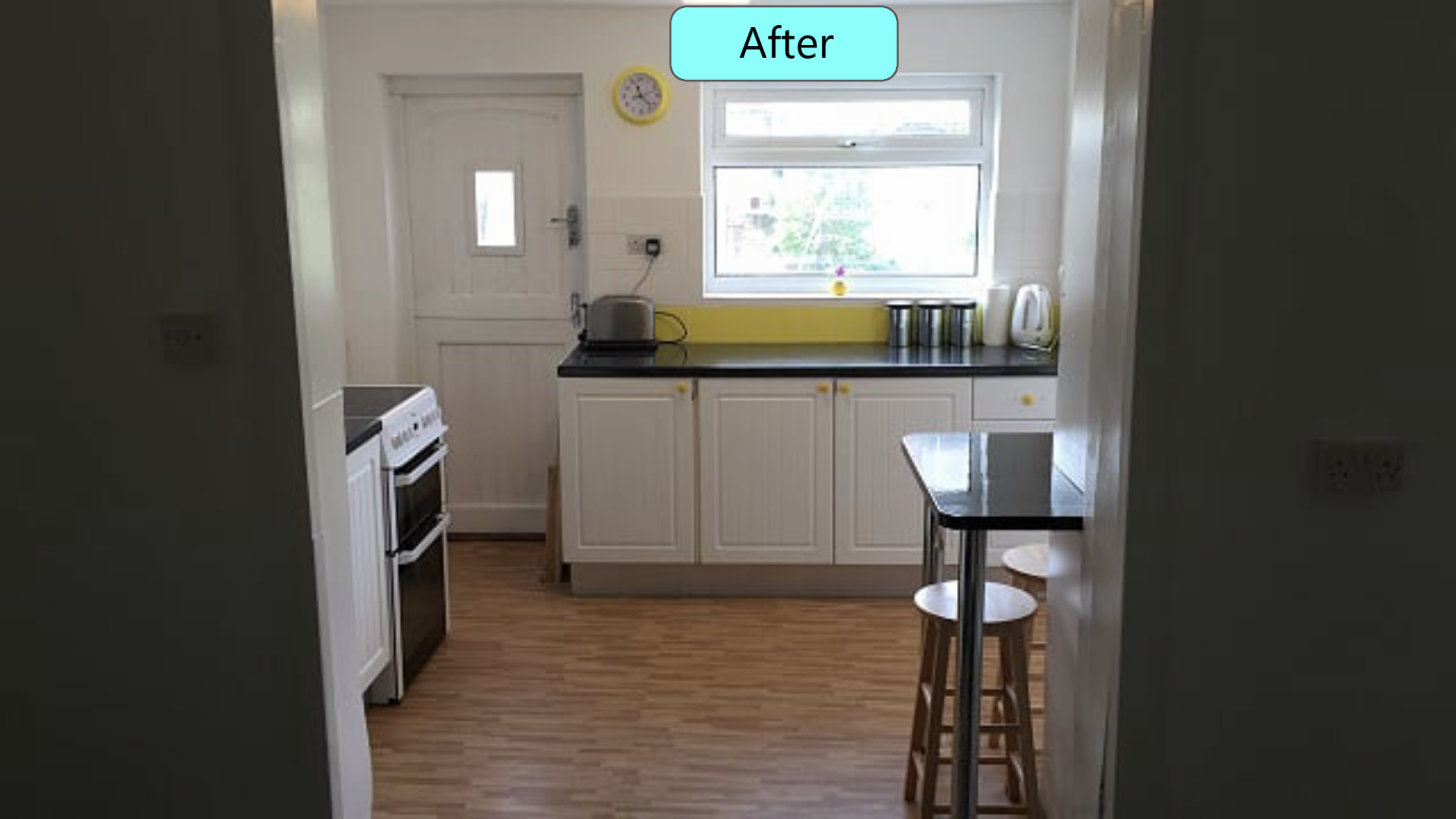
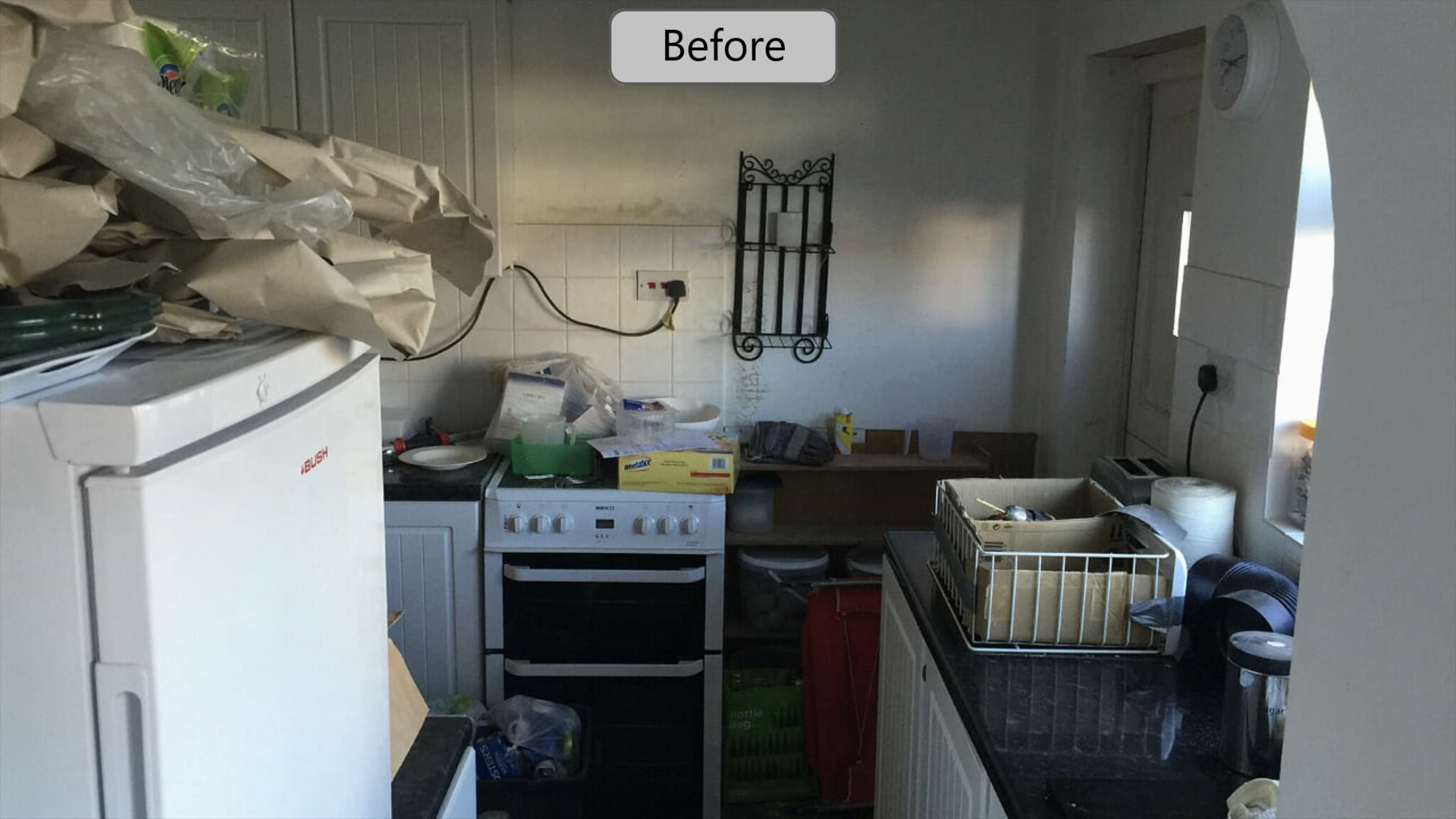
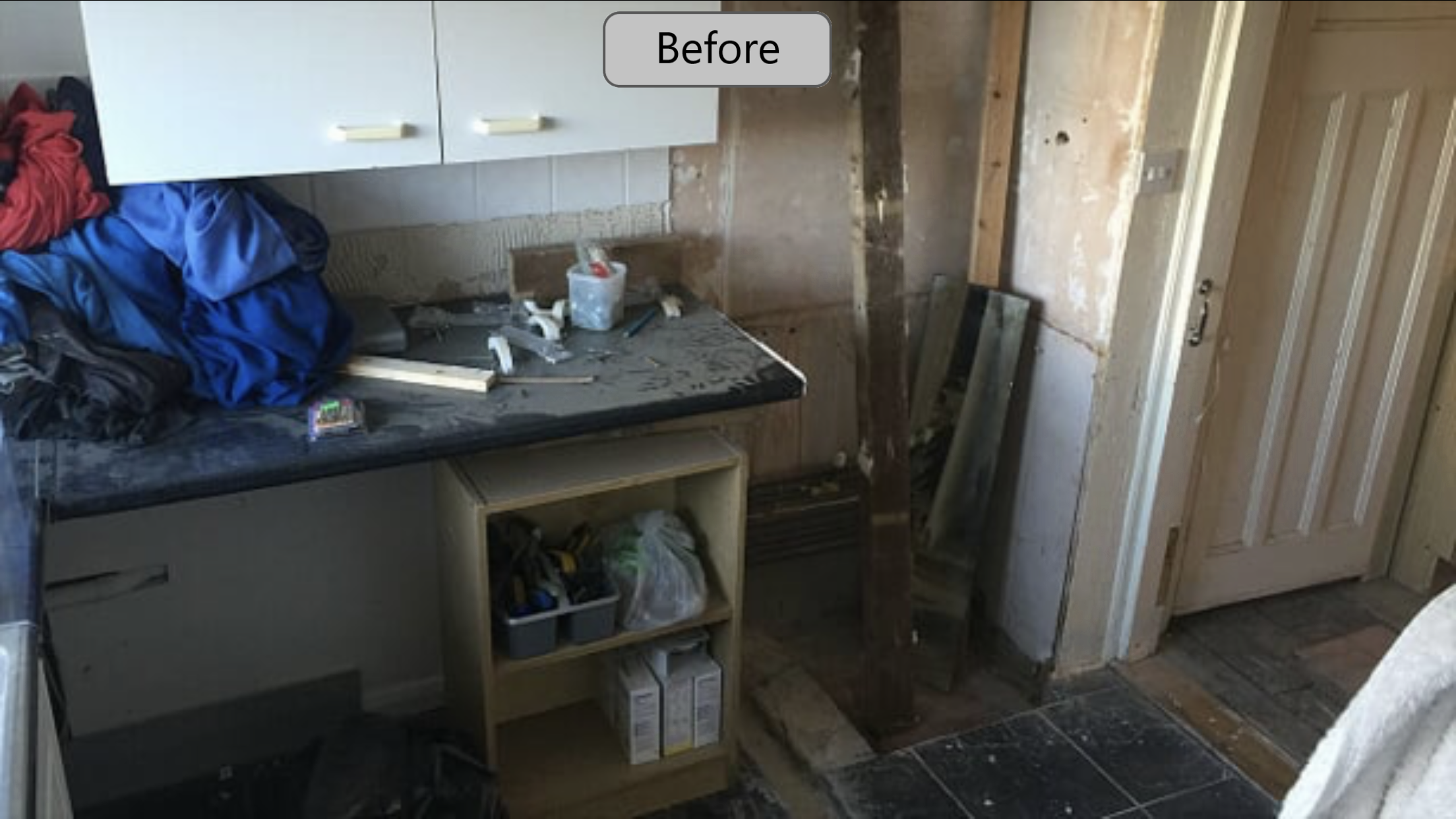
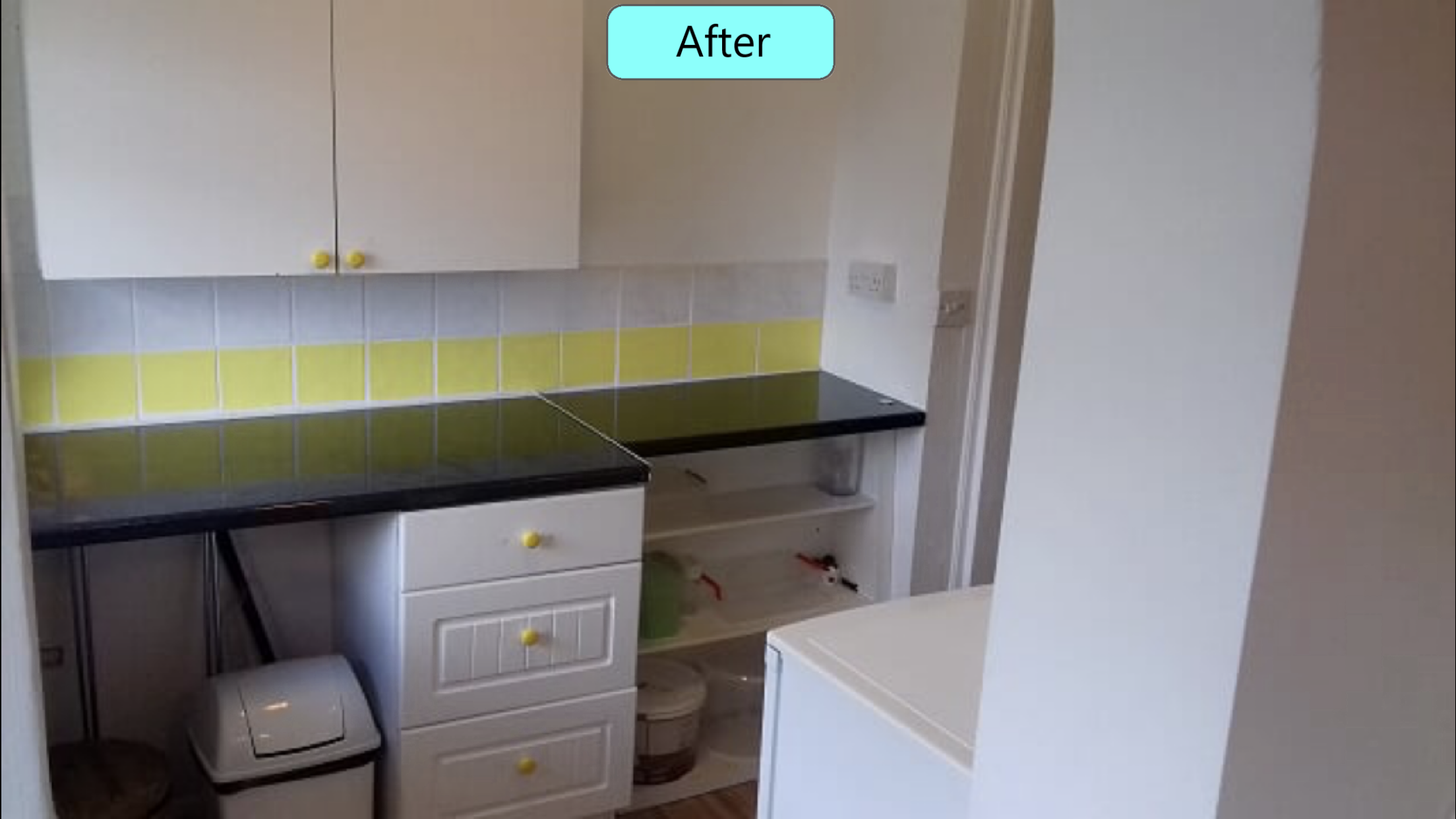
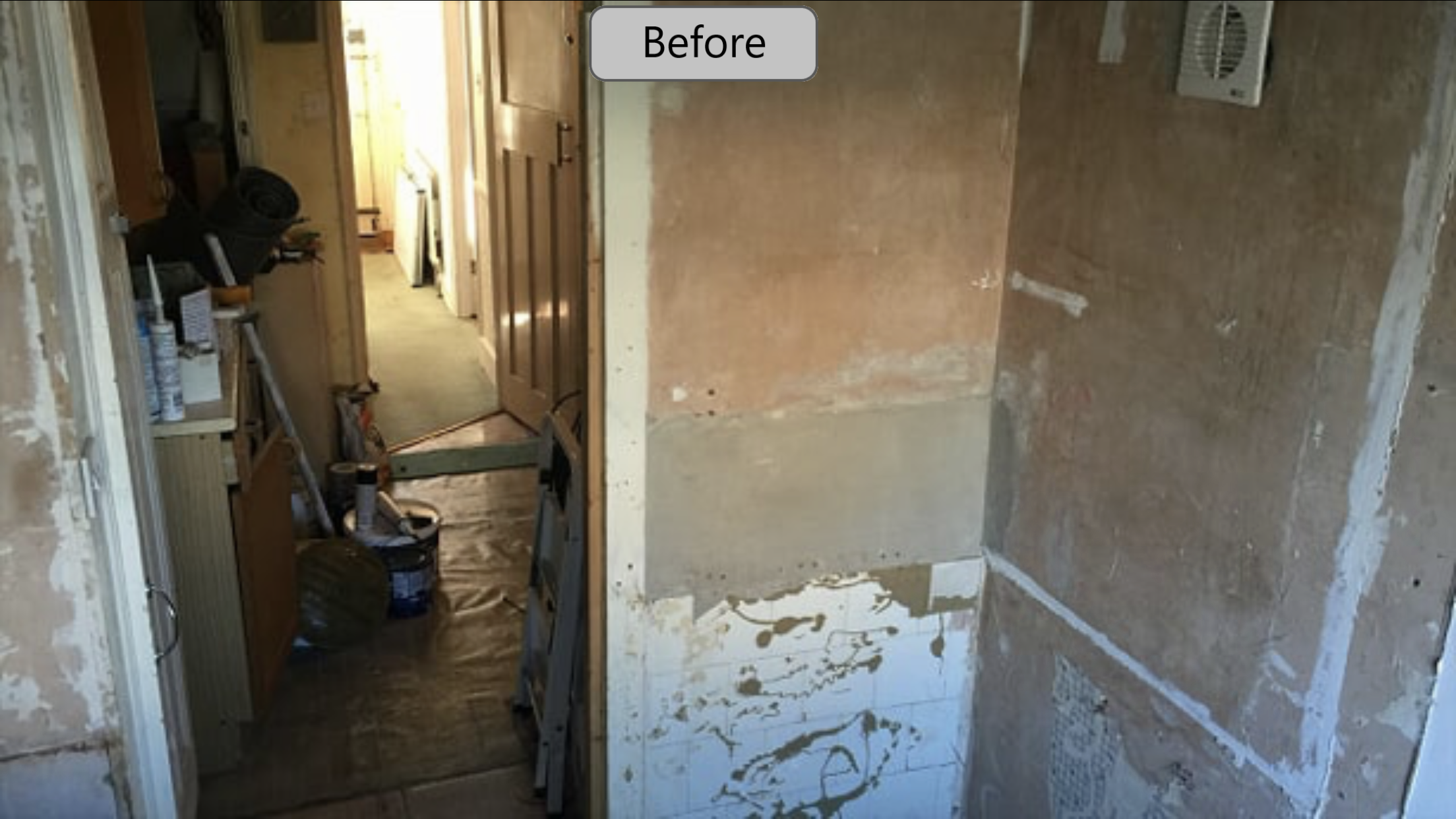
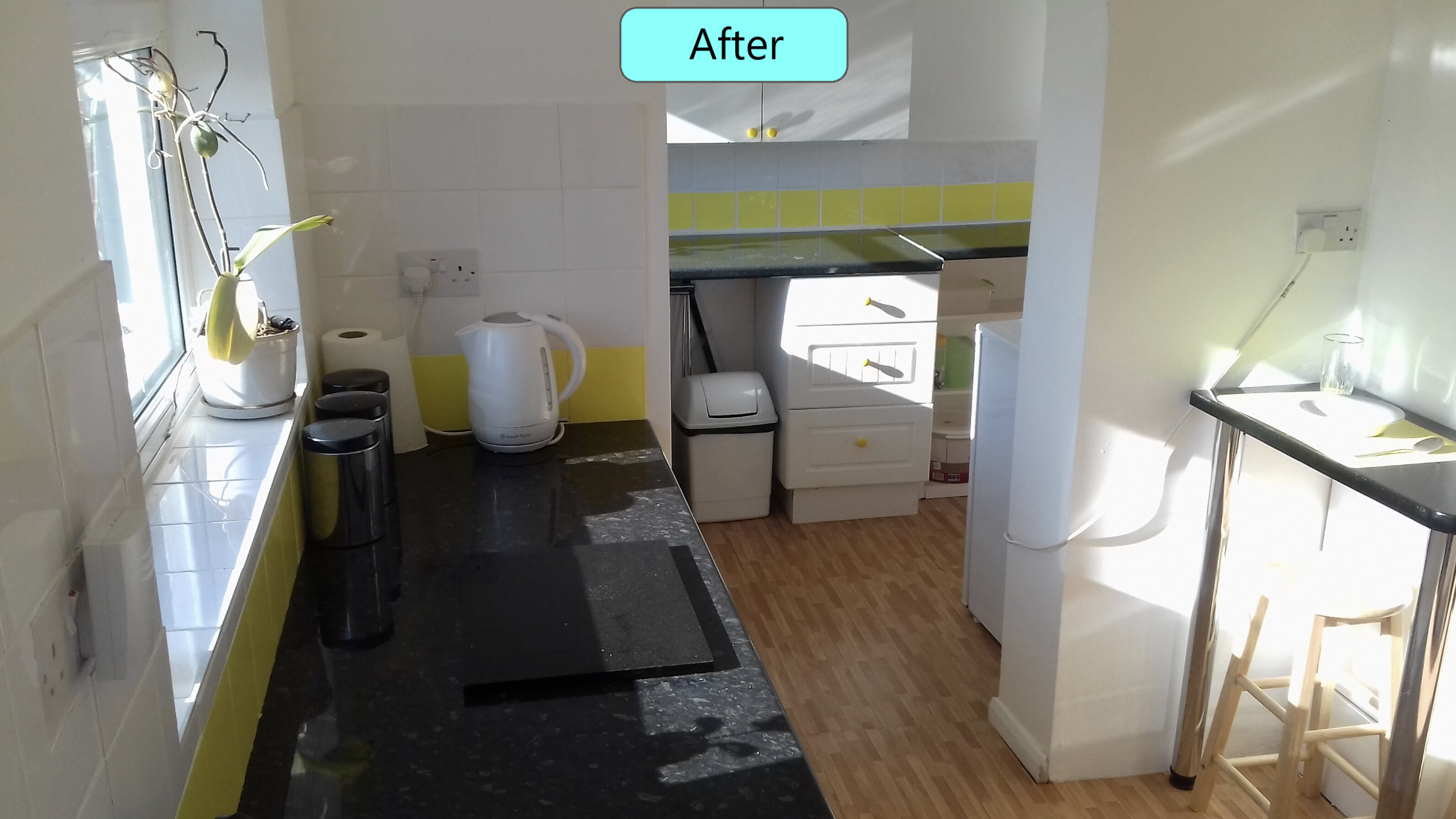
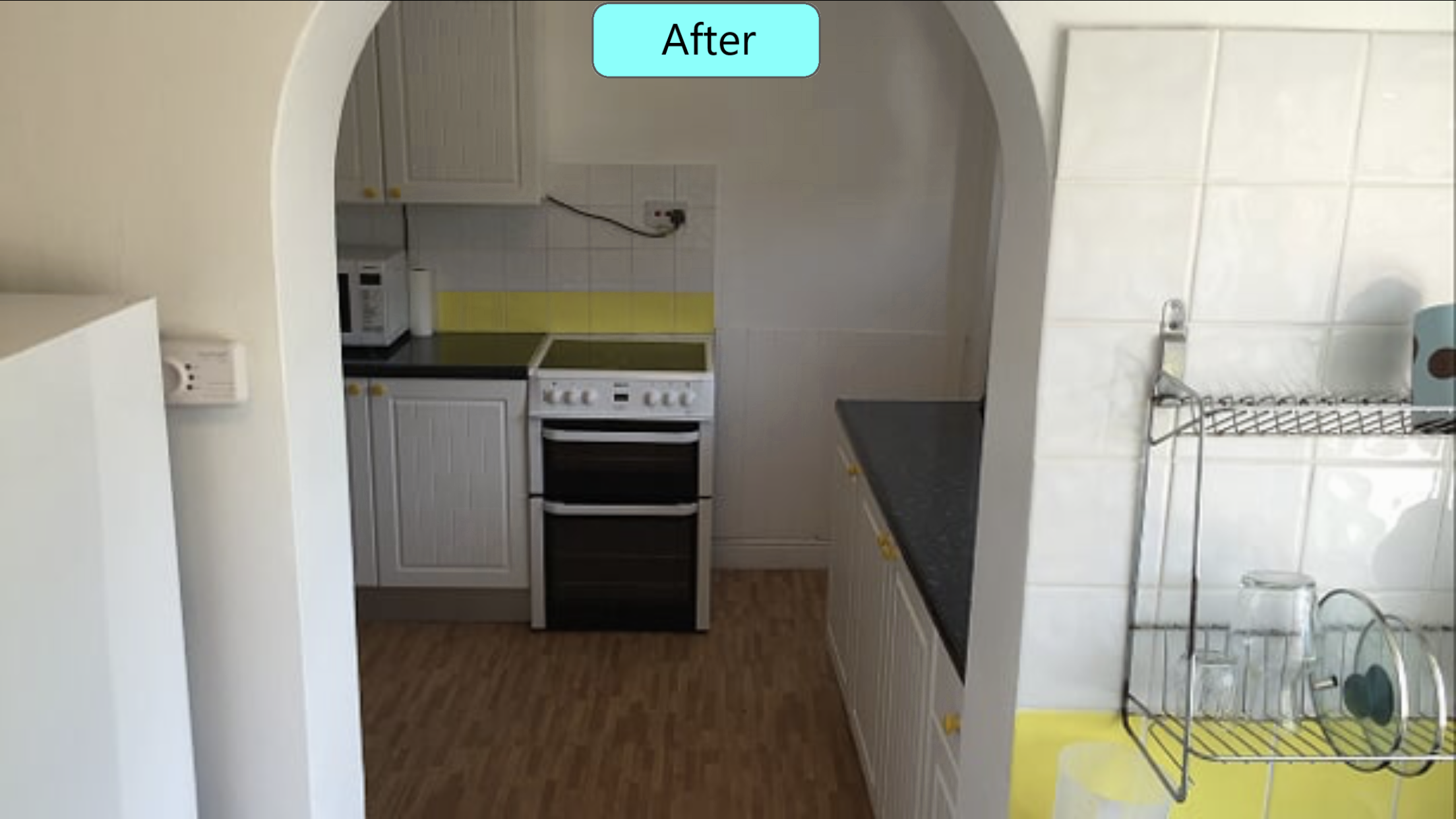
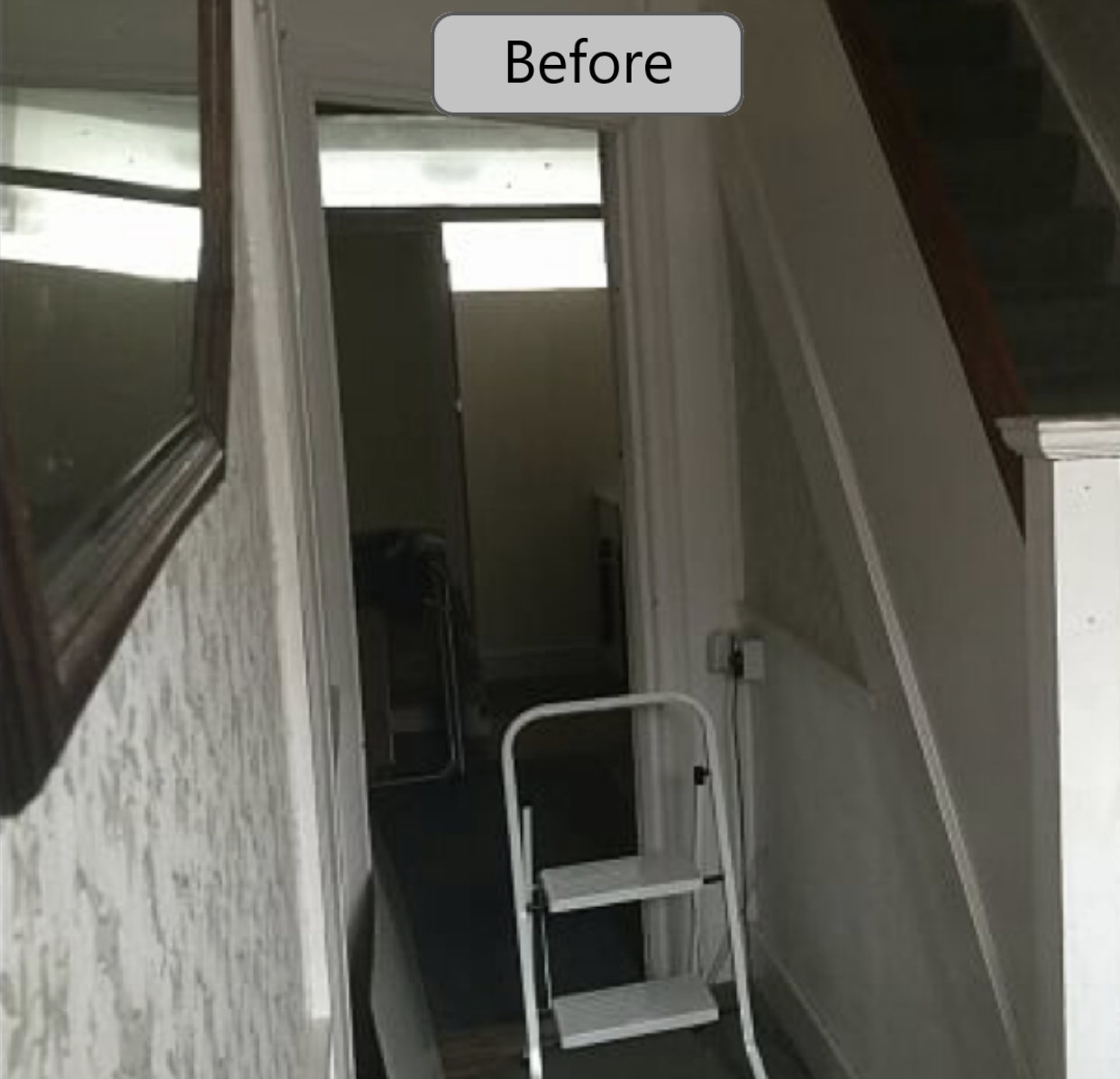
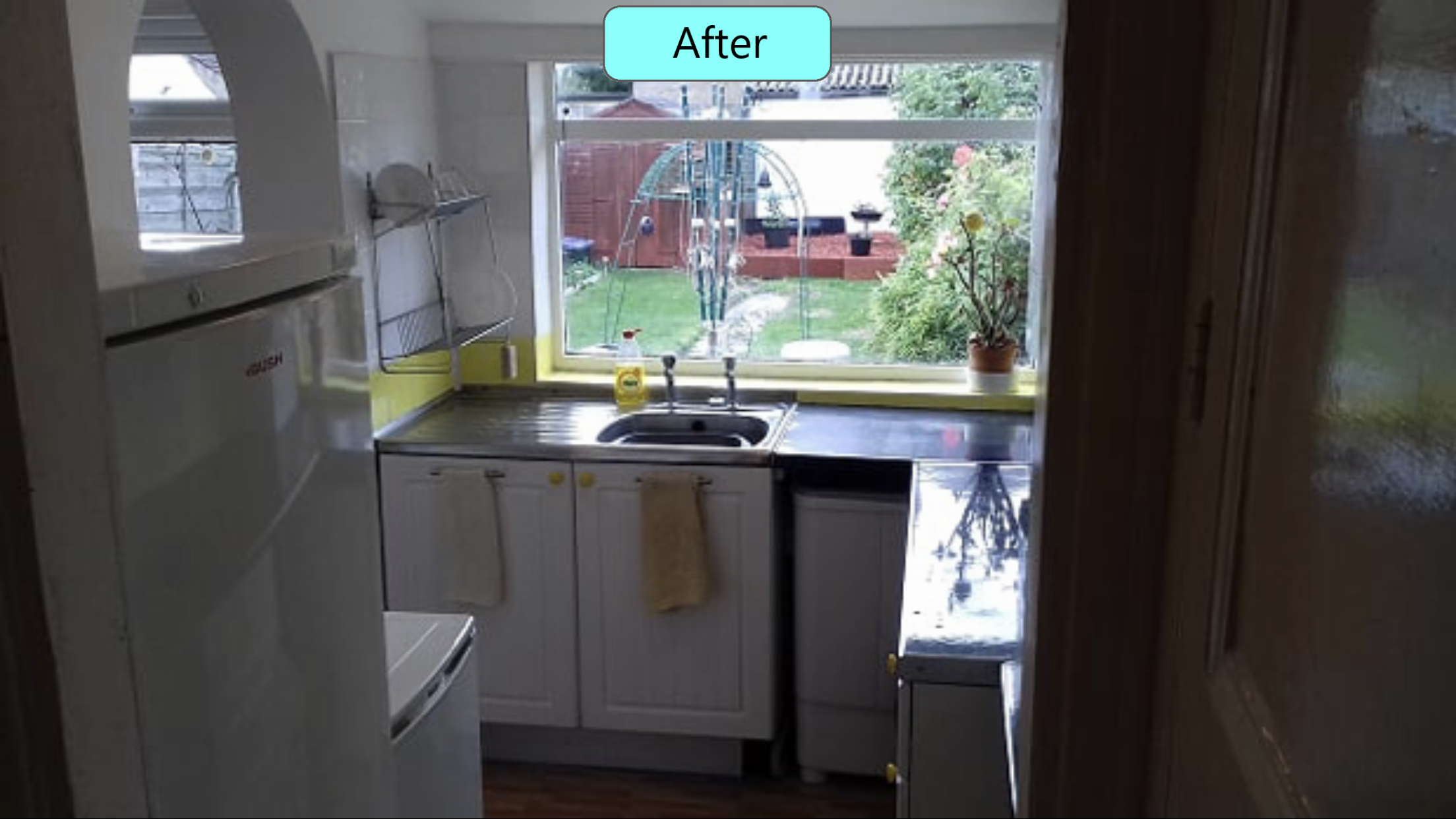
Before we get onto the flooring, a little 'kitchen' history. The kitchen required more work than the other rooms. There was the original kitchen (where the sink is) and an extension that my parents had built on the back of the dining room/beside the original kitchen (where the archway is). Later when my did became ill and couldn't walk the stairs very well, we built a small toilet where the original kitchen was sectioned off in two halves by a partition wall, the sink area by the window stayed as part of the kitchen, and the other half by the dining room was the toilet (you can just about see it in the second to last photo, above). When it came to this decorating project, I was torn between leaving the toilet room in place, or ripping it out to extend the kitchen and give more light for the dining room. I did ask the estate agents for advice, both telling me different things... "Two bathrooms is better", "A larger kitchen is better for potential buyers". So I decided to go for the larger kitchen with better light.
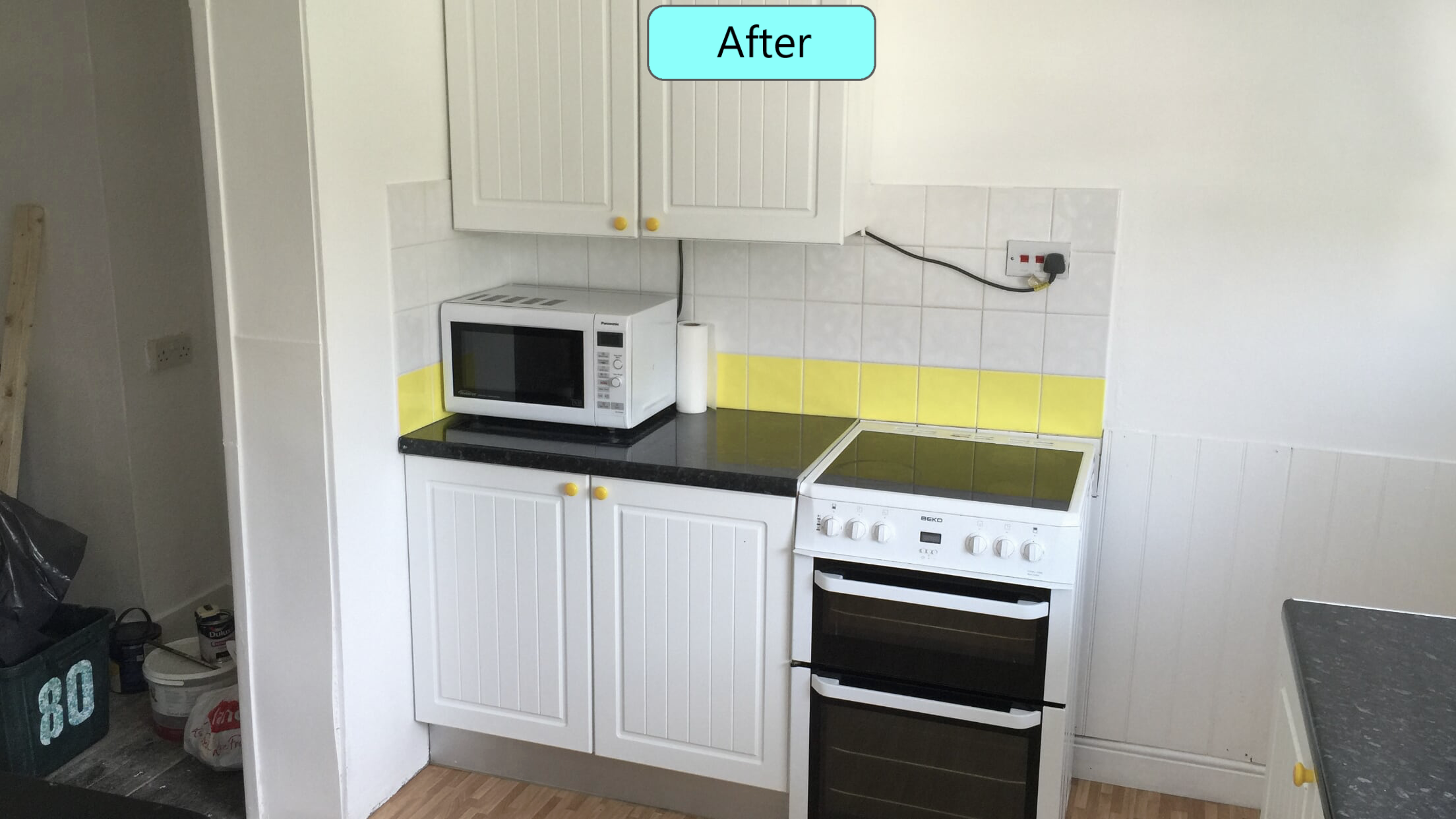
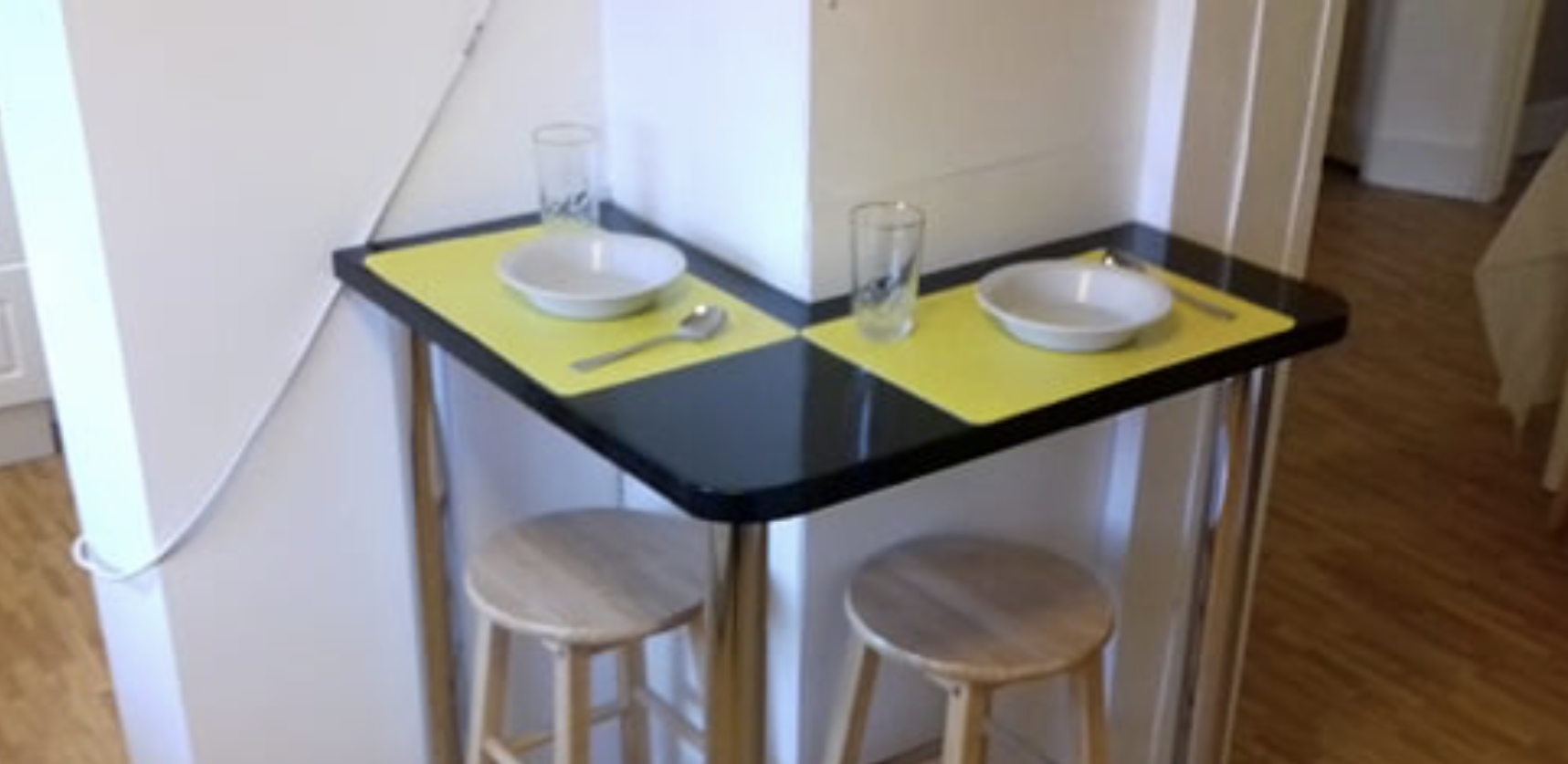
While I was waiting for the plaster to fully dry in the box room, one of the jobs I did was to start removing the toilet room. I removed the small window we put in, then the partition wall, and had a friend remove the toilet and sink and seal the in/outlet pipes. Once that was cleared out, I put in a false floor in the original kitchen to get rid of the two steps, step down from the dining room, and a step between the original and extension kitchens. I added cabinets where the toilet sink was, and eventually moved the fridge and freezer to where the toilet was. A fresh lick of silk white paint on the ceilings and walls, cut out a spare piece of worktop to make a breakfast bar, and painted the bottom row of tiles yellow to tie in with the dining room when I finished it.
But onto the flooring. I purchased some budget friendly self adhesive vinyl floor planks which wad a wood grain effect and was a bright beech/light oak colour. these were laid continuous from the kitchen, through the dining room and into the hallway. The flooring was laid after all of the painting was done. Here is how they were laid.
- Inspect and prepare the wooden subfloor: Ensure the wood floor is solid, flat, dry, and securely fixed. Tighten loose boards and address any movement or squeaks. Minor imperfections can show through vinyl, so the smoother the surface, the better the final result.
- Clean the floor thoroughly: After earlier prep, give the floor a final clean to remove dust, grease, and debris. Adhesive planks rely entirely on clean contact; any contamination will compromise adhesion over time.
- Check floor level and smooth imperfections: Lightly sand high spots and fill gaps, joints, or imperfections with a suitable floor filler. Allow repairs to dry fully, then sand smooth. If laying of a wooden floor, use a nail punch and hammer to make sure the nail heads are flush to the floor. Vinyl is unforgiving, if you can feel it now, you’ll see it later.
- Acclimatise the vinyl planks: Leave the planks in the room for the manufacturer’s recommended time so they adjust to temperature and humidity. This reduces the risk of expansion, contraction, or lifting after installation.
- Plan the layout before sticking anything down: Dry lay a few rows to determine the best starting point and minimise narrow cuts at edges. Consider plank direction in relation to room shape and light sources. Once adhesive touches floor, you don't really want to lift and re-apply as the planks will lose adhesion.
- Establish straight guide lines: Mark a straight reference line using a chalk line or long straightedge to keep rows aligned. Small deviations multiply quickly.
- Lay planks gradually and consistently: Peel back a small section of the backing paper at a time and press planks firmly into place, working from the centre outward. Apply even pressure and ensure tight joints without forcing them.
- Cut planks accurately for edges and obstacles: When cutting planks to fit around walls, door frames, pipes, or recesses, measure carefully and mark cut lines clearly on the backing paper. Remember that marking on the reverse means the shape is mirrored, so double check orientation before cutting to avoid removing the wrong section. Score with a sharp knife and snap cleanly where possible, or cut fully through for complex shapes.
- Take extra care around door frames and recesses: Use scrap cardboard templates or offcuts to test fits around awkward shapes. Make relief cuts where needed and trim gradually. Rushing this stage leads to visible gaps that are difficult to disguise later.
- Press and secure the floor fully: Once all planks are laid, press firmly across the entire surface, paying attention to edges and joins. Some manufacturers recommend using a floor roller to ensure full adhesive contact.
- Finish edges and transitions: Fit edging trims or threshold strips where required, ensuring clean transitions to adjoining rooms and surfaces.
- Final check and cure time: Avoid heavy foot traffic or furniture for the recommended curing period to allow the adhesive to bond fully. Patience here prevents lifting and noise later, by noise I mean where the planks lift slightly and when walked on, the sound of loose adhesive re-sticking and then unsticking can be heard.
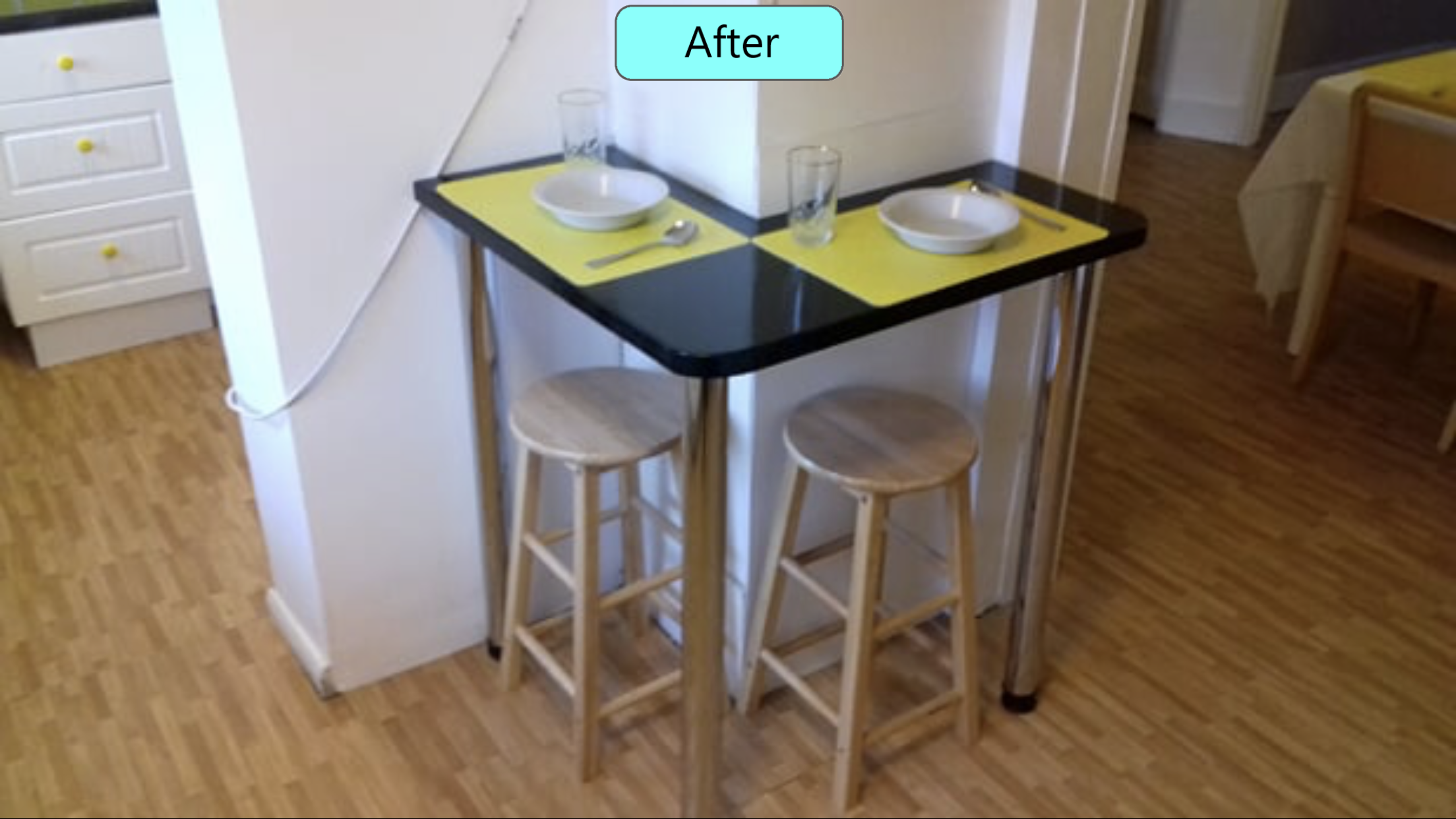
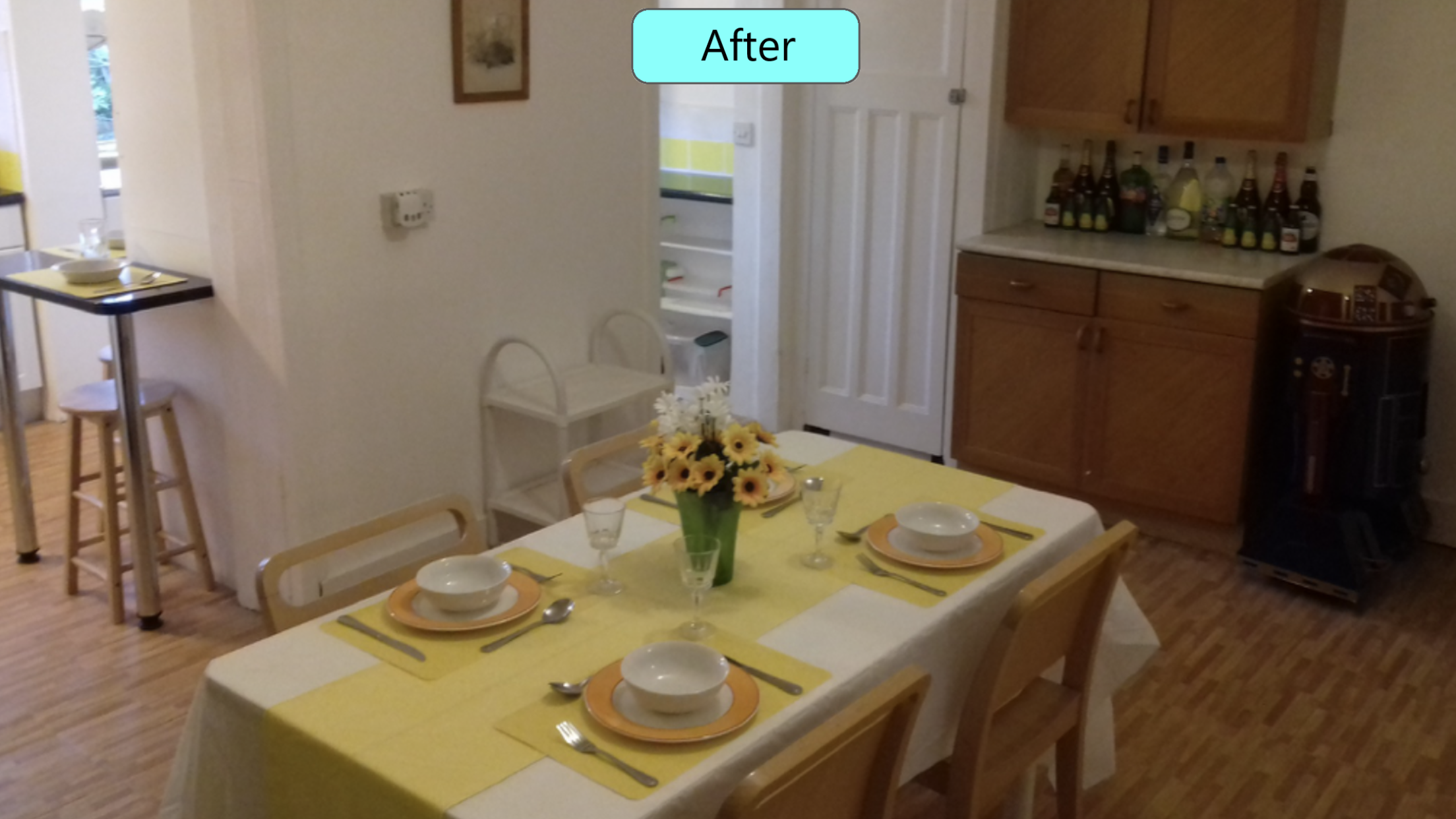
So with the flooring laid, I moved the fridge and freezer into place, installed the breakfast bar with some chrome legs I purchased and dressed it with yellow placemats and white plates, a clean, bright and spacious look. Next I will go into more detail about dressing a room, whether it's for your own purpose, or for selling a house.
Removing Wallpaper

The Dining Room:
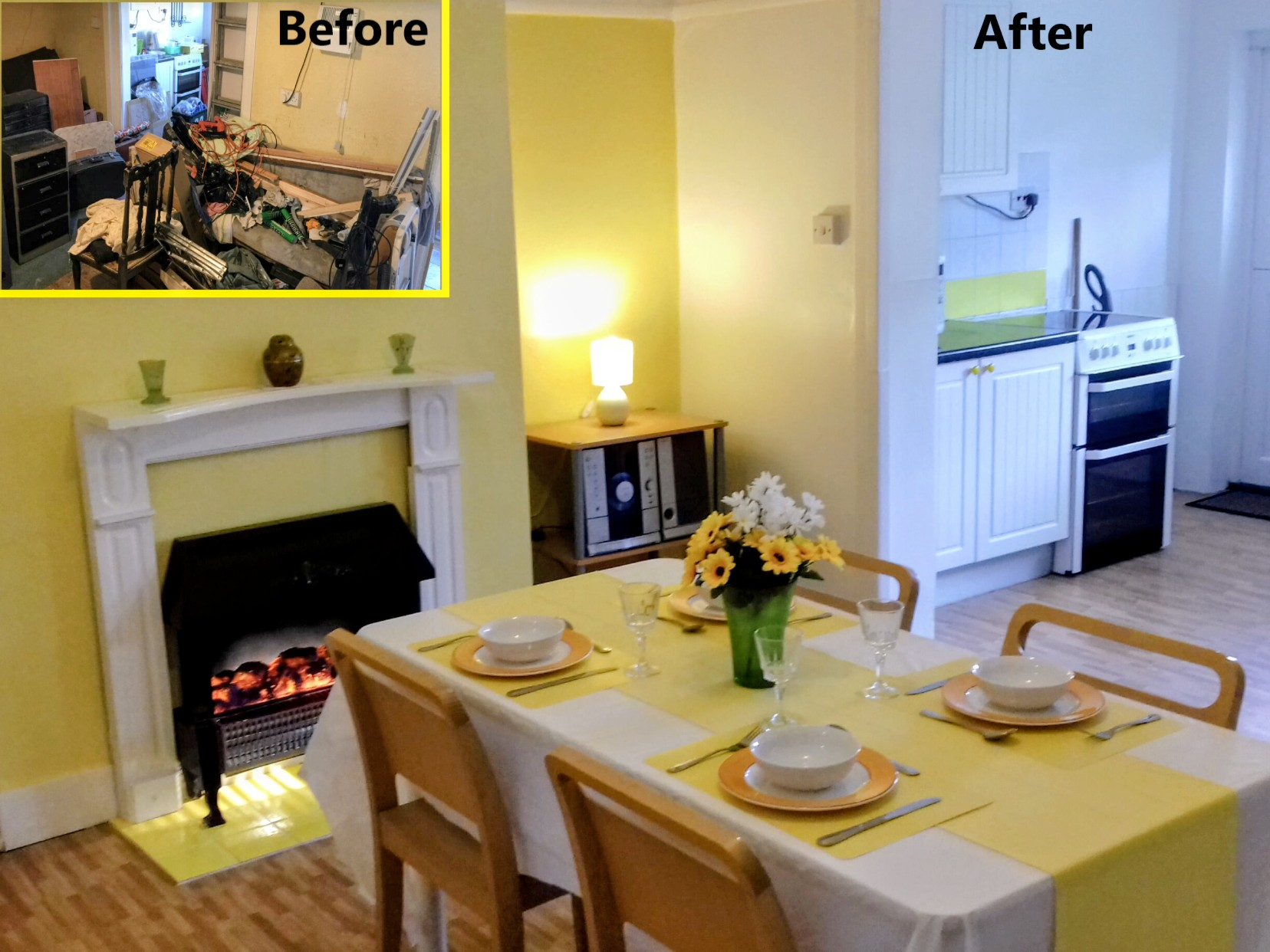
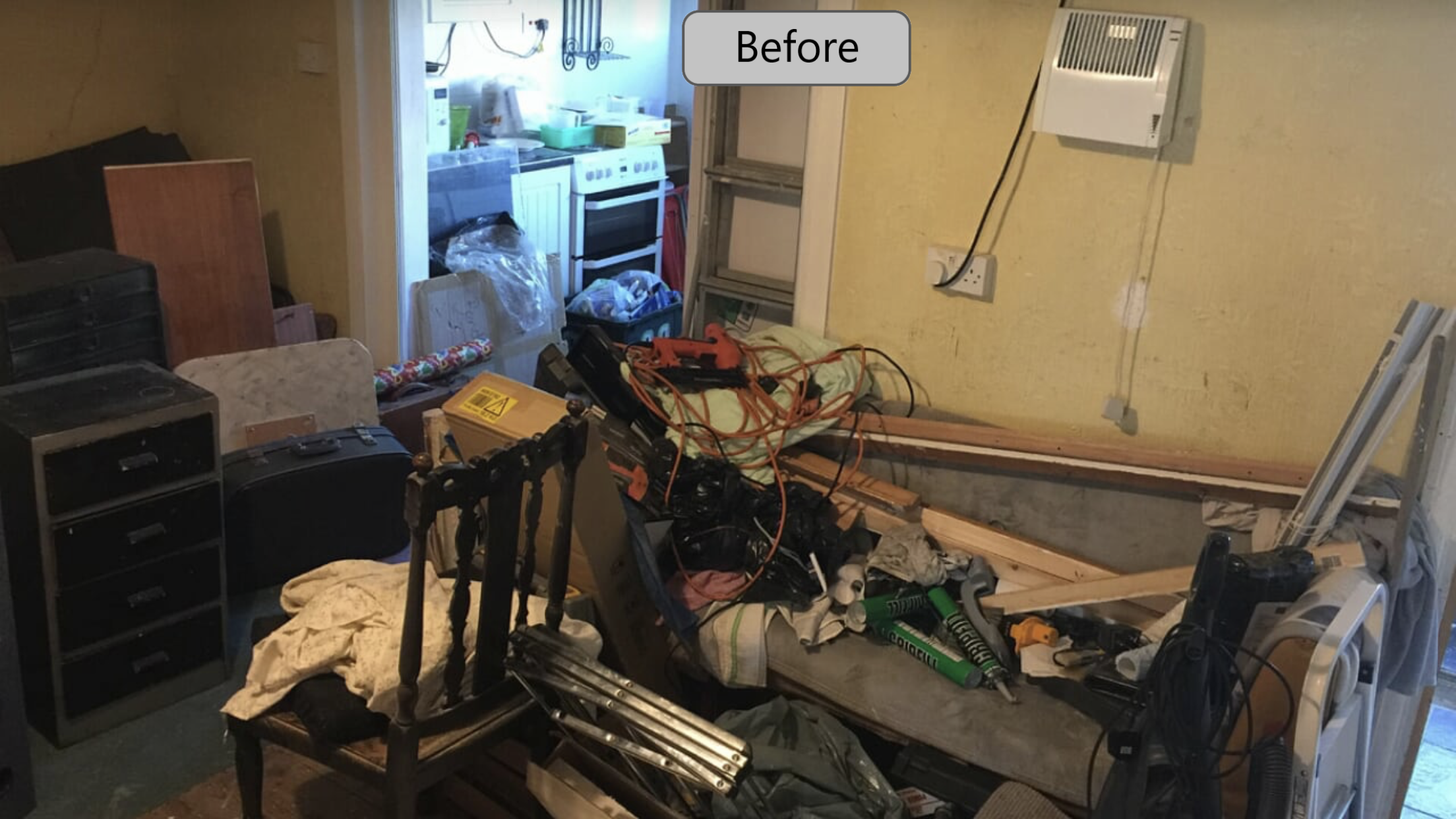
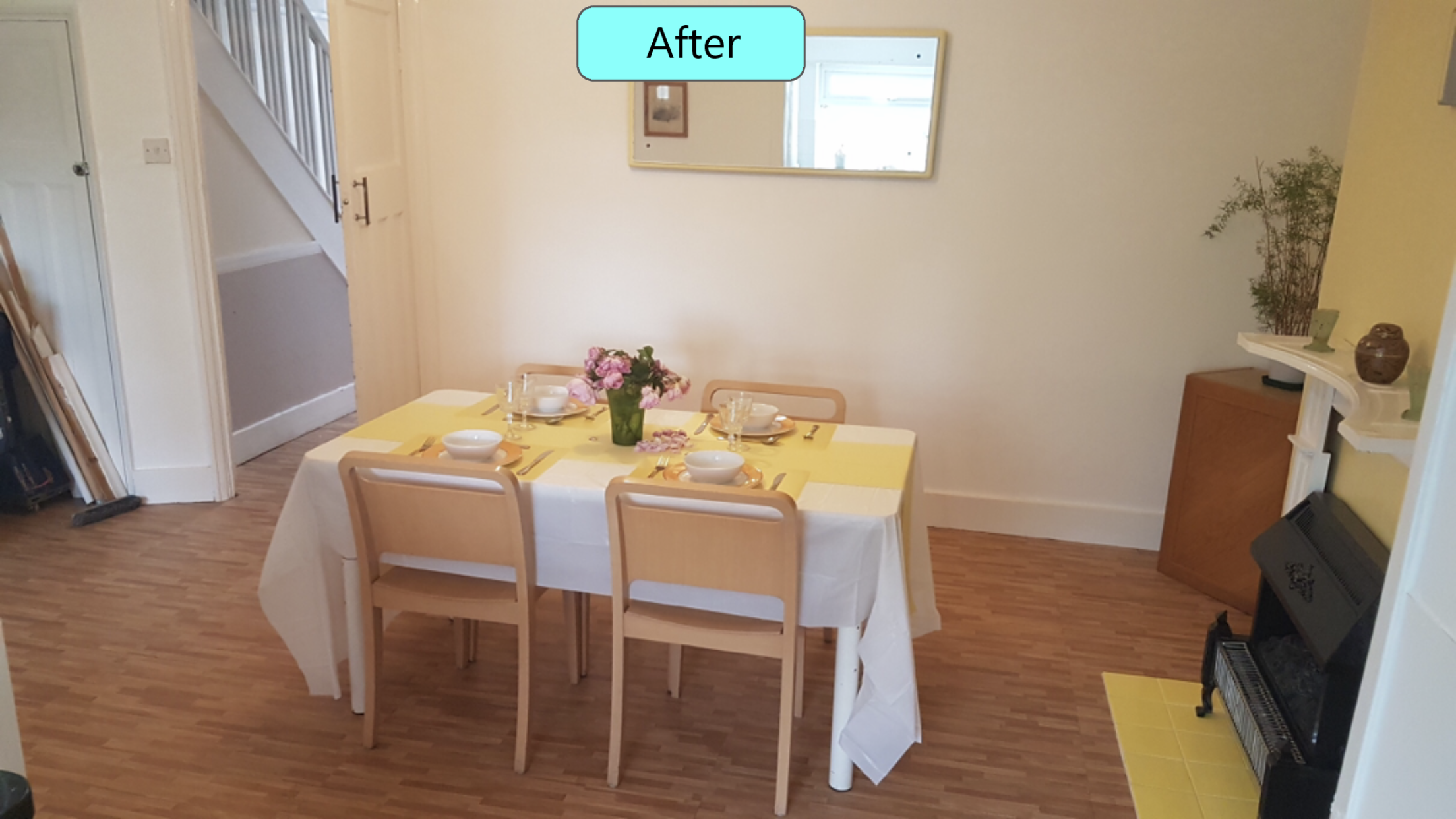
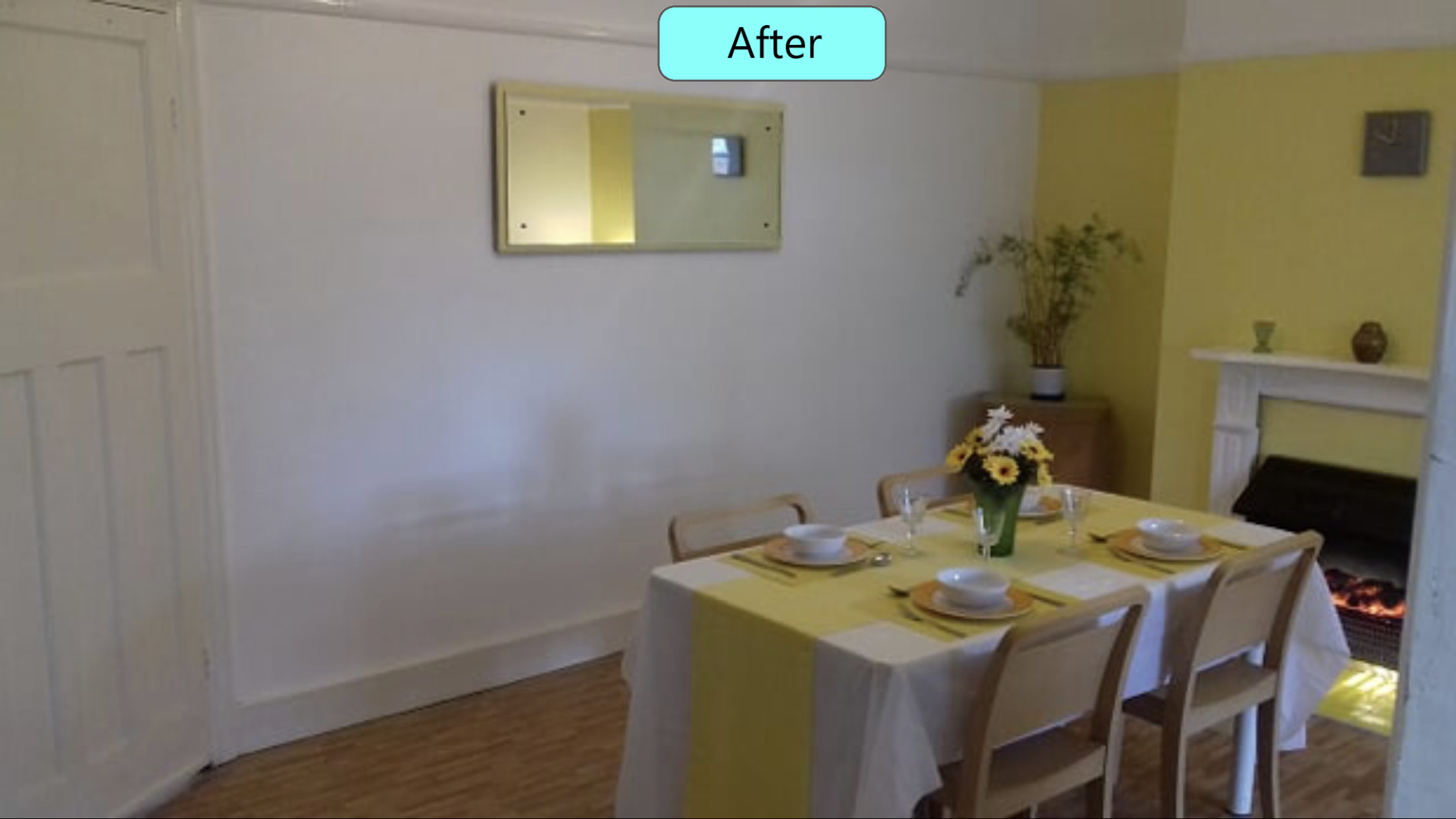
Here's a little bit about the room. As I mentioned, I used this as a storage area and workshop, so this was the last room to be decorated. This was also the darkest room of the house because of the kitchen extension that was built. Where the fridge and freezer were located didn't really help plus the old wallpaper was a darkish yellow with dark green carpet. We used to use this room a lot, but later it was only used for Xmas dinner and a walkthrough to and from the kitchen. So I decided on making this a dining room with white silk walls and ceiling, and a bright yellow feature wall where the fireplace was. A nice big mirror, relocating the fridge and freezer in the kitchen mentioned in the last step, and opening up the original kitchen by removing the toilet room all would help make the room brighter. The wallpaper was not in good shape, so I decided to strip it back to the plaster and apply backing paper, then paint. So the following are some tips to help you remove old wallpaper with the best results.
- Prepare and protect the room: Remove furniture where possible and cover floors and remaining items with dust sheets. Take off socket and switch faceplates after isolating power, and score around edges and fittings with a sharp knife.
- Test the wallpaper first: Check whether the wallpaper is peelable by lifting a corner. If it comes away cleanly, remove the top layer dry and assess whether a backing layer remains.
- Score the wallpaper surface: Lightly score non-peelable wallpaper using a scoring tool or knife to allow steam or solution to penetrate. Avoid cutting into the plaster, as this causes unnecessary damage.
- Soften the adhesive: Use a wallpaper steamer or warm water mixed with a wallpaper removal solution. Work in manageable sections, allowing time for the moisture to soak in and loosen the adhesive properly.
- Remove paper carefully: Scrape gently using a wide scraper, working from seams and edges. Let the moisture do the work, forcing dry areas increases the risk of gouging the wall.
- Repeat as needed: Stubborn areas may require additional steaming or soaking. Patience here is far quicker than repairing damaged plaster later.
- Clean the wall surface: Once the paper is removed, wash down walls to remove adhesive residue and allow them to dry fully before any further work such as filling, sanding, or painting.
Then you can either follow Step 4 to attach backing paper, or paint if the surface is good enough. With all of the changes, decorating done and room dressed, the room was really transformed. There were also fireplace tiles like the living room, and these I painted with a yellow ceramic paint and while sorting stuff out, I cane across a fireplace surround I painted white and drilled/screwed into place. An stripped and cleaned electric fire to finish off made the room functional and cosy.
Dressing a Room (accents)
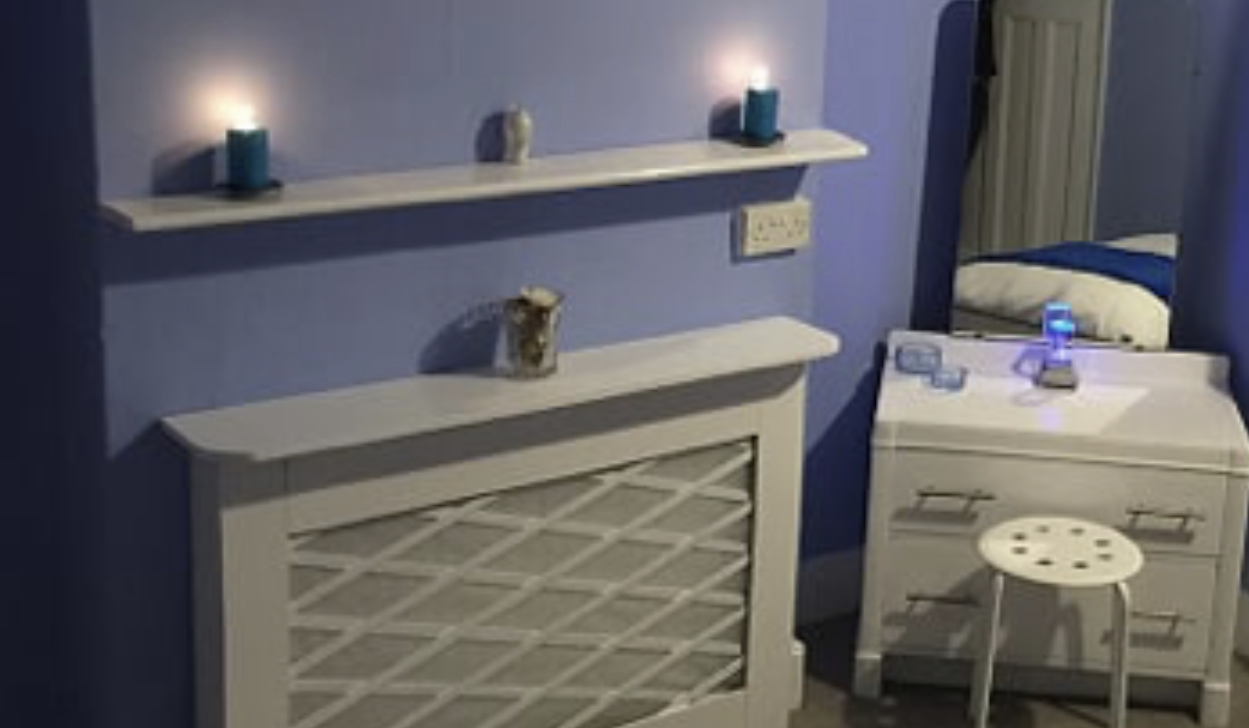
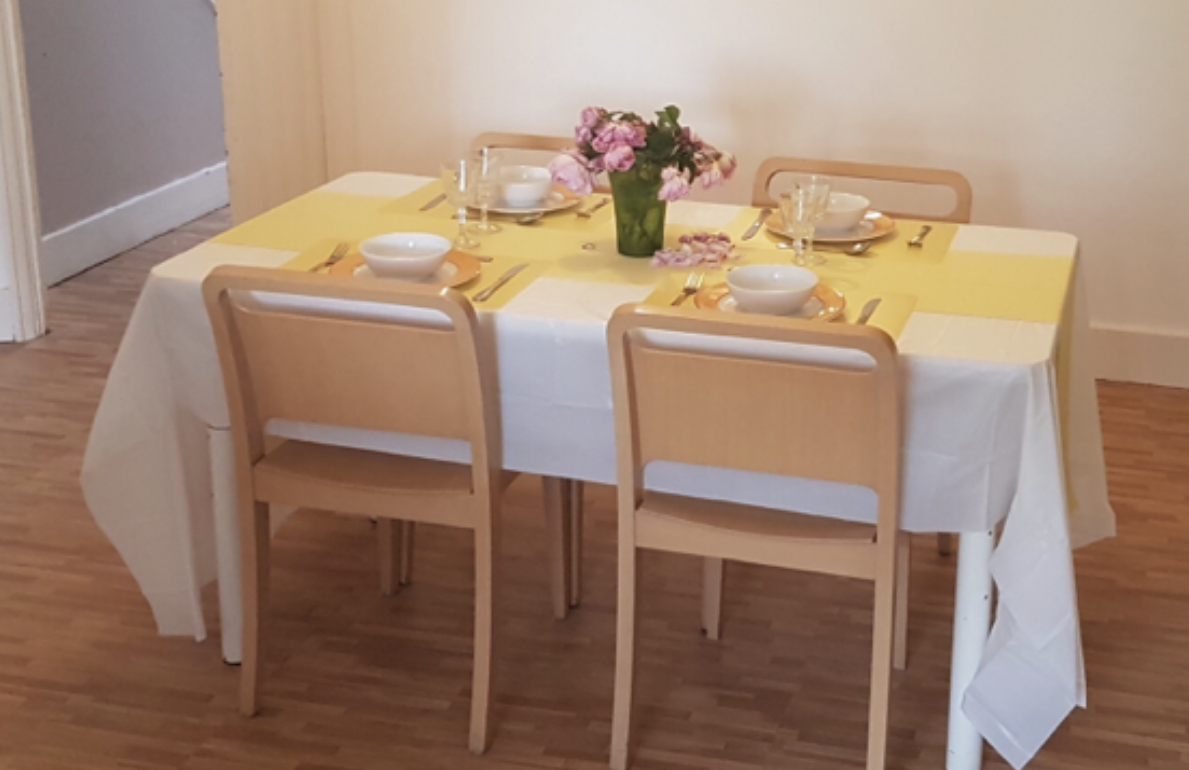
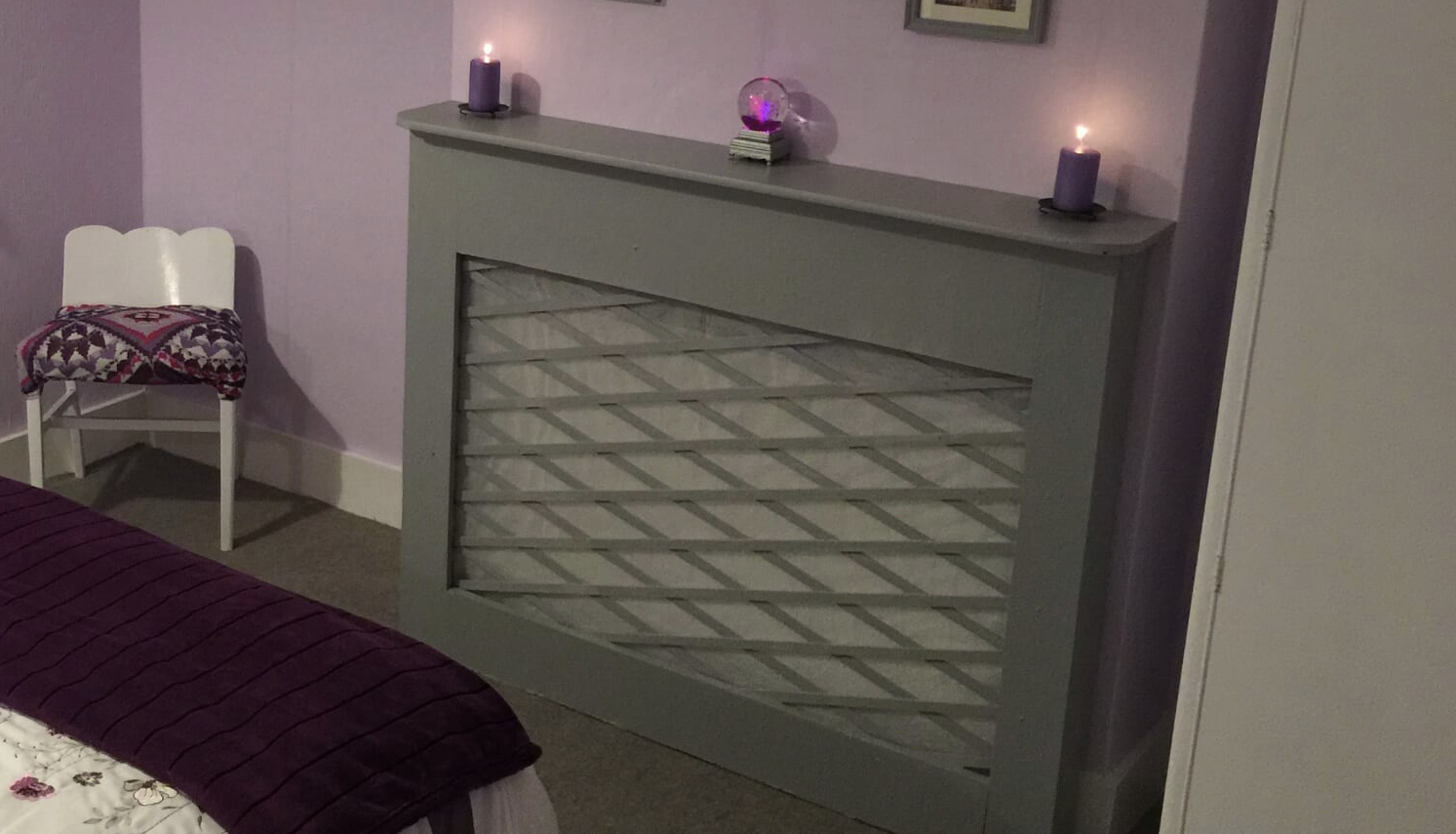
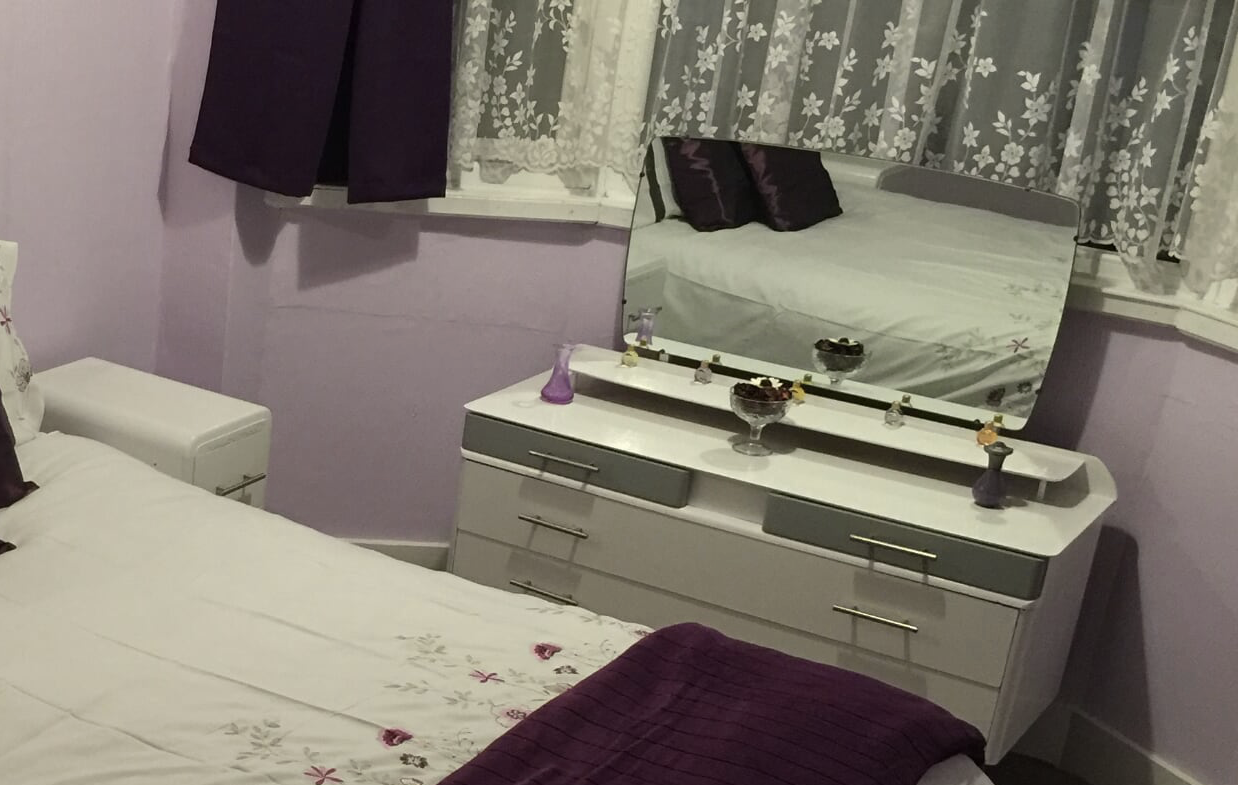
Bearing in mind that this was our family home for 30 odd years, doing this project was bitter sweet for me, sad because of the reasons for doing the work to sell the house, difficult because I was battling with a permanent spinal condition, but some ways enjoyable because I liked doing all of the different jobs and seeing the end results But the dining room was my favourite of all the rooms, and dressing the rooms was also my favourite part.
My mother told me about her wishes for the family to pick and choose anything they wanted to keep, and the rest of the stuff to be donated to charity, so following her wishes, I did just that. After going through all and picking out the stuff I had, I made a few wallet friendly purchases of cushion covers, bed runners, curtains, candles, placemats etc., all colour coded to the rooms they would go in. Ultimately I was going for minimalist, warm, clean, spacious and matching colours/styles, ready to move into yet not over crowded so potential buyers could better visualise having their own belongings in place. Here's a few tips for dressing a room.
Dressing a room for personal enjoyment:
- Reflect personality and lifestyle: Choose items that genuinely resonate with you, artwork, books, plants, and objects that tell a story. A room should feel lived-in, not staged.
- Use odd numbers for visual balance: Group ornaments in odd numbers (3 or 5 rather than 2 or 4). Odd-numbered groupings feel more natural and dynamic, encouraging the eye to move rather than stopping abruptly. I saw this tip on a home improvement TV show and thought to myself "that's interesting" then realised that I had unintentionally been doing this for years but never gave it any thought.
- Layer textures and materials: Mix soft and hard surfaces, cushions, throws, wood, metal, glass, to create depth and comfort rather than a flat, one note look.
- Vary height and scale: Arrange items at different heights to avoid a static appearance. Tall objects paired with shorter ones add rhythm and interest to shelves and surfaces.
- Prioritise comfort and function: Furniture placement should suit how you actually use the room. A beautiful space that’s awkward to live in quickly loses its charm.
Dressing a room when selling a house:
- De-personalise while keeping warmth: Remove highly personal items but retain neutral decor that suggests comfort and quality without distraction.
- Create a sense of space and flow: Fewer well chosen items make rooms feel larger and easier to move through. Avoid overcrowding shelves and surfaces.
- Use neutral, appealing groupings: Stick to simple colour palettes and tasteful accessories. Odd numbered arrangements still apply here, they look intentional without drawing attention to themselves.
- Highlight key features: Dress fireplaces, windows, or alcoves subtly so they stand out without competing for attention.
- Let the room breathe: Empty space is not wasted space when selling. It allows buyers to imagine their own belongings in the room, which is what we are looking for.
While radiators are great for warmth, standard looking ones on a wall to me makes a room look unfinished. I got some MDF boards, some wooden garden trellis and some cheap net curtains, and made four radiator covers. front, sides and a top panel were cut, glued and nailed together, then I cut some of the trellis to size, laid it inside if the frame and stapled it into place. The frame was then painted with the appropriate colour (brush painting the trellis is a monotonous job I don't mind saying). A length of net curtain was laid inside and stappled in place. A small MDF square was cut and nailed into place at the back middle of the top shelf so the radiator cover could be lifted into place over the rad, and the square piece would hook over and sit behind the rad keeping the cover in place.
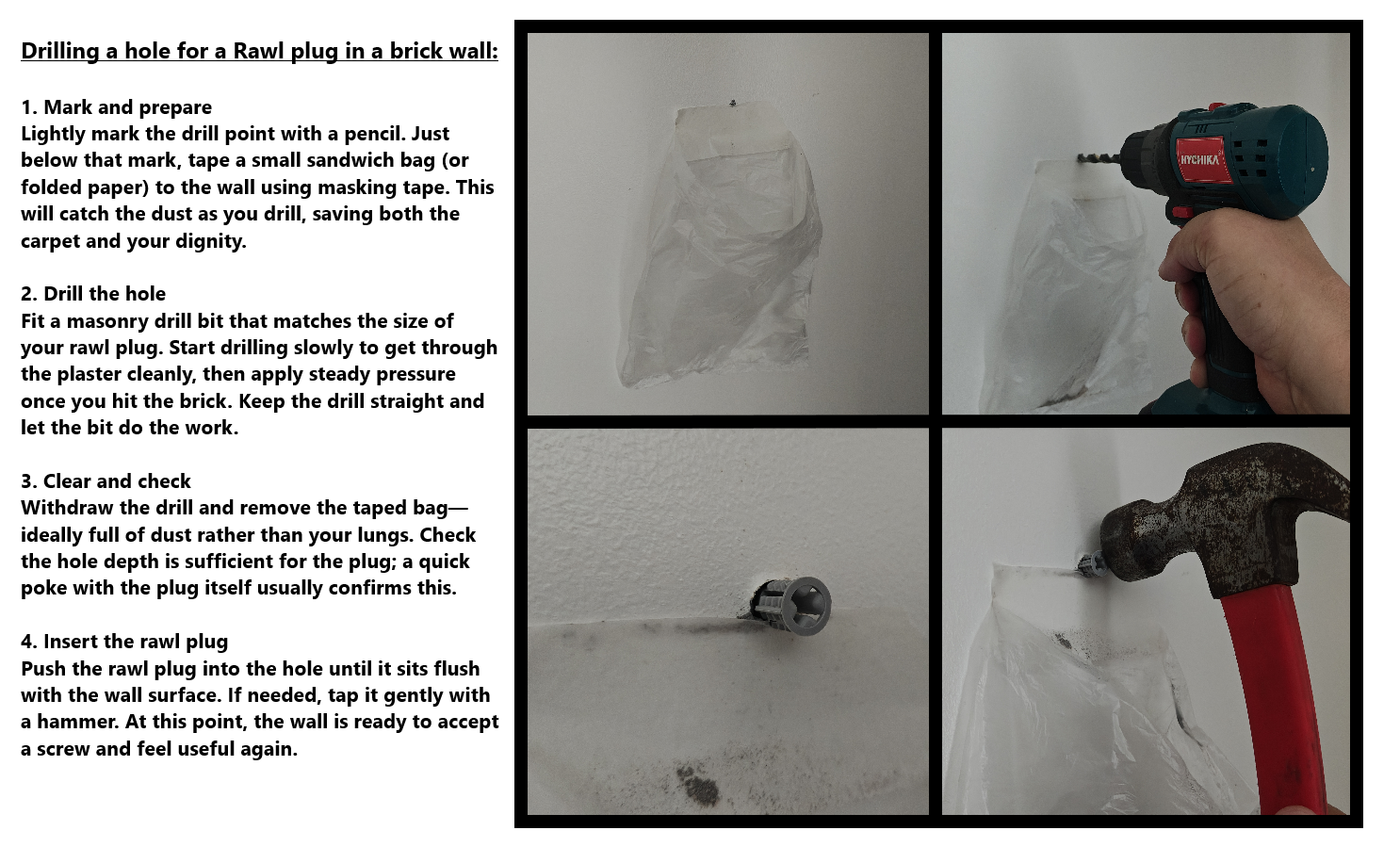
If you need to drill into a brick wall to hang mirrors, shelving etc., here's the way I do it.
- Mark and prepare: Lightly mark the drill point with a pencil. Just below that mark, tape a small sandwich bag (or folded paper) to the wall using masking tape. This will catch the dust as you drill, saving both the carpet and your dignity.
- Drill the hole: Fit a masonry drill bit that matches the size of your rawl plug. Start drilling slowly to get through the plaster cleanly, then apply steady pressure once you hit the brick. Keep the drill straight and let the bit do the work.
- Clear and check: Withdraw the drill and remove the taped bag, ideally full of dust rather than your lungs. Check the hole depth is sufficient for the plug; a quick poke with the plug itself usually confirms this.
- Insert the rawl plug: Push the rawl plug into the hole until it sits flush with the wall surface. If needed, tap it gently with a hammer. At this point, the wall is ready to accept a screw and feel useful again.
Other jobs like painting the furniture that was staying, and setting the dining table and breakfast bar with colour coded plates, table runners etc. were pretty much the finishing touches to the inside decorating. Sit back and relax... not quite yet as I had some rubbish that needed to be moved and cleared and then the gardens tidied up, especially the front one for that all important kerb appeal.
Outside Spaces
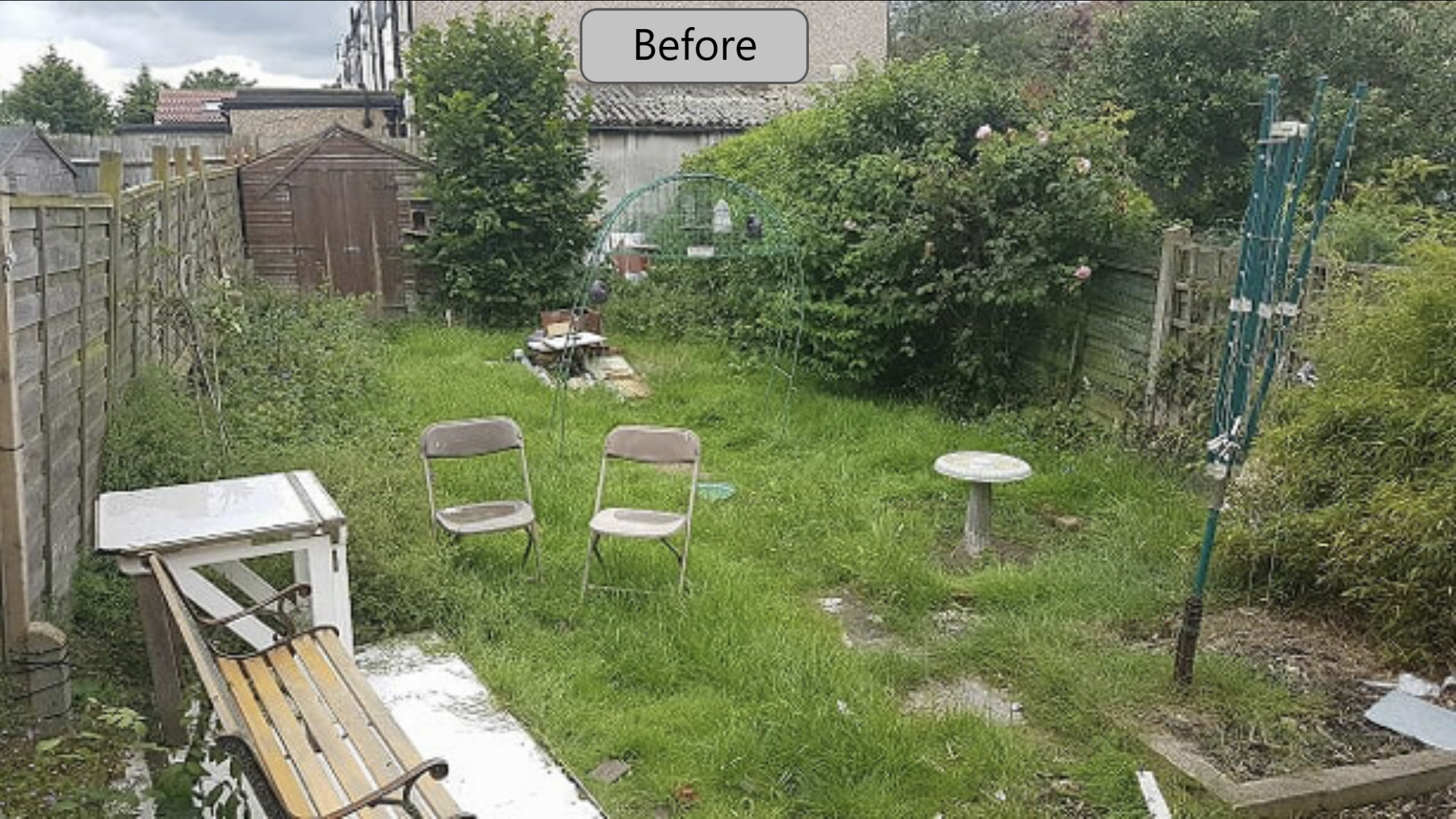
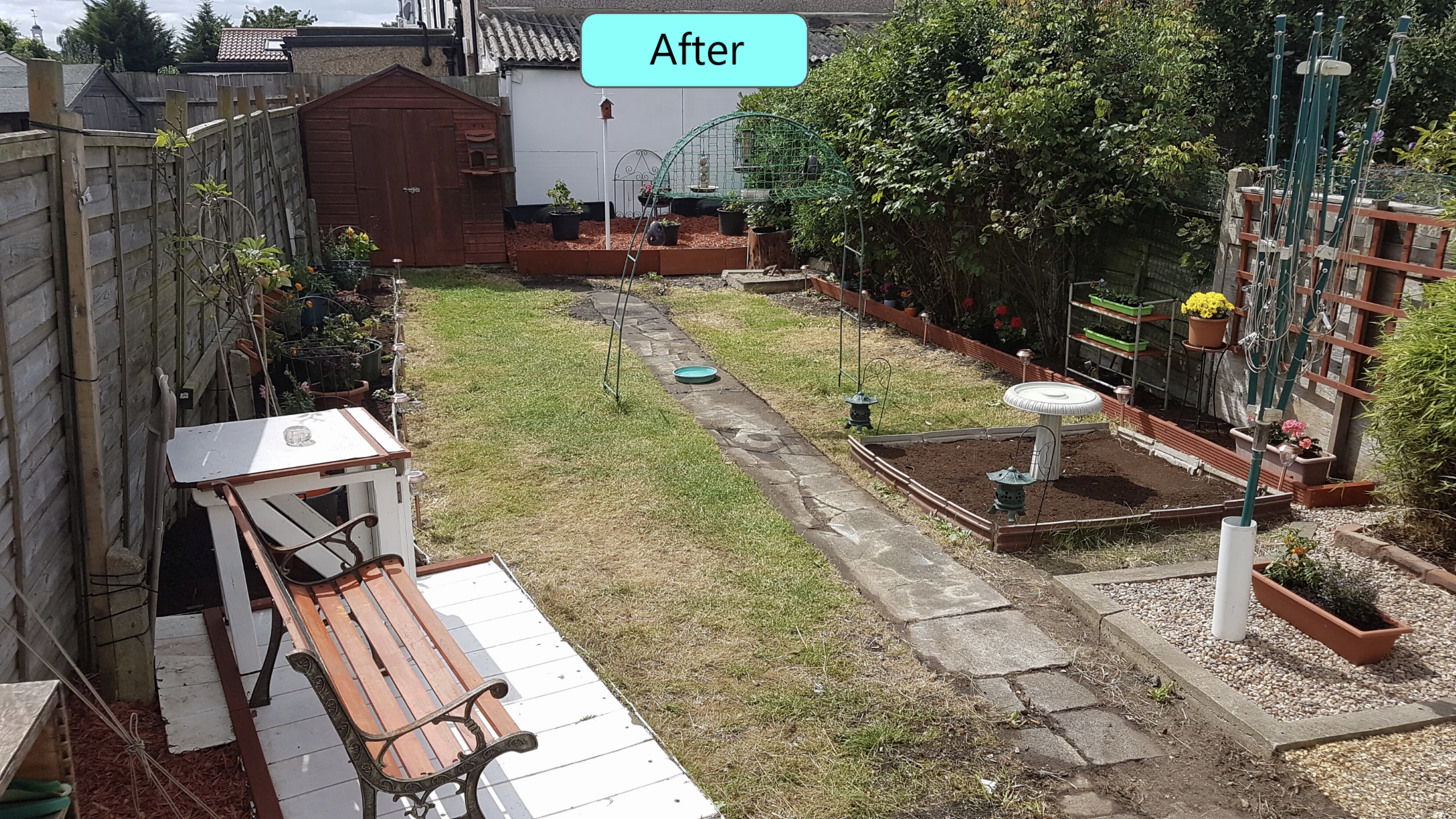
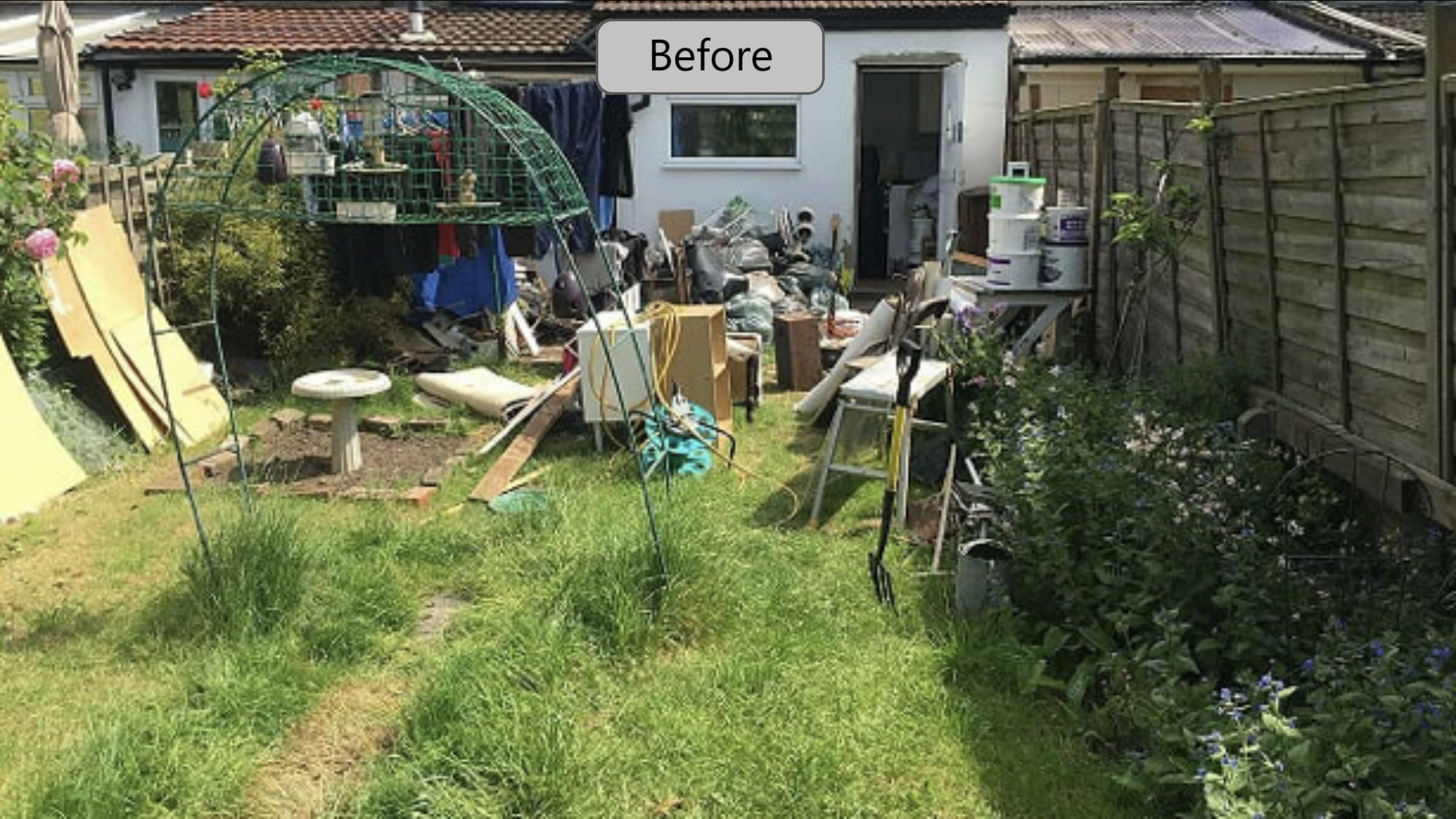
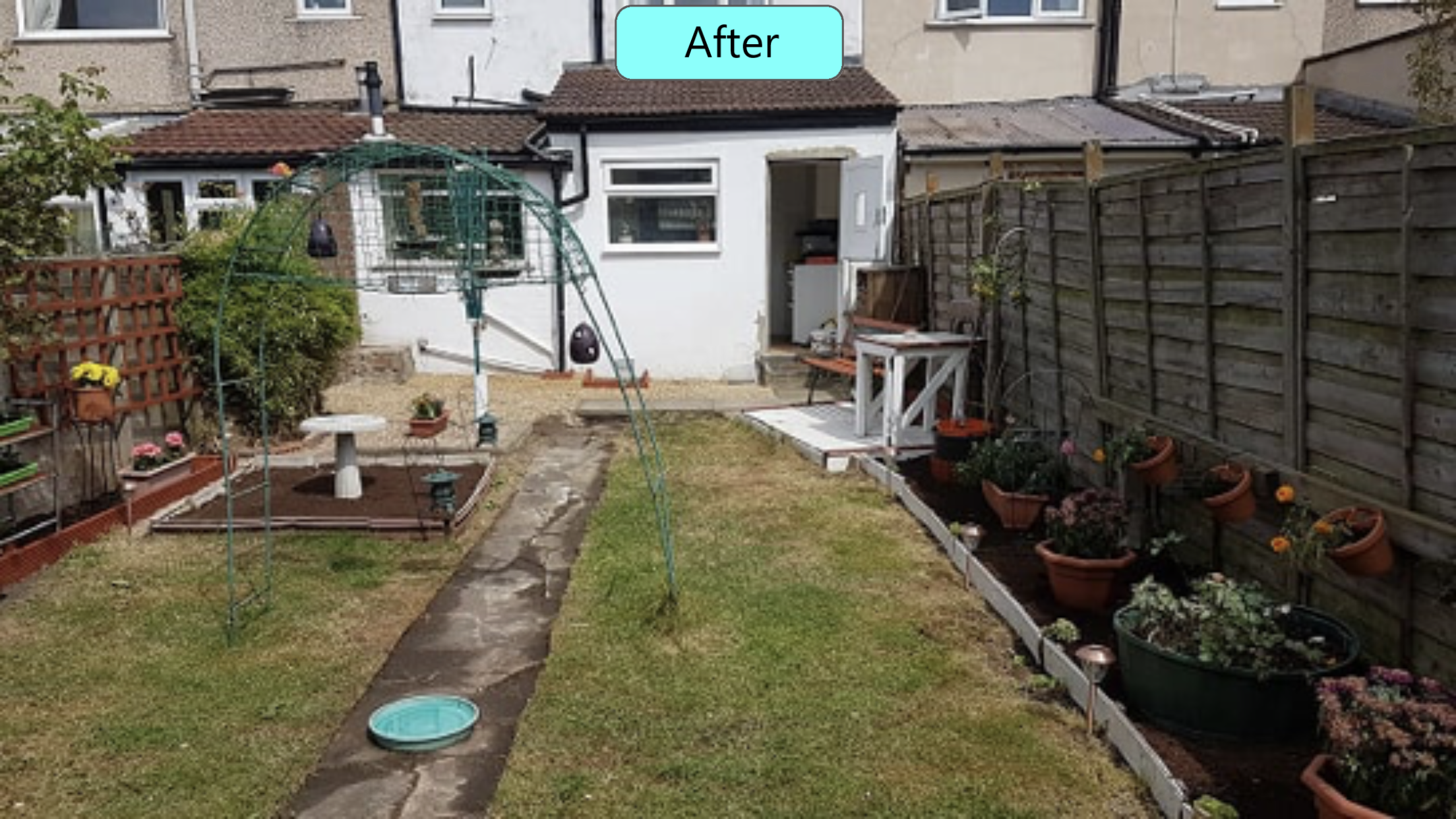
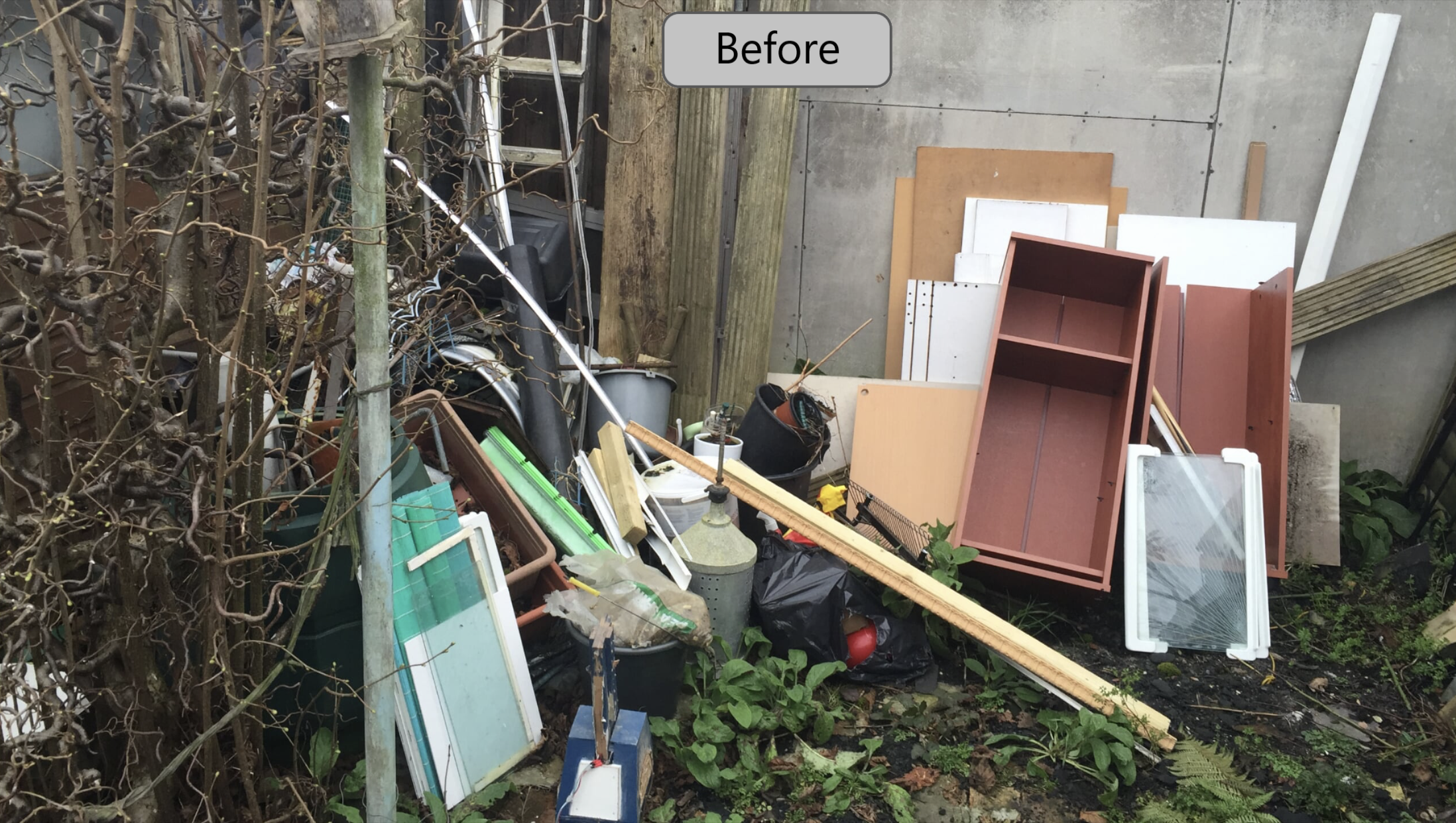
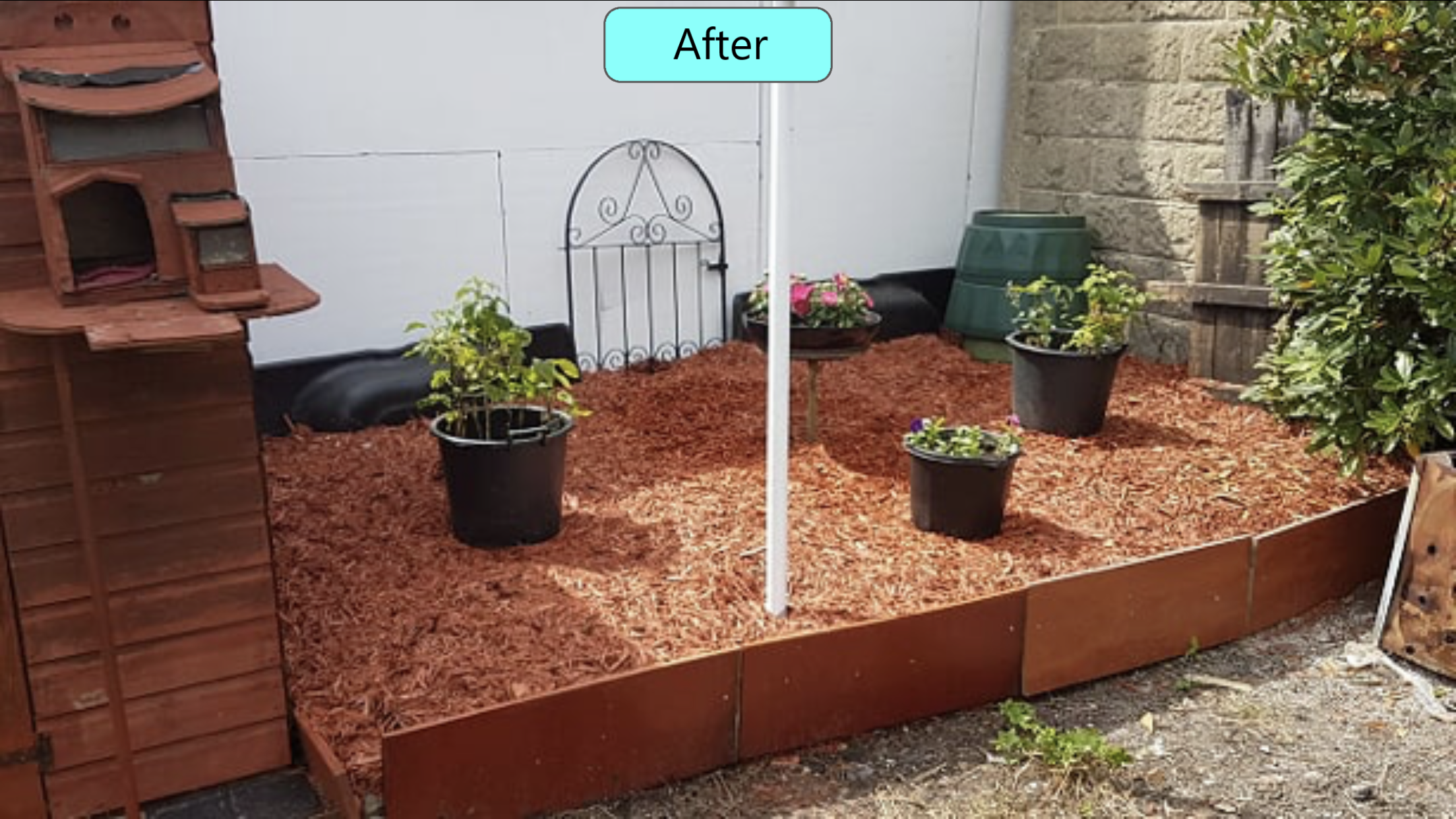
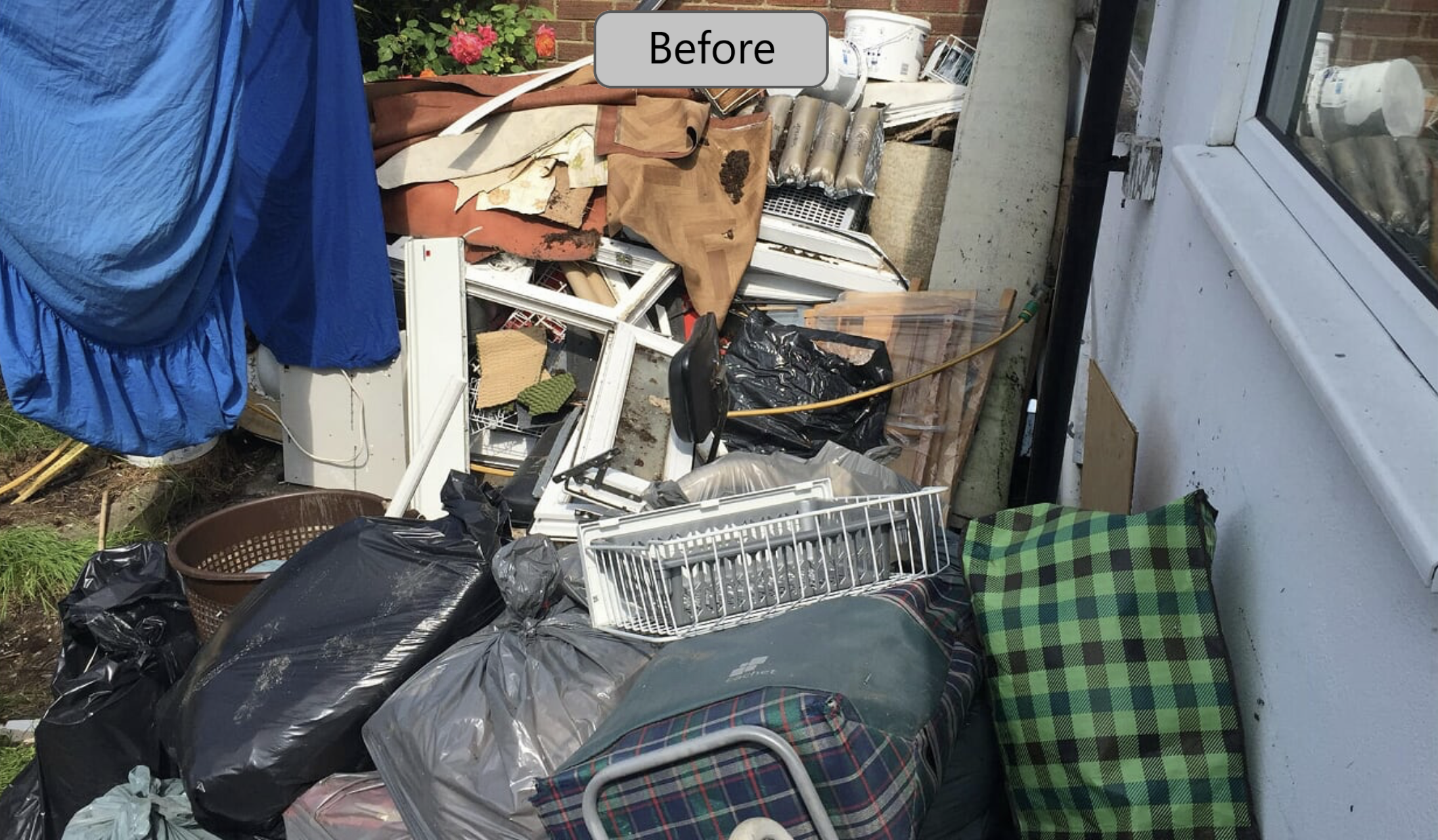
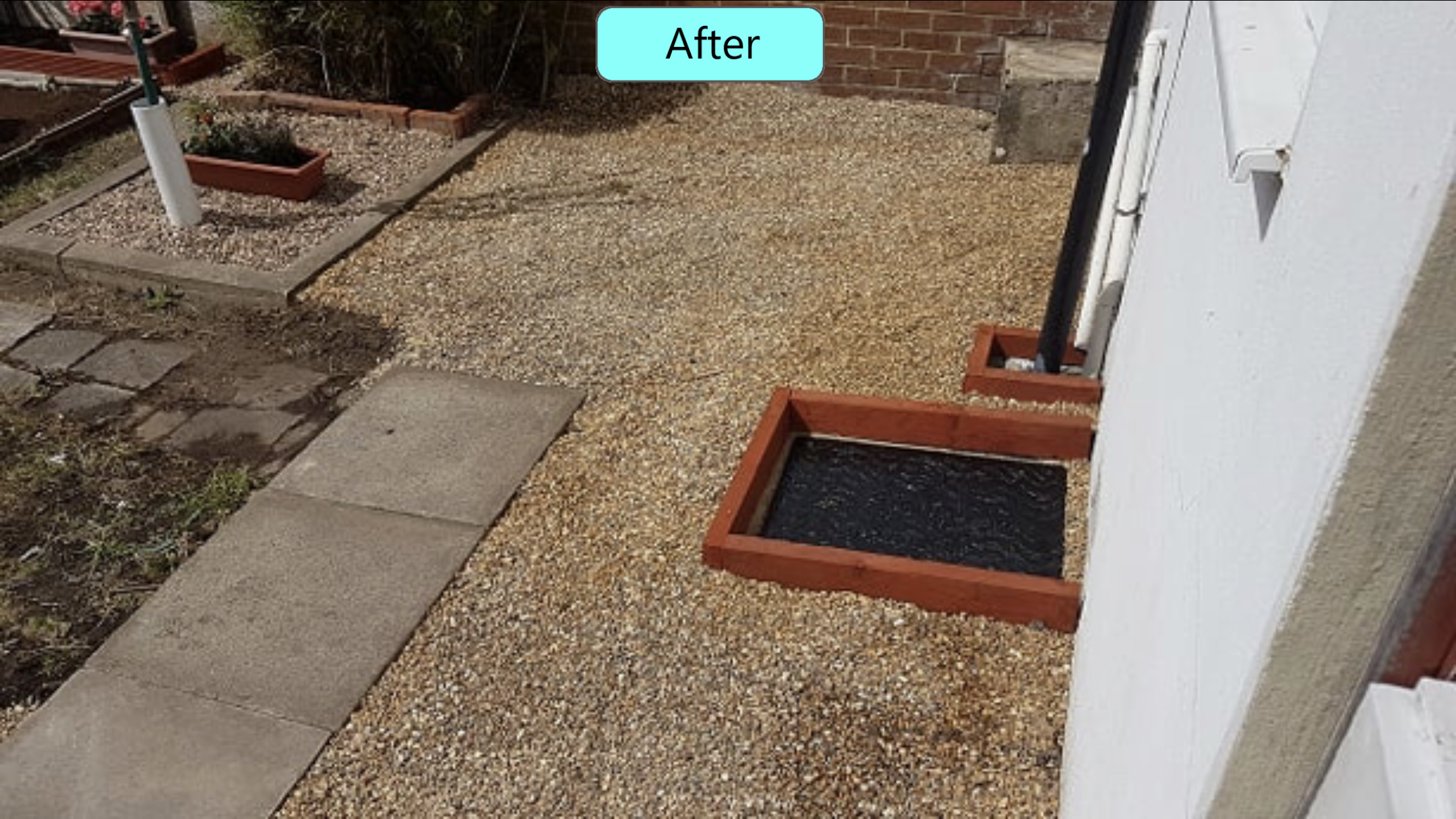
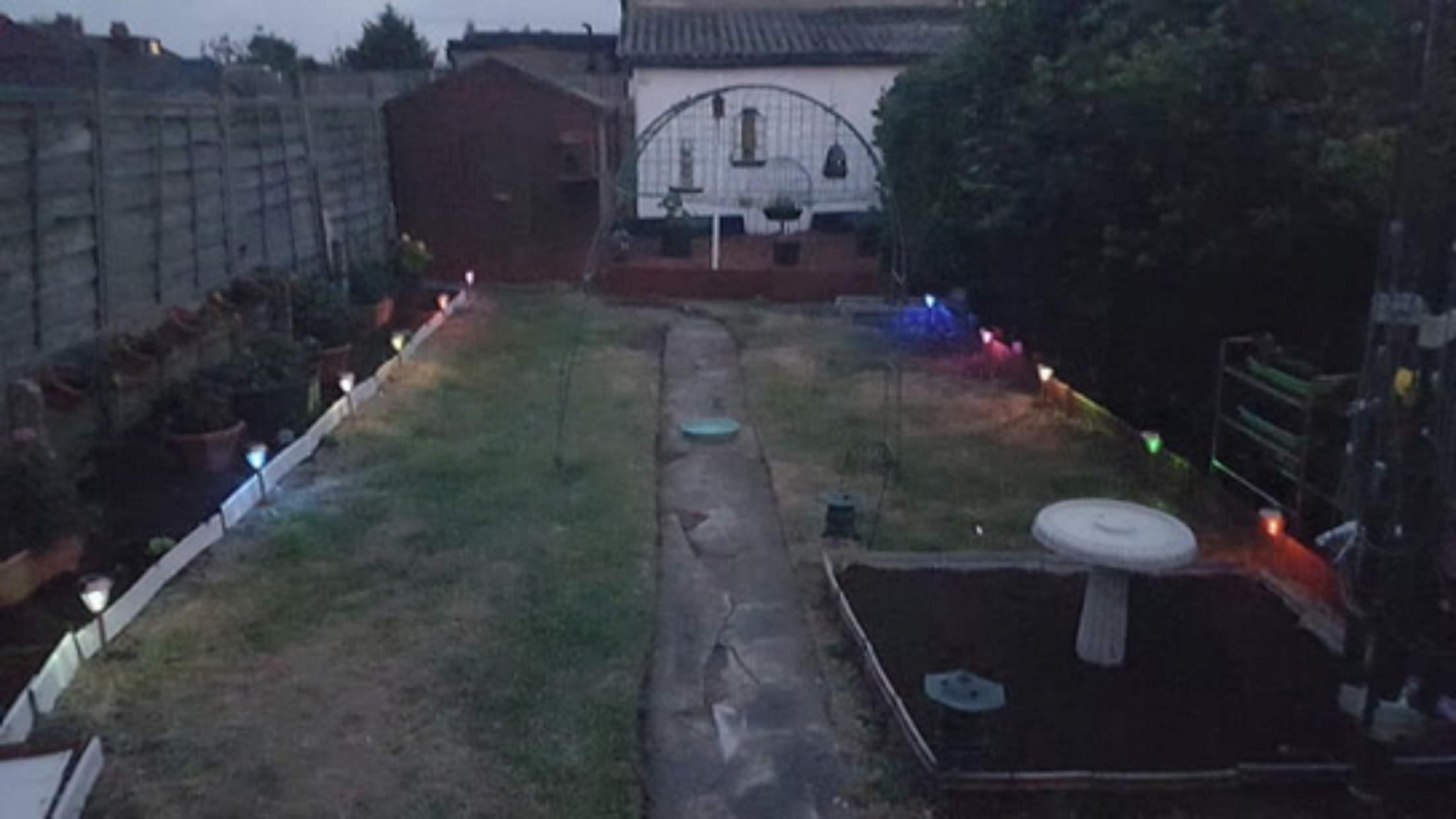
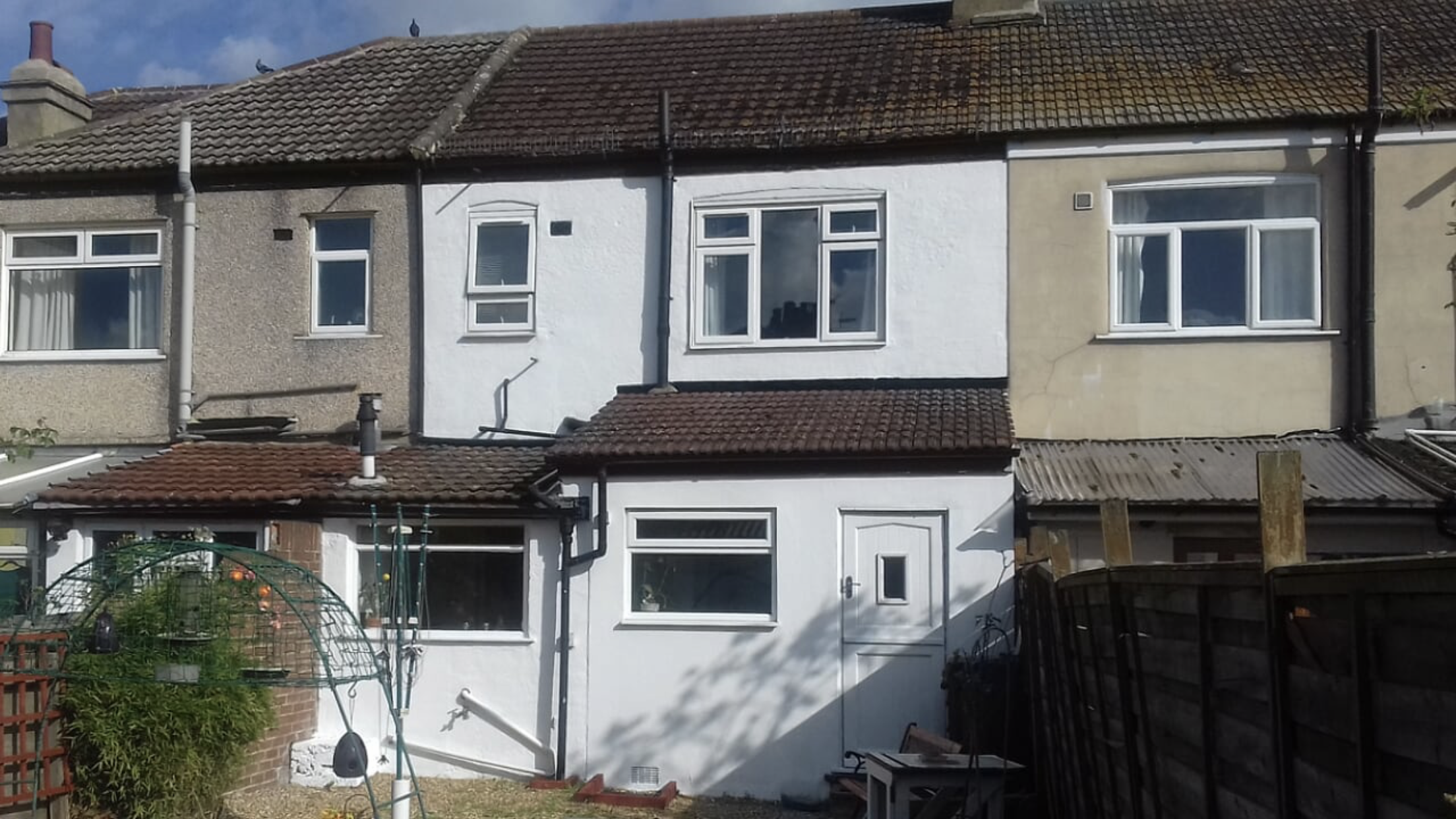


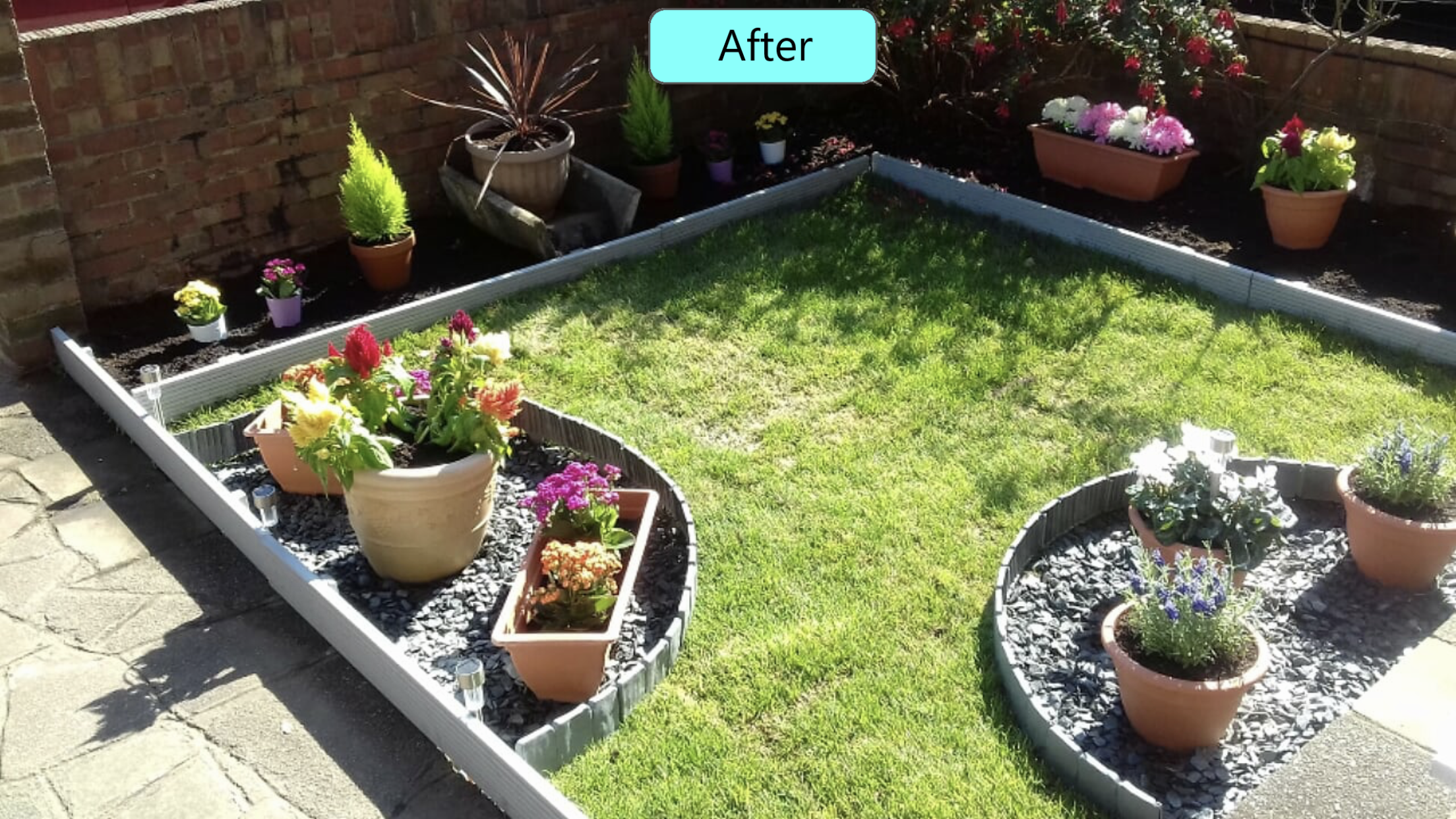
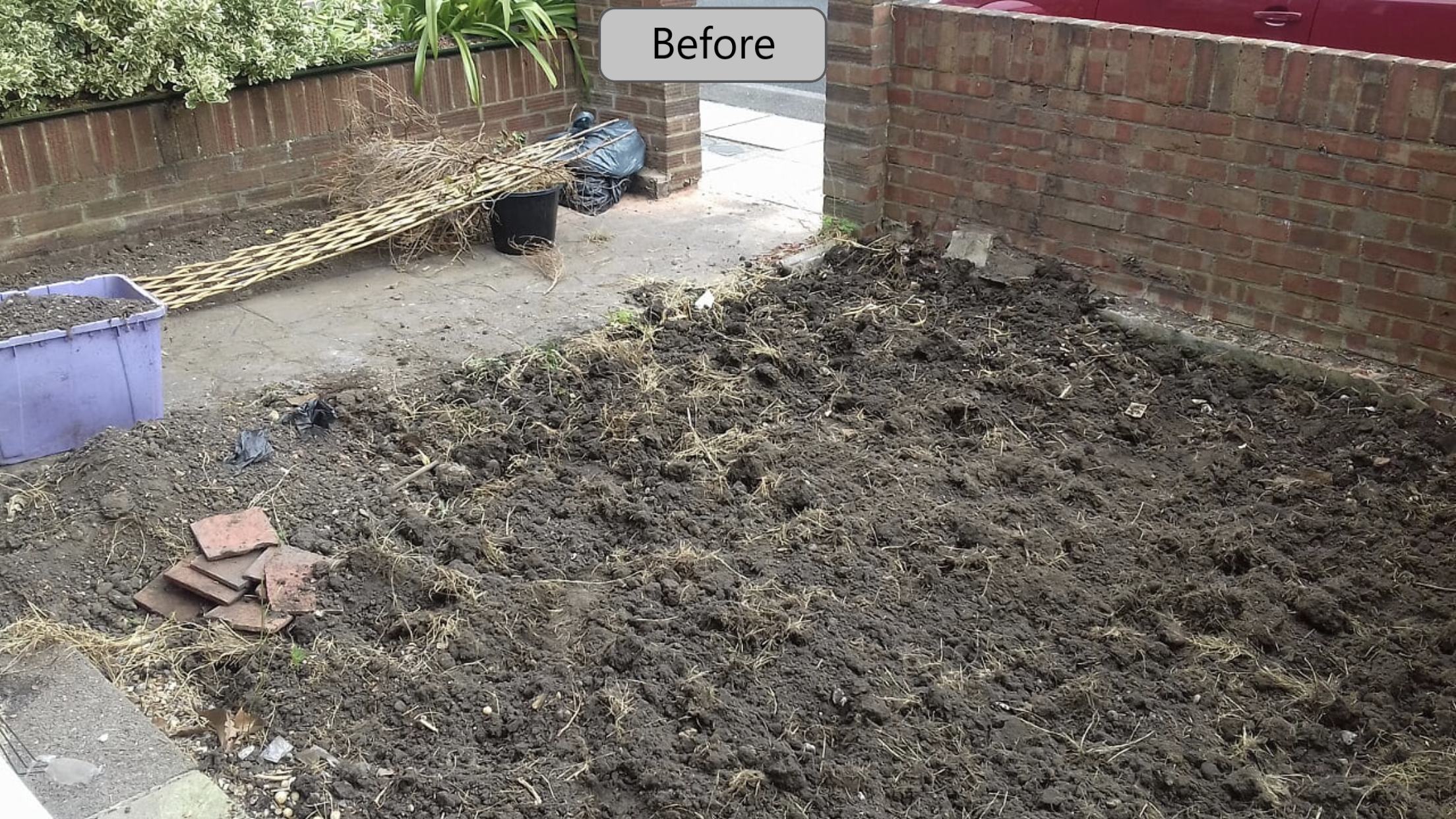
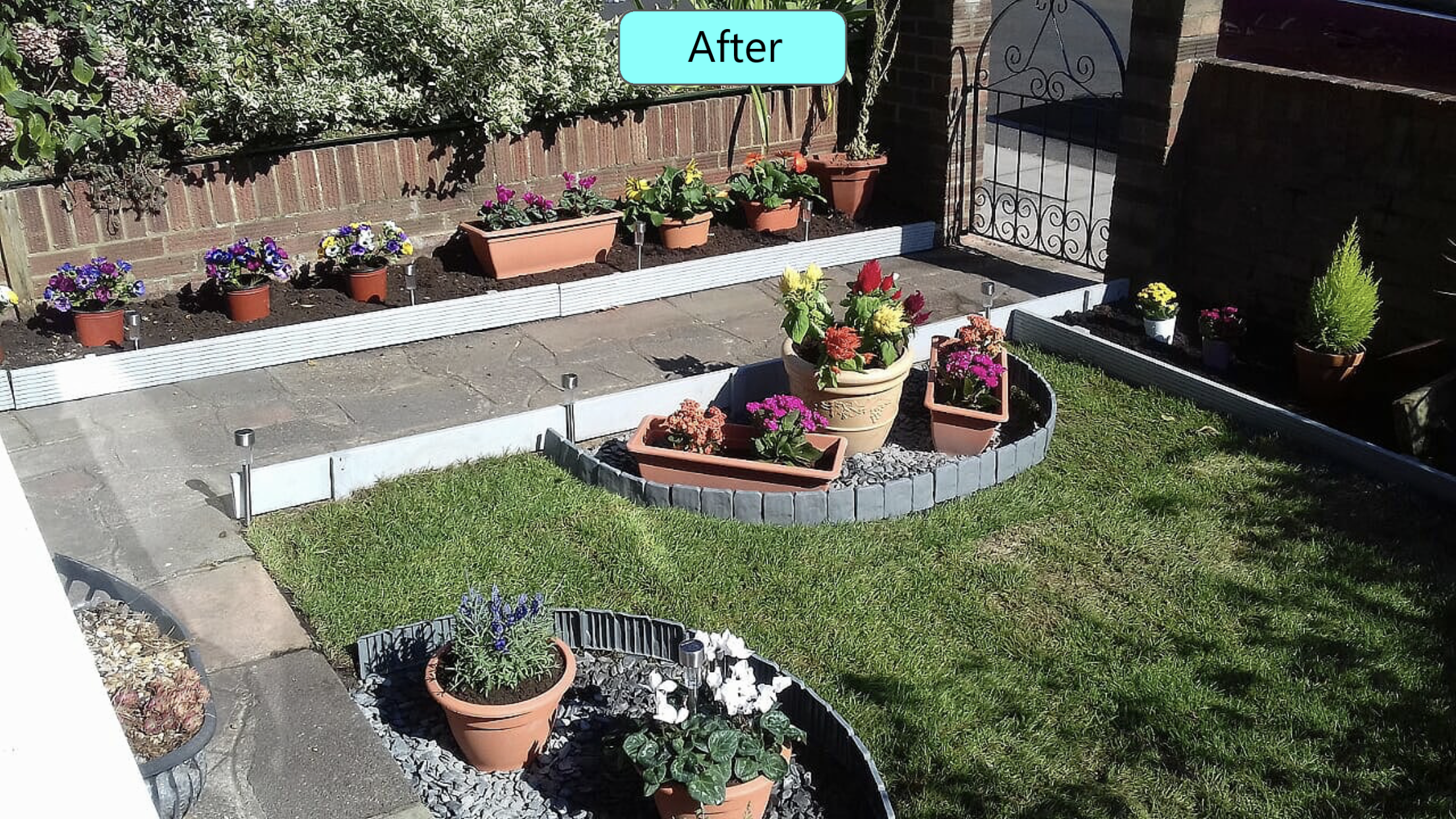
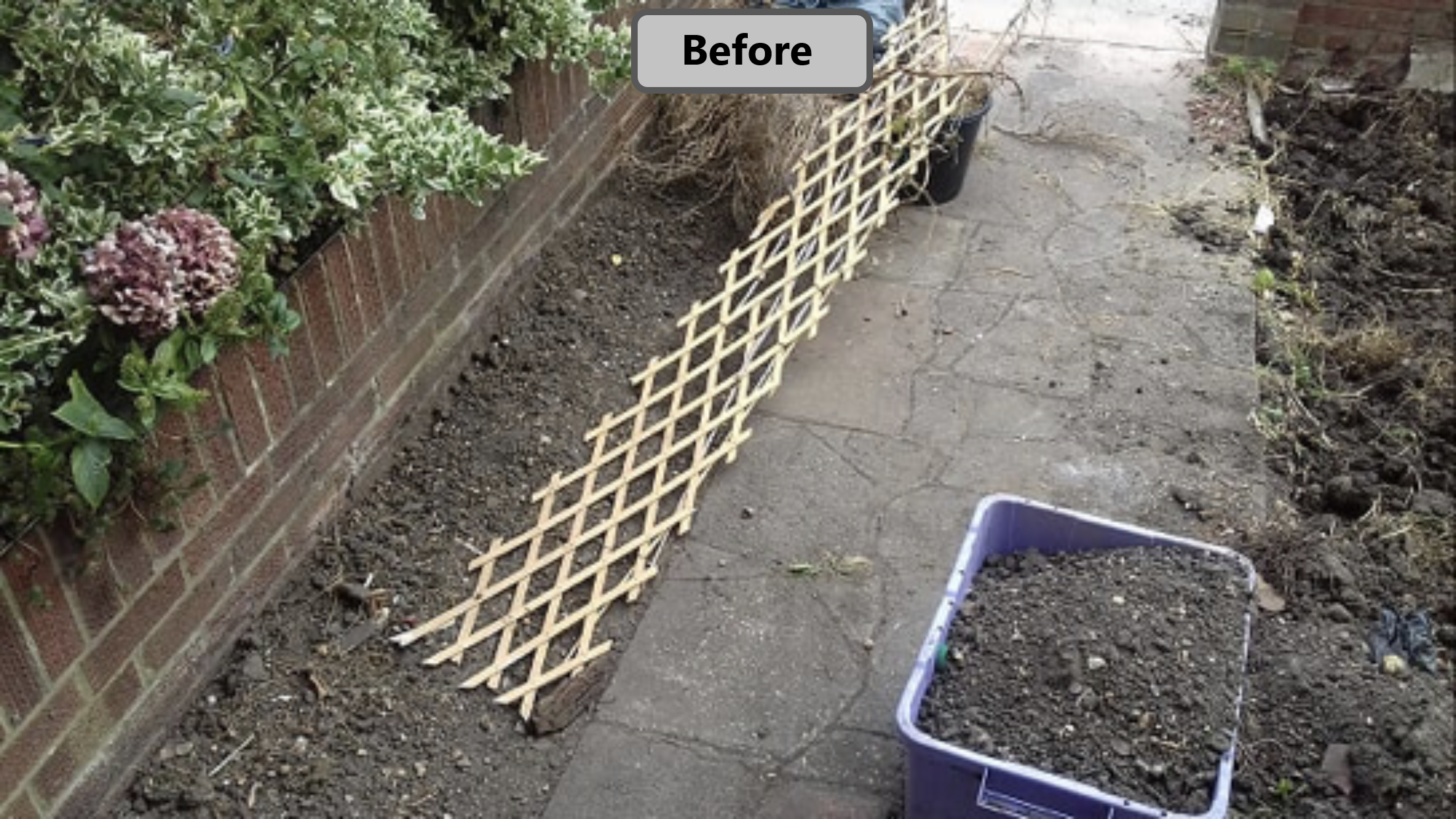
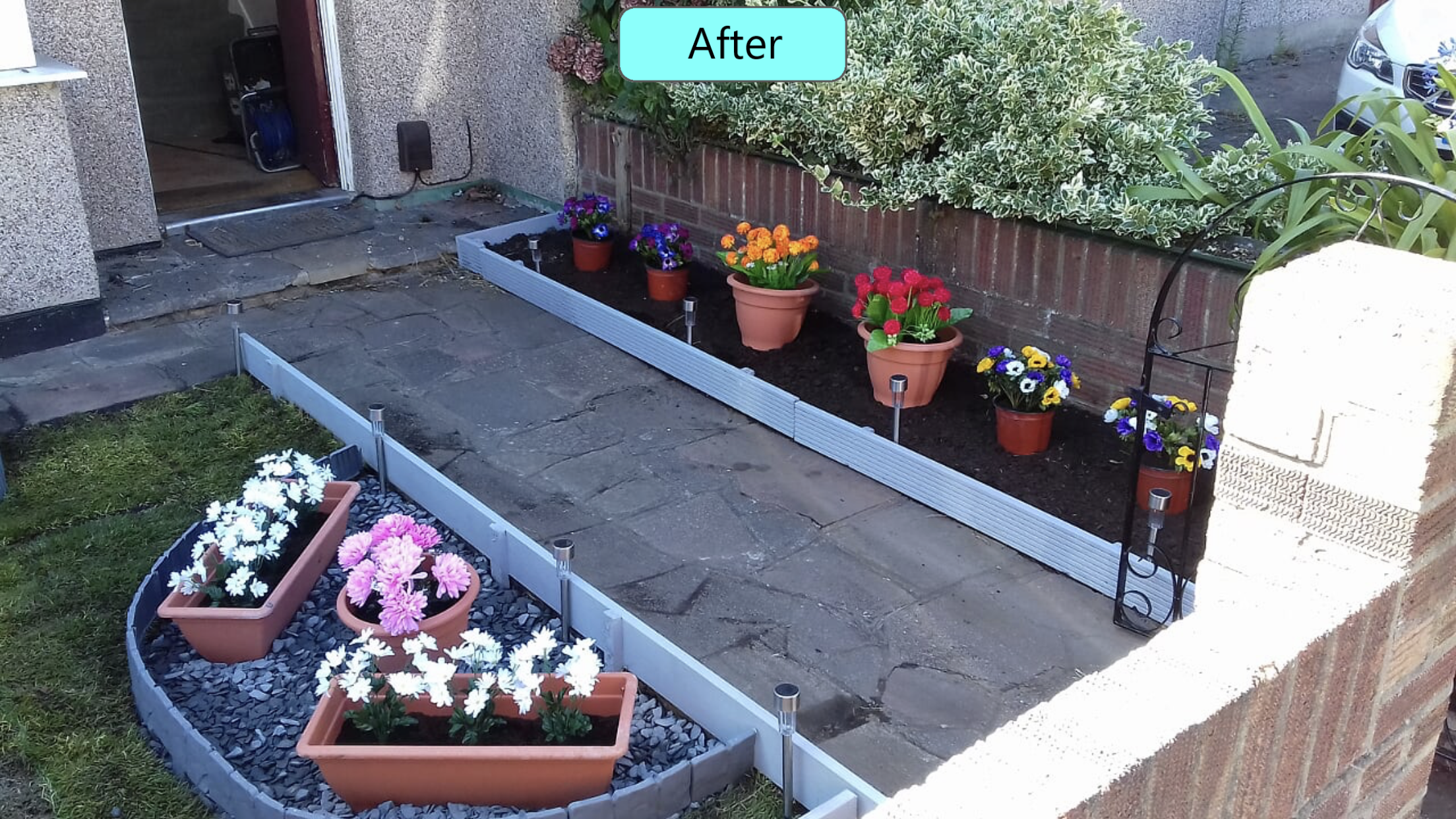
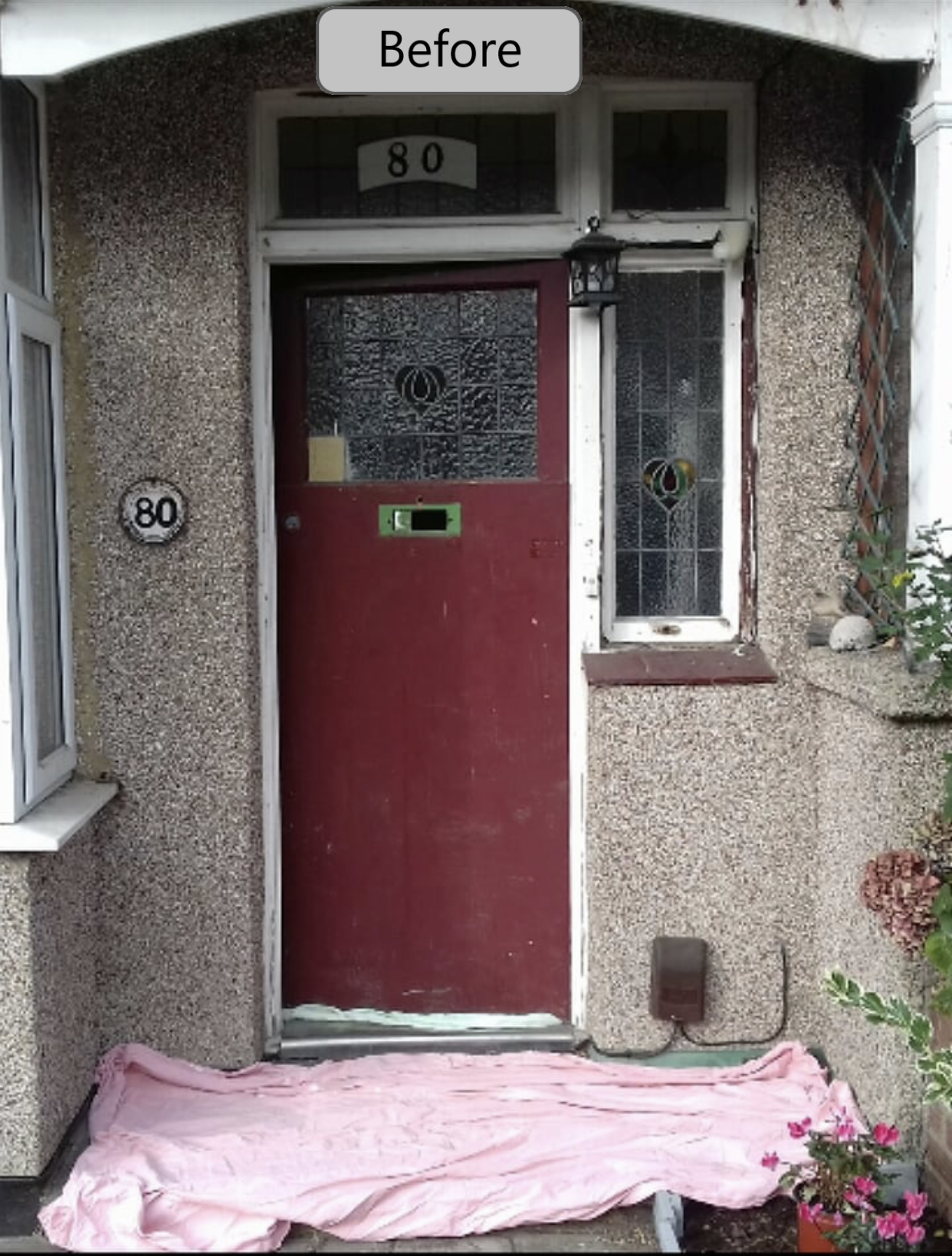
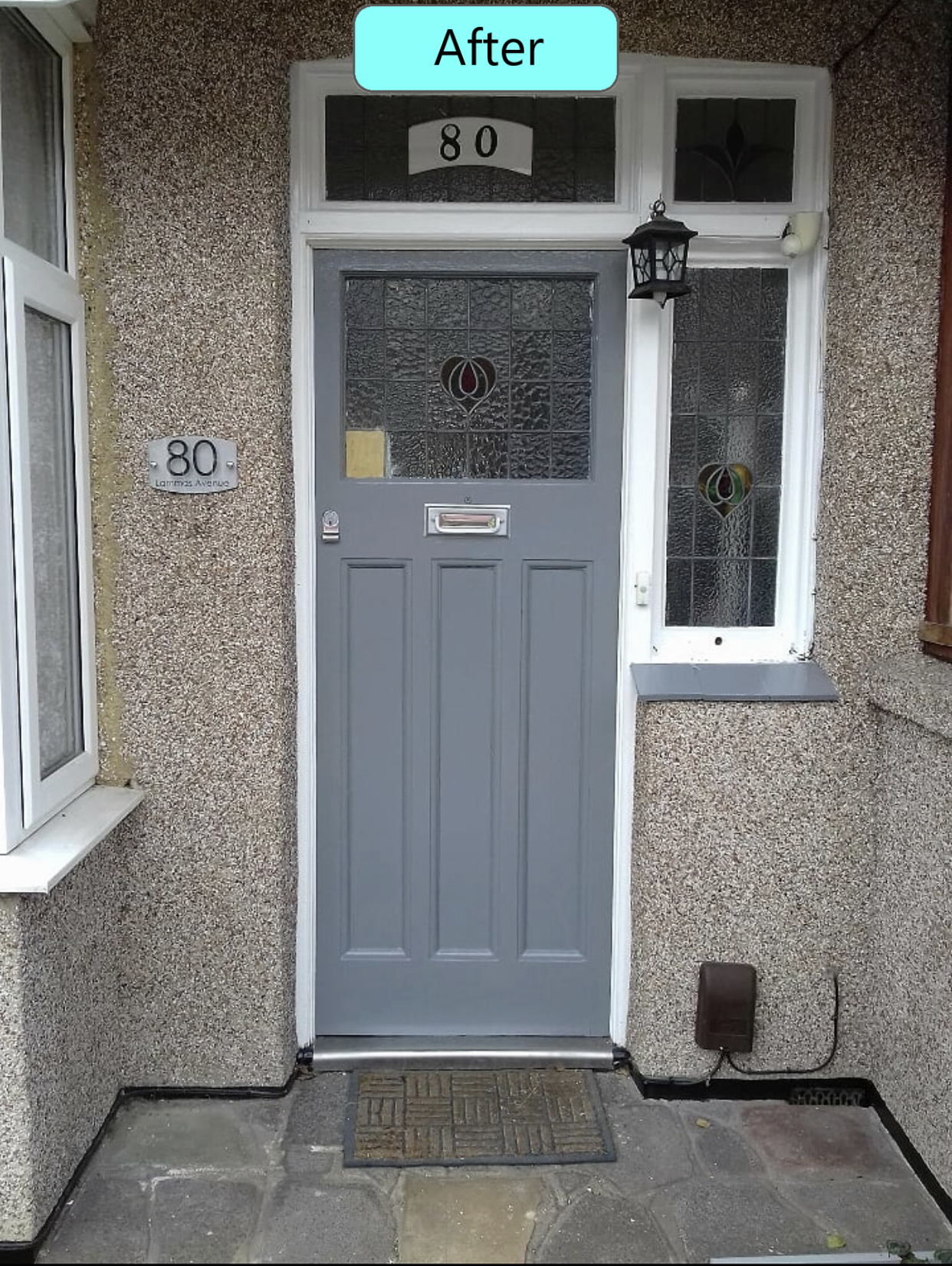

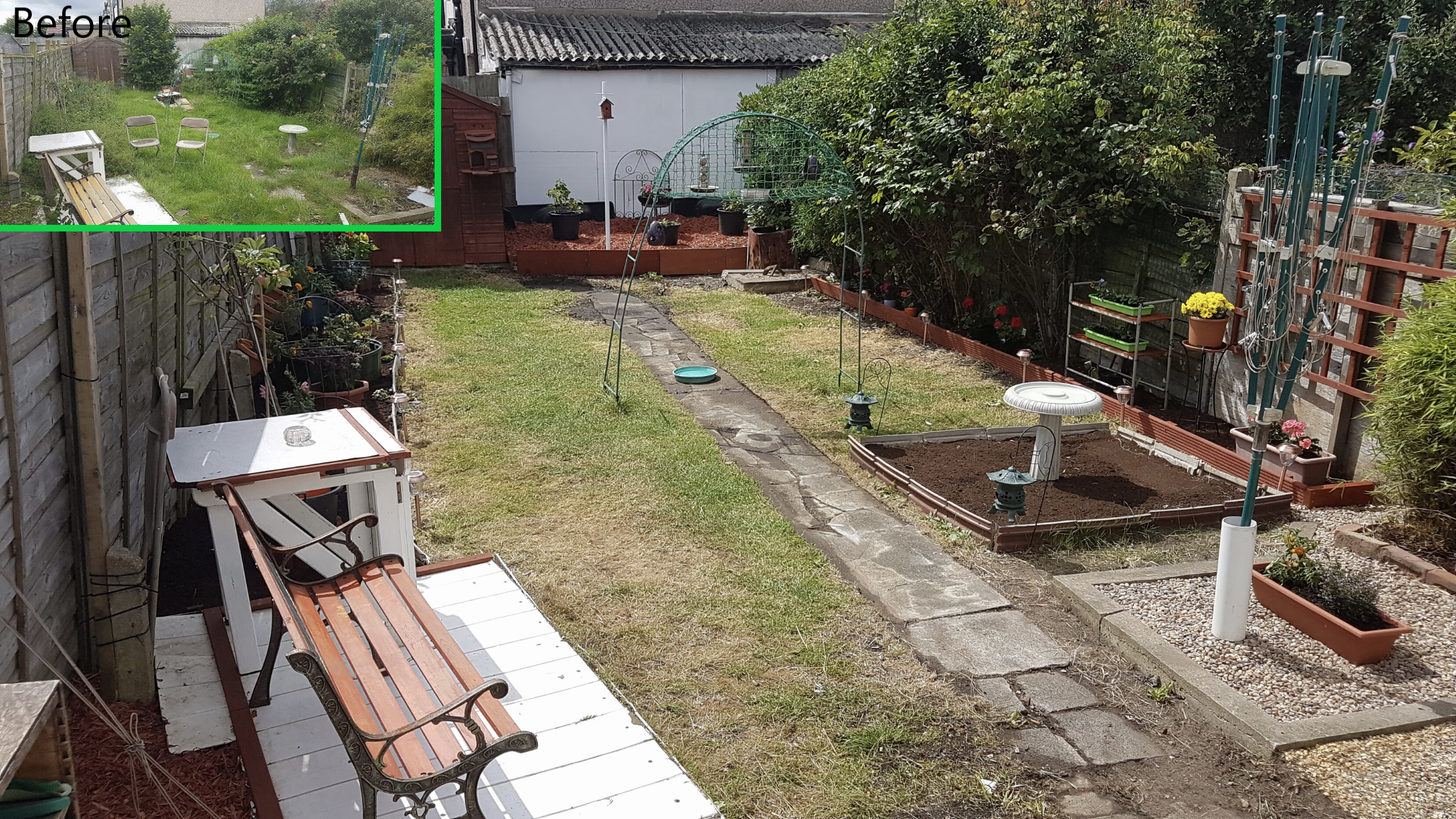
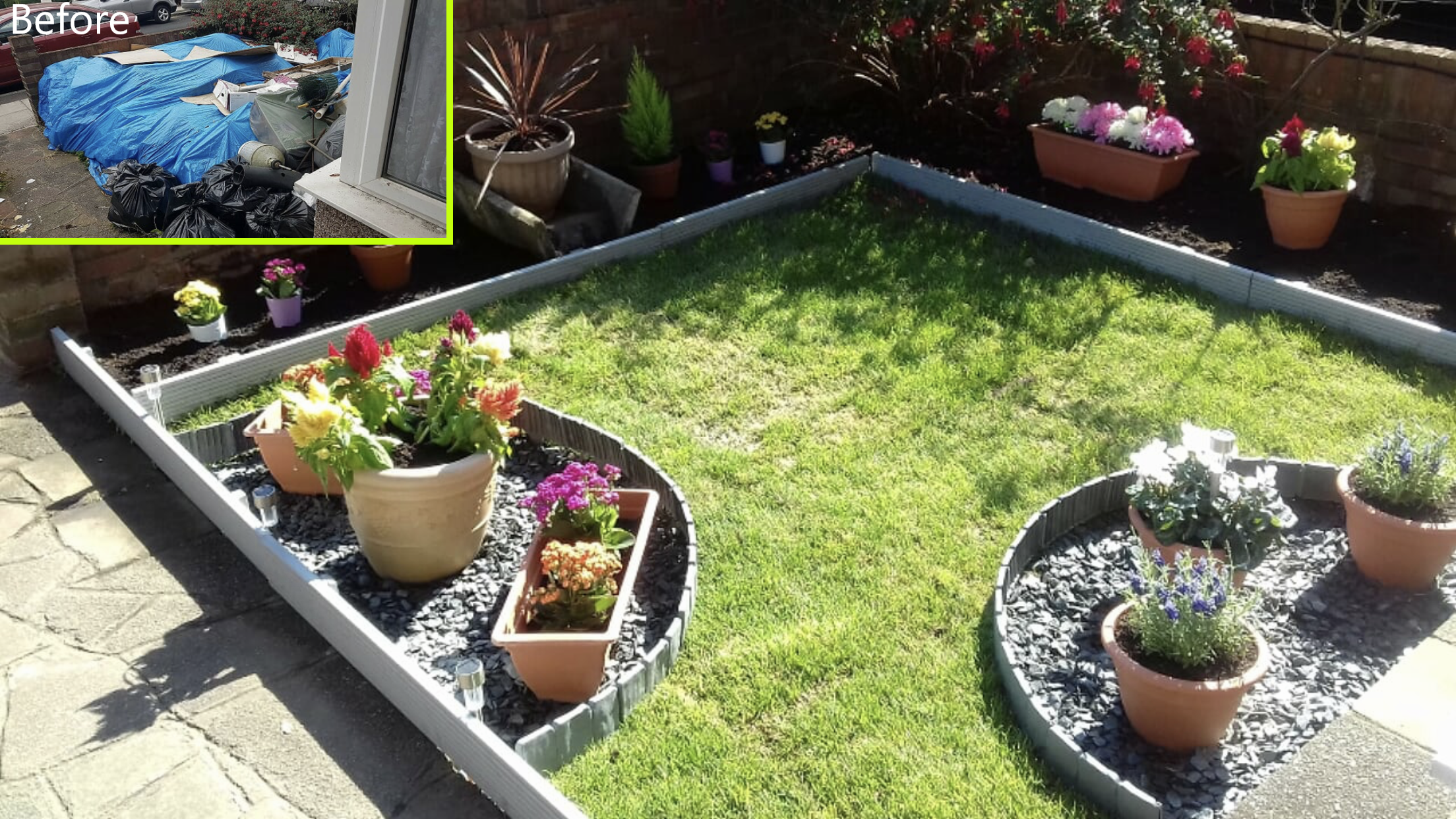
The final jobs were to clear the rubbish which I paid a clearance service to do, tidy the back garden, paint the shed, paint the back of the house for a fresher look, then the front garden, garden path and front door.
Tidying and dressing outdoor spaces for personal enjoyment:
- Establish order before adding style: Begin by clearing clutter, trimming overgrowth, and defining paths and edges. A tidy base makes even simple gardens feel intentional and calming.
- Maintain and refresh exterior finishes: Repaint fences, sheds, and exterior woodwork where needed. If the house exterior requires painting, choosing durable, weather appropriate finishes improves longevity and appearance.
- Use planting to soften and frame spaces: Well placed plant pots, raised planters, or border plants add colour and structure. Group pots in odd numbers and vary heights for a more natural, balanced look.
- Upgrade outdoor lighting: Add lighting to highlight paths, seating areas, and garden features. Subtle lighting extends usability in the evenings and adds a sense of comfort and security. If you decide to use solar panel lights, think about placement and where the sun shines and how long for.
- Treat the front door as a feature: A freshly painted front door, quality hardware, and simple accessories such as a door number or knocker elevate the entire frontage and make the home feel cared for. Like the staircase, the front door had a painted hardboard cover. I removed it to reveal the original recessed patten, and painted the door with a contemporary grey. A new door number plate and freshened up the white door/window frames was the finishing touch to a long yet worthwhile journey.
Tidying and dressing outdoor spaces when selling a house:
- Create instant kerb appeal: Clear weeds, mow lawns, trim hedges, and sweep paths. Buyers form opinions within seconds, and a tidy exterior signals a well maintained home.
- Refresh paint where it matters most: Repaint tired exterior areas if needed, focusing on high-impact zones such as render, window frames, and fences. Neutral, widely appealing colours are safest. The back of the house was already white, but it did need a freshen up. A good quality masonry paint and appropriate brush/roller really made a lot of difference.
- Make the front door inviting: As I mentioned above, a clean, freshly painted front door with simple, modern hardware creates a focal point. This is one of the highest impact, lowest cost improvements you can make.
- Use lighting to enhance safety and warmth: Install or update exterior lighting at the front and rear. Well-lit spaces feel safer, more welcoming, and more usable, particularly during evening viewings.
- Add restrained planting and decor: A small number of well maintained plant pots near the entrance or patio suggests lifestyle without clutter. As with interiors, odd-numbered groupings look deliberate and balanced.
Done properly, the exterior doesn’t shout “for sale”, it quietly implies “well looked after”, which is precisely what buyers want to believe. After clearing the rubbish from the front garden, it needed re-turfing then dressed with new plants and boarders. You can read about how to give a garden a facelift in my Front Garden Makeover Instructable.
Conclusion
.PNG)
Final Tip for Selling:
As mentioned, this decorating project was to sell my parent house, so here is a tip for house sellers that I hope you find helpful. Before I started any work, I got a independent valuation from three estate agents, then got another three valuations after all of the work was completed. I spent around £6000 in total for materials such as carpets, paint, turf, soft furnishings etc. and for rubbish clearance, but I was asked a couple of times...
"Why spend the money and do all of this work if you're going to sell the house? Surely it's a waste of money and effort if you're selling it, especially because the new owners will probably undo all of your work and redecorate it anyway?"
to which I replied...
- "In short, speculate to accumulate.
- A clean, tidy, fresh looking house will have more appeal than a tired and dated looking one.
- Not every potential buyer has the imagination to see past the surface (how it looks now) and see the potential.
- And having a freshly decorated house, even if it is not to a potential buyers taste, mean they can move and live in it without having to worry about redecorating straight away."
Then later, when the house sold I showed the ones who asked the questions the before and after figures, they then saw my reasonings. The house was first valuated at £350-£360.000, I spent about £6000, the house was then re-valued by the same agents at £410-£420.000, the house sold in 8 weeks of finishing the work for £415.000. Well worth the effort.
The following tip for those looking to sell their home... Get more than one valuation. Then after you get the first one, write it down somewhere, a piece of paper, your phone or the original valuation document. The second and/or third agent may ask you "What did the other agent quote you?" Then, it’s generally best to ask the second agent for their valuation BEFORE revealing the first one, so you say "I want to hear yours first, then I will show you". Sharing the first figure upfront can anchor their response, leading them to conveniently match it rather than provide a truly independent assessment. By getting their valuation first, you benefit from:
- a genuine second opinion based on their own market view,
- a clearer sense of whether the agent is being realistic or simply inflating the price to win your instruction,
- stronger leverage when comparing how each agent justifies their figure.
Once the second agent has given their valuation, you can then share the first and discuss any differences intelligently, focusing on evidence and strategy rather than just the number itself.
The End:
Redecorating is as much about preparation and good judgement as it is about paint and tools. By taking the time to plan properly, working in a sensible order, and choosing finishes that suit both the space and the goal of the project, you can achieve results that look considered rather than rushed. Whether the aim is decorating a room for personal enjoyment, or presenting a home at its best for sale, careful attention to detail makes all the difference. Done well, decoration doesn’t simply change how a room or an entire house looks, it changes how it feels.
Thanks for reading, and happy making.