Confessional Chair

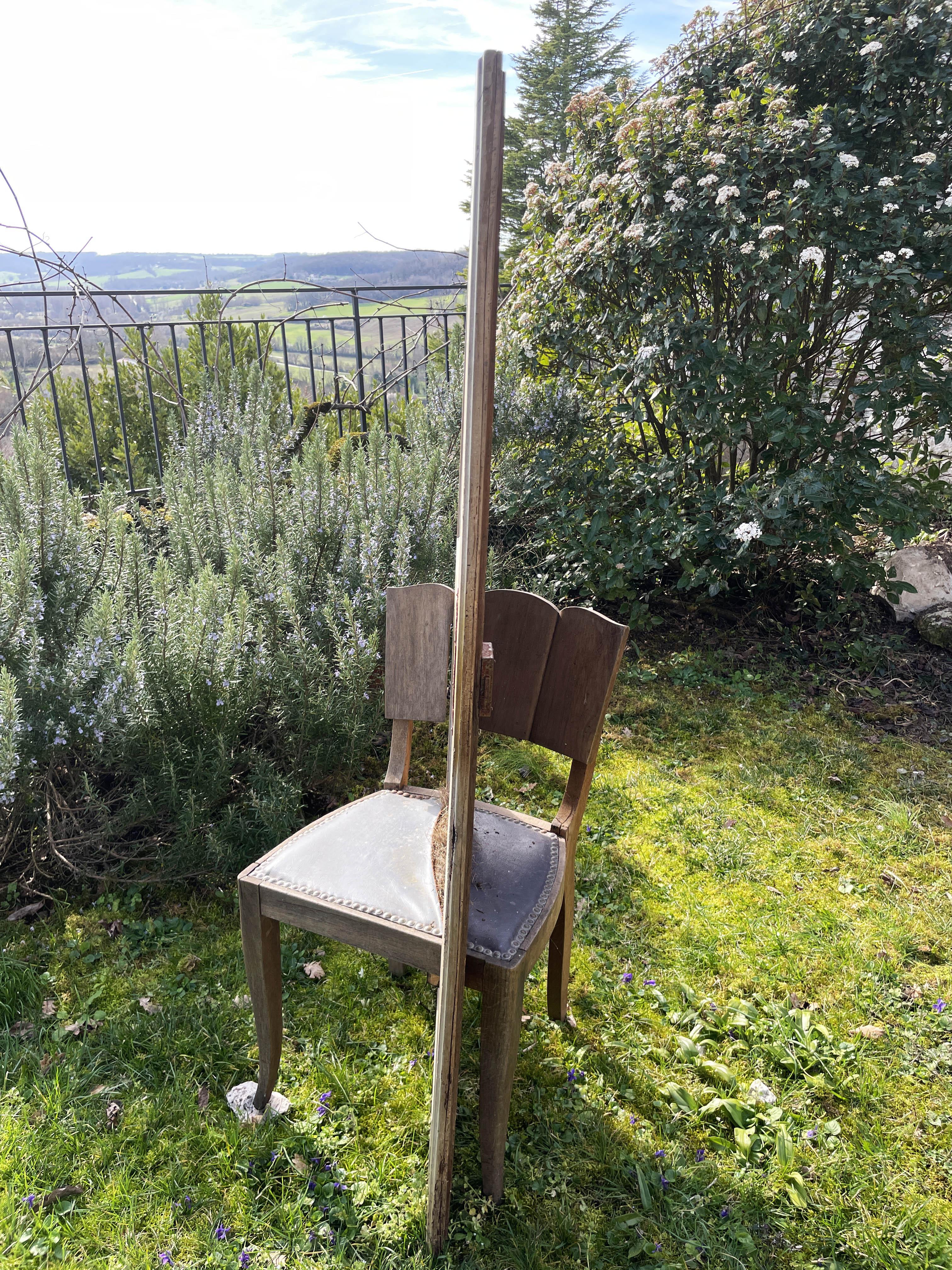
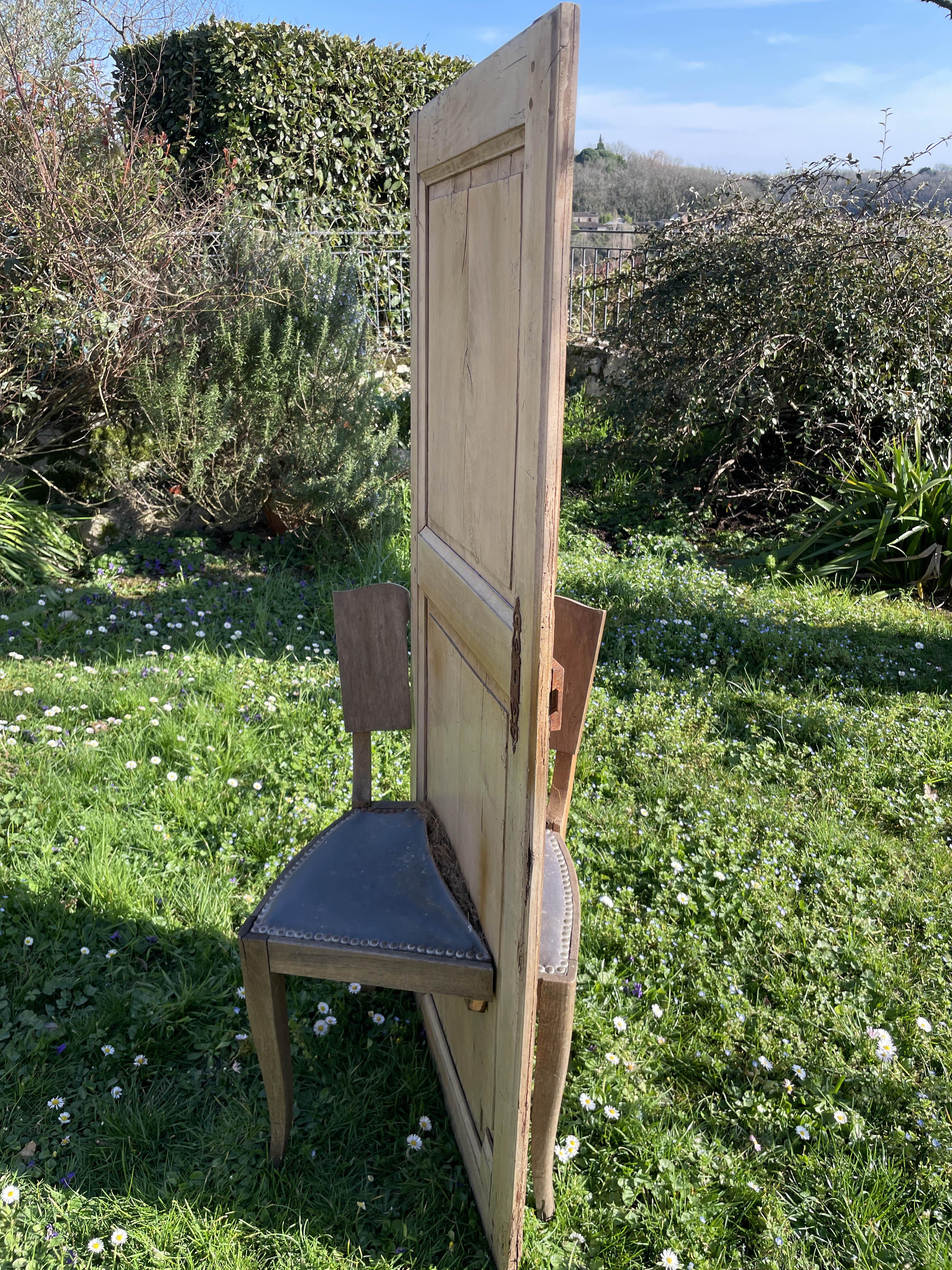
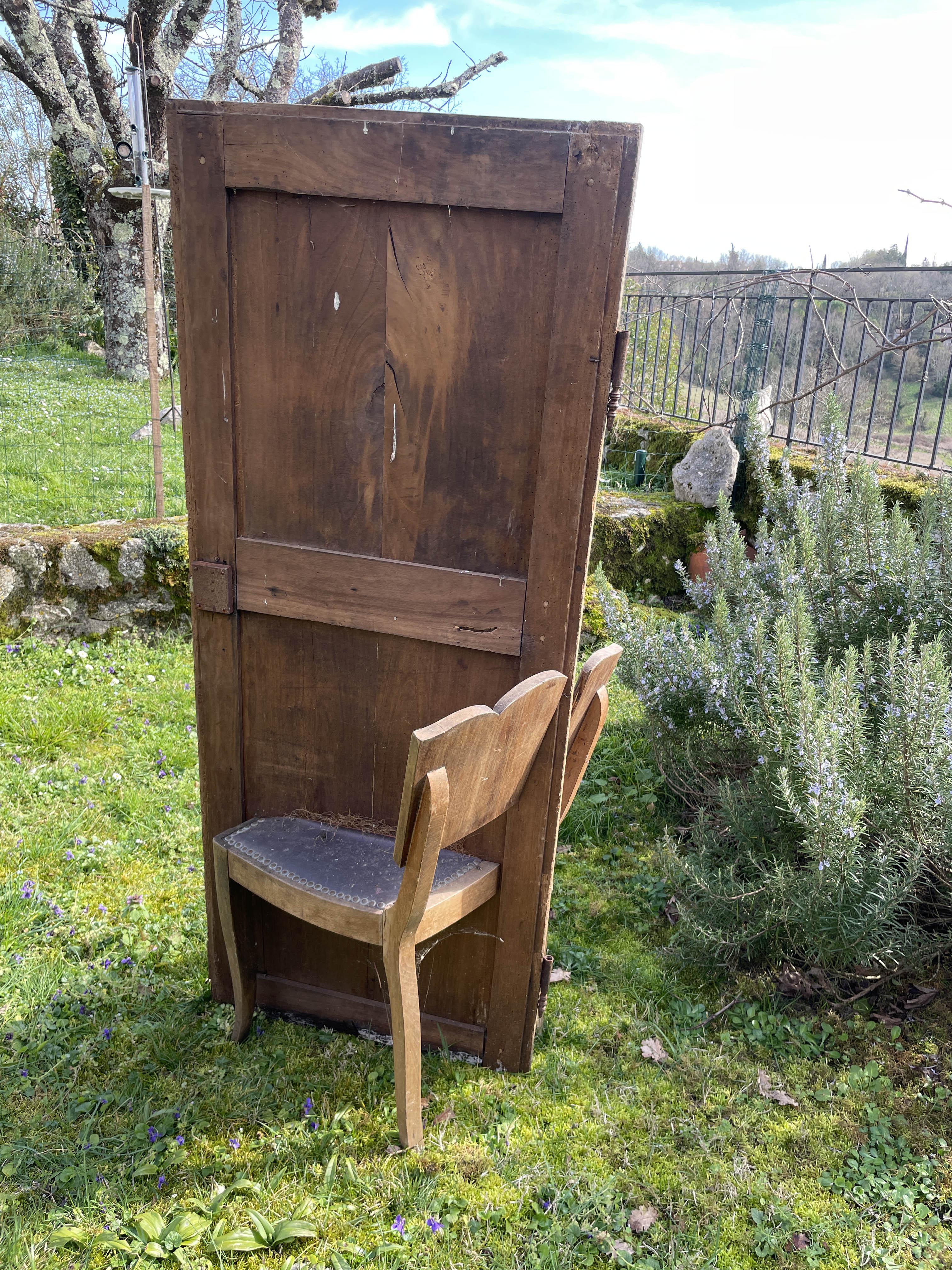
Theme : reimagine a chair – the confessional chair. A project for a sculpture class with Germano Frias at the École d’art André-Malraux in Villeneuve-sur-Lot, France.
The materials were free. I rescued the door of an armoire and the chair from the dump.
Supplies

A door, preferably not too heavy
A wooden chair
Scrap wood and metal brackets for attaching the chair to the door
Cutter and scissors for the leather seat topping and stuffing
Jigsaw (with a blade for metal)
Miter saw (optional) or saw, wood files
Pliers & a flat screwdriver if you need to remove staples or nails
Drill, screws & screwdriver
Wood glue
Planning
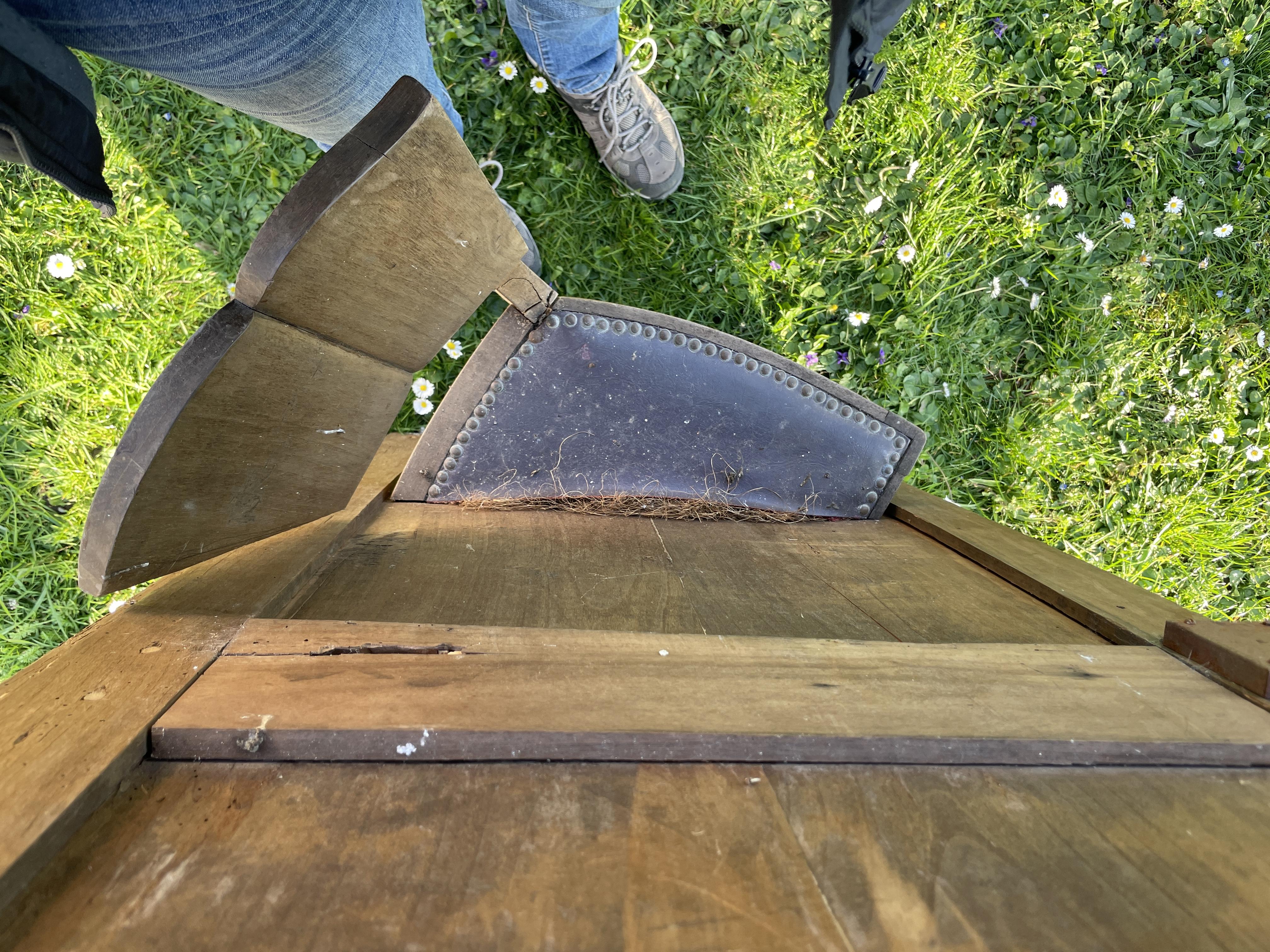
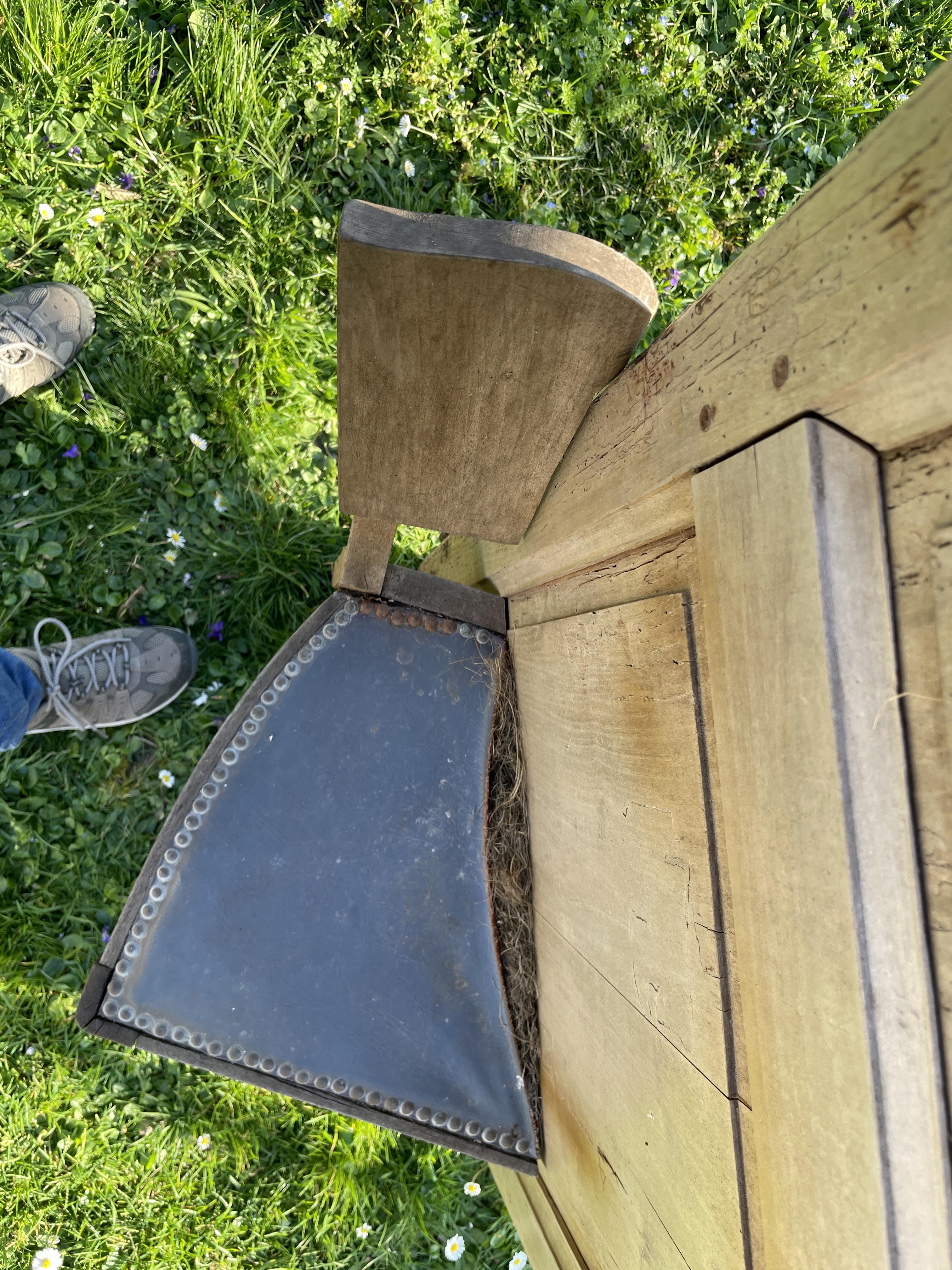
I found the chair with a broken back. I had the door with its moldings. The trick was to cut the chair seat at an angle that would reduce any complex cuts to the minimum. I wanted the seat flush against the center panel of the door and the chair back against the frame of the door… as much as possible.
Preparing the Seat


This was an old spring cushion chair. I needed to remove the springs before I could cut the seat in two. After prying out the nails and cutting away straps the springs came out. What was left was burlap, coarse fiber, and leather… and maybe some metal hidden in the wood. I used a cutter for leather and then used scissors and the cutter to get through the stuffing and burlap. I used a jigsaw with a blade for metal to cut through the wood.
Cutting the Back of the Chair

Aie. This was more complicated than I expected it to be. The cut through the back of the seat is not vertical because it is both inclined backwards and cut on a diagonal where it meets the door. It’s tricky getting this just right. Also there is wasted wood when the cut needs to go around an angle. I used what I cut off the left side and added that to the right side, but it wasn’t enough. For the back of the seat to truly fit snug against the door a shim would be needed.
Attaching the Seat to the Door
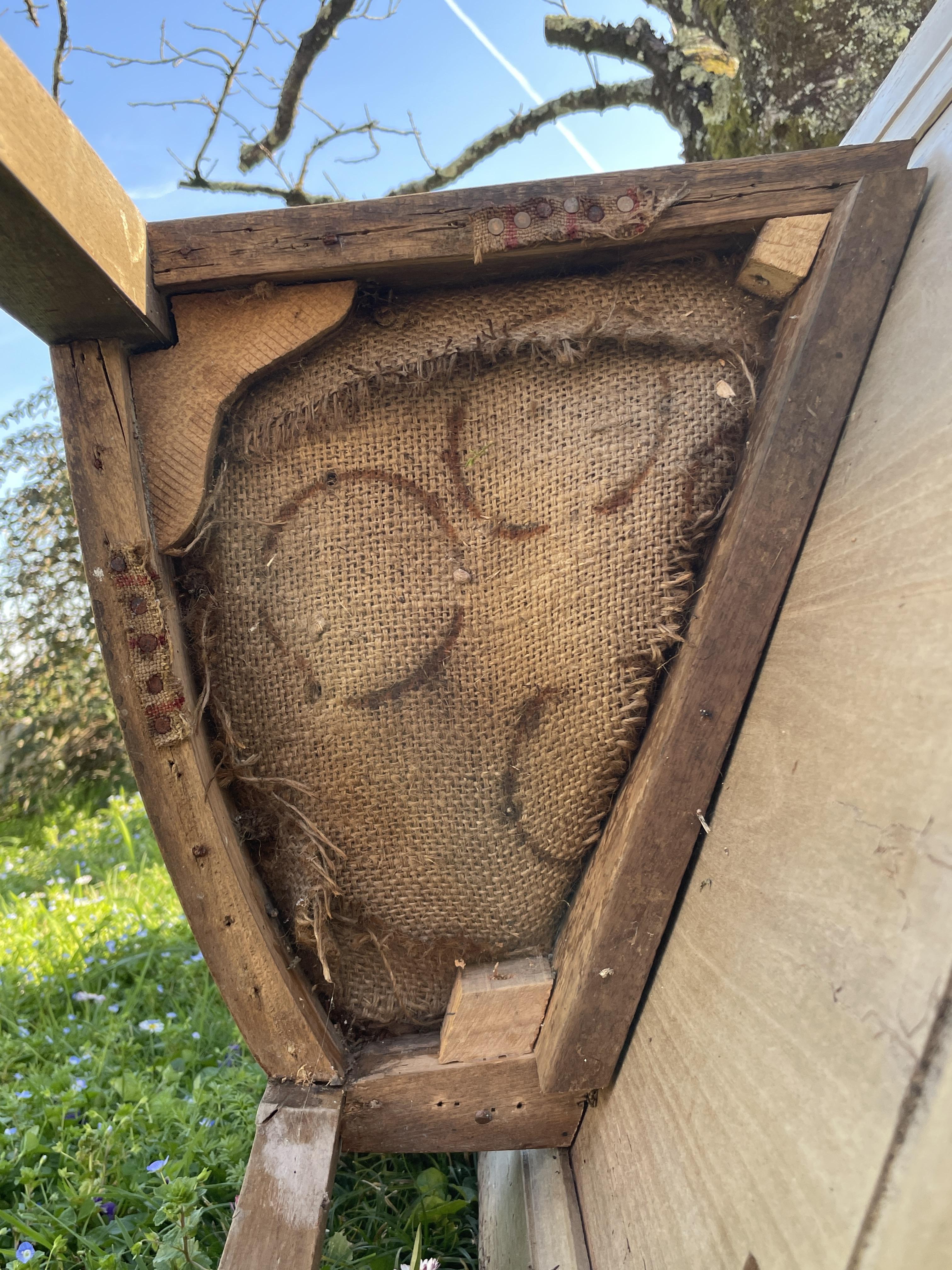
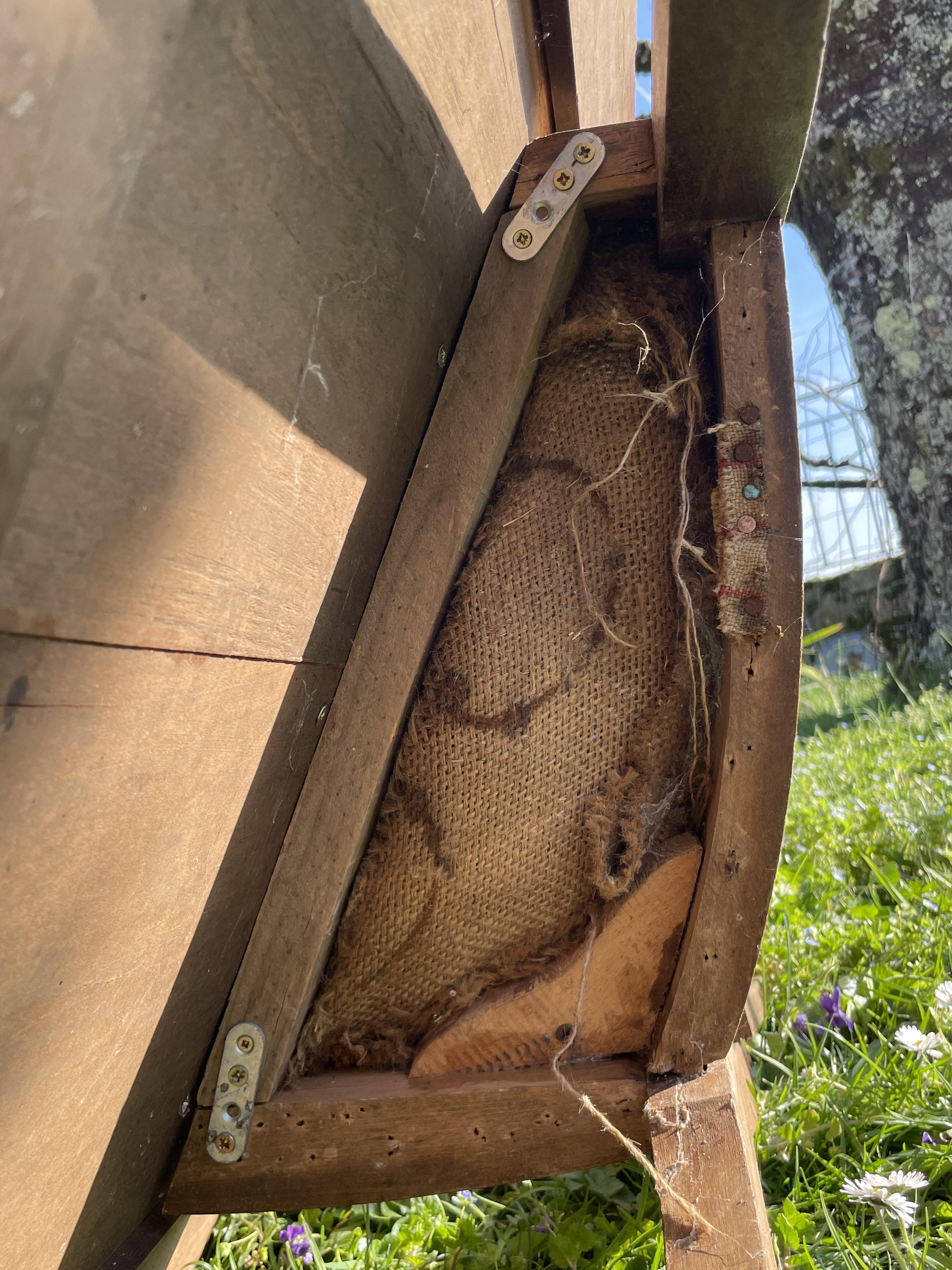
I used my miter saw to cut a 1”x4” board to fit snug inside one side of the chair, and a 1”x2” board for the other side, such that they would both be flush against the door. The 1x2 fit neatly inside the chair frame, level with the bottom of the frame.
The side with the 1X4 also had two blocks of wood cut to fit the corners, snug against both the seat and the 1X4. These were glued and screwed into place on the chair. Then the 1x4 was screwed into the blocks and onto the chair. Placing the chair at the appropriate height on the door, the 1x4 was screwed into the door, placing the screws about 1” up from the bottom of the board. That frees up the space above where the second board will be screwed in.
The 1x2 board was screwed into place on the door with screws long enough to securely hold onto the 1x4 on the other side. The chair was positioned on top of the board, flush against the door and fixed to the board with metal brackets. And that was all there was to it.
Conclusion and Advice

I wish I had installed the seat just a bit lower on the door, so that the weight of the door in the middle pulled the two sides of the chair back snug against the door. That also would have helped keep the back tight against the door on uneven ground. I considered drilling holes in the door at the appropriate height for someone to whisper through… but my spider chair had me occupied.