Steampunk Nautilus: a Haptic Speaker Born From a Living Fossil
by hide-key in Circuits > Audio
3239 Views, 40 Favorites, 0 Comments
Steampunk Nautilus: a Haptic Speaker Born From a Living Fossil
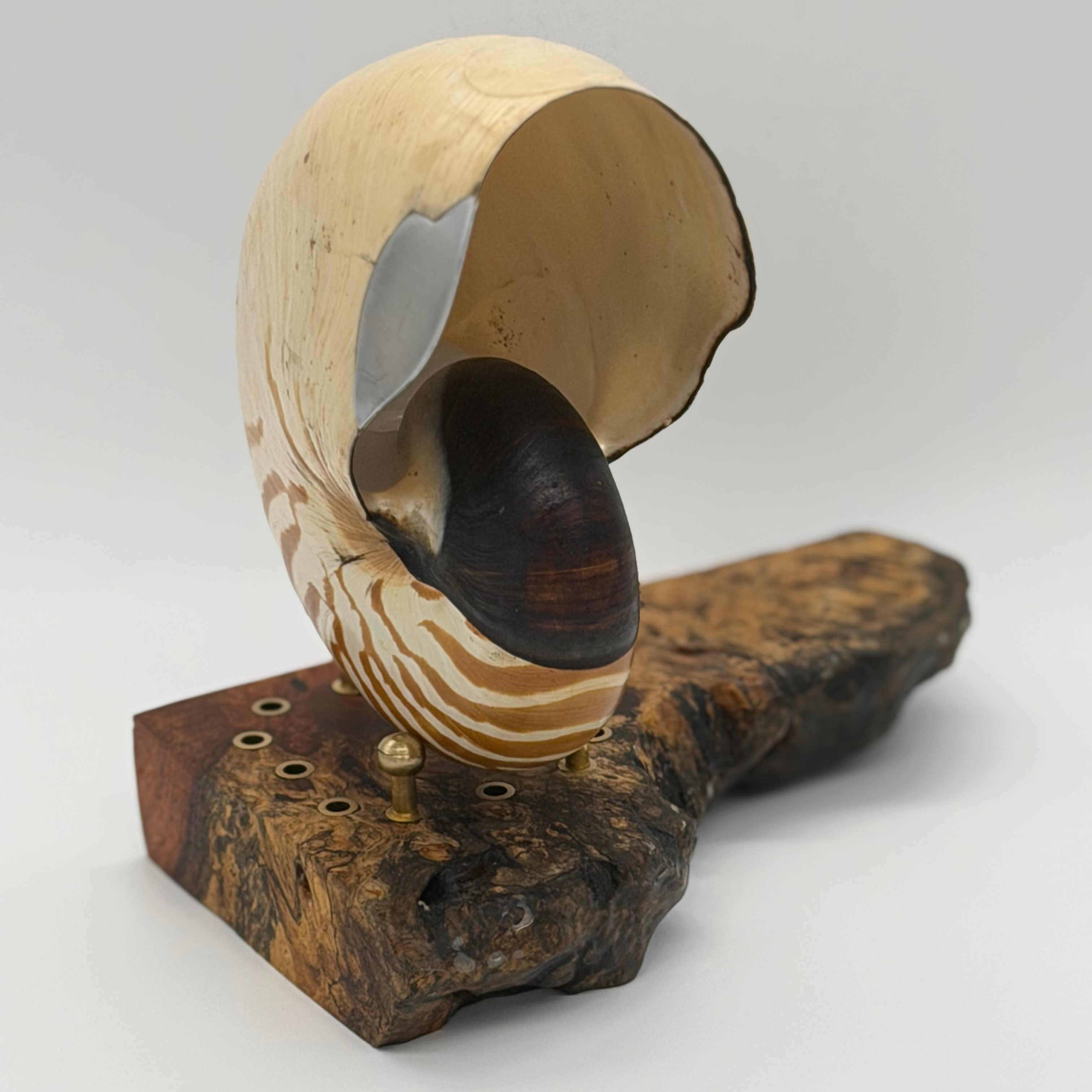
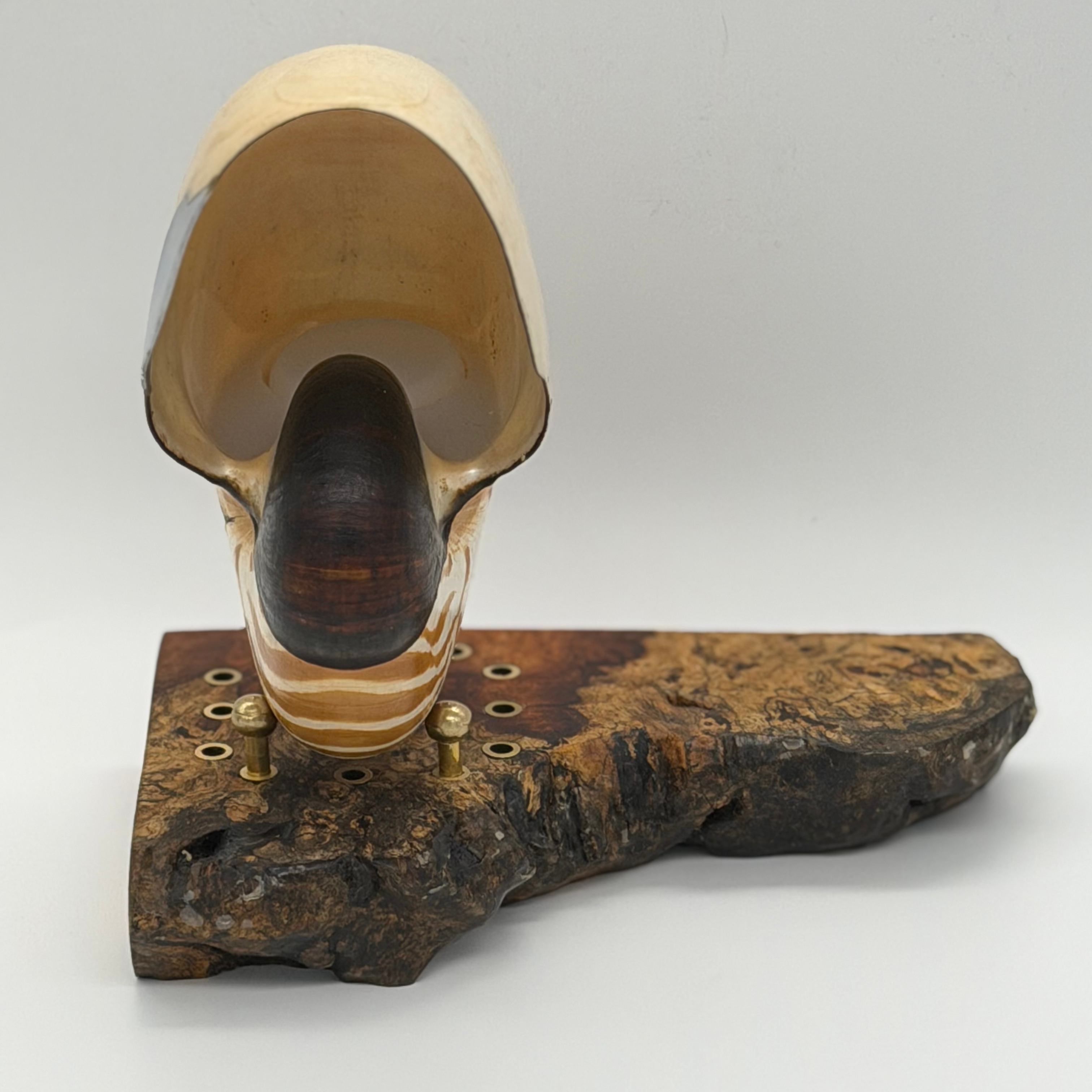
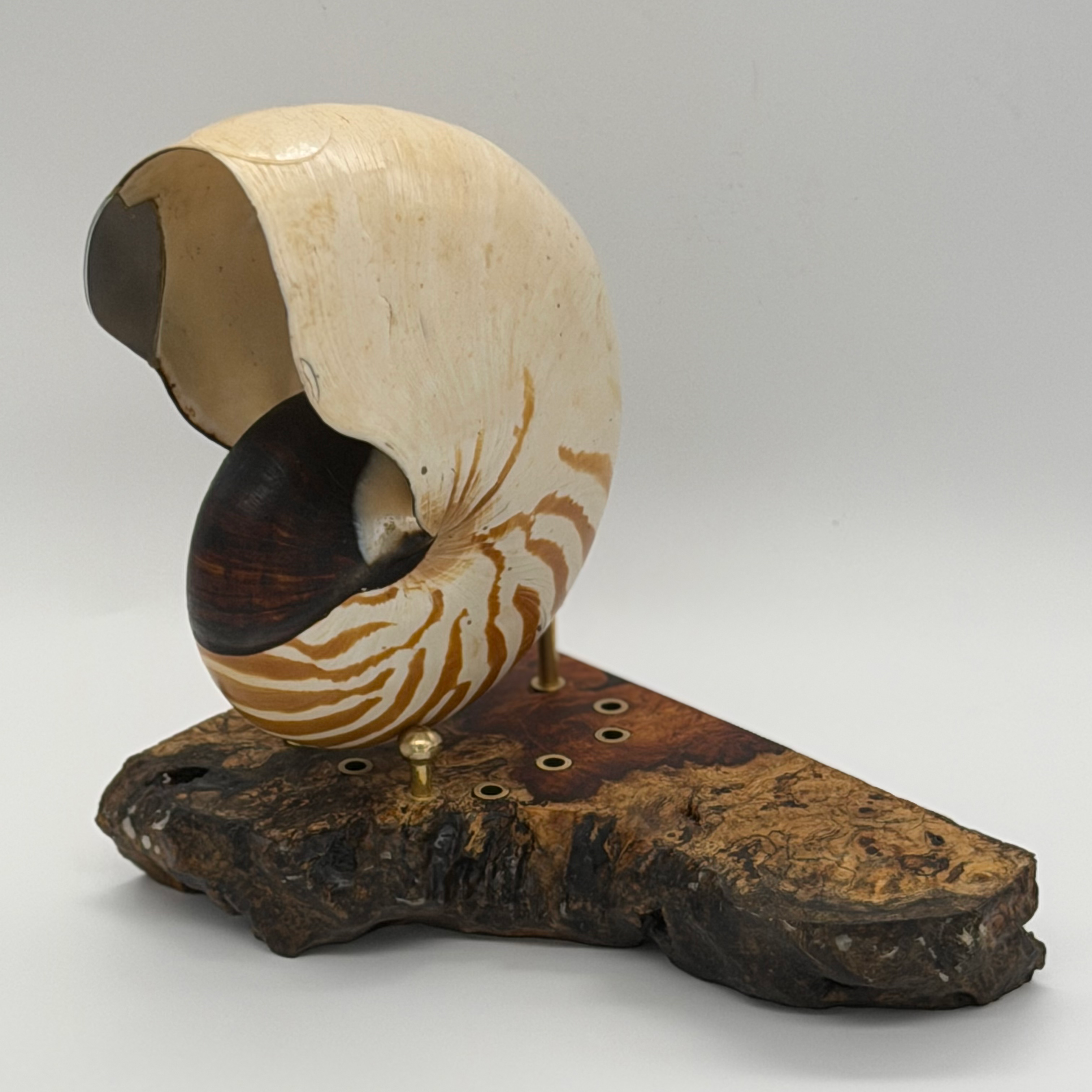
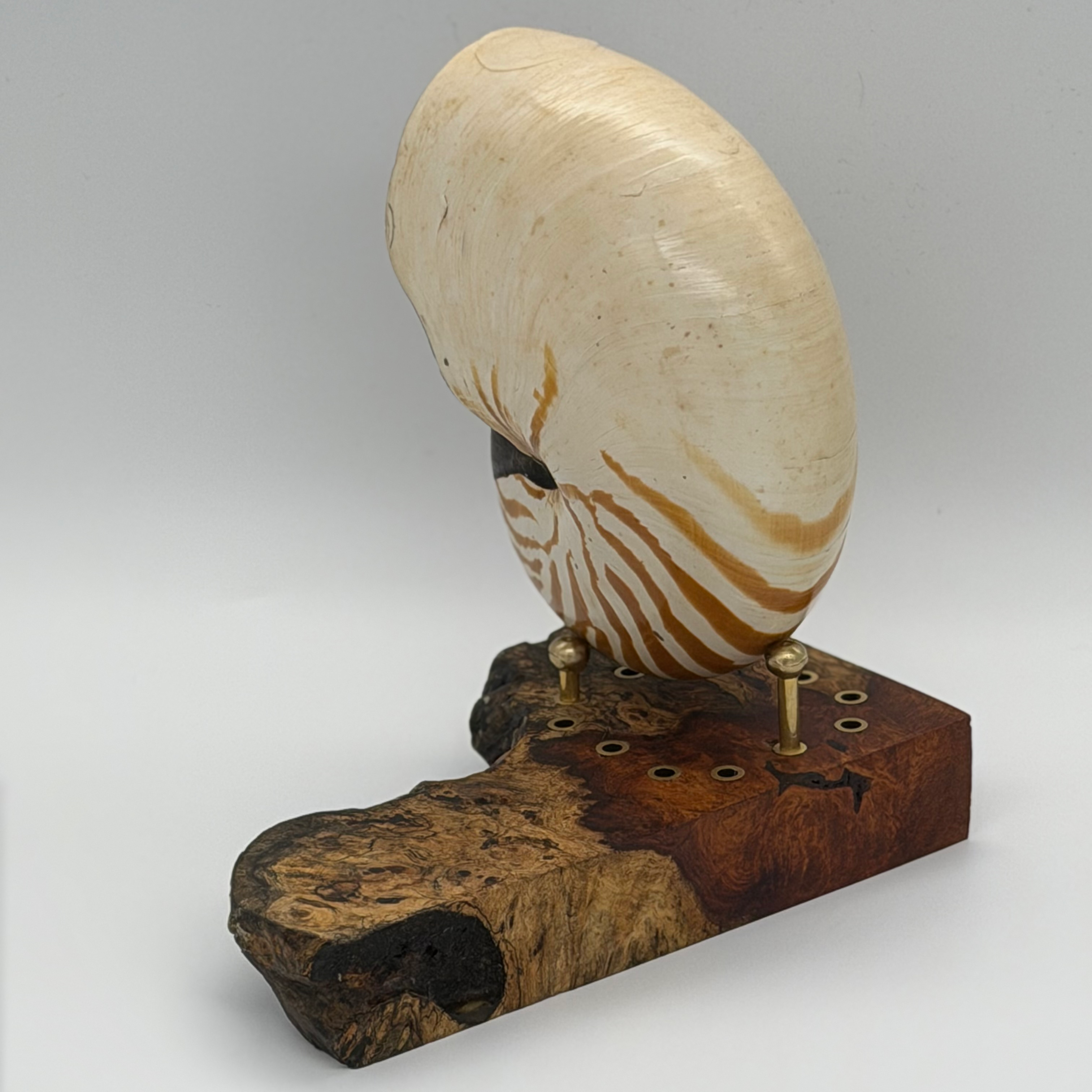
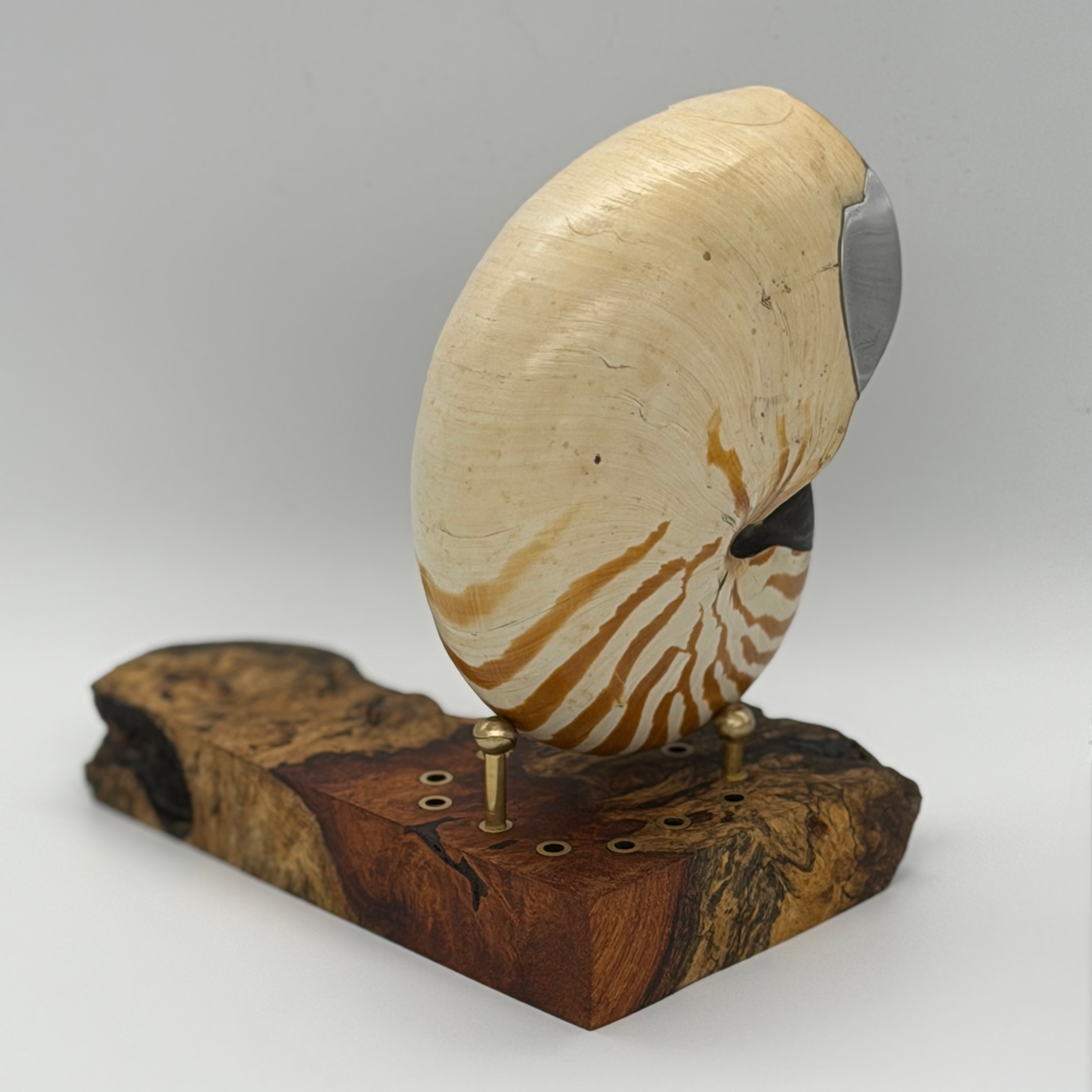
)
Have you ever heard of the legendary Japanese gadget called the Sazae Radio? It’s a radio built into a Turban shell, originally released back in 2016. I wanted one desperately, but it was sold via lottery with only 100 units available for 8,350 applicants. The odds were 83.5 to 1. Mathematically, I never stood a chance. But remembering the moment the gods of the lottery closed the door, the spirit of DIY opened a window. I told myself: "If I can't buy it, I'll build something even better."
I chose a Nautilus shell—a living fossil unchanged for 500 million years.
The "Nautilus" Connection: Another reason I fell in love with this shell was its name. In Japanese, it's called "Oumu-gai" (Parrot Shell), but when I looked up the English name, I was shocked. "Nautilus"? Yes, exactly like the legendary submarine from Jules Verne's 20,000 Leagues Under the Sea! That Sci-Fi connection instantly hooked me. I had to build a machine worthy of that name.
My goal was not just to make a speaker, but to create a piece of art with a specific philosophy:
- Steampunk Kintsugi: Repairing a broken shell with metal (Aluminum) to celebrate its imperfections.
- Conservation Minded (Reversible): Using NO permanent glues on the shell. Everything must be removable so it can be returned to a natural specimen state, respecting CITES regulations.
- Haptic Drive: Instead of just placing a speaker inside, I used an Exciter to physically drive the shell itself. This turns the ancient fossil into a vibrating diaphragm that you can feel in your hands.
Here is the journey of how I turned a living fossil into a pulsating sound machine.
WARNING: Why Nautilus? (The Silence of the Snail)
Before you build, read this. Do not assume that "any big, cool-looking shell will play sound."
I initially tried a massive Sea Snail (Chicoreus ramosus) shell. It looked wild and awesome. I attached the exciter, expecting a roar. The result? Dead Silence. The shell was too heavy and thick to vibrate at all.
Comparison Experiment: I then tried putting a regular small speaker inside the Sea Snail to compare it with the Nautilus (Exciter version). While both had a "Lo-Fi" vibe, the Nautilus (where the shell is driven by vibration) sounded significantly richer, with a smooth, mellow tone. The difference between a point-source (speaker) and a surface-source (shell vibration) was obvious.
The Scientific Reason:
- Sea Snail (Chicoreus ramosus) = "Tank of the Sea": They crawl on the seabed. To protect against predators, their shells are thick, heavy, and stone-hard. A small exciter cannot drive this high-mass object. It's like trying to make a brick sing.
- Nautilus (Cephalopod) = "Submarine of the Deep": They swim. For buoyancy, their shells are incredibly thin and lightweight. Plus, the internal walls (septa) act as structural ribs. This "Thin & Light" structure has acoustic properties similar to a violin body or speaker cone. That is why it responds to the drive.
Lesson: If you mimic this project, avoid "heavy shells." Thin and light is the key to good sound.
Update (2026/01/07):
I've published a detailed log regarding the acoustic discovery in this project. Please check out the observation records on Hackaday.io!
Supplies
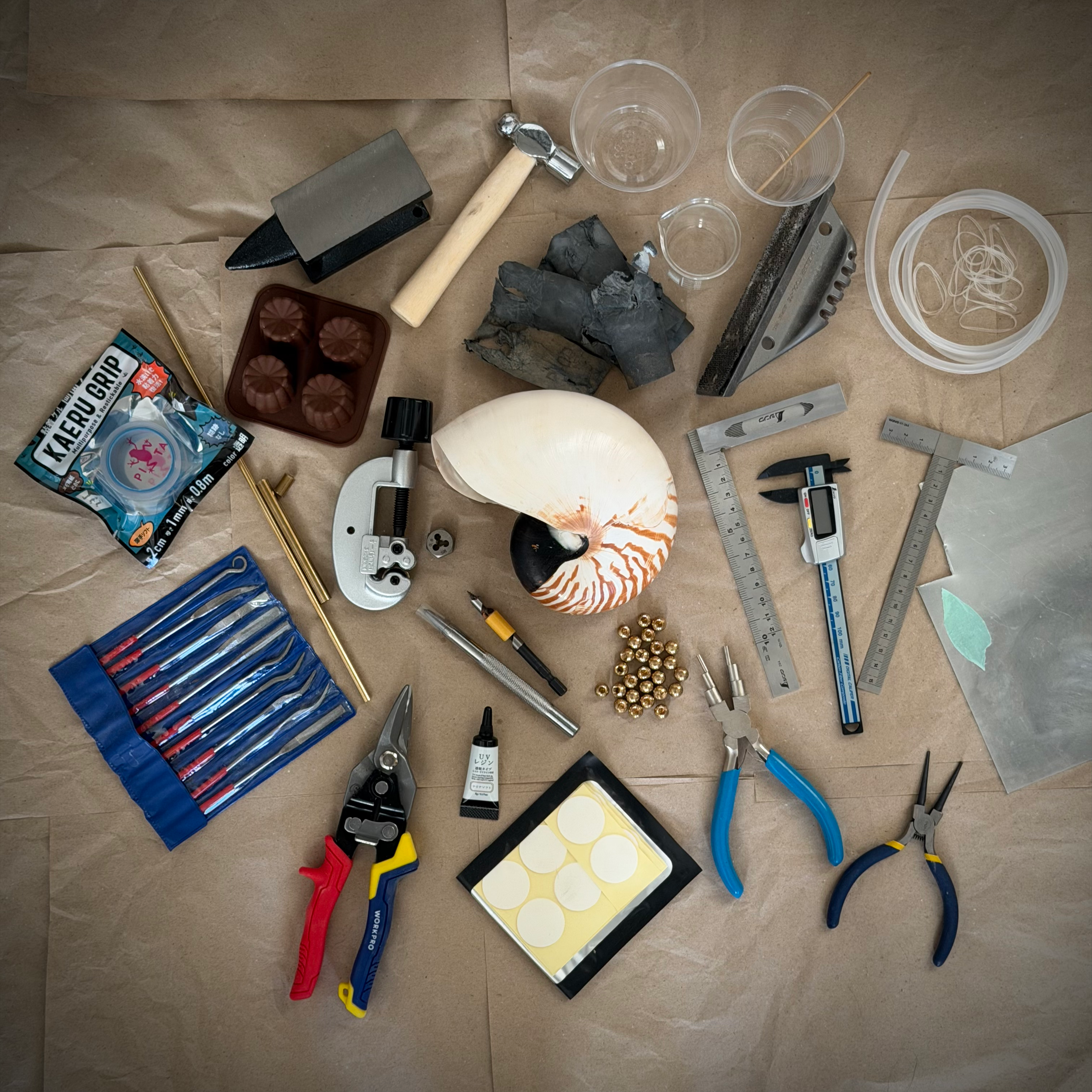
Main Components:
- Nautilus Shell: A natural specimen (approx. 10-15cm). Handle with care!
- Aluminum Sheet: 1.2mm thickness (for the "Kintsugi" repair).
- Vibration Speaker (Exciter): 40mm 4Ω 5W or similar Bluetooth exciter.
- Wood for Base: Karin (Quince) burl or any hard wood with beautiful grain.
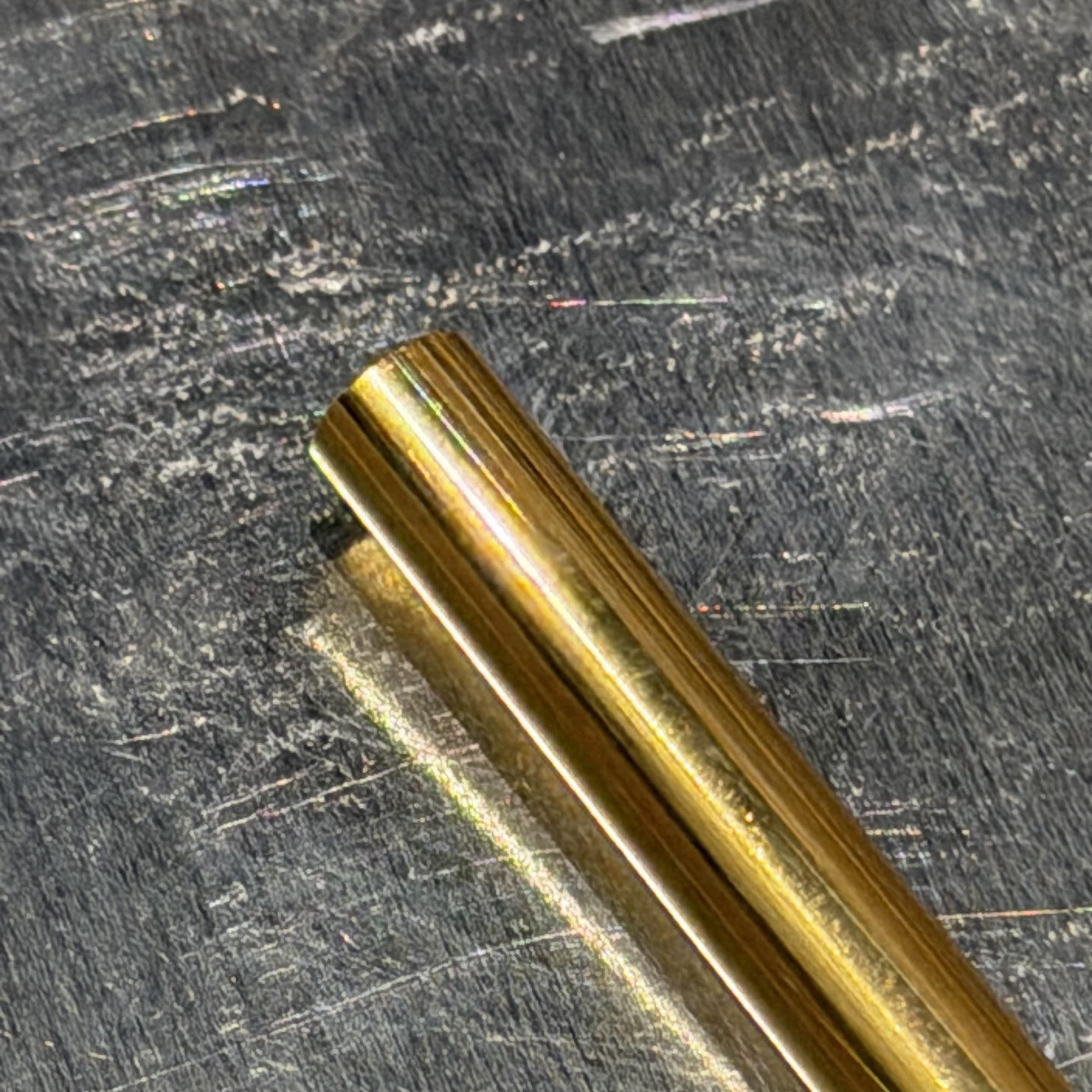
- Brass Round Tube: 8mm O.D. x 1.5mm Wall Thickness. (Note: I bought a 300mm pipe and cut it to 15mm.)
- Brass Rod: (Threaded manually using a die) For mounting the shell to the base.
Adhesives & Chemicals:
- Super Glue (Cyanoacrylate): For tacking the aluminum plate.
- Epoxy Putty: Brass-colored (to fill gaps).
- Gel Tape: Non-destructive adhesive for the "Samurai Mode".
- Beeswax: For finishing the wooden base.
- Acetone: Essential for removing glue (Reversibility).
Tools:
- Metal file & Sandpaper (up to #2000 grit for mirror finish)
- Dremel or Rotary Tool
- Masking Tape
- Drill & Bits
- Pipe Cutter or Metal Saw (for the brass tube)
- Die & Die Stock: To cut threads on the brass rod.
- Glass Beaker (approx. 40mm ID): Used as a mold for the cap.
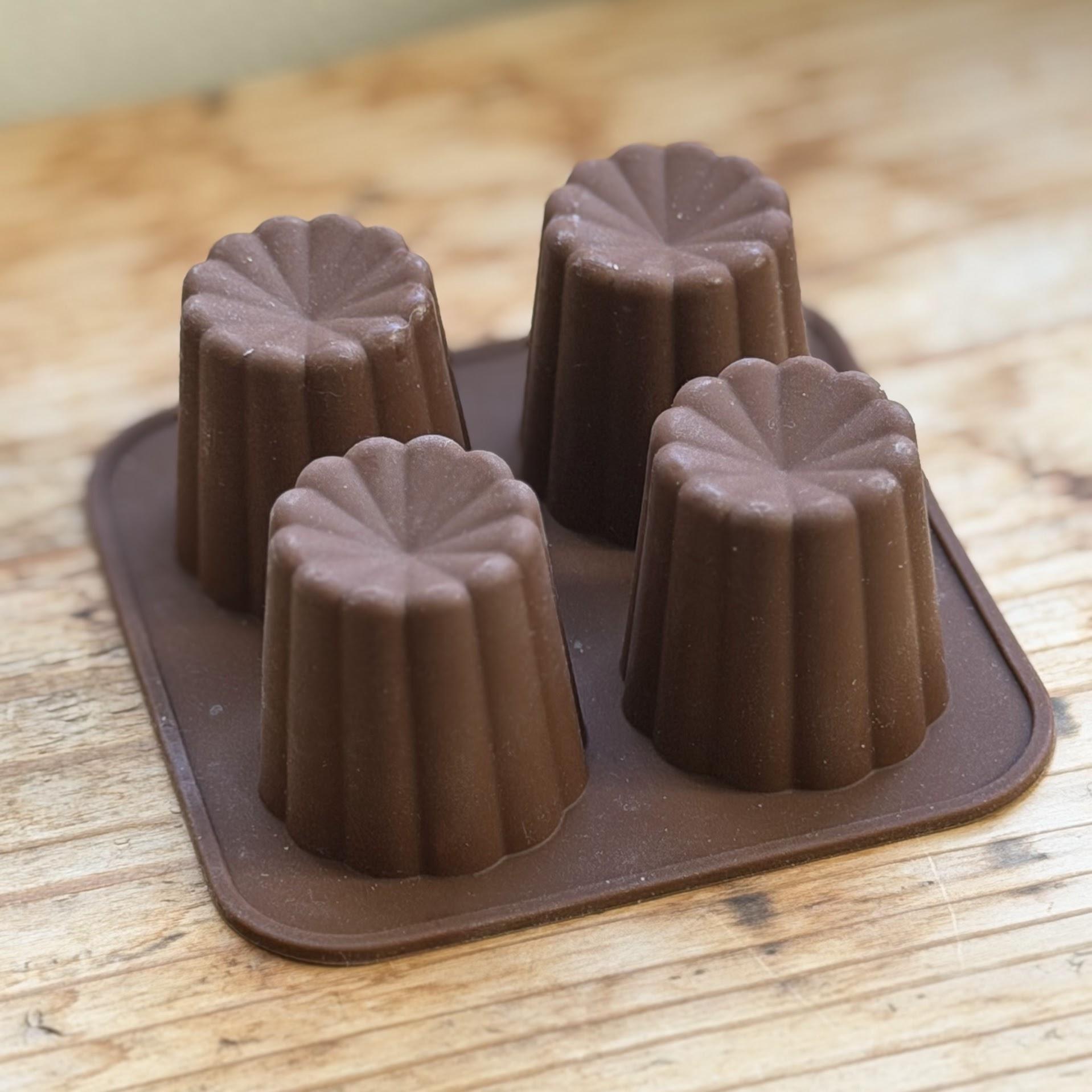
- Canelé Mold: (Yes, the pastry mold. It was a serious prototyping tool!)
Hacking the Shell (Steampunk Kintsugi)
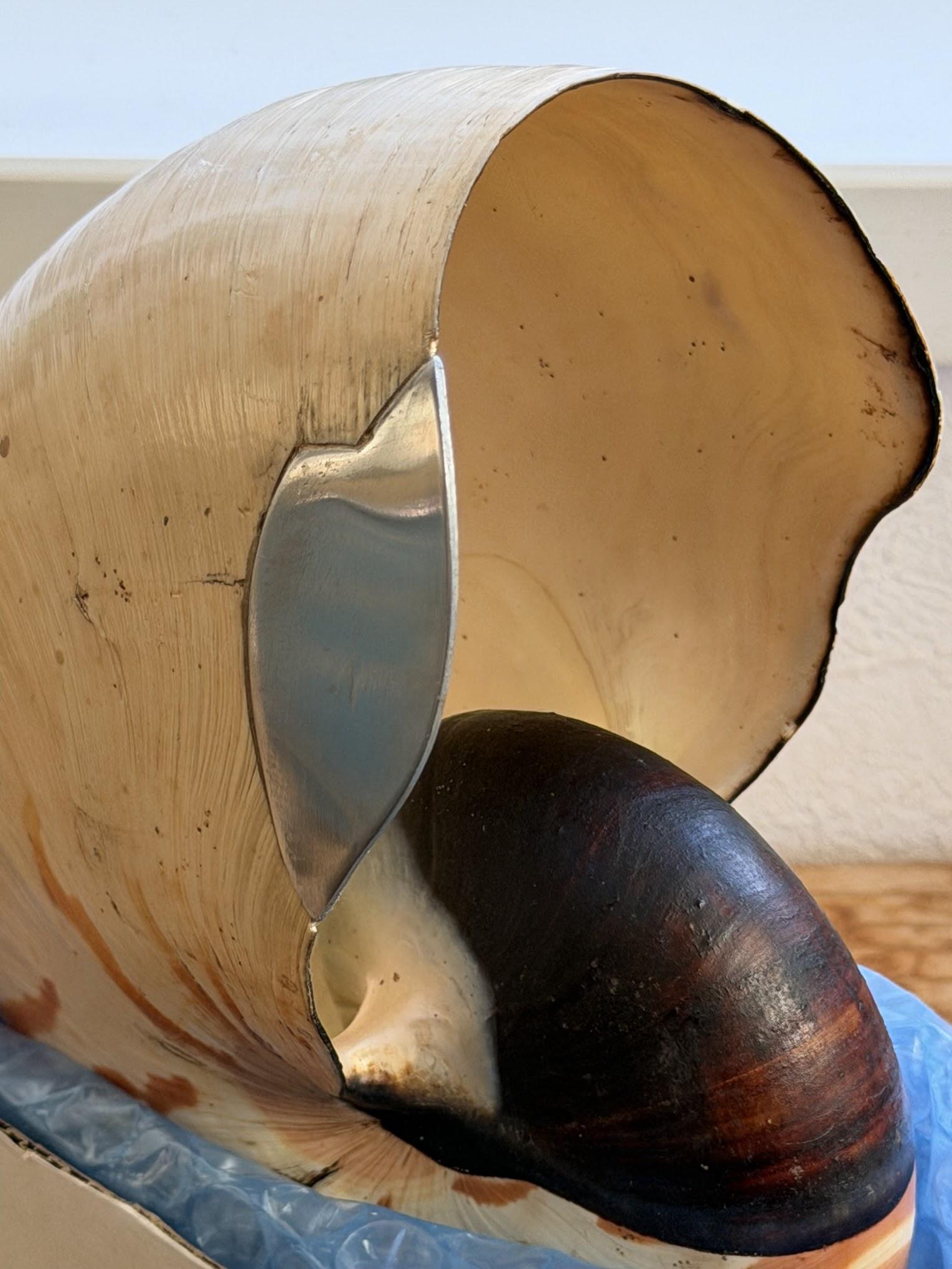
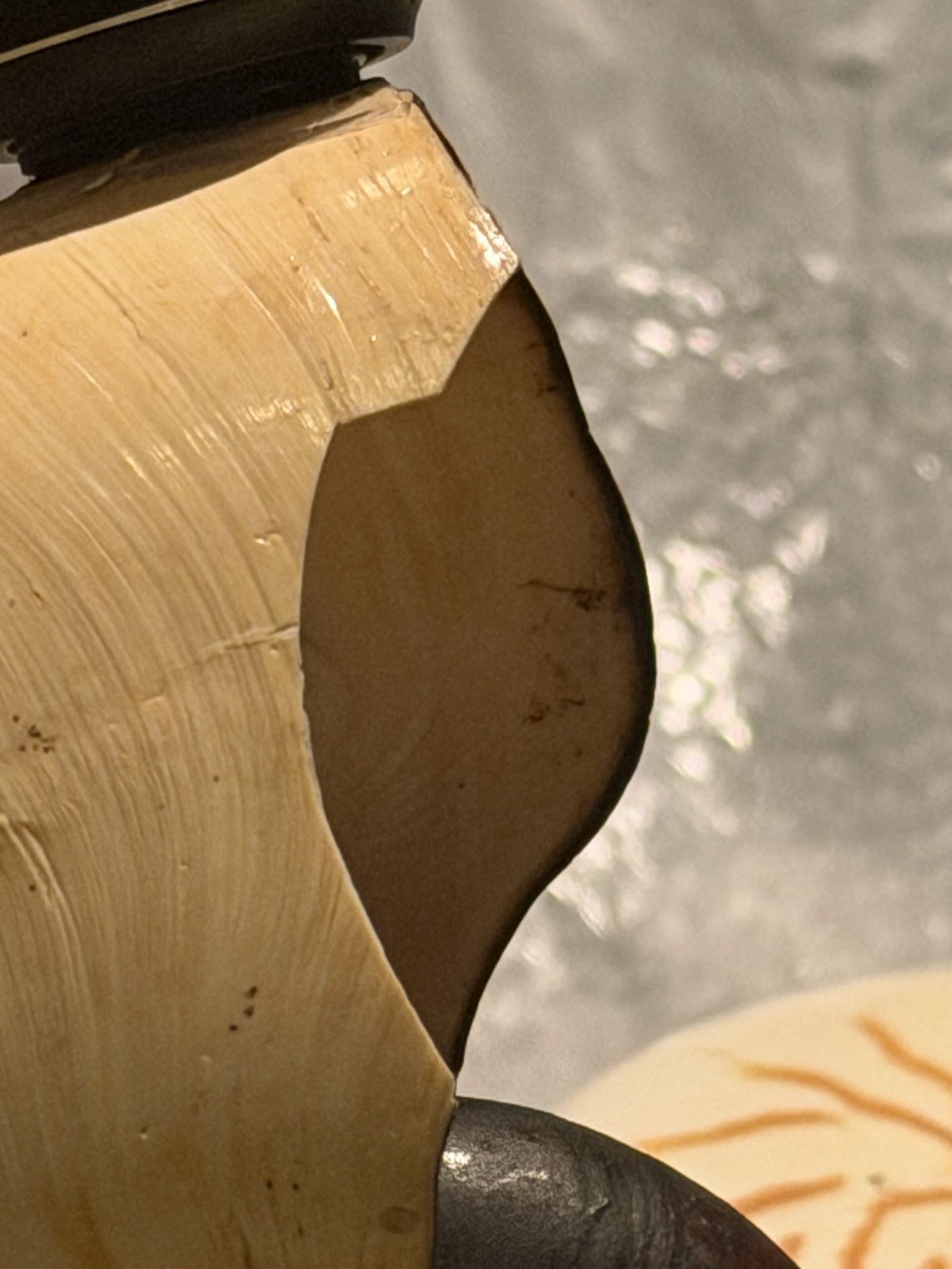
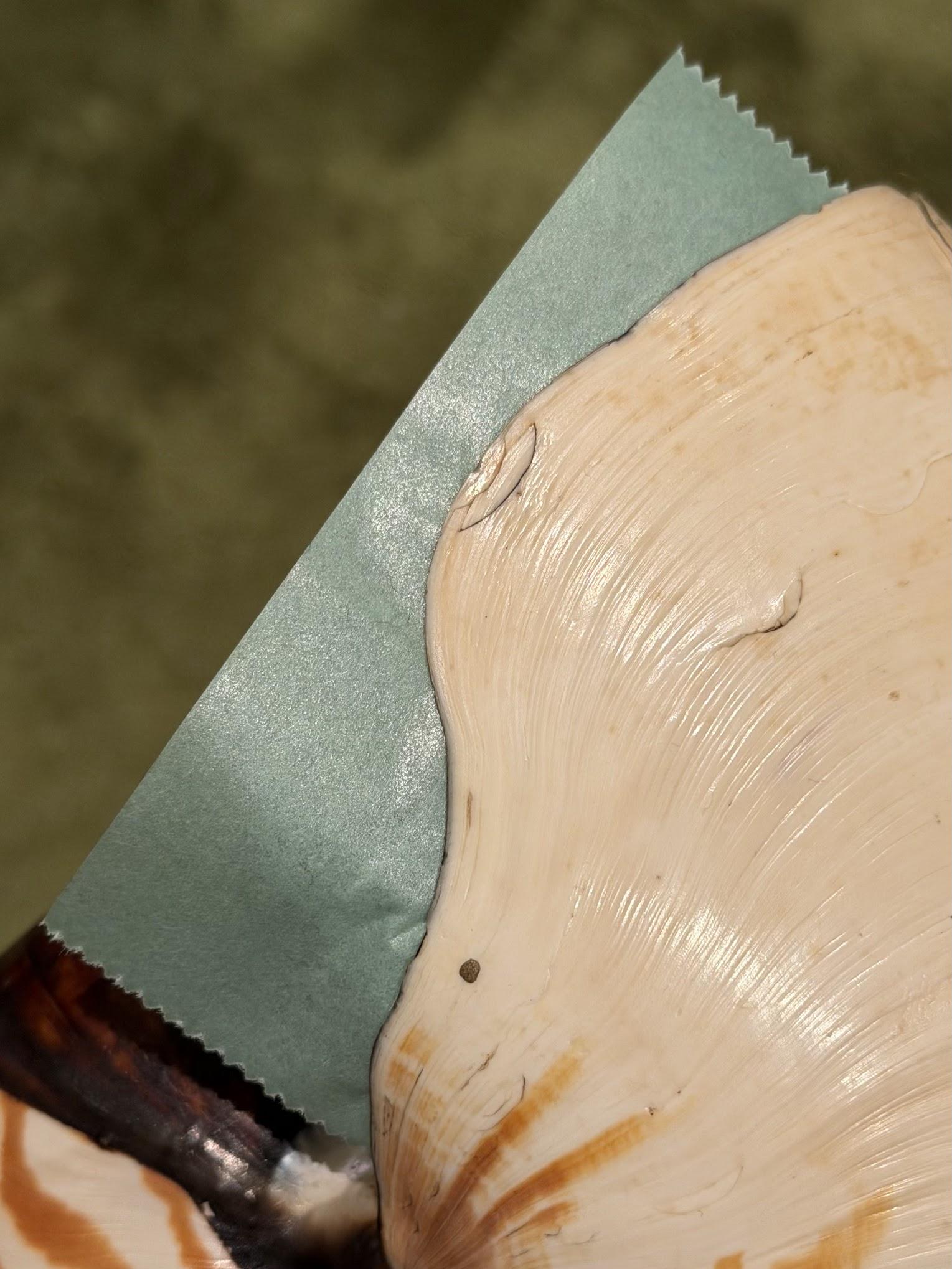
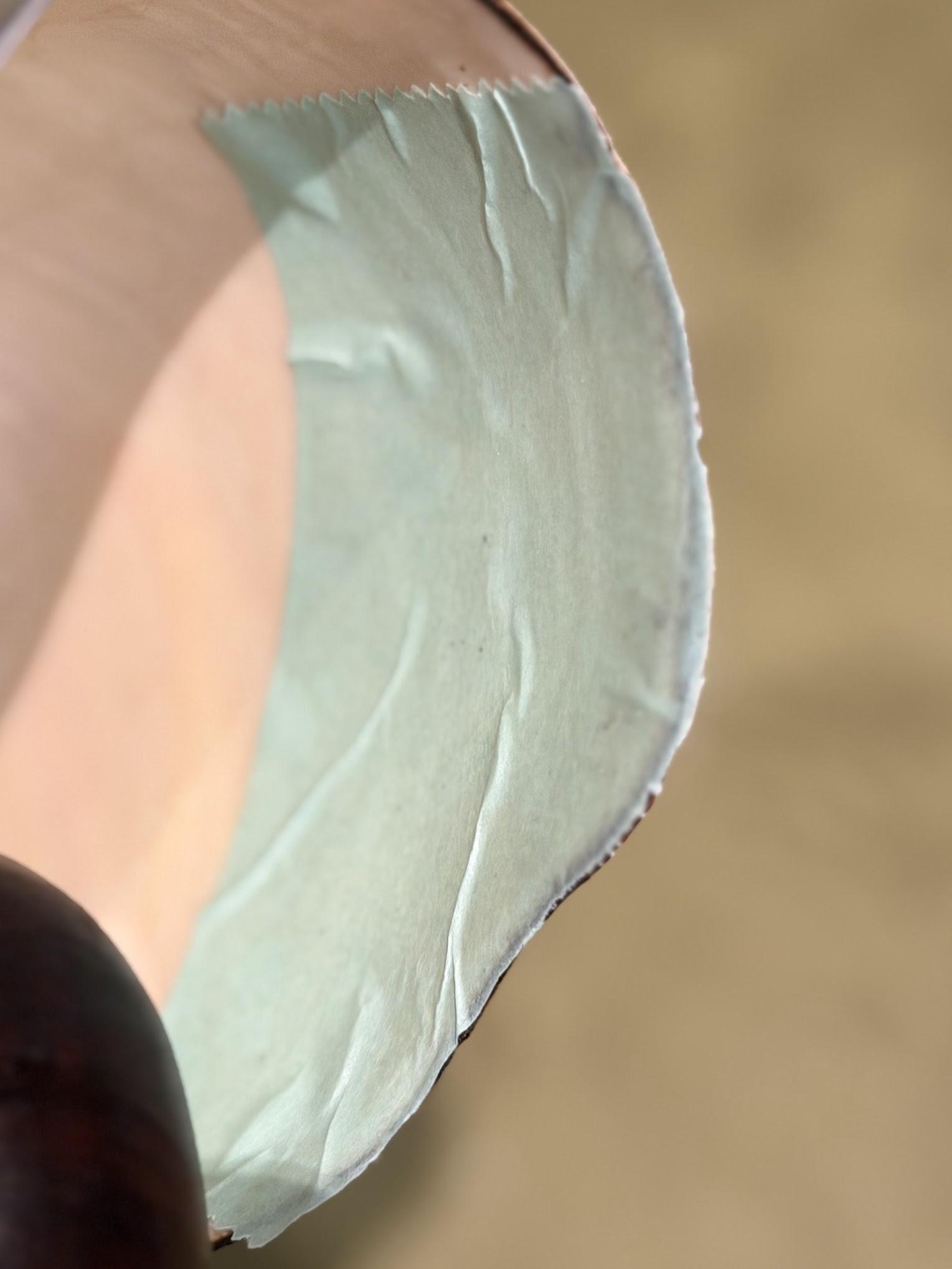
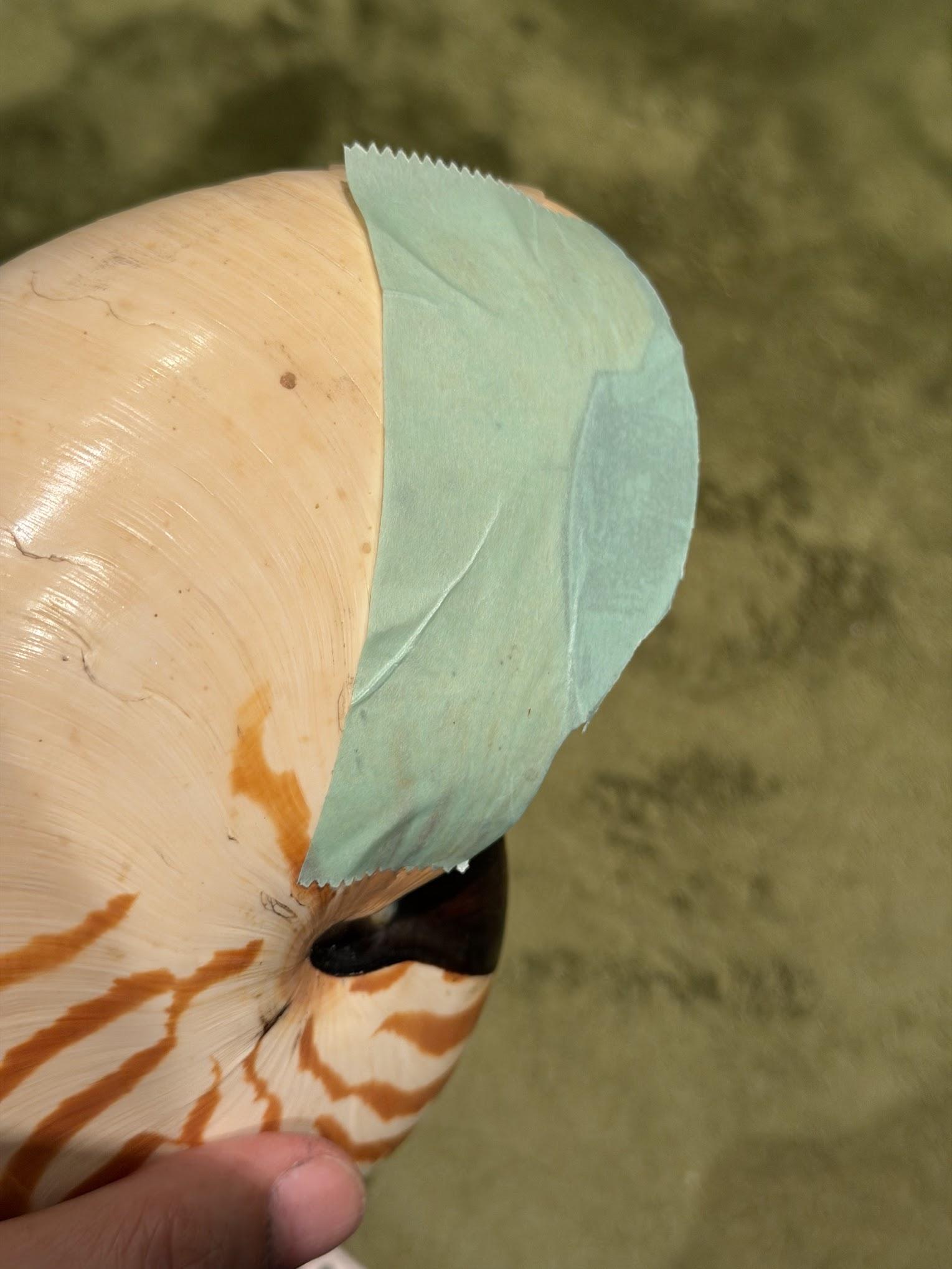
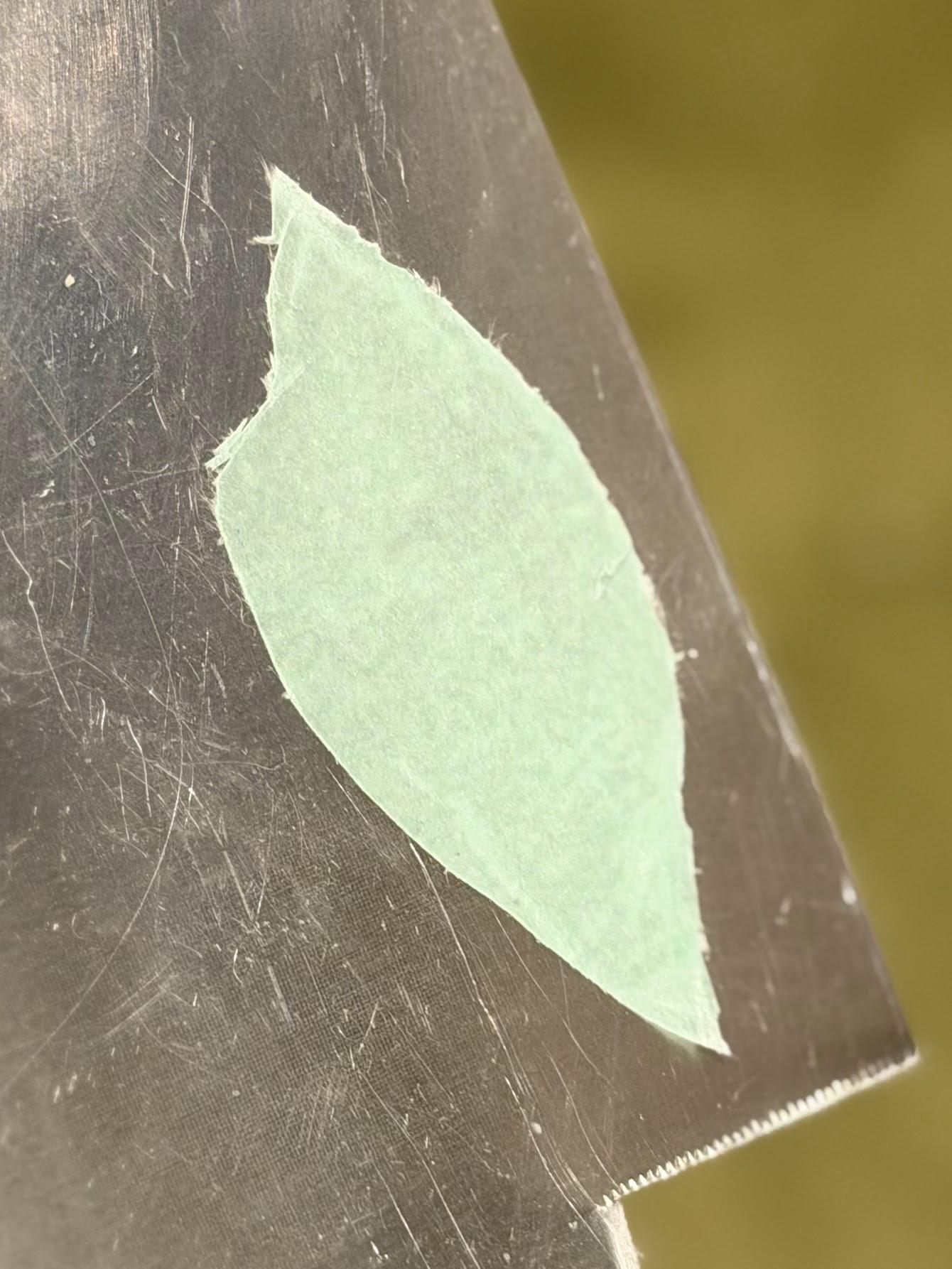
I purposely chose a shell with a chipped opening. In Japanese culture, there is an art called "Kintsugi" (repairing broken pottery with gold). I wanted to apply a Steampunk version of this philosophy using Aluminum.
- Tracing: I masked the broken area with tape to trace the complex curve.
- Metalwork: I cut a 1.2mm aluminum sheet and hammered/filed it to match the shell's organic curve perfectly. This took patience!
- Polishing: The aluminum was polished to a mirror finish.
- Attachment: I attached the metal plate using a tiny amount of super glue and filled the gaps with brass-colored epoxy putty.
Crucial Point: While I used glue here, I ensured that all adhesives can be removed with Acetone. The shell itself remains undamaged underneath. This "Reversibility" is the core rule of this build.
The Core (Silicone Cartridge System)
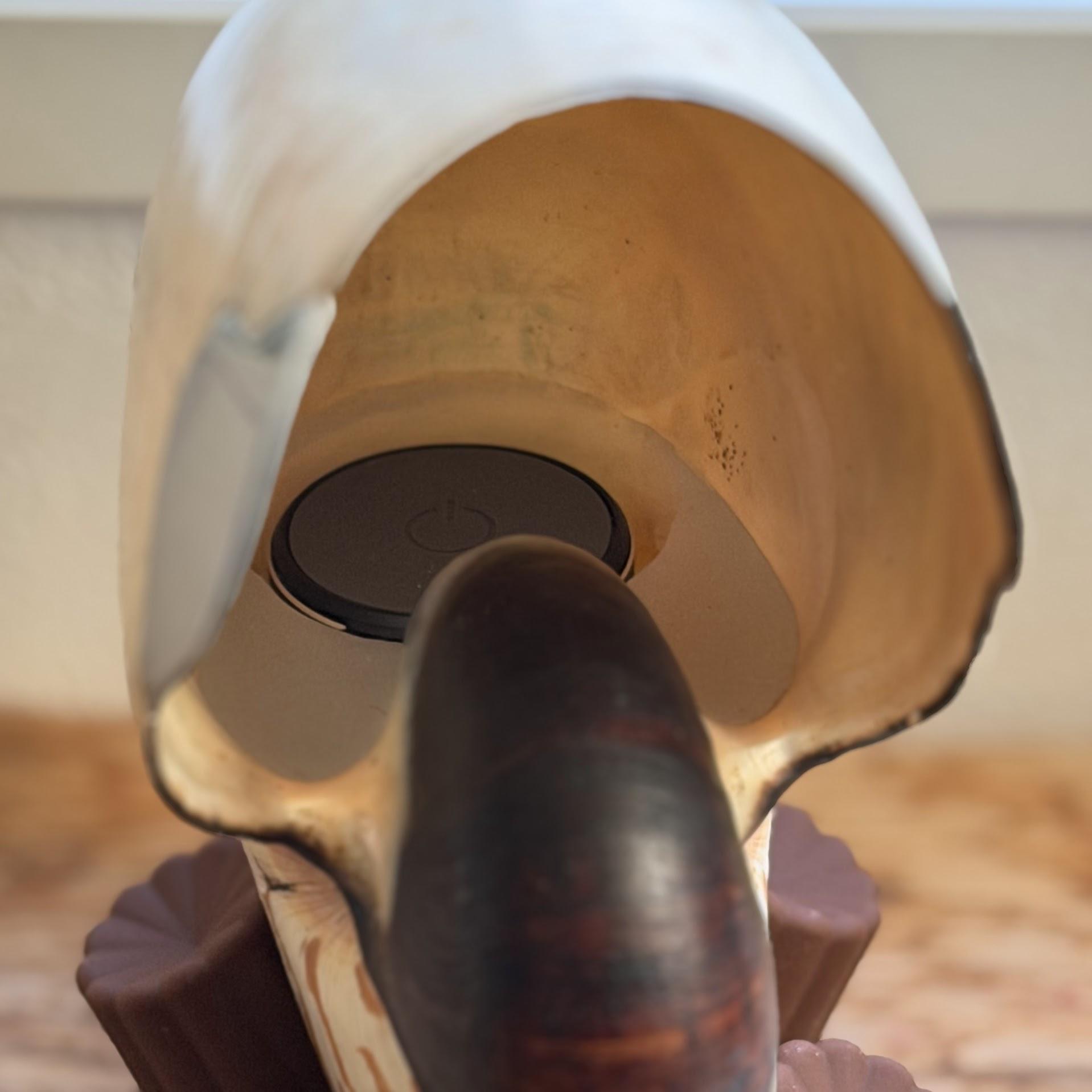
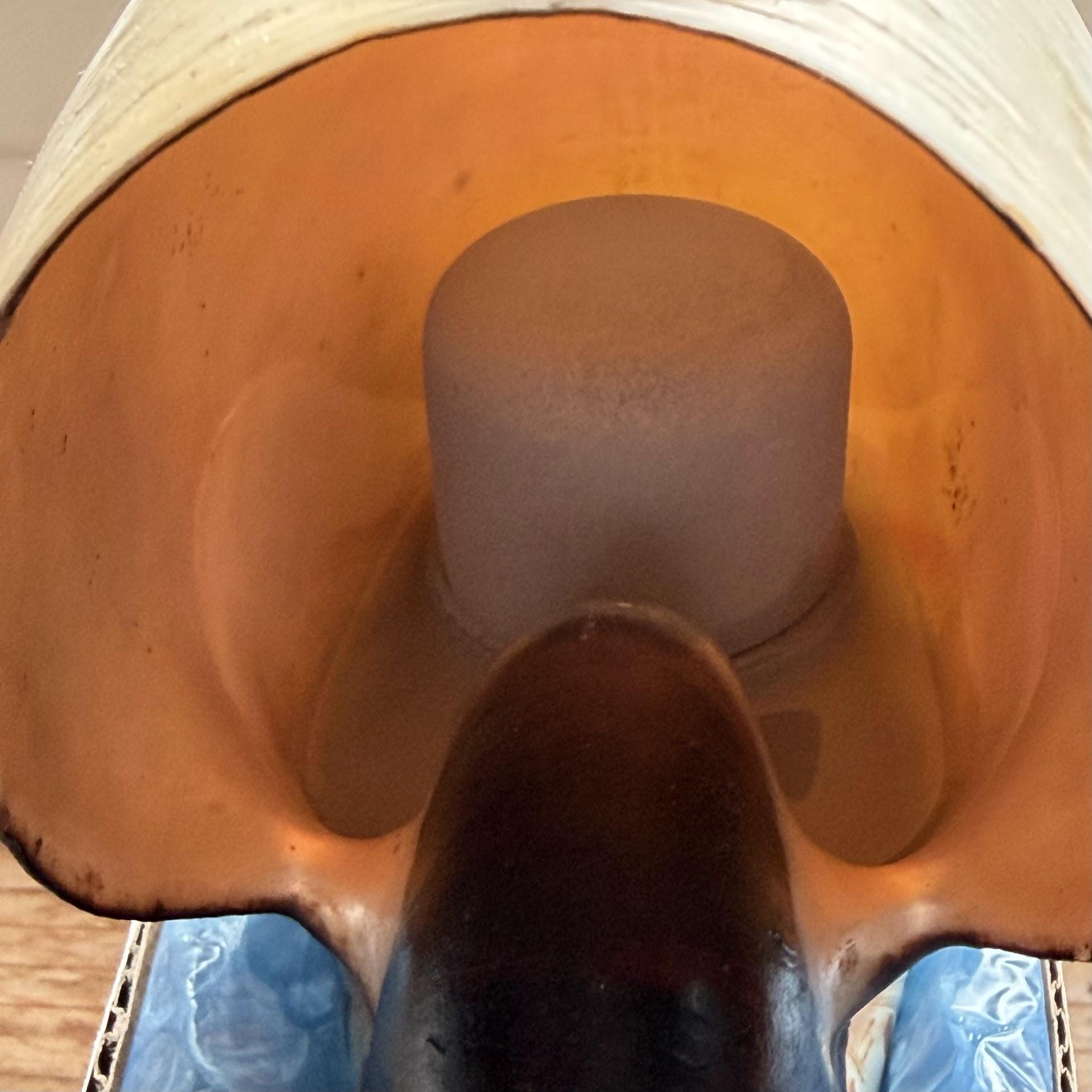

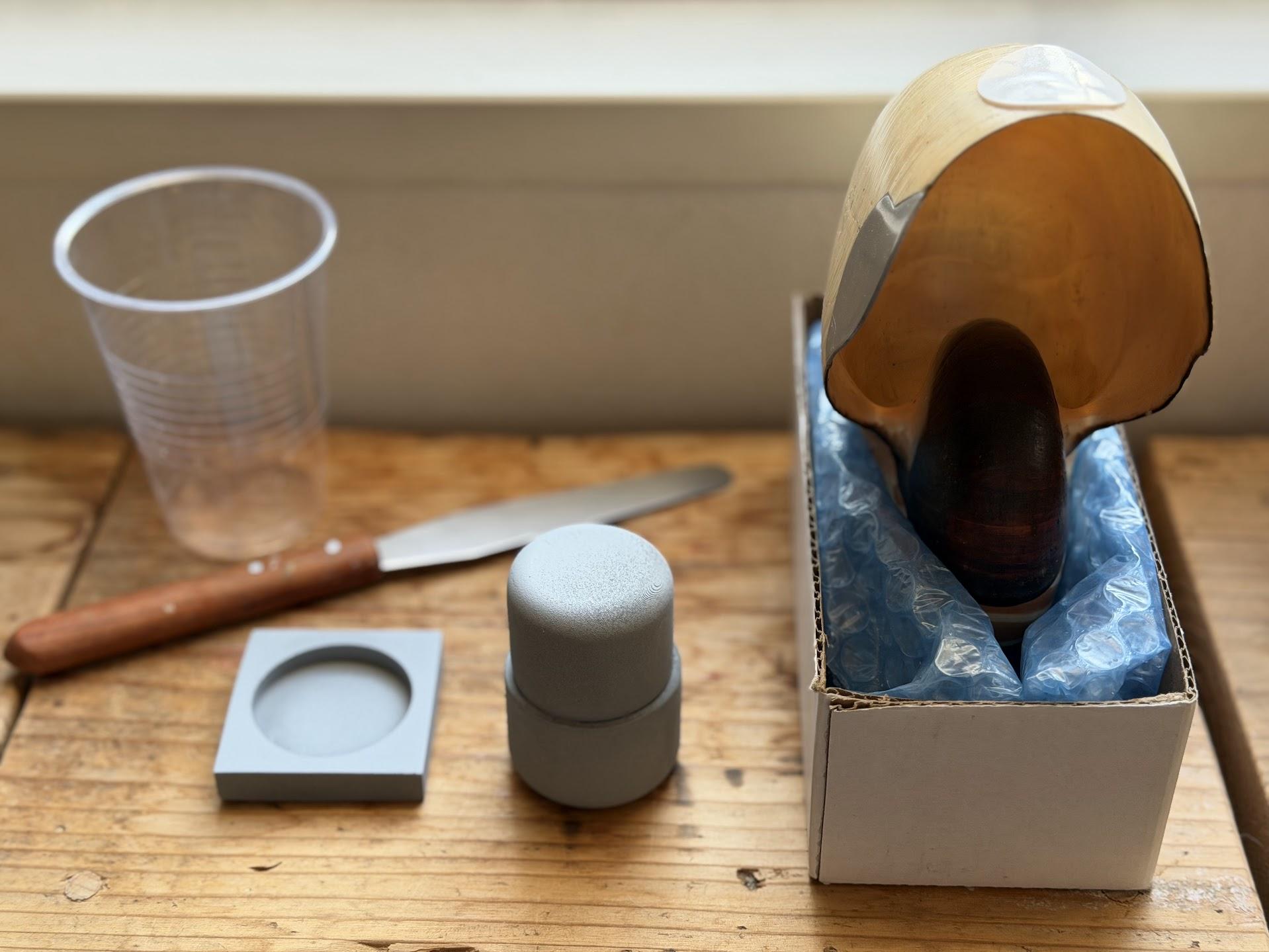
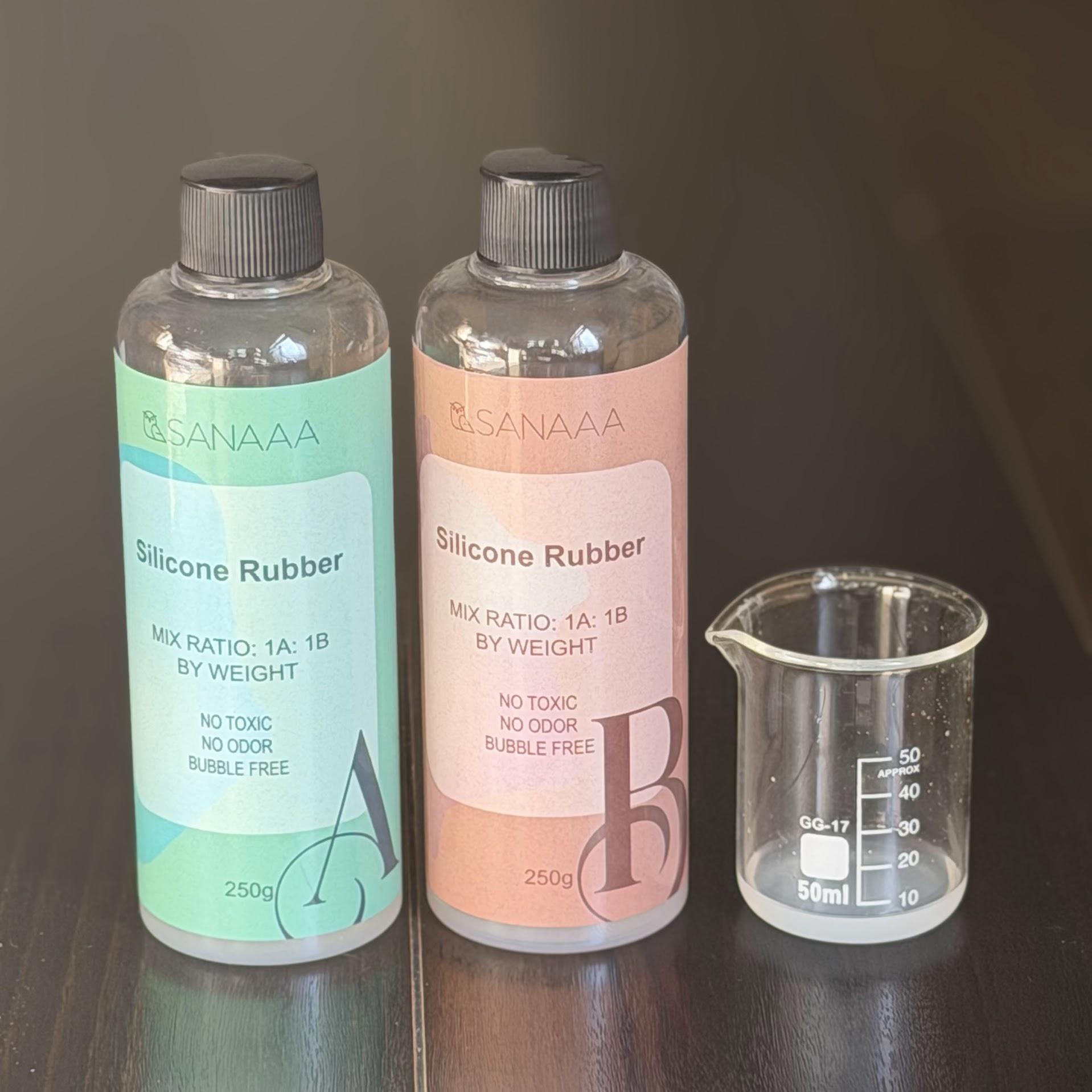
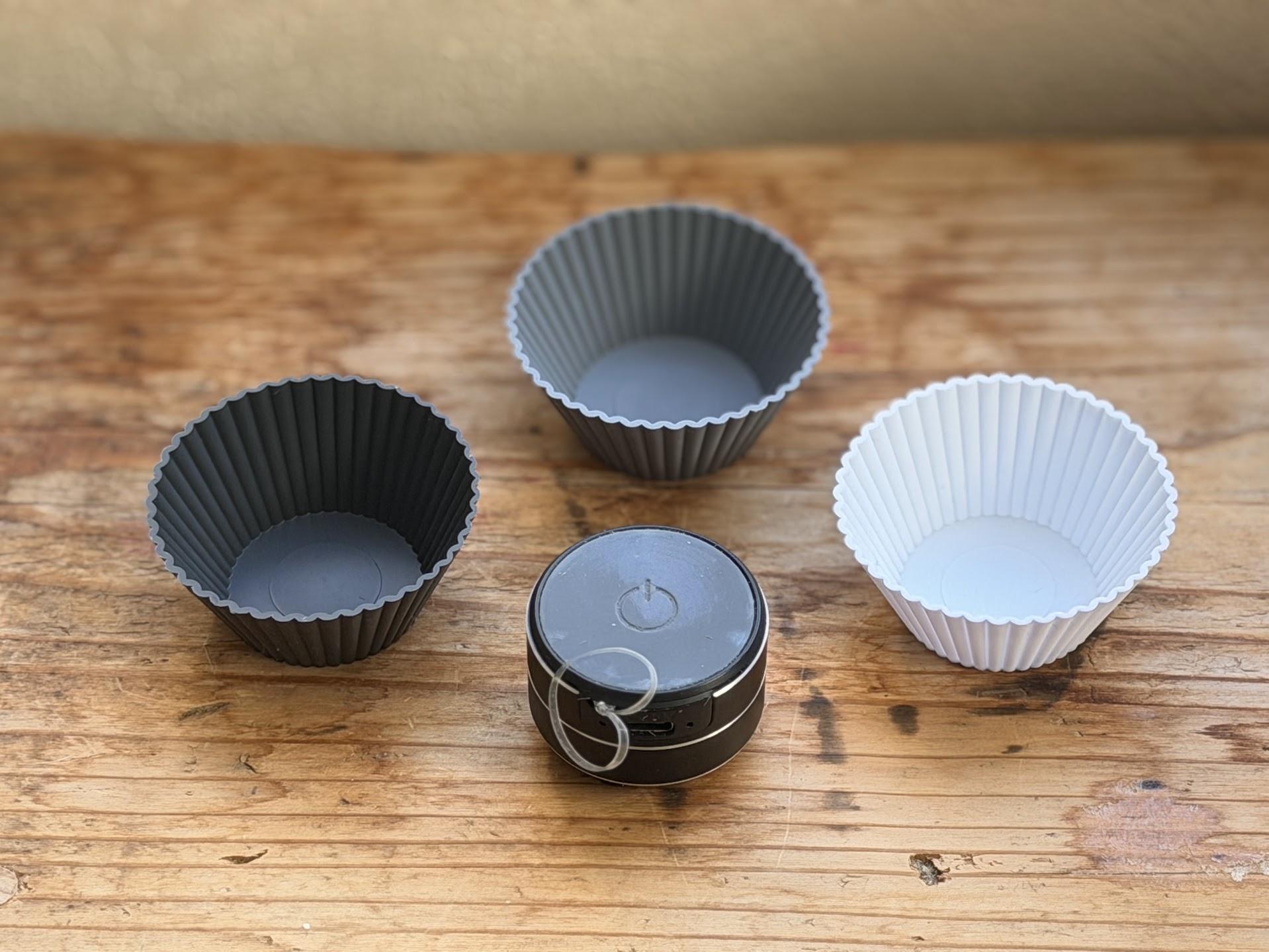
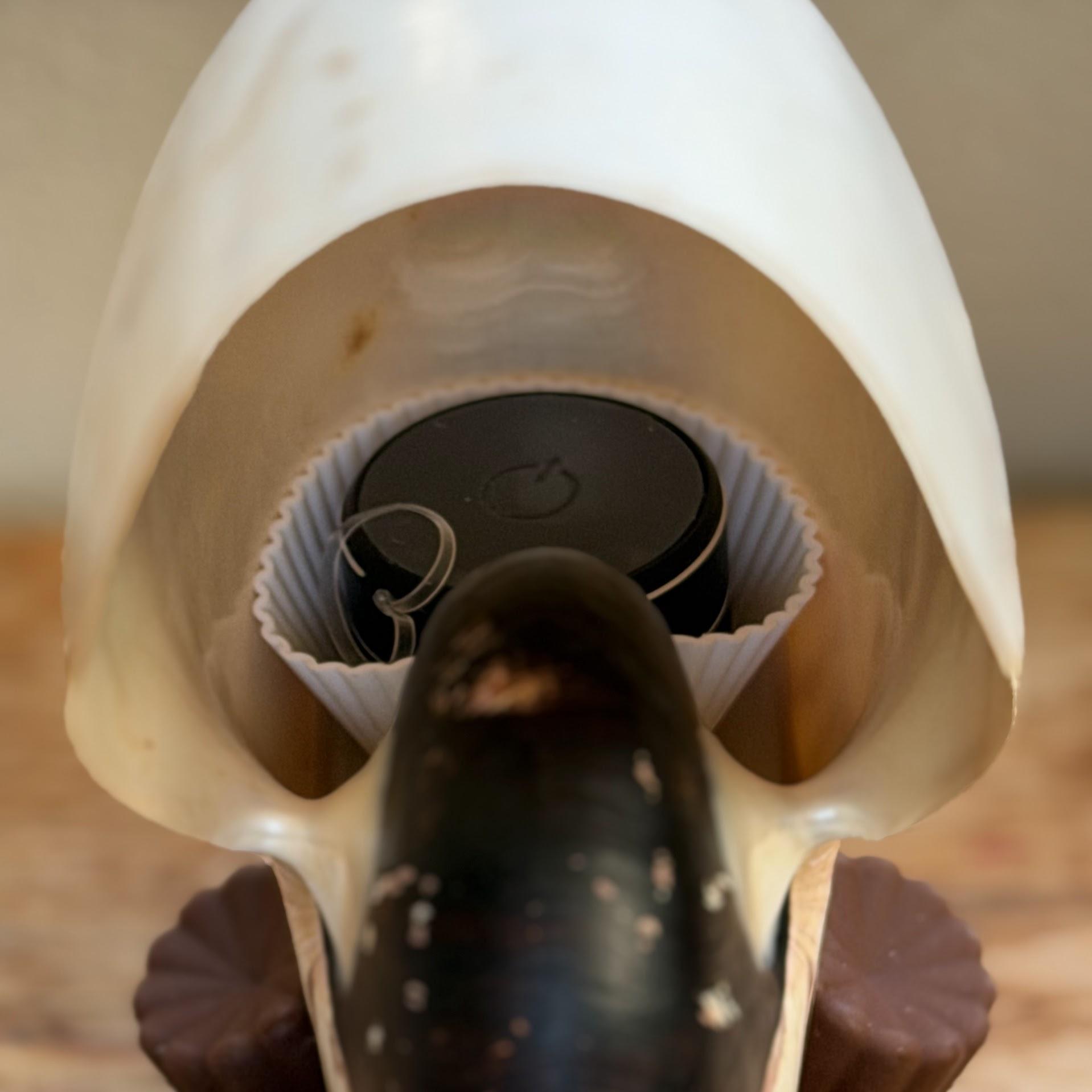
Initially, I put a regular small speaker inside the shell. The result? Boring. It just sounded like a small speaker inside a cave. So, I switched to an "Exciter" to drive the shell surface directly. The sound was powerful, but the vibration caused terrible buzzing noise against the inner walls.
I needed a shock-absorbing mount. Here is how I hacked it:
1. Prototype: The "Bento Cup" Experiment
I didn't start with liquid silicone. First, I grabbed a silicone Bento cup (lunch box liner) from the kitchen and used it as a cushion. It worked okay—the buzzing stopped—but the fit wasn't perfect, so the bass response was weak. This experiment led to the idea: "Why not pour liquid silicone to make a custom Cinderella-fit mold?"
2. The Water Displacement Hack
I needed to know exactly how much silicone to pour into the deep chamber (living chamber) of the shell.
- I poured water into the shell.
- I submerged my 3D-printed "Dummy Exciter" mold.
- I measured the water volume. Result: Only 50cc! (Much less than I guessed).
- Note: However, this volume depends on the size of the specific living chamber, so please be careful as it might be more or less.
[Crucial Tip for 3D Printed Molds]
If you use a resin 3D printer (SLA/DLP) to make the male mold for the chamber, the UV resin often causes "cure inhibition," leaving the silicone sticky. To prevent this, coat the mold surface with a water-based clear acrylic spray (or a thin layer of dish soap) and let it dry completely before pouring. This creates a barrier.
3. Casting the Cartridge
I poured 50cc of Shore 15A Silicone into the shell's chamber and inserted the treated dummy mold. Once cured, this created a perfect "seat" for the exciter.
- Benefit A: Unlike the bento cup, it adheres perfectly, efficiently transmitting the drive force to the shell bottom.
- Benefit B: The soft sides prevent the exciter from buzzing against the walls.
(I have attached the Exciter_Chamber_Mold.step file below for you to download and print.)
4. The Stealth Hacks (Making it Invisible)
The silicone fit was too perfect. The suction made it extremely difficult to remove the exciter (remember, it must be reversible!).
- Hack #1 (The Pull Tab): I attached a transparent silicone hair band to the exciter's strap hole. It’s invisible but allows me to pull the unit out.
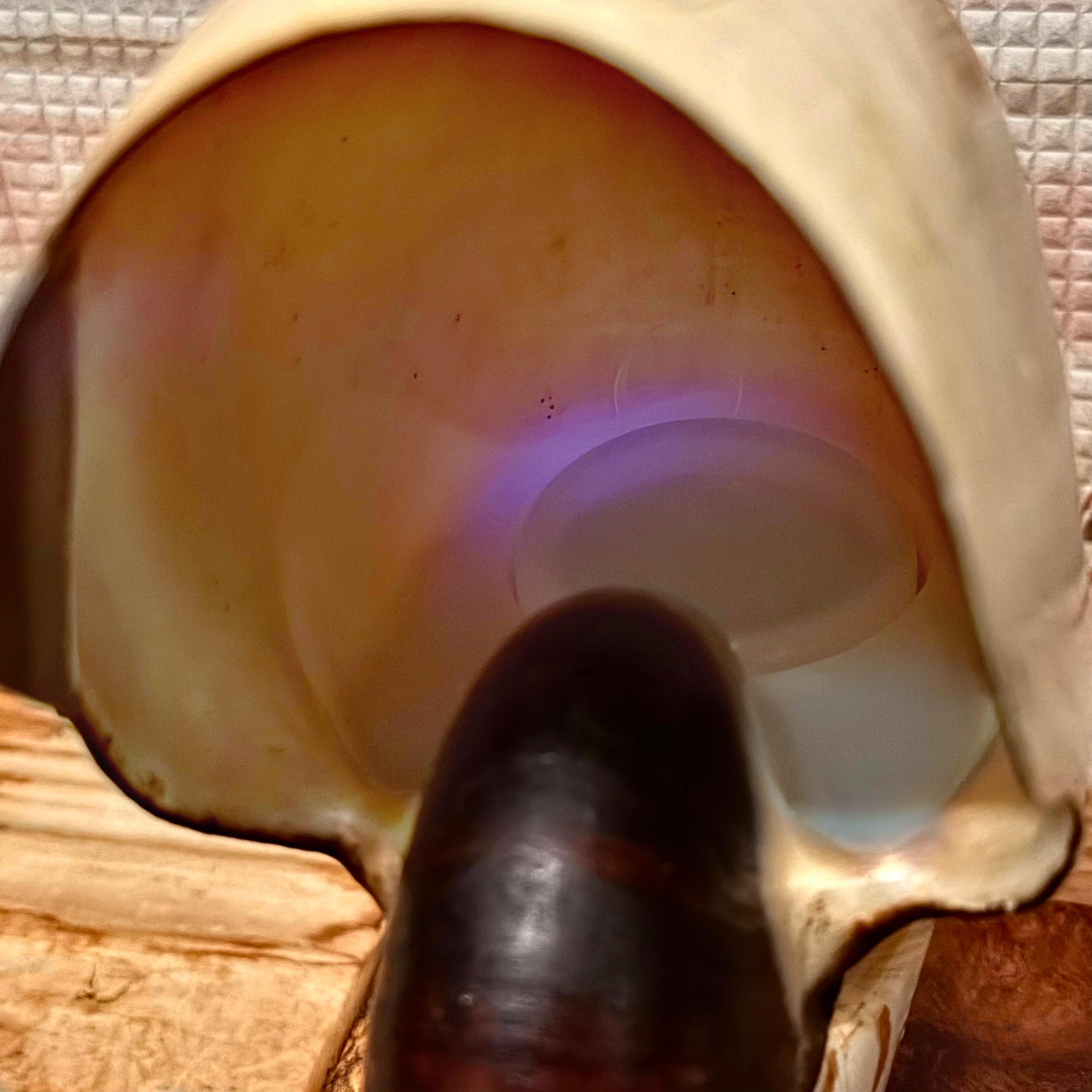
- Hack #2 (The "Beaker" Cloaking Device): When looking inside, the black exciter was visible. I wanted to hide it with a silicone cap. I initially tried to 3D print a mold for the cap, but it failed due to cure inhibition (the silicone stayed sticky!). I looked around my workbench and found a Glass Beaker with an inner diameter of about 41mm. "This is it!" I simply poured a 5mm layer of silicone into the bottom of the beaker. Glass causes zero inhibition and has a perfectly smooth bottom. The result was a perfect, transparent silicone disc. I placed this on top of the exciter, and it vanished. Perfect optical camouflage!
[Insert Photo: The blue glowing light inside the shell]
"The Ghost in the Shell" The blue light you see inside is actually the status LED of the exciter. It's extremely dim and usually invisible, but captured here with a long exposure in the dark. The silicone cap diffuses this light, making it look like a faint heartbeat deep within the shell.
(I have also attached the Stealth_Cap.step file below, if you prefer to print the mold instead of using a beaker.)
Note (The Shortcut): Since the hole is a simple cylinder, you don't actually have to cast the cap. You can simply buy a 40mm silicone disc (or coaster) or cut a silicone sheet to fit. It's much easier!
The Base (Organic Vs Inorganic)
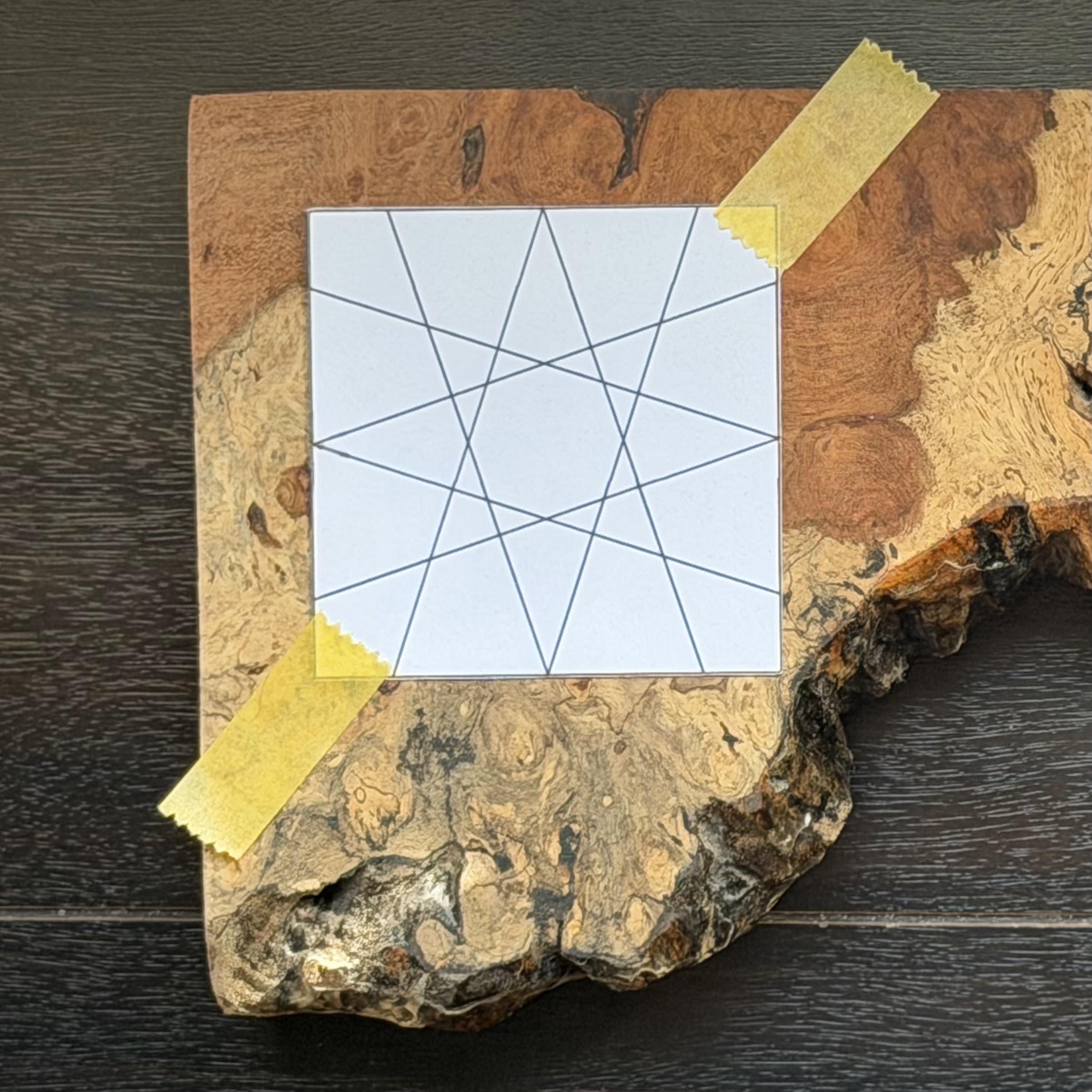
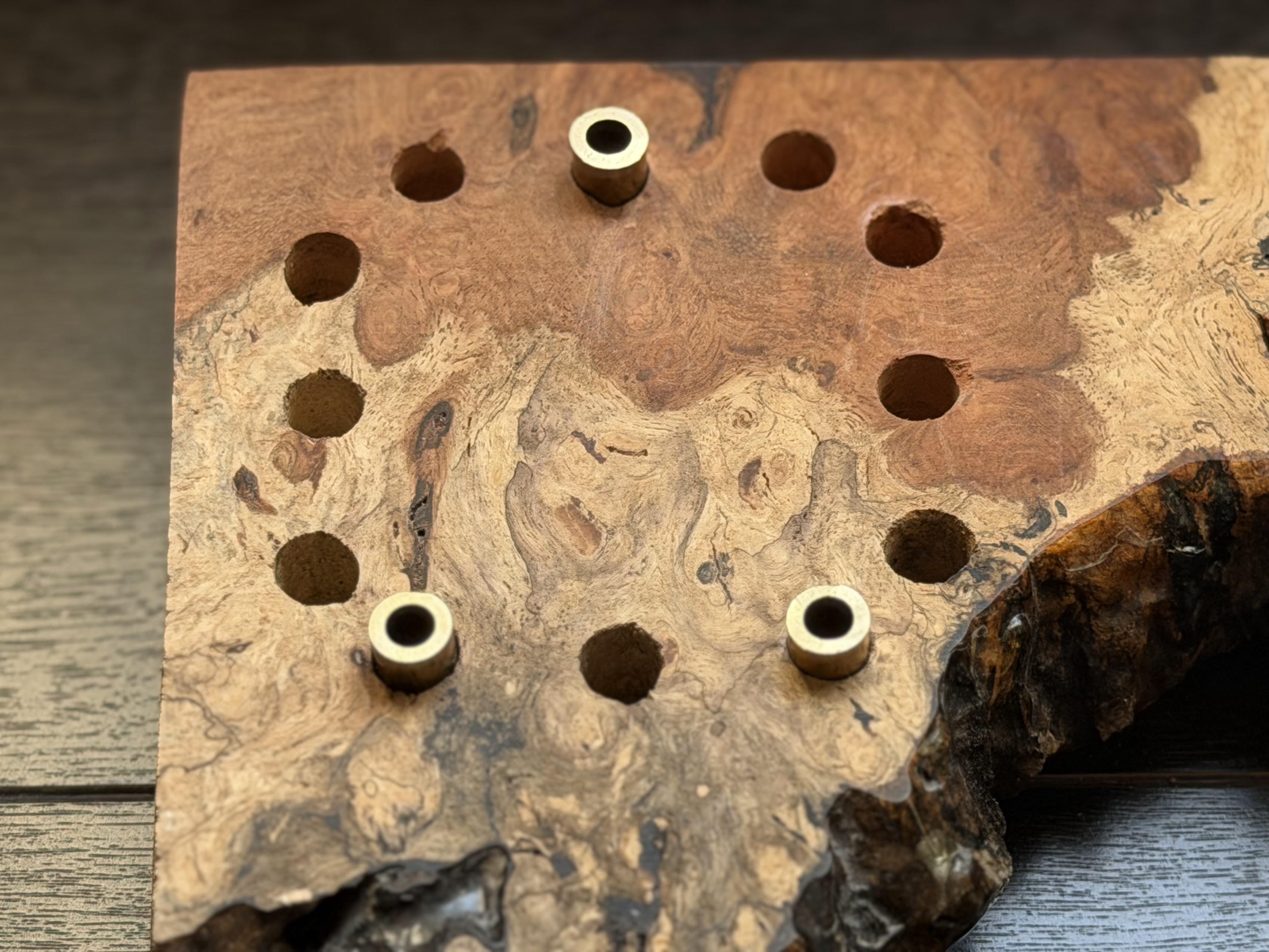
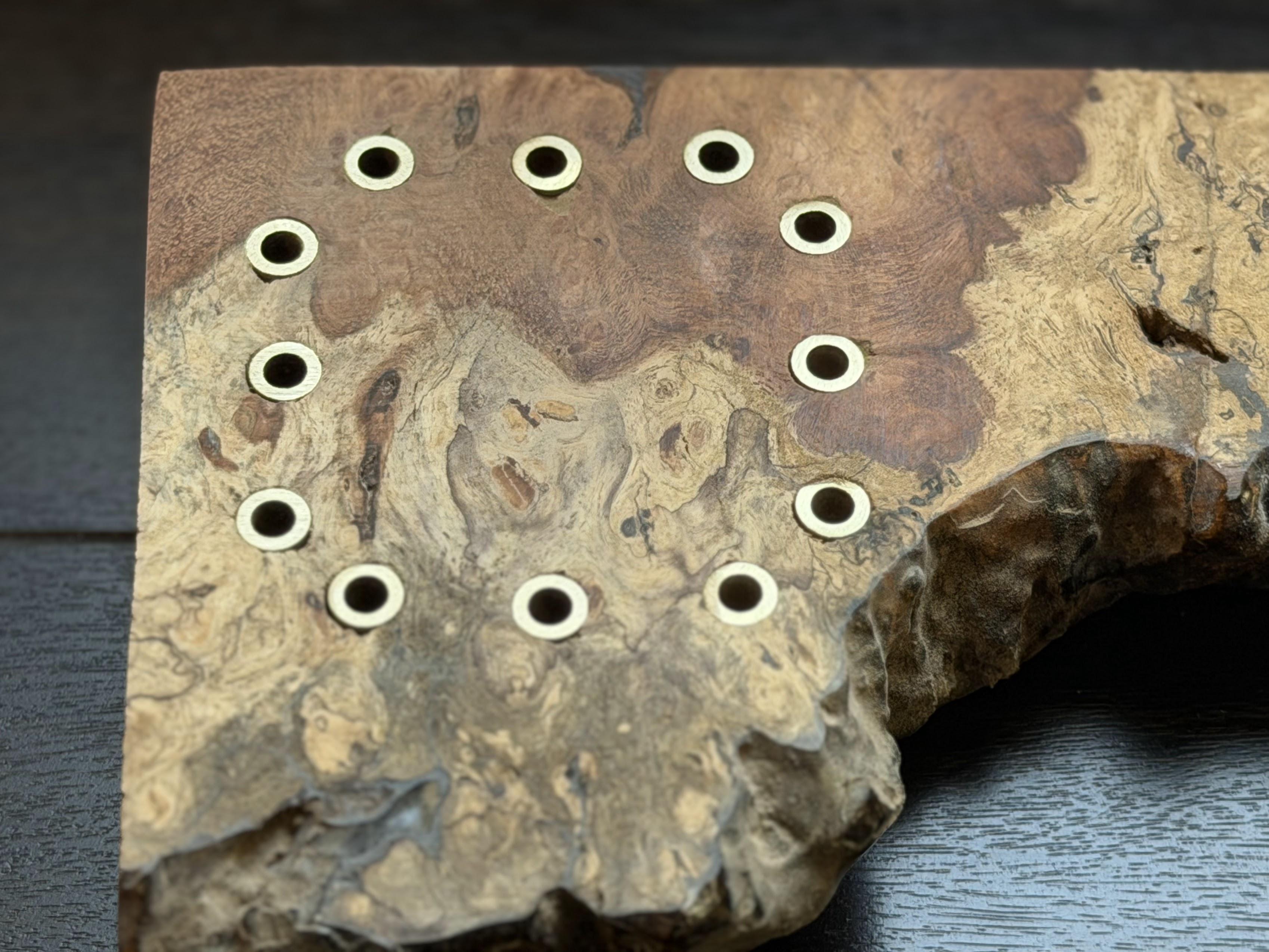
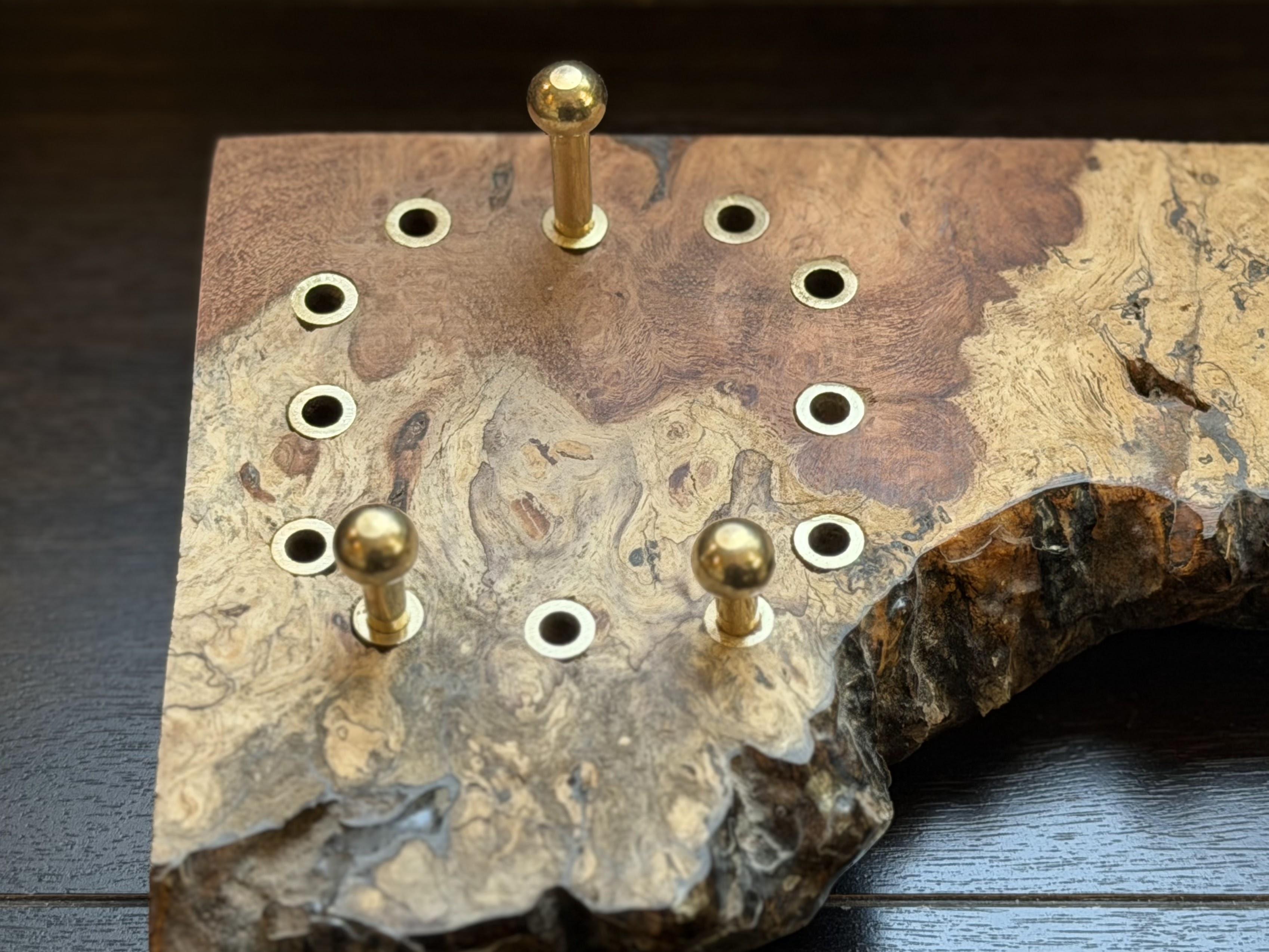
For the stand, I wanted a contrast between "Organic" (Wood) and "Inorganic" (Metal). I chose a piece of Quince Burl (Karin) I had left over from making a Kalimba. Why Quince? Because its natural tricolor (Red/White/Black) perfectly matched the Nautilus shell's pattern. It was destiny.
The "Magic Circle" Layout
I couldn't decide on the best angle to display the shell. Which side should be the front? Instead of choosing one, I designed a geometric layout I call the "Magic Circle." I drilled 12 holes in a radial pattern and inserted brass bushings (pipes) into the wood. This allows me to move the three brass pillars to any position, changing the shell's angle depending on my mood.
Download the Layout Template: I have attached the "Magic Circle" layout data below.
- PDF: Print this at 100% scale (1:1) to use as a paper template for manual drilling.
- DXF / SVG: Use these vector files if you have a CNC router or laser cutter.
Disaster Strikes!
While hammering the brass bushings into the hard Burl wood... CRACK. The expensive wood split in two! Panic? No. This is Maker life. I immediately performed emergency surgery with instant glue. The scar is barely visible, adding character to the piece. (Actually, I was so panicked that I forgot to take a photo of the split!)
Turning a Mistake into a Feature
I tried to remove the polyurethane finish on the wood's "Live Edge" (bark) but failed, leaving ugly scratches. In frustration, I took a wire brush and scratched the entire edge aggressively. Surprisingly, when I applied Beeswax, the rough texture turned into a beautiful, weathered rock-like finish. A happy accident! (Here too, I was in a hurry and forgot to take a photo!)

Assembly (The Floating Point)
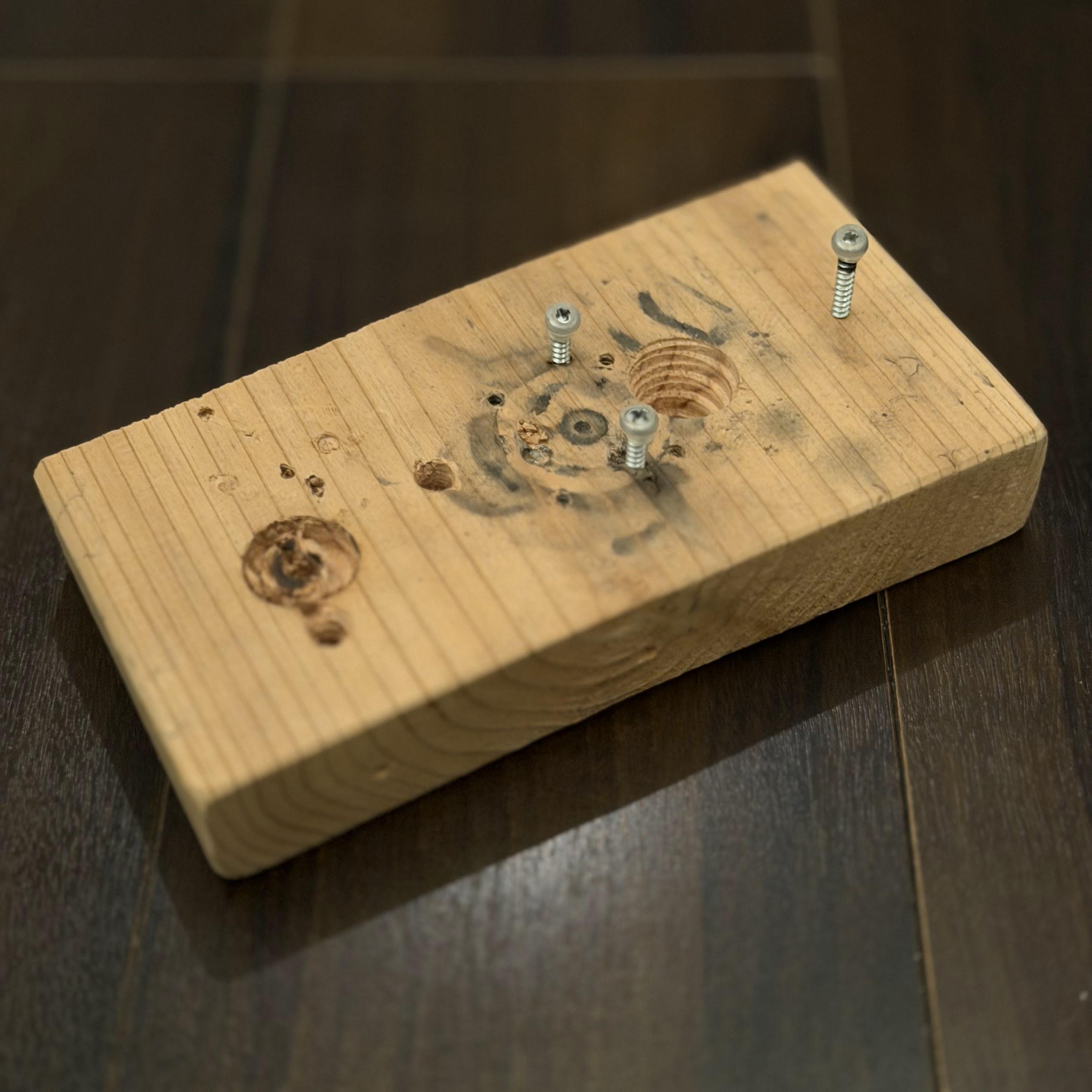
Determining the Height (The Test Bed)
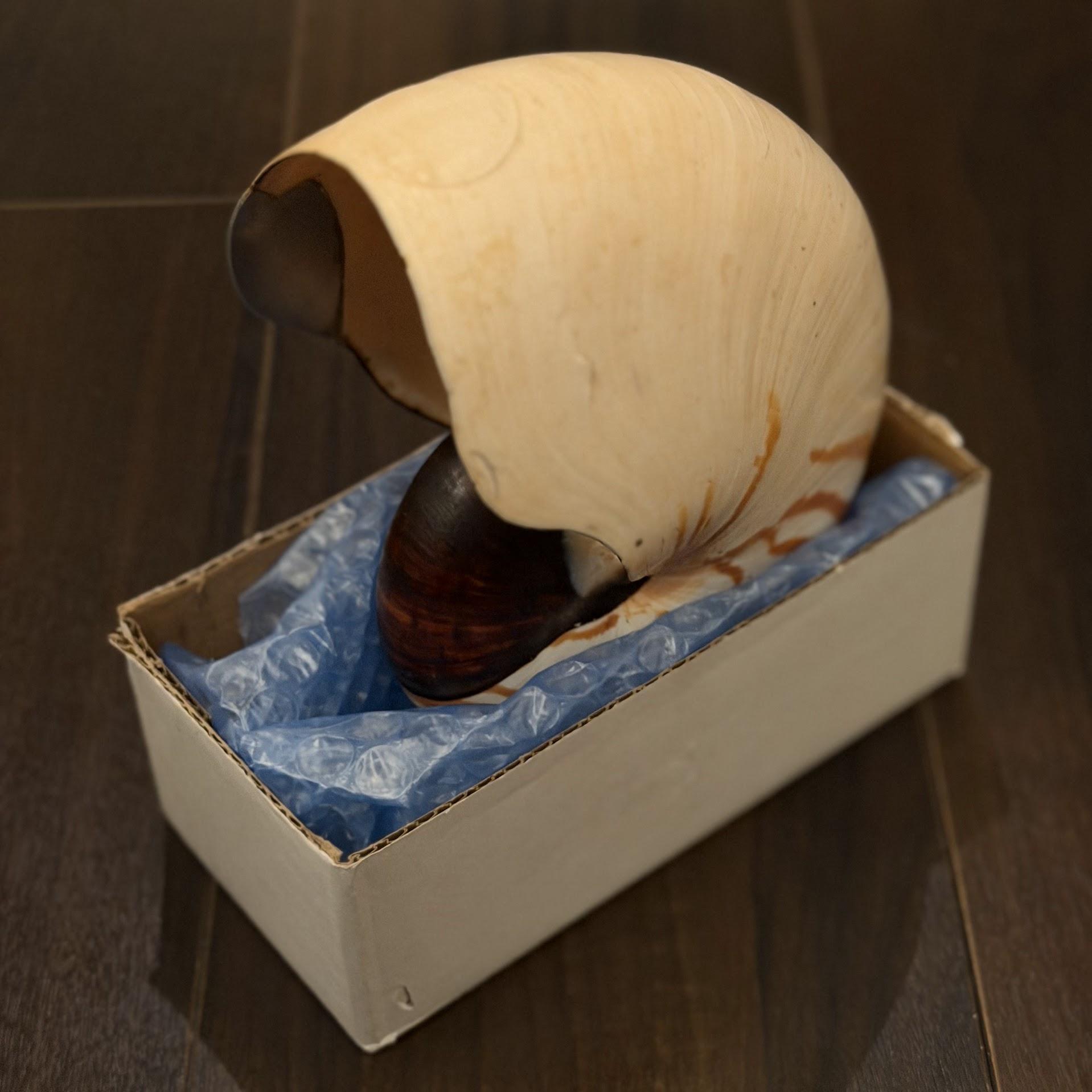
I didn't simply guess the length of the brass rods. Before cutting the expensive metal, I needed to simulate the perfect angle. I made a "Test Bed" using a scrap piece of wood and three long screws.
- I drove the screws in and adjusted their heights little by little to find the angle where the shell looked most beautiful floating in the air.
- I placed silicone tubes on the screw heads to protect the shell and check for vibration.
- Once the position was fixed, I measured the exposed length of the screws. This is how I derived the optimal lengths: 15mm for the front two and 25mm for the rear one.
Fabrication & Assembly
To make the heavy shell "float" in the air based on the test data:
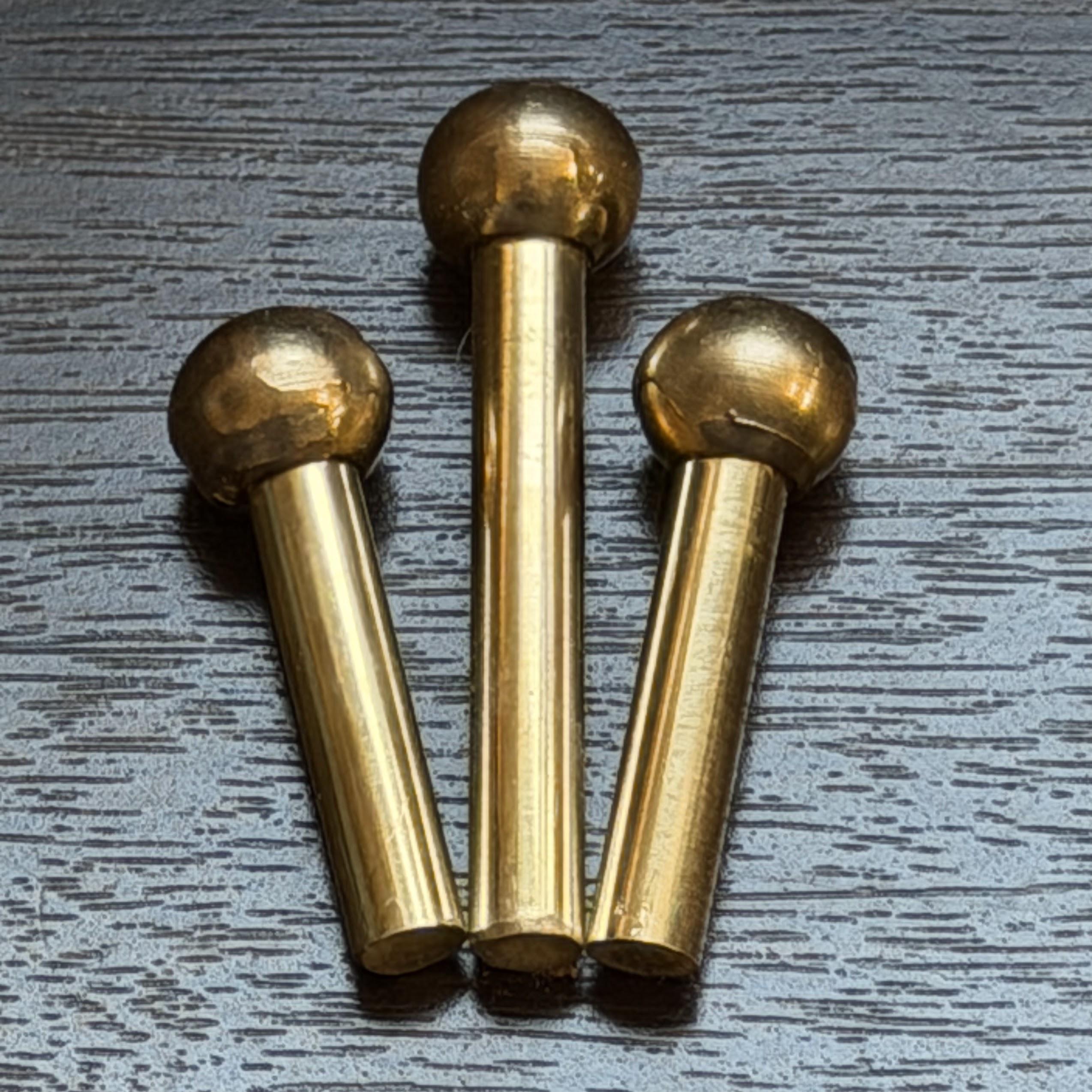
- I cut 5mm brass rods considering the 15mm depth of the holes (Two 30mm rods, One 40mm rod).
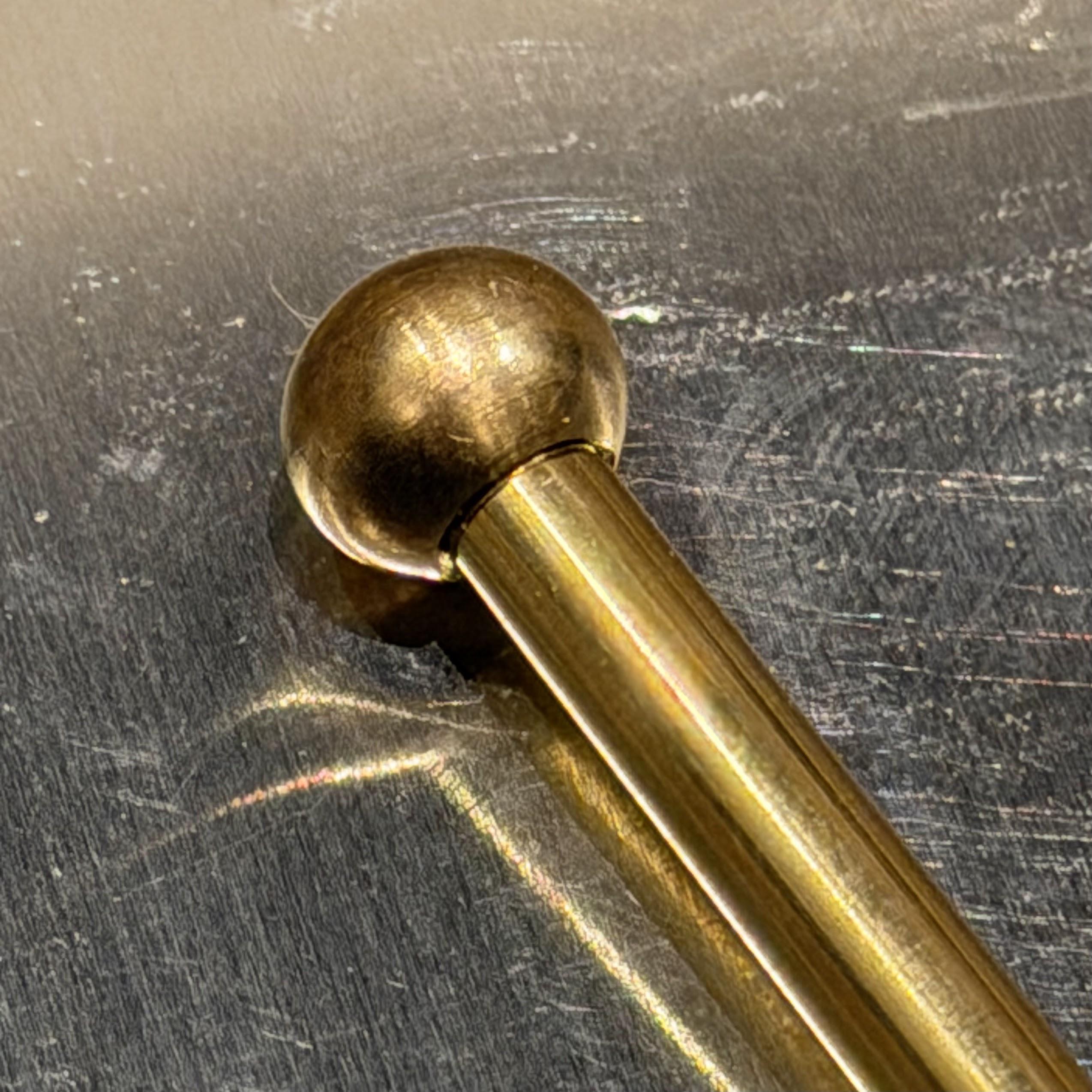
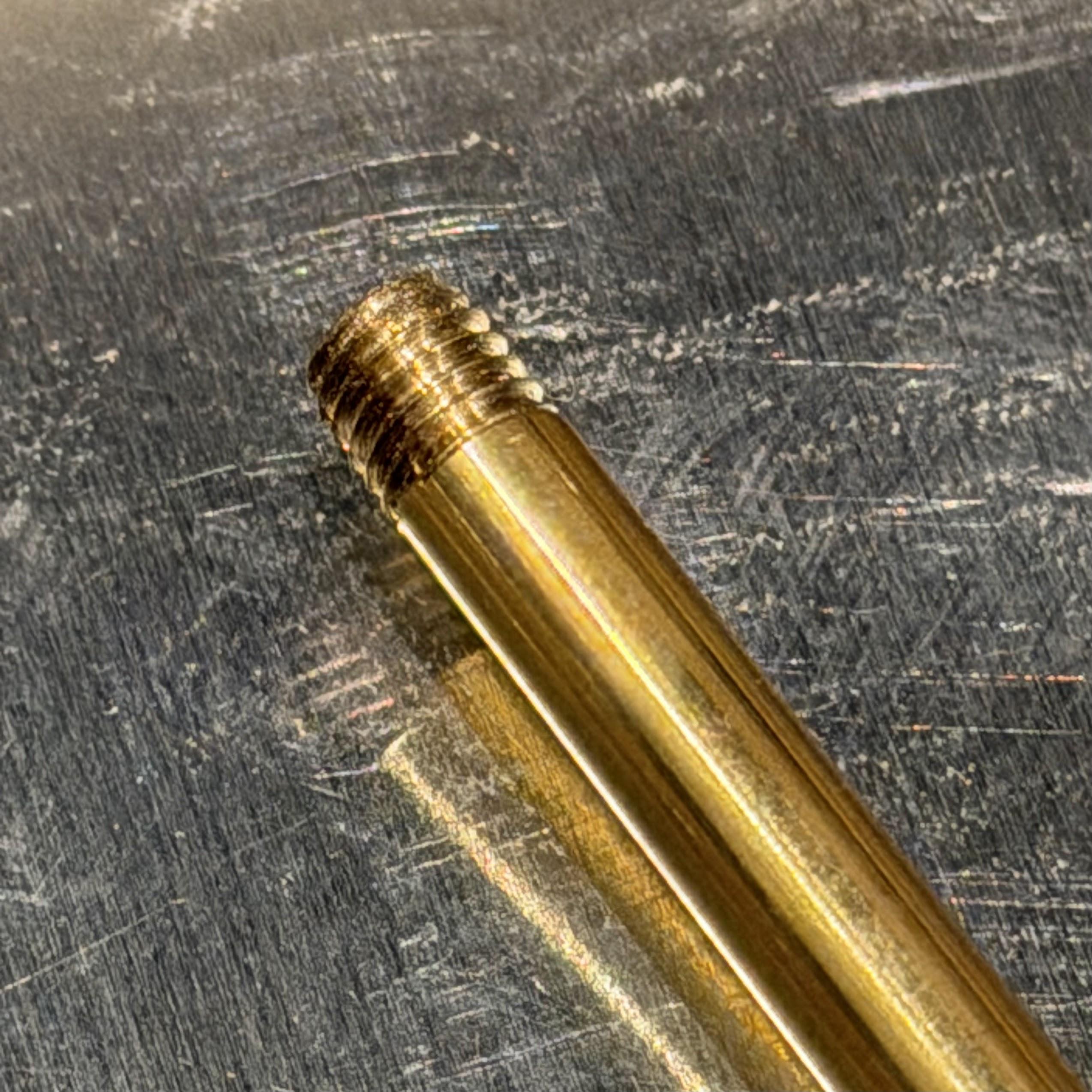
- I used a die to thread the tips and screwed on Brass Ball Nuts.
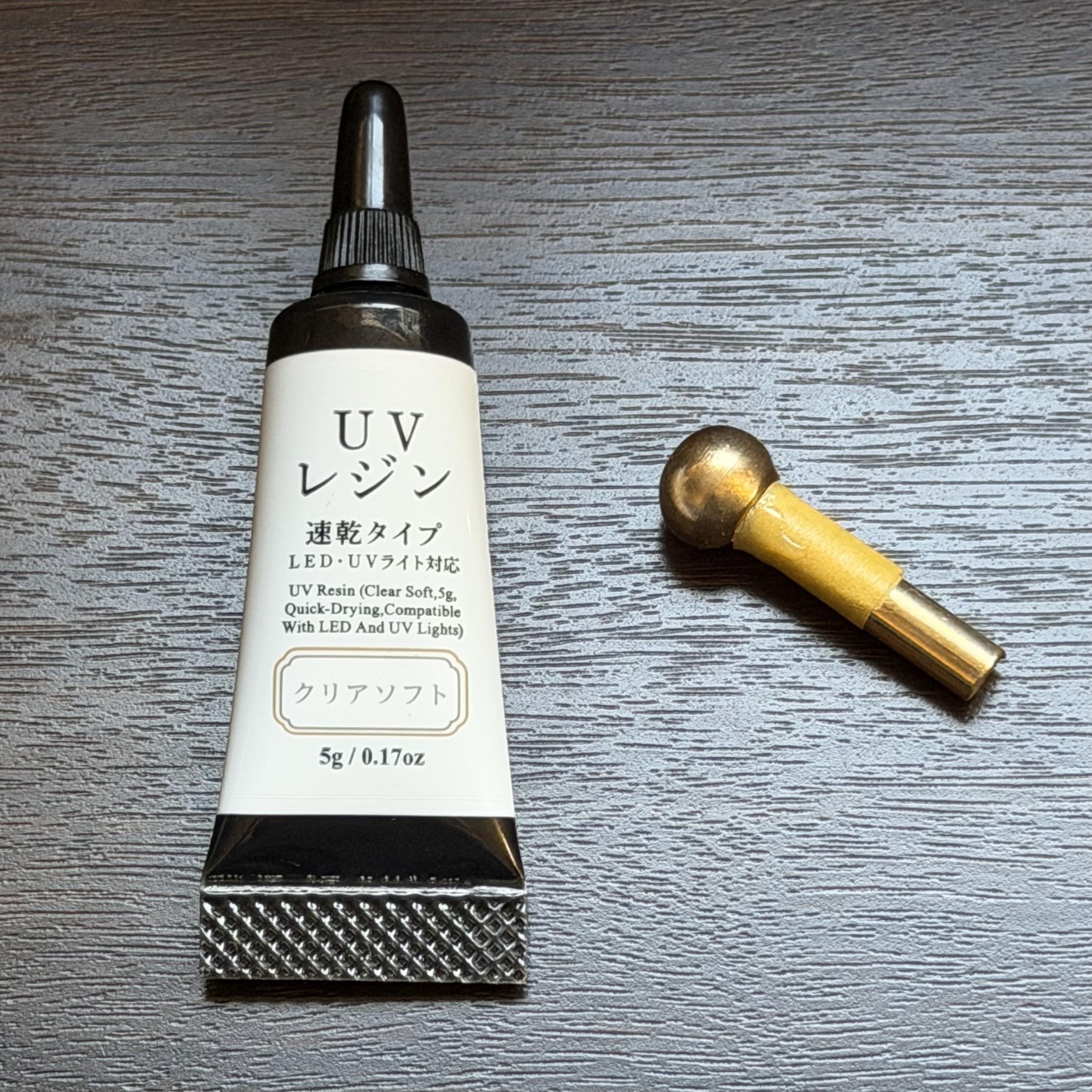
- The Anti-Vibration Secret: Metal-on-Shell contact causes buzzing. I applied a single drop of Soft UV Resin to the top of each brass ball. This acts as an invisible rubber foot, gripping the shell firmly without ruining the gold look.
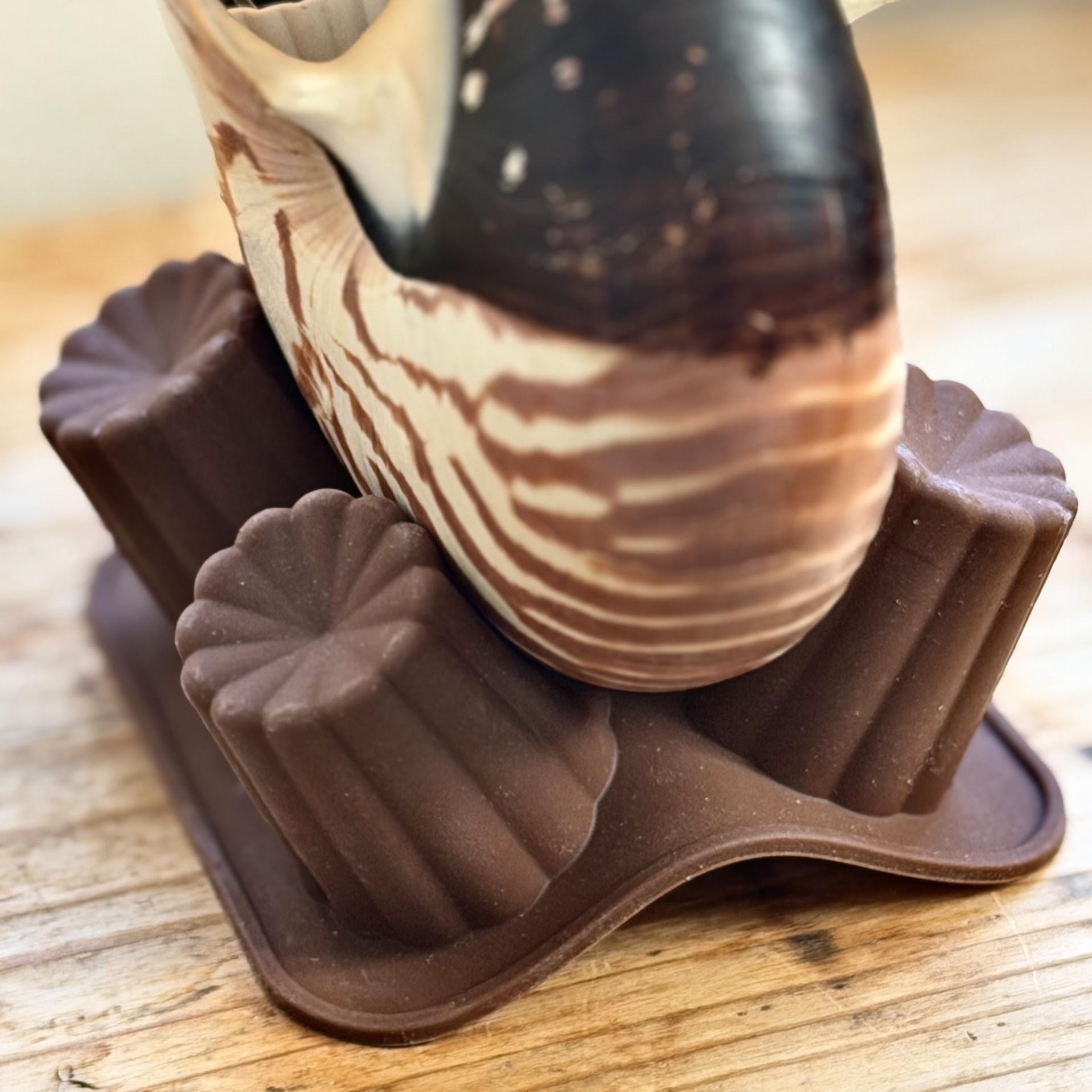
Fun Fact: During the prototyping phase, I used a silicone Canelé mold (a French pastry mold) as a temporary stand. It was a Cinderella fit! Never underestimate kitchen tools for prototyping.
Unlock Hidden Modes (Haptic, Samurai, & TWS)
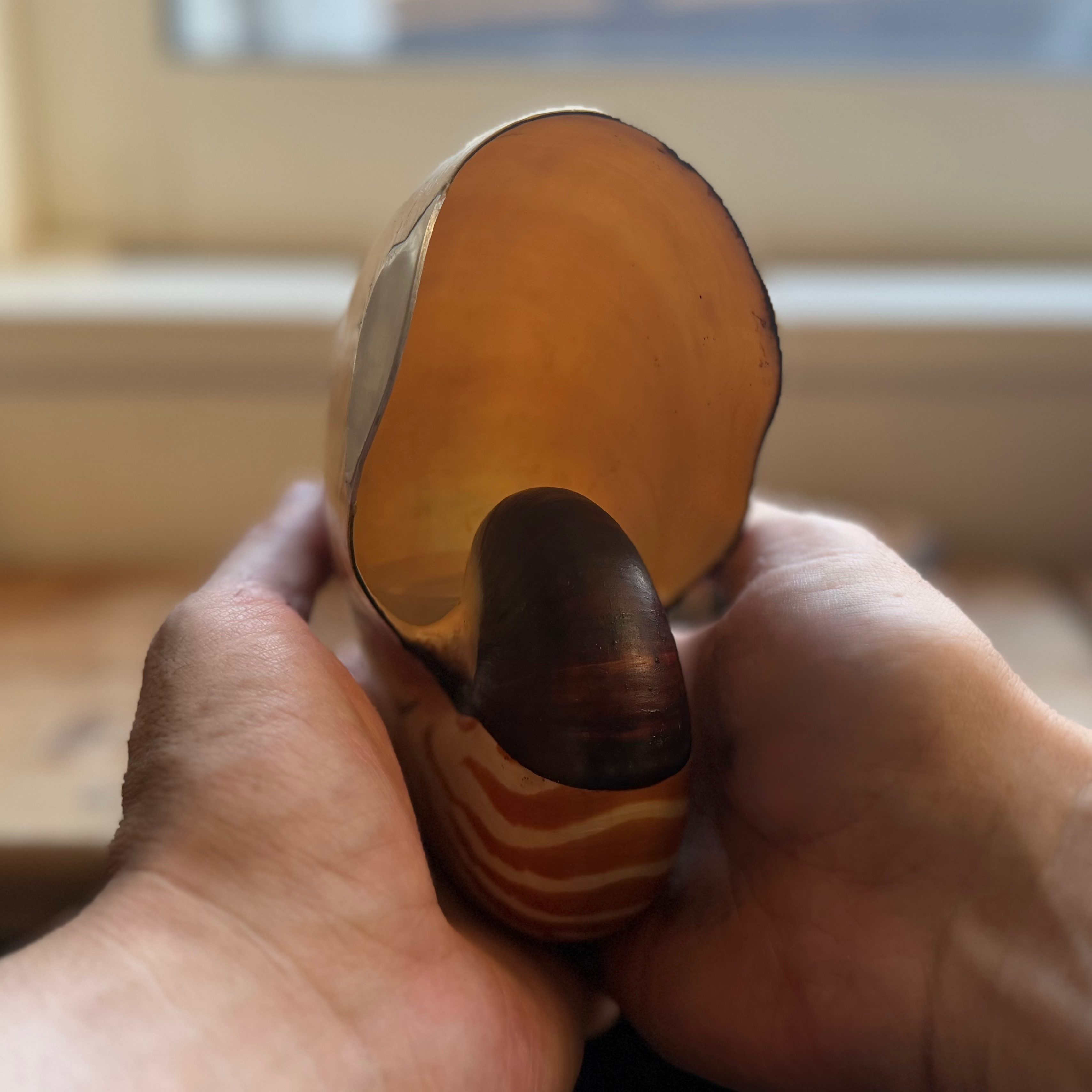
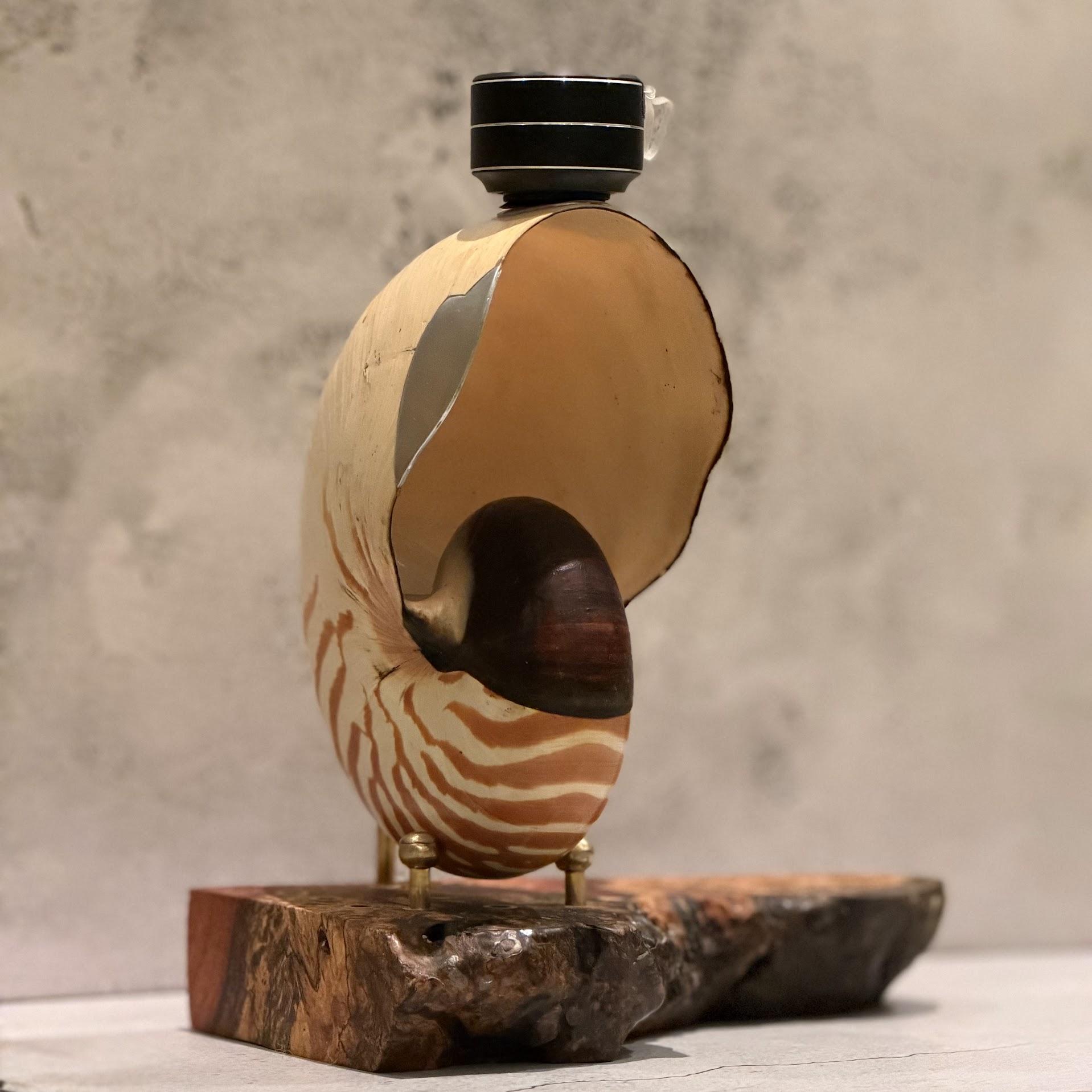
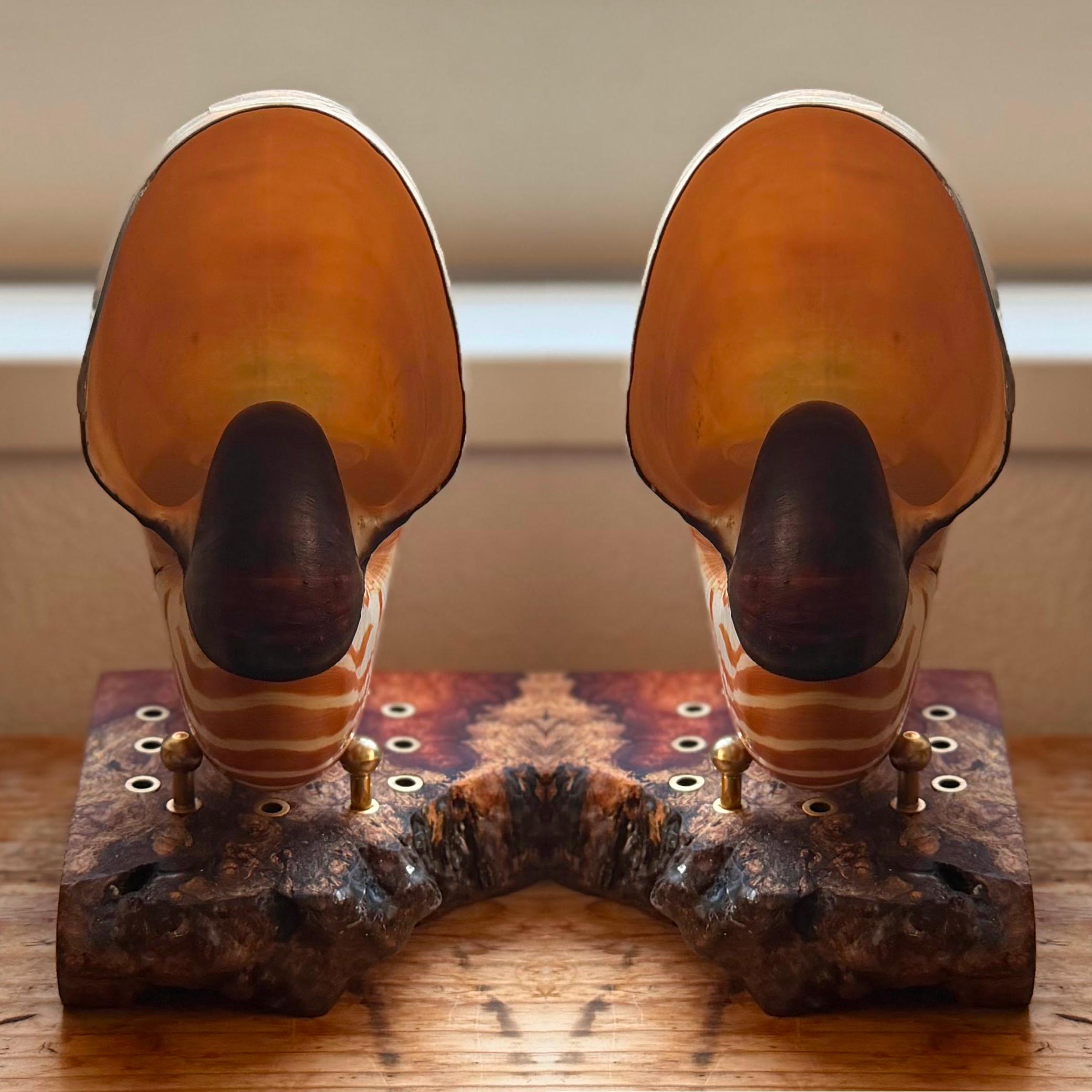
This speaker has a soul. It is not just a static object to leave on a desk; it is an instrument designed to be touched and experimented with. Here are its three hidden modes:
1. Haptic Therapy Mode (The Core Experience)
This is the true purpose of this build. Take the shell off the stand and hold it with both hands. Because the "Exciter" turns the entire shell into a vibrating membrane, you don't just hear the sound—you feel it.
- Bone Conduction: Try gently pressing the shell against your ear or your chest. The sound transmits through your bones, creating an immersive experience as if the music is resonating from inside your body.
- Like a Living Creature: The vibration of the low frequencies feels like the purring of a cat or the heartbeat of a living creature.
- Recommendation: Playing ambient tracks (like NASA's "Symphonies of the Planets") in this mode is a spiritual, meditative experience.
2. Acoustic Shapeshifting ("Samurai Chonmage" Mode)
You can drastically change the sound profile by changing where you place the exciter. Since I use non-destructive Gel Tape, you can switch modes depending on your mood.
- Internal Mount (Stealth Mode): Sound Profile: Warm, Lo-Fi, Airy. By hiding the exciter inside, the sound resonates through the spiral air chamber. It produces a muffled, vintage radio tone perfect for Lo-Fi Hip Hop or Jazz.
- External Mount (Samurai Mode): Sound Profile: Crisp, Hi-Fi, Direct. Stick the exciter onto the top of the shell (looking like a Japanese Samurai's topknot or "Chonmage"). This directly drives the hardest part of the calcium carbonate structure. The result is surprisingly clear highs and distinct vocals. (Disclaimer: When I say "Hi-Fi," I mean relatively speaking! I am still proudly chasing "The Ultimate Cheap Sound." Don't expect audiophile quality; expect a charming, clearer version of a toy gadget. It is "Hi-Fi for a seashell.")
3. Stereo Mode (The Ultimate Luxury)
Since this project uses a modern Bluetooth exciter, most of them support TWS (True Wireless Stereo). If you have the energy (and the insane luck of finding another matching Nautilus shell), you can pair two units for a stereo setup. Listening to modern jazz through two ancient fossils... that is the ultimate luxury. (Note: The photo is a conceptual image. I am still dreaming of finding the second shell!)
Care Instructions (Handle with Love)
- Fragility: Remember, this is CaCO3 (Calcium Carbonate). It is strong against compression but weak against impact. If you drop it, it will shatter. Treat it like fine pottery.
- Wood Care: The Karin (Quince) base is finished with beeswax. If it looks dry after a few years, a little fresh wax will bring the grain back to life.
Hypothesis: Biological Form & Acoustic Behavior
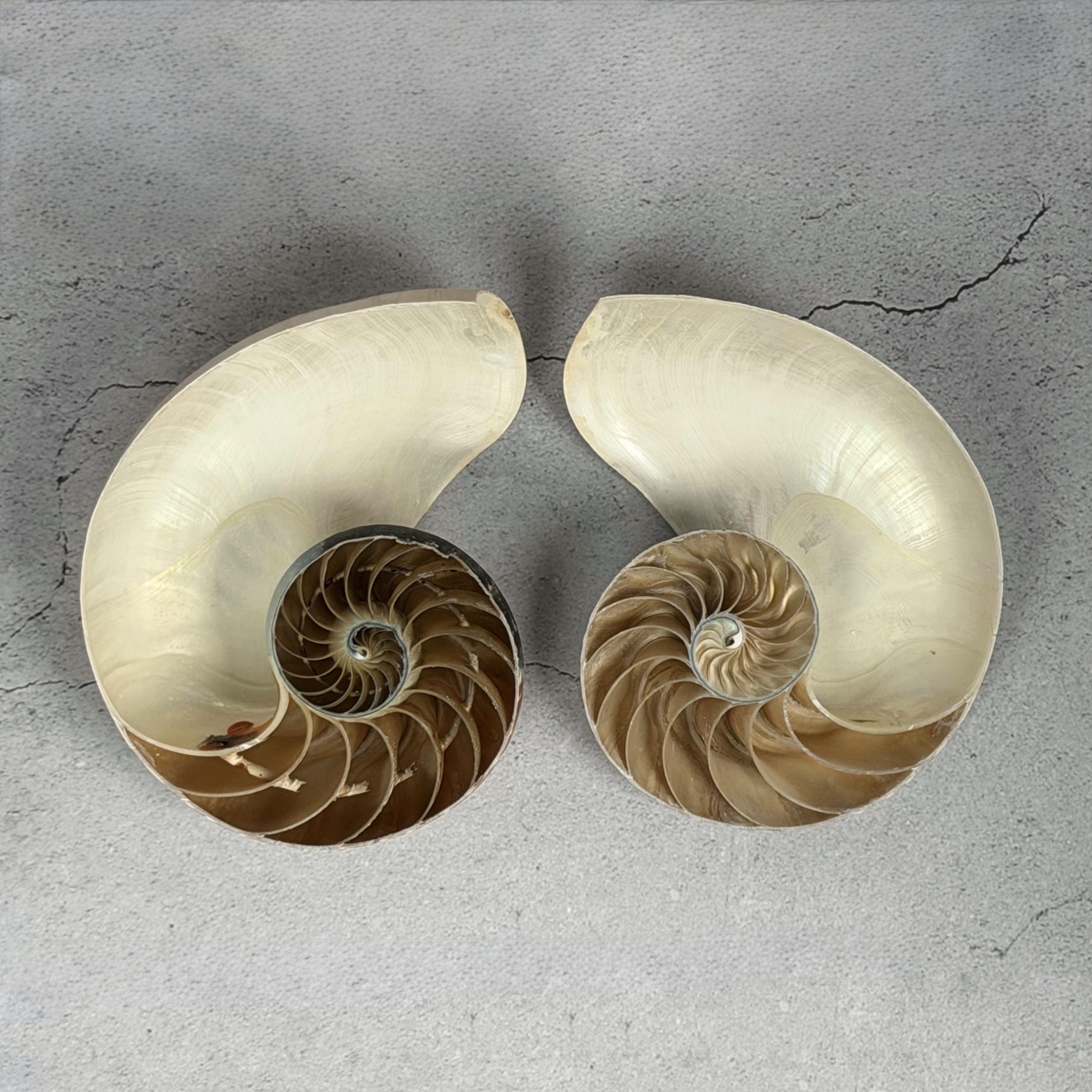
Why use a Nautilus shell? Is it just for aesthetics?
While the visual impact is undeniable, my hands-on testing suggests a fascinating intersection between biology and acoustic engineering.
I do not claim that nature "designed" this for sound. However, the structures refined by 500 million years of evolution coincidentally appear to solve several modern audio engineering challenges.
Here are my observations and hypotheses regarding why the Nautilus shell functions so interestingly as a haptic speaker.
1. Hypothesis: The Logarithmic Spiral (Reducing Standing Waves)
In a standard rectangular speaker box, sound waves bounce between parallel walls, creating "standing waves" (box resonance) that can muddy the audio.
Observation: The Nautilus shell forms a Logarithmic Spiral. Since there are no parallel surfaces inside, I hypothesize that this shape naturally helps dissipate unwanted internal resonance. This might explain why the sound remains clear even without traditional damping materials.
2. Hypothesis: Natural Exponential Horn
The shell's aperture expands outwardly, structurally resembling a natural Exponential Horn.
Speculation: This shape likely acts as an "acoustic impedance matcher," helping to transfer the exciter's vibrational energy to the air. This characteristic may be why the audio projects forward with surprising pressure, defying the speaker's compact size.
3. Physics of Haptics: Low Mass & High Rigidity
From a vibration engineering perspective, the shell's physical properties seem particularly well-suited for haptic feedback.
Engineering View: According to Newton's law (F=ma), for a given input force (F), a lower mass (m) results in higher acceleration (a). Because the shell is extremely thin and light yet structurally rigid due to its arch design, the exciter appears to drive the entire object with high efficiency.
4. The "Septa" Effect (Internal Chambers)
As seen in the cut-away cross-section of my model, the interior is divided by walls called Septa.
Hypothesis: I suspect this creates a "Multi-Degree-of-Freedom" system. Instead of a single peak resonance, the vibration might be distributed across multiple frequencies. This could account for the smooth, organic vibration that feels pleasant to the touch, avoiding the harsh "buzzing" often found in simple plastic or metal plates.
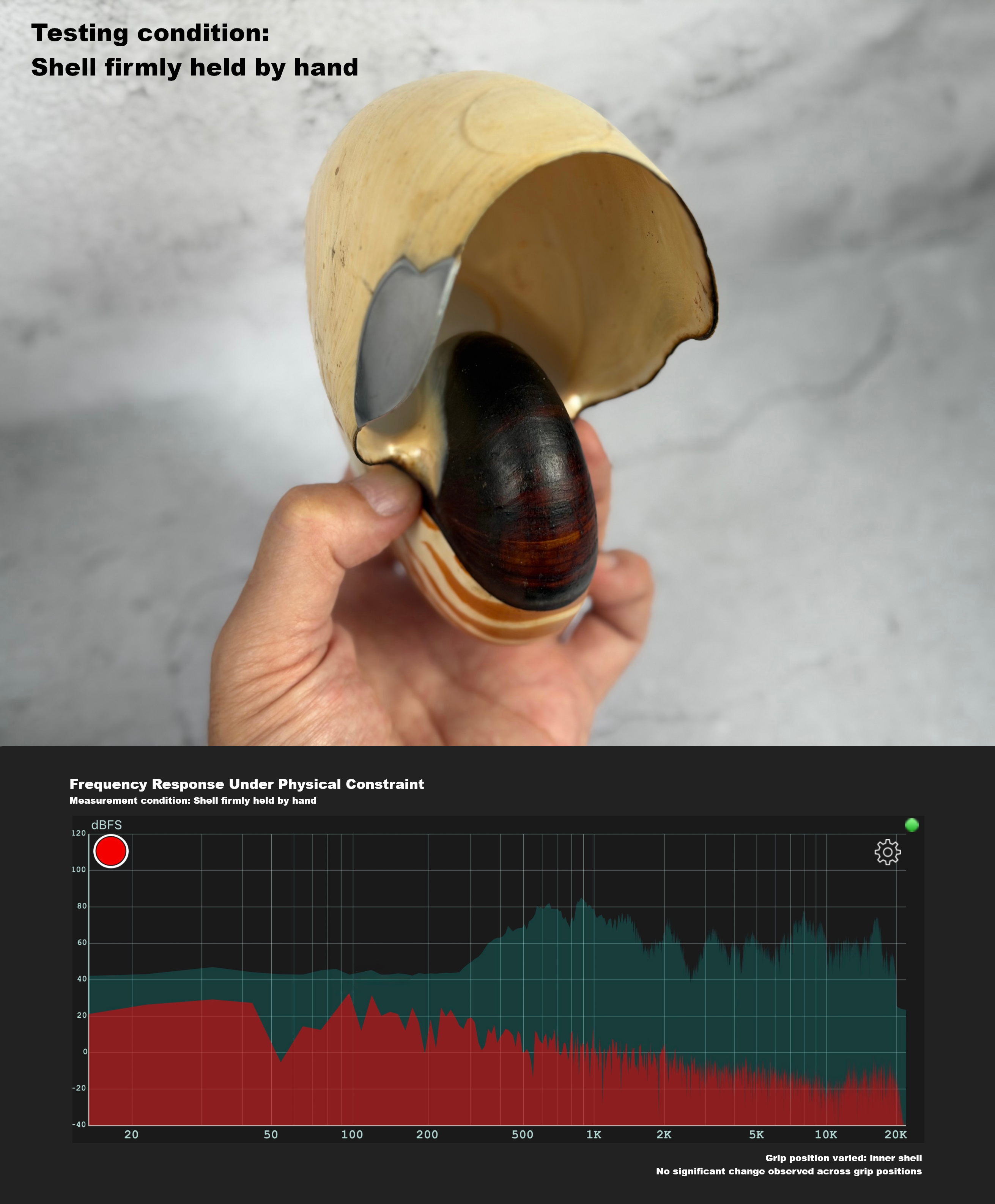
The Most Surprising Observation: "Robustness to Touch"
During the testing phase (documented in my Hackaday logs), I encountered an unexpected behavior.
The Fact:
When holding the shell by hand—whether gripping the inner whorl, the middle, or the outer edge—the sound pressure and vibration intensity did not noticeably change.
Usually, human contact acts as a damper, muffling the sound of small resonant objects. Yet, the Nautilus shell seemed indifferent to how it was held.
My Interpretation:
This suggests that vibration is not localized but distributed globally across the shell’s complex structure. The combination of spiral geometry and internal septa appears to "average out" the energy flow, making the system remarkably tolerant (robust) to external damping.
Summary: An Evolutionary Coincidence?
The Nautilus shell is not a designed speaker, but it behaves like a "multi-objective optimized structure."
- Thin & Light → High Efficiency?
- Multi-Chamber → Distributed Resonance?
- Logarithmic Spiral → Non-parallel Walls?
It is not magic; it is simply a 500-million-year-old structure that happens to be an incredibly fun interface for modern haptic physics.
Conclusion

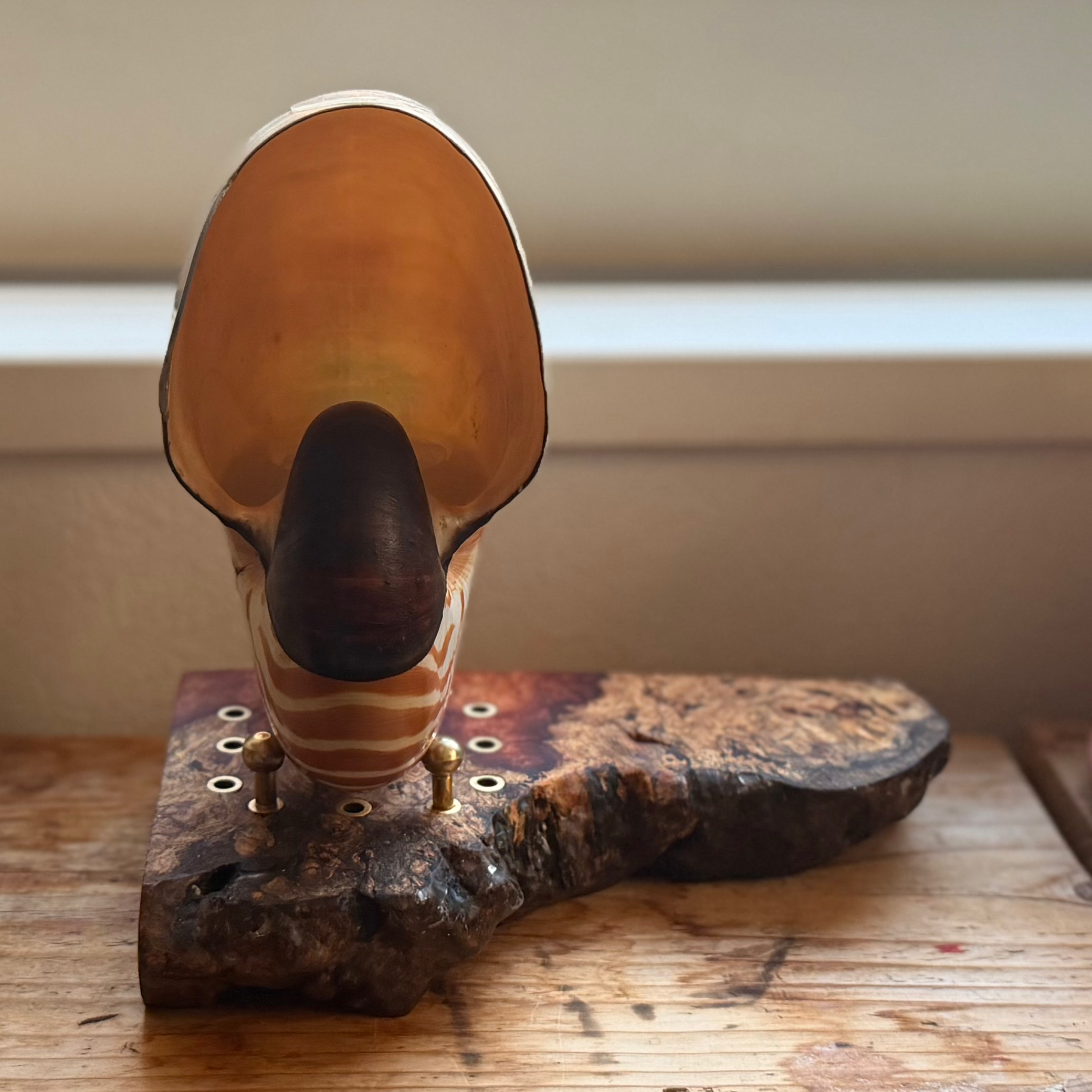
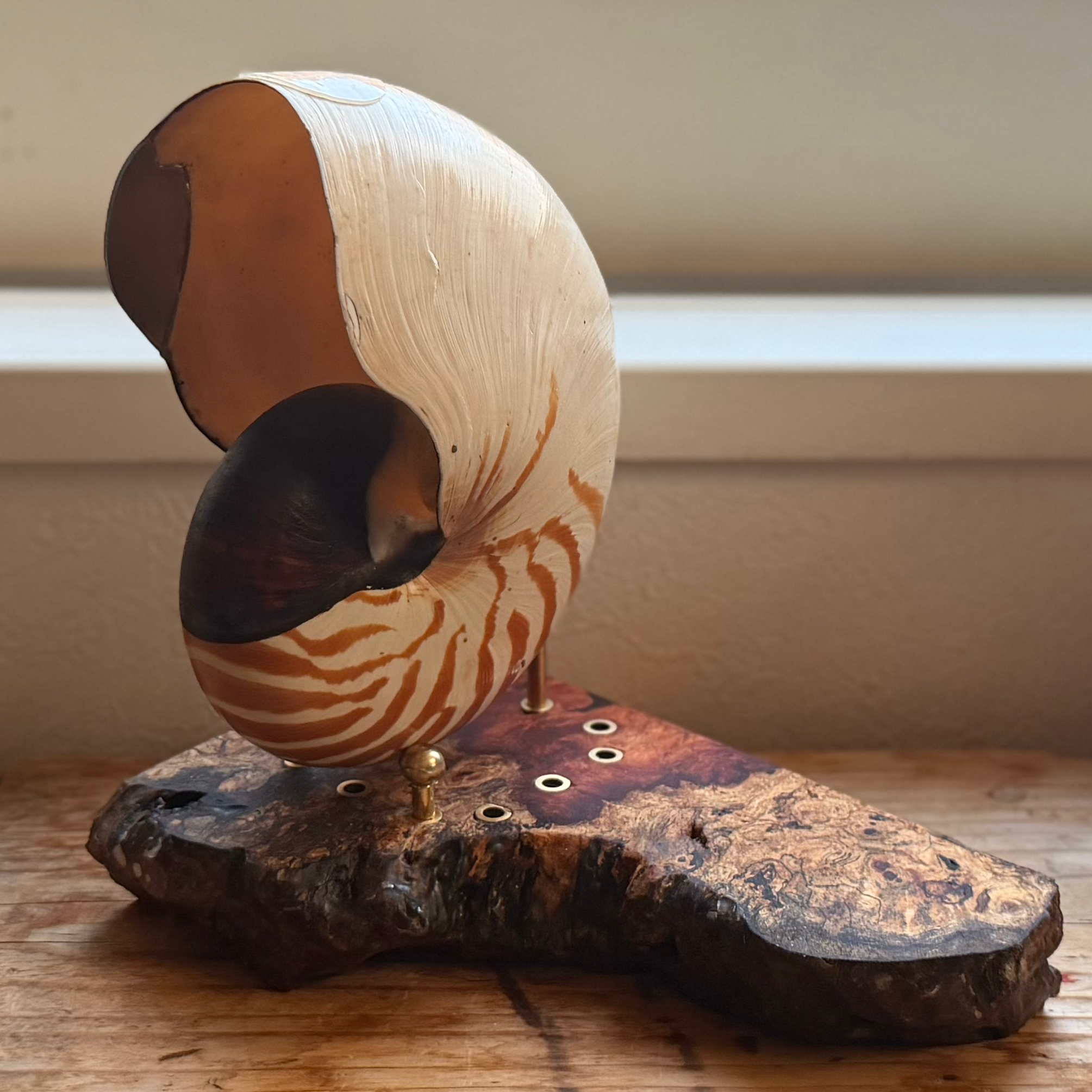
What started as a disappointment from losing a lottery turned into my most unique creation. I managed to build a speaker that respects nature (reversible), honors tradition (Kintsugi), and embraces technology (Haptics).
I hope this Steampunk Nautilus inspires you to look at "broken" things not as trash, but as a canvas for your next project.
Now, go out there, find something broken, and give it a new voice. Happy Making!
At the End
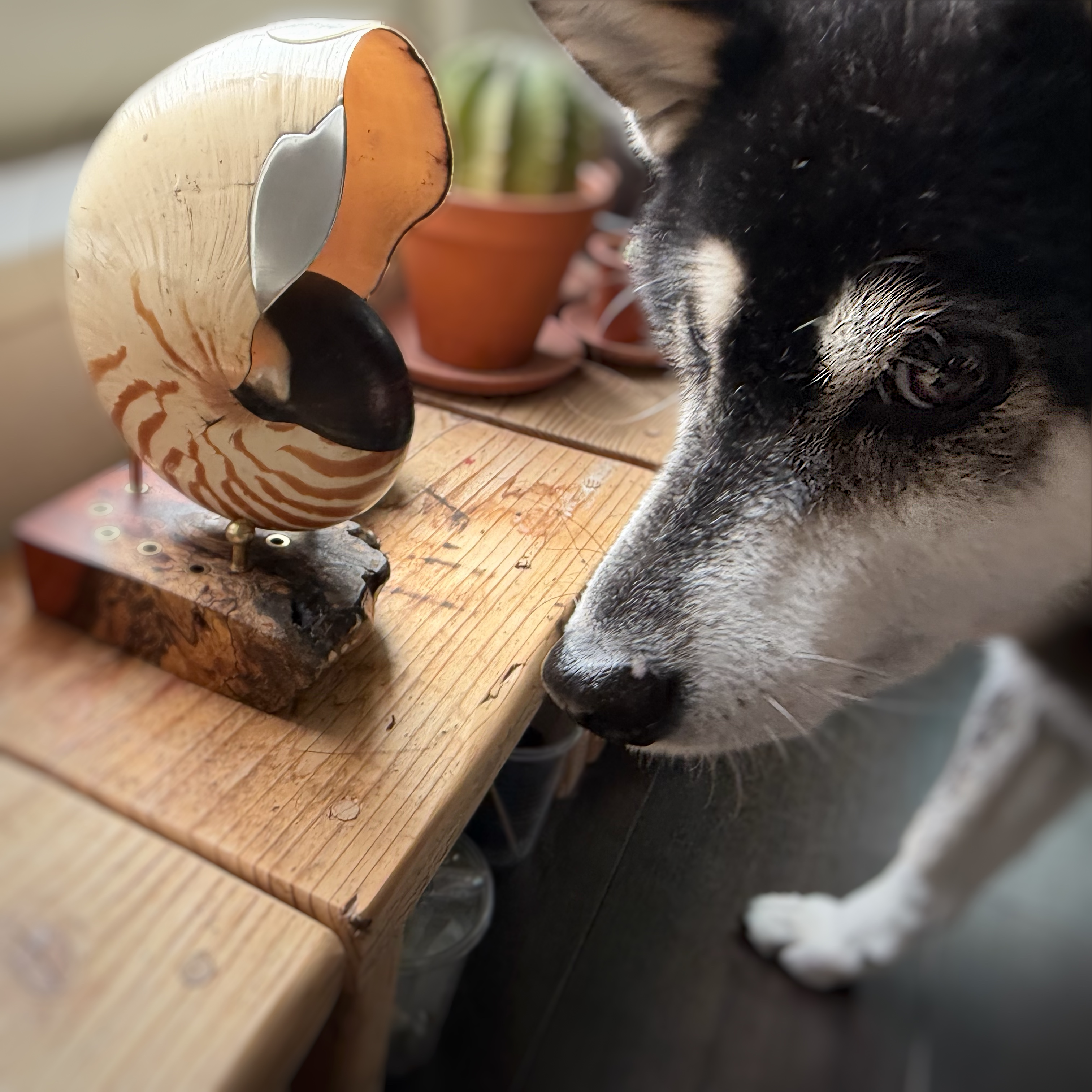
Finally, I dedicate my deepest gratitude to my black Shiba Inu, "Iroha (彩葉)".
Thank you for always being by my side—and for patiently putting up with the "noise" from all my experiments. You are the best assistant a Maker could ask for.