DIY Motorized Pergola Upgrade for My Backyard Patio – How I Built a Remote-Controlled Shade System for Sun and Rain Protection
by Christoph Rauscher in Outside > Backyard
97 Views, 1 Favorites, 0 Comments
DIY Motorized Pergola Upgrade for My Backyard Patio – How I Built a Remote-Controlled Shade System for Sun and Rain Protection


I’ve always loved working on backyard projects. There’s something satisfying about building something that actually changes how you live day-to-day.
Last summer, my patio was basically unusable during the hottest part of the day. Too much sun. Too much glare. And when it rained? Forget it.
I didn’t want a basic umbrella. I wanted something permanent. Something clean. Something that felt intentional.
So I decided to install a motorized pergola.
Here’s how I did it — what I used, what I learned, and what I’d do differently next time.
Supplies


Here’s what I used for this project:
- Motorized aluminum pergola kit (I used a pre-engineered system to save time: www.flexpatio.com)
- Concrete anchors
- Power drill
- Impact driver
- Level (a long one helps!)
- Measuring tape
- Ladder
- Socket wrench set
- Silicone sealant
- A friend (highly recommended)
Optional but helpful:
- Caulking gun
- Outdoor extension cord (for testing motor before final wiring)
Planning the Layout

Before anything arrived, I measured my patio about five times.
You want to be absolutely sure about:
- Width clearance
- Height restrictions
- Drainage direction
- Where water will flow
Motorized pergolas usually have integrated gutter systems, so you need to make sure downspouts won’t drain into a walkway or pool area.
I also checked local HOA rules just in case. Always worth doing before you start drilling into concrete.
Assembling the Frame

The unit I chose came as a modular aluminum system, which made things much easier.
The posts were hollow aluminum, powder-coated, and surprisingly lightweight — but once anchored, extremely solid.
We laid everything out on the patio first to make sure all parts were accounted for.
Pro tip:
Do not fully tighten bolts until the entire frame is square and level. Leave slight flexibility for adjustment.
Once everything was aligned, we tightened it down and secured the posts into the concrete using heavy-duty anchors.
That frame wasn’t going anywhere.
Installing the Motorized Louvers
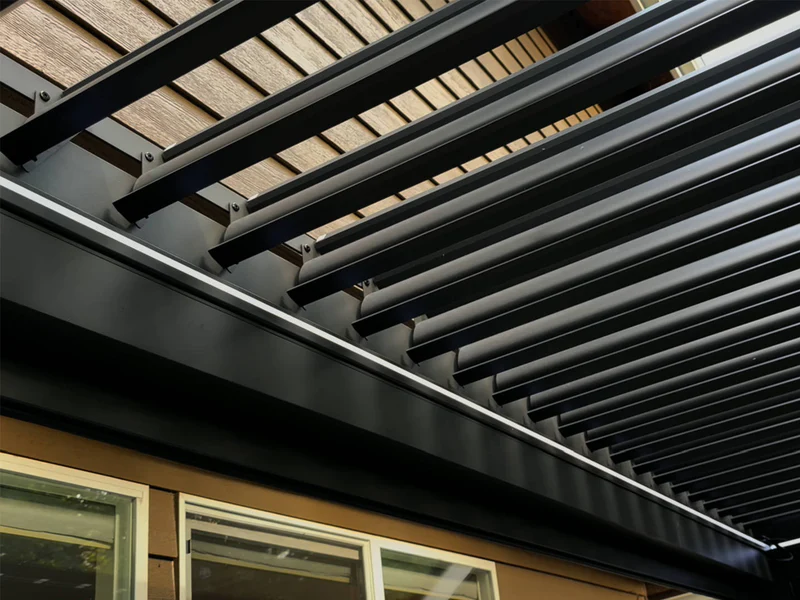


This was the fun part.
The adjustable louvers are what make this kind of pergola special. Instead of fixed slats, these rotate with a motor, letting you control:
- Full sun
- Partial shade
- Fully closed (rain protection)
Installation involved attaching the louver panels to the cross beams and connecting the motor housing unit.
Most systems now are plug-and-play, which made wiring pretty straightforward. I tested the motor before sealing everything up.
When I hit the remote and saw the louvers rotate smoothly for the first time — that was a good moment.
Sealing & Waterproofing
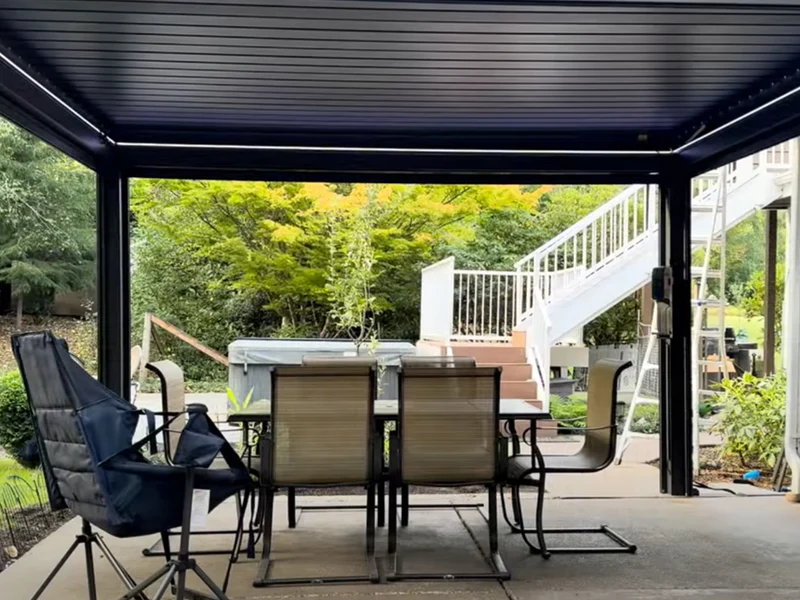

Once the structure was fully assembled, I applied silicone sealant around base plates and key joints.
When the louvers close completely, they channel water into built-in gutters and down through the posts.
I tested it with a hose before trusting it to real rain.
No leaks.
Huge relief.
Final Adjustments & Styling


After everything was secure, I added:
- String lights
- Outdoor sectional seating
- A small fire pit
- Potted plants
Now it feels like an outdoor living room instead of just a slab of concrete.
The biggest difference?
I actually use my patio now — even during midday sun.
And when it rains, I just close the louvers with the remote and stay dry.
What I Learned
- Measure more than you think you need to.
- Get help during installation.
- Test the motor before finalizing connections.
- Integrated drainage makes a huge difference.
- Aluminum is low-maintenance compared to wood (no staining, no warping).
- If you’re considering upgrading your backyard, this was honestly one of the most impactful projects I’ve done.
- It’s not the cheapest DIY — but in terms of daily enjoyment and home value, totally worth it.