DIY Outdoor Epoxy Bar Top With a Glowing River
by jeremyhoffpauir in Workshop > Woodworking
819 Views, 11 Favorites, 0 Comments
DIY Outdoor Epoxy Bar Top With a Glowing River
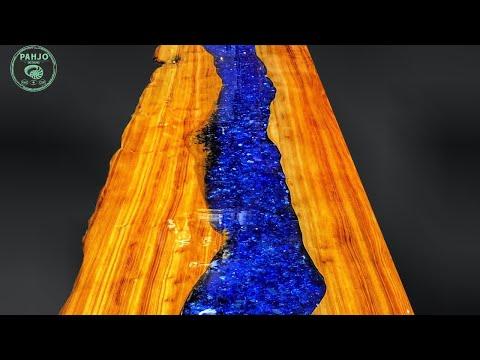
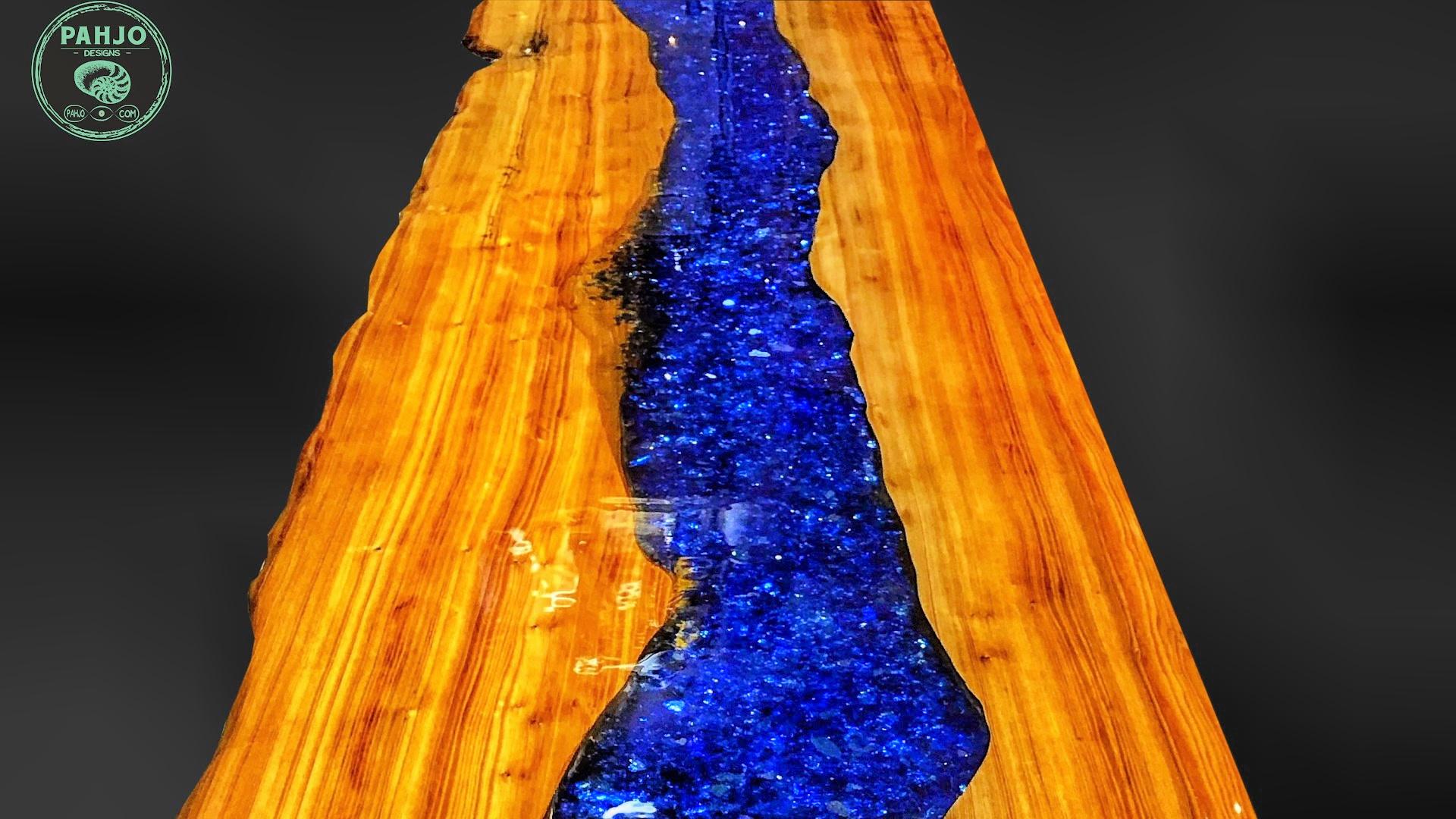
In this instructable, I show you how I made a live edge epoxy bar top using a wood slab with unique features such as a glowing river.
Even if a an epoxy bar top isn't on your to-do list right now, these epoxy resin tips and woodworking techniques apply to other woodworking and epoxy projects.
There are many things which are difficult to explain with words and images, so be sure to checkout the video tutorial.
Supplies
Choose Wood Species
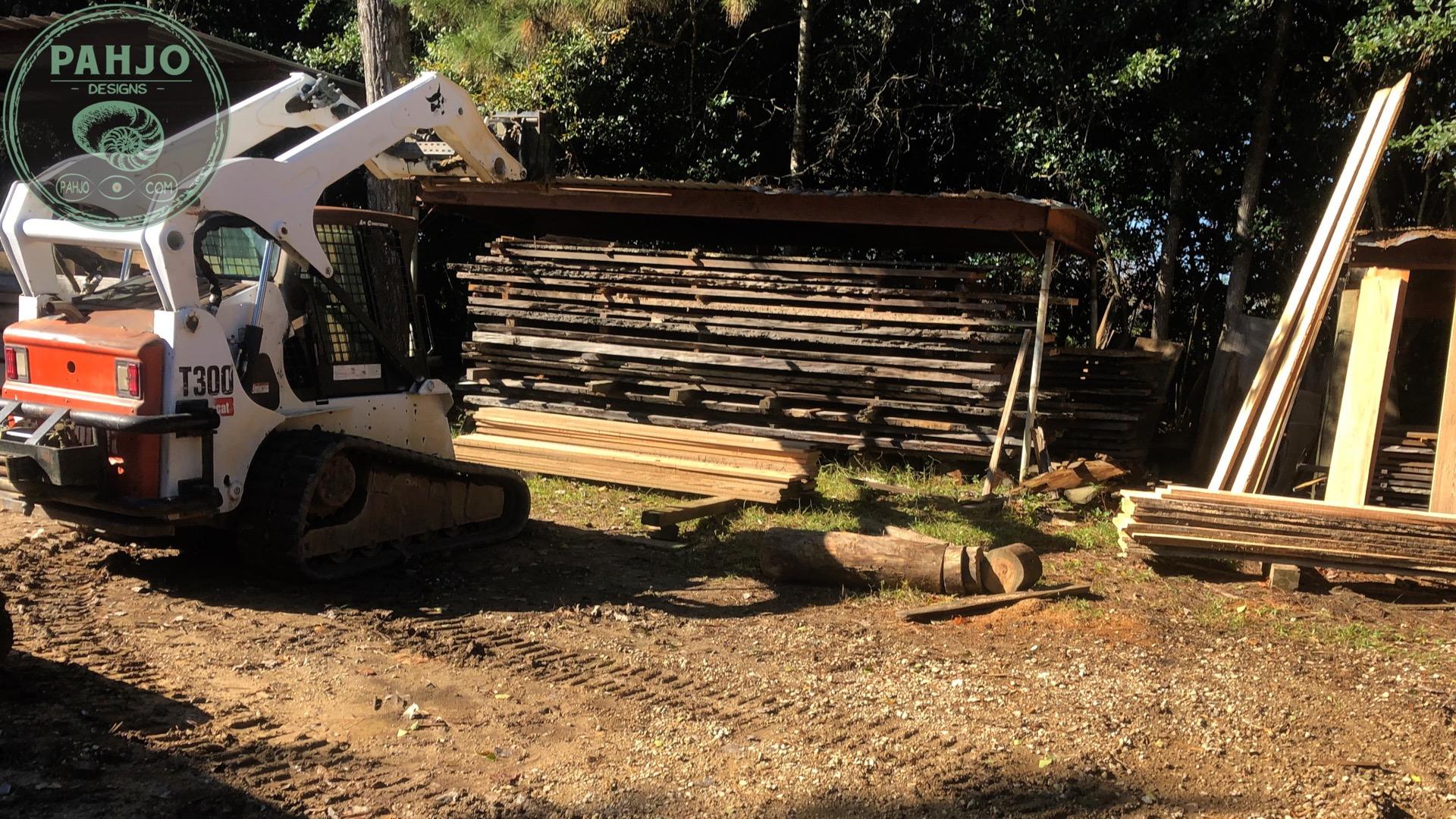
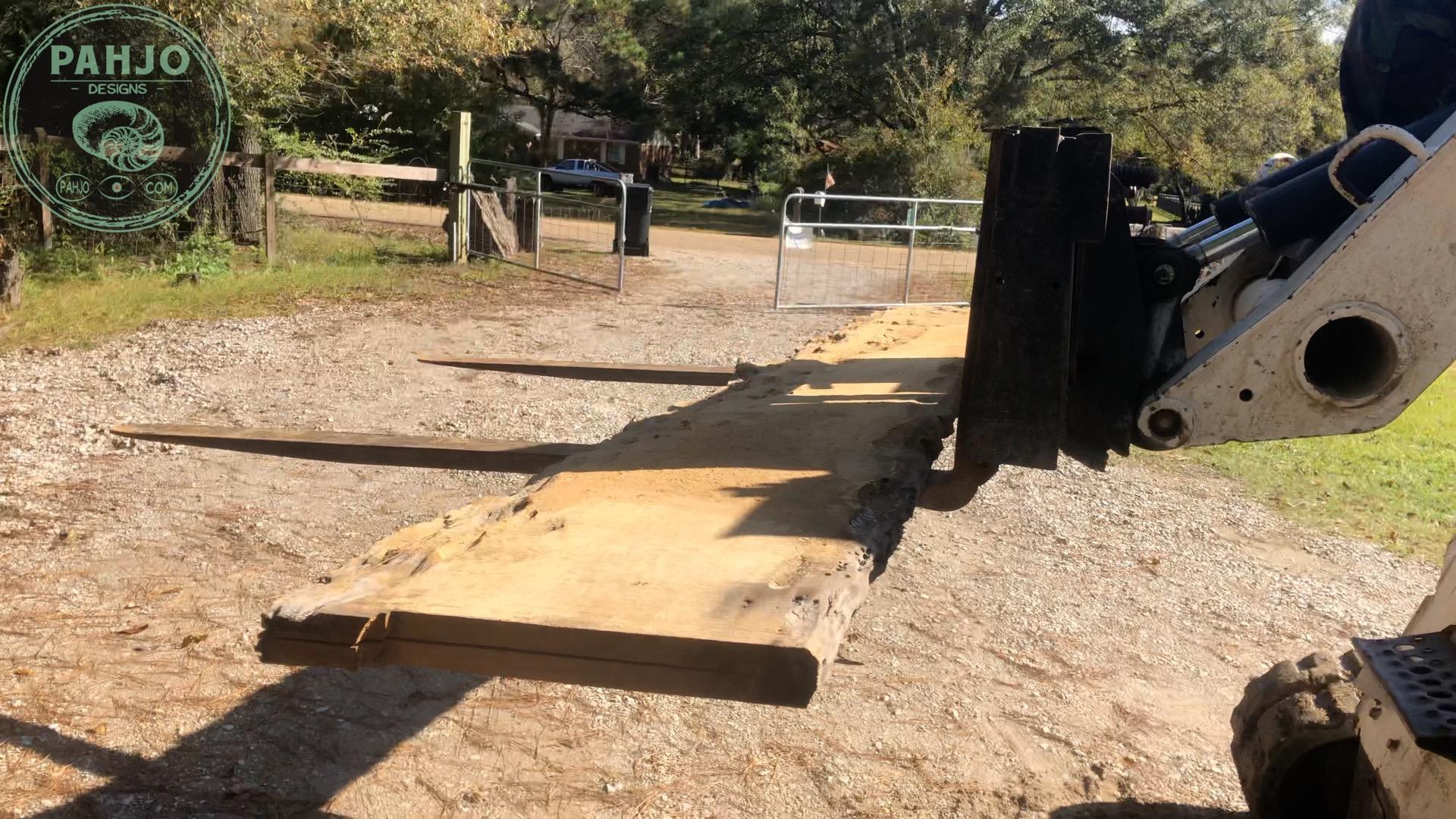
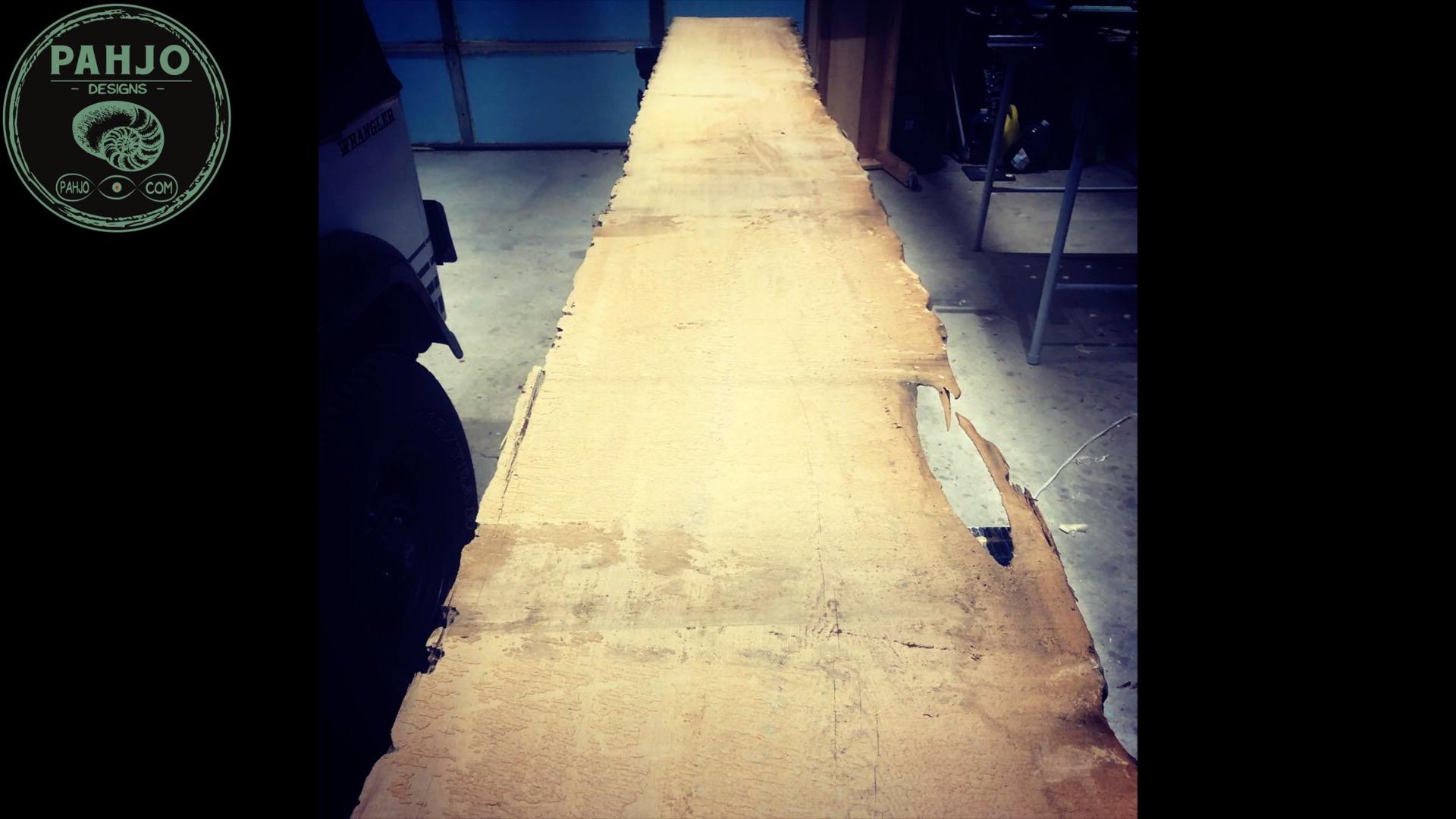
I chose sinker cypress for this epoxy bar top because it's reclaimed from river bottoms – full of unique character and extremely durable. It's an excellent choice for outdoor projects and live edge designs, as it holds up well against moisture and weather.
If sinker cypress isn't available near you or is beyond your budget, I recommend selecting another wood species known for excellent outdoor performance, such as cedar or cypress (either sinker or new growth).
I sourced the slab directly from a local logger for the best quality and price. It was 14' long, 28" wide, and 2.5" thick with double live edges.
Quick tip: Use a truck bed extender when hauling something this size – it makes transport much safer.
Rough Sanding
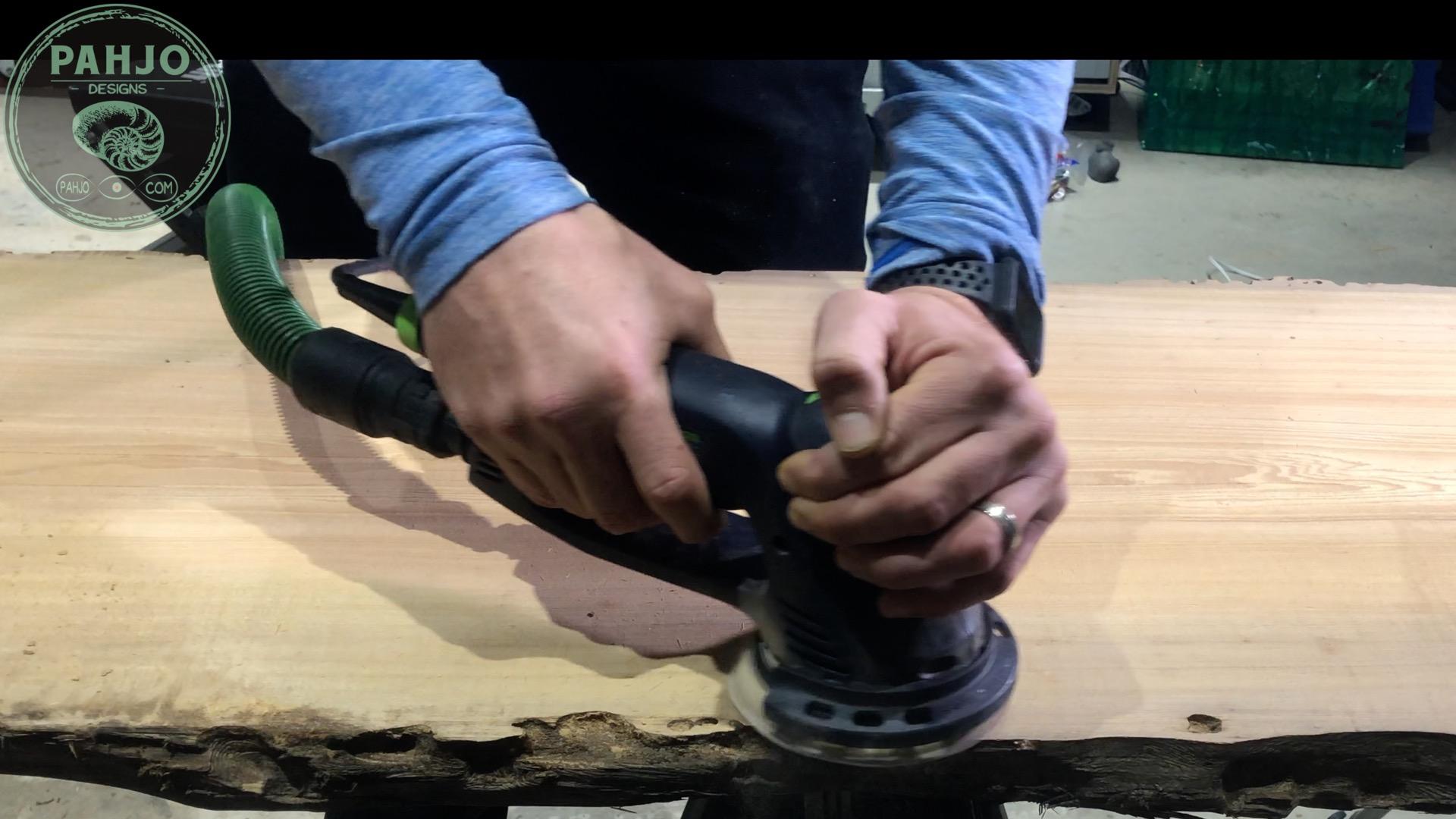
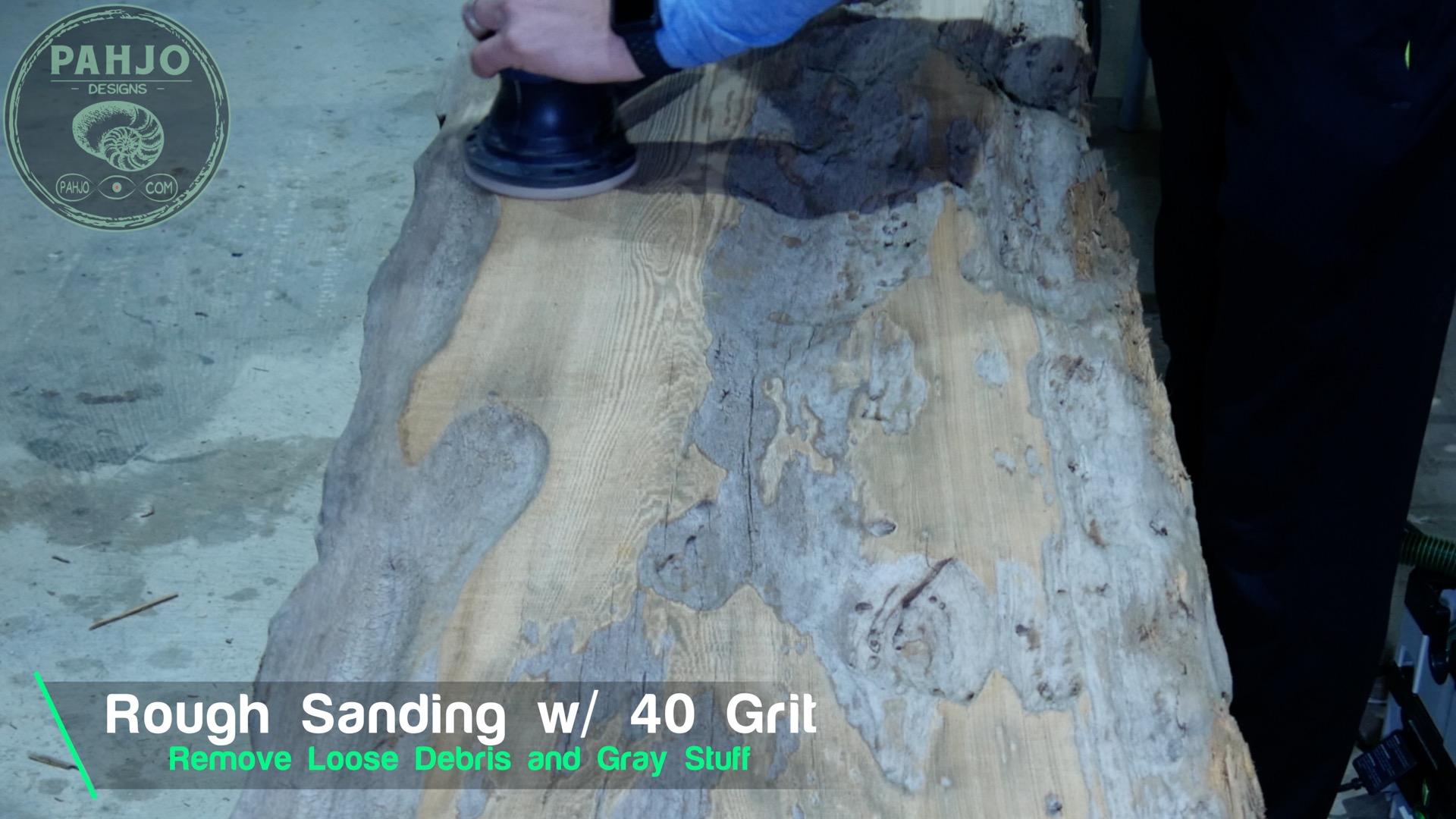
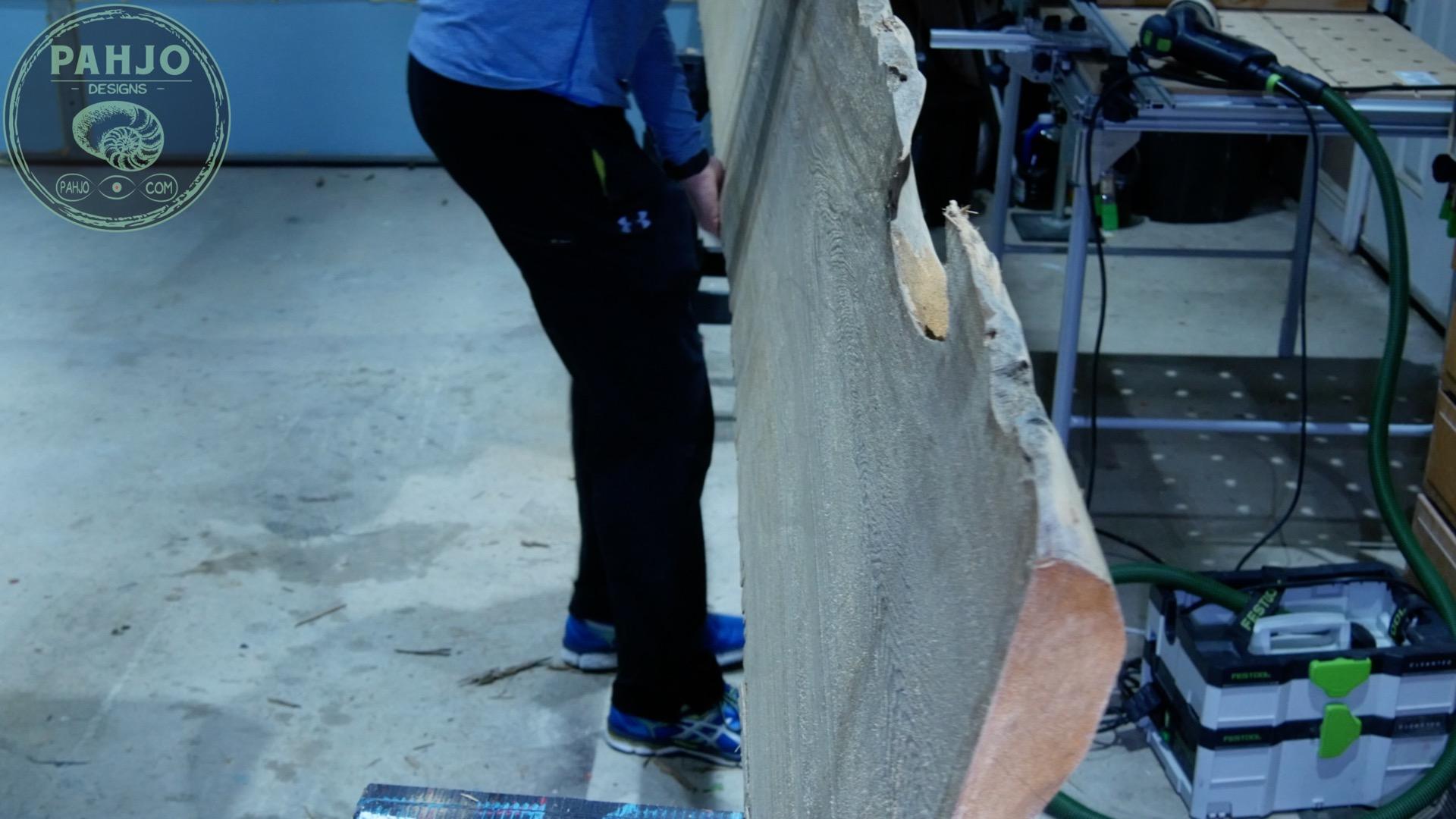
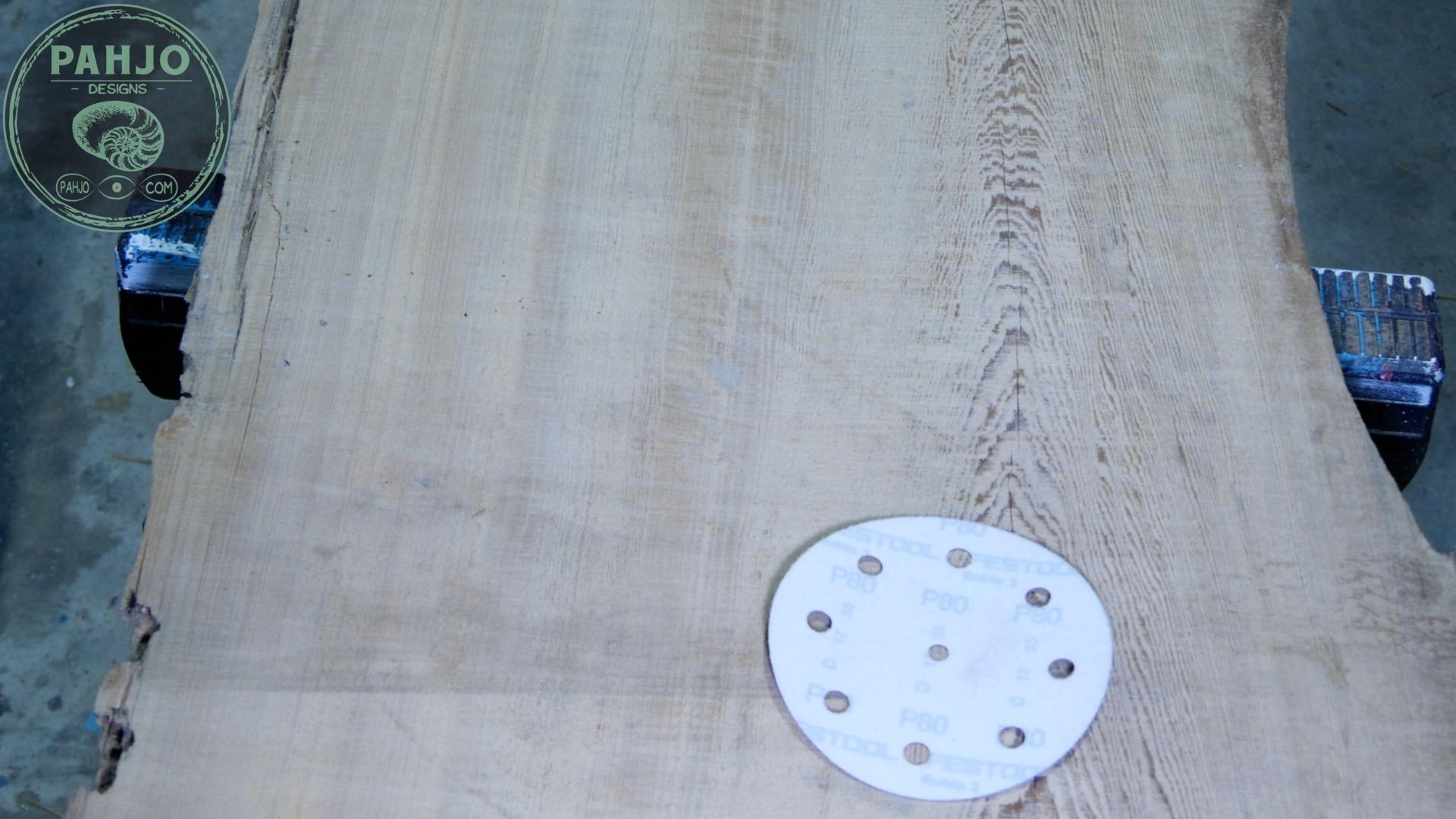
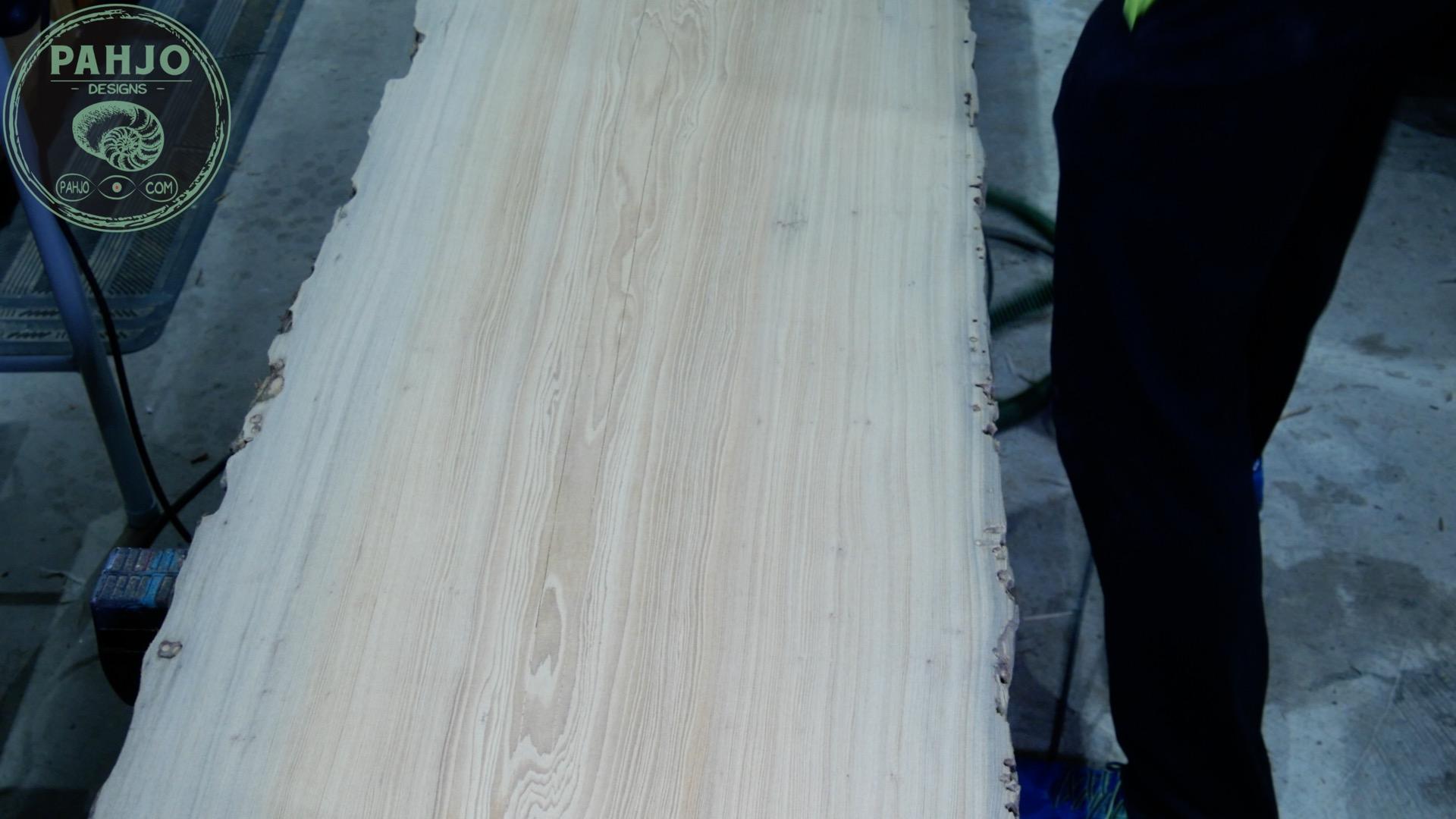
First, I rough sanded to remove dirt, open the grain, and assess the wood.
I used 40 grit on a rotary sander, then moved to 80 grit. An orbital sander works fine, but I recommend a rotary sander, like a Festool RO125 which as both rotary and orbital modes. A good rotary sander saves a ton of time on big slabs b/c it removes material very quickly.
Shaping and Cleaning the Live Edge
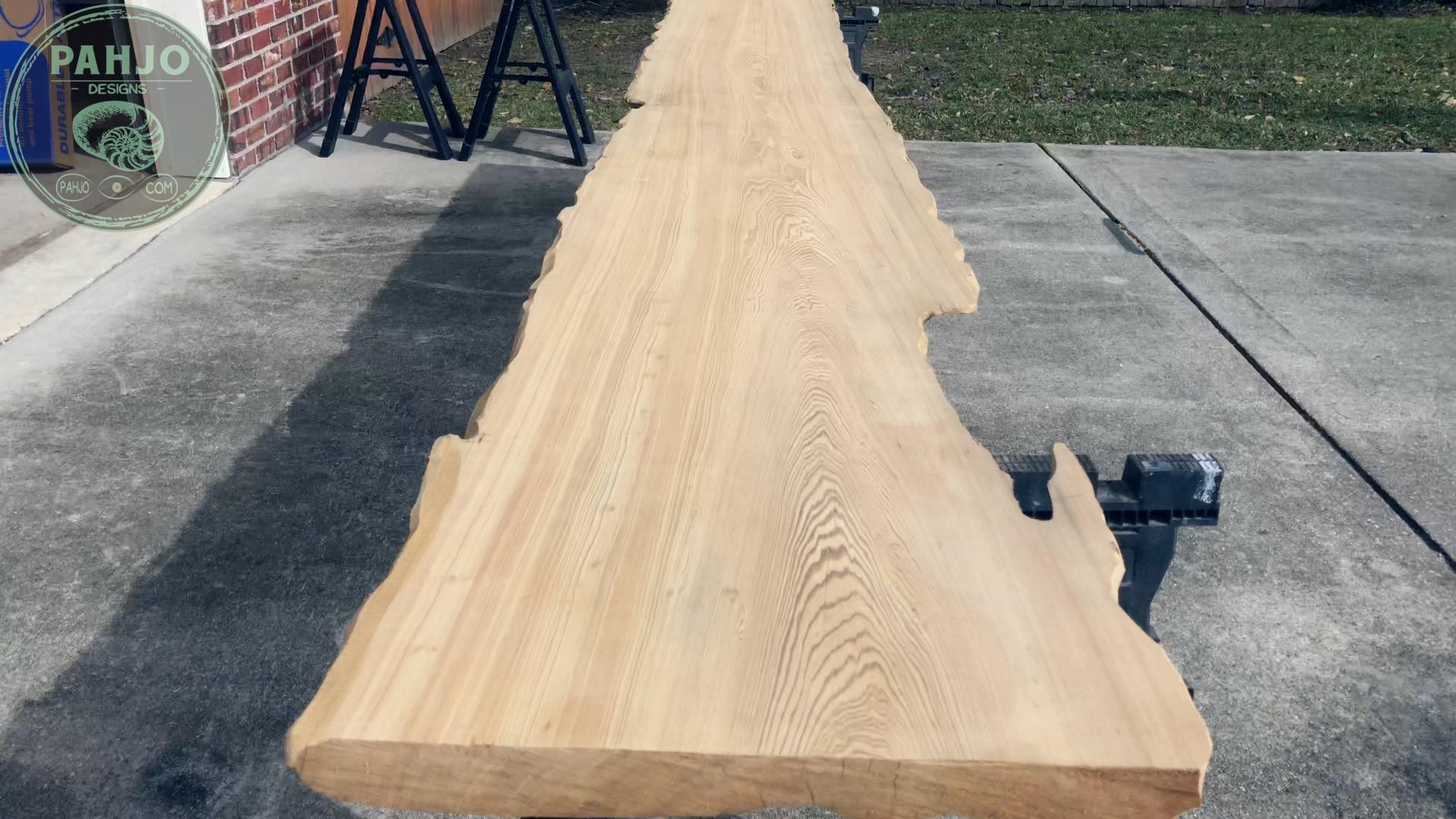
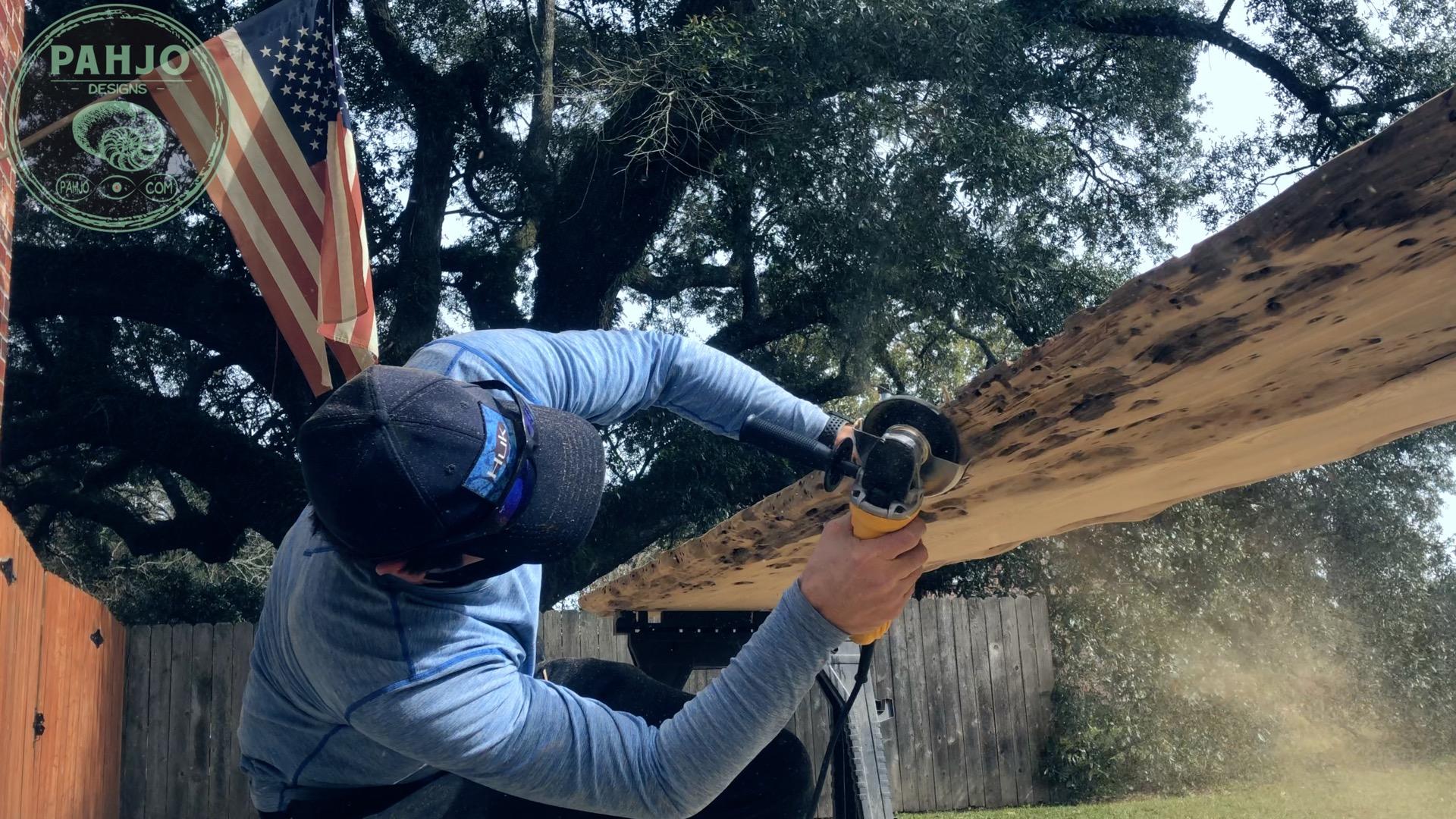
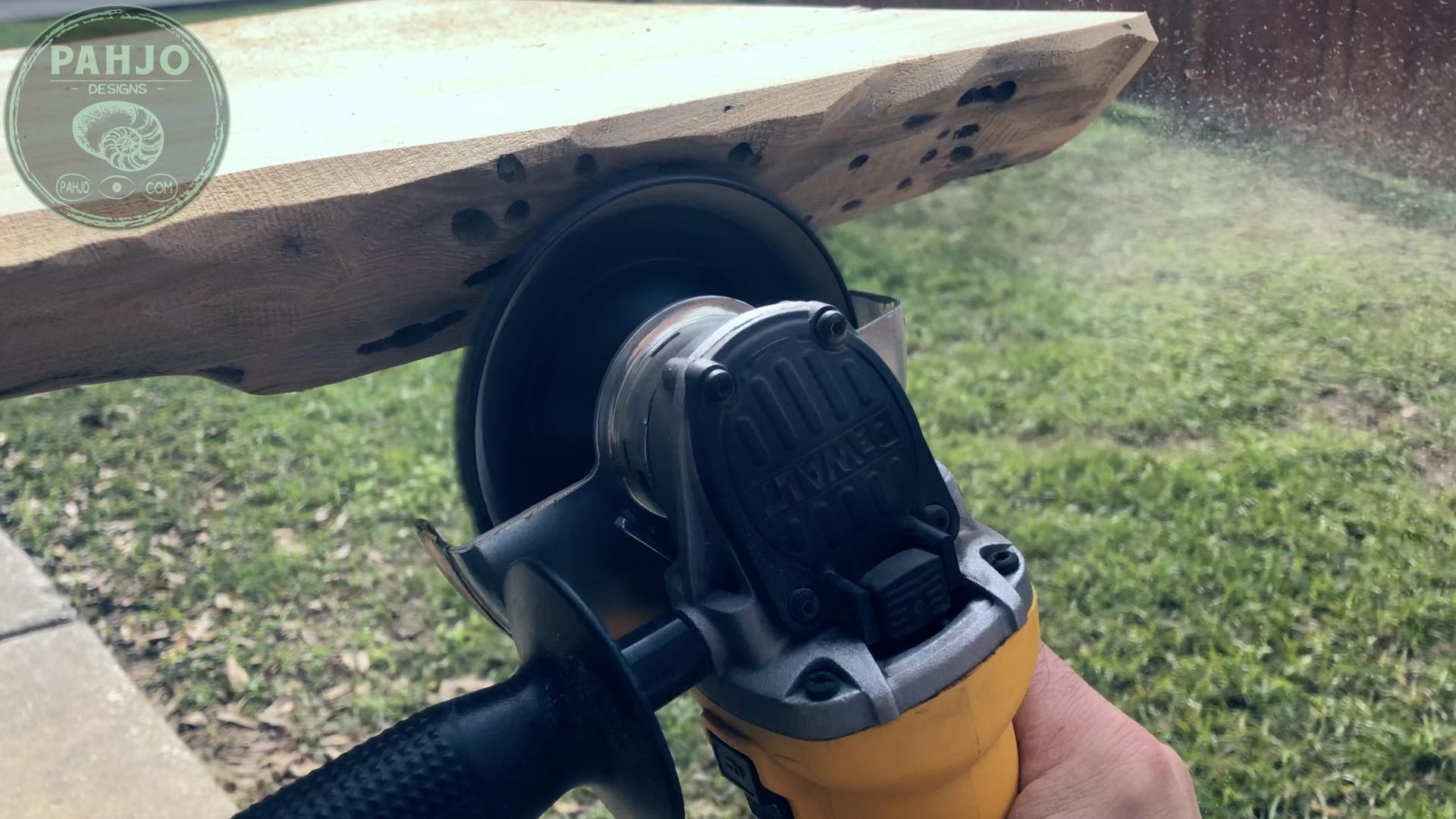

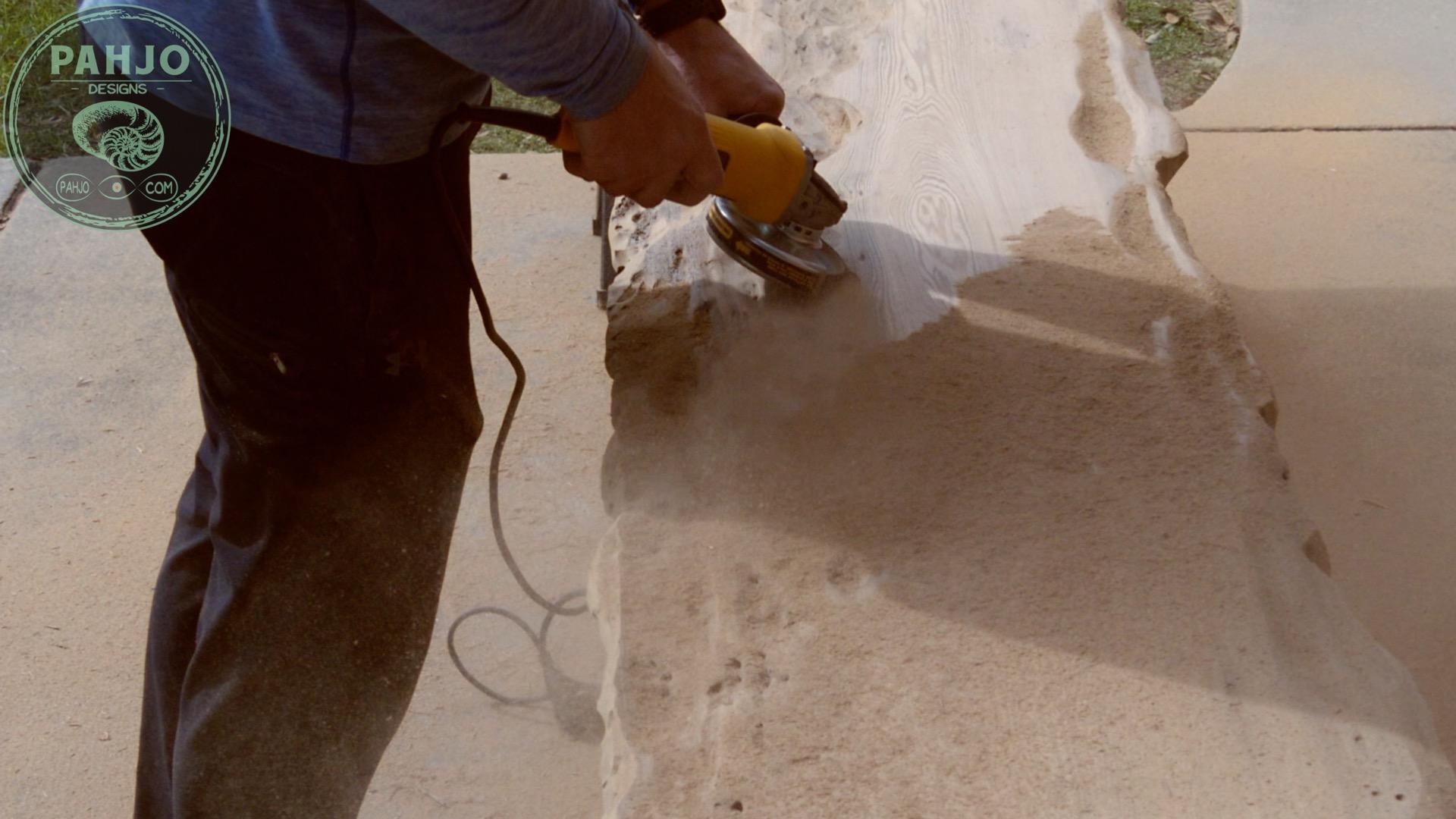
Take this step outside to control dust.
I cleaned and shaped the live edges with a grinder and Kutzall disc – it's fast and effective for natural edges. Filled any small voids as needed.
Then, I flipped the table over and cleaned up the spots I couldn't reach with my rotary sander while rough sanding.
Ripping the Slab for the River Design


The design called for one live edge facing the pool and a straight edge on the bar side. I ripped the double live edge slab down the middle with a track saw.
Creating the Artificial River
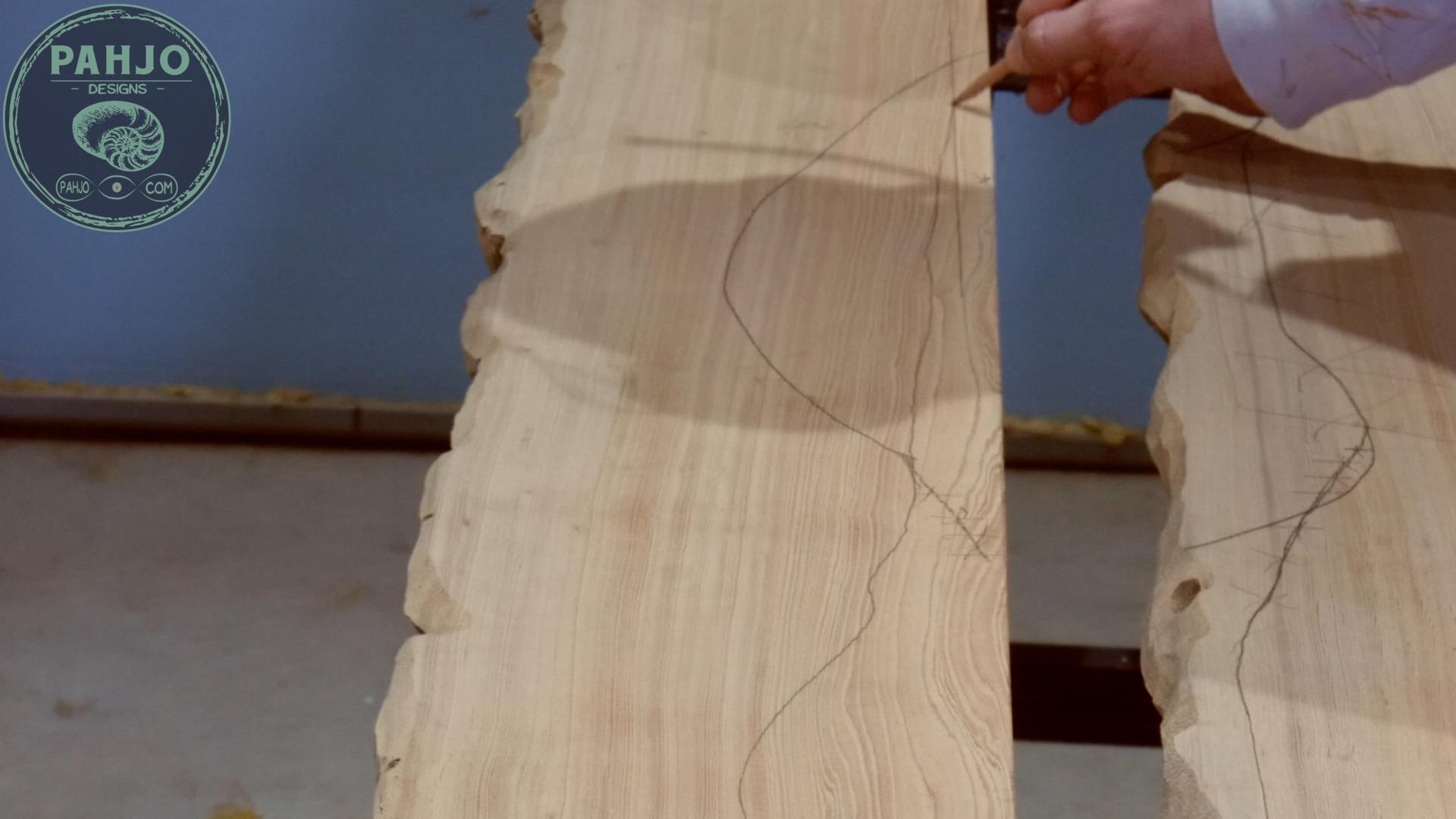
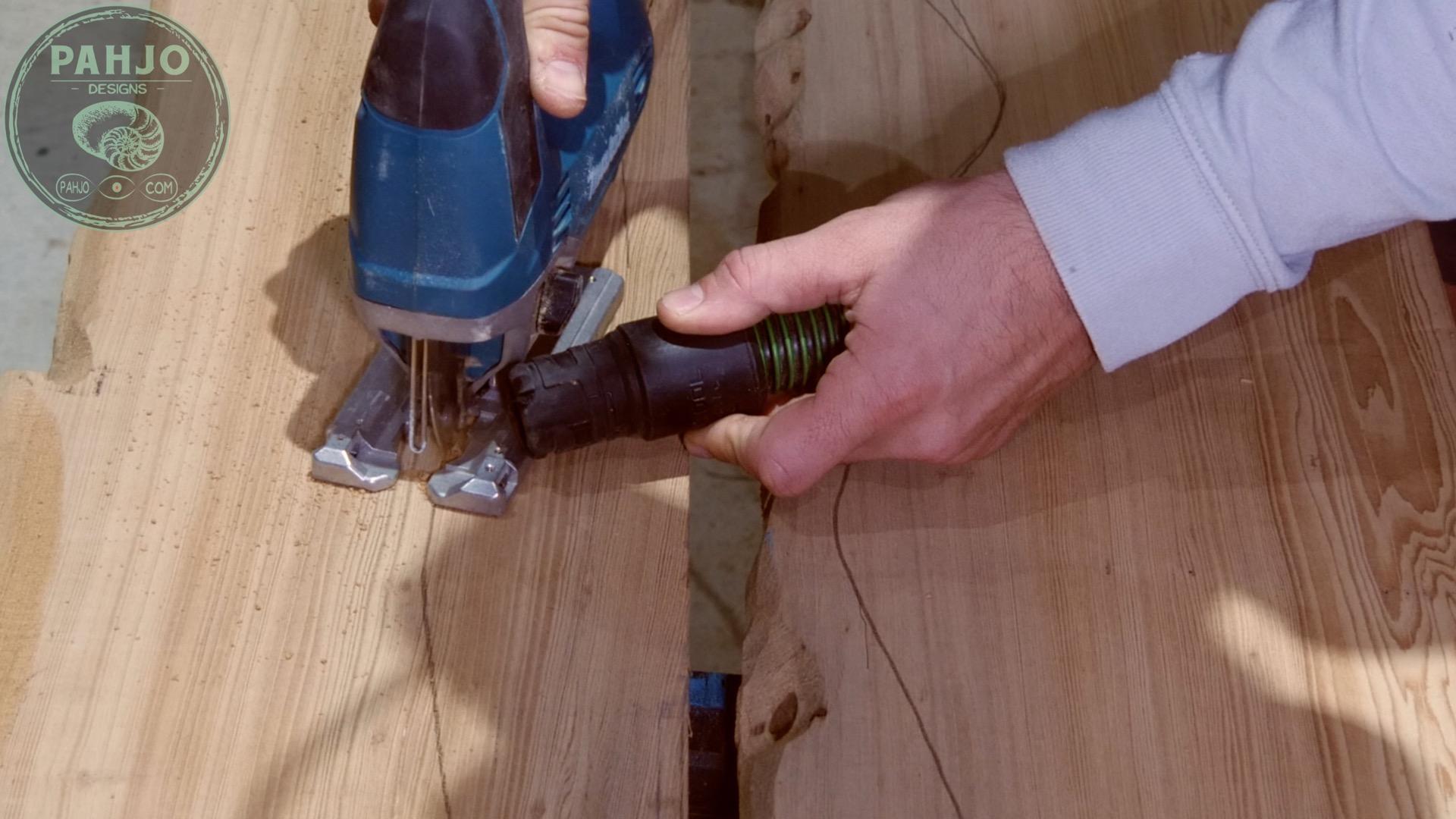
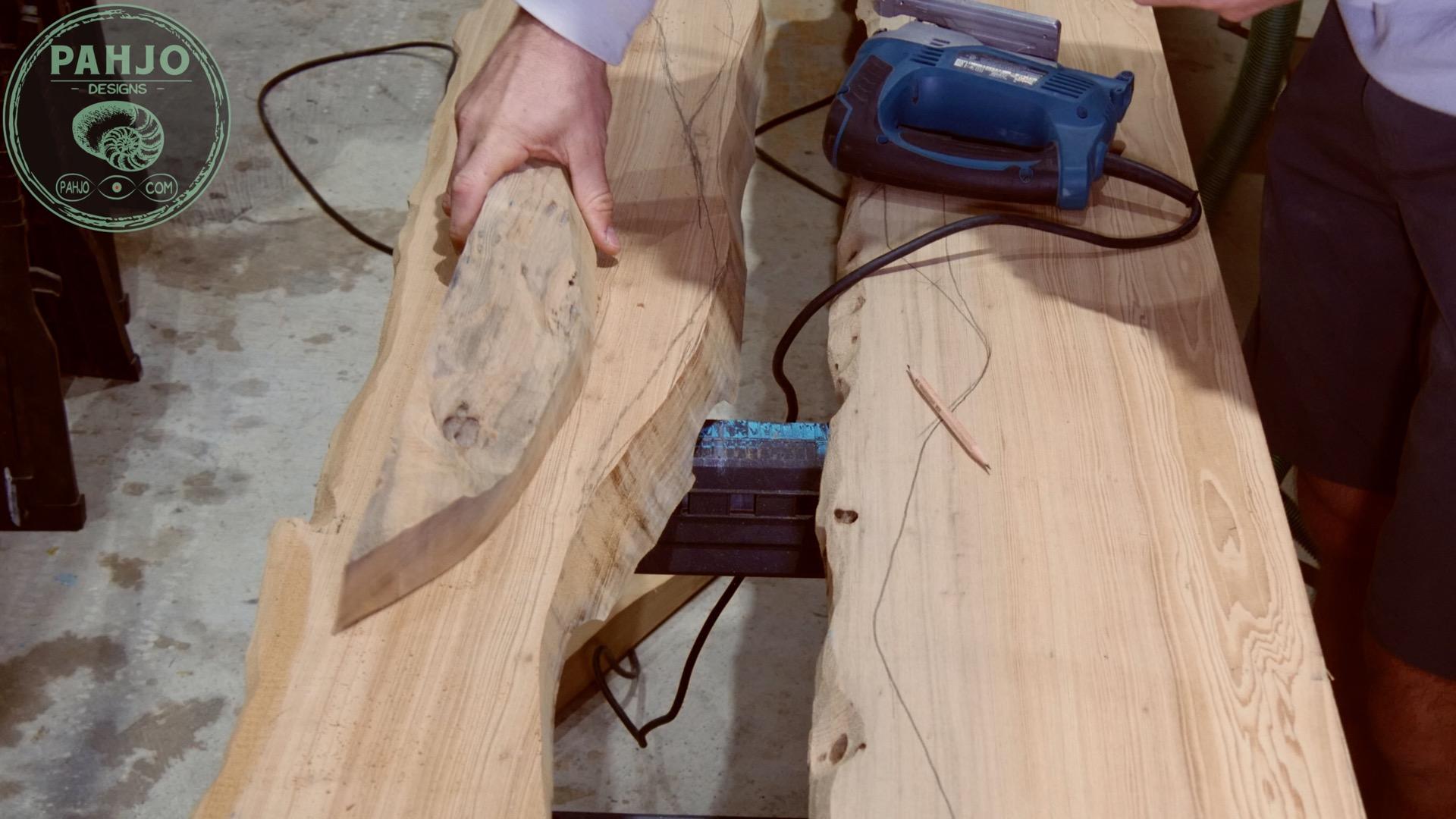
Next, I selected the best live edge side, sketched a natural-looking river path, and cut it out with a jigsaw.
Reinforcing the Structure
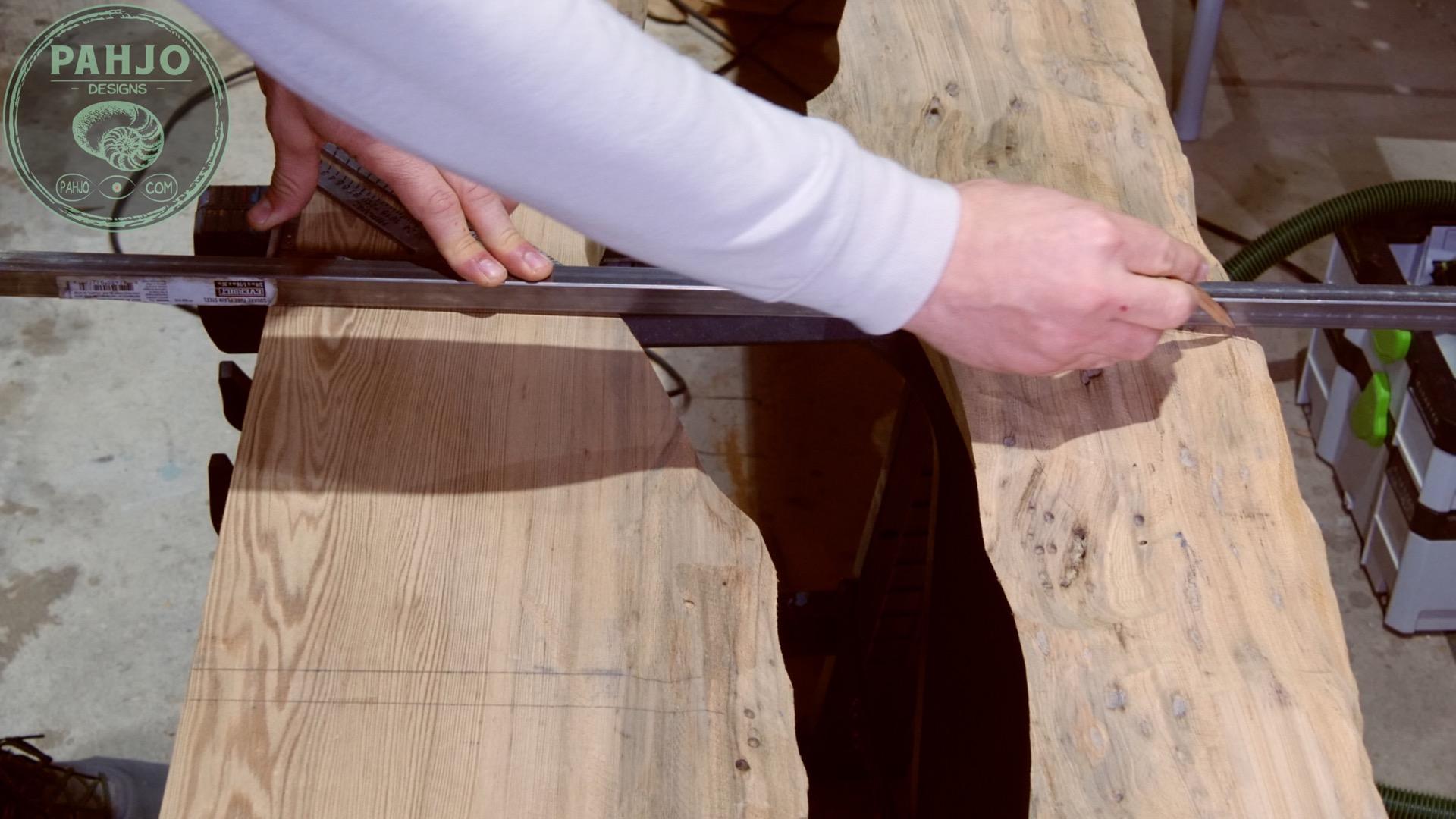
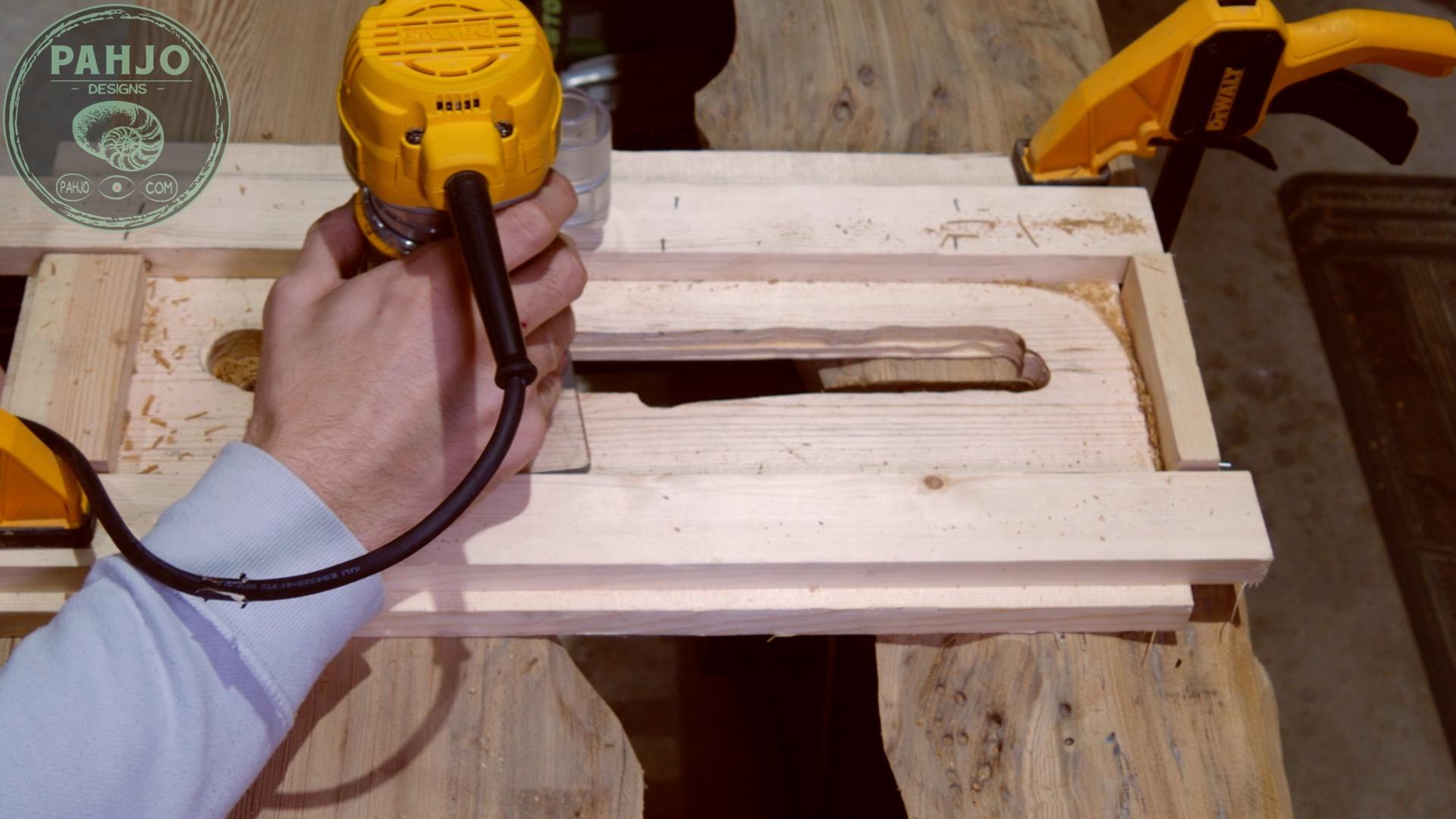
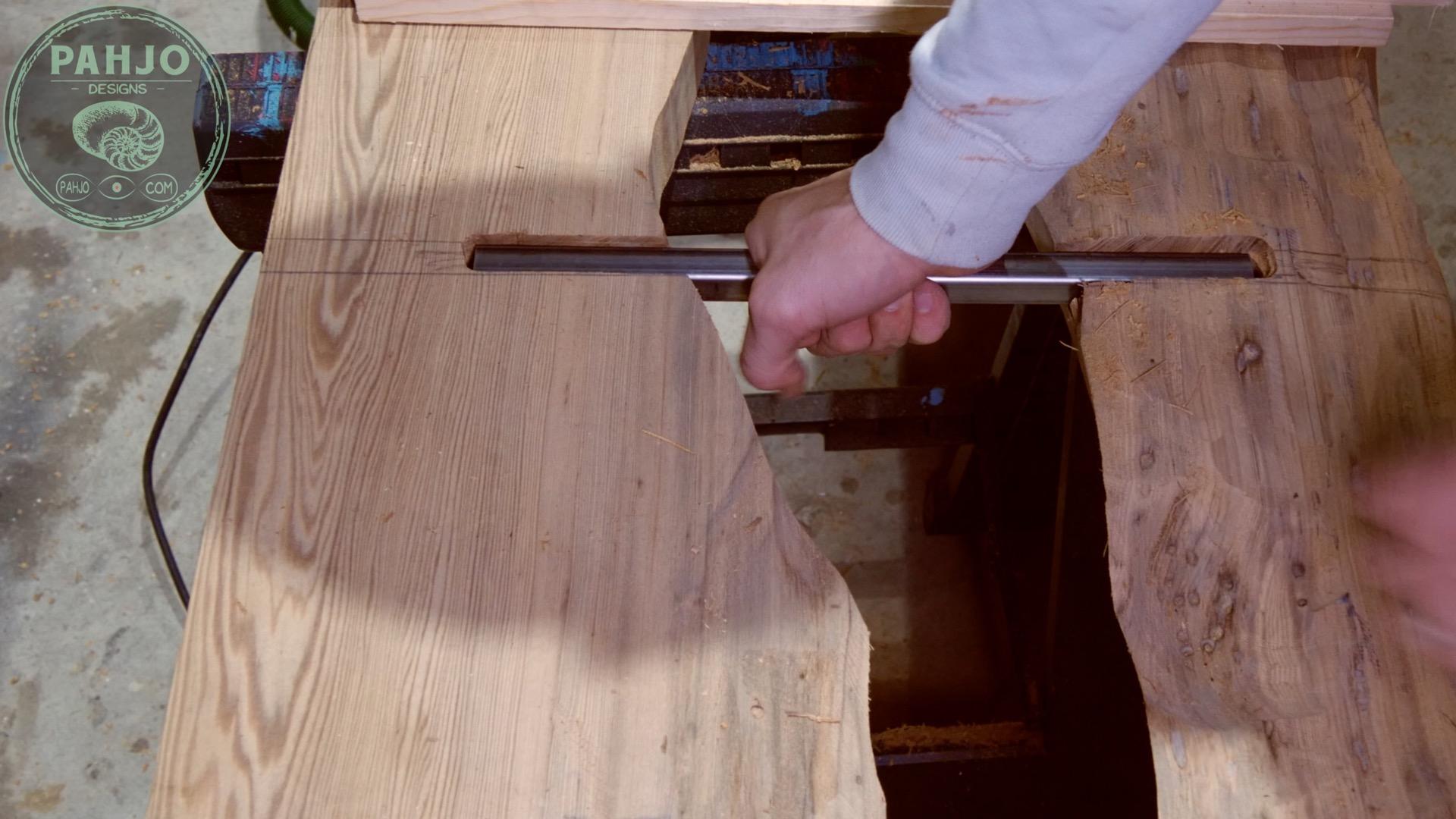
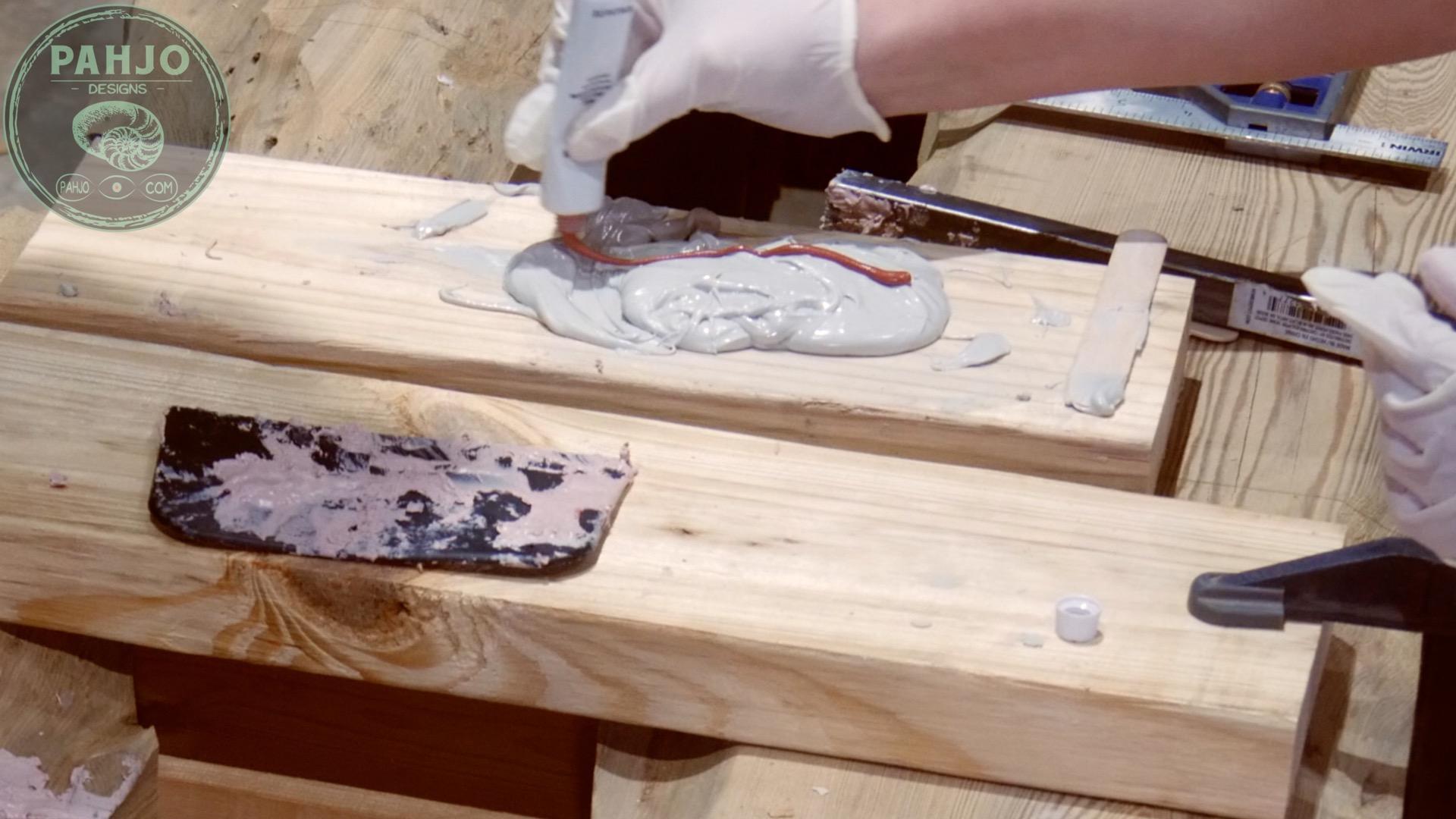
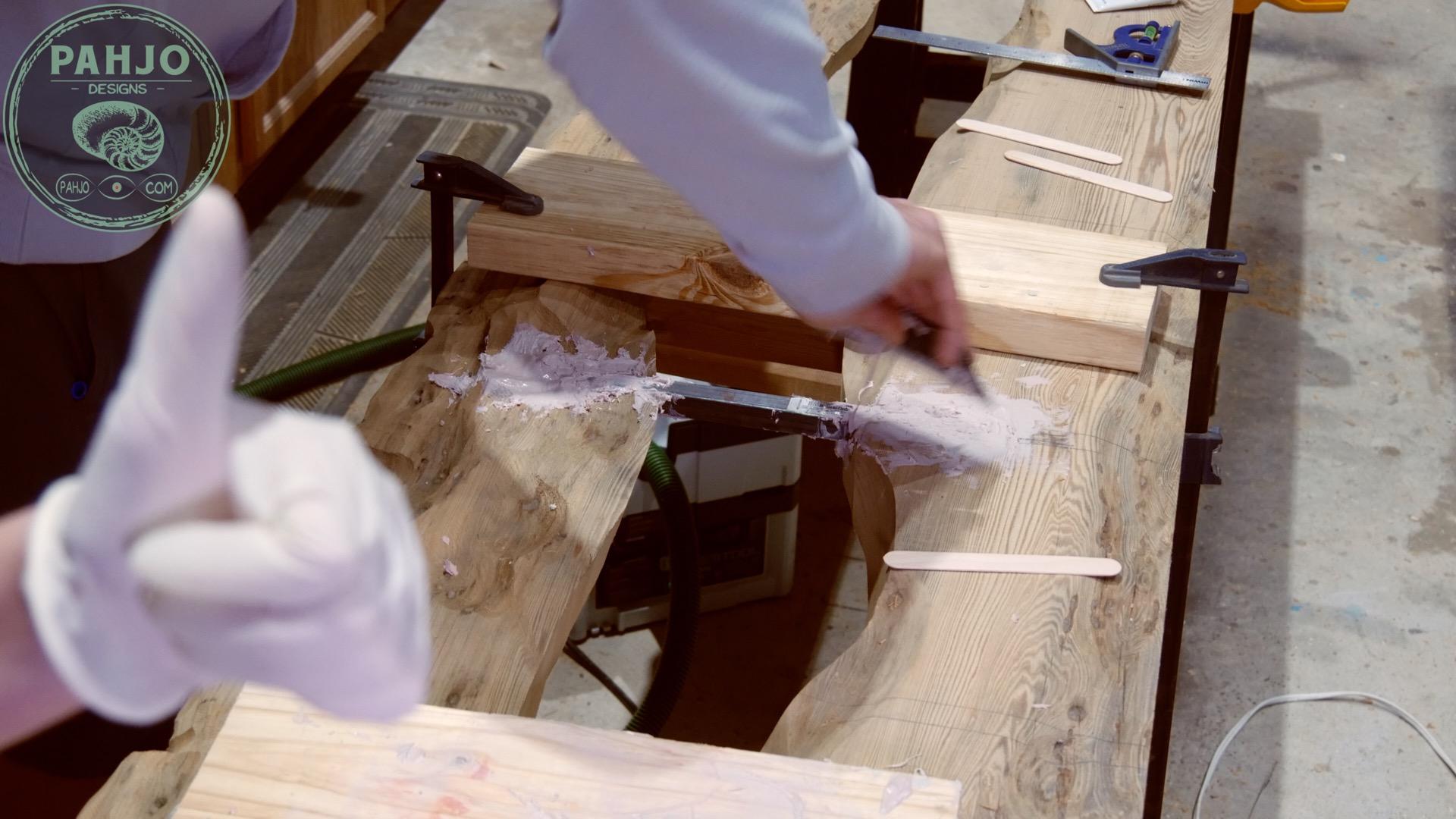
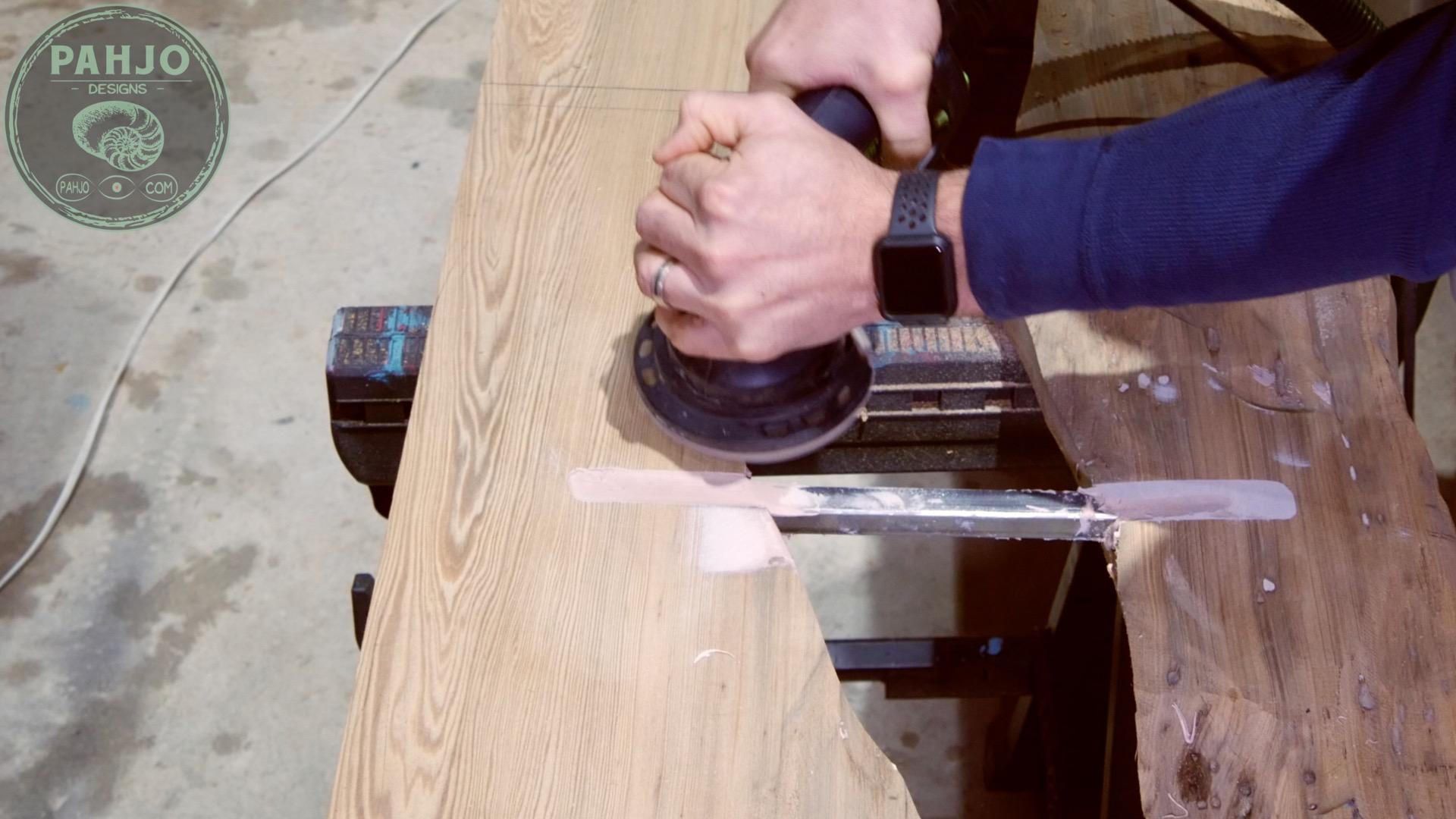
To add strength, I flipped the slab halves underside up and spaced them about 20" apart.
I then routed channels for square steel tubing inserts and secured them in place with Bondo. After the bondo dried, I sanded away the excess.
Building the Epoxy Resin Mold
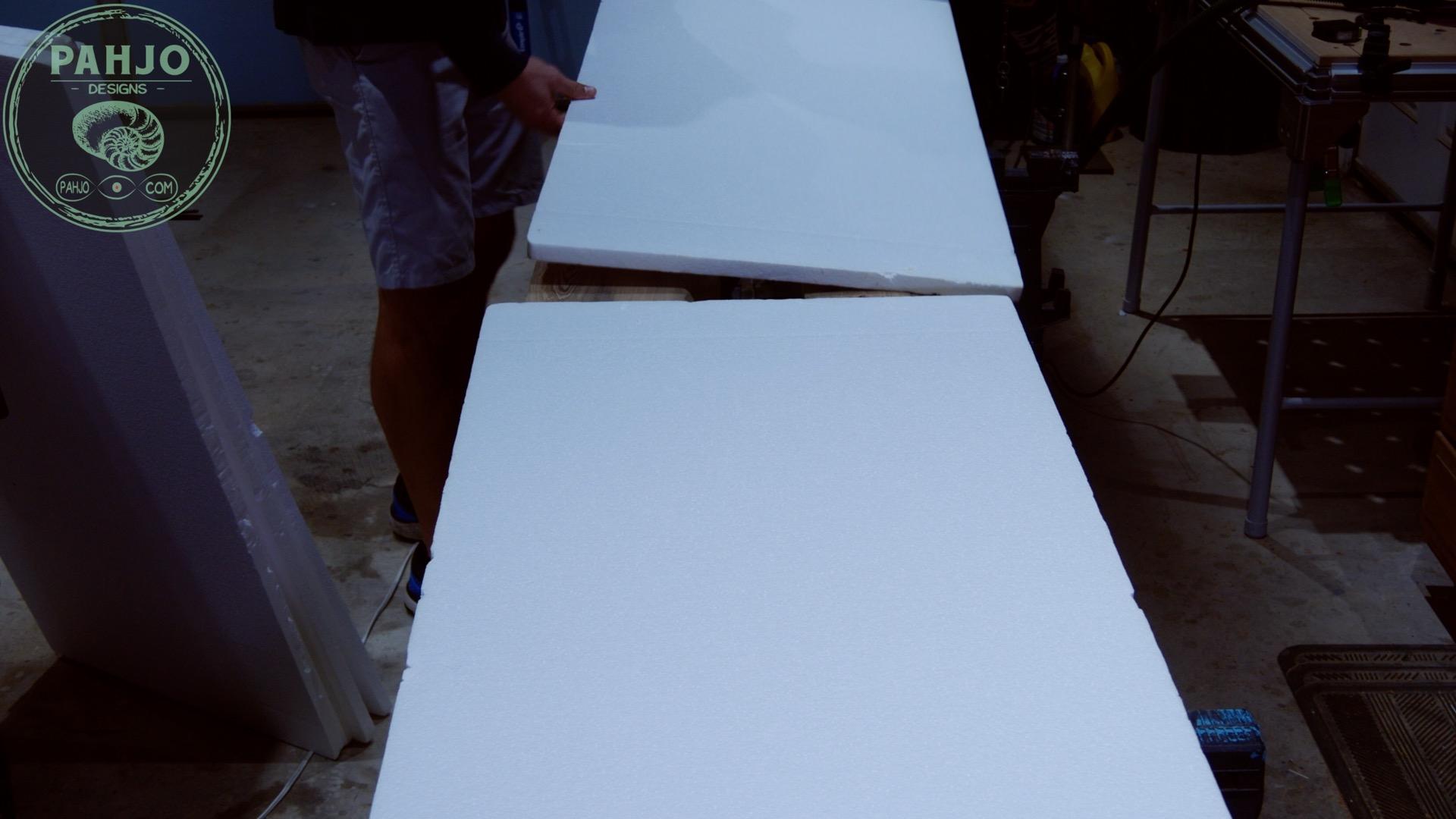
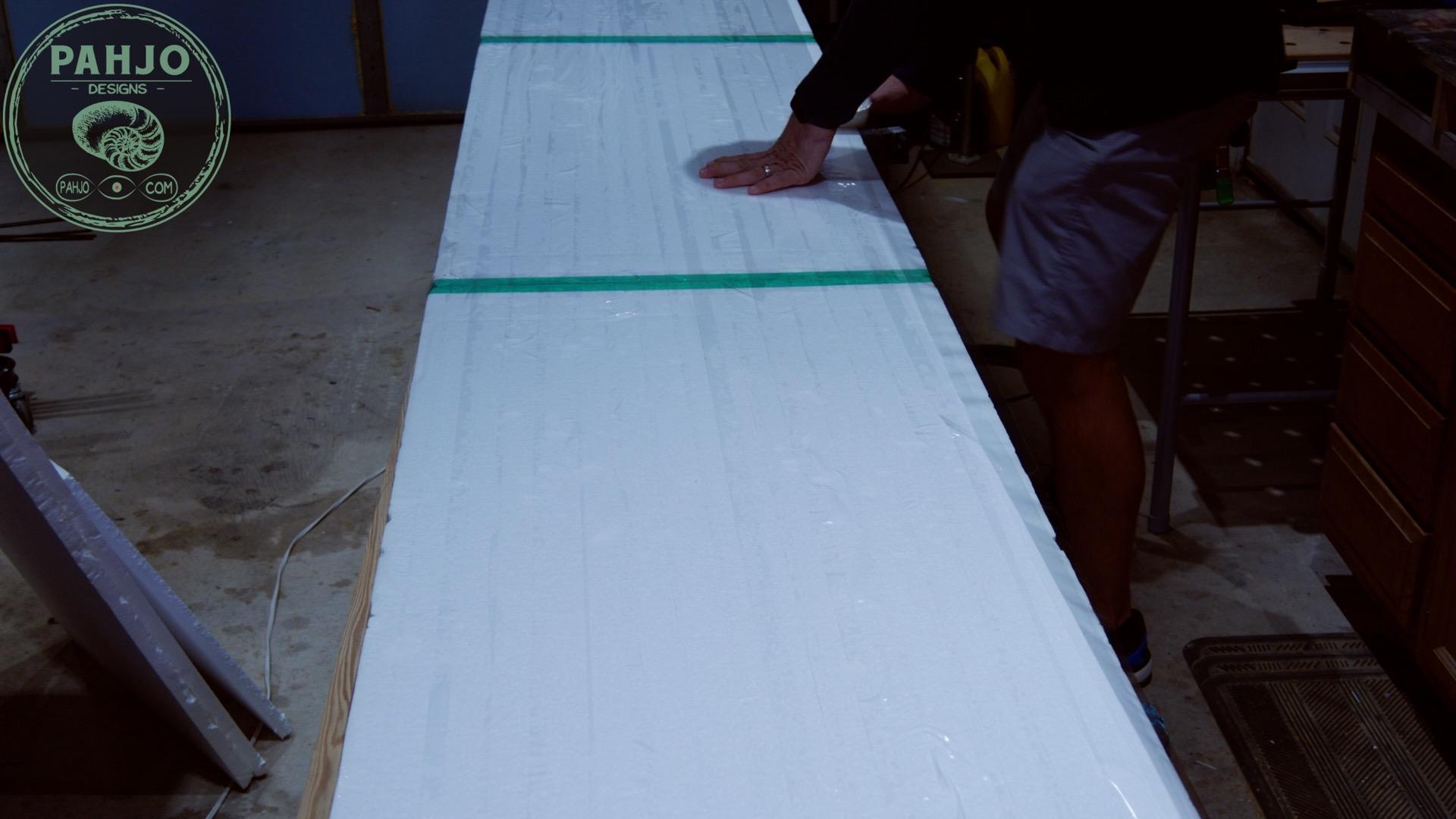
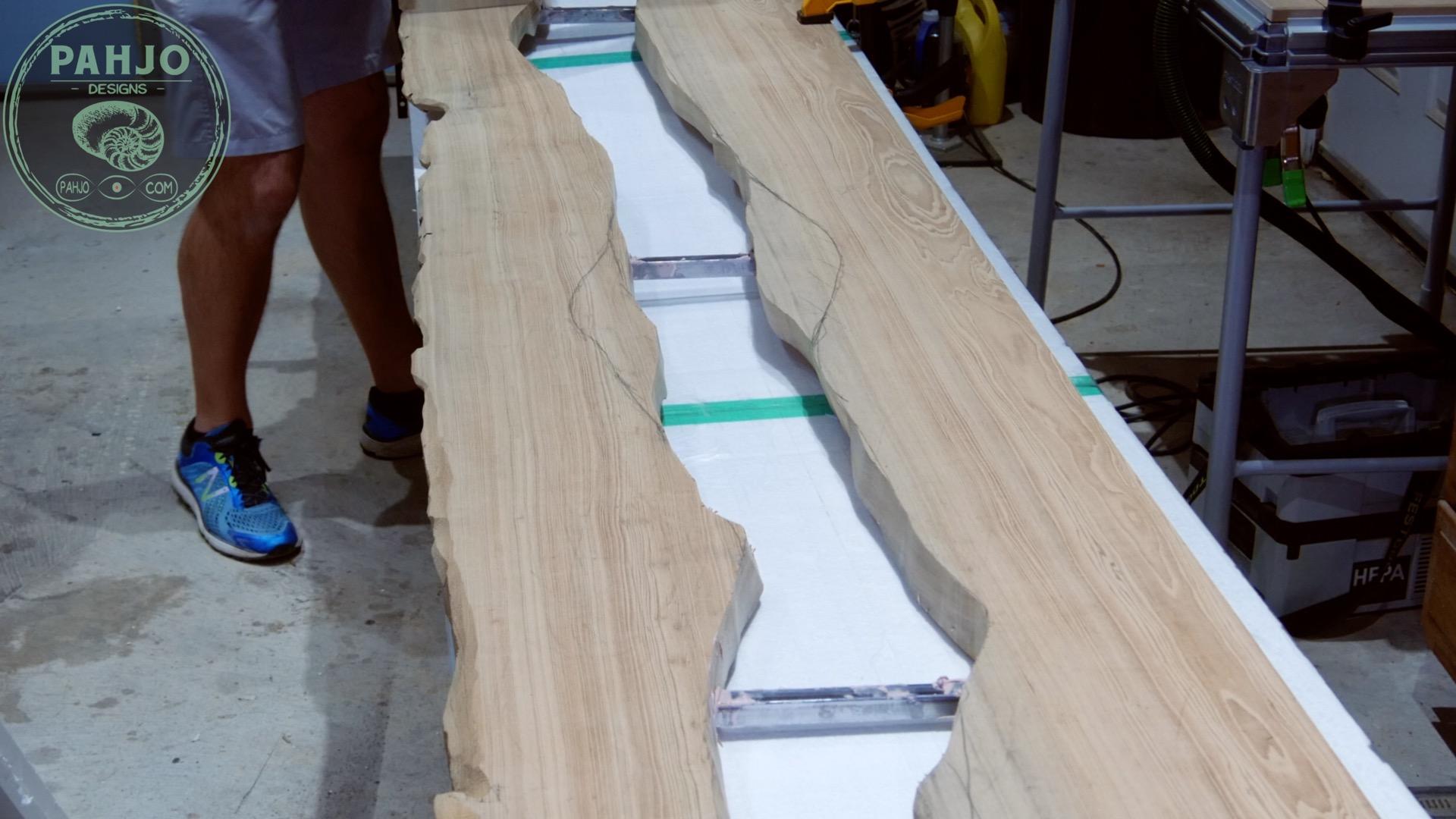
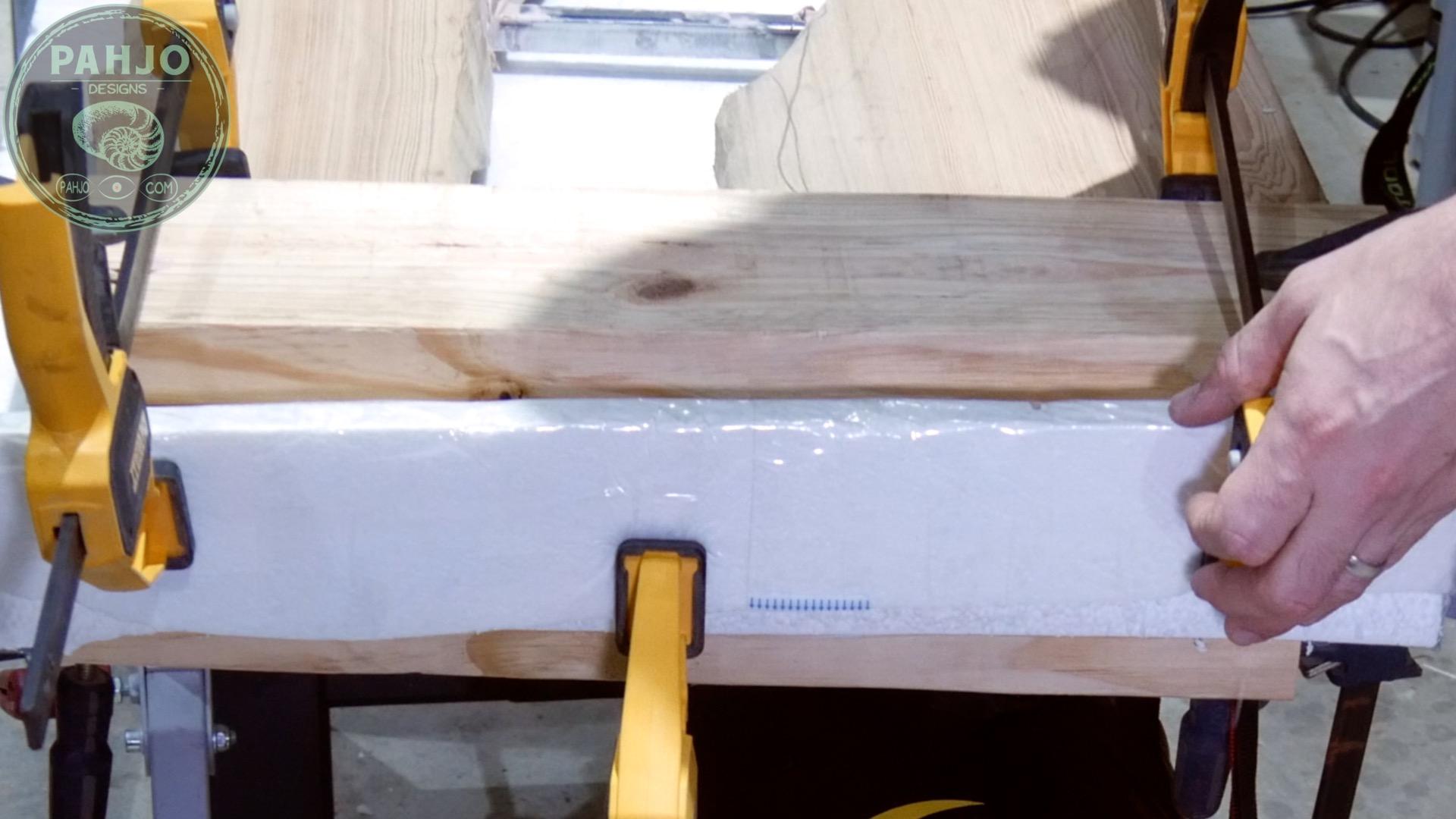
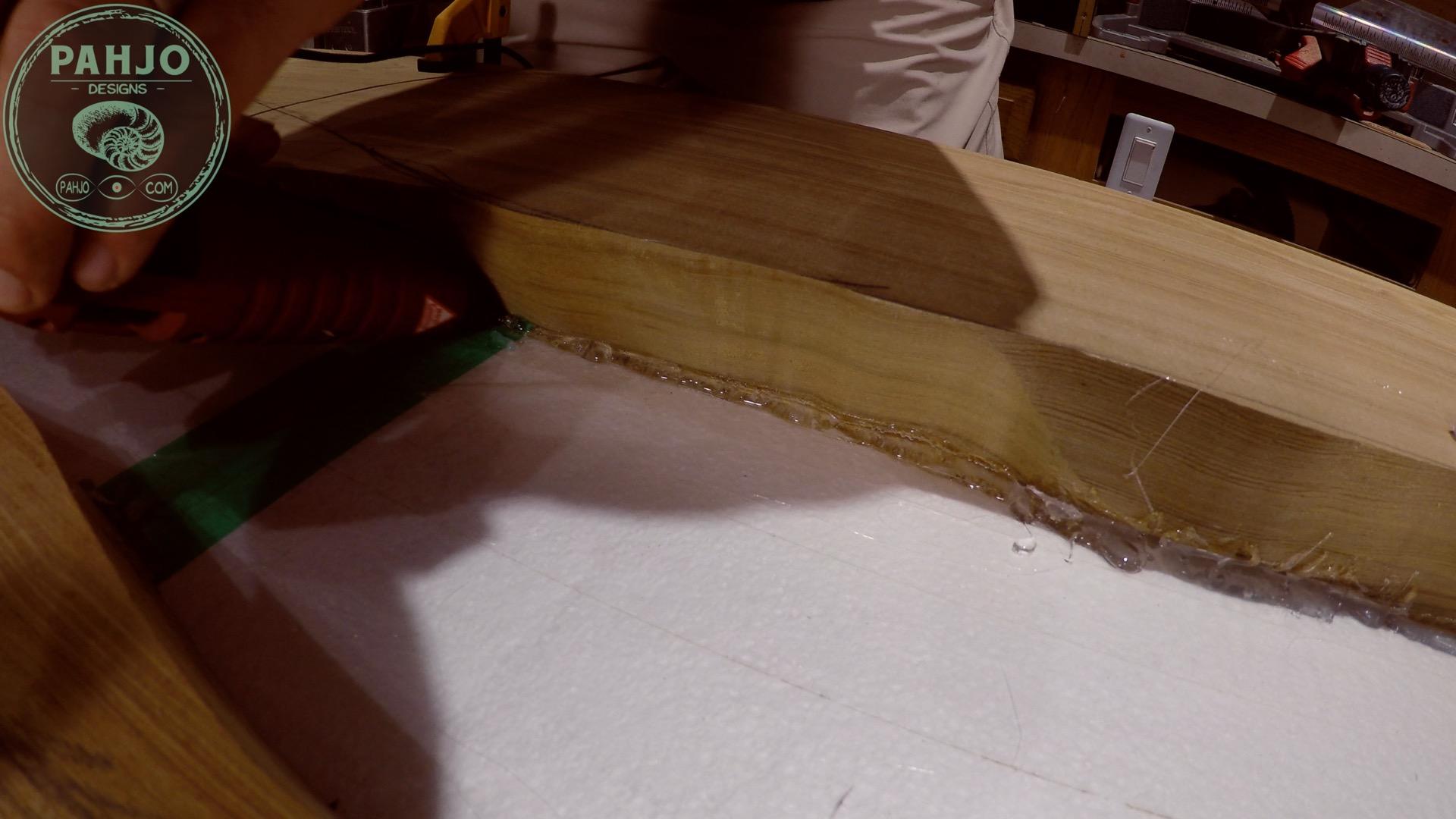
I built the mold using styrofoam insulation panels, which are cost-effective for large projects.
I sealed the seams with packing tape and Tyvek tape, applied Vaseline as a release agent, and closed any gaps with hot glue.
Prepping and Pouring the Base Layer With Glow Powder
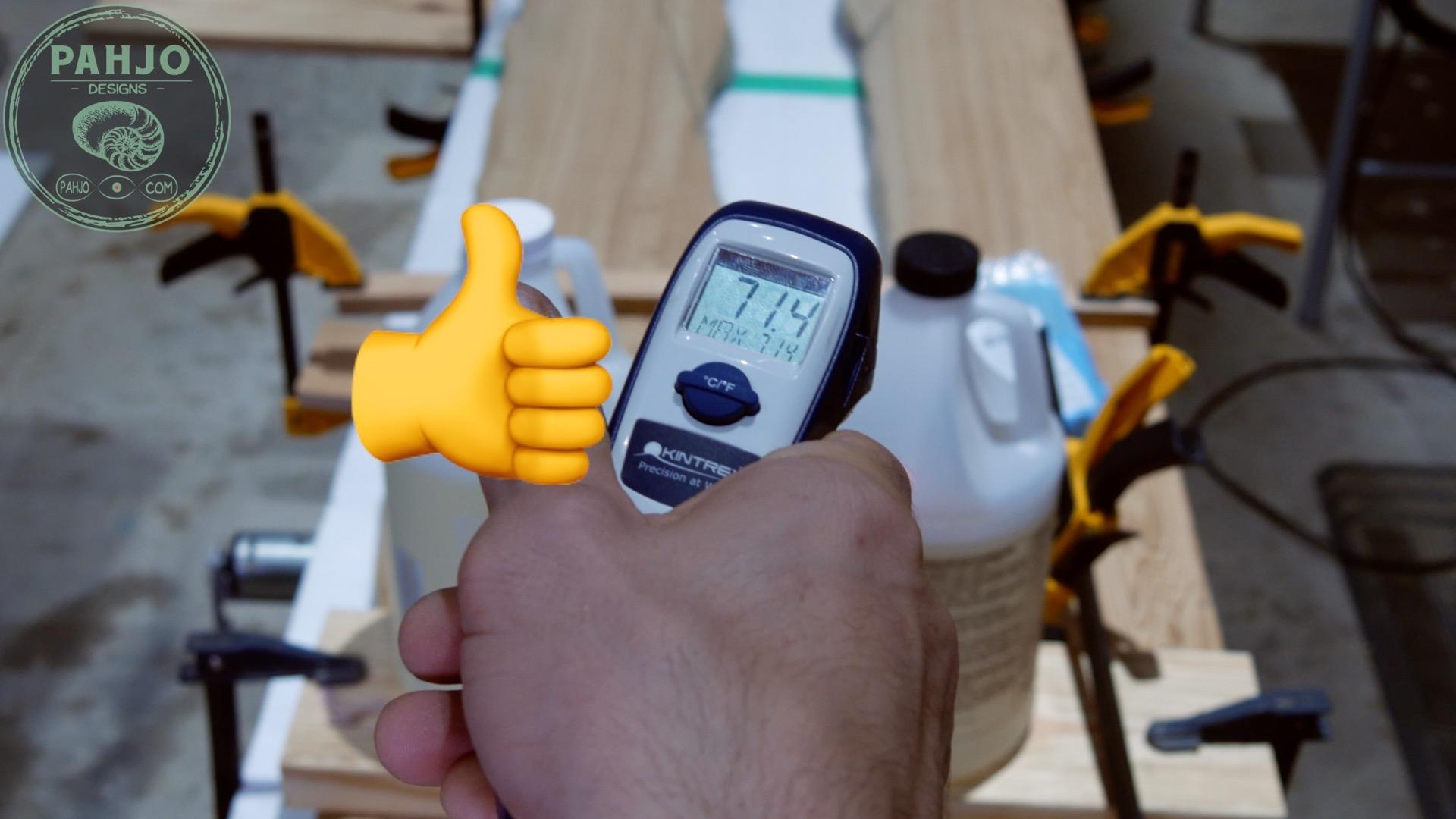
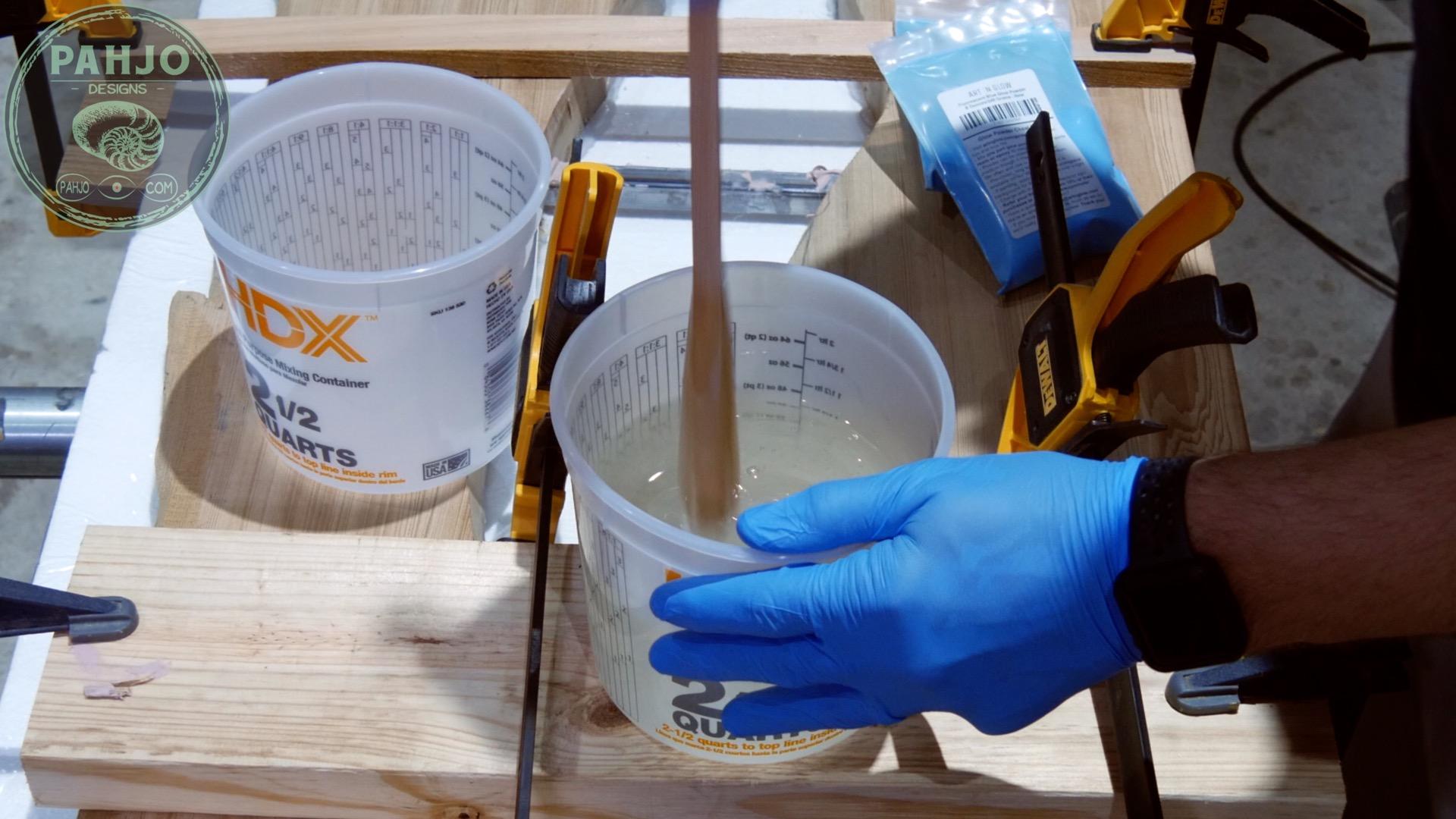


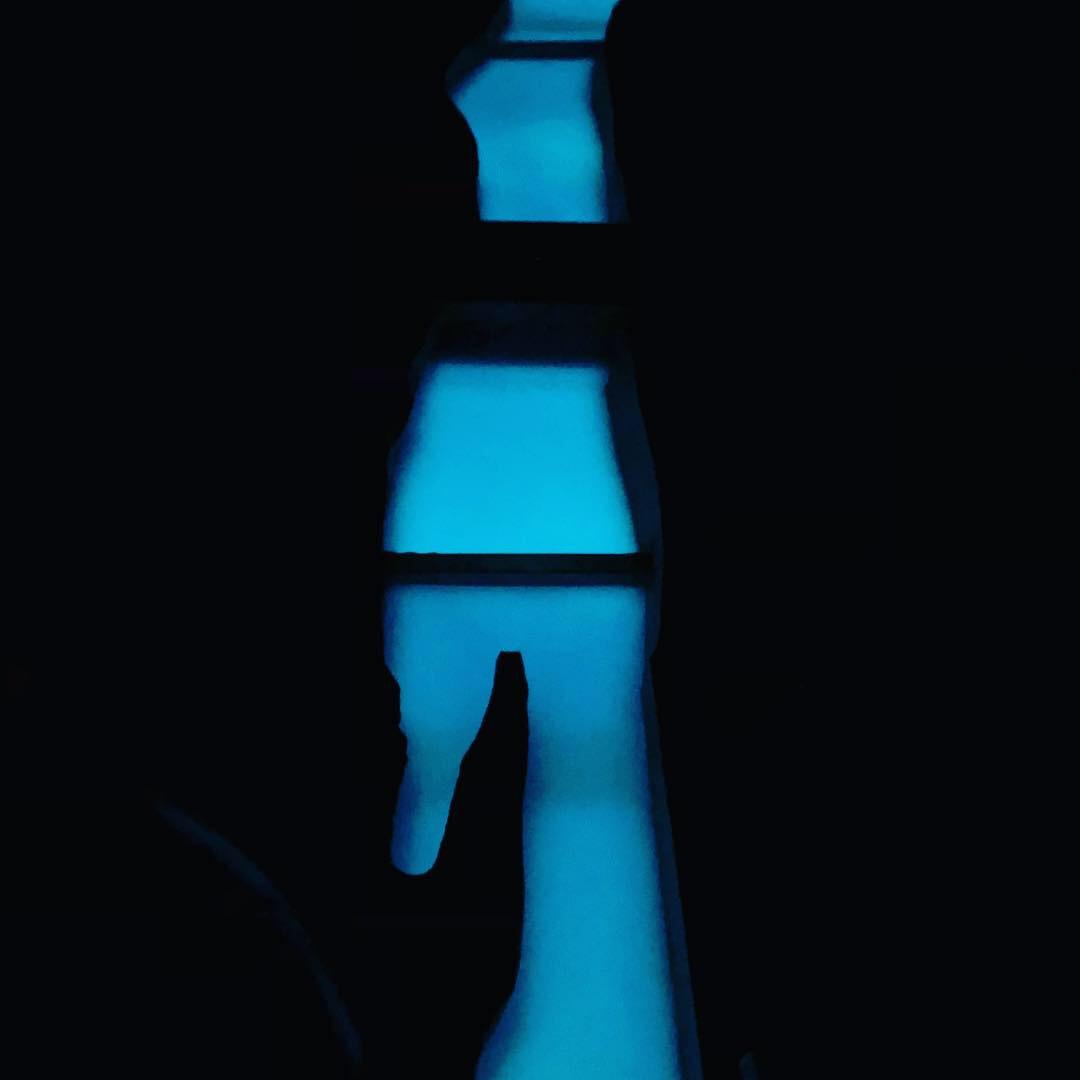
I warmed the deep pour epoxy to around 70°F, monitoring it with a laser temperature gun.
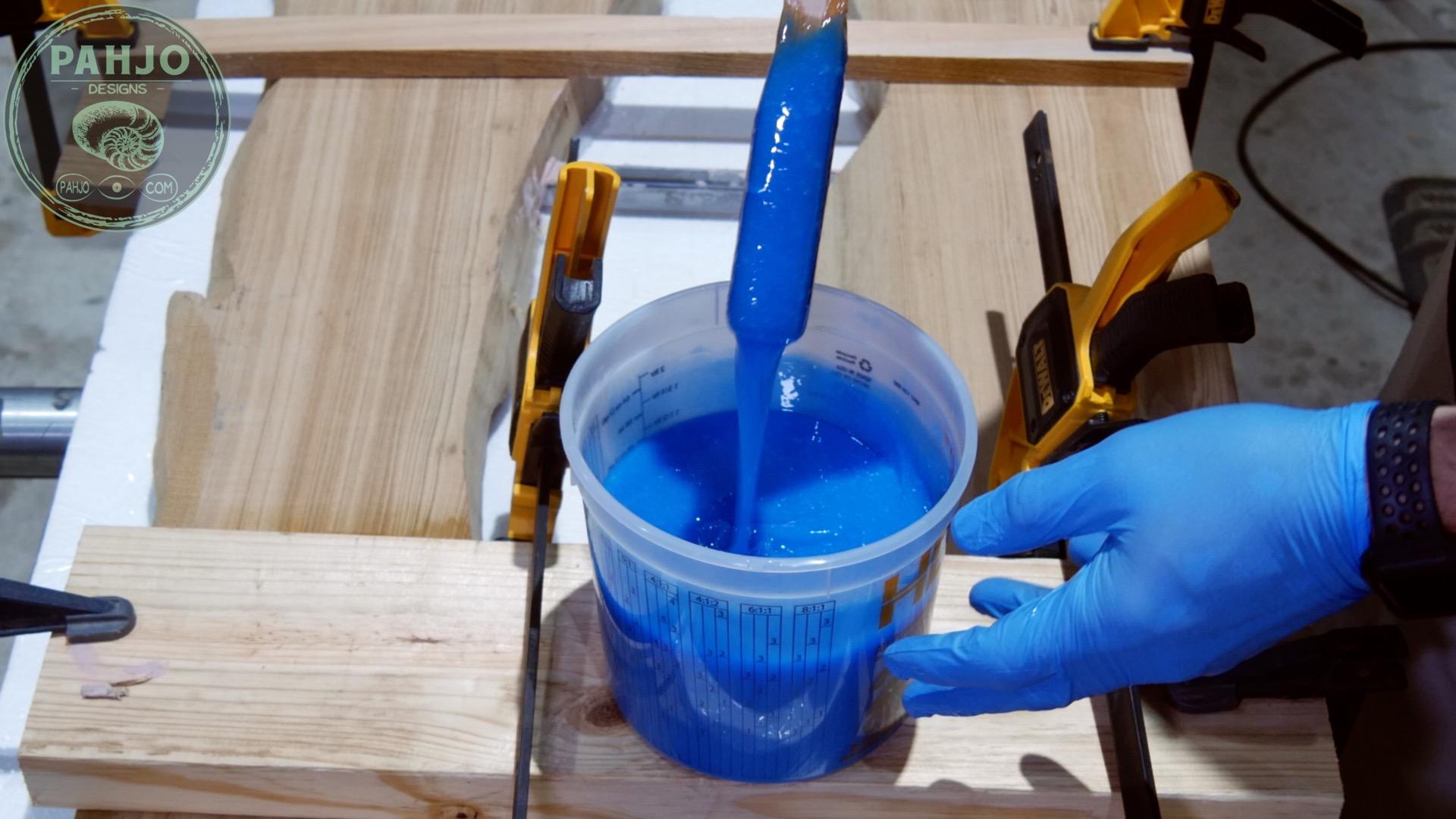
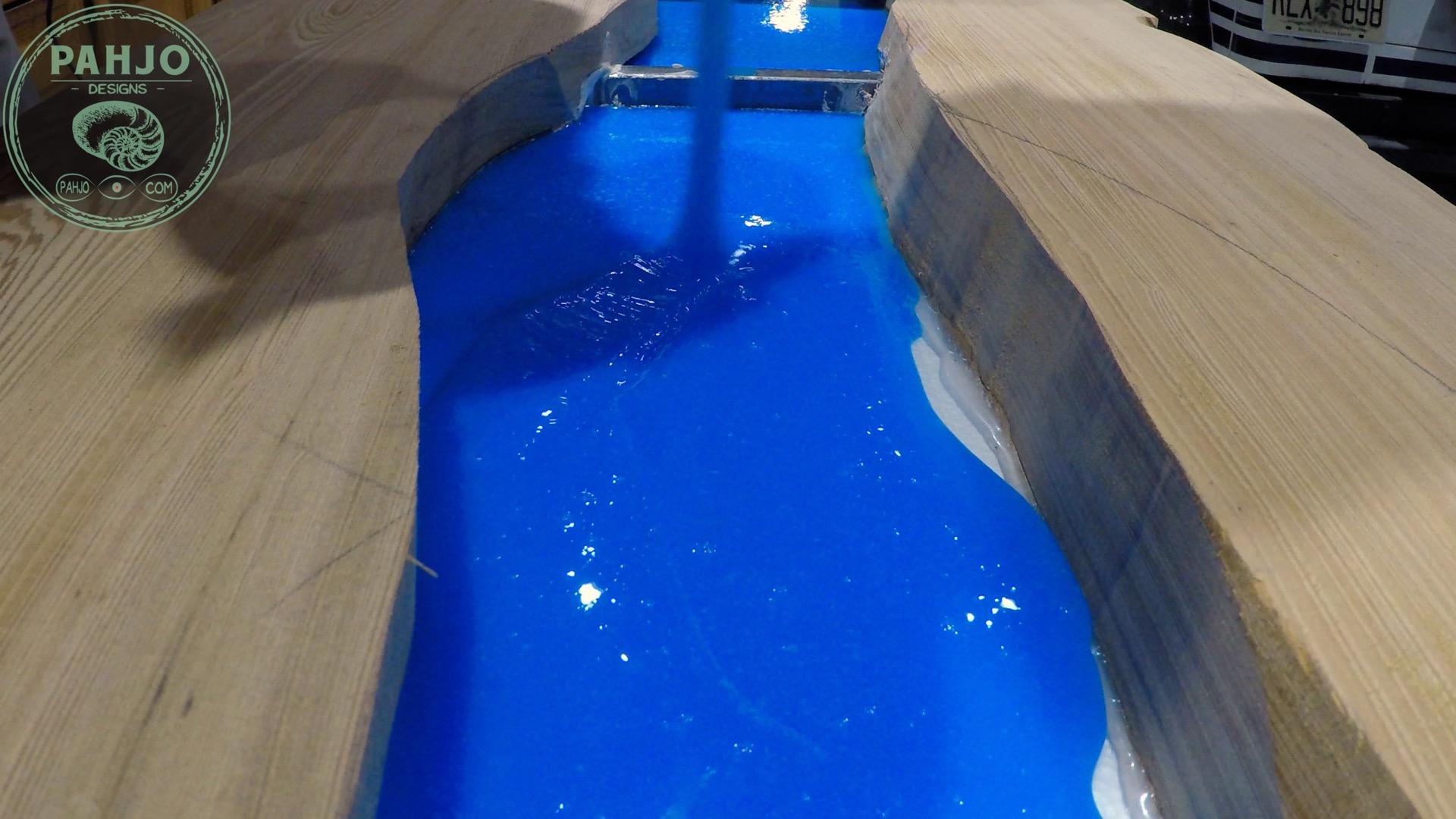
After mixing thoroughly, I added the glow powder and poured an even base layer. I removed bubbles with a heat gun and tested the glow effect using a black light.
Tip: For embedding LEDs in resin, refer to my instructable on embedding LED lights in epoxy resin
Embedding Fire Glass
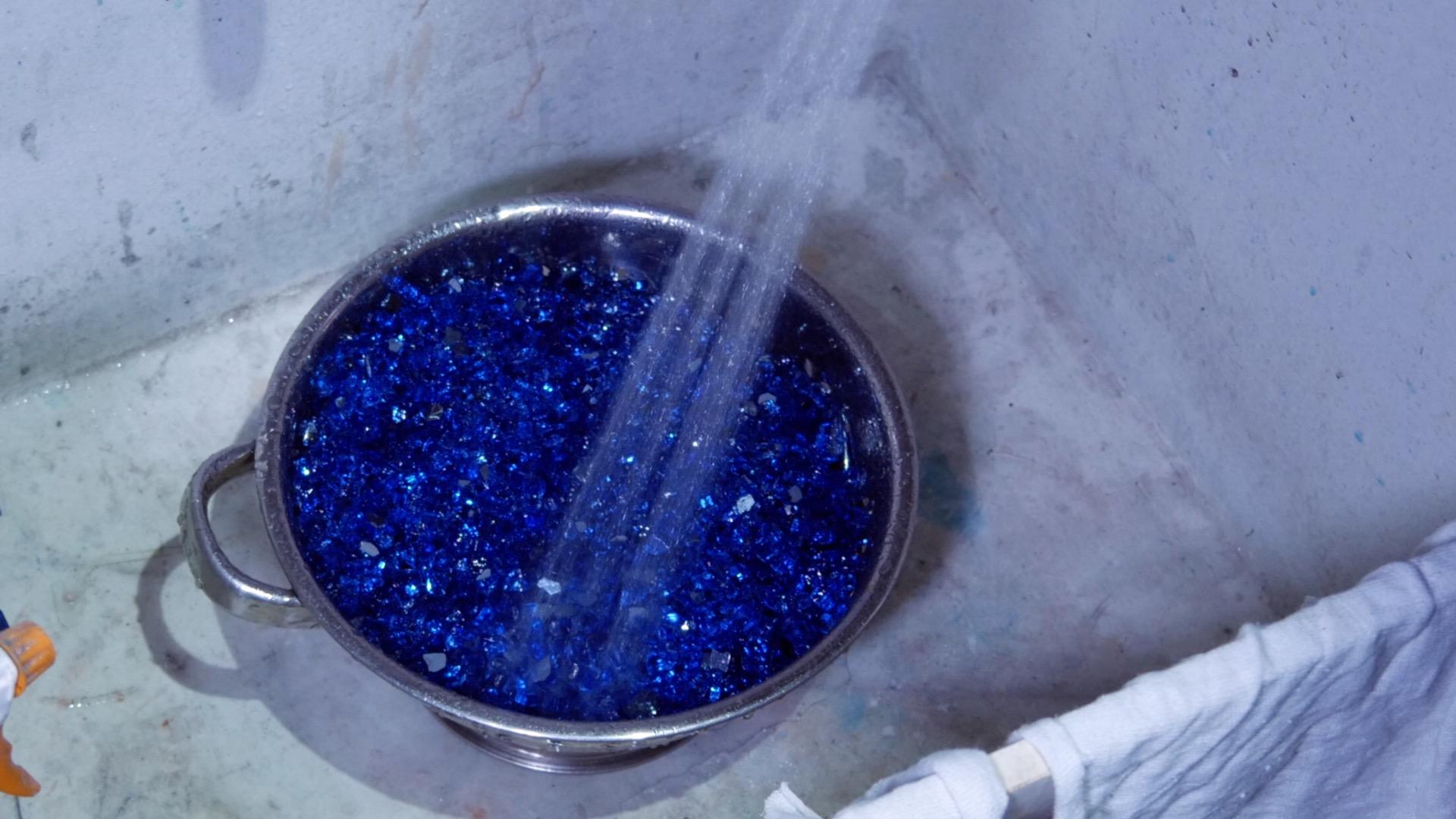
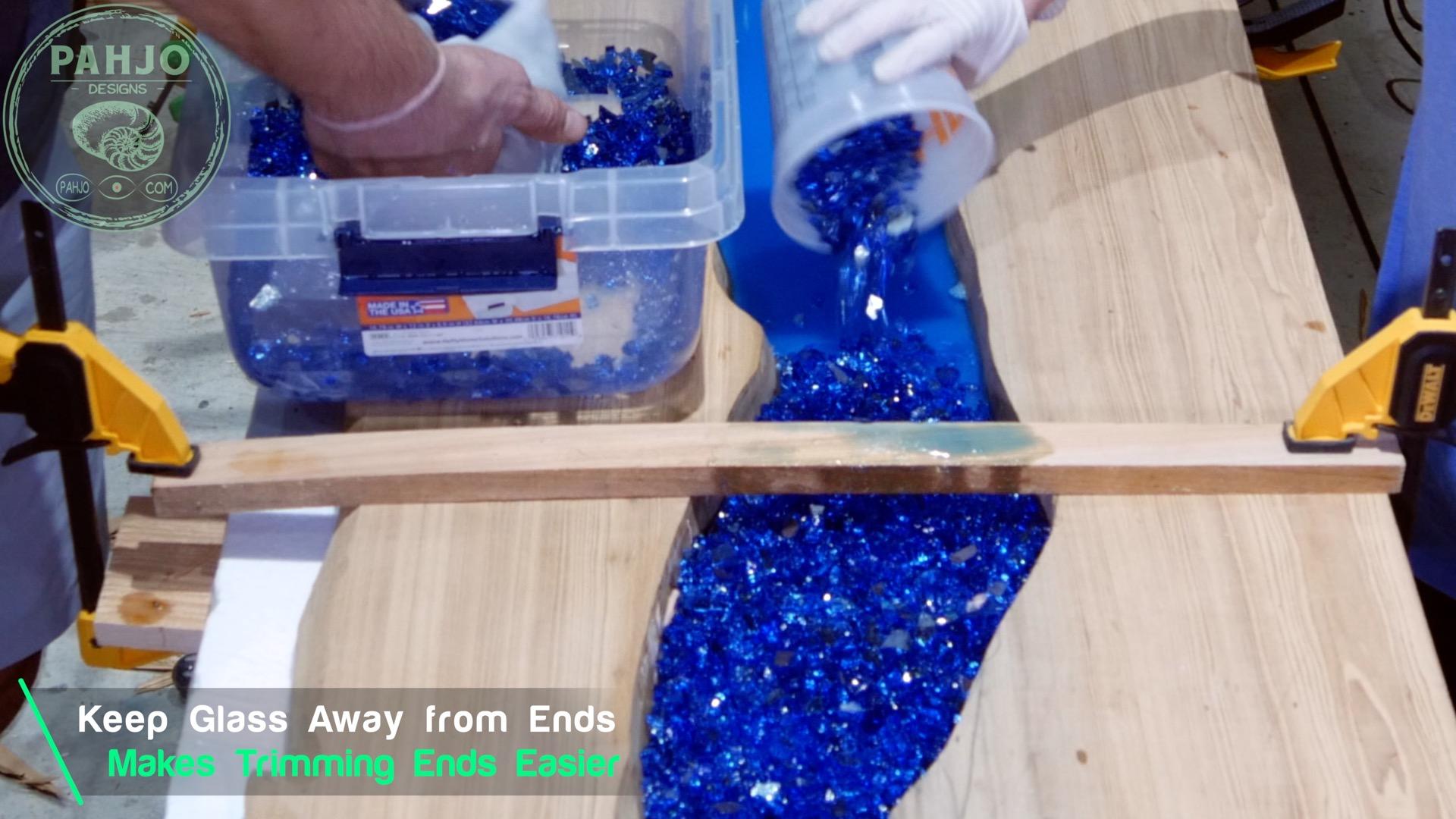
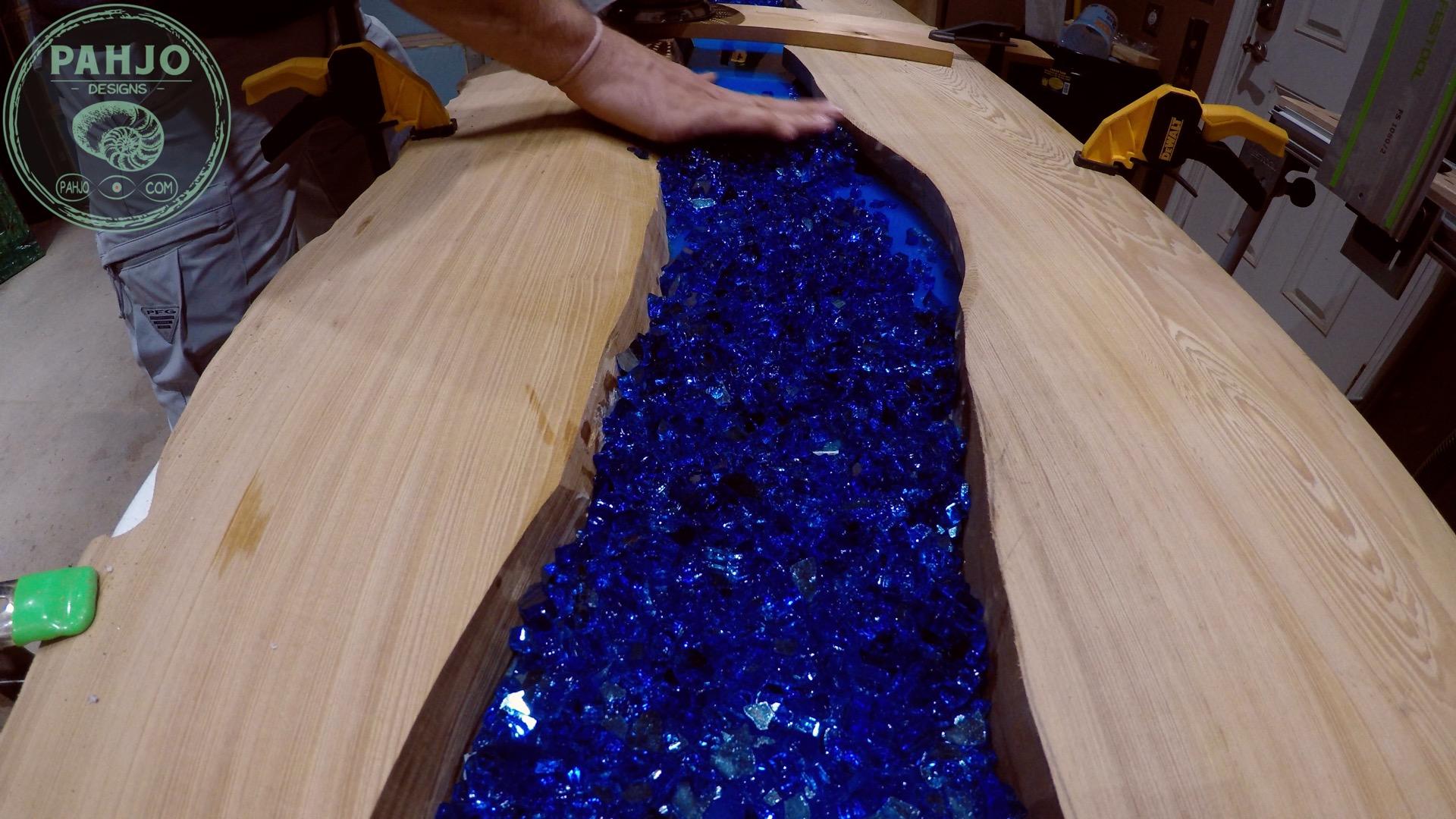
After the base layer cured, I cleaned and scattered blue fire glass across it. I used enough for good coverage while leaving space for the glow powder to shine through effectively.
Multiple Epoxy Pours to Fill the River


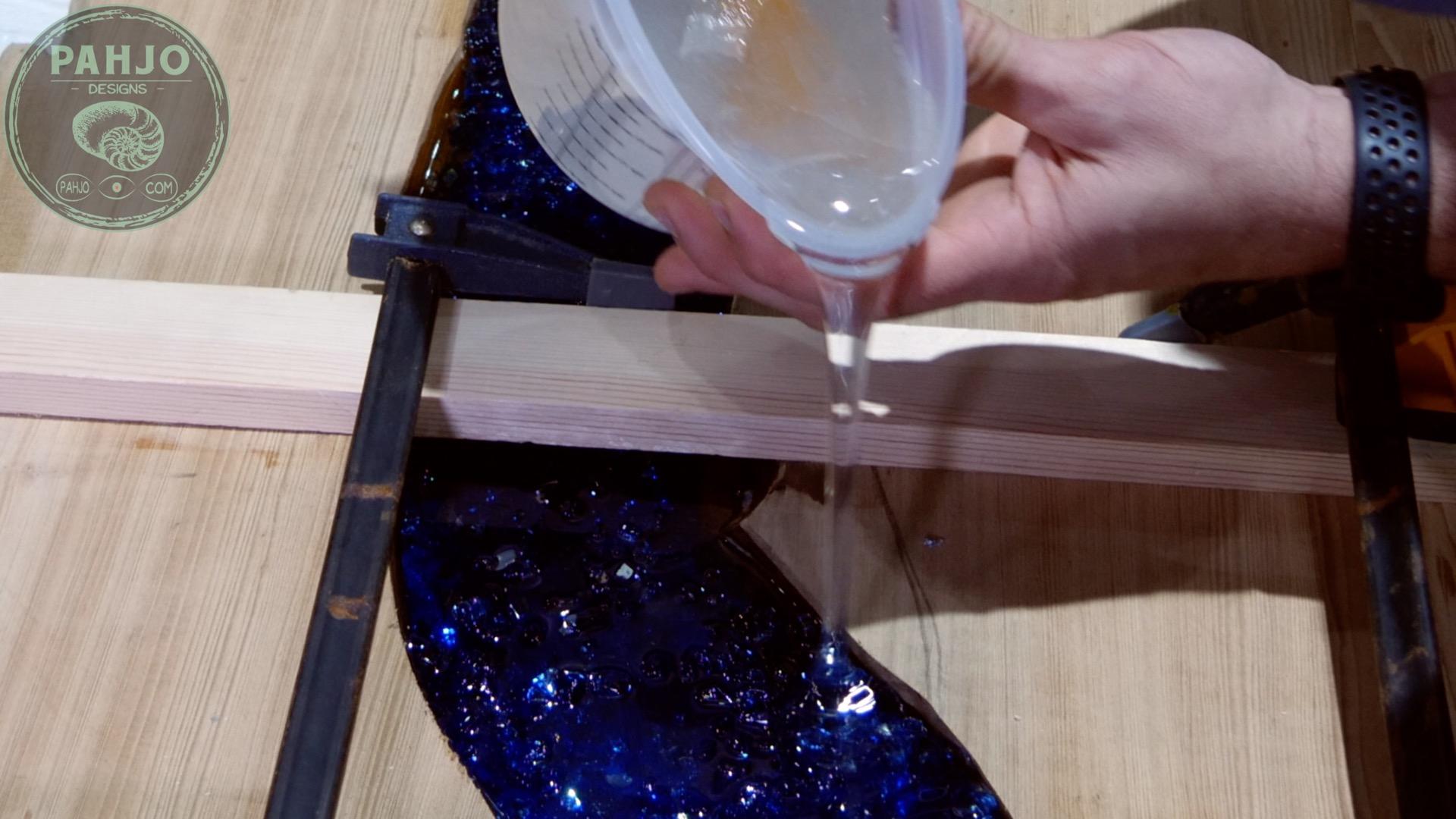

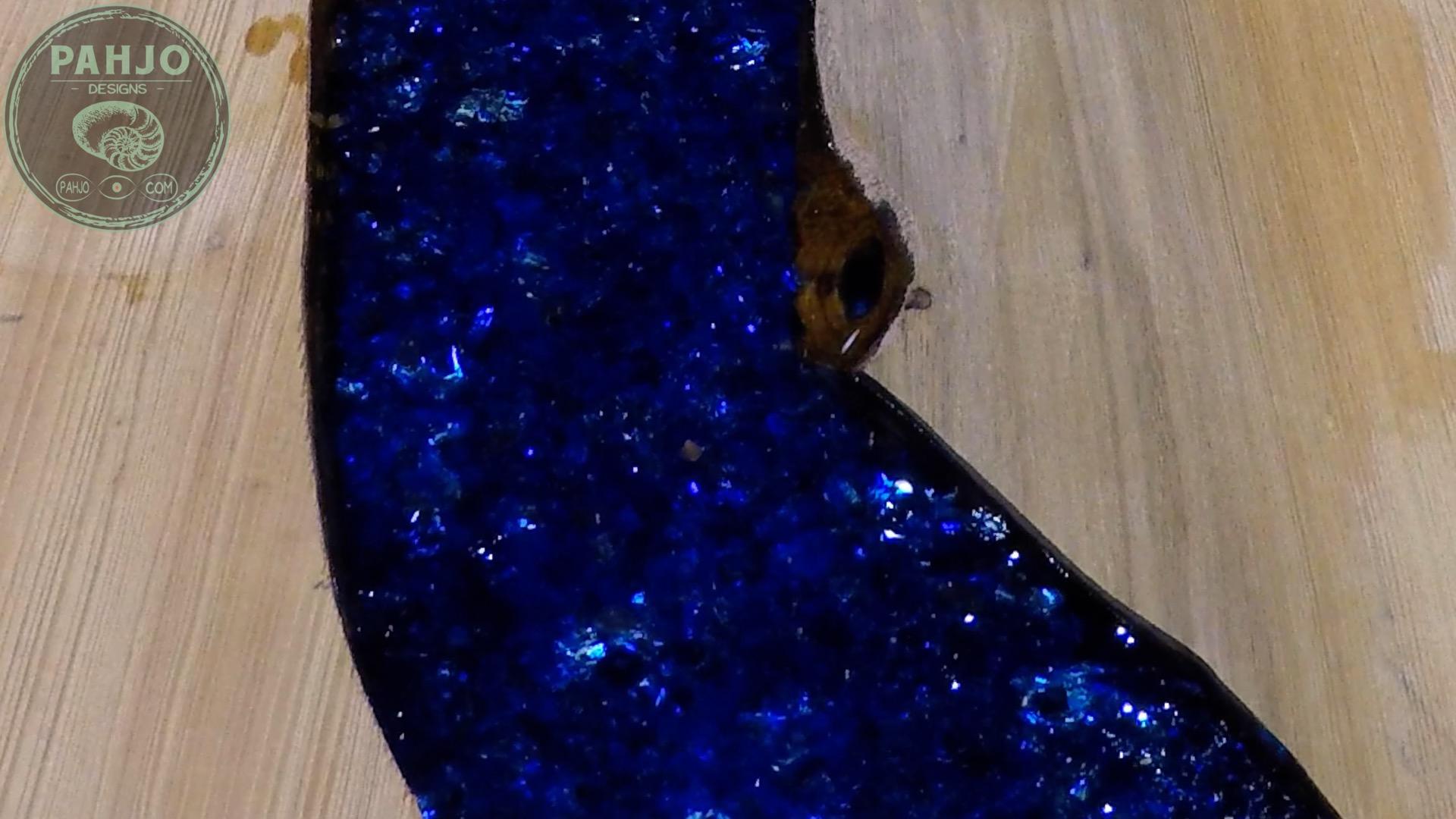
I ensured the entire setup was perfectly level. Then, I poured additional layers of deep pour resin, removing bubbles after each one. I stopped just below the wood surface to simplify final sanding.
Ultimately, the goal here is to fill the DIY epoxy bar top with resin without going over the top edge which causes unnecessary work.
Also, I used deep pour casting resin which allows for deeper pours at one time. This saves time and increased consistency.
Trimming and Cleanup
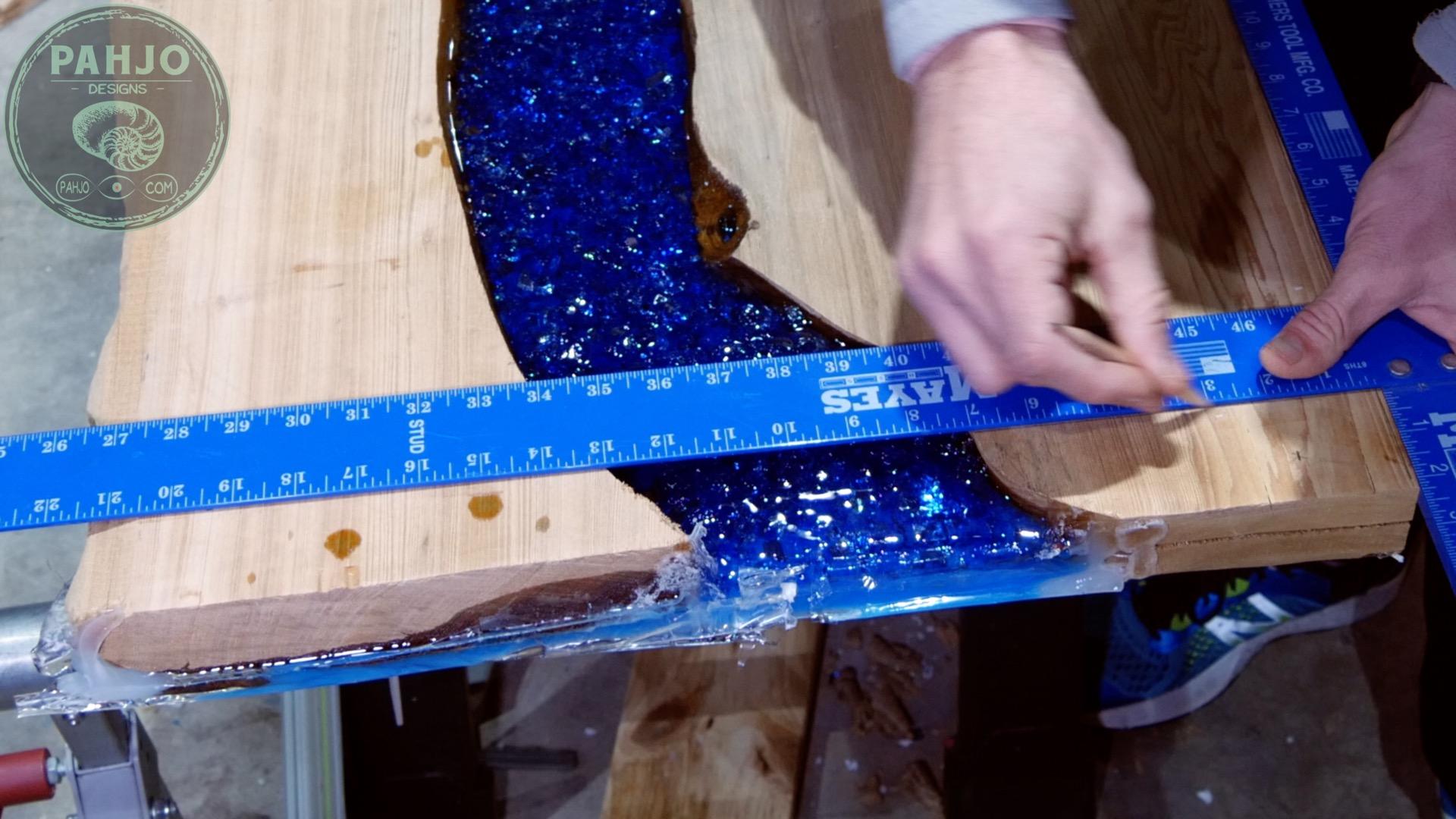
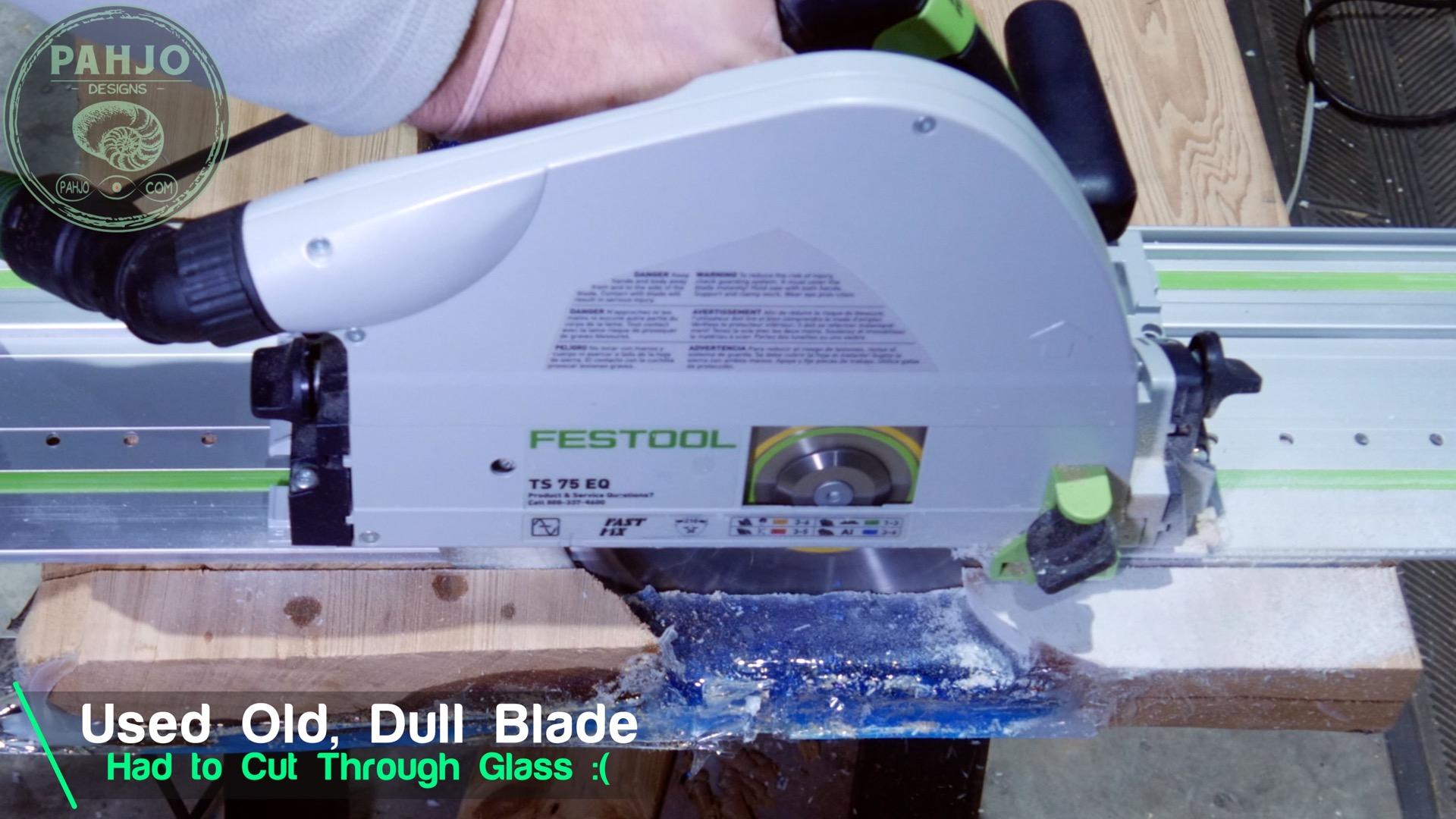
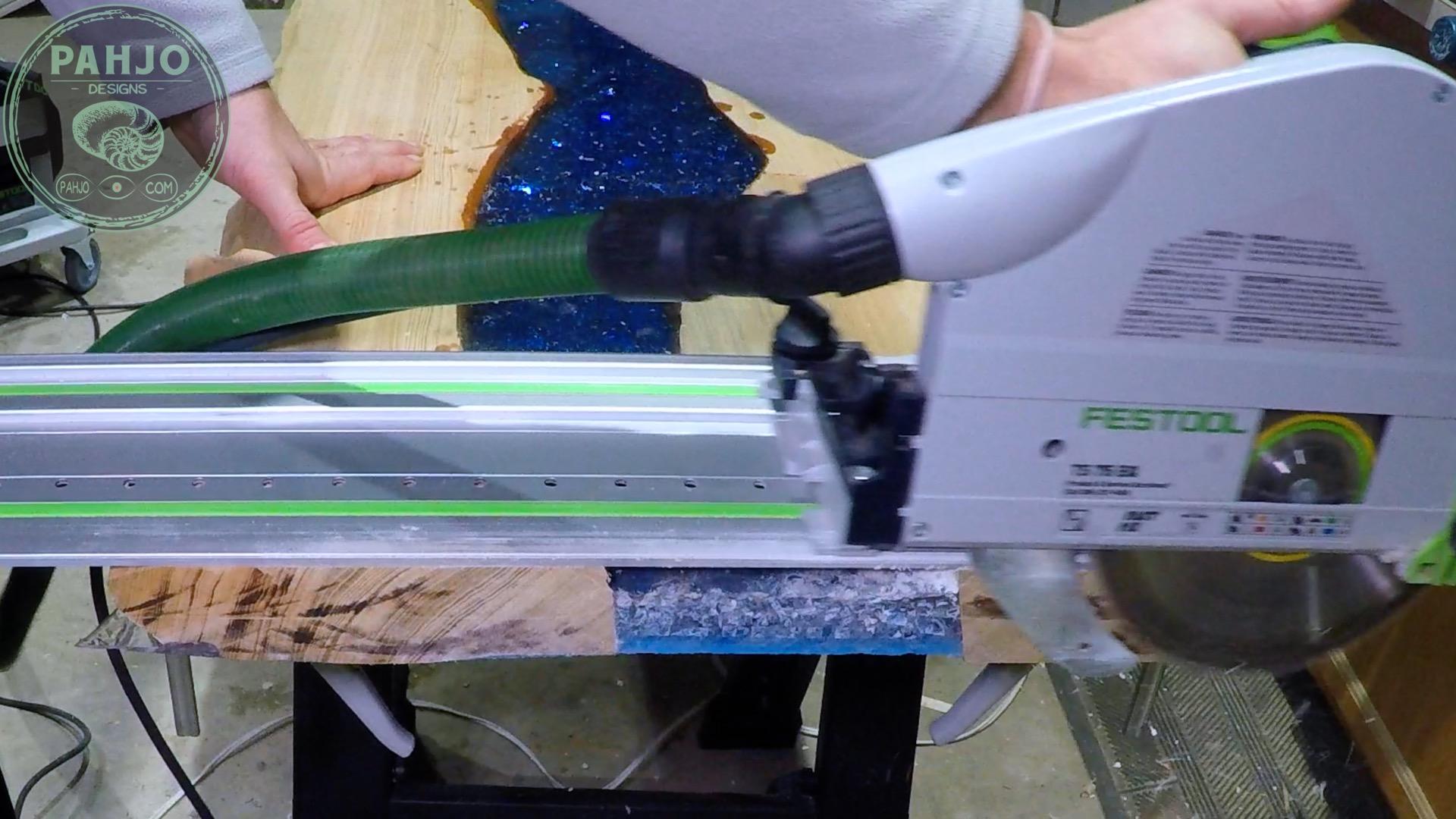
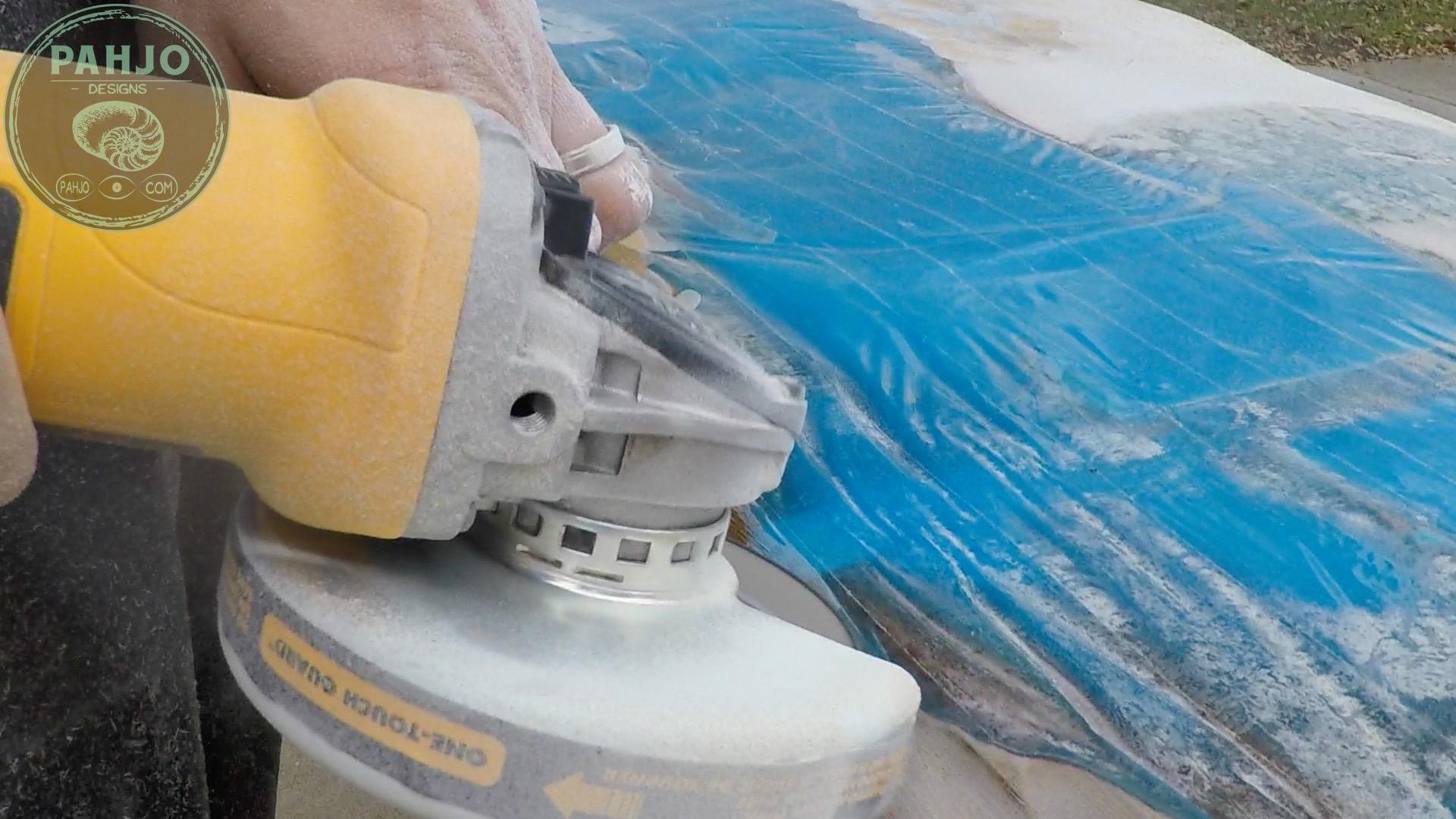
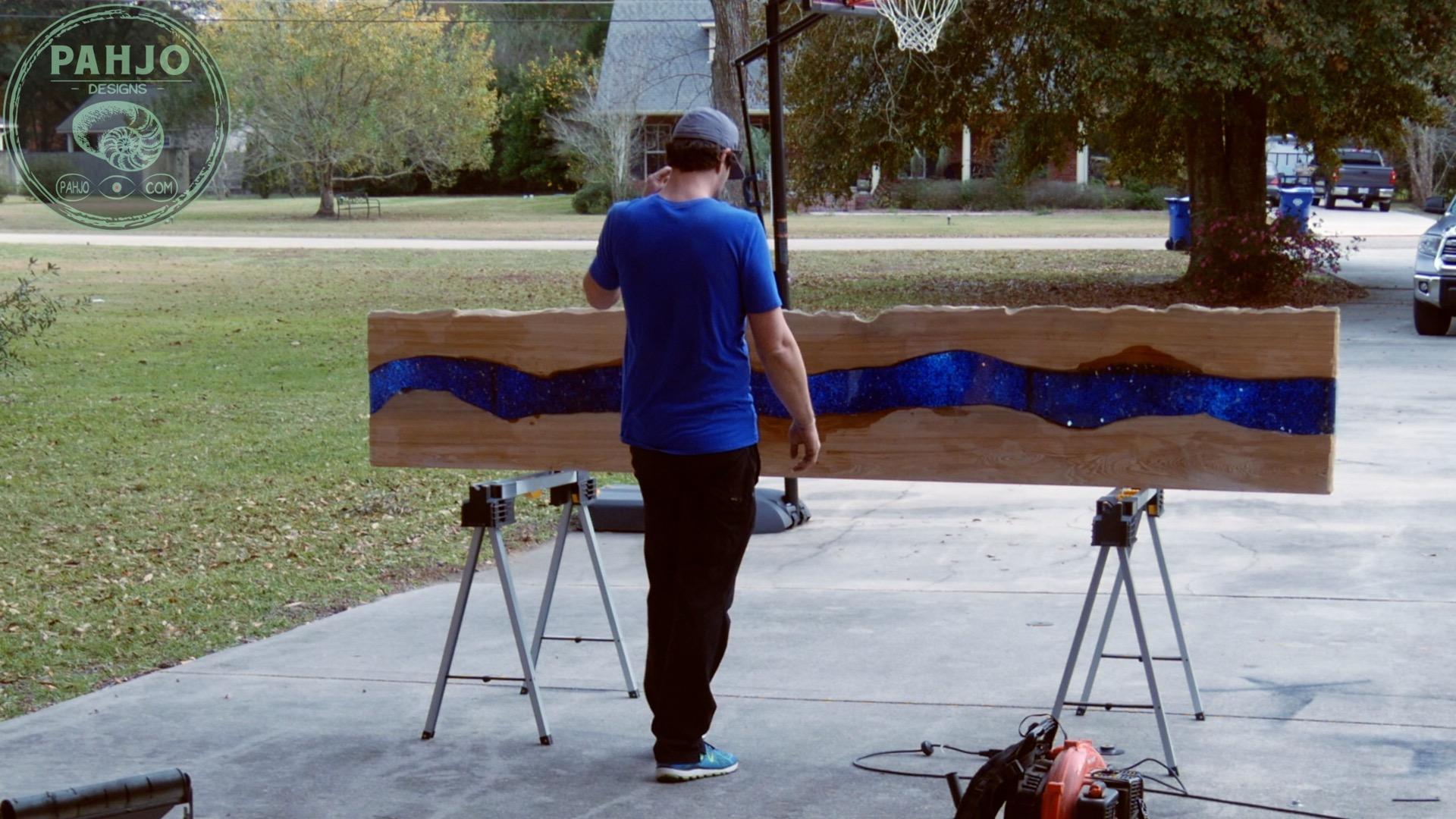

Once cured, I removed the mold and trimmed the ends with a track saw. I cleaned excess resin from the underside using a grinder with a metal disc, cut the piece to final dimensions, and eliminated any high spots.
Finishing Touches
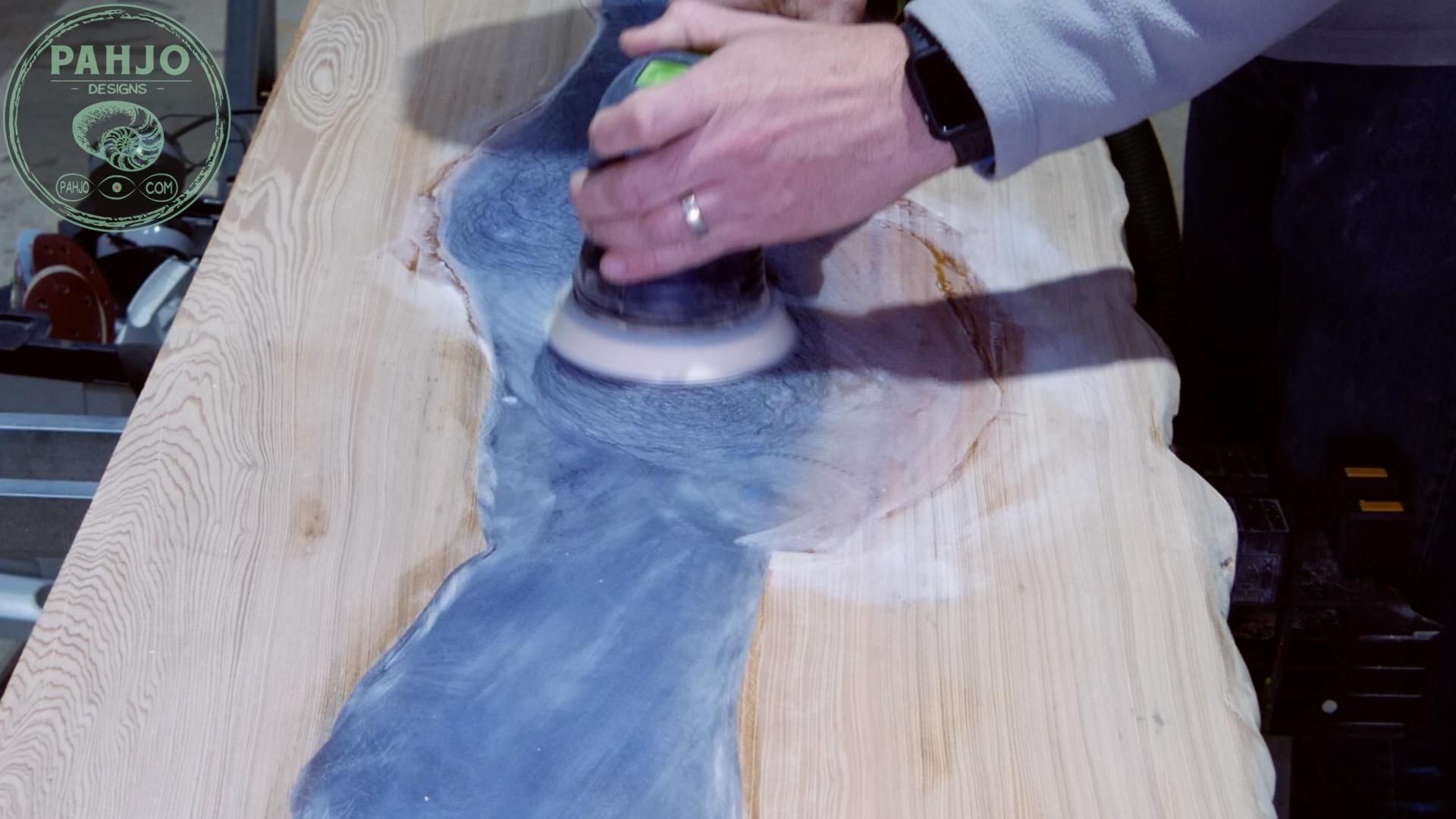

I rounded the edges with a router and progressed through sanding the resin with higher grits.
Epoxy Resin Seal Coats
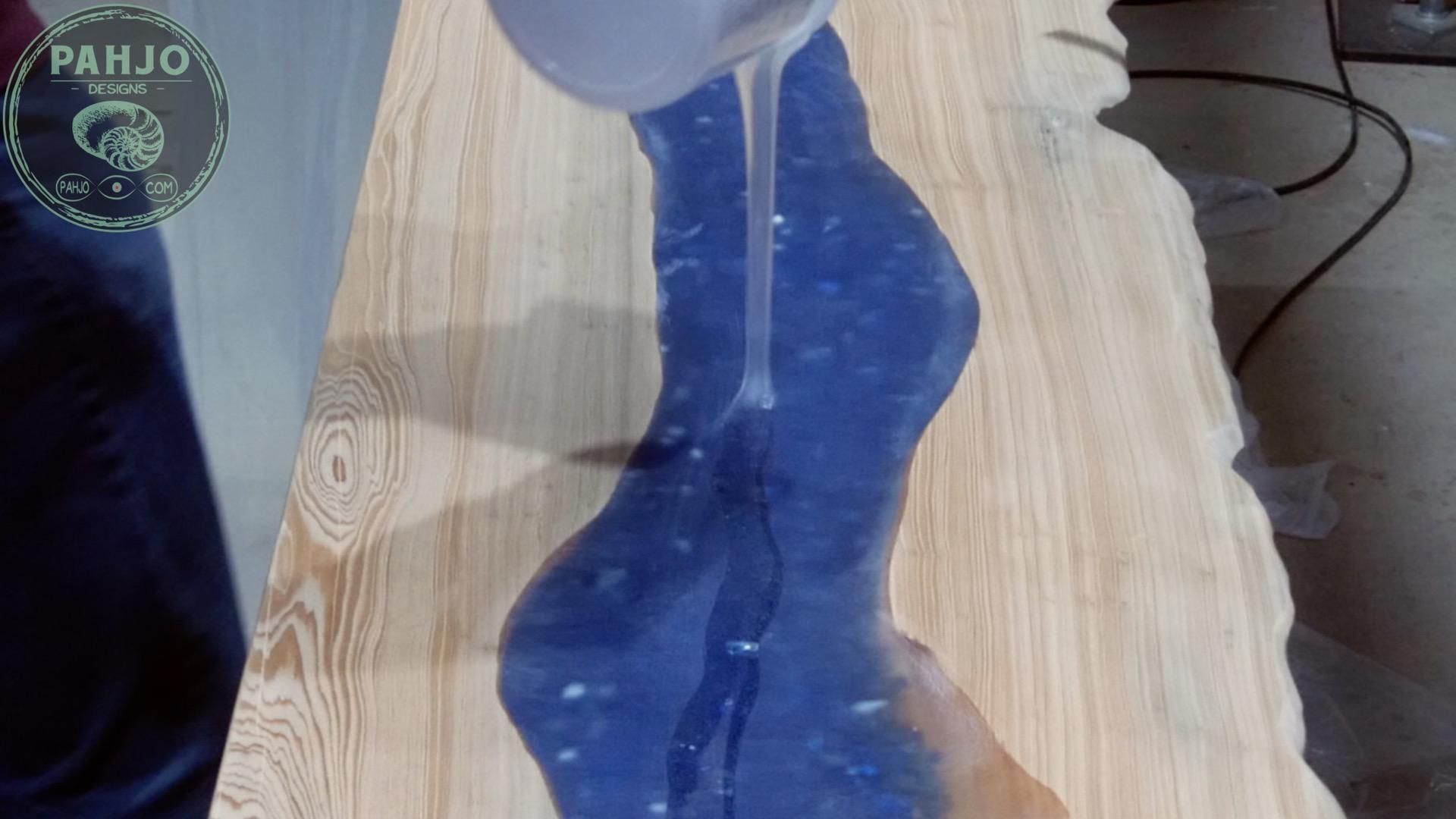
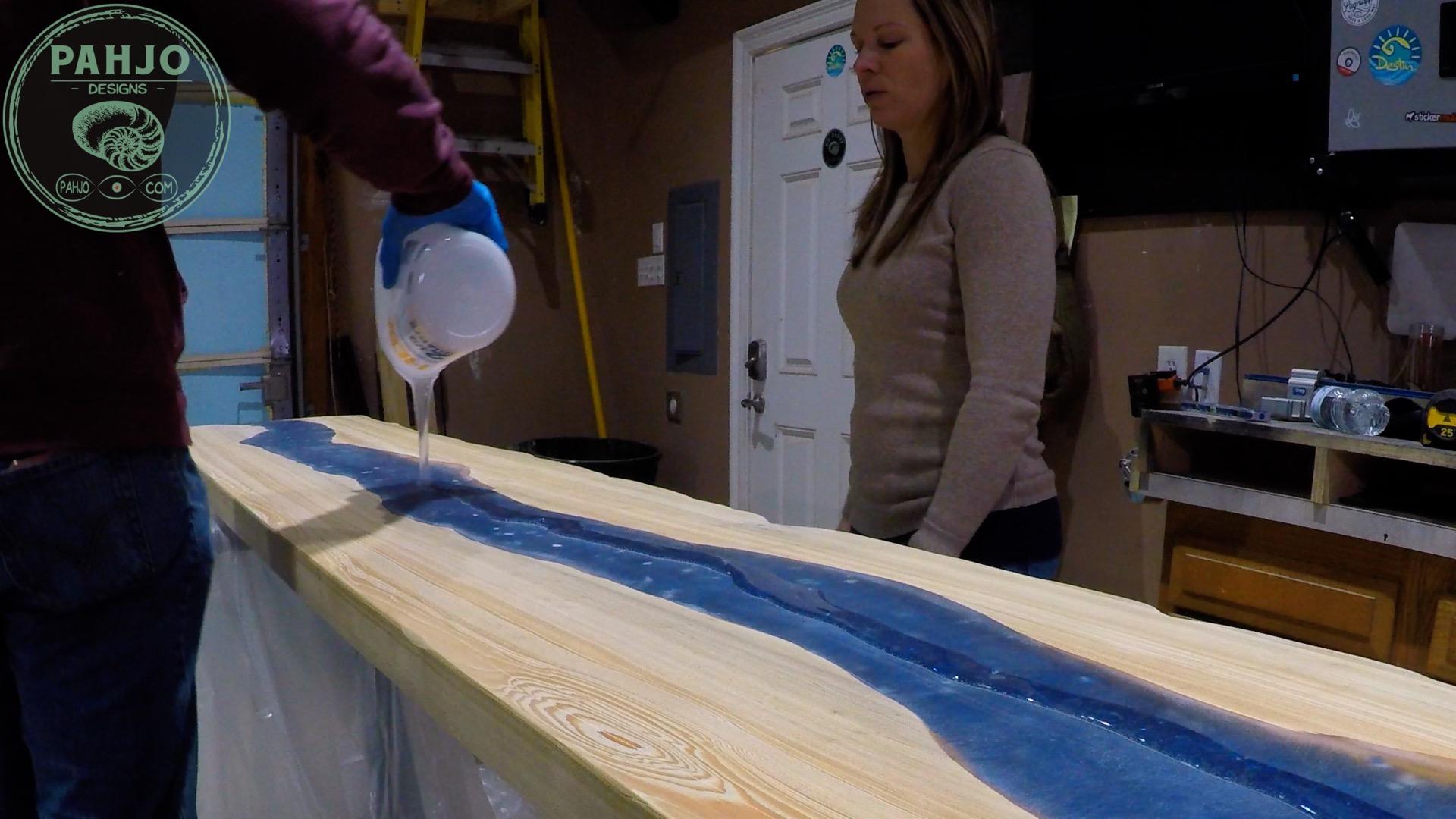
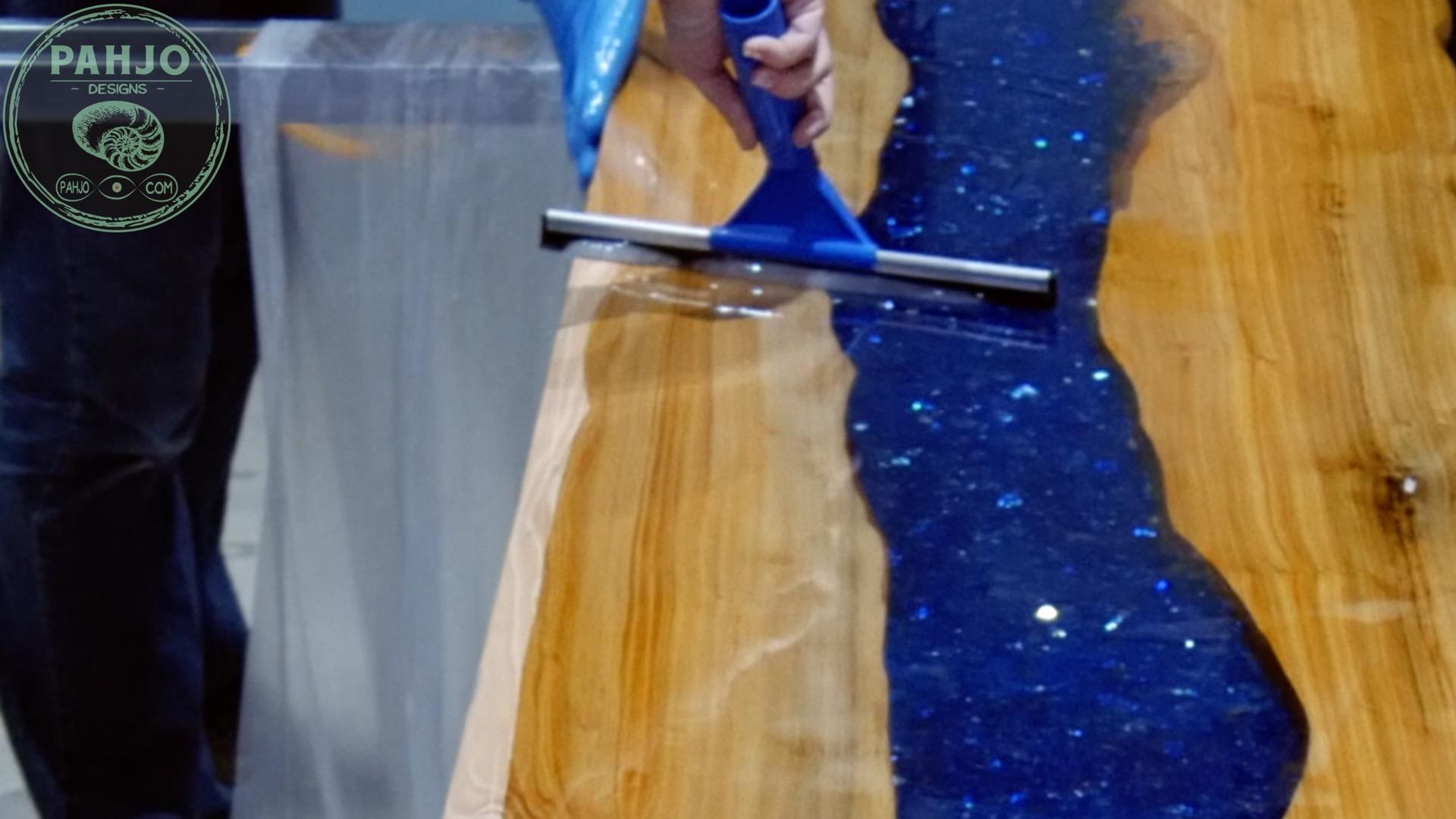
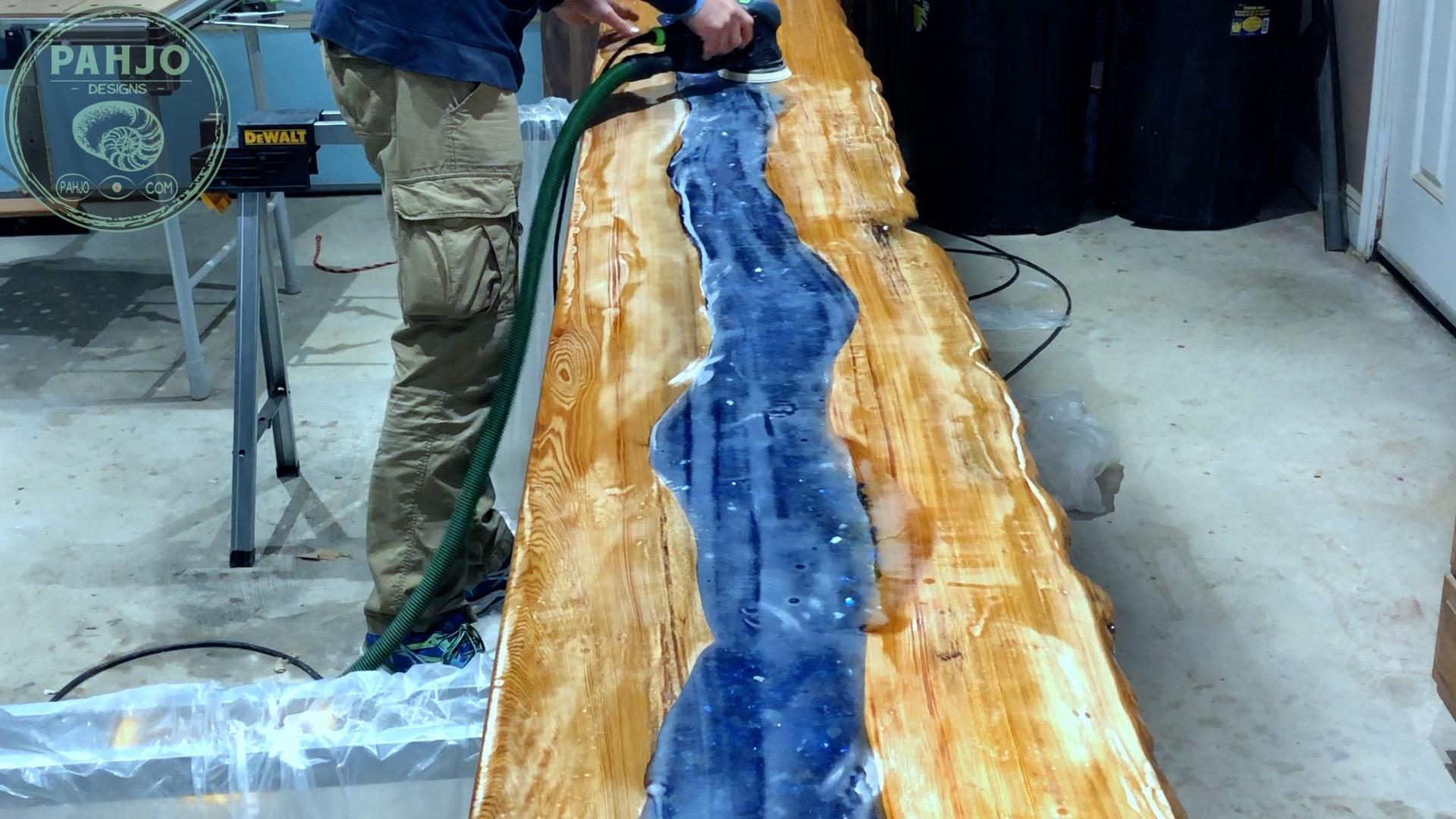

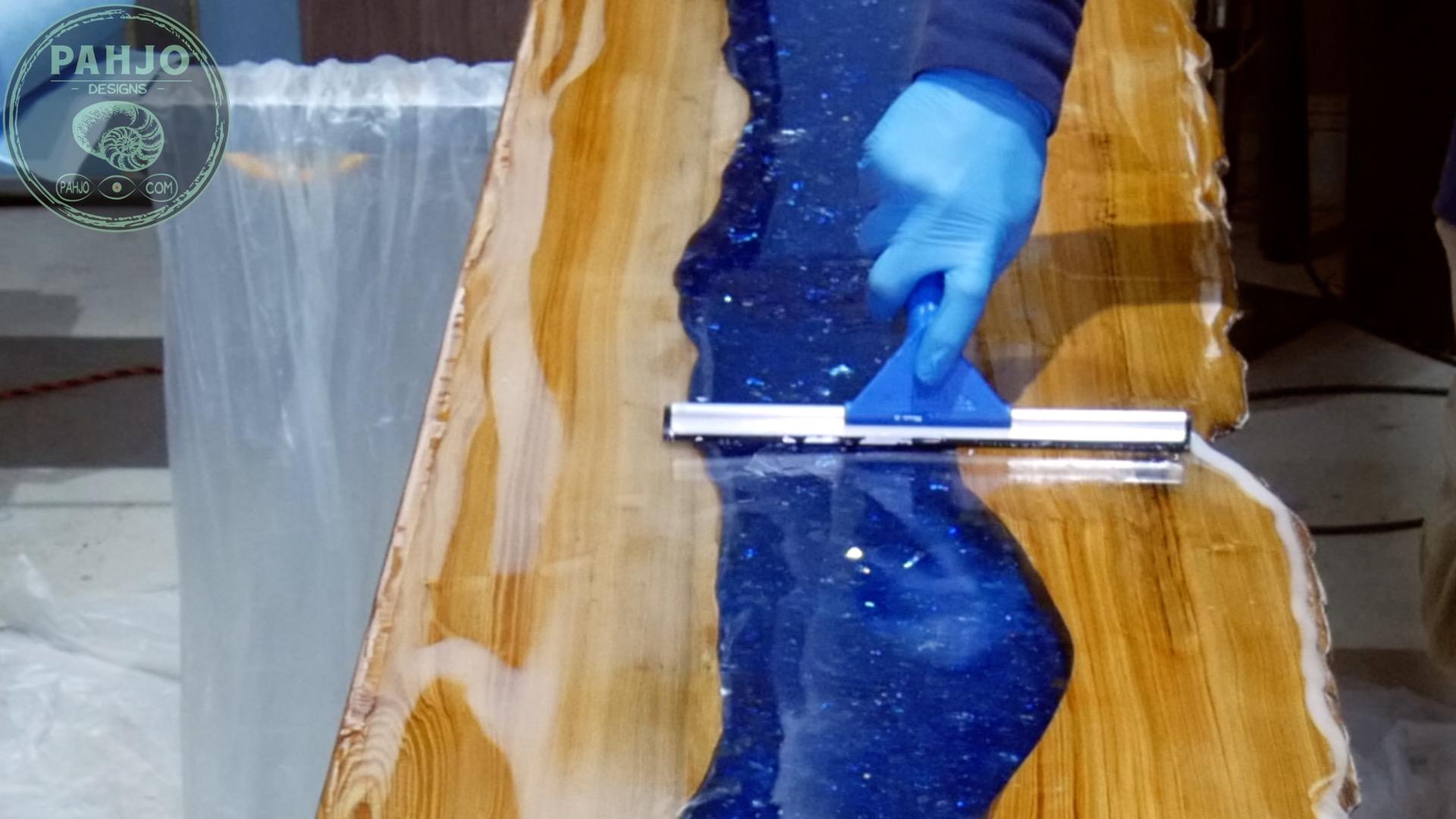
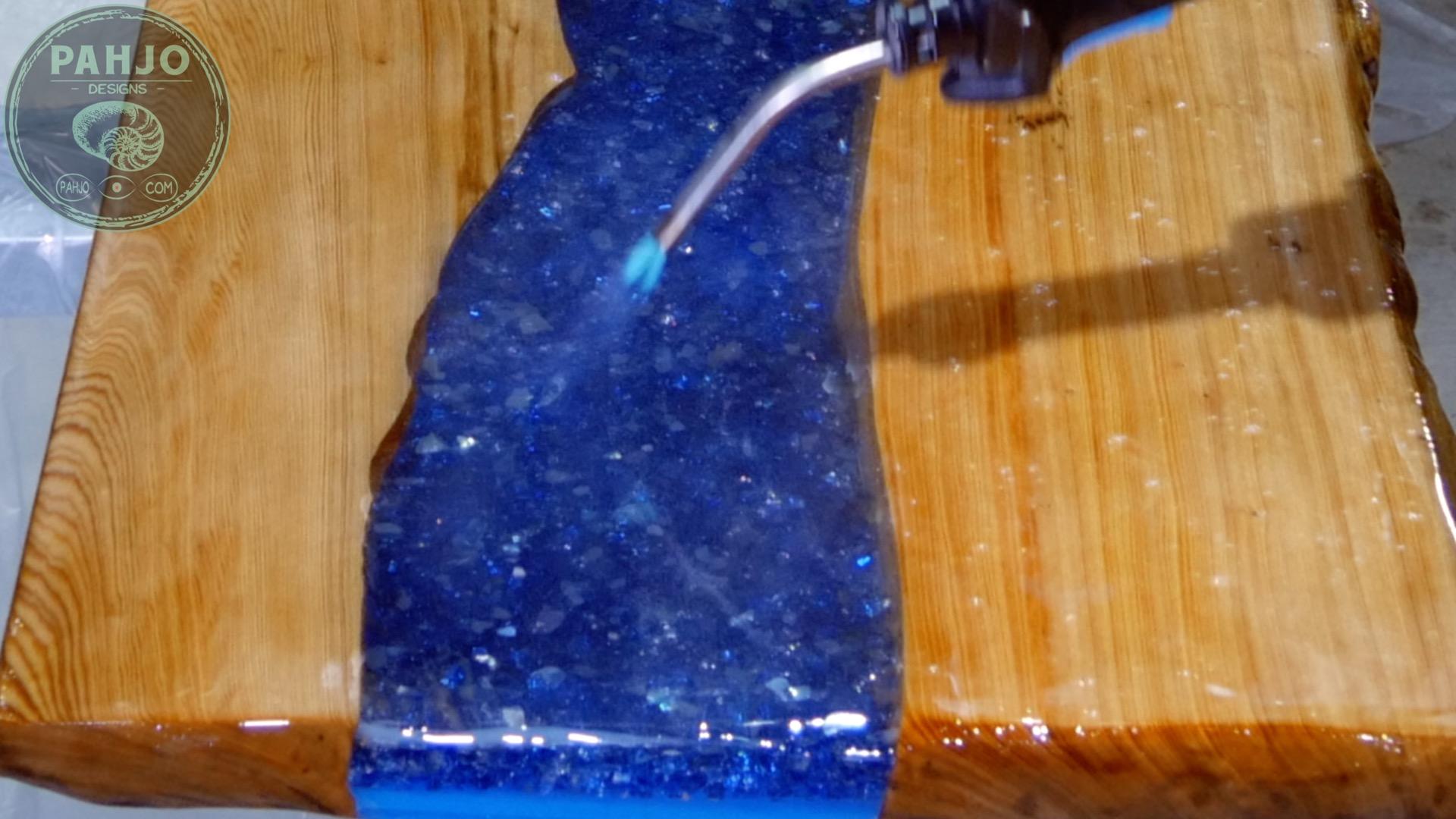
Next, I applied a flood coat of table top epoxy resin across the entire surface. I mixed it carefully, poured it on, and spread it evenly with a squeegee and notch trowel. I used a blow torch to pop any remaining bubbles and let it self-level for that ultra-clear, protective layer.
Once the final epoxy seal coat fully cured (usually 24-72 hours depending on the product and temperature), I sanded the entire table with 320 grit sandpaper and repeated the process for the second and third seal coats.
Epoxy Resin Flood Coats
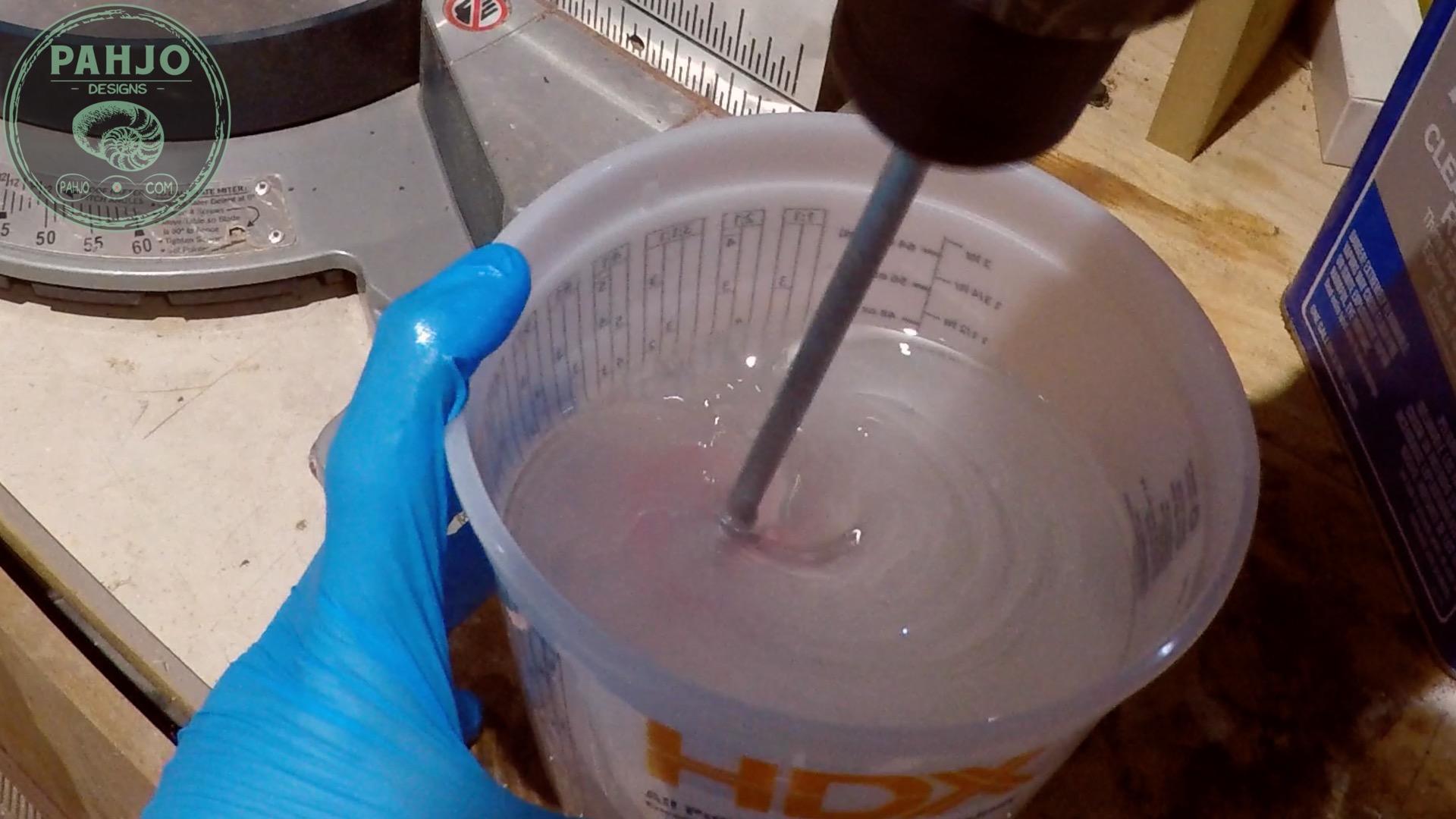

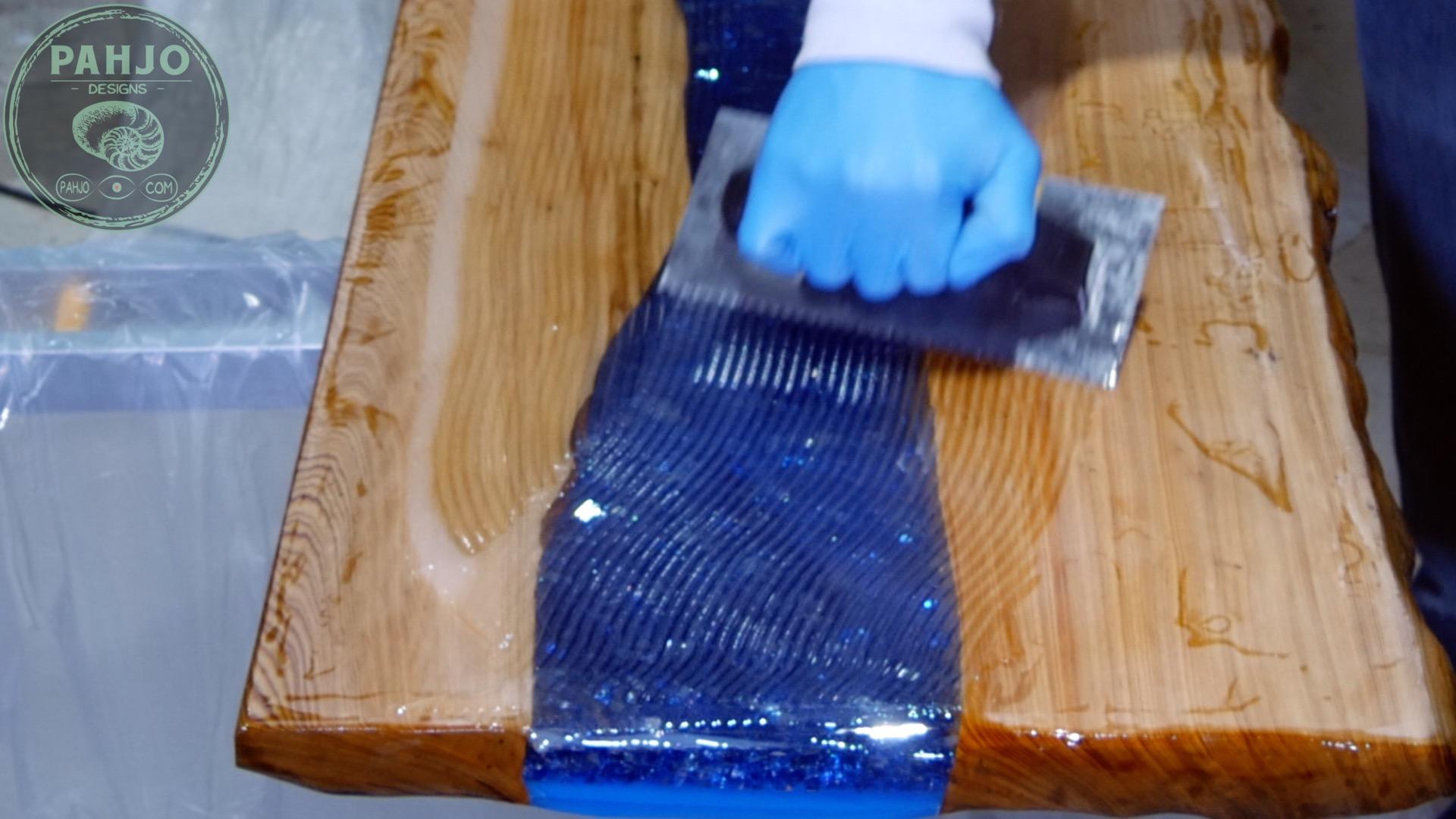
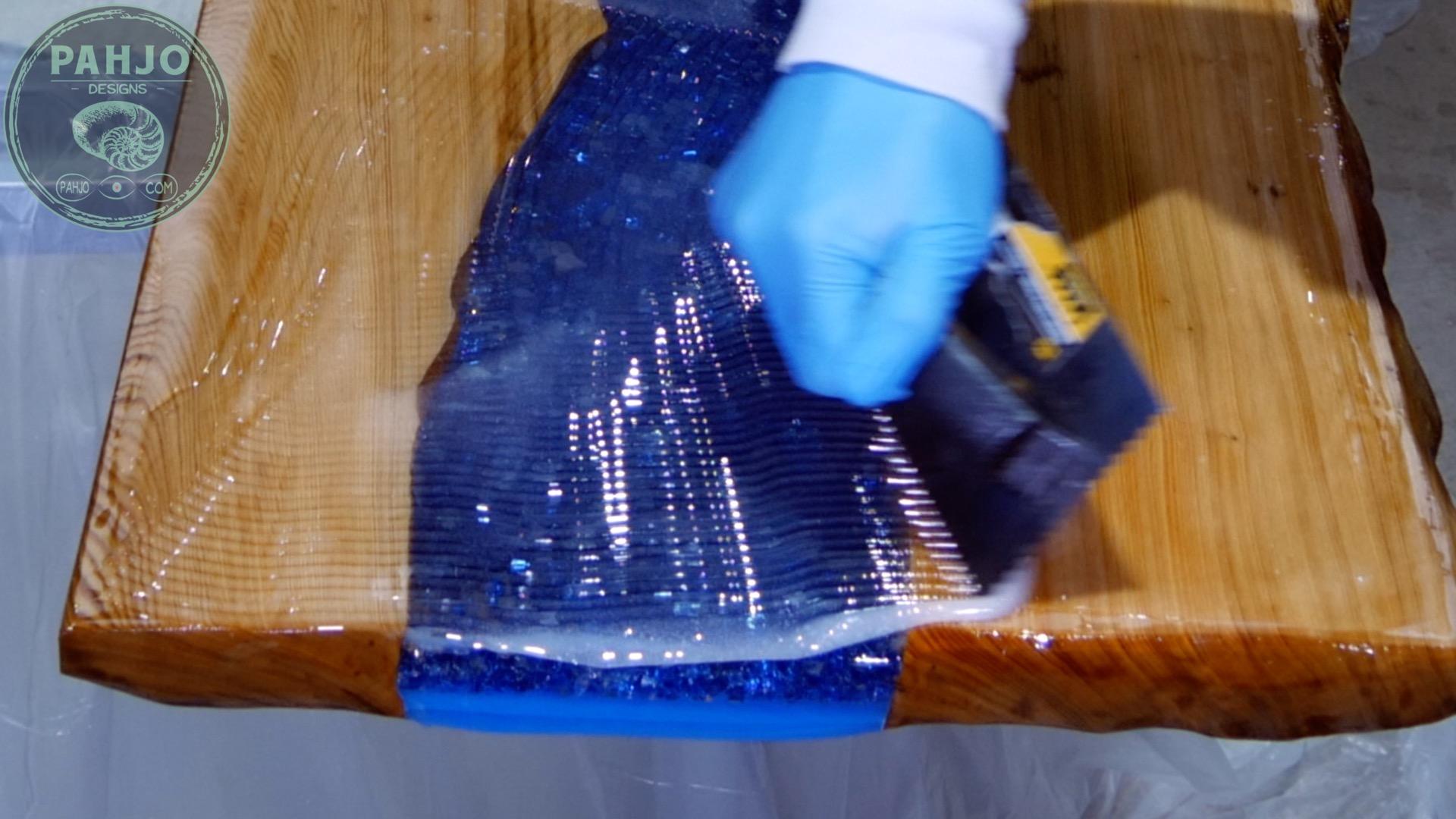
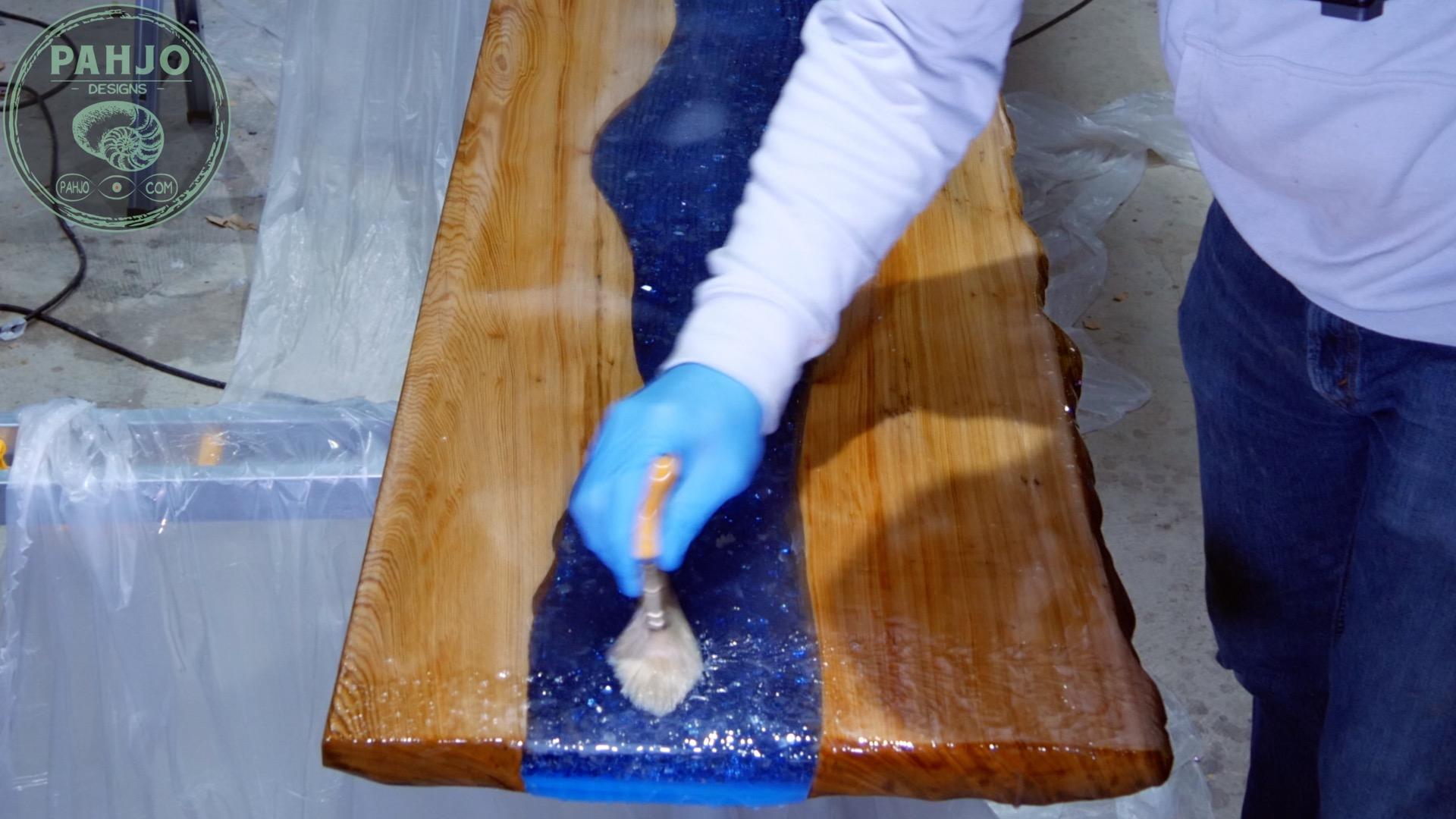
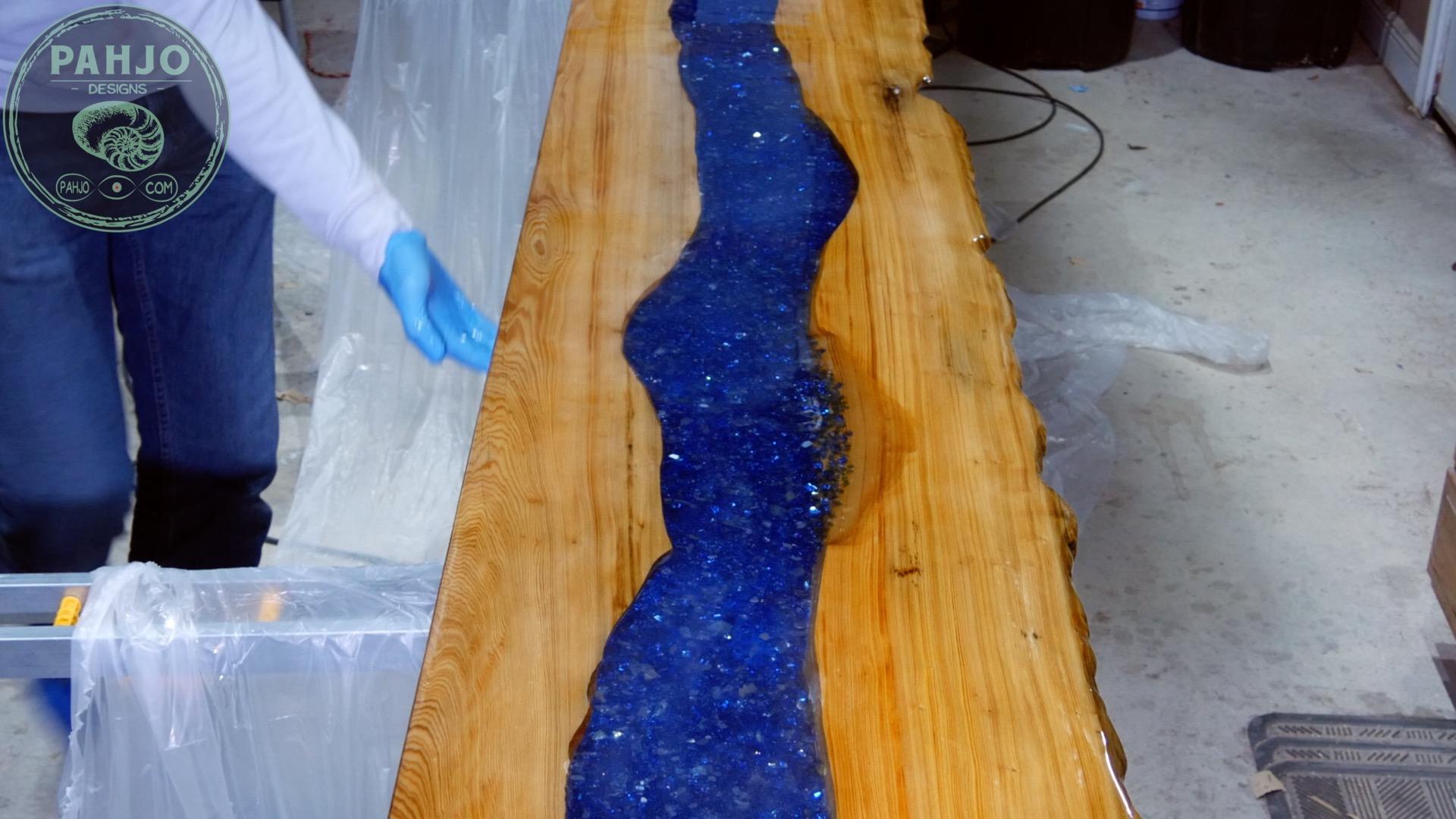
After I sanded the final seal coat on the reclaimed wood bar top, I mixed 3 ounces per square foot for the flood coat.
Next, I used a ⅛" square notch trowel to move the resin across the bar top at a consistent depth. Then, I used a paint brush to chop the material to facilitate proper blending.
My torch removed the air bubbles and help flatten out the material.
I repeated this process for the 2nd flood coat to produce a glass-like finish.
Seal Underside

Next, I applied General Finishes oil and urethane topcoat to the underside for durable protection.
Secure Black LED Lights

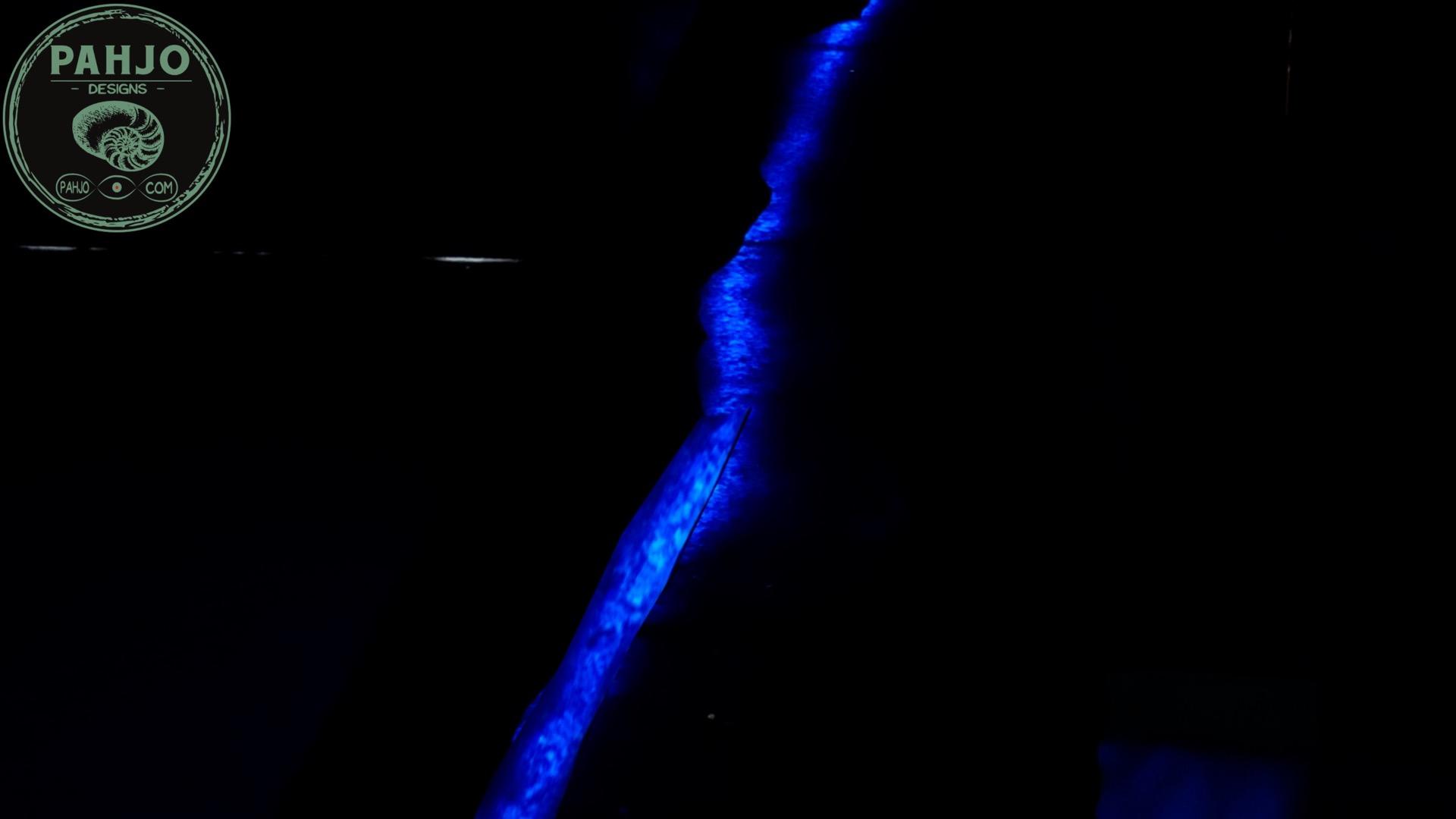
I installed the black LED light strips along the underside of the river for that extra nighttime pop. More importantly, the black LED lights charges the epoxy glow powder.
Prepare Epoxy Bar Top for Delivery
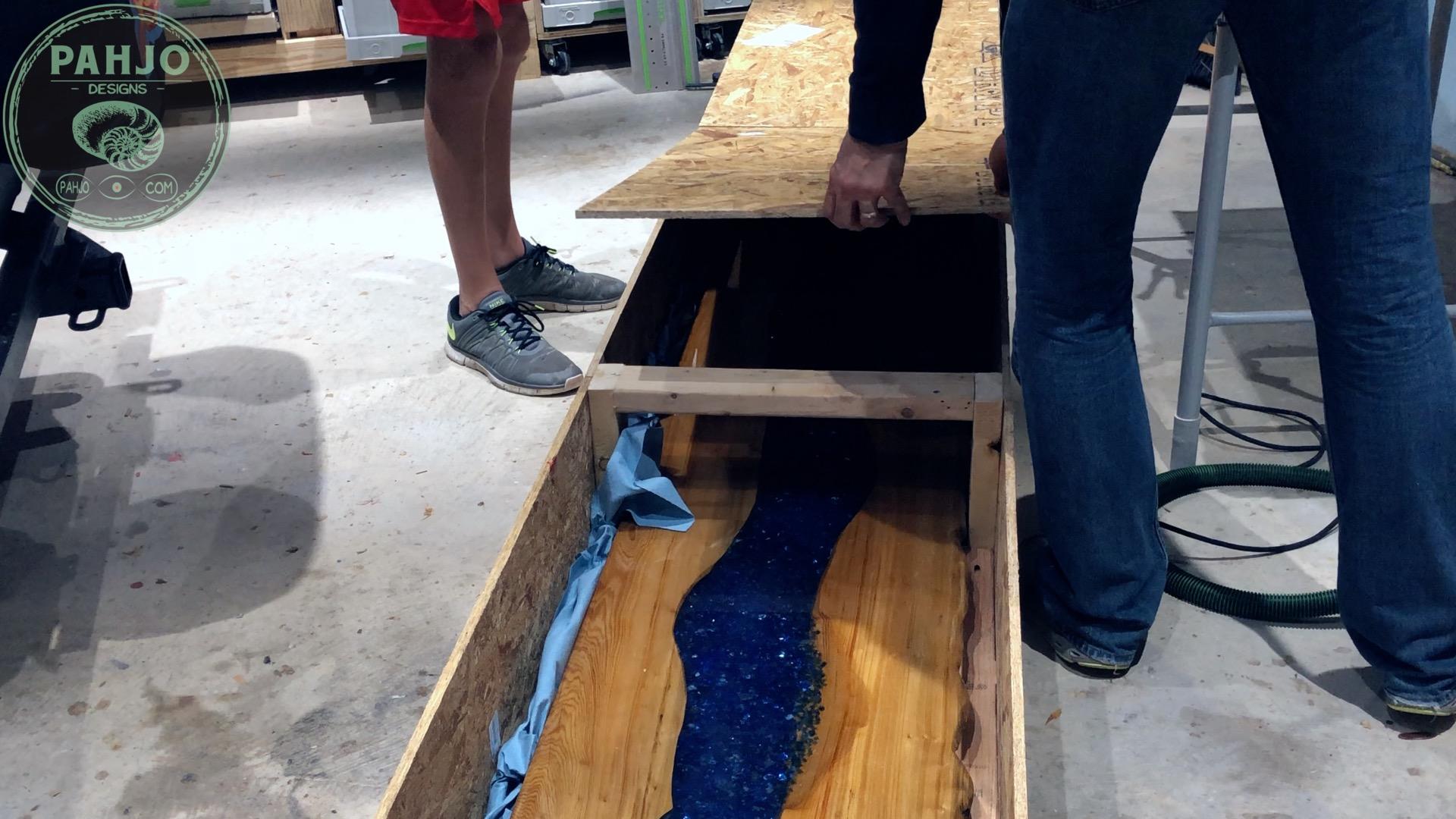
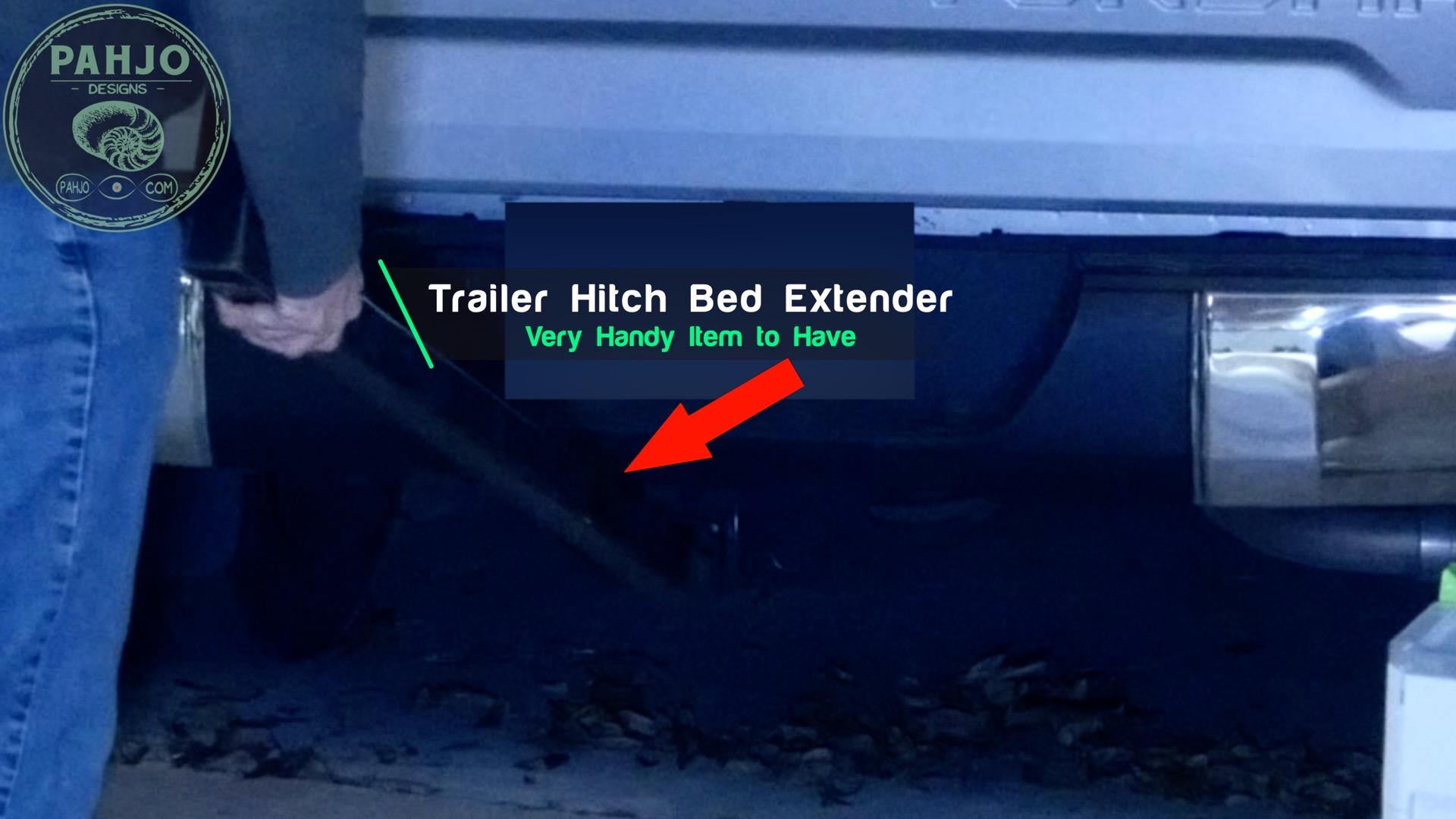

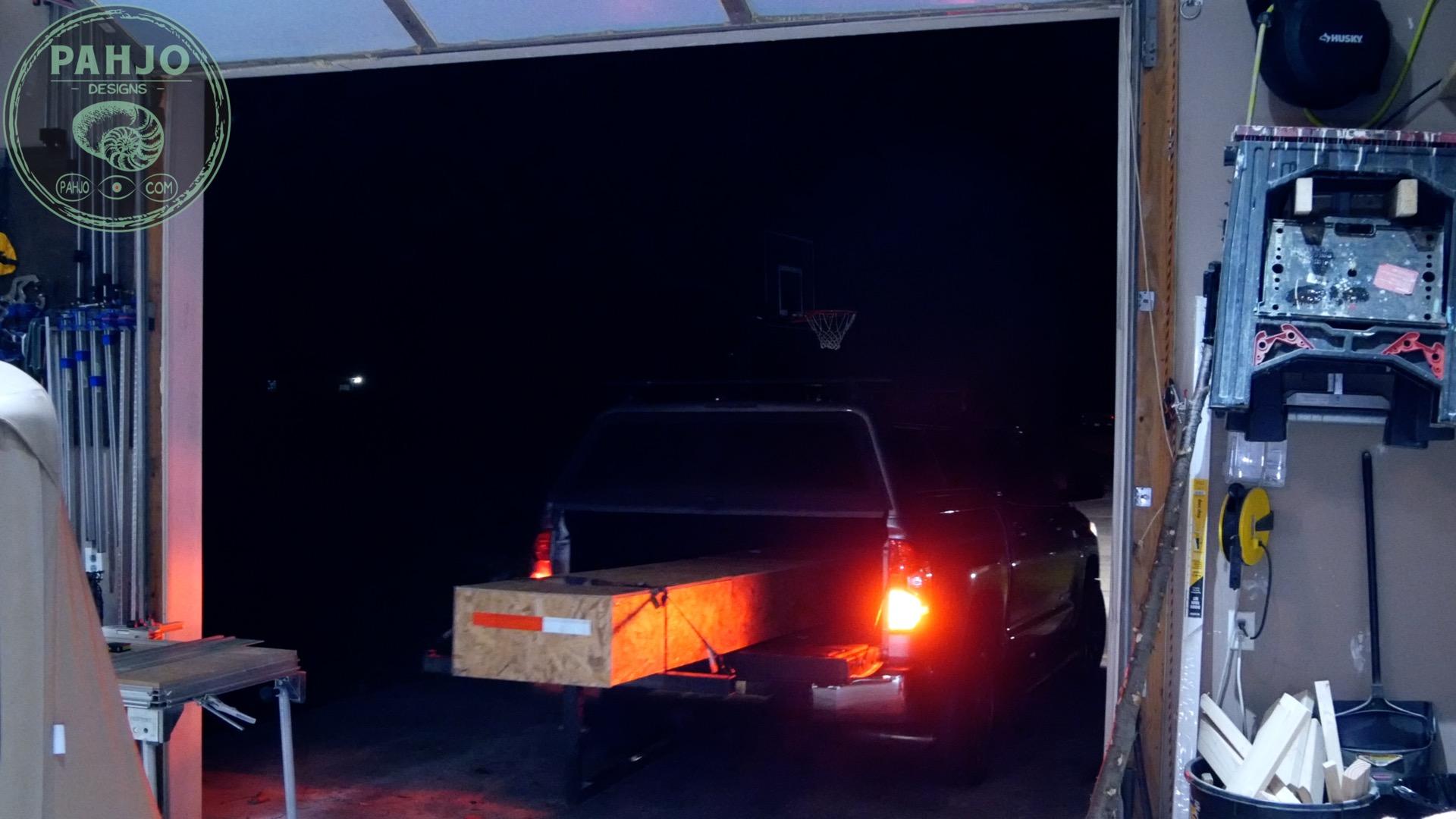
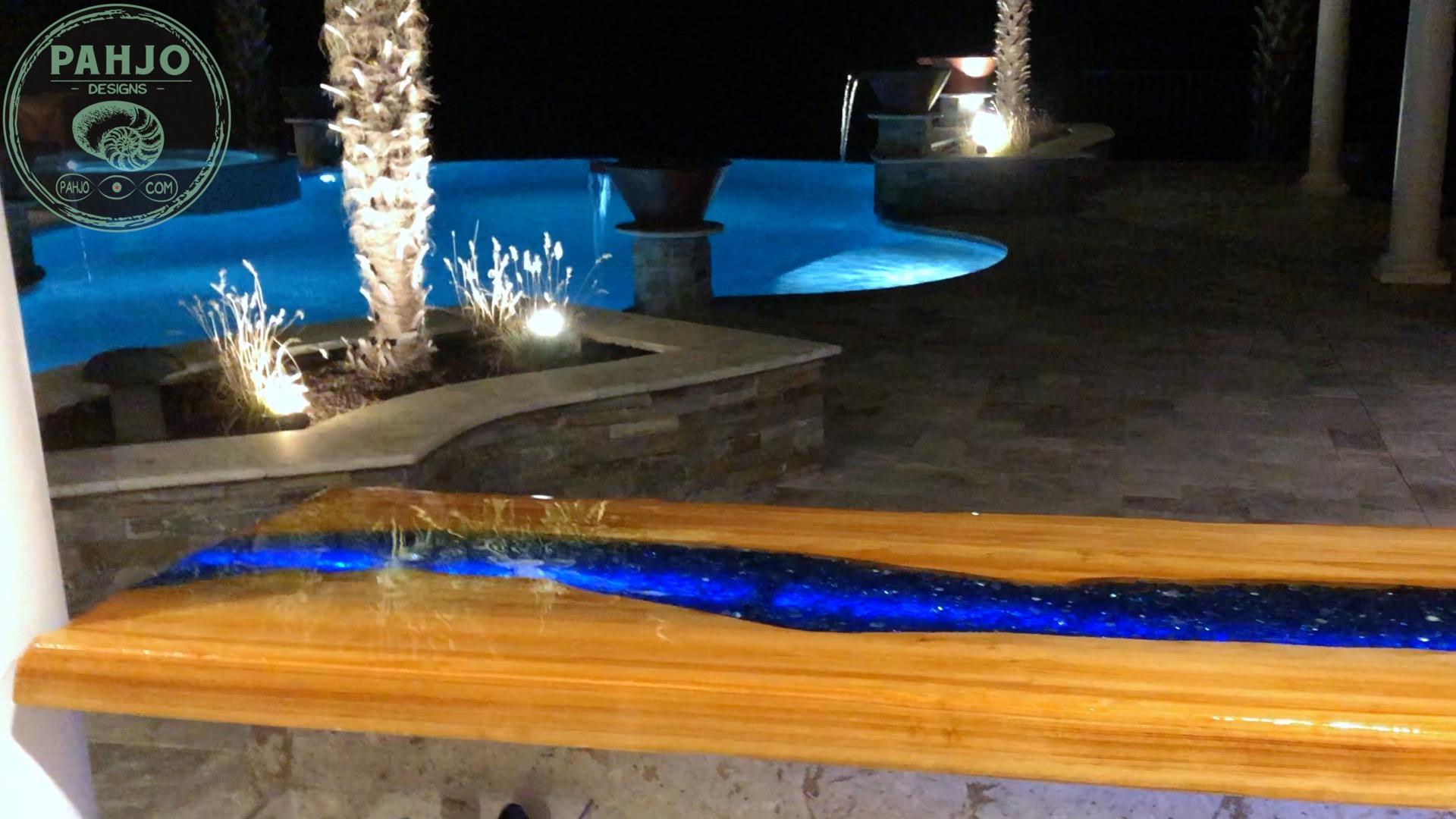
This thing was heavy after I placed the bar top into the crate. I carefully loaded it onto the truck with the bed extender again.
At the site, I maneuvered the bar top into place around the pool area and secured it to the base cabinets. Seeing it lit up for the first time under black light was worth every bit of effort.
Conclusion
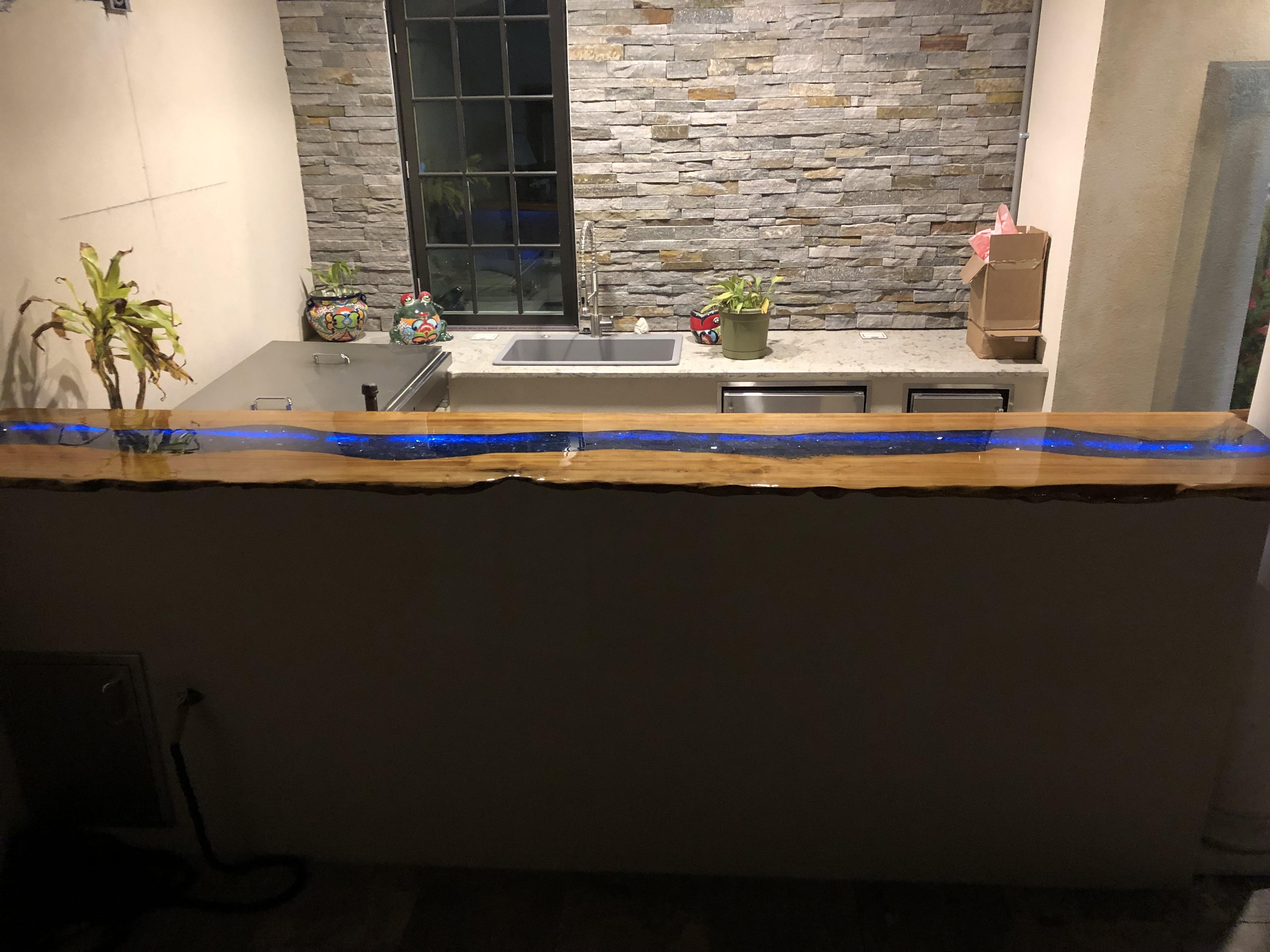

I hope this instructable provided you with value. Please feel free to leave a comment if you have any questions - I'm happy to help.
Be sure to checkout my YouTube channel and my website for more DIY tutorials.