DIY Scandinavian Folding Woven Cord Chair
by danieman in Living > Homesteading
184 Views, 2 Favorites, 0 Comments
DIY Scandinavian Folding Woven Cord Chair


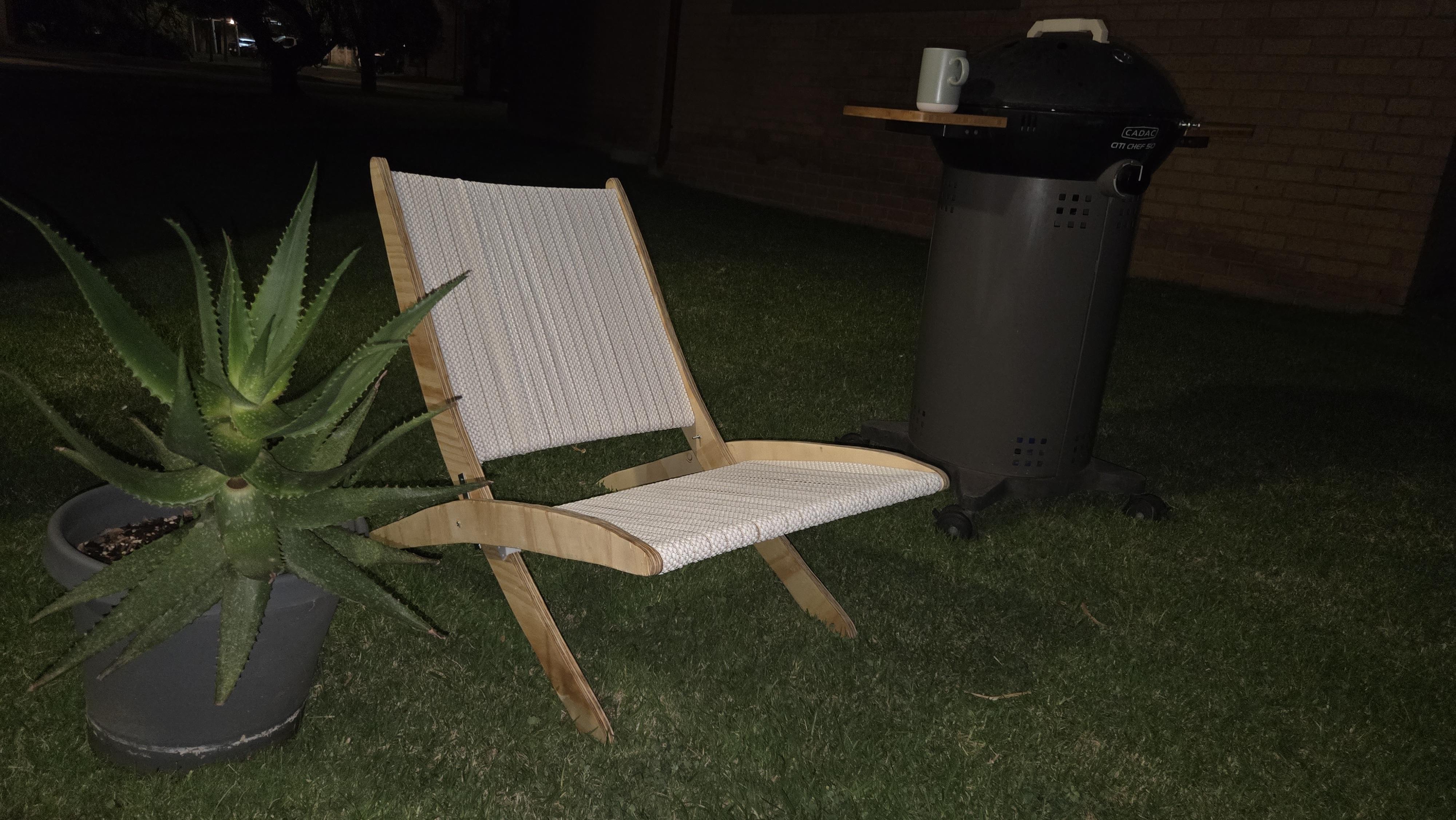
I've built this Scandinavian-style folding woven cord chair for my Airbnb apartment after being inspired by several similar designs I saw online. The goal was to create a simple, lightweight chair that looks modern and can also fold away easily for storage.
To make the process easier, I first designed the chair in Autodesk Inventor and used the drawings to create full-size paper templates. The frame was made by laminating multiple layers of plywood for strength, then cutting, sanding, and assembling the pieces to form the folding structure.
Finally, flat woven leather cord was wrapped around the seat and backrest to create the woven surface that gives the chair its distinctive Scandinavian look.
In this guide, I’ll show the steps I followed to build the chair.
Supplies


• Jig saw
• Dremel 4250
• Wood glue
• Clamps
• 3d printer
• Sandpaper
• Pen
• Paper
• Sellotape
• Woodoc Sealer
• Drill
• Spade drill bit
• 4x 40mm M4 bolts and nuts
• 30 m flat woven leather cord
• 2x metal straight brackets
• Plywood sheets
• White 3d printer filament
Paper Template


The chair was first designed in Autodesk Inventor, and I 3d printed the chair so I could visualise it better. The drawings can then be used to draw a scaled size on a paper template.
Start by creating a sheet large enough for the full template. Tape six A3 sheets of paper together to form one large sheet. Then draw a grid of squares across the sheet. The size of the blocks depend on the scale you want to use. I used 150 × 150 mm squares. This grid helps to scale and trace the shapes accurately from the drawings.
First print out the side view of the 3d model on any size paper. Then draw a grid of squares over the drawing. Depending on your scale draw new squares with bigger size on the big sheet. The main step is then to copy the intersection lines where the chair drawing profile lines cross the lines of the squares. The more squares you have the easier it will be. This is an easy way to scale a drawing if you do not have a printer large enough to print out a template.
Only two main template pieces need to be drawn for the chair frame. The seat frame and the backrest frame. Once these shapes are marked on the large sheet, they can be cut out and used to trace the design onto the wood. See the attached PDF's for the chair design.
Stick Plywood Sheets


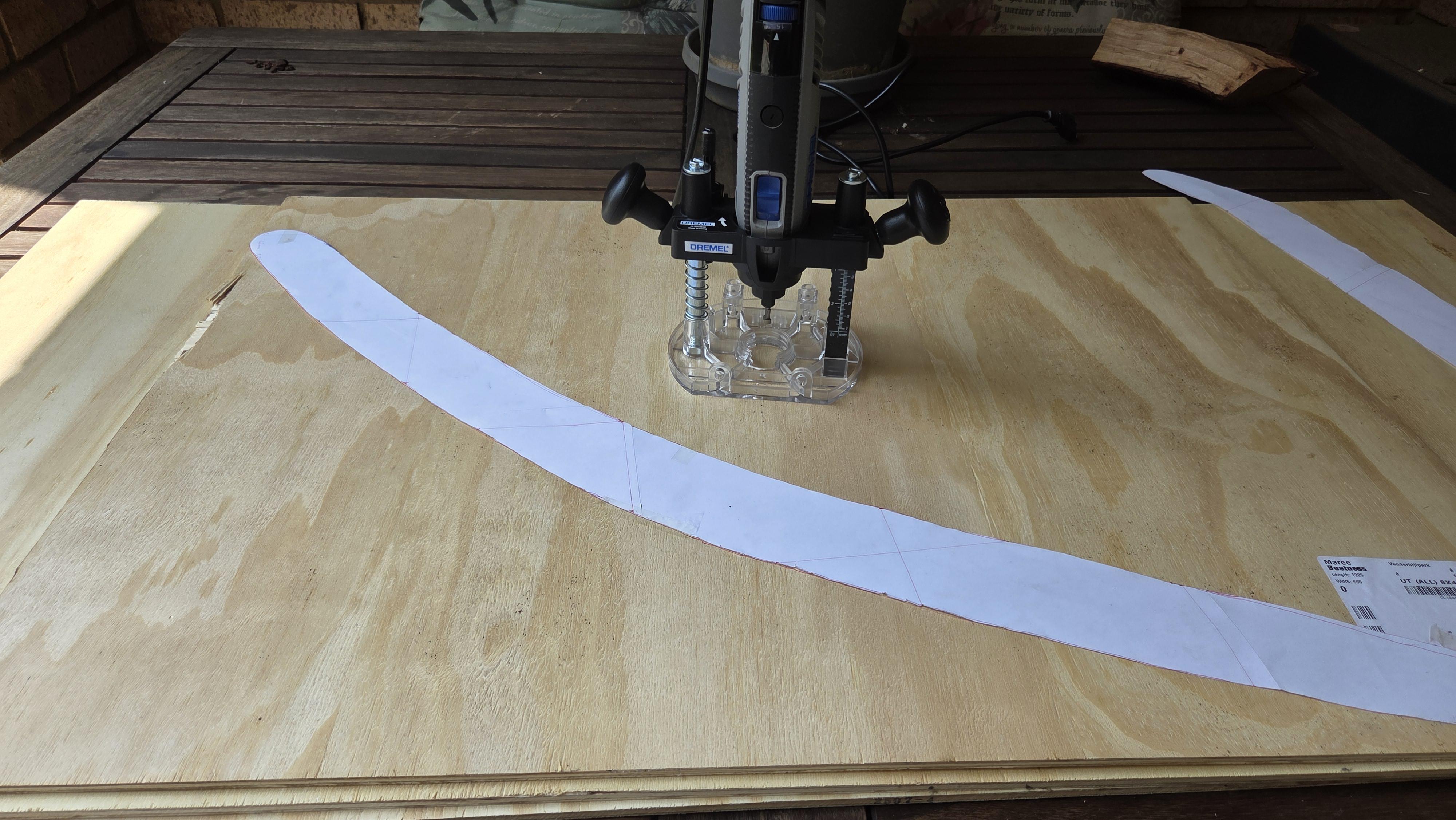


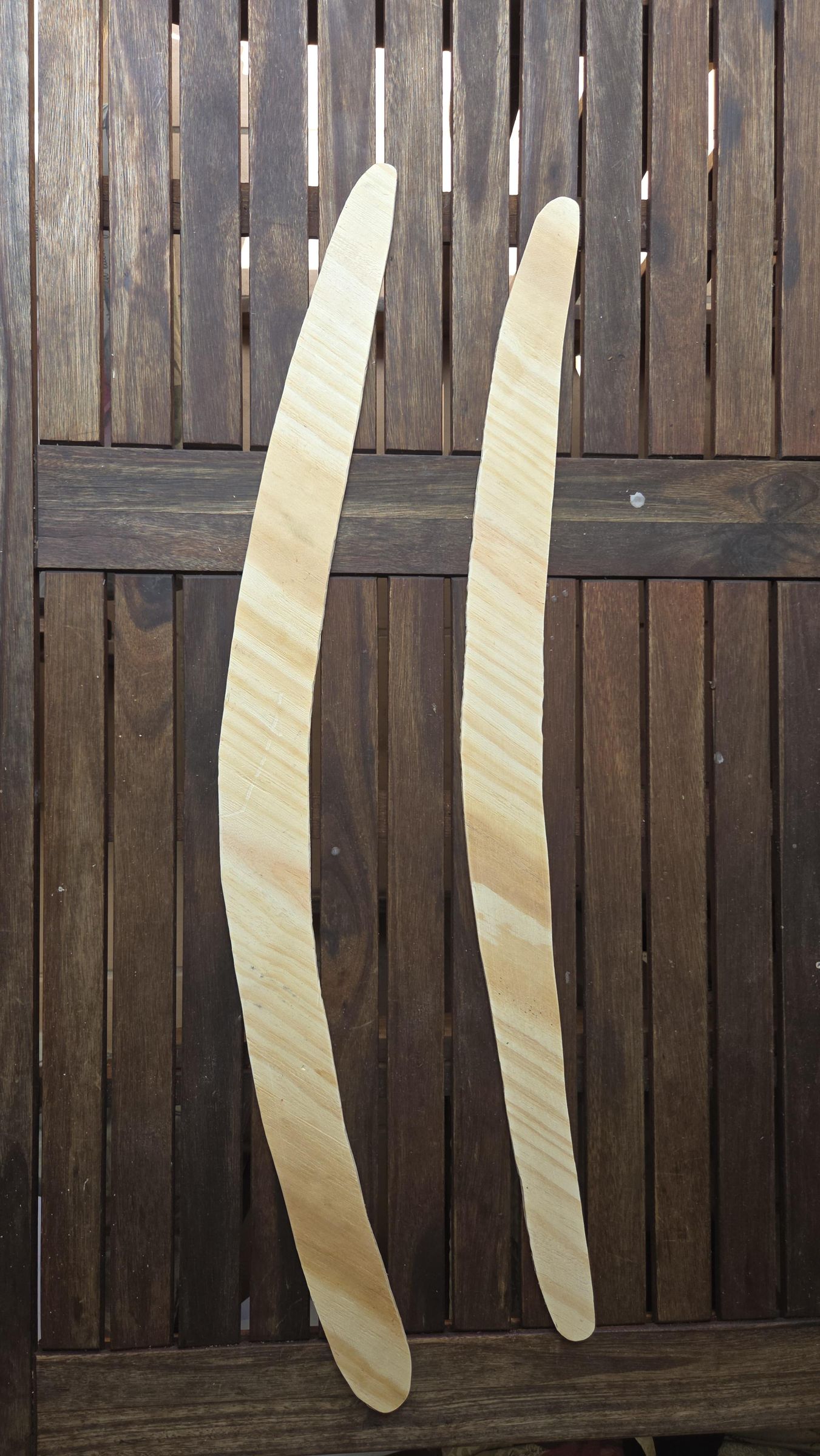


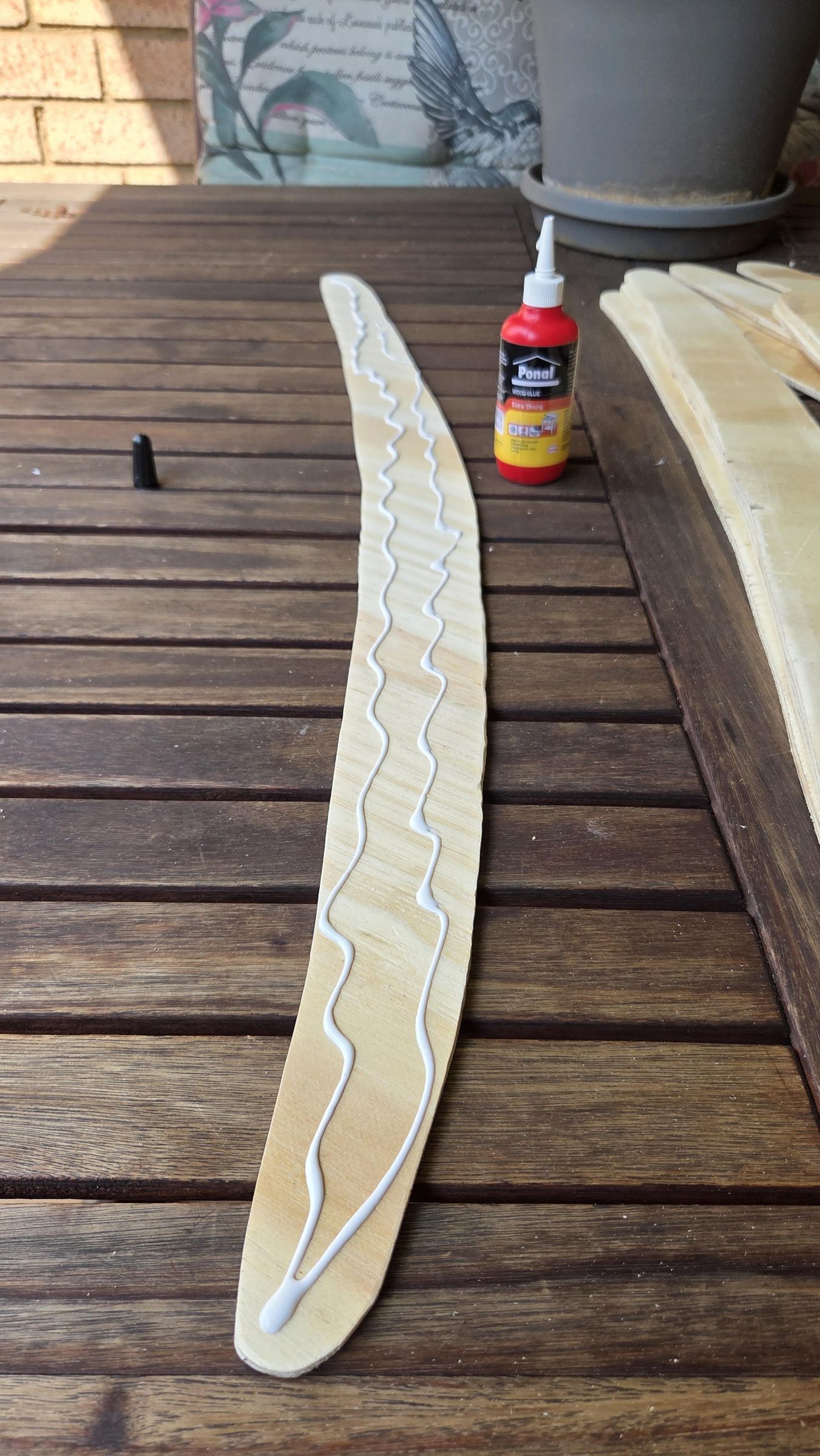


Once the template is complete, cut it out and attach it to the wood sheets. I used plywood, but a higher-quality hardwood could also be used for a more premium and modern finish.
After attaching the templates to the wood, use a jigsaw to cut out the shapes. To increase the strength of the frame, glue three or more plywood sheets together to form thicker parts. Apply wood glue between the layers, clamp the pieces firmly, and allow them to dry for about 24 hours before continuing.
Sand and Cut the Edges
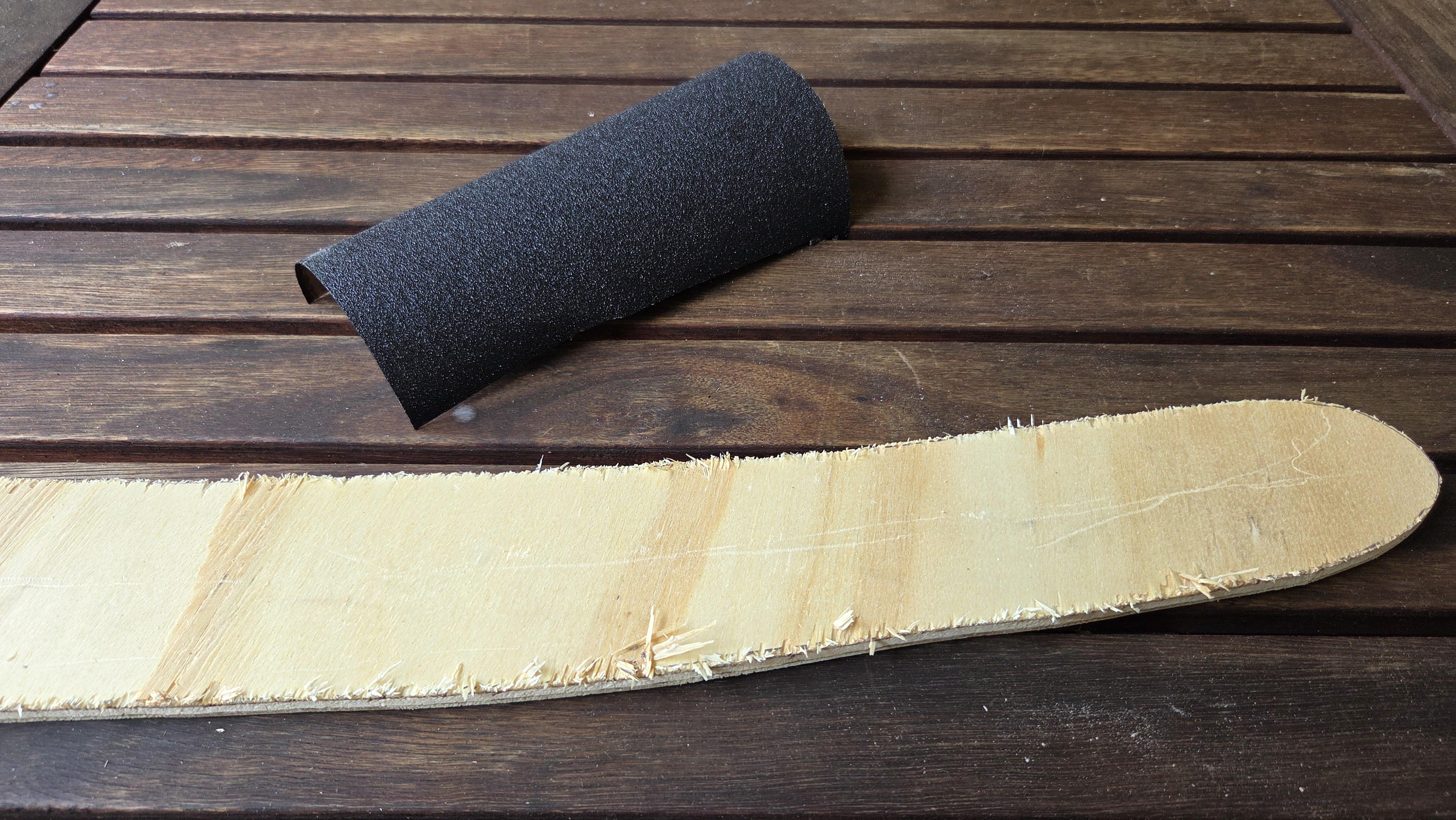

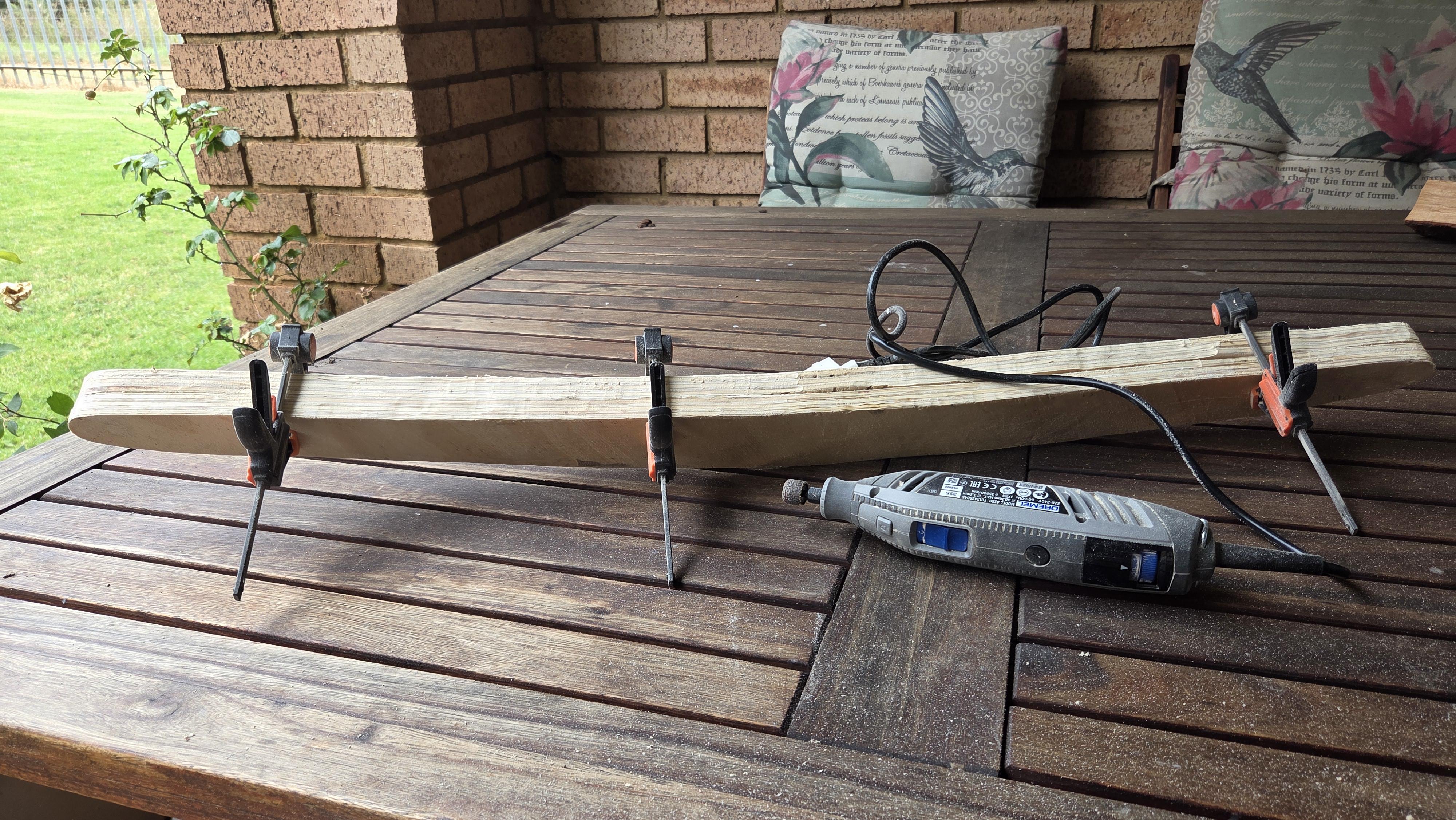


The plywood cuts will be uneven and rough, but after the plywood pieces are dry it can be sanded and cut to cleaner edges and surfaces. Use a sanding tool for the edges. The Dremel sander worked great.
Treat the Wood
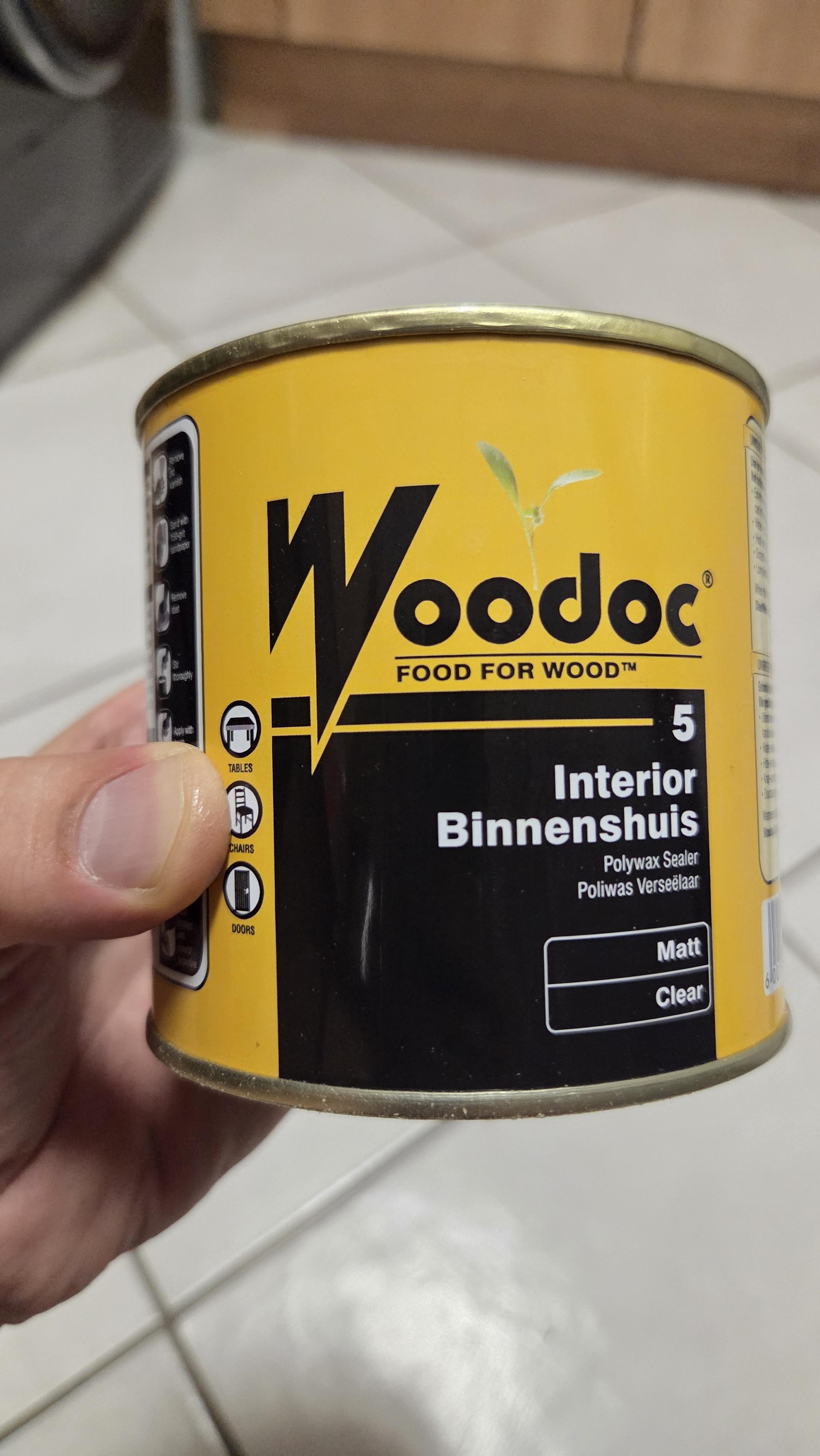
I used a clear Woodoc interior polywax sealer to cover and seal the wood.
Support Struts and Brackets


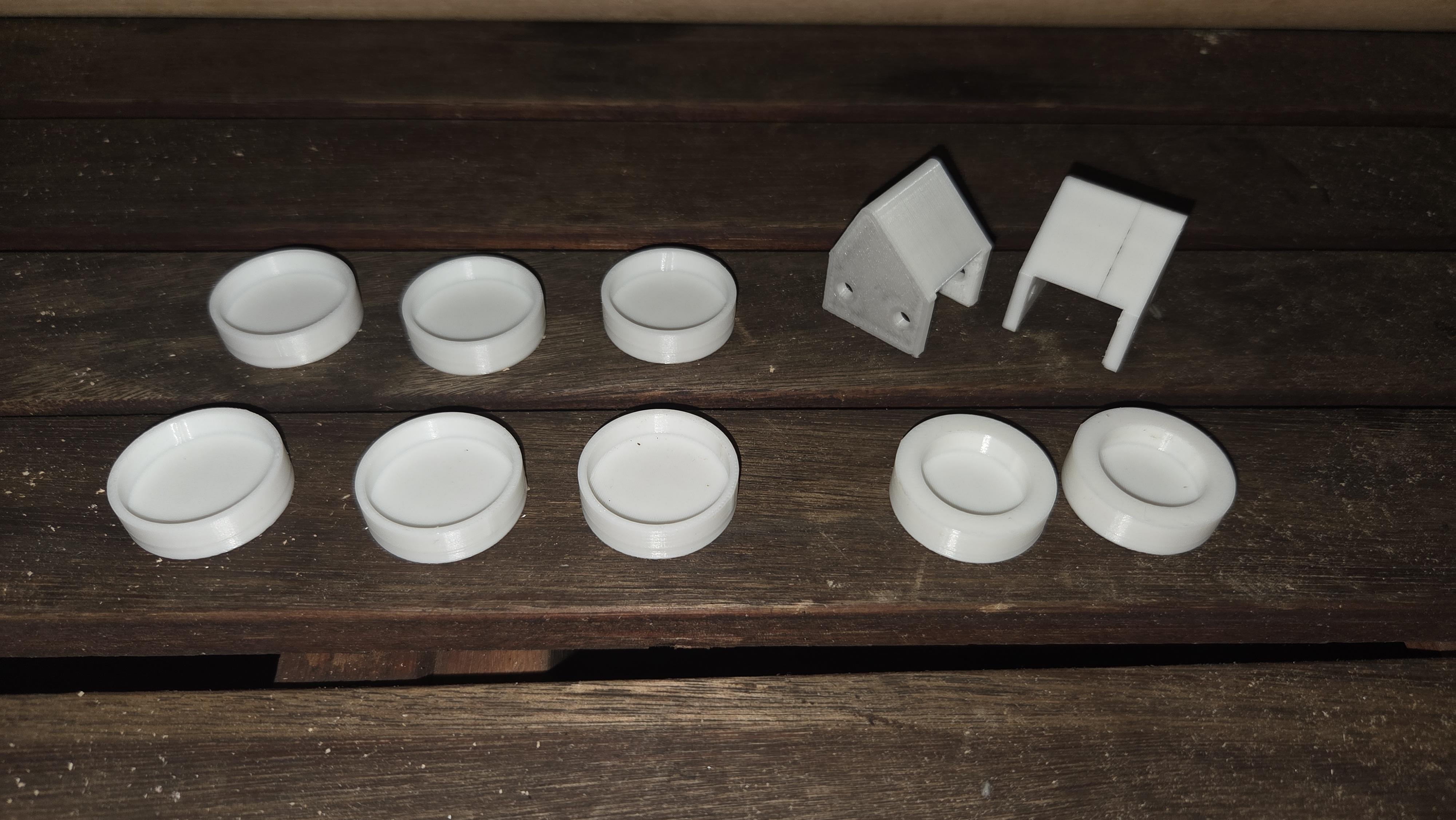


To connect the different parts of the chair, four support struts are used, two for the seat and two for the backrest. I used 3 struts with a 25 mm diameter, and one with a 19 mm diameter.
A spade drill bit was used to drill the holes for the strut supports. The only bit I had available was 28 mm, so I designed and 3D printed round inserts with a 28 mm outer diameter and inner holes of 25 mm and 19 mm to fit the struts properly.
The images show the parts with the 28 mm holes already drilled. The shorter struts are 42 mm long, while the longer struts (used to support the seat frame) are 50 mm long.
Assembly


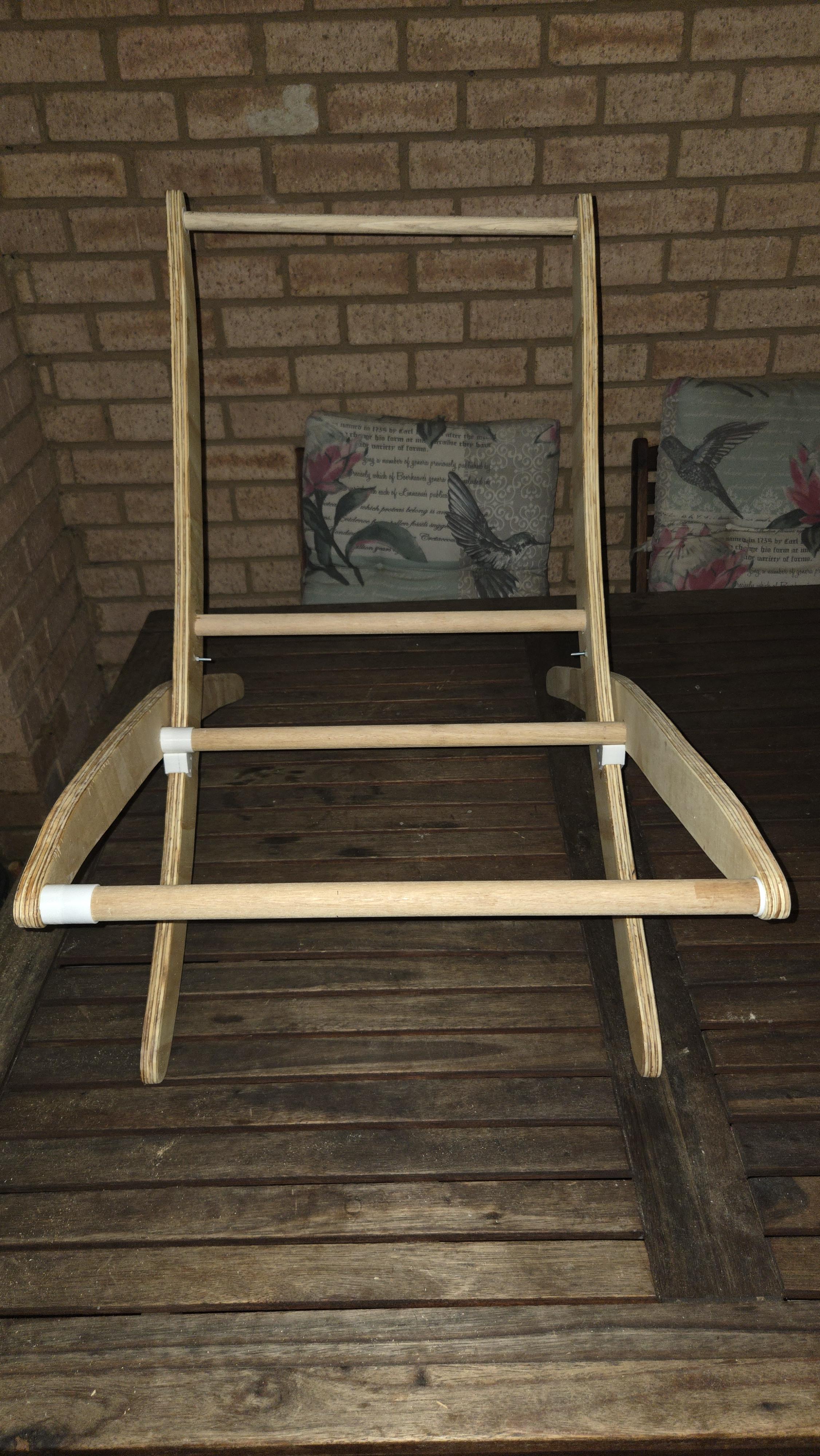
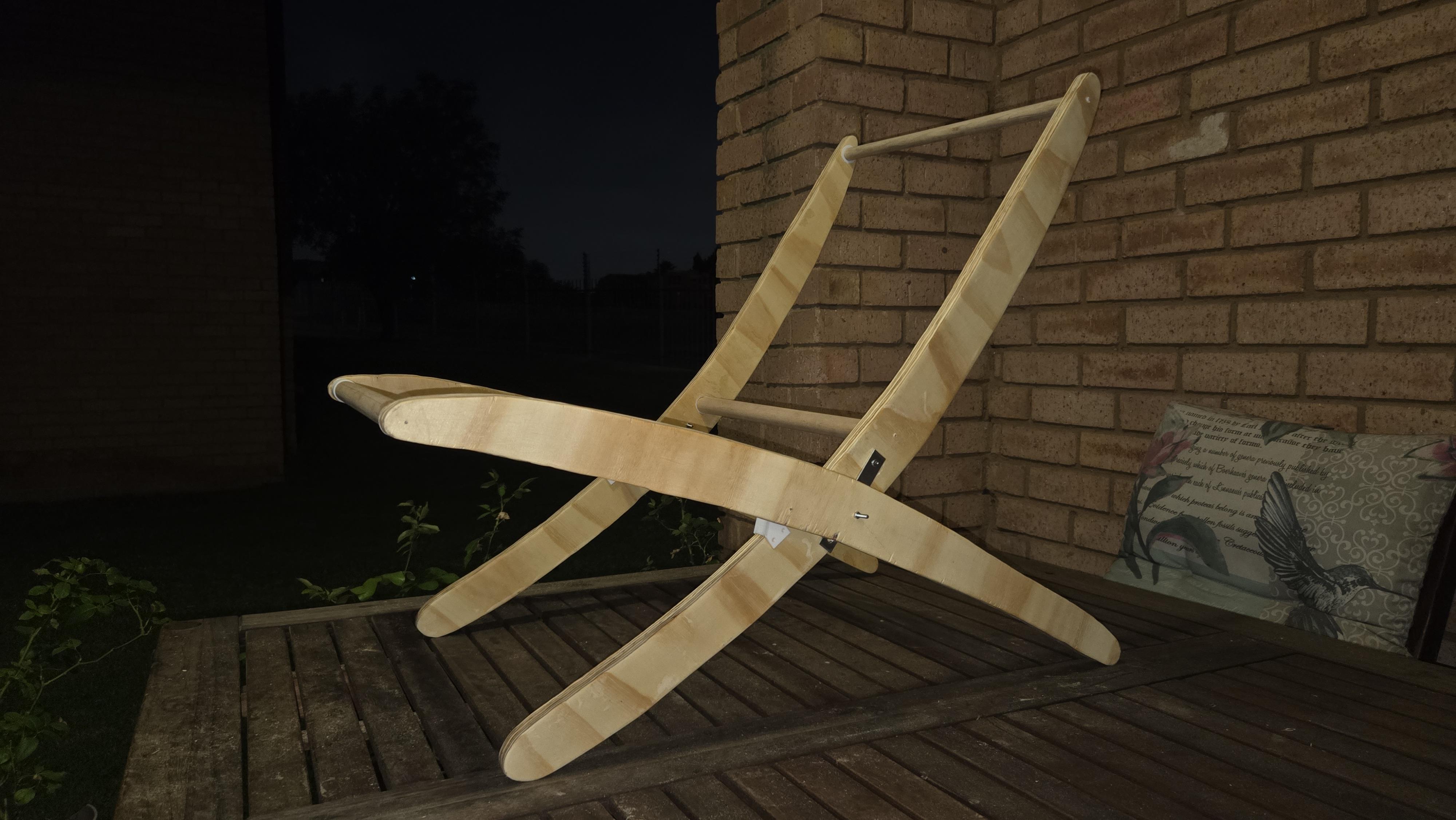
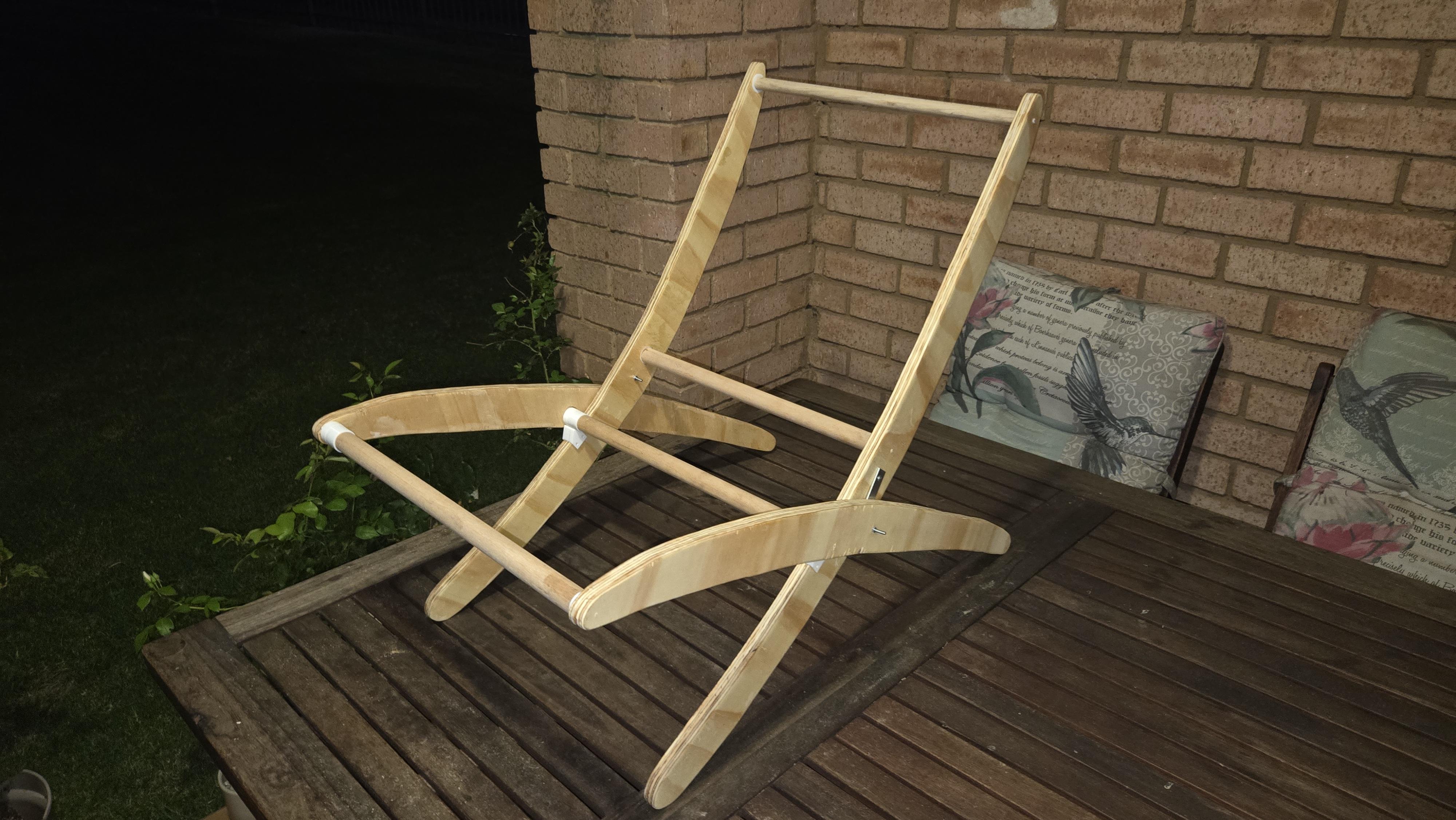
The next step is to assemble the frame by securing the support struts into the drilled holes. The images show the two separate frames. In the photo, the left-hand frame forms the backrest, and the right-hand frame forms the seat.
These two frames cross over each other like scissors, creating the folding mechanism of the chair. When opened, they lock into position to keep the chair stable and secure.
Hinge and Stop Bracket


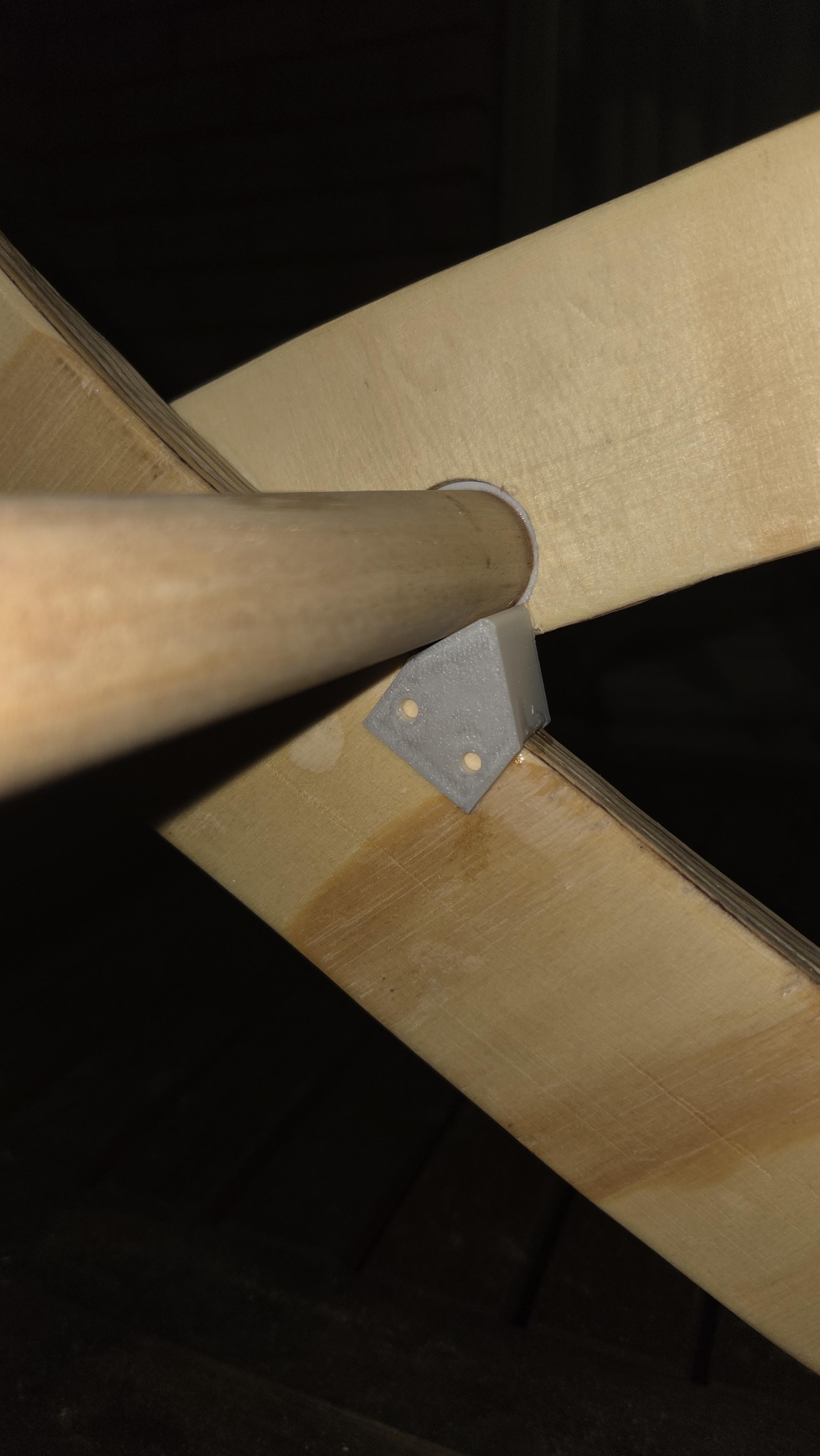


A simple straight metal bracket was used as a hinge to lock the two frames in place. The bracket is attached using a 4 mm bolt and nut, allowing the two frame sections to pivot.
This hinge enables the chair to fold for easy storage when not in use.
Woven Leather Cord Wrapping


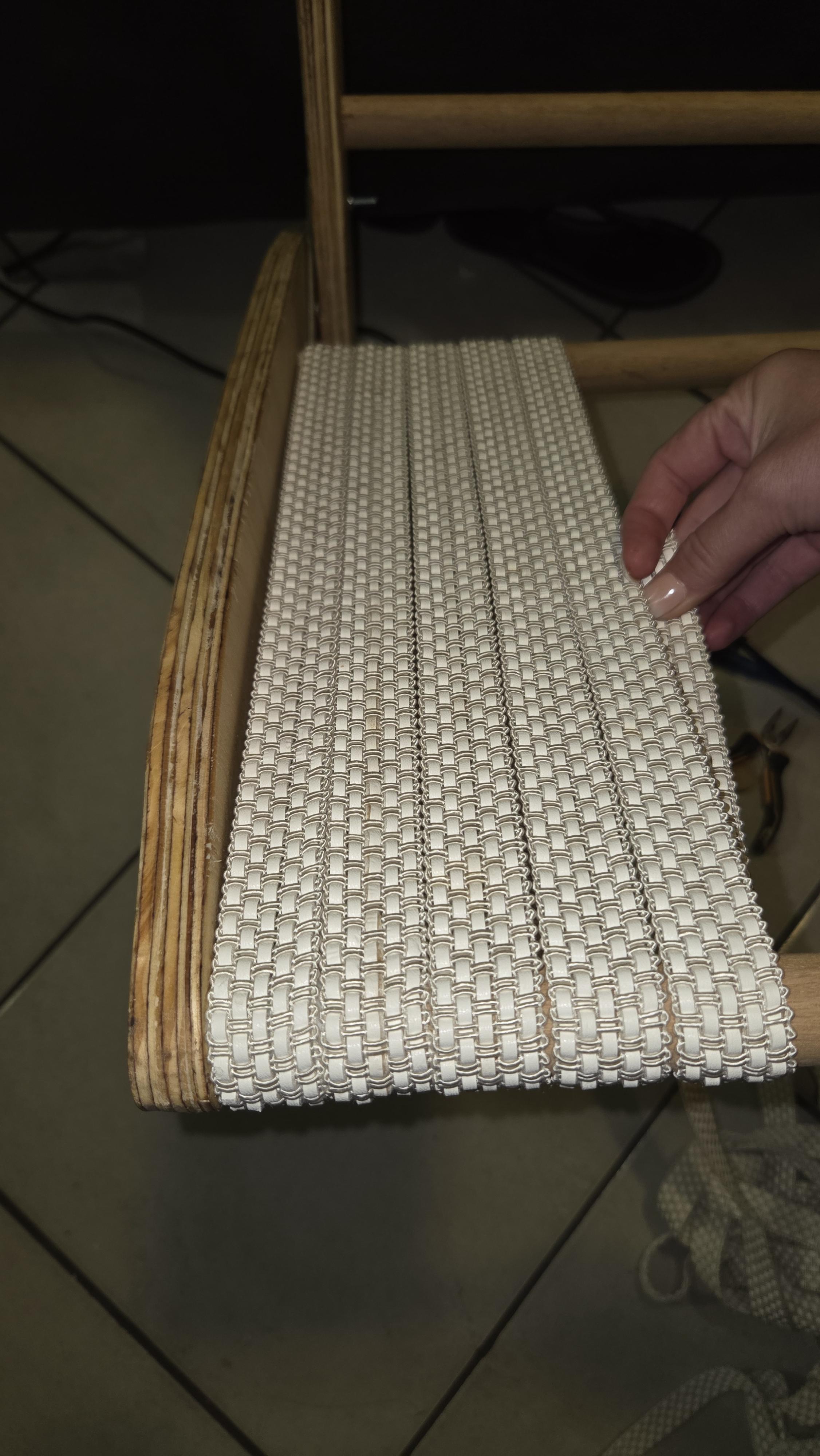
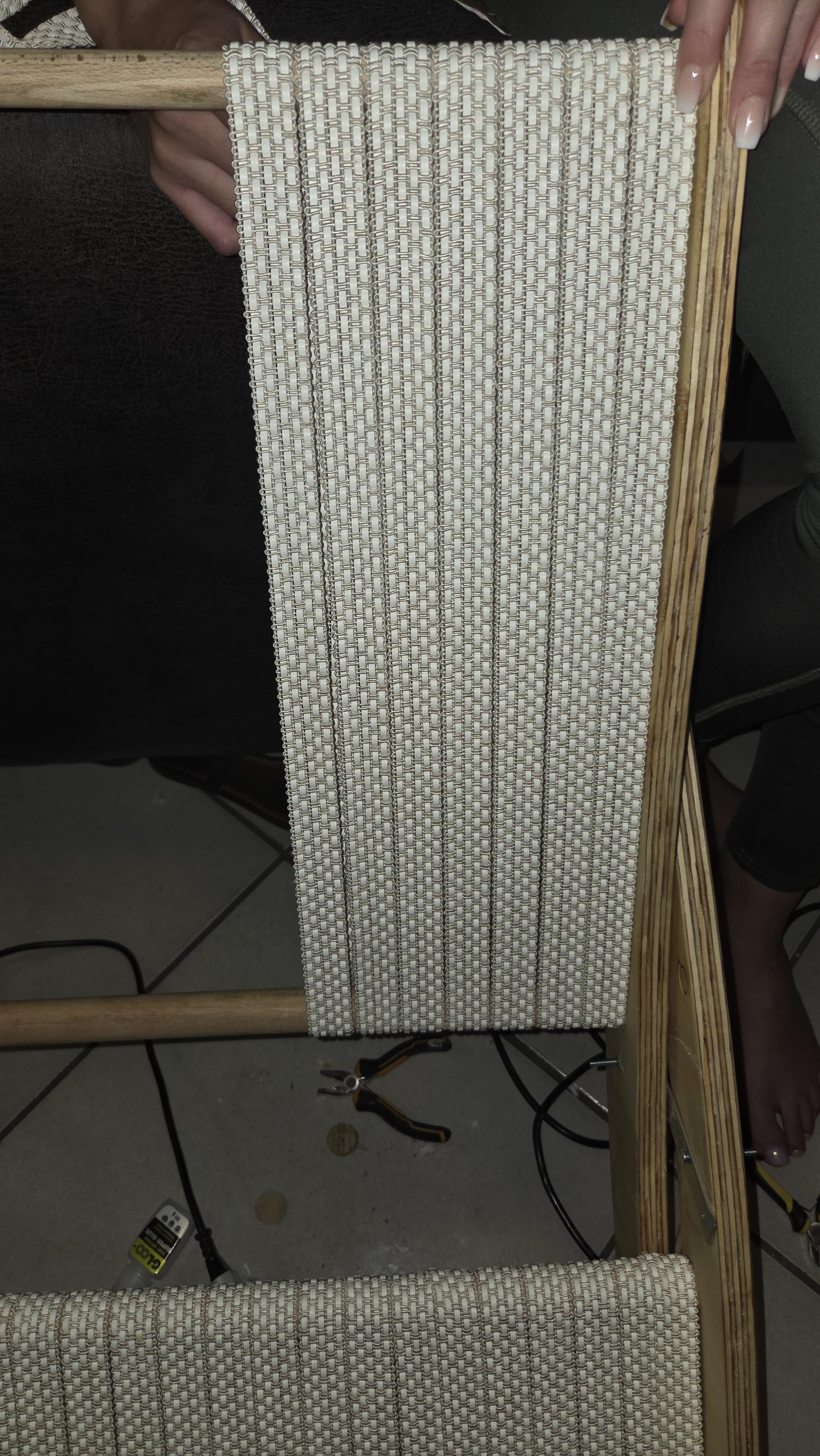
For the seat and backrest, flat woven leather cord was wrapped around the round support struts. Start by securing one end of the cord with a small nail, then continuously wrap it around the struts to form the seat and backrest surface.
I used about 30 meters of cord to wrap the chair. In hindsight, 60 meters would have been better, as it would allow a checkered weaving pattern with one set of strands running in one direction and another set woven at 90 degrees across it.
Final Result


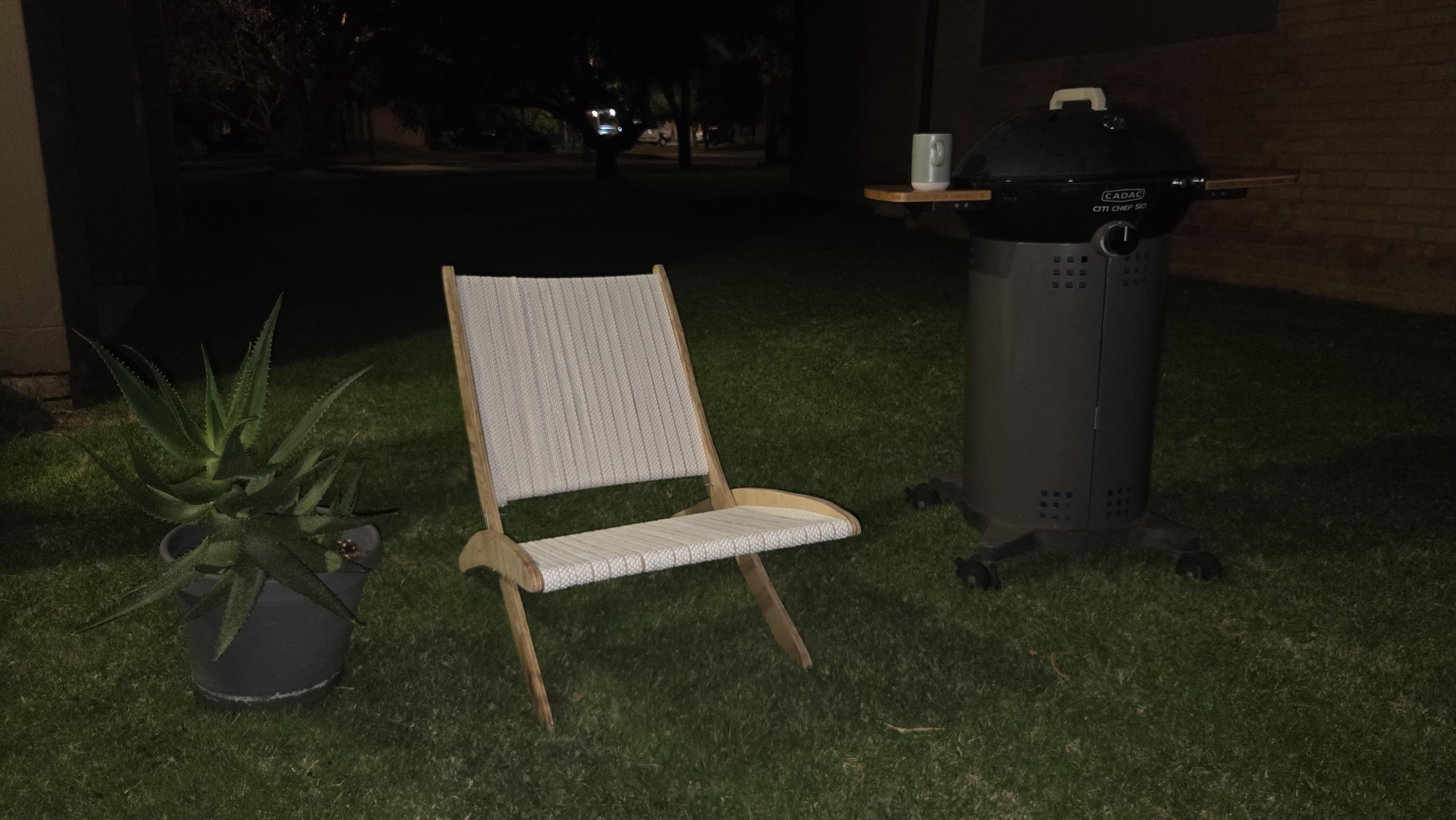
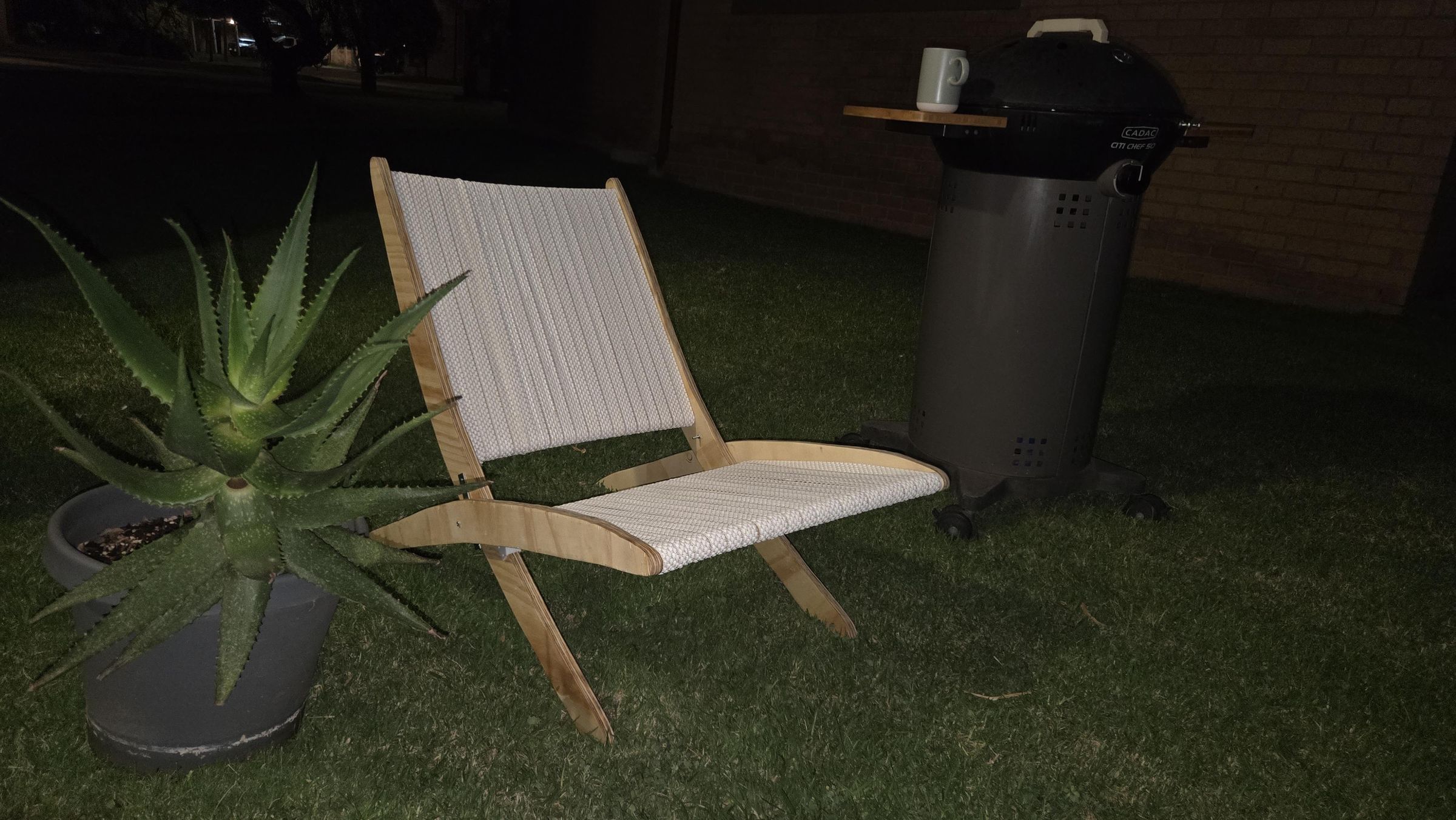
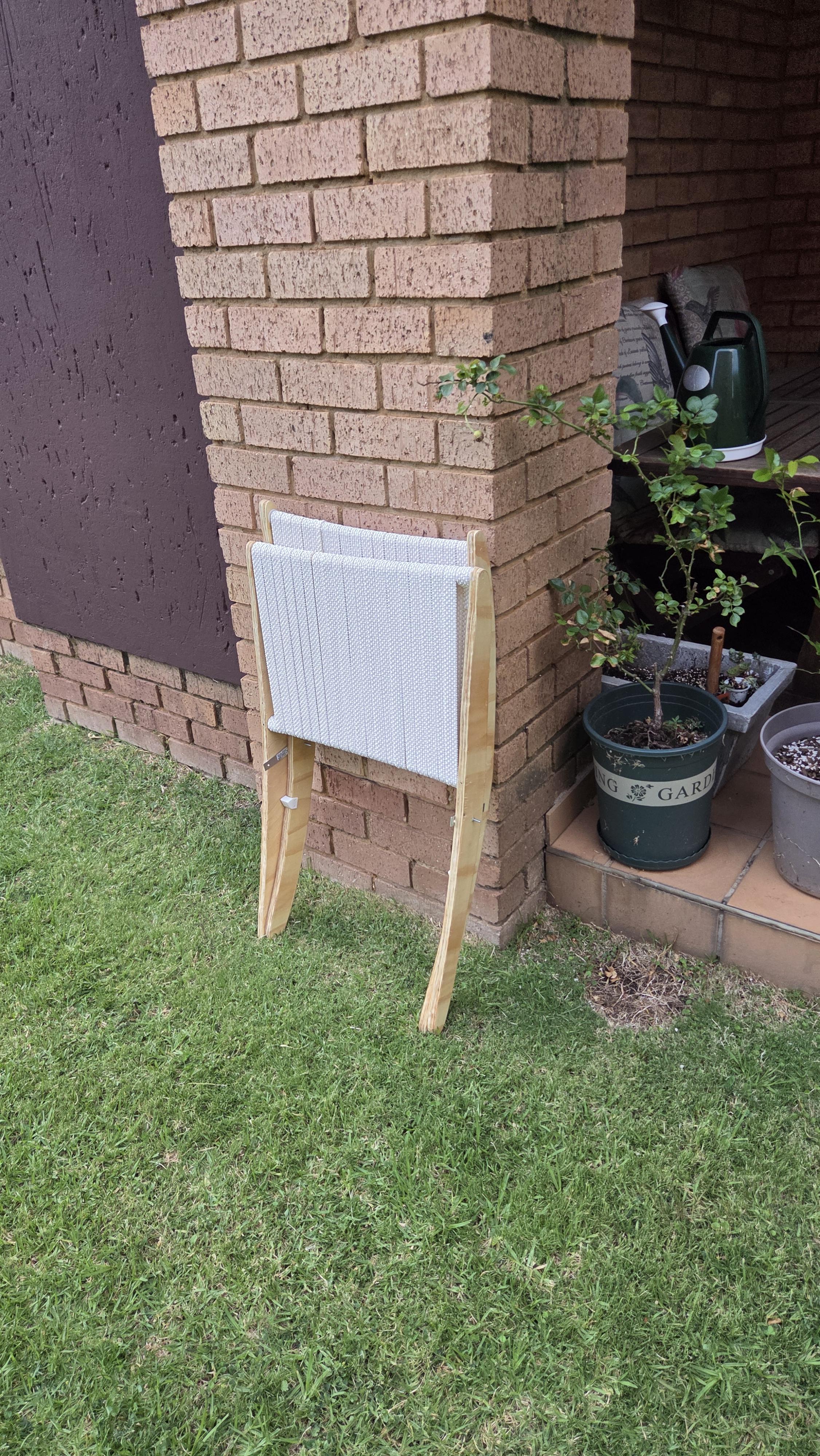
The finished chair is lightweight, comfortable, and easy to fold away when not in use. It has a simple Scandinavian look and is perfect for relaxing, especially while sitting next to a braai and enjoying a peaceful moment.