Fold • Unfold • Reconfigure: a Hinged Modular Corner Shelf (Parametric Build + Fusion Animation)
by Sythe101 in Design > Architecture
1239 Views, 7 Favorites, 0 Comments
Fold • Unfold • Reconfigure: a Hinged Modular Corner Shelf (Parametric Build + Fusion Animation)


Walls don’t always cooperate—corners, long hallways, zig‑zags… So I designed a modular, hinged shelf that folds to fit cornered, straight, or angled layouts. Four frame modules connected with 2″ hinges; ten shelves ride on integrated rails (aka stretchers) so the unit packs flat, expands wide, or tucks elegantly into a corner. It’s furniture that took a yoga class and never looked back.
Supplies
Materials (Available at any Lowes/Homedepot/Hardware Stores)
Wood
- 1" x 2" x 62" Frame uprights posts: 8 pcs (2 per frame × 4 frames).
- 1" x 2" x 20" Rails (crossbars/stretchers): 24 pcs (6 per frame × 4 frames).
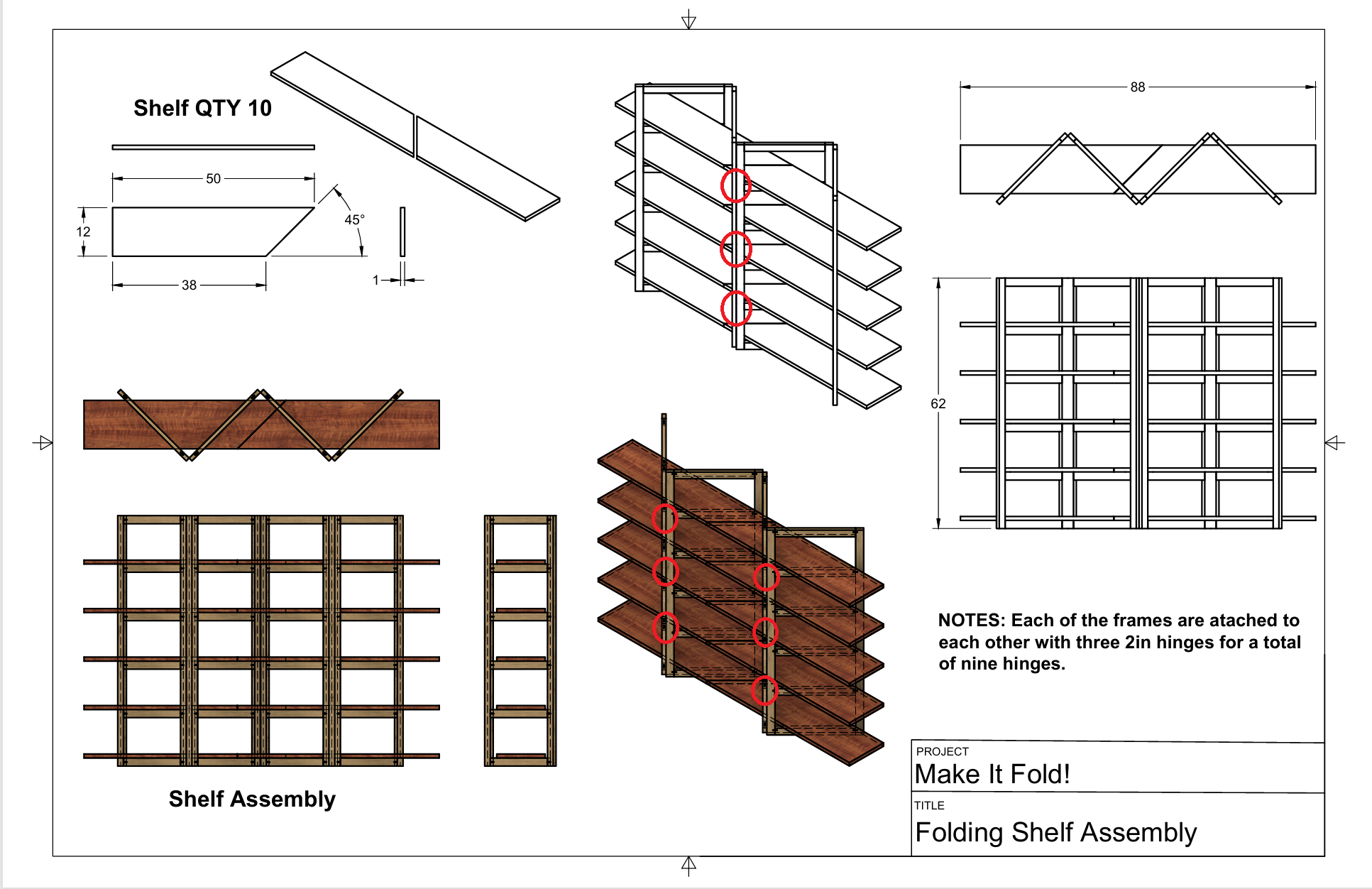
- 1" x 12" x 50" Shelves: 10 pcs, shaped per drawing (corner-friendly geometry).
Joinery & hardware
- 2" Hinges: 9 pcs (3 between each adjacent frame). HomeDepot
- 1.13" x Ø1/4" Dowel pins: 48 pcs (12 per frame x 4 frames). HomeDepot
- 1-1/2" Kreg Screws OR 2-1/2" Wood screws: 96 pcs (four per crossbar x 6 crossbars x 4 frames see note on drawing). HomeDepot
- Wood glue (optional but recommended on dowel joints).
- Finish: stain + clear coat (optional).
Tools
- Drill/driver with brad‑point bits (for dowels) and countersink.
- Square, tape, marking gauge, and bevel gauge for shelf angles.
- Saw: table saw, miter saw (or circular saw with guide).
- Optional: Sander + abrasives (120→180→220).
- Optional: Pocket‑hole jig (if using Kreg screws per drawing note).
- Optional: Clamps (bar clamps + hand clamps).
- Autodesk Fusion (Used for modeling/animation)
Reference Information/Files
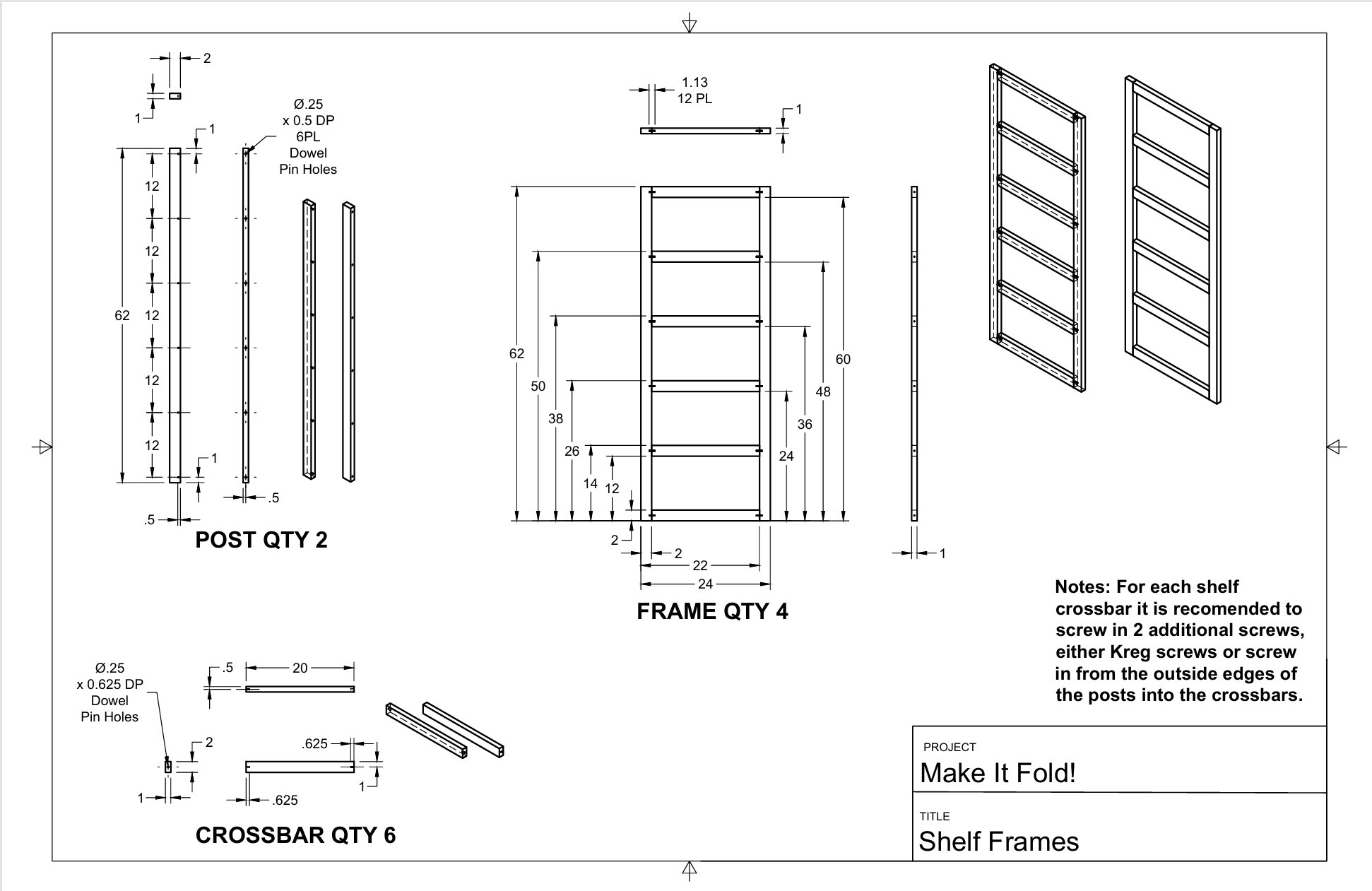
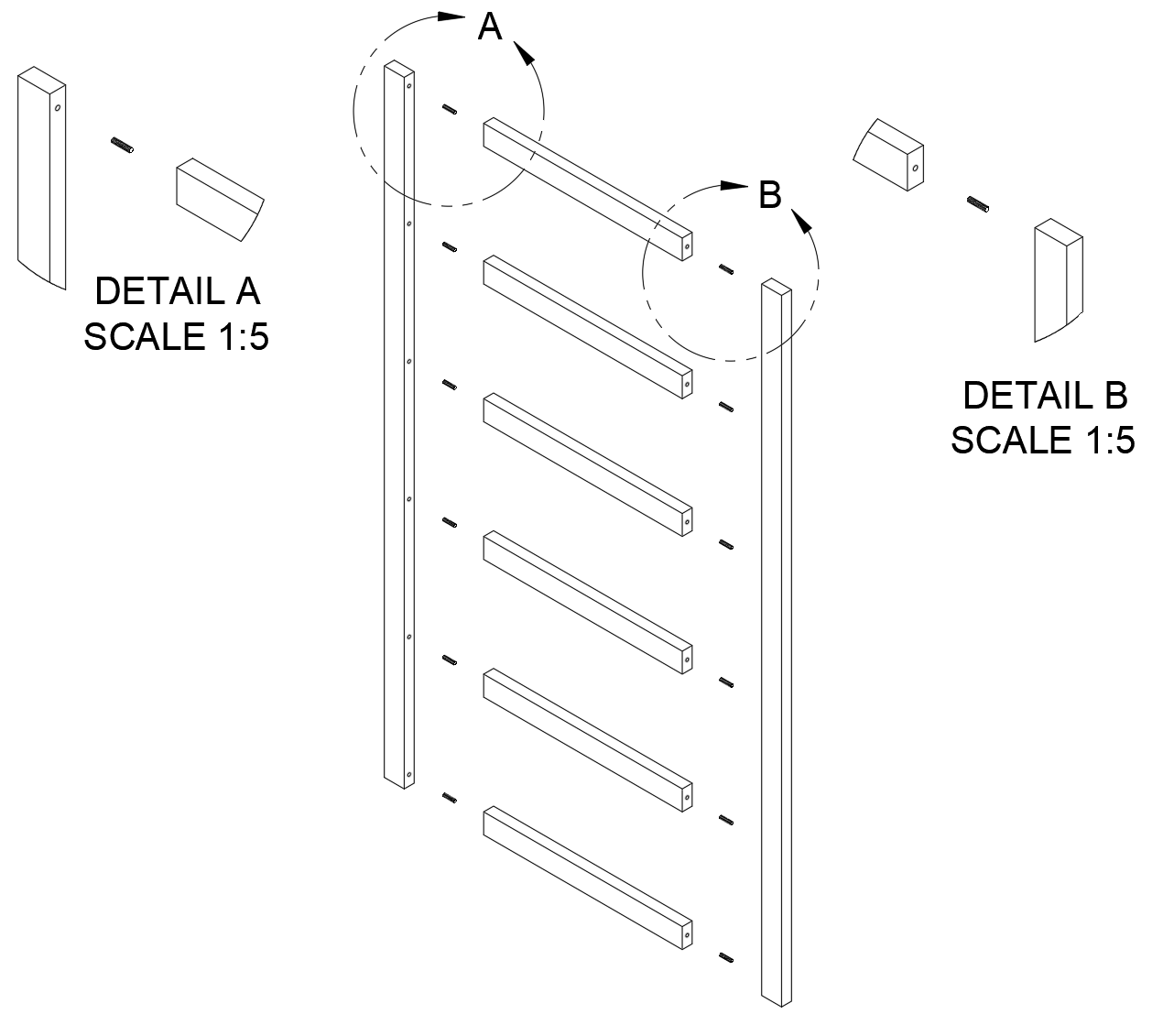
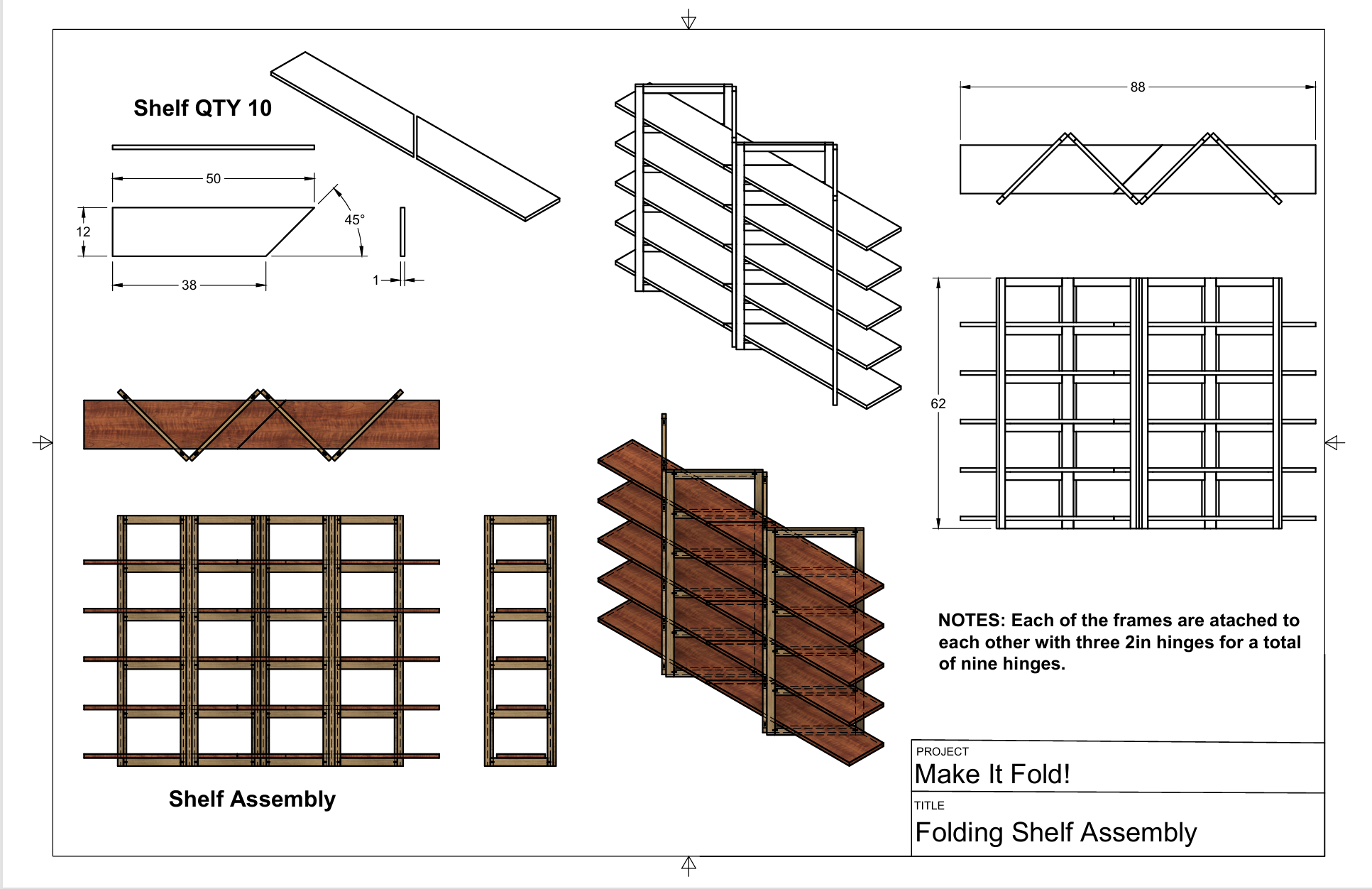
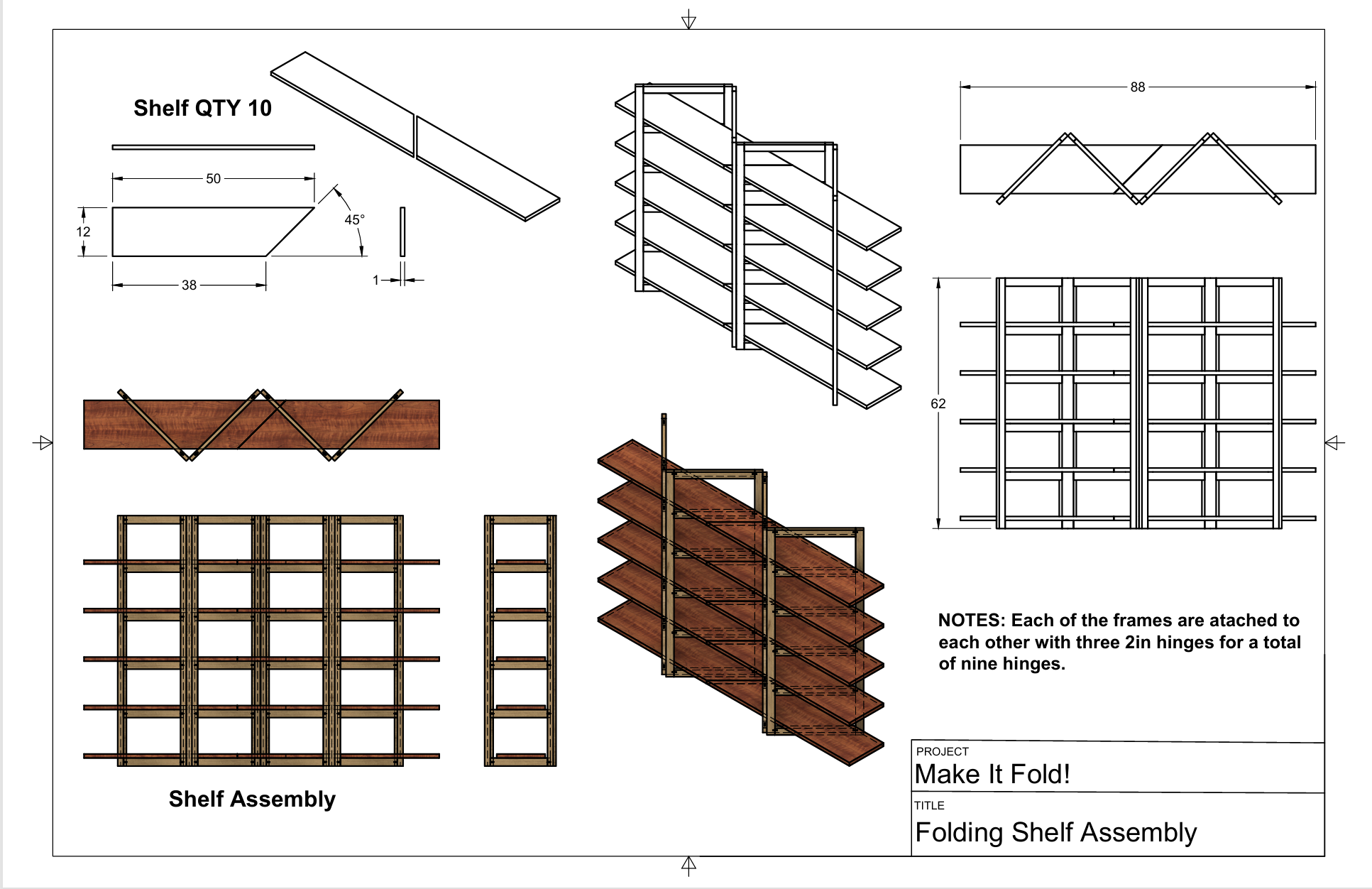
Here are all the files i made for this project, a tidy bundle of drawings, dimensions, and notes to guide your build. The PDFs show shelf geometry and hole locations; use them to set spacing and keep frames square. Always remember, lumber varies, shops have personalities, and corners aren’t always 90°, so prioritize alignment and consistency by measuring twice and cutting/drilling once. If something looks off, test‑fit first, then adjust as needed.
Cut List (Reference Drawings Above)
This project has some weird cuts lengths so unfortunately there will be a bit of scrap left over. I had made the design so the shelf would be a certain height and width and for ease of assembly. Because of that i could not make a zero-waste cut plan, but here is the most efficient use of material down below.
Total Board Count (Frames + Shelfs)
- Posts: 8 @ 62″
- Rails: 24 @ 20″
- Shelves: 10 pieces from 1×12×8‑ft boards, each shelf a trapezoid with one long edge 50″ and the opposite edge 38″, created by a 45° cut across the board’s width.
Frame stock (posts + rails)
Use 12 boards @ 8‑ft (96″) for the frames:
- Boards 1–8: cut 1 post (62″) + 1 rail (20″) per board.
- Used ≈ 82″ + ~¼″ kerf → offcut ~13¾″ (keep for spacers/hinge shims/shelf rails).
- Boards 9–12: cut 4 rails (4 × 20″) per board.
- Used ≈ 80″ + ~½″ kerf → offcut ~15½″.
Tip: Set a stop block for the 20″ rails and batch‑cut all rails from boards 9–12—fast and consistent.

Shelf stock (1×12×8‑ft boards)
You’ll make two shelves per board with one centered 45° cut across the width:
- Square one end, then trim the board to 88″ overall length.
- Find center: mark 44″ from either end along both long edges.
- Use a speed square/guide to draw a 45° line across the 12″ width at the 44″ center mark, and cut along that line (track saw or circular saw with straightedge).
- This makes two angled shelves, each with a Long edge = 50″, and a Short edge = 38″
- Label shelves S1–S10; mark “long edge/front” so orientation stays consistent in assembly.
Boards needed: 5 shelf boards (5 × 8‑ft) → 10 shelves.
Offcut per board: ~8″ (after trimming to 88″) + kerf—save for drilling backers.
Important: If your 1×12 is nominal (actual width ≈ 11¼″), the geometry changes.
Long = 44 + 5⅝ = 49⅝″, Short = 44 − 5⅝ = 38⅜″.
To hit an exact 50/38, use true 12″ stock or adjust the center mark to 44″ ± (actual width ÷ 2) accordingly.
Cut order & labeling (repeatable flow)
- Frames: Square → cut 62″ post → cut 20″ rail → label (Frame A–D, Level 1–6).
- Rails (batch): set stop block → cut 20″ ×4 per rail‑only board → label.
- Shelves: Trim to 88″ → mark 44″ center → draw 45° across width → cut → label long/short edges.
Kerf assumption: ~⅛″ per crosscut. If your blade differs, adjust offcut math—not the finished lengths.


Pre‑drill the frames
- On each post, mark each shelf elevation per the Shelf Frames drawing; keep spacing uniform across all four frames to ensure level shelves when they are placed. Each Rail is spaced 10 inches from each other.
- Drill Ø0.25" dowel holes to the specified depths with the brad-point bit. 0.5" Deep into the vertical posts where marked, and 0.625" Deep into the horizontal rails where noted. Use a depth stop if you have one.
- If using pocket holes this would be the time to drill them into the rails, two holes 0.5" from the edges
- Remember! Measure twice, drill once! (well 48 times...)
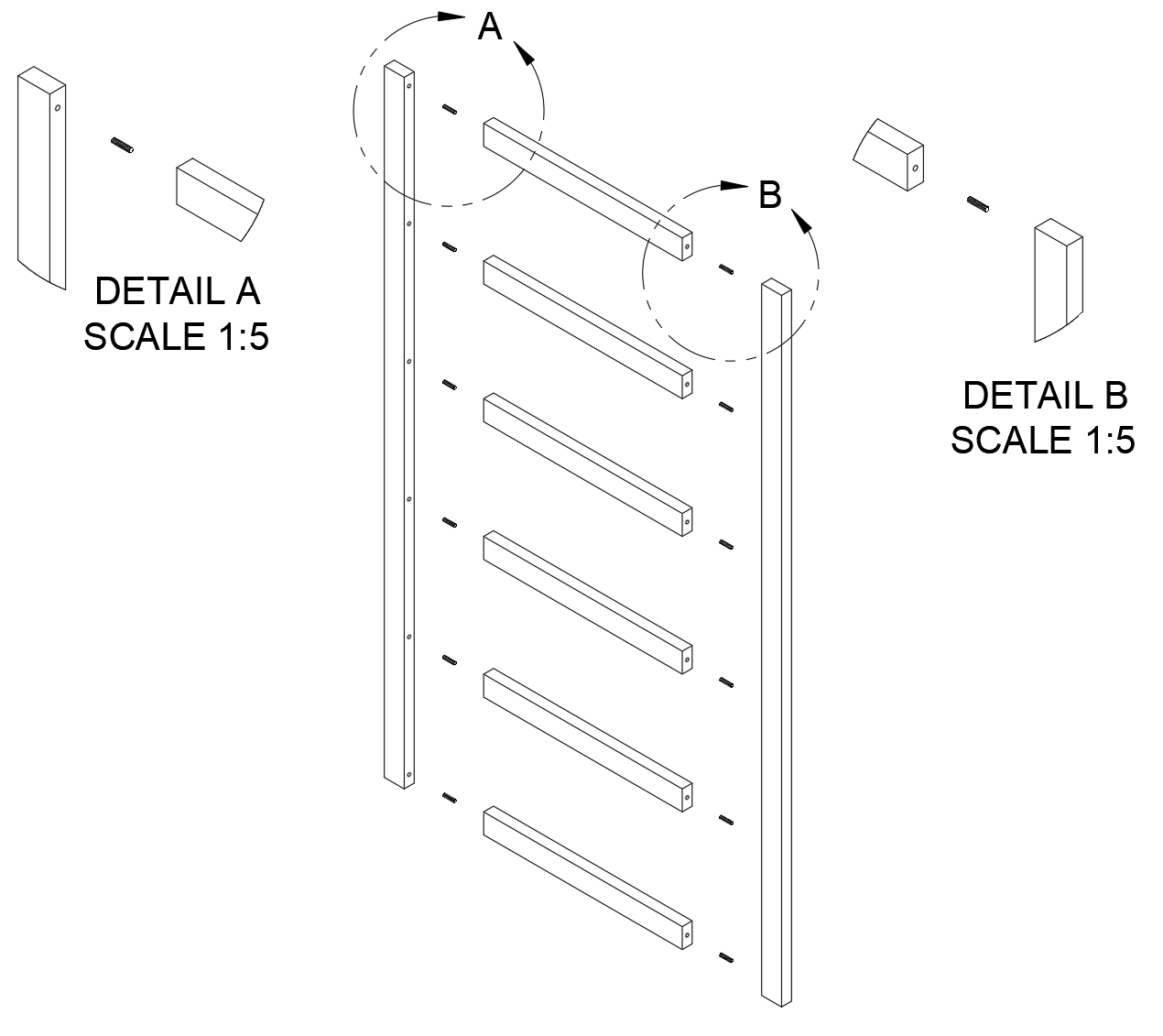
Assemble each frame module
- Dry‑fit rails on dowels; square the frame; check racking with a diagonal measurement.
- Fill the dowel holes with some glue and press everything together; hold or clamp until set.
- Add two extra screws per crossbar (either pocket screws or wood screws from outside faces into rails) as noted—this prevents creep under load and more strength.
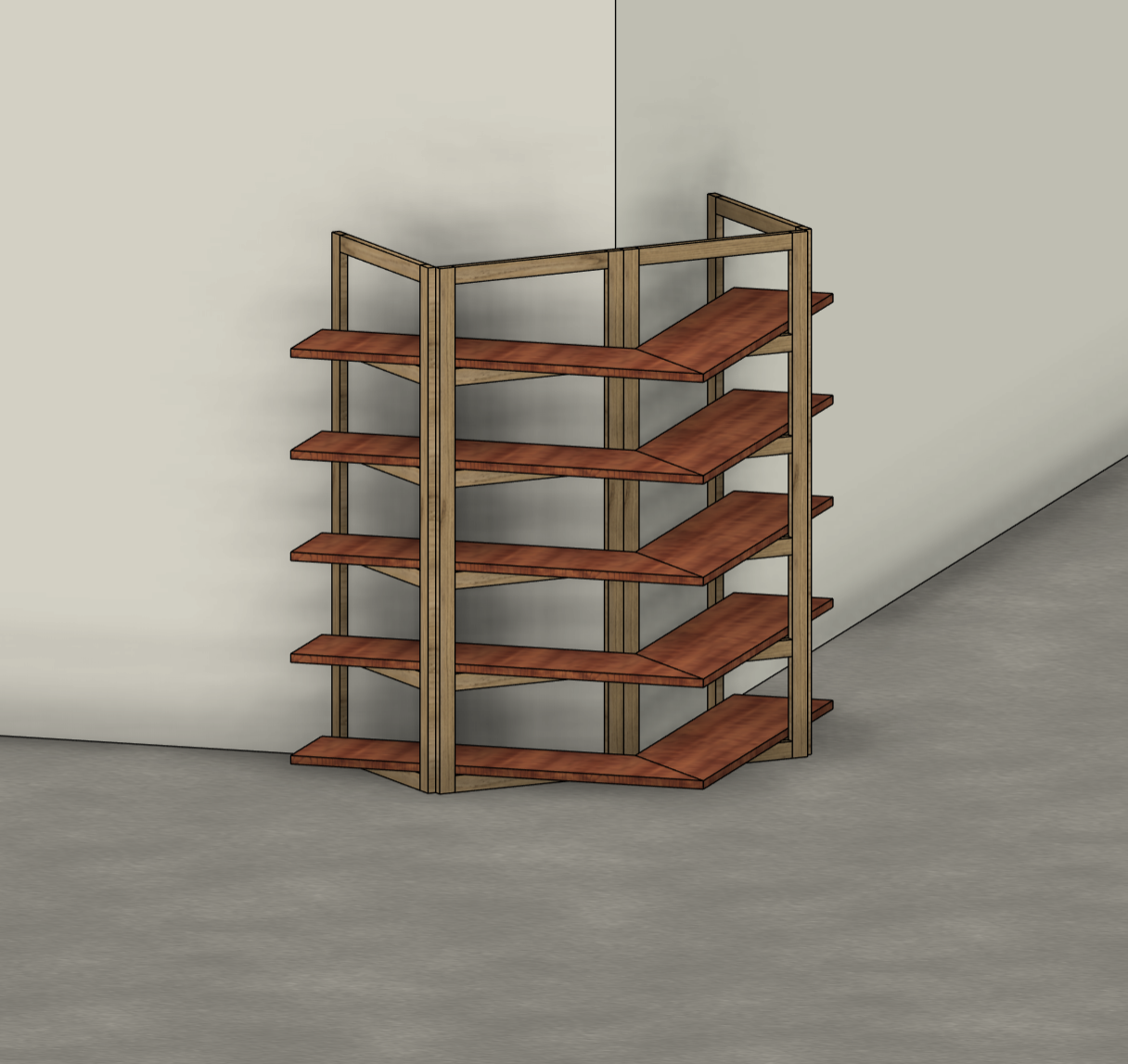
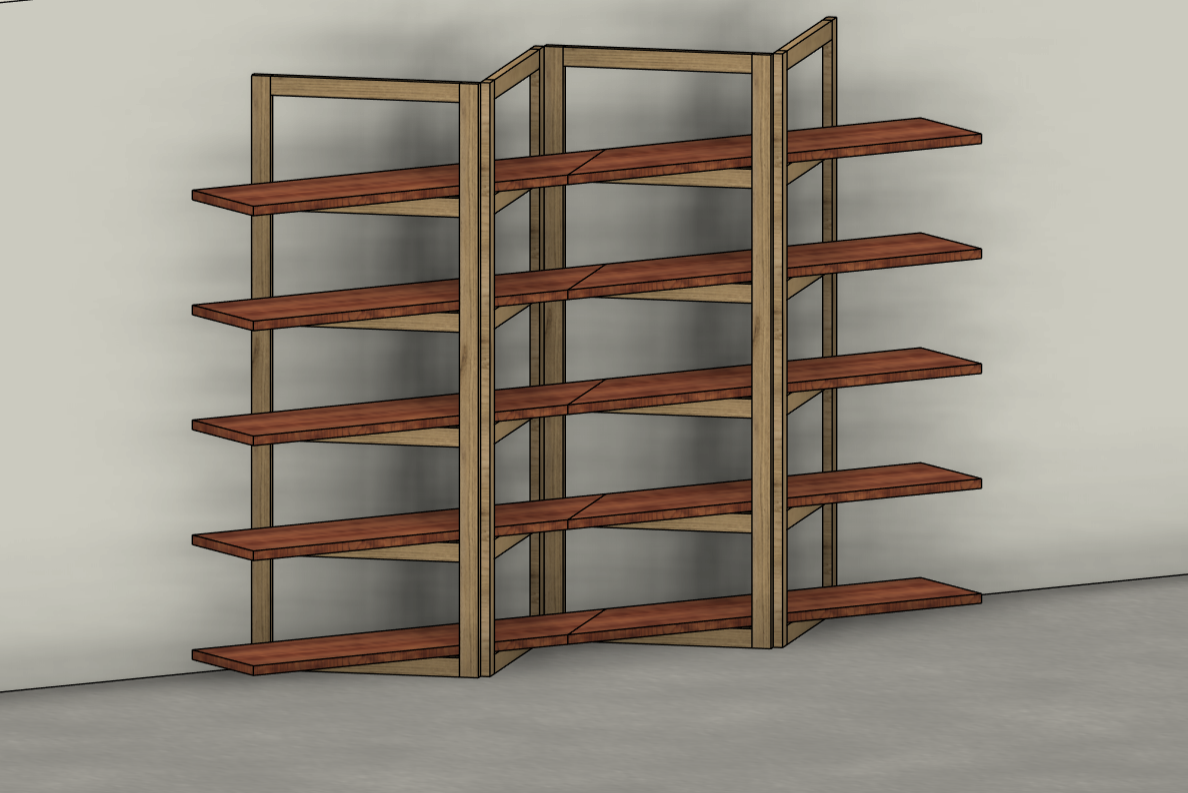
Hinge the frames (Make it Fold)
- Cards on the table, designing and adding hinges would have caused some issues with the animations, so to save us time I marked their locations in red. (they are about 20" from the top and bottom edges)
- Lay frames A–D on top of each other; hinges will go on the perimeters of the frames, surface‑mount three 2″ hinges between A↔B, B↔C, and C↔D at consistent spacing (~20 inches apart) so shelves stay co‑planar across folds. Total 9 hinges. Feel free to use more if you would like to.
- Check fold paths: Make sure it can fold into the two shapes shown in the pictures above.
Fit shelves
- Test each shelf on its rails in both configurations. Optional, attach the shelves to the rails with some double sided tape if you'd like or even nail them down if you are never going to change the orientation .
Sand & finish
- Break sharp edges (1–2 mm chamfer or 1/16″ roundover); sand 120→180→220.
- Stain (if desired) then clear coat; de‑nib between coats.
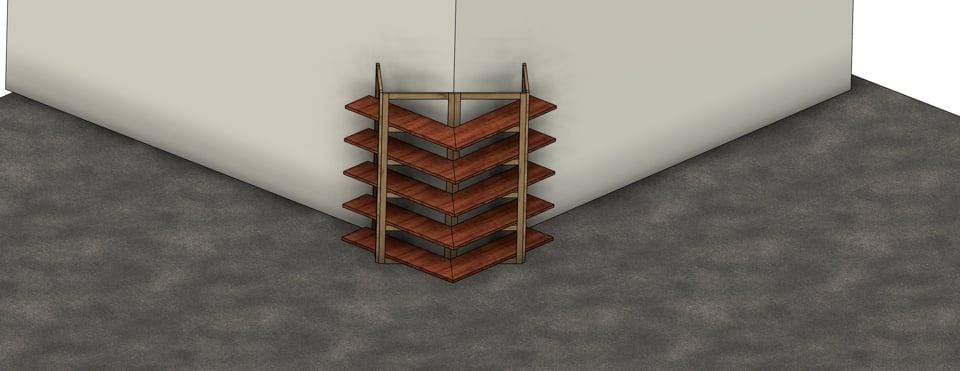
Configure & admire
- Corner mode: fold frames around a 90° corner; shelves form clean chevrons.
- Straight wall mode: unfold to a shallow W; rails keep everything aligned.
- Angled showcase: Flip the shelves to create different angles, use the 45° side with a 90° side to make 135°, or cut new angles to fit what you need!
Tips, Safety, and Troubleshooting
- Square first, square last: Clamp frames flat while installing rails; re‑check diagonals after adding screws.
- Shelf rattle? Add one concealed screw from below or a thin silicone dot on rails.
- Floor uneven? Add adjustable feet to the outer posts; re‑level between configurations.
- Heavy loads? Consider thicker rails or hardwood species; keep the hinge screws short enough not to poke through.