Folding Shipping Container Home - Sustainable and Affordable Housing
by eitanmakestuff in Design > Architecture
1301 Views, 12 Favorites, 0 Comments
Folding Shipping Container Home - Sustainable and Affordable Housing
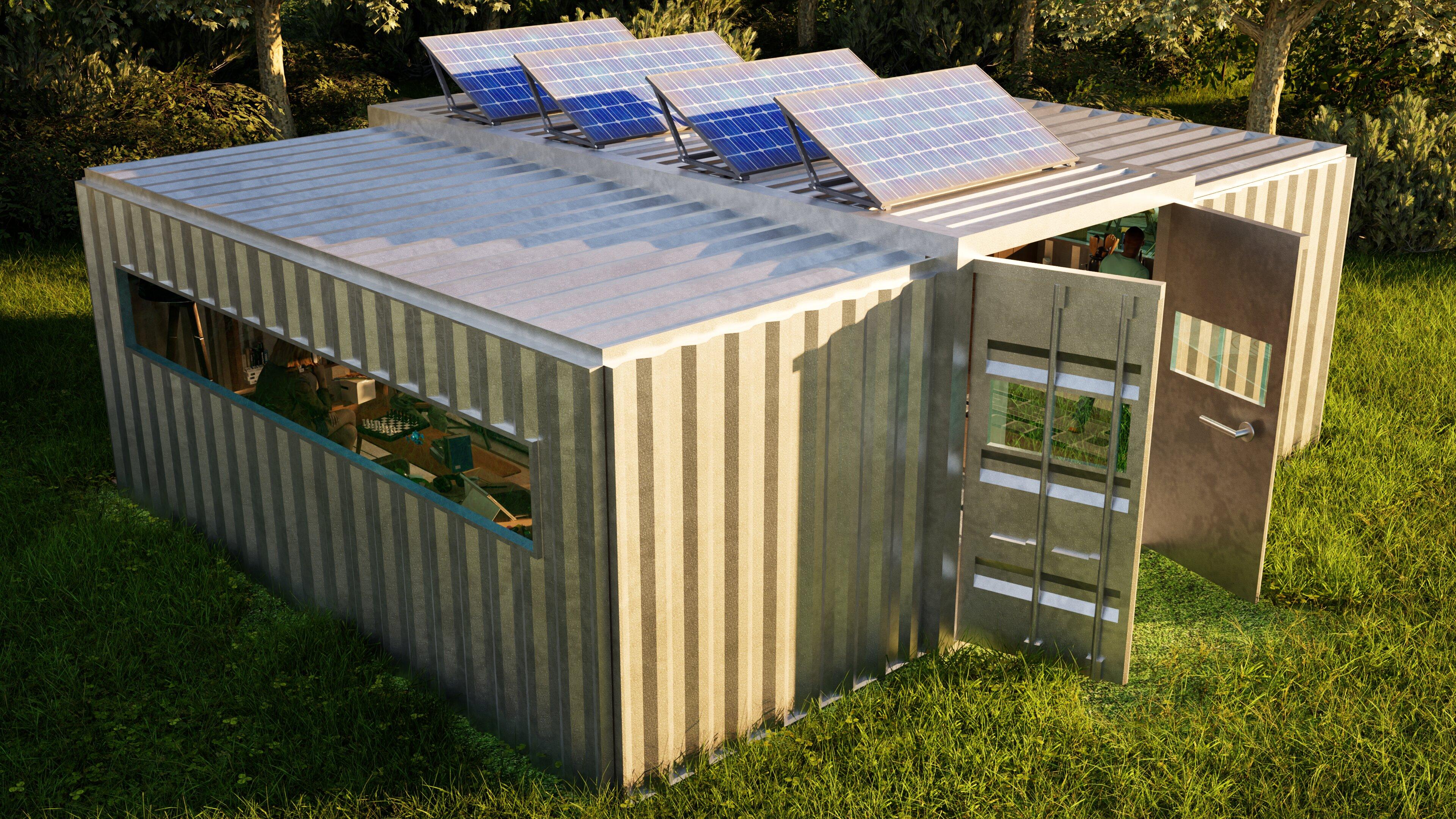
Hello, my name is Eitan, and in this Instructable, I'm going to show you how I designed a folding shipping container home to provide housing for harsh environments, emergency situations, and isolated areas. This article will walk through the entire process, from initial ideas to final renders, and demonstrate the possibilities of folding architecture.
Supplies

To create the home, various construction materials are needed, including decommissioned shipping containers and steel beams. The rest of the materials listed below are for the standard home layout I have designed, although if the use case were different, and the structure was set up as a field hospital, for instance, the required materials for the interior would be different.
For the base structure:
- Standard 20-foot shipping container
- 90 feet of steel beam
- 32 heavy-duty hinges
- 100 square feet of thermally insulating glass paneling
- Rust and corrosion-resistant sealant
For the standard home interior:
- Furniture such as kitchen cabinetry, bunk beds, desk, couch, drawers, and coffee table
- 4, 8x5-foot solar panels
- 4-kilowatt capacity solar storage battery
- Appliances such as a fridge, oven, sink, and water dispenser
- Interior decoration, such as rugs, paintings, accents, plants, and books
Project Foundation
All over the world, natural disasters, political violence, and changing climates displace hundreds of thousands of people each year. When victims have to leave their homes under harsh conditions, it can be challenging to create suitable living arrangements in such a short timeframe, and often, displaced people are forced to live in tents, packed into small facilities, or left to fend for themselves. I wanted to create a portable and affordable housing solution that could be quickly deployed and provide a home for people in their time of need.
I had seen shipping container homes in the past, but thought that they were often too small for more than one person and lacked the comforts necessary for a long-term stay. But besides the size constraint, shipping containers are amazing building blocks for sustainable and affordable construction. They are designed to be super strong, with the corrugated steel and beam frame providing a ton of strength to protect their cargo during transportation. They are also comparatively lightweight and cost-effective compared to traditional construction methods. On top of that, shipping containers are readily available, as thousands are decommissioned each year, and made readily for sale on second-hand markets. Using shipping containers as the foundation of a home is also good for the environment, as it prevents thousands of containers from being disposed of, and instead gives they a second use.
After a little bit of research, I knew I wanted to use a shipping container as the base of my design. But there are some challenges associated with creating a living space out of only 160 square feet. During the design process, I found a way to use folding architecture to triple the square footage of the home and overcome the other challenges that come with small-footprint housing.
Design Requirements

Throughout the design process for the home, I kept a few principles in mind to ensure that it would stay comfortable while remaining easily transportable and cost-efficient:
- The final home must fold down to the footprint of the original storage container.
Shipping containers are well known for their durability and ease of transportation. They can be stacked high on cargo ships crossing the ocean, lined on railcars towed by train across the country, or even moved around locally on trailers towed by pickup trucks. I wanted the final footprint of the home to match, so that it could be easily deployed by any of the conventional methods. To do that, I challenged myself to design the home to fold up to within it's orignal volume, while being able to expand out and create more living space.
2. The home must be self-sufficient, and provide all the basic living nescescities
Most shelters and quickly-deployable strucutres do not have all of the things nescescary for residents to live for the longer term. I wanted my design to feel like a small apartment, not a camping tent. From the start, I planned the space to maximize the wall perimeter, so that there would be room for furniture and other appliances once deployed. This way, residents would feel comfortable and at-home, even during difficult circumstances, such as relocation from a natural disaster for instance.
3. The home must not feel cramped or claustrophobic
One of the most important things to keep in mind when designing a small living space is the feeling of openess and airflow throughout the home. I really wanted to make sure that residents wouldn't get claustrophobic and uncomfortable in the home, and kept that in mind during the design process. One of the ways I tried to make the space feel larger was to include no interior walls. Instead of being sectioned into rooms, all of the furniture and appliuances are spread out along the walls, leaving the entire center of the floor clear to walk across. The introduction of natural light into the home was also a big factor in making the space less claustrophobic.
CAD

For this project, I designed the structure in Autodesk Fusion, which I was able to access with a student license. Fusion is a simple-to-use CAD software, and I chose it because it's easy to visualize assemblies and the linkages between components. Fusion also has the ability to export posed versions of the model as an OBJ file, which came in handy later in the project.
The Main Structure

To model the walls and joints, I mainly used the sketch, extrude, and refine process. I used all of the original corrugated walls, but added a second set of doors to the other side of the container, so the home could be entered from either side. Because I am going to be adding weight with additional walls and cargo, I decided to creatre a new, stronger frame for the structure using steel beams. The frame spanns across all of the top edges of the structure, and connects secureley to the base of the shipping container, which is the strongest part. This way, the heavy steel panels can be secured via hinges to the fame, providing stability and a foundation to work off of.
The Folding Expansion
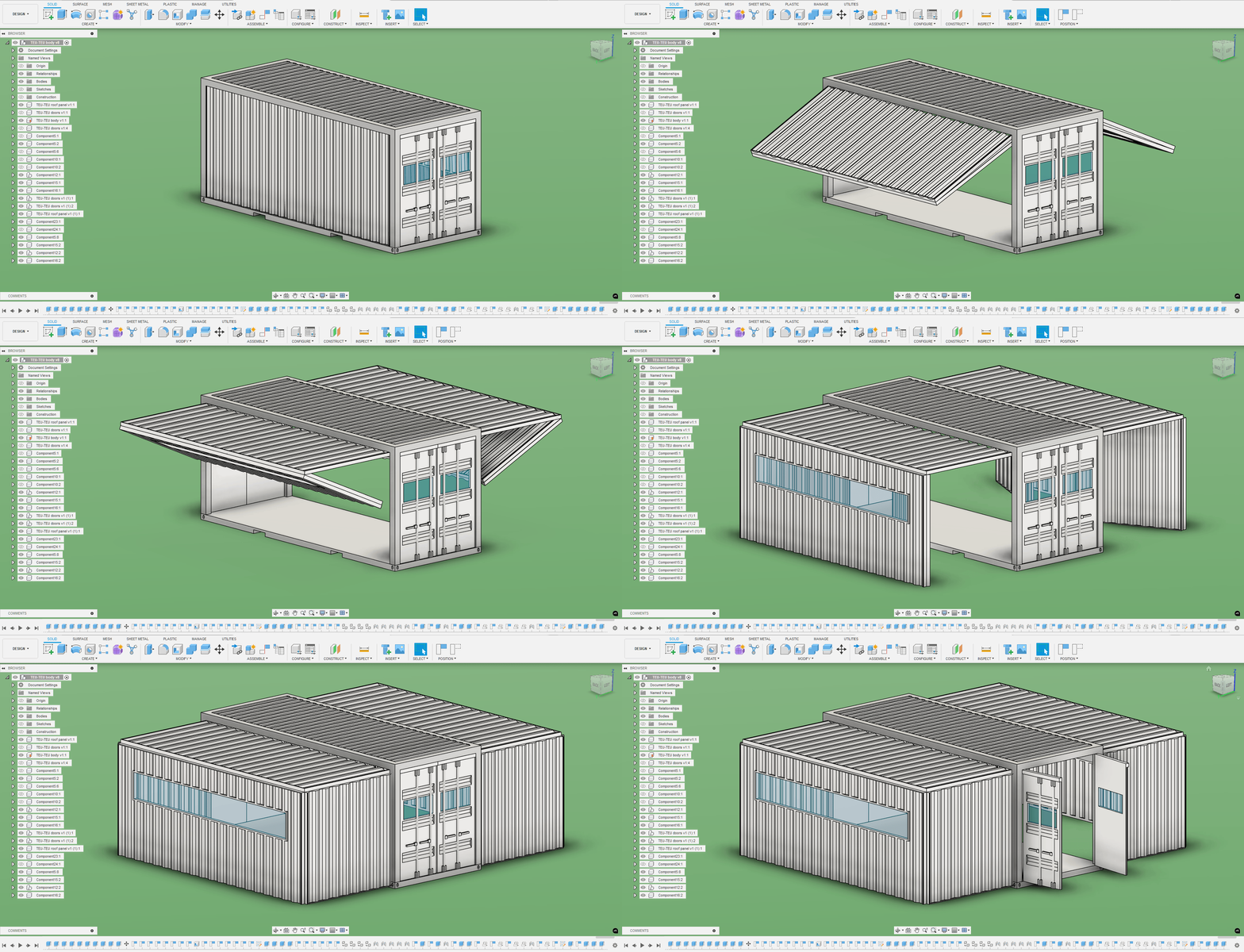
I first began by separating the shipping container into its four walls, roof, and floor. Since the side walls need to expand out to serve as the roof, I decided that they would be hinged to the main frame at the top, so they could just be swung out into place. The first and third sets of panels have matching geometry, which allows them to sit sandwiched together when the unit is completely folded up for transport, saving more space for the interior. Since the second set of corrugated panels would have some weight, I designed the walls to swing directly down from the first panel and lock into place. The rest of the wall panels fold out sideways and connect back to the entryway of the central frame. The walls only take up about 6 inches of the interior space when folded up, leaving plenty of storage room inside for transportation.
In Fusion, I primarily used the "Rotational Joint" tool to create the linkages between the panels. There is also a super neat feature where you can create a "Motion Link" between components, so they move in sync. Fusion's
Twinmotion

Twinmotion is a free-to-use rendering engine made by Epic Games, used to stage models and take photorealistic renders. It has the ability to render light using path tracing, which works super well with this project because of the reflective properties of the metal structure. I exported my model from Fusion as an OBJ and uploaded it to Twinmotion to get started.
Kitchen

I wanted to create a kitchen space that would have everything needed so inhabitants can fully prepare their own meals, while remaining compact and easy to transport. On the right side is the main countertop, which features a sink, a space for cooking tasks, and a small electric stovetop. Below the stovetop is an electric oven, which sits next to the mini-fridge built into the cabinet. There are other drawers for storage built in, as well as a shelf above the window, which mounts magnetically to the wall. To the left of the counter is a pantry cabinet for storing dry food.
Sleeping Quarters
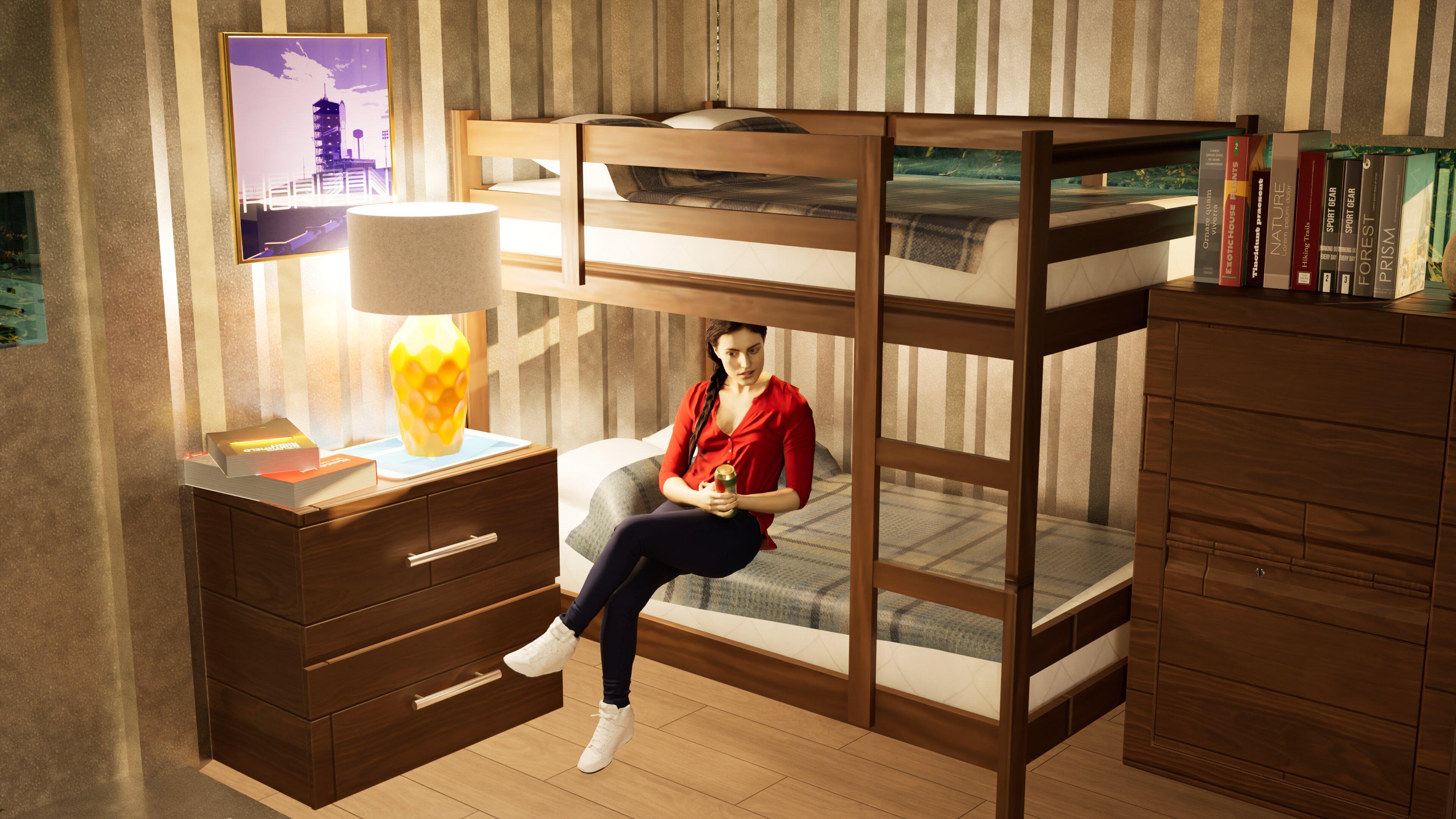
To create a comfortable yet compact sleeping arrangement, the home features a set of bunk beds, which can sleep up to four people if needed. The bunks come apart for transport, and the mattresses are inflatable. To the left of the bunks is a large nightstand with drawers beneath for clothing storage.
Recreational Area
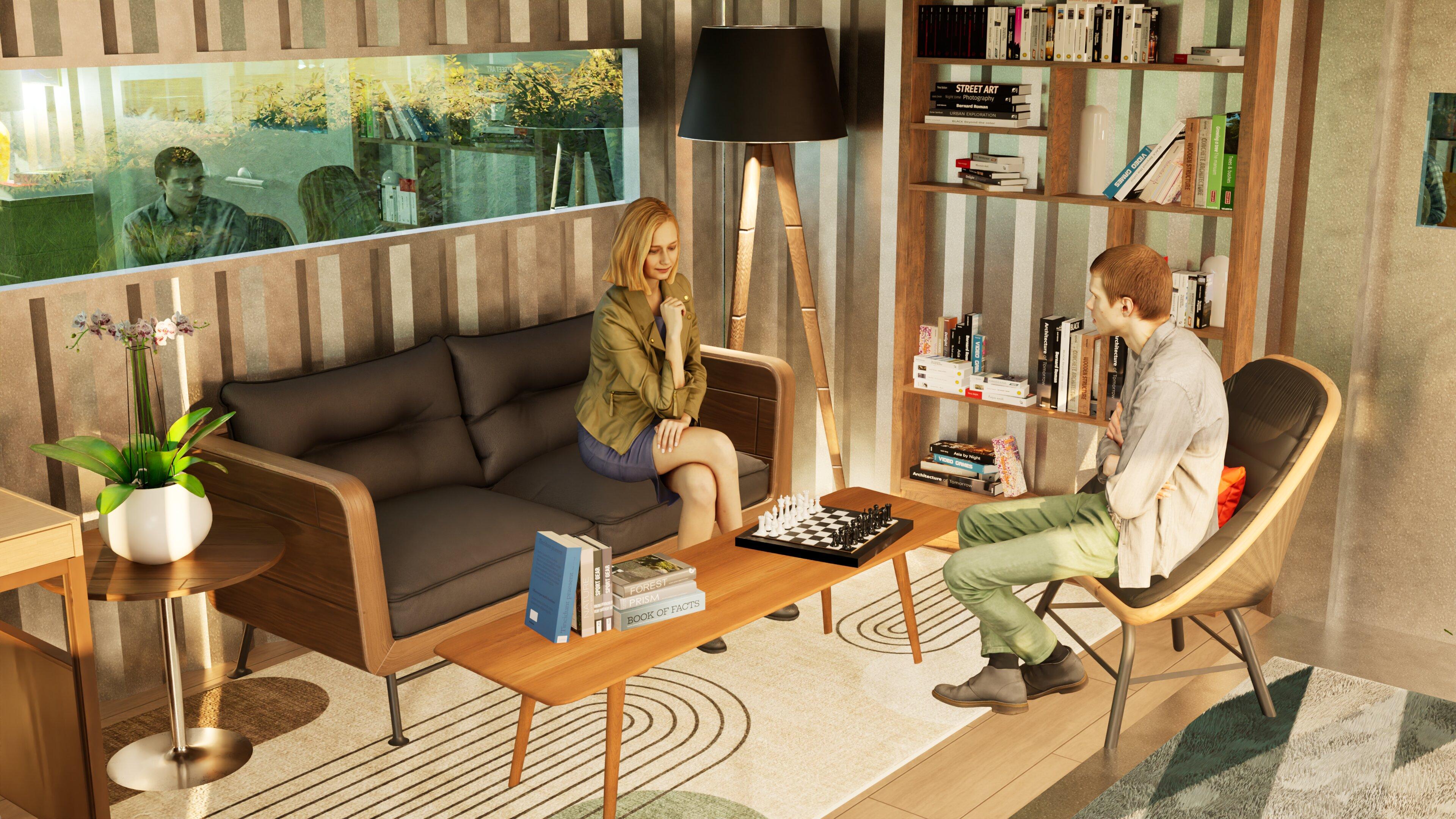
To give residents a space to relax and to make the home feel more open, I added a recreational area. It features a sofa and coffee table, as well as a bookshelf for storage. Here, residents can eat their meals, play games, talk with each other, and unwind.
Workspace

Near the entrance of the home is a simple workspace comprised of a desk and chair. Residents can complete remote work in the case that they are living in the home long-term, or just have a workspace for projects and crafts.
Renewable Energy
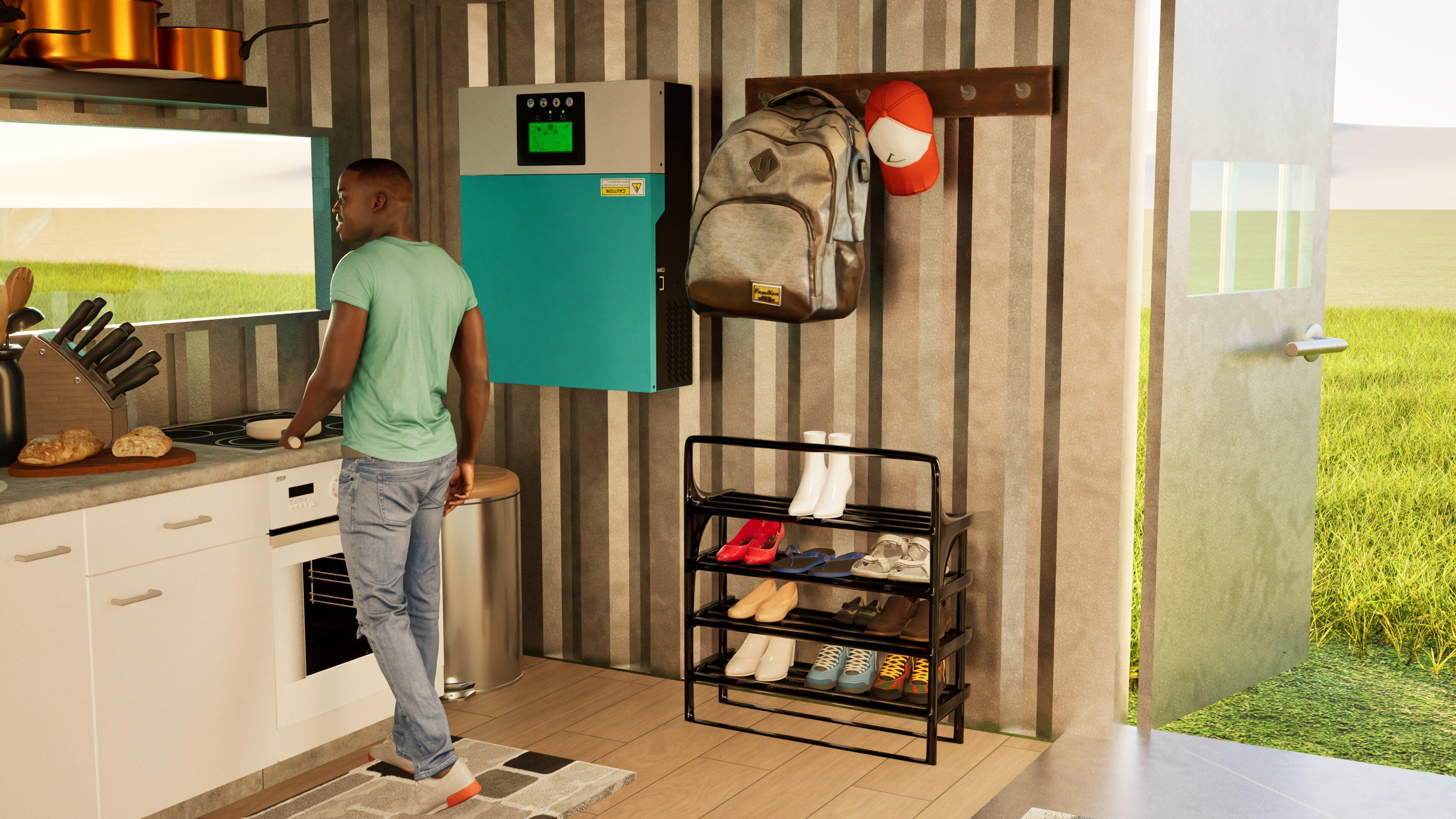
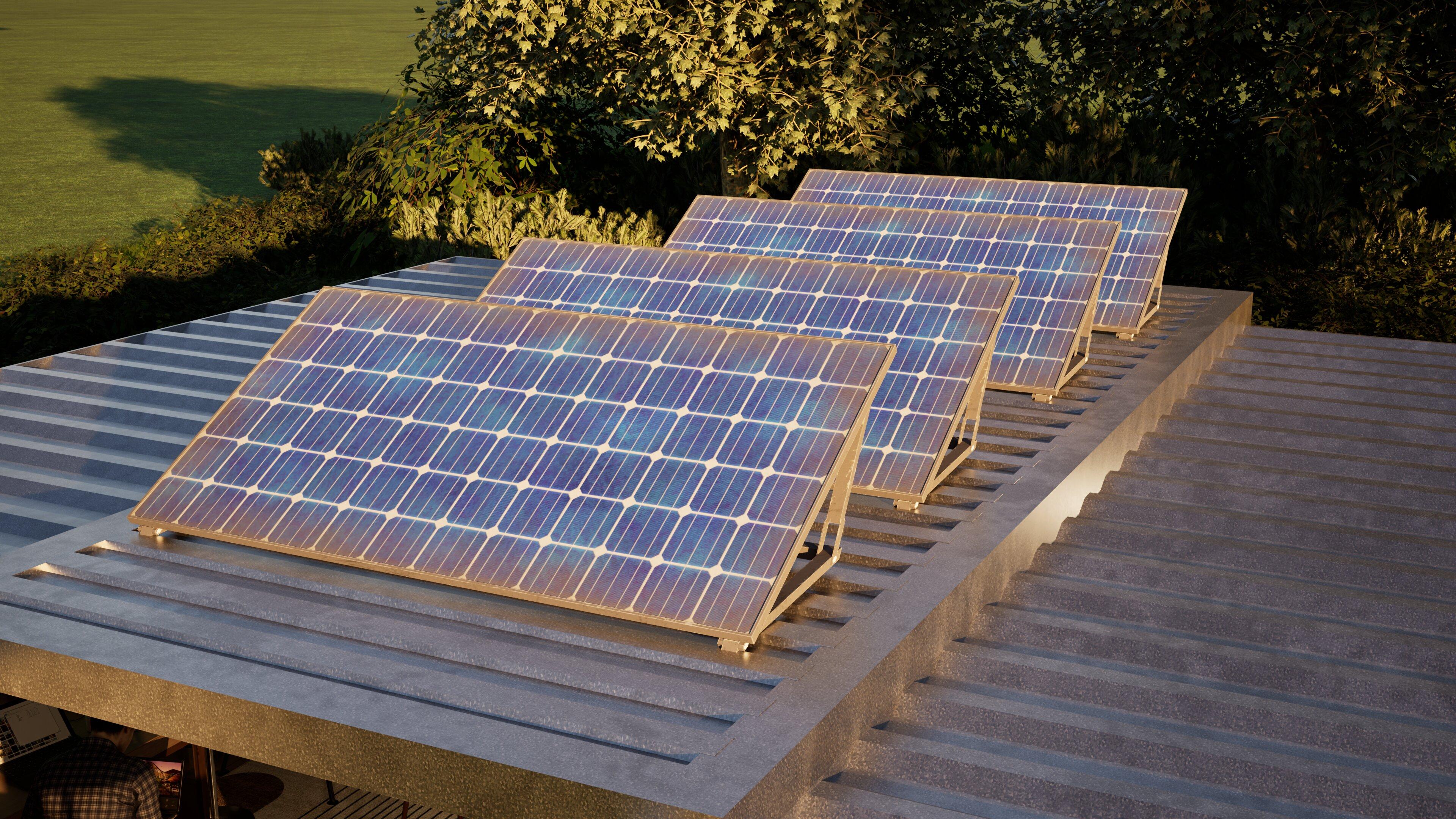
For deployment in areas without reliable sources of power, such as desert environments or disaster relief sites, I wanted the home to be capable of self-sufficient energy production. A solar panel and energy storage system were the obvious choice for this design, as solar panels are low profile, affordable, and capable of producing plenty of energy for the inhabitants.
When deployed, the roof of the home has an array of four 8-foot by 5-foot solar panels, with a total area of 160 square feet. The array would produce approximately 2.97 kilowatts of energy at peak output, which is plenty to run the interior appliances and lighting. Having a way to store energy produced by the solar array was also important for operation in storms, other low-visibility conditions, and at nighttime. I went with a 4-kilowatt battery as a good balance of size, weight, cost, and energy demand. The battery is mounted on the inside of the home, adjacent to some gear storage, for weather protection and accessibility.
Design Elements
Wood Accents:
The presence of natural wood in a home has been proven to reduce anxiety in inhabitants and create a feeling of spaciousness. According to "Wood and Human Health", a research paper published by the University of British Columbia and FP Innovations, natural wood accents in a home can have significant mental health benefits, including a reduction in the human "fight or flight" response. Throughout the home, natural walnut and oak accents are placed. Furniture such as the bunks, desk, table, and cabinetry are made of wood as opposed to artificial materials like metal, plastic, and corrugated cardboard. Not only is wood an affordable, environmentally sustainable material, but it can also act as a measure against the anxiety that can come with living in a small space.
Natural Light:
According to "Enlightening Wellbeing in the Home: The Impact of Natural Light Design on perceived happiness and sadness in residential spaces”, the presence of natural light in a living space can have a significant impact on the mental health of the inhabitants. Initially, I wanted to include windows on all of the walls to maximize the natural light streaming into the home, but with the folding requirement, it just wasn't practical. Instead, I went with two long windows running the length of the main walls on either side of the home. They are placed in such a way that from any point in the home, you are right next to a window. The kitchen counter looks out into the landscape, inhabitatnts sleeping can wake up to natural sunlight coming in through the window next to the bunks, and those in the recreational and work spaces can get some natural light as well.
Negative Space:
Having space to stretch and walk around is essential to not feeling cramped. Most RVs, for instance, have a central walkway that runs down the cabin instead of a winding pathway between walls. Having a long visual line of sight can help reduce claustrophobia and make a space feel larger than it actually is. In my design, I decided that all of the furniture and appliances would be placed along the perimeter wall, leaving a huge open space in the center, which spans the length of the home. This way, inhabitants can see across the home, out other windows, and walk across uninterrupted.
Transportation and Deployment

When fully folded up, the home takes on a footprint identical to a normal shipping container, meaning it can be transported any way a container normally would. The home can be towed on a trailer by a truck, ferried on a boat, transported by train, or any other conventional method. This creates a ton of flexibility for deployment, where conventional heavy machinery and construction equipment can't operate. I also designed the folding pattern to have the windows on the inside of the container when folded to protect them from damage. All of the furniture in the standard home was selected to fit like Tetris pieces into the inside of the container, so it can all be transported as one unit instead of moving the interior separately.
Conclusion
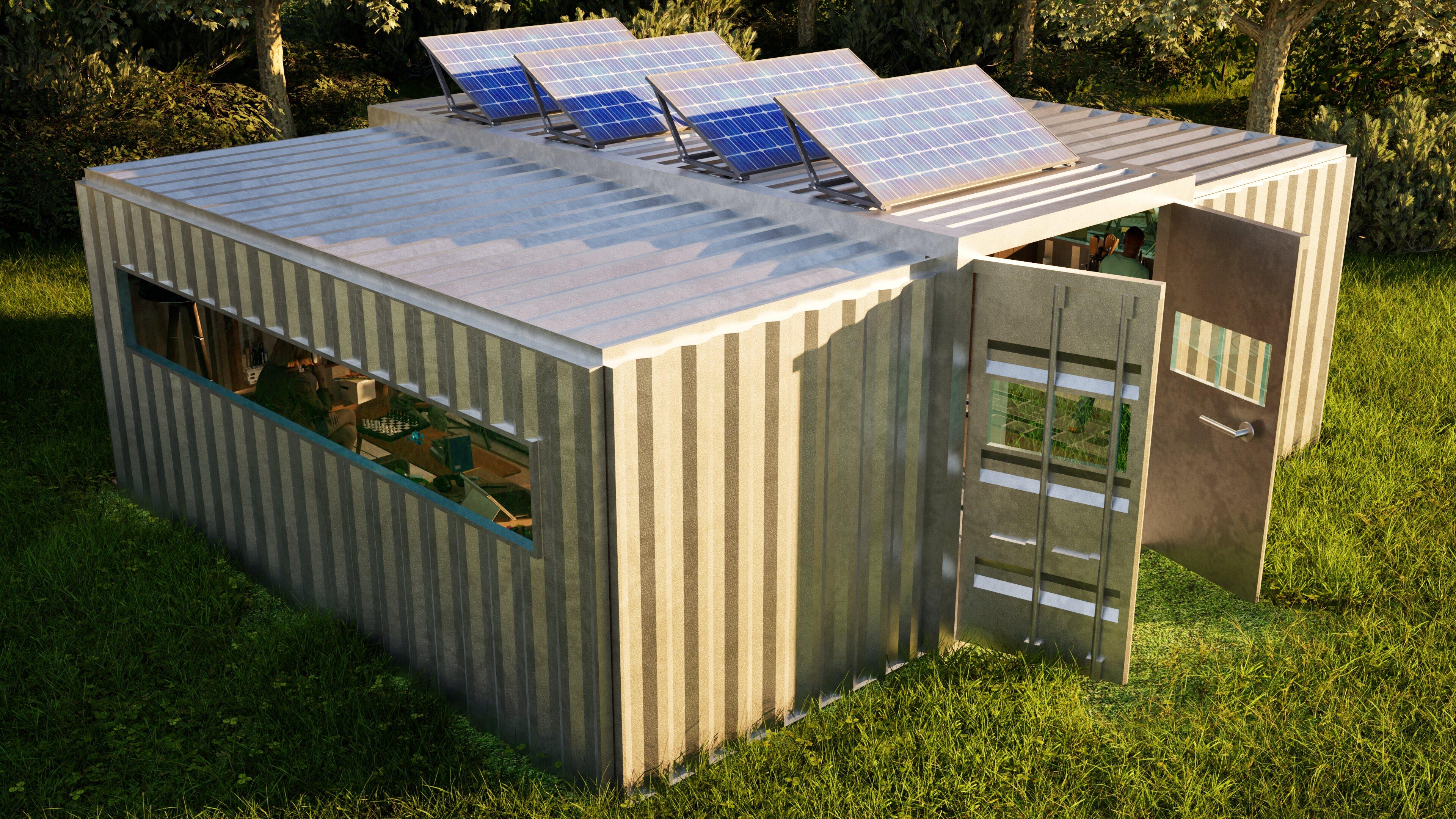
I'm super happy with the way this project turned out, and I think it really does show the potential of folding architecture. There are some improvements that could be made, such as more efficient storage or a motorized mechanism to deploy the home instead of having to move the panels into place by hand. I have also included the CAD and Twinmotion files below. I'm excited for the community to see this, and I would love any feedback, comments, or suggestions on the design.
Thanks for reading!
Drive Link for Twinmotion File:
https://drive.google.com/file/d/1Fa12bad6qVq4scznRjeR1ruroEGyn6YV/view?usp=drive_link