Gravity-Locked Bench: a Da Vinci Bridge You Can Sit on (No Nails, No Screws)
by Manan Mishra in Outside > Backyard
319 Views, 8 Favorites, 0 Comments
Gravity-Locked Bench: a Da Vinci Bridge You Can Sit on (No Nails, No Screws)
.png)
.png)
.png)
.png)
.png)
What if a 500-year-old idea could become modern furniture?
This project started with a simple question:
Can a structure designed by Leonardo da Vinci — without nails, without screws, without glue — be strong enough to sit on?
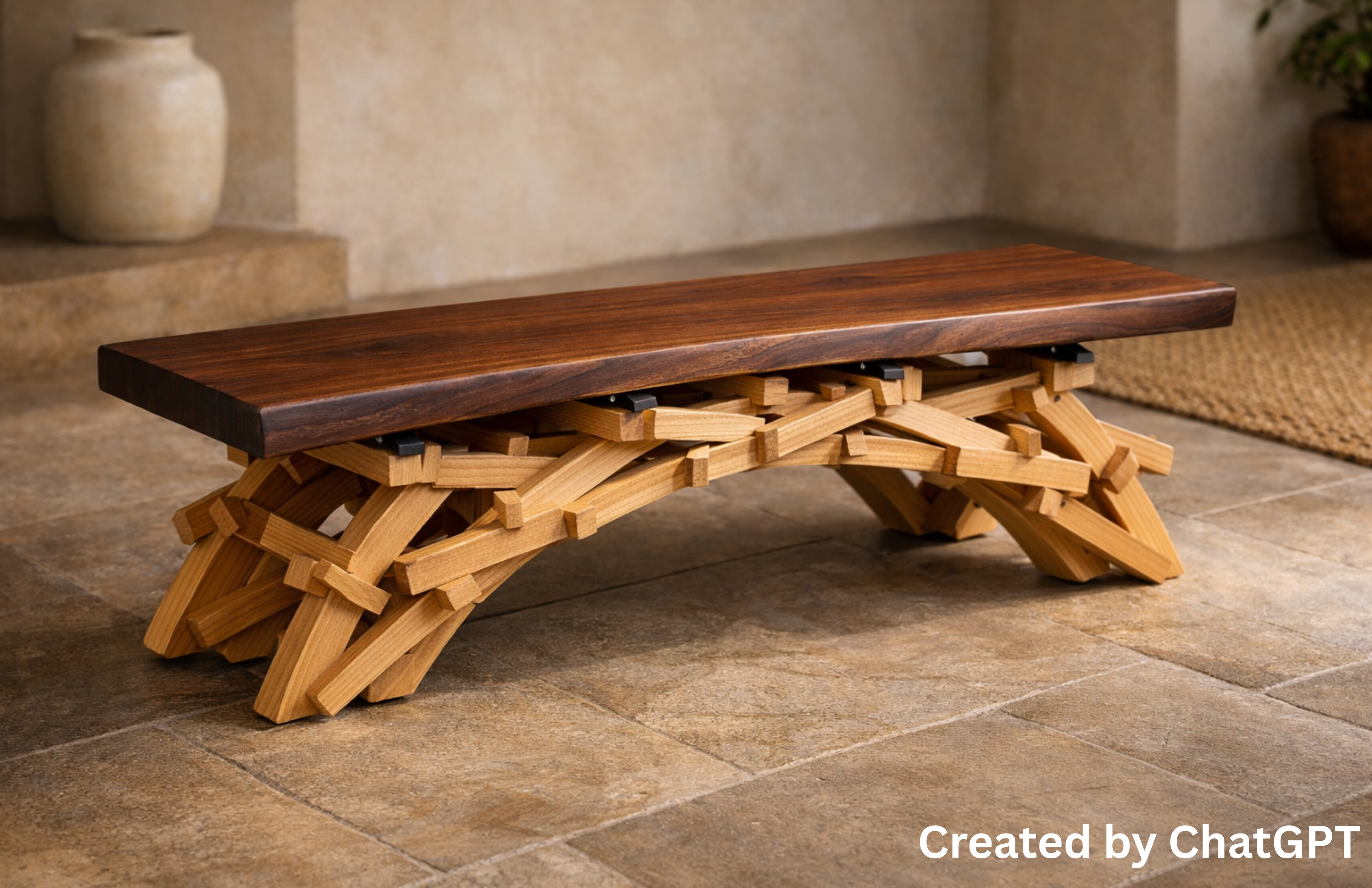
The result is this gravity-locked bench, It is a seating structure made from 17 wooden beams and zero mechanical fasteners.
No nails, no screws, no glue.
Instead, the entire base holds itself together using geometry, compression, and friction.
Inspired by the famous self-supporting bridge concept created by Leonardo da Vinci, this bench demonstrates how simple structural principles can create surprisingly strong designs.
Under load, the structure actually becomes more stable, because the added weight increases compression between the beams.
This project was built entirely from scrap plywood, proving that even basic materials can become something structurally fascinating.
The Inspiration
More than 500 years ago, Leonardo da Vinci designed a temporary bridge intended for rapid military deployment.
The bridge had a brilliant property:
It required no nails, no ropes, and no permanent joints.
Instead, the beams interlocked in a repeating pattern where each piece supported the next. The structure remained stable purely because of compression forces and gravity.
When I first learned about this design, a question immediately came to mind:
What if this concept could become furniture?
Instead of a bridge for crossing rivers, could the same principle support a person sitting on it?
That idea led to the creation of this gravity-locked bench.
Supplies
.png)
I intentionally kept this project simple and accessible.
Materials:
- Scrap plywood beams
- Each beam dimension: 50 cm length, 5 cm width and 2 cm thickness
Total beams used: 17
- 5 beams in the center
- 5 beams on each side (10 total)
- 2 beams used to support the seating platform
Optional
- Wood finish
This project demonstrates that complex structures don't always require expensive materials.
Tools Required
- Circular saw or table saw
- Measuring scale
- Pencil
- Sander (optional)
In my case I didn't have a circular saw available, so I used a hand grinder to cut the beams.
- No nails required.
- No screws required.
- No glue required.
Cutting the Beams
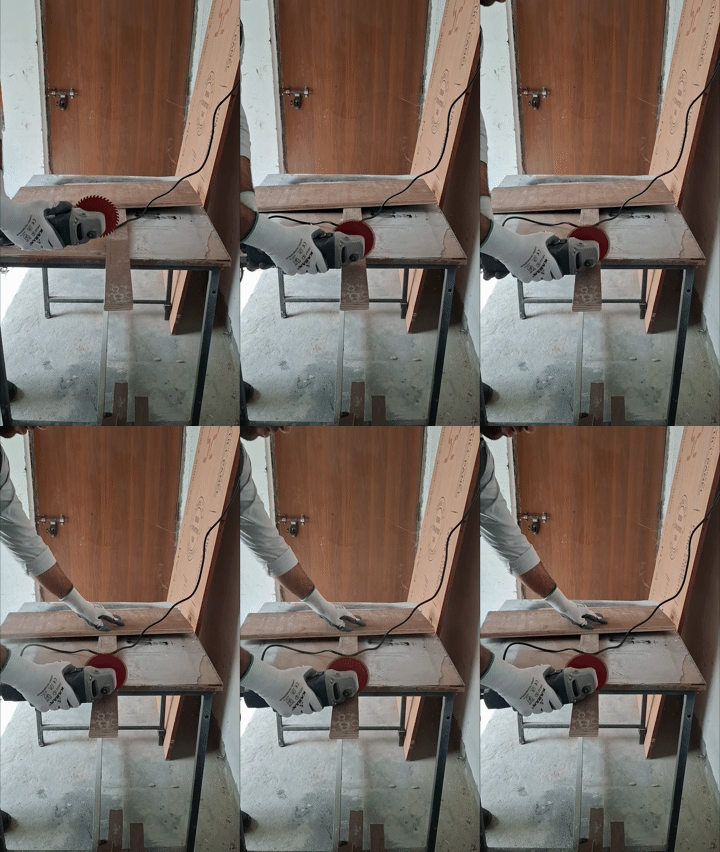
I started by cutting scrap plywood into uniform beams:
- 50 cm long
- 5 cm wide
- 2 cm thick
Precision matters here because the structure depends entirely on balance and symmetry..
Each beam was notched so that it could interlock with adjacent beams.
The notch depth was approximately half the beam thickness (about 1 cm). This allows the beams to connect securely without significantly weakening the structure.
Understanding the Structure

This is where the magic happens.
The bench works using the same principle as the self-supporting Da Vinci bridge. Each beam rests on and supports another beam in a repeating interlocking pattern.
Three key forces make the structure stable:
- Gravity pulls the beams downward.
- Compression pushes the beams into each other.
- Friction prevents them from sliding apart.
Because of this relationship, adding weight from above actually strengthens the structure.
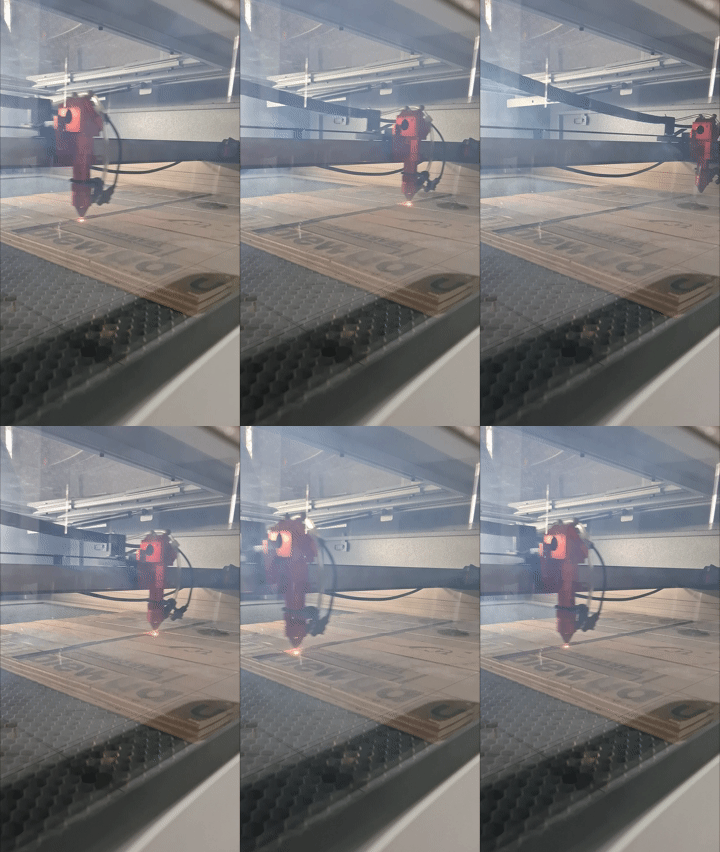
To improve friction between the plywood pieces, I engraved a shallow surface notch (3 cm × 5 cm, approximately 1–1.5 mm deep) using a CO₂ laser cutter (as shown in the first GIF). I'm adding the 3d file I designed specifically for you all to understand the structure.
These shallow textures help prevent slipping and improve the locking effect. Without enough friction, the structure could gradually slide and collapse.
Assembling the Bridge
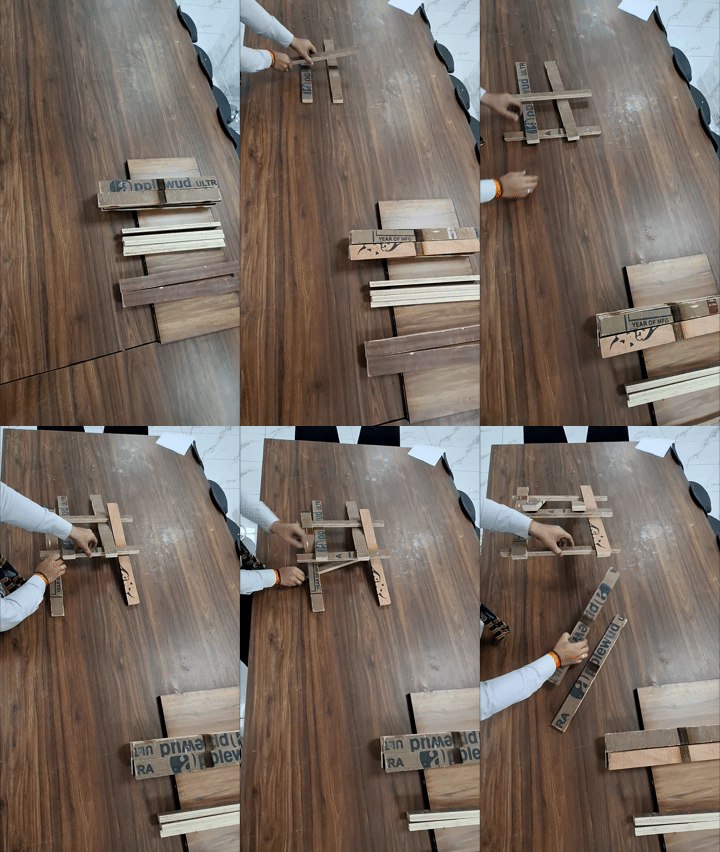

Assembly requires patience but no hardware.
- Start by placing the center beams first. These act as the base that supports the rest of the structure.
- From there, begin interlocking beams symmetrically on both sides.
- As the pattern repeats, an arch-like structure begins to form naturally.
- At a certain point, something very satisfying happens: You can remove your hands.
The entire structure stands on its own.
No screws.
No glue.
Just geometry doing the work.
Turning It Into a Bench
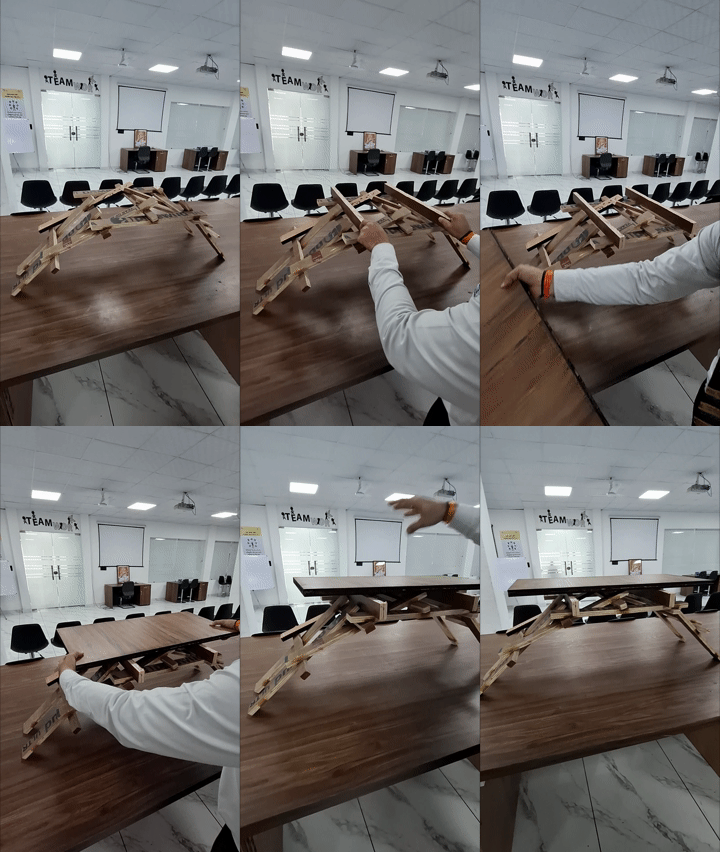
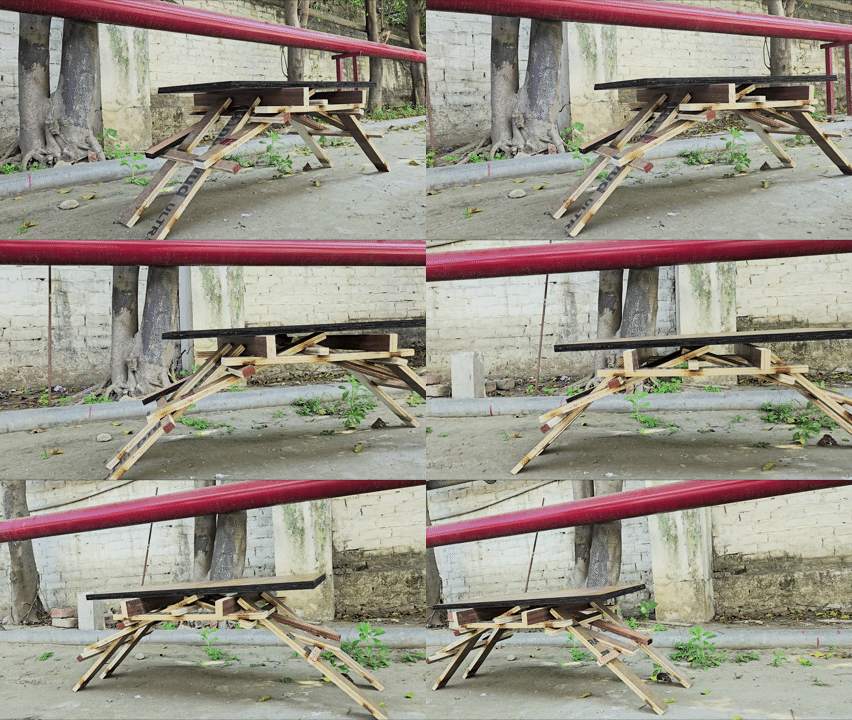
Once the structural base is complete, the final step is adding the seating surface.
Two additional beams were placed across the top to distribute load evenly and create a stable sitting platform.
Because the base is already locked under compression, these beams help spread the load across the entire structure.
The result is a fully functional bench supported entirely by interlocking beams.
Load Testing the Bench
.png)
.png)
Strength Test
The real question:
Can you actually sit on it?
Yes, To test the strength of the design, I applied real weight to the bench. The structure successfully supported my weight (around 88kg).
What makes compression structures fascinating is that additional weight increases stability. As load is applied from above, the beams press more firmly into each other, strengthening the lock between them.
This behavior is similar to how arches and self-supporting bridges distribute weight.
While the prototype is made from plywood, using solid hardwood would further increase strength and durability.
Why This Project Matters
The gravity-locked bench works because of a fundamental engineering principle:
Compression structures transfer load through geometry rather than fasteners.
The weight applied from above travels through the beams and spreads outward across the structure. This is similar to how stone arches and historical bridges distribute weight.
Instead of relying on nails or bolts, the structure relies on:
- Gravity
- Friction
- Compression forces
- Interlocking geometry
Together, these forces create a surprisingly strong self-supporting structure.
Leonardo designed a bridge. And I turned it into a bench. And anyone can customize it.
You can:
- Change beam length
- Increase width
- Use hardwood for premium finish
- Scale it up or down
The design is incredibly adaptable.
Final Thoughts
This project demonstrates that simple ideas can still be powerful. A design concept created more than 500 years ago can still inspire modern experiments in structure and furniture. By combining historical engineering ideas with simple materials, we can rediscover how much strength geometry alone can provide.
Sometimes the most elegant solutions are also the simplest.
And sometimes, gravity is all you need to hold things together. If Leonardo could see this bench, I think he’d approve.
Tips for Readers Trying This
- Keep all beams identical in size
- Cut notches cleanly and accurately
- Sand edges for better contact
- Test assembly slowly before applying weight
Most importantly — experiment. That’s what Leonardo would have done.