How to Brighten a Dark Garage Without Hiring an Electrician (Plug-and-Play Upgrade)
by adetomiwak in Workshop > Lighting
52 Views, 0 Favorites, 0 Comments
How to Brighten a Dark Garage Without Hiring an Electrician (Plug-and-Play Upgrade)

Is your garage a dungeon? For years, I struggled with the standard single lightbulb in the center of the room. It cast harsh shadows, made it impossible to detail my car, and I was constantly losing tools on the floor.
I wanted a professional workshop look, but I didn't want to pay an electrician $500 to run new wiring behind the drywall.
I discovered that you can achieve 'Daylight' brightness using modern plug-and-play LED systems. In this guide, I will walk you through how to calculate the lumens you need, choose the right color temperature (Kelvin), and install a shadow-free lighting setup using standard outlets.
Note: This is a general guide on setup. If you want to see the specific brands I tested (and which ones failed), you can check out my full Garage Lighting Comparison on my blog."
Supplies
Tape Measure
Ladder
LED Shop Lights (Linkable "Daisy Chain" style)
OR Deformable Screw-in Bulbs
Zip ties or Mounting Clips
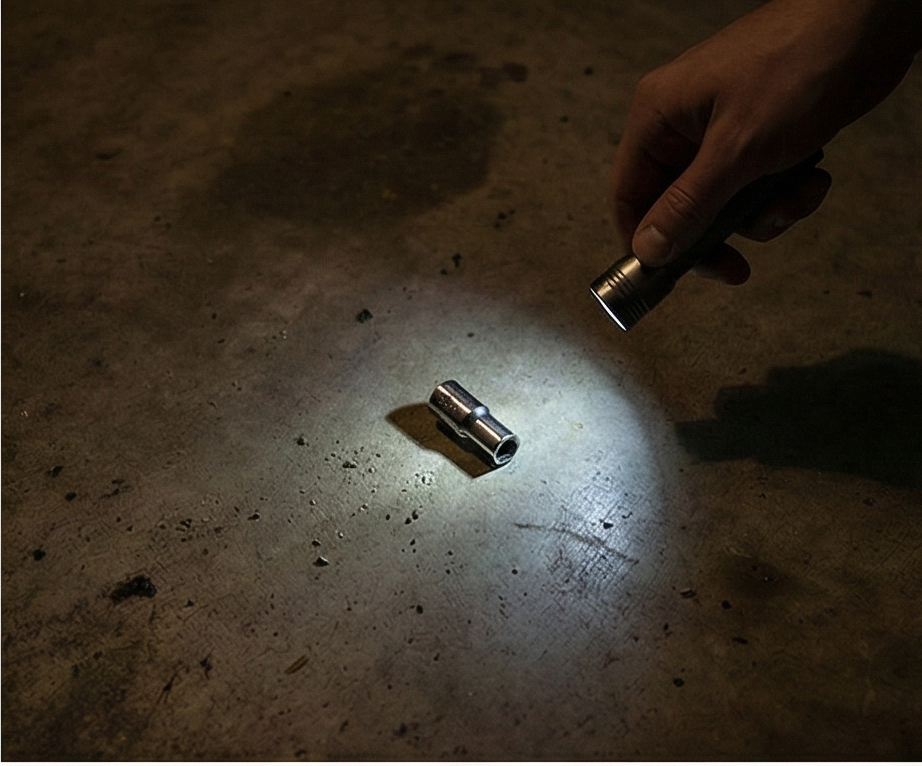
The "10mm Socket" Diagnostic Test
Most people think their garage is 'bright enough' until they drop something. I use the "10mm Socket Test." Drop a small chrome socket on the floor. If you have to squint or pull out your phone flashlight to find it, your lighting is failing.
This happens because standard bulbs only output about 800 lumens. For a functional workspace, you need at least 4,000 to 6,000 lumens per car bay.
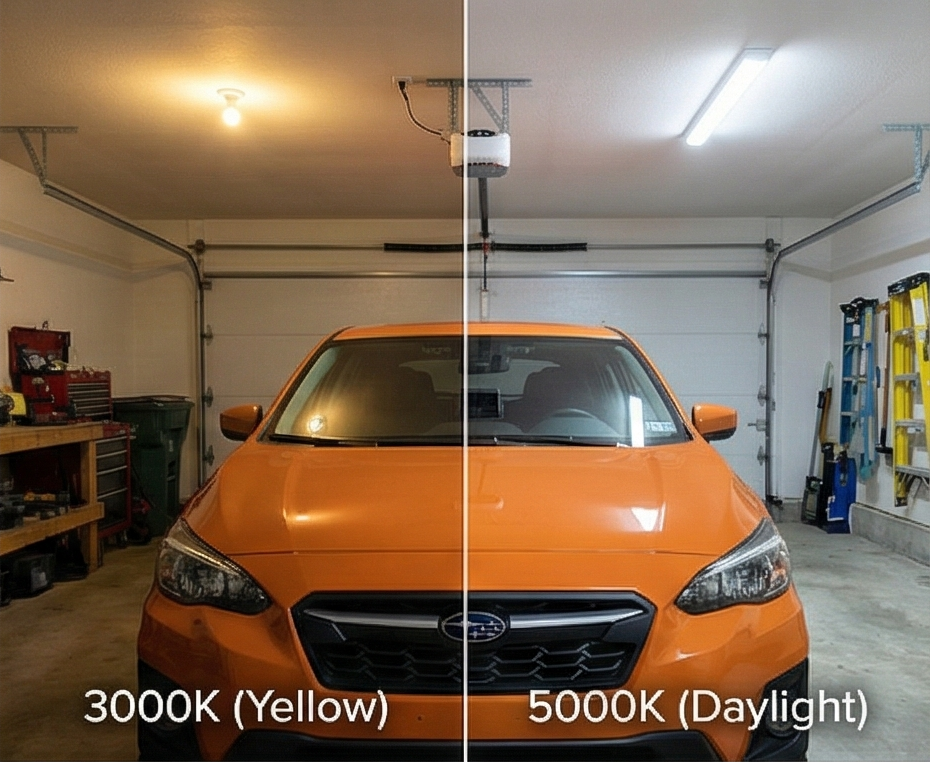
Understanding "Color Temp" (Don't Buy Yellow!)
Before you buy lights, check the "Kelvin" rating on the box.
- 3000K: This is "Warm White." It looks yellow and sleepy. Avoid this for a shop.
- 6500K: This is "Cool White." It can look harsh and blue.
- 5000K: This is the sweet spot. It mimics pure daylight and makes paint colors pop.
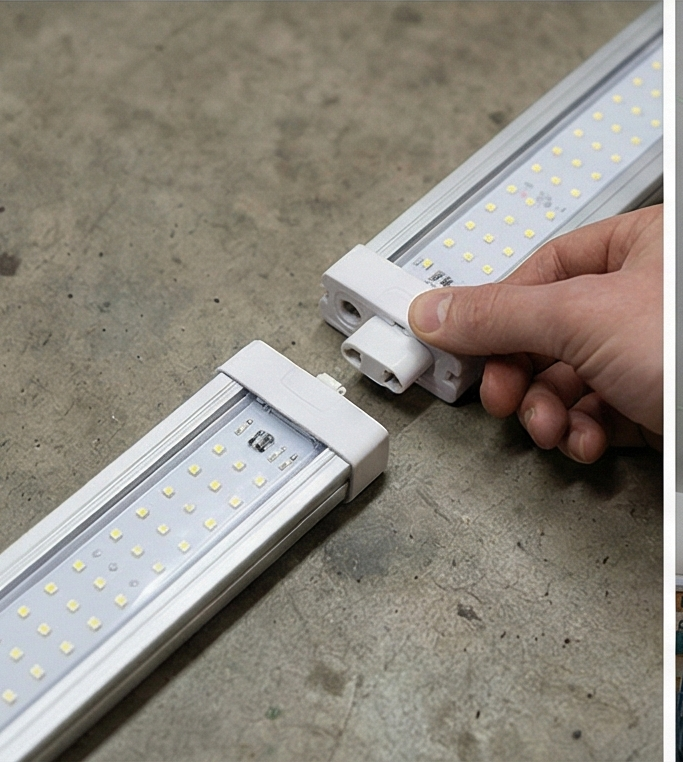
The "No-Wire" Solution (Daisy Chaining)
You don't need to cut wires. Look for "Linkable" LED shop lights (often called T5 or T8 integrated fixtures).
- These lights have a plug on one end and a socket on the other.
- You plug the first one into your wall outlet.
- You plug the second one into the first one.
- You can run a row of 6-8 lights off a single standard outlet.
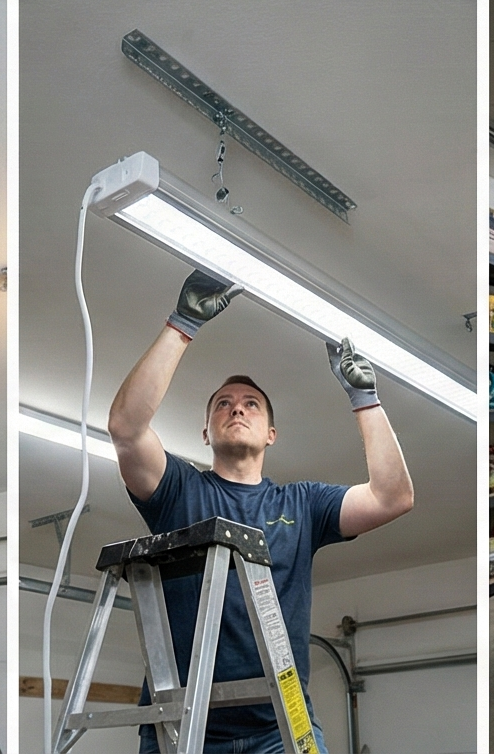
Layout Strategy (Killing Shadows)
Don't just put one big light in the middle. That creates shadows when you lean over a workbench.
- The Strategy: Mount your lights in parallel rows (like the stripes on a road).
- Spacing: Place them about 4–6 feet apart. This ensures light hits your project from both left and right, eliminating shadows completely.
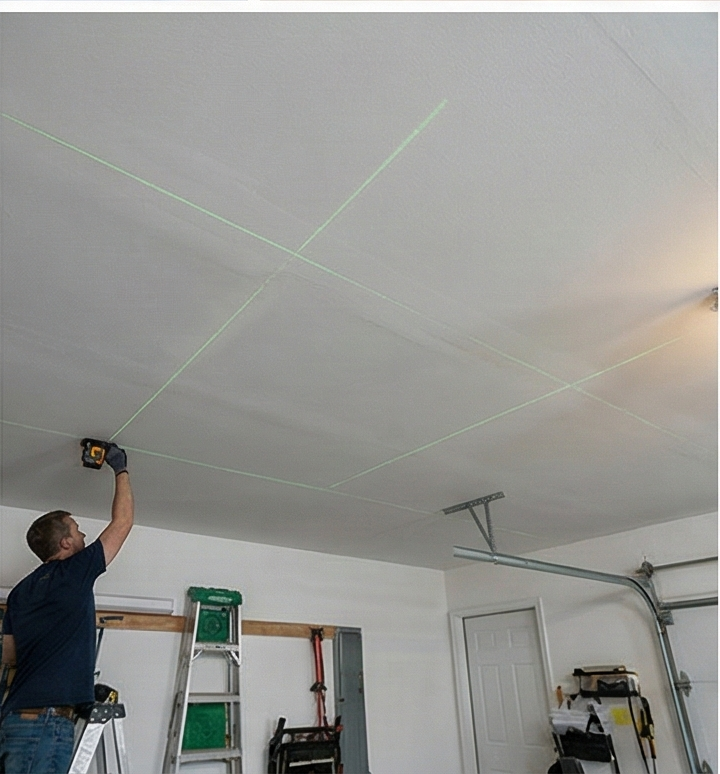
Step 5: Installation
Most linkable lights come with simple "U-clips."
- Screw the clip into the ceiling stud (or use drywall anchors).
- Snap the light bar into the clip.
- Connect the cords.
- Use zip ties to tidy up the loose cables so they don't dangle.
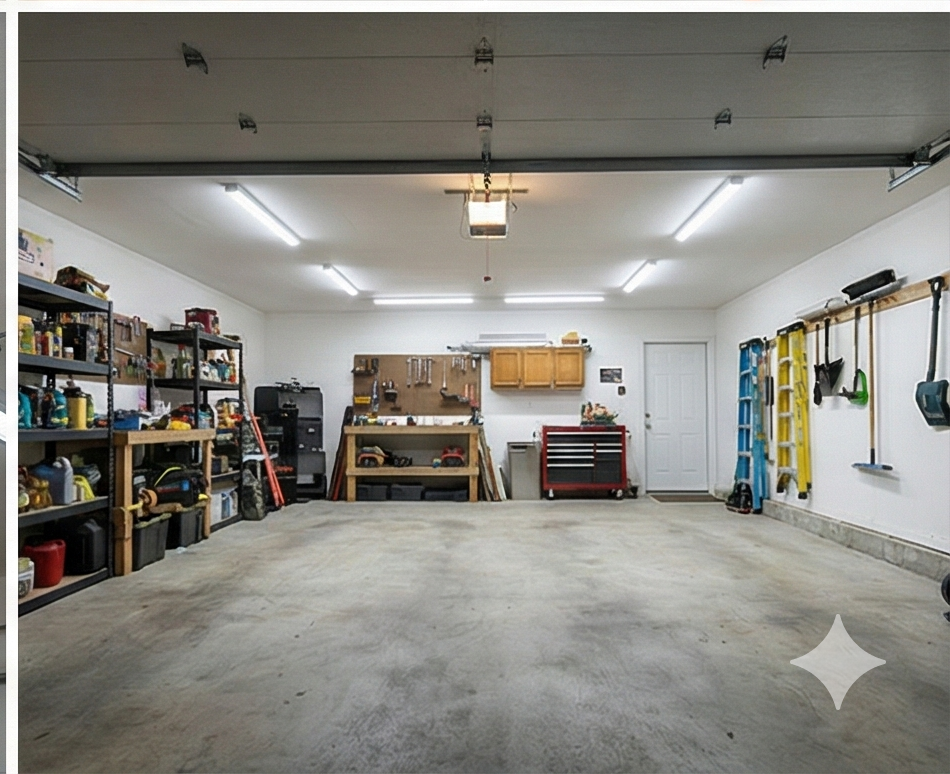
The Result
Flip the switch. The difference between 800 lumens and 20,000 lumens is shocking. The space feels bigger, cleaner, and safer.
"If you are ready to upgrade, I did a deep dive on the differences between Deformable Bulbs (the cheap option) vs. Linkable Shop Lights (the pro option). You can read my full review here: Best Garage Lighting Ideas 2025"