How to Build a 3D Printing Waste Plastic Grinder
by hmyokum in Workshop > 3D Printing
1320 Views, 16 Favorites, 0 Comments
How to Build a 3D Printing Waste Plastic Grinder
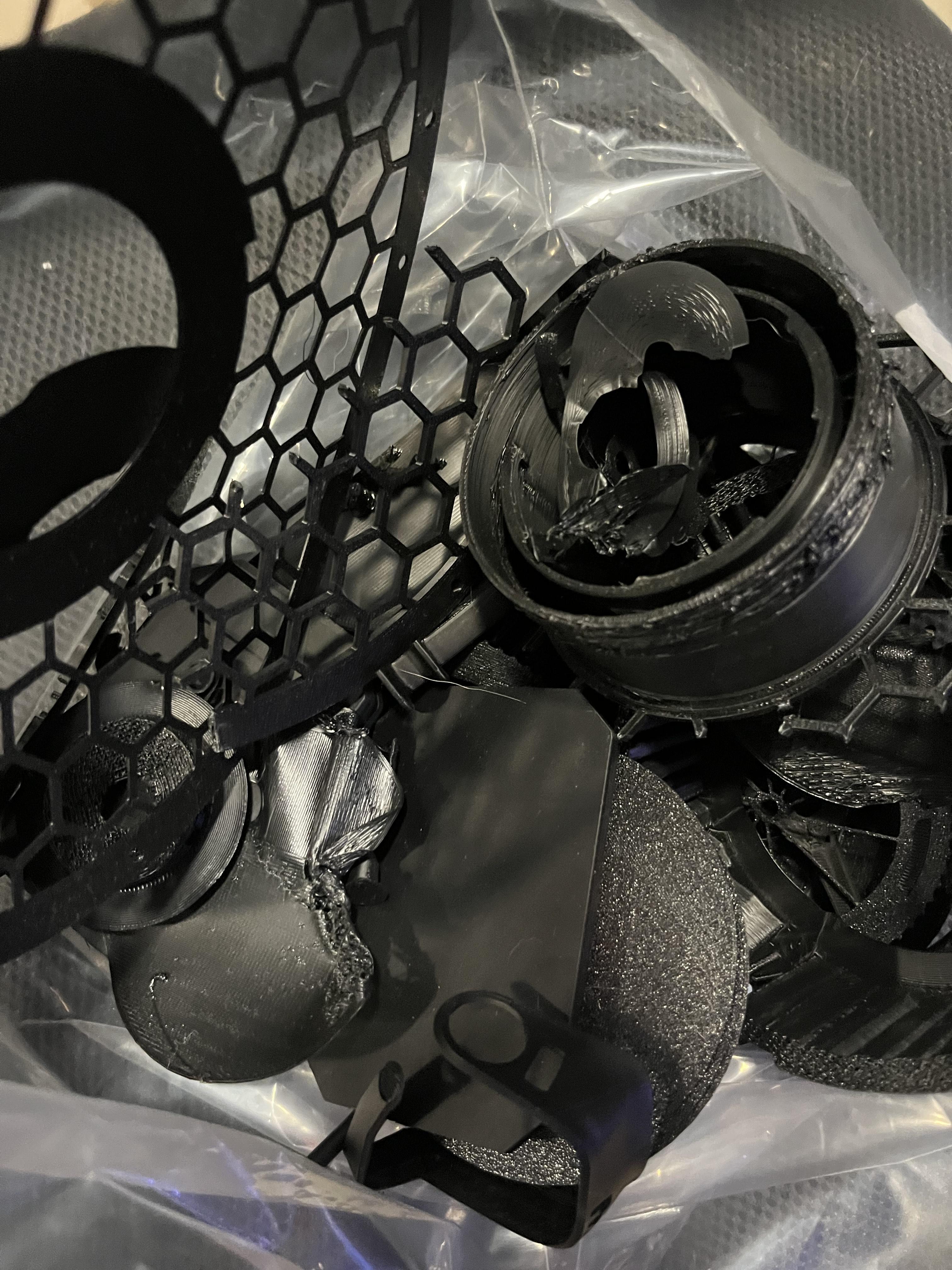
3d printing comes with a lot of waste. Whether it's failed prints, support materials, you name it, this hobby can feel awfully wasteful. So me and my friend designed this simple plastic grinder that grinds plastic waste into small pieces, which is the first step in recycling plastic waste. We are 13 and 14 year olds who are homeschooled and love to build and tinker with things. Our next project will be to build an extruder to melt the plastic, extrude and respool so we can complete the goal of the project. Follow along for our next instructable! We hope you think this was a fun way to "make it spin" and also work towards sustainable 3D printing at the same time. Thanks!
Hayden and Caleb
Supplies
- TOOLS
- 3D printer
- size 15 hex wrench or socket set
- MATERIALS
- 4x bearings 20x42x12mm with rubber seal
- 1/2 inch hex rod
- Filament in colors of your choice
- Steel blades (see step 1)
Blades and Hex Rod
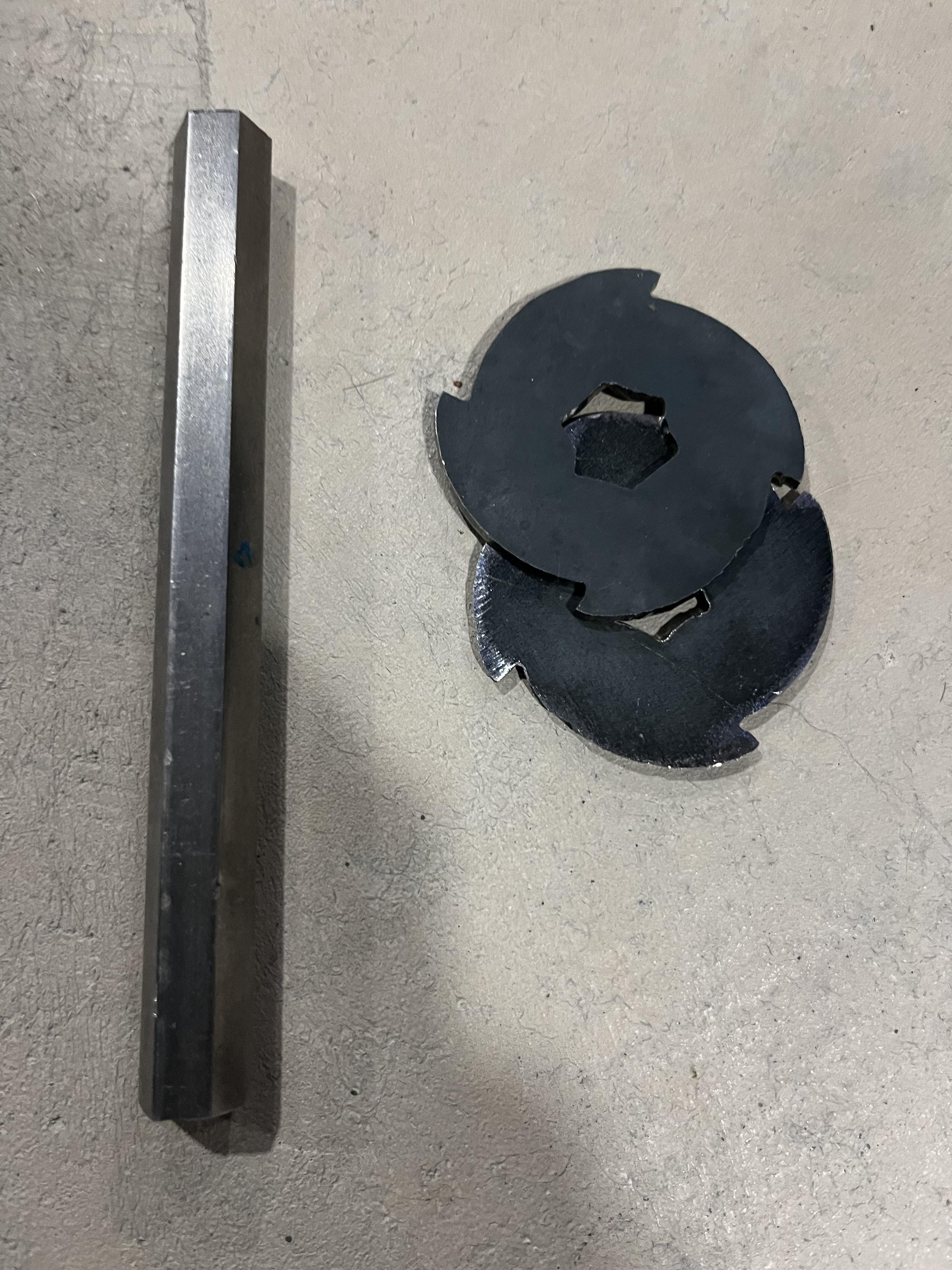
You will want to source your metal parts first as some fabricators have long turn-around times. You will need 52 identical blades cut from a 3mm thick steel sheet. Each blade is approximately 2 inches by 2 inches, with a 3-tooth spiral shape and a 20mm hex center hole. Attached is a DXF file that you can either send directly to the steel fabricator or print a plastic prototype to take in to the shop for reference. You will also want two 6in length hex rods.
Downloads
Print the Parts
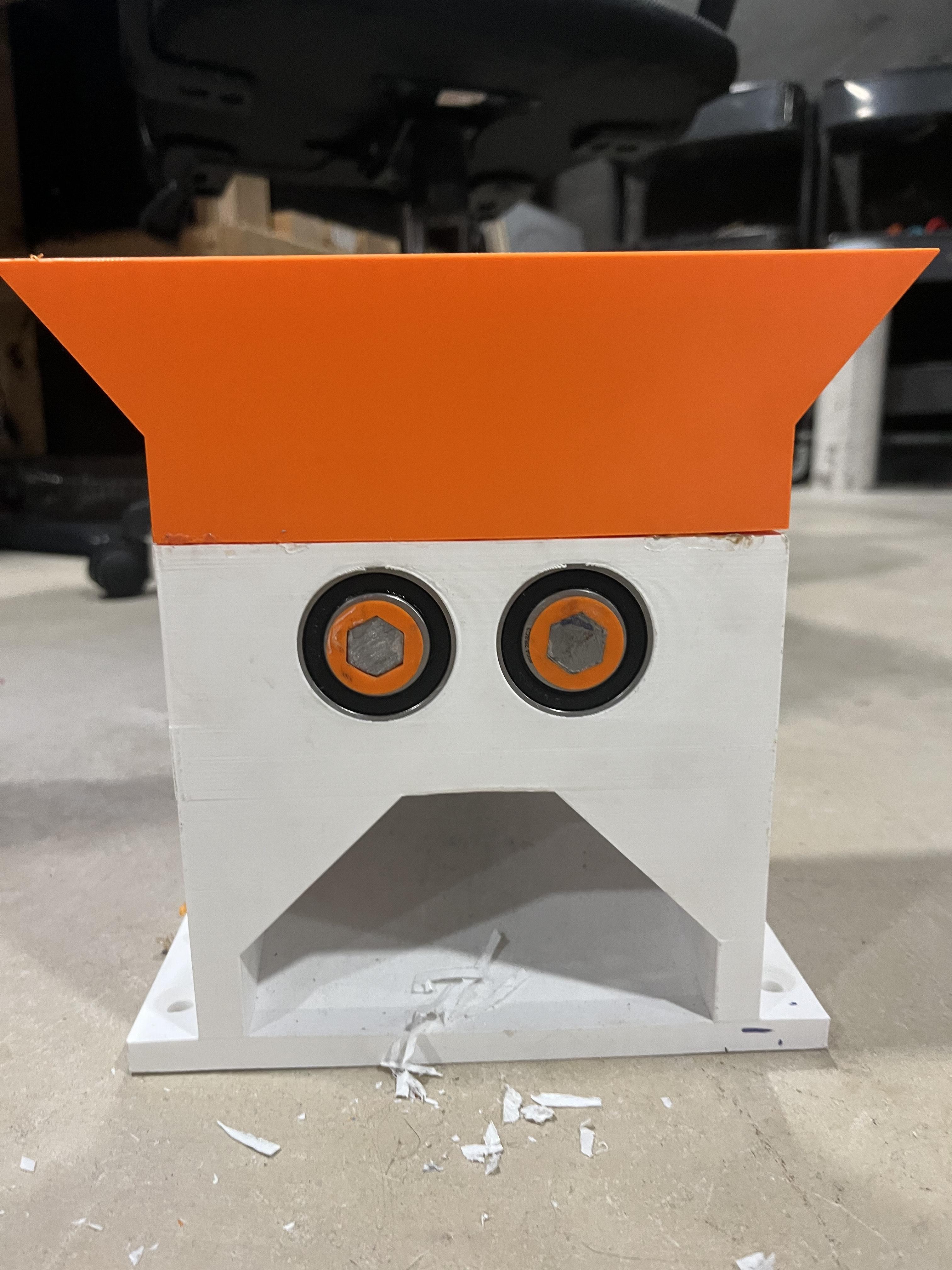
Next you will want to print the body and the hopper. I used full infill, it was nice and strong. This one will take a while! See attached print file and fusion full model file for reference. You will also want to print the spacers between the blade so you can offset each blade.
Assemble Blades Into Housing
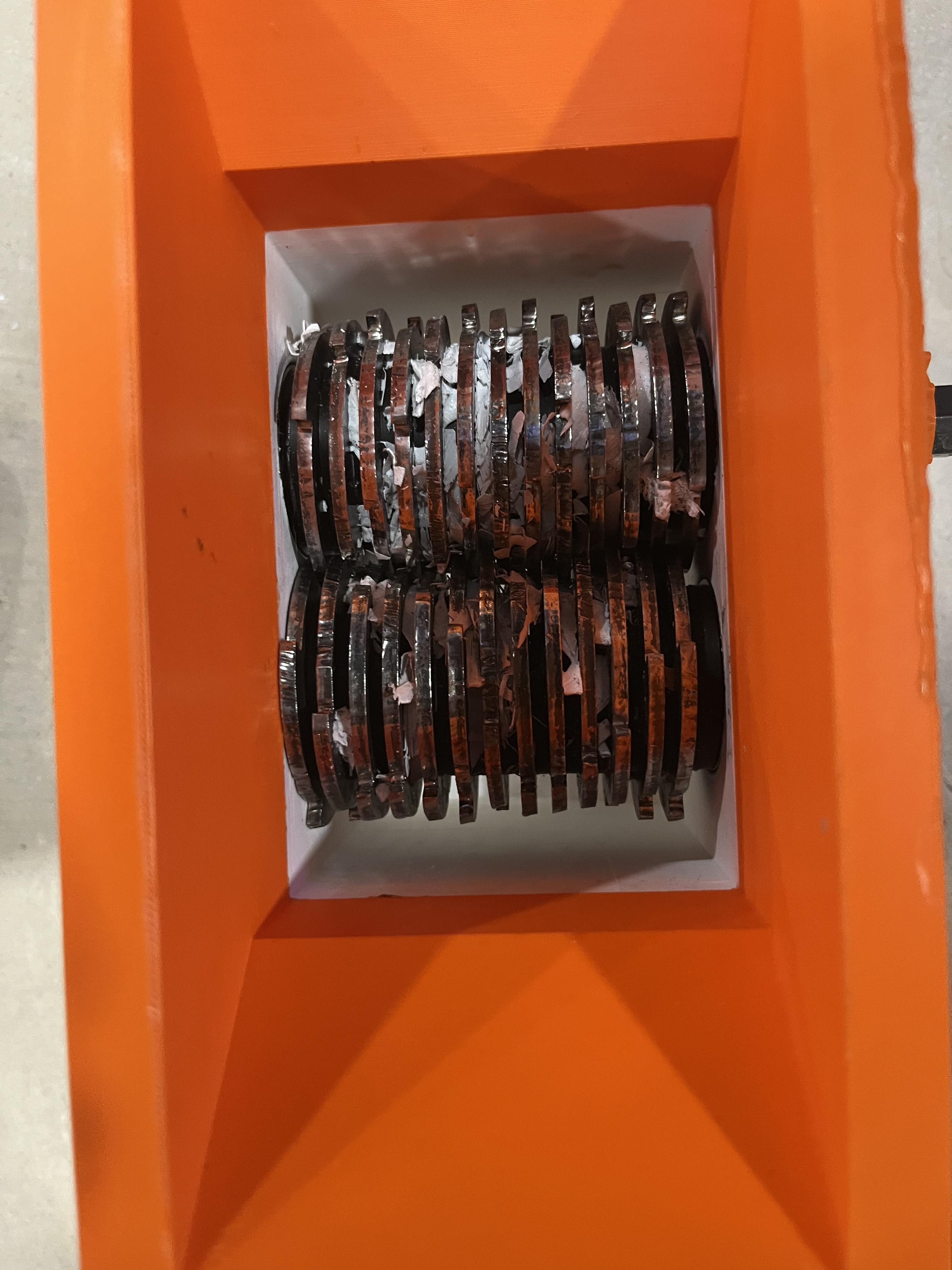
This part can be a bit tricky to load all the blades and spacers onto the hex rods and get a nice snug fit. Be sure to have the blades all facing the same direction (should be able to rotate in towards each other) and offset the teeth for a more efficient grind. I used some superglue to attach the spacers between the blades, this helped with getting the entire assembly on the rod.
Attach Gears and Grind!
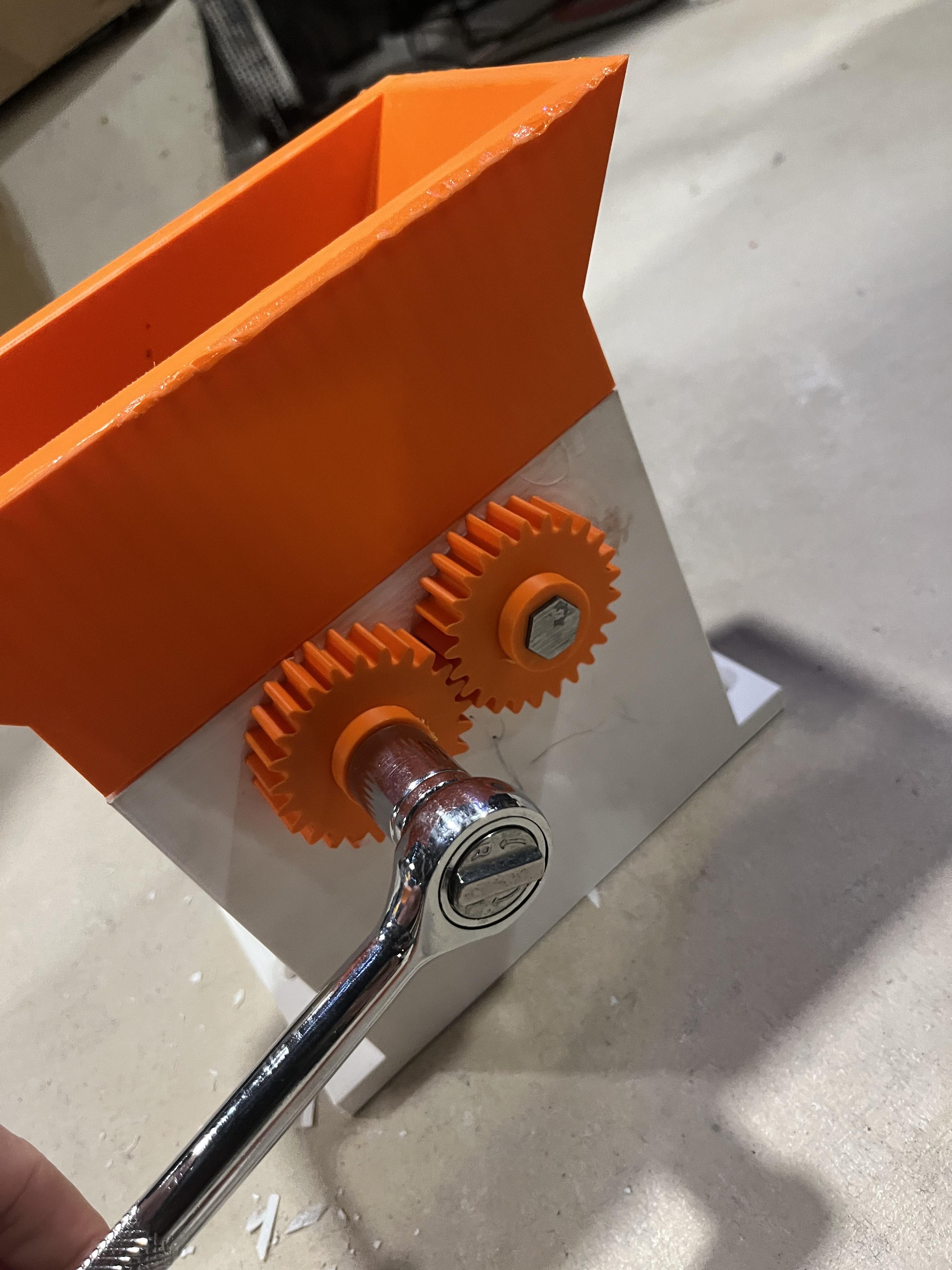
Once you have it all together, pop the gears on the hex rods on the opposite side of the plastic output shaft. We found that using a socket wrench was the best to get a good grind.