How to Build a Professional Wall-Mounted Car Wash System (Under $500)
by adetomiwak in Workshop > Tools
80 Views, 0 Favorites, 0 Comments
How to Build a Professional Wall-Mounted Car Wash System (Under $500)
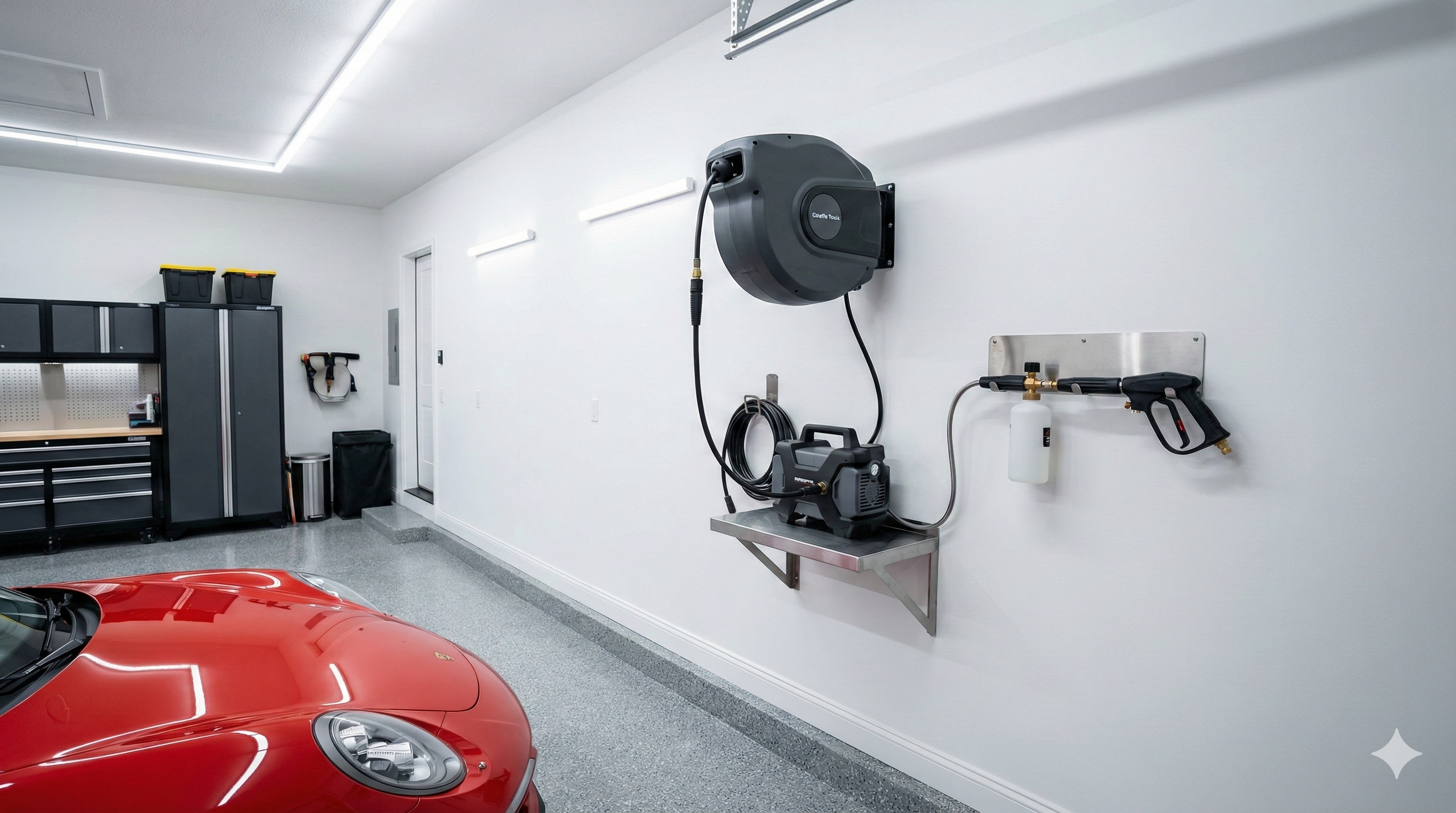
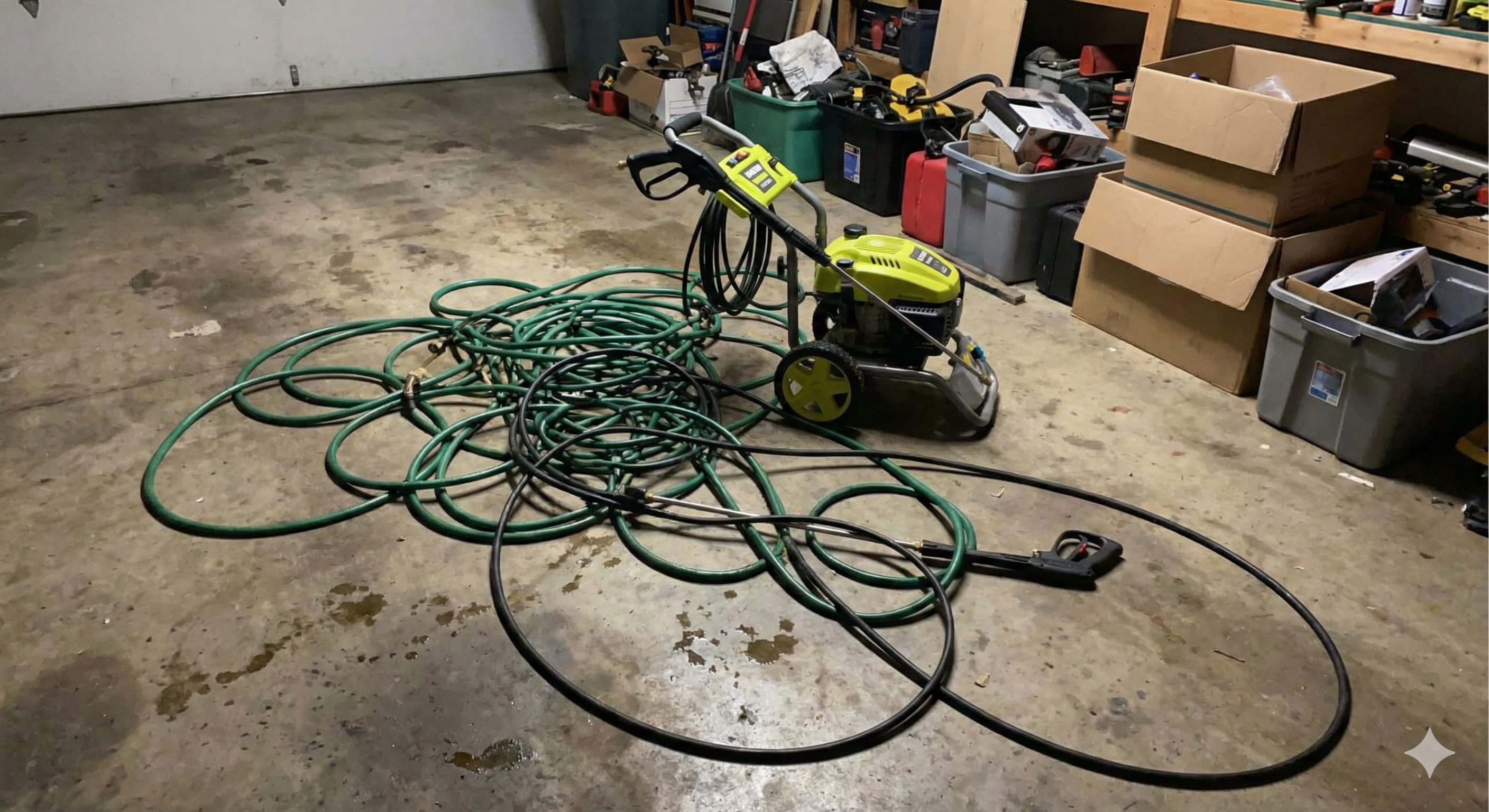
A wall-mounted pressure washer system transforms a standard garage into an efficient, on-demand wash bay that’s ready in seconds. Instead of dragging equipment out, untangling hoses, and packing everything away after each wash, this setup stays permanently mounted and organized.
In this project, I’ll show how to build a compact wall-mounted car wash system using readily available parts. The focus is on safe mounting, proper pressure compatibility, and minimizing flow loss, while keeping the total cost under $500.
This design is intended for home garages and delivers performance close to professional detailing setups without requiring commercial-grade equipment.
Supplies
You do not need these exact brands. What matters are the specifications.
Pressure Washer
- Electric pressure washer rated around 1.8–2.2 GPM
- Standard M22 outlet connection
- Example unit used: Active 2.0
Retractable Hose Reel
- Pressure-rated retractable reel (not a garden hose reel)
- Rated for 3,000 PSI or higher
- 50 ft hose length recommended
- Example reels: Giraffe Tools, ReelWorks
Jumper (Whip) Hose
- 3 ft high-pressure hose
- Rated above your washer’s PSI
- Used to connect washer → reel
Fittings
- M22 to 3/8" Quick Connect adapters
- Stainless steel preferred for durability
Mounting Hardware
- 5/16" × 3" lag bolts
- Washers
- Do not use drywall anchors
Tools
- Stud finder
- Drill and drill bits
- Socket wrench or ratchet
- Adjustable wrench
- PTFE (Teflon) tape
The Golden Rule of Mounting (Safety First)
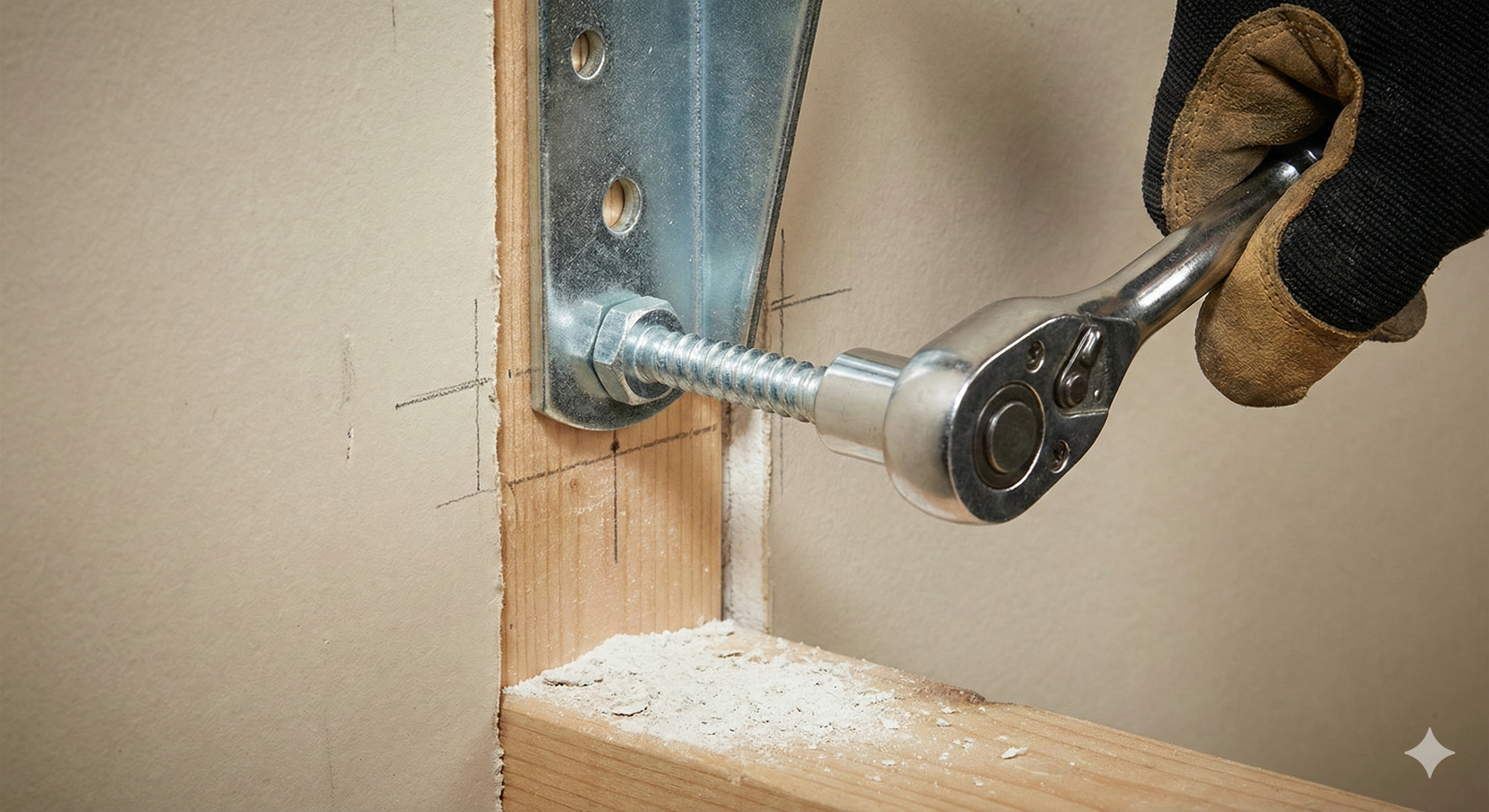
A retractable pressure washer reel typically weighs 20–30 lb. When pulling hose during use, dynamic load can exceed 60–80 lb of force.
Never mount a pressure reel into drywall alone.
Plastic anchors will eventually fail and can cause the reel to tear out of the wall.
Correct mounting method:
- Use a stud finder to locate vertical wall studs (typically 16" on center).
- Mark the stud centerline.
- Mount directly into the stud using lag bolts.
No stud where you want the reel?
- Secure a ¾" plywood backer into two adjacent studs.
- Mount the reel to the plywood instead.
This spreads load and prevents wall damage.
Layout Planning (Vertical Stack Design)
A vertical layout minimizes footprint and keeps hoses organized.
Recommended placement:
- Hose Reel:
- Mount 6–7 ft from the floor — high enough to avoid head contact, low enough to reach the hose stopper.
- Pressure Washer:
- Mount directly below the reel.
Many compact electric washers include wall-mount brackets. If not, a generic pressure-washer wall shelf works well.
Tip:
Pre-drill pilot holes before driving lag bolts to prevent stud splitting.
Why Hose Reels Must Be Pressure-Rated
This is a common mistake.
Garden hose reels are not designed to handle:
- High PSI
- Pulsing pressure
- Internal swivel stress from pressure washers
Using a non-rated reel can cause:
- Internal seal failure
- Sudden hose rupture
- Pressure loss
Always verify:
- Working pressure rating
- Burst pressure (typically 3–4× working PSI)
If the reel doesn’t explicitly state it’s pressure-washer rated, don’t use it.
Step 4: Plumbing the System
There are two sides to the system: water in and high pressure out.
1. Water Inlet (Supply Side)
- Connect a standard garden hose from your spigot to the pressure washer inlet.
- Optional upgrade: permanent PEX or copper plumbing along the wall.
For most home garages, a reinforced garden hose works fine.
2. High-Pressure Outlet (Washer → Reel)
Do not connect the reel directly to the washer outlet.
Instead:
- Attach a 3 ft jumper (whip) hose to the washer outlet.
- Connect the other end to the reel inlet.
This reduces strain on fittings and prevents vibration damage.
Important:
Wrap all threaded connections with PTFE tape (3–4 wraps, clockwise).
Quick-Connect Upgrade (Highly Recommended)
Most pressure washers use threaded M22 fittings, which are slow to connect and disconnect.
Upgrading to 3/8" quick connects improves usability dramatically.
Setup:
- Quick-connect plug on the spray gun
- Quick-connect coupler on the hose reel outlet
This allows instant attachment of:
- Spray guns
- Foam cannons
- Surface cleaners

System Test (Total Stop Check)
- Turn on the water supply.
- Check all fittings for leaks.
- Power on the pressure washer.
Test procedure:
- Pull out ~20 ft of hose.
- Pull the trigger — pressure should be immediate.
- Release the trigger — the machine should stop running.
If the motor continues running:
- Turn off immediately
- Check for air leaks or loose fittings
This confirms the Total Stop System (TSS) is functioning correctly.
Performance Results (Why This Works)
For car detailing, the most efficient balance for foam and rinse performance is roughly:
~1,100 PSI @ ~2.0 GPM
This setup achieves:
- Fast setup time (≈30 seconds)
- Compact storage
- Minimal pressure drop
Comparable real-world results to much more expensive shop installations
Further Optimization Notes (Reference Data)
Hose reel design, internal diameter, swivel construction, and fitting type all affect pressure drop and flow loss in wall-mounted systems. During planning, I compared reel designs and measured real-world GPM loss across several configurations to avoid hidden performance bottlenecks.
Detailed flow tests, pressure comparisons, and configuration diagrams are documented here:
(Used as a technical reference for this build.)
Final Thoughts
A properly mounted wall mounted pressure washer system improves safety, saves time, and encourages regular vehicle maintenance by removing setup friction.
By focusing on:
- Correct load mounting
- Pressure-rated components
- Proper plumbing transitions
You can achieve professional-level convenience in a home garage without professional-level cost.