How to Prepare Grass for Making Straw Star Ornaments (Strohsterne)
by JoyInVermont in Craft > Fiber Arts
156 Views, 1 Favorites, 0 Comments
How to Prepare Grass for Making Straw Star Ornaments (Strohsterne)

Christmas ornaments made out of straw are very popular in Germany and Scandinavia, and their history goes back many centuries. They range from very simple to incredibly ornate, and include stars, angels, and other holiday motifs. Traditionally they were made from grain stalks after harvest, since this was a material that was readily available in large quantities. It’s an especially great craft for people who enjoy nature and working with natural and foraged materials. Today, one can buy imported kits and tools for making straw stars.
Ooorrrrrrr….. you can make your own supplies!
This Instructable covers how to prepare grass stems for making straw star ornaments.
It refers to two other Instructables, “How to Make Straw Star Ornaments (Strohsterne)”, and “How to Make a Jig for Making Straw Star Ornaments (Strohsterne)”.
Supplies
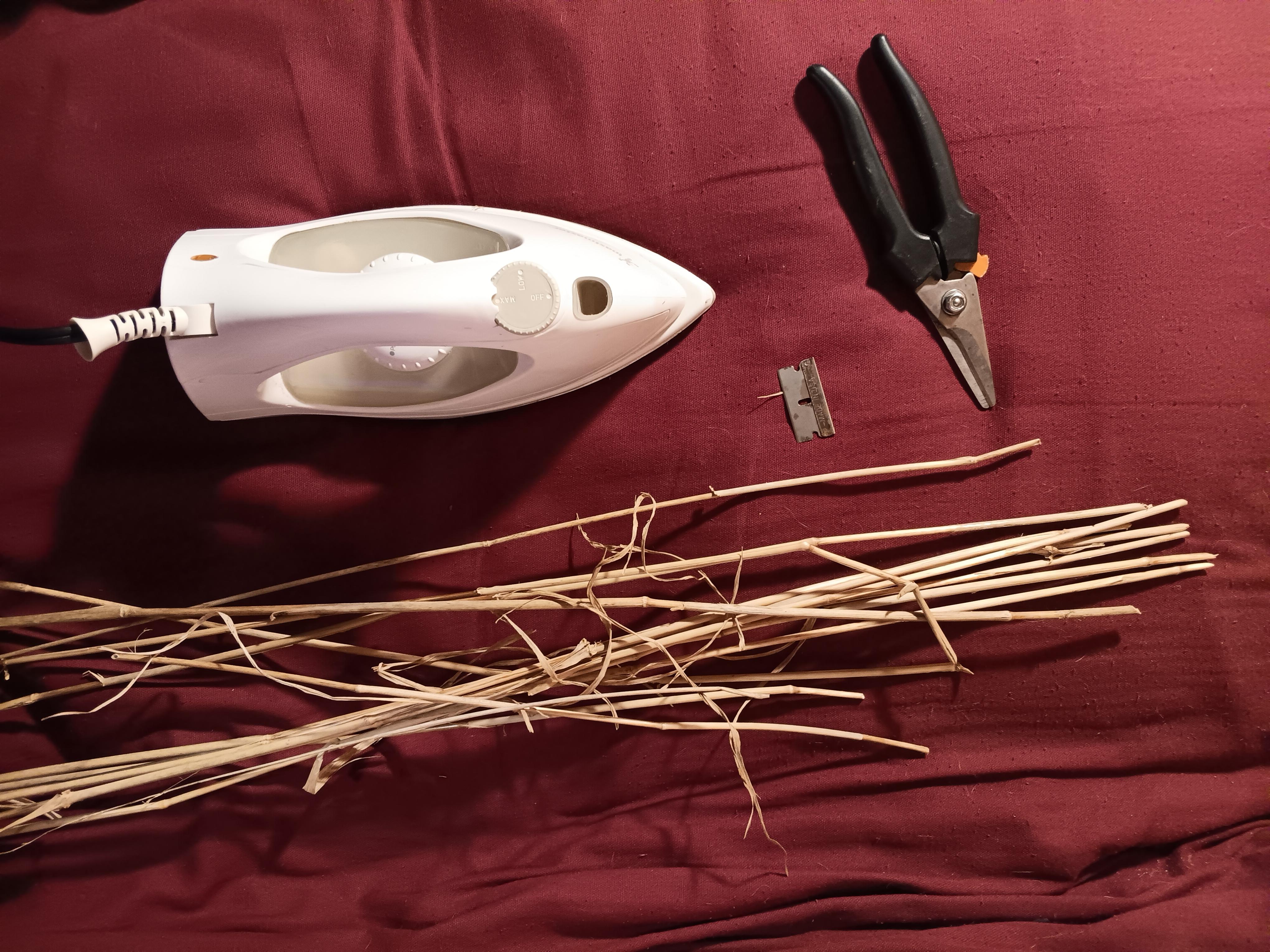
Dry grass stalks (see instructions below on how to select appropriate grasses)
Gardening / pruning clippers (do not use ordinary scissors, grass contains high amounts of silica (glass!) to stiffen the stems, and this silica will dull any scissors)
Household iron
Disposable razor blade
Fabric dye (optional)
Selecting Grasses
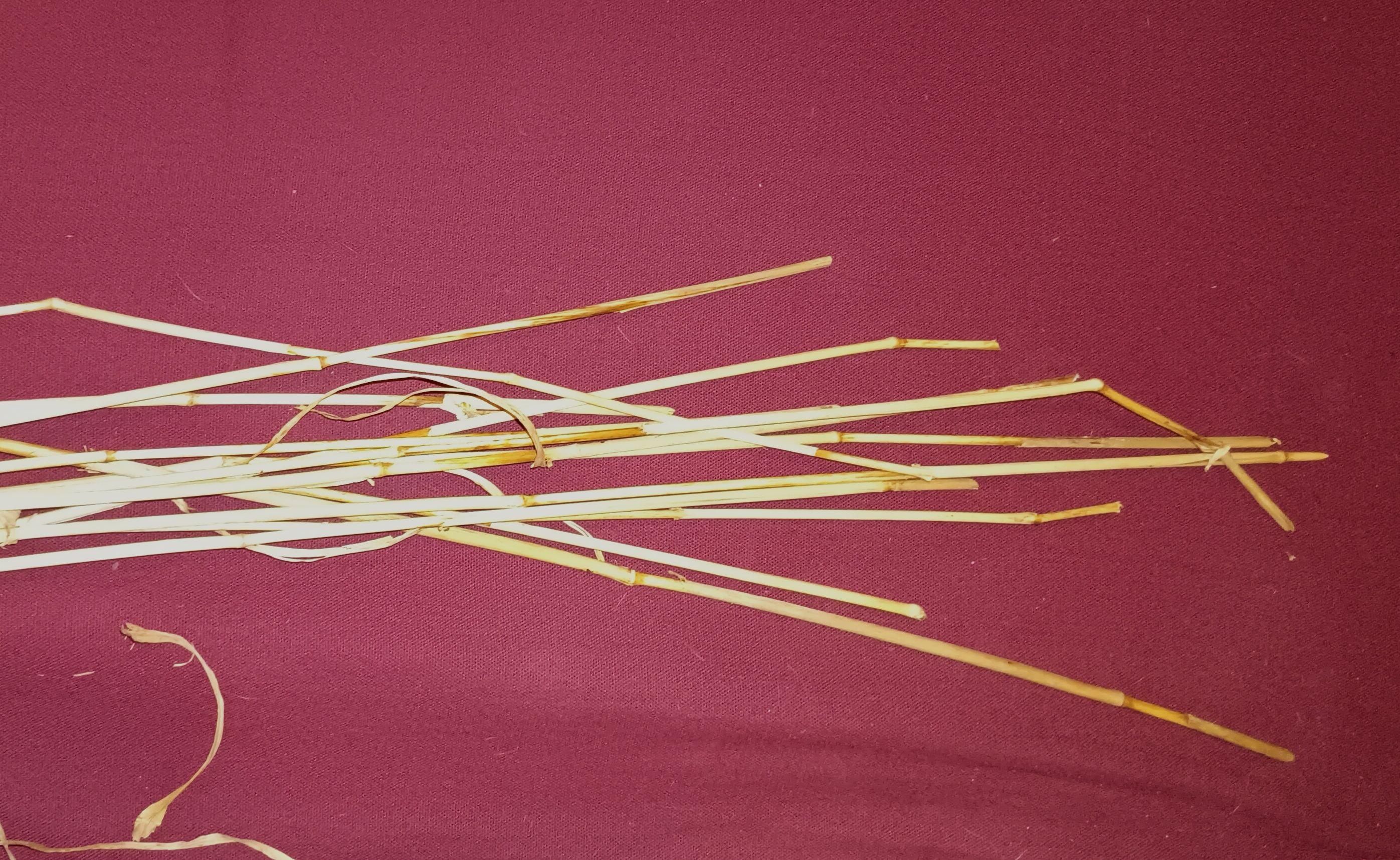
The grass stalks should be gathered in the fall after they have dried and are no longer green.
Since people from all around the world may be reading this, it’s not possible to provide a list of grass species that grow in your area that are good for making straw stars. You’re just going to have to gather different types of grasses and experiment. Besides, most government agricultural agencies prefer that local agricultural products remain local.
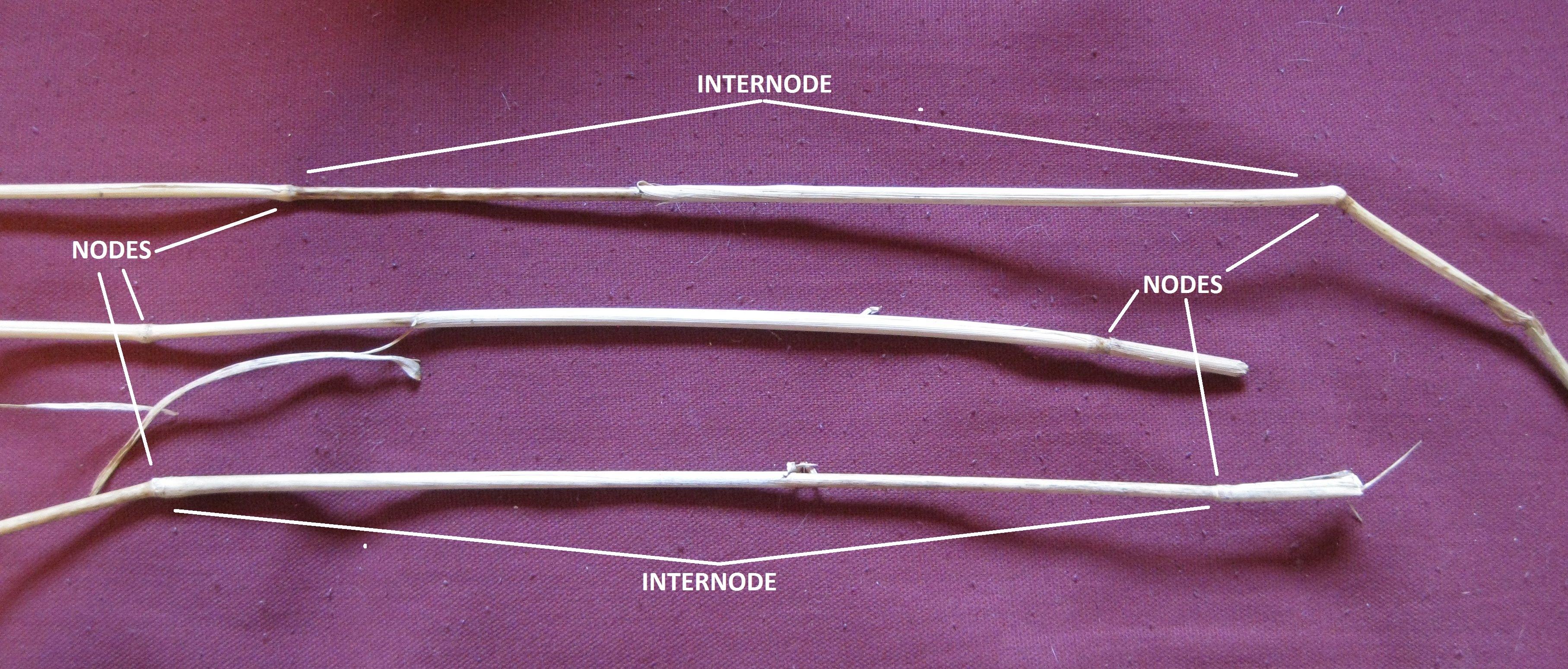
A grass stalk has two parts that are important here: nodes and internodes. Nodes are the joints that occur at intervals along the stem. They stiffen the stem and help to prevent it from falling over. Internodes are the long smooth stretches between the nodes. It is the internodes that are used to make straw stars.
Find some dried grass with tall stalks. Cut a few stems off near the ground. Use garden clippers to clip away the nodes, and look at the internodes.
Length: You’ll want internodes that are a variety of lengths. Internodes that are 3” (8cm) or less aren’t really useful, so you’ll want to find a type of grass that produces at least a few internodes of 4” or more to make it worth your time.
Thickness: Squash the internode flat between your fingers. You’ll be flattening the straws, and you’ll want straws that are 1/8” (~4 mm) wide (or wider) when flattened. The widest occur on the stem near the ground, and the narrowest near the top.
Flexibility: This is more difficult to judge when you’re just starting out. You’ll want straws that are flexible, but not so soft that they bend when they are assembled with other straws and tied with thread. Some types of grass are very soft, and not useful because the stars warp when they are tied. Some plants have stalks that are very woody, and don’t flex enough.
When the star is assembled and tied, the straws need to flex around each other a little bit. If soft stems and hard woody stems are both used in a straw star, the soft stems tend to bend around the hard stems, producing a star that is warped.
Choose a variety of plants, try them out, and learn to recognize the ones that work well and grow in your area.
Some plants that work well:
Orchard Grass (Dactylis glomerata) or Barnyardgrass (Echinochloa spp.). These have long, wide internodes that are hollow, strong, and press flat.
Some plants that don’t work:
Straw from bales: This would seem like a great source for straw, but the grass stalks are usually crushed and bent into very shorts lengths, too short for use in making straw stars.
Cattails: Once the outer leaves are removed, what’s left is a solid center that is spongy and doesn’t press flat.
Phragmites: This wetland plant has very long stems, but the nodes are surprisingly short (7” maximum), and while the stems are hollow, the walls are too thick to be used.
Reeds: Reeds growing in wet areas often have a solid center that doesn’t press flat.
Harvesting and Trimming Grass Stalks
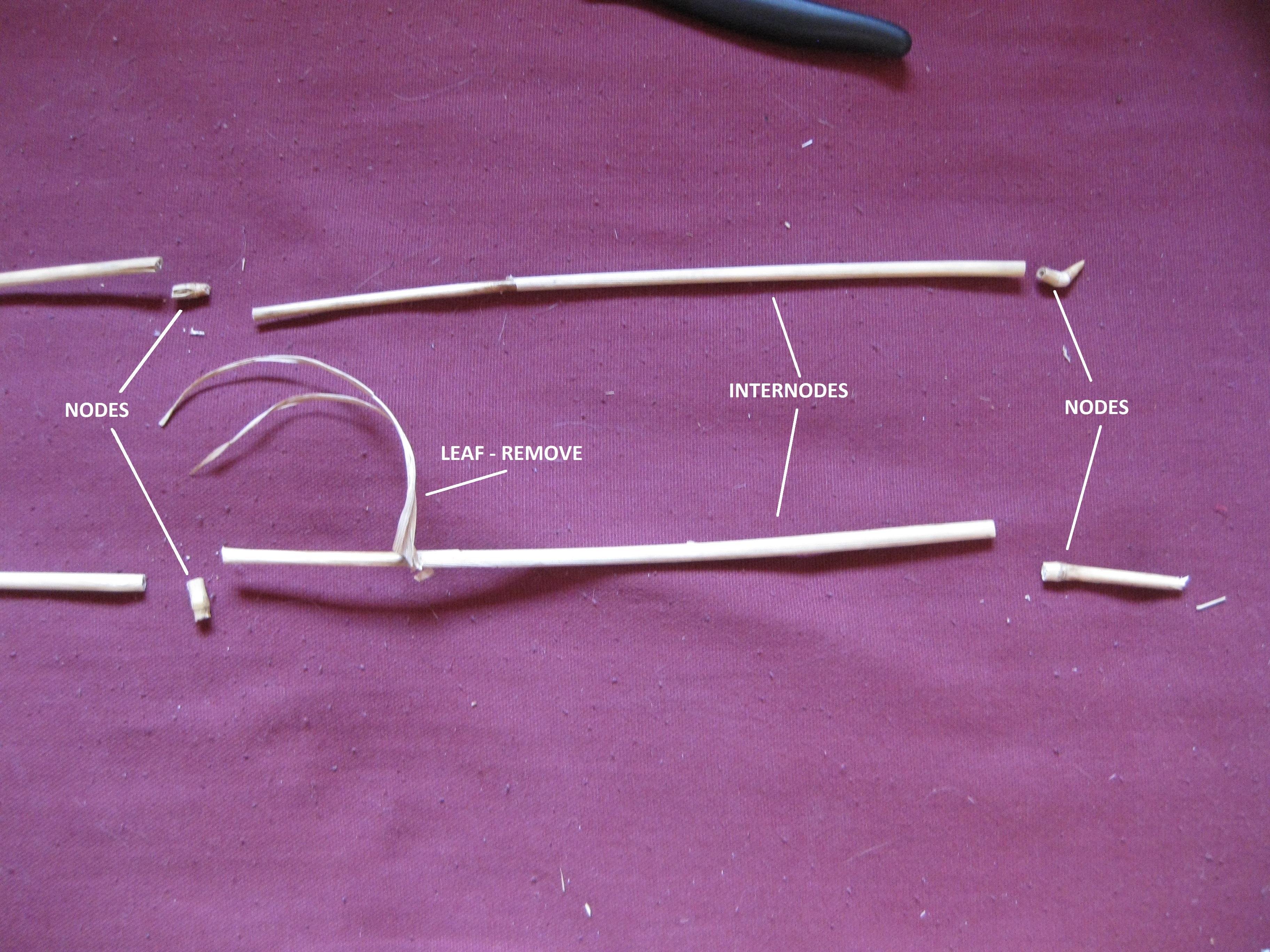
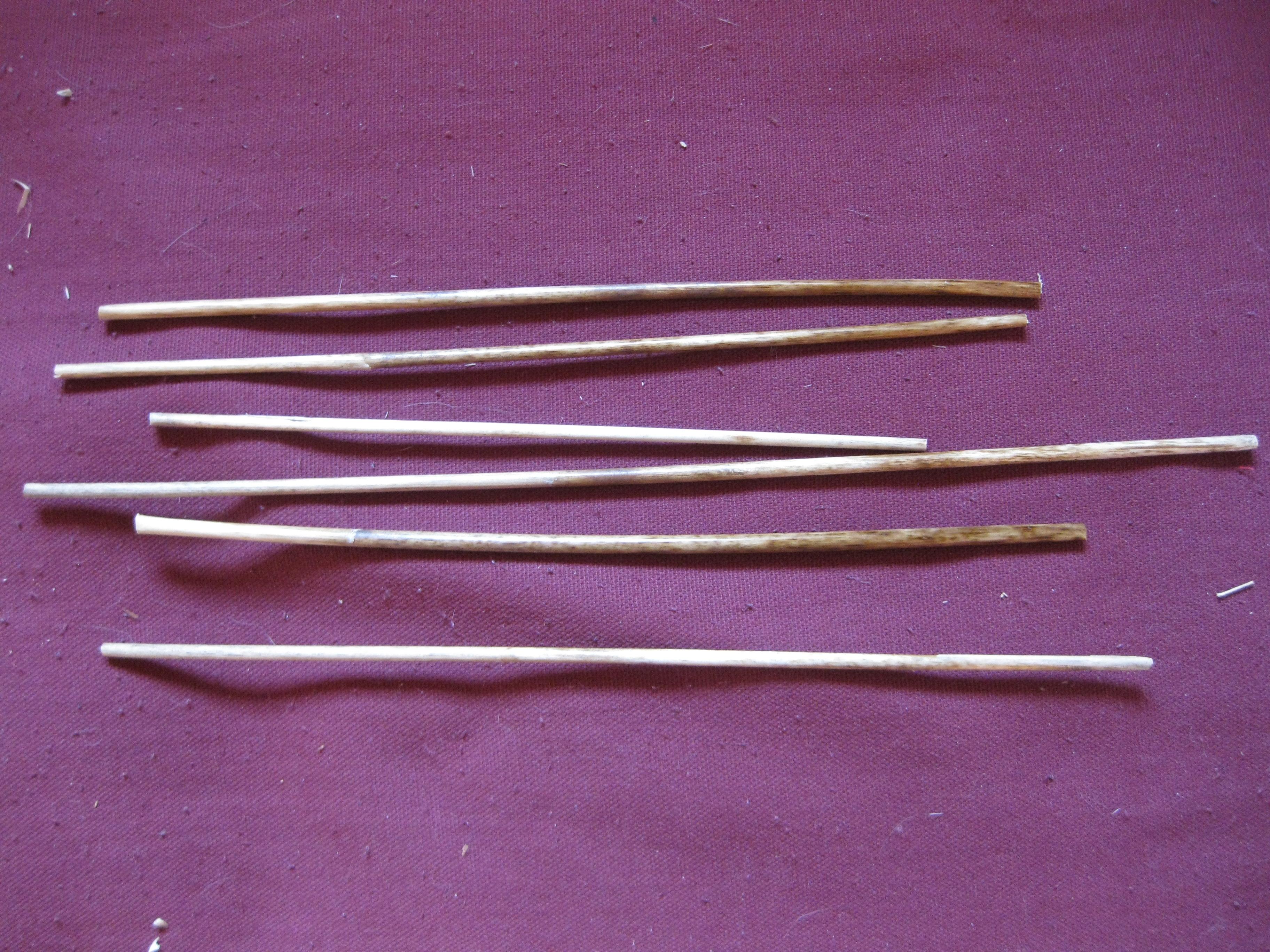
After you have gathered some grass stalks, take them home and trim them. Cut away the nodes, leaving the internodes. Some grasses may have a thin leaf layer around the central stalk. This should be removed.
The goal is to end up with a selection of clean, shiny tubes. Don’t worry about color variation. These are natural materials, after all. Besides, you can always dye the dark ones a different color.
Soak the Cut Straws to Soften Them
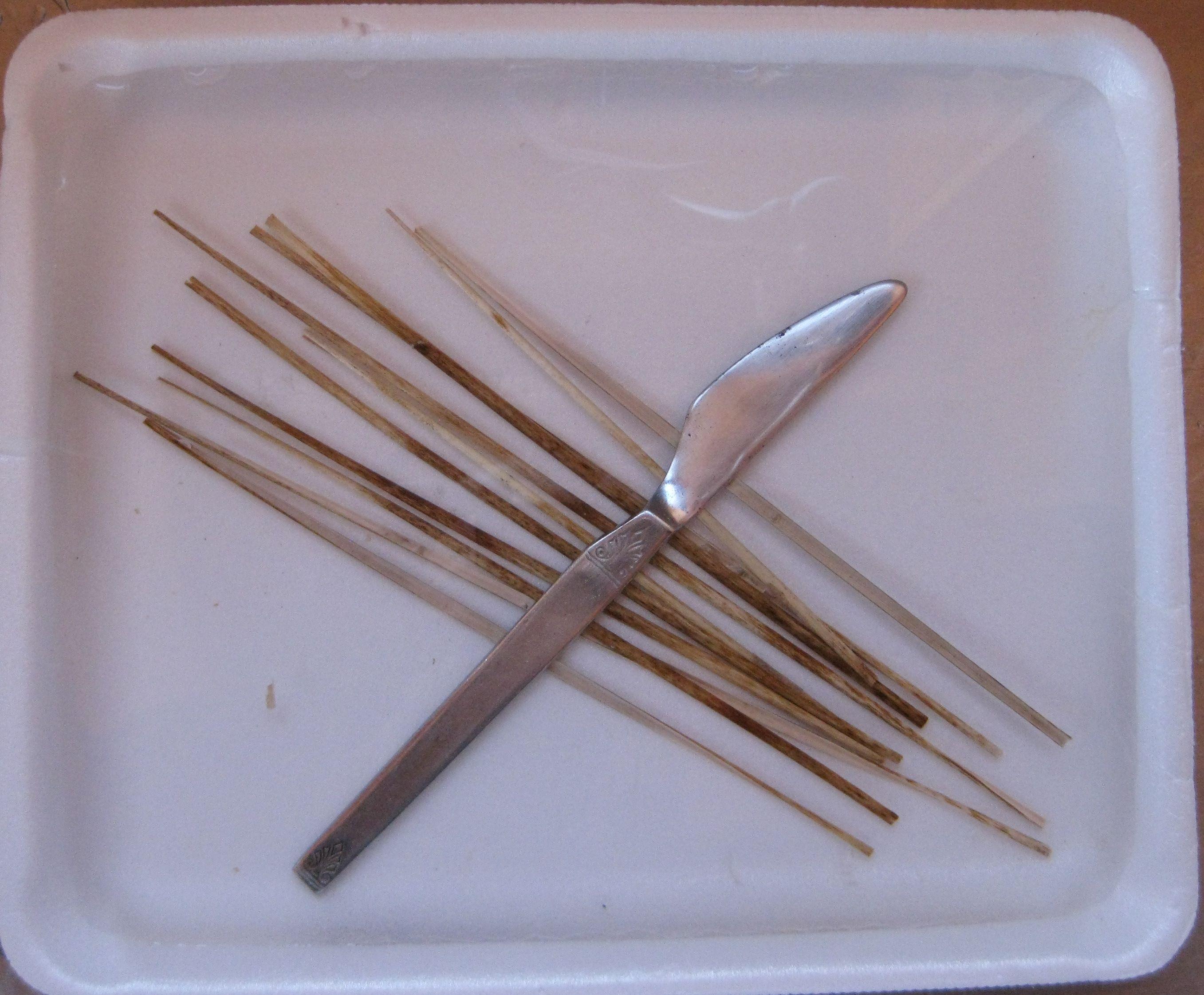
Once the nodes have been cut away and discarded, the internodes (tubes) need to be softened so they can be pressed flat.
Run water through the insides of the tubes to get them wet, then submerge them in warm water for 15-20 minutes. You’ll need to weigh them down with something, such as kitchen cutlery.
Flatten the Straw Tubes
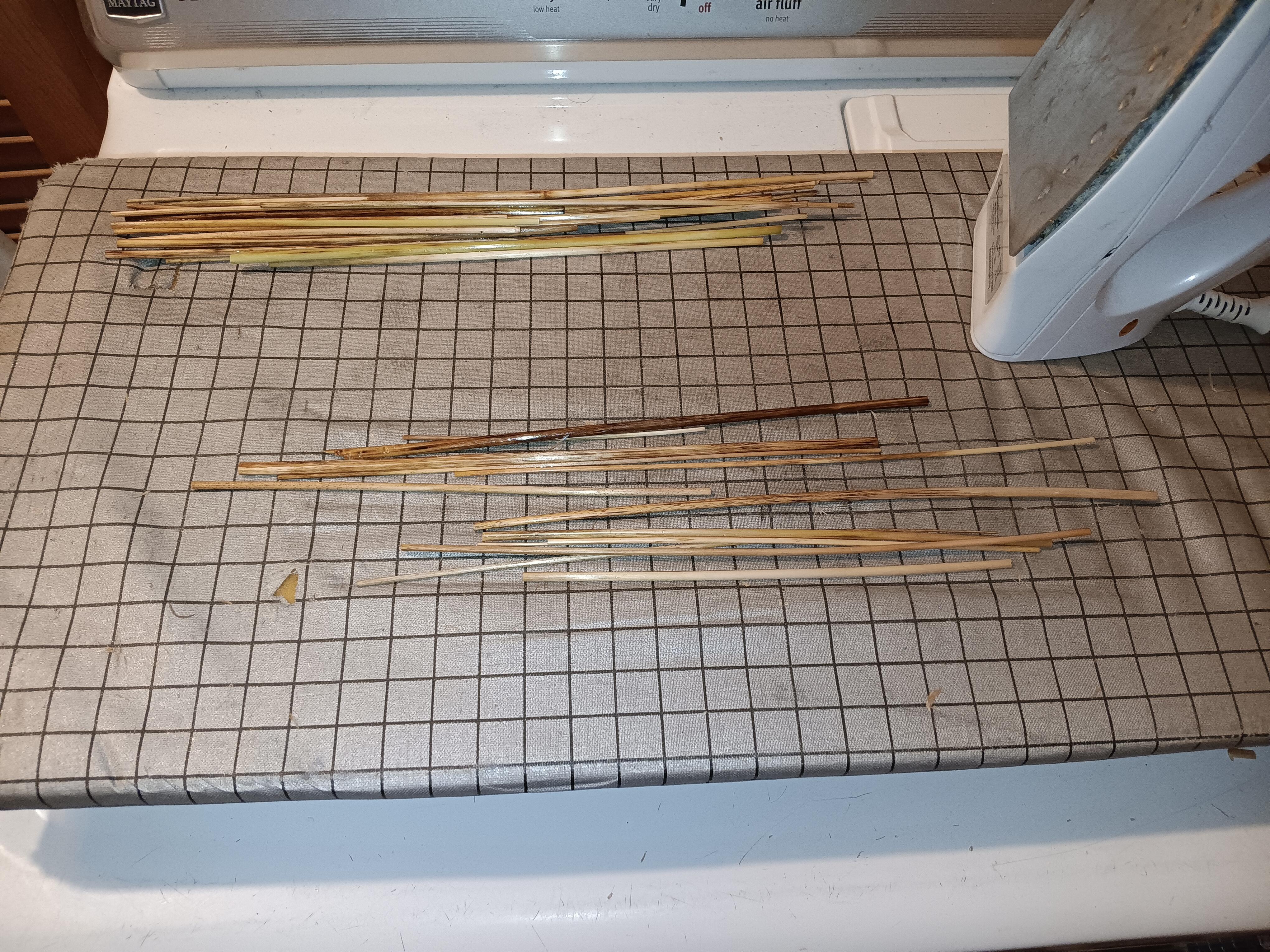
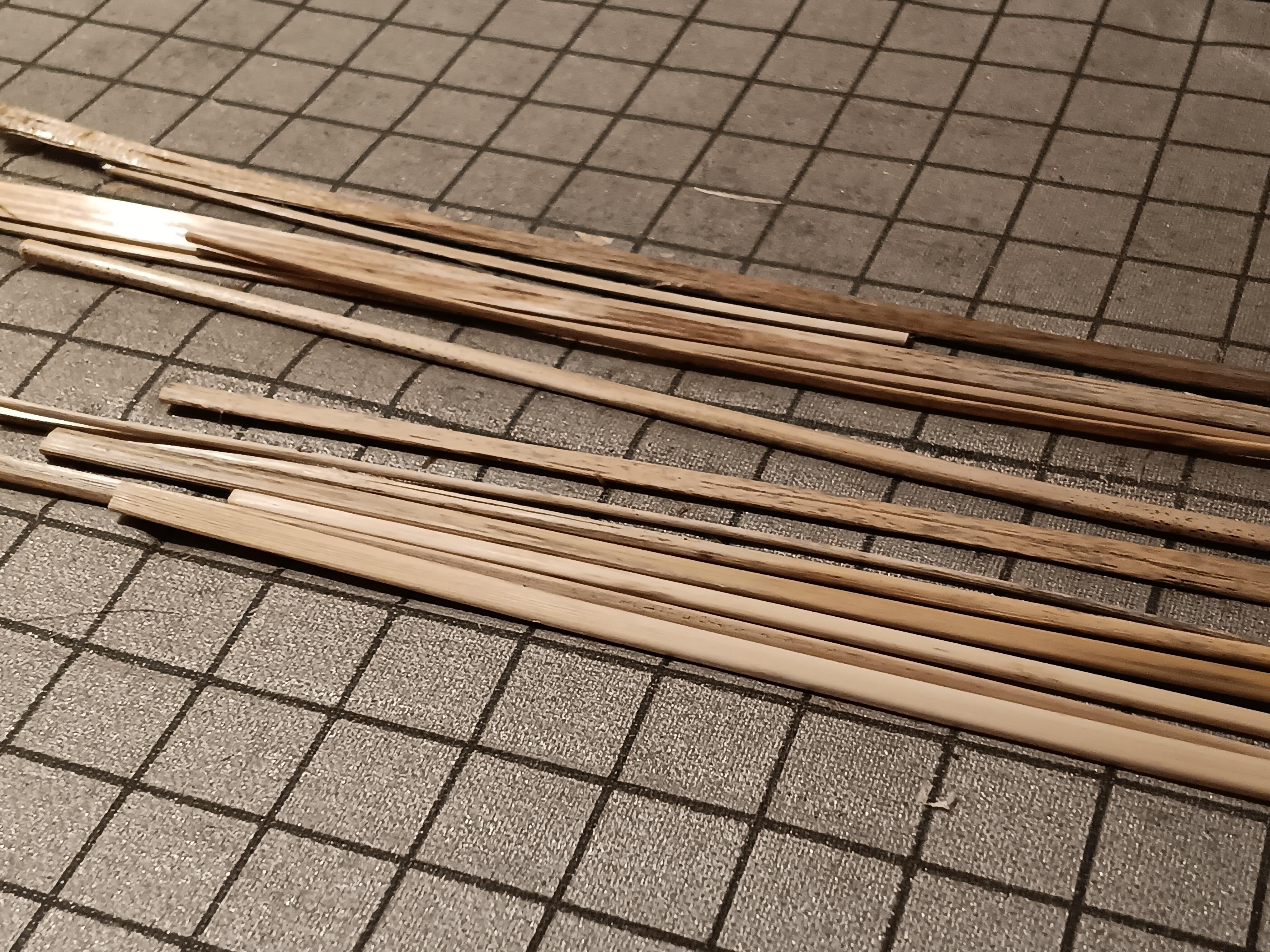
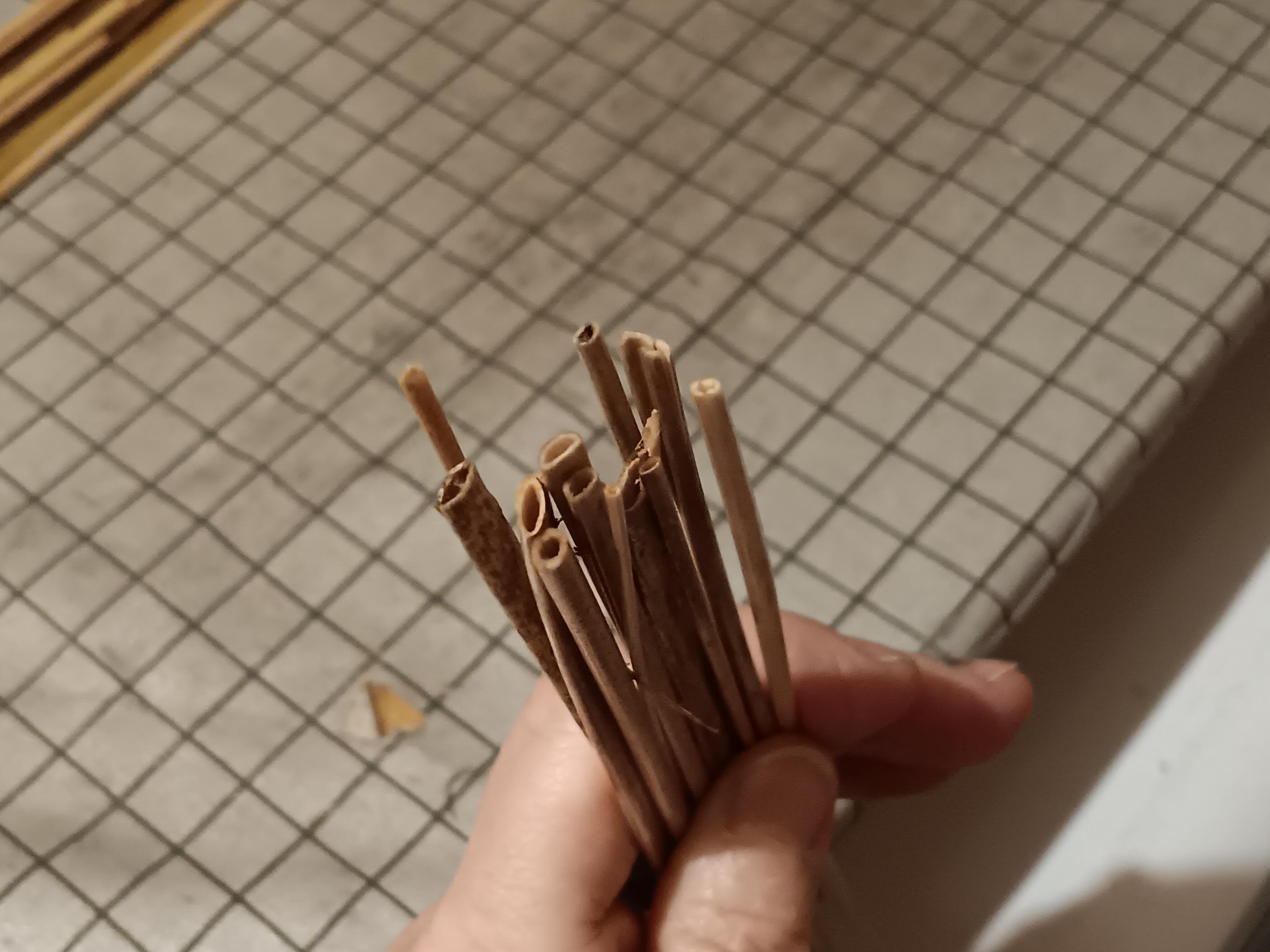
Once the tubes are softened, they can be pressed flat. This is best done with a household iron. Set the heat to “cotton” or medium-high, and the steam setting to “on” or “maximum.”
Press the tubes flat. You’ll have to apply some pressure. When they are pressed, the ends of the straws will be oval in cross-section.
Set aside the flattened straws to dry completely.
Split the Straws in Half Lengthwise
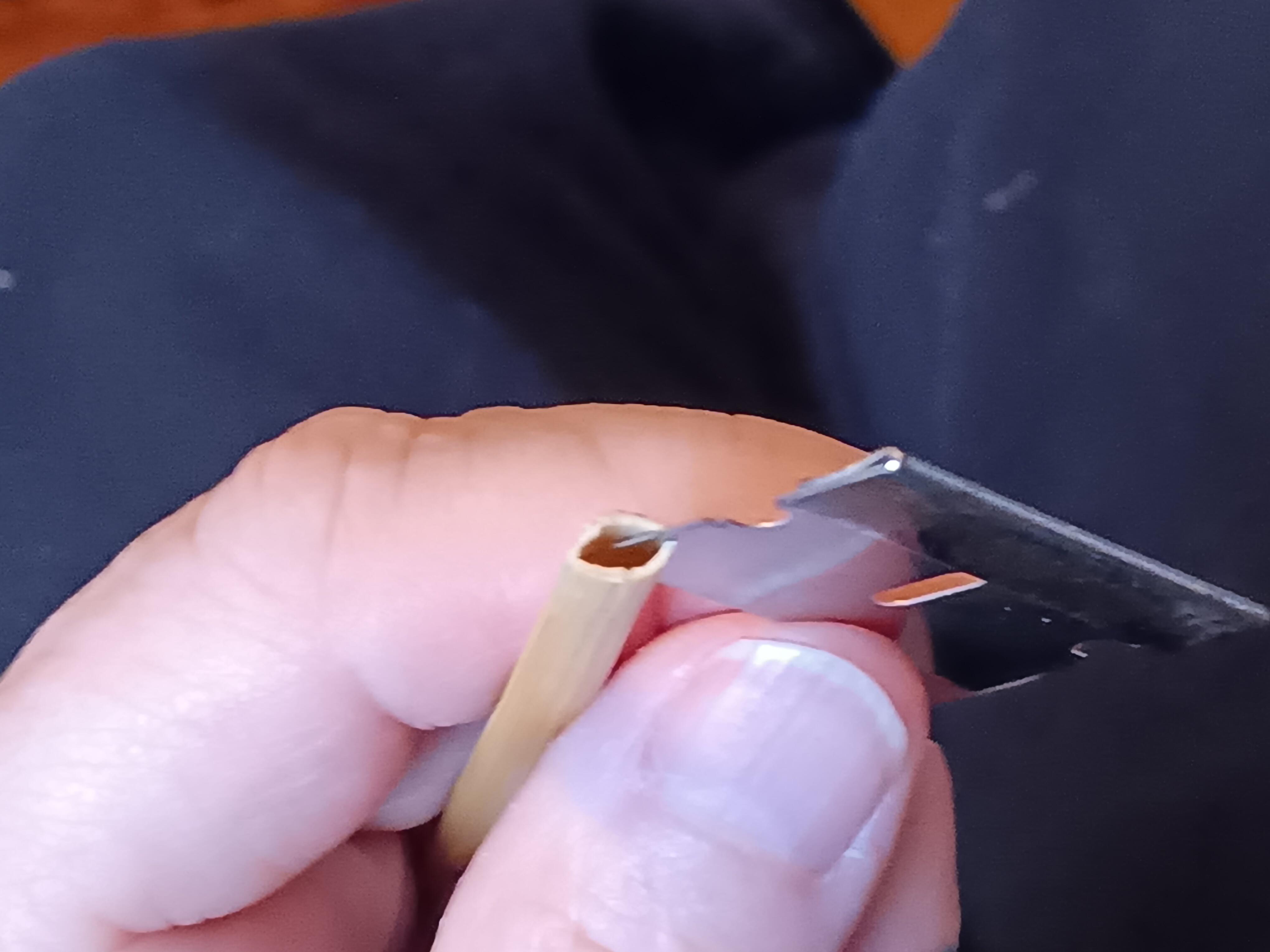
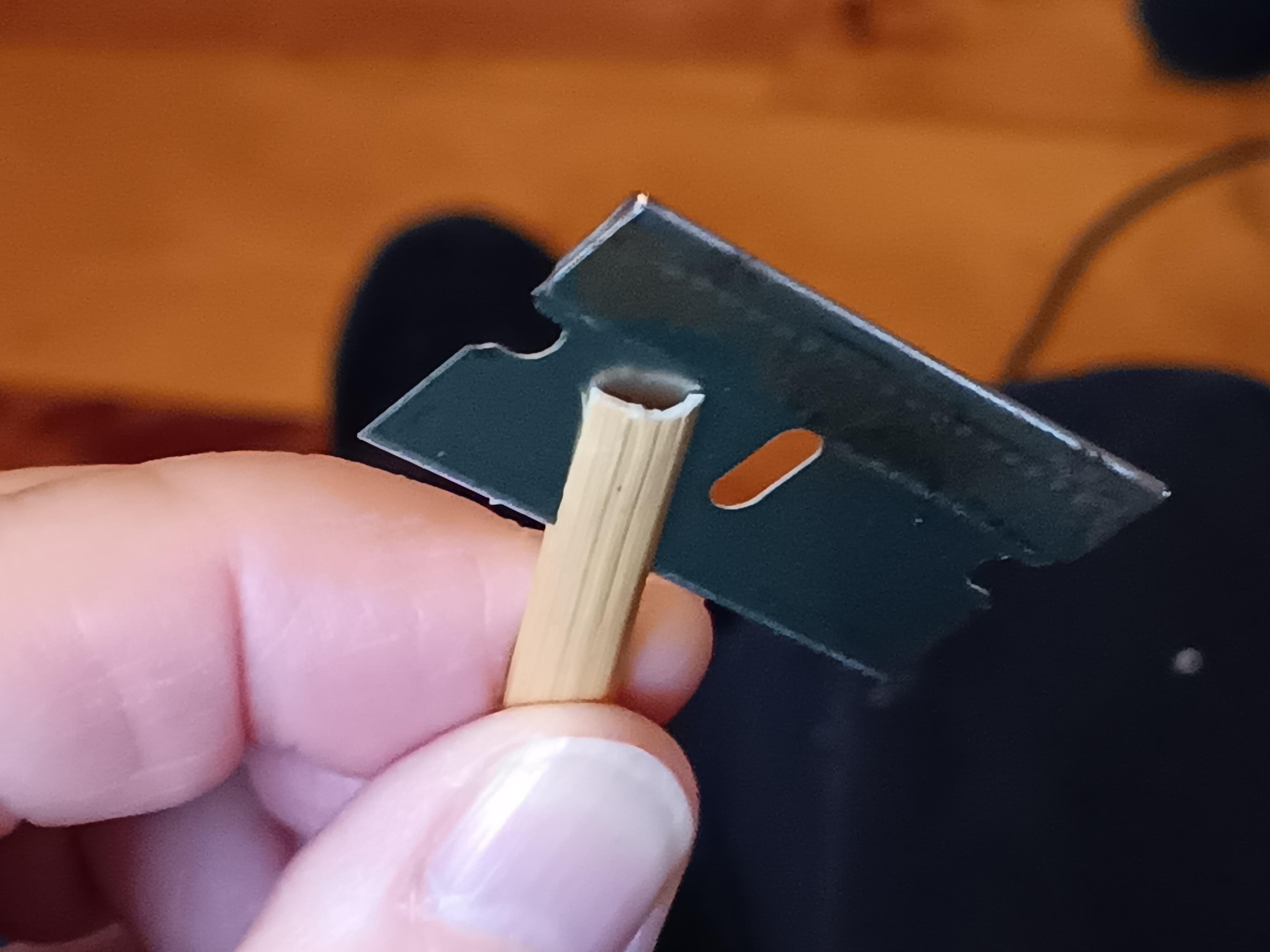
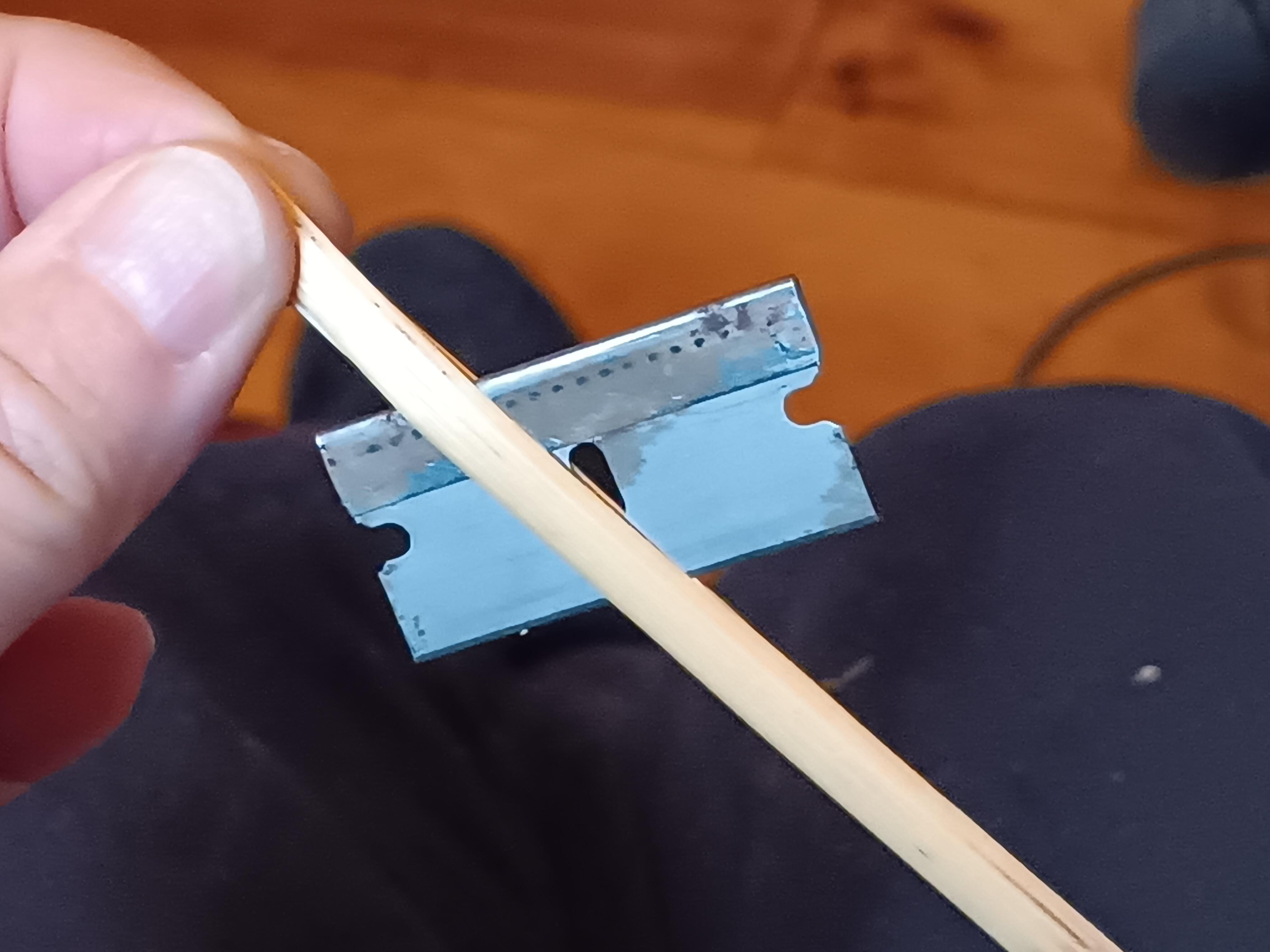
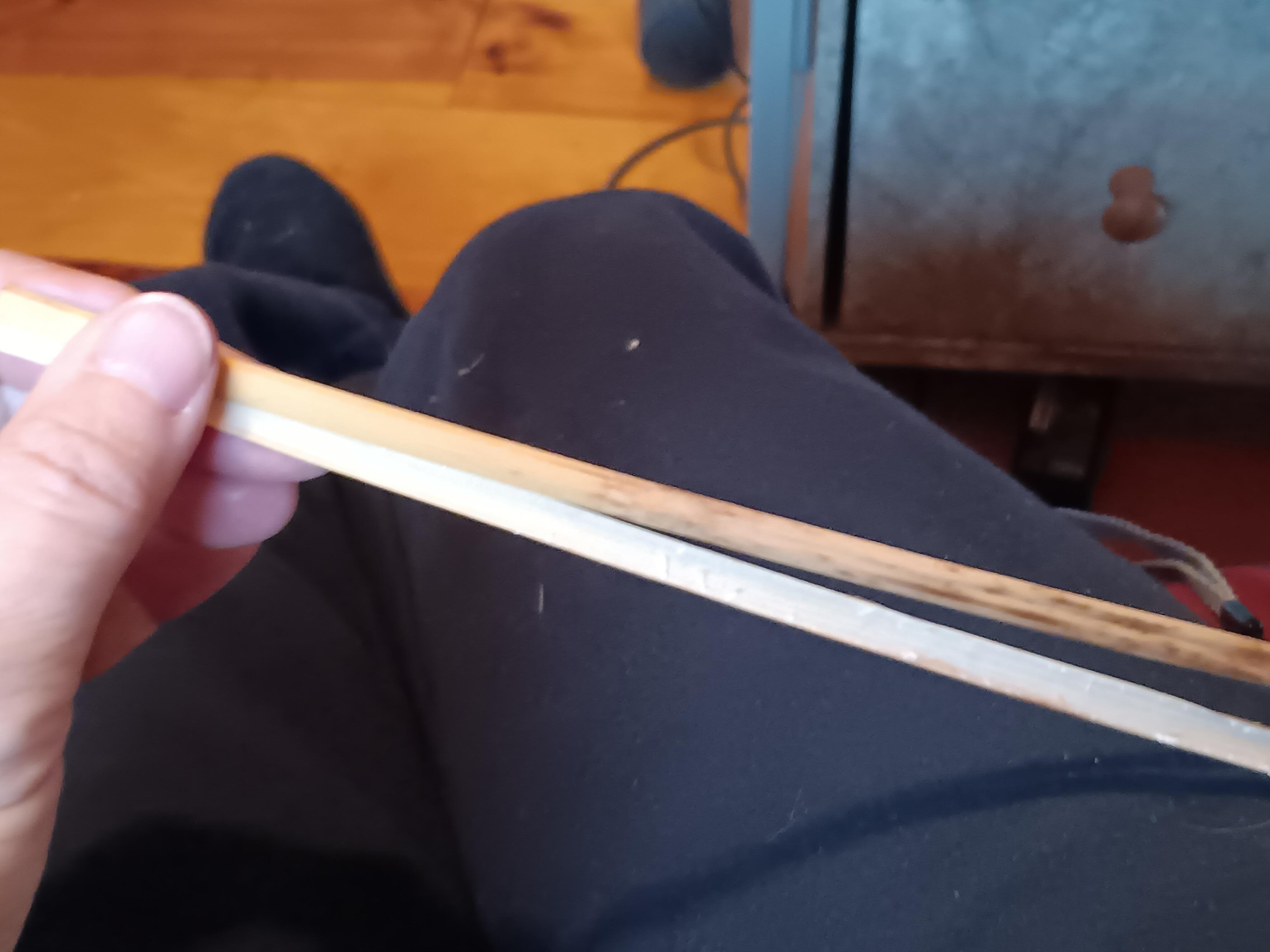
Pick up a tubular straw, and a disposable razor. Place the razor at the end of the straw, along the long axis of the oval, with the edge of the razor running from one side of the oval to the other. Begin to slice into the straw.
Cut lengthwise into the tube until you can grab the two cut halves, and then slice the rest of the way lengthwise. You will now have two half-tubes.
Some of the tubes will have a grain that twists, and you’ll end up with two half-tubes, each with a built-in rotation. Keep these. You may be able to use them.
Dying Straws (Optional)
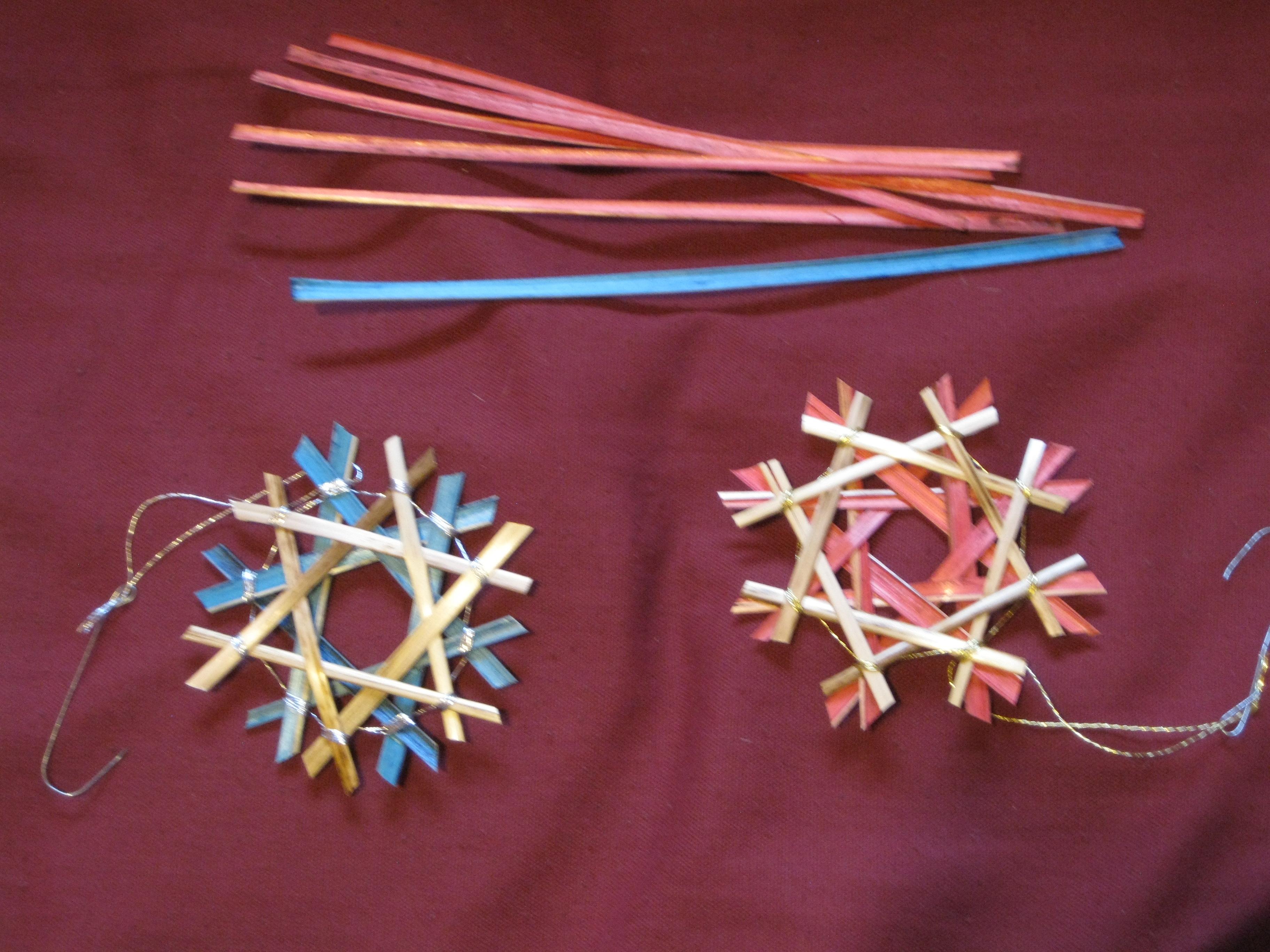
Dying some of the straws is a nice way to introduce some variety. Red and blue are good colors for the holiday season, and stand out well against greenery.
The straws must be split first, because the shiny exterior of the straws does not take up the dye. It is the interior of the straws that gets dyed. Dying is also a good way to use straws that are darker brown.
Any kind of fabric dye can be used, such as RIT brand fabric dye. To mix up RIT dye, combine the package of powdered dye with 2 cups of hot water and 2 teaspoons of salt. The dye solution can be stored in a jar indefinitely.
Split the straws in half lengthwise to expose the inside. It will be the inside that gets dyed. The shiny exterior of the straws does not take up the dye. Toss split straws that are soft and too flexible to be used to make straw stars.
Soak the split straws in warm water for 10-20 minutes to get them wet. Then drain them, set them on end on a towel to blot the excess water.
Heat up the dye solution in a microwave to about 140F (the jar should be warm to the touch, but not so hot that you burn yourself. Make sure all the dye is in solution.
Place the split straws in a shallow container that you don’t care about, such as a disposable foil pan. Pour the dye solution over the straws. Weigh them down with something to keep them in the dye solution. Soak the straws for about 10 minutes.
Drain and rinse the straws. Place them on a paper towel to dry. Pour the dye solution back into the jar.
When the straws are completely dry, they can be used.
Some Notes
In this Instructable, I list the step of ironing the straws flat before the step of splitting them. I have seen some instructions on the internet for making straw stars that state the opposite – split the straws first, THEN iron them flat.
Doing it the second way definitely gets them flatter. However, it also makes them much softer and more flexible – so flexible that they don’t really hold their shape when made into straw stars.
It appears that ironing the straws first presses them into an oval shape, and splitting them after ironing causes each split straw to have a bit of an arch in cross-section – the arch giving them more stiffness. Splitting them before ironing gets them EXTREMELY flat. No arch, no stiffness. That’s my theory anyway.
When I iron the tubes flat, then split them, I find that I lose some because they don't split evenly down the length, or the tube splits in a spiral. However, if I split the tubes and THEN flatten them, I seem to lose more because they're too weak and floppy, like paper, and having no structural strength.
After you make some stars, do it whichever way you like. Your grass might be different from mine!