How to Upcycle an Old Bed Frame Into a Classic Wooden Chair
by i95sarmiento in Workshop > Furniture
379 Views, 1 Favorites, 0 Comments
How to Upcycle an Old Bed Frame Into a Classic Wooden Chair


What do you do with an old bed frame you no longer need? Most people would send it to the landfill or let it collect dust in storage. But with a little creativity, some basic tools, and a weekend afternoon, you can transform it into a beautiful, sturdy, and nostalgic wooden bench-chair that will become a conversation piece in any room or hallway.
This project was born out of a simple need: I had a single bed that was taking up space in a small bedroom, and I wanted a comfortable seating area near the staircase landing of my home. Instead of buying new furniture, I decided to repurpose the bed frame — keeping its elegant curved headboard as the chair's backrest and using the footboard as the front panel. The result is a charming piece of furniture that looks like it was always meant to be a chair.
This tutorial is beginner-friendly. You don't need to be an expert woodworker — just patient, careful, and willing to get your hands a little dirty. The entire build uses the bed's original hardware concept and only requires cutting and drilling a few new wooden pieces to adapt the frame.
Estimated Time: 4–6 hours
Skill Level: Beginner to Intermediate
Cost: Very low (most materials come from the bed itself)
Supplies


- Old single bed frame (with headboard, footboard, and side rails)
- Foam padding (enough to cover the seat area — I used two 46 cm pieces)
- Power drill (with drill bits in two sizes: thick and thin)
- Hammer
- Screwdriver
- Nails (small finishing nails / puntillas)
- Marker or pencil
- Hacksaw (segueta)
- Spare wooden planks (can be reclaimed from the bed itself or purchased)
- Screws (8 total — medium length with some extra width needed)
- Hot glue gun with glue sticks (or silicone caulk)
- Blankets, throws, or ruanas (to cover the foam seat)
- Decorative pillows (for the final touch)
Strip the Bed Down to Its Frame


Remove the mattress and all wooden slats from the bed.
Start by pulling the mattress off the bed and setting it aside (donate it, repurpose it, or discard it — it won't be part of this project). Next, remove all the wooden slats that form the sleeping surface. These run horizontally across the bed frame and rest on the side rails. Lift them out one by one and set them aside — you'll use some of them later as raw material for the chair seat and support blocks. Keep all the hardware (screws, bolts, and connectors) in a small bag or container so nothing gets lost.
Disassemble the Bed Frame


Unscrew the bolts and connectors that hold the bed frame together.
Most traditional bed frames are held together with large bolts that pass through the headboard and footboard posts and connect to the side rails. Use a screwdriver or the appropriate wrench to remove all of these fasteners. Separate the frame into its four main components: the headboard, the footboard, and the two long side rails. Set the side rails aside — they will become the sides of your chair. Handle the headboard and footboard with care, as the curved woodwork is the most decorative element of the finished chair.
Measure the Seat Width Using the Foam As a Guide


Use the foam padding to determine how wide your new seat platform needs to be.
Before cutting any wood, you need to know the exact width of your seat. Lay your foam pieces across the opening of the bed frame (between the two side rails) to determine the ideal seat depth. The foam will tell you exactly where the front edge of your seat planks should reach. Mark this measurement on one of the reclaimed slats using a marker. This will be your cut line. In my case, the seat area measured 92 cm wide, so I used two 46 cm pieces of foam side by side.
Cut Two Seat Planks to the Same Length

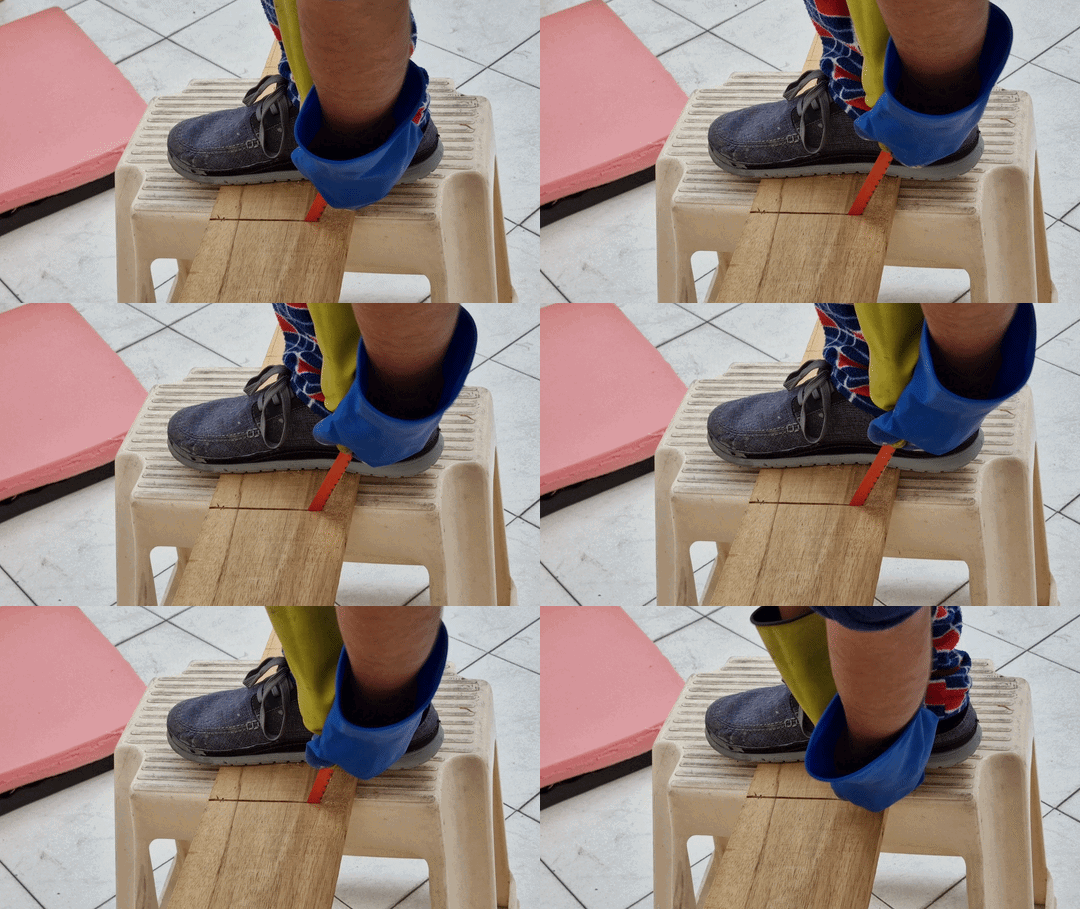


Use a hacksaw to cut two planks from the reclaimed bed slats to match your measured width.
Take two of the wider wooden slats from the bed (or use new planks if the slats are too narrow) and cut them both to the same length using a hacksaw. These two planks will be joined together to form the seat platform of your chair. Cut slowly and steadily, keeping the saw perpendicular to the wood to ensure a clean, straight edge. Sand the cut edges lightly if you have sandpaper available, to avoid splinters.
Mark the Drilling Points on the Plank Edges


Using the original side rail connectors as a reference, mark where holes need to go on the edges of each plank.
This is the most technical step of the project, so take your time. The goal is to attach the new seat planks to the existing connector system built into the bed's side rails. Lay one of your cut planks alongside the original side rail and use the existing connector holes as a reference to mark corresponding positions on the edge of your new plank.
For each end of each plank, you will mark 4 holes total:
- 3 holes on the narrow edge (end grain) of the plank: one in the center and one on each side.
- 1 hole on the flat face of the plank near the edge.
Repeat this marking on both ends of both planks (8 sets of holes total — 4 per plank, one per end). Use a marker so the dots are clearly visible when drilling.
Drill the Through-Hole on the Face of Each Plank


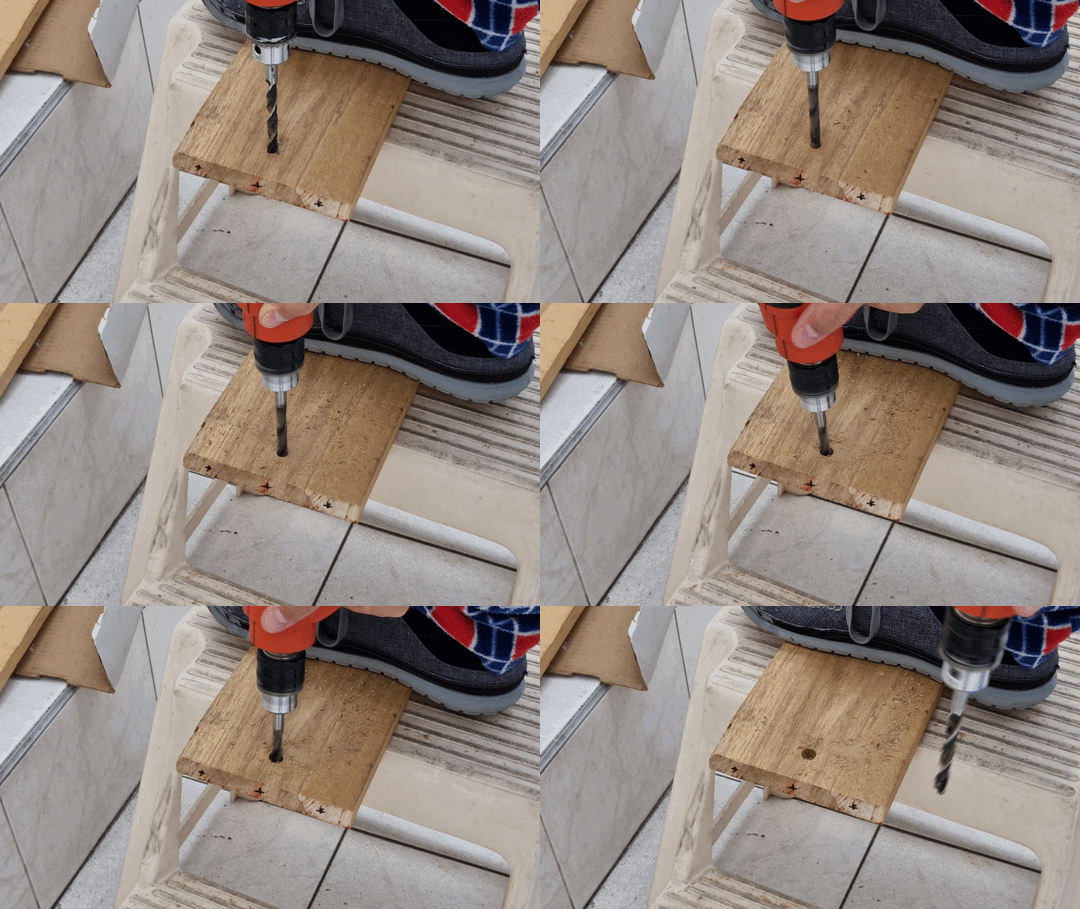


Use a large drill bit to drill a hole through the flat face of the plank near each end.
Using your power drill with the thicker drill bit, carefully drill through the flat face of the plank at the marked spot near each end. This hole needs to go all the way through the thickness of the board — it's the channel through which a bolt or screw will pass to lock the seat plank into the bed frame's connector system. Drill slowly and keep the bit as perpendicular as possible to avoid the hole coming out at an angle.
Drill the Deep Center Hole on the Edge of Each Plank


Use a large drill bit to drill a deep hole (about 10 cm) into the center mark on the plank's narrow edge.
Switch to the thick drill bit and drill into the center marking on the narrow edge (end grain) of the plank. This hole should go roughly 10 cm deep — it needs to be deep enough to receive a connector pin or bolt. Drill carefully and slowly into the end grain, as this type of drilling is more prone to wandering. Use tape on your drill bit at the 10 cm mark as a depth guide if needed.
Drill the Two Shallow Side Holes on the Edge

Use a thin drill bit to drill the two flanking holes on the edge, about 5 cm deep each.
With the thinner drill bit, drill into the two side markings on the narrow edge of each plank. These holes should be about 5 cm deep. These will serve as guides for the screws you will insert in the next step — the screws will act as alignment and locking pins. Repeat for both ends of both planks (8 shallow holes total).
Insert Screws Into the Shallow Side Holes


Drive a screw partway into each of the two shallow side holes, leaving about 3 cm protruding.
Take 8 screws and drive one into each of the shallow side holes you just drilled — one per hole, two per plank end. Don't drive them all the way in. You want approximately 3 cm of the screw shank to protrude from the edge of the wood. These exposed screw shanks will slot into the existing connector holes in the bed's side rails, locking the seat planks in place just like the original bed slats did — but more securely.
Thicken the Screw Shanks With Hot Glue


Apply hot glue (or silicone) around the exposed part of each screw to build up its diameter.
The original bed connector holes may be slightly larger than your screw shanks, which could make the connection loose and wobbly. To solve this, use a hot glue gun to apply a generous layer of glue around the exposed metal shank of each screw while it's still inserted in the wood. Rotate the glue as you apply it so it builds up evenly around the screw, effectively increasing its diameter. Let it cool and harden fully before proceeding. Repeat for all 8 screws. This creates a snug, friction-fit connection that holds the seat planks firmly in place.
Cut Six Small Wooden Support Blocks


From leftover plank material, cut six small rectangular blocks (approximately 8 cm × 3 cm each).
These small blocks are the hidden heroes of your chair. They will be nailed to the inside face of each side rail to create a ledge that the seat planks can rest on. Use your hacksaw to cut six blocks from leftover slat material, aiming for roughly 8 cm long and 3 cm wide. They don't need to be perfect — close is good enough. Sand any rough edges if desired.
Divide the Side Rails Into Thirds and Nail the Blocks in Place


Mark each side rail into thirds, then nail three support blocks along the inside of each rail.
Lay each side rail flat and use a marker to divide it into three equal sections. At each division point, position one of your wooden support blocks flush against the inner edge of the rail. Use a hammer and nails to secure each block firmly in place. You should end up with three blocks evenly spaced along each of the two side rails — six blocks total. These blocks create the support shelf that the seat planks will rest on, keeping them at the right height.
Reassemble the Frame As a Chair


Connect the headboard, footboard, and side rails just as you would assemble a bed.
Now it's time to put it all together. Lay out your four frame pieces — headboard, footboard, and two side rails — and connect them using the original bed hardware. The headboard becomes the chair's back, the footboard becomes the front panel, and the side rails become the chair's sides. Tighten all the bolts and screws firmly so the frame is sturdy and doesn't wobble. At this point you should have a solid rectangular frame that looks like a low, wide armchair base.
Drop the Seat Planks Into Place

Slide the two prepared seat planks into the frame, resting them on the support blocks.
Lower your two prepared seat planks into the frame. The planks should rest on the wooden support blocks you nailed to the side rails, and the protruding screws on each end of the planks should slot into the connector holes on the inside of the rails, locking the planks in place. Adjust as needed so the planks sit level and flush. If a screw is slightly misaligned, you can trim the hot glue a little with a utility knife to adjust the fit.
Cut the Foam to Fit the Seat


Measure the seat opening and cut your foam to fit snugly inside the frame.
Measure the interior dimensions of your seat area — the space between the headboard and footboard, and between the two side rails. Cut your foam to match. I had 92 cm of seat width, so I placed two pieces of foam side by side (46 cm each). Use a long bread knife or utility knife to cut foam cleanly. The foam should fit snugly but not be forced — you want a smooth, even seat surface.
Cover the Foam With a Blanket or Throw


Drape a blanket, ruana, or throw over the foam to create a soft, finished seat surface.
Now comes the fun, creative part. Choose any fabric, blanket, or throw that appeals to you. Traditional Andean ruanas or colorful woven blankets give the chair a wonderful artisanal character, but a solid-colored fleece throw works just as beautifully for a more modern look. Drape the blanket over the foam, tucking the edges down between the foam and the frame sides to keep it in place. No sewing required — the frame holds everything snugly.
Add Cushions and Enjoy Your New Classic Chair


Place decorative pillows on the seat and against the backrest — your chair is ready!
Add two or three decorative pillows against the headboard (now your backrest) to make the chair comfortable and inviting. Stand back and admire your work. What was once a simple single bed is now a charming, solid wooden bench-chair full of character and nostalgia. It's perfect for a hallway, landing, reading nook, or bedroom corner. Best of all, you gave beautiful furniture a second life instead of sending it to the landfill.
Congratulations — you've just upcycled a bed into a chair! 🪑
Tips and Variations
Stain or paint the frame before assembly for a completely refreshed look.
Upholster the seat with fabric and staples for a more polished, permanent finish.
Add storage underneath by fitting a simple tray or basket between the footboard and the seat planks.
Use multiple throws in contrasting patterns for a bohemian, layered aesthetic.
If your bed frame is a full/double size, you can make a wider loveseat-style bench using the same technique.