Automatic Plant Watering System
by Dinujaya De Silva in Circuits > Electronics
63 Views, 0 Favorites, 0 Comments
Automatic Plant Watering System

The HydroMate is an Automatic Plant Watering System is an ideal solution to automate the irrigation process for plants without a physical engagement of a human. By using basic electronic components such as sensors, transistors, operational amplifiers and relays, this system monitors the moisture level of the soil and activates a water pump when it is required. This system guarantees a proper supply of water without any wastage. These kinds of systems are very useful in personal rooms, houses and locations where watering is an important factor.
Inadequate supply of water is one of the major difficulties in plant care. Most of the people are unable and forget to maintain a constant watering schedule, which causes to either under or over-watering which is not good for optimum growth of a plant. This would make the plants’ health bad and excessive water consumption. Therefore, I made this autonomous system which water the plants based on the soil moisture when it is required.
Supplies
I have used very basic electronics components and here are the list of them. All these electronics components are very easy to find and readily available in the market.
- LM 7805 Voltage Regulators
- LM 358 Operational Amplifier
- 7408 AND Gate IC
- 12V Relay
- 3V ~ 6V DC Submersible Water pump
- Red LED Bulb
- IN 4008 Diode
- BC 547 Transistor
- 330Ω Resistor
- 10kΩ Resistors
- 10kΩ Potentiometer
- 1kΩ Resistor
- 12V Power supply
Other than these components I have used wires, solder, connectors and male/female DC connectors. All these electronics components are readily available in the market and very convenient to find.
Operation of the System

This block diagram provides the very basic operation of this system. The way how the major internal components contribute to the operation of this Plant Watering system.
- I have used Two (02) moisture sensors to sense the moisture levels of the soil. The moisture sensors produce a resistance.
- I added another 10kΩ pair of resistors in order to create a voltage divider circuit.
- To this system I primarily used 12V and stepped down it to 5V using the LM7805 Voltage regulator and then via moisture sensors and pair of resistors I made a voltage divider circuit
- The voltages of the voltage divider circuit have been supplied to the Operational amplifier along with a reference voltage generates through the 10kΩ Potentiometer. The LM358 Operational Amplifier works as a comparator and compare the voltage and prepare outputs accordingly. In this system I have used specifically LM358 Operational Amplifier, even-though there are plenty of other Op Amps which works fine like LM358. The reason behind was, most of other Op Amps require +5V/-5V for its accurate operation while the LM358 works fine with +5V/GND. So that it didn't require a separate -5V supply.
- Then those outputs have been supplied to the 7408 AND Gate IC. The gate IC's output becomes HIGH or LOW according to the Op Amp's outputs.
- I used BC 547 transistor as a Switch when it's in Saturated mode in order to supply coil voltage to the relay. Base of the Transistor connected to the output of the AND gate IC along with a 1kΩ resistor, Emitter to the GND and Collector to the coil of the 12V Relay.
- Then the Submersible water pump connected to the Normally Open side of the relay. When the enough moisture is available, relay should be in its normal position and when the moisture level is reduced, relay activates and supply water.
In this system I have used a 12V Power supply since it is commonly available with most of household equipment. So the user can use any of 12V Power supply if the original one is unavailable or unserviceable. Since the circuit comprises of various components, I used a 5V regulator to supply voltage to all the components on the circuit including the motor.
Designing the Schematic Diagram

After planning the operation I designed this idea on an online platform.
The designing of Schematic Diagram was done using EasyEDA web-based platform. The complex part when designing is to find the correct component from their given component libraries, otherwise it will make trouble when soldering the components on the designed PCB. Each component represents its standard symbol.
Designing Prototype
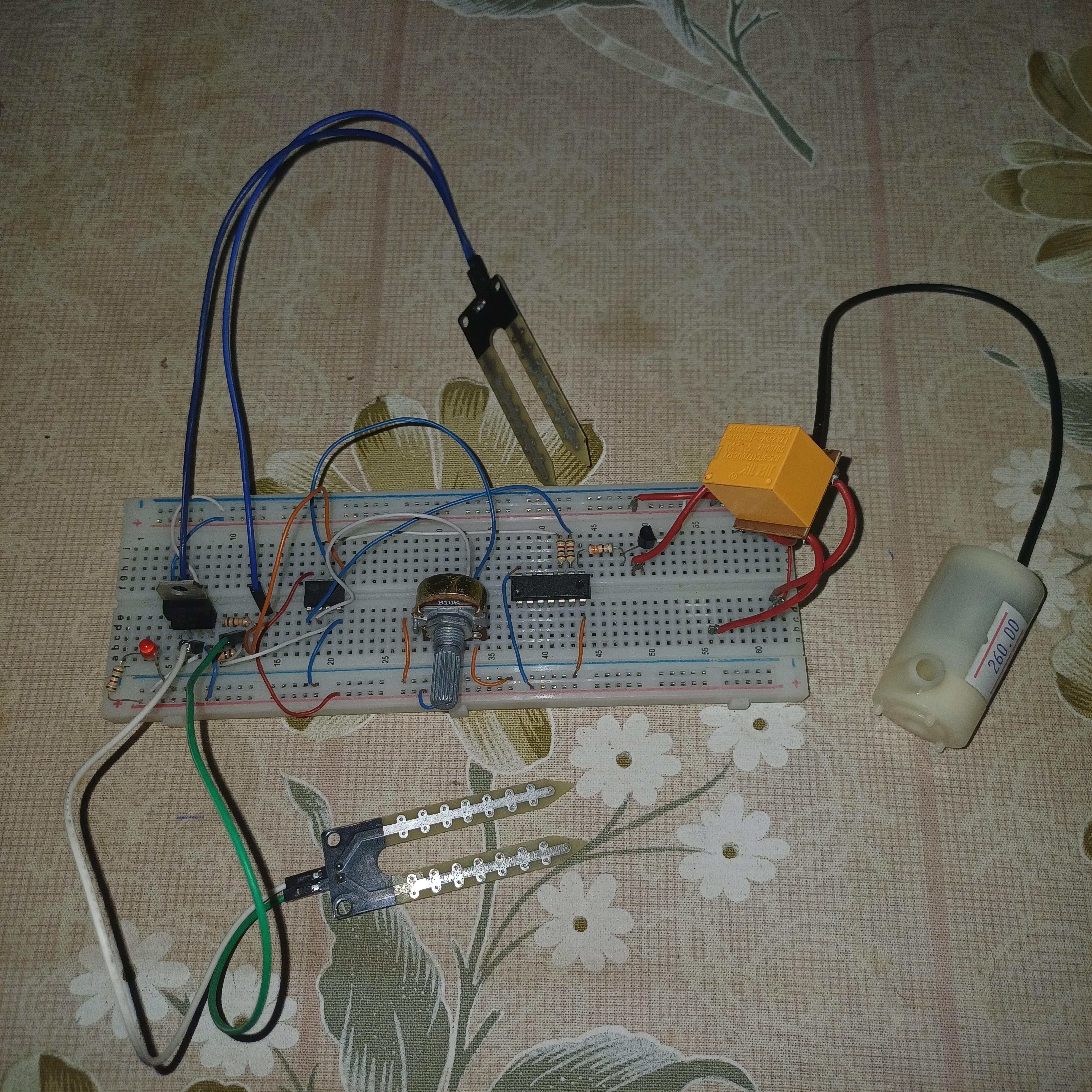
After designing the schematic I built the prototype of this system. It was completely built on a breadboard using the aforementioned components according to the aforesaid idea of the system.
Breadboard is comparatively easy to use because we can remove or add components or change its fixed location as required.
Designing the PCB

.png)
As mentioned in the Step: 2, using the same web-based platform I extracted the the Gerber file (Blueprint of PCB) of the diagram and during the designing, built-in design rule checks (DRC) were used to verify that the layout complied with the necessary mechanical and electrical requirements.
The PCB was manufactured using the toner transfer method, which involved using a laser printer to print the PCB design on to glossy paper while maintaining correct alignment for the transfer procedure. Afterward, a copper-clad PCB was ironed with the printed design. A protective layer was formed on the copper by the toner being transmitted by the iron's heat. The surplus copper was finally removed from the PCB by etching it in a ferric chloride solution, leaving only the traces that the toner had covered.
Component Soldering and Enclosure

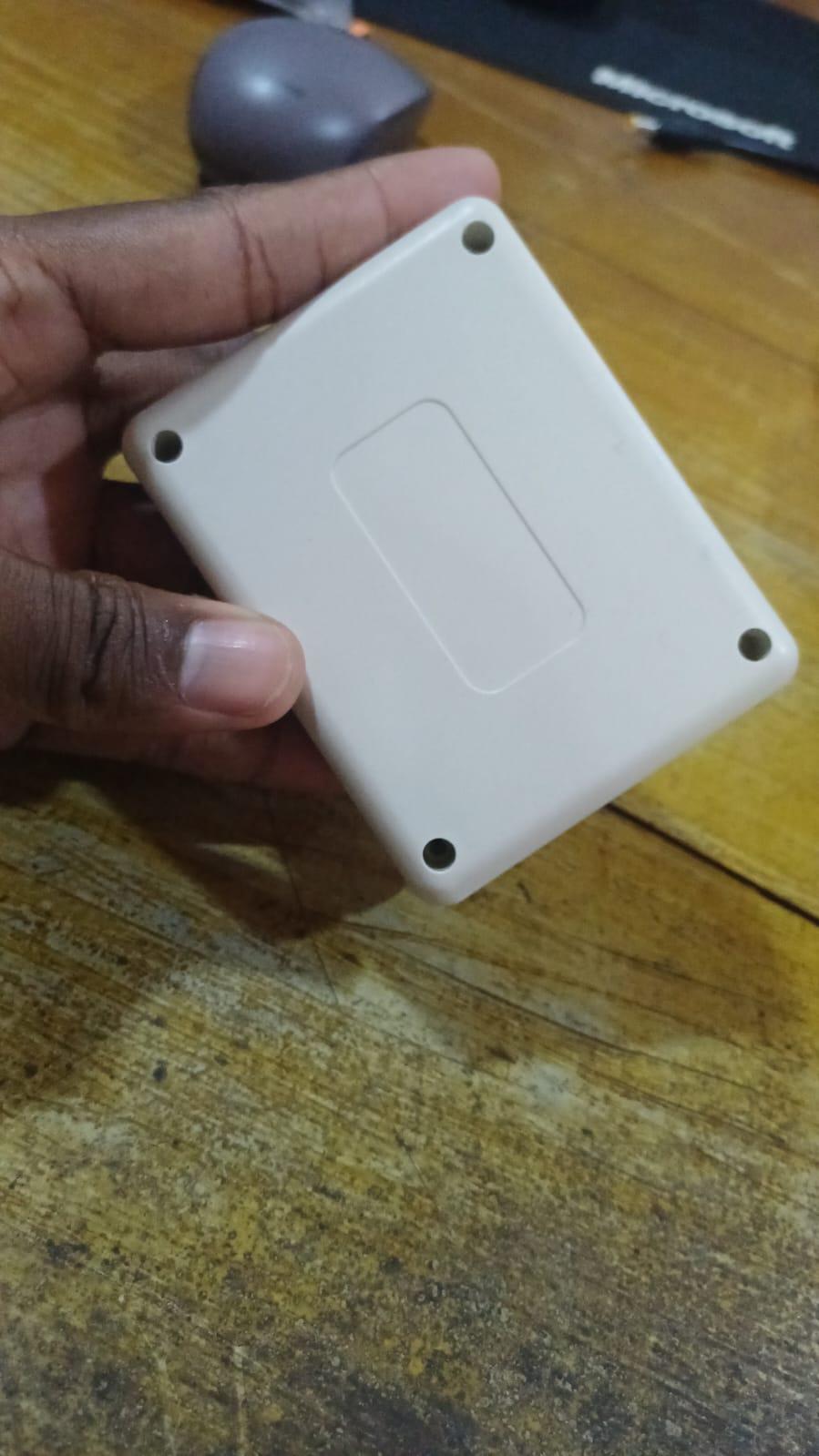

To avoid any residues, oils, or dust that can interfere with the soldering process, the PCB was cleaned. Careful soldering was used to prevent solder bridges between neighboring pins and guarantee solid, clean connections. For accuracy, a soldering iron and fine solder were utilized.
After every component was soldered, the connections were examined visually to make sure there were no bad connections or short circuits and that every part was firmly fastened. To check for continuity and make sure there were no shorts and all the wires were connected correctly, a multimeter was utilized.
Following soldering, isopropyl alcohol or a specialist PCB cleaning solution was used to clean the PCB once more to get rid of any flux residues.
As the enclosure, I purchased a suitable enclosure from the local market and fit the circuit in to the box. Cut holes finely with a sharp tool for LED indicator, moisture sensor connector and Water pump connector and I used double tape to paste the circuit inside the box.
Final Outcome
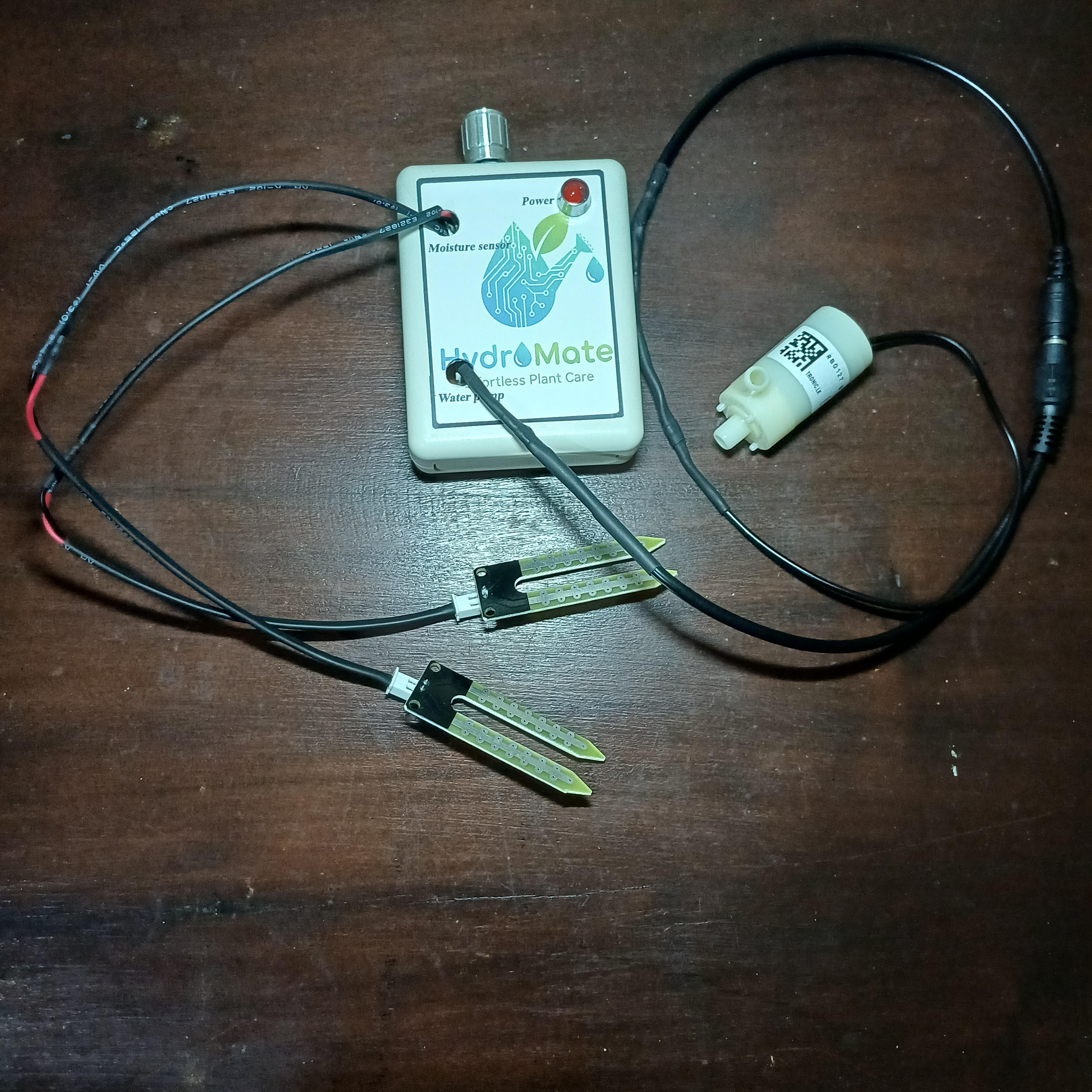
The HydroMate was successfully completed and fully operational, offering a reliable solution for protecting your plant from getting dried-out.
Specifications:
- Input Voltage: 12V DC
- Indicators: Red LED for power
- Motor: 6V DC
Key Features of the System
- Provides continuous oversight of moisture levels and water the plant accordingly
- Safeguards your plants by cutting off water when soil moisture is in optimum level
- This system uses easily replaceable components, making it budget-friendly
DIY Installation and Maintenance Tips
The accessibility of this Automatic Plant Watering system is among its most appealing characteristics. If you have a basic understanding of electronics, you can easily set up the system even if you are not an electronics specialist.
- Follow Safety Protocols: Always disconnect the power source before installation or maintenance. Safety first!
- Test Regularly: Periodically test the water pump and condition of the moisture sensors to ensure they are functioning correctly.
- Use Quality Components: Invest in high-quality relays, voltage sensors, and other components for long-lasting performance.