Imitation Dubai Cookies
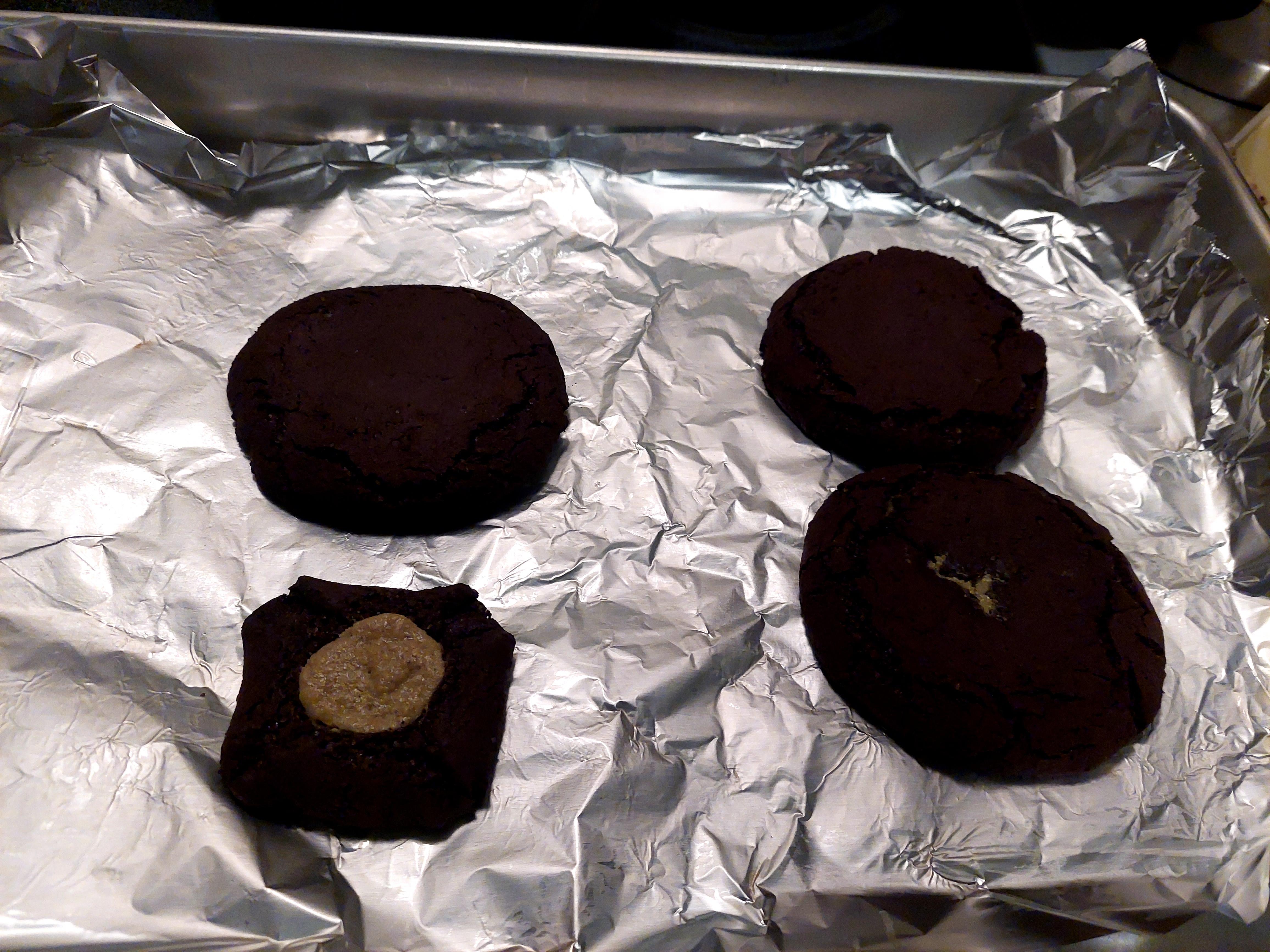
Hi there! This is a story about how I attempted (and succeeded ;) in creating an imitation of the viral Dubai Chocolate in a cookie form. If you like pistachios, chocolate, and learning about culture and food at the same time, you're in for a real TREAT. Sorry, the puns are going to be plentiful in this Instructable!
Supplies
Ingredients:
Filling:
0.5 Cups of Raw Pistachios (Not roasted or salted. We want the green color that erupts from these wonderful nuts. Roasting, while producing a slightly stronger flavor, produces a brown and icky looking filling).
3 Tablespoons Brown Sugar + As needed
2 Whole (Or 0.25 tsp ground) Cardamom Seeds
3 Tablespoon of Tahini
1 Tablespoon of Tahini + As needed
Dough:
0.75 Cups of Baking Cocoa Powder
1 Cup All-purpose Flour
1 Egg + 1 Egg Yolk
0.25 Cups of Butter
0.5 Cups of Brown Sugar
Tools:
Blender, Food Processor, or Mortar and Pestle (your preference. I'll describe the different results I got below!)
Large Bowl
Test Subjects (human family or friends work best for this! ;D)
Whisk
Optional items:
Stand Mixer or Hand Mixer (helps speed up the process, but that's half the fun!)
Researching
.png)
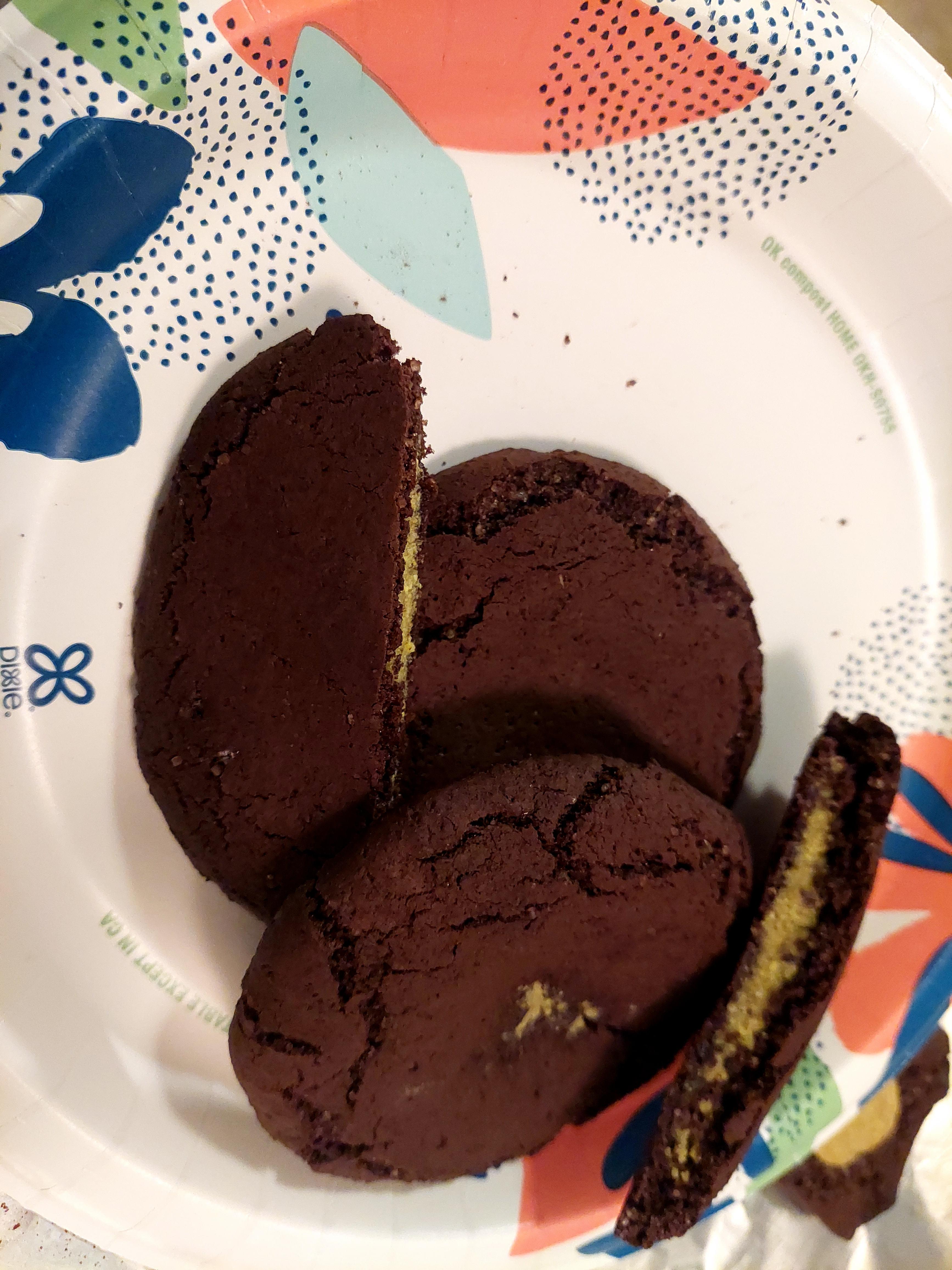
First things first. I'm not sure where I was in 2024 when this trend was taking off, but I didn't get on board the Dubai Chocolate trend until this year, well after the delicious chocolate bar went viral. Unfortunately, while my taste buds appreciated the delicious combination of nutty-creaminess combined with the utterly indulgent milk chocolate casing and the crunchy kadayif pastry threads, my wallet did not :(
Naturally, the first thing I did was to see if there was a discount I could find somewhere, which I couldn't in my area. The second thing was to figure out if I had the time and energy to go through the laborious process of making the entire chocolate bar myself. Given that I didn't have the heart to deal with the complexities of chocolate making, I decided to take my desire to a simpler but still utterly craveable level: cookies! With years of baking cookies by recipe and by memory, I thought that it would be easy to re-create the texture and flavor of the chocolate bar in a cookie form. Not so! This meant that it was research time!
I needed to figure out exactly what the Dubai Chocolate bar needed in order for me to fool my taste buds. This required learning not just the ingredients on the label, but understanding the background of the dish - time to call on the Wikipedia search and scrounge around the Web to find out what flavor profiles I needed.
Since the Wikipedia article is linked as a pdf here, I'm not going to rehash the entire thing. That being said, I need to first give credit to Nouel Catis Omamalin and Sarah Hamouda who are credited as the creators of the original Dubai Chocolate Bar. Apparently, this idea started as a way to satisfy pregnancy cravings, which is ultimately an awesome origin story. Needless to say, this particular chocolate bar revolved around the right combination of pistachio paste, milk chocolate, kadayif pastry, and tahini. I ultimately discarded the kadayif pastry as it contrasted with the texture of the cookie too much, but you can easily add store bought kadayif pastry to the filling if you wish.
After doing a little more digging about making my own pistachio paste and finding a way to incorporate all the components into a cookie form, I ultimately decided to make a pistachio-tahini paste pastry inside a chocolate cookie.
Shopping
.png)
{Add stock image of grocery store, if possible natural foods grocery store}
Having already tried numerous store-bought ingredients for the items I needed, I decided to make all of the components at home. Except for the raw pistachios, every other ingredient was easy to find. On a side note, it seems that almost all of my local stores sell roasted pistachios of every variety, but only one had raw pistachios. Ultimately, the recipe wouldn't turn out horrible if you used roasted pistachios, but after multiple trials with using roasted and lightly salted pistachios as my filling, I determined that the cost and search was worth it. Not only did the vibrant color provide a visual booster for my filling, but the flavor was also noticeably lighter and brighter. Ultimately, you can decide whether it's worth it to you.
Making the Filling
{Show ingredients for the filling}
It's easiest to make this dish by starting with the filling, because I like to cool it before putting it inside the cookies. Gather all the ingredients listed above for the filling:
- Raw Pistachios
- Brown Sugar
- Whole Cardamom
- Olive Oil
- Cardamum
I like combining both old and new methods in the kitchen, so I utilized both my mini blender and my mortar and pestle for this recipe. Into the blender, I put a ratio of 0.5 cups of pistachios for 2 tablespoons of sugar. Then I blended until the mixture is a fine powder. In the meantime, I put my whole cardamom into my mortar and grind it until it is fine. {Insert pictures of pistachio mix and cardamom} If you wanted you could skip this step and just use ground cardamom, although you won't get as strong a flavor. Next I add the cardamom and cinnamon into the blender and spin the mix a couple of time. Lastly, I add this mix to the pestle and stir in the olive oil and tahini mix until smooth. *
Ultimately, you can do this recipe without any fancy tools or specialty items. The mortar and pestle is an easy way that you can control the flavor of your recipe as your making it rather than have to keep opening and closing your food processor or blender. Of course, this also means that you're dependent on your familiarity and speed of using it. On the other hand, the blender provides much faster results, but also less control in my opinion. To this end, I used both methods when making my cookies, but feel free to do what works best for you!
Making the Dough!
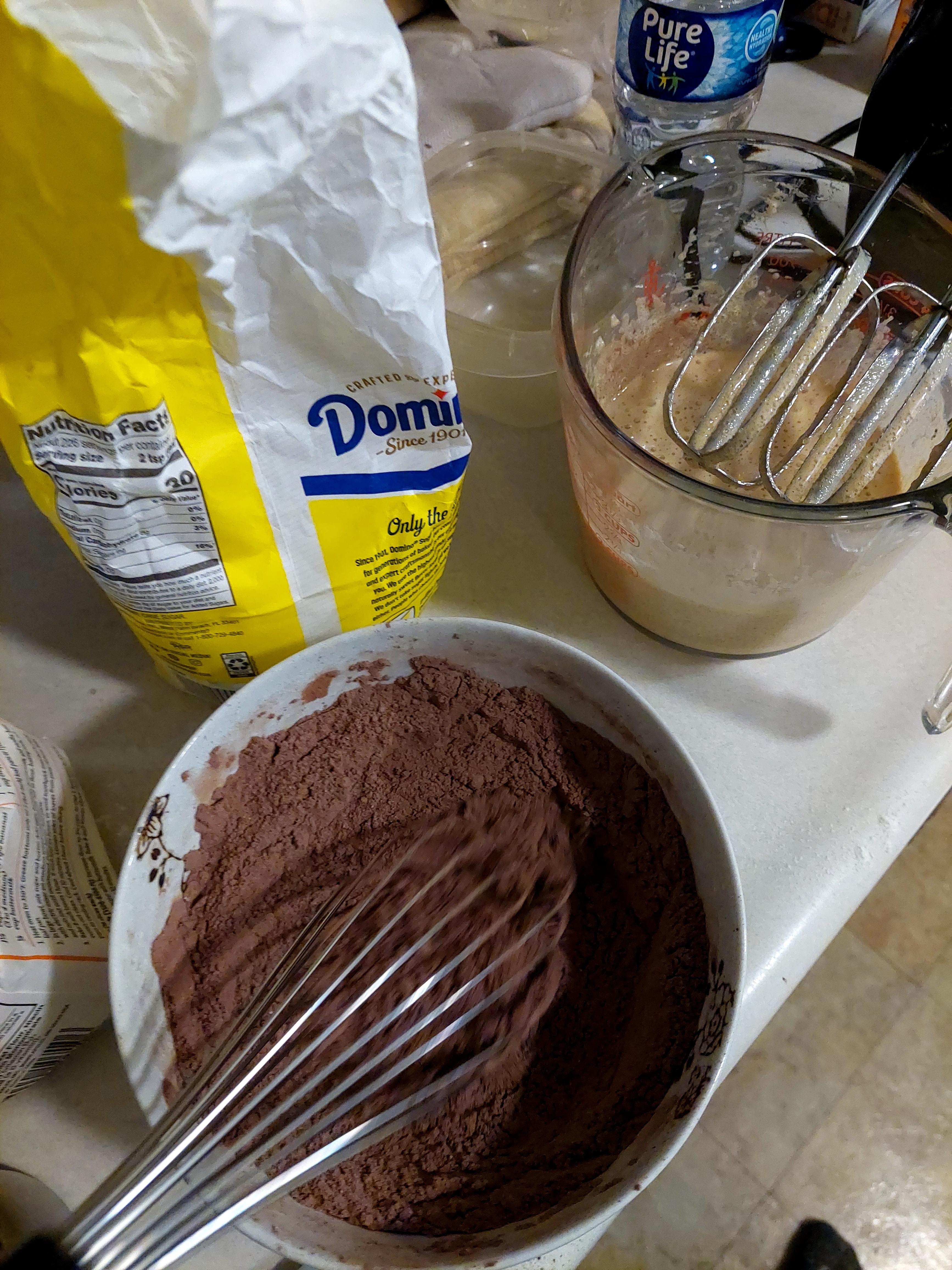
You can't have cookies without a good dough! Originally, I planned for the dough be a basic chocolate thumbprint cookie recipe; however, after a few early trials, I found that the dough wasn't nearly chocolately enough and was ultimately too thin to really fill. After a few measured guesses, I finalized a texture that would allow me to sandwich the filling in between two halves of dough.
Gather the ingredients below for the dough. Ultimately, you can vary the amount of sugar and baking soda to your taste. I personally like a sweet and very chocolatey dough that is almost risen due to the amount of baking soda in the cookies. This makes it fairly airy and soft once baked!
"Wet" Ingredients
- 0.5 Cups of Brown* sugar
- 0.5 Cups of Granulated sugar
- 0.25 cups of melted butter
- 1 egg + 1 egg yolk
"Dry" Ingredients
- 1 Cup of flour
- 0.75 Cups of baking chocolate
- 1.5 teaspoons of baking chocolate
- 0.25 teaspoons of salt
Mix the Wet Ingredients Together!
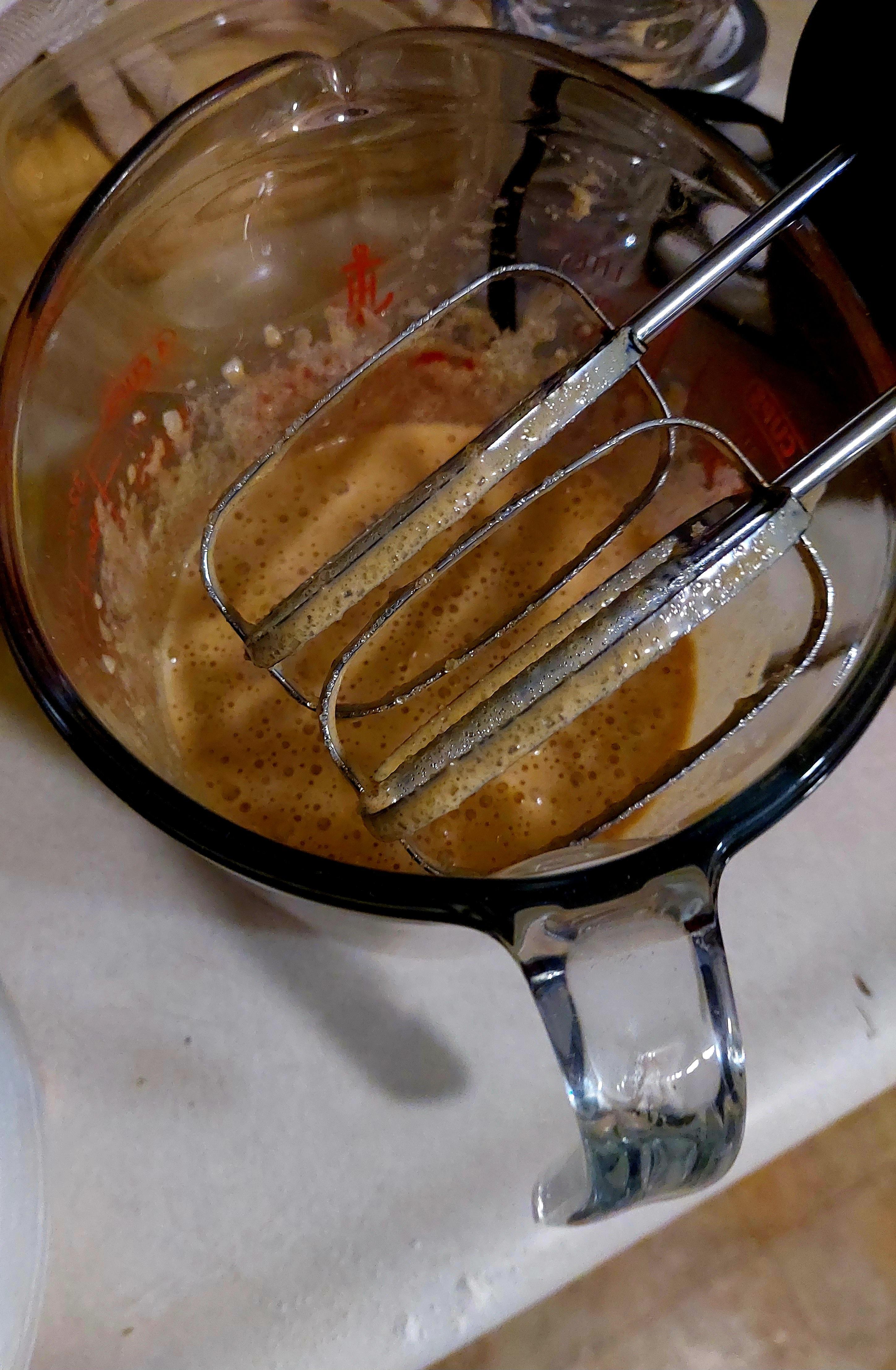
Although this isn't always necessary, I generally like to mix the wet ingredients and the dry ingredients separately. By separating the two from the beginning, you can choose at which point you're satisfied with the consistency!
To start making the wet batter, cream the butter, brown sugar, and granulated sugar together until soft and fluffy. While the brown sugar adds the low tones of sweetness to the dish with its high molasses content, the granulated sugar ensures that the dough is more smooth and fine, preventing the sugar from being noticed in every bite. The butter ensures that dough is smooth, spreads easily, and adds savory notes into the dough.
Once the initial three wet ingredients are mixed together, you can add in the egg and egg yolk into the batter. At this point, you want to make sure that you don't overbeat the batter, as this will make the dough tough due to the eggs' proteins!
Mix the Dry Ingredients!

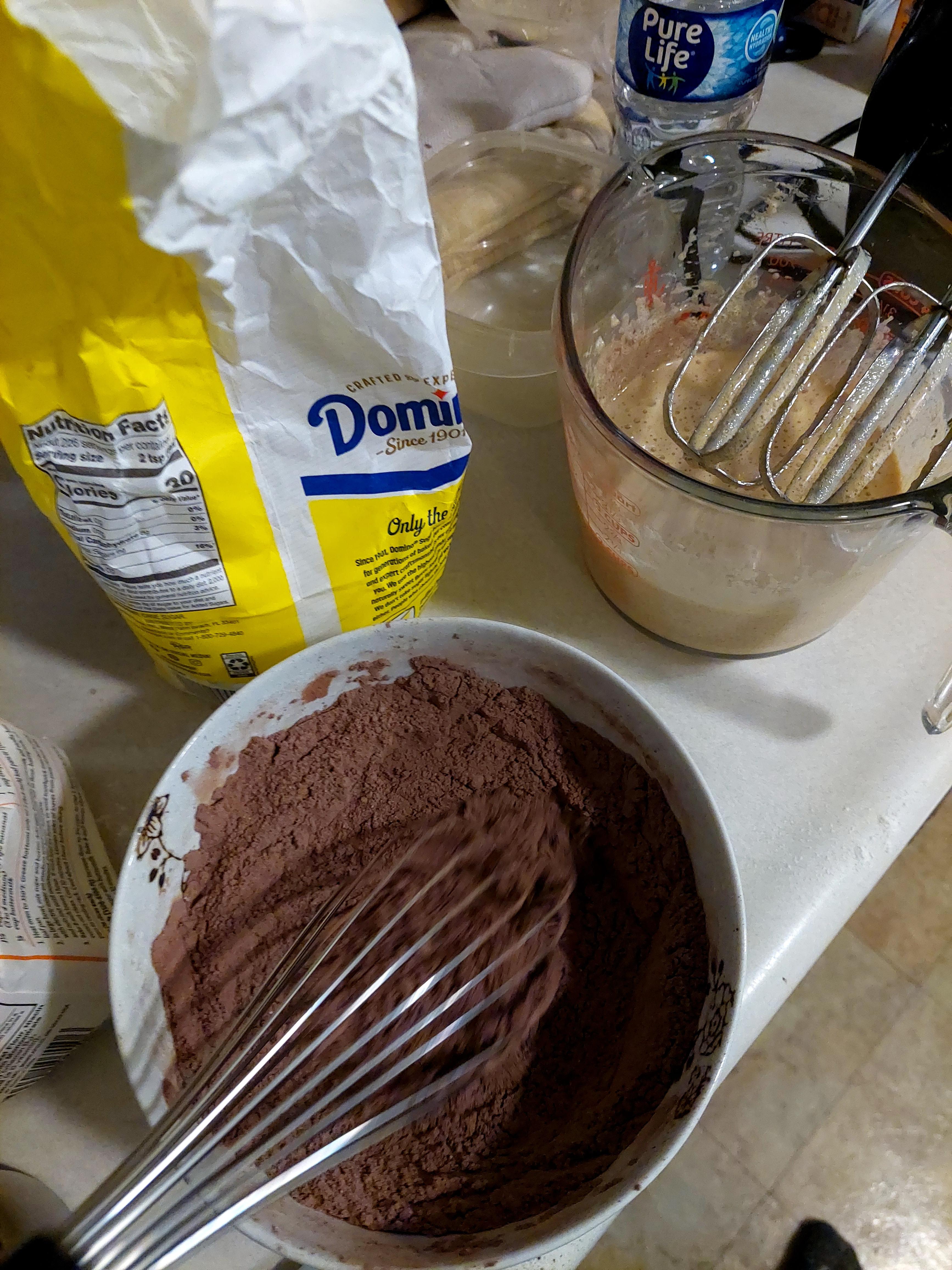
Next, you can mix the dry ingredients together. If you wish, you can make your dry dough a bit finer if you utilize a sifter or strainer, although this is optional.
Add the flour, baking chocolate powder, salt, baking soda and cardamum to a bowl and whisk together until well-combined. The picture shows the initial and final results after whisking. The flour, of course, provides the main body of the cookie, while the baking chocolate continues the imitation of the Dubai chocolate bars, offering up a deep, rich chocolate flavor. Although you might not think about the cookie being salty, adding a pinch of salt allows many of the other flavors to come through more clearly. The point here is not to add salt until your cookie is overly salted but merely enhances the chocolatey, sweetness of the cookie. The baking soda actually has a combination of effects on your cookie. The first is that it acts as a leavening agent, causing your cookie to rise and become more airy. The second is that it slows the spread of the cookie as it bakes, which is particularly valuable to us due to the fact that we are sandwiching two pieces of dough and some filling together. The third is that it contributed to the Maillard reaction and browns our dough, bringing out many of the hidden flavors and undertones of the dough. The fourth, and last, is that it combines with the proteins in our eggs to help build the structure of our cookie. This is partially why we keep the dry and wet ingredients separate initially, which prevents the premature mixture of these components. The cardamum is not a traditional ingredient in this type of cookie necessarily but adds another savory note to the cookies that utilizes the traditional spices and flavors of the Middle East.
Combine the Dry and Wet Ingredients
I honestly like to do this slowly, using a table spoon to slowly add in the dry ingredients to the wet ingredients' bowl as I slowly churn the wet mixture with a hand mixer. By not dumping the dry ingredients into the wet, you have more time to check the texture of your dough, and if necessary add more butter or of the dry mixture, respectively, to make the dough more sticky or more thick.
I attempted to find the perfect consistency for the thickness of the cookie by periodically taking pieces of dough and trying to roll them into a ball. If the dough is too sticky, the dough will probably stick to your hand rather than globing together. If the dough is too dry, it will most likely start forming small, dry balls in the bottom of the mixing bowl. The perfect consistency should be about midway between, the dough being soft enough to form into a coherent shape but dry enough to hold onto itself and not the mixer blades. An example texture is the third picture here
Of course, you can do this step without a hand mixer with a whisk or other mixing instrument, but the process will be much longer, and you will probably have a less smooth consistency than using the mixer.
Preheat the Oven
While you could preheat the oven earlier, I like holding off on starting it, because the dough can take a few minutes to get the texture correct. Set the oven to 350 degrees Fahrenheit. Placing the cookies in cool oven can result in uneven heat distribution throughout the cookies.
In the mean time, you can begin shaping and filling the cookies. First, scoop about a tablespoon of dough from the bowl. Roll this into a ball and then flatten it a 1millimeter-thick circle using the flat bottom of measuring cup. I used a half-cup scoop for this, but any object with a clean, flat bottom with a diameter of more than 1.5 inches can be used. You will repeat this step twice per cookie to form a top and bottom layer that we'll use to sandwich our filling.
After flattening the first half of the cookies, place about half a tablespoon of the filling in the center of the dough. Then, cover the filling with the other half of the dough that was rolled into a circle earlier.
Repeat these two steps for the remaining dough.
Bake and Eat!
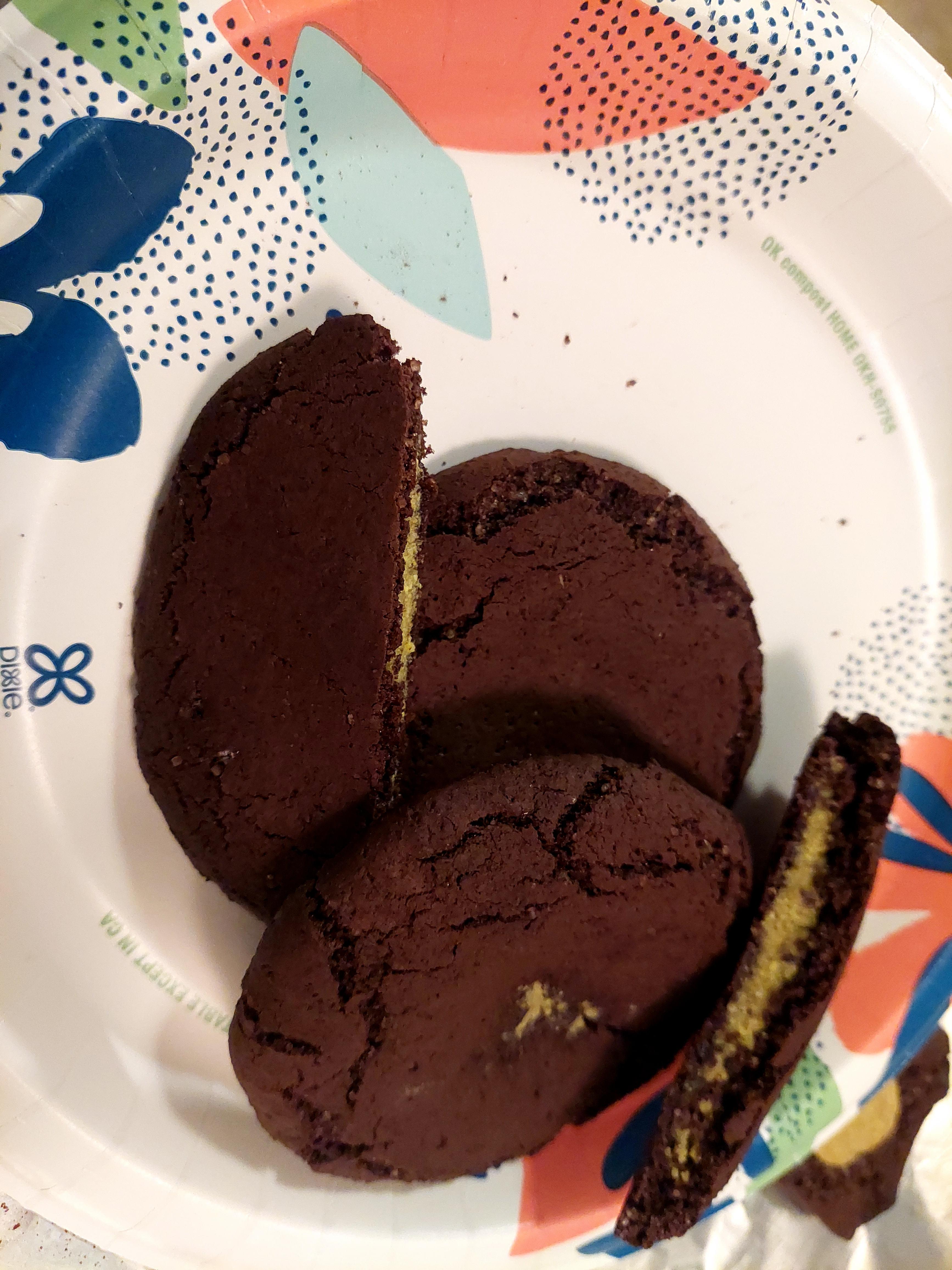
Place the cookies on to the tray and bake for about 10-15 minutes, or until the cookies are soft and moist but risen slightly and able to be lifted off the tray with out immediately shattering.
The next step is truly the most important of them all...TEST THEM! Eat and enjoy the delicious flavors of pistachios, tahini, and chocolate combined in this imitation Dubai Chocolate cookie-bar!