Ladder Back Chair


Theme : reimagine a chair – the ladder back chair. A project for a sculpture class with Germano Frias at the École d’art André-Malraux in Villeneuve-sur-Lot, France. All the materials were free. A neighbor was throwing away the ladder and the seats and boards were rescued from the dump.
Supplies
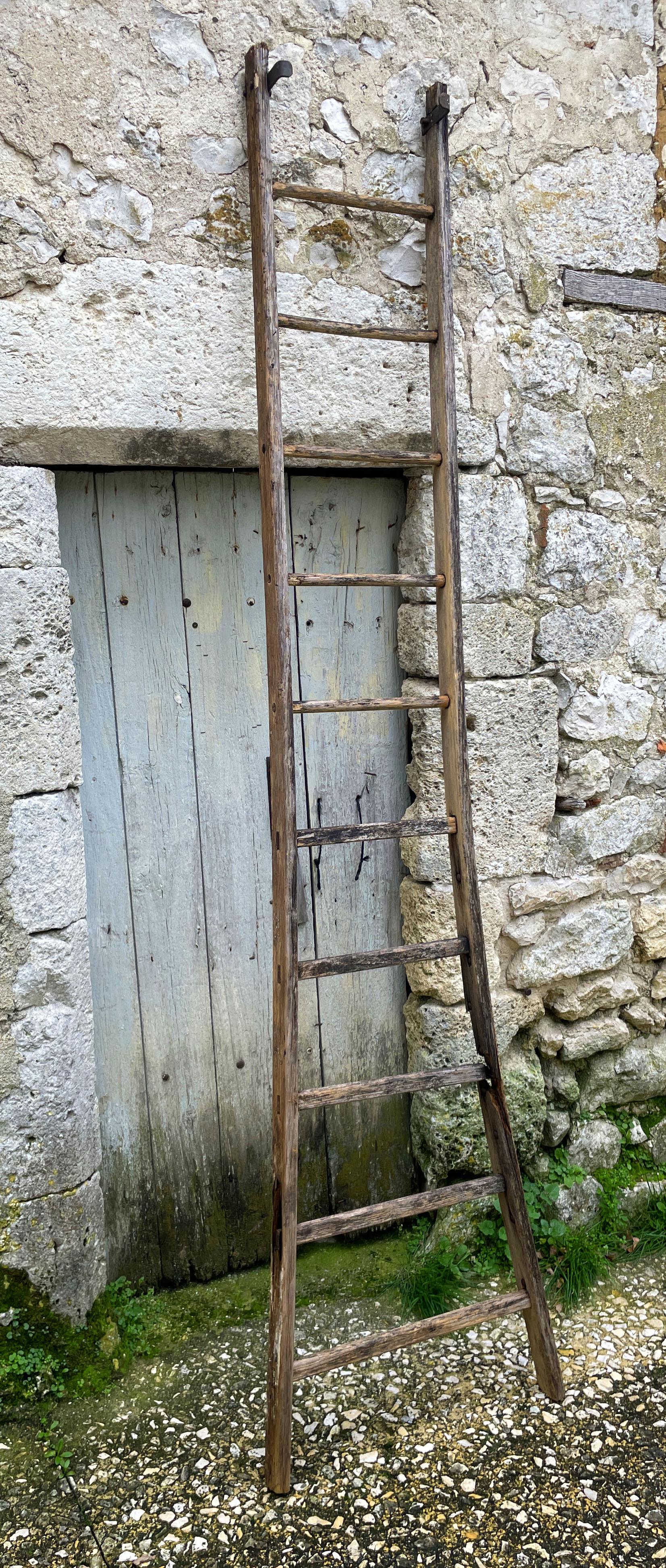
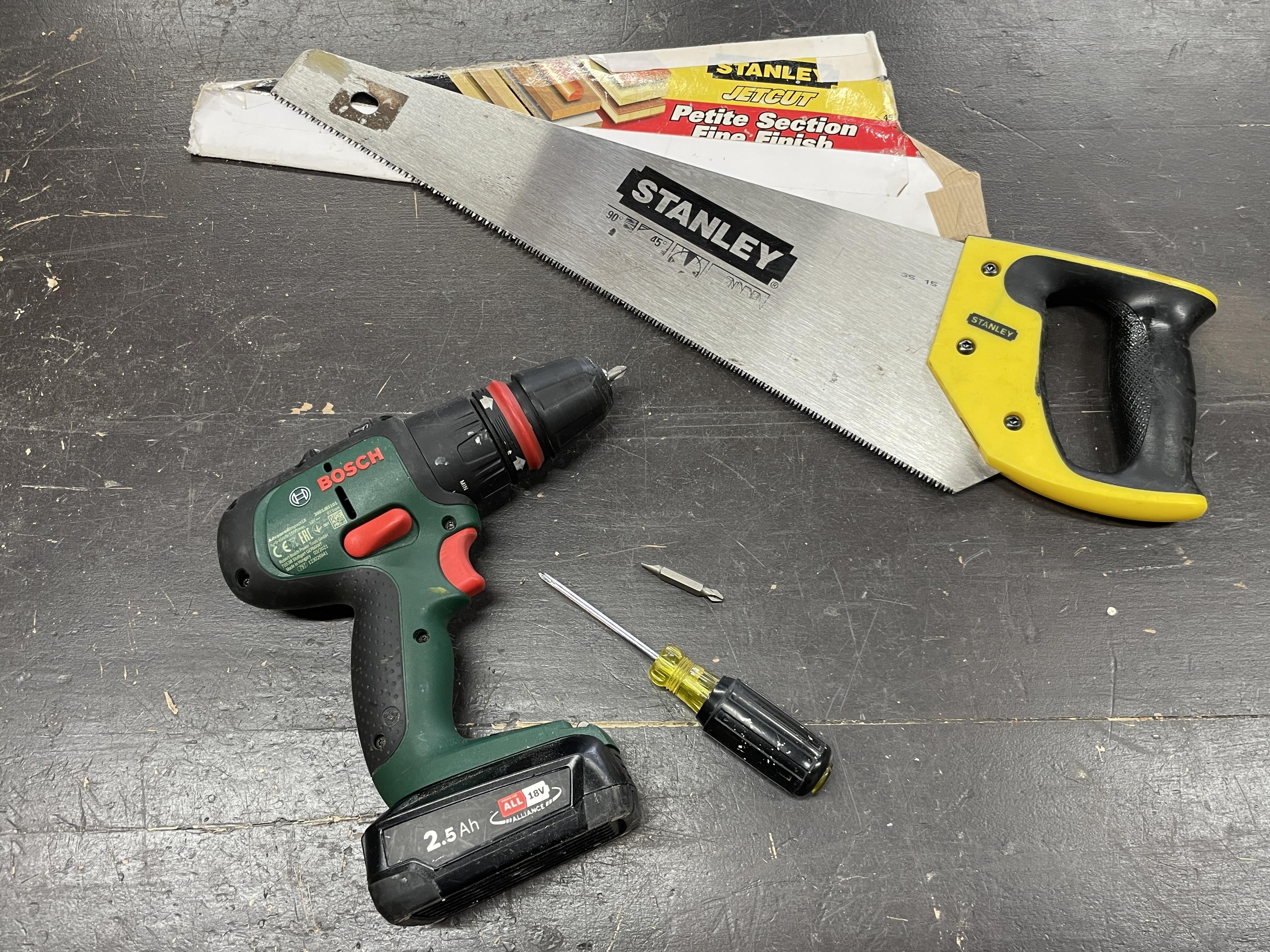
Materiel : a wooden ladder - this one had ten rungs and was 2m70cm (8’10”) tall
2 wooden chair seats
2 1x4” boards, roughly 80cm/32” long
~30 screws, including four long enough to secure the seats to the front legs.
two metal brackets
some scrap wood for brackets
Tools : saw, screwdriver, (I love my cordless drill/screwdriver)
Planning


There were several plans for how to use the ladder; all involved flipping the ladder so the flared section became the upper back and the narrower end became the bottom.
- For a single tall back chair, to take advantage of the rung spacing, I would have cut two sections off the bottom – 45cm for the front legs, including one rung and 35 cm with two rungs that could serve as a frame for the seat.
- A single seat high chair would have entailed cutting 80cm/32” off the bottom to serve as the front legs. This would have required reinforcement with additional rungs or stretchers on each side. With a person sitting over 30” off the ground it would have been unstable. To deal with the risk of the chair falling over backwards I considered sawing the front legs down the middle and having half the seat on each side of the main ladder, but that would have been silly.
Then I found the two straw chair seats at the dump that were just the right width in back to fit between the side rails and flared just enough to rest on top of the front leg side rails. A two-seater ladder back chair would be stable and novel.
Construction - Cutting the Ladder

I cut two equal lengths of ladder off the bottom, one for each seat. Each pair of legs had one rung in the middle and another rung an inch below the top.
Given the spacing of the rungs on the ladder, the height of the seats came to 50cm, about 20”. That’s on the high end of a normal seat range, 16”-22” and perfectly comfortable.
The Stretchers
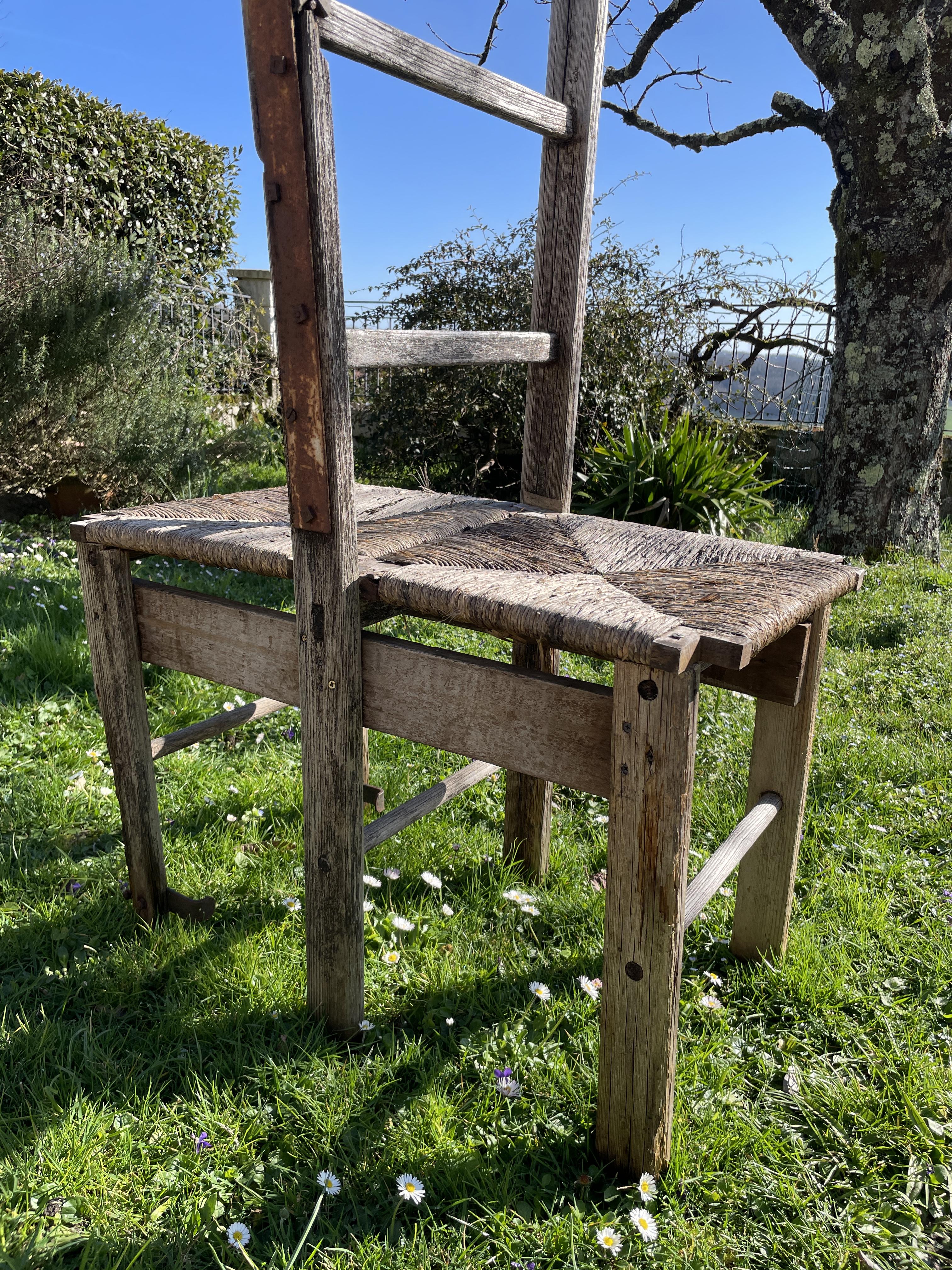

The stretchers are the rungs, or boards in my case, that connect the back legs to the front legs. I cut two ~1”x4” boards to serve as the horizontal stretchers. The length was determined by laying the two seats back-to-back and deciding where the seats would be attaching the top of the legs. A cutout on the corners of the seats meant the front edge would jut over the front legs, so the length of the boards was a couple inches less than the total length of the two seats.
I marked the center of the board where it would attach to the main ladder and put in one screw. Then, measuring the same distance from the ground up to the bottom of the board I screwed the front legs onto the stretcher board, also with one screw. With someone helping to hold the middle ladder perpendicular I added two or three more screws to the center in a roughly triangular configuration for stability. The two sets of front legs were held vertical by aligning them with a box on the floor and two more screws in each leg fixed the board in place. The stretcher board on the other side was also first attached at the same height with single screws, assuring that it was perpendicular to the legs before adding two or three more screw.
Installing the Seats
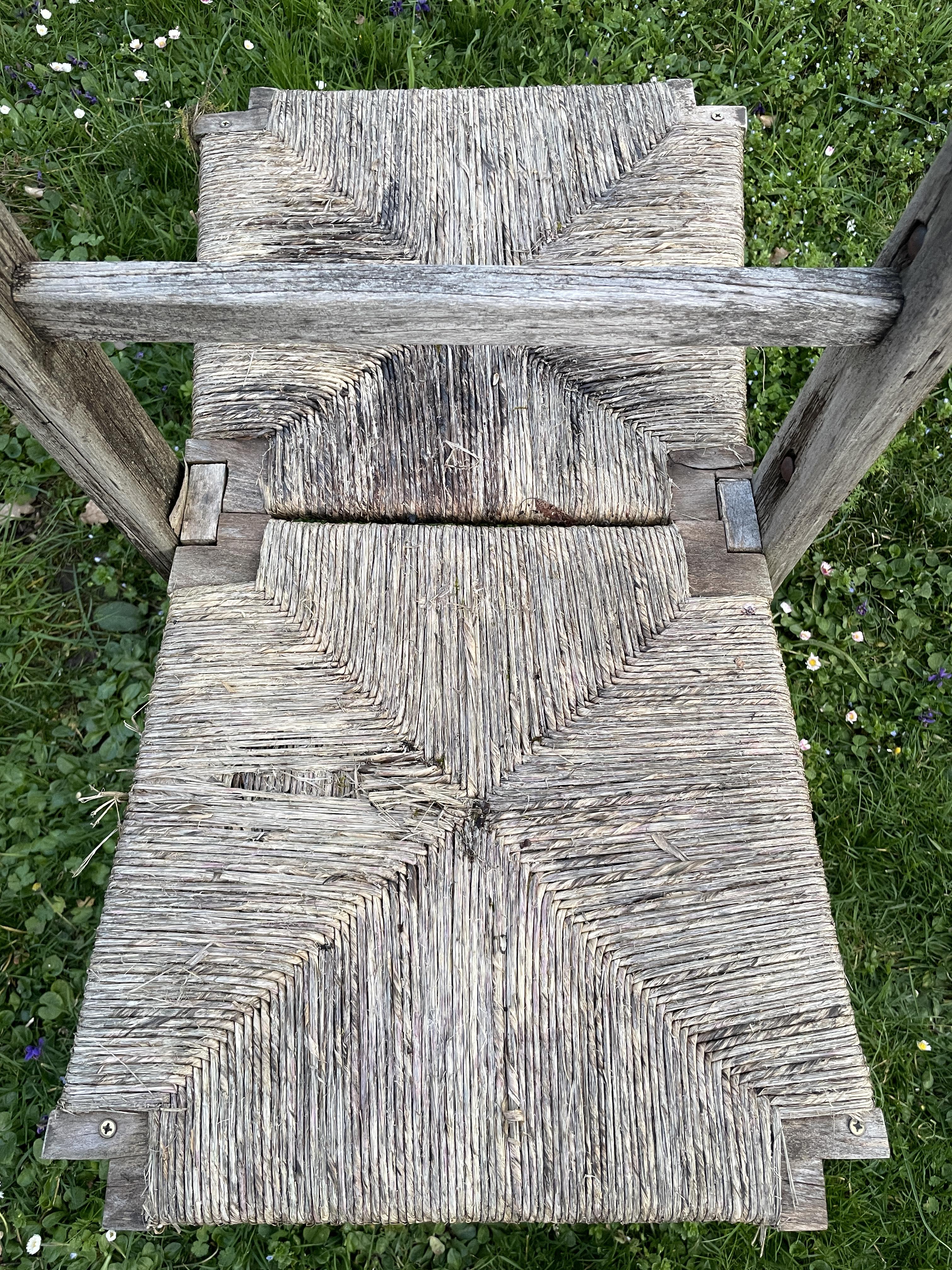
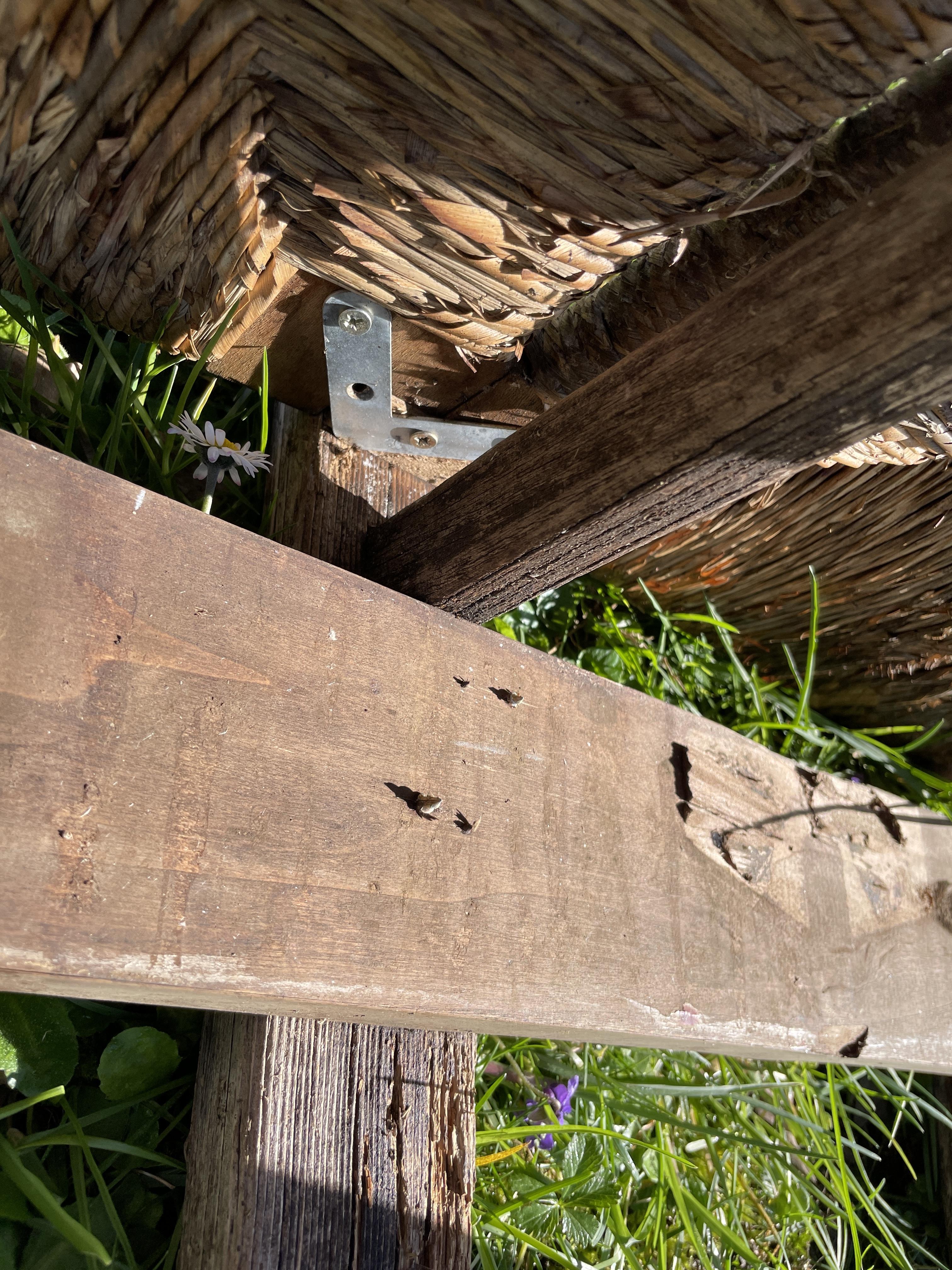
The second rung up from the ground of central section of ladder was a bit too low and too narrow to support the back of the two seats. I screwed a support block on the inside of the ladder rails and used steel mounting bracket that I had lying around to attach the underside of the seats. The front of the seats rest on the two vertical side rails and just need a long screw driven through the seat and down into each leg to hold them in place.
If you’re not so lucky in finding ready-to-use seats you can lay a board across the rungs, adding shims if necessary, and top with two pillows or your own custom-made seats.
Conclusion and Advice


This chair was made for fun, not for additional seating. It’s perfectly straight back isn’t suitable for prolonged use.
If you are tempted to make a useful single-seat ladder back chair, consider cutting a second section for back legs that is separate from the upper back. Make this cut at a small angle (8% or less?) and rotate the bottom segment 180°, right side to left. That will give you an angled back for comfort and angled legs for stability. Practice with different small angles in strips of paper to get an idea of which angle cut will work best for you.