Magnetic Loop Antenna and Mr. Faraday
by bretonec in Circuits > Soldering
75 Views, 0 Favorites, 0 Comments
Magnetic Loop Antenna and Mr. Faraday

I built a magnetic loop antenna, which I call Magnetostroj in honor of Jiří Voskovec. For winter operation, it has the advantage of lower noise compared to a long wire, although it is not as effective in receiving weak signals as a long wire, which in winter catches an unpleasant whistling noise rather than a useful signal.
Supplies
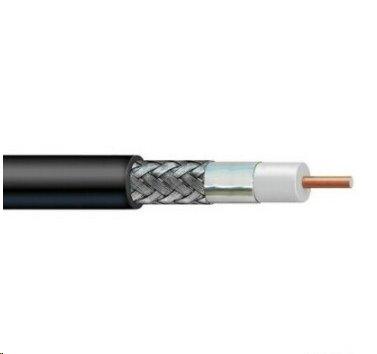






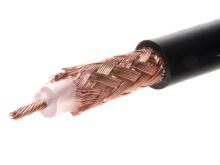

- 4 m of coax for the antenna (CNT300 works for me, but it is not a requirement)
- 1.5 or 2 m of coax for connecting the coupling loop
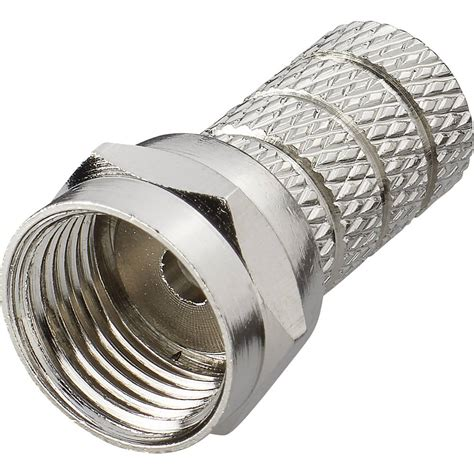
- 3x F connector to coax
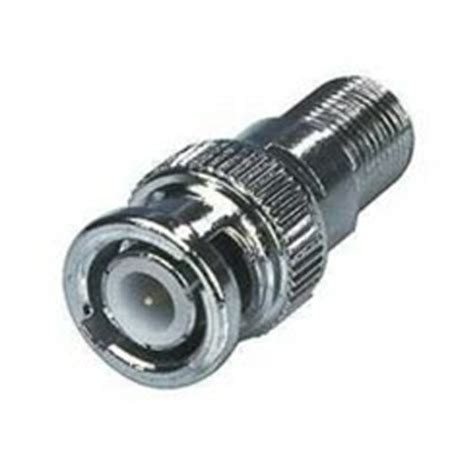
- 50 ohm reduction from F connector to BNC
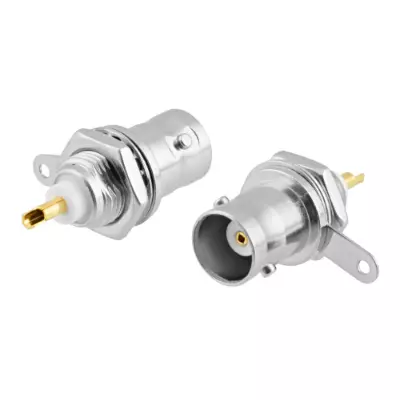
- 2x BNC connector to the panel
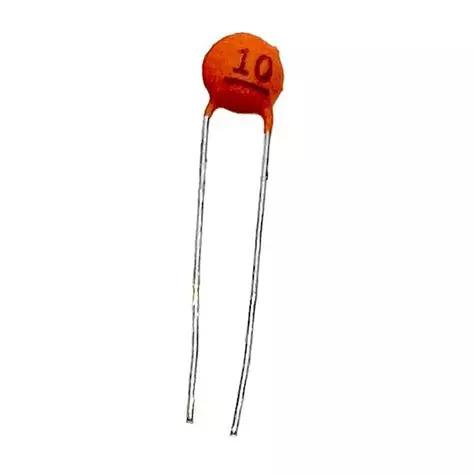
- ceramic capacitor 10-22 pF
- 80 cm of high-quality thick insulated copper wire
- terminal blocks
- insulated wire
- tuning capacitor
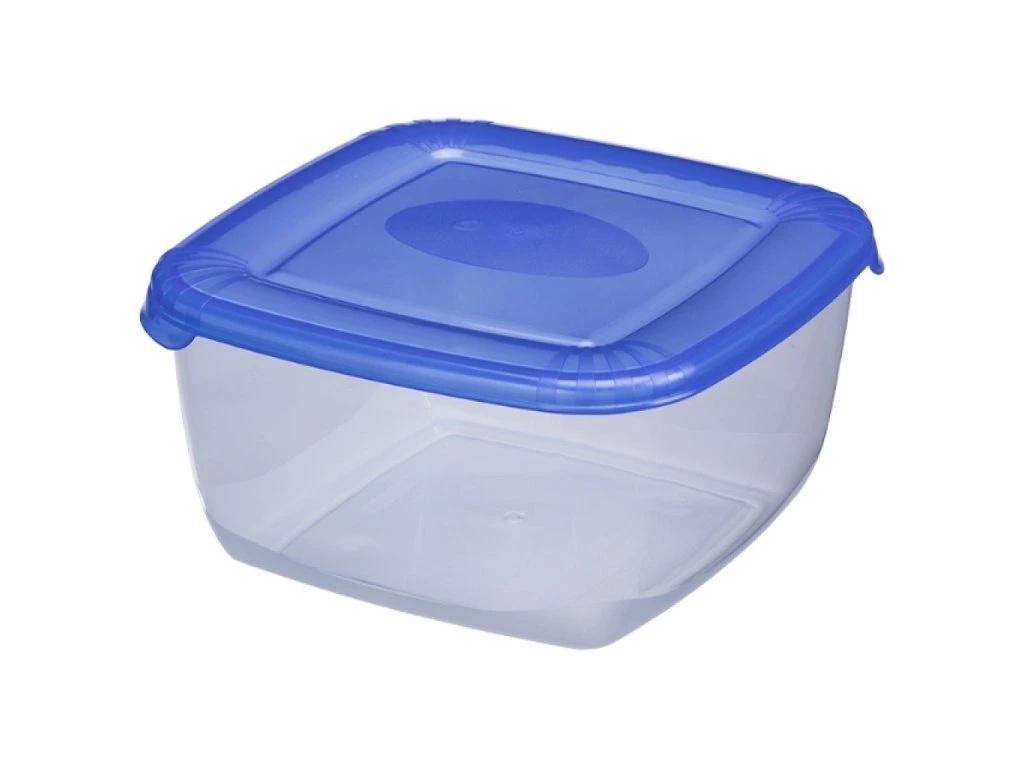
- plastic box with thicker walls
- L-shaped metal bracket for fixing the capacitor
- small plastic clamping pliers -
a small wooden plate for holding the terminal blocks and coax
- a slightly larger wooden plate to which we screw the box with the tuning capacitor
- our 1:1 balun - or our antenna tuning circuit (see my previous instructions)
Theoretical Introduction

I would not have written this guide without the discoveries of Mr. Michael Faraday. Besides being a great physicist and chemist, he was also a great teacher. So I asked him directly for a theoretical explanation through AI.
How would Michael Faraday describe the operation of a loop antenna?
So let us imagine how he might describe it in one of his famous Friday lectures at the Royal Institution, perhaps with a model in hand:
“Ladies and gentlemen, imagine that you are holding an ordinary circle of wire. In itself it is just a metal ring. But now imagine that all the space around us – yes, even the seemingly empty space – is traversed by invisible magnetic lines of force. They are like rays of light, but belong to a magnet or, as we have discovered, to a current flowing in a wire.
When an electric wave – a messenger from afar – flies through our space, it carries with it two inseparable components: electric and magnetic lines of force, which support each other. Our long straight wire (he points to the long wire stretched across the stage) is well suited to catch the electric component. It acts on it, driving electrons back and forth along it.
But our humble circle (he picks up the loop) – it is closed! It does not allow the electric component to so easily entered. Instead, it is a trap for magnetic field lines! Look: when the magnetic field line of a flying wave passes through the opening of my loop, it intersects its circumference. And what happens when magnetic field lines move through a conductive circuit? Exactly – electricity is born in it! That is our law of induction.
So my loop does not directly receive the electrical contribution of the wave, but converts its magnetic contribution into an electric current within itself. The more field lines pass through the loop – the stronger the wave or the larger and better oriented the loop – the stronger the current will be generated in it."
And how would he describe the difference from a long wire?
“Now for the difference! Imagine a long wire as a lightning rod for electric field lines. It is set up to resonate with them, tuned to their rapid oscillations. It is sensitive to the electrical voltage between its end and the ground.
My circle, however, is something else entirely. It is a sensitive magnetic detector. Its enemy (or rather the source of the signal) is not the electric field, but the rate of change of the magnetic field within its region.
Therefore, it is necessary to emphasize:
1. Orientation is key: The long wire wants to be parallel to the direction of propagation of the wave in order to capture the electric component. My circle must be perpendicular to the incoming wave so that the magnetic field lines enter it as much as possible. If I turn it 90 degrees, the signal disappears!
2. Spatial selectivity: The loop is excellent at shielding unwanted electrical interference (from sparking machines, lightning). Because it almost ignores electric fields and focuses mainly on their magnetic guide. It is like listening to only one voice in noise.
3. Size: The long wire must be long—a quarter, half, or a full wave—to resonate well. My circle can be much smaller than a wavelength and still work, albeit with less efficiency. It's practical!
In conclusion, dear friends: The long wire is a string that vibrates the electric field. My loop is an eye that sees and measures the magnetic field. Both capture the same beam, but each a different side of it. And both are possible only because of the unity of the forces we call electricity and magnetism—or better, electromagnetism."
Faraday's explanation of the relationship between the main and coupling loops
"Ladies and gentlemen, look at these two copper rings. One is larger - let's call it the main loop. The other is smaller and we bring it closer to the larger one - this is our coupling loop.
Now to the essence:
1. The main loop is a field line hunter.
When a wave comes into space - that invisible gust of electric and magnetic force - its magnetic field lines pass through the opening of the large loop. The larger the loop, the more of these field lines can pass through it. These changing field lines excite an electric current throughout the circumference of the large loop. Not strong, but sensitive - it is an exact image of what the wave carries.
2. The coupling loop is a messenger.
Now comes the ingenious trick! If we put the small loop close to the large one, we transfer the force not by direct contact, but through space! The electric current flowing in the large loop around its circumference creates its own, secondary magnetic field lines. These field lines also spread to the small, coupling loop.
3. Second-hand induction.
And now, the same law! The magnetic field lines from the large loop, passing through the opening of the small loop, again induce an electric current in it. It is as if the large loop whispers its story through the magnetic field, and the small loop listens and repeats it.
Why this connection? Why don't we connect the wire directly?
Because, friends, we are separating the world from our device. The main loop hangs in the wind and catches the waves. Its circuit would be catastrophically affected if we connected cables directly to it - it would lose its natural balance and sensitivity. The coupling loop is like a perfect interpreter: it takes energy without touching it, converts it, and we can then run cables from this small loop to where we need it without disturbing the delicate workings of the large one.
Analogy: Two harps.
Imagine two harps placed close together. When you strike a string on the first, large harp, its vibrations are transmitted through the air and strike a similarly tuned string on the second, smaller harp. The main loop is the first harp, tied to the wave from a distance. The coupling loop is the second harp, tied to the first. The energy is transferred by resonance through the field, not by direct mechanical connection.
What is the magic of this arrangement, Mr. Faraday?
"In isolation and tuning! We can tune the large loop to the arrival of a certain wave by changing its electrical properties (today we would say adding a tuning capacitor). The small loop can then be tuned to the large one so that the transmission is strongest. And most importantly – we separate the celestial signal from the terrestrial noise of our instruments."
How to Build an Antenna?

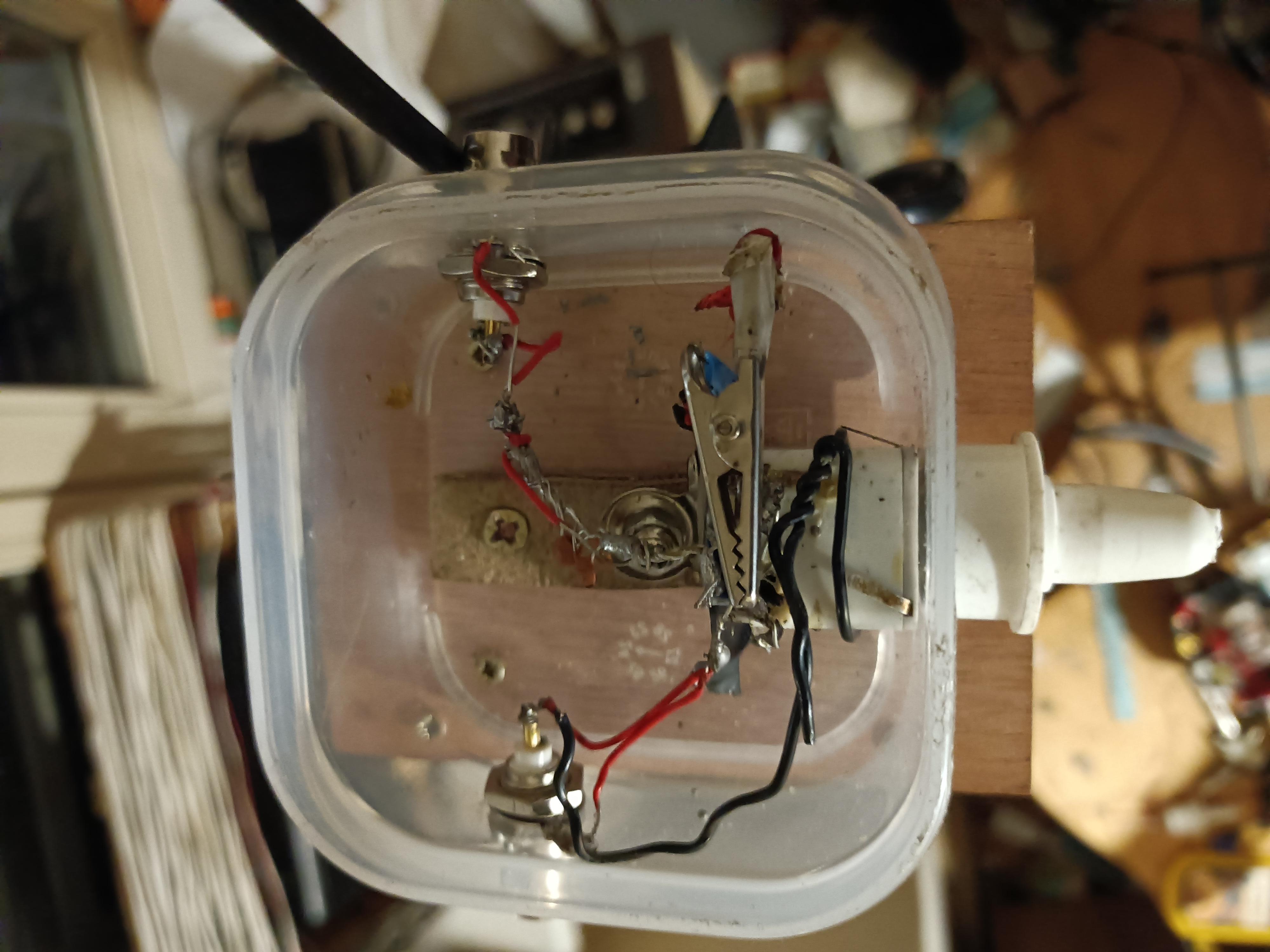
We only need to use a part of the tuning capacitor's total capacitance, i.e. 270 pF, so we only solder its rotor wires together and we also solder one part of the stator wires together. We use a multimeter to test whether the stator or rotor have any contact somewhere, so that the capacitor does not short-circuit. We solder an alligator clip to the remaining stator wire, if we later want to lower the frequency threshold.
We take a food box with thicker walls. On two sides, we measure the space for the BNC connectors in the panel and drill holes for them with a drill. It is a good idea to support the place where we will drill with a piece of wood. We solder wires to the signal wire of both BNC connectors and to the grounding wheels. We measure a hole for the tuning capacitor in the front of the box according to the size of the tuning capacitor. And we drill the hole using a drill and place the capacitor in the box by attaching it to the bottom of the box using binding wires. We base the box with a piece of wood and screw it to it with screws. We fix the capacitor from the back with a small L-shaped metal bracket, which we prefer to insulate with electrical tape. We solder the GND and signal wire of one BNC connector to the rotor of the tuning capacitor, we solder the GND and signal wire of the other BNC connector to its stator. The coax of the main loop here does not perform the function of a coax, but of a magnetic loop. We mount the tuning wheel on the tuning capacitor and close the box. We mount BNC connectors on each side of our four-meter coax.
Coupling loop
Ideal diameter of the binding loop ≈ 1/5 of the diameter of the main loop
We take 80 cm of thicker insulated copper wire, which we will make a circle from. We will mount both ends in an terminal block to its opposite ends we will mount the gnd and signal wire of the coax, which will form our 1:1 balun signal lead. We will mount a BNC connector to the other end of the coax. We will hang the coax of the main loop on the cornice above the window and place the radio by the window or somewhere nearby. We will prepare a pre-made stand on which we will firmly but removeably attach a box with a tuning capacitor, to which we will connect the BNC connectors of our magnetic loop. It is a good idea to screw the terminal blocks to a wooden plate and secure it firmly with electrician's tape. Next, we will prepare our small plastic clamps, to which we will firmly tie the upper part of our binding loop. Then, depending on the distance of the magnetic loop coax from the cornice, we will either click them onto the coax or onto the cornice. We tie the coupling loop to the magnetic loop with strings (not wires!) on both sides so that it is as parallel to it as possible and thus remains in the same magnetic field. We attach the coax lead to the stand of the box with the tuning capacitor so that it helps to further center the coupling loop.
Further Comments and Additions

When you adjust the antenna while it is in operation, such as when you are standing on a stepladder or a chair, don't be alarmed, there is a certain voltage in the magnetic loop, which you can feel as a gentle kick when handling it, but it is definitely less than the static electricity from a sweater. It may, however, throw you off a bit.
If the signal fluctuates when testing the antenna, it is possible to place a ceramic 10–22 pF capacitor between one BNC connector of the magnetic loop and the rotor of the tuning capacitor in parallel with the original wire, which stabilizes the reception without adding an unwanted amount of noise.
Since the antenna tuning capacitor can only roughly tune the signal, our tuning circuit from my previous tutorial will also come in handy, which we will connect after the 1:1 balun. (If we want to be even more accurate in suppressing interference, we can add a bandstop filter between the balun input connector and the ferrite core, which we will use against harmonic resonance ghosts from the FM band.) Since the signal coming from the lead of our Magnetostroj already has a ratio of electric and magnetic components that we can work with, we can further fine-tune the signal. In essence, this replaces the fine tuning of the radio, which unfortunately my superheterodyne does not have. We can enjoy evening programs in good quality.