Mobile Workbench Chair With Storage and Automatic LED Lighting.
by steve-gibbs5 in Workshop > Furniture
366 Views, 2 Favorites, 0 Comments
Mobile Workbench Chair With Storage and Automatic LED Lighting.







The Project:
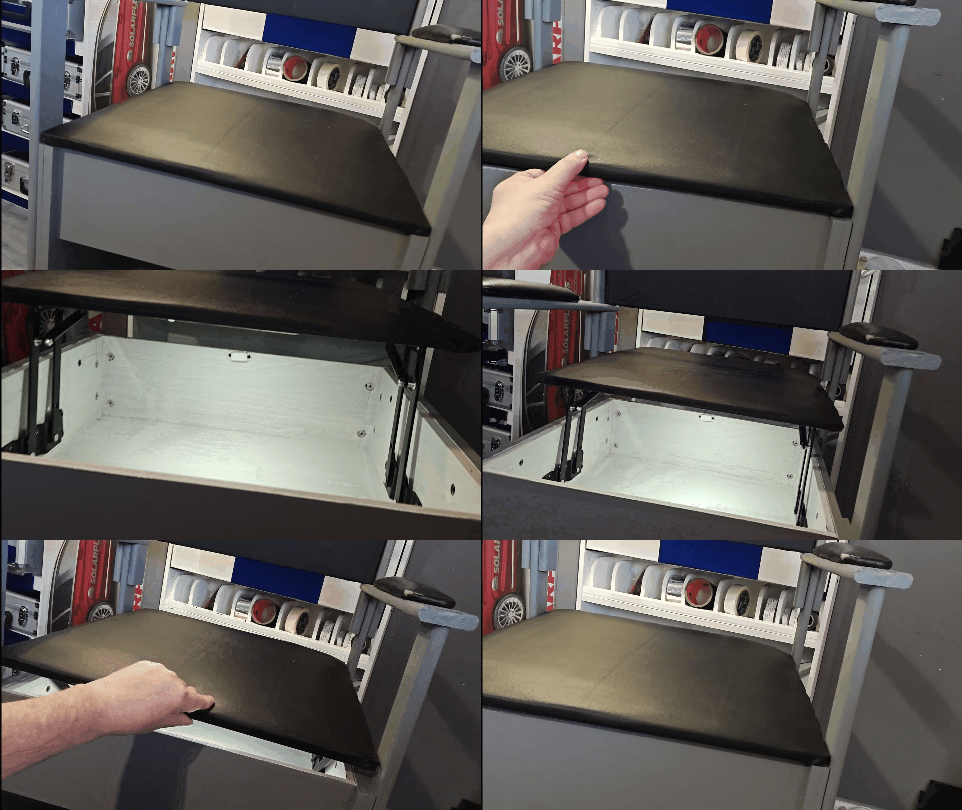
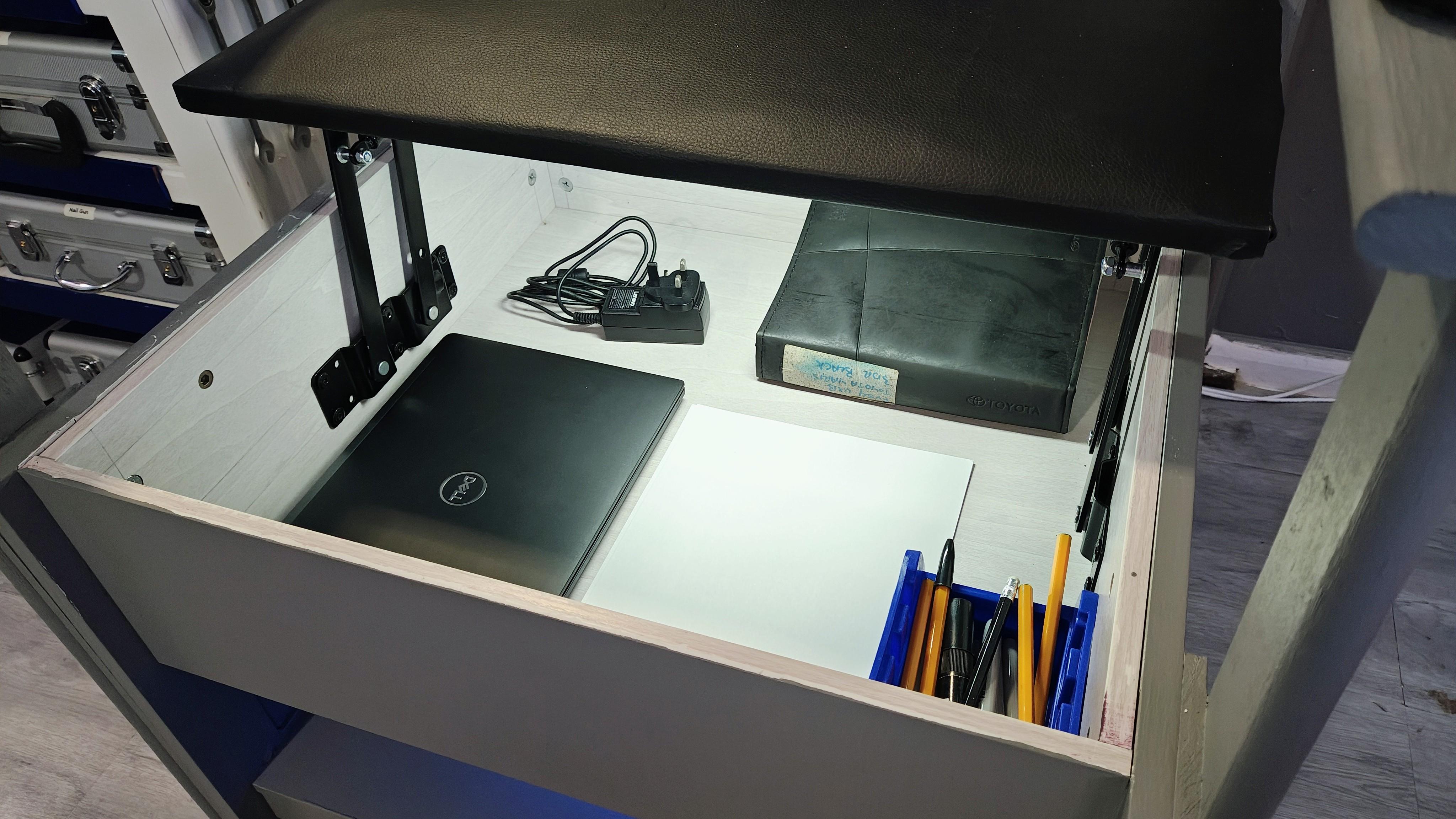
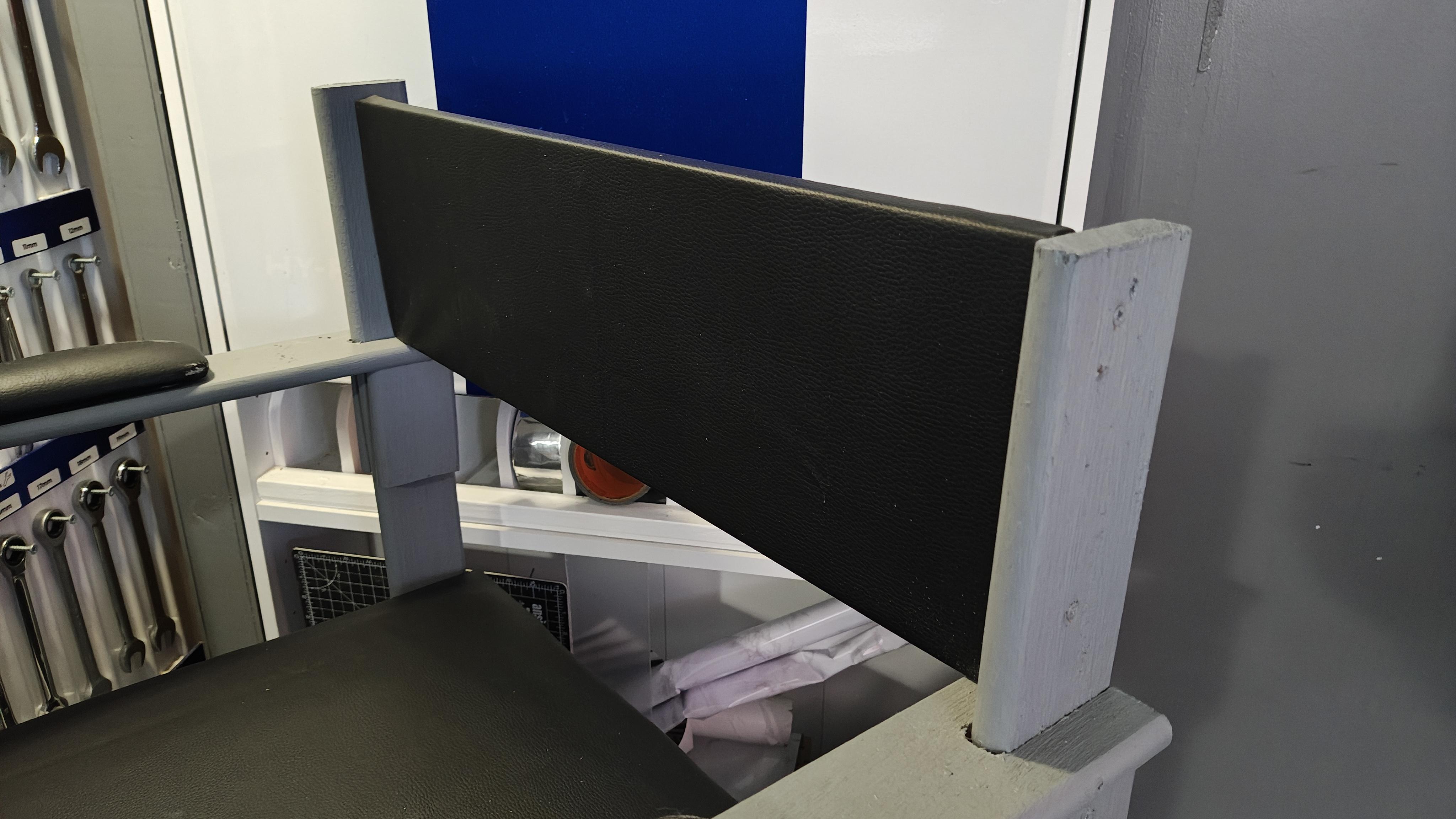
Hello dear reader. This Instructable will show how I made a new chair for my workbench. It's made from scrap wood my neighbour was throwing out and is a welcome addition to my workspace. Under the faux leather padded seat which flips upwards is a storage box with an automatic LED light strip that comes on when the seat/lid is opened, and there is also a LED lit shelf lower down. The backrest and armrests are also foam padded and covered with the same black faux leather as the seat, and the chair sits of four soft roll caster wheels which can be locked to keep it static. A cheap, robust, and very practical chair which was also fun to build.
The Inspiration:
My old chair was very uncomfortable and falling apart beyond repair, so the time came to replace it with something more suitable. My neighbour had recently redecorated their house and hired a skip to get rid of the rubbish. While we were having a chat, I noticed some pretty decent wood from a couple of old shelf units and some thick wood slats from an old bed. He said I was welcome to take what wood I wanted, and set to work. The design came from a coffee table I saw somewhere which had a top that could open with an up and across motion which I liked, so I decided to use that function for a little extra tool storage.
About the Build:
Some of the wood I used was from a flatpack shelving unit which used cam locks and pins, and having a background in working with flatpack office furniture, I decided to use this assembly practice, with a few screws here and there too. If you like the design and fancy making one yourself, you don't need to use the cam setup if you don't want. Although painted, the wood was clean and just needed cutting to size for the panels I needed, and a full repaint when it was almost finished. I quick design mockup noting the sizes for the panels I needed, and sourcing a pair of hydraulic hinges that would lift the seat up for storage access. And the addition of caster wheels was a must for me, although the front two wheels have brakes that can be locked into place so I don't got sliding all over the place unexpectedly :)
So lets get to it.
Supplies



Tools:
- Pencil
- Ruler
- Tape measure
- Jigsaw
- Hand held circular saw
- Nail gun (or hammer/nails)
- Drill/driver
- Hammer
- Spirit level
- Staple gun
- Forstner drill bit (for cam lock holes)
- Standard drill bits and screwdriver bits
- Wood clamp
- Sanding block
- 9" paint roller set and brush
Materials:
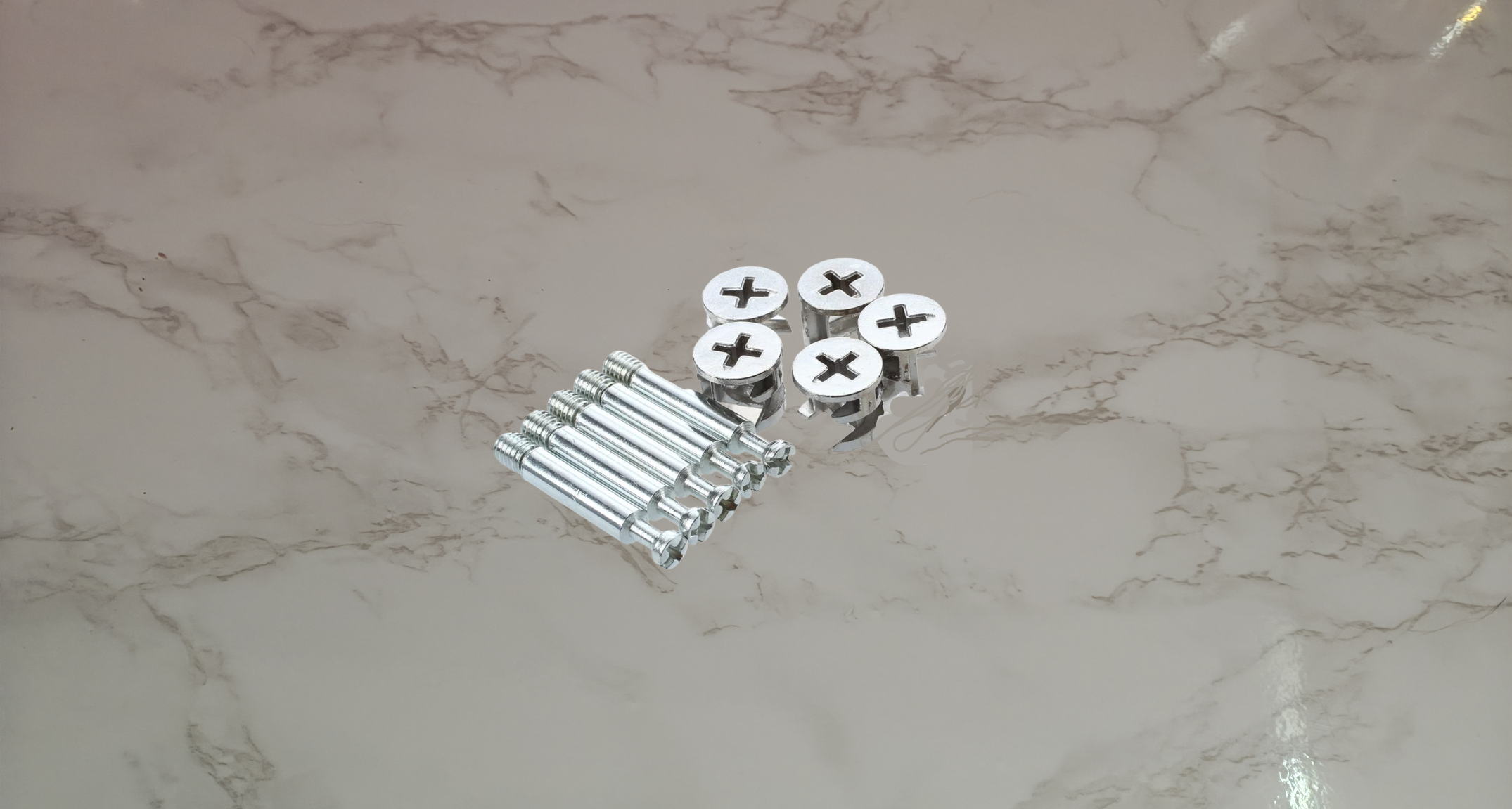
- Cam lock fastening set
- Set of wood insert nuts
- 4 x soft roll caster wheels (two braked, two unbraked)
- Various wood screws
- Pair of hydraulic hinges
- 2 x Automatic LED light strips
- Sheet of faux leather fabric
- Foam for seat/backrest padding
- Paint
- And the wood. The sheet I salvaged and used was a mix of 15mm plywood and 9mm MDF, the rest were hardwood strips. Measurements for chair panels can be found in Step 1: Design Aspects.
Design Aspects
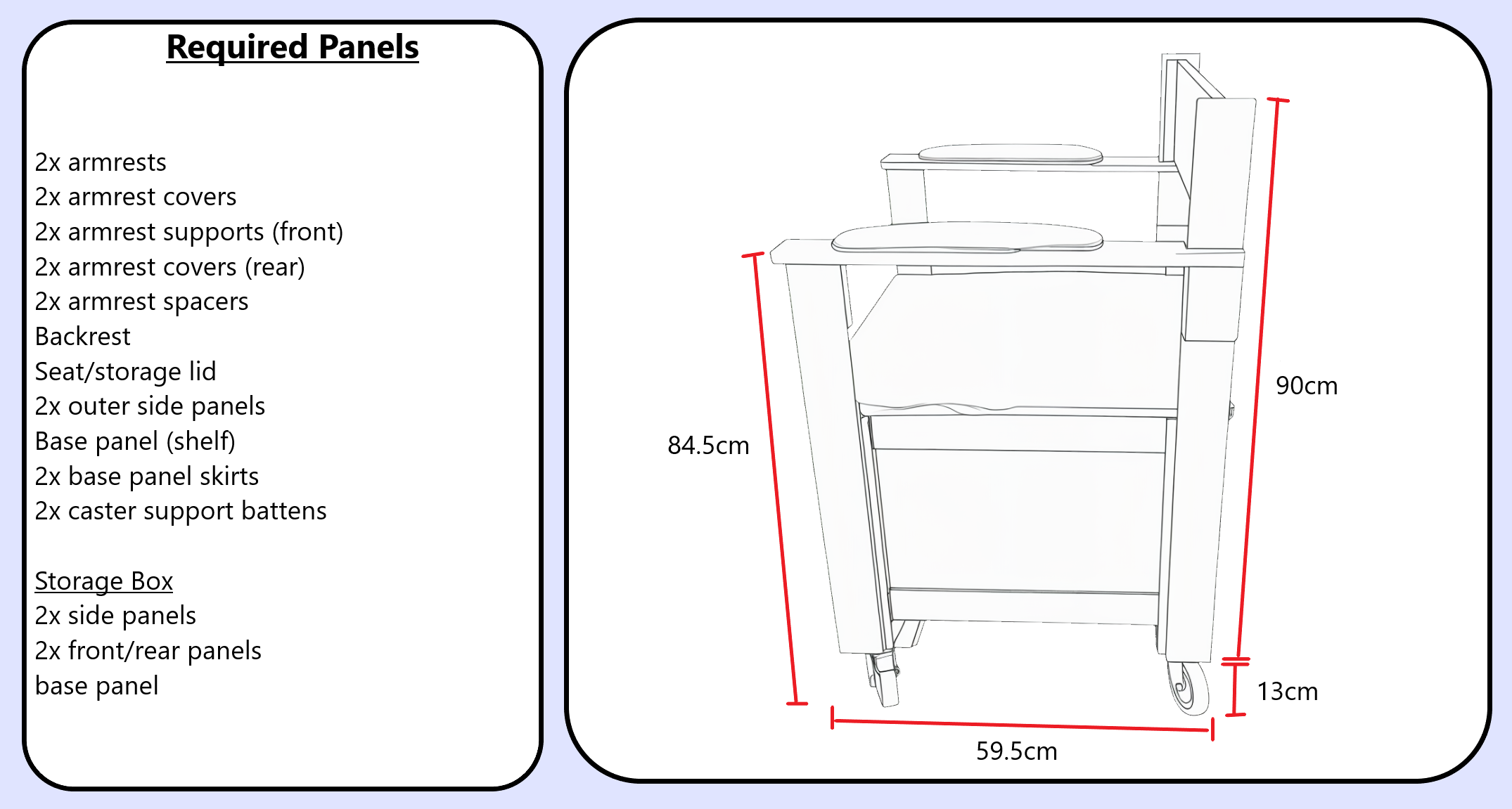

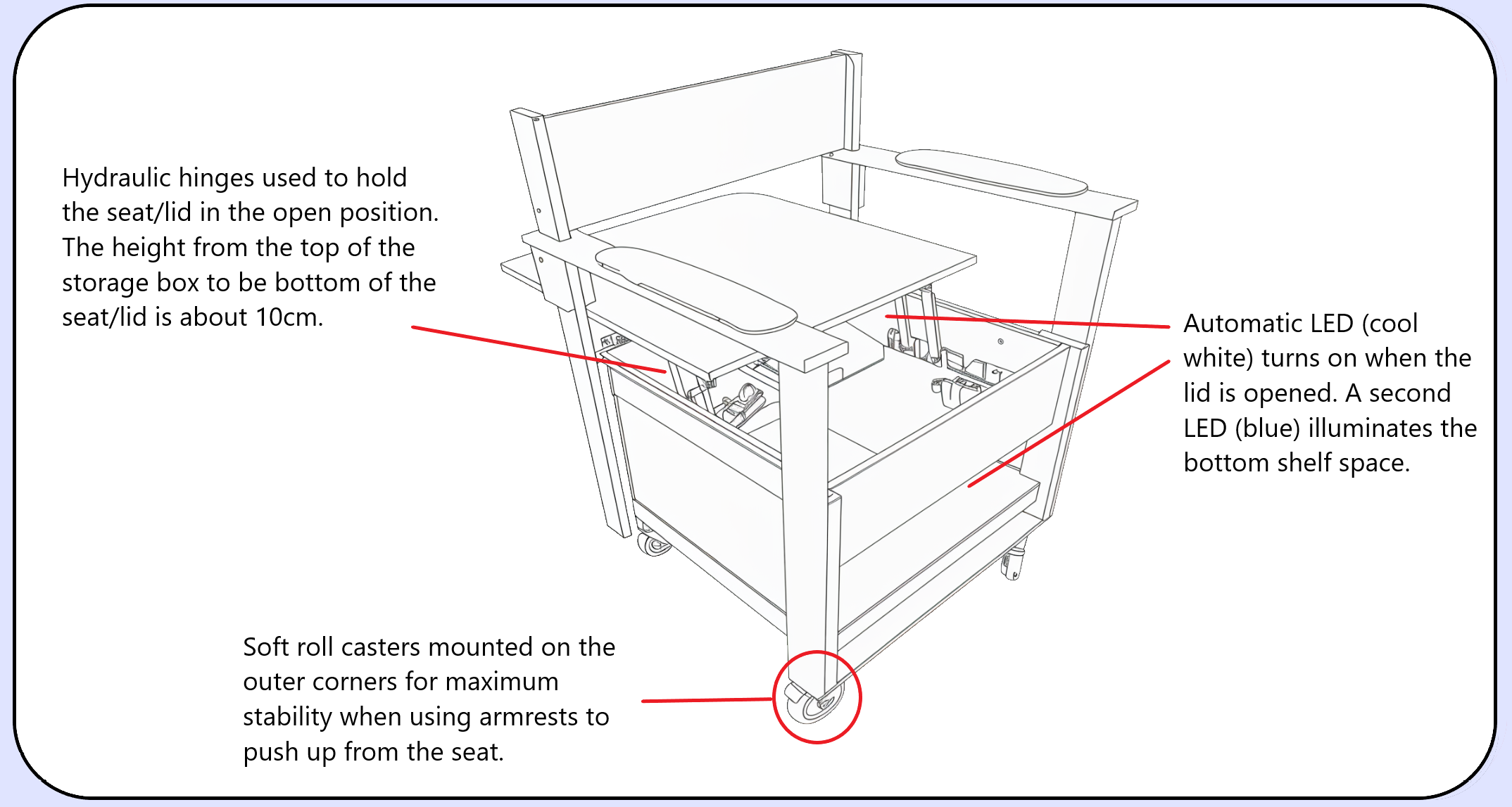
- I designed the chair to be contemporary in style while being practical, durable, and well suited to my work space area.
- Built entirely from reclaimed scrap wood to keep the structure inexpensive, strong, and something that will last.
- Some of the scrap wood had cam fitment attachments, so I utilised these, purchased some more then using the existing cams, matched these up and made new holes on the other wood pieces. I have a working knowledge of using this type of fitment, but they can easily be swapped out for screws, nails, wood glue, brackets etc.
- The chair is designed around the flip-up-and-across seat/lid using hydraulic hinges, hiding the built-in storage box, making efficient use of internal space.
- Automatic LED strip inside the storage compartment activates when the seat is opened for clear visibility. This is done by a PIR sensor that activate when movement is detected, such as opening the seat/lid They also have a standard On/Off function too.
- The lower shelf also includes LED lighting for additional, more for aesthetics than anything else.
- The seat, armrests and backrest are foam padded for comfort during extended use while at my workbench.
- Black grained effect faux leather covering chosen for durability, easy cleaning, and a nice appearance.
- Mounted on soft-roll castor wheels for easy movement around the workspace. The front two are lockable to allow the chair to remain stable when in use.
A Template for Cam Lock Fastening
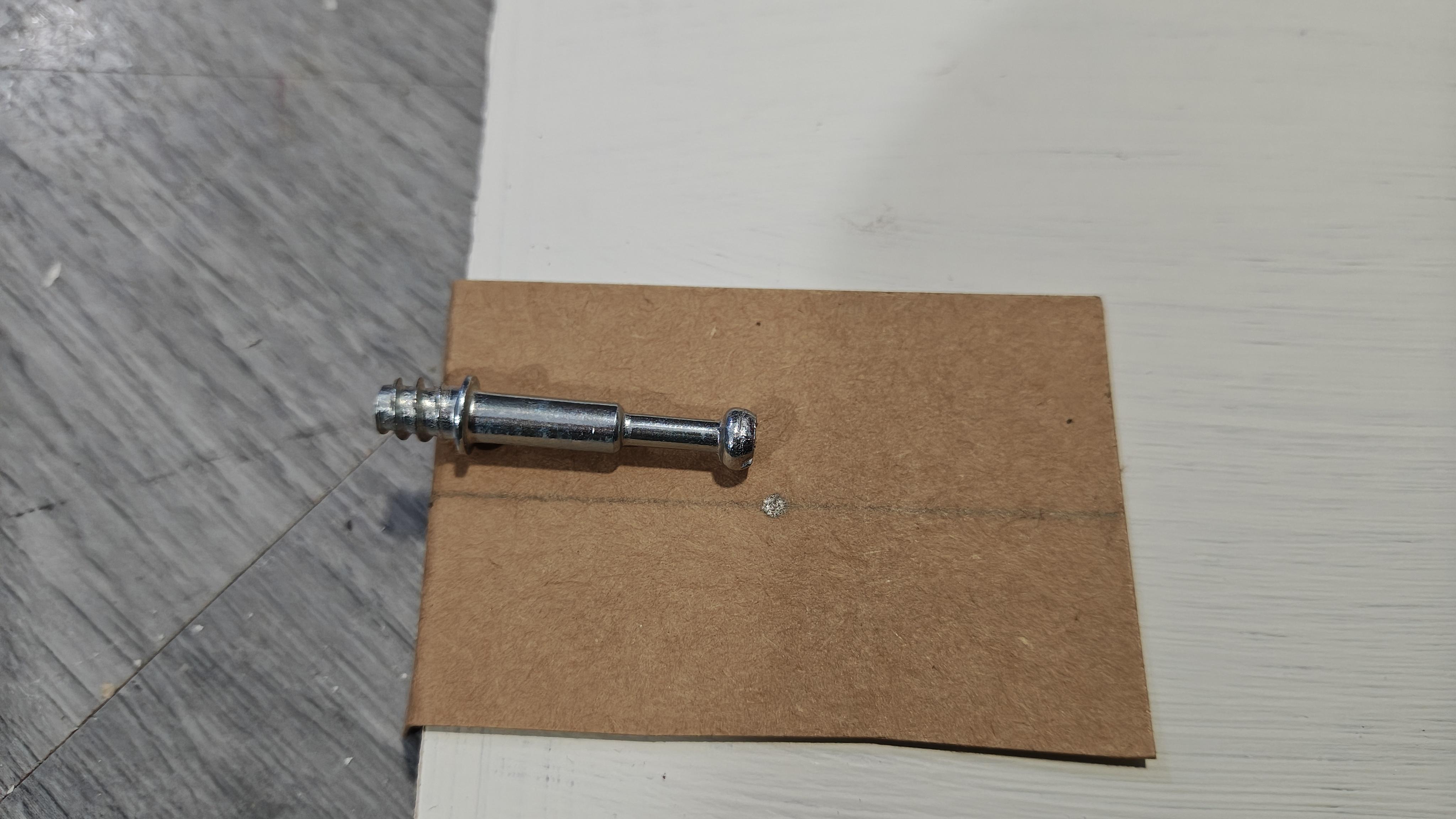


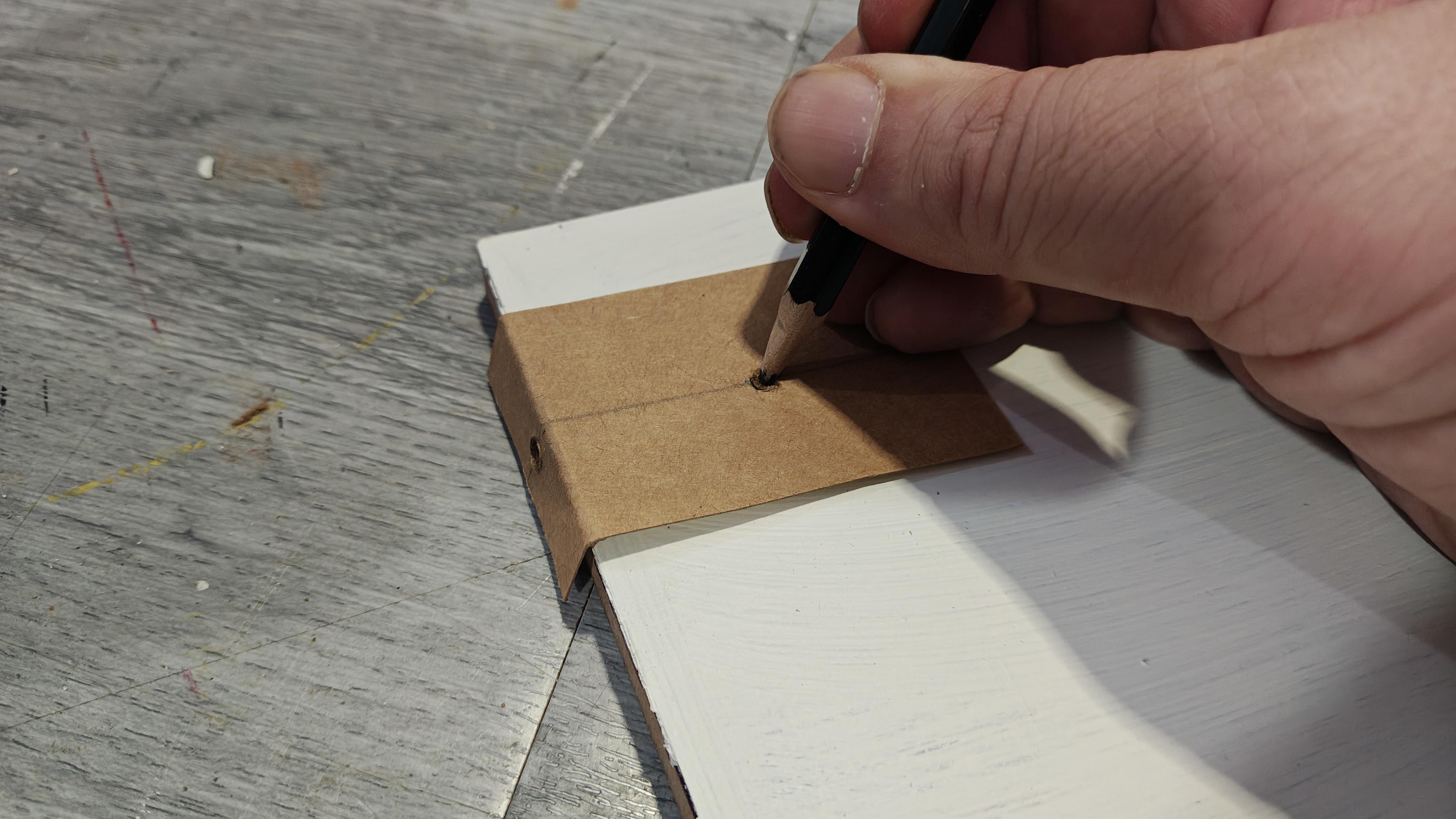
A short step, but one that will come in very helpful if using cam fasteners. Make a little cardboard template you can reuse for marking out your holes for cam pin screw in, pin insertion, and for the cam locks. The mark for the centre of the cam lock should be just above the head of the cam pin (see first image). This will allow for the outer locking part of the lock to go over and catch the head of the pin for a secure fit.
Inner Storage Box Mounting Holes




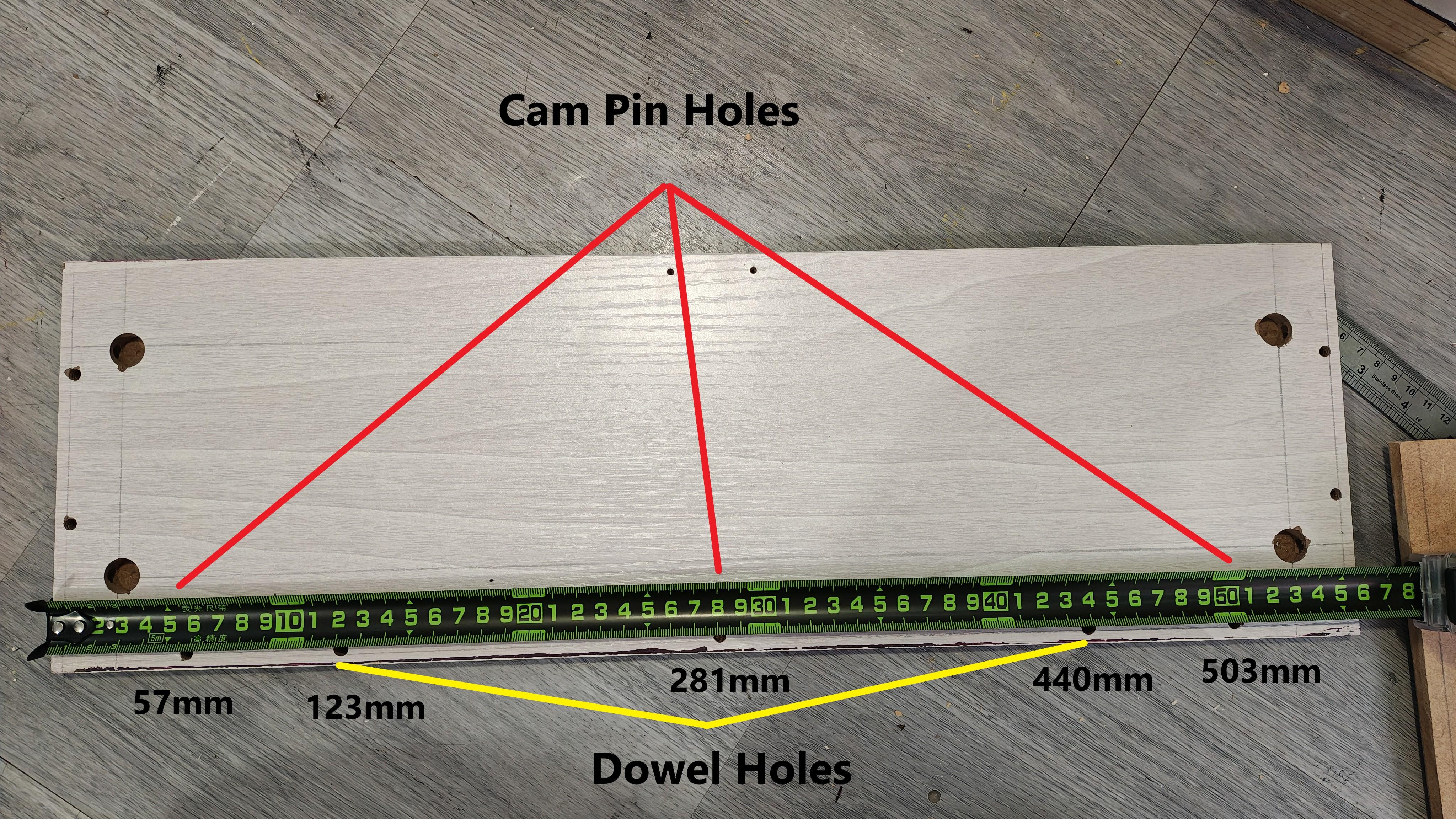

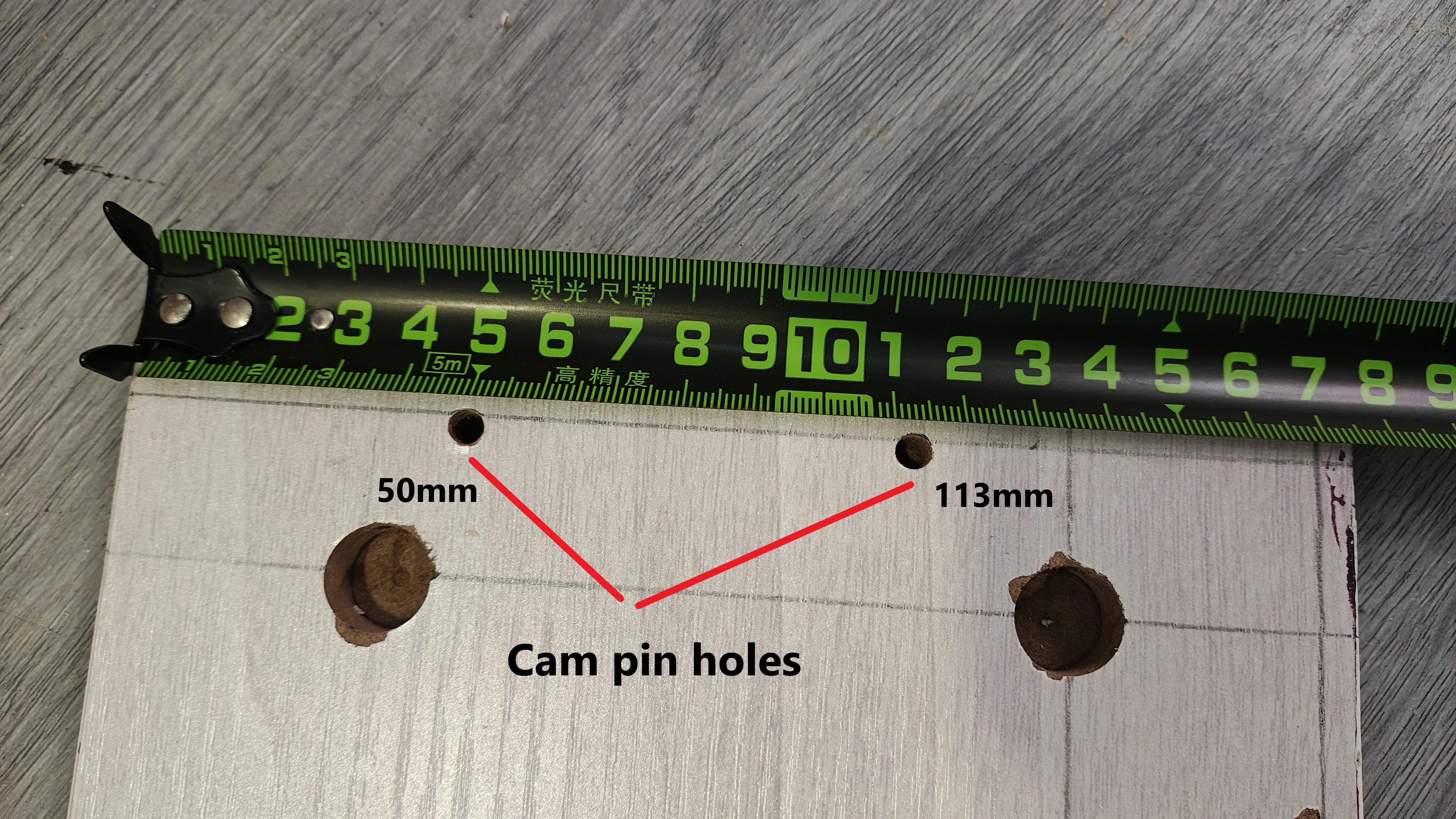
We will start with the storage box that sits just under the seat. This has a front, back, two sides and a base panel.
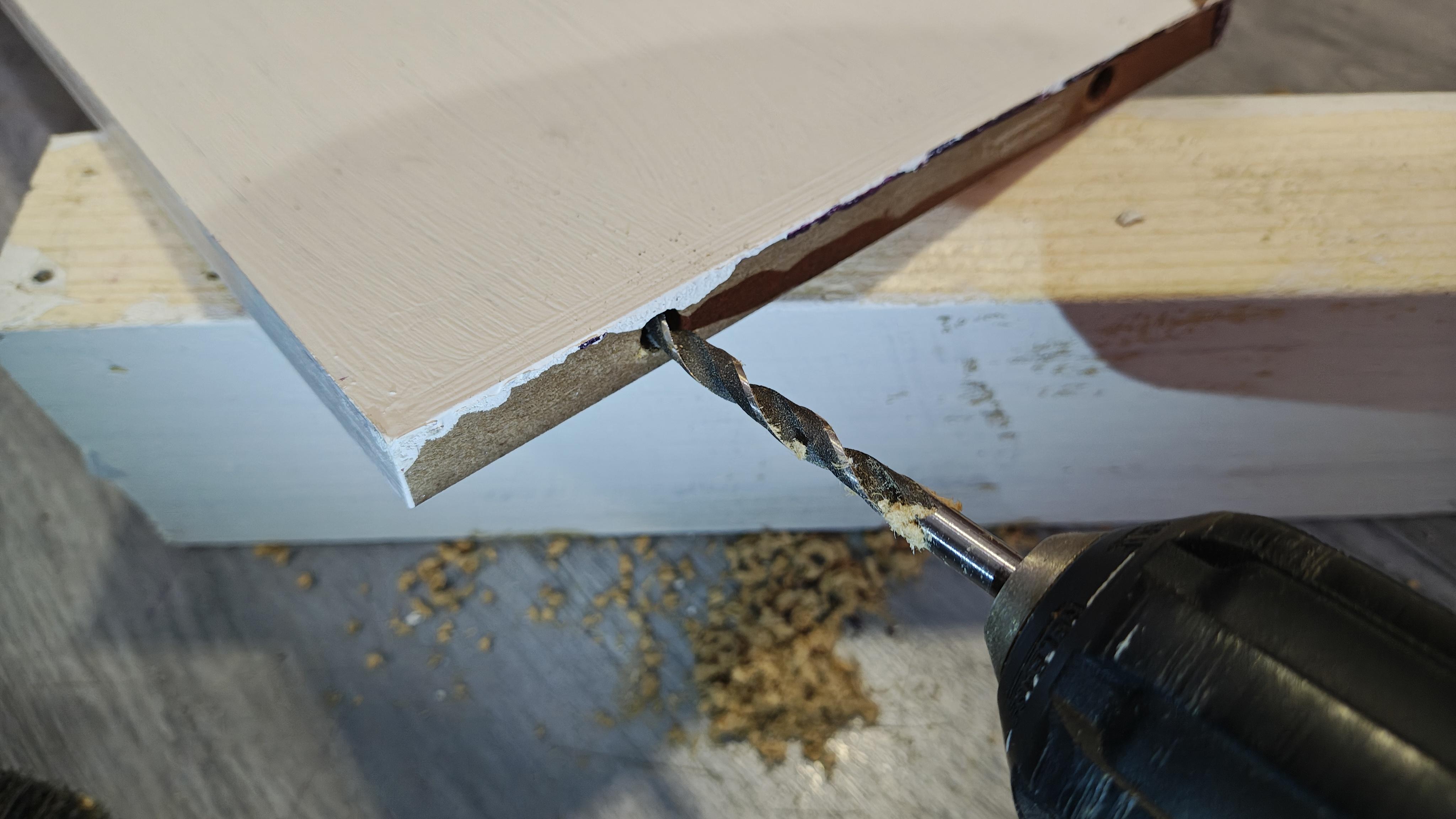
Using the supplied measurements, use the template to mark and drill the holes for the cam locks and pin insertion. The locks I used measure 14.6mm diameter, so use a 15mm Forstner drill bit. The depth of the locks were 11.6mm so this was the depth of the hole needed to be drilled, so take care not to drill down too far into the wood. Drill a bit and test fit until you reach a depth so the top of the lock is flush with the wood surface. For pin insertion, drill from the edge of the wood panels through to the cam lock holes.
Next, measure, mark and drill the holes for screwing in the cam pins. Use a drill bit slightly smaller than the pin threads so the pins can self-tap.
Storage Box Front/rear Panels


With the front and rear panels, insert the cam locks, and have the little arrows on the lock face pointing towards the pin insertion holes.
Next, screw in the cam pins. Be careful not to over-tighten them, they only need to be pinch tight. If you're using a power driver with variable speed, go slow.
Storage Box Side Panels


We move on to the two side panels for the storage box. Insert the cam locks then screw in the pins.
Next, offer up the hydraulic hinges so they are centered to the panel. Mark and drill the holes for the wood insert nuts. I used these nuts (which use machine screws) as they make a nice secure fit and can take the weight of the seat lid better than standard screws.
The wood insert nuts can now be fitted. The ones I used were pressure fit so they were pushed into the holes, then hammered in for a secure fit. Other variations of these nuts screw into the wood with a special tool. I used two additional insert nuts to secure the storage box to the outer side panels. Set the hinges to one side for now as fitting these will be one of the last jobs we do.
Storage Box Assembly


With all of the hardware in place, fit the side panels to the base first, and tighten the cam locks (turn locks in a clockwise direction to tighten). Follow this by fitting the front then back panels, a tighten all of the cam locks.
The Chair Base


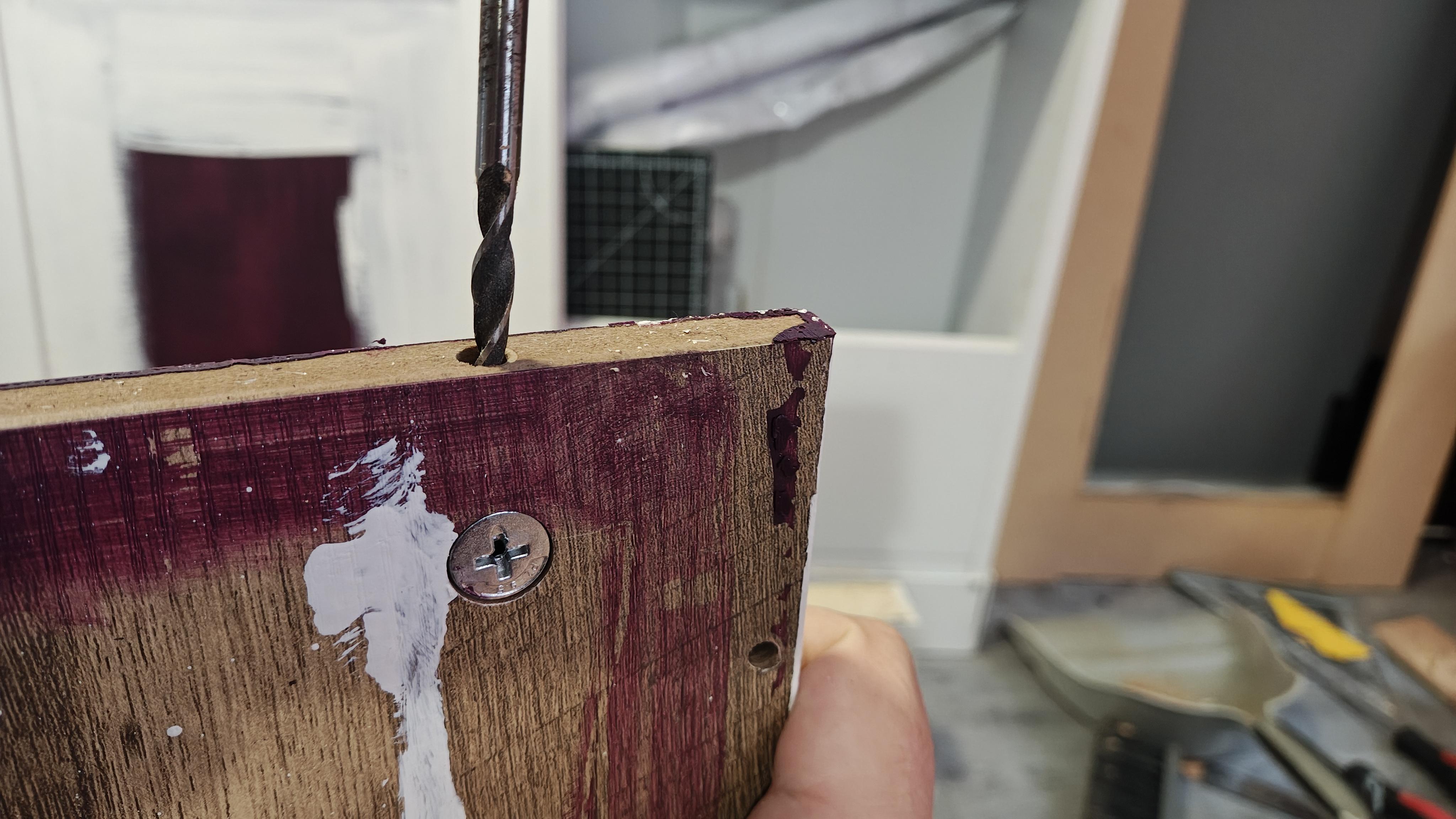




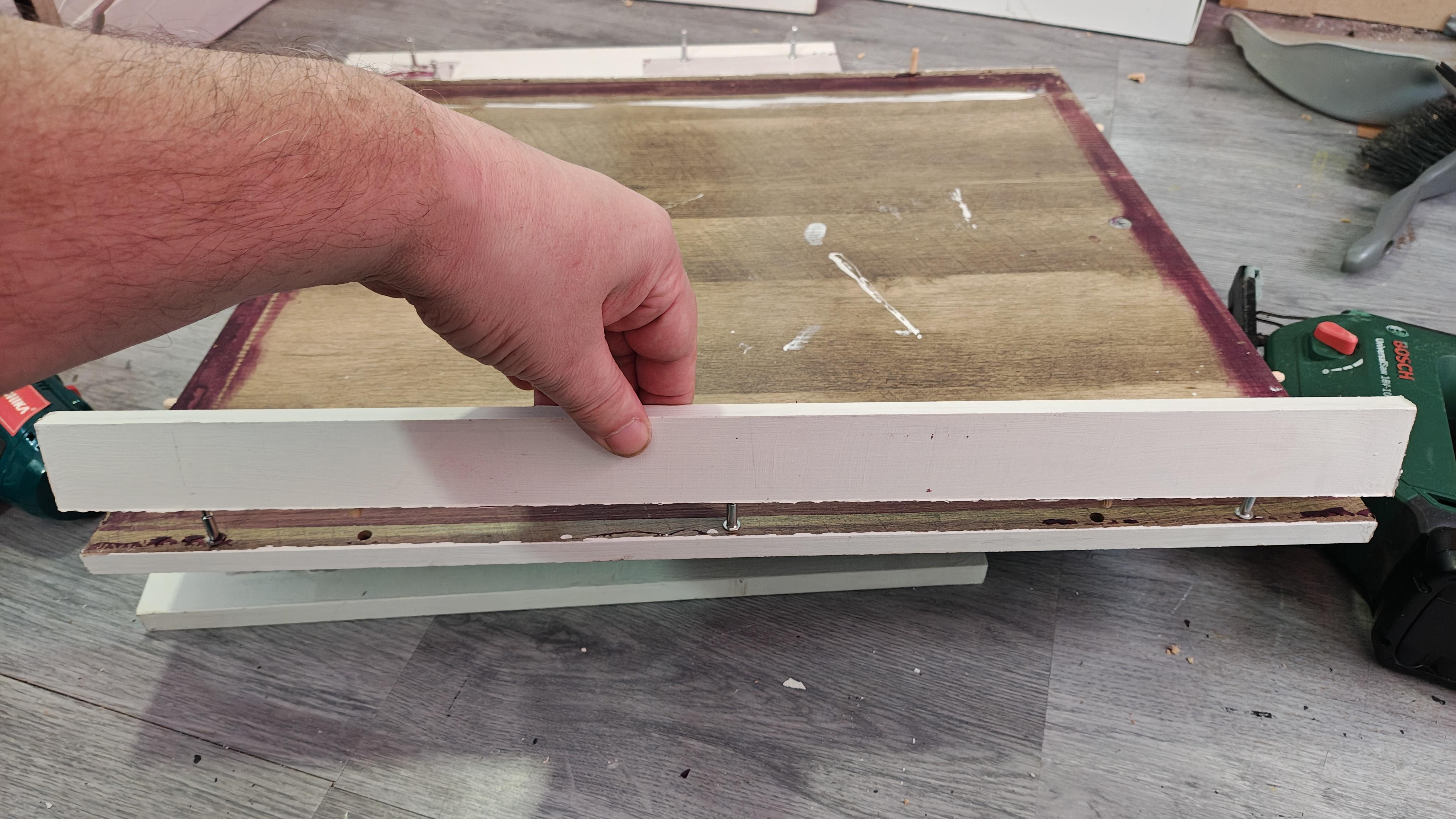

We move onto the base of the chair that will also act as a shelf. Some of the wood I used had cam insert holes that I didn't really need, so I used these by tapping in some wooden dowels and drilling additional holes in the adjoining panel for a more secure fit. The main panel needed to be cut to size with a circular saw and new cam fitting holes made.
Cut two small strips of wood for the front and back of the underside of the base. Use the template to make com fitting holes, the attach to the base and tighten the cam locks.
Outer Side Panels
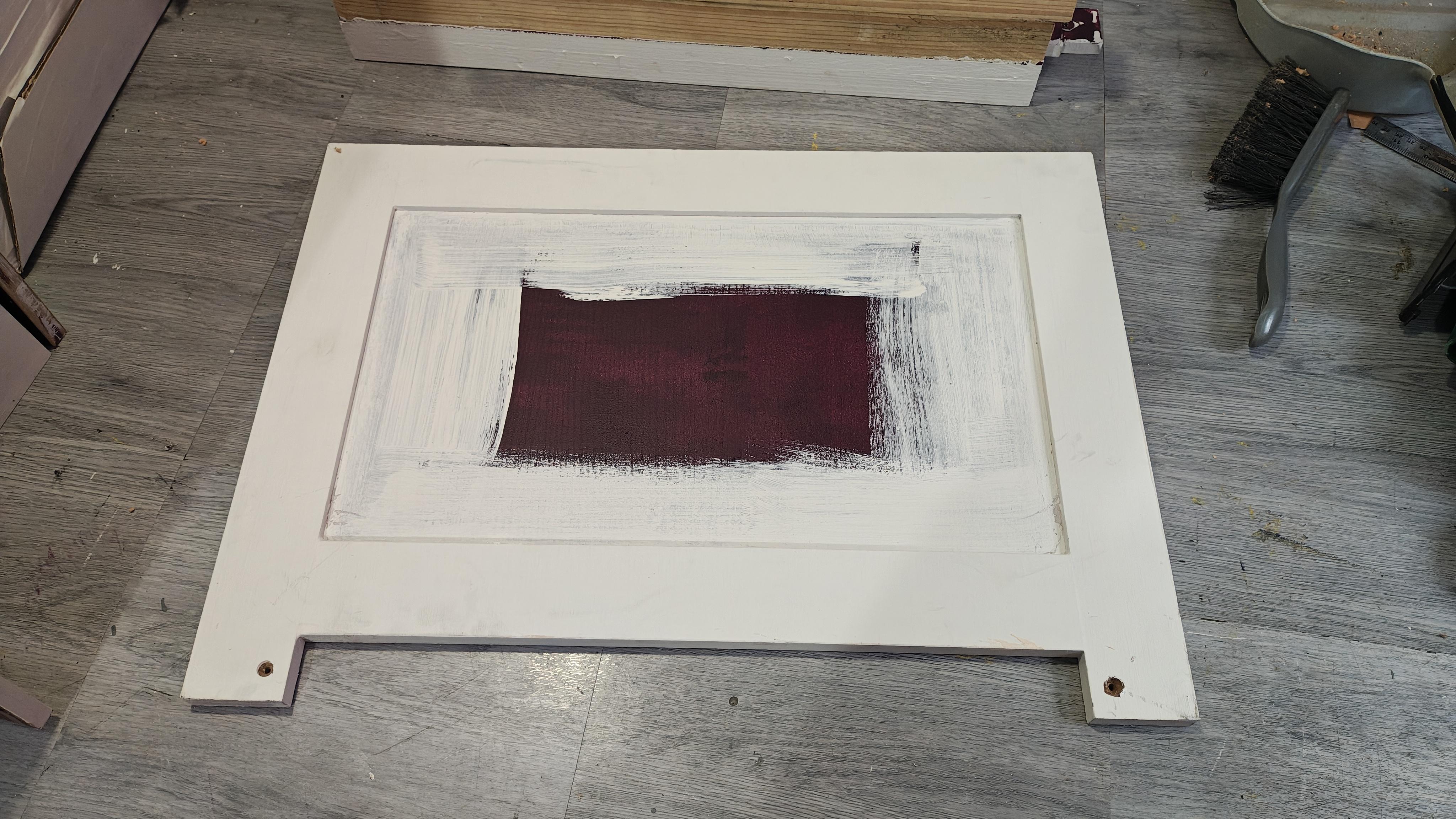
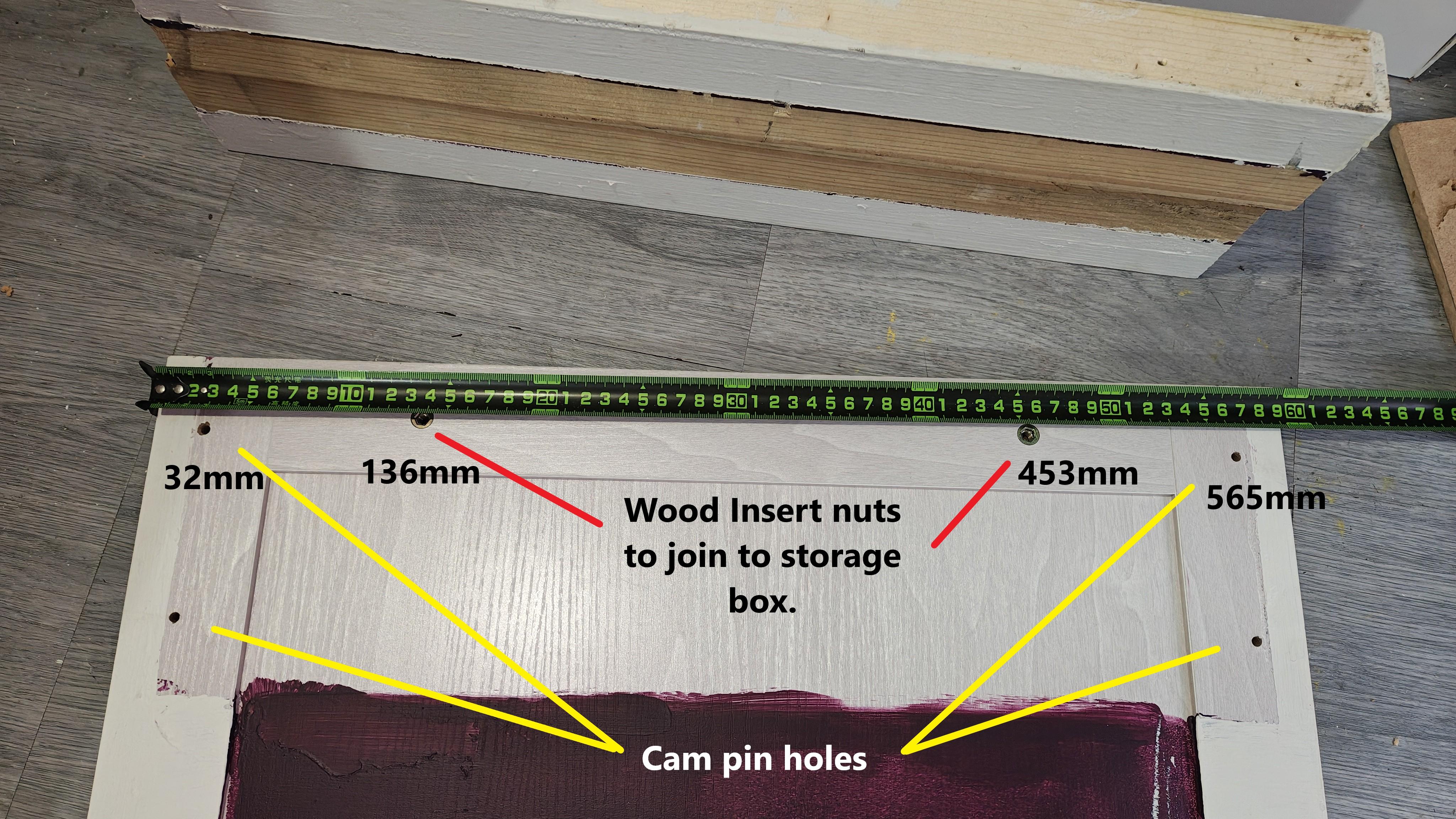
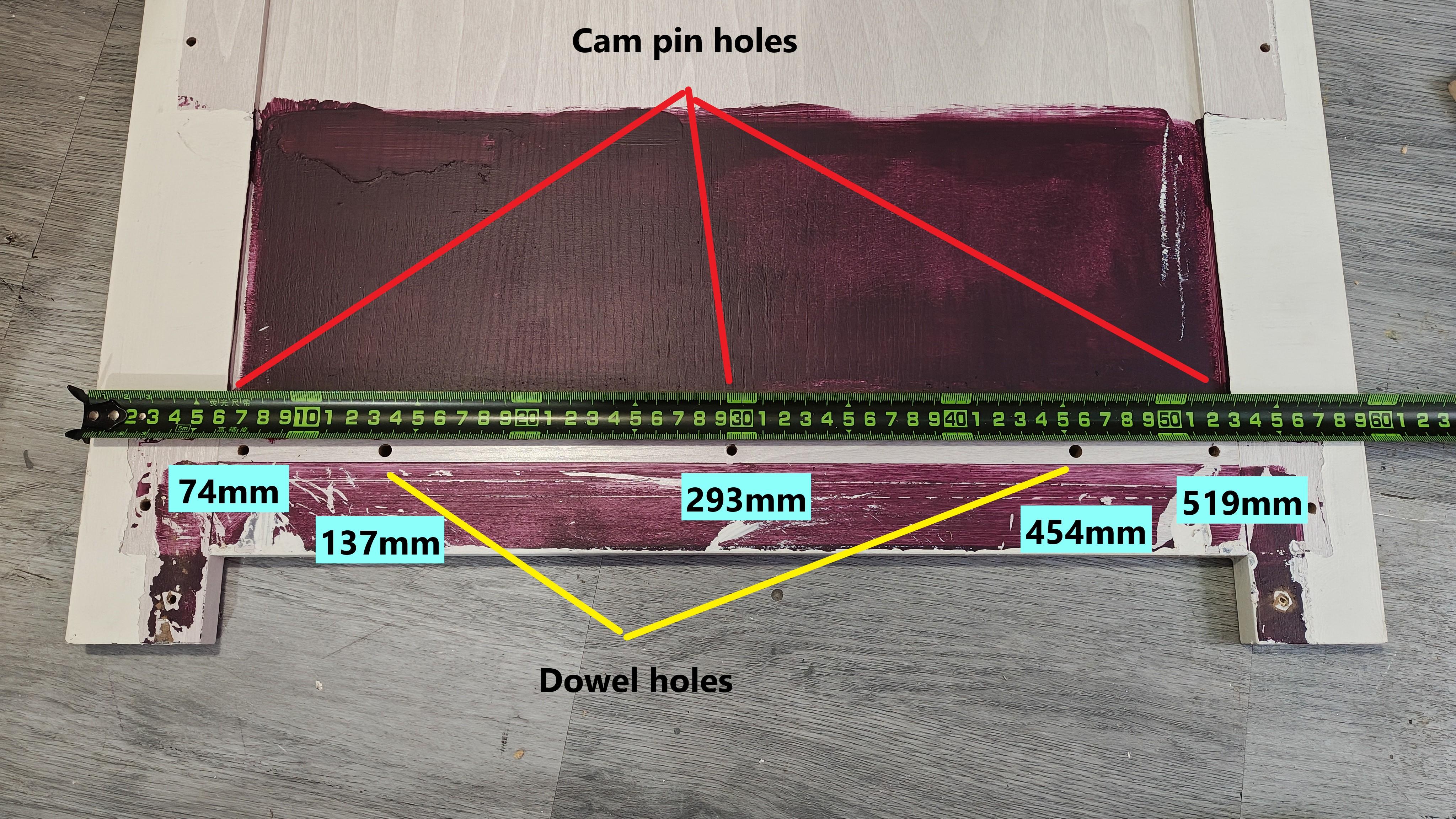


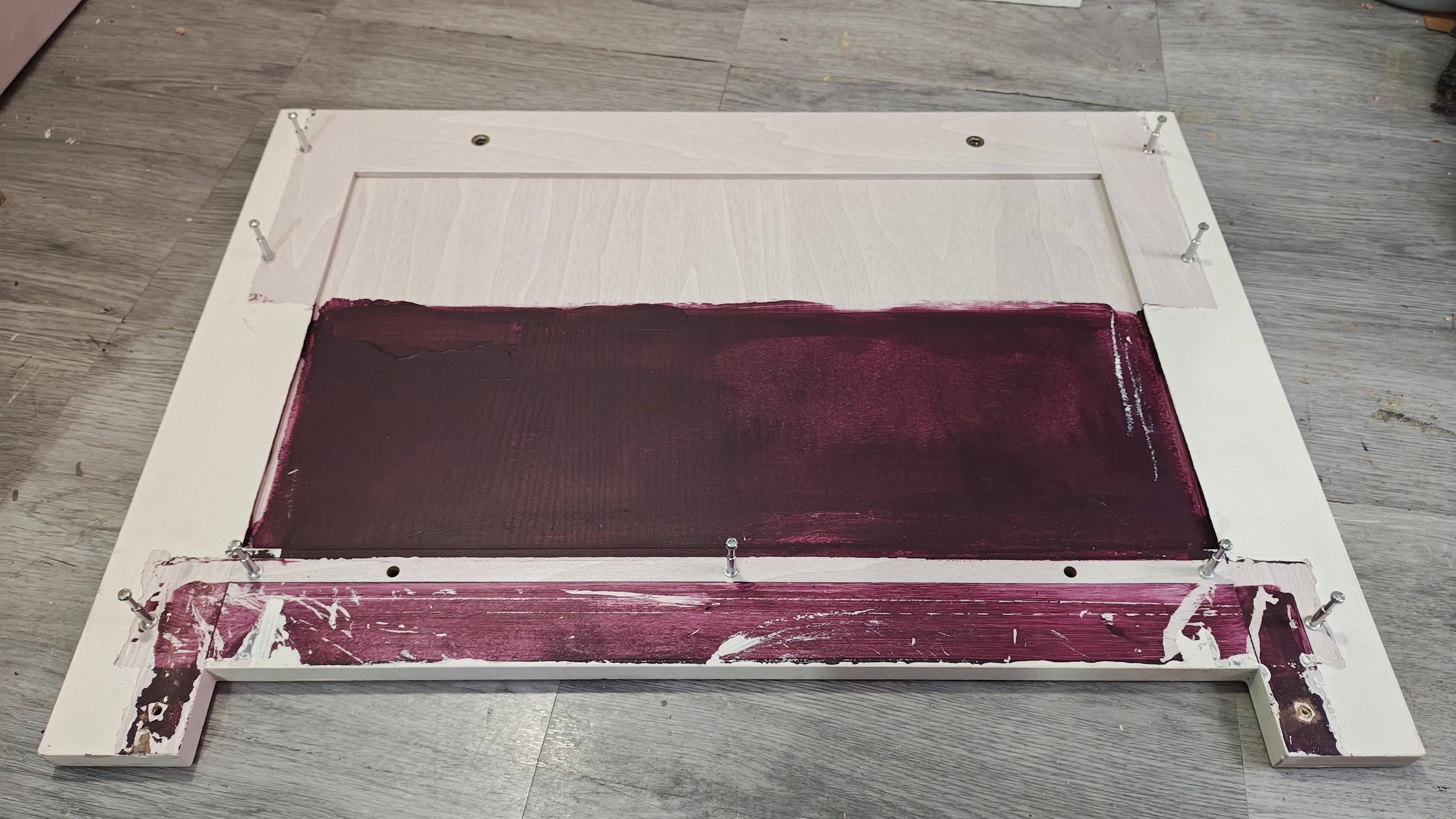
The outer side panels which was part of the old shelf unit were what I based the overall measurements on. Drill some holes for cam pins, holes that match the cam lock positions on the base.
Screw in some cam pins and repeat on the other side panel.
Fitting the Box, Shelf and Sides Together


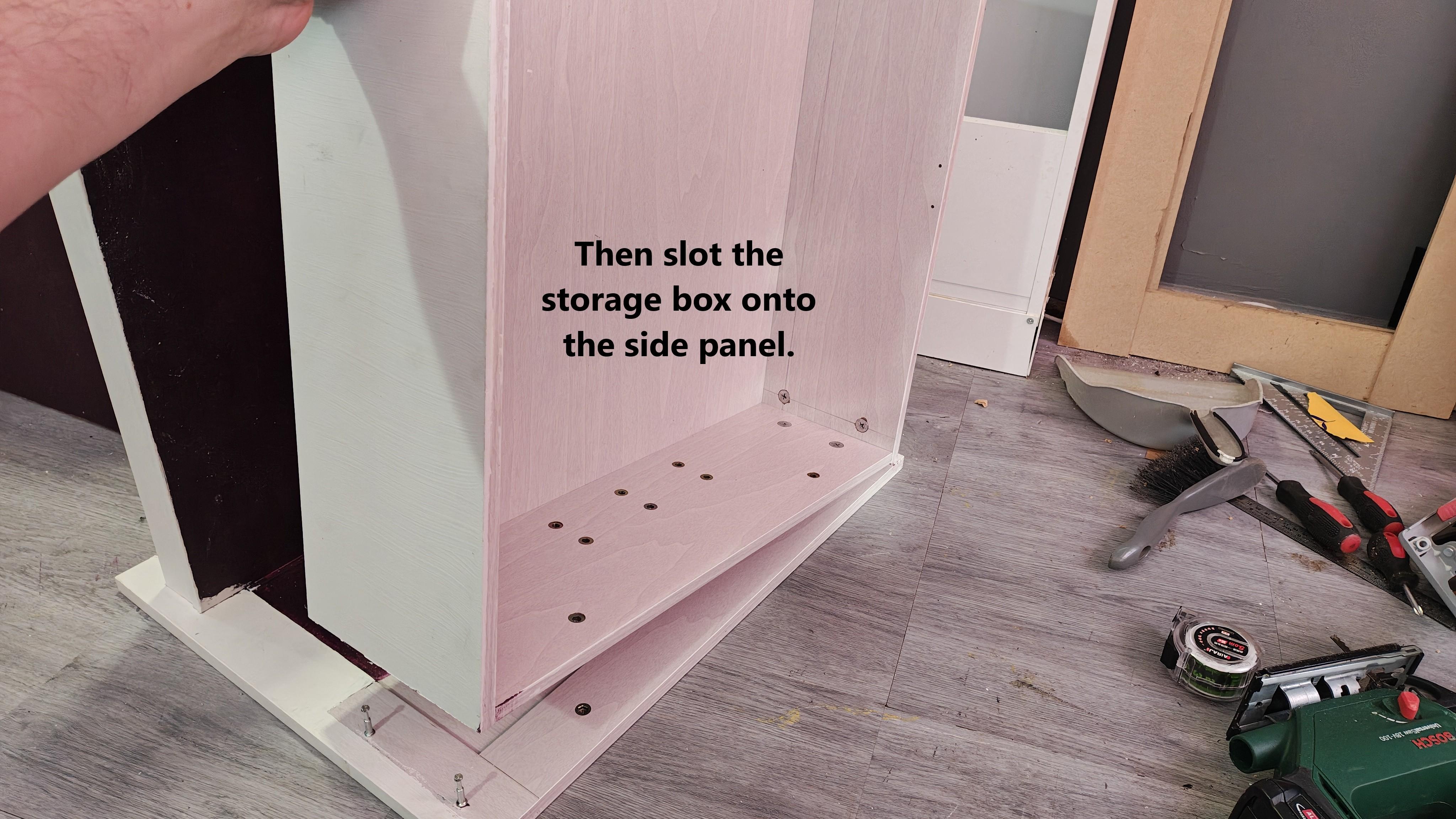
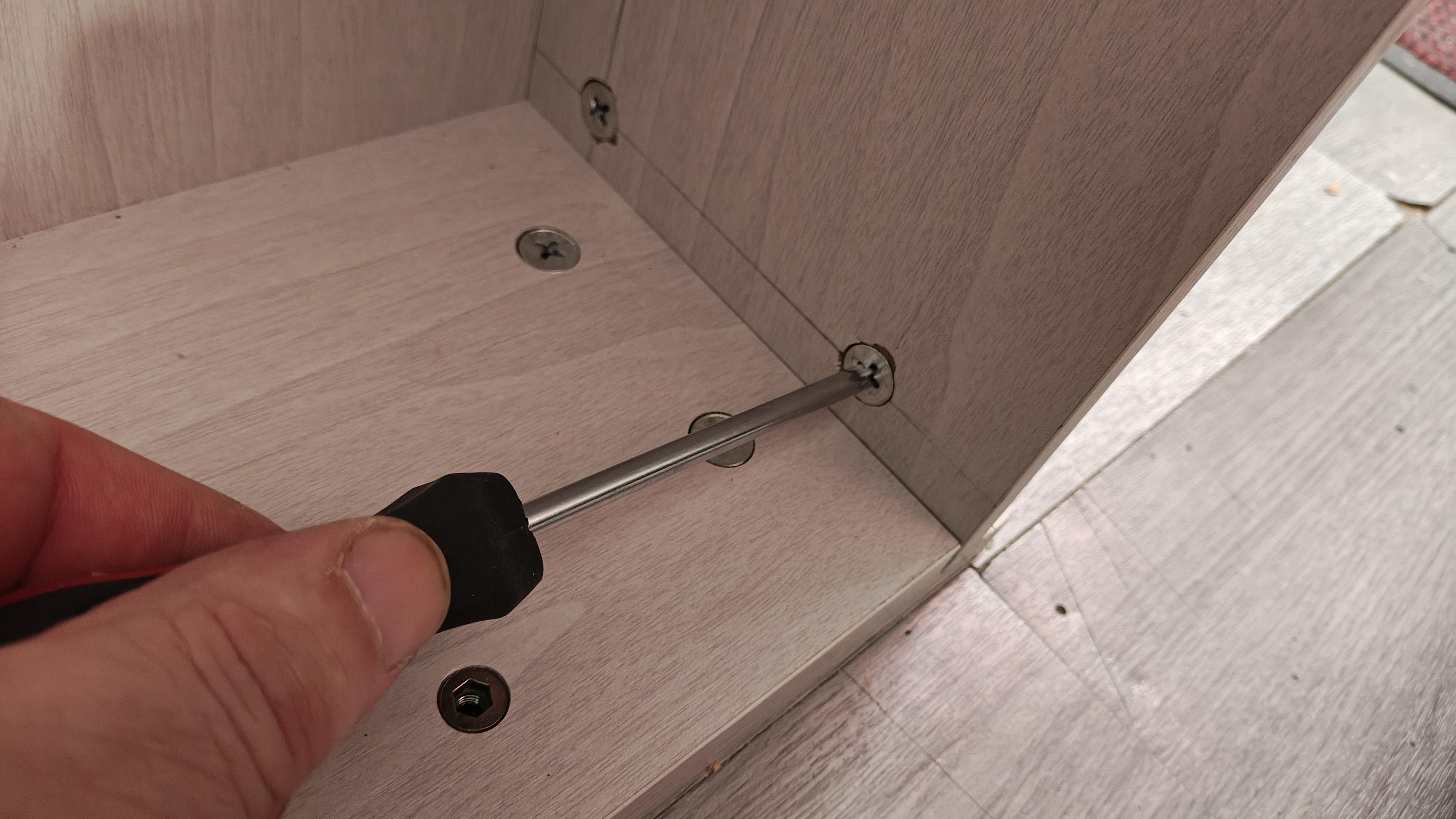


Now the exiting part, fitting the panels and storage box together. Lay on outer side panel down flat, cam pins facing up, then lower the base over the pins and tighten the locks.
Next, lower the storage box onto the side panel pins and tighten. Then lower down the other side panel, pins facing down, onto the other side of the base and storage box, then tighten the locks. We now have a secure storage unit and lower shelf, not quite ready to sit on yet, but we're getting close.
Fitting the Caster Wheels


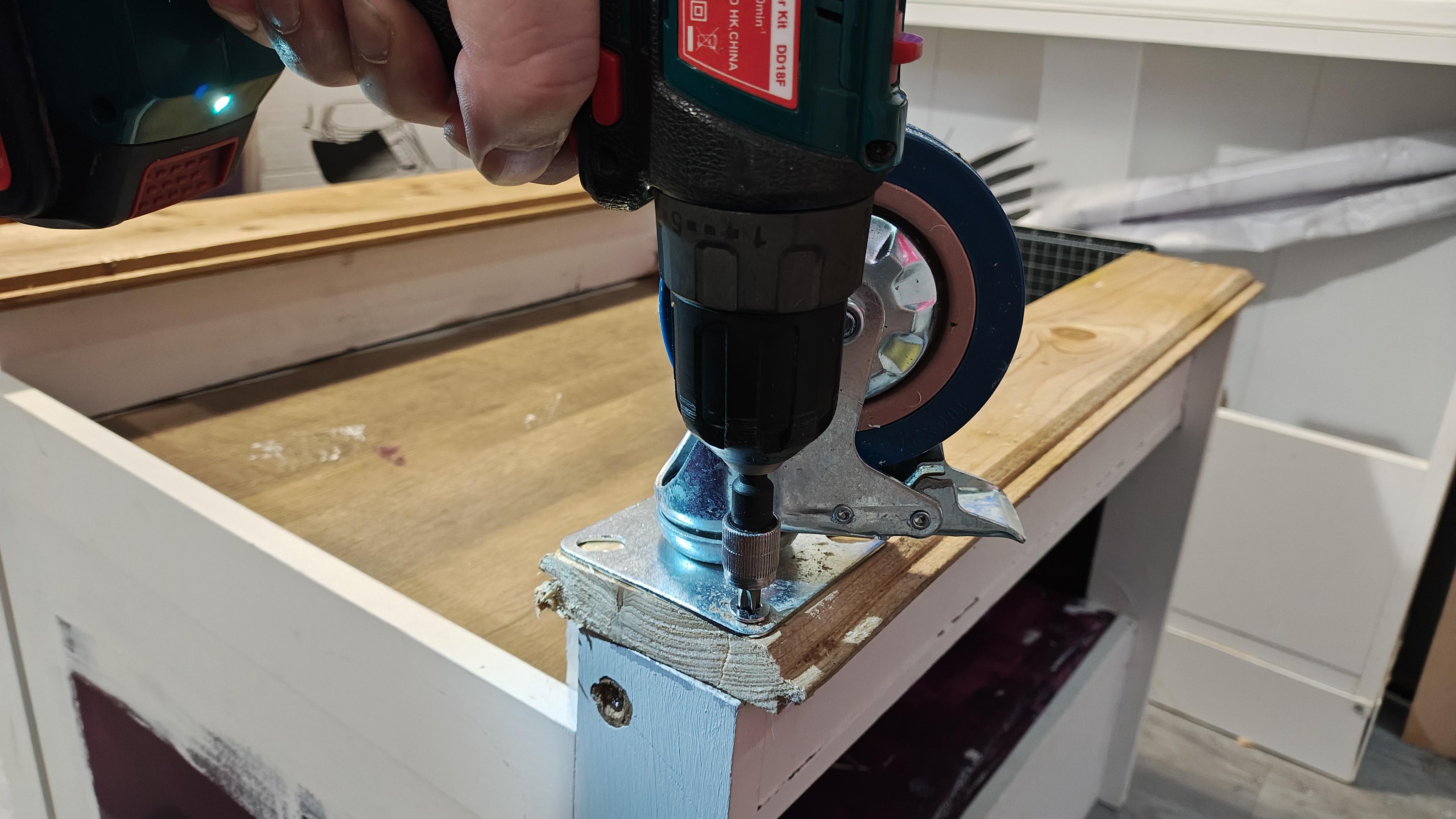
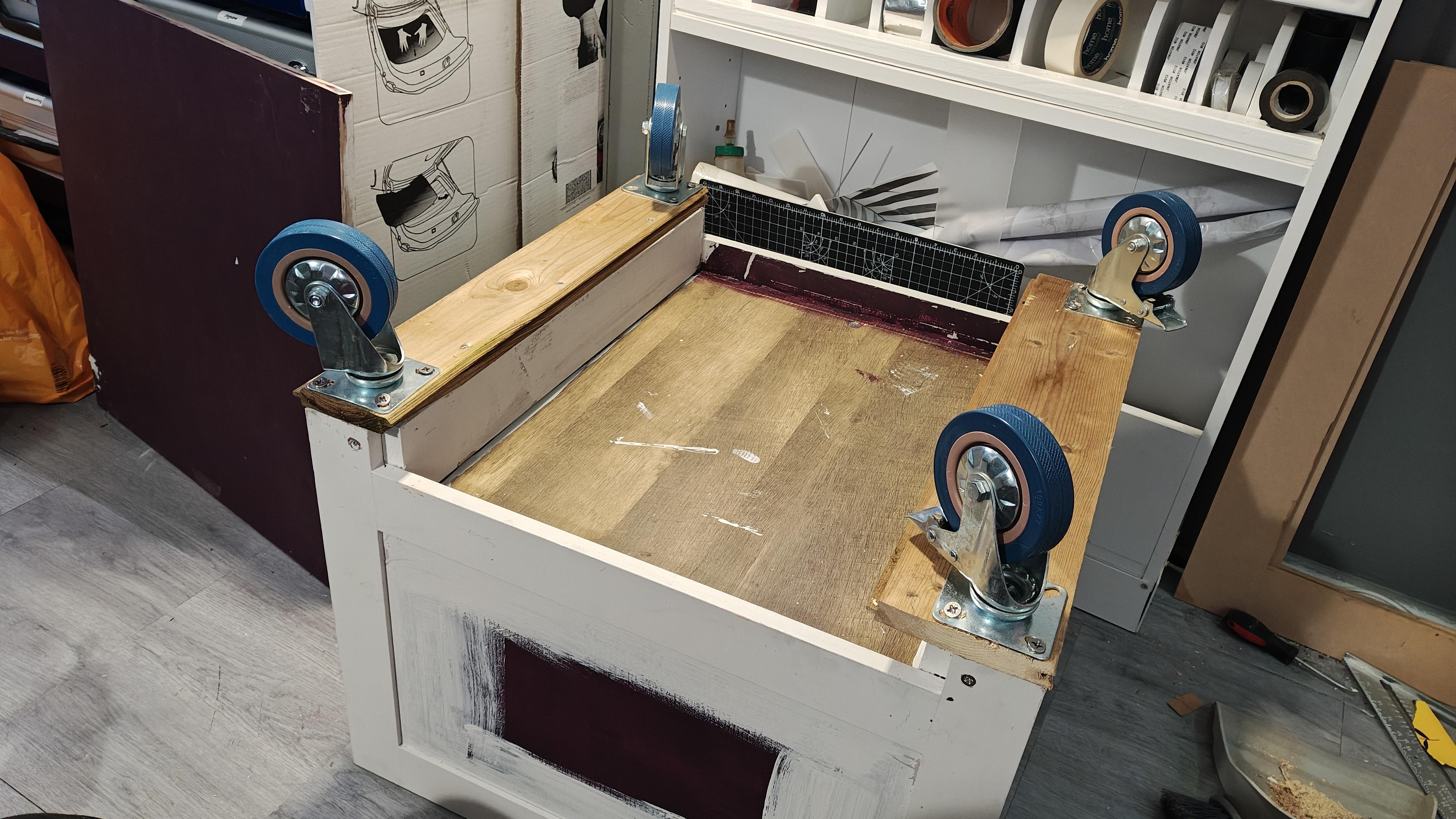
Now was a good time to fit the caster wheels which would make the easier to move around for the next jobs. Because these were going to take all of the weight of the unit and the user, these had to be sturdy.
Cut off a couple of lengths of 45mm x 80mm timber, the length so the fit tight inside of the outer side panels and the narrow wood strips fixed to the base (see fourth image). Use a couple of thick screws and drill/screw through the outer side of the side panels into the timber.
Use a couple of thick pieces of timber, just a bit wider than the casters fixing base, and the full width of the front and back of the chair. Drill and screw these to the 45x80mm timber lengths, then place and screw down the casters. For placement, I put them to the very edge of each corner to avoid tipping, especially if the front of the chair arms were used to lift yourself off of the chair.
Chair Arm Supports


Now to make it more chair like. I used a couple of 5mm MDF lengths, the exact height of the outer side panels, to act as spacers to the seat lid wouldn't rub against the chair arm supports when opening and closing it. These were attached using a nail gun as I would be putting screws through these when fitting the arm supports. For the arm supports, I used some 25mm strip hardwood that were originally used as bed slats.
Cut two lengths of 25mm thing hardwood strips 90cm long (for the back), and another two strips at 60cm long (for the front). Attach one of the strips to the outer side panel, the bottom of the strip flush with the base of the chair (see first image with the MDF spacer), and straight along the chair edge, then drill and screw in. Start by attaching it in the middle, then line up the bottom with the upright edge of the chair. Repeat the process for the other strips.
Chair Arm Rests


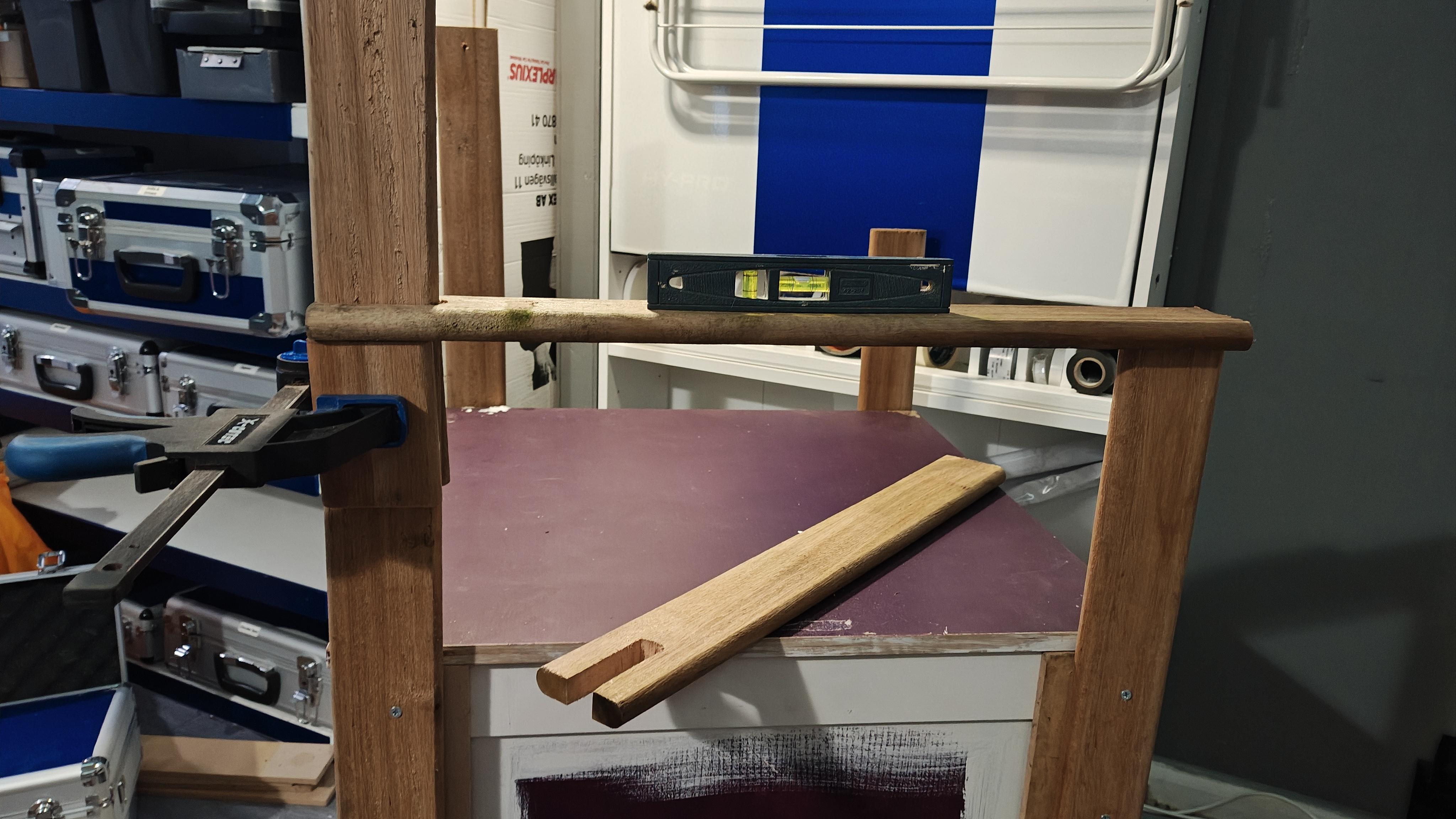


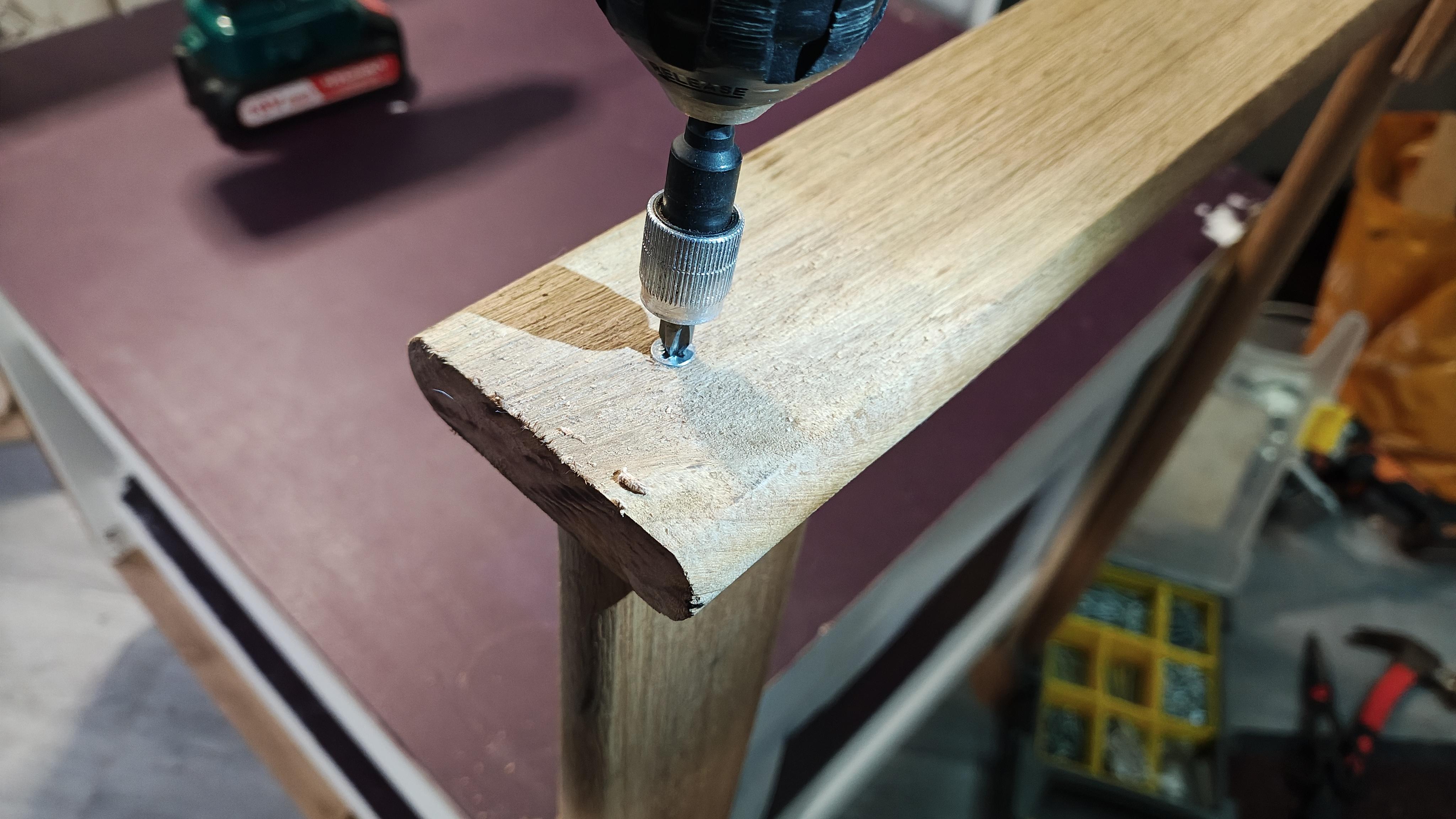


I used the same bed slat timber strips for the arms. These were cut to length, from the front edge of the front arm supports to the back edge of the rear supports.
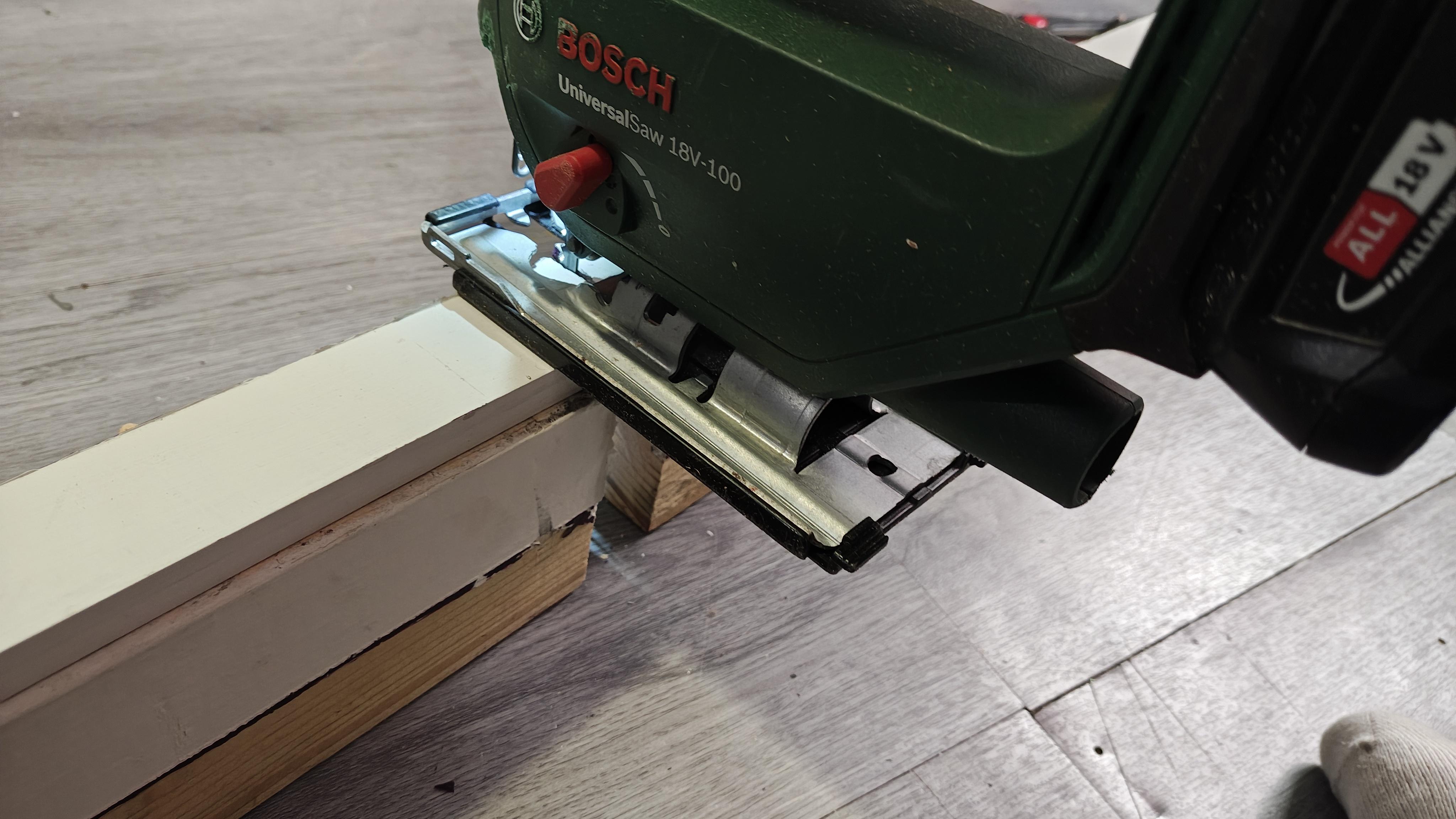
Using another 20mm timber length, cut into four equal lengths (around 15cm). These will be supports for the rear of the arm rests. Place one of the arms on your work surface, place one of the pieces just cut on one end of the arm (see first image), then draw around it onto the arm. Cut this section out with a jigsaw and sand clean, then repeat on the other arm. The height of the inner supports is important because if they're too long, the seat/lid wont open fully, so double check this by offering up one of the hinges in the open position, and factor in the thickness of the seat and padding.
Place an arm onto the chair so the front is supported by the front arm support, and the back is slotted over the rear support (see second to last image). While holding the back end, place two of the 15cm supports on either side of the rear arm support, just under the arm. Place a spirit level onto the arm and line it up so it is level, moving the small supports accordingly.
When in position, hold them in place with a wood clamp, then drill/screw them into place (screws thick enough to go through one small support, through the main support, and just over half way in the other small support). Screw through the front of the arm into its support, and a screw either side of the rear of the arm rest. Almost chair like now. One final job is to cut a piece of sheet wood for the backrest, long enough to fit in between the rear arm rest supports (mine was 61cm), and 20cm high, then put to one side for now.
Something new, and my cats are all over it. They were allowed for now, but not for long as painting it was next.
Painting


This stage is a good point to paint what we have so far. Give everything a good sanding with a medium to fine grit sanding block to get rid of any rough edges and unwanted stains etc. Give the chair a wipe over with a brush and a cloth. I used a pre-mixed primer/paint which was a medium grey that suited the area it would be used in.
Now we can paint. Give your paint a good stir, then cut-in all of the edges, joins, recesses, with a paint brush, then finish off with a 9 inch roller. Give the paint a few hours to dry, then apply a second coat then repeat if you need a third coat.
I didn't paint inside of the storage box as it was already white and and would reflect the LED illumination better.
Upholstery


While the paint is drying, we can cover the seat, backrest and arm rests. Starting with the seat, cut some foam to the size of the seat/lid panel. Lay the faux leather fabric, face down, onto your work surface, then lay the foam on top, then the seat panel (upside down with the wood insert nuts facing up). You will want enough fabric to pull over the sides of the foam and seat on all four sides.
Starting from one corner, pull the fabric over and fire in a couple of staples, then move to the diagonal corner, pull the fabric tight (not so tight as to risk taring it) and staple into place. Follow that process for the other two corners.
Then go along one edge, pulling the fabric and firing in staples along the edge, about 10 to 15mm in from the edge. Go around all four sides, but don't staple down the corner areas just yet. Instead, cut off any excess fabric leaving around 5cm. Go around the edge you just cut firing in more staples, this time doing the corners, cutting off any excess overlap. Follow the same process above, for the backrest and arm rests.
To make the rear of the backrest look a little tidier, I cut a couple of MDF scraps the length of the backrest and painted them grey. These were fitted to the rear of the backrest with a few screws to hide the staples.
Final Jobs

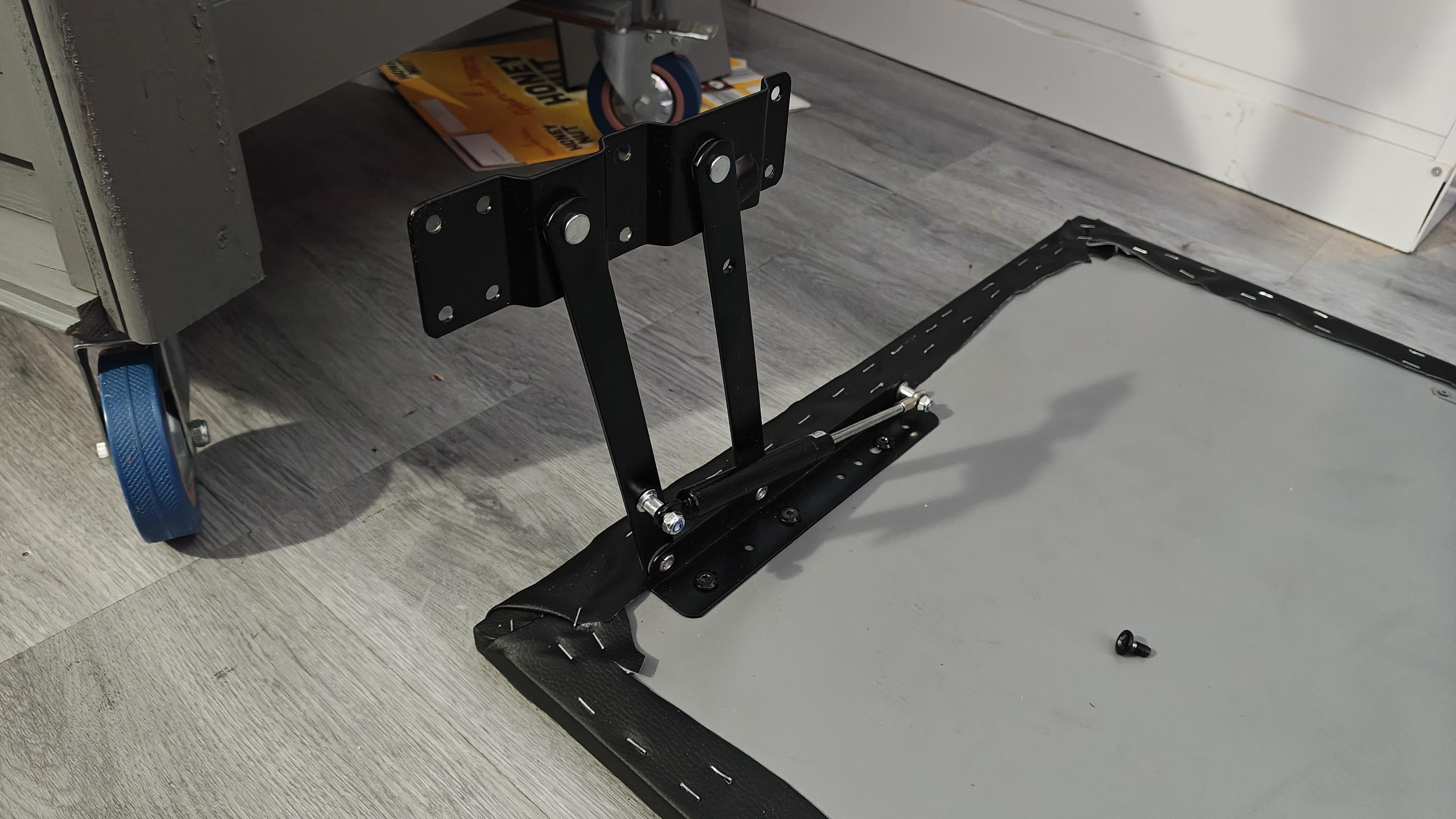


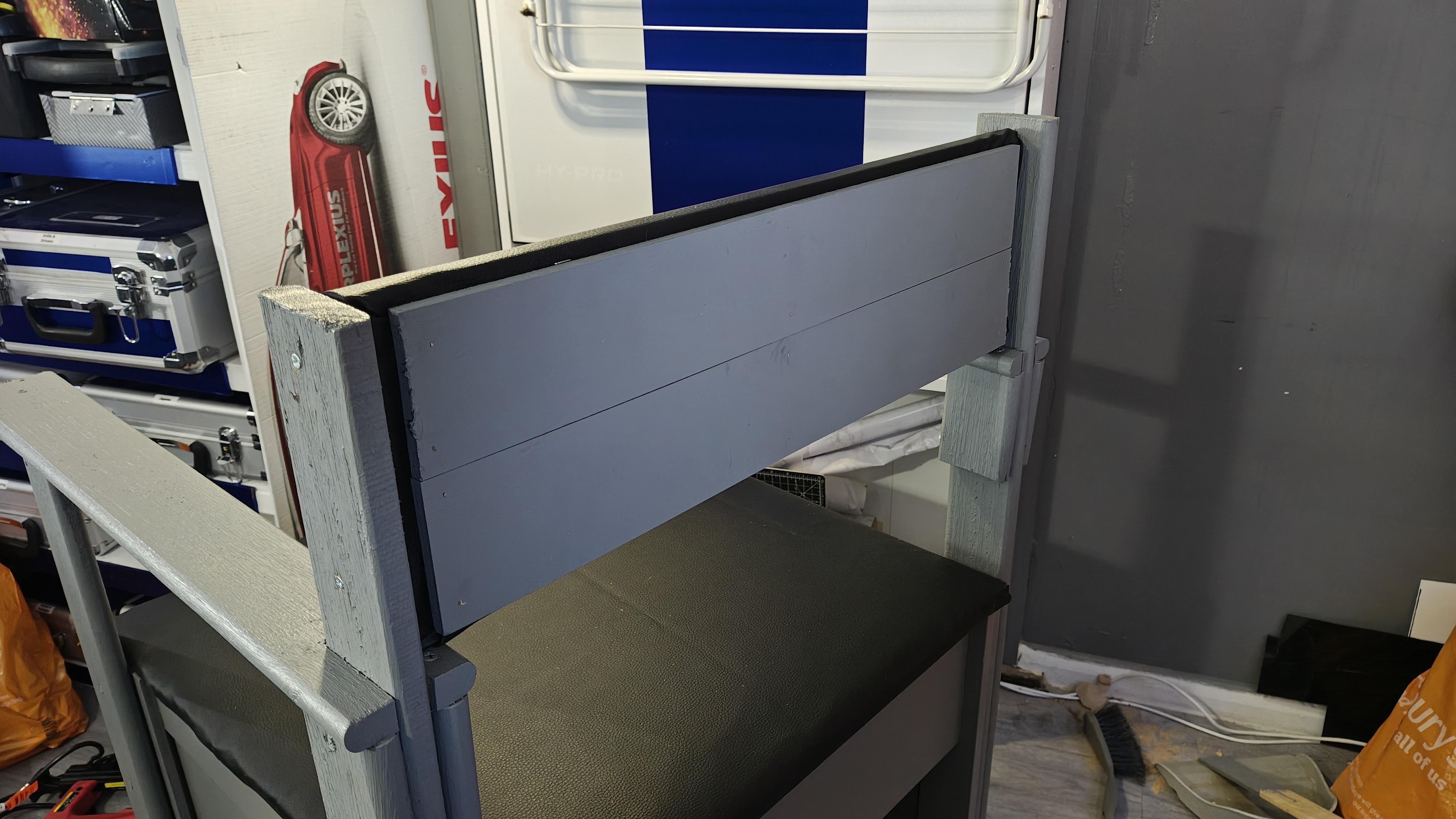
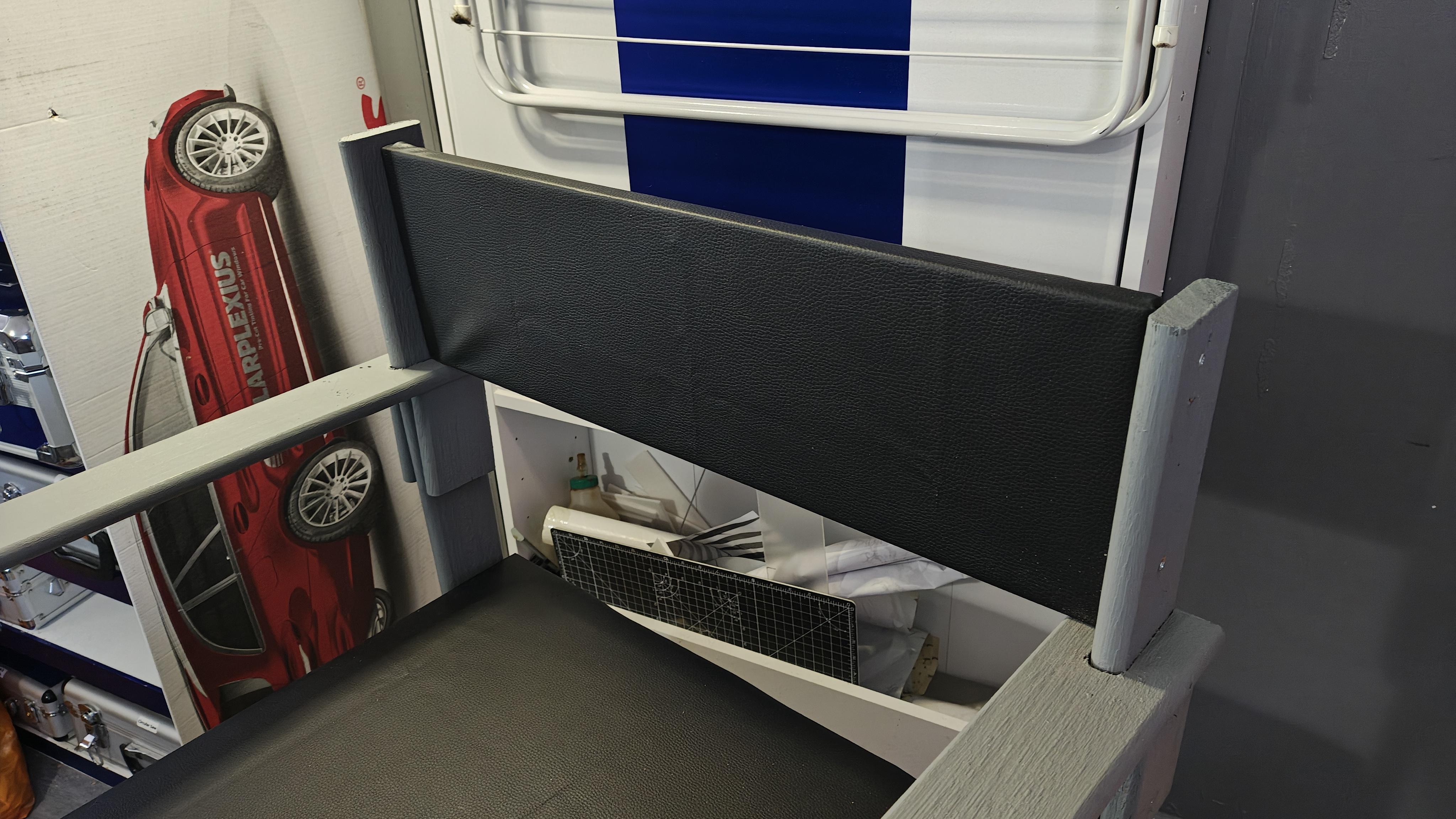
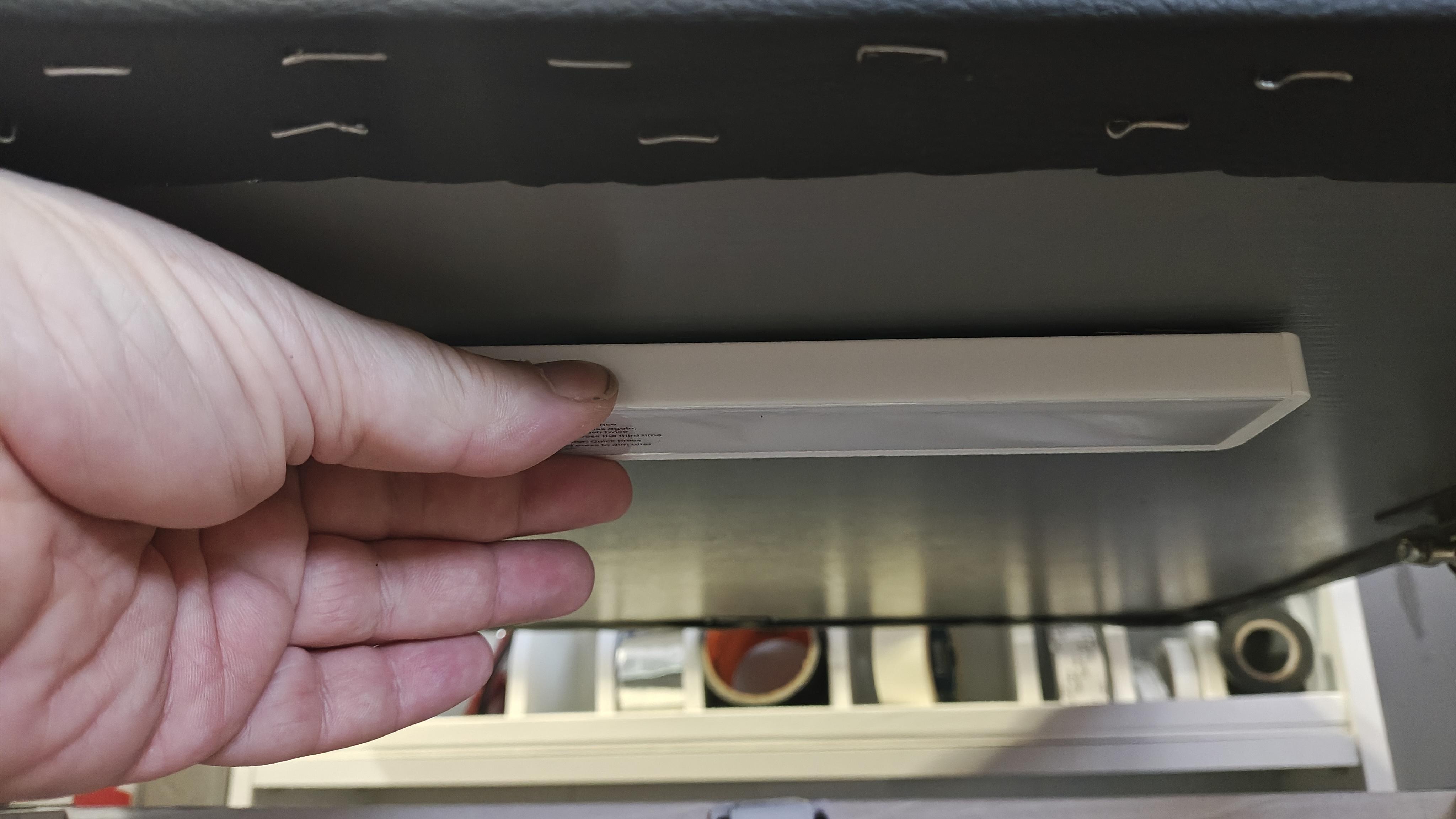



With the final coat of paint dry, and the seat covers padded and covered, we can do the last few jobs to finish the chair. The first job is to fit the hydraulic hinges. The pair of hinges have left and right hand sides. Attach to the seat/lid with machine screws into the wood insert nuts. With the hinges extended into their open position, lower it onto the chair and attach to the sides of the storage box. One person can do this part, but it's helpful to have another pair of helping hands.
Then fit the metal plate for the magnetic latch with a couple of small screws. It should be located along the back edge, in the middle, and about 22mm in from the seat edge (the 22mm is 12mm thickness of the back storage box panel, and 10mm overhang used to open the lid). Then measure, mark, drill and screw the latch itself to the back of the storage box, flush with the top edge so the latch and metal plate meet.
Next was to fit the backrest by offering it up and putting it between the supports at the top. Drill two holes through the support into the side of the backrest, then insert two screws then do the other side. The arm rests can also be fitted to the arms with a couple of screws, coming from underneath the arm rest, upwards.
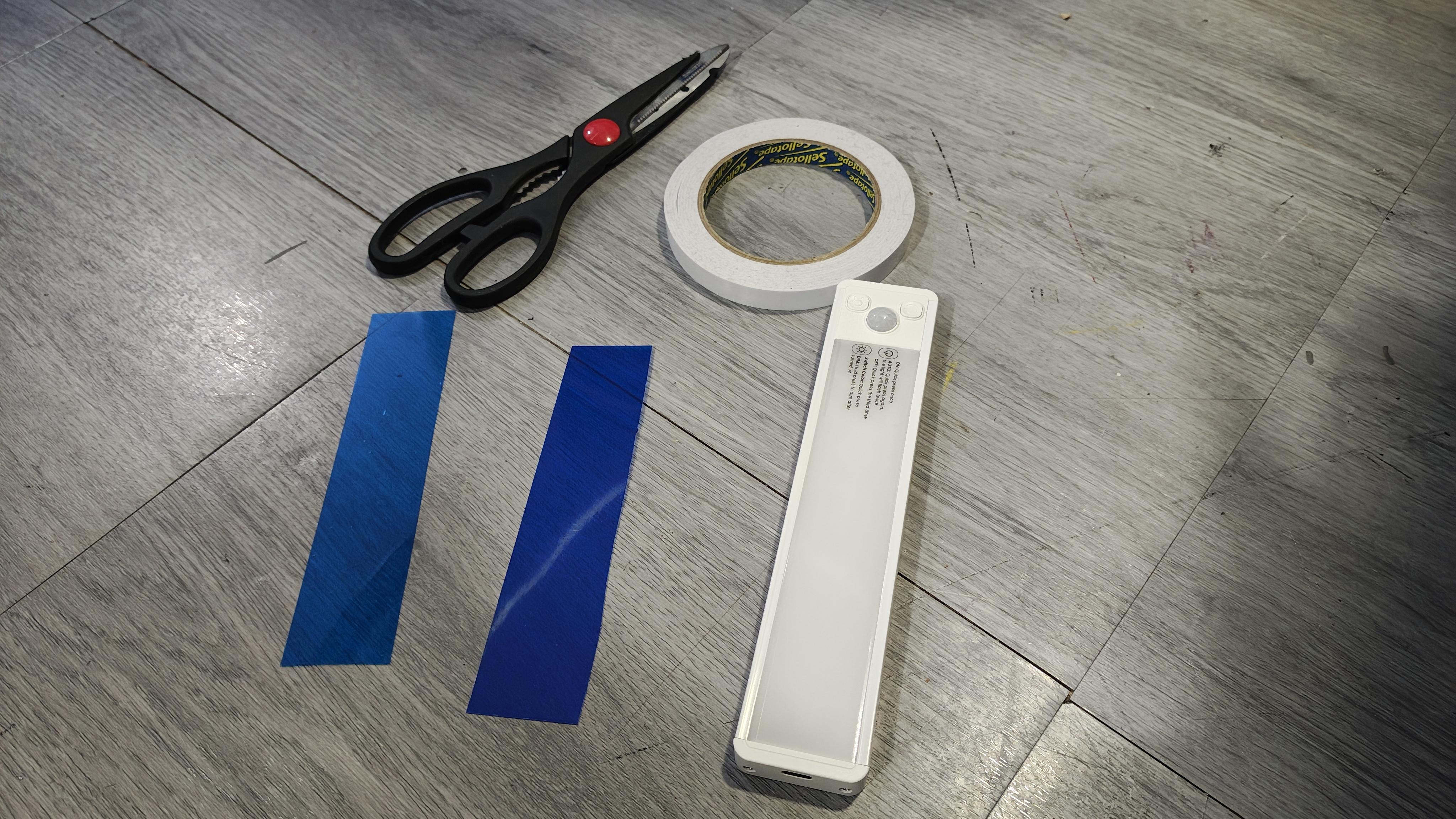
And for the final job, the LED strips were fitted. The lights I used had self-adhesive magnetic plates sided tape. I located the storage box light towards the front of the seat/lid so when it slides back and open, the light will be around the middle for even light distribution. The bottom shelf light I covered with a little bit of blue filter card and double sided sticky tape for a nice blue glow. The lights I used are rechargeable, but I use a 12000mah battery pack which lasts for ages as the lights use very little power, and I can still move the chair around without worrying about plugged-in cables. But the choice is yours for which power option you choose, replaceable batteries, rechargeable batteries, of plugged into the mains.
And with that final job done, you can now sit on your new chair and have a little rest from all of your hard work.
Final Thoughts

Not five minutes after I finished building the chair, my cat decided that it was now hers and took ownership lol. But really, overall, this project achieved exactly what I set out to do, to create a practical, comfortable, and inexpensive workshop chair using materials that would otherwise have been thrown away. By focusing on minimal style design and sturdy construction, built-in storage, and integrated lighting, the final design adds real usefulness to my workspace without unnecessary complexity. It’s robust, easy to live with, and tailored to my needs, while still being an enjoyable and satisfying build from start to finish. I hope that my chair build gives you inspiration to make one for yourself, or you simply enjoyed looking at how I made my new addition to my workspace.
Thanks reading, and happy making.