Mousetrap and Rubber Band Car Physics Project
by ScienceKitShop in Teachers > University+
21 Views, 0 Favorites, 0 Comments
Mousetrap and Rubber Band Car Physics Project
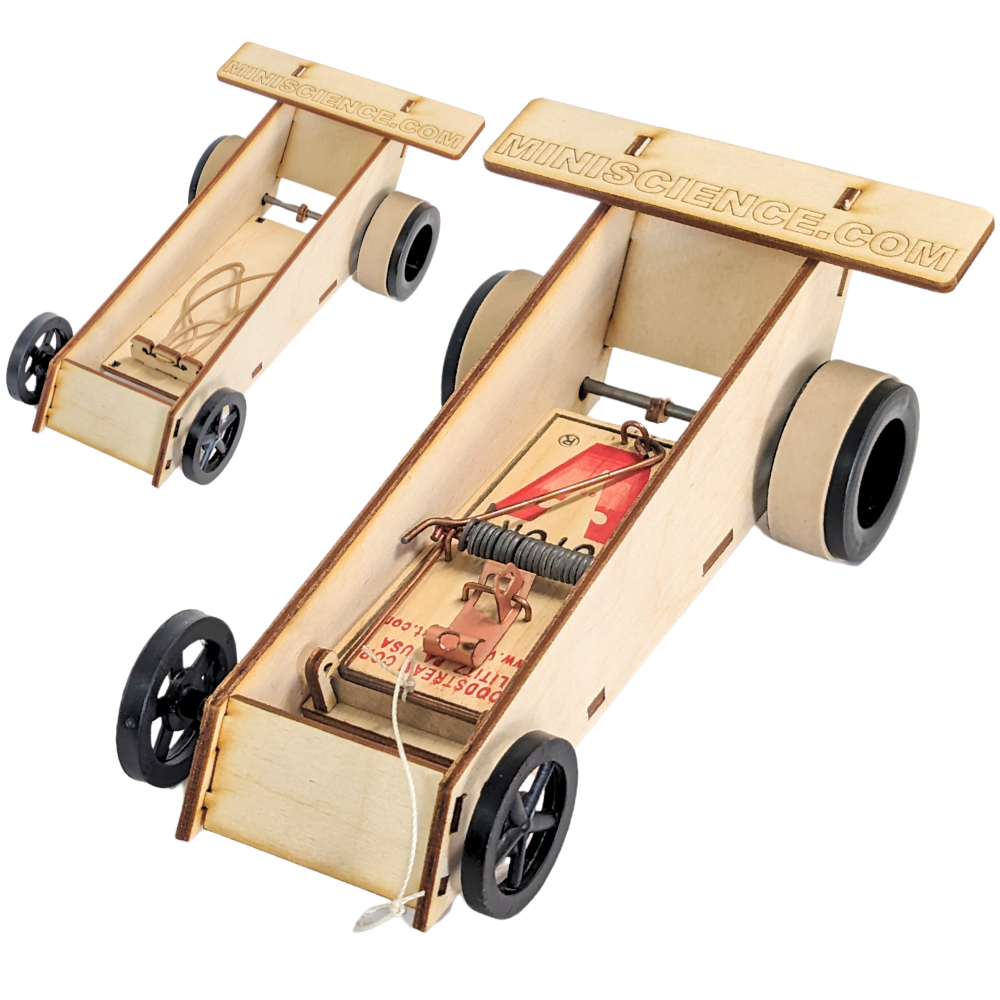
Mousetrap and Rubber Band Car Physics Project
This project explains how to assemble and operate a dual powered model car that can be configured to run using either a mousetrap or a rubber band. The instructions guide the builder through the basic assembly, setup of each power system, and testing, while demonstrating key physics concepts such as energy storage, force transfer, and motion.
Supplies
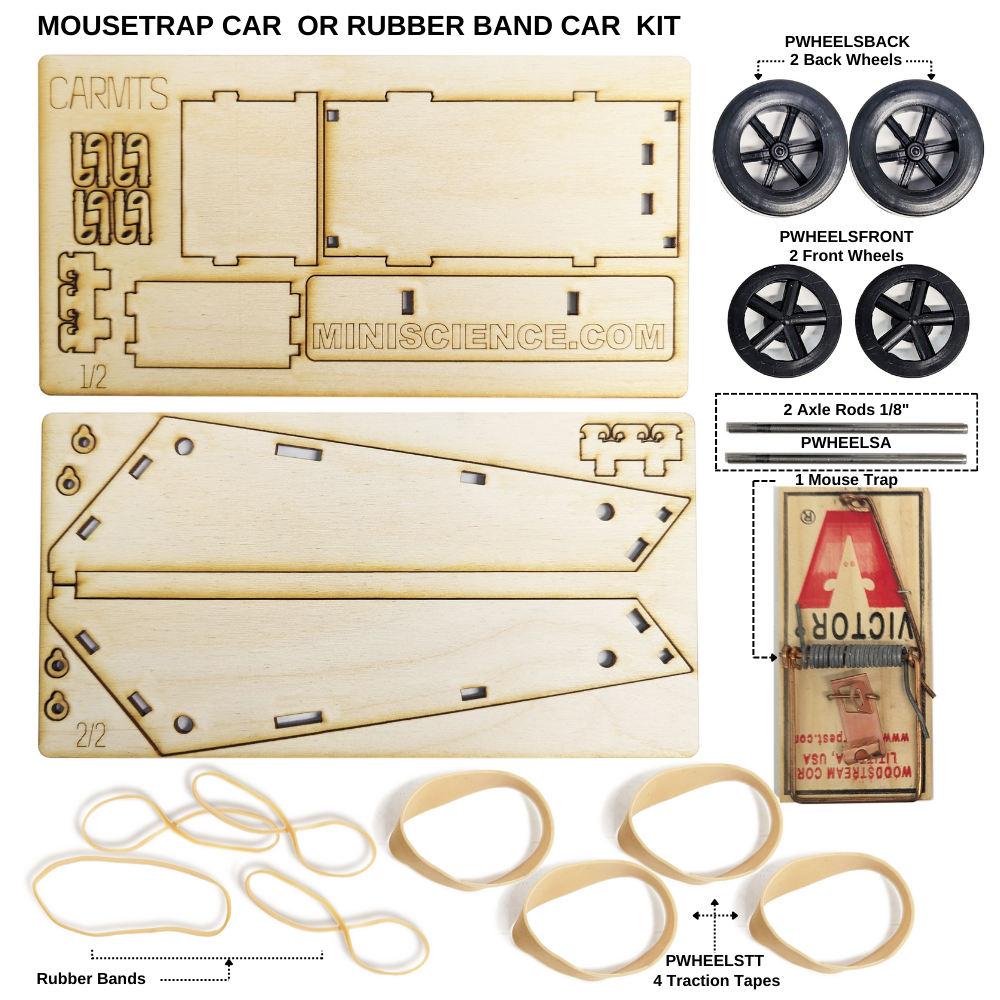
- 2 front wheels
- 2 rear wheels
- 2 metal axles (1/8")
- 2 traction bands
- 2 replacement traction bands
- Rubber bands (motor)
- String (mousetrap transmission)
- Mousetrap (motor)
Frame Assembly (Side Panels)
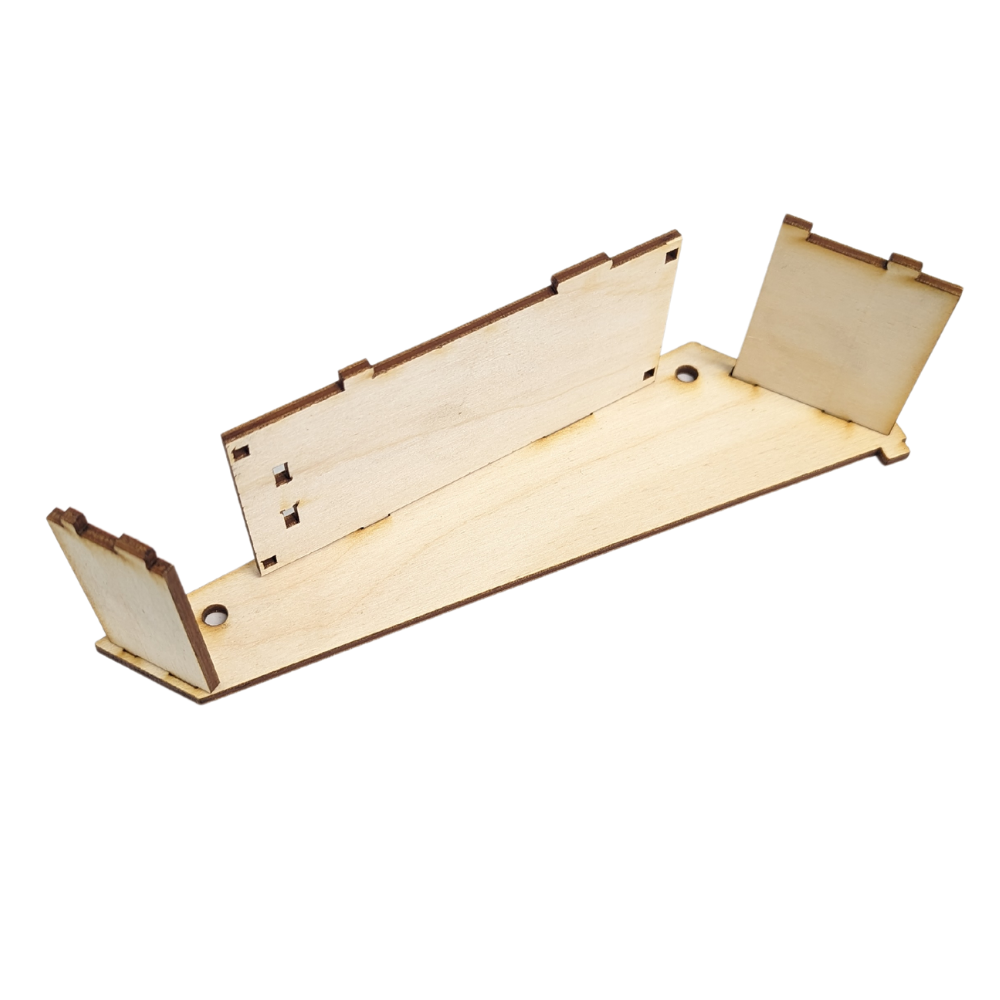
Assemble one side of the car by attaching it to the three main panels, making sure all pieces are properly aligned and firmly fitted together, as shown in the picture.
Complete the Frame
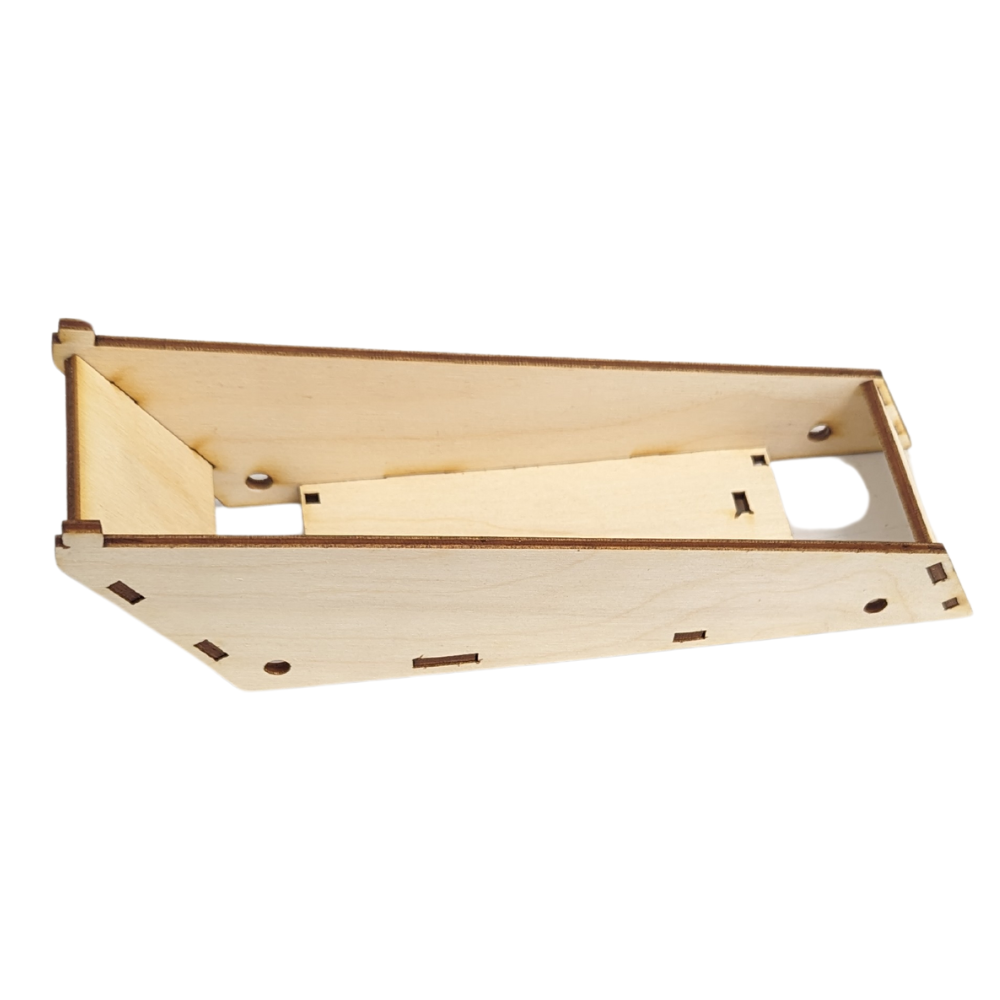
Assemble the other side of the car by attaching it to the existing structure that was previously assembled. Ensure all panels fit securely and the frame remains straight and stable.
Choose the Power Configuration
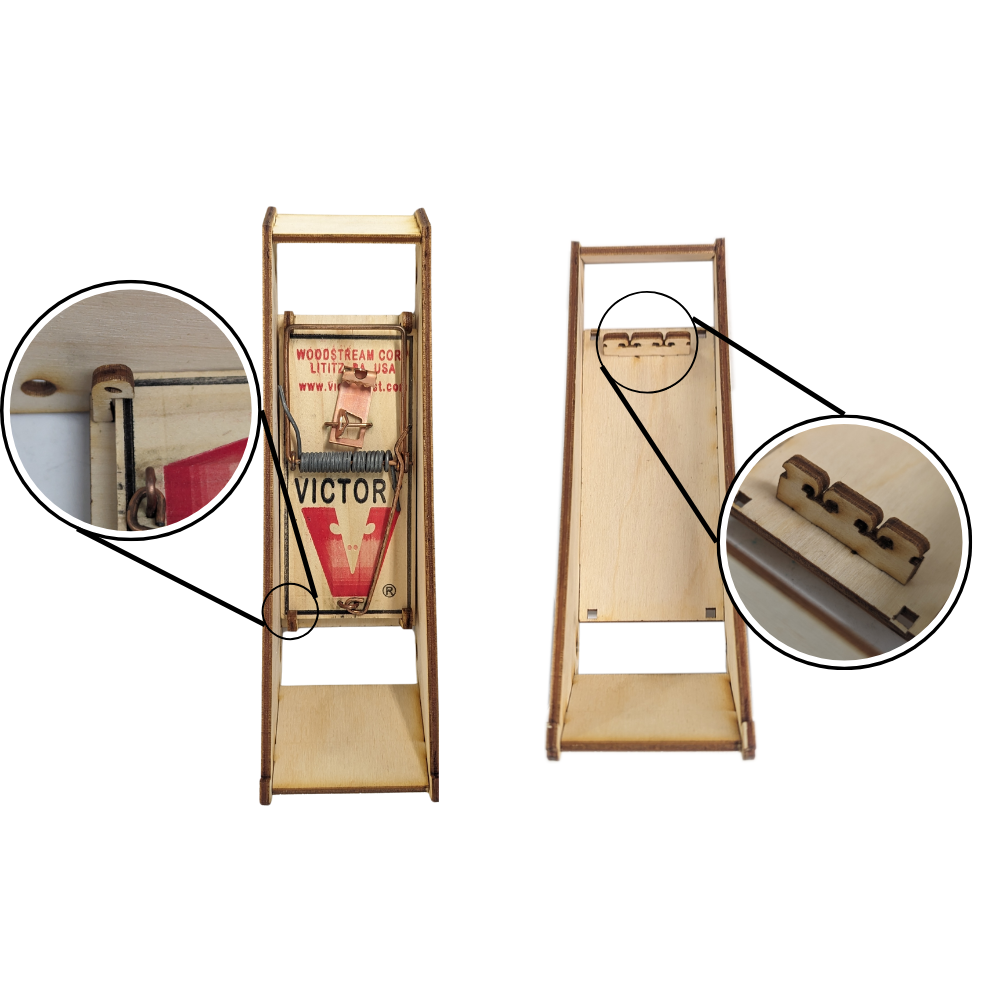
This step can be completed using one of two power options. Install the mousetrap by securing it to the frame with the safety pins, as shown in the picture. Alternatively, install the rubber band holder in the front position to configure the car for rubber band power. Only one option is used at a time.
Install Rear Wheels and Traction Bands
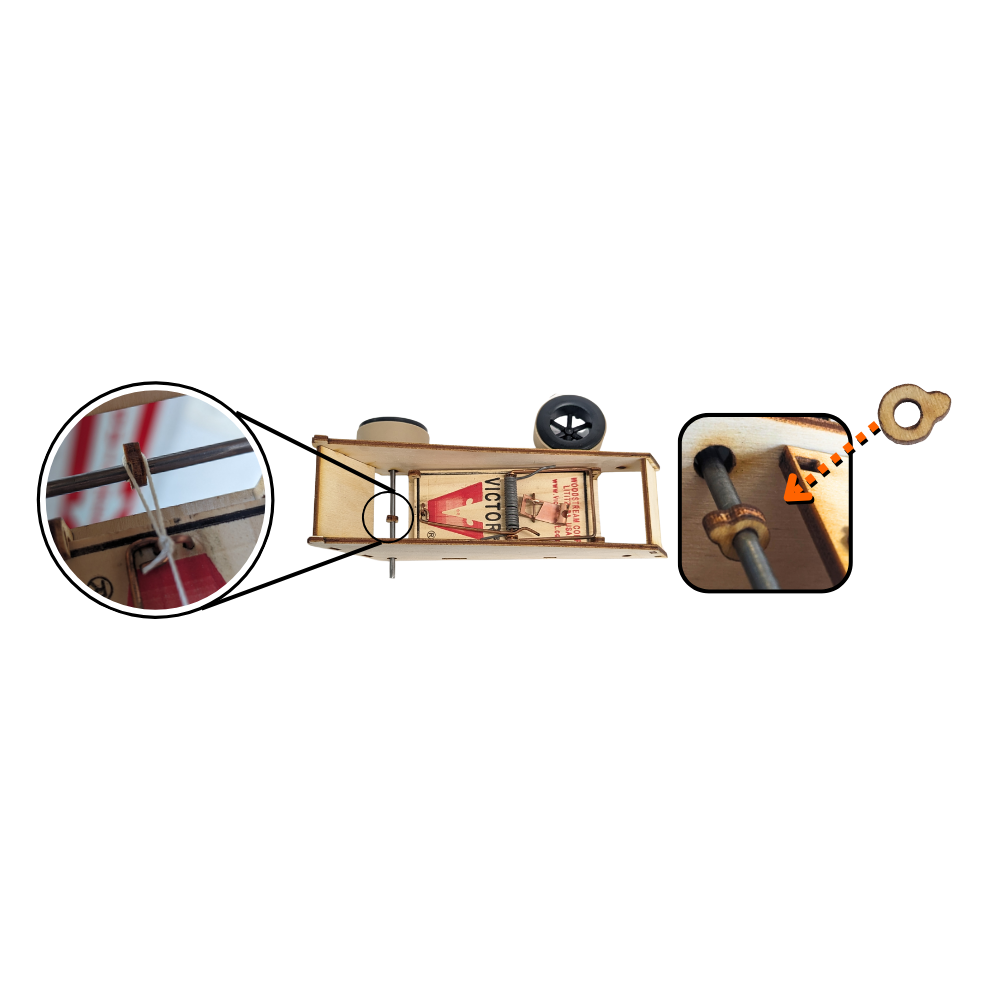
Place the traction bands onto the rear wheels and assemble them onto the axle. Remember to install the torsion pin on the rear axle before securing the wheels.
Complete Wheel Assembly
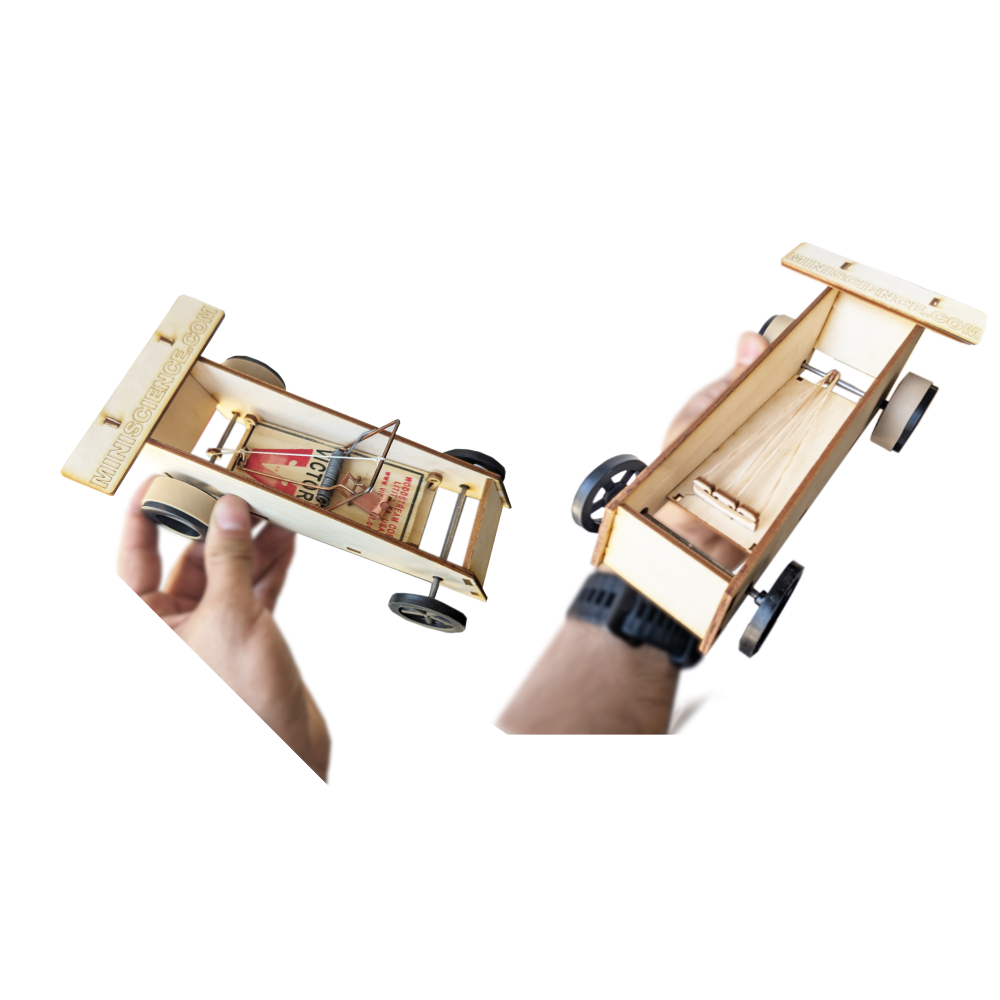
Place the traction bands onto the wheels and assemble them onto the axle. Make sure the torsion pin is installed on the axle before securing the wheels in place.
Frequently Asked Questions (FAQ)
.png)
Frequently Asked Questions (FAQ)
Does the car work for distance or speed?
This project can be used for either distance or speed, depending on how it is configured. Longer string windings and smooth traction favor distance, while shorter windings and higher grip favor speed. It is ideal for experimentation and comparison.
How far can the car go?
The distance varies depending on setup, surface, and configuration. With proper tuning, mousetrap cars can travel several meters. Performance is meant to be explored rather than fixed.
Why does my car jump or move only a few centimeters and stop?
This usually happens if the string or rubber band is wound incorrectly, if there is too much friction, or if the wheels are slipping. Make sure the axle turns freely and the traction bands are properly installed.
How do I make the car move?
For the mousetrap setup, wind the string around the rear axle and carefully release the mousetrap arm. For the rubber band setup, wind the rubber band on the axle and release it slowly. Always keep fingers clear.
Can I use different wheels, like CDs or other recycled materials?
Yes. Alternative wheels can be used for experimentation, but weight, balance, and traction will affect performance. Lightweight wheels with good grip work best.
Is this project safe for classrooms?
Yes, with adult supervision. Mousetraps store energy and can snap quickly, so care should be taken when setting and releasing the trap. Always keep fingers away from the moving arm.
Why isn’t glue required?
All parts are precision laser cut to fit securely without glue, allowing easy assembly, disassembly, and experimentation. However, using glue is optional and can add extra rigidity and strength, making the project more durable if a permanent build is desired.
Can this be used in a science class?
Absolutely. This project is well suited for teaching physics concepts such as stored energy, force transfer, friction, torque, and mechanical efficiency.
Can I customize or modify the car?
Yes. The design encourages customization, including adjusting string length, wheel size, axle thickness, and even adding steering experiments.