NE555 IC Stool


Every hobbyist knows the NE555. It was the first "real" IC most of us ever soldered, the ON and OFF of a thousand blinking LED projects, and probably the most iconic piece of silicon ever pressed into a breadboard. But while the 555 is great at timing pulses, it’s not exactly known for being comfortable.
I was sitting in the lab staring at a motherboard when it hit me. if you zoom in close enough, a circuit board looks exactly like a tiny, perfect city. The traces are like streets and the chips are like high rise buildings. It’s a really cool perspective, and it made me wonder: what if we scaled those up into something we could actually use? I decided to take the most famous "building" on the board—the 8-pin NE555 timer IC and turn it into a stool. The goal was to take those exact DIP-8 proportions and blow them up to a 1:50 scale. It’s basically taking a piece of hardware that’s usually too small to see and turning it into a piece of furniture you can actually sit on.
In this project I wanted to take the "DIP-8" form factor. chunky black rectangle with its eight silver legs and scale it up from millimeters to centimeters. The goal wasn't just to make a model, but to create a functional, upholstered piece of furniture. By using traditional sofa-building techniques like wooden framing, high-density foam, and "duster" padding, I’ve turned this legendary timer into a place to actually sit down and plan your next circuits.
In this build, I’ll show you how to maintain the 1:50 scale proportions of the original chip, how to mimic the "Pin 1" notch using upholstery tufting, and how to turn eight structural legs into the "pins" that define the look of the 555.
for the dimension see page no 27 reference to this link : xx555 Precision Timers datasheet (Rev. J)
fusion 360 link : https://a360.co/4sdjEsI
Supplies
To build this 1:50 scale NE555 stool, you’ll need these items:
MATERIALS
- Iron Rectangular Bar 18 feet long (5mm thick)
- Plywood 16mm thick (32cm x 46cm)
- Aluminum Composite Panel (ACP) Scrap pieces
- Sponge / Foam High-density foam
- Black Cloth Enough to double-layer the seat
- White Thread Heavy-duty or embroidery thread
- Hardware Bolts and nuts
- Tie Wire Thin bending wire
- Paint Silver metallic
TOOLS
- Angle Grinder
- hand saw
- Measuring Tape, a pen, and White Chalk
- Wrench
Cutting the "Pins" (The Legs)
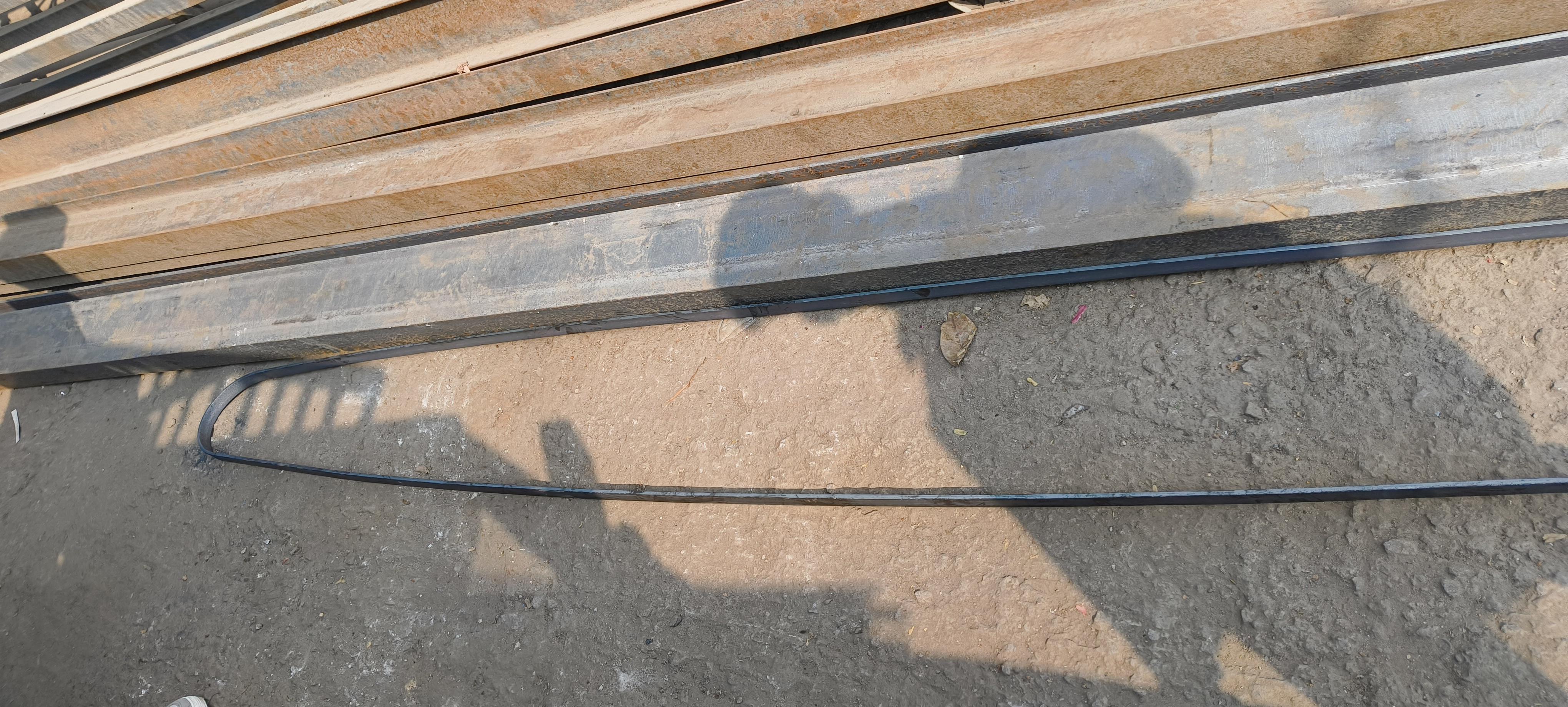


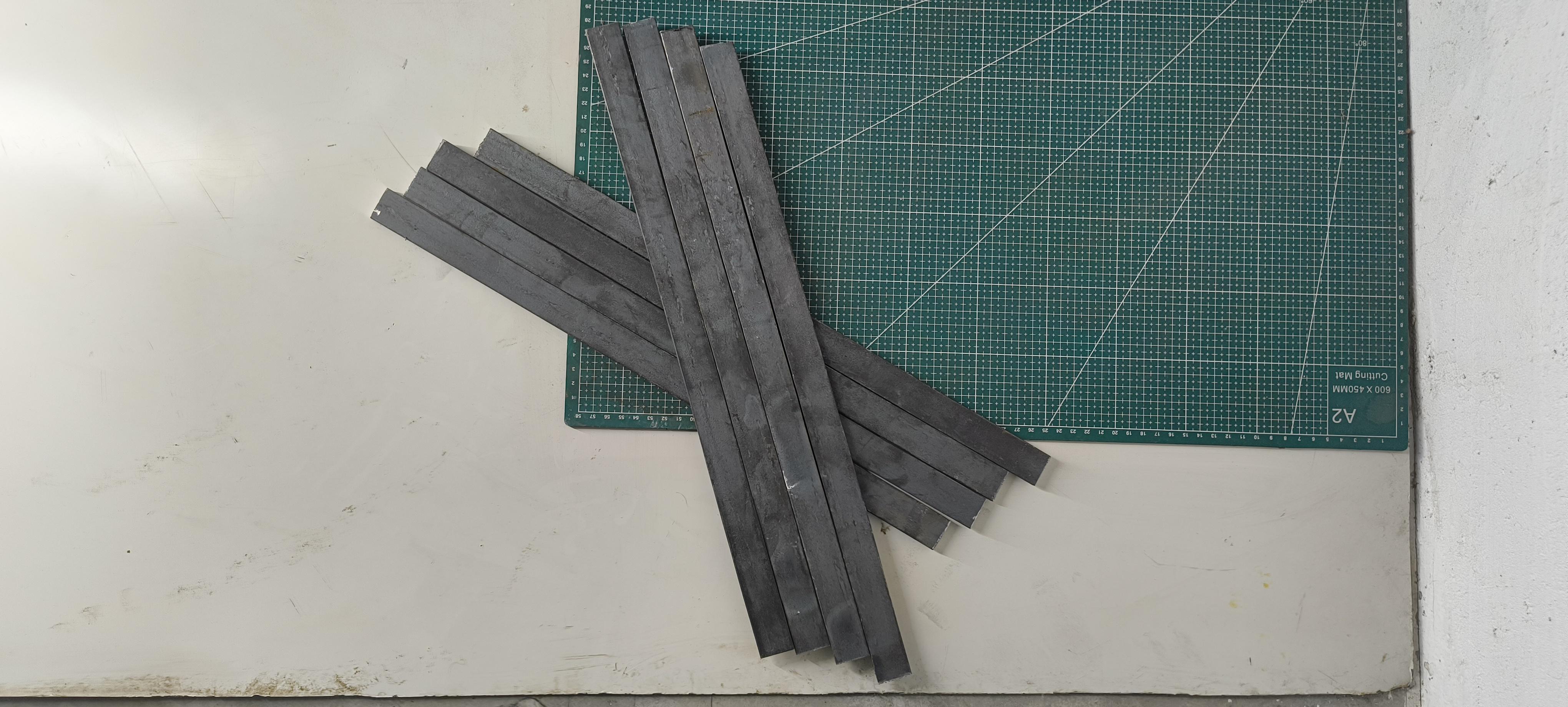
To get that iconic 8-pin look of a 555 chip, I started with a long 18-foot iron bar (5mm thick). I chose this thickness because it's heavy enough to hold a person's weight but still thin enough to look like a scaled-up version of the metal legs on a real IC.
Using an angle grinder (or a metal saw), I measured and cut the bar into eight 1.5-foot pieces. Since these are going to be the legs of the stool, it’s really important that they are all the exact same length, otherwise, the stool is going to wobble. After cutting, I made sure to file down the sharp edges so they’re safe to handle.
Cutting the Main Body (The Seat)

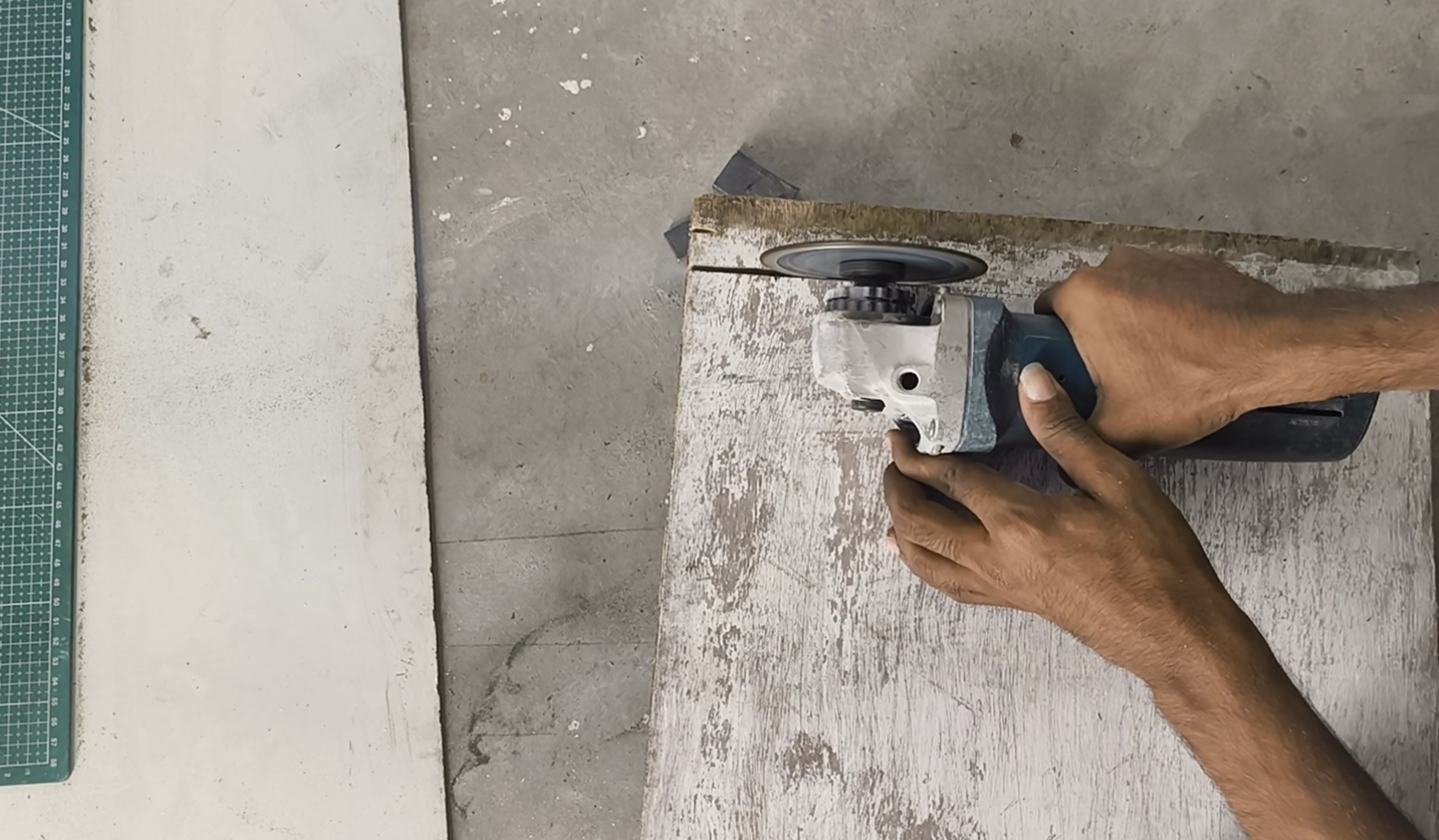
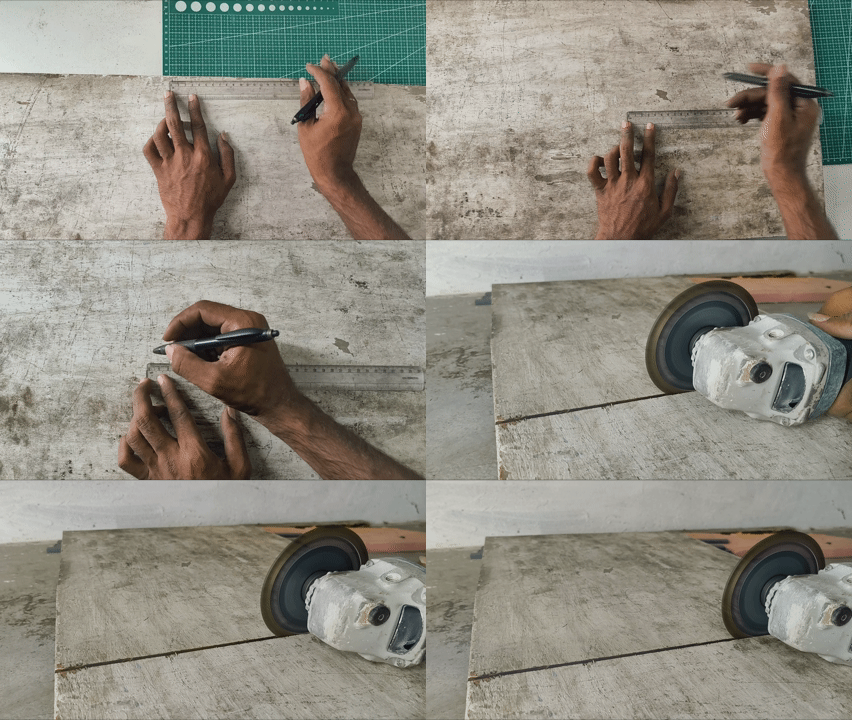
For the main body of the stool, I went with 16mm plywood. It’s lightweight and easy to work with, but still thick enough to give me a solid base for the legs and the padding later on.
To keep the look authentic, I followed the "Golden Ratio" of a standard NE555 DIP-8 chip. Using a scale of 1:50, I measured and cut the plywood into a 32 cm x 46 cm rectangle. This proportion is the secret to the whole project if you get this ratio right, anyone who’s ever soldered a circuit will recognize the shape instantly.
Shaping and Drilling the "Pins"
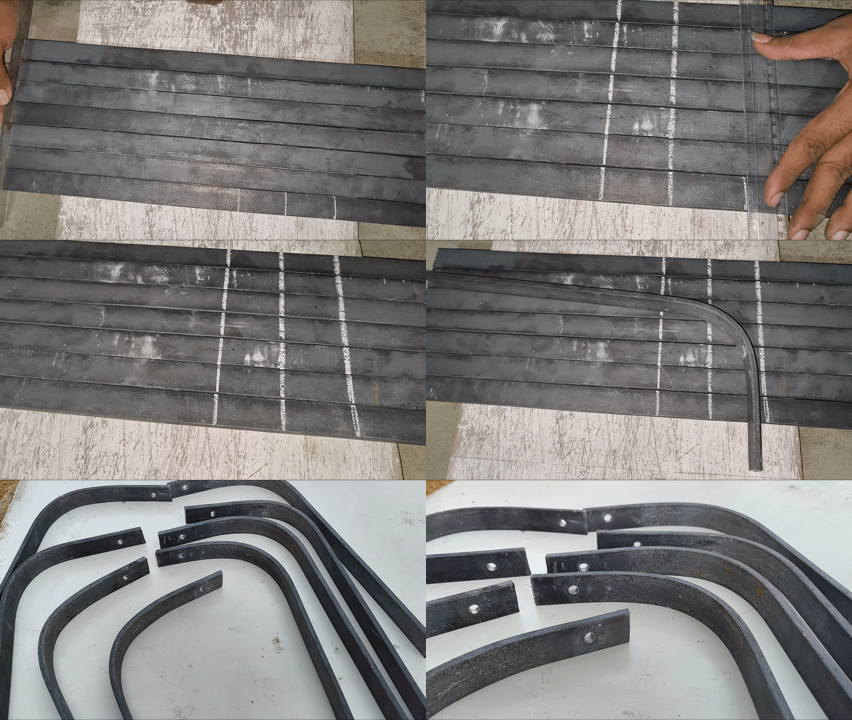


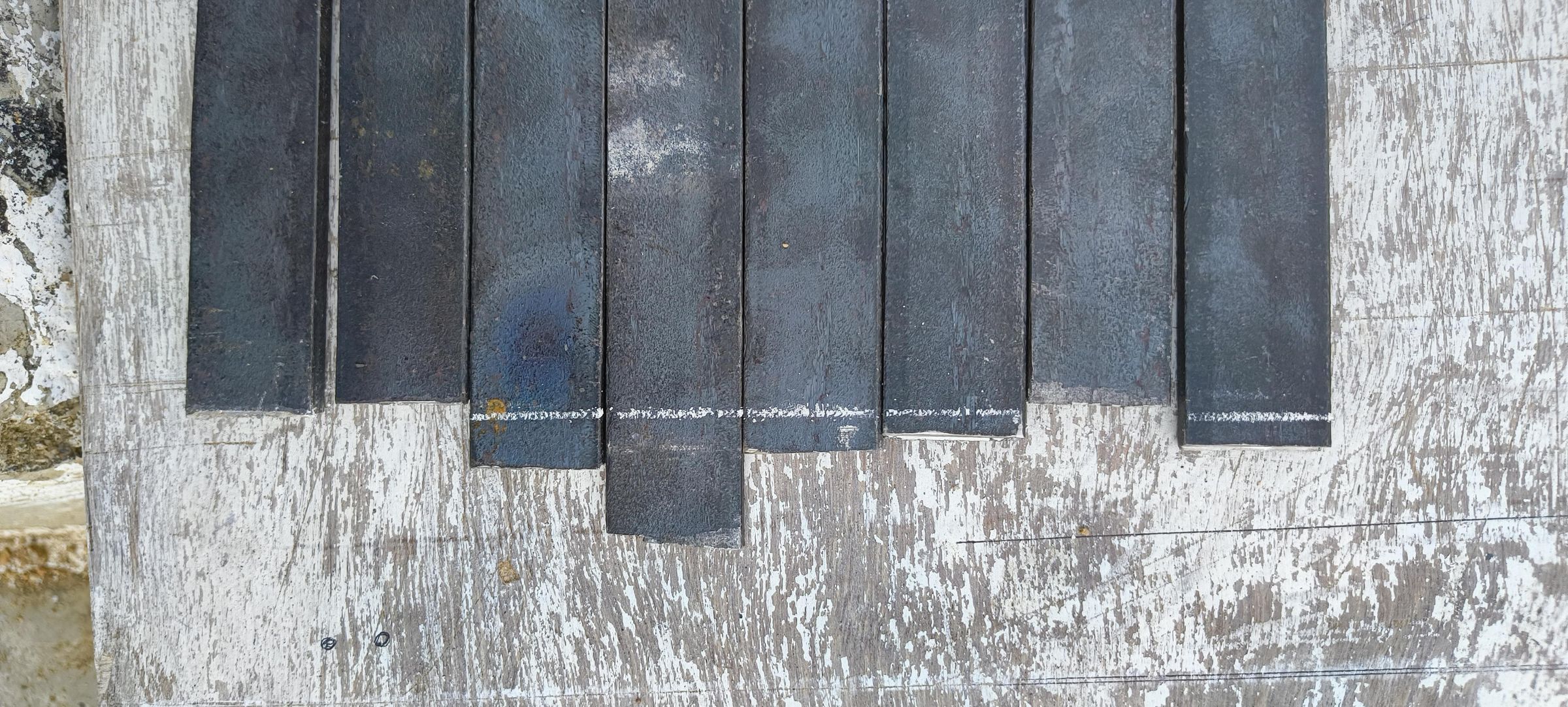


To make the iron bars look like real IC pins, they can't just be straight. I had to bend each of the eight 1.5-foot bars to give them that classic "DIP" shape where the legs flare out slightly before heading down to the floor.
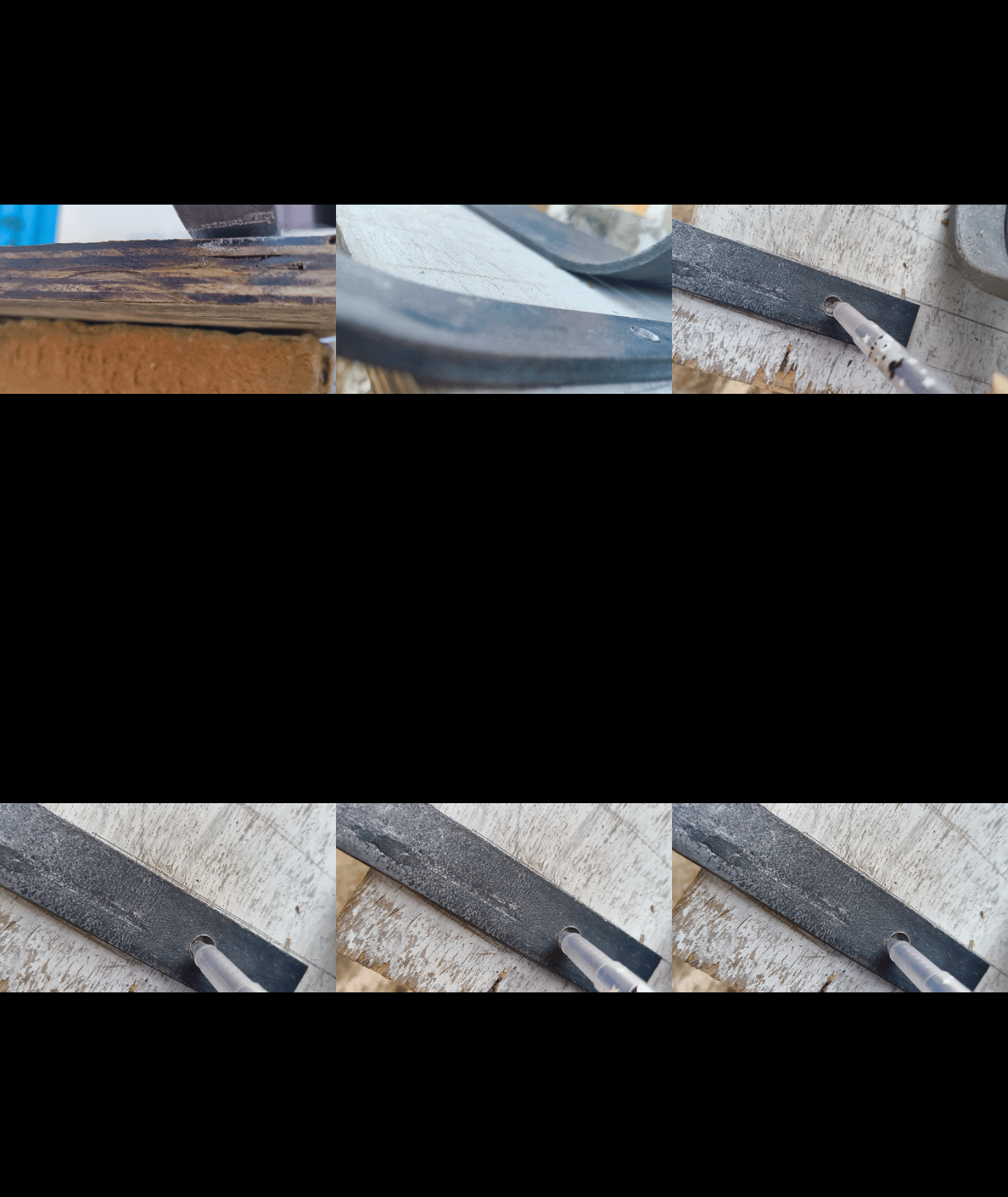
After bending, I drilled mounting holes at the top of each bar. Since I’m using 16mm plywood, I made sure the holes were centered so I could bolt them securely to the side of the wooden base. Drilling through 5mm iron takes a bit of patience
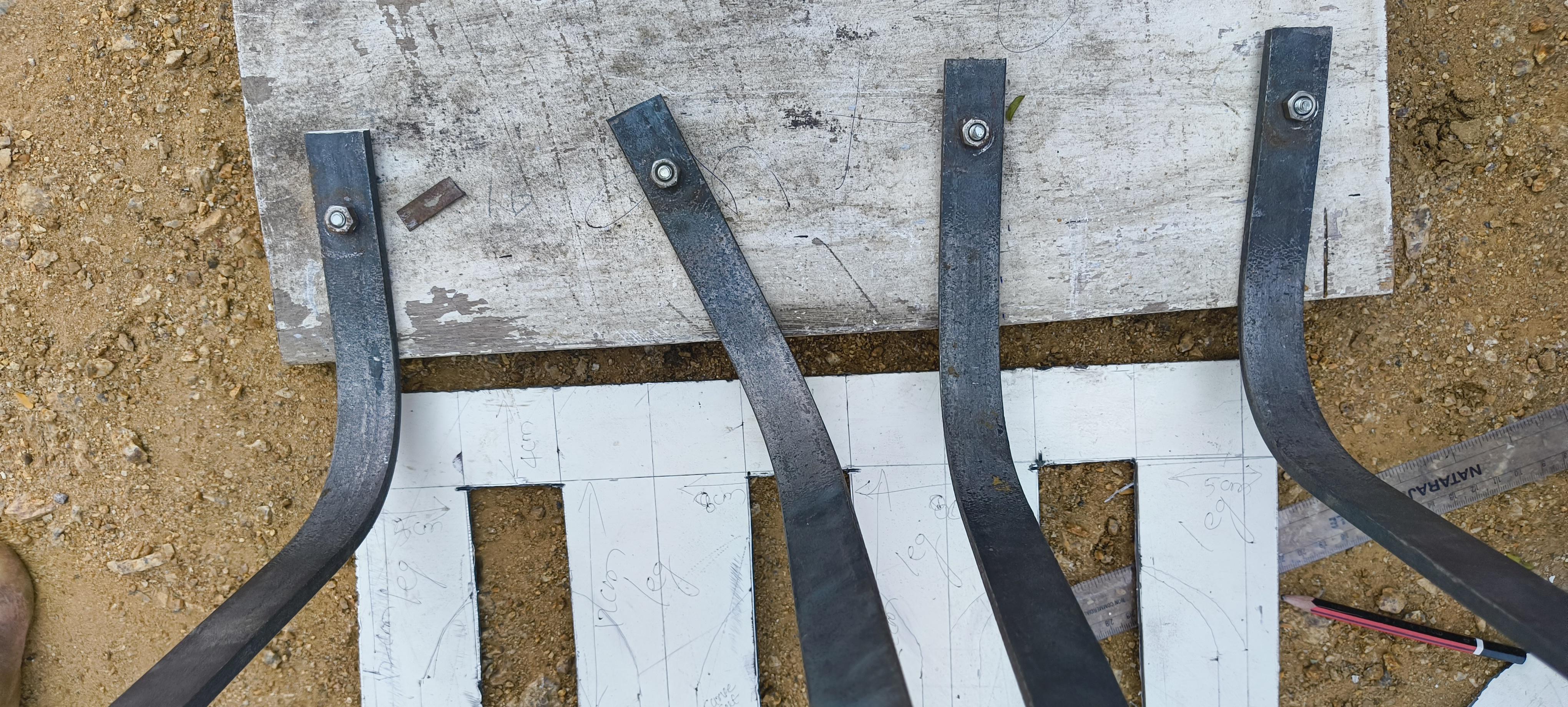
Since the bends aren't perfect yet pick the "best" leg and trace its shape onto a piece of wood. Use this as your master template. Compare the other seven legs to this perfect one and tweak the bends or cut the extra until they all match the template exactly.
I have made these bends at other location, so I have no photos.
Fitting the Leg (pins)



.jpg)
Position each leg at the marked "pin" locations based on your 1:50 scale. Use a pencil or a center punch to mark the exact spot through the hole you already drilled in the iron bar. This ensures the hole in the wood matches the unique position of each metal leg.
Drill through your pencil marks on the plywood. Insert your bolts from the top (the seating side) so the threads stick out of the bottom. Slide the iron legs onto the bolts and gently hand-tighten the nuts. Don't use a wrench yet for now.
To give the legs a more finished look, I used Aluminum Composite Panel (ACP) sheets. I’ll be honest, these were tricky. I tried to bend them at first, but the material just cracked.
Instead of giving up, I cut the panels to the specific dimensions I needed (as you can see in the diagram) and used them as spacers between the iron legs and the plywood seat. I tucked them into the middle, tightened down the nuts, and then used bending wire (tie wire) to pull everything together and hold the shape.
It took a bit of fiddling, but once I got the wire tight, the legs finally looked solid and ready for the next stage.
Padding the "Chip"




.jpg)
.jpg)
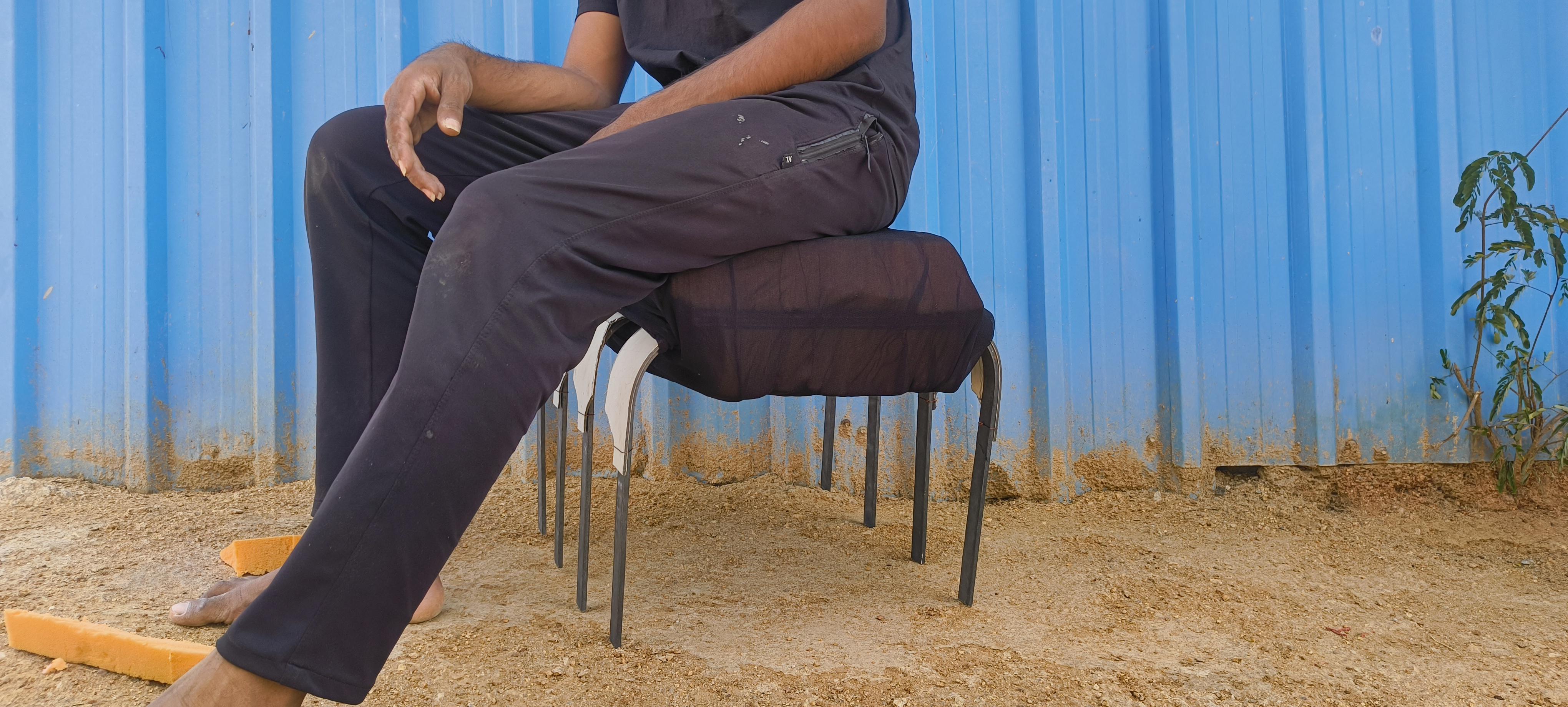
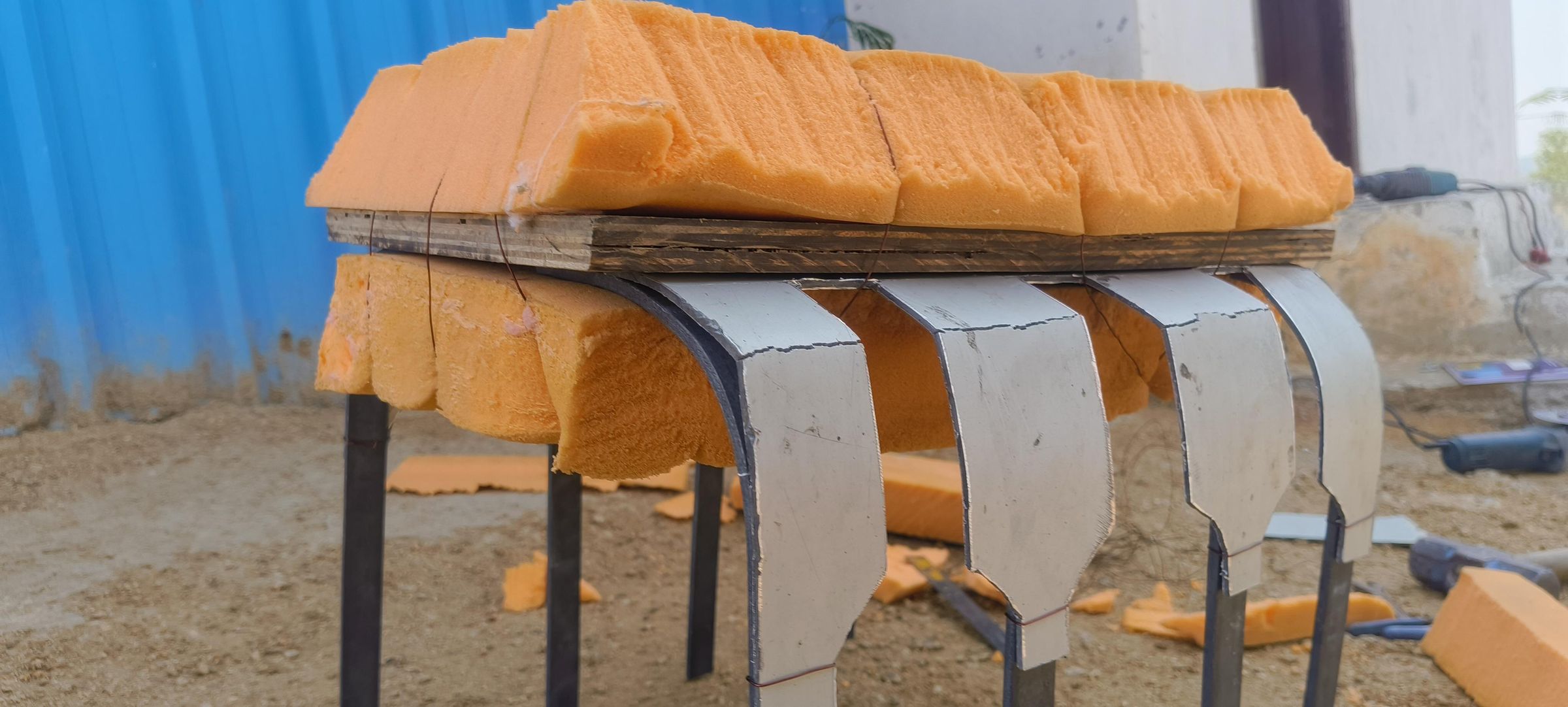
To make the stool actually comfortable, I used sponge (foam) padding. To get the iconic look of the NE555 body, I didn't just leave the sponge as a flat block. I cut the edges at an angle—a chamfer—to mimic the sloped sides of a real integrated circuit.
I placed the sponge on both the top and bottom of the plywood. This wraps the 16mm wood in a thick, soft shell, making it look more like a solid 3D object. To keep everything from sliding around while I work on the fabric, I used binding wire to tie the sponge down tight against the plywood. It doesn't have to look pretty yet, because the upholstery will cover all the wire and foam with the black clothes.
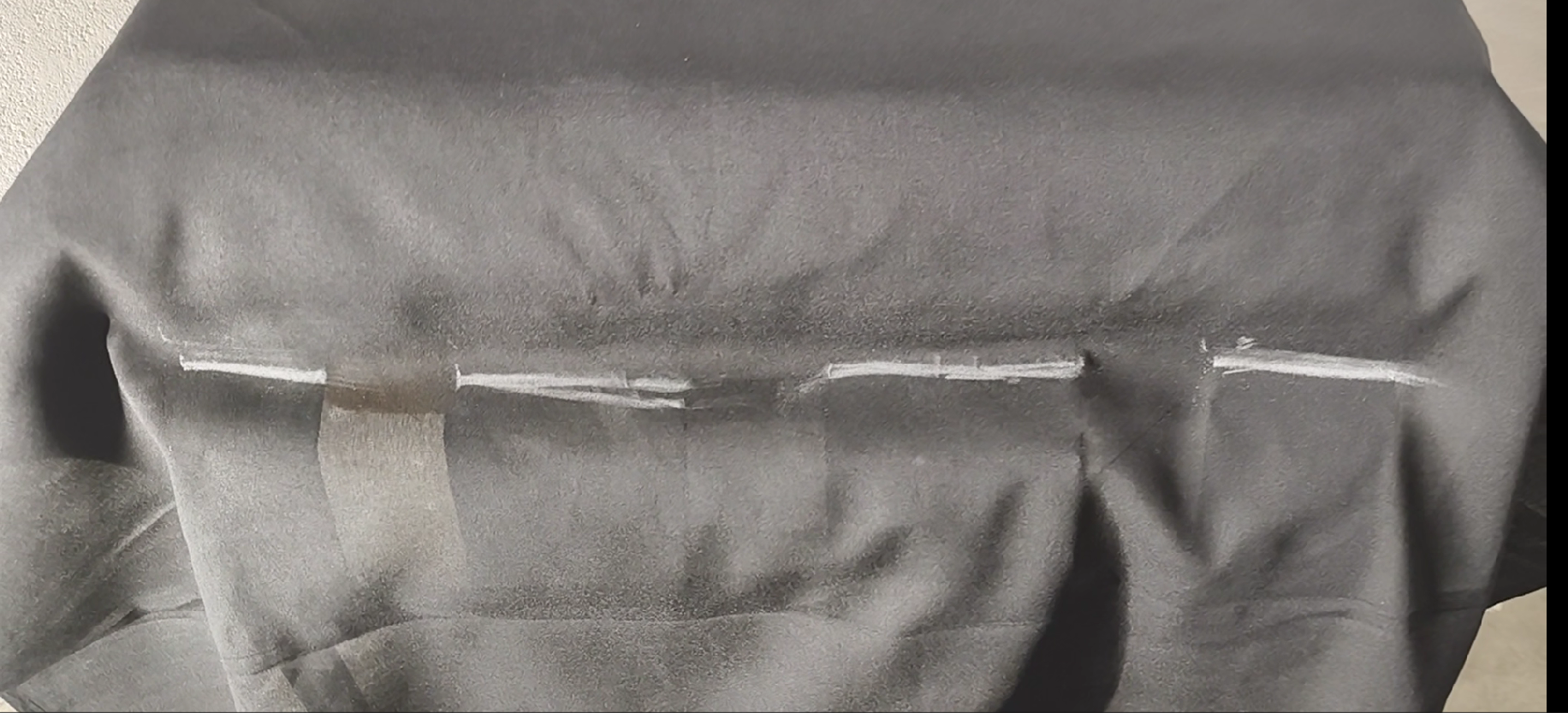
For the final cover, I used two layers of black cloth. Doubling the fabric was important—it made the black look much deeper and stopped any of the sponge or wire from showing through.
To get the labeling right, I didn't just start sewing. I used a piece of white chalk to carefully sketch out "NE555" and the "Pin 1" dot in the corner. This allowed me to get the spacing and size perfect before I committed to the thread. Once the chalk lines looked right, I hand-stitched over them with white thread.
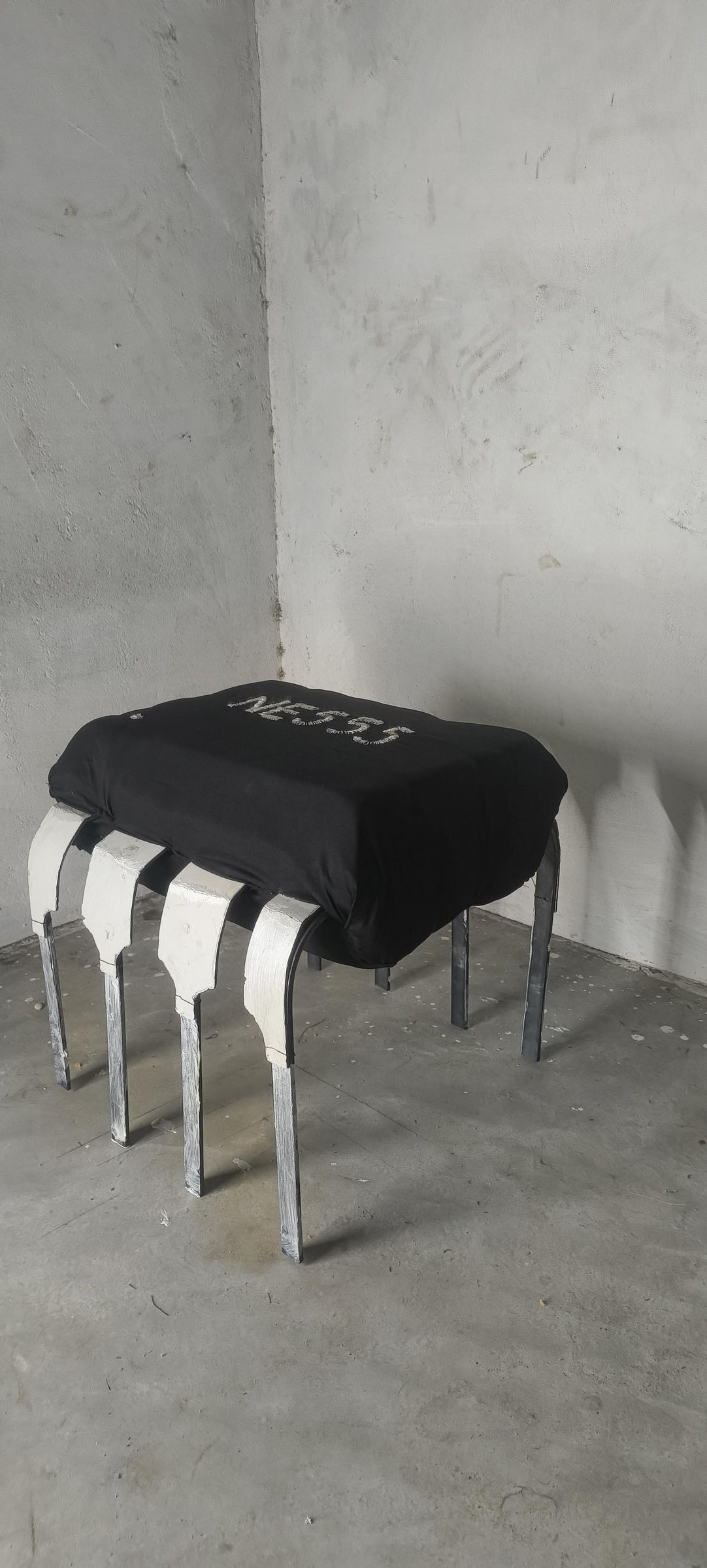
The white-on-black contrast is really sharp, and with the chamfered foam edges underneath, it finally looks like a giant version of the chip
Result


 (1).jpg)
.gif)
To finish the look, I painted the iron legs silver to match the metal leads on a real IC.
After all the cutting, bending, and hand-stitching, the final result is exactly what I saw in my head back in the lab. It’s a solid, comfortable stool that actually looks like a giant, DIP 8 NE555 timer.
Even though the iron 'pins' look slim, the stool is incredibly solid and easily holds my weight without any bending or wobbling.
Overall, I’m really happy with how this turned out. It’s one thing to see a tiny 555 chip on a breadboard, but it’s another thing entirely to actually sit on one. It brings that "motherboard city" idea to life and looks great in a workshop or a lab.
Even with the challenges—like the ACP sheets cracking or the rough paint finish—the stool is solid, comfortable, and looks exactly like the scaled-up component I imagined. It’s a perfect mix of electronics nerdery and practical furniture.
If you enjoyed this build, please give it a follow!