OctoMorph · the Transforming Chair
by emilycanhelp in Workshop > Furniture
259 Views, 4 Favorites, 0 Comments
OctoMorph · the Transforming Chair
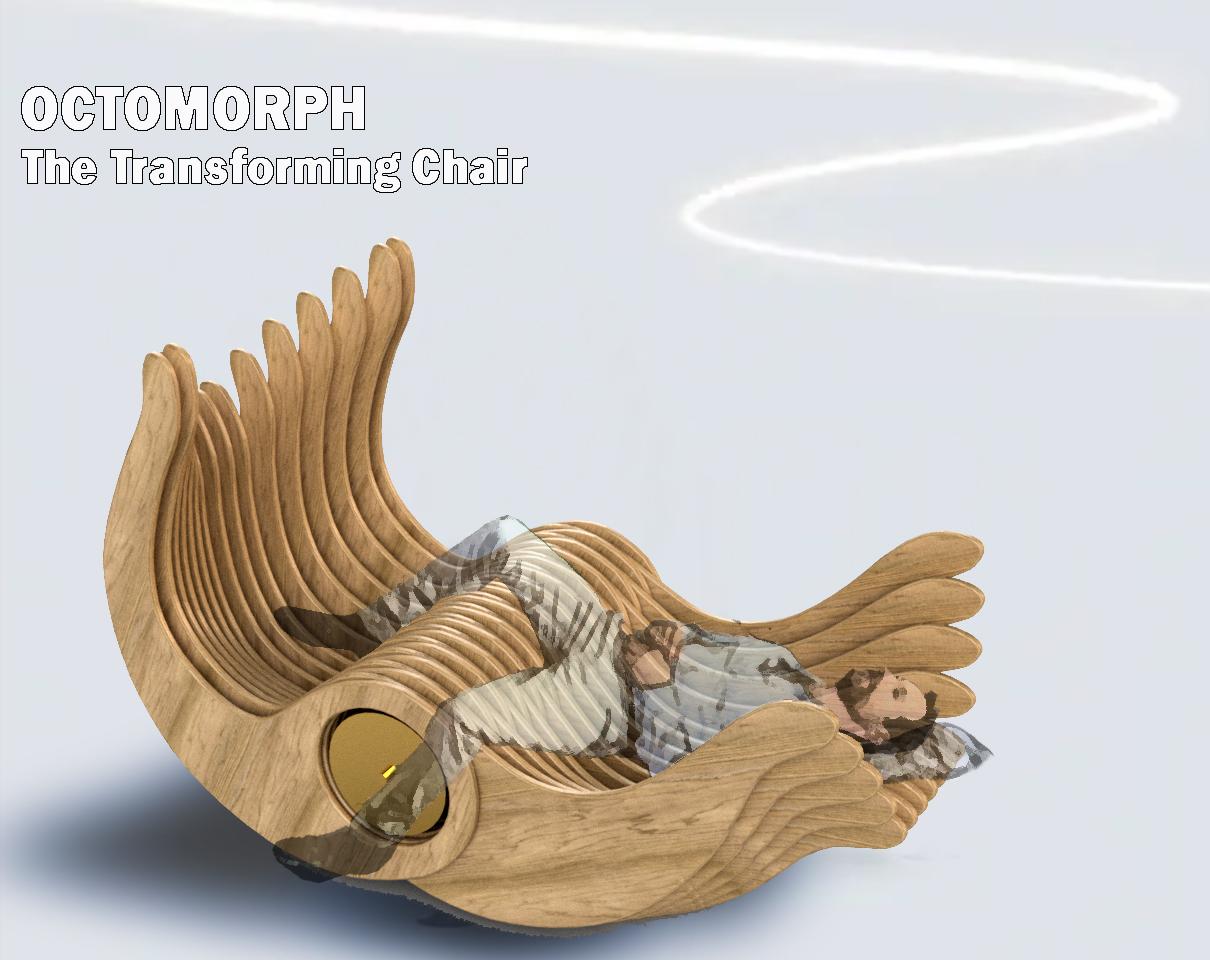


This project is inspired by the octopus — a creature with no rigid skeleton yet infinite possibilities of form.
An octopus can stretch, curl, expand, wrap, and balance. It behaves like a living collection of curves. I wanted to design a chair that shares this adaptability — a chair that does not stay fixed in one identity.
OctoMorph is not just a piece of furniture.
It is a posture.
It is a mood.
It is a small architectural organism.
Transformations
By adjusting angles, the chair can become:
- A lounge chair
- A reading seat
- A rocking chair
- A sculptural installation
Sometimes it behaves like furniture.
Sometimes it behaves like a living form in space.
The user does not simply sit on it —
they participate in shaping it.
Supplies
.jpg)
.jpg)


I made a 1:20 small model using white cardstock.
After adjustments, I created a more precise 1:10 scale medium-sized model using cardboard (with CAD-printed precise component shapes).
The materials and tools for these models were simple: white cardstock, pencil, scissors, CAD prints, cardboard, thick bamboo sticks, and glue.
Hand Sketching


I began with freehand studies of octopus tentacle curves, analyzing rhythm, curvature, and tension between opposing forms.
The goal was to give each curve a “character.”
Structural System
The structure consists of two sets of oppositely oriented curved components:
- Type A (forward curve)
- Type B (reverse curve)
Each type is replicated 10–15 times.
Every component resembles a “long-tailed tadpole”:
- A circular head (rotation joint)
- A tapered tail (structural extension)
All components are fixed at their heads to a circular metal ring.
Each piece can rotate 360° around its joint.
Visually:
- The center resembles an octopus head
- The pieces extend outward like tentacles
- The overall structure feels dynamic and radial
When Type A and Type B are adjusted to unified angles, the chair transforms into different configurations — almost like the octopus shifting its personality.
CAD Development


Using CAD, I precisely constructed:
I created a more precise 1:10 scale medium-sized model using cardboard (with CAD-printed precise component shapes).
- Type A and B geometries
- Standardized circular head joints
- Rotation hole positions
- Array duplication for structural repetition
Fusion 360 Modeling & Rendering

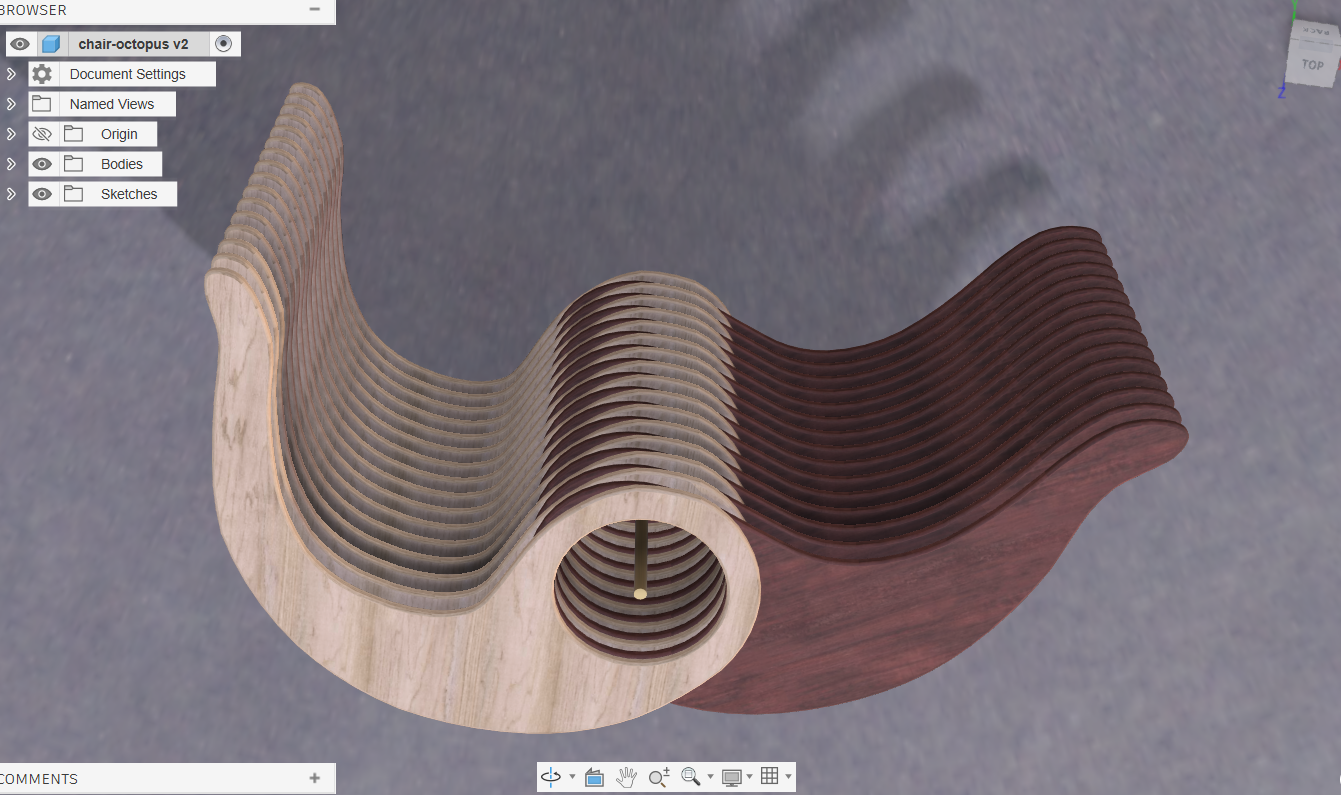


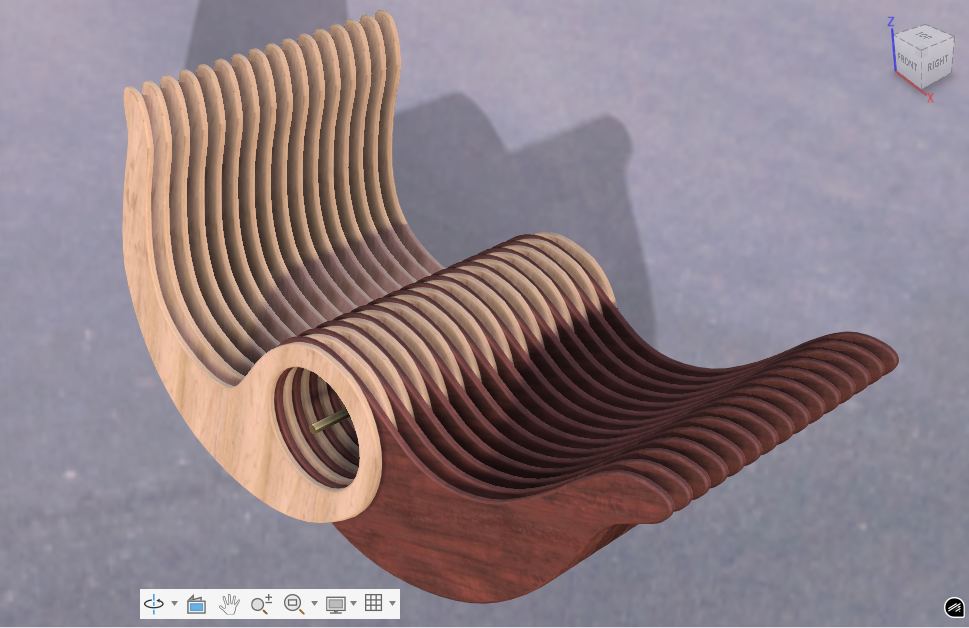
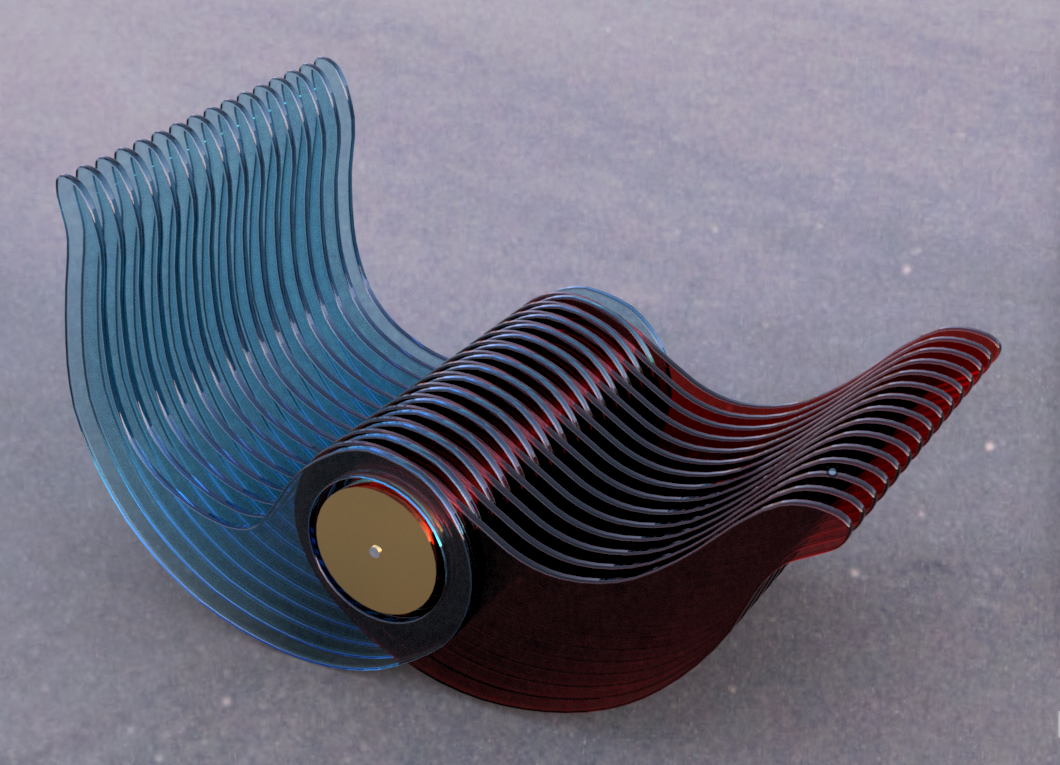


Designed the central metal ring
Built rotation joints
Tested array assemblies
Simulated multiple angular configurations
Evaluated structural stability
I also explored material finishes such as:
- Plywood
- Natural wood
- Colored acrylic
Physical Prototype
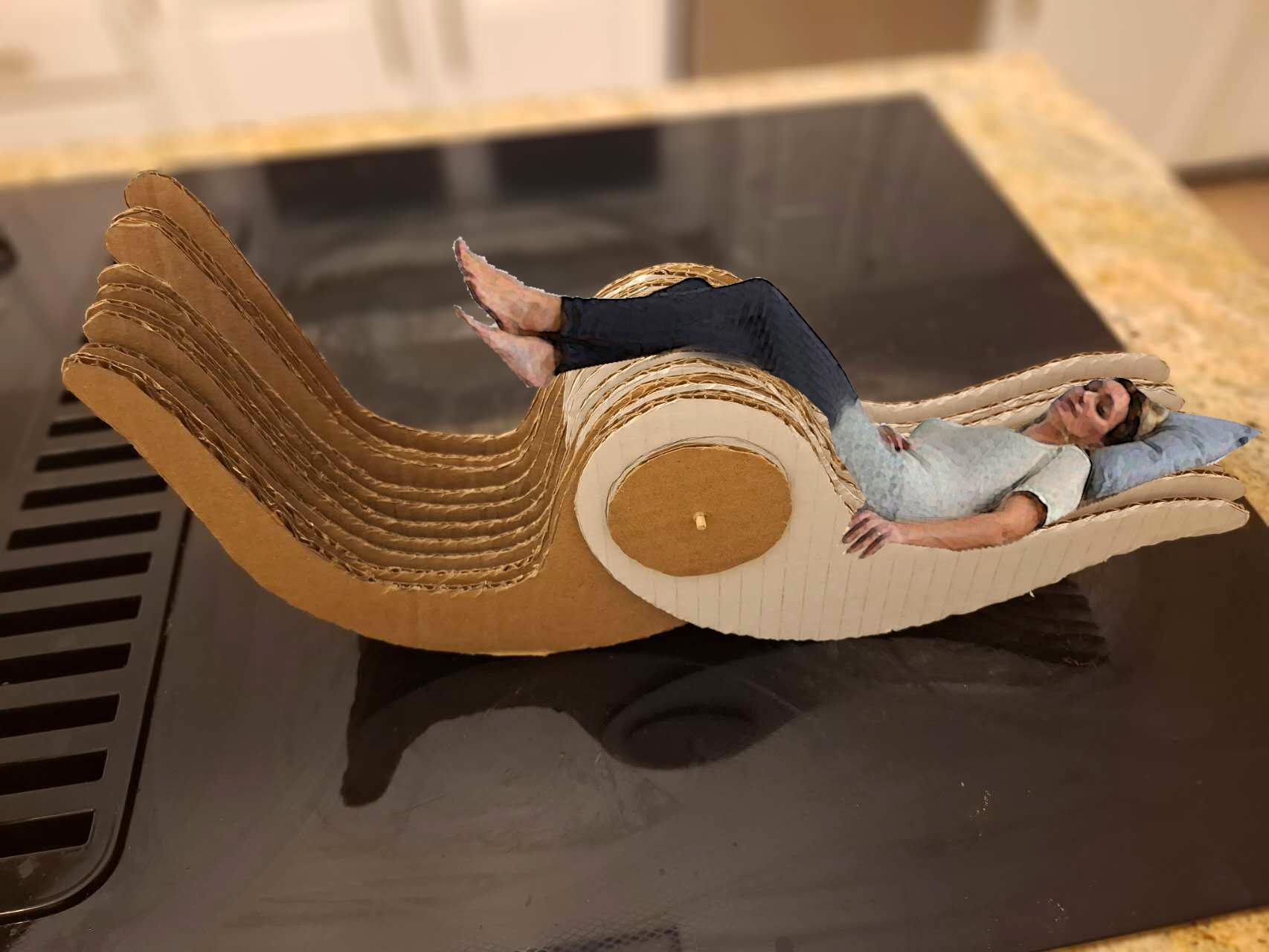
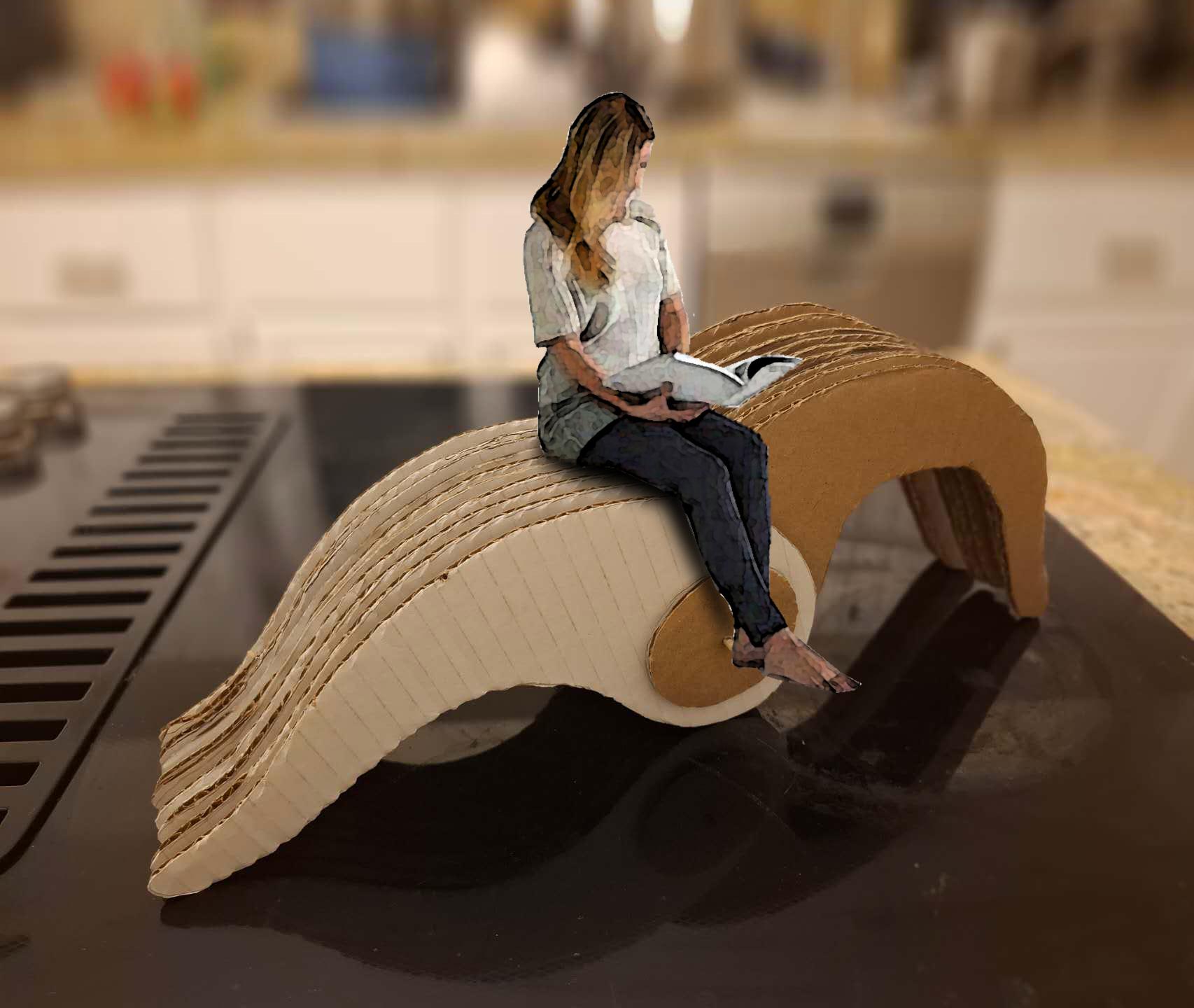
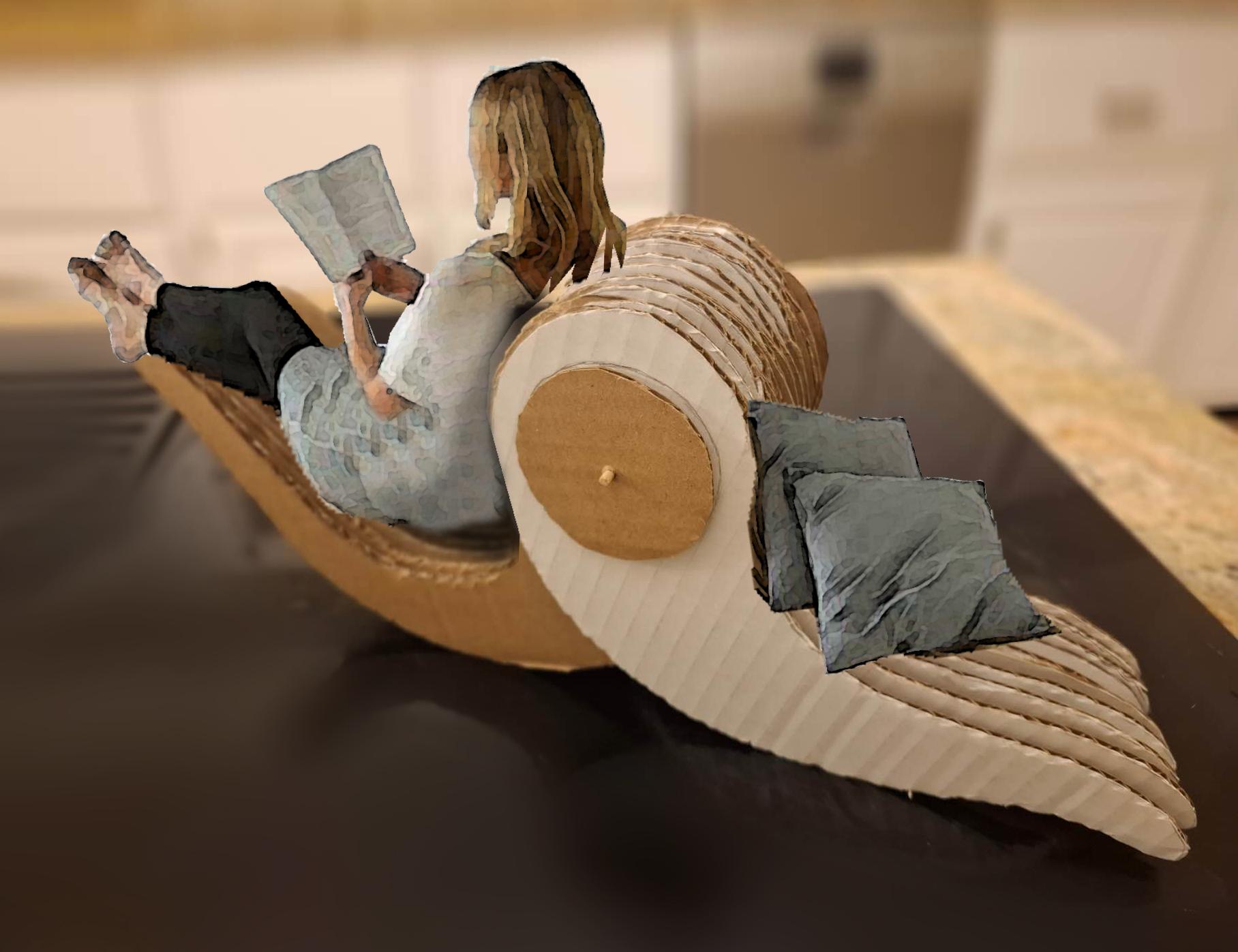
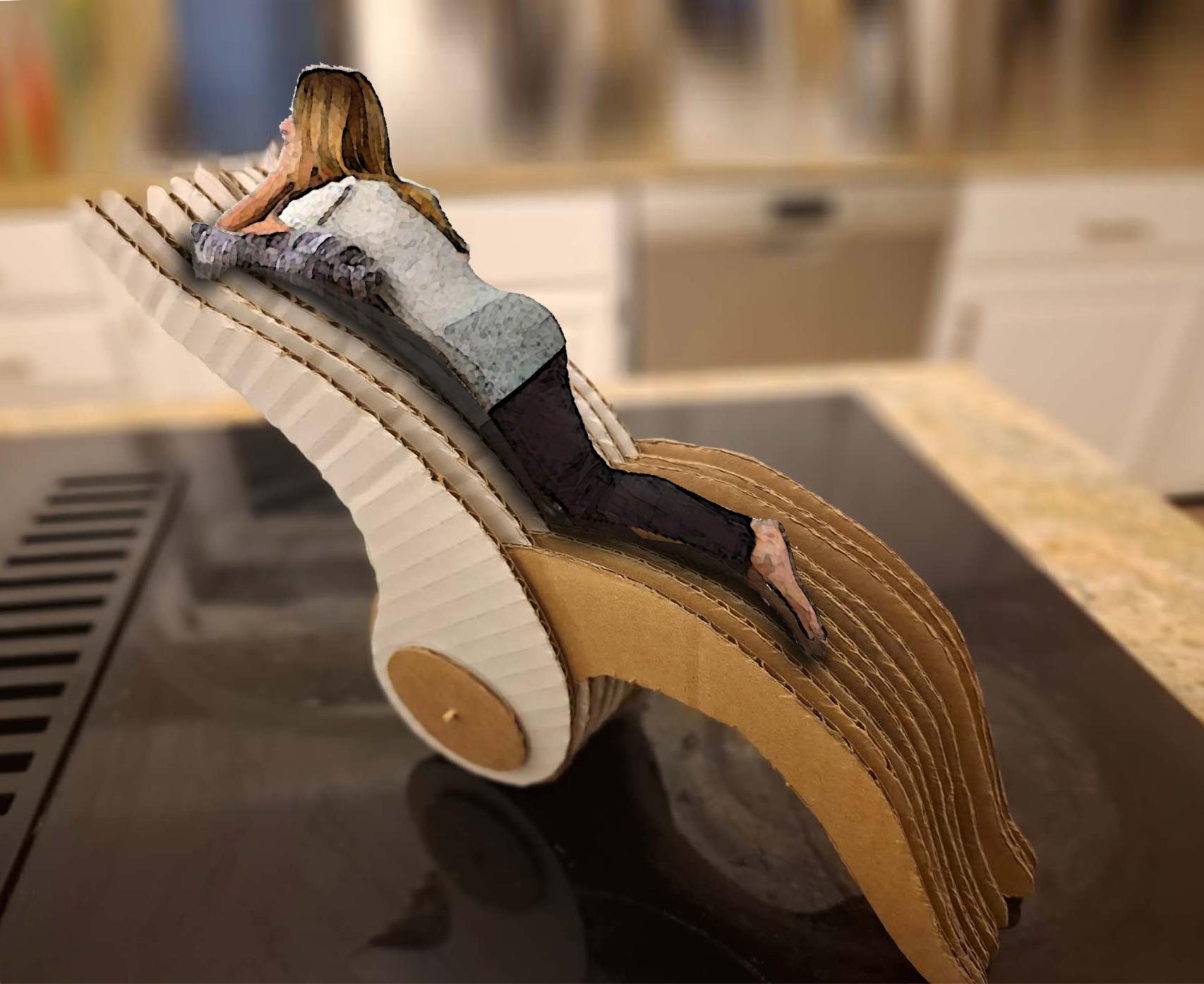
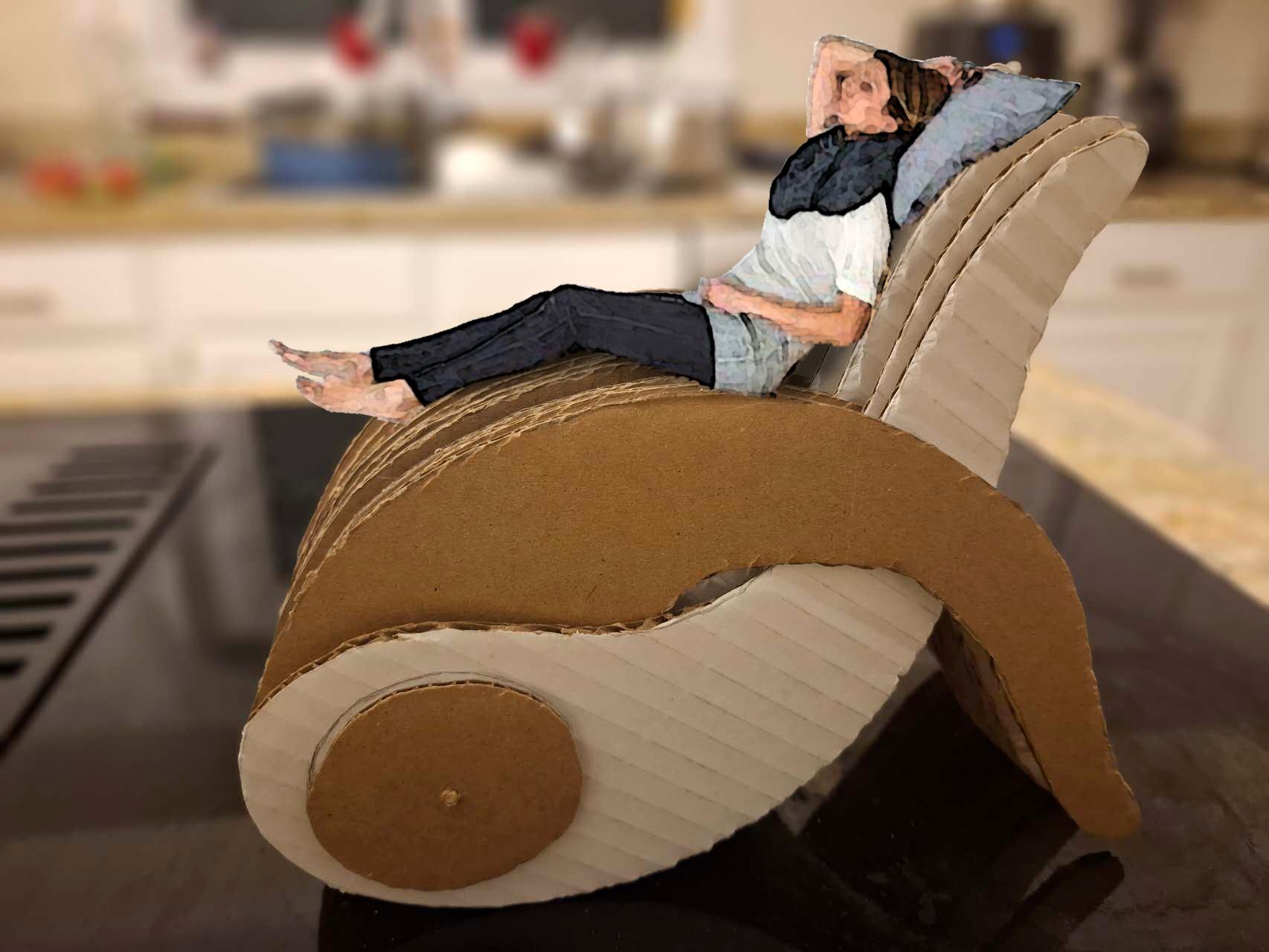

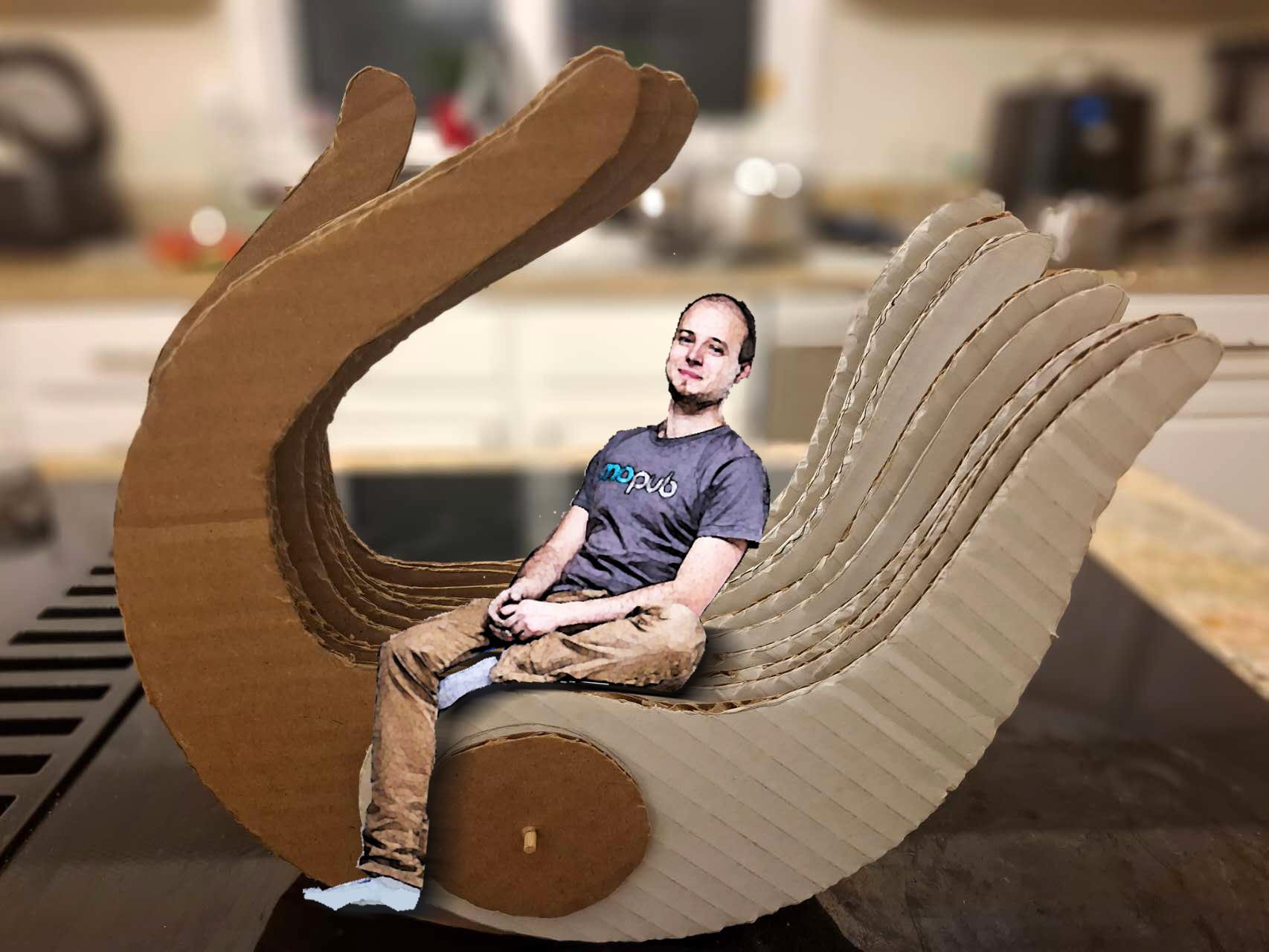
I created a white cardstock model to test:
- Rotational movement
- Structural logic
- Visual dynamics
- Transformational possibilities
The prototype revealed the personality of the object —
elegant, flexible, and slightly mischievous.
Future Material Exploration


Potential final materials include:
- CNC-cut plywood
- Colored translucent acrylic panels
- Circular metal tube core
- Friction-based or notched locking mechanisms
Under light, especially with colored acrylic,
OctoMorph becomes not just a chair —
but a luminous architectural sculpture.