Rose Quartz Sphere Pendant in a Silver Riveted Cage
by SlavikLTD in Craft > Jewelry
457 Views, 8 Favorites, 0 Comments
Rose Quartz Sphere Pendant in a Silver Riveted Cage
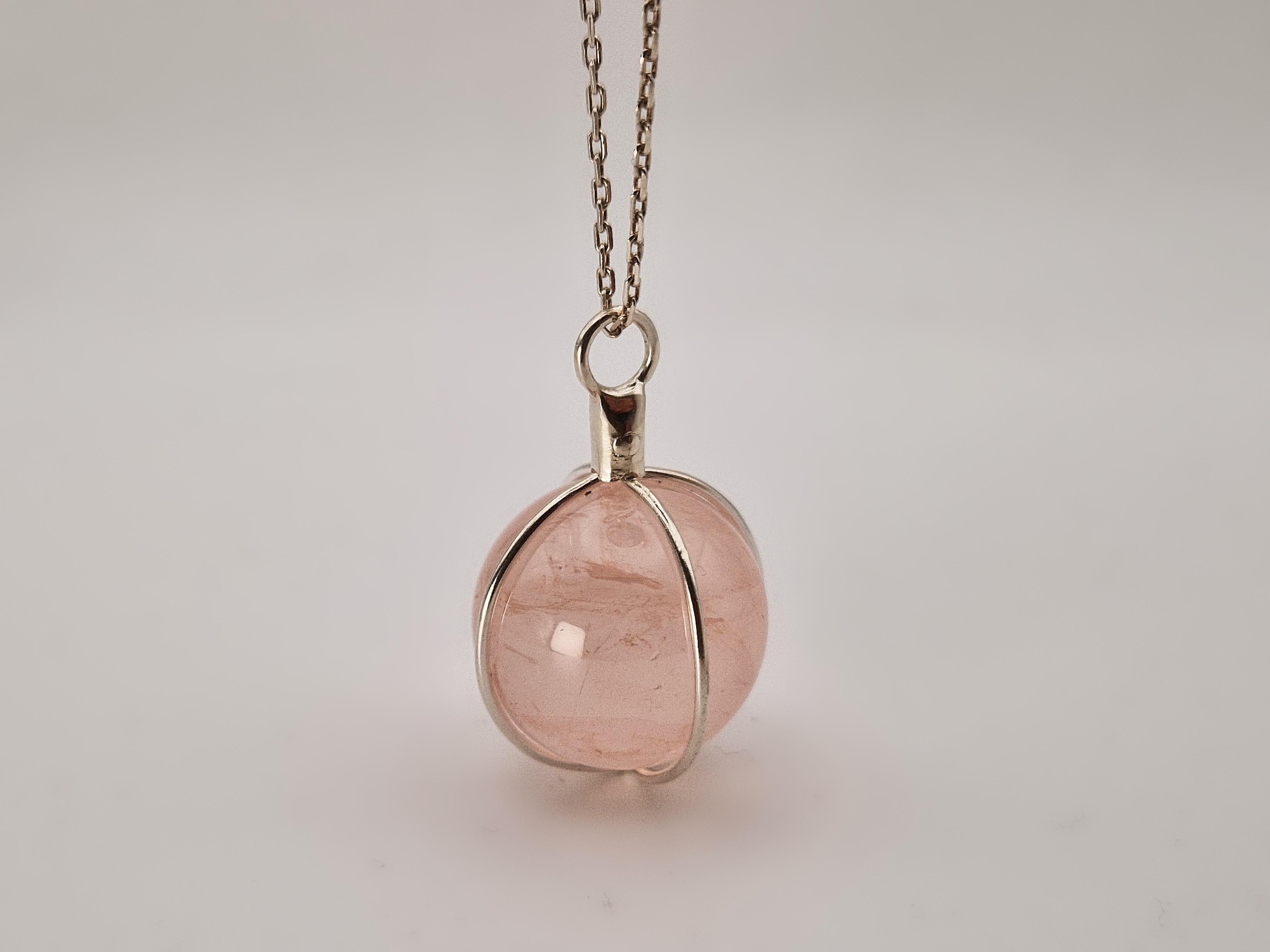
My wife once gave me a beautiful rose quartz ball and asked me to make it wearable. The twist here is that the quartz should not be heated by an open flame as it might turn milky or black-ish or just crack.
After some reading and few mockups I decided to put the sphere into a minimalistic cage which will be closed by a tip on top and secured in place by a rivet.
In this instructable I will describe the journey of turning a spherical stone into a pendant without putting it through fire.
Supplies
I'd say this project is best suited for people who already possess some basic skills and metalsmithing tools.
Materials and tools you will need:
- spherical object (rose quartz in my case)
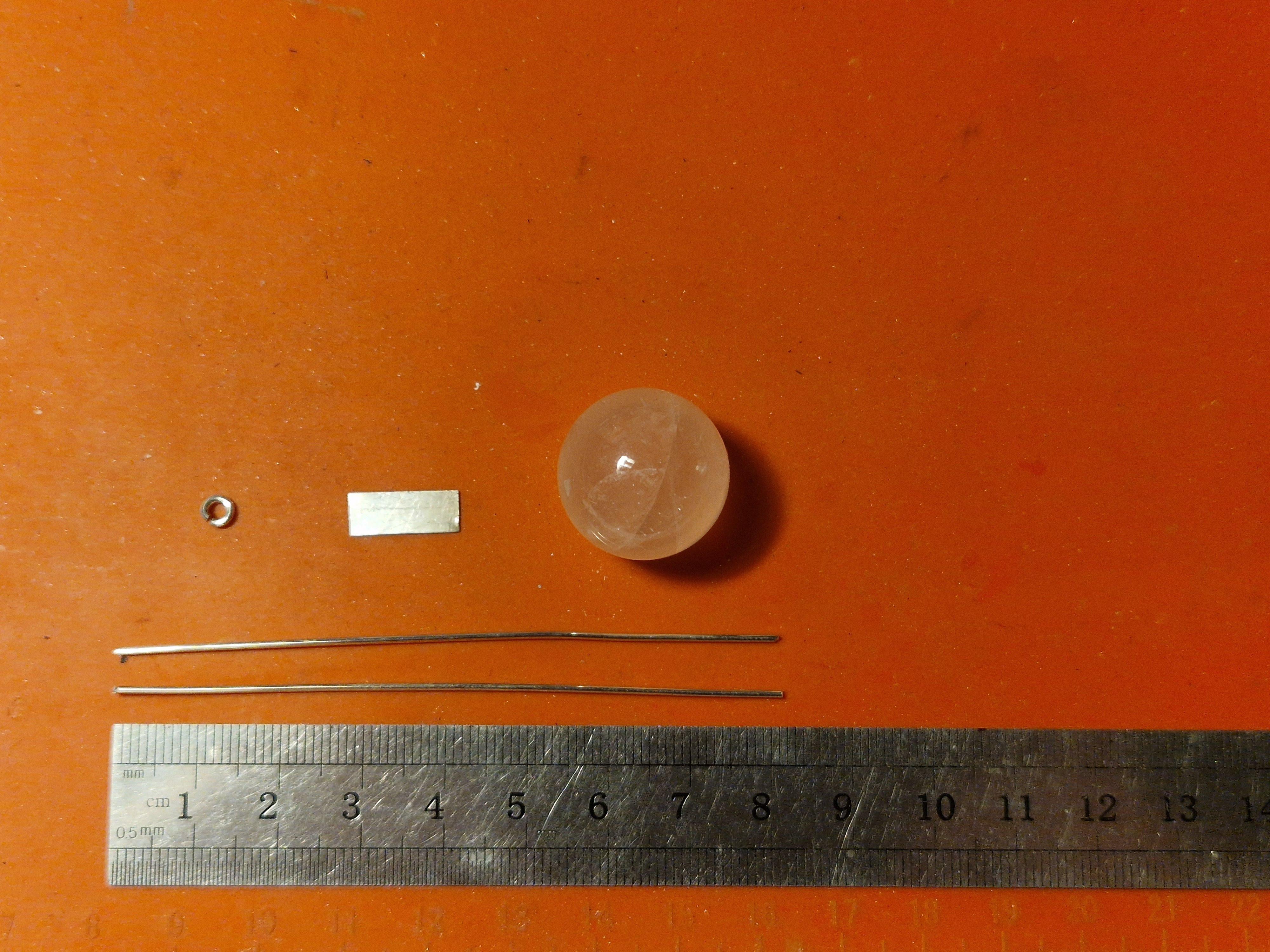
- 1mm silver wire (about 20 cm in total)
- 0.5mm thick silver strip for pendant tip
- wire cutters
- pliers (flat and round)
- files
- tweezers
- blow torch (I use Dremel Versatip)
- soldering brick
- soft silver solder
- silver flux
- soldering pick
- drill with 1mm bit
- jeweller's saw
- sandpaper
- polishing brushes
- tumbler (optional)
- hammer
The Cross Frame
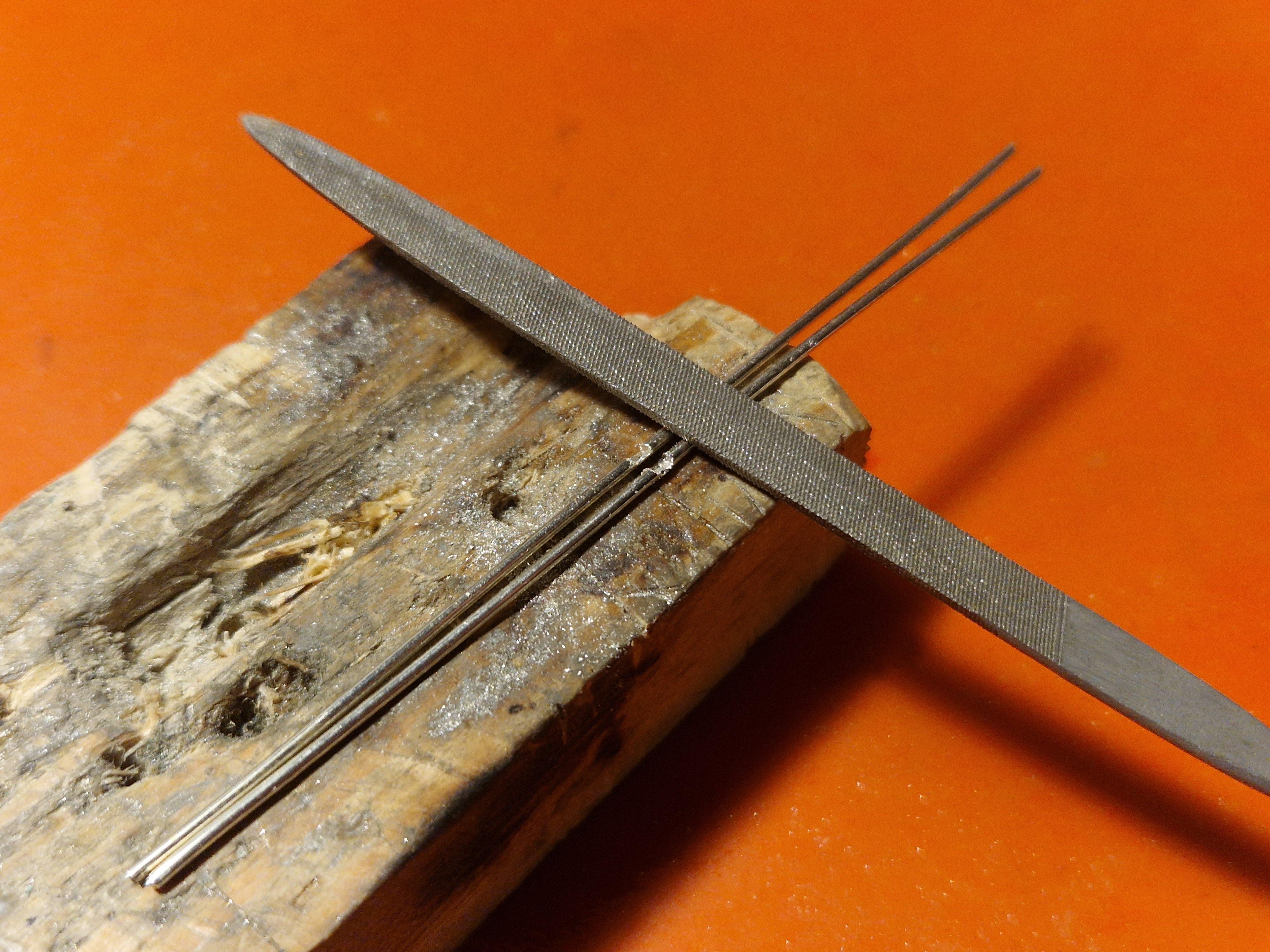

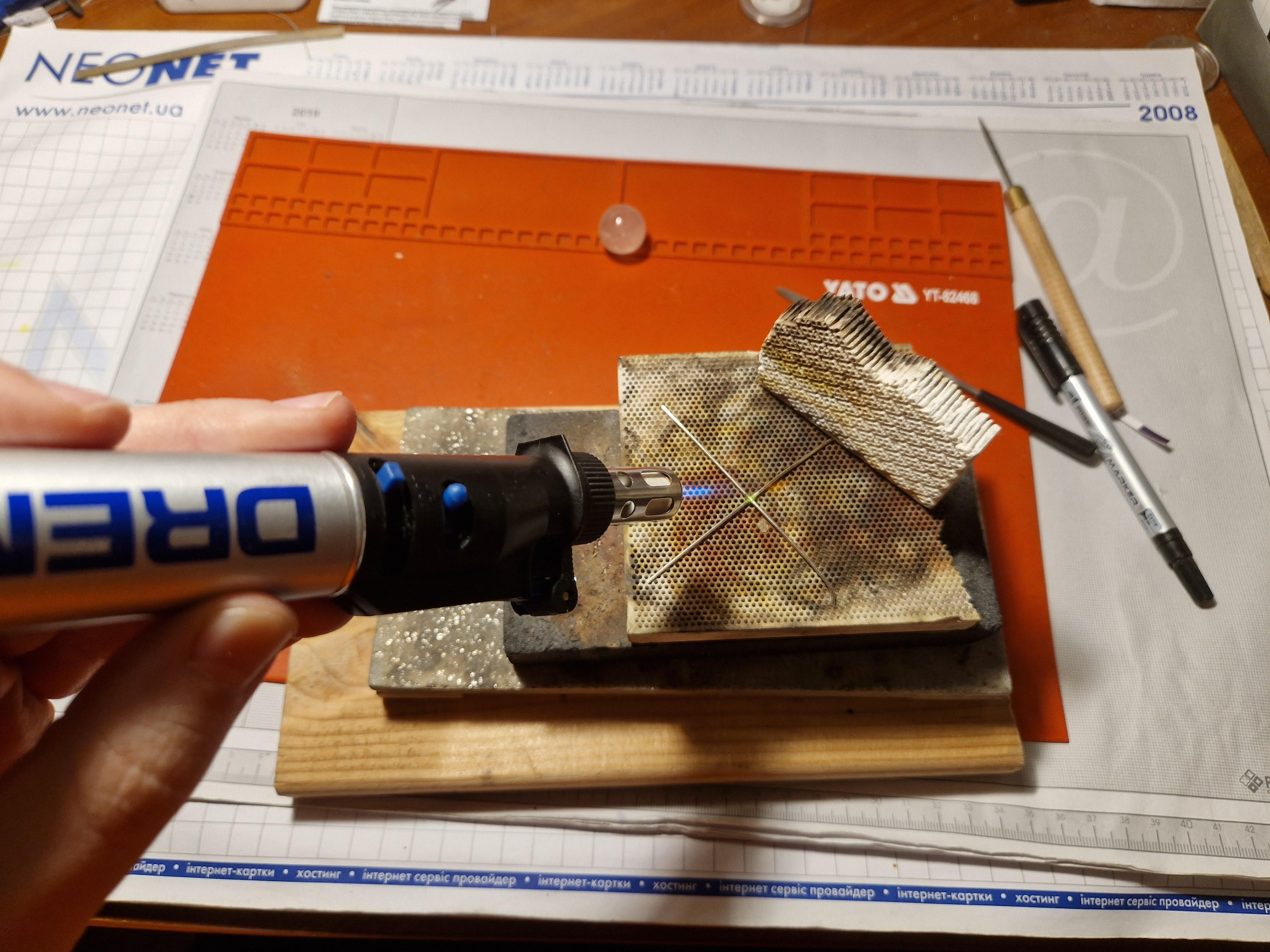
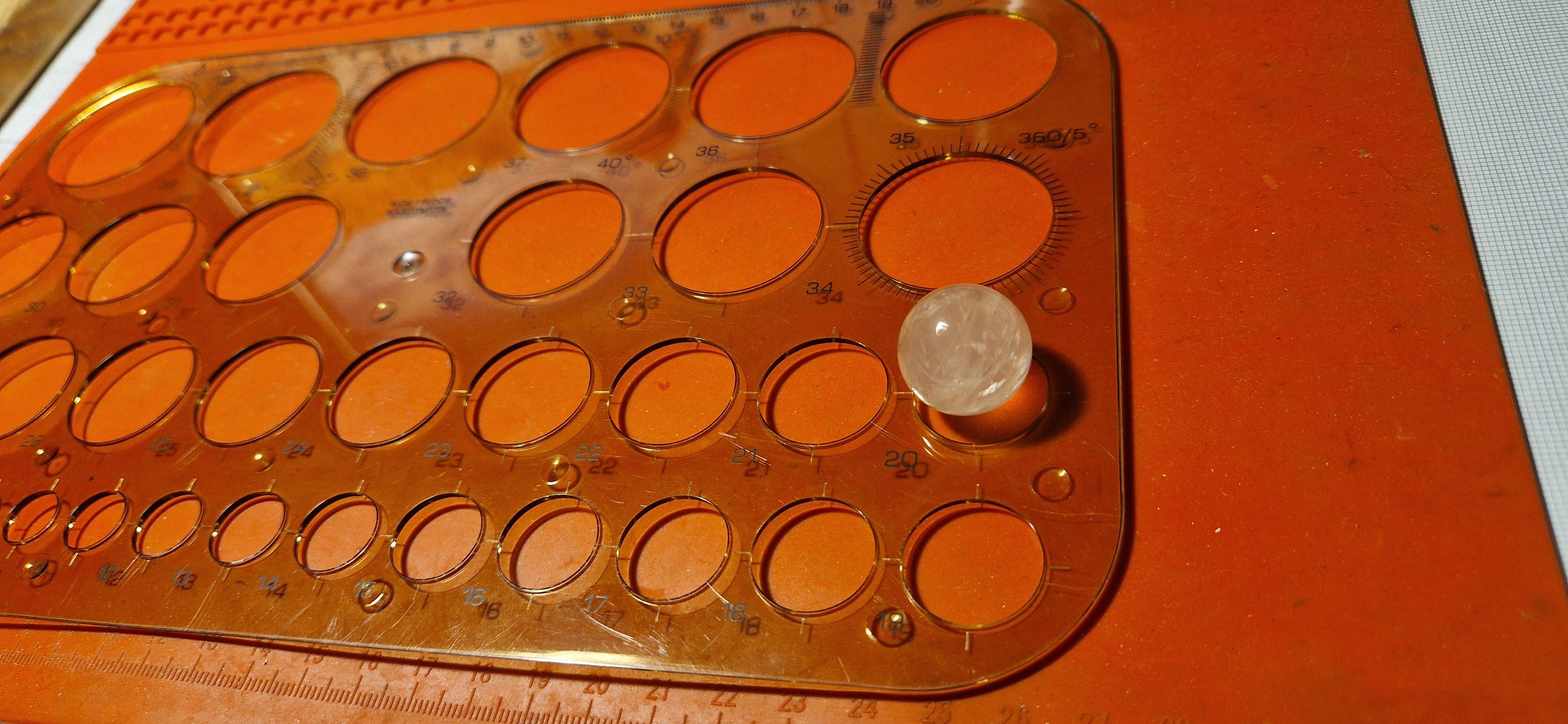
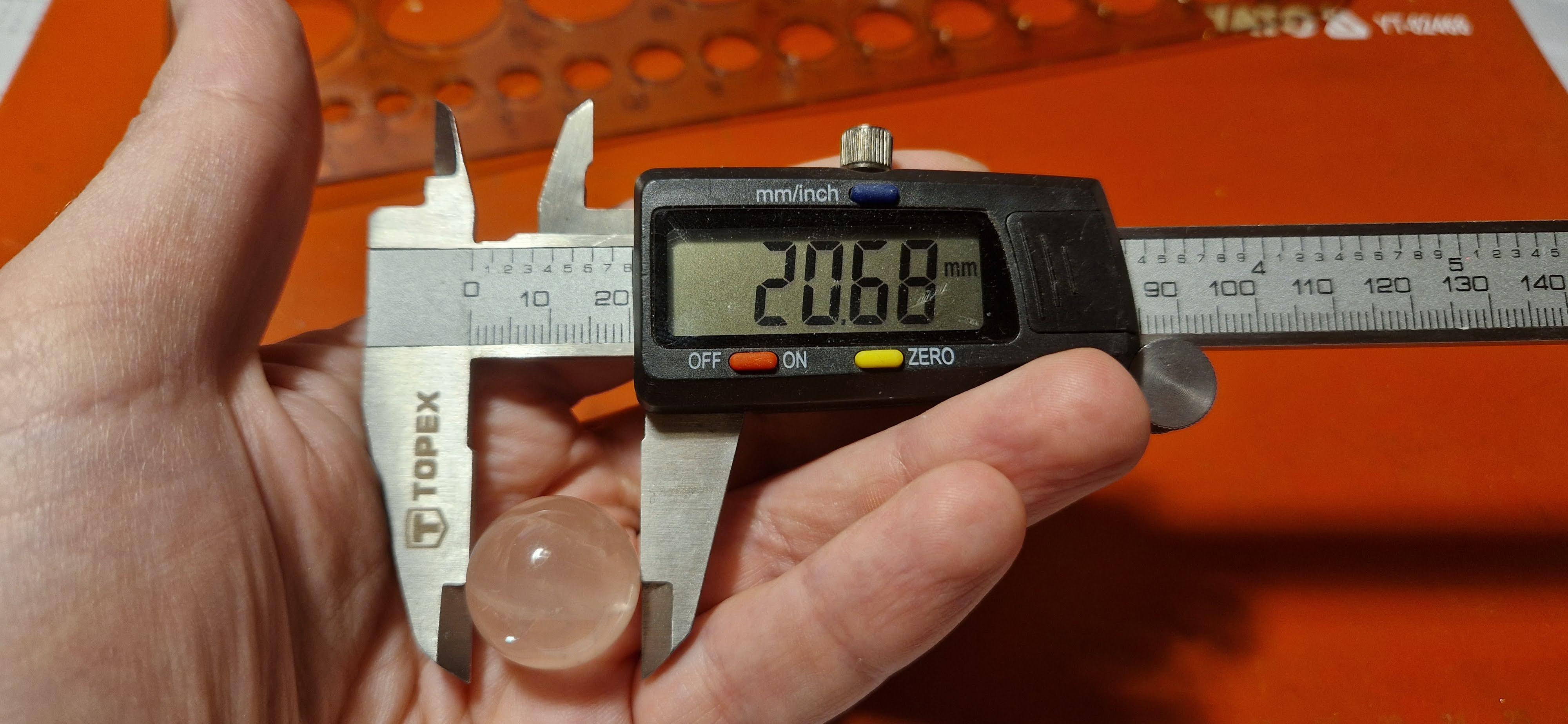
Since my quartz is about 20mm in diameter I figured that I'd need 2 pieces of wire about 80mm long each. I mark both in the middle and file a groove with a file's edge. These grooves ensure that the 2 wires are leveled when connected.
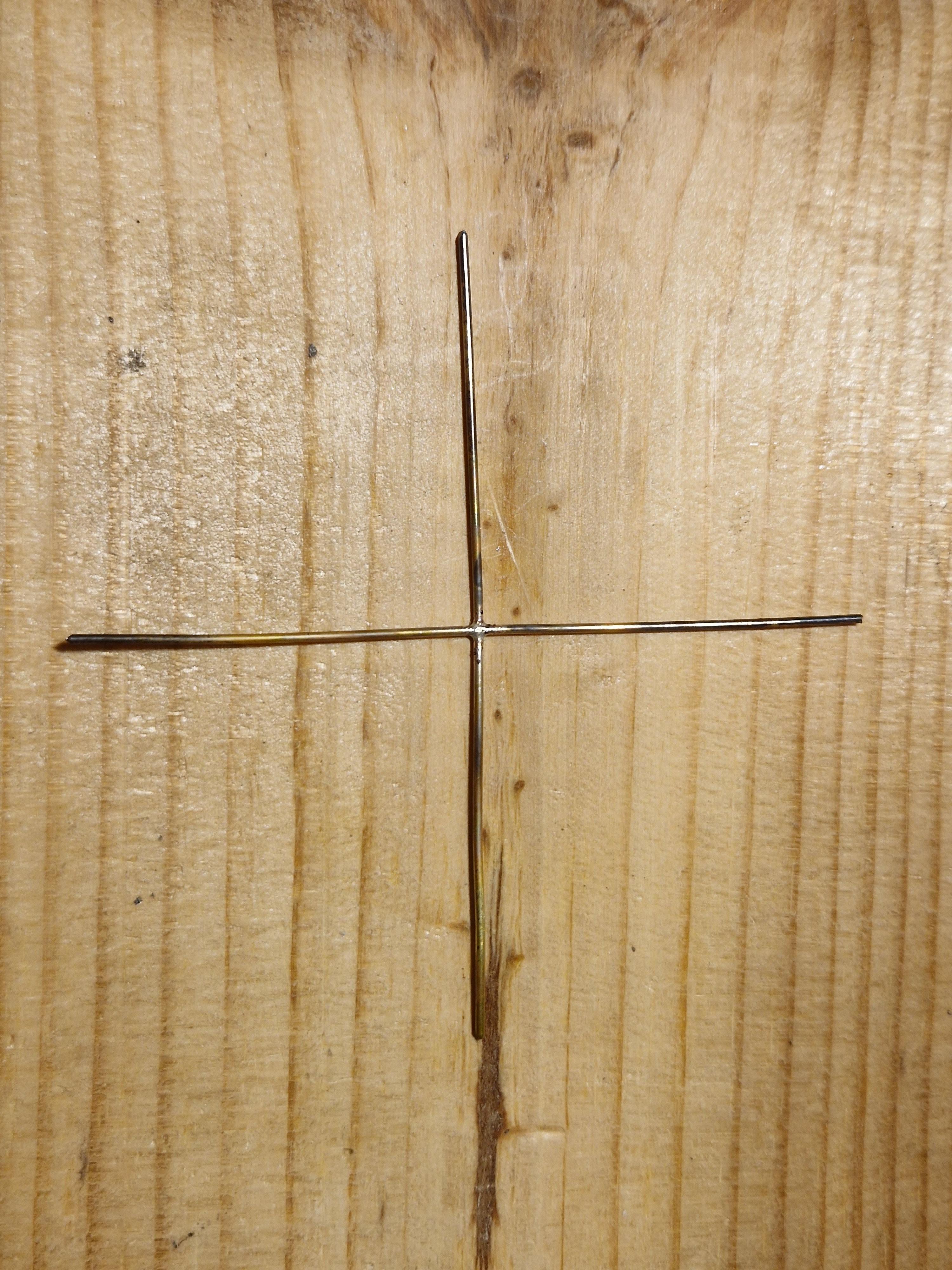
Once wires are positioned on a soldering brick apply some flux and heat up both pieces. Then focus the flame at the intersection and apply a blob of soft solder right on the joint. As a result you should get a nice little cross with each leg measuring around 40 mm long.
Shaping the Cage
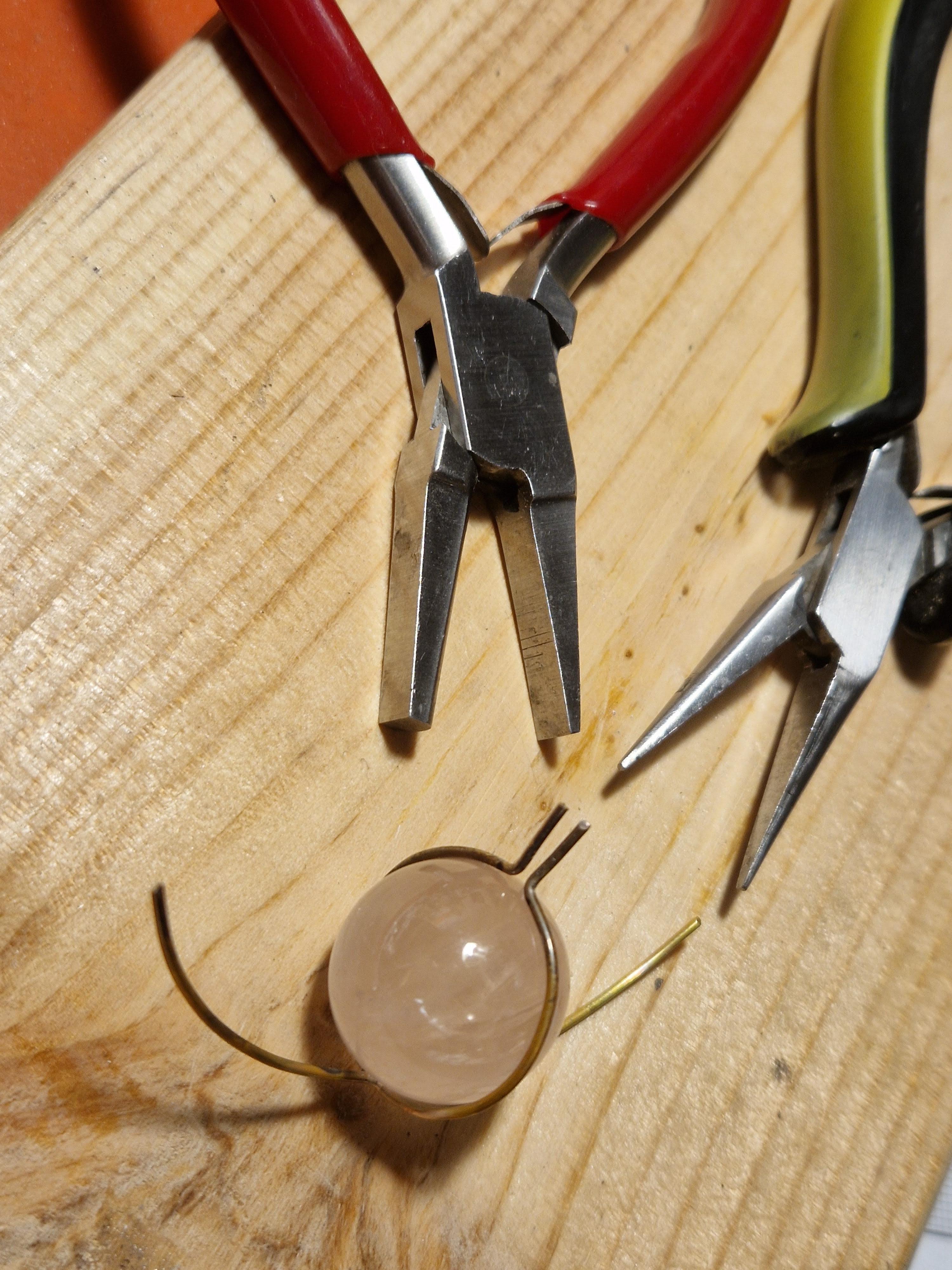
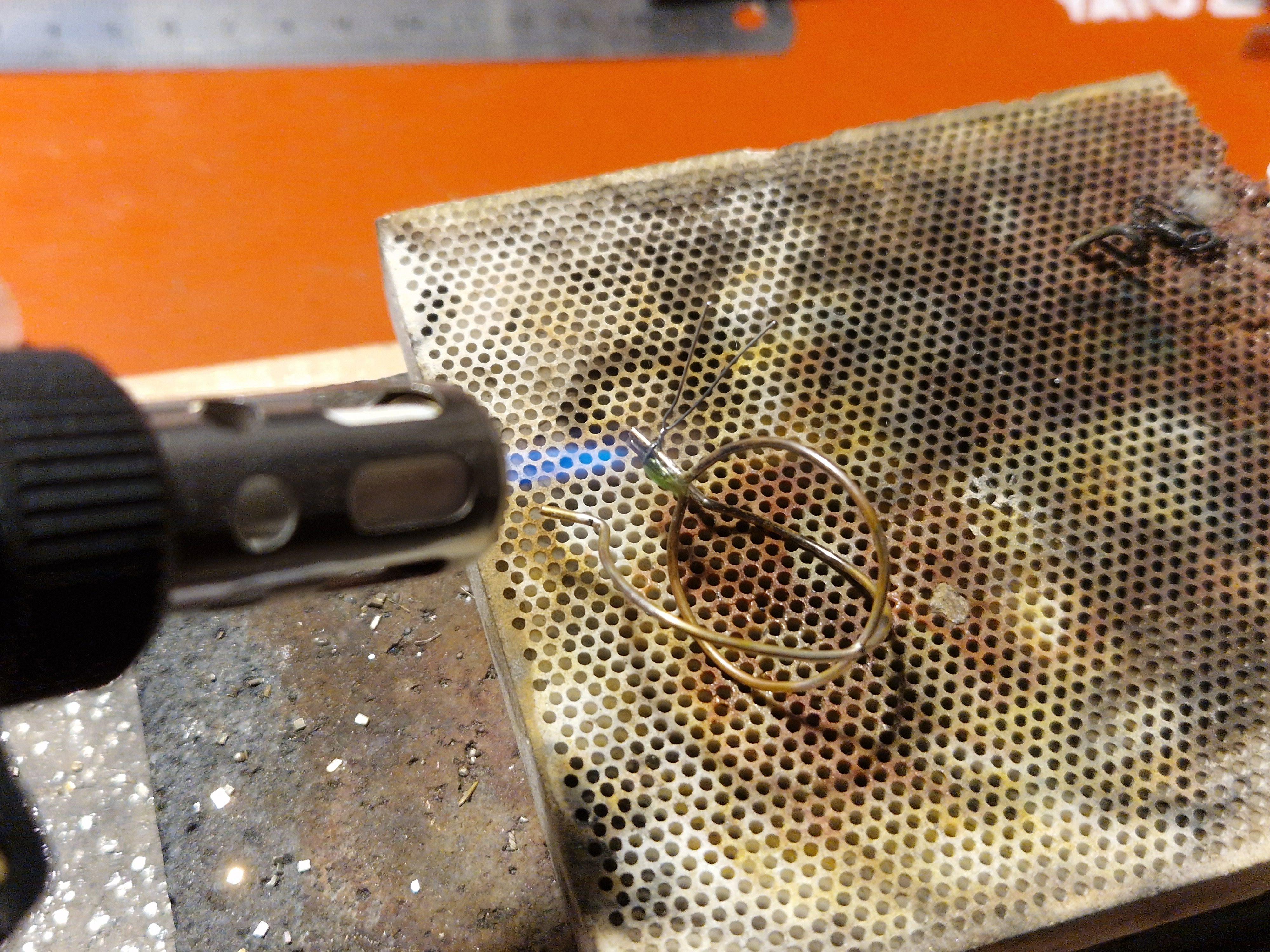
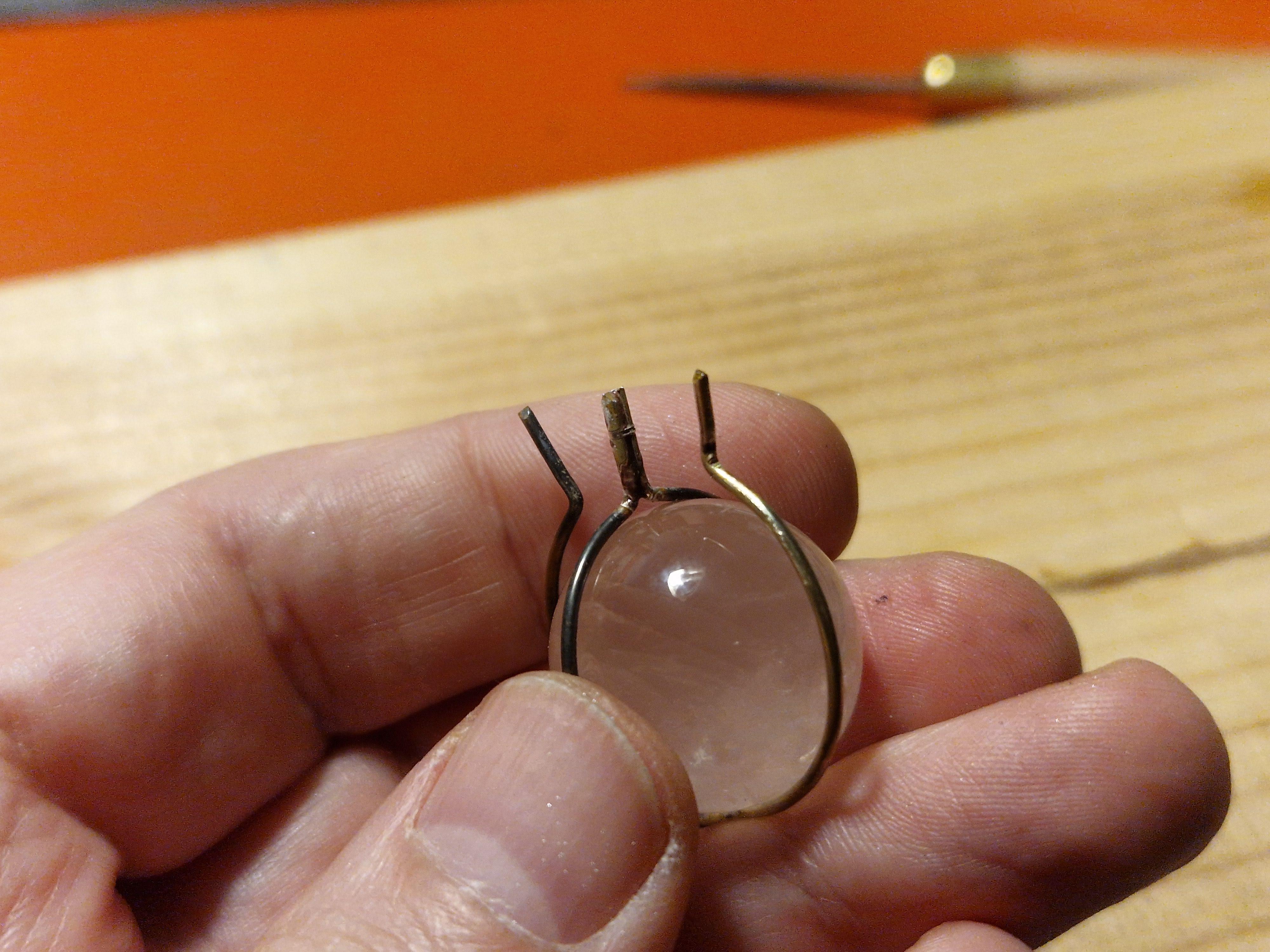
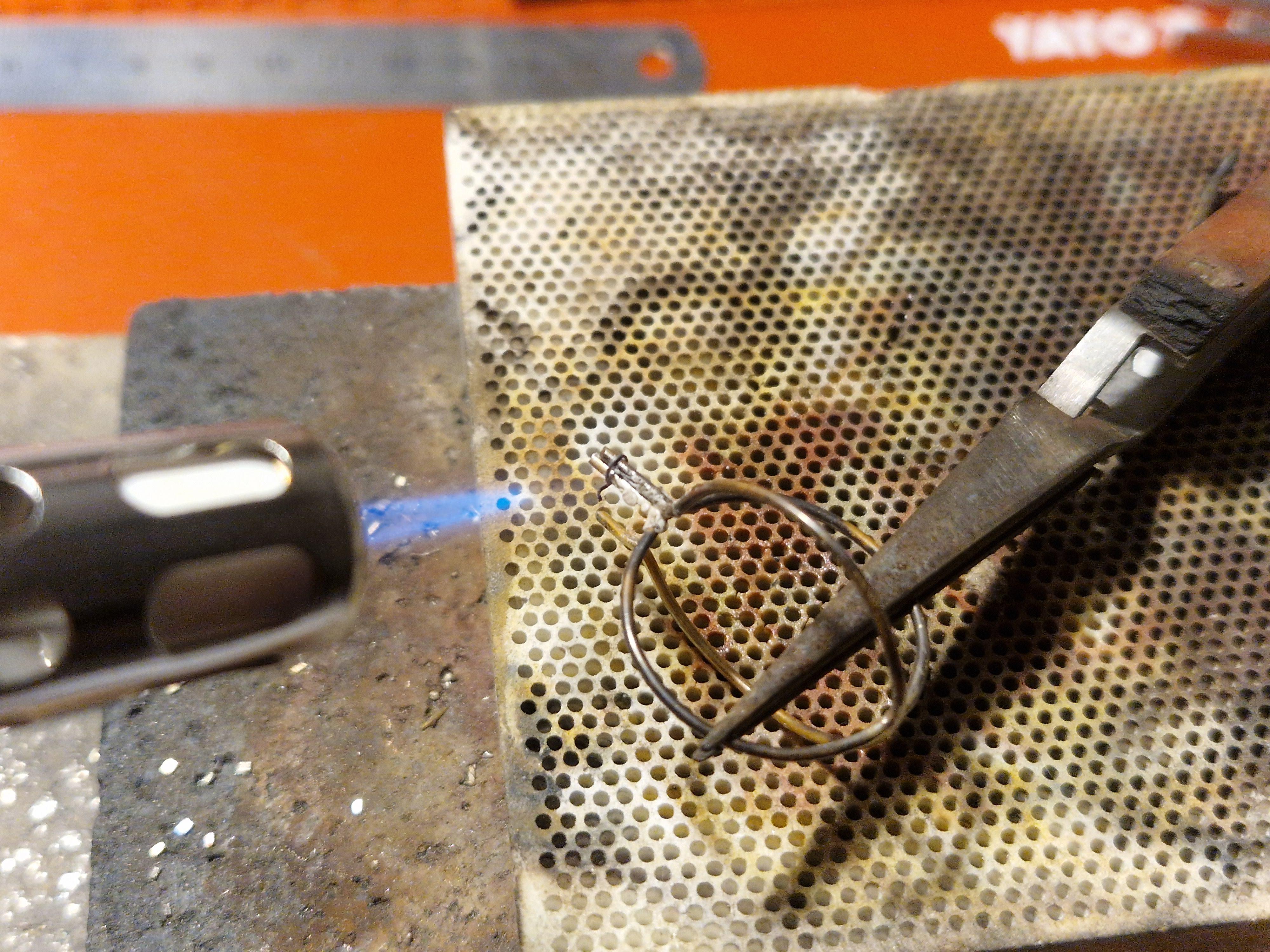
Now it is time to bend the wires into loops. Each leg of the cross should become a half-circle to hug the quartz. There is no hack there that I know of - just use pliers and constantly try the gem on and adjust the shape. On the end of each leg there should be a little extra piece of wire that should point upwards, given that the intersection joint is on the very bottom.
Once the wires are shaped into half circles solder two opposite ends together forming a loop that the quartz ball can tightly fit through. Then the real trick is to solder ONLY ONE of the rest half-loops to the already soldered loop. This way the last half-loop is still unattached so that the quartz can get inside the cage.
By the end of this step the silver cross should become a spherical cage with a soldered joint on the south pole and four wire ends sticking out on the north pole. Three of the four wires on the south pole should be soldered together. The quartz should fit tightly inside the cage by gently bending away the unattached half-loop.
The Top Cap

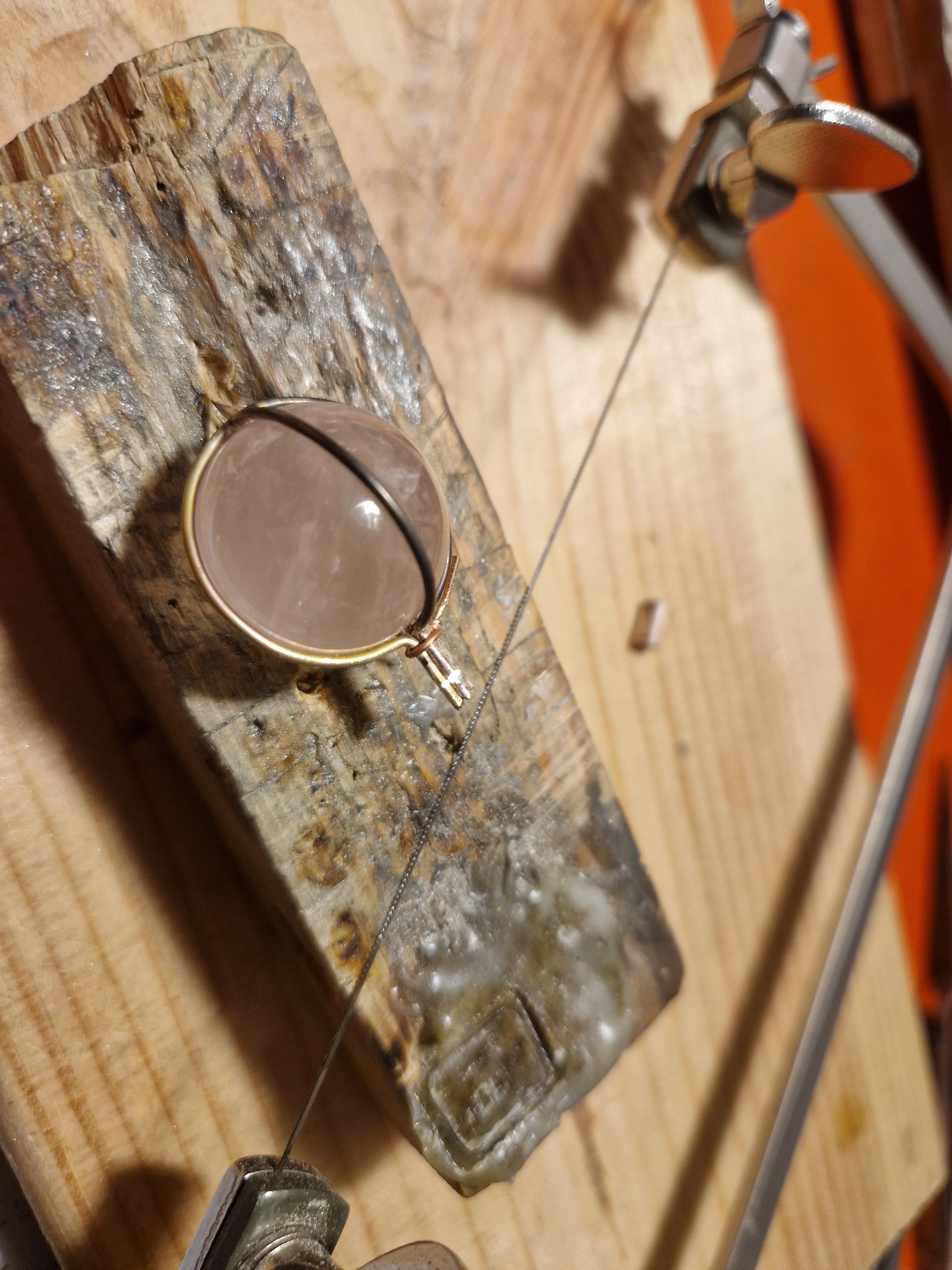
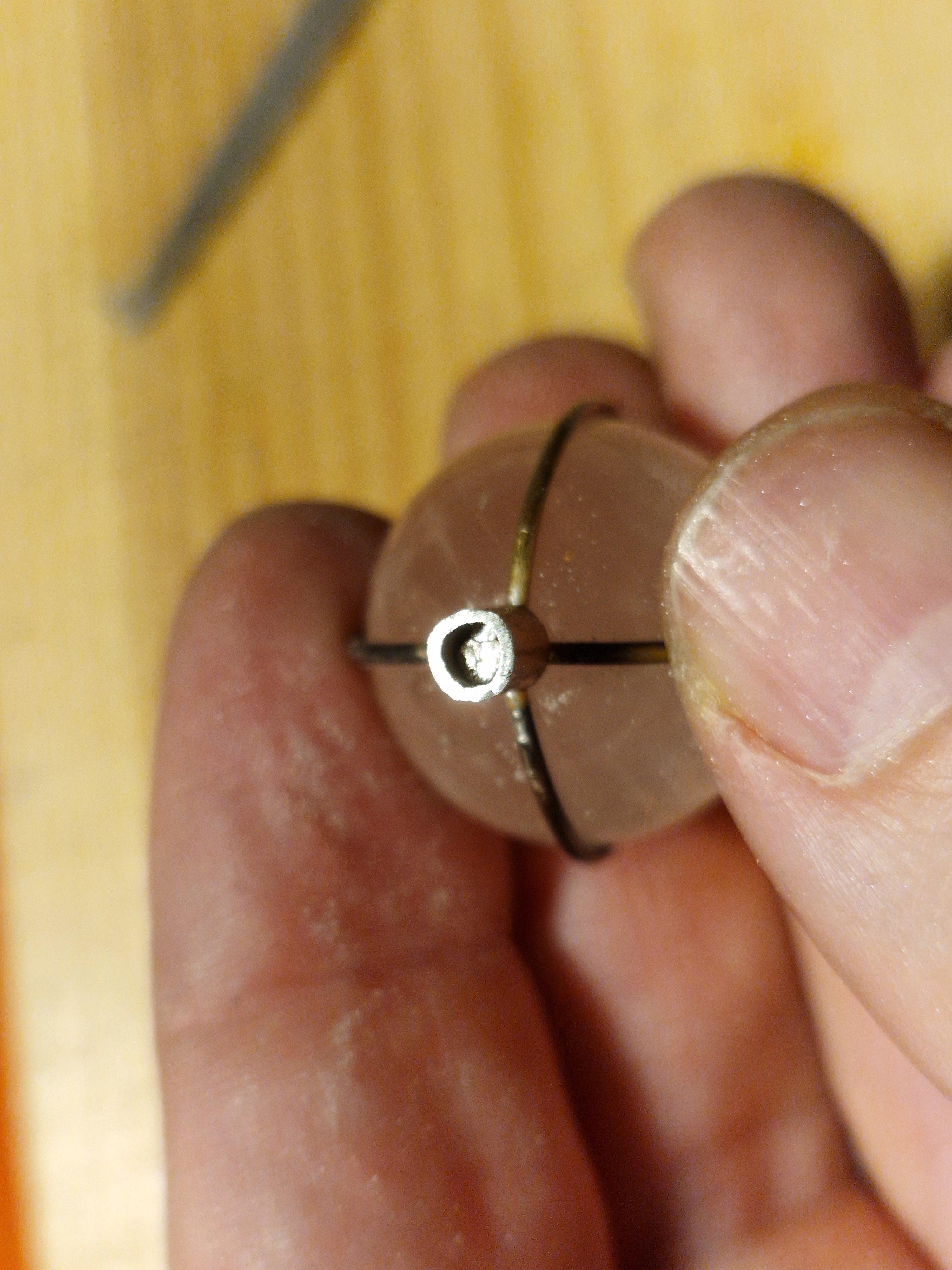

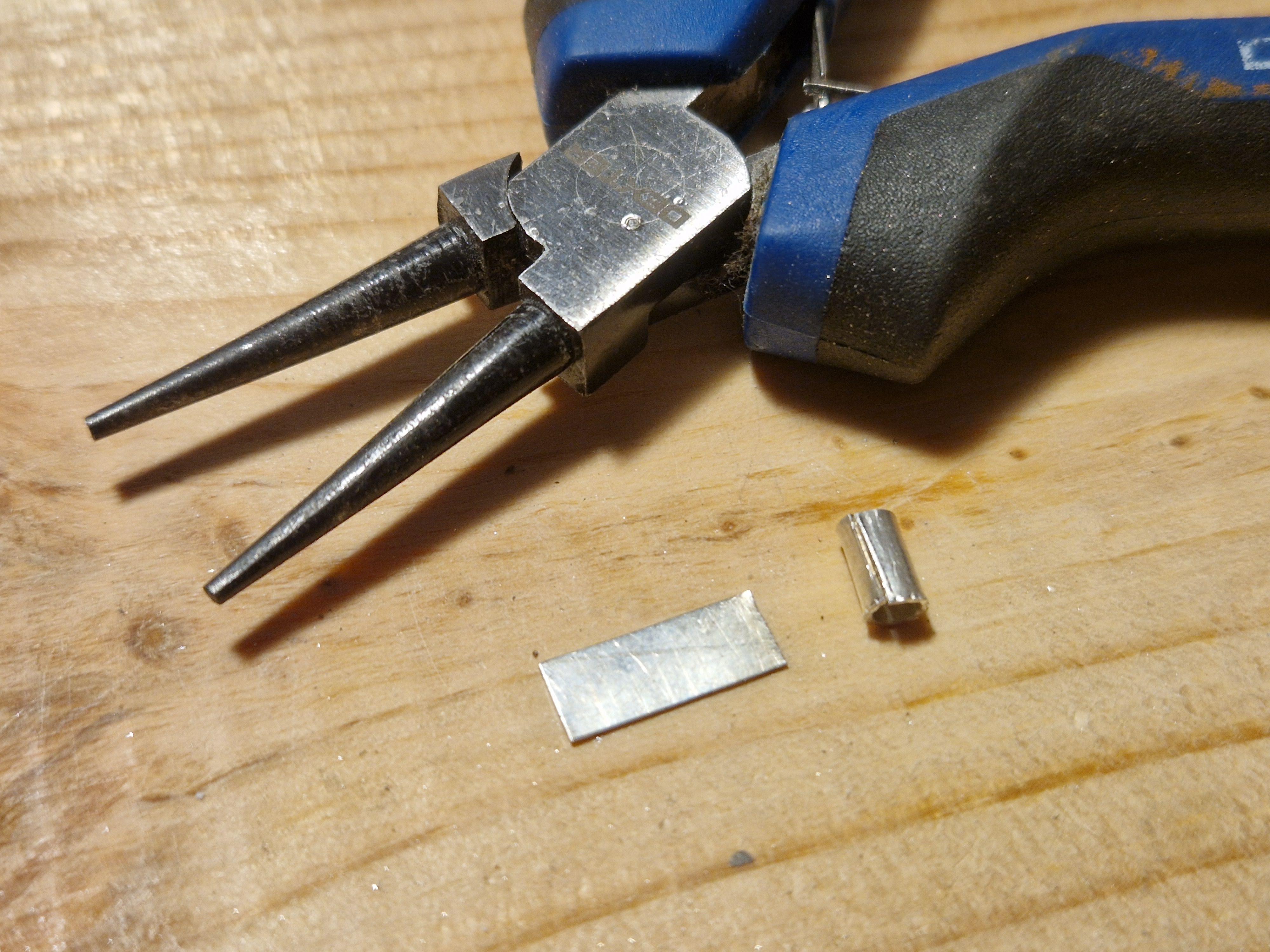
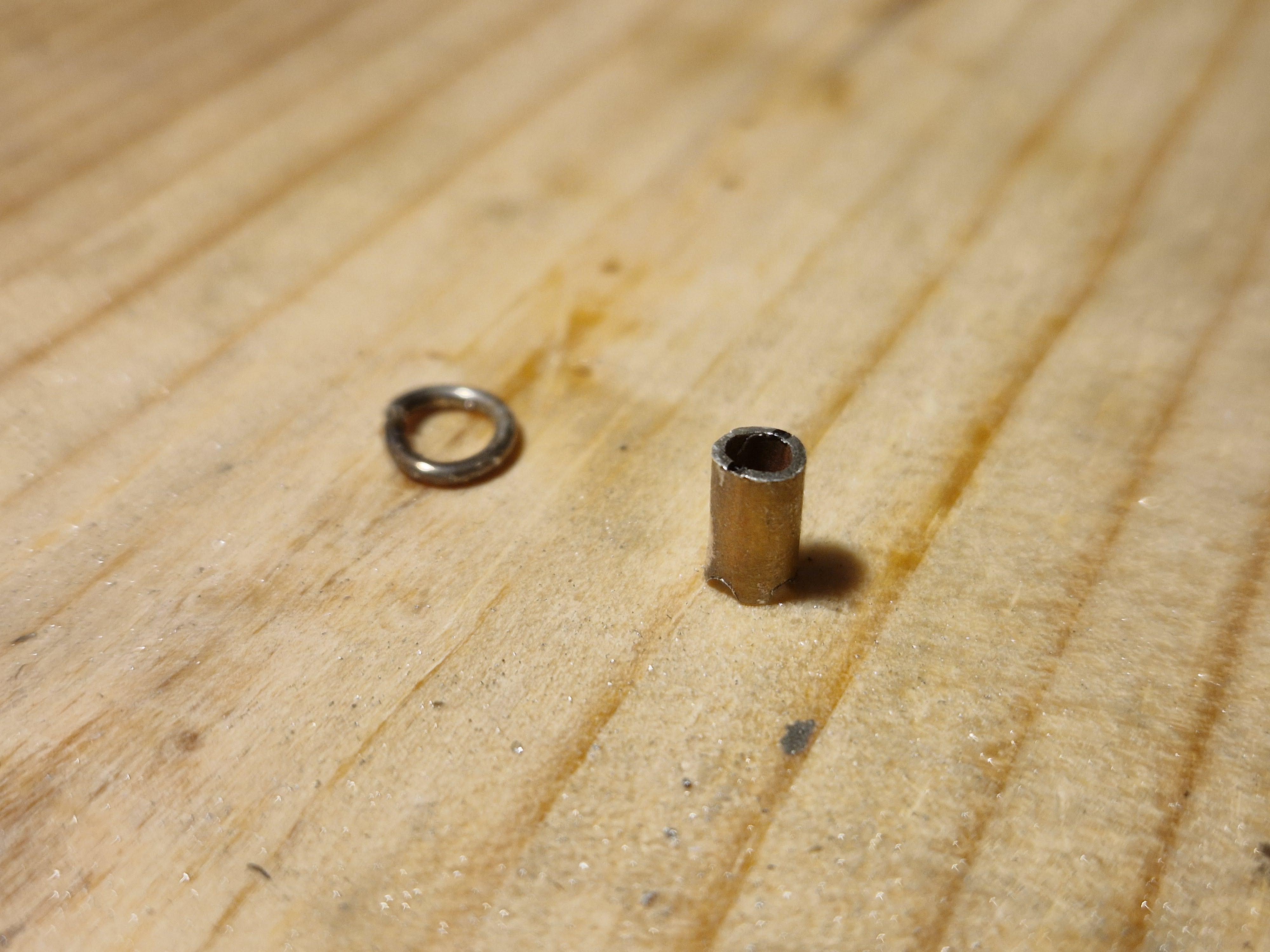

The top cap is what will keep the quartz inside the cage and hold the weights of the pendant. In this case I used a 0.5 mm thick silver plate measuring roughly 5x12 mm. But it can just as well be made out of wires. The point is to make a tubular cap that can hold inside four wires sticking out from the north pole of the cage.
Using a round tip pliers I bent the plate into a tube and soldered the joint. On one side of the tube I filed two little grooves and soldered a jump ring there - this is where a chain would go to hang the pendant.
On the other end I filed four grooves to better fit the four wires of the cage, but this procedure is purely for decorative purposes and can be omitted with no harm the integrity of the piece.
I also thought that the sticking wires on the north pole of the cage seem too long. Hence, I used my jewellers saw to cut off the excessive millimeter or two. You have to make sure that the wires are inside the cap go way above its middle height so that the rivet has enough to grab onto.
The Hole for the Rivet
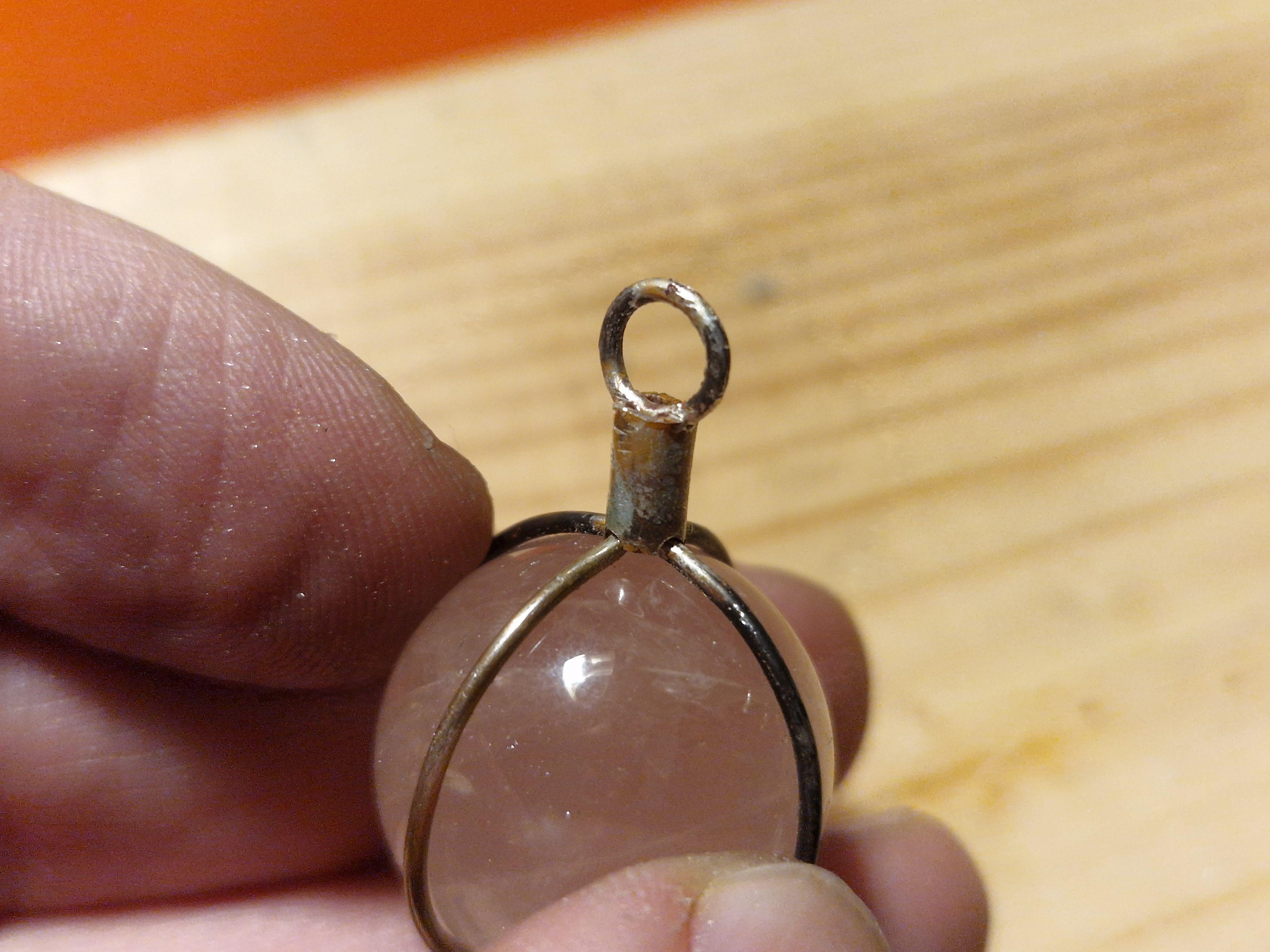
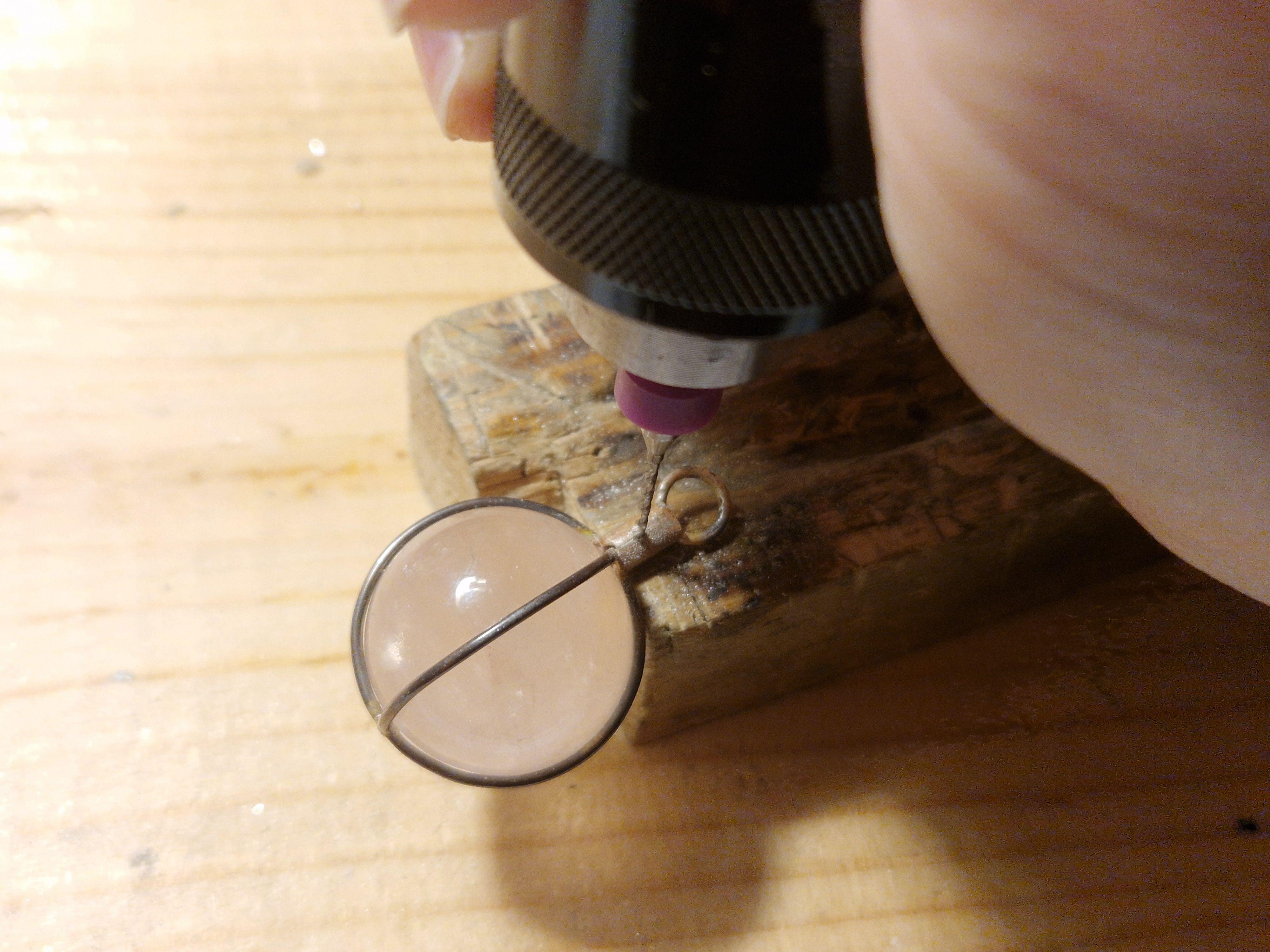
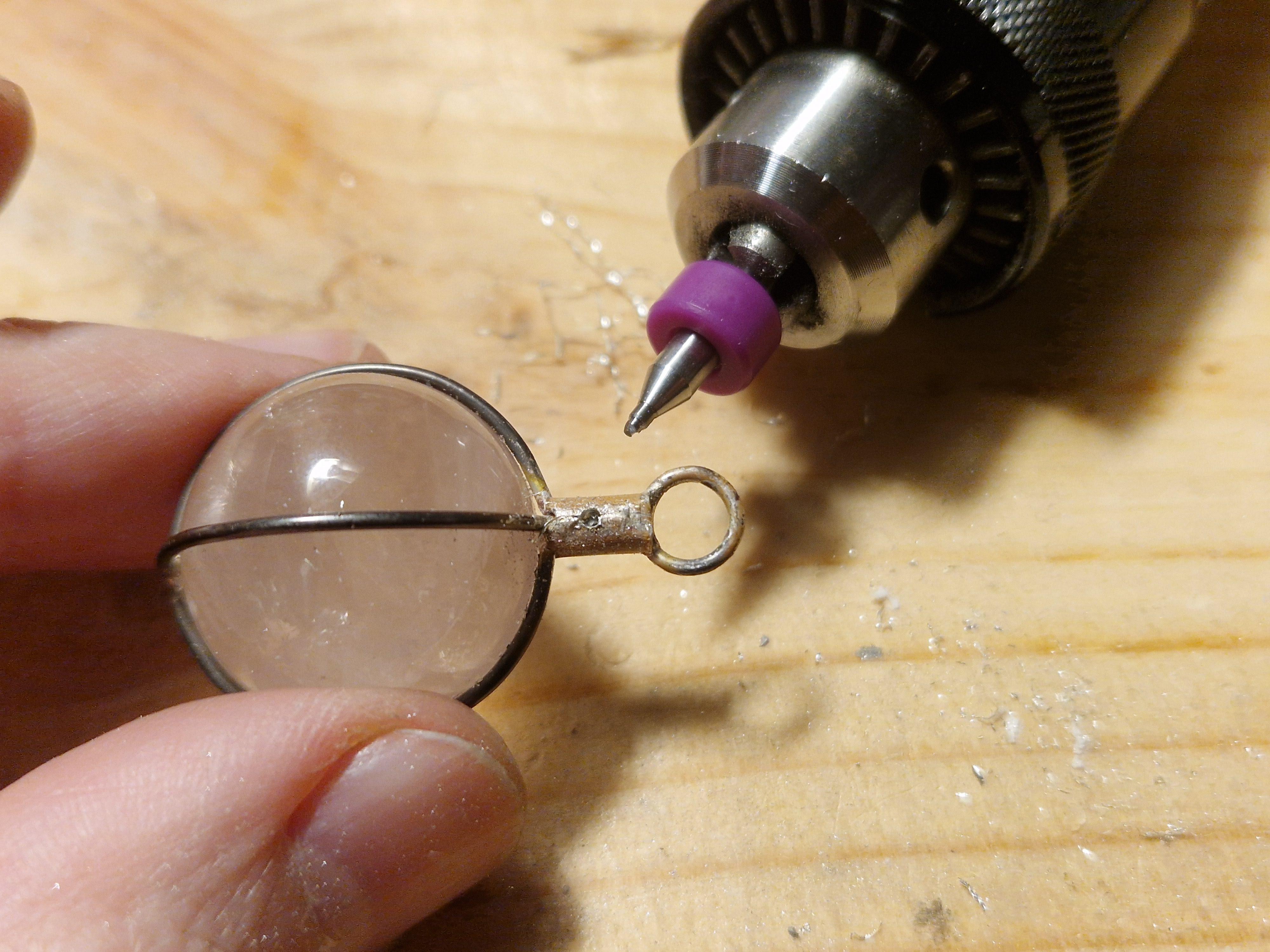
This is probably the most intriguing step, at least for me it was. You would need a drill that is capable of making a 1mm hole. I hapened to posses a micromotor with a flex shaft and a 1mm drill bits from a CNC machine.
First I marked a spot right in the middle of the top cap. It is not that importnat which way the hole would be made as long as it goes through the center of the cap. With the top cap placed on the wire ends (three soldered ones and one loosen) I drilled a hole right through the cap and all those wire ends inside it.
This is a delicate procedure that requires focus and steady hands. Otherwise you would use multiple drill bits, trust me on that.
Making the Rivet
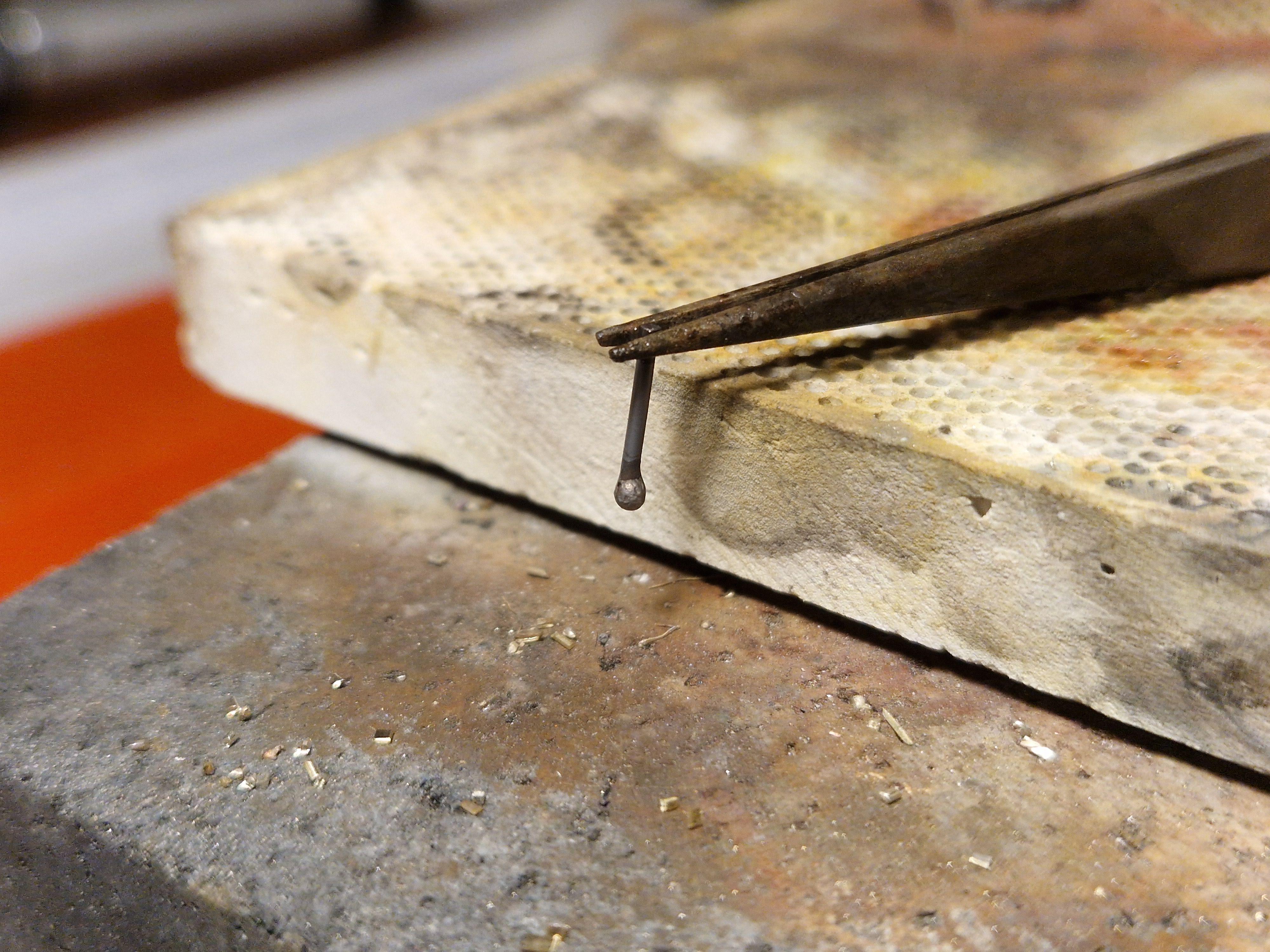
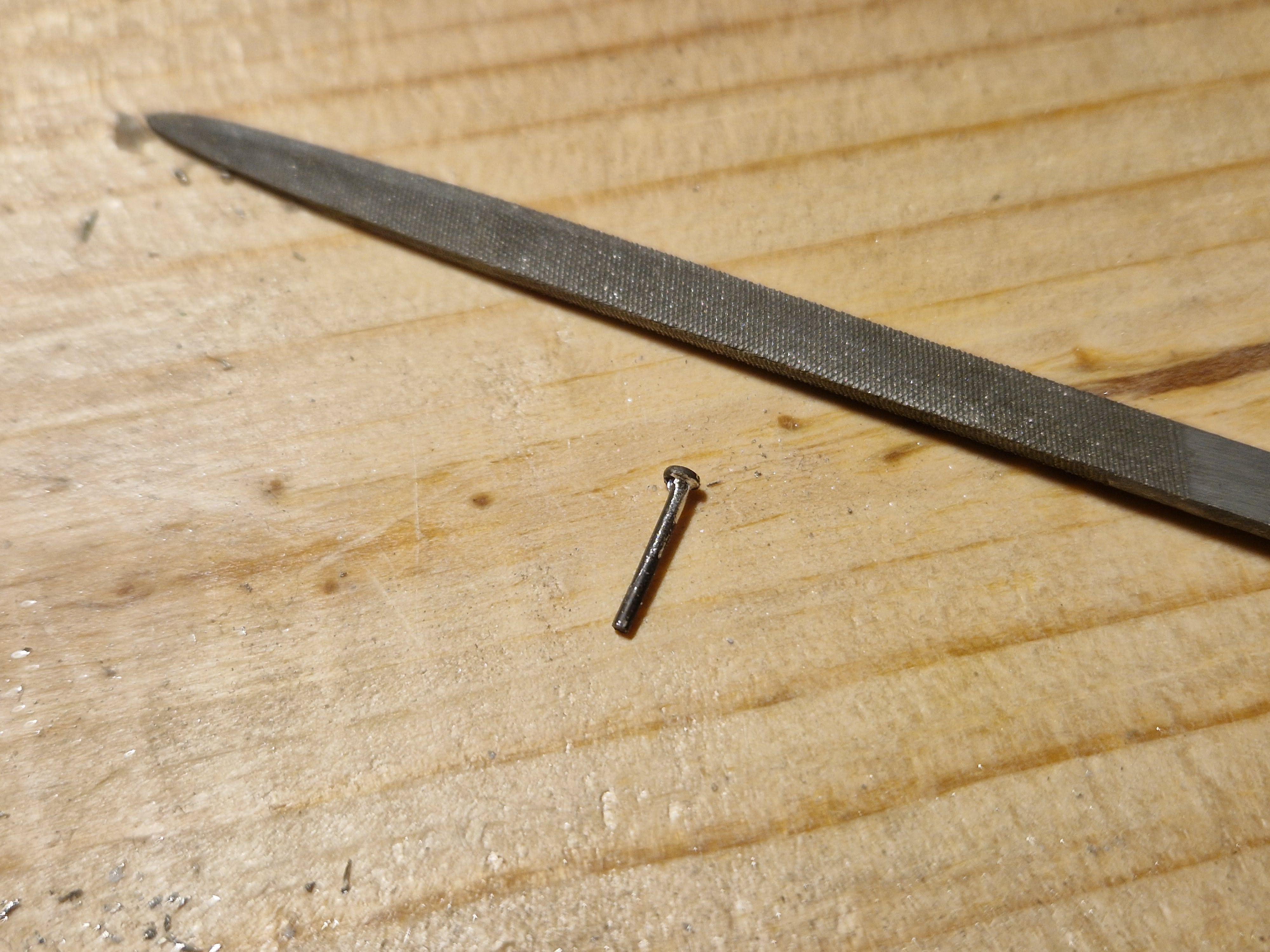
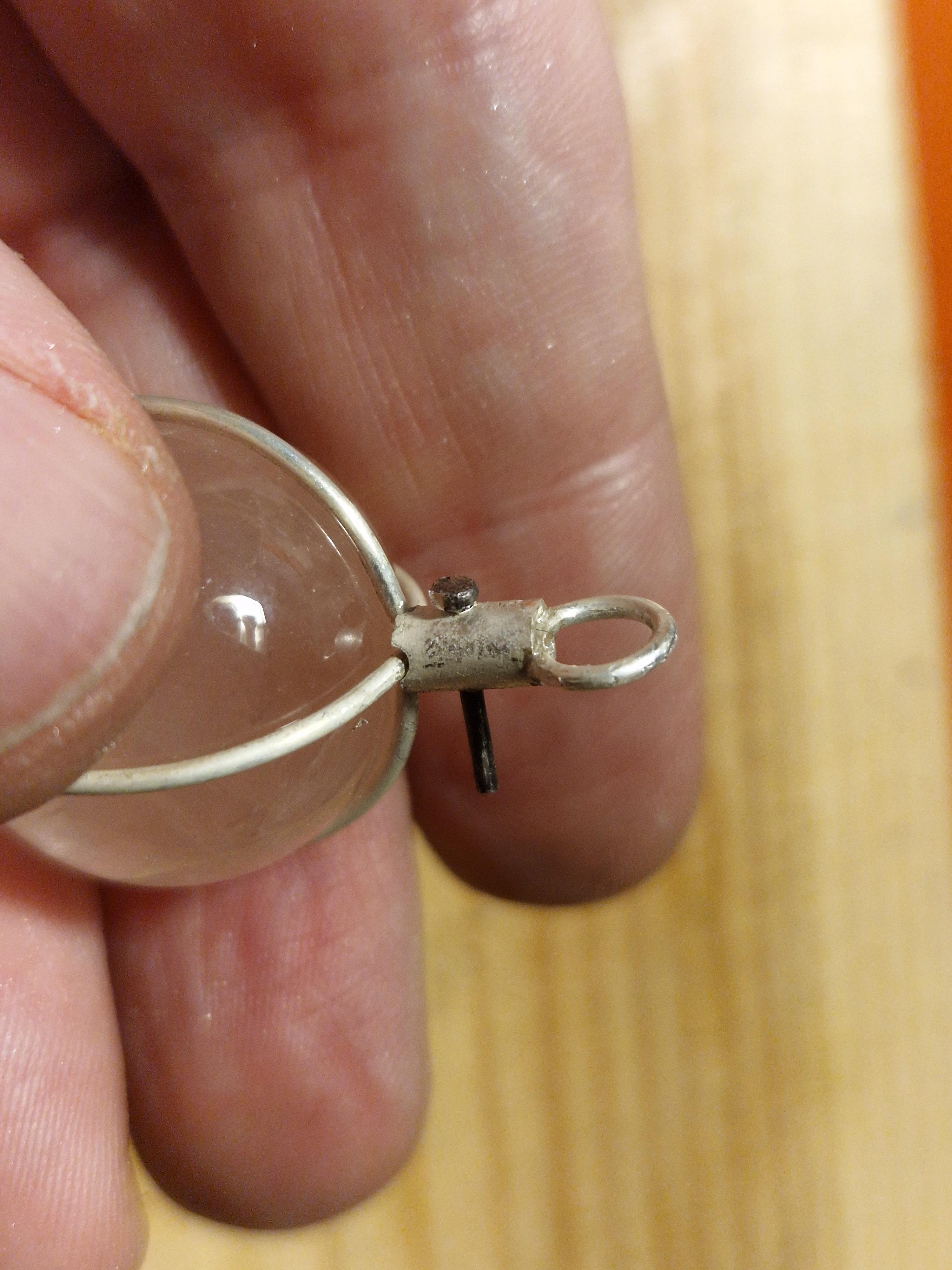

You could probably by a silver pin that would be a great rivet. I decided to go down a more difficult road and make one myself. It takes some practice but in general it is easier than it sounds. I just took a piece of silver wire about 10mm long and held it by one end with a tweezers. Pointing a sharp flame to the other end of the wire melts it into a blob. The trick here is not overdo it, you just need one end to be a little bit thicker than the rest of the wire.
After quenching I held it with my pliers and flatten the blob with a little hammering and filing. In the end there should basically be a nail that can fit through the hole drilled in the top cap.
Polishing the Parts
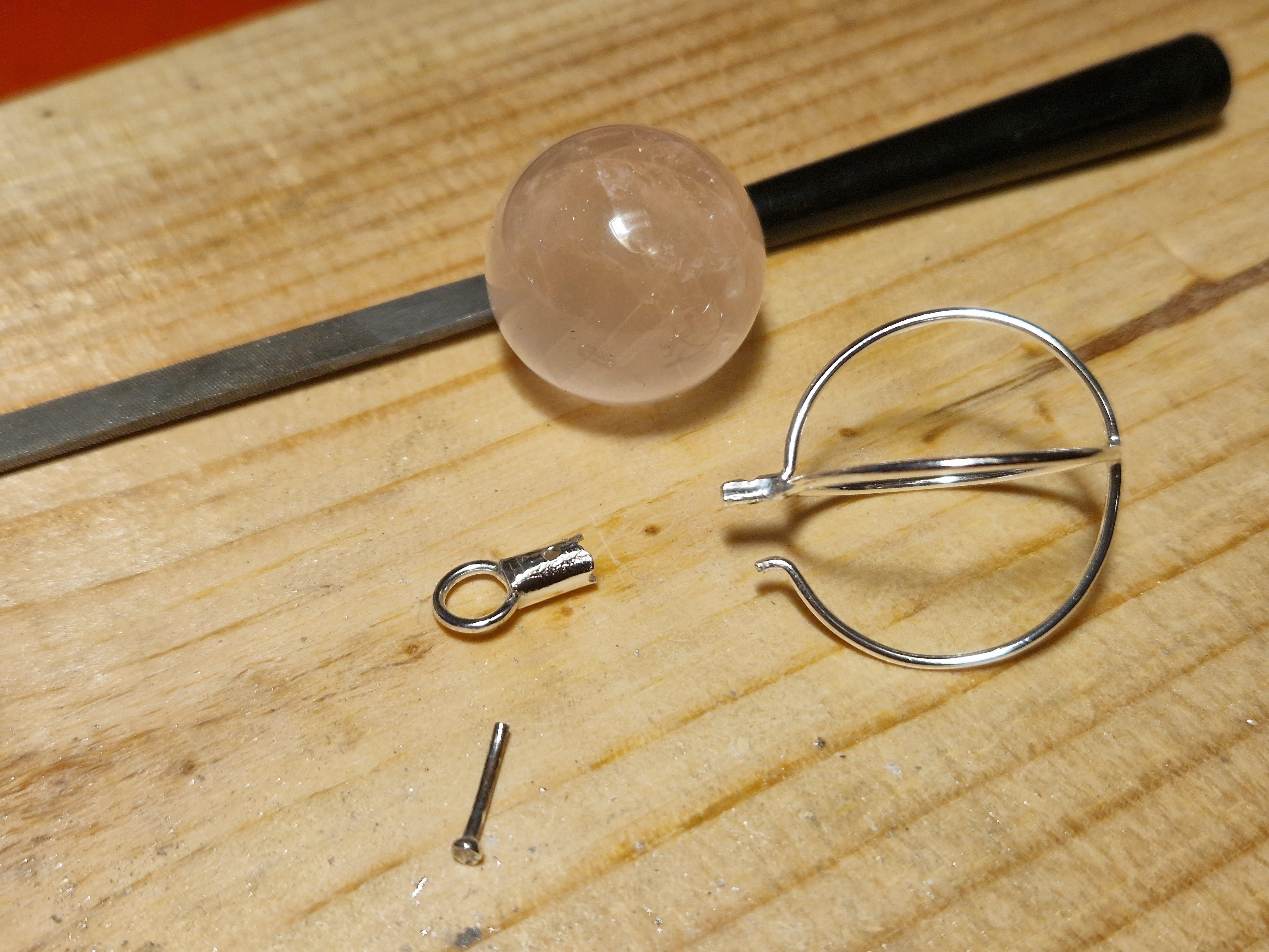
At this point it is a good idea to inspect all the elements for imperfections like plier marks or excessive solder leftovers and file them down with files, burrs and brushes. After that an hour in a tumbler would give the pieces some extra shine and also make them a little more stiff by a work hardening process.
Optionally you can also buff the elements on a whool disk with some polishing compound. But I personally find this step a little redundant for such intricate wirework.
Final Assembly
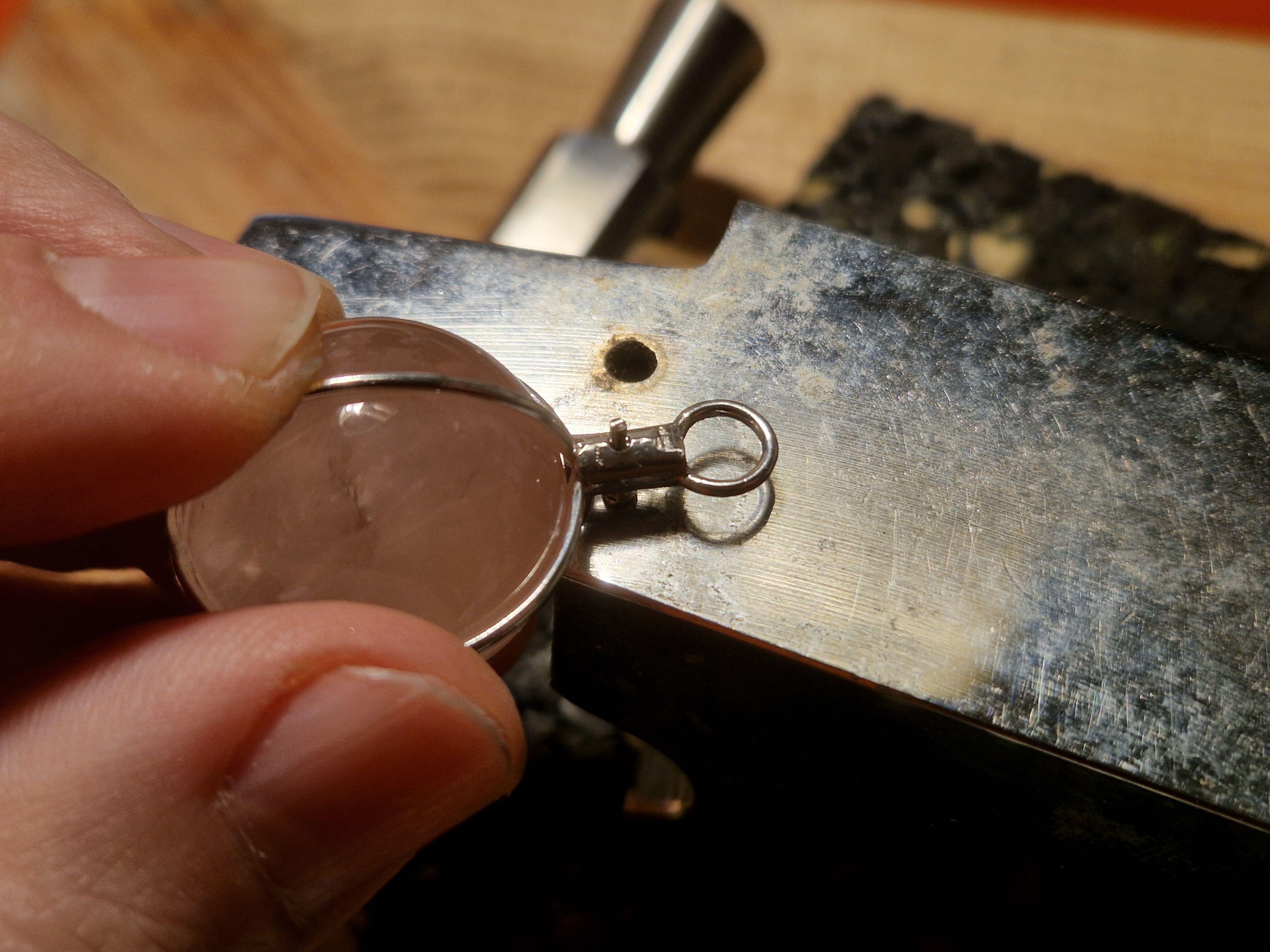
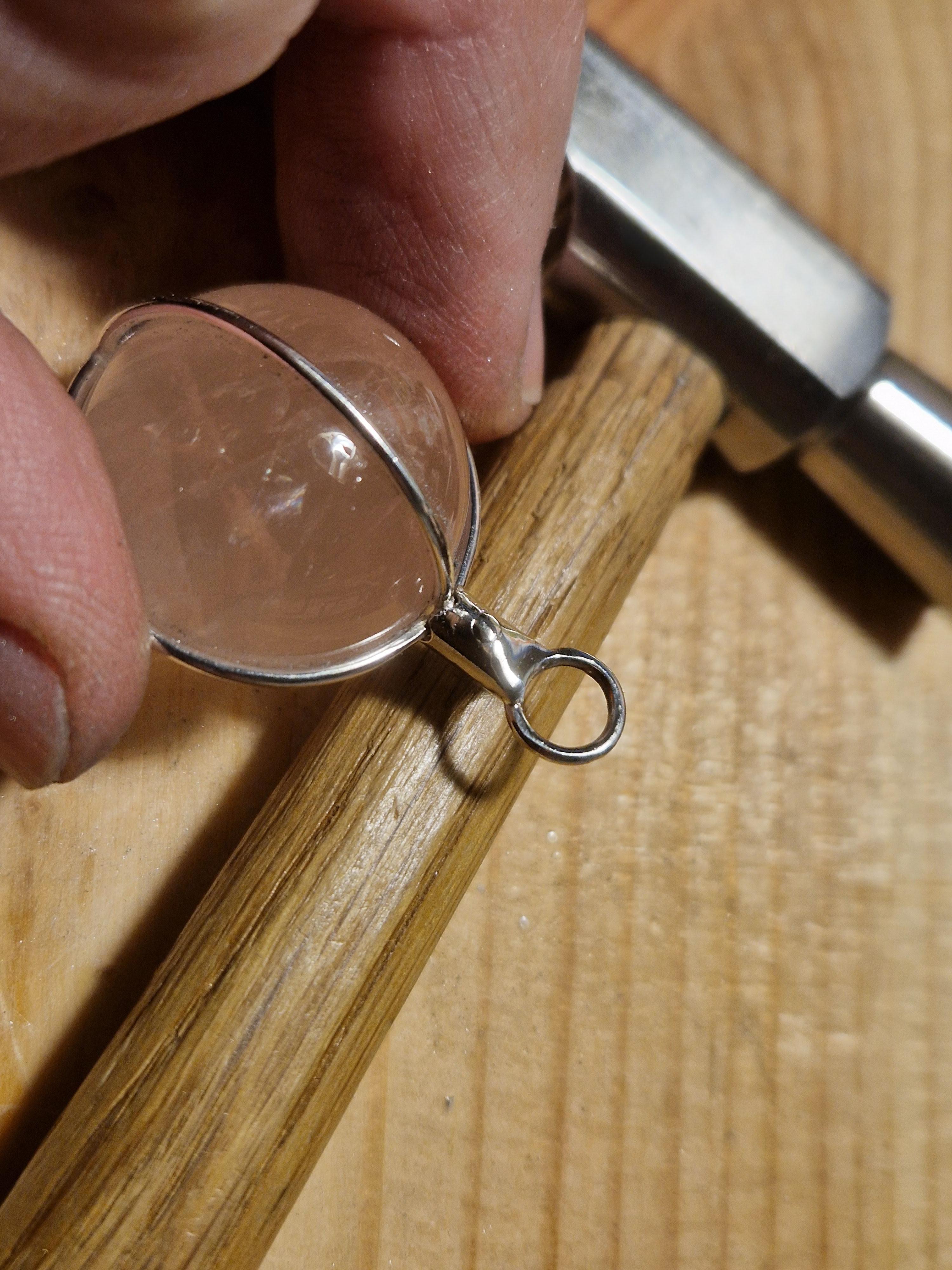
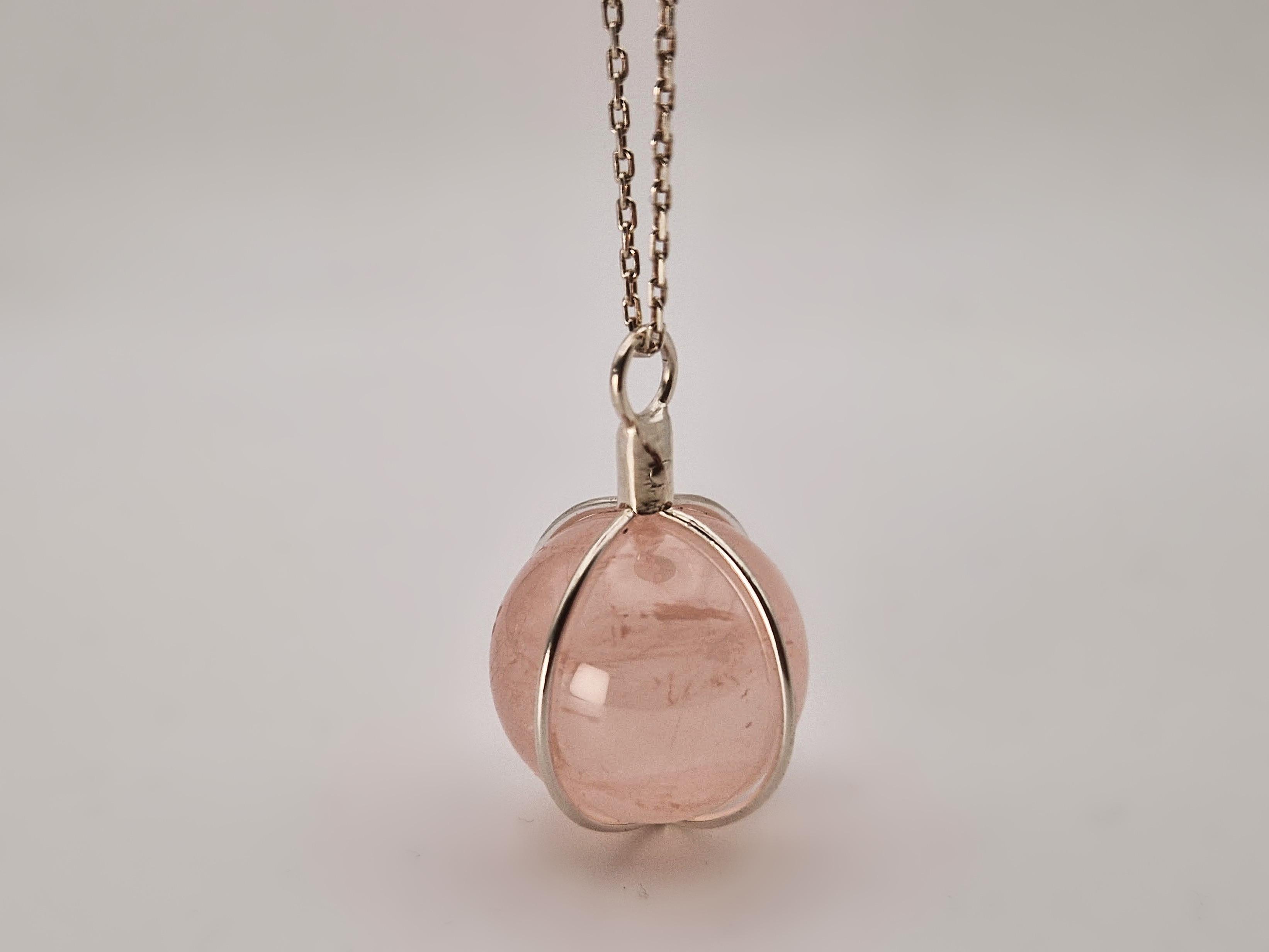
The pinnacle step of the entire process is to assemble everything together. First you bend the unattached half-loop making way for the quartz sphere to get into the cage. Then bend it back and get all 4 half-loop ends together on the north pole. Holding them together put a cap on and align in a way to see through the hole drilled before.
Now it is the time for a rivet to complete the piece. Insert the rivet into the hole and cut off the excessive wire. About 1mm of wire sticking out of the hole should be enough. Place the whole thing on an anvil (or any other metal object that can handle some hammering) in a way that the rivet head rests on the hard surface. Then hammer the other end of the rivet slightly changing the angle of the blows to thicken the wire end. Turn the pendant over and hammer the other side of the rivet to make sure it sits tightly in its place.
Once the rivet is hammered in its rightful place I used silicone brushes to smooth the surface of the rivet and the cap, because some of the blows left scratches here and there.
Quick pull test and it seems that the pendant is completed and ready to be hanged on a chain to make its wearer a little happier.
---
Thank you for reading my instructable and please let me know what you think about it - I would appreaciate any feedback. If you do like it, you might wanna check my other instructables and also visit my jewellery blog.