Science Fair Project

I’m Jawad Al-Dakhiel and this is my science fair project about...well I don’t wanna spoil!
Problem

Many Scientists have tried scouting for deforestation causes other than human causes. One suspected cause can be the high concentrations of sodium chloride found in the water consumed by plants, which is what we call saltwater. This can cause the plant to absorb it like regular water, leading the salt to drain the plant from its moisture, resulting in dehydration. The goal is to find whether saltwater really affects plants
Question: Do plants get affected by the consumption of salt water?
Hypothesis

If the plant consumes saltwater, then it will affect its lifespan, because salt leads to dehydration of the plants structure.
Variables:

Independent variable:
Sodium Chloride dosage.
Four controlled variables:
-Dosage of H2 O (water.)
-Location of plants.
-Type of plant.
-Durations of experiments
Dependent Variable:
The plants’ health state.
Background Research:

Plants, like people, need a certain amount of salt to survive, but too much can be poisonous. Most plants can tolerate saltwater on their leaves and stems, but they will dehydrate if they drink saltwater from the soil. Even if they don't dehydrate, they may be poisoned by an excess of salt in their systems. The takeaway is to avoid watering your plants with saltwater if you want them to thrive.
MLA citation:Lacoma, Tyler. “What Happens When You Put Saltwater on Plants?” Sciencing, 2 Mar. 2019, sciencing.com/happens-put-saltwater-plants-6587256.html.
Severe salt levels can result in death from water stress. Water stress usually occurs during a drought, when a plant is struggling for water. Salt limits the amount of water a plant can absorb, leaving a plant to die of thirst even in moist soil.
MLA citation: Hazelton, Shae. “Can You Water Plants With Salt Water?” Home Guides | SF Gate, 5 June 2019, homeguides.sfgate.com/can-you-water-plants-with-salt-water-13404837.html.
Saltwater negatively affects plants by dehydrating them. Plants obtain water via their root system through osmosis. This osmosis is facilitated by cells around the hairs of the plant's roots that water passes through very easily. When fresh water is present, water is easily passed through the root cells and up through the rest of the plant as needed. However, these highly-permeable root cells work against the plant when the soil has a high salt content. The salt in the soil can actually pull water out of the cells and dehydrate the plant.
MLA citation: Education.com. “What Is Saltwater's Effect on Wheat Grass Plants?: Science Project.” Science Project | Education.com, 1 Apr. 2014, www.education.com/science-fair/article/saltwater-effect-grass-plants/.
Procedure:

1-Bring two of the same type of plant species.
2-Mix Sodium Chloride (salt) with H2O (water) in one cup, and water alone in the other.
3- Pour one of the cups on one of the plants, minding which plant is which, and the other on the other plant.
4- repeat for one week daily.
5-Record observations and changes in plants’ states on a chart. Note: Make sure that both plants get the same amount of sunlight and their locations don’t change.
Materials

1- plants of the same kind and age.
2- water
3-Sodium chloride (table salt)
4- recording instrument (something to record changes on)
5- a stable place for plants to survive in
Data:


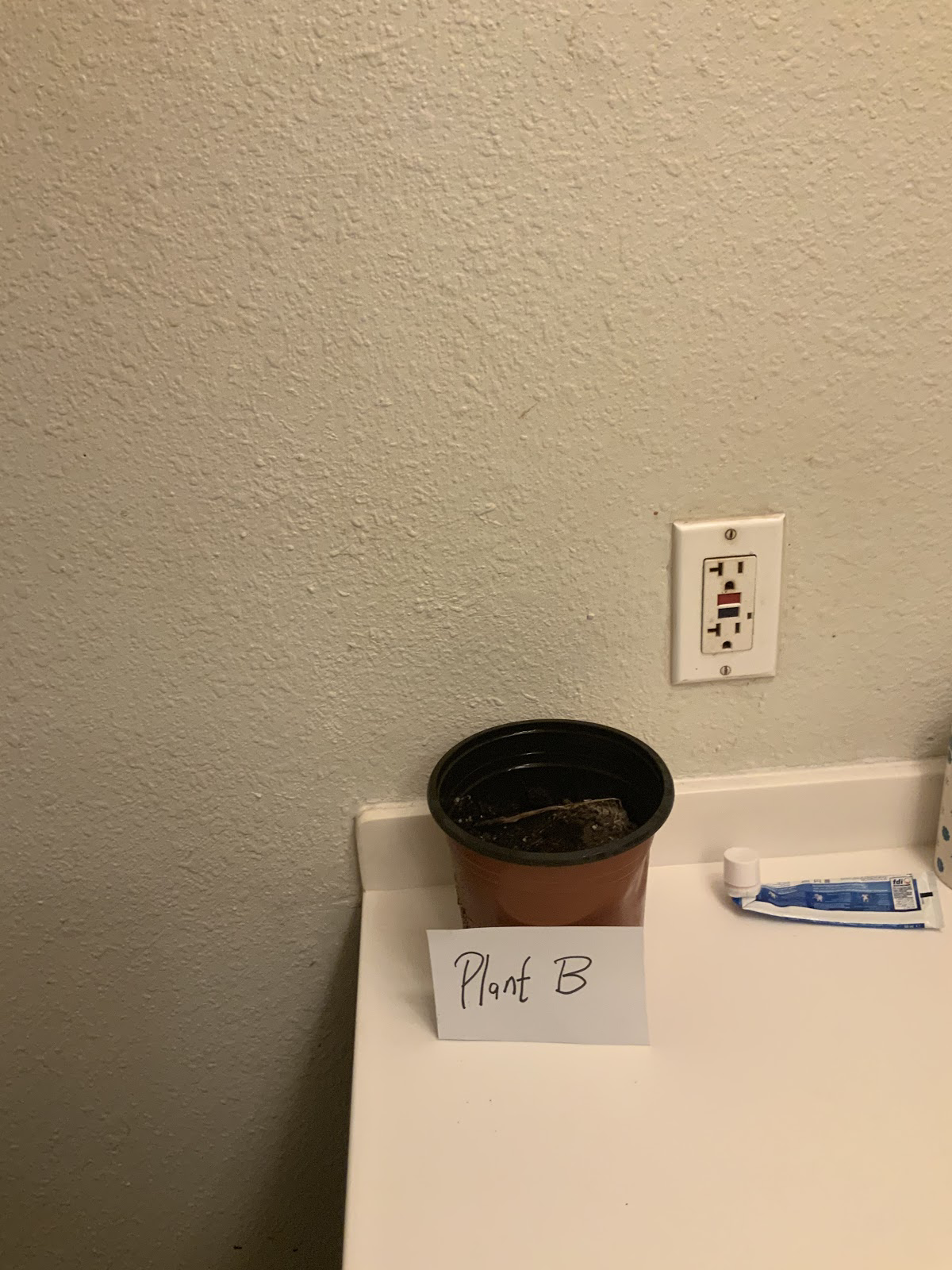
-Both of the plants have been put in almost identical circumstances when it comes to location, light source, and other essential factors.
-During the experiment the following had occurred with the plant that consumed saltwater:
Change in color by the fourth day
Diss formation and decaying of leaves by the seventh
Roots dried up by the tenth
-While the changes in the sat water plant was occurring, no defects were seen in the normal water plant.
-The plant that consumed saltwater worsened in state to the point of death.
-At the end of the experiment, the result was a normal growing plant and a nonliving one.
Data Analysis:

-The saltwater consuming plant aphid a pattern of a worsening state.
-while the saltwater plant was struggling to survive, the normal plant was thriving and growing
Results:

The results show that salt has made significant changes in the quality of the lifespan of a plant. The horrendous damage that the salt displayed on the plant lead to signs of dehydration, major struggles in survival, and death of the plants. In terms of research, this has confirmed the case of sodium chloride being a active factor in the weakening of the wildlife photosynthetic plants, resulting in potential deforestation.
Conclusion:

We conclude that the experiment has proved the hypothesis of sodium chloride damaging plants and agricultural factors.
Application:

This research and scientific process is essential in raising awareness to agricultural industries, and wildlife conserving organizations to maintain a safe amount of sodium chloride in the water consumed by plants to ensure healthy agriculture.
This can be applied by analyzing the incoming water sources for plants which would help expand the plants’ lifespan.
I personally learned about plants survival which has resulted in the gaining of experience in the agricultural field.
Evaluation:

I have used research skills in a mindful way to improve on the efficiency of my experiment and it’s information such as the references listed above in step 4.