Snap-Together Chair Kit


How can furniture shapeshift to suit your changing needs, so you don't ever have to throw it away?
Looking at the mountain of furniture waste in London where I live, I've been asking myself this question for a while. This is the first chair prototype made from a kit of universal furniture components I'm designing called "Helical Homeware". It's aimed to tackle a key part of circularity by enabling frictionless part reuse. It's like Lego or Meccano, but tailored to the human scale and form, and designed to be evolved by the maker community. You're free to build, modify and contribute the parts for you and other people to use; what you see here is just a starting point.
It's actually the first chair I've built, so I'm satisfied that the chair can go from an upright seater to a low-down lounger in a couple of minutes by moving some bolts, and flatpacks for when I move to a new place. This is nothing new, however. What gets me more excited about this prototype is thinking about a very small step towards crowdsourcing circular furniture: the idea that one day me or someone else can swap out some parts to transform it into a park bench, a deck chair, or even a coffee table. There is a very low time and environmental cost to doing this, especially if I can trade existing parts with other people. Not to mention, if something breaks, me or someone near me might be able to provide a repair for cheap, since the system of parts is entirely open and standardised.
There is plenty of modular, flat-pack furniture in the world today, but it's rarely ever built to last. As I learned from the book "Cradle to Cradle", eco products might be marketed as using friendly materials like cardboard or recycled wood chips, but this supposed benefit can sometimes serve the manufacturer more than the customer. It's conveniently cheap to upcycle expired material like this, but it takes a lot of energy to recycle waste, and when that chipboard cupboard then fall apart relatively quickly, it will be thrown away, again. It's a very ugly material filled with glues that creates even more pollution, so it ought to be a last resort. We make much better use of the total embedded energy and carbon that went into growing that tree in the first place by keeping wood in as close to a raw state as possible for the longest time we can. This means focusing on part reuse over material recycling. Think about it: for material efficiency, the worst thing you can do is chop down a tree and convert it straight into paper pulp. Sheets of paper can be made perfectly well from plant fibres, whilst that log could have served years of structural purpose in a stud wall of your home, or the legs for your desk, on its journey back to the soil.
Viewed differently, they are two extremes in furniture: "monolithic" and "modular". Monolithic forms can be very beautiful to look at, and sculpted exactly to fit a user, but they're no good when the user's needs change, as they often do in a home. I'm also not entirely convinced by modularity, at least in existing attempts we've seen, that have failed to catch on. Their parts are often far too rigid to design around; there are only so many ways you can stack blocks, and you can't easily make cubes into a comfortable seat that fits the human form but also make efficient use of material. More importantly, they're just plain boring to work with and care for. If you want people to take care of furniture and repair it, it matters that parts invite play, care and even misuse, because design is evolutionary and that's how new improvements are found - "happy accidents", salvaging and hacking.
Supplies


Wood
You can make this chair out of any solid wood planks, ideally something robust and locally grown. Keeping things cheap, however, given that this was the first scale mock up, I used 270mm x 21mm PAR pine from a local timber merchant. The cracks in this low quality wood were a pain to work around, so I would definitely go for something nicer if you want this to last.
For the chair slats, you can keep things super simple, I used 50mm nosing which is the rounded sections you see in the image above. It makes things look a bit more polished without any extra effort.
Hardware
For the hardware, I used M8 bolts with a 3D printed spacer around it, which fits into the slots in the pine parts. The idea being that repeated use, assembly and disassembly will cause the metal threads to bite into the wood. You could use M10 bolts if you don't have access to a 3D printer.
M8 x 60mm bolts (16)
M8 x 20mm threaded inserts (16)
M8 x 90mm bolts (8)
M8 locking nuts (8)
M8 washers (32)
M10 washers (32) - these are optional
3D printed M8 bushings (8) - these are just 38mm long tubes, 2mm thick with an external diameter of 10mm, and an internal diameter to fit snugly over an M8 bolt, tolerances might need adjusting depending on your setup
Tools
At minimum, you'll need access to a printer and a jigsaw, drill and router. The holes you need to drill require a 10mm wood bit. Your jigsaw blade should also fit comfortably in a hole this size.
If you have them, access to tools like a band saw, palm sander, pillar drill, mitre saw and even laser cutter for the routing guide will make things smoother and speedier.
If you have a CNC machine, you can download the parts and ignore most of this Instructable :-)
Downloads
Concept | Creating a Kit for Circular Design
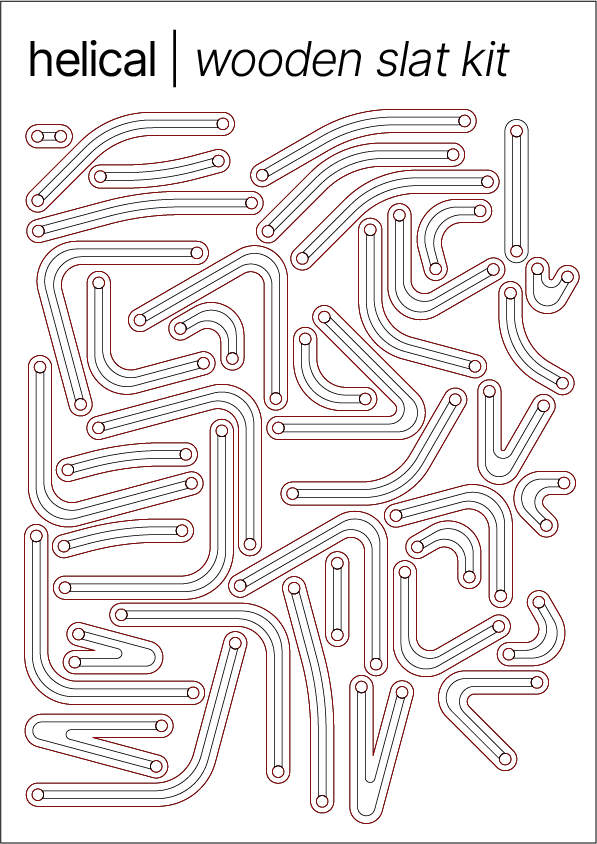


This section provides some context on the part kit if you're interested, feel free to skip ahead to the build steps.
Most modern furniture can be broken down into panels (flat sheets), slats and sticks (long curved or straight profiles) and some hardware like nuts and bolts that connect pieces together.
The idea behind the first Helical kit was to keep things incredibly simple, focusing first on a set of modular angle slats, an elbow bent from 0 to 180 with a variable length on either side, but a consistent slotting pattern and curvature. The side profile can be tuned to your needs from a chair (or other furniture endeavours), whilst the straight pieces that connect them are more constrained, set at a fixed length that works for most chairs.
When designing, constraint is often your friend, helping you get pen to paper and start thinking up solutions when given a blank canvas. This is what makes component-based kits like Lego such a brilliant toy. A balance between specialised and standardised parts that just about work in most situations invites the most 'creative mischief' and out of the box thinking, whilst also minimising the number of unique parts you have to manufacture and keep in stock.
The sweet spot between fit-for-purpose and modular is what I call "flexible modularity". It's the foundation of biological 'Lego', making structures like us humans possible, where tiny string-like proteins made from only a few different building blocks can fold into all manner of 3D shapes to create strong mechanical parts that are easily repaired and interfaced (more info in this talk if you're interested). We see a balance of specialisation and standardisation in these biological blueprints, allowing their parts to be exchanged at a low energy cost between different organisms in a food web, but we also see "compliance". Compliance in engineered components could be flexible plastics that can adopt many different shapes, like the foam in a cushion, but it can also be the slots in these chair slats that allow parts to be mated at inexact variations of a fixed angle, so many different parts can remain compatible whilst retaining the ability for their rigid attachment.
The closest thing I've seen to such a kit so far is OpenStructures, which has been around for a long time, and I had an inspiring chat when I spoke to one of their founders. I loosely stuck to their 20/40mm grid so as to make these components cross-compatible with their system.
Design | Scale Modelling Using Slats

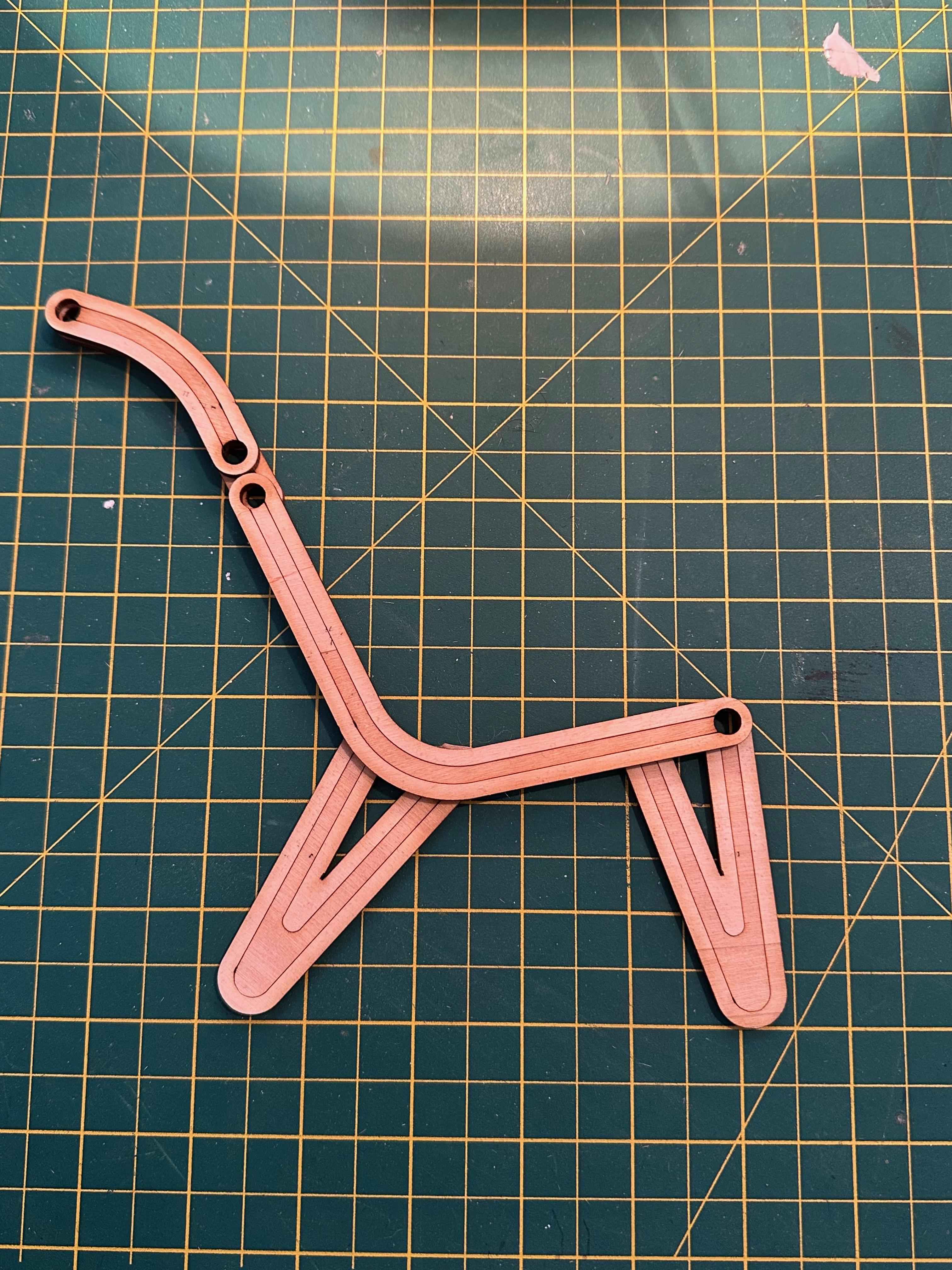

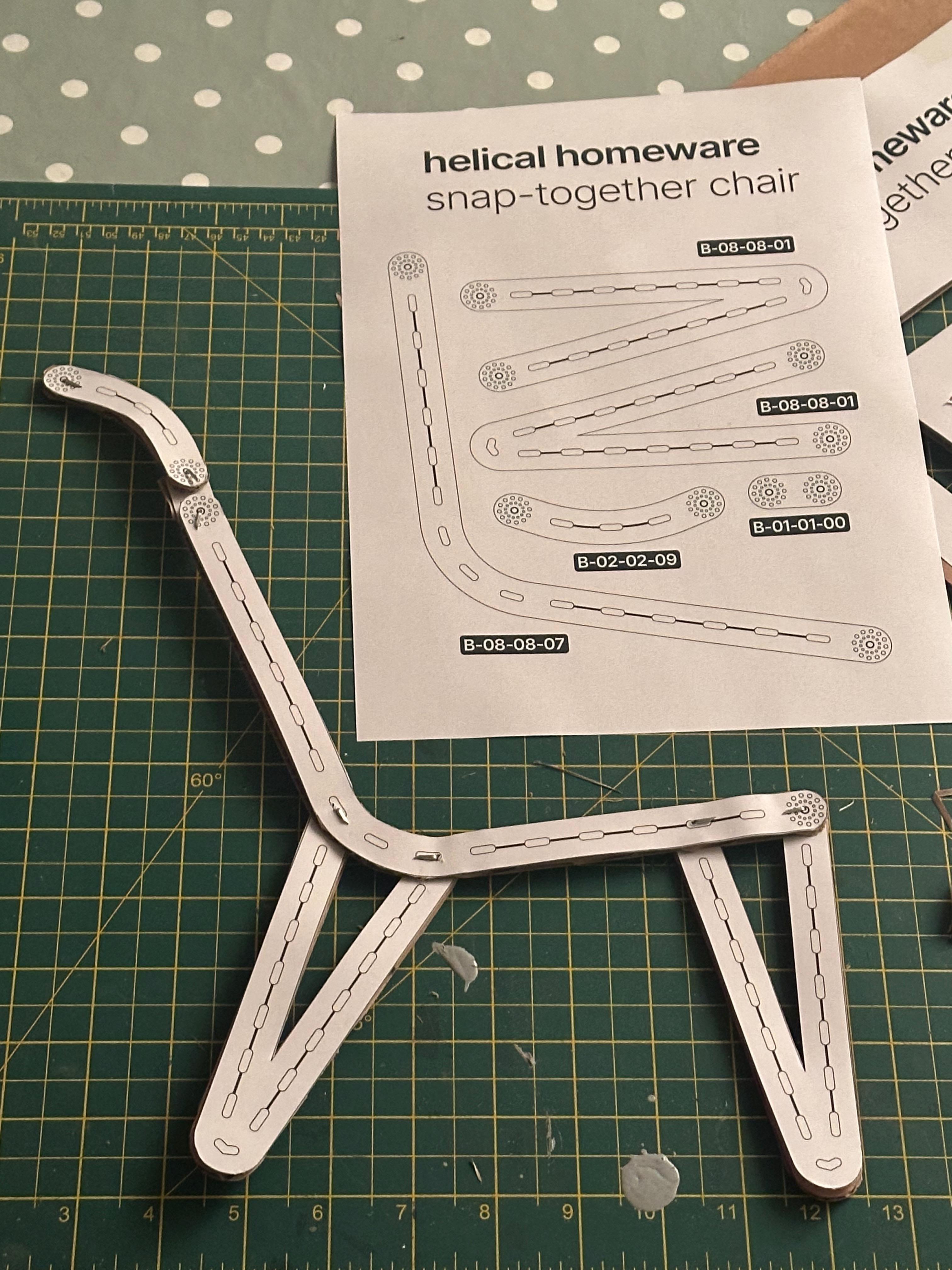
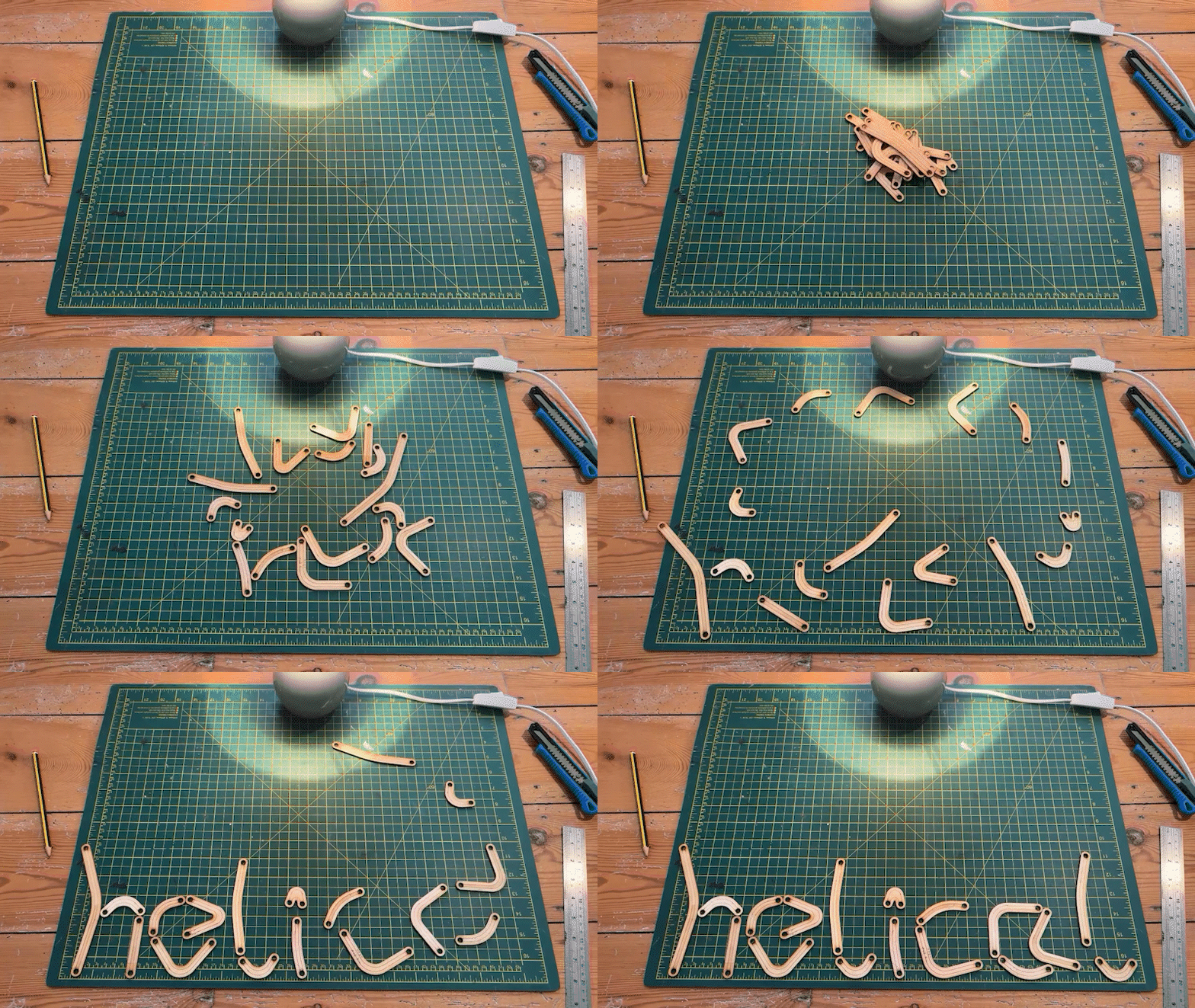
Now that I had a basic kit of parts, I used scale modelling to develop a chair design I was happy with. I laser cut a pocket-sized version of the part kit to make this experimentation tangible and quick. Often better to see things in front of you and experiment with your hands.
You can download the .dxf file below if you want to have a play, although note this is from an earlier and simplified version of the part kit which uses different proportions from the ones in the final chair! If anyone is interested, I will try to upload the latest parts as a comprehensive kit very soon, in a separate Instructable.
Downloads
Fabrication (I) Cutting
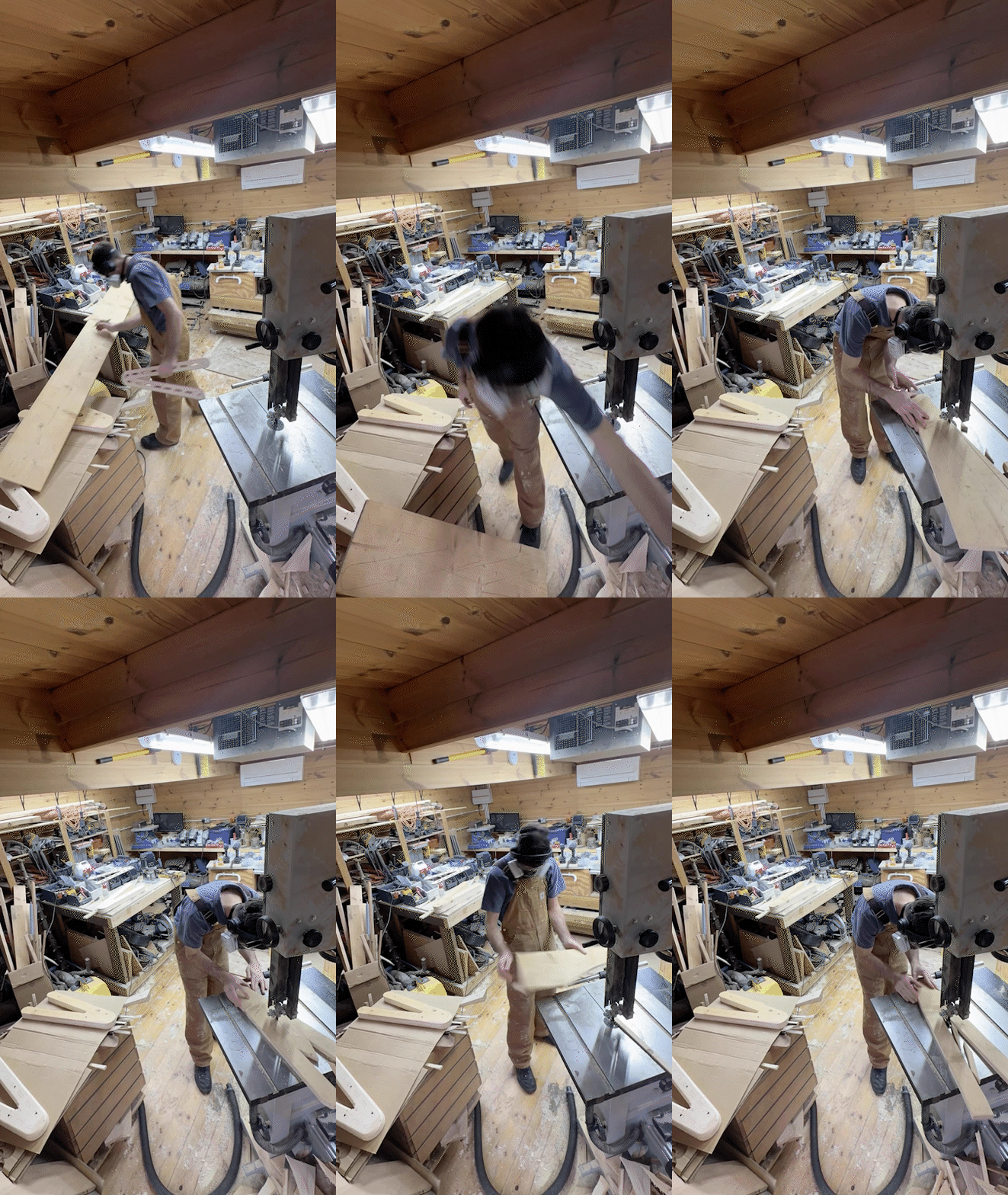

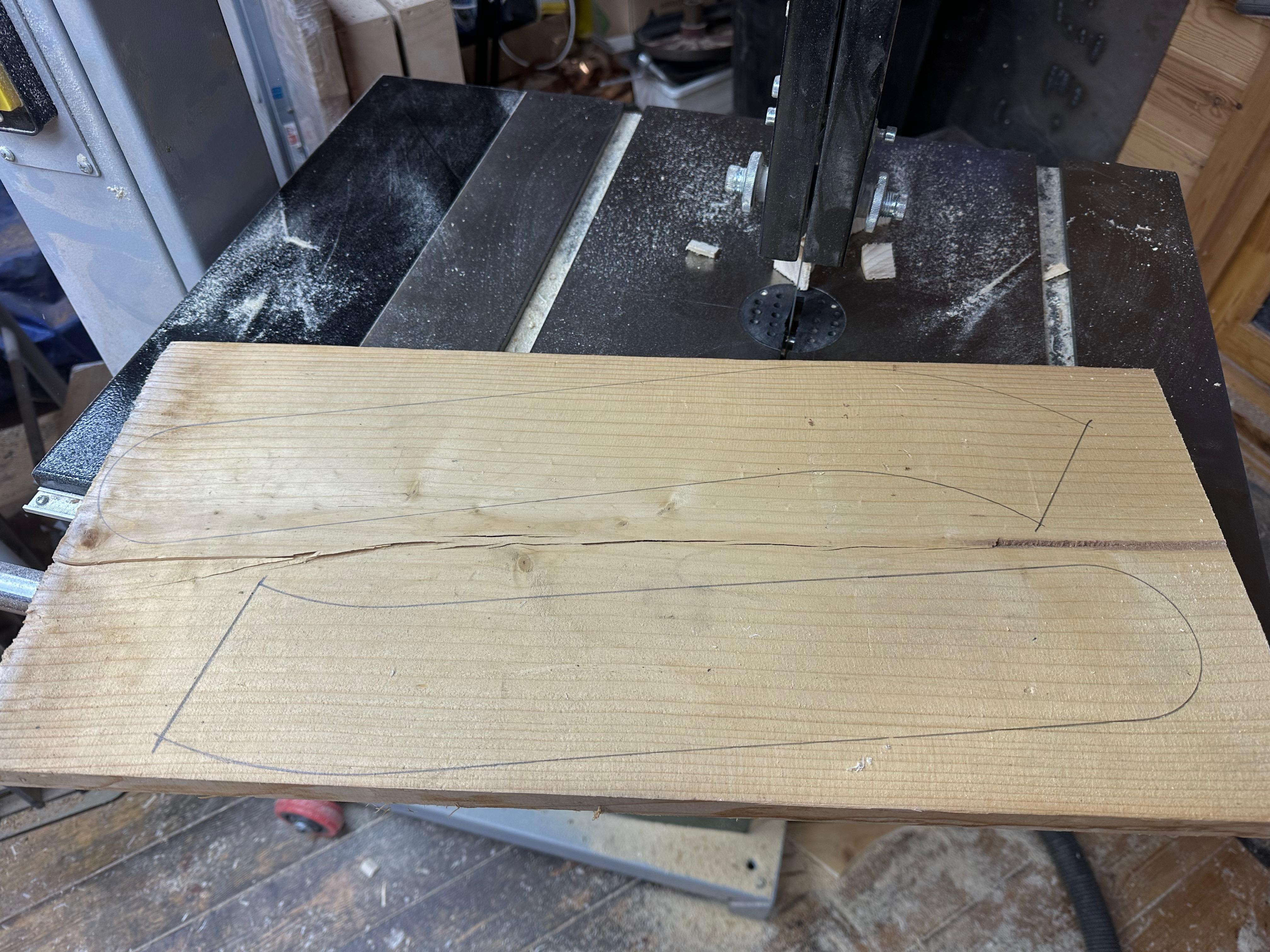
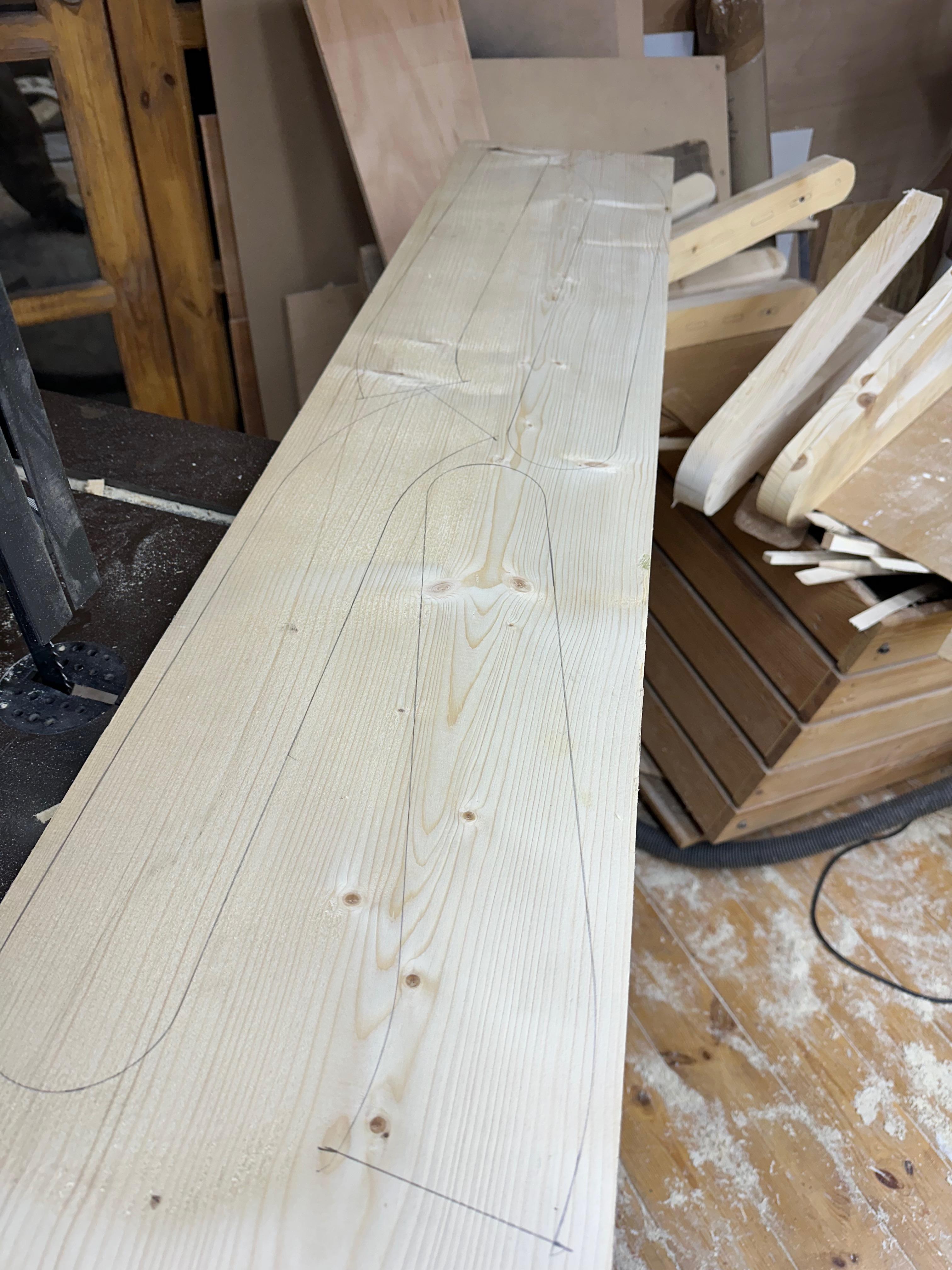
Each slat is made out of two 21mm pieces laminated together. The parts were cut on a bandsaw, using the laser cut template and a pencil to transfer the shape accurately to the wooden planks. It's handy to make templates sturdy so you can reuse them, and it helps nest parts to avoid excessive waste.
The longer side pieces of the chair were cut in two parts and made into a solid piece with a lap joint.
Fabrication (II) Clean Up
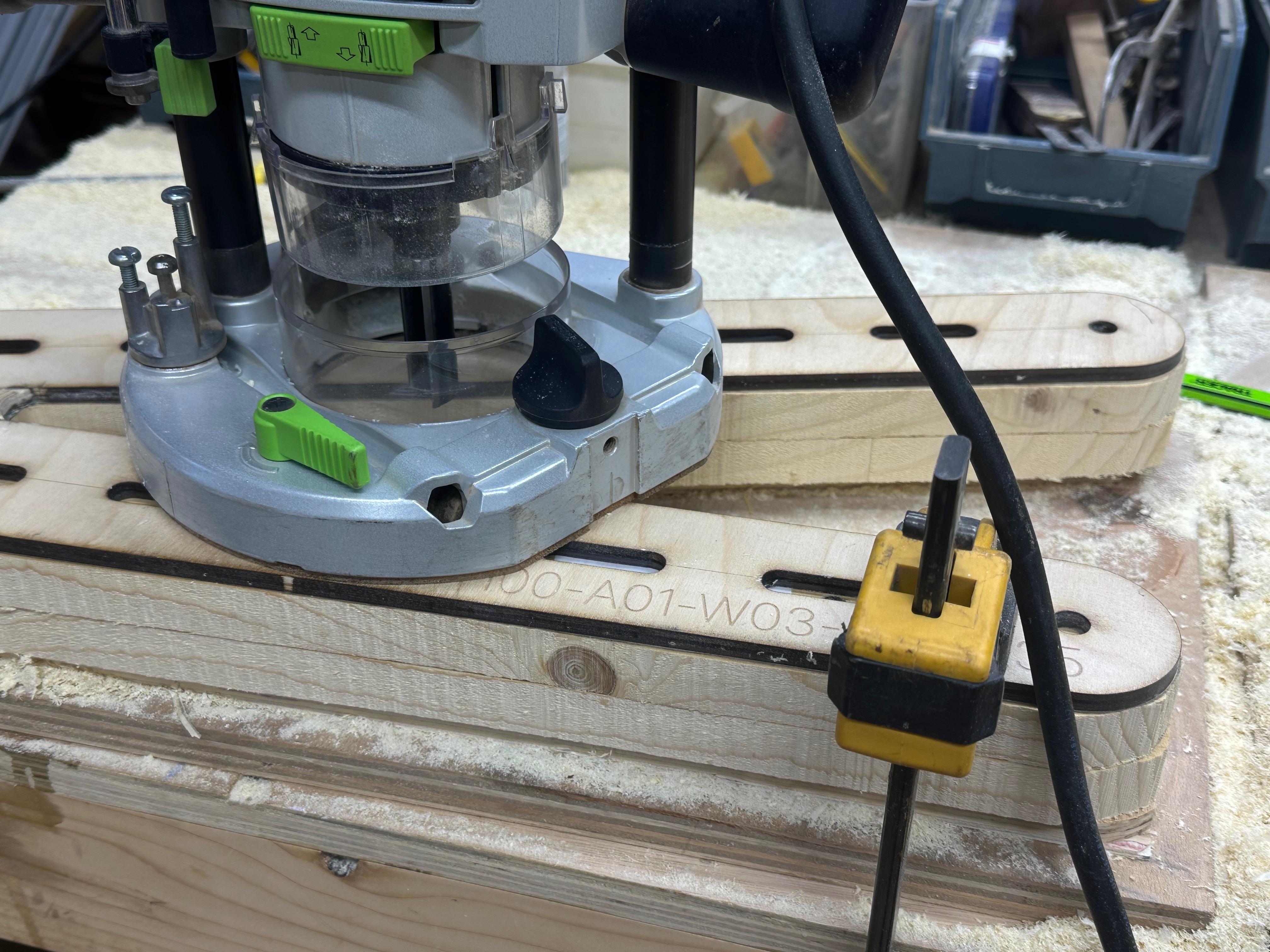

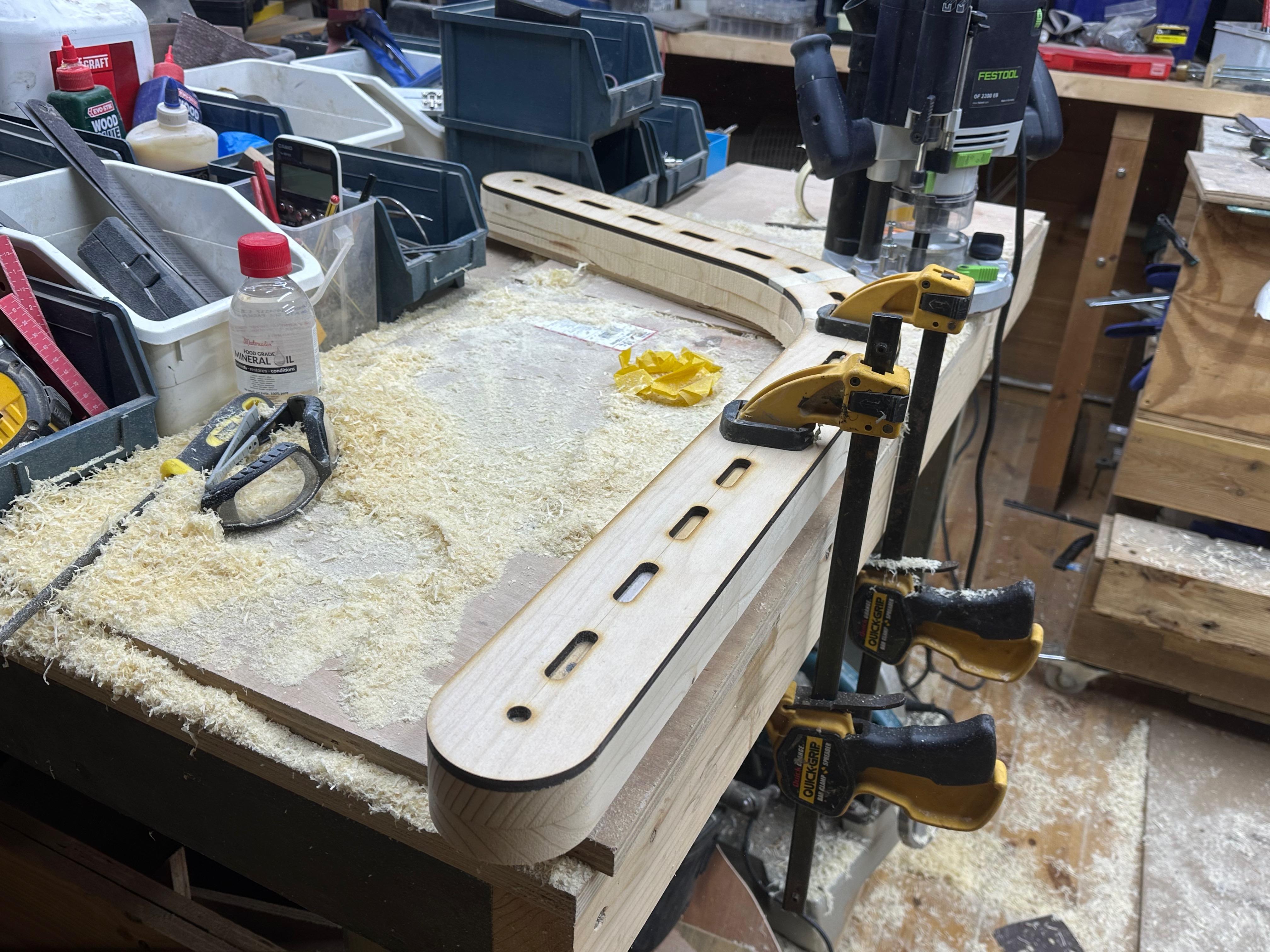
A router with a flush trim bit was used to remove the excess material around the edges, using the laser cut template as a guide.
Fabrication (III) Glue Up

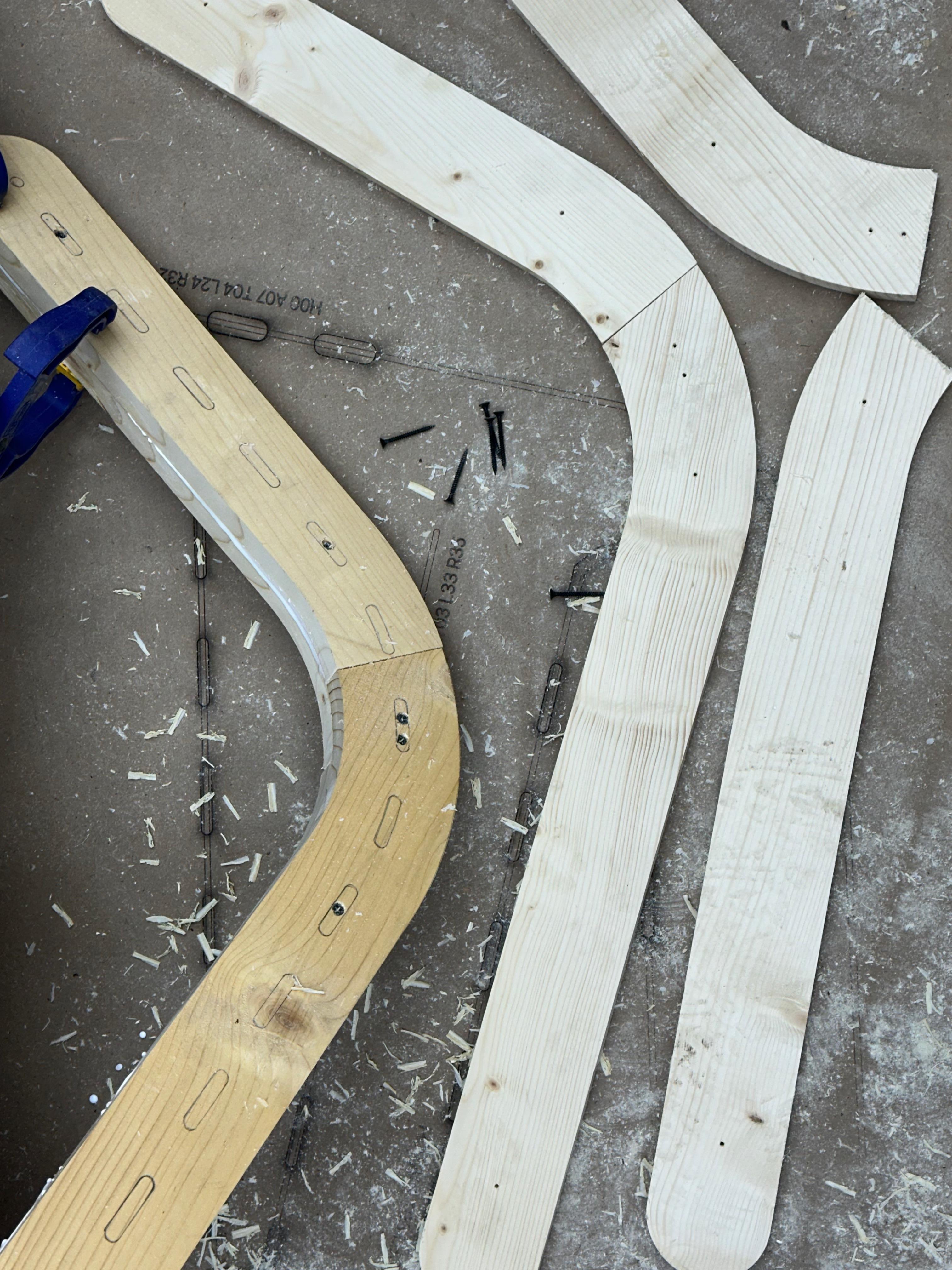
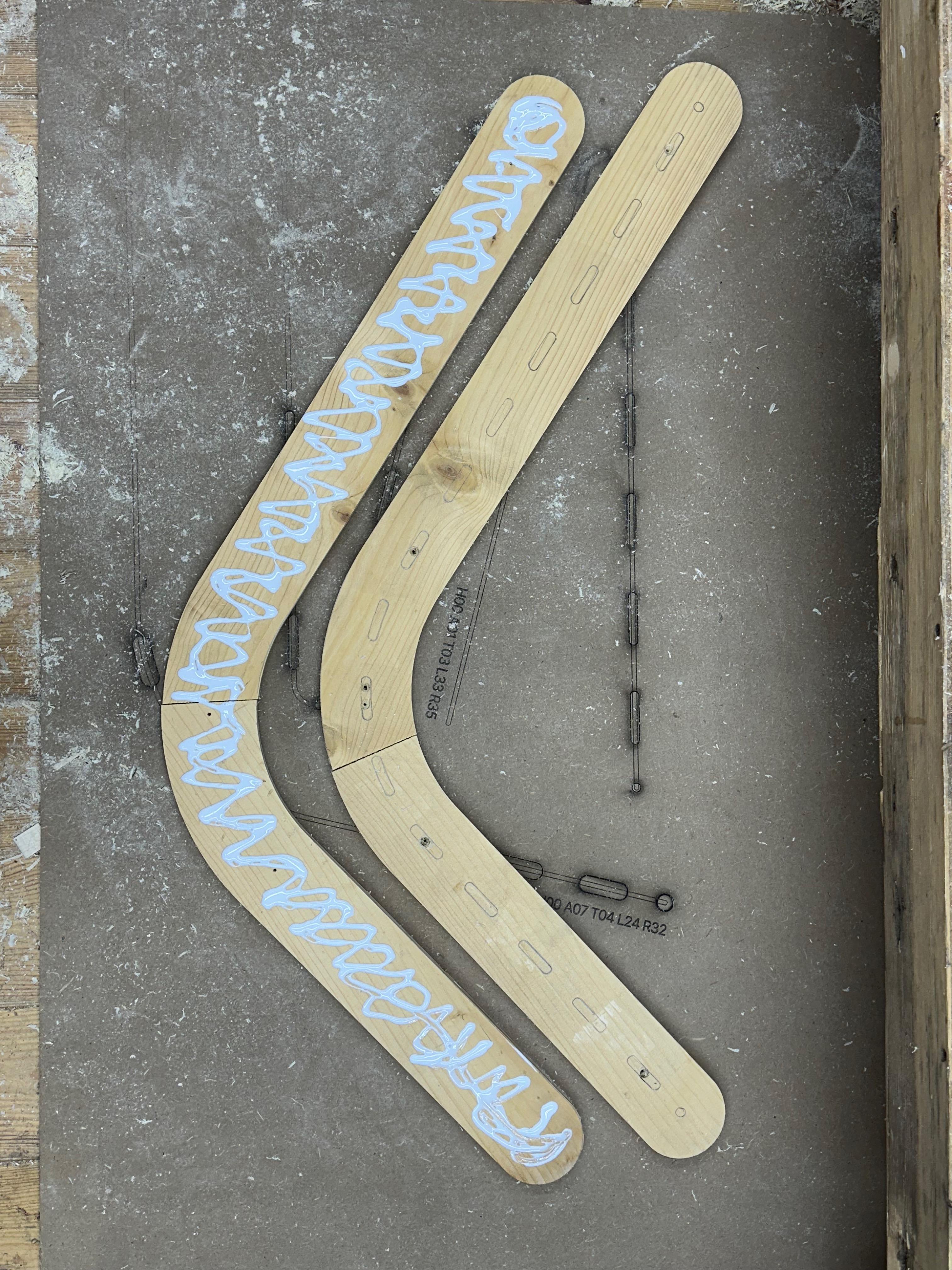
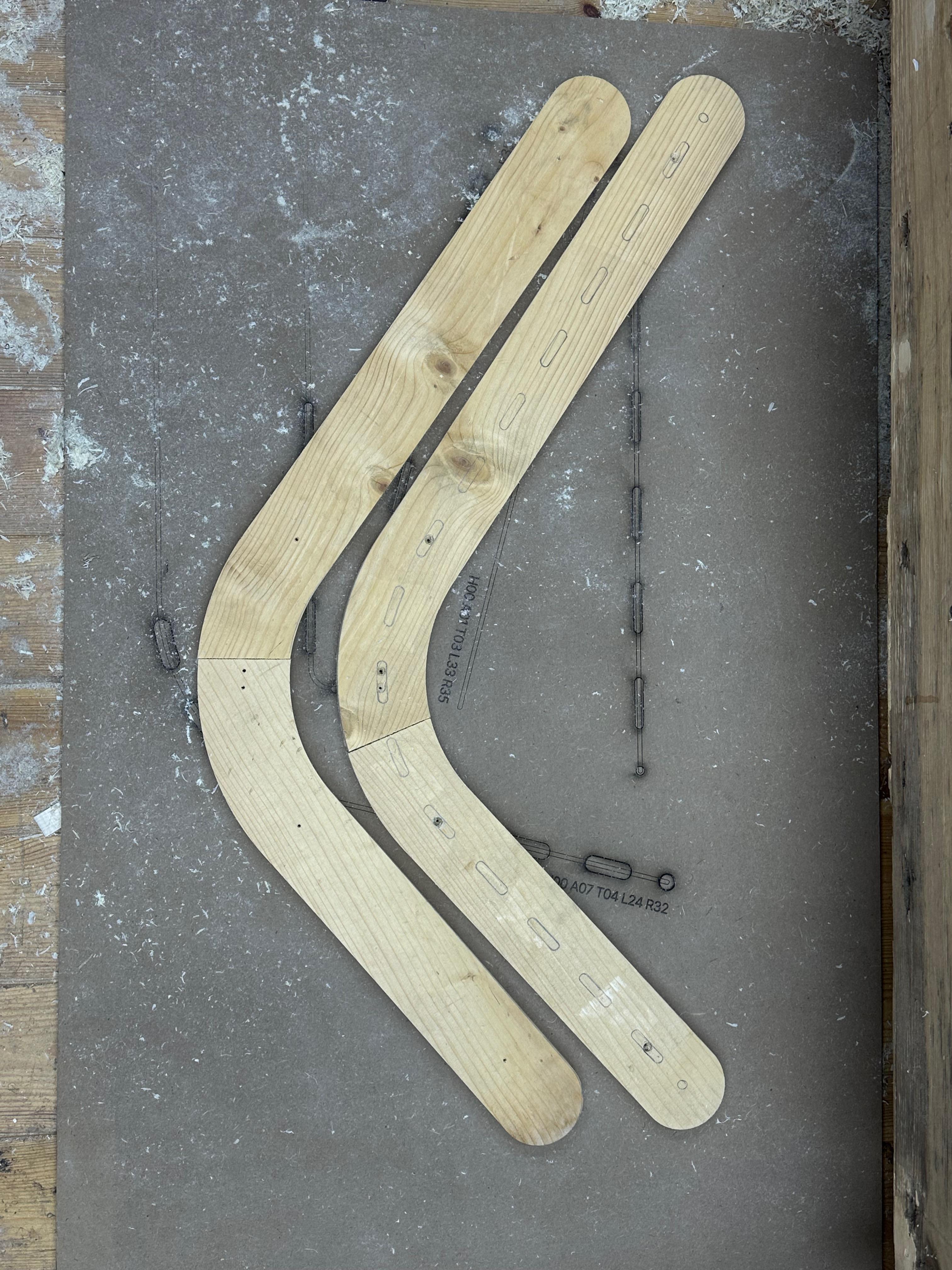
Halves were glued together with standard wood glue. You can carefully drive some lightweight screws into the places where the slots will go without damage, to add pressure during glueing if you want don't have enough clamps on hand. This material will be removed anyway in a later step.
Fabrication (IV) | Slotting

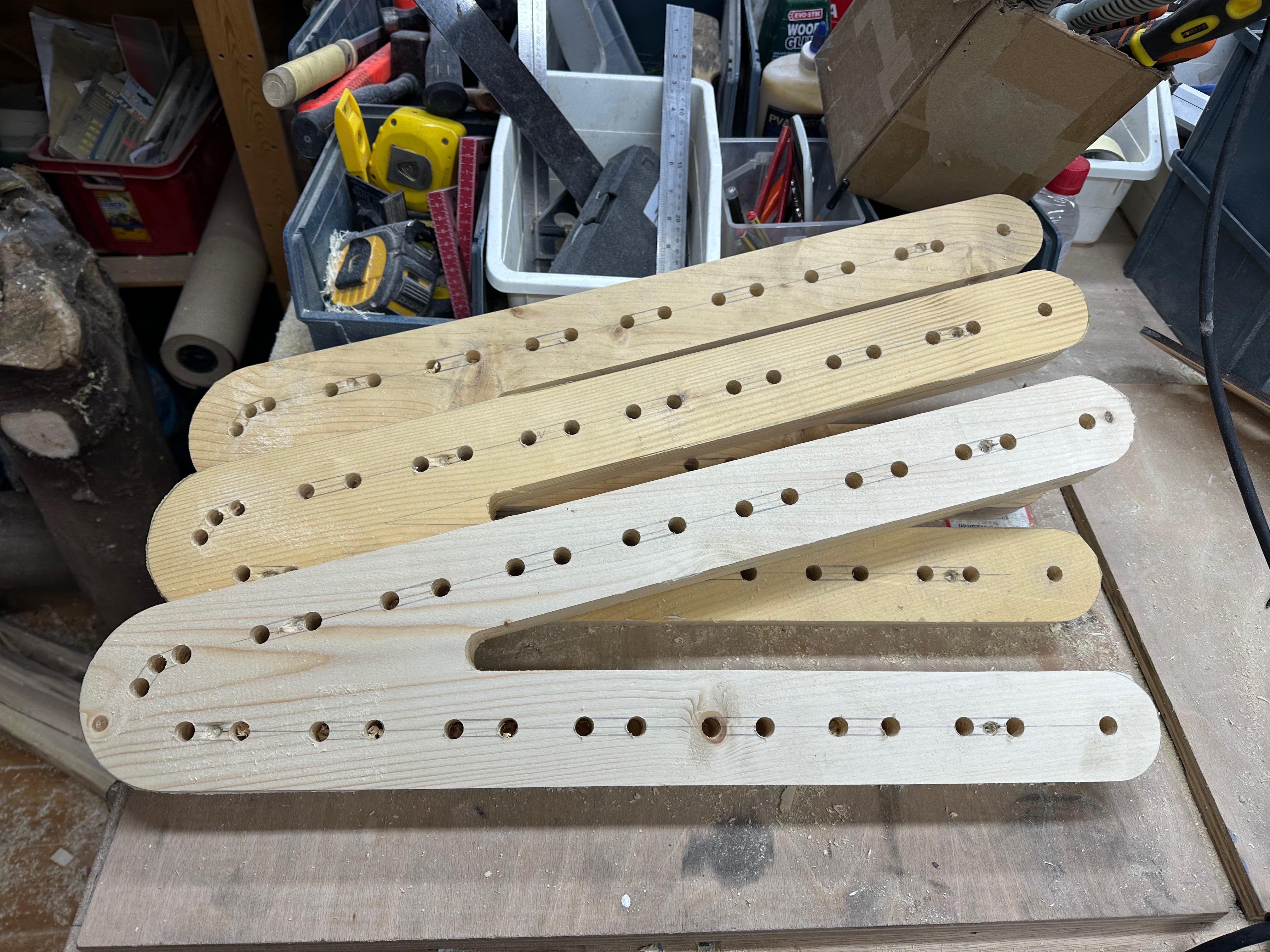
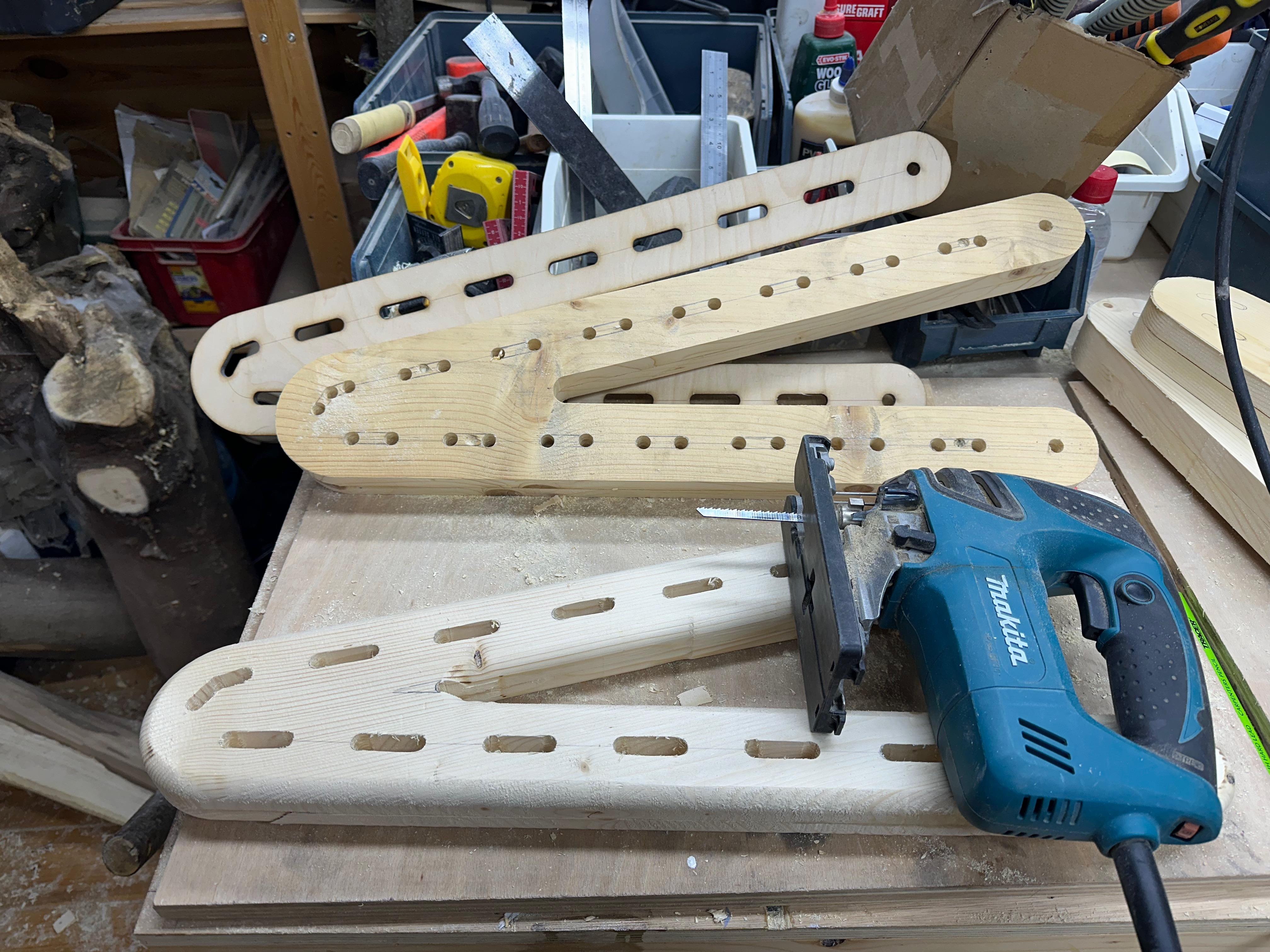
A 10mm bit was used to bore either end of the slots, allowing the material between them to then be cut out using a jigsaw. I found this quick and dirty good enough to get a good fit with the hardware, but it is pretty laborious and messy for lots of slots. You could also use a router and a jig if you fancy making one, for a much nicer finish.
Fabrication (V) Finishing
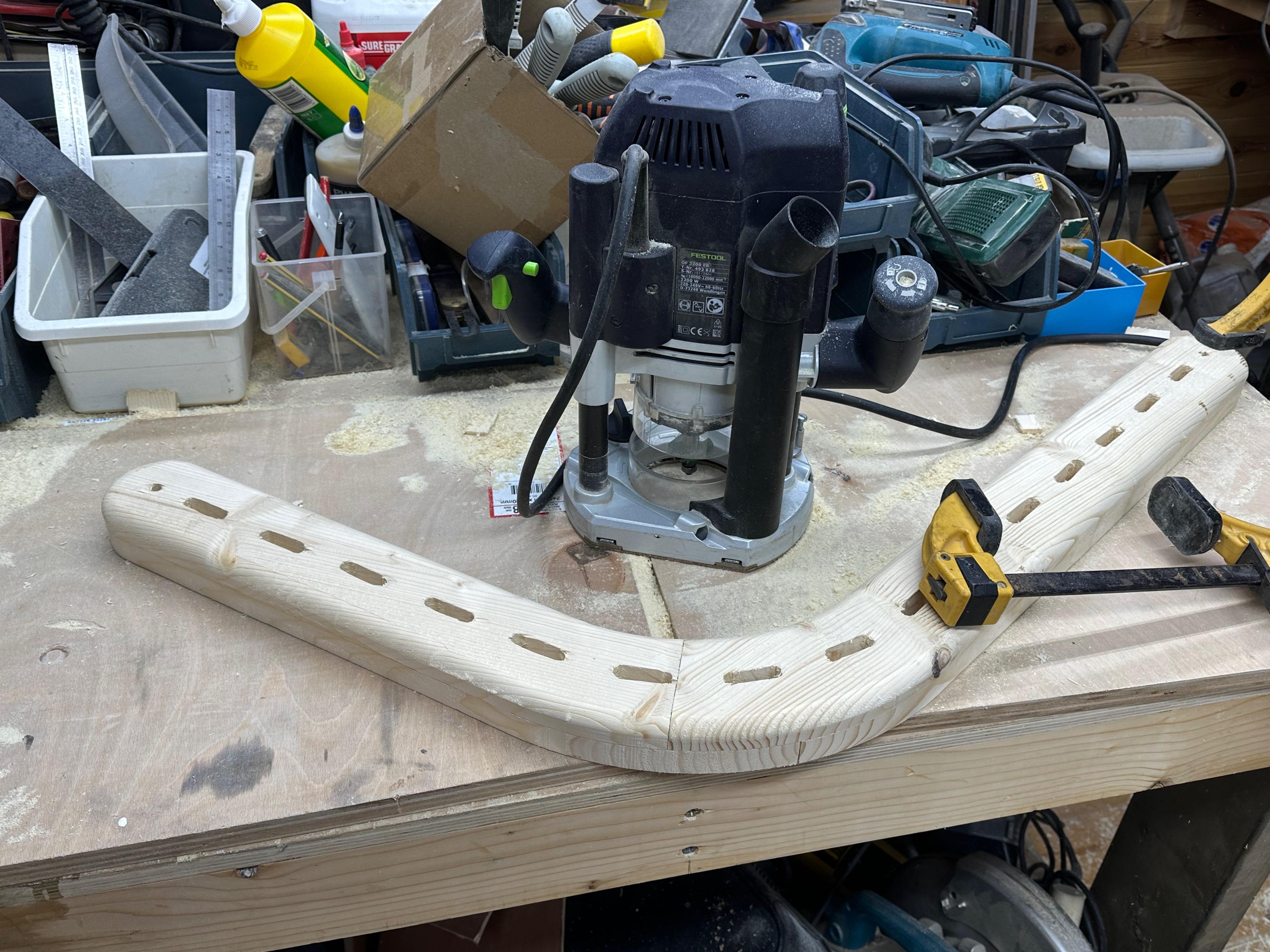
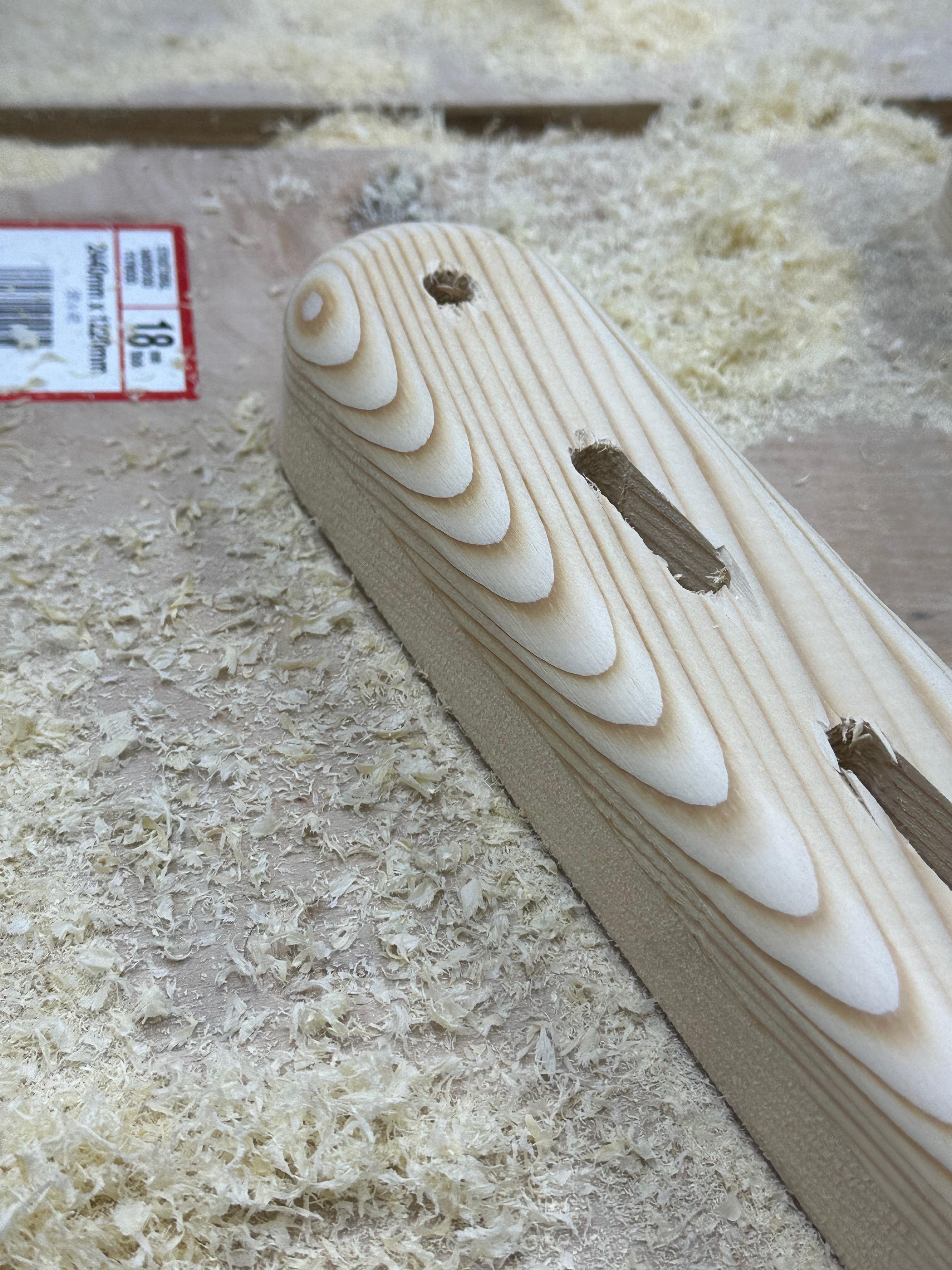
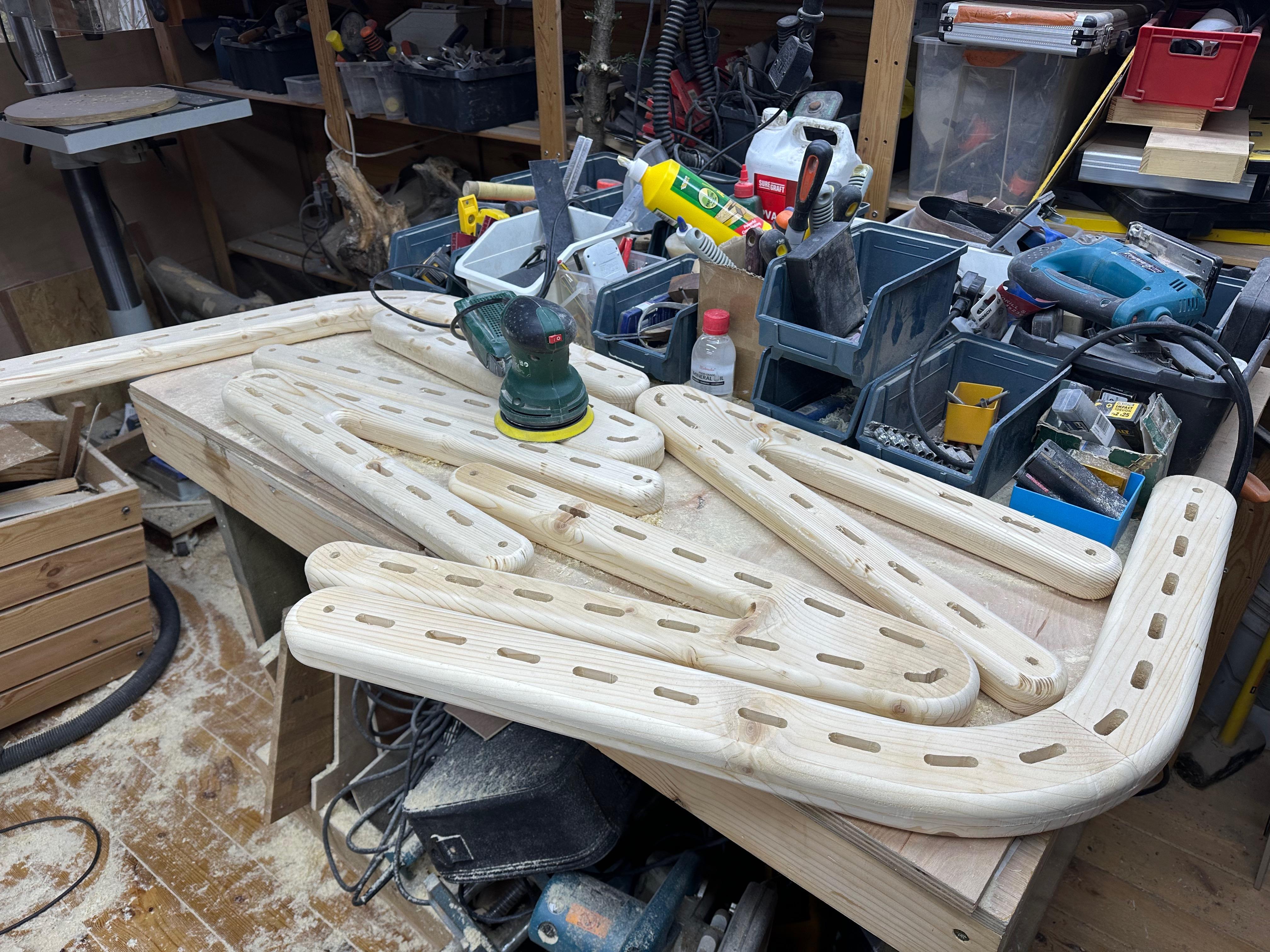
A table edge router bit was used to give the slats a fillet on both sides. Pay attention to the direction in which you move the router to get the cleanest finish.
Sanding was done with an orbital sander and sandpaper for the inner faces of the leg pieces. A bench mounted belt sander would be great for the sides of the pieces, which cause an orbital sander to slide around.
Fabrication (VI) | Inserts
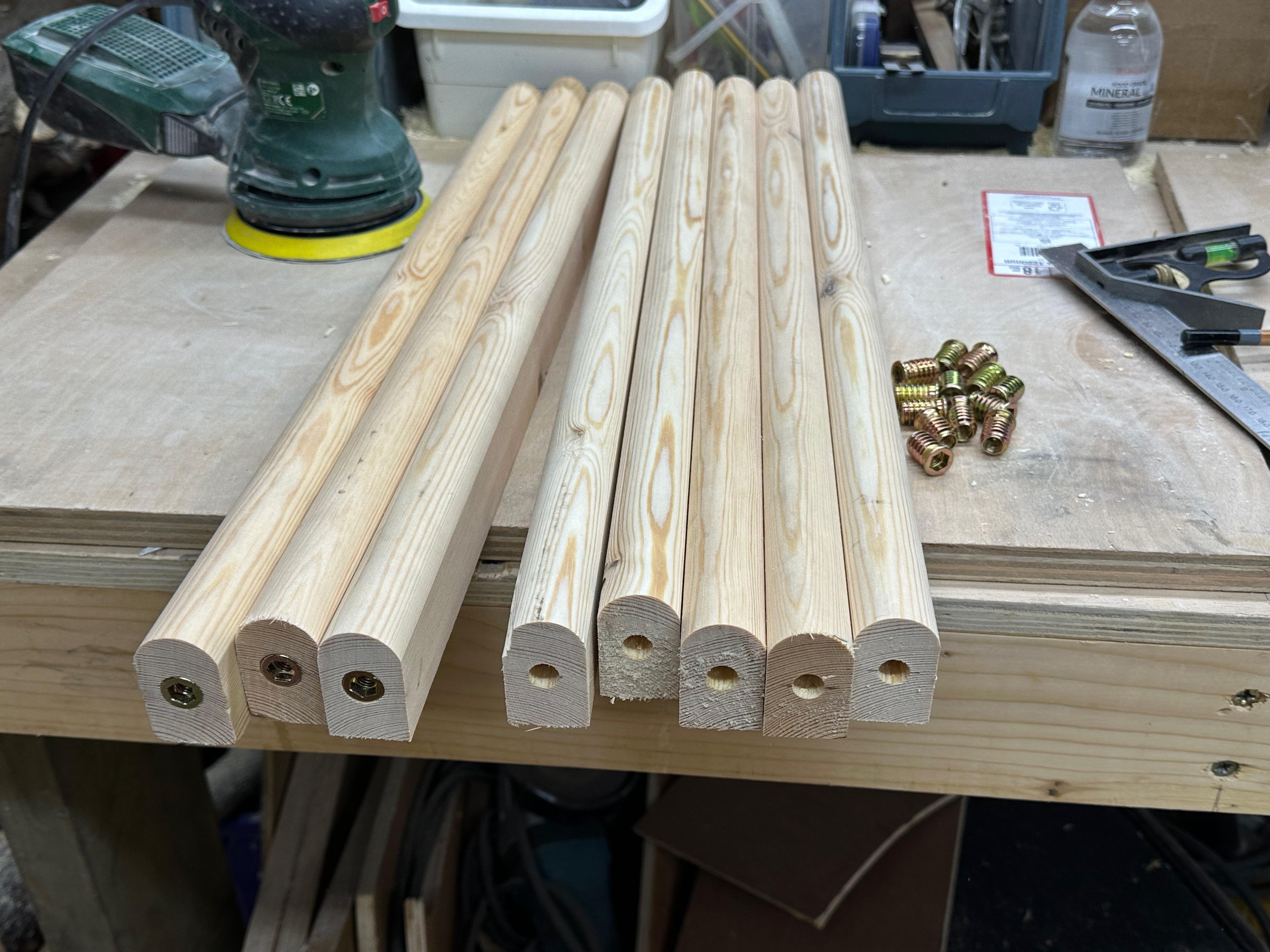
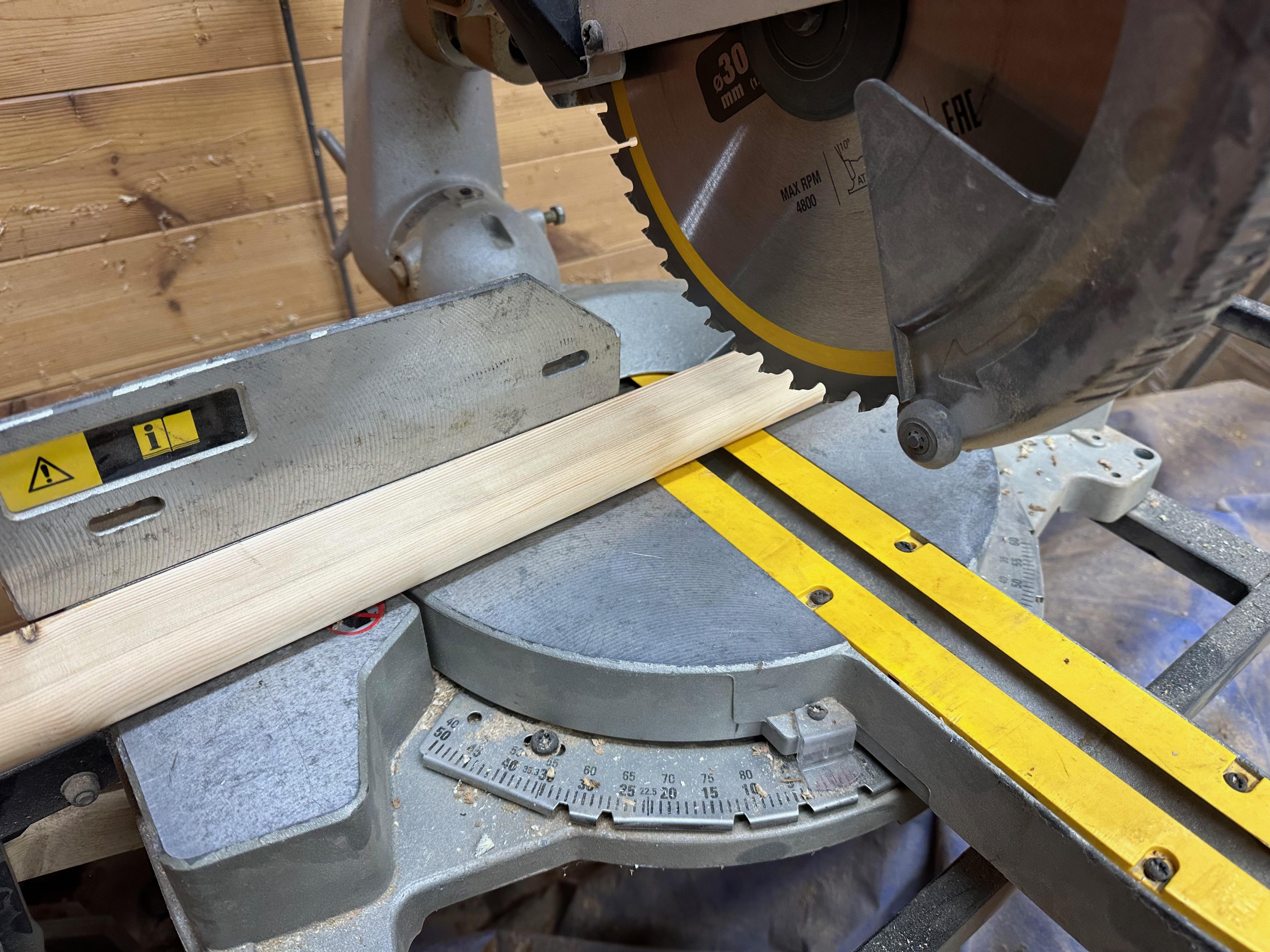
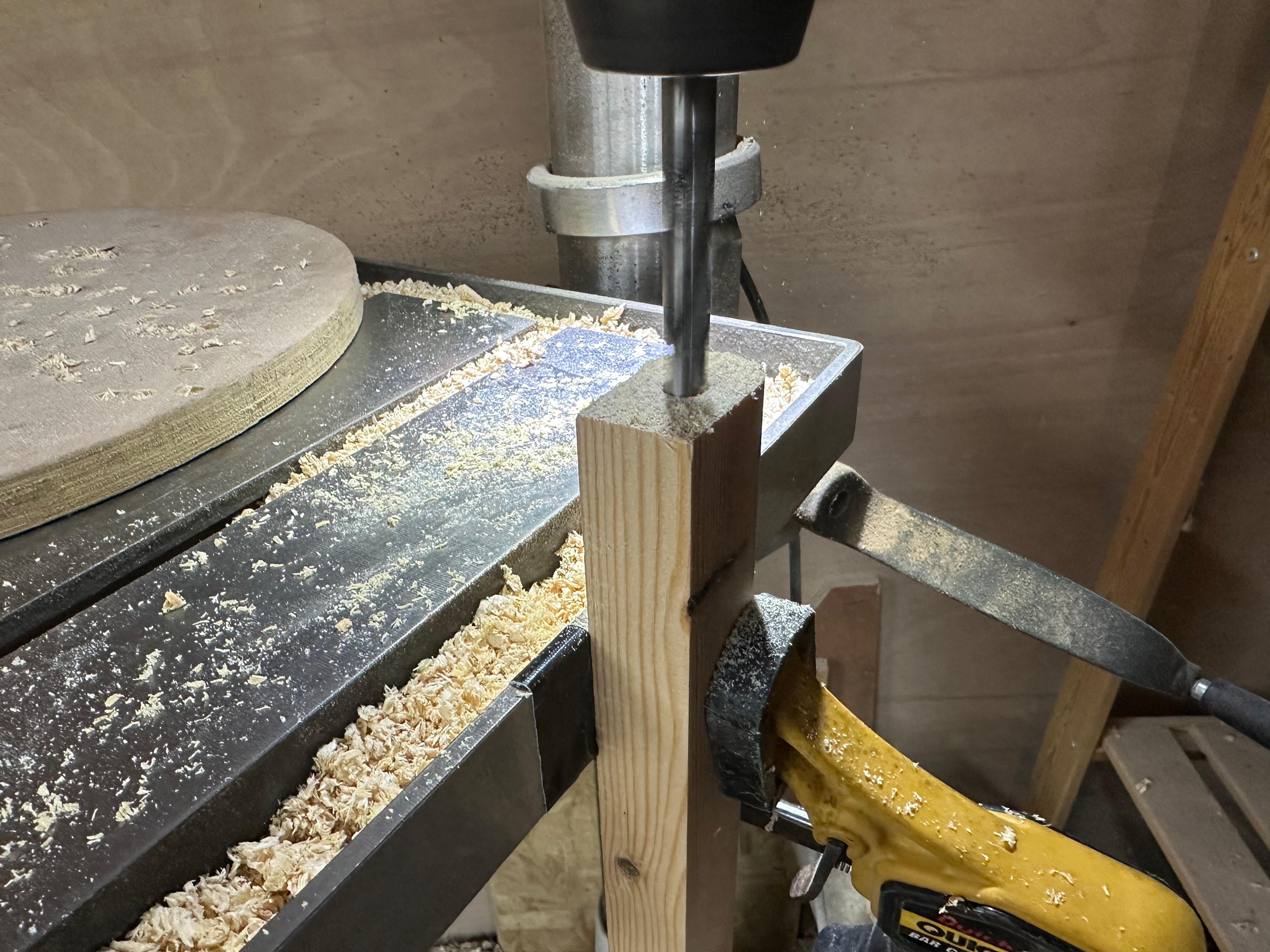
The 50mm nosing was cut into 8 x 560mm long sections. You have a lot of freedom here, I just picked the length that used the material I had available best. Each end of these straight pieces has a 10mm hole drilled to accept an M8 threaded insert.
There's probably better ways to do this, but I used a pillar drill with the the table swivelled off-centre and a clamp as a simple jig for drilling straight down into the wood. Note that there was an 'end stop' piece below the wood to stop it from slipping down under the force of the plunging bit.
Assembly | Design 'Mutations'

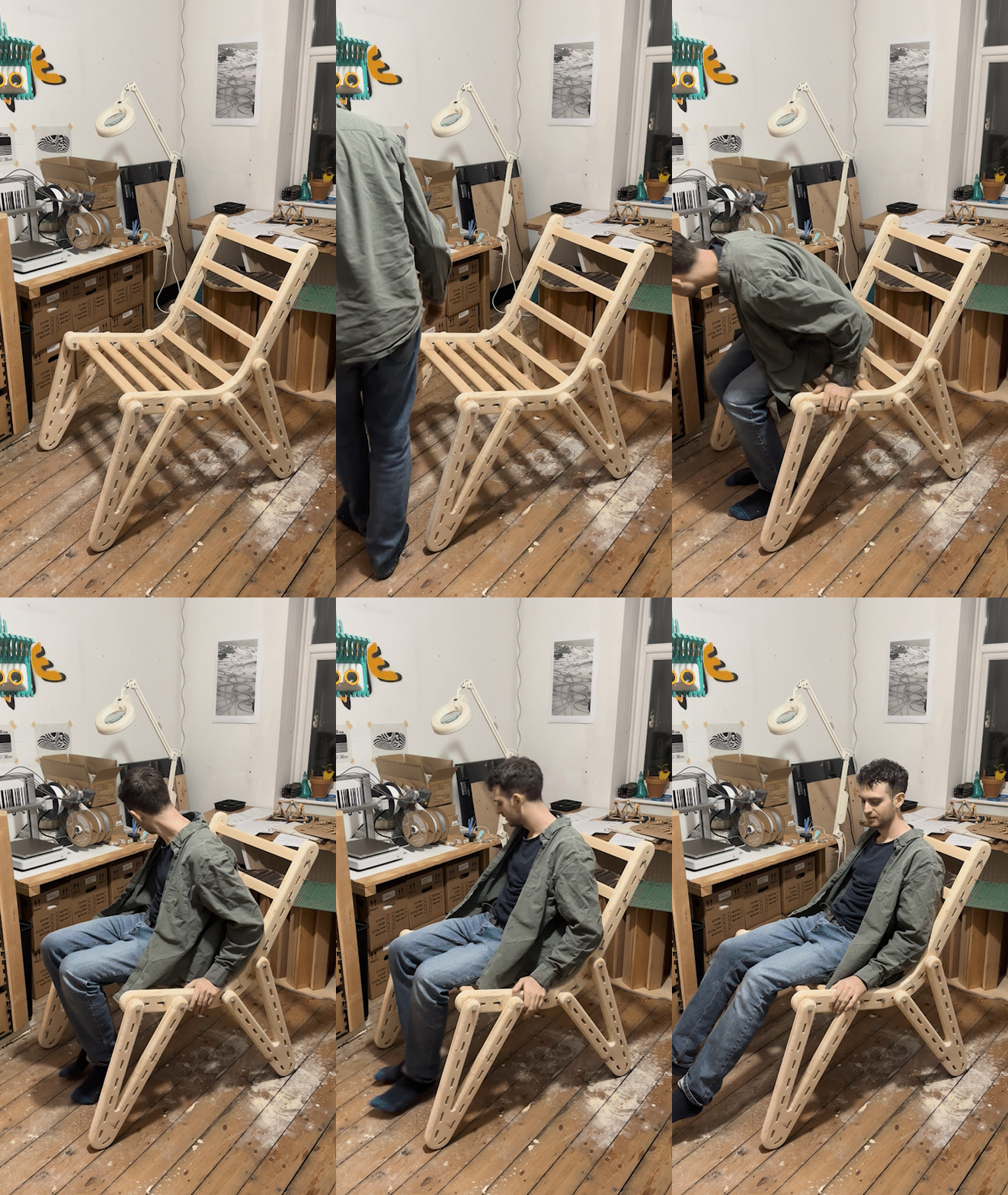
The assembly process was effortless when compared to the fabrication of the components. It also validated one of my assumptions about the kit itself, since the chair design I had originally selected to build was more upright, and instantly felt wrong when I put it together at full scale. I changed the chair to be more reclined halfway through assembly which isn't usually possible at the late stage of assembly!
Finally, I tentatively sat down, and nothing broke beneath me, which as a novice woodworker, I count as a big win.
Conclusion | the Next Iteration?

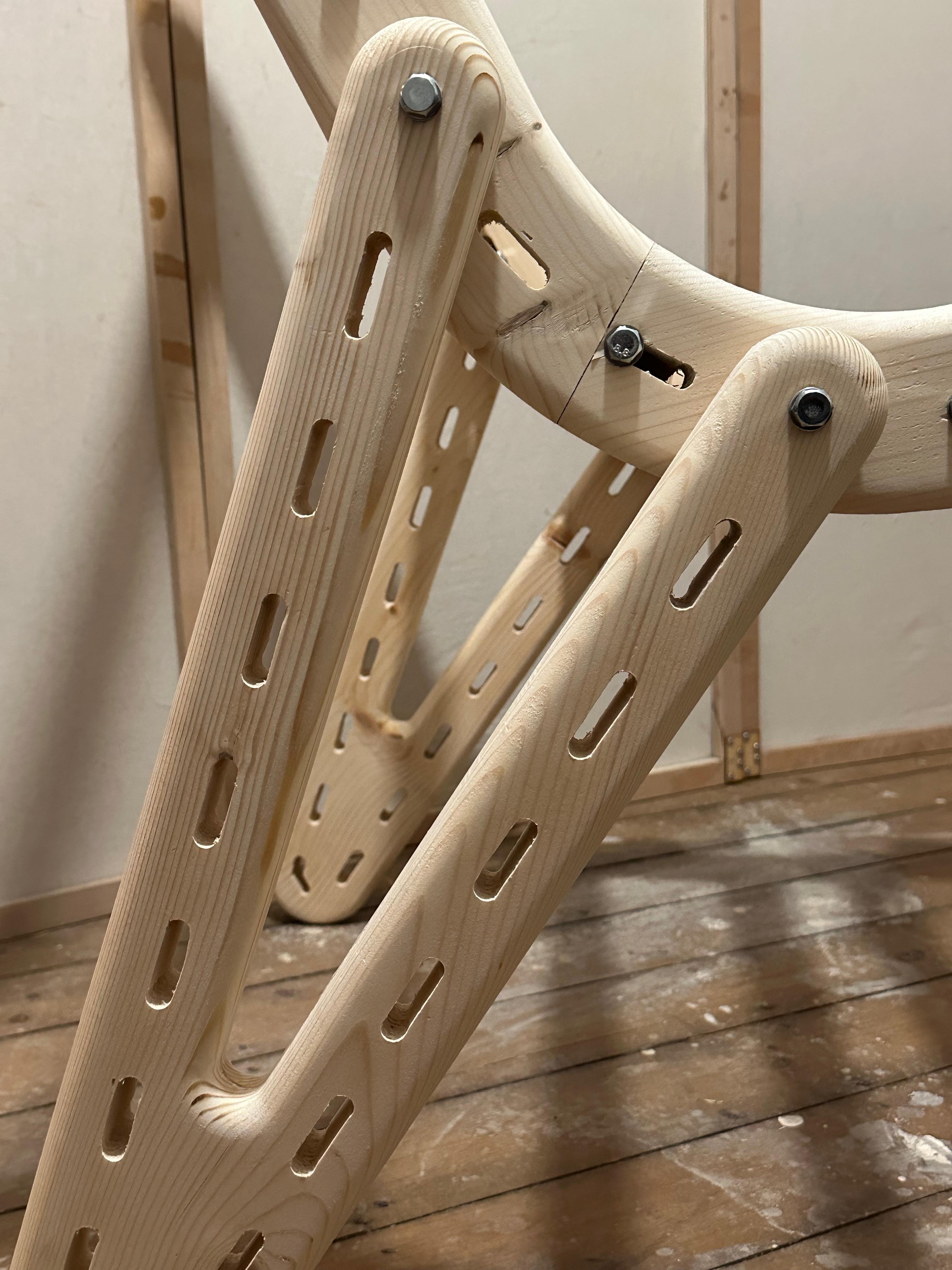

I put more effort into the thinking behind the kit than the chair itself, but that said, I'm pretty pleased with the result, and it was fun to build, making it up as I went along, not to mention very informative as a prototype. The particular realisation in pine was hastily done over a weekend, but that said I like the chunky, oversized appearance that keeps things playful.
I wouldn't choose construction grade pine of this quality again; there is a substantial effort in fabricating the parts so you might as well make them out of something nicer. I think an antique pine varnish would be a nice touch here, making the surface more durable. Connecting pieces worked really well, the slots and 3D printed bushings do their job, but I would add M10 washers on top of the M8 washers to prevent the bolts biting into the slots, which I had anticipated would happen in soft pine like this.
I'm very open to hearing critiques, improvements on the part design, and most of all any extensions, variations or hacks you dream up! I'm just throwing this out there as a starting point, with the hope the Instructables community will improve upon what I've got, e.g. making parts easier to make or to put together with basic tools, more hard-wearing, more material efficient and more flexible.
Extension | Software Coming Soon


There's enough information already in this Instructable, but I've been working on a web-based tool called 'Syntax', shown above, to make it easier to for anyone to design modular furniture intuitively in simulation, regardless of their making experience. It's got a grammatical language for joining things together, which also allows you to use AI to help you put things together if you want to try things quickly in a virtual environment.
Again, if you're interested, I can release this at a later date when I have time. Anyone who might be willing to contribute to development, please get in touch.
Thanks for reading!