Spider Chair


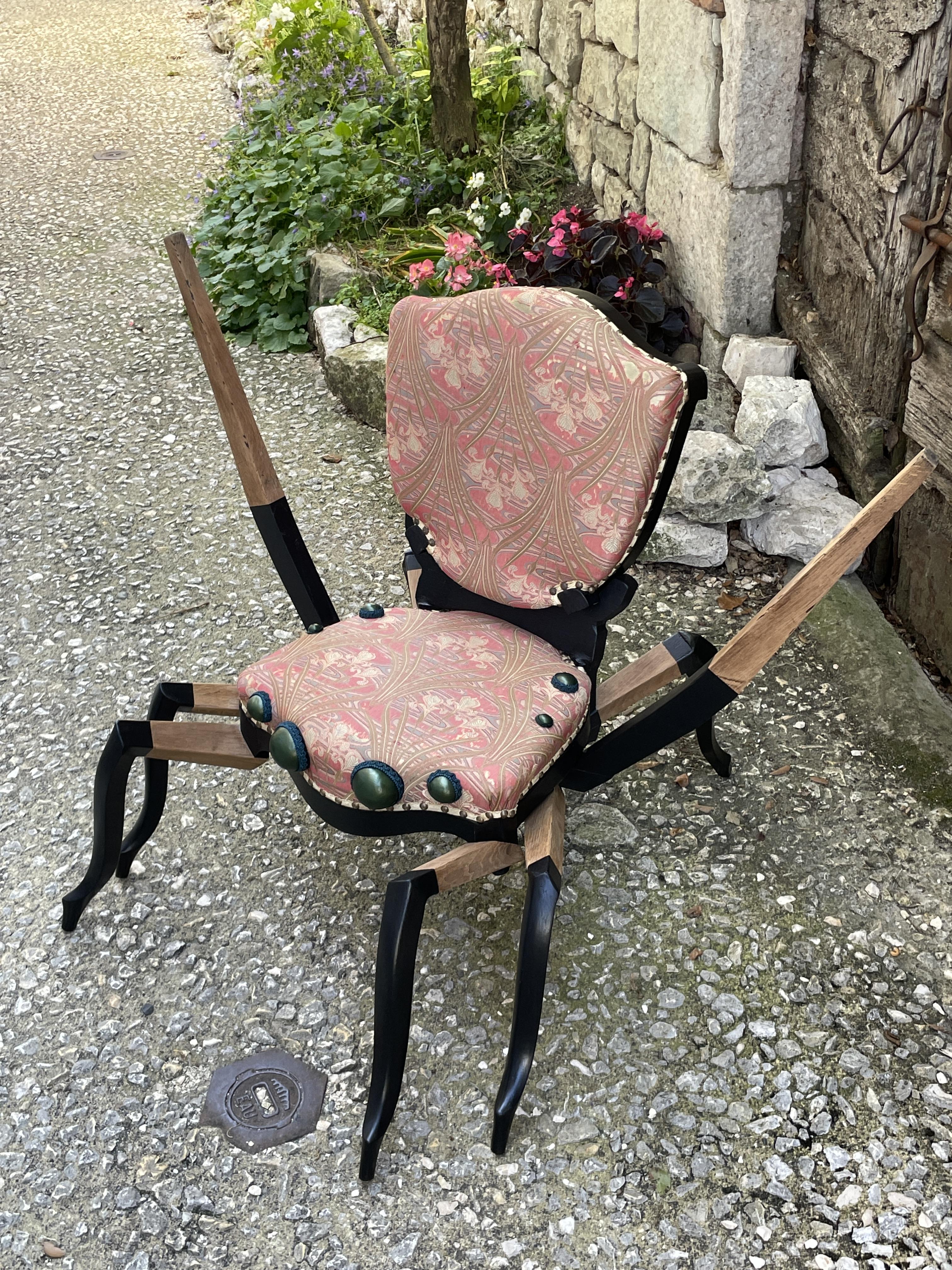
Theme : reimagine a chair – the maratus volans spider chair. This was a project for a sculpture class with Germano Frias at the École d’Art André-Malraux in Villeneuve-sur-Lot, France.
I highly recommend that you stop what you’re doing and do a web search on the PEACOCK SPIDER. They are fabulous little creatures. Ten years ago, I saved some pictures of peacock spiders, hoping that someday I would find a way to create something with them. The perfect opportunity came with the subject for a sculpture class “détourner une chaise”, which roughly translates as “reimagine a chair.”
Supplies

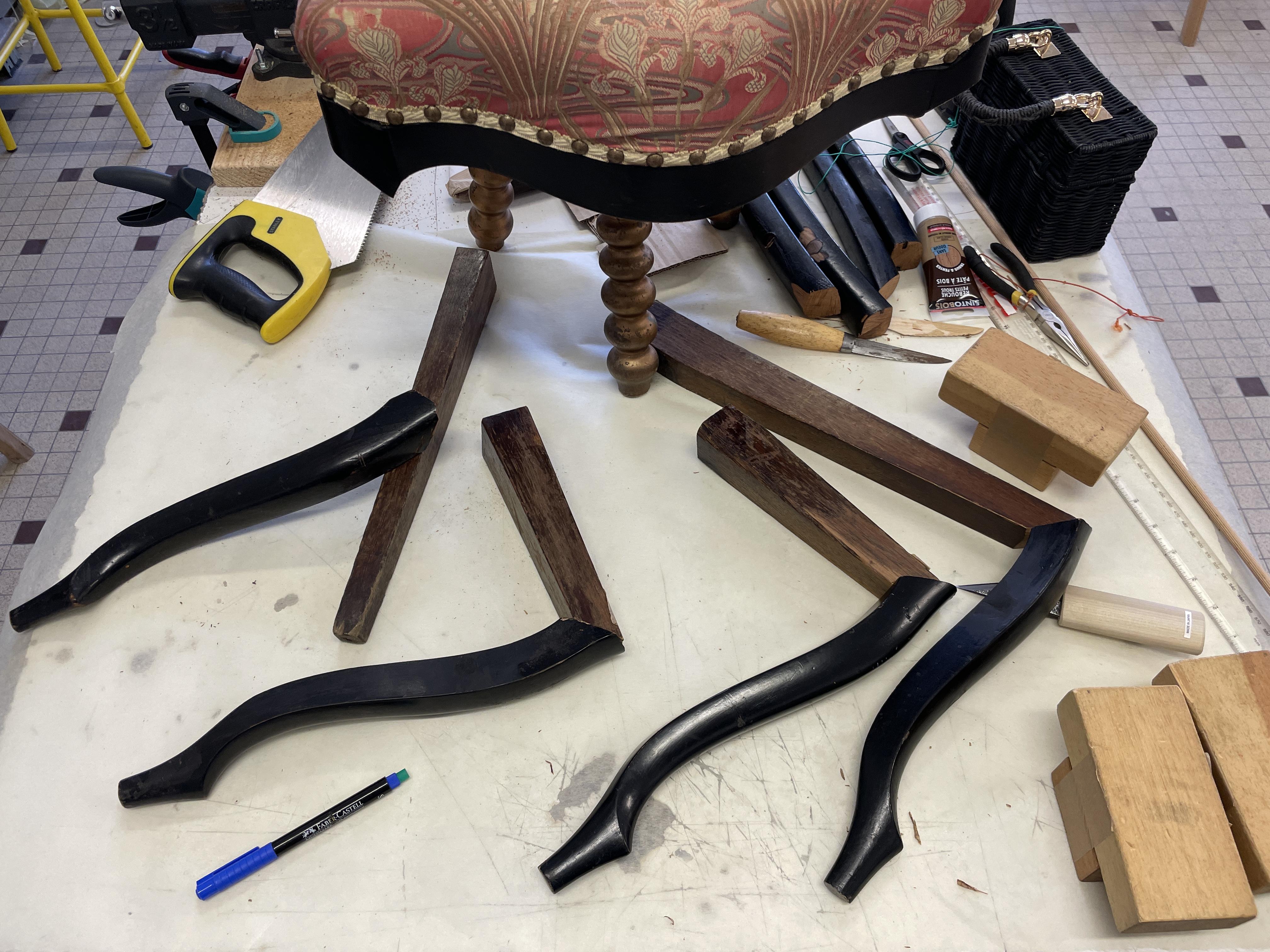

2 upholstered chairs
A total of six similar cabriole (curved) legs
Three wooden chairs, just for their legs
Attractive solid scrap wood
Saw
Long screws and bolts
Drill and drill bits, including those for countersinking
Wood and fabric glue
Three sizes of half domes for the eyes, two large, 4 medium, 2 small (mine are clay)
Paint and ribbon trim for eyes
Planning
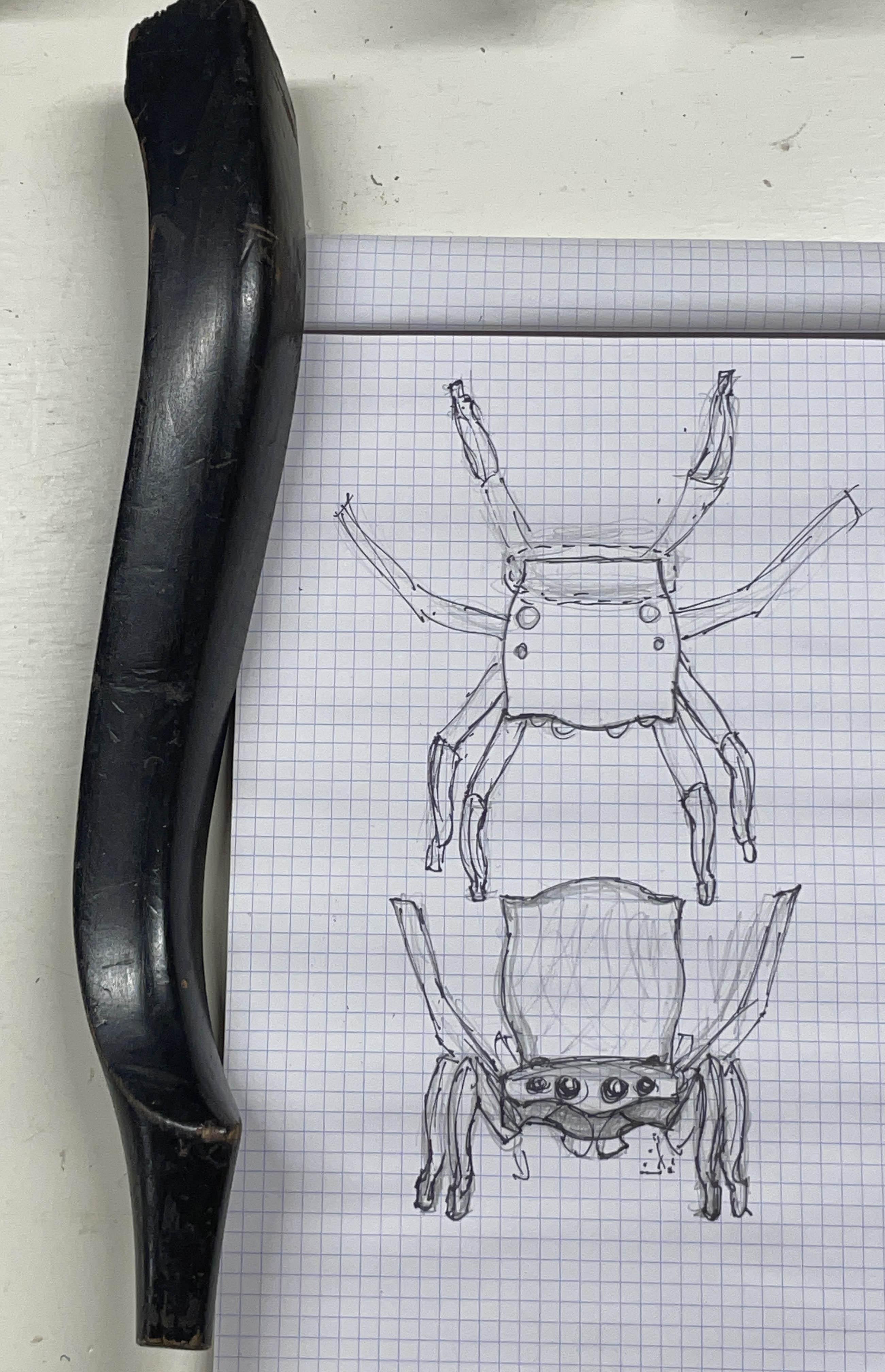
I made several sketches of what a spider chair might look like while looking for appropriate second-hand chairs in my neighborhood. Once I found the upholstered chairs, I drew up my final plan. Three out of the four pairs of spider legs would be made in two parts : curved cabriole chair legs for the lower segment and straight oak chair legs for the upper segment that is connected to the spider’s body. The fourth pair of legs that the spider raises and waves in his dance would be made entirely of oak.
The Chairs I Used
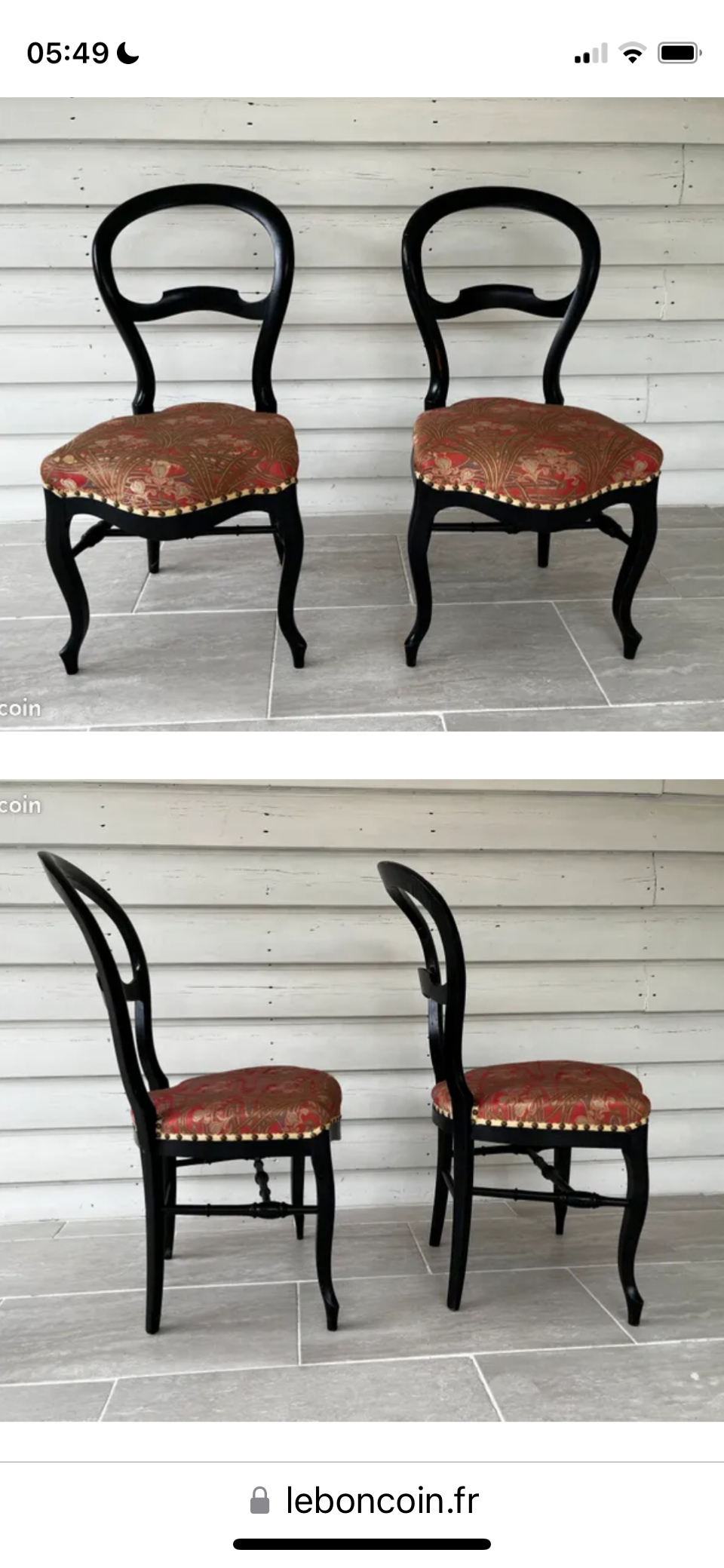

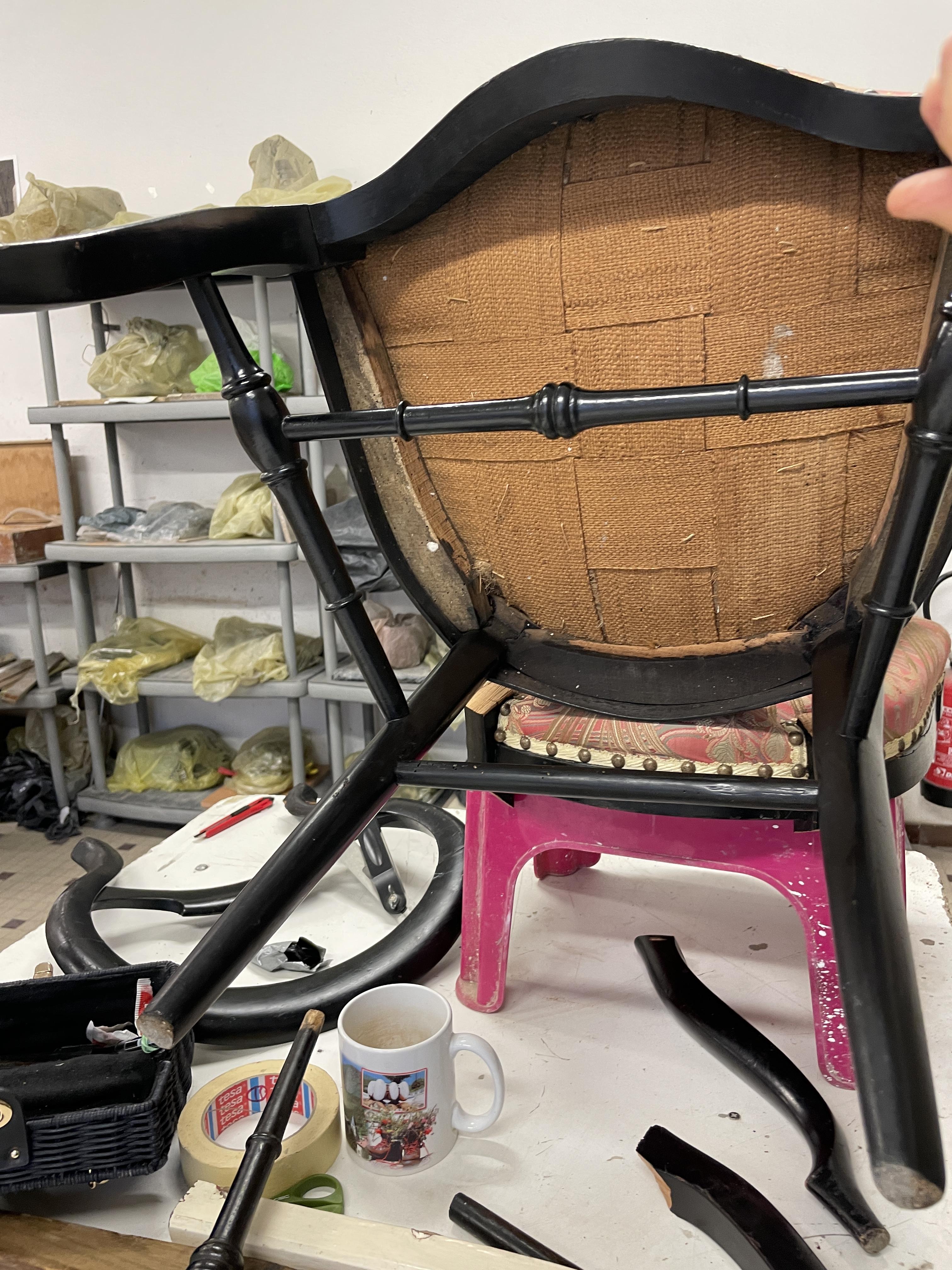
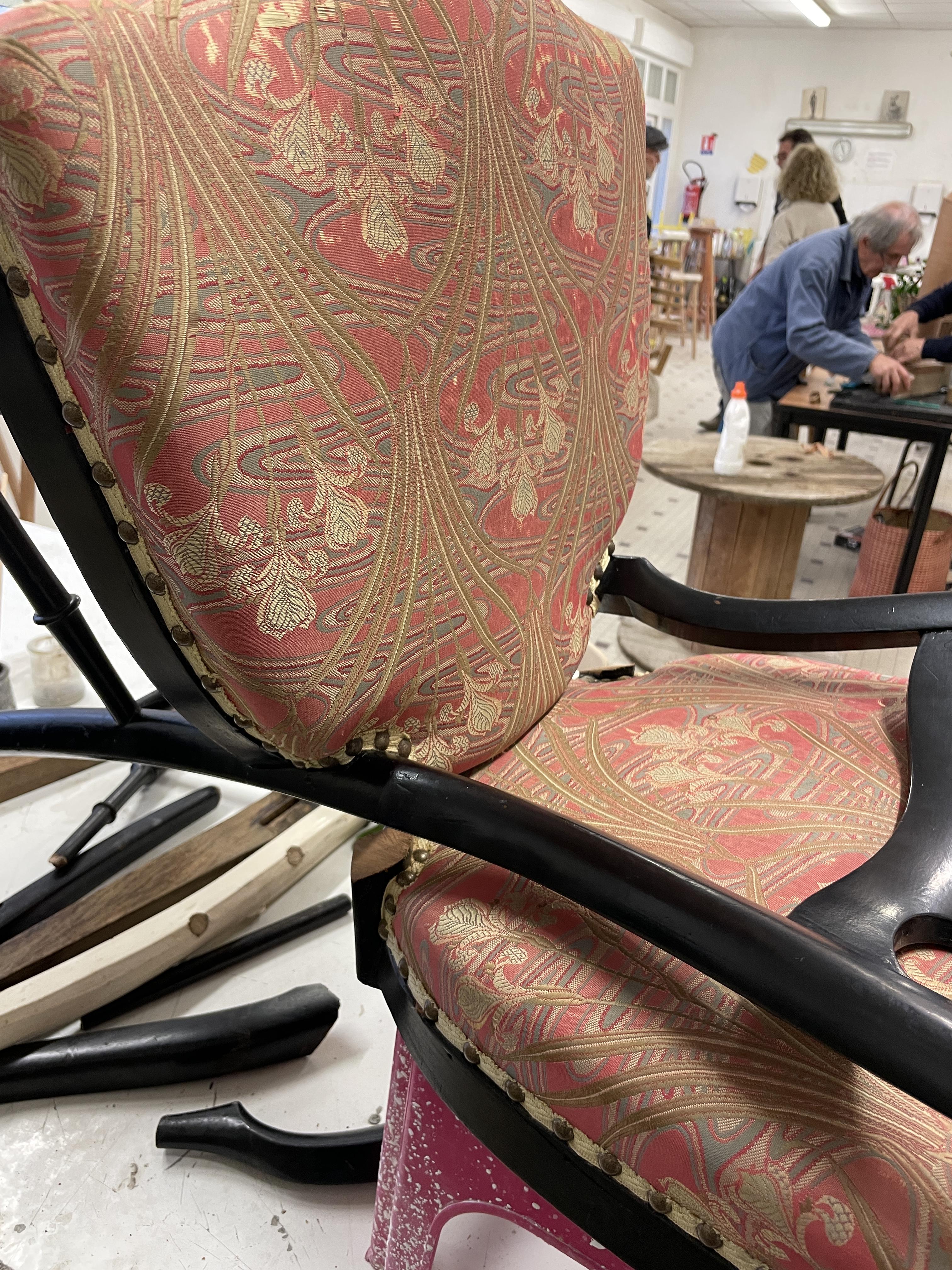
I paid $30 for the lovely upholstered pair, which gave me four cabriole legs. I had to pay almost as much for a third chair, to get two more cabriole legs. I already had three oak chairs that I found at the dump. The oak chairs need to be sanded.
Sawing the Chairs
.jpg)
This required careful planning and precise sawing to get the angles right. I actually asked a cabinet-maker friend if I could pay him to cut the angles for me and he laughed politely. I started with the easiest, cutting the chair backs off the upholstered seats as neatly as possible. Then I cut off the front and back legs at angles I hoped would be best to attach upper leg/straight oak portion.
Attaching the Legs

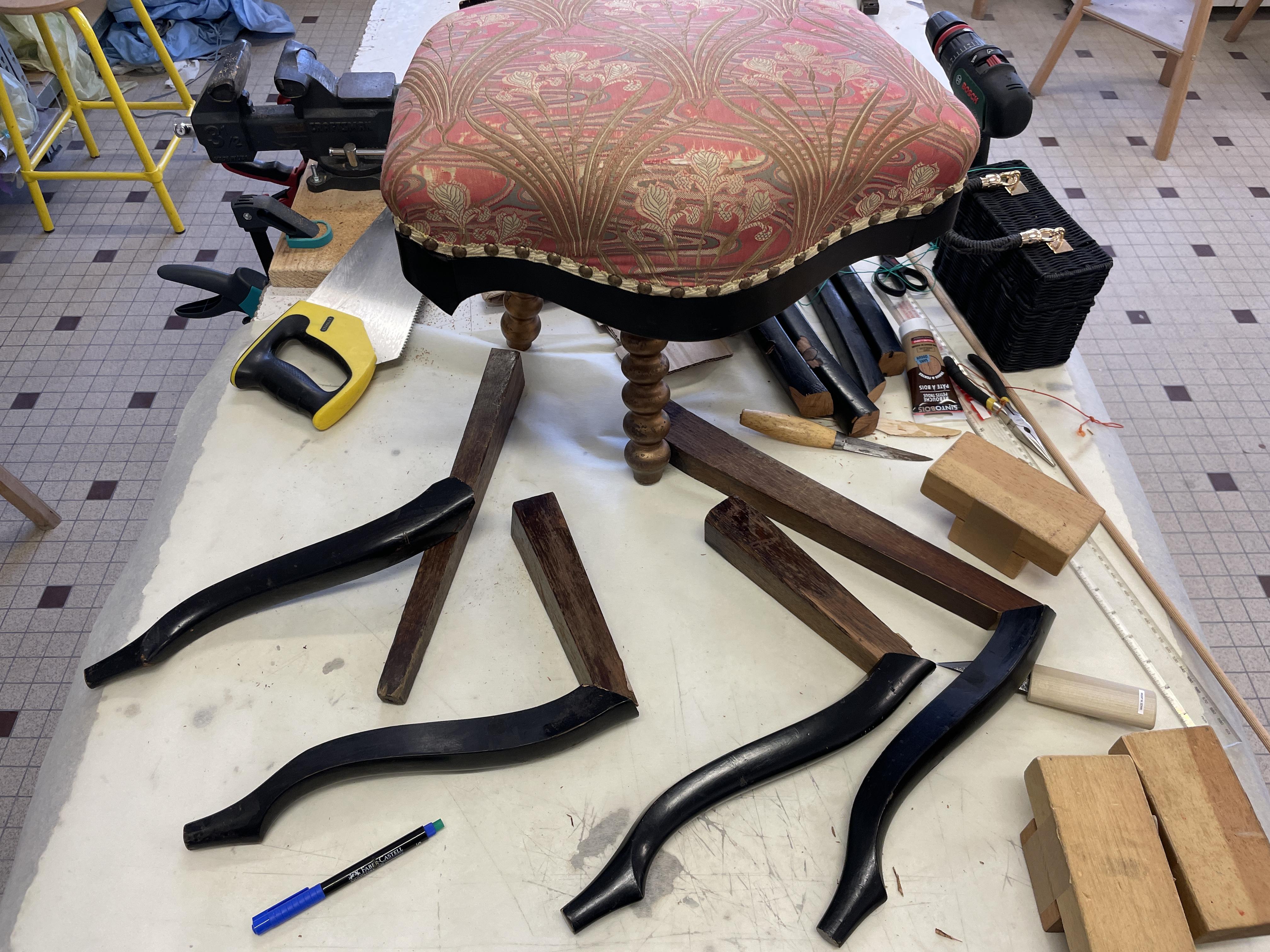


I taped legs together to try get a feel for how they would come together.
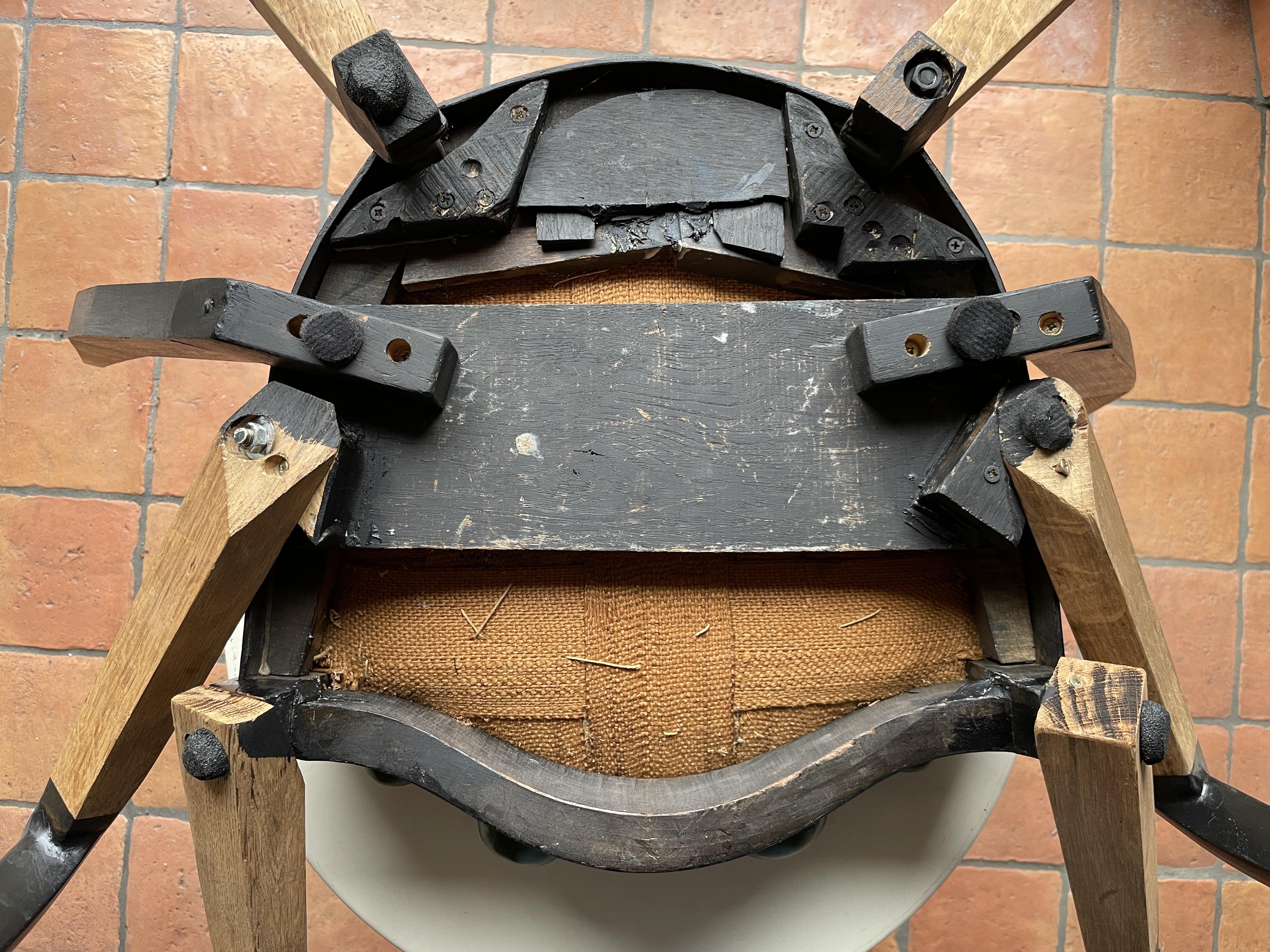
The seat was on a stool that held it 4" higher than the finished chair height. When assembling the legs I slid 4” thick blocks under the feet and marked the desired length and angle on the legs. A solid board was screwed across the bottom of the chair to provide a support for attaching the middle two pairs of legs. Each middle leg required an addition block of wood, cut to an appropriate angle to attach and secure the leg. A minimum of two screws or bolts were used to fix the legs in place. I sawed the excess wood at the joints and countersunk the screws and bolts for a more streamlined silhouette. An additional wood reinforcement of the underside at the back was needed for the next step - adding the back.
Attaching the Back


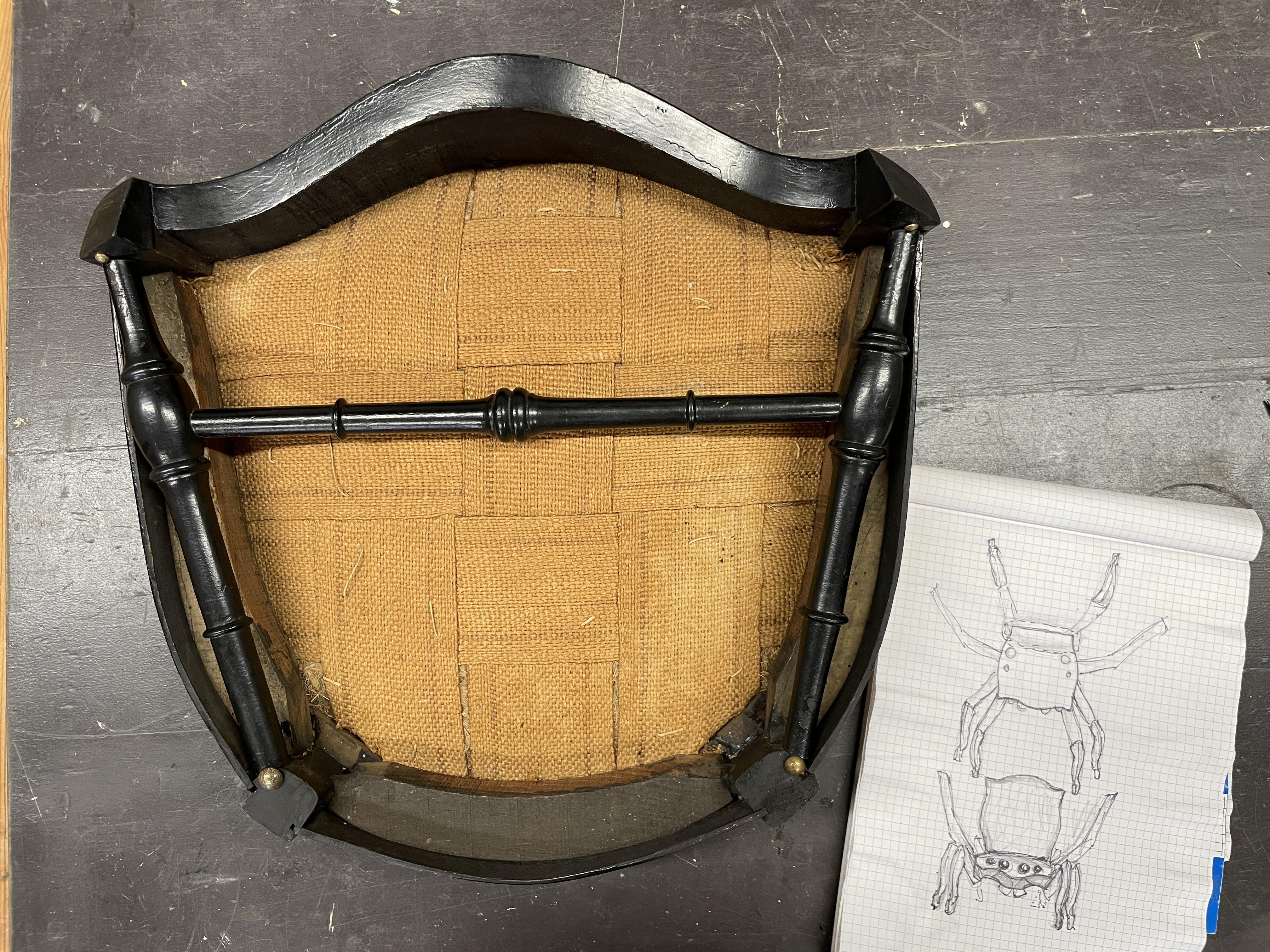

A thick oak board was cut with a jigsaw to cradle the second chair seat that formed the back of the chair (the abdomen of the spider). The cut was so perfect that no screws were necessary to hold the chair back in place. After painting the board black it was attached to the bottom seat with bottom seat with three metal rods. Then the upper back was gently tapped into place with a rubber mallet. The stretchers from between the legs of the original chair, were added to improve the look of the back, which is just the burlap of the underside of a chair.
The Eyes


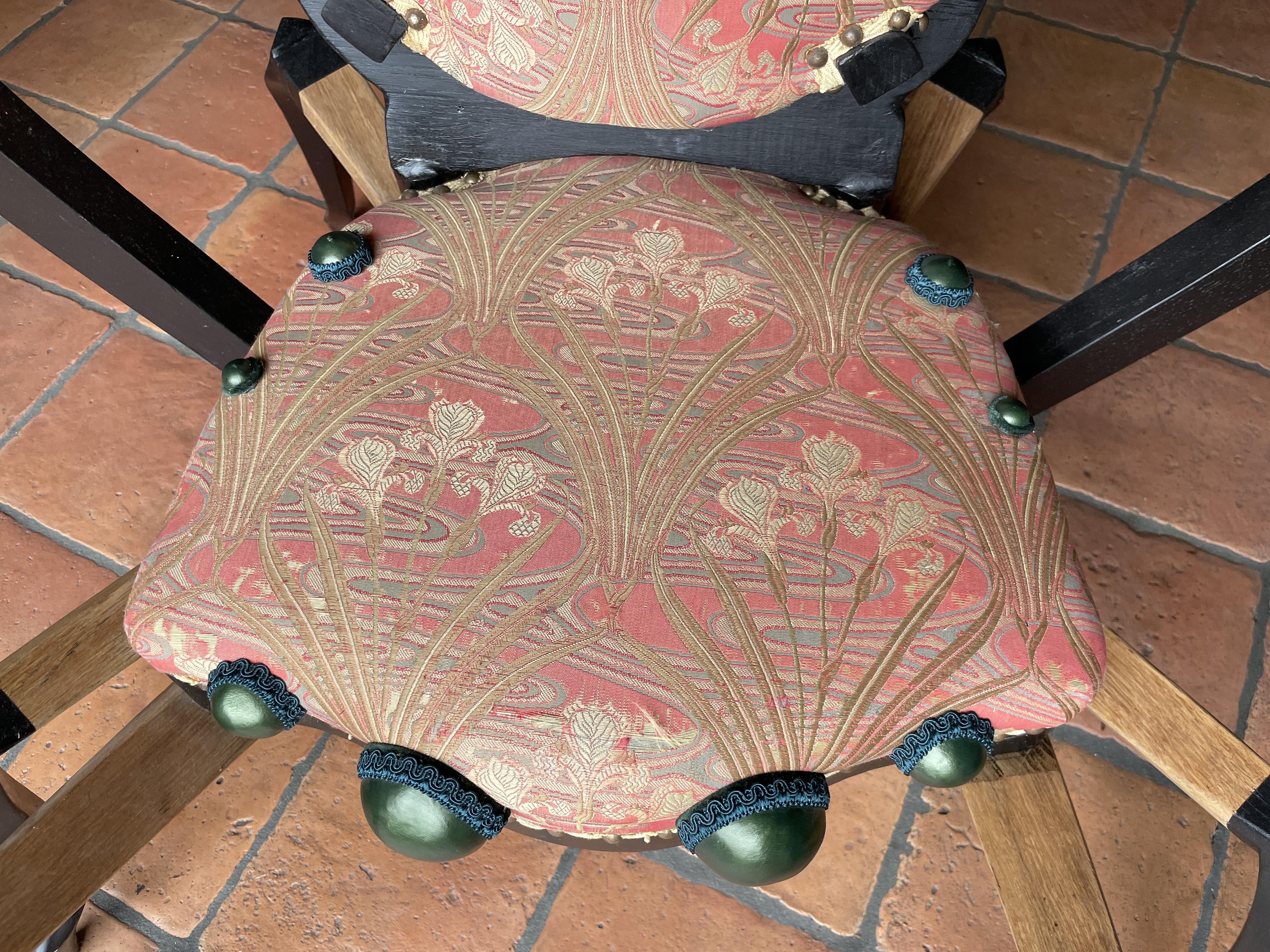
I made the eyes out of clay. The four medium-sized eyes were made by pressing a layer of clay inside of half a ping-pong ball. The large eyes were formed by hand. The small eyes were made with a melon baller scoop. (That is a fun clay project waiting to happen.) After the clay had started to dry, I trimmed the underside to match it to the curve of the chair where they would be placed. To finish preparing them, I attached an X out of clay on the hollowed-out undersides of the large and medium sized eyes. After the clay was baked and painted, I used a curved needle to attach them to the chair’s upholstery. I glued braided ribbon and edging around the eyes and to the upholstery. The small eyes were attached to the chair with the glue at the same time as their edging ribbons. I considered attaching the jaws, which were cut from the original chair’s back, but decided that they detracted from the overall appearance.
Finishing Touches


I used wood filler around the joints and to fill screw holes. Then came sanding and painting – I used black gesso which I then rubbed over with glossy black paint. I liked the exposed oak, so painted just at the joints where I needed to cover wood filler. The raised arms got black paint on the lower arms to cover the joinery where the legs attached to their chair. I carefully diluted some colored paint and touched up a few of the more glaring bare spots in the upholstery. On the underside there were some visible bolts that bothered my sensibility so I cut some dense black packing foam to cover them up. (The chair is at the top of some stairs.)
Conclusion and Advice


This chair is surprisingly sturdy, but to be able to sit on it, it would need to rest on a support. I considered making a minimalist stool with metal rods to tuck underneath.
You need someone who can help hold the pieces in place when you screw the legs together and to the chair. These odd shapes don’t fit well into vises.
And if you only have space for two screws when attaching a leg, take care to screw them in at different angles for increased stability.