TECHNICAL REPORT OF CURRENT & VOLTAGE VARIABLE DC POWER SUPPLY UNIT
by wasanthamanjulaha in Circuits > Electronics
31 Views, 0 Favorites, 0 Comments
TECHNICAL REPORT OF CURRENT & VOLTAGE VARIABLE DC POWER SUPPLY UNIT
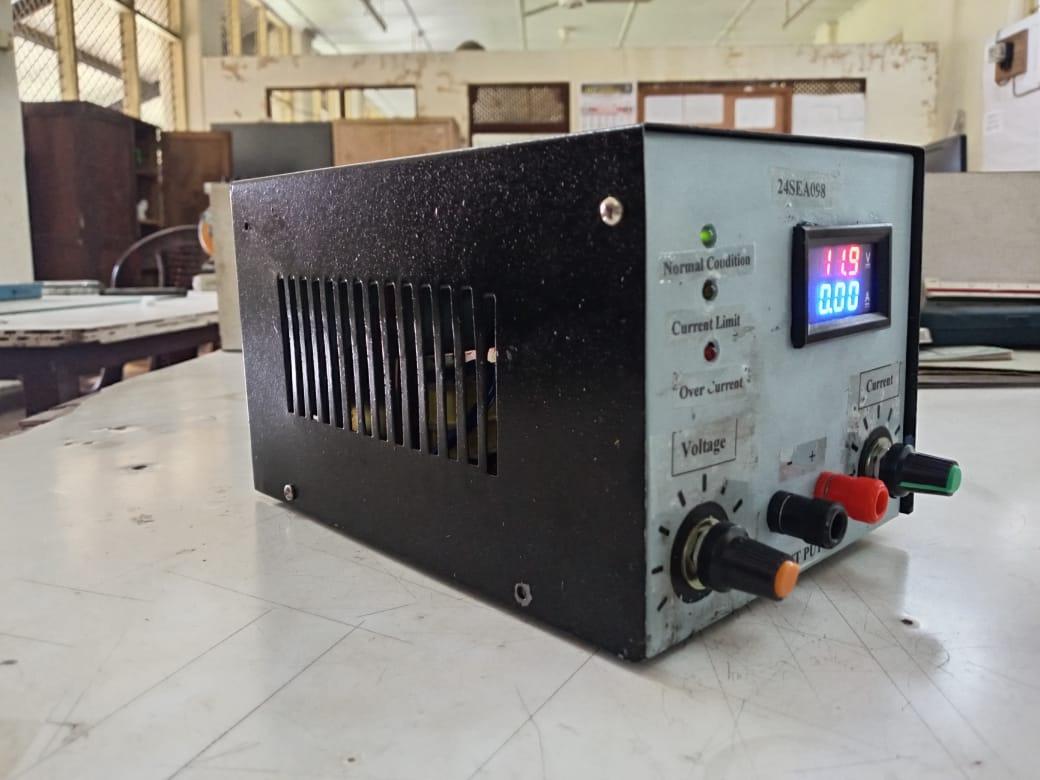
This is a high quality power supply with a continuously variable stabilized output adjustable at any value between 0 and 12V DC. The circuit also incorporates an electronic output current limiter that effectively controls the output current from a few mill amperes (10 mA) to the maximum output of three amperes that the circuit can deliver. This feature makes this power supply indispensable in the experimenter’s laboratory as it is possible to limit the current to the typical maximum that a circuit under test may require, and power it up then, without any fear that it may be damaged if something goes wrong. There is also a visual indication that the current limiter is in operation so that you can see at a glance that your circuit is exceeding or not its preset limits.
Downloads
2. Features
Output Voltage………….. 1V to 12V adjustable
Output Current………….. 10mA to 3A adjustable
Current & Voltage Values are appear on the Display.
Short Circuit & Overload Protection.
Output current limiting with LED indicator.
Input Voltage…………… 220V to 240V.
3. METHODOLOGY
- Design
basics Methodology behind the device buildings is basically based on operational amplifiers theories, voltage regulation, transistors theories, Rectification Basic Electronics theories, and some electronic component properties
3.2 Device Block Diagram
Below show the block diagram of the device.
Downloads
3.3 Schematic Diagram
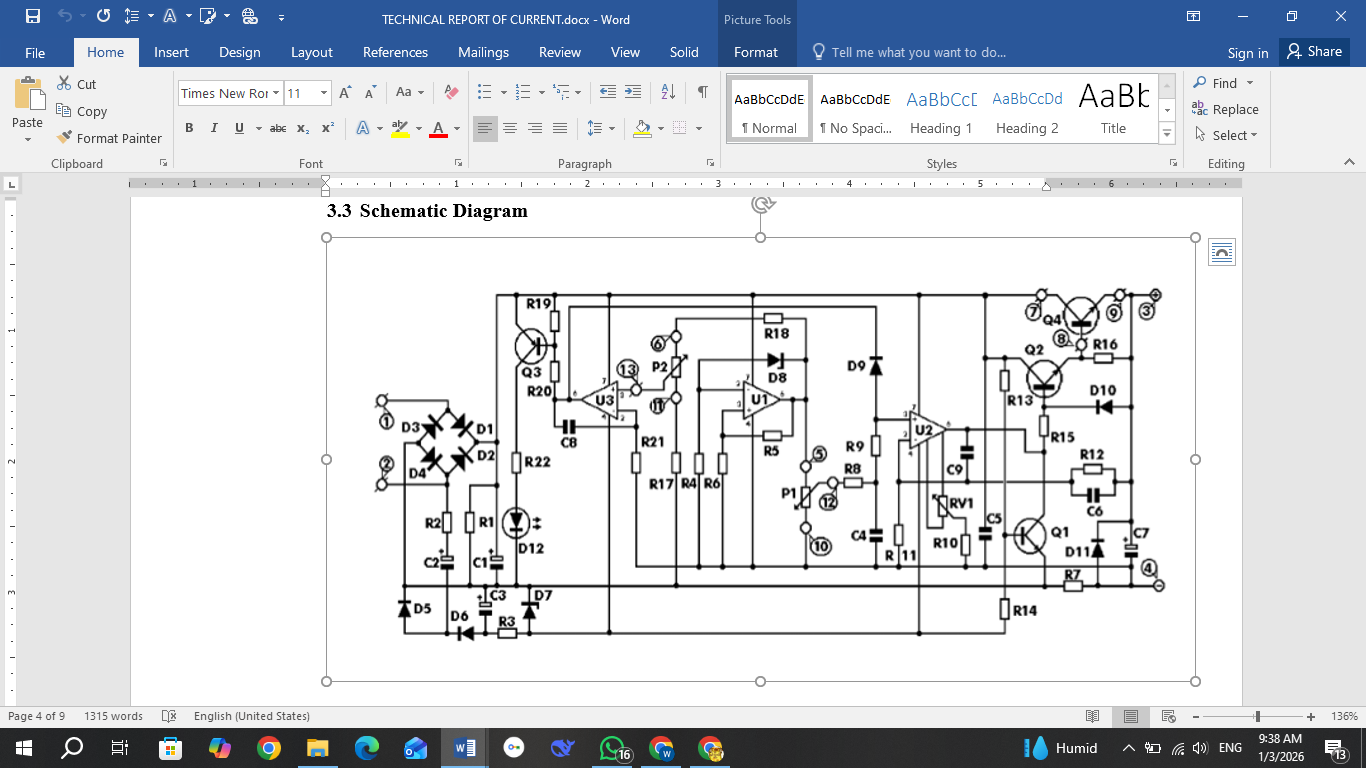
- 1 & 2 AC input, the secondary of the transformer.
- 3 (+) & 4 (-) DC output.
- 5, 10 & 12 to P1(potentiometer).
- 6, 11 & 13 to P2(potentiometer).
- 7 (E), 8 (B), 9 (E) to the power transistor Q4
3.4 Components List
Part
Value
Note
R1
2.2 kΩ
1W
R2
82 Ω
1/4W
R3
220 Ω
1/4W
R4
4.7 kΩ
1/4W
R5-R6-R13-R20-R21
10 kΩ
1/4W
R7
0.47 Ω
5W
R8-R11
27 kΩ
1/4W
R9-R19
2.2 kΩ
1/4W
R10
270 kΩ
1/4W
R12-R18
56kΩ
1/4W
R14 1.5
1.5 kΩ
1/4W
R15-R16
1 kΩ
1/4W
R17
33 Ω
1/4W
R22
3.9 kΩ
1/4W
RV1
100 kΩ
trimmer
P1-P2
10 kΩ
linear potentiometer
C1
3300 uF/50V
electrolytic
C2-C3
47uF/50V
electrolytic
C4
100nF
polyester
C5
200nF
polyester
C6
100pF
ceramic
C7
10uF/50V
electrolytic
C8
330pF
ceramic
C9
100pF
ceramic
D1-D2-D3-D4
1N5402-3-4 2A
diode
D5-D6
1N4148
diode
RV1
100 kΩ
trimmer
D7-D8
5.6V
Zener
D9-D10
1N4148
Zener
D11
1N4001
diode 1A
Q1
BC548
NPN transistor or BC547
Q2
2N2219
NPN transistor
Q3
BC557
PNP transistor or BC327
Q4
2N3055
NPN power transistor
U1-U2-U3
TL081
operational amplifier
D12
LED diode
Downloads
3.5 Working Principle
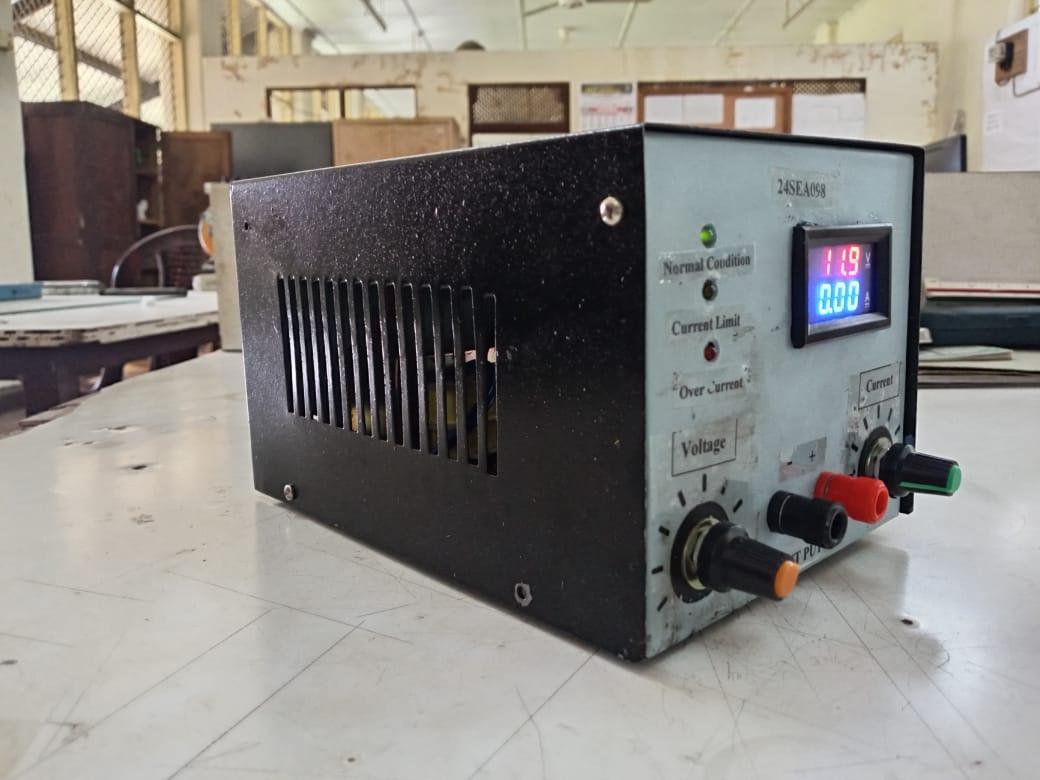
To start with, there is a step-down mains transformer with a secondary winding rated at 12 V/3 A, which is connected across the input points of the circuit at pins 1 & 2.
The AC voltage of the transformers secondary winding is rectified by the bridge formed by the four diodes D1-D4., The DC voltage taken across the output of the bridge is smoothed by the filter formed by the reservoir capacitor C1 and the resistor R1. The circuit incorporates some unique features which make it quite different from other power supplies of its class. Instead of using a variable feedback arrangement to control the output voltage, our circuit uses a constant gain amplifier to provide the reference voltage necessary for its stable operation. The reference voltage is generated at the output of U1.
The circuit operates as follows: The diode D8 is a 5.6 V zener, which here operates at its zero temperature coefficient current. The voltage in the output of U1 gradually increases till the diode D8 is turned on. When this happens the circuit stabilizes and the Zener reference voltage (5.6 V) appears across the resistor R5.
The current which flows through the non inverting input of the op-amp is negligible, therefore the same current
flows through R5 and R6, and as the two resistors have the same value the voltage across the two of them in series will be exactly twice the voltage across each one. Thus the voltage present at the output of the op-amp (pin 6 of U1) is 11.2 V, twice the zeners reference voltage.
The integrated circuit U2 has a constant amplification factor of approximately 3 X, according to the formula A=(R11+R12)/R11, and raises the 11.2 V reference voltage to approximately 30 V. The trimmer RV1 and the resistor R10 are used for the adjustment of the output voltages limits so that it can be reduced to 0 V, despite any value tolerances of the other components in the circuit.
Another very important feature of the circuit, is the possibility to preset the maximum output current which can be drawn from the, effectively converting it from a constant voltage source to a constant current one. To make this possible the circuit detects the voltage drop across a resistor (R7) which is connected in series with the load.
The IC responsible for this function of the circuit is U3. The inverting input of U3 is biased at 0 V via R21. At the same time the non inverting input of the same IC can be adjusted to any voltage by means of P2.
Let us assume that for a given output of several volts, P2 is set so that the input of the IC is kept at 1 V. If the load is increased the output voltage will be kept constant by the voltage amplifier section of the circuit and the presence of R7 in series with the output will have a negligible effect because of its low value and because of its location outside the feedback loop of the voltage control circuit.
While the load is kept constant and the output voltage is not changed the circuit is stable. If the load is increased so that the voltage drop across R7 is greater than 1 V, IC3 is forced into action and the circuit is shifted into the constant current mode. The output of U3 is coupled to the non inverting input of U2 by D9. U2 is responsible for the voltage control and as U3 is coupled to its input the latter can effectively override its function. What happens is that the voltage across R7 is monitored and is not allowed to increase above the preset value (1 V in our example) by reducing the output voltage of the circuit.
3.6 Printed Circuit Board
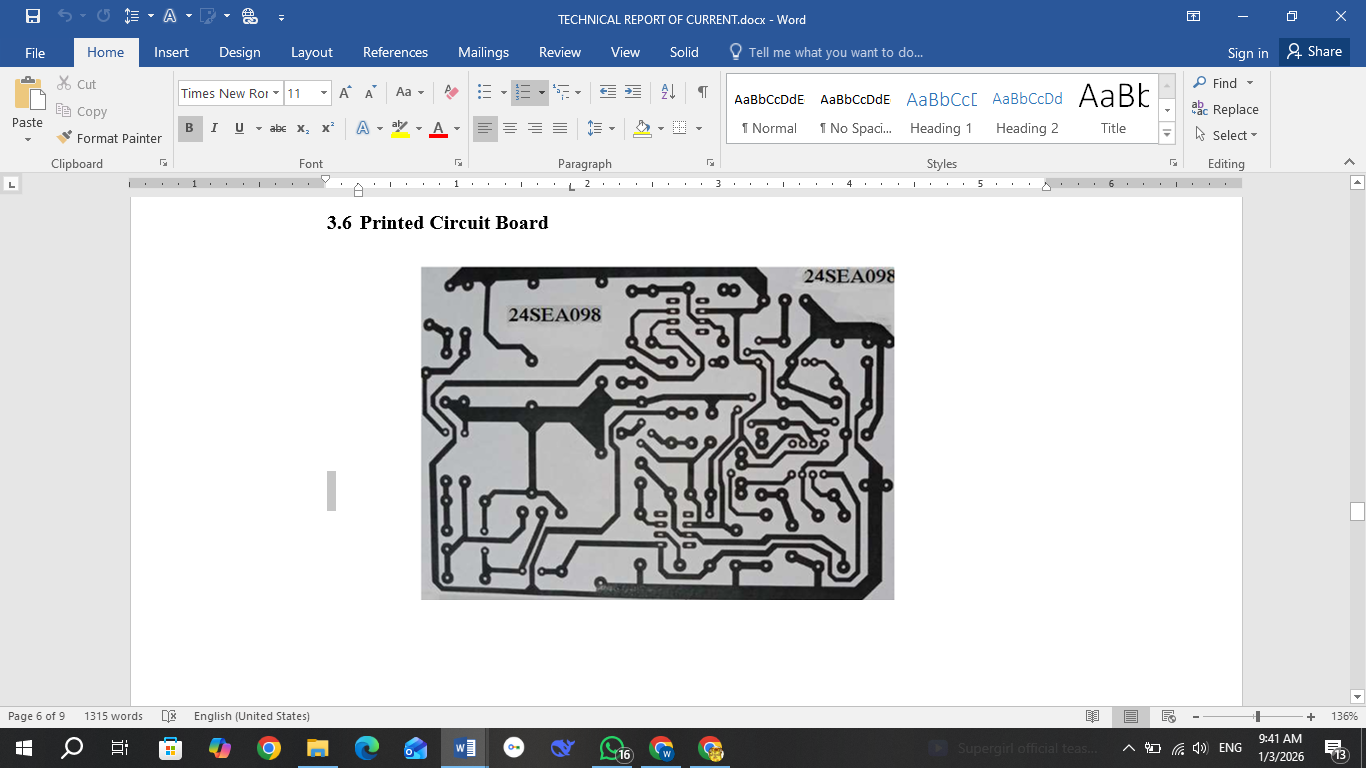
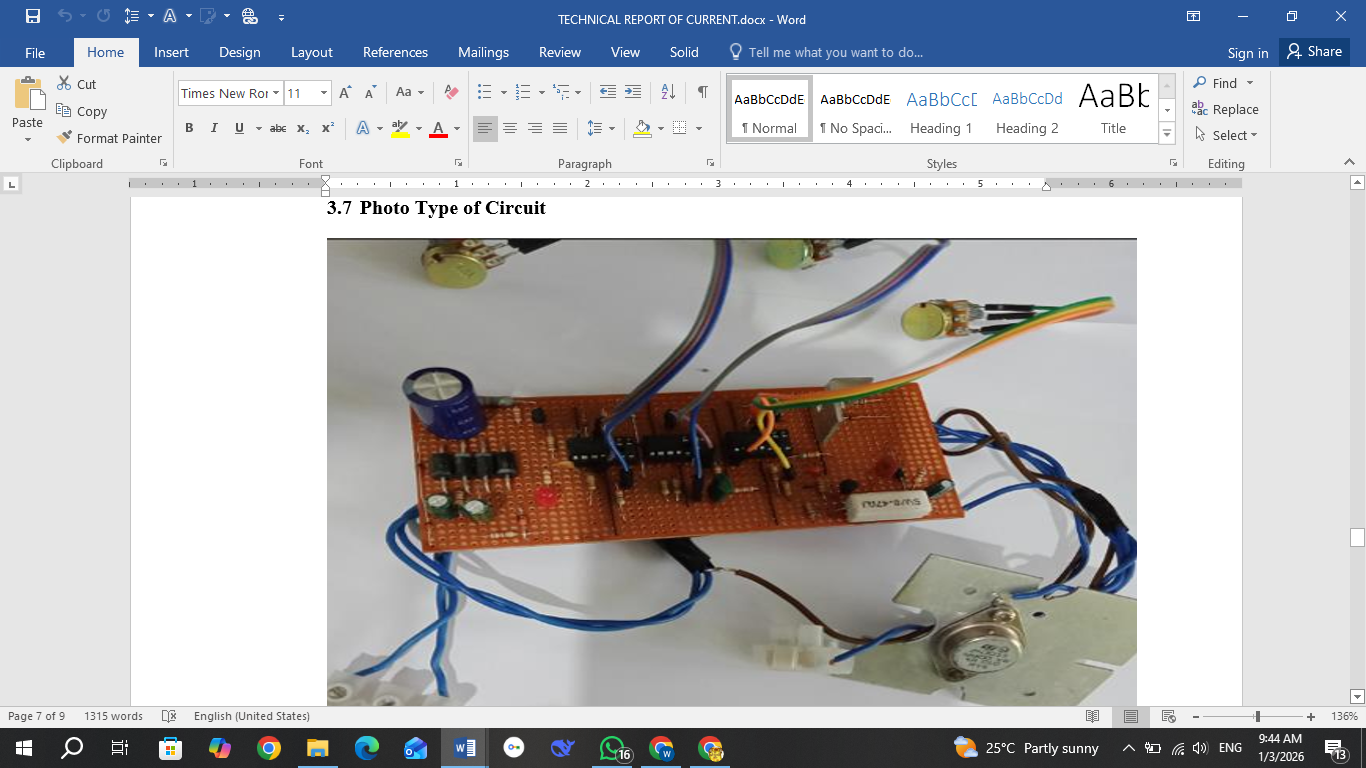
3.7 Photo Type of Circuit
4. RESULTS AND ANALYSIS
- We can get any Voltage value, from 0V to 12V
- We can get any Current value, from 10mA to 3A
- We want to Current limit, yes it can
The voltage can be obtained without any dropout
Downloads
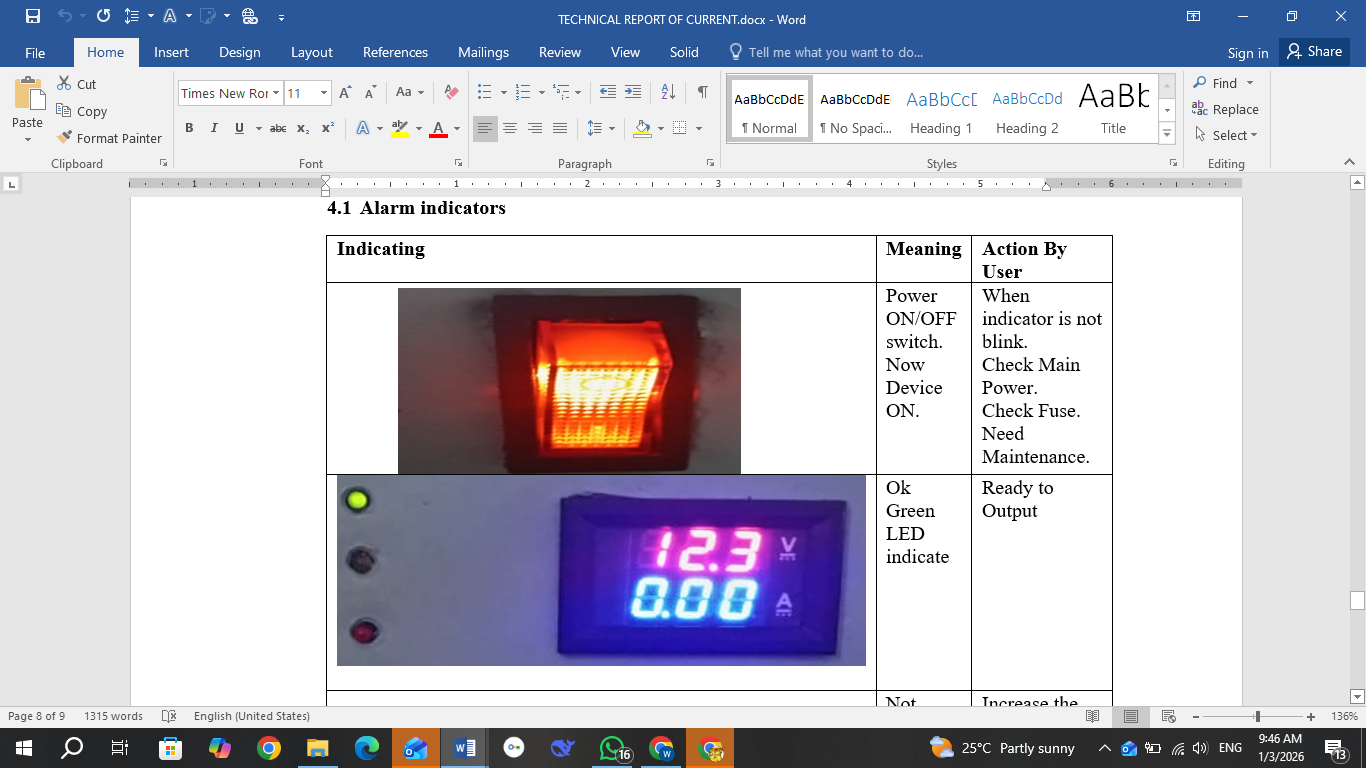
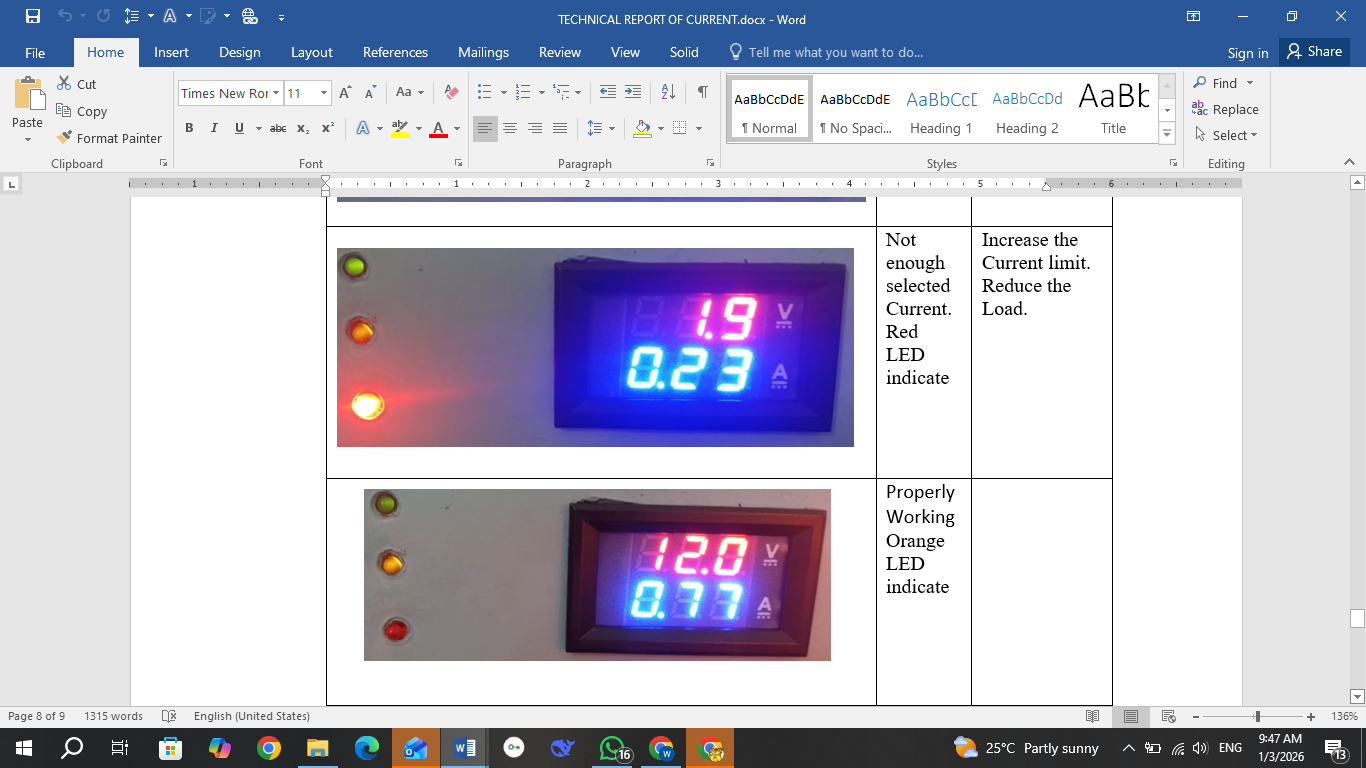
4.1 Alarm Indicators
Downloads
5. DISCUSSION
- Very easy to construction
- We can get properly any Voltage value, from 0V to 12V
- We can get properly any Current value, from 10mA to 3A
- The output voltage can be obtained without any dropout.
- Short circuit & Over load protection properly working
- By applying 5A Transformer, the alignment can be achieved up to 5A Output.
- Made for relatively low cost.
- Can be packed in a metal or plastic small box.
- Very easy to operating.
Downloads
6. Conclusion
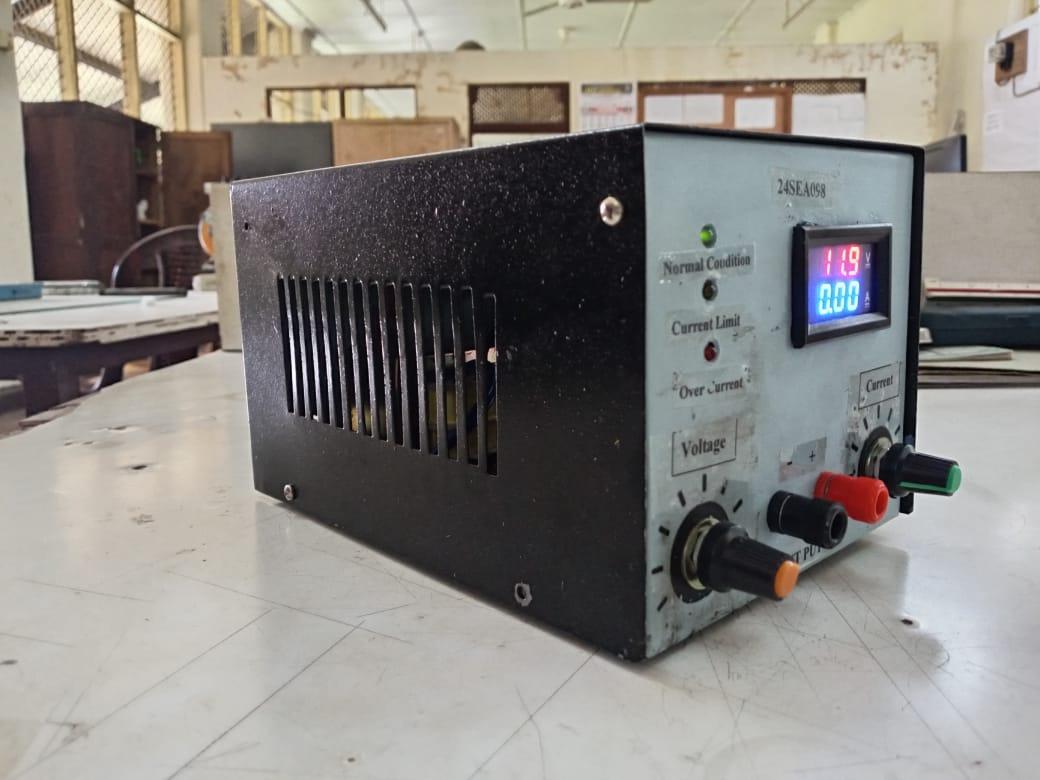
- This is high quality DC power supply.
- Properly Variable Voltage & Current.
- This is very suitable for School laboratories, Science laboratories, university laboratories.
7. Reference
Retrieved from - https://en.wikipedia
• Retrieved from - https://sci.cmb.ac.lk