TIW - Aluminum Rook Chess Piece
by haneeshahaneesha in Workshop > Metalworking
26 Views, 0 Favorites, 0 Comments
TIW - Aluminum Rook Chess Piece


This instructable will walk you through the general steps and tools used to create a rook chess piece using a manual lathe and manual mill. If you attend UT Austin, Texas Inventionworks (TIW) has all the tools you need to complete this project.
Supplies


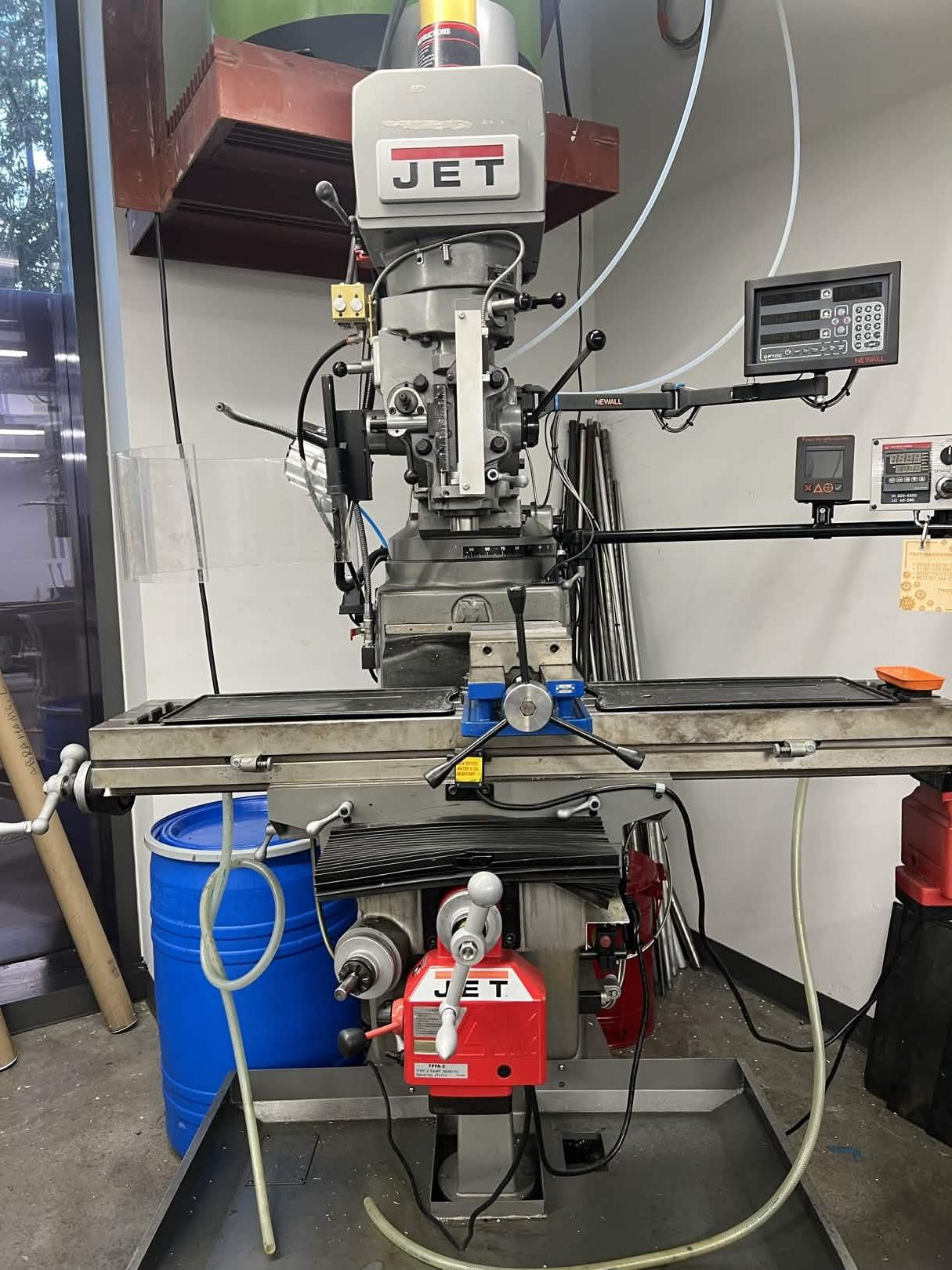


Manual JET Mill w/ DRO
- Edge Finder
- Collet Set
- 2 Flute End Mill (aka Center Cutting End Mill)
Manual Baileigh Lathe w/ Tailstock
- Surfacing Tool
- Diamond Shape Turning Tool
- Grooving Tool
- Parting Tool
Other:
- Horizontal Bandsaw
- Belt Sander/Sandpaper
Prepping Your Material

Depending on the size of your rook, grab some stock/scrap aluminum. If you are using a large piece of stock, you can use the horizontal bandsaw to cut a smaller piece off to use. Determine the height and diameter of your rook and cut the stock such that you have around 3 extra inches of length. The extra 3 inches allows you to have ample material to put inside the lathe chuck jaws. If you are following the drawing sheet attached to this Instructable, I would grab an aluminum rod that is 1.5" in diameter and cut it down to be around 5".
General Notes:
- Since we are using aluminum for this, we will keep the lathe spinning at 755 rpm
The Base


Some things to keep in mind:
- Make sure that when you are turning the lathe, your material is going on top/into the sharp edge of your tool
- Make sure your tools are as centered as they can be with your material
The first thing you need to do is surface the front of the rook, then turn down the material until you reach your largest diameter (in the drawing sheet above, that is 1.35") with the turning tool. To face, you can either use a facing tool or a turning tool. Once you get here, zero the Y-Axis on your DRO. This is very important because you don't want to go past this point as you do more passes Repeat these steps, moving into your material at increments of no more than 0.03" (in the X-Axis) until you reach the largest outer diameter.
If you want your base to be the widest part: After you turn it down to the largest outer diameter (the width of your base), start from the top and turn until you reach the length that you want your base to be. Zero here as well. Do as many passes as you need in increments of no more than 0.03" again until you reach your second largest diameter.
The Shank

Again, there's a lot of creative freedom that you have when it comes to the rook looks like. I used the grooving tool to create the different diameters in the "neck" or the shank of the rook and tried to match the diameters I had in my drawing sheet. The width of your grooving tool determines how many grooves you need to make to create the same diameter across the entire length of the shank. The distance you move down the Y-axis after each grooving pass is equal to the width of your grooving tool.
Parting

The last thing you will do on the lathe is part your rook using the parting tool! If there is a little nub after you part, you can sand it down (there is a belt sander in the TIW machine shop but you can also use sandpaper).
The Turret


Now, we are going to create the turret part of the rook using the mill!
Use two v-blocks to clamp your rook in place. Then, use the edge-finder on both the X and Y axes to find the exact size of the top of your rook. Dividing these values by 2 will allow you to find the center; this is where you want to move your center cutting end mill to in the next step.
To create the hollow center of the turret, we use the center cutting end mill. Choose the size of the center cutting end mill based on the inside diameter of the turret. For the rook in the drawing sheet, a 3/4" center cutting end mill was close enough to the inner diameter listed. Bring the end mill down until you reach the depth you want for the turret.
Then grab a smaller end mill (this one doesn't have to be a center cutting one) to create the notches in the turret. Choose the size of this end mill based on how wide you want the notches to be. Center your end mill in the Y-axis and mill across in increments of 0.015" until you reach your desired depth of the notches. Then rotated the rook 90 degrees, re-clamped and repeated the increments of 0.015".
And you are done!