The Mist Anchor: a Wearable Sensory Spray Holder
by Nova_tago in Design > 3D Design
50 Views, 0 Favorites, 0 Comments
The Mist Anchor: a Wearable Sensory Spray Holder
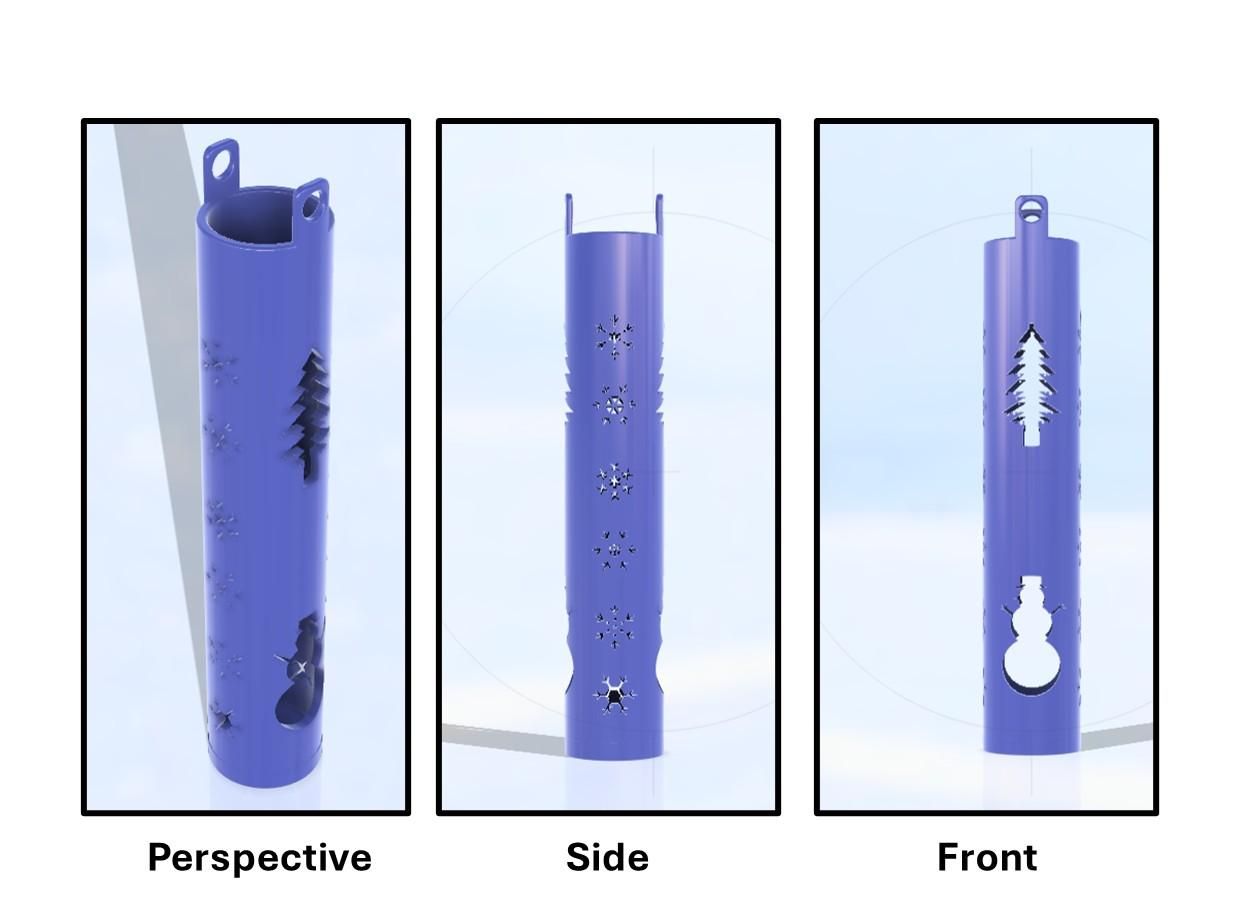
Figure 1: Cover image - The Mist Anchor (Key chain or necklace pendant)
Tutorial submitted to Autodesk Instructables Face Your Fears Contest
This project was designed using Autodesk Fusion
Face Your Fears:
Feelings of fear and anxiety can be profoundly debilitating, activating physiological responses that feel overwhelming and uncontrollable. When the brain perceives a threat, whether real or imagined, the amygdala triggers the sympathetic nervous system and releases adrenaline and cortisol. Heart rate increases, breathing becomes shallow, muscles tense, and cognition narrows towards danger cues. For individuals with phobias, this response can be disproportionate to the actual risk, yet the body reacts as if survival is at stake. The problem is not weakness or lack of willpower, it is a deeply wired neurobiological alarm system that sometimes misfires.
The intent of this Instructables tutorial is to shift the narrative surrounding fear from one of avoidance to one of empowerment. Rather than reinforcing retreat behaviors when faced with fear, this tutorial encourages people to confront their fears using evidence-based psychological tools and also to normalize fear as a human experience while promoting resilience through education, skill-building, and community support. In other words, this tutorial is rooted in fostering courage in the presence of fear, and to develop strategies that aid the ability to act thoughtfully in spite of it.
The goal of my tutorial is to:
1) Inform the reader of a few methods for overcoming fears.
2) Provide additional resources for future reading.
3) Showcase a small wearable device that can be utilized to overcome fear as the need arises.
My own fear of heights, referred to as acrophobia, illustrates this issue vividly. When standing at a high ledge or even when I try to go rock climbing, my hands and legs can sometimes begin to shake slightly and my heart races. This is because my body becomes hyper-alert as catastrophic thoughts intrude (“Am I going to fall?” or “Will the rope/anchors hold if I fall?”). Understanding that others struggle with similar reactions is itself helpful. You’re not the only one struggling with this fear. Phobias are common.
Treatment Methods:
One of the most endorsed treatments is referred to as exposure therapy. This method works by gradual and repeated exposure to the feared stimulus which in turn reduces the fear response through something called habituation and extinction learning. Today, this can even be done for fears such as acrophobia by using virtual reality (VR). The treatment allows individuals to experience height simulations in controlled, incremental steps. Over time, the amygdala learns that the stimulus does not predict harm, and the physiological response diminishes. [Ref-1]
Exposure therapy is a fantastic method for overcoming your fears, but progress can be slow. Another complementary method that can be used when fears and anxiety suddenly arise is the practice of "grounding" through the five senses. This is an approach that leverages a “bottom-up” regulation of the nervous system. Sensory input can interrupt fear cycles by redirecting neural processing toward safety cues.
__________________________________________________________________
The first sensory grounding technique I'll mention is visual sensory grounding. This can be performed by intentionally identifying a number of stable objects, colors, or spatial references, reinforcing environmental awareness rather than imagined danger. [Ref-2] Essentially, look around you and identify a few objects. What's their shape or color? Are they glossy or matte? Processing these types of visual objects can break your train of thought away from your fear stimuli/trigger and allow you to reset.
__________________________________________________________________
The second sensory grounding technique involves using touch. This can be done by holding a grounding stone, feeling textured surfaces, or placing feet firmly on the ground, anchoring your attention in the present-moment. [Ref-2]
__________________________________________________________________
The third sensory grounding technique is focused on utilizing sound. Sounds associated with strong, happy memories, such as a favorite song or the PS2 startup sound or even the Skyrim soundtrack, can activate positive emotional networks that dampen threat processing. unfortunately, these are often specific to each individual and their memories associated with their specific safe sounds. [Ref-2]
__________________________________________________________________
The forth sensory technique focuses on smell. Grounding techniques using this sense has been found to be particularly powerful because olfactory pathways are connect directly to the limbic system of the brain which is related to our emotional responses. Grounding strategies that focus on observing a familiar and comforting scent have been found to rapidly decrease stress. [Ref-3]
__________________________________________________________________
The last sensory grounding method is to focus on taste. Taste sensory grounding has been used to play a role in fear management for some time. For example, chewing gum has been used in military contexts to maintain focus and reduce stress by providing rhythmic oral stimulation that signals normalcy and safety. [Ref-4]
__________________________________________________________________
Grounding techniques do not eliminate fear; they provide a soft "reset" for the nervous system long enough to regain cognitive control. When combined with structured exposure therapy and the recognition that fear is a shared human experience, they form a practical toolkit for overcoming phobias.
Below is a design for a wearable sensory object holder that allows for either taste or smell sensory grounding techniques to be utilized and can be worn as either a key chain (attached to a belt) or a necklace.
Lets get started!
Supplies
To assemble your own smell sensory capsule, you will need the following:
- Small spray bottle
- Fusion 360 for designing CAD files
- Holding case (from designed CAD files elsewhere)
- Key chain attachment or necklace chain for wearable modification
The mini spray bottle that I use is a 2 mL transparent perfume atomizer (tube shape) and is approximately 1 cm diameter and 5.5 cm tall. (available from online retailers like Amazon).
Design of Apparatus

Figure 2: Simple spray bottle holder "sketch"
The first step of this project is to sketch out the design of the project. I wanted to have an atomizer/spray bottle holder that can clip onto my rock climbing harness like a key chain, or as a wearable device such as a necklace.
The sketch image above in Figure 2 shows that a miniature spray bottle (~2mL) can fit inside a tube like casing. With attachment points on the top, it can easily be used as a wearable device such as a necklace or key chain.
NOTE:
If utilizing this sensory capsule for taste sensory grounding, you should only fill it with liquids that have been deemed safe for consumption.
Caution and care is advised.
If utilizing this sensory capsule for smell sensory grounding, make sure that the fragrant liquid isn't going to cause damage/harm. Some essential oils and fragrances can cause irritation/harm if direct applied on skin.
Caution and care is advised.
Furthermore, make sure to clean your bottle as needed. Long term storage of liquids can invite the growth of bacteria or other potentially harmful substances.
Caution and care is advised.
CAD Modeling & Design

Figure 3: Spray bottle holder with winter designs
Above in Figure 3 is my design for my wearable sensory capsule with patterns (shown as extruded/cut surfaces) that focus on a winter theme. I grew up in Wisconsin, which often has cold winters with plenty of snow. My first job was shoveling sidewalks and often found myself sitting and watching the snow fall during breaks. Thinking of winter back home often brings me a feeling of relaxation filled with memories of hot cocoa.
Final Assembly
Figure 4: Final assembly
This is my finalized CAD drawing of the sensory capsule in .stl format.
Feel free to download it and use it as a reference for building/designing your own.
Downloads
Summary:
Facing fears is not about suppressing anxiety, it is about retraining the brain, one sensory cue and one courageous step at a time.
Thank you for reading my Instructables tutorial. While there are a few different methods for overcoming your fears in the moment, I've noticed that grounding myself by using strong smells or tastes seems to be the most helpful. I hope this tutorial assists you in overcoming your own fears. Good luck!
References:
[1] Lange I, et al. Neural responses during extinction learning predict exposure therapy outcome in phobia: results from a randomized-controlled trial. Neuropsychopharmacology. 2020 Feb;45(3):534-541. doi: 10.1038/s41386-019-0467-8.
[2] We Are With You, Grounding Using 5 Senses, Timeout Toolkit. https://timeout-toolkit.wearewithyou.org.uk/activities/grounding-using-5-senses
[3] Xie, J, et al. Tactile and olfactory stimulation reduce anxiety and enhance autonomic balance: a multisensory approach for healthcare settings. BMC Psychol 13, 806 (2025). doi:10.1186/s40359-025-03140-x
[4] Sketchley-Kaye K, et al. Chewing gum modifies state anxiety and alertness under conditions of social stress. Nutr Neurosci. 2011 Nov;14(6):237-42. doi: 10.1179/1476830511Y.0000000017. PMID: 22053754.