Thekua- Indian Traditional Cookie
by meena_ki_baatein in Cooking > Cookies
205 Views, 2 Favorites, 0 Comments
Thekua- Indian Traditional Cookie

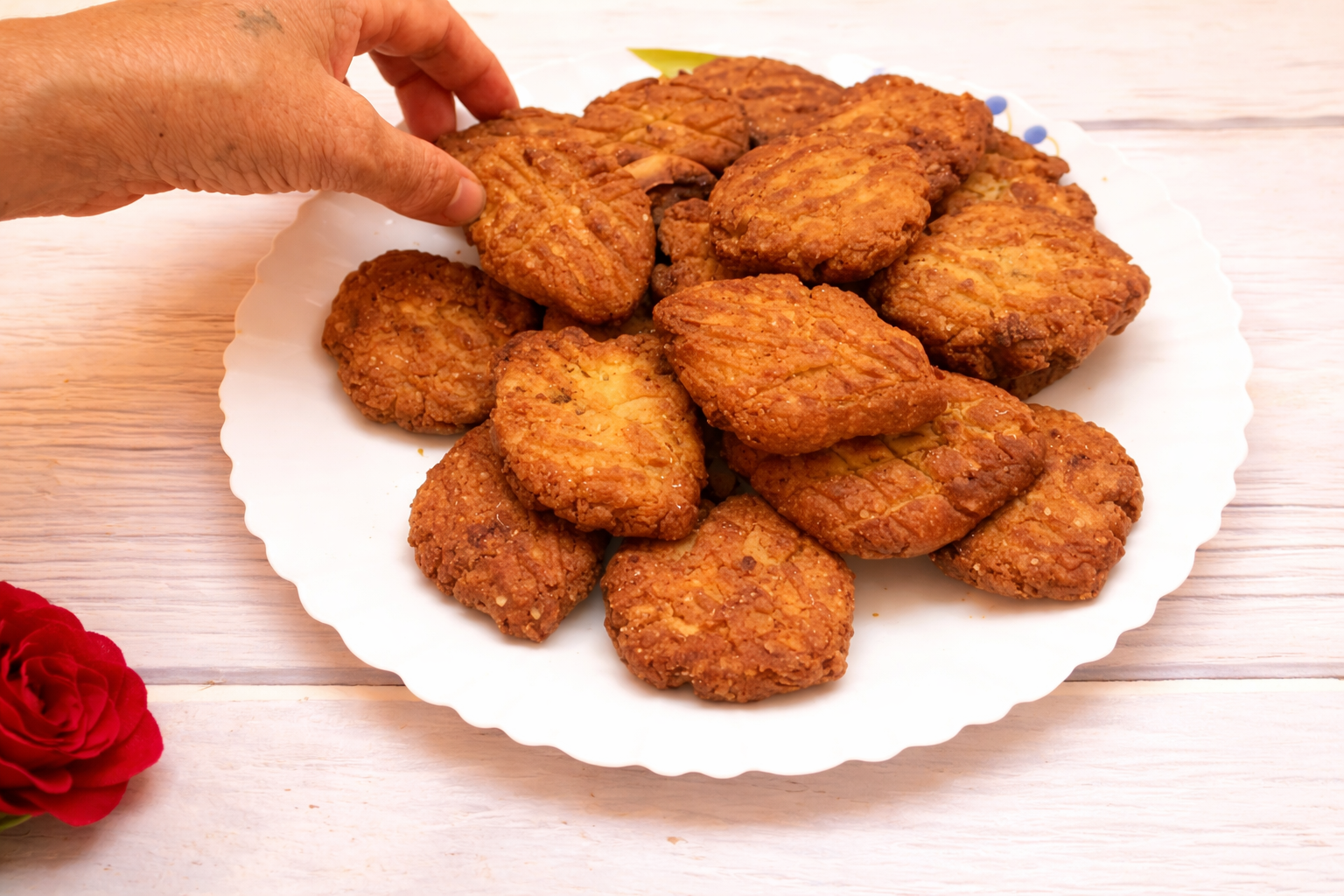

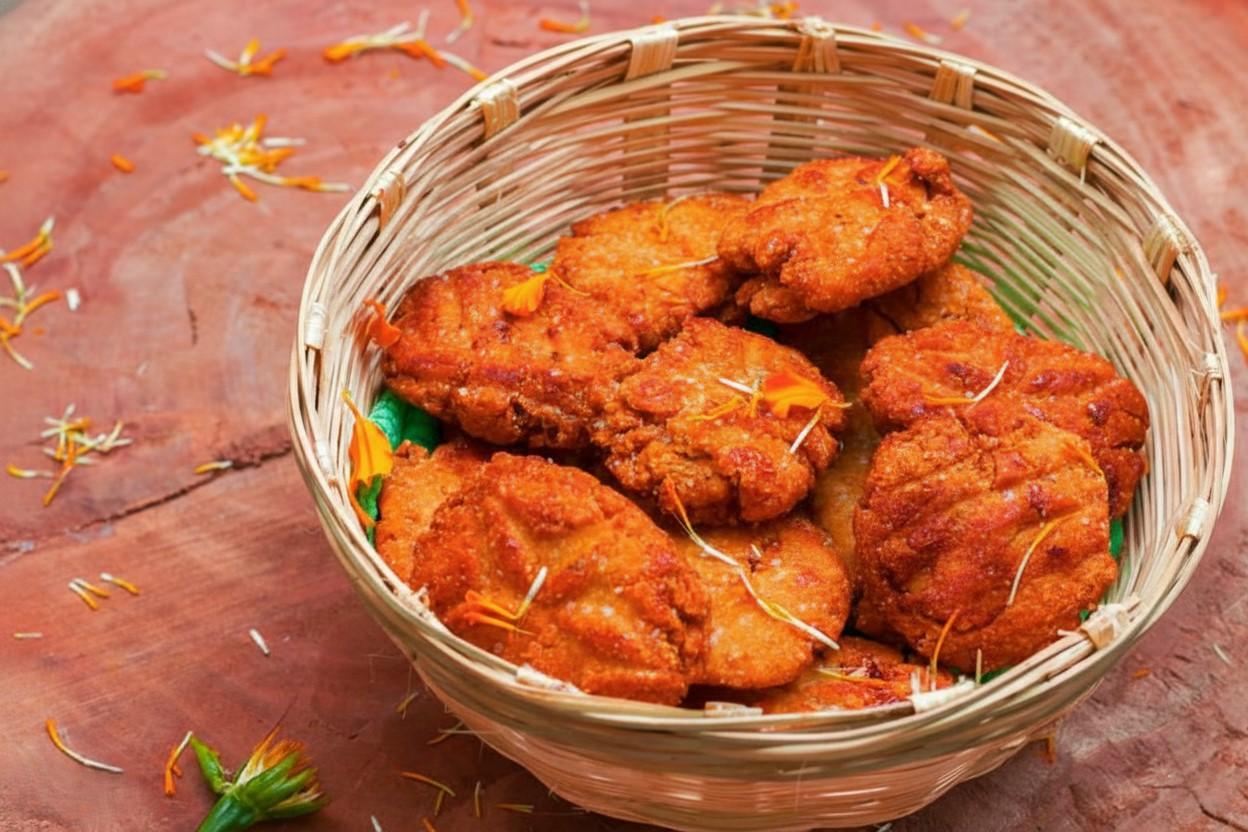
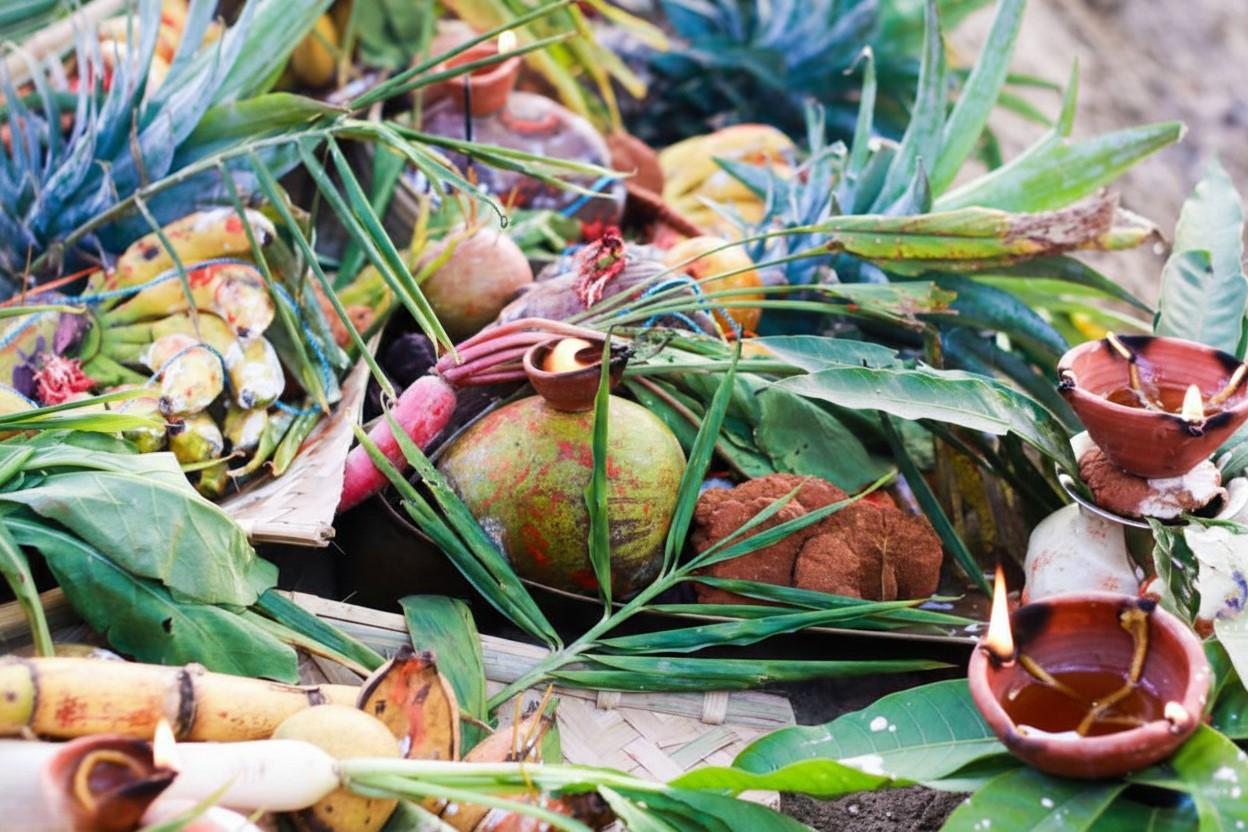
Thekua is a very well-known traditional Indian sweet that is especially prepared during the festival of Chhath Puja, which is primarily celebrated in Bihar, Jharkhand, eastern Uttar Pradesh, and parts of Nepal.
Thekua is a deep-fried, dry sweet made mainly from wheat flour, jaggery or sugar, and ghee, and it is flavored with ingredients such as fennel seeds and coconut. The dough is mixed by hand, shaped using palms or a traditional wooden mould (thekua mold), and then deep fried until it becomes firm and crisp. Because it is dry and has a long shelf life, it is ideal as an offering (prasad) during Chhath Puja.
During Chhath Puja, Thekua holds religious and cultural significance. It is offered to Surya Dev (the Sun God) and Chhathi Maiya as part of the ritual offerings. The preparation of Thekua is considered sacred — it is often made with great care, cleanliness, and devotion, sometimes without tasting it before the puja is completed.
The texture of Thekua is typically crisp on the outside and slightly hard or dense inside, not soft like modern cookies. Its rustic look, deep-fried cooking method, and use of traditional ingredients connect it closely to India’s rural culinary heritage.
This Recipe shows how to make traditional Indian homemade cookies using a simple hand-mixed dough and a deep-frying method. These cookies are rustic, crisp, and full of aroma, made using wheat flour, coconut pieces, sugar, fennel seeds, milk, melted butter, and green cardamom. The recipe follows a very traditional approach where the dough is mixed by hand, shaped manually or with a wooden tool, and then deep fried until golden brown. These cookies are commonly prepared in Indian homes and are especially popular during festivals and family gatherings.
Supplies
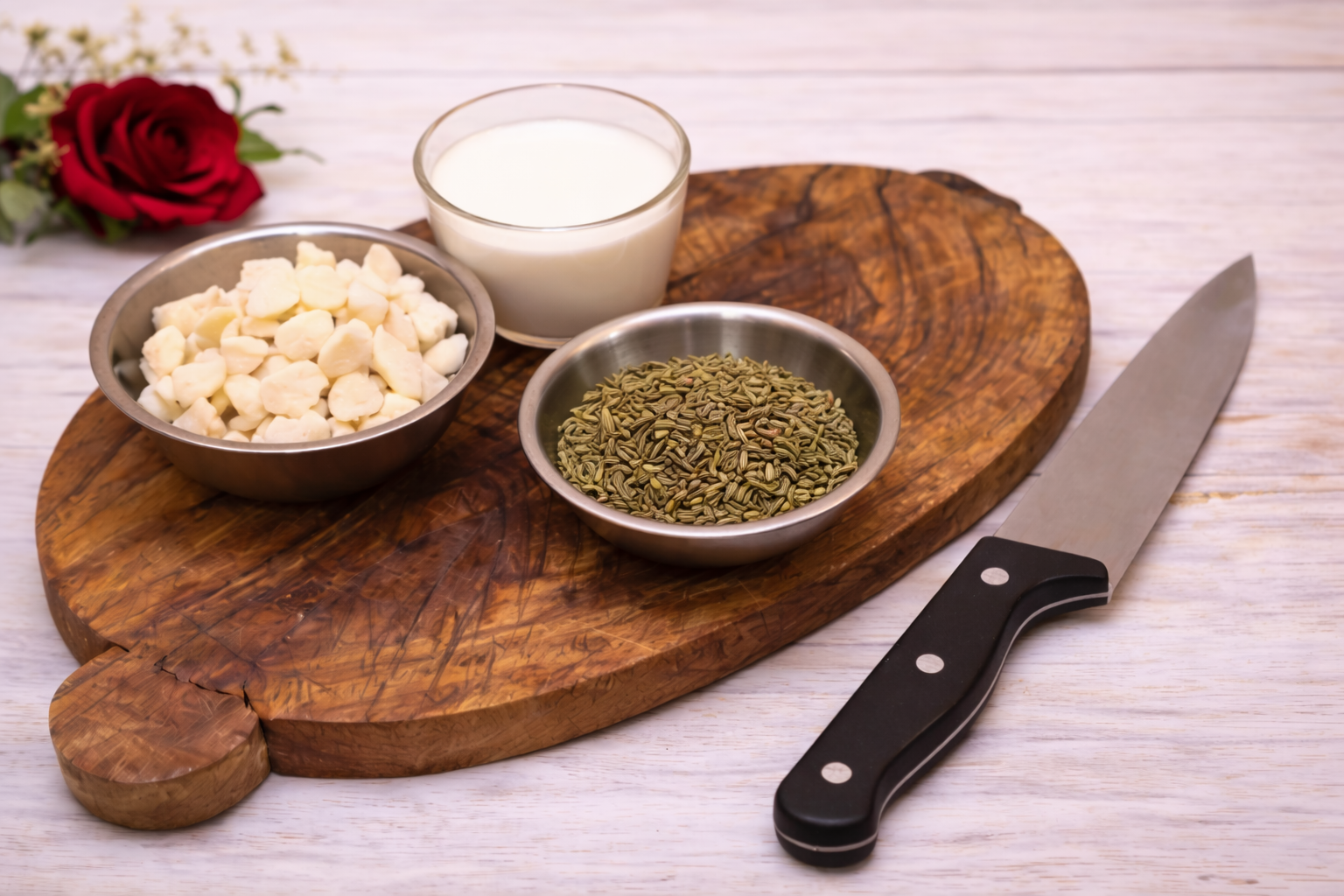
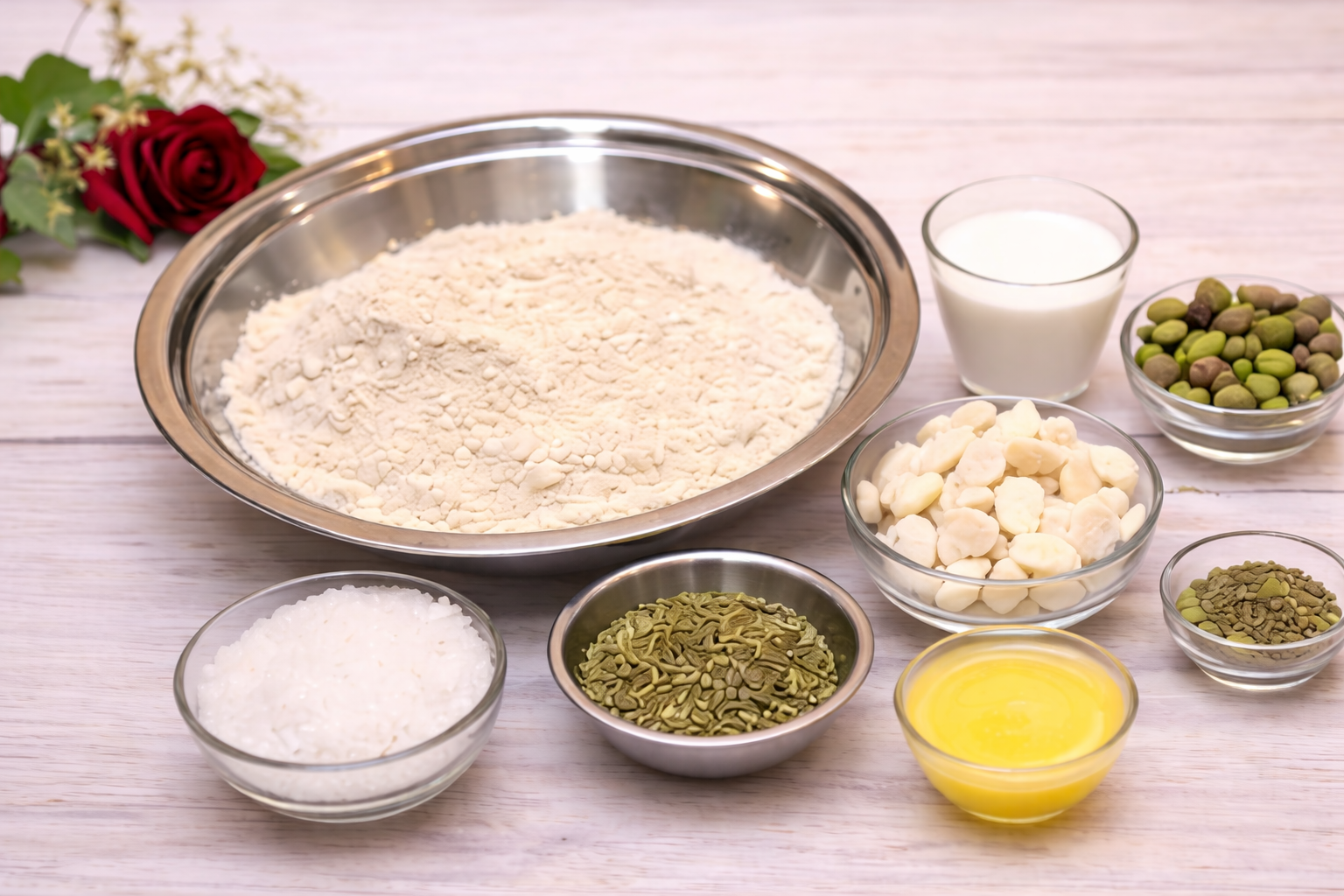
Ingredients
- Wheat flour
- Sugar
- Coconut pieces
- Fennel seeds
- Green cardamom
- Milk
- Melted butter
- Oil (for deep frying)
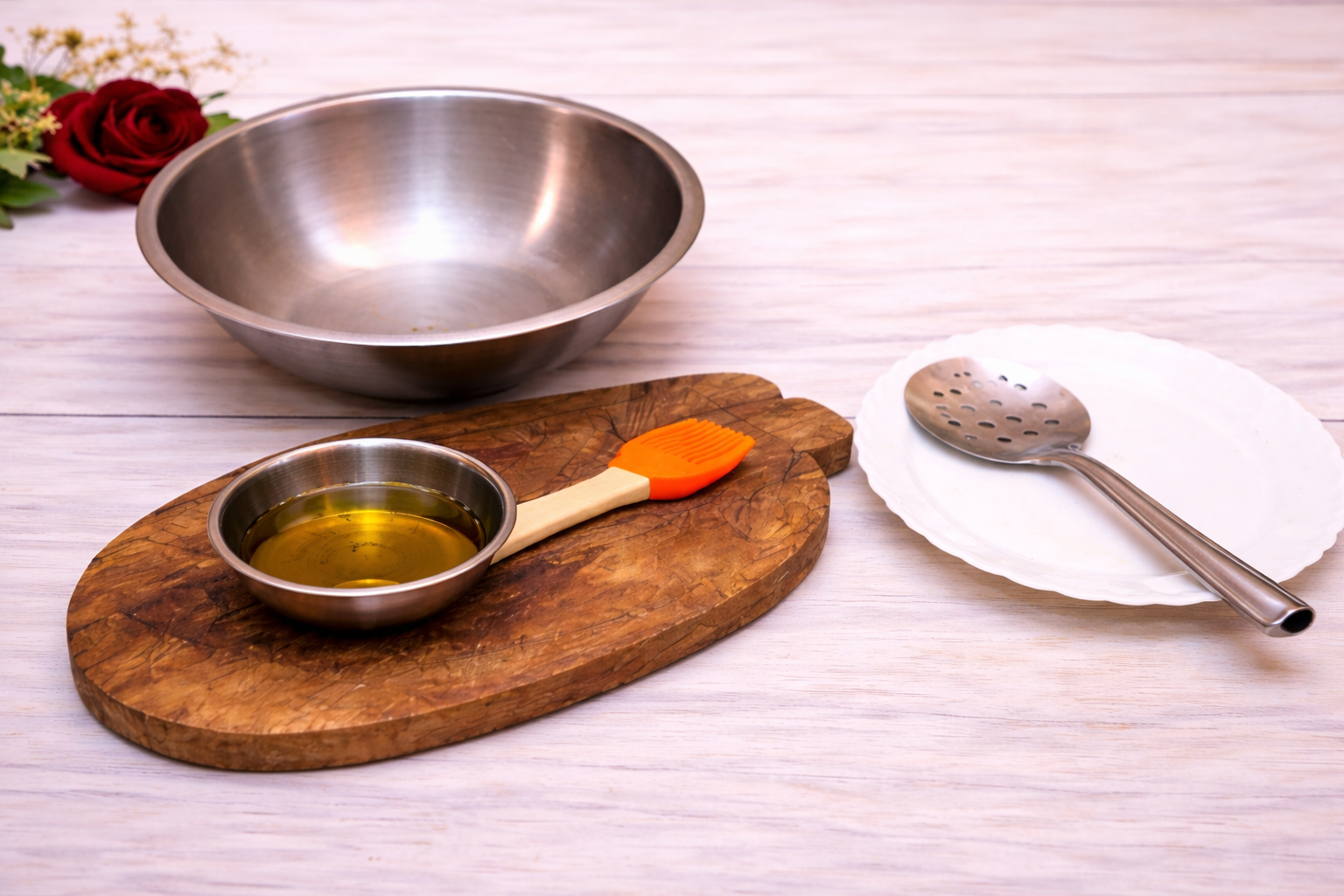
Tools
- Mixing bowl
- Small bowls
- Wooden board
- Knife
- Traditional wooden cookie mould (optional)
- Deep frying pan
- Slotted spoon
- Plate
- Grinder and jar
Preparing the Sweet and Aromatic Base
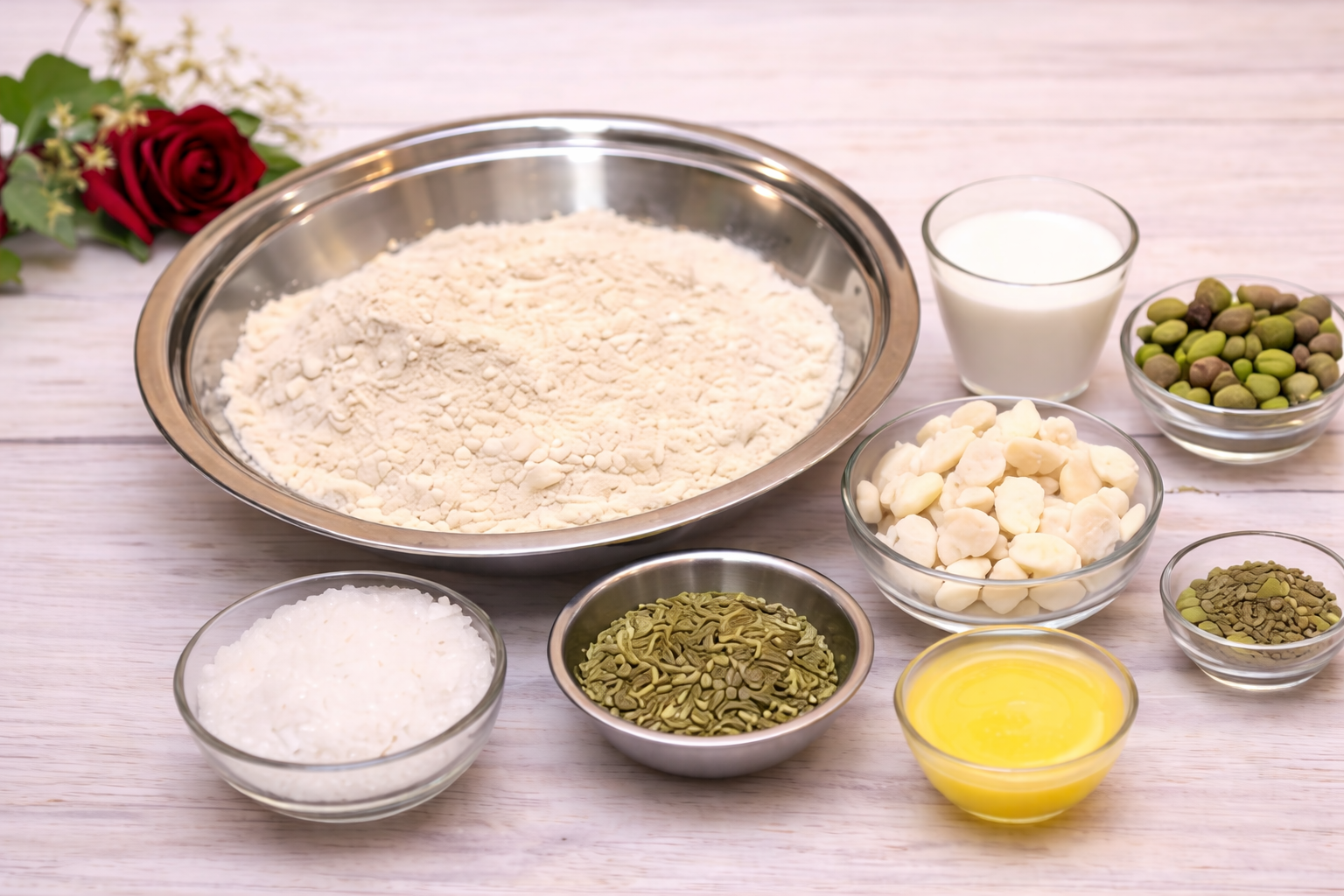
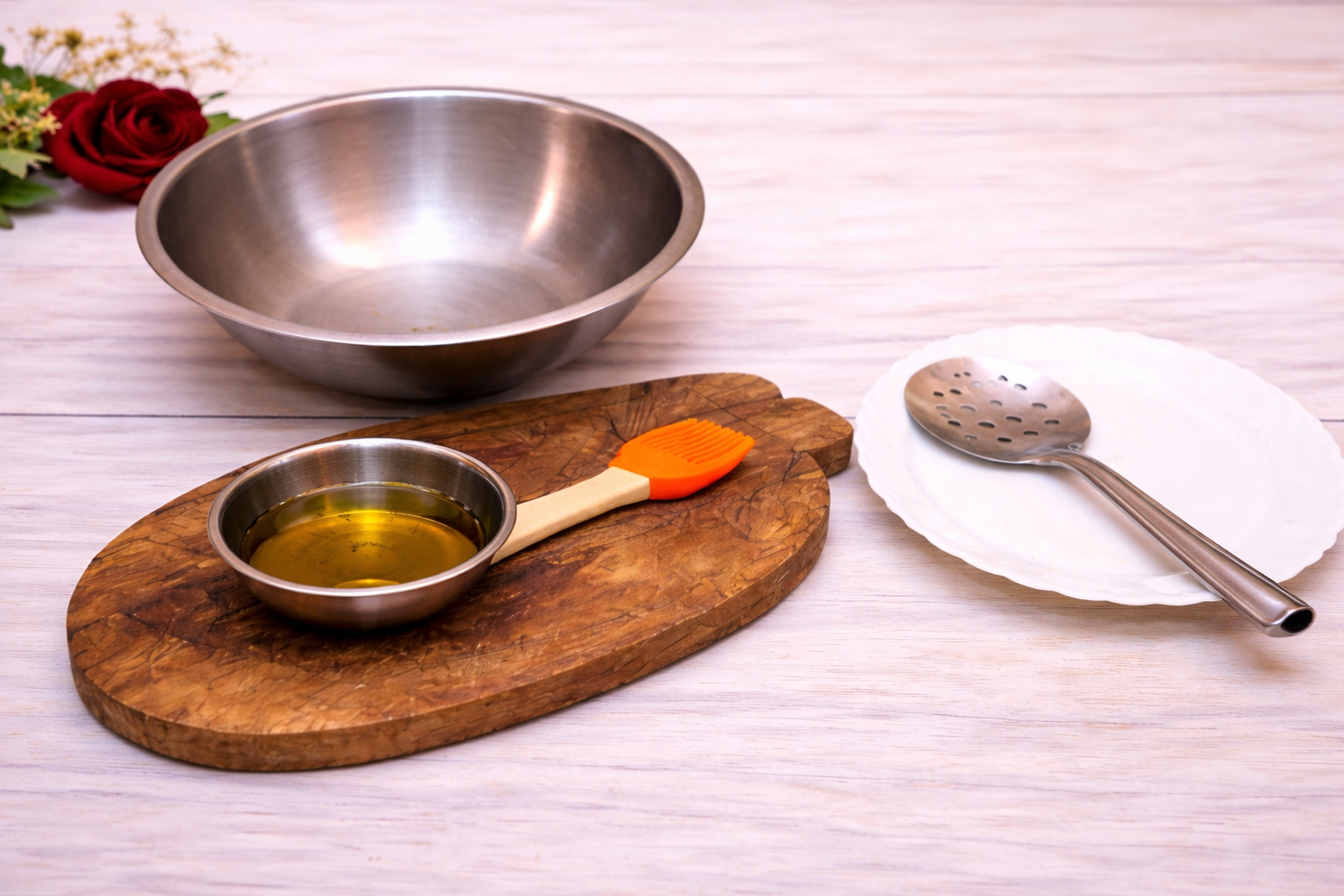
Begin by choosing a clean, dry kitchen surface, mixing pan or countertop. Since the dough will be mixed by hand, wash and dry your hands thoroughly. Place all ingredients and tools within easy reach. This includes wheat flour, sugar, cardamom-sugar powder, fennel seeds, coconut pieces, ghee or melted butter, milk, and oil for deep frying. Keep bowls, a wooden board-thekuas are usually given shapes using a wooden mould, a knife or shaping tool, and a deep frying pan ready. Having everything prepared beforehand prevents interruptions once the dough-making process begins.
Thekua dough is sensitive to moisture and fat balance. Too much liquid can make the dough soft and cause the cookies to absorb excess oil during frying, while too little liquid can make them hard and crumbly. This is why workspace preparation matters—when you are organized, you can focus entirely on texture and consistency instead of searching for tools mid-process.
The surface temperature also plays a role. Avoid working in a very humid or overly warm environment, as it can affect the dough. Traditionally, Thekua is made in calm household settings, often early in the day, allowing time for shaping and frying without haste.
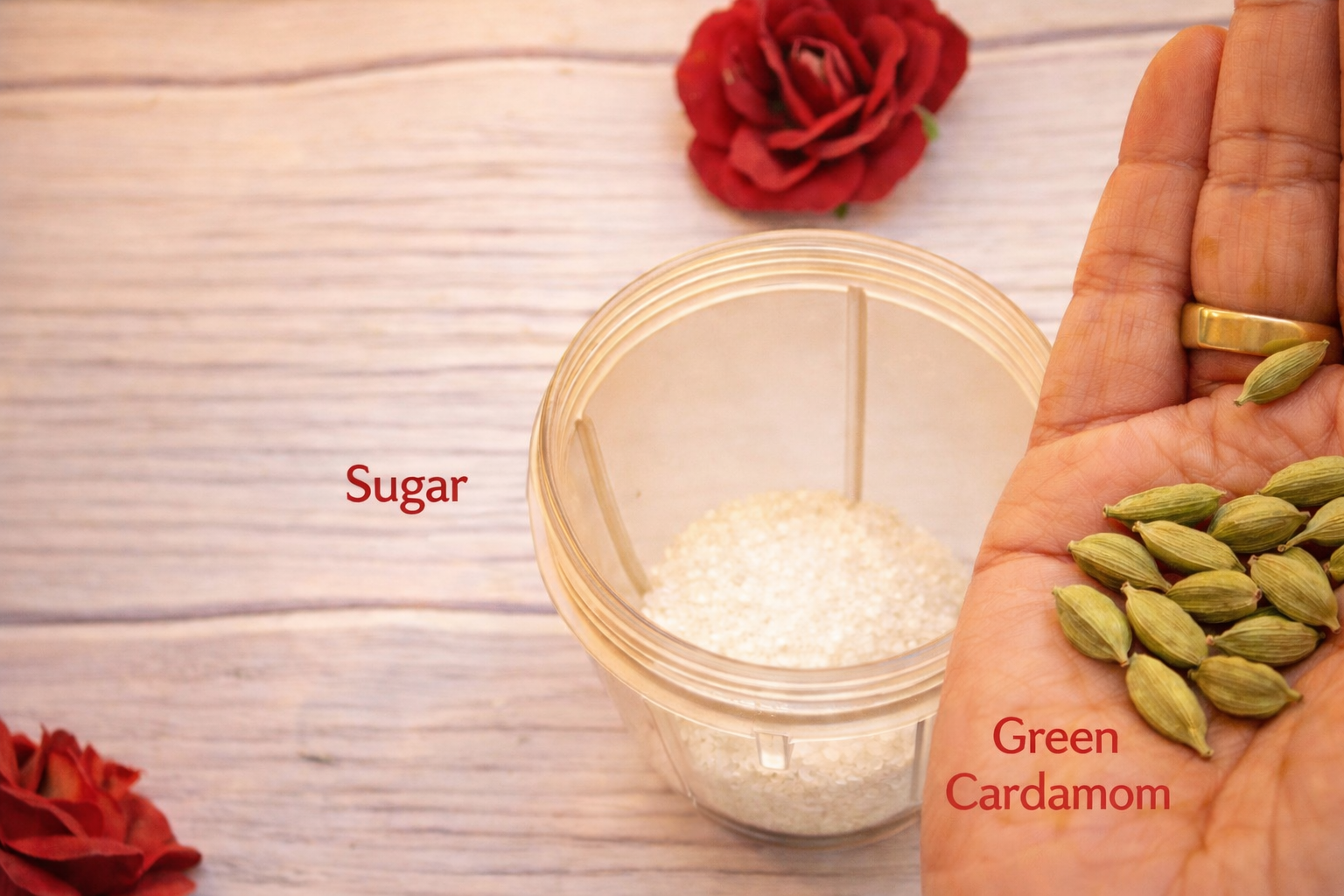
In a grinding jar, take some sugar and few Cardamom seeds - and prepare a fine powder using a grinder. You can adjust the sugar quantity as per your liking.
This step may seem simple, but it sets the tone for the entire recipe. Thekua is not just mixed and fried—it is crafted. When your workspace is clean, calm, and organized, the cooking process becomes smoother, safer, and more enjoyable, allowing you to focus fully on each upcoming step.
Mixing Dry Ingredients to Build the Base Flavor
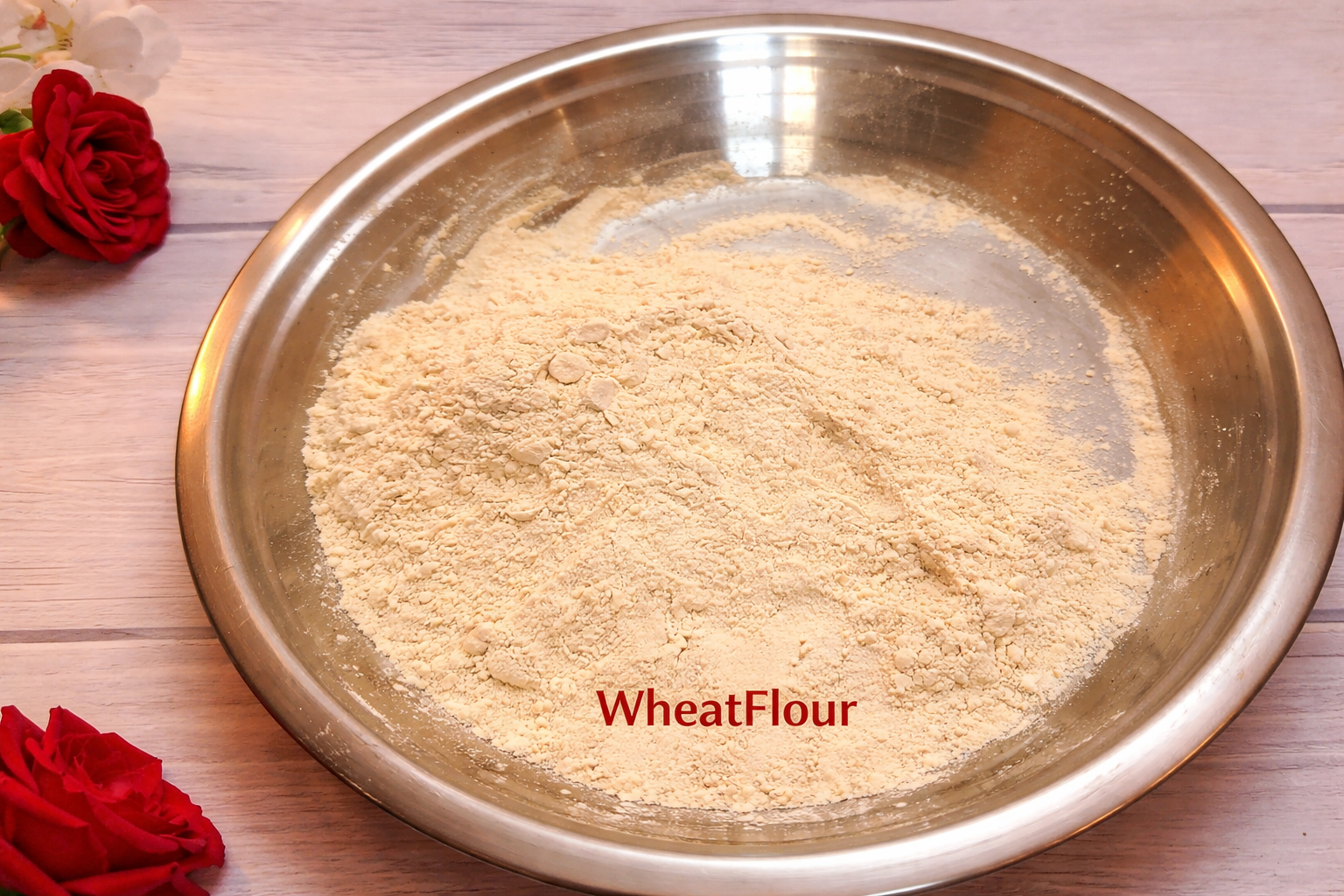
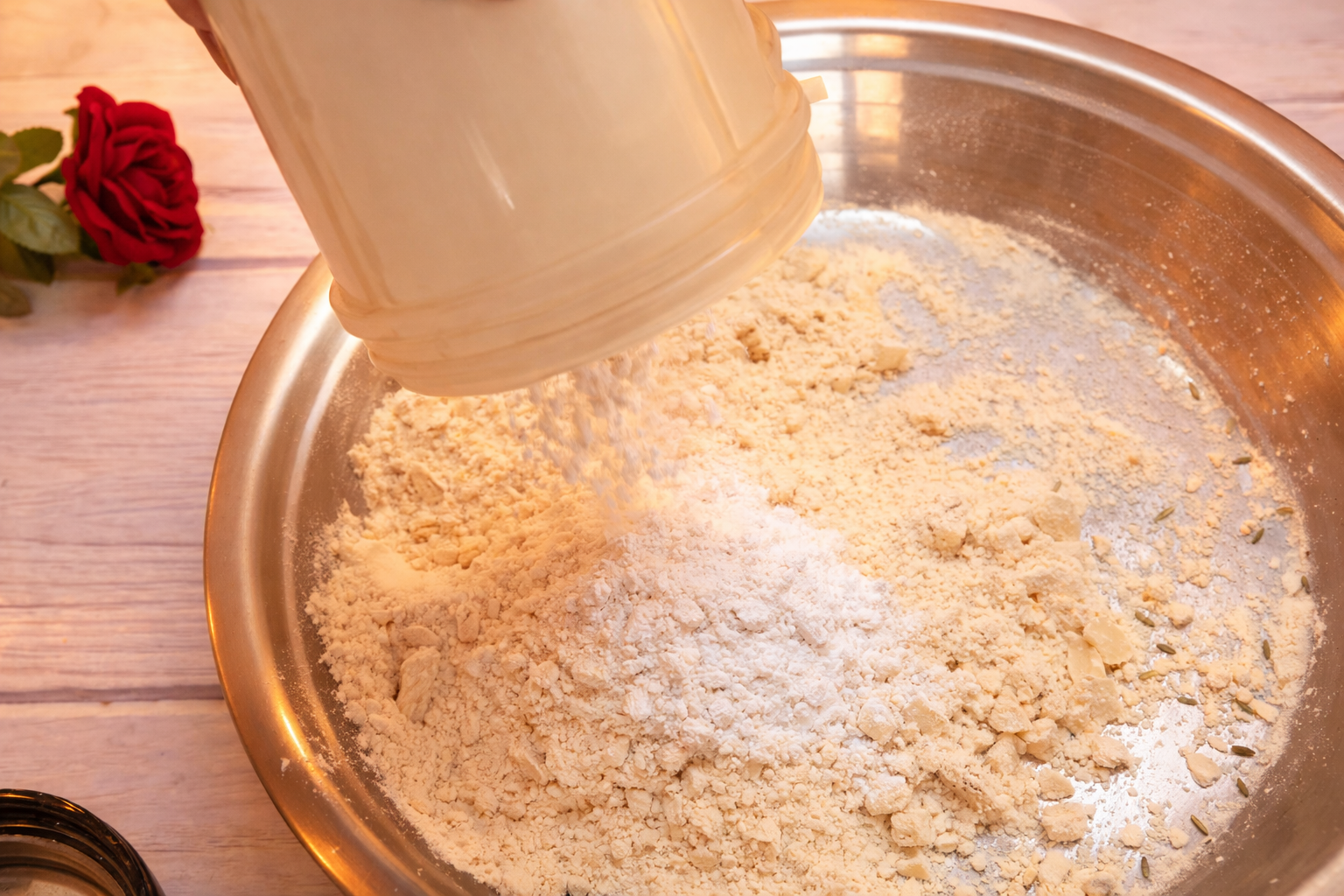
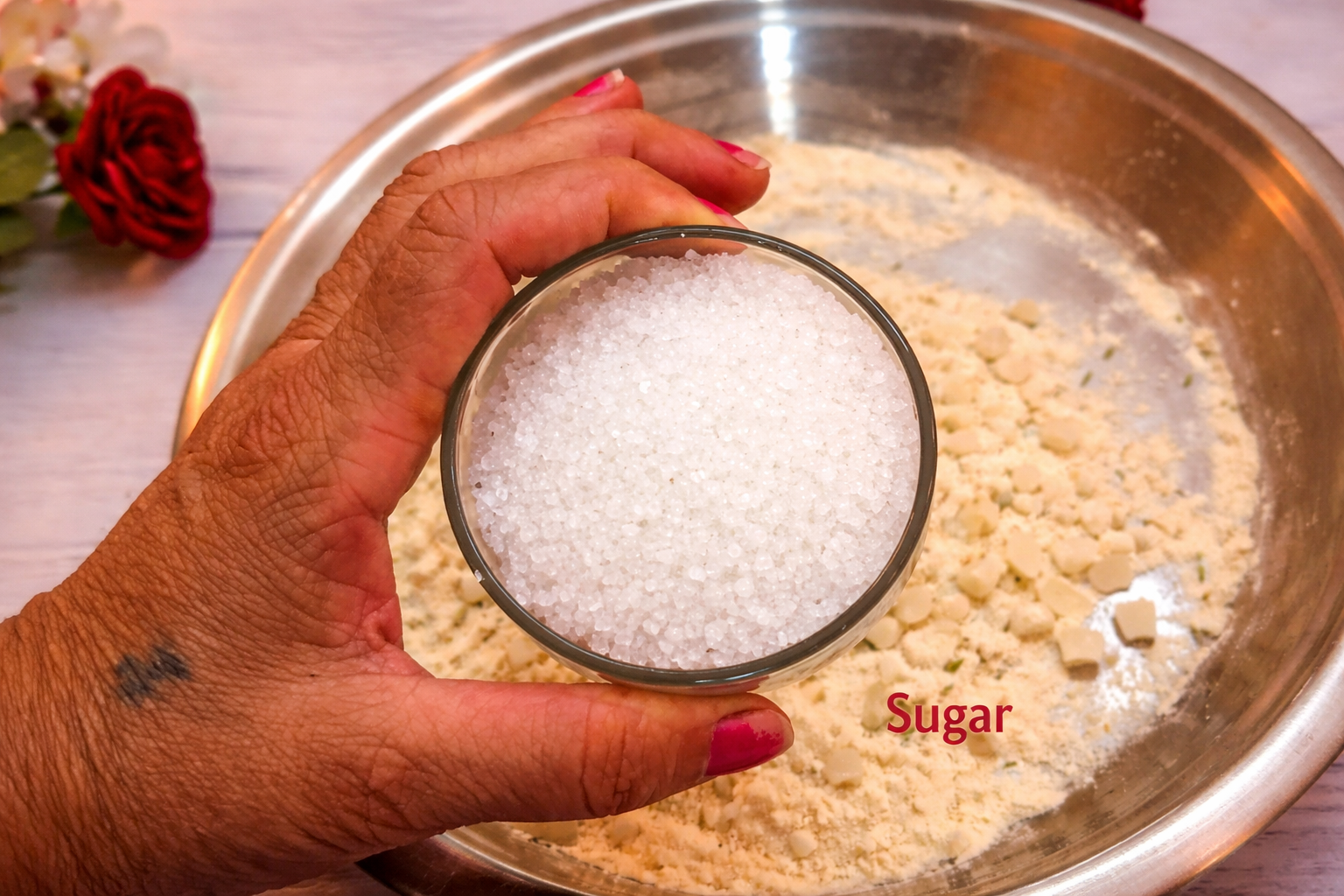

The foundation of a good Thekua lies in how the dry ingredients are combined. Begin by taking a large mixing bowl and adding wheat flour and sugar - cardamom powder, which forms the base of the recipe. Wheat flour provides structure, firmness, and that characteristic rustic texture that Thekua is known for. Unlike refined flour-based cookies, wheat flour gives Thekua its traditional bite and strength.
Next, add sugar to the flour. In many traditional households, sugar is used directly rather than powdered, allowing small granules to melt gradually during frying and create subtle caramelized pockets. This contributes to both flavor and crunch. The sugar should be mixed evenly so that sweetness is distributed throughout the dough rather than concentrated in one area.
Add fennel seeds, which are essential to the identity of Thekua. Fennel seeds release aroma during frying and give a mild, refreshing contrast to the sweetness. Their presence is noticeable but not overpowering, making them a defining element of this sweet. Add Coconut pieces at this stage as well. Coconut contributes texture and a mild richness that complements wheat flour beautifully.
At this stage, the ingredients should be mixed gently using your fingers or a spoon. The goal is not to knead, but to distribute all dry elements evenly. Take time to break up any clumps and ensure uniform mixing. This careful blending ensures that each piece of Thekua tastes consistent when fried.
Dry mixing is often underestimated, but it determines how evenly the fat and liquid will later bind. If dry ingredients are uneven, no amount of kneading later can fully correct it. This step requires patience, attention, and a light hand—qualities that define traditional Thekua preparation.
Incorporating Ghee or Melted Butter for Richness
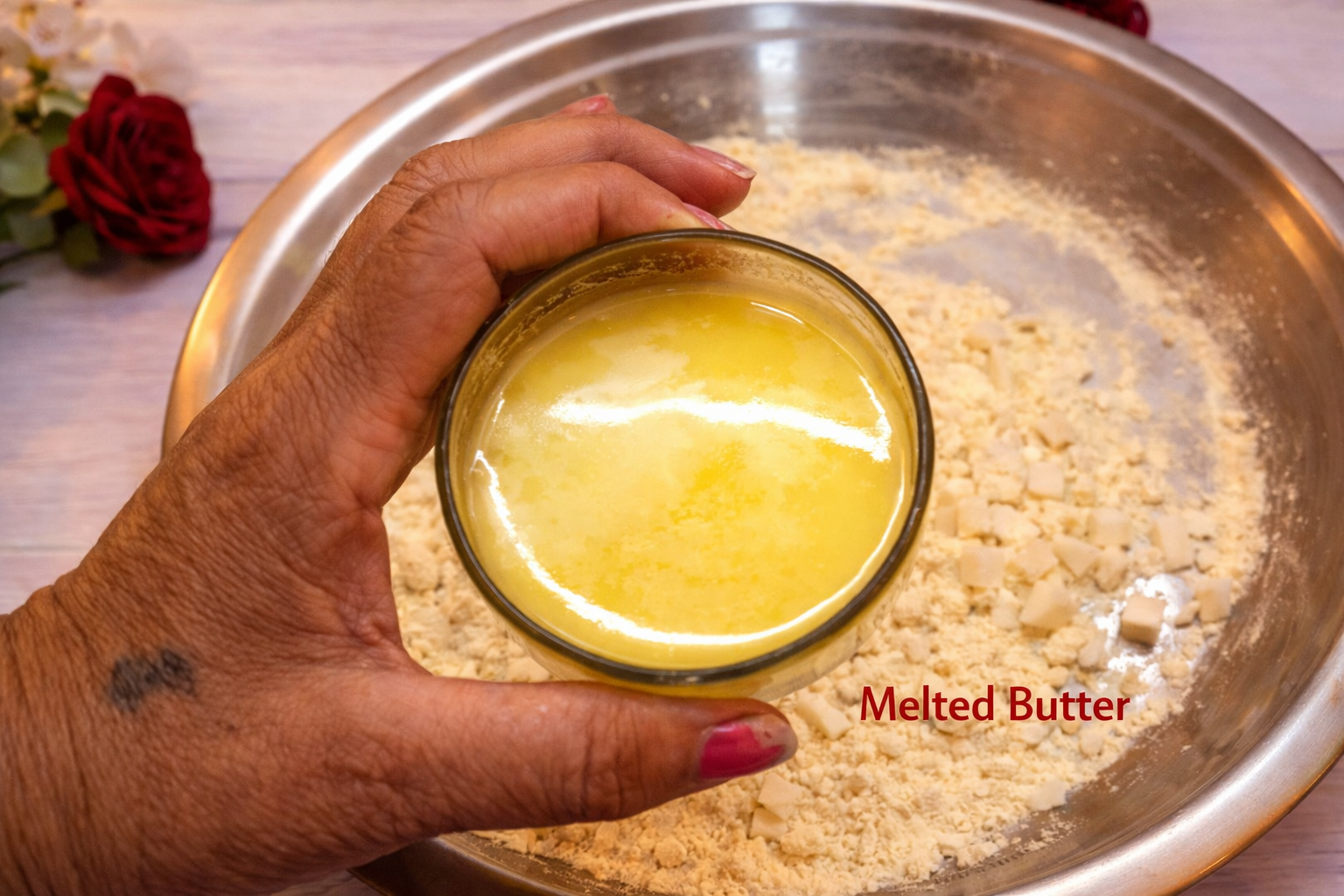
Once the dry ingredients are properly combined, the next step is adding ghee or melted butter, which plays a critical role in flavor, texture, and frying behavior. Ghee coats the flour particles, limiting gluten formation and giving Thekua its crumbly yet firm structure. This is why Thekua does not puff like bread or become soft like cake—it remains crisp and dense.
Pour the melted ghee gradually into the dry mixture. Do not add it all at once. Instead, drizzle and mix using your fingers, rubbing the fat into the flour. This technique is similar to how traditional shortcrust or Indian doughs are made. The mixture should begin to resemble coarse crumbs, holding shape slightly when pressed between fingers.
This step determines how much oil the Thekua will absorb during frying. Proper fat incorporation creates a protective layer around flour particles, preventing excess oil absorption later. If the mixture feels dry and powdery, continue mixing gently rather than adding more fat immediately. Often, thorough rubbing is enough to distribute the ghee properly.
Take time here. Traditional cooks often test the mixture by squeezing a small portion in their palm. If it holds together briefly and then breaks, the fat ratio is correct. If it crumbles instantly, it may need more mixing. If it feels greasy or sticky, too much fat may have been added.
The aroma at this stage should already feel warm and inviting, especially if fennel seeds and coconut are present. This step builds depth and richness that carries through frying and storage. Well-mixed fat ensures that Thekua stays crisp for days without becoming hard or oily.
Adding Liquid Gradually to Form a Firm Dough
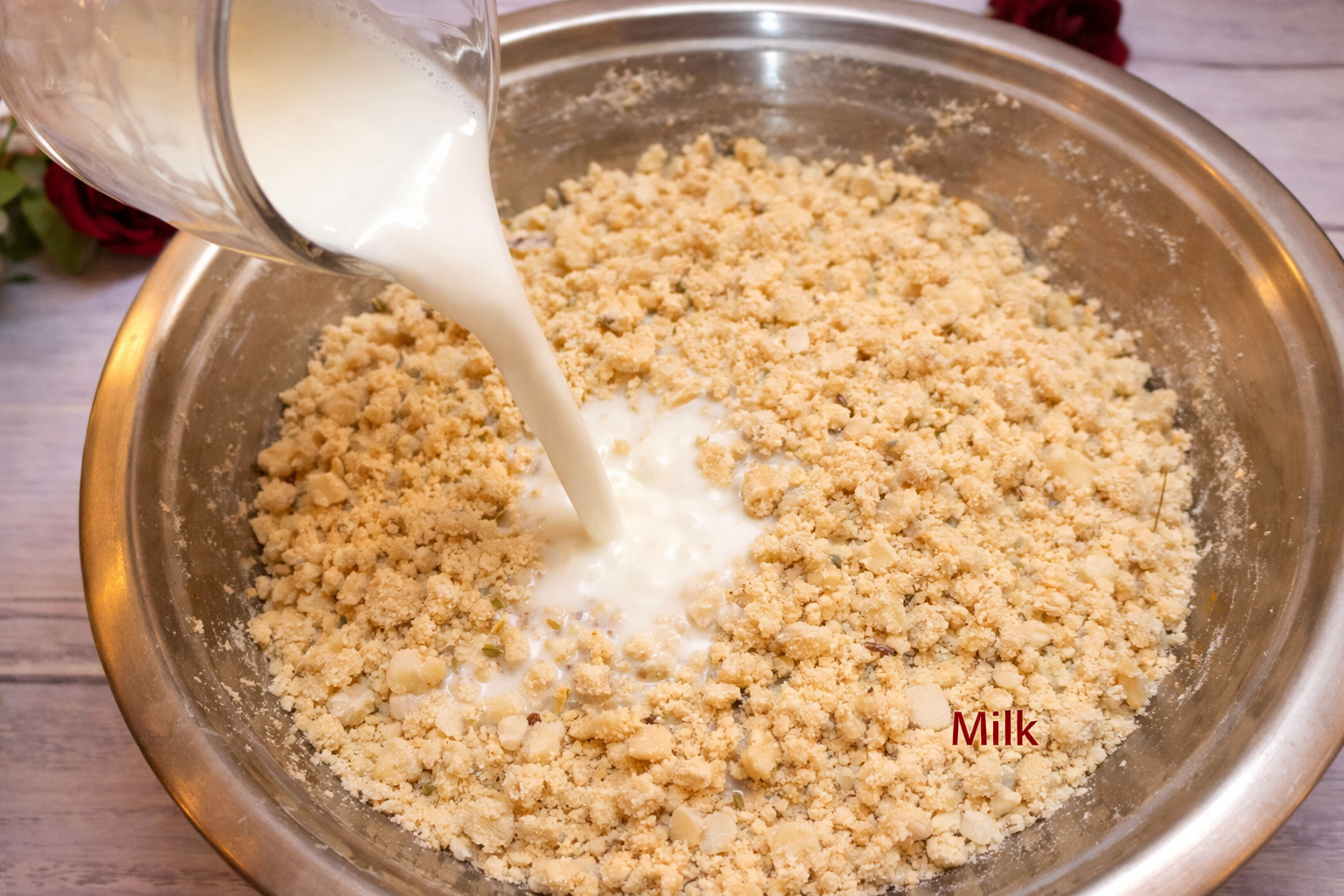
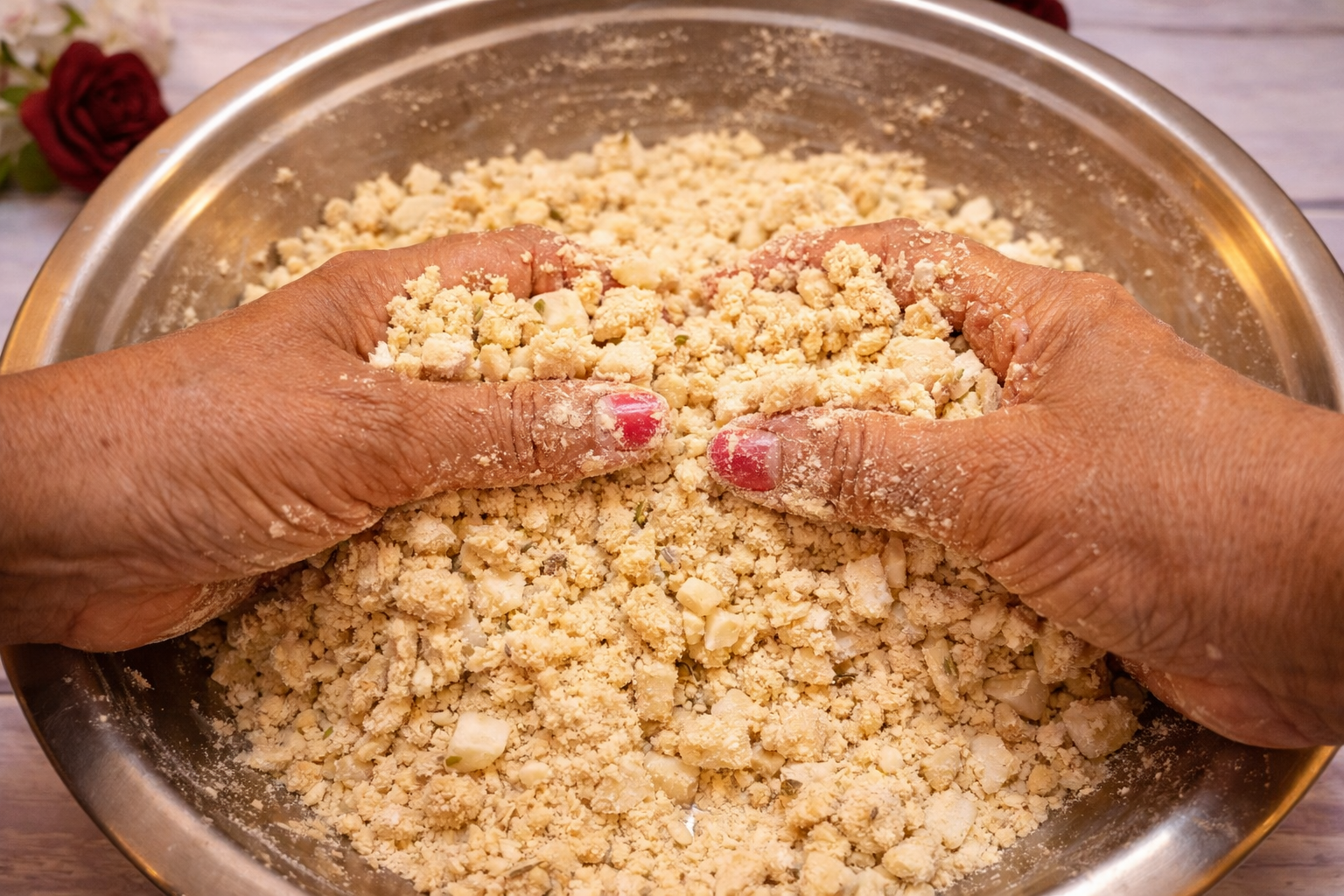
After the fat has been properly incorporated, it is time to add liquid, usually milk or water, to bring the dough together. This step must be done slowly and thoughtfully. Thekua dough should be firm, not soft. A soft dough will lose shape and absorb excess oil, while a firm dough maintains structure and fries evenly.
Begin by adding a small amount of liquid at a time. Use your hand to gently bring the mixture together, pressing and folding rather than kneading aggressively. The dough should come together gradually, forming a cohesive mass without becoming sticky.
Pause frequently to assess texture. The dough should feel tight, smooth on the surface, and slightly resistant when pressed. It should not crack excessively, but it should also not feel elastic like bread dough. This balance is essential.
Avoid the temptation to rush. Adding too much liquid too quickly is one of the most common mistakes. Once excess liquid is added, it is difficult to correct without altering the recipe balance.
When the dough reaches the correct consistency, stop adding liquid immediately. Cover the dough and allow it to rest briefly. This resting period allows moisture to distribute evenly and makes shaping easier.
This step defines the final outcome of the Thekua. A well-formed dough ensures uniform cooking, beautiful shape retention, and long-lasting crispness.
Shaping Dough Balls With Care and Consistency

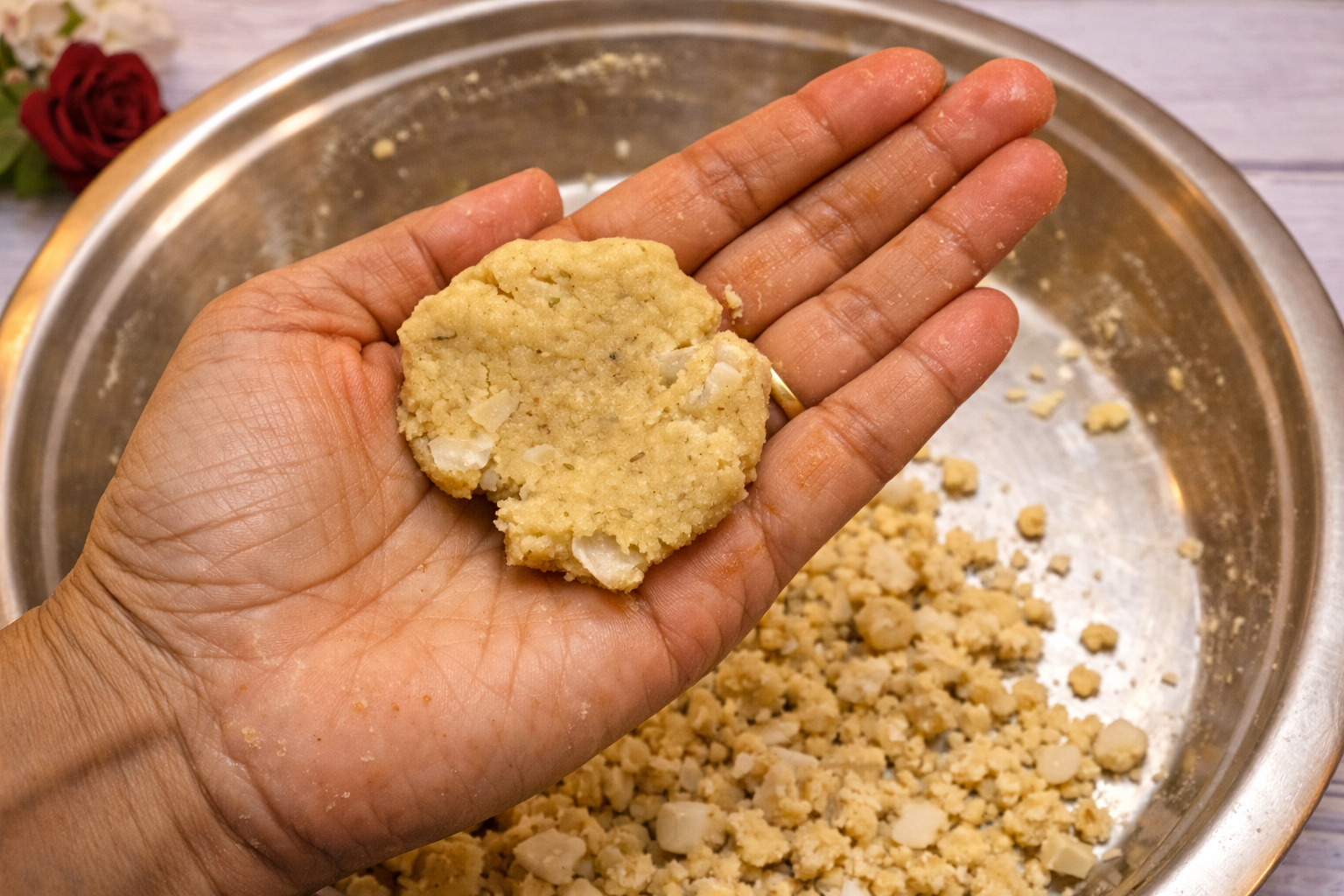
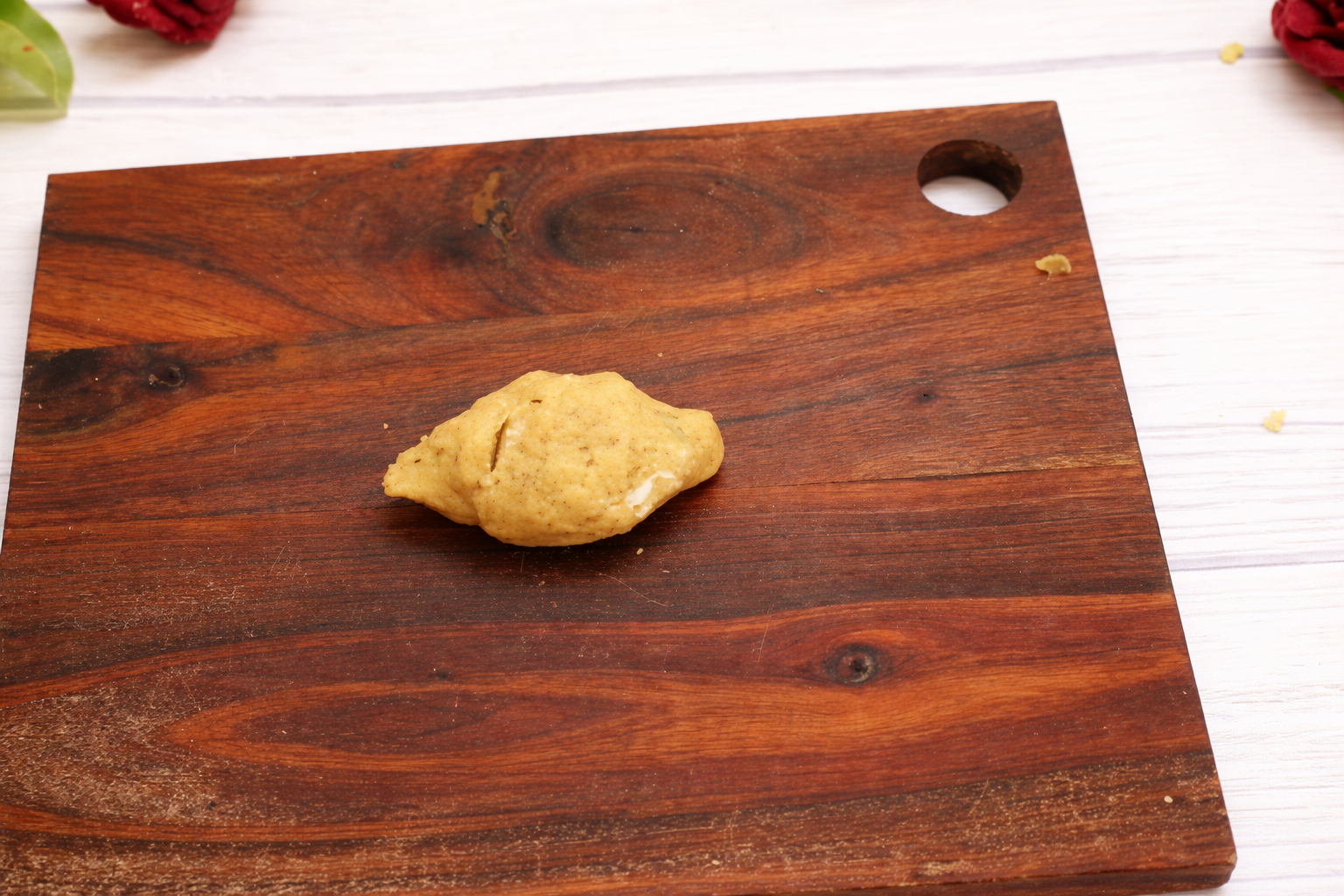
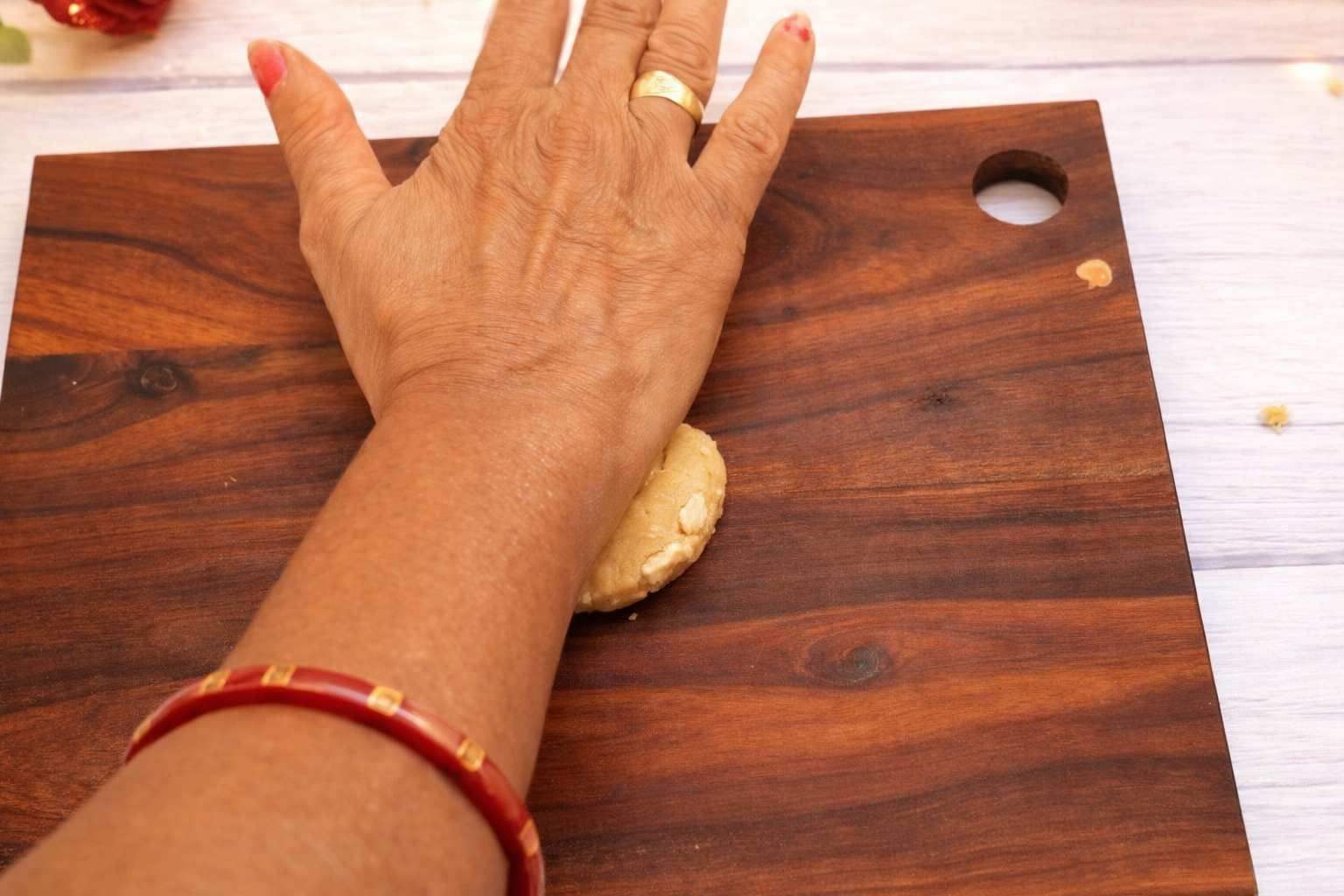
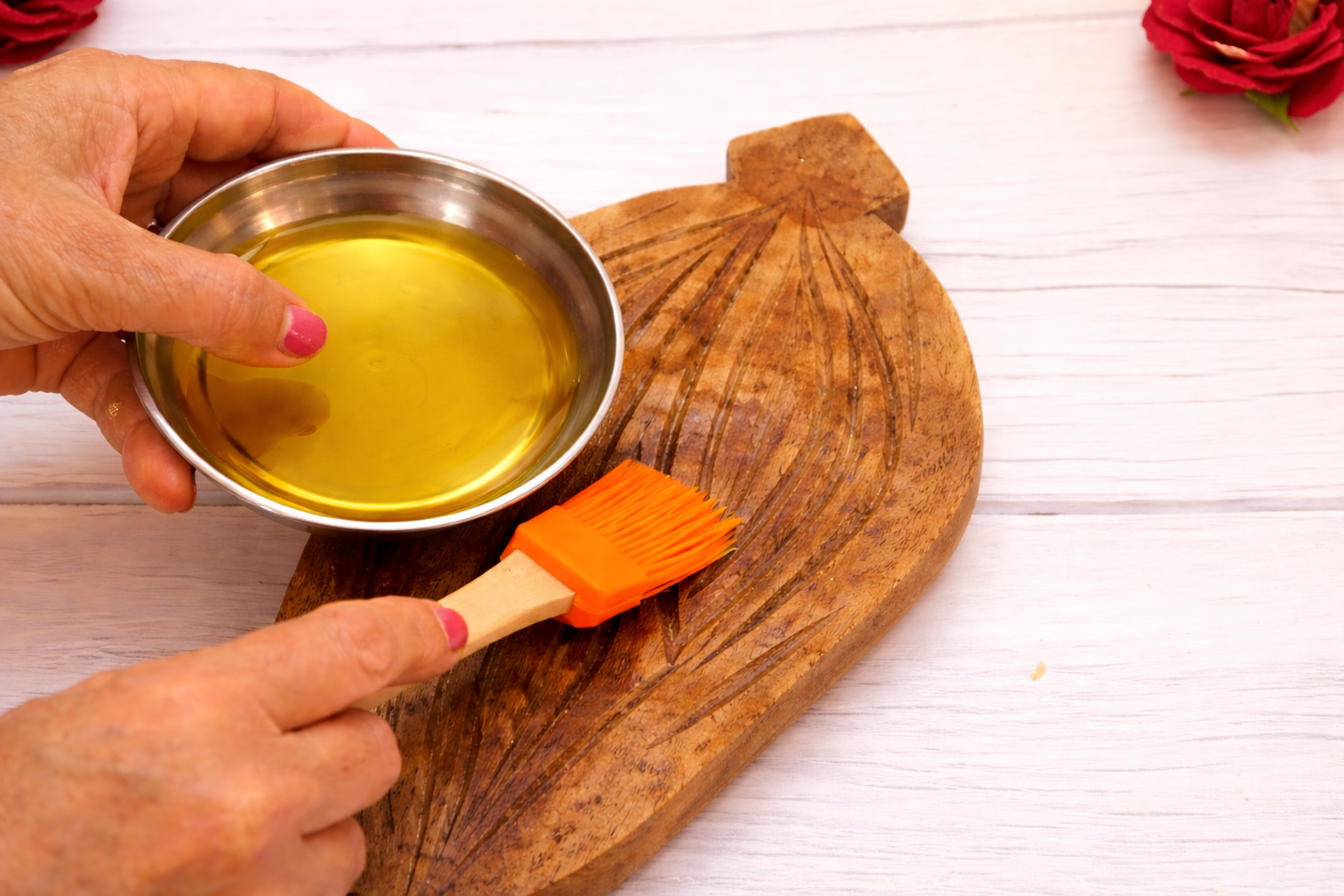
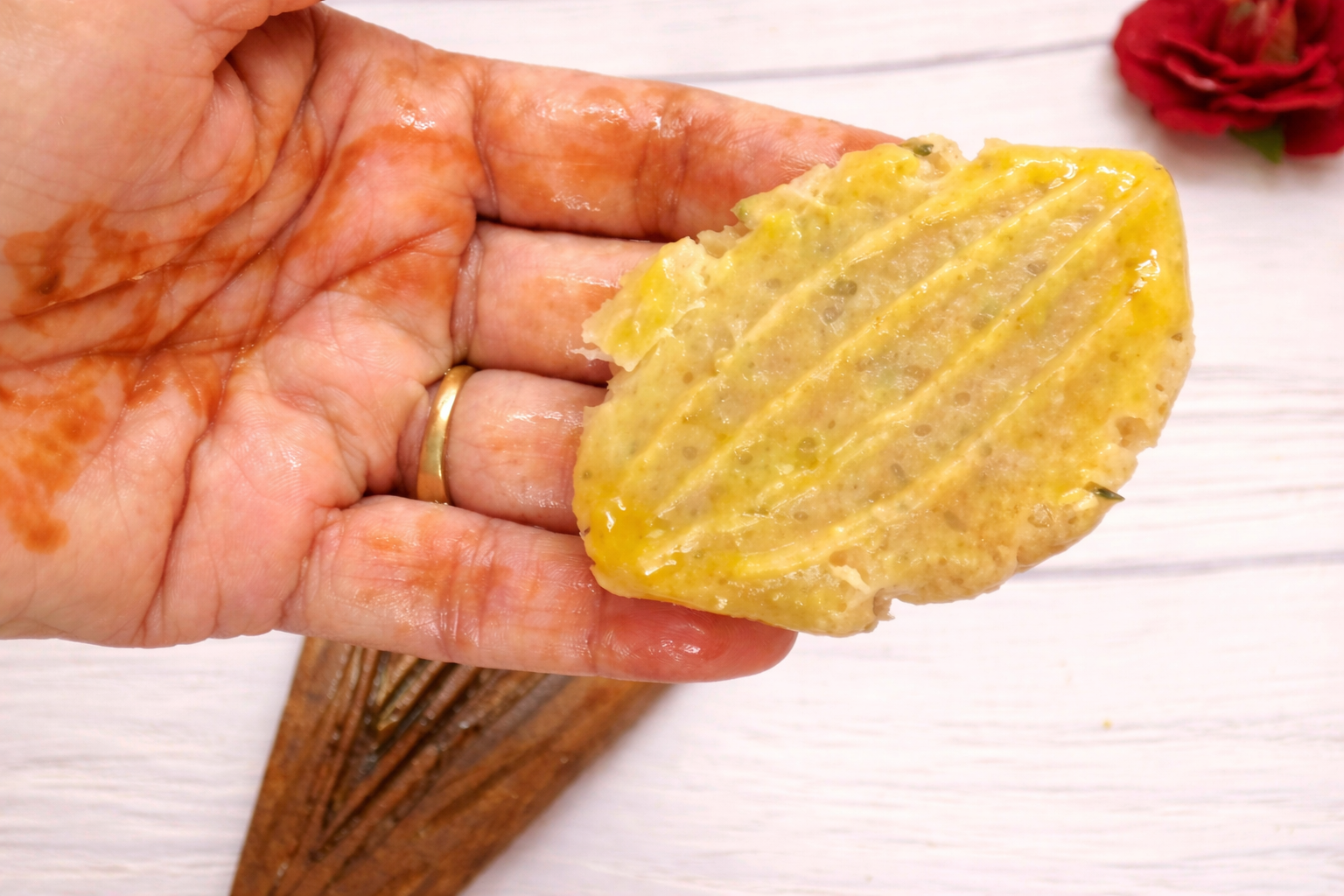
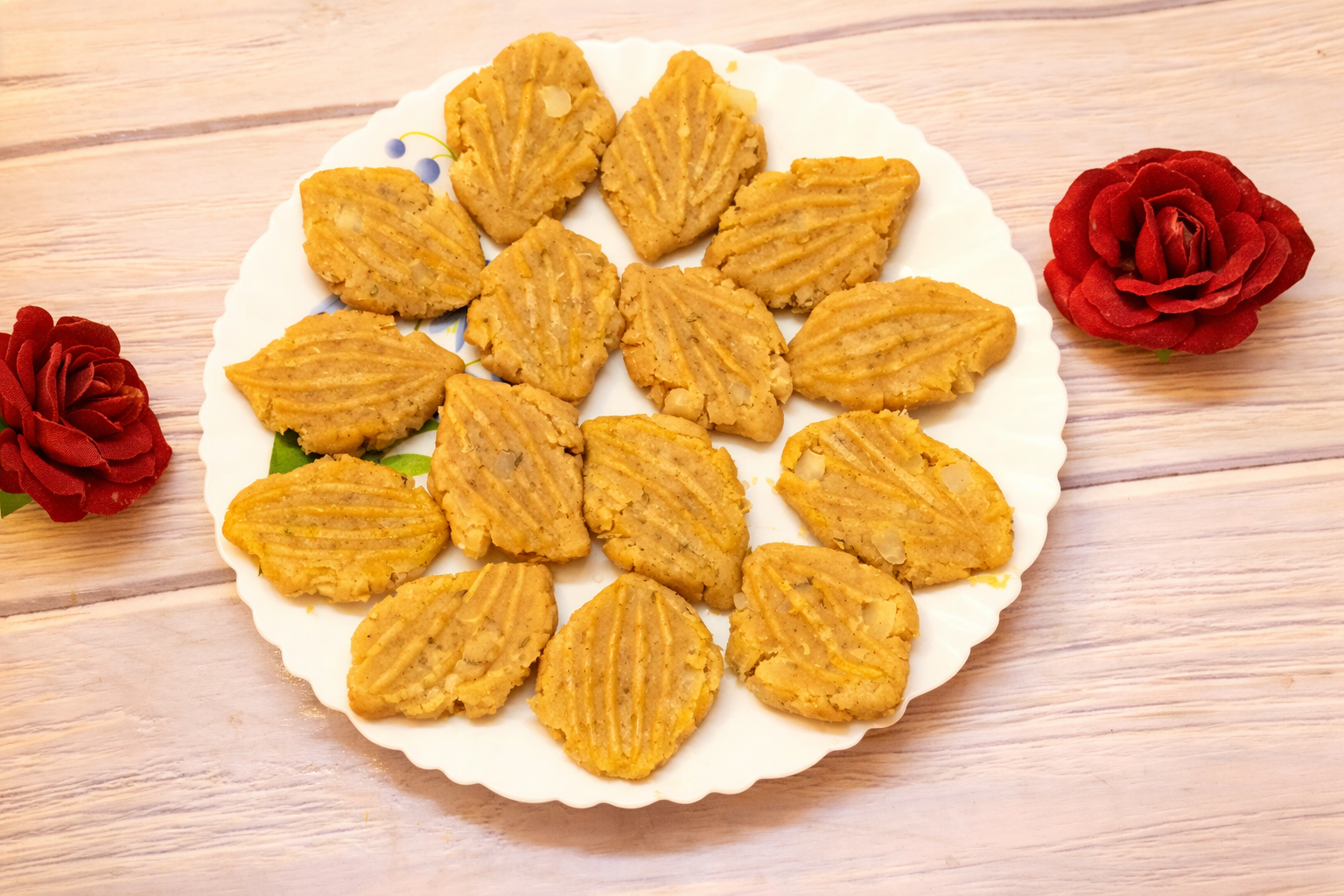
Once the dough is ready, divide it into small, equal portions. Roll each portion between your palms to form a smooth ball. Consistent size ensures even frying and uniform texture across all pieces.
After forming balls, flatten them gently using your palm or a wooden board. The thickness should be moderate—not too thin, not too thick. Thin pieces may burn quickly, while thick pieces may remain undercooked inside.
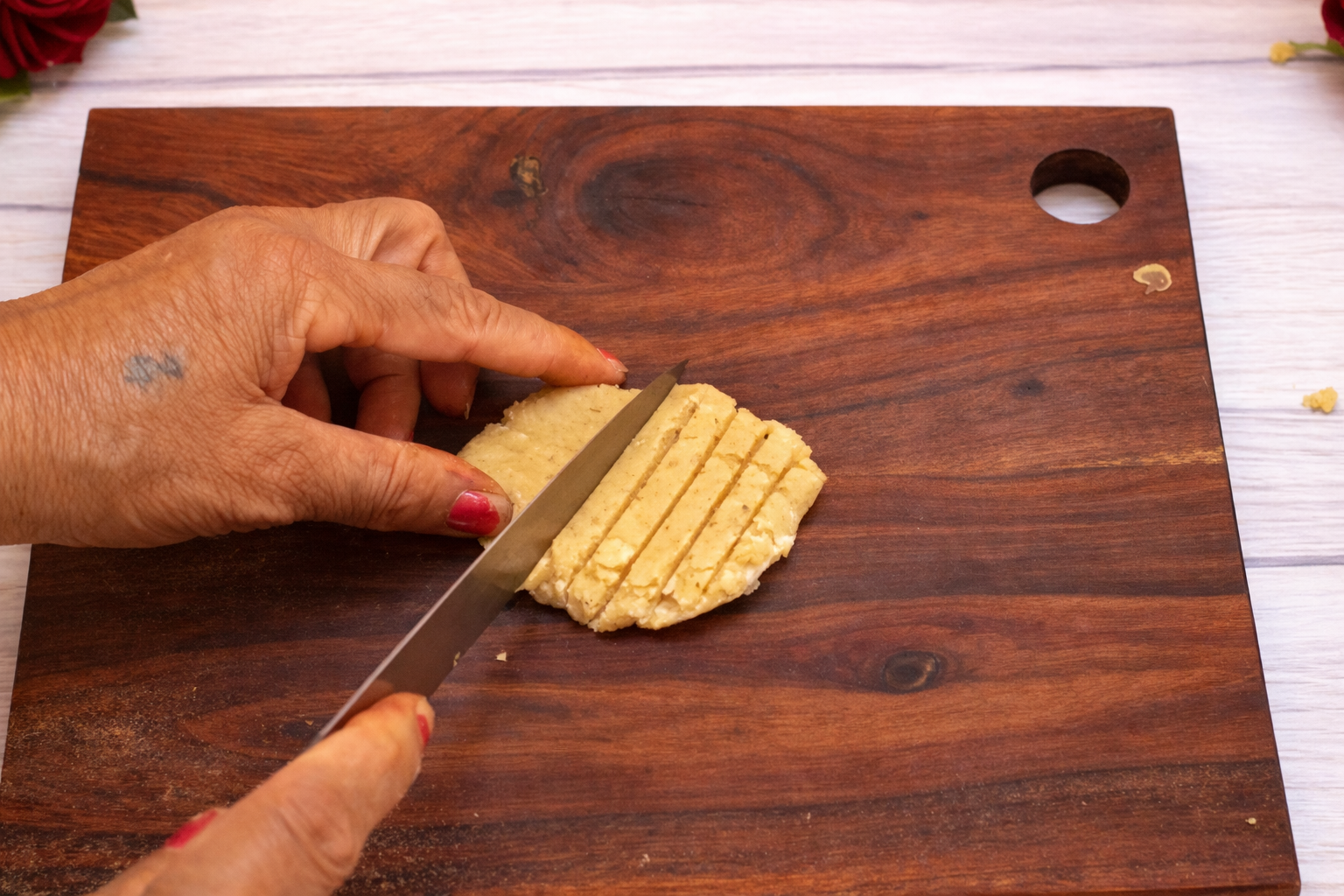
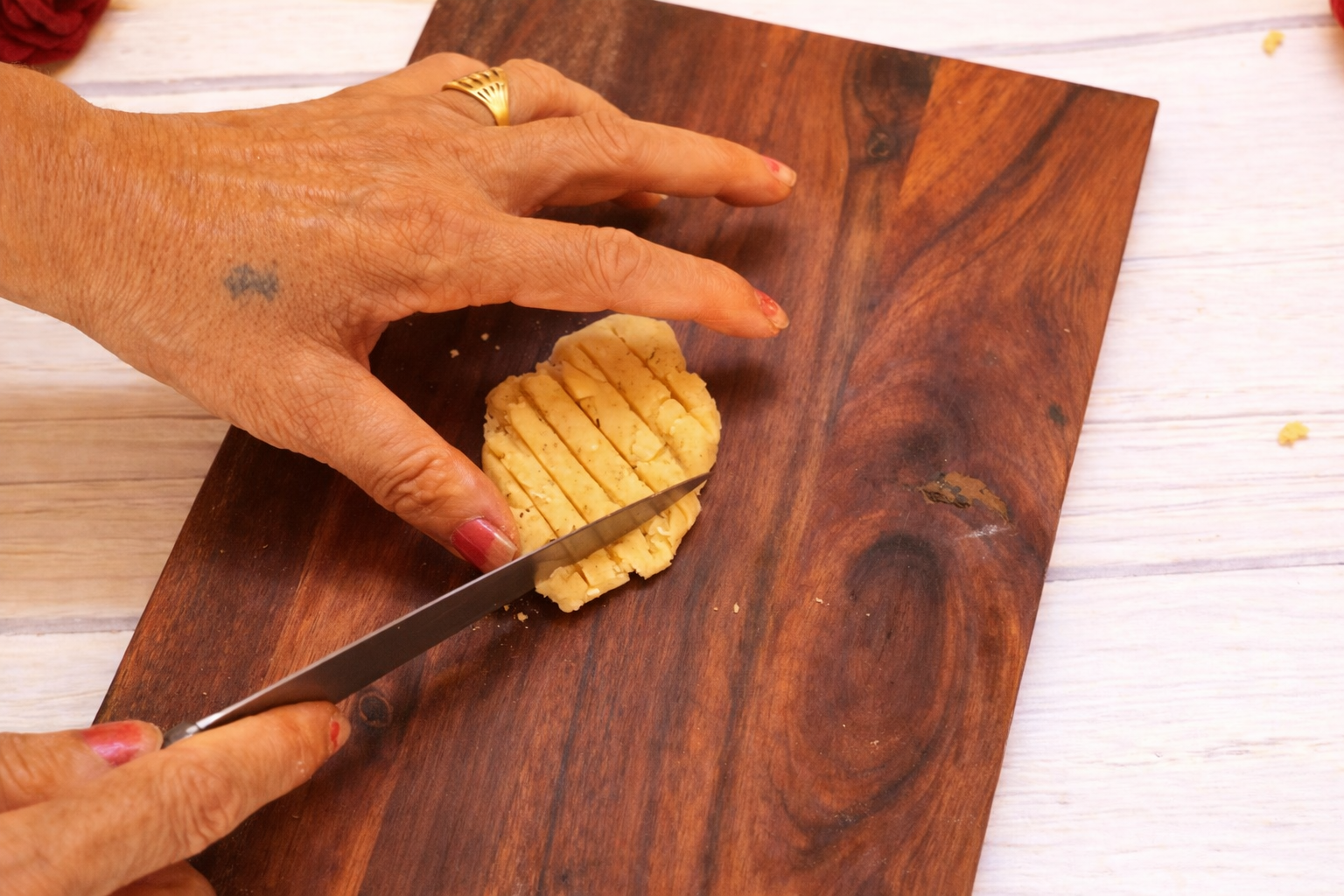
Traditional Thekua often features surface patterns. These can be made using a knife, fork, or wooden mould. Gently press lines or patterns onto the surface without cutting through the dough. These textures are not decorative alone—they help the oil circulate evenly during frying.
You can give textures to the thekua using knife or simply apply oil to the wooden moulds and give textures to the thekuas.
Handle each piece gently. Cracks at this stage may widen during frying. If cracks appear, smooth them lightly with fingers.
Place shaped Thekua pieces on a clean plate, keeping space between them to avoid sticking. Continue until all dough is shaped.
This step is where the Thekua begins to look like the final product. Careful shaping results in beautiful, evenly cooked sweets.
Heating Oil Slowly for Proper Frying
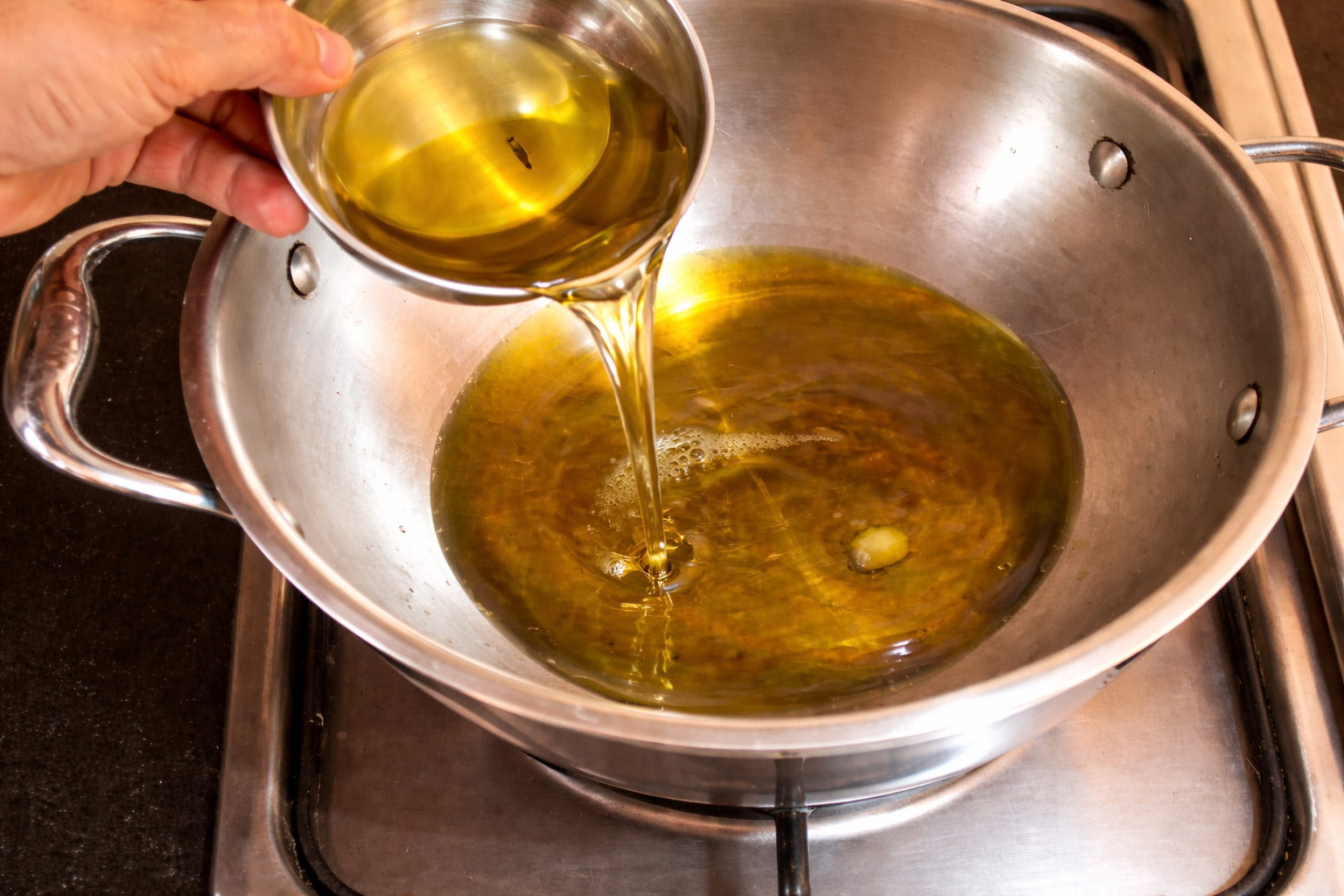
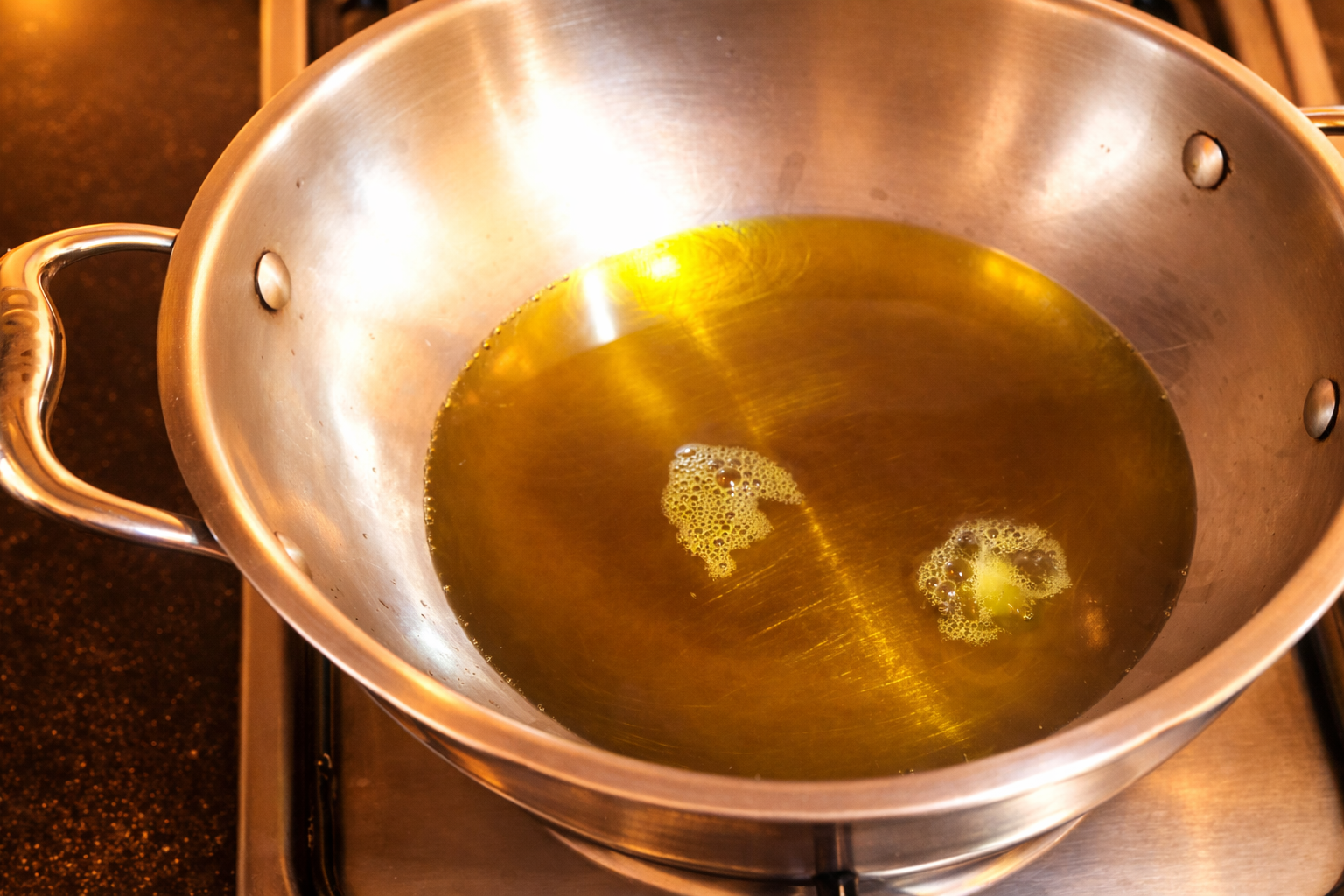
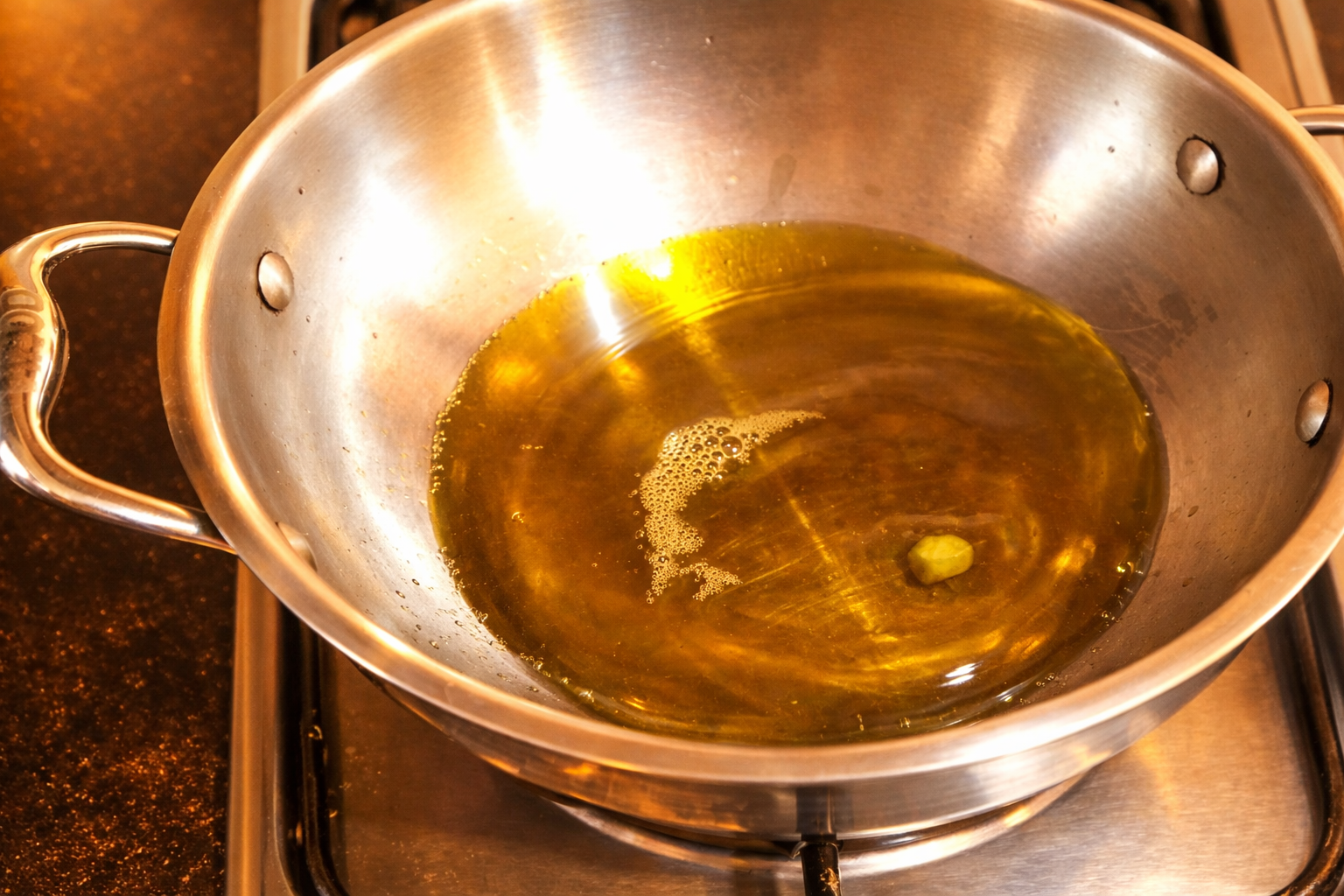
Heat oil in a deep, heavy-bottomed pan over medium-low heat. Oil temperature is critical. Too hot, and the Thekua will brown quickly but remain raw inside. Too cool, and they will absorb oil and become greasy.
To test oil readiness, drop a small piece of dough into the oil. It should rise slowly with gentle bubbles. This indicates correct temperature.
Avoid rushing this step. Proper oil temperature ensures even cooking and golden color.
Frying Thekua Slowly and Evenly
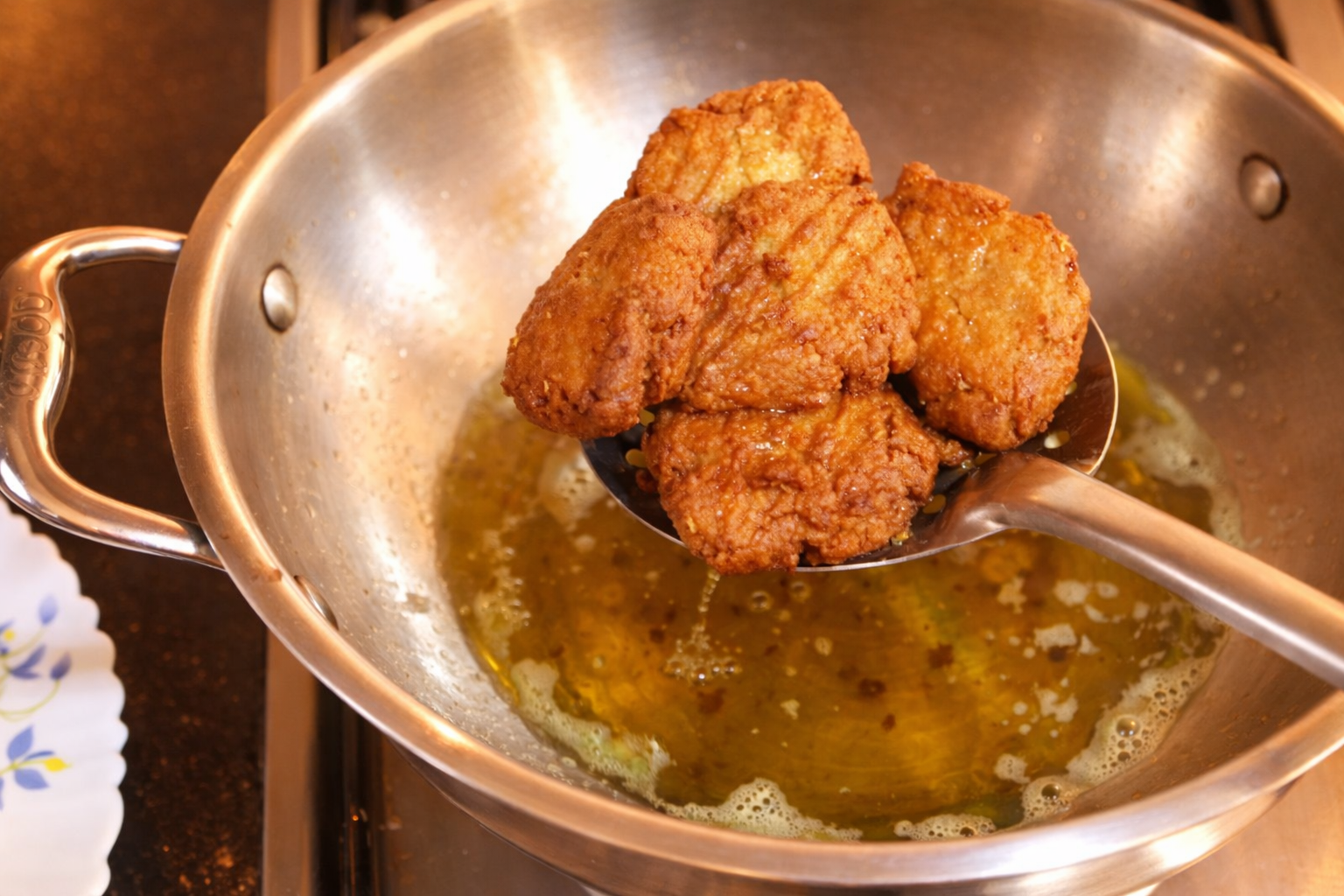
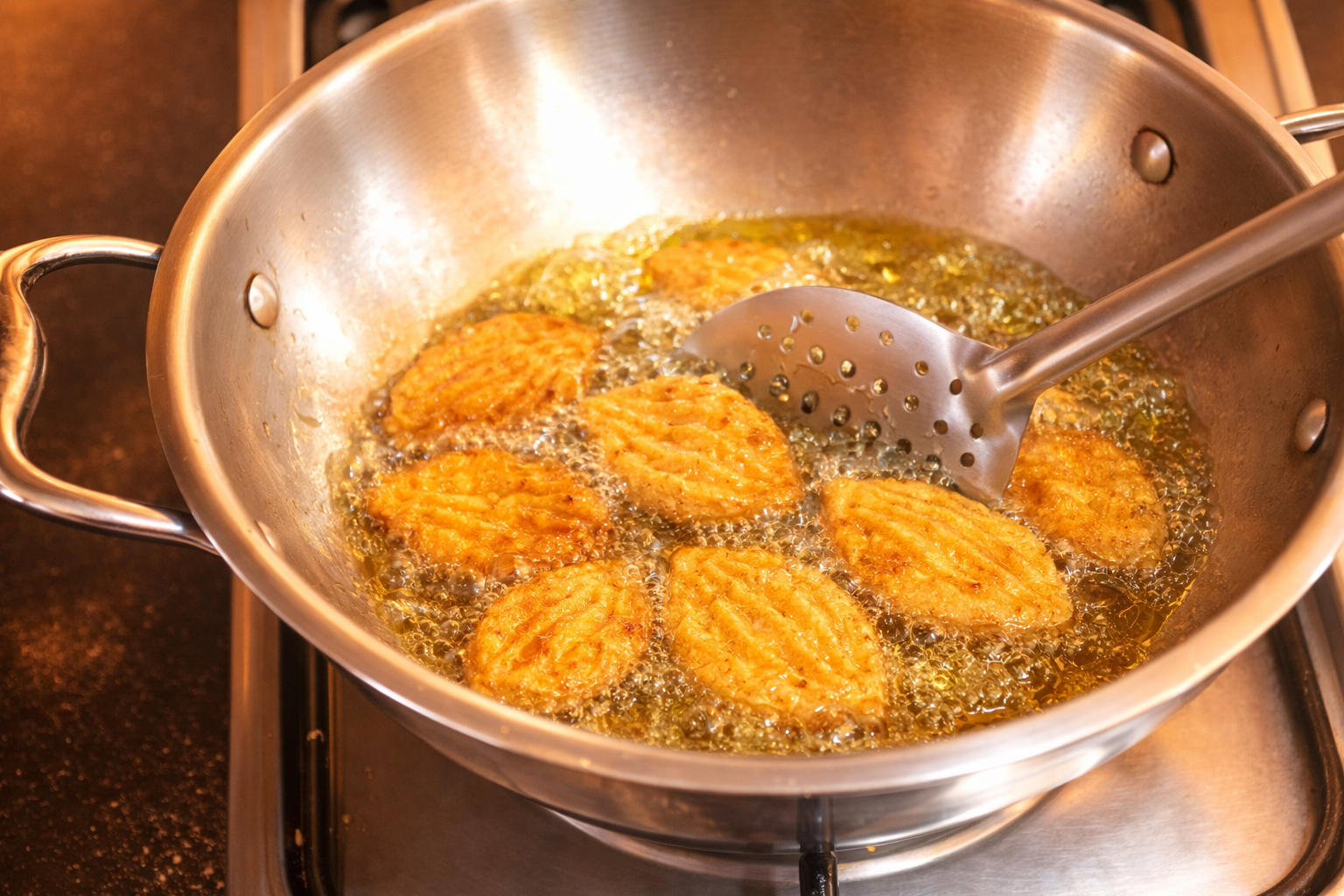
Gently place shaped Thekua into the oil, a few at a time. Do not overcrowd the pan. Allow them to fry slowly, turning occasionally for even browning.
Watch color carefully. Thekua should develop a deep golden-brown shade. This slow frying process enhances flavor and texture.
Remove when evenly cooked and drain excess oil.
Cooling, Storing, and Serving Thekua
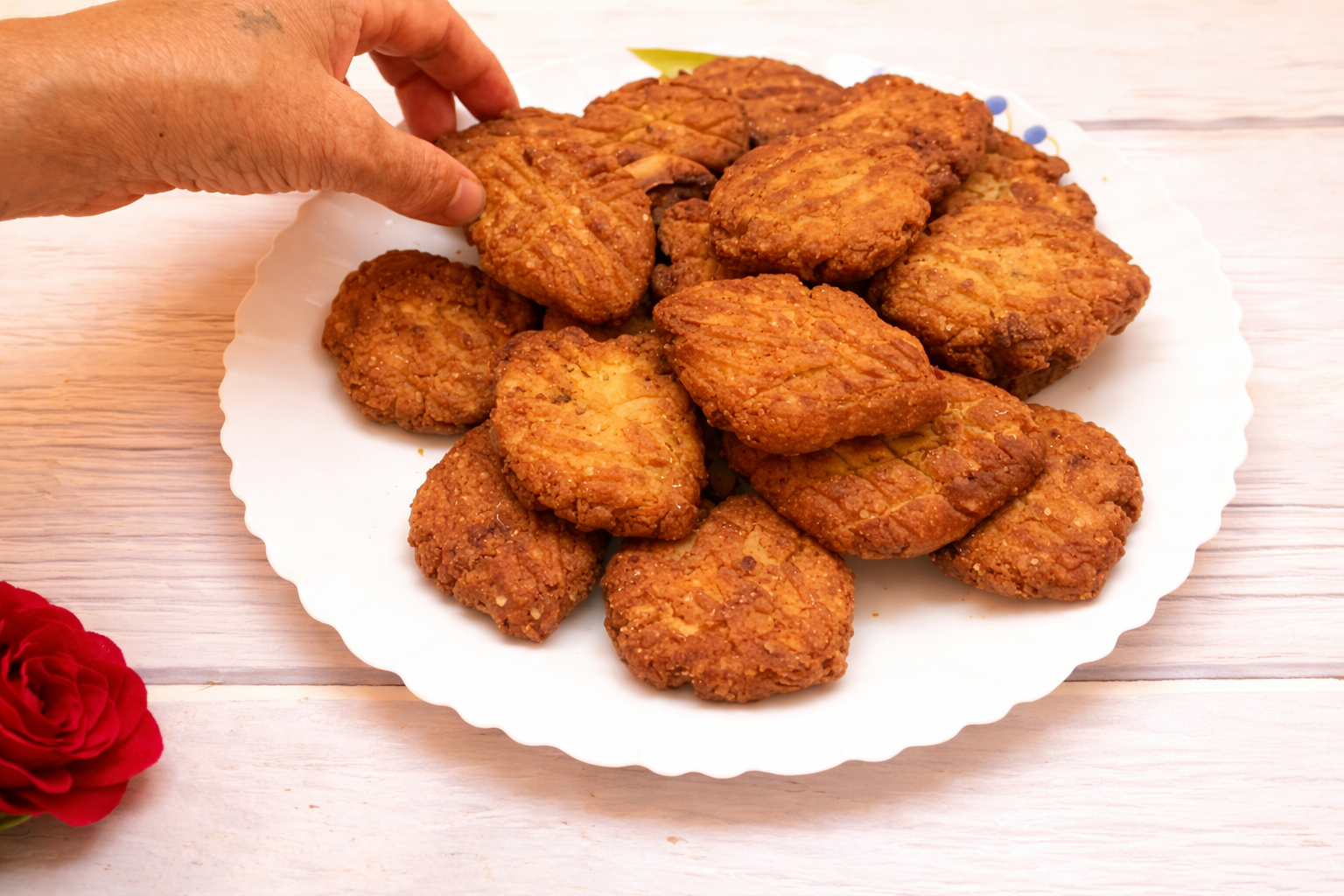
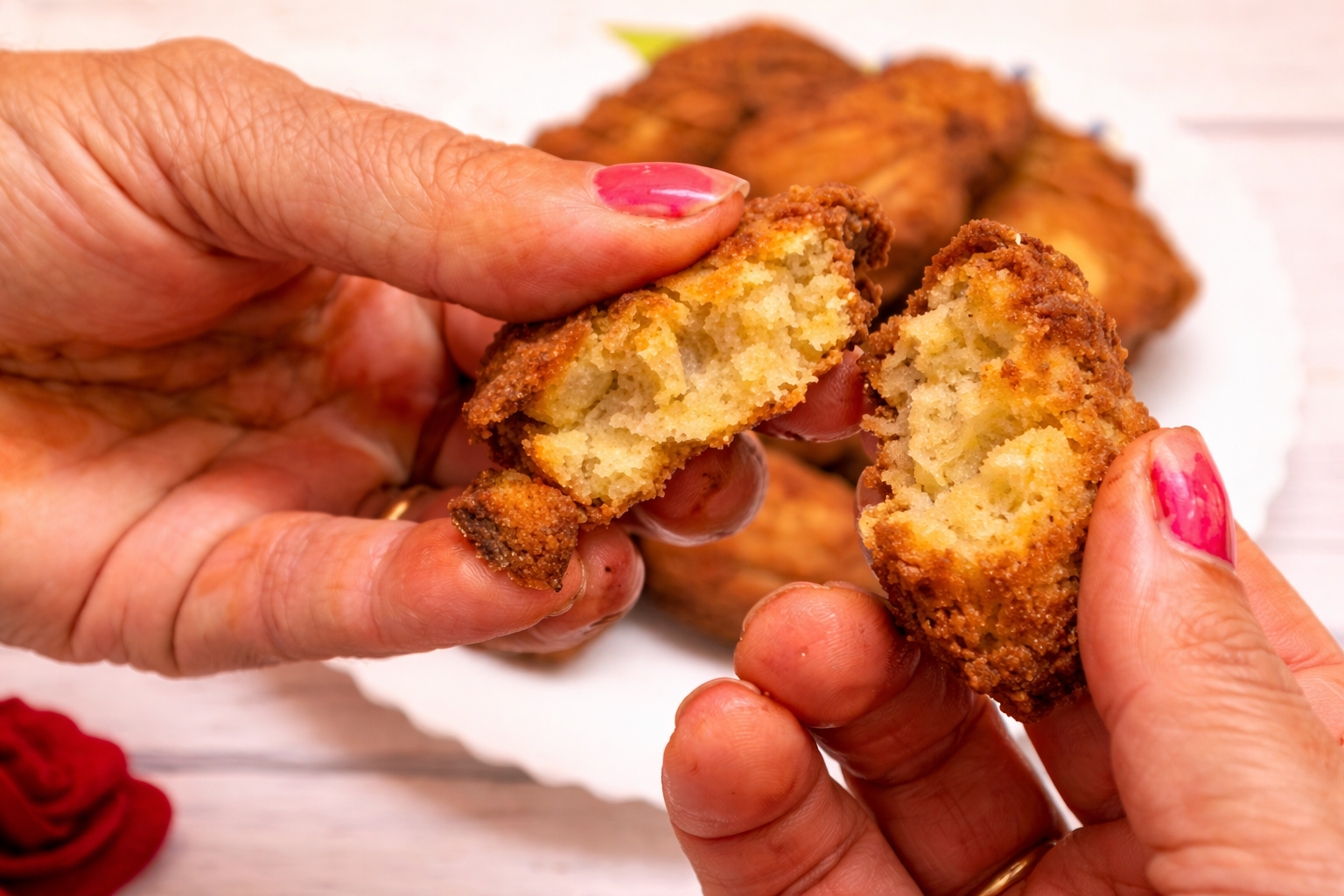
Allow fried Thekua to cool completely before storing. Cooling allows them to firm up and develop final texture. And look at that crunch!
Store in an airtight container once cooled. Properly made Thekua stays fresh for several days.
Serve with tea or during festivals. Thekua represents tradition, patience, and handcrafted flavor—best enjoyed slowly.
Let me know what you enjoyed most, whether Eating or Cooking these delicious Indian Traditional Cookies !