To Cook the Impossible Cookie: Perfect Cookies Without Oil, Butter, Gluten, Processed Sugar, or Weird Flours
by KitchenMadScientist in Cooking > Cookies
66 Views, 0 Favorites, 0 Comments
To Cook the Impossible Cookie: Perfect Cookies Without Oil, Butter, Gluten, Processed Sugar, or Weird Flours


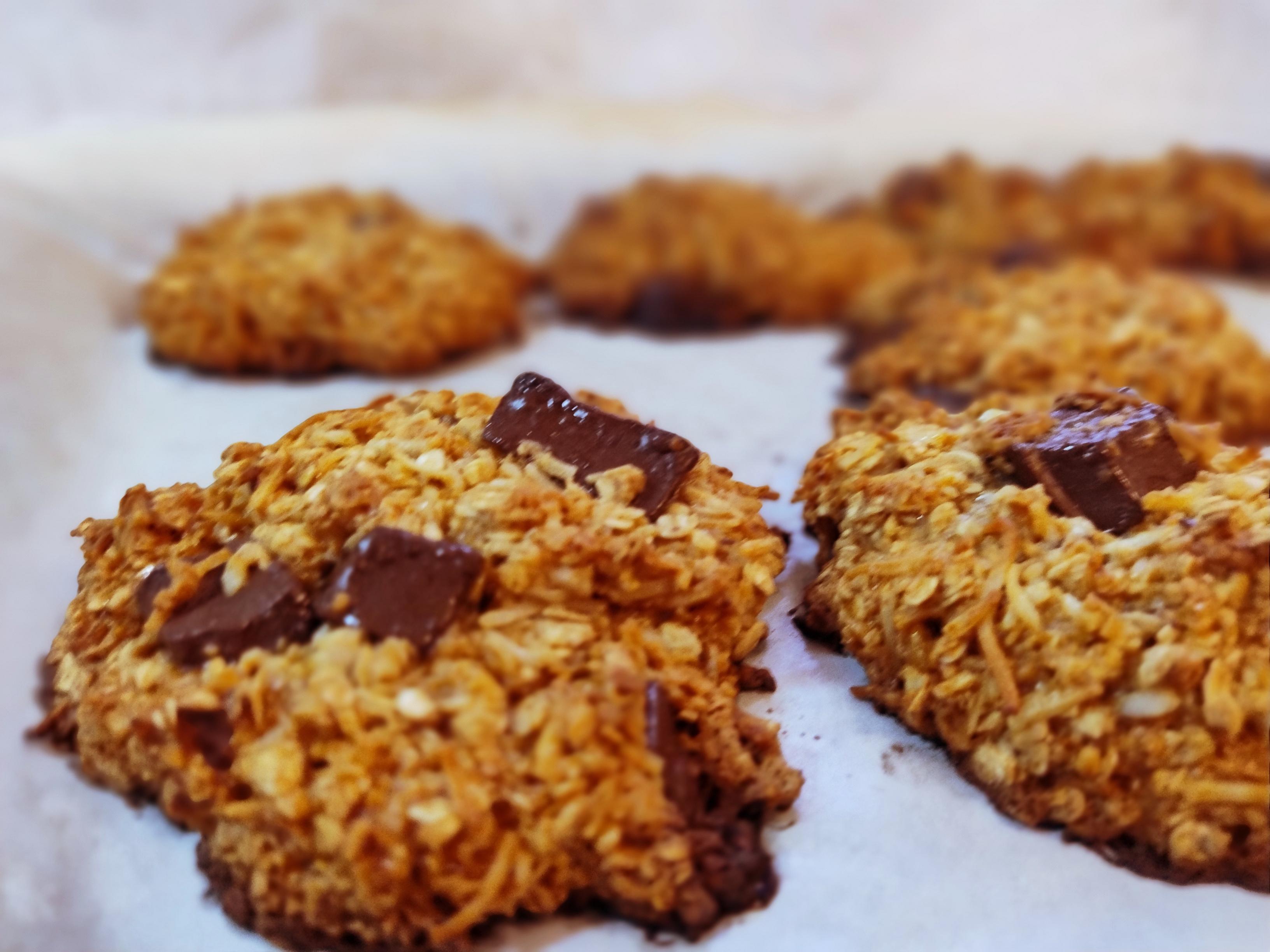
Is there anything more perfect and delicious than the cookie?
Does any other food substance have a whole monster all to itself?
I often find myself wondering why I don't just eat cookies all the time... And then I open up a recipe and am reminded that cookies really are just a 50/50 mixture of sugar and fat.
Perhaps this is a profound lesson that we all must learn in some way?
Perhaps God himself in his benevolence chooses to remind us through this - most delicious of all foodstuffs - that perhaps the denial of joy is the true measure of character?
Well, if that is the case, then I am here today to cackle sinisterly on your left shoulder and whisper in your ear... Whisper that perhaps there is another way... Whisper that perhaps that denial is unnecessary.
This is not a normal recipe, as you have likely already noticed.
I am going to give a recipe - in fact, I am going to give three - but this is not so much a detailing of a recipe as it is an explanation of a completely new way of making cookies.
So this is going to be broken up into three major sections:
- An Examination of the Problem
- A Working Through of the Solution
- Some Actual Example Recipes
...If you want to just skip ahead to the recipes, feel free.
(PART 1): Let's Understand the Problem
We have various sugar replacements, but why do cookies need all that fat in the form of butter and oil?
If there was some way to skip it, then cookies could be made much much more calorie-and-health-friendly.
Well, if you've ever tried to skip - or even reduce - the butter in a cookie recipe, then you likely know why. Without it, cookies are at best light and cake-like, at worst they are rubbery and weird.
They certainly don't have that perfect, hard but crumbly texture that defines the difference between a cookie and a cake.
The problem here is GLUTEN.
Let's Use My TOTALLY REAL Electron Microscope to Examine the Molecular Structure of a Cookie Baked Without Any Oils:

(Nano-Fork™ provided for Science-Scale©)
Here we can see that when cooked, gluten happily forms long, polymer-like chains that bind baked goods together.
...But if we mix in that slightly terrifying amount of butter:
Let's Use My TOTALLY REAL Electron Microscope to Examine the Molecular Structure of a Cookie Baked With Lots and Lots of Butter:
(Nano-Fork, Science-Scale, etc©®™)
Hmmm - the fats that make up butter and margarine and olive oil and so on disrupt the formation of gluten chains
So while it's all still bound together, it is much denser and crumblier. That's the difference between bread and shortbread - shorter gluten chains.
A popular factoid states that this is why fats are called shortening - because they shorten the gluten chains.
To be honest, as neat and obvious as this is, shortbread has been called that for almost a thousand years, and I can't help but wonder how many 12th century Scottish housewives were in the habit of recreationally examining the molecular structure of their baking... But perhaps I underestimate the typical Scottish peasant and her handy household electron microscope.
"Ah ha!" I hear you naively shout: "But flour with all gluten removed is now readily available! Surely that will fix this pesky issue!"
Let's try that.
Let's examine the molecular structure of a cookie baked without any gluten at all:
Let's Use My TOTALLY REAL Electron Microscope to Examine the Molecular Structure of a Cookie With No Gluten:
Oh.
Oh dear.
Without the gluten, it is certainly not soft and light and cakey... But instead it is incredibly hard and crumbly in the worst way possible.
Less a cookie and more a group of rock-hard crumbs loosely holding hands.
Tasty gluten-free baking is quite the pickle, as I'm sure you know if you've ever tried it.
Gluten contributes so much to the textures of baked goods.
It Gets Worse!
...However, the problem goes beyond just gluten: oils also function as a humectant.
(Okay, technically, an emollient, but in baking we don't usually make the distinction)
Basically, if you spill water in your kitchen, leave for a year and return - you'll have no problems. The water will long since have dried.
Spill oil, however, and it doesn't matter how long you're gone, you'll still slip and go flying when you obliviously wander back in.
Oil doesn't dry.
They've found bottles of still-liquid olive oil sitting in people's kitchens in the ruins of Pompeii.
That's the role of a humectant - it's something that never dries out that you add to things that you want to stay deliciously moist.
You may have heard people talking about replacing a lot of the butter in some recipes with applesauce.
While this might not be such a bad idea if you don't mind the heavy taste of apples, applesauce doesn't really shorten gluten, it's really just acting as a substitute humectant with a minor binding ability.
...And, yes, fat also contributes to the Maillard Reaction and half a dozen other things that I won't even get into.
Basically there's a reason it's in all the recipes and they go very wrong if you try to remove it even a bit.
...So, due to this overlapping problem of gluten and texture and humectants and various other things, making an actually cookie-like cookie using standard ingredients without the addition of large amounts of fat has long looooooong been regarded as utterly impossible.
In fact, I believe that it was actually one of the original labours of Hercules before being vetoed for being too difficult (it was replaced with the horse stable one)
But, My Friends, I Am Here to Tell You That I Have Succeeded Where Much Much Greater People Have Failed.
Yea, look not upon my face, for I have Cooked the Impossible Cookie!
(PART 2) THE SOLUTION
Various possible solutions have been suggested and tried, with varying success.
I've already mentioned applesauce and why it doesn't really cut it, but what about...
Indigestible Fat! - We have several sugar substitutes that are basically just sugar that has been chemically modified so that it cannot be digested.
No digestion, no calories!
...Why can't we just do the same thing with fat?
Well, we can. In fact, there's been several large-scale trials of foods made with them.
Never really taken off. The problem is euphemistically referred to "anal leakage" - i.e. catastrophic diarrhea, potentially lasting for days.
That IS quite a problem.
...But wait! What about:
Unconventional Flours! - Almond or Tigernut flour can actually work quite well with minimal to no oils.
Well then, that solves...
Not so fast!
In many ways this is cheating - the added oil is being replaced by the natural oils present in these flours.
Have a look at their calorie load per 100 grams compared to standard flour.
There is also the problem of reduced availability and much higher cost.
There is a partial way around this that isn't talked about much for some reason:
In many recipes, almond flour can be directly replaced by sunflower seeds that have been thoroughly pulped in the blender.
This about halves the cost.
I suspect the reason this hasn't taken off as a cooking hack is that the combination of being blended and cooked liberates the chloroplasts (i.e. the cell's photosynthetic organ) from inside the seeds, these will then rapidly oxidise on contact with the air.
The practical upshot of this is that the insides of cookies baked this way will turn a brilliant green about five seconds after being bitten open.
People find this sufficiently off-putting that this technique remains obscure.
I disagree, of course - it kind of makes it my favourite.
But maybe that's just me.
THE ACTUAL SOLUTION
...The winning idea would be one that both allows the use of conventional ingredients and smoothly replaces all of the various functions of oil in one fell swoop.
Let me tell you about Invert Syrups.
I remember coming across a very unusual recipe that contained no oils, but in which the only liquid ingredient was maple syrup.
I initially wondered how someone would have the idea to randomly replace most of a recipe with maple syrup, but then I discovered that it had been written by a Canadian. So that mystery was instantly solved.
I did rather a lot of experimenting, and discovered that not only do sugar syrups not activate gluten, but they can replace all the other functions of oil too.
...So what is an invert syrup?
Here's a riddle: what is the glycemic index of sugar?
(Glycemic Index is a measure of how quickly the body the body converts things into sugar - 0 being 'Never' and 100 being 'instantly'.)
...So how quickly does your body turn sugar into sugar?
The answer?: 'Not very fast at all'
Sugar has a glycemic index of 65 - lower than rice, or potatoes, or cornflakes, or pumpkin.
Wut?
You see, what we usually think of as 'sugar' is sucrose, and the body can't process sucrose until it breaks it down into glucose and fructose - something that's actually quite hard to do.
So table sugar isn't particularly high GI.
A sugar syrup that has been boiled in an acidic environment, pre-converting it into a mix of glucose and fructose is called an Invert Syrup.
Invert Syrups have useful properties for confectioners and bakers and cocktail-makers.
They measure how inverted - that is, how broken down into pure glucose and fructose the syrup is - using polarised light.
The direction of polarisation of a fully inverted syrup is the exact opposite of a fully un-inverted syrup - so if you look at it through a pair of those 3D glasses you got back when Avatar came out and 3D movies were briefly in vogue, an un-inverted syrup will look dark in one eye, and an inverted syrup will look dark in the other.
Another factoid claims that this is why it's called an Invert Syrup... This is very plausible, but after the 'shortening' thing I'm paranoid about these neat explanations.
Honey and golden syrup and maple syrup and rice syrup and sugar beet syrup are all invert syrups to different extents.
Maple syrup, for instance, is hardly inverted at all, while honey is almost 100% inverted.
...The flavoured rice and beet syrups that increasingly are on the shelves being fraudulently sold as honey due to the mass bee die-off (...My lawyers inform me that I will add the word 'Allegedly' here...) are also almost completely inverted.
Invert Syrups are just as good humectants as oils (hence the recent tomb discovery of 5500 year old honey), and also appear to disrupt the formation of gluten chains, AND support the Maillard Reaction.
They are just sugar, but if we're going to add sugar anyway, then they can solve a lot of problems simultaneously.
However, by themselves, they may not be enough.
Enter Erythritol.
What is Erythritol?
It's a sweetener, an Alcohol Sugar - a class of molecules that, as you can likely tell from the name, are not sugars and have nothing to do with alcohol.
It is, in fact, the only alcohol sugar that isn't also a powerful laxative, but it's also slightly more expensive, so it's not used as often as say sorbitol or maltitol or xylitol.
If you examine the ingredients of the "Stevia baking blends" that you can find in the supermarket, you will find that they are actually almost entirely erythritol.
...But it was discovered in the 19th century, and thus given a scary chemical name rather than something marketable to the more scientifically illiterate end of the 'WELLNESS' crowd.
So it's usually mixed with stevia - which is PLANT BASED and usually has a happy little cartoon picture of a plant somewhere on the packet to prove it - and thus made marketable.
Erythritol is actually more 'natural' than stevia - unlike steviol glycosides which only occur in two South American plants, erythritol occurs naturally in a number of common fruits and vegetables and is produced naturally in the human body in tiny amounts.
...But it does have a scary 'non-natural' sounding name so you better hide it on the back of the packet.
*Sigh* ...Let's Head This One Off...
Recently if you mention erythritol on Reddit, someone will pop up and say to avoid it because recent studies have linked it to heart disease.
This is actually true - a large study found a significant correlation between erythritol in the blood and heart disease. This surprised a lot of people because the very large-scale testing that is necessary before a food ingredient can be GRAS (Generally Recognised As Safe) hadn't picked up any like that at all.
Several subsequent extremely large dietary studies in both humans and animals have not found any correlation between consuming erythritol and any ill-health, but follow up studies have confirmed the connection between high erythritol in the blood and heart disease.
This mystery appears to be solved by several extremely large subsequent studies that have found that the correlation between erythritol and heart disease goes away if you control for Type 2 Diabetes.
Diabetes is a general biochemical dysfunction that prevents effective usage of sugar, but it has countless other effects throughout the body as well ('The Metabolic Syndrome').
Most of these directly or indirectly cause heart disease.
I mentioned that erythritol is made naturally in the body, there's now overwhelming evidence that metabolic syndrome causes a huge increase in local production through dysfunction of the pentose phosphate pathway.
So, in one of the more spectacular examples of "Correlation Not Equalling Causation", it appears that heart disease causes erythritol, rather than the other way around.
... Mind you, it DOES sound very scary and chemical, so they'll probably hide it a bit better and add a second happy cartoon plant to the packet in the near future.
(Before you yell at me in the comments, please read THIS and THIS and find the multiple studies that found that consuming erythritol LOWERED heart attack risk. There will be a test.)
Well, Now That We've Definitely and Definitively Dealt With That and I Don't Have to Look Forward to Years of Angry Comments From the True Connoisseurs of Bad Media Science Hysteria...
...Anyway, erythritol has an unusual property that you're likely aware of if you've ever tried to use it to fully replace the sugar in a recipe: it REALLY likes to crystallise.
The recommendations are to only replace an absolute maximum of half the sugar in a recipe with erythritol. If you try to replace it all then the result is an oddly hard, heavy, and dense foodstuff with strange little crunchy bits that seem to inexplicably become larger and more crunchy the longer it's been out of the oven.
What's happening here is that it's coming out of solution and forming crystals, and the remaining molecules are actively travelling throughout your baking looking for crystals and then coming out of solution to join them.
This is not terribly normal molecule behaviour in general.
No, seriously, this stuff REALLY likes to crystallise... And we can use that here to our advantage.
How Is This Going to Work?

The idea here is to make something that can replace all the functions of shortened dough in a cookie recipe.
First let's get half a cup (120ml) of an Invert Syrup such as honey.
The exact amount of invert syrup to use depends on how moist and chewy you want to it be, as opposed to hard, drier, and crumbly.
I've certainly used a lot less than a 1/2 cup before.
You can experiment to work out the amount that you prefer.
Next...
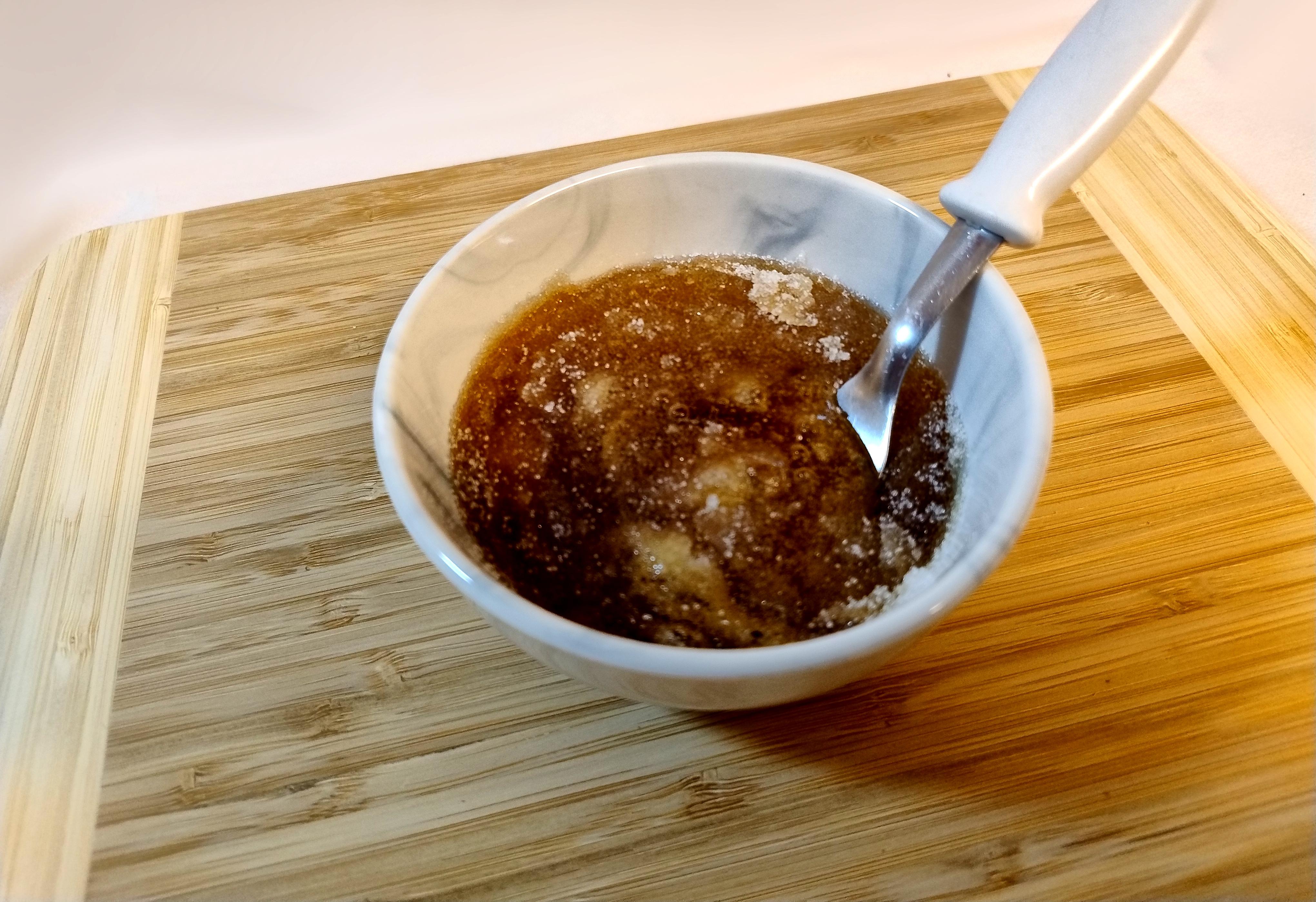
Then we'll add in a 1/4 of a cup (60ml) of Erythritol and mix them well.
Then...

Then we'll heat this in 30 second increments, stirring between, until the erythritol is dissolved and the honey is hot enough to flow as easily as milk. This will likely take a minute or two.
It's VERY important you keep an eye on it and don't let it boil over - that would be a horrible mess.

We'll now add this to somewhere between 1/4 - 1/2 a cup (60-120ml) of cornflour/cornstarch... Or some similar flour.
In fact, while this recipe is gluten-free, it doesn't HAVE to be - you can even use normal wheat flour if you prefer.
Then we'll add 1/2 of teaspoon (2.5ml) of bicarb soda/baking powder and mix it all up.
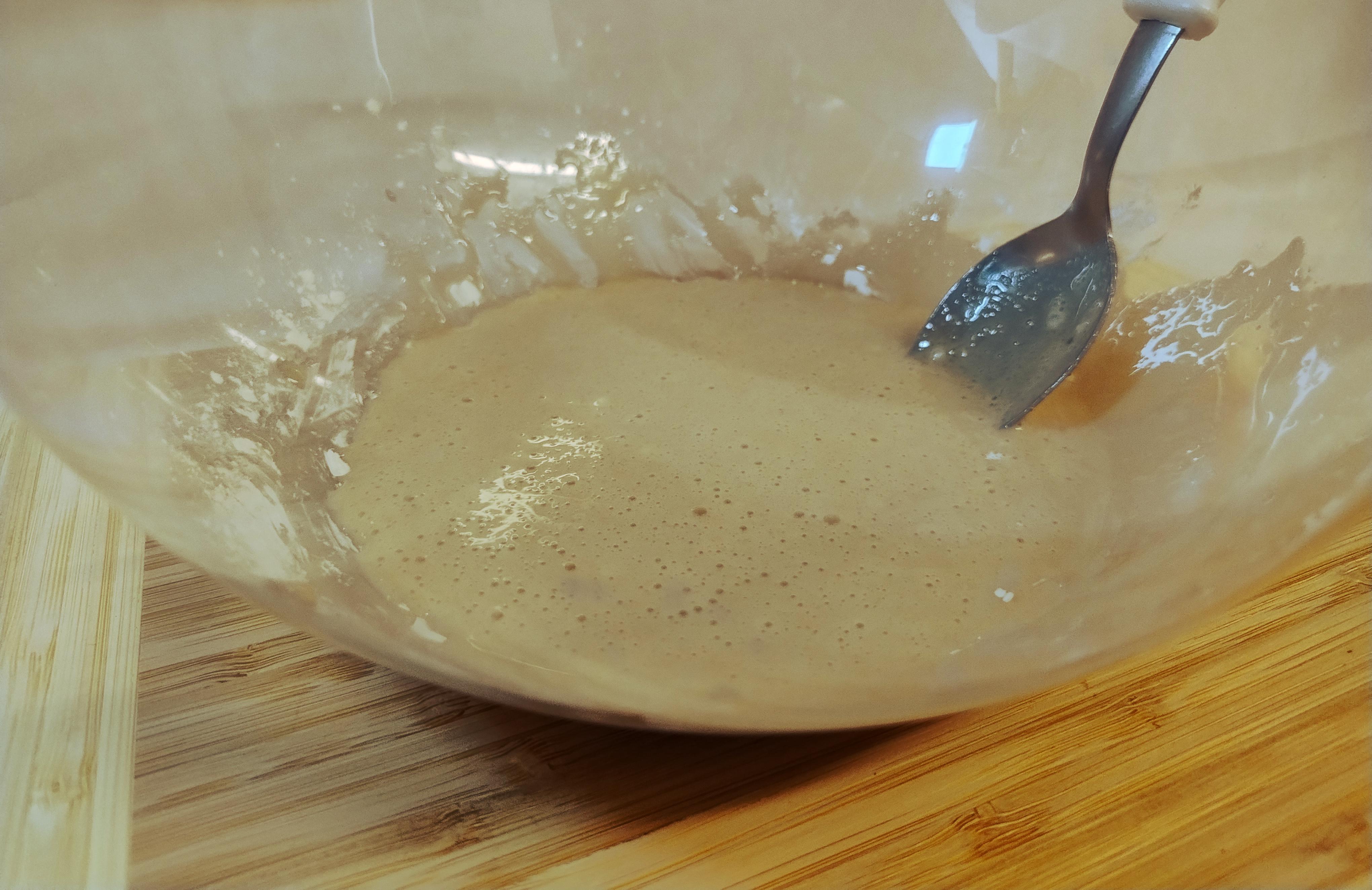
This is it - this is the BASE.
When this is cooked in the oven, this will foam up under the influence of the bicarb, the heat will drive a lot of the remaining moisture out of the syrup, the erythritol will fully melt, the cornflour's thickening power will be activated by the heat, it will be molten and INSANELY sticky, and when it is allowed to cool again to room temperature it will form something similar to that fake honeycomb that you find inside disappointing chocolate bars.
This base will bind ~2.5 cups of just about any dry ingredients into perfect, hard-and-crunchy-but-chewy cookies.
It's an almost indistinguishable replacement for shortened dough - if a cookie made this way was slipped among several made using traditional recipes, I promise you that no one would be able to tell the difference.
It can be used to make pretty much ANY kind of cookie.
Its only real weakness is that the added ingredients have to be pretty dry - water could not only activate any gluten in the mix, it could interfere with the formation of the toffee-like foam that the base becomes.
Keeping that warning in mind, feel free to experiment with adapting your favourite type of cookie to use this recipe.
I have.
(PART 3) - SOME RECIPES!
RECIPE 1: CHOC CHIP COOKIES

(Choc Chip) Ingredients:
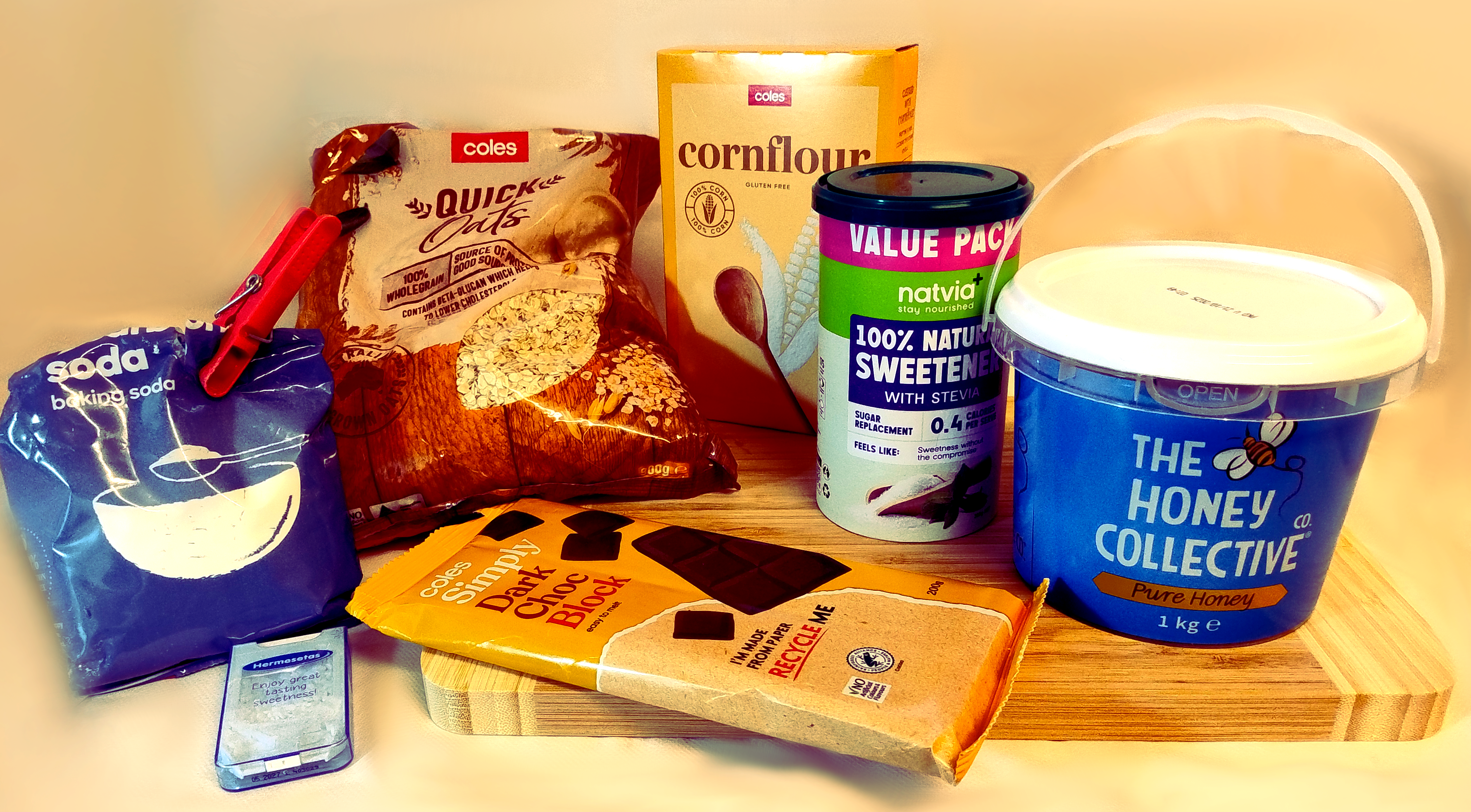
- 2.5 cups of oats
- 1/2 cup of Chocolate Fragments
- 1/2 cup of honey (or other invert syrup)
- 1/4 cup of erythritol
- 1/4 cup of cornflour/cornstarch
- 1/2 bicarb soda/baking powder
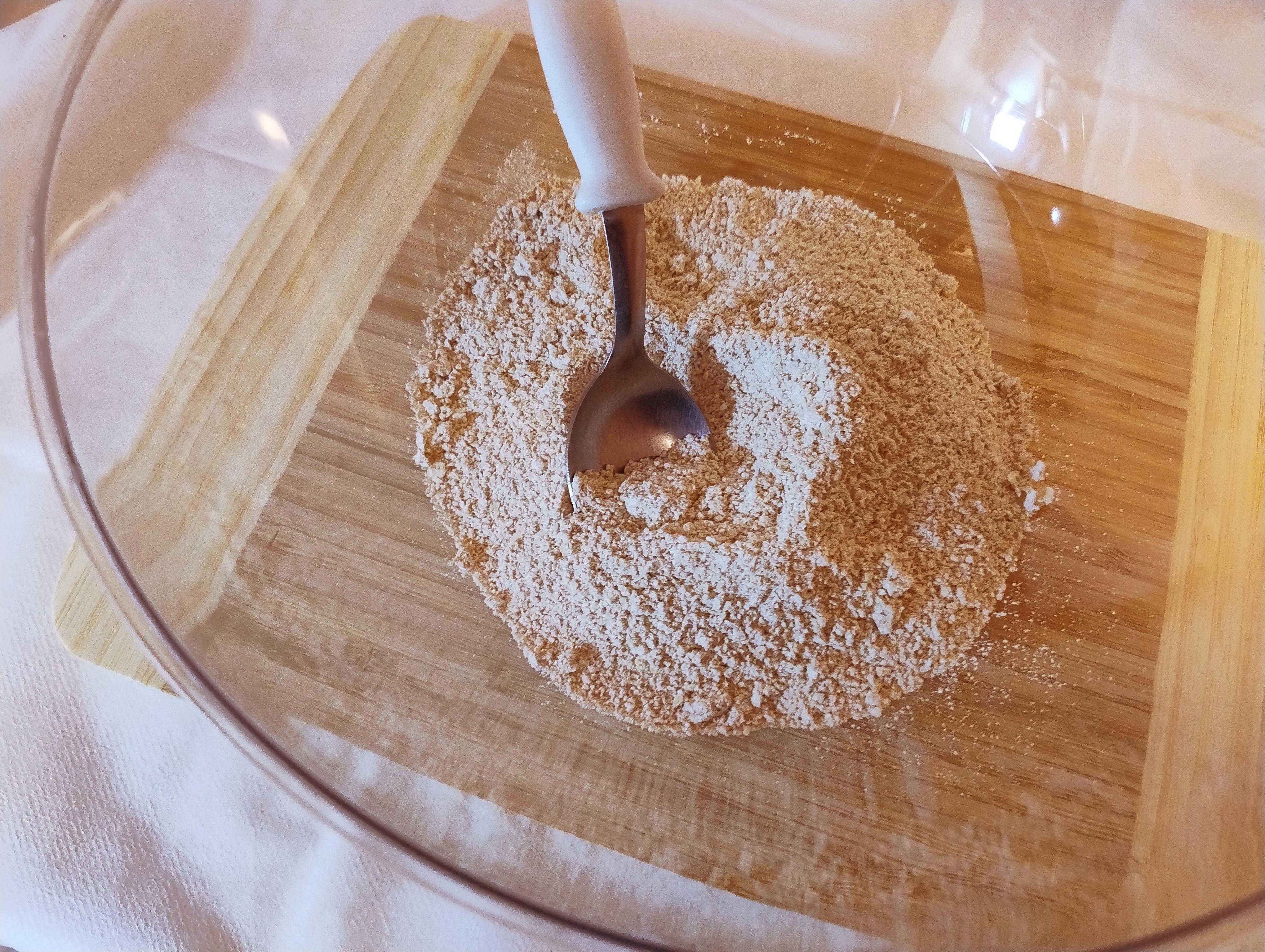
Pulverise 2 cups of oats in blender until they resemble a thick flour.
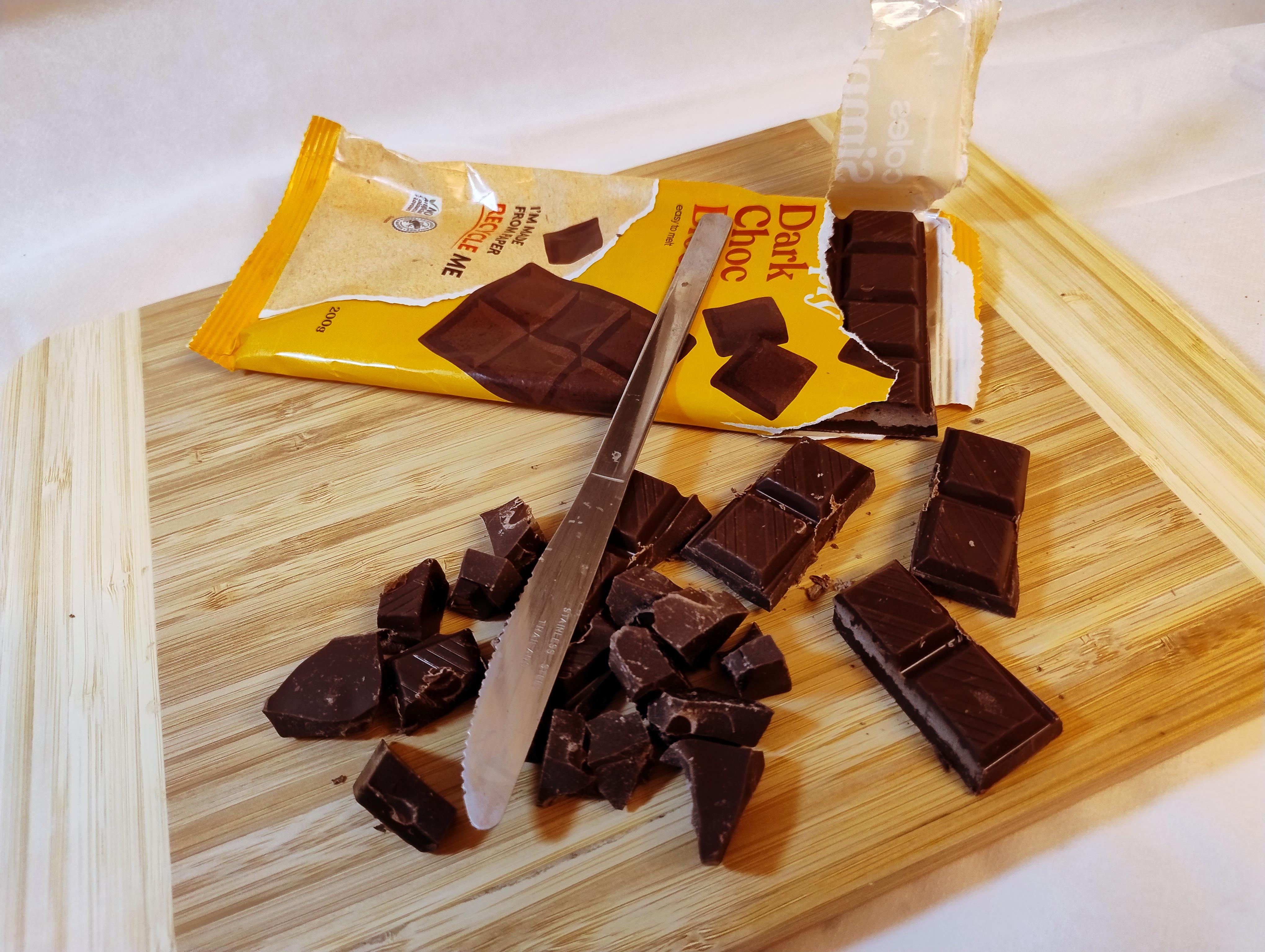
Break up the chocolate into fragments (this always seems to produce a better result than using choc chips
...It's best to get this stuff ready first, because when the base is ready you'll want to move quickly before it cools.
Preheat oven to 175°C (350°F)


Mix honey and erythritol in a container and then microwave it for one minute, stirring once, and being very careful not to let it boil over. Mix it up again, making sure that the erythritol is fully dissolved.
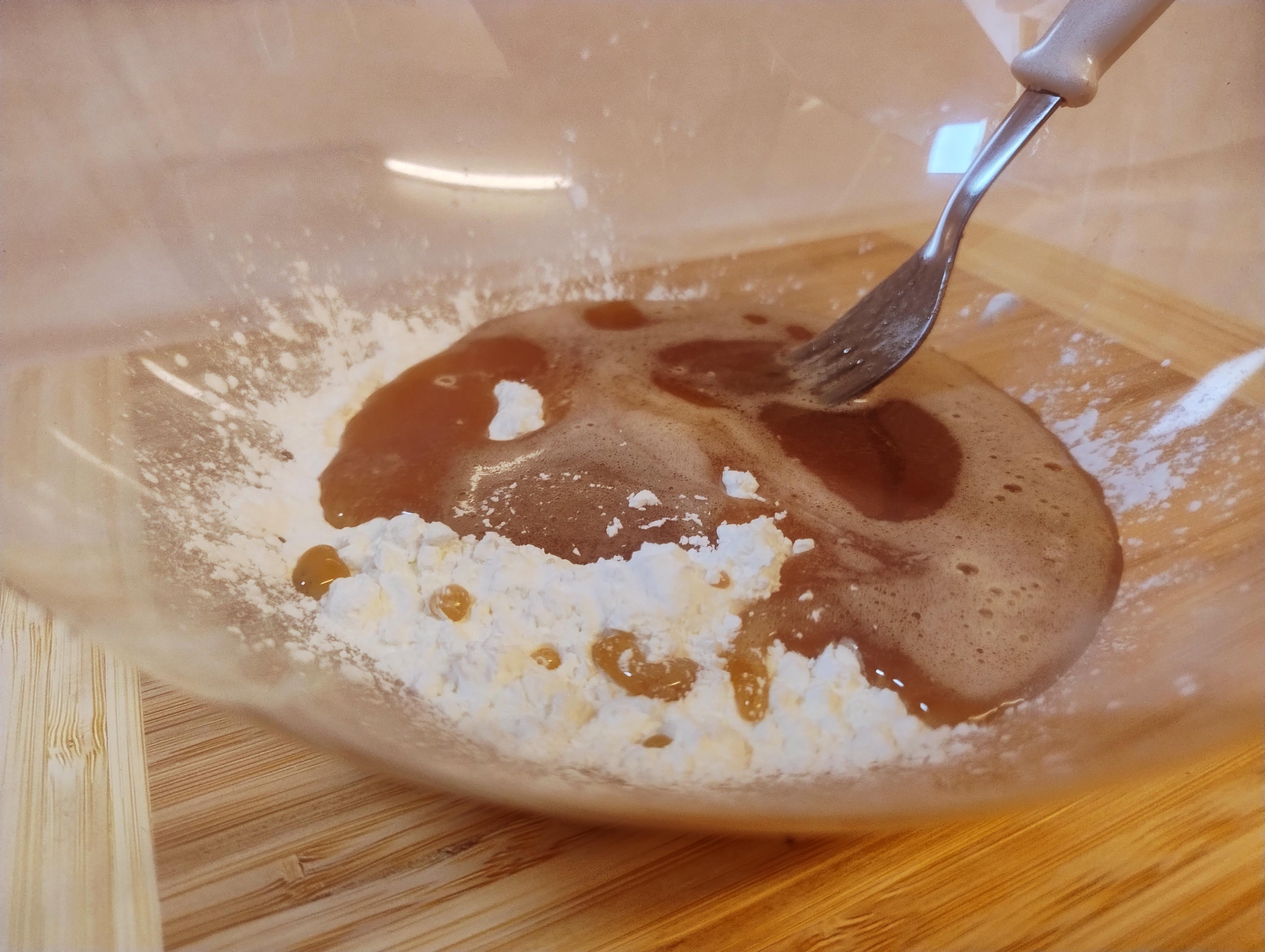

Place the cornflour and bicarb in a mixing bowl and pour the honey mix onto it, beat it all up together with a fork until there are no lumps.
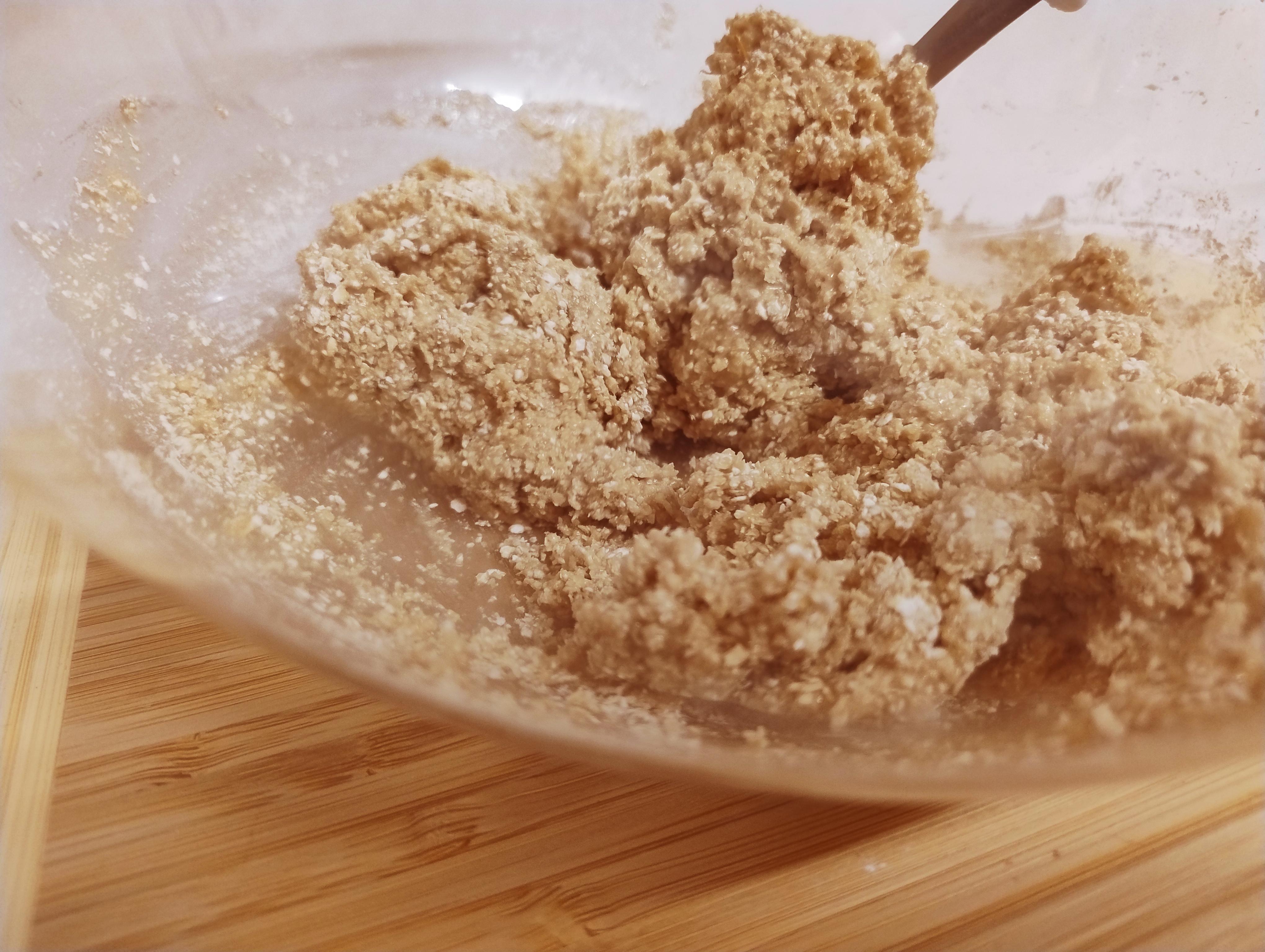
Mix in the oat flour and combine well.
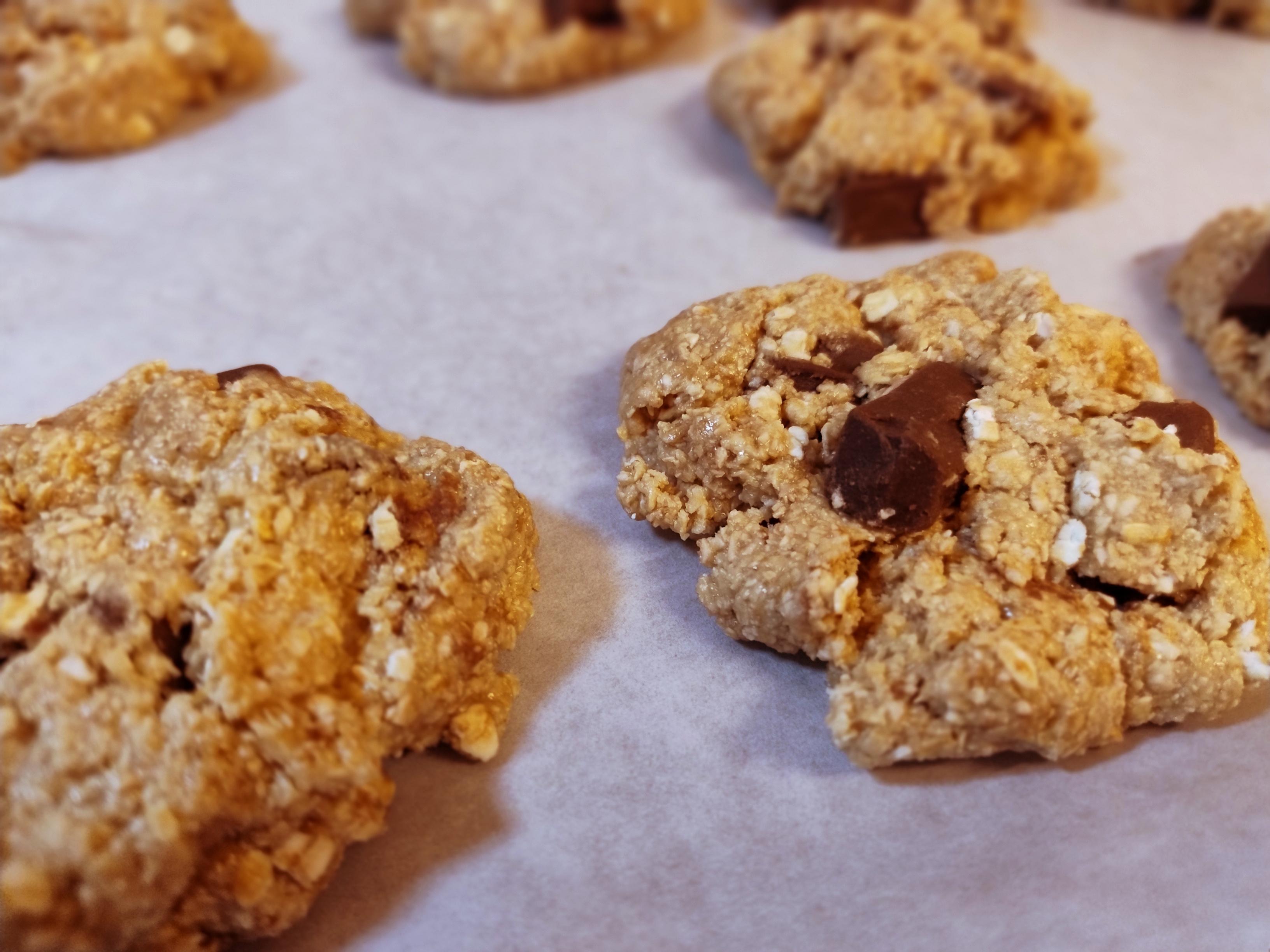
Add the choc chunks after you're happy with how mixed the base and oats are, that way you won't have to worry about mashing the chocolate up.
Don't worry if the dough doesn't seem to hold together - it will foam up and combine in the oven.
Spoon 10 equal amounts of batter onto baking paper.

Cook for 8-12 minutes or until starting to brown.
As with some more traditional recipes, you can adjust how hard/chewy the final cookies are by altering cooking time and temperature (and also the honey/erythritol ratio)
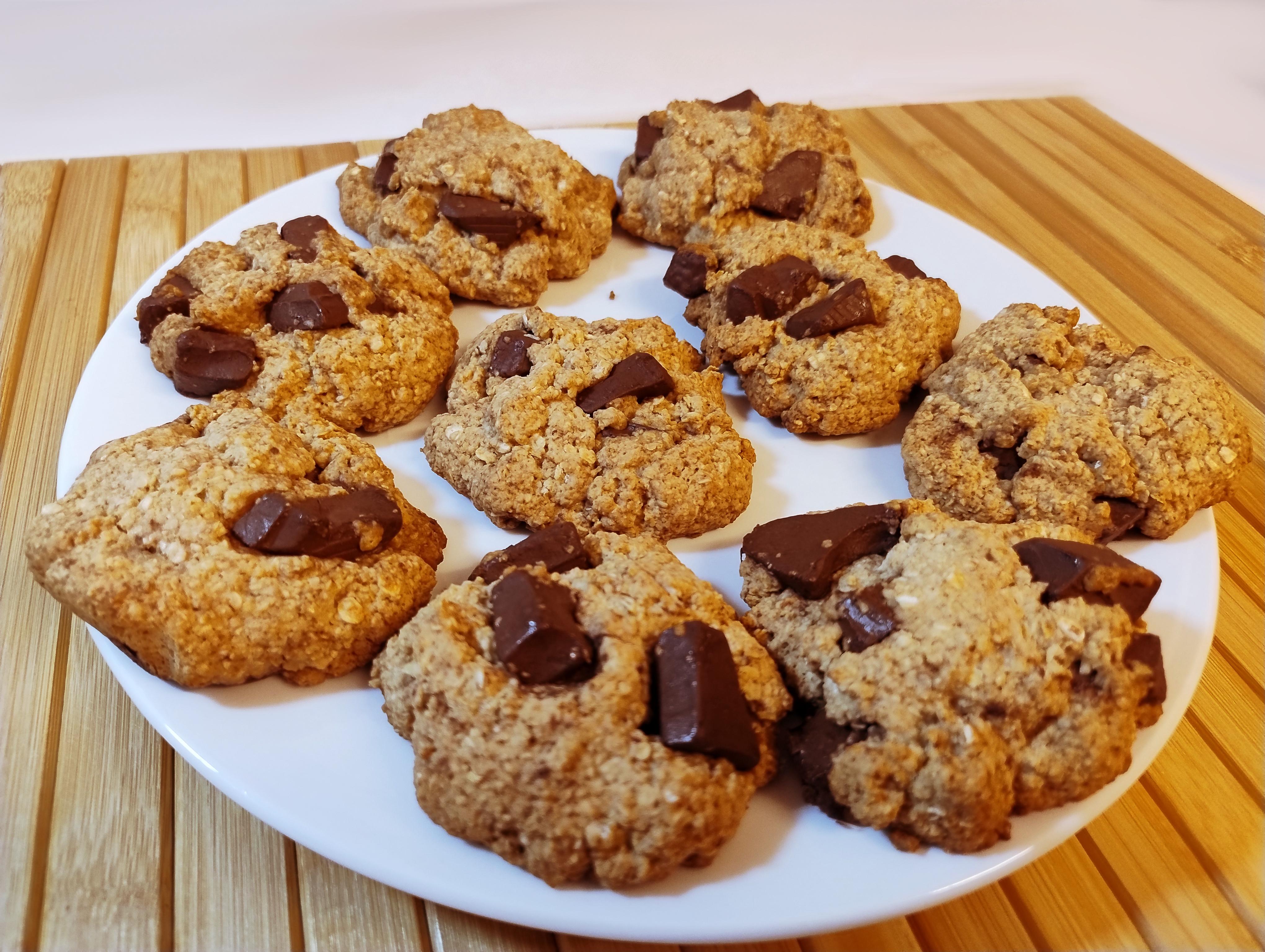
I know that nothing is more tempting than cookies fresh out of the oven, but in this case they need to be allowed to fully cool to room temperature to harden properly. When they first come out of the oven, they'll be very soft and napalm-y.
RECIPE 2: MUESLI COOKIES
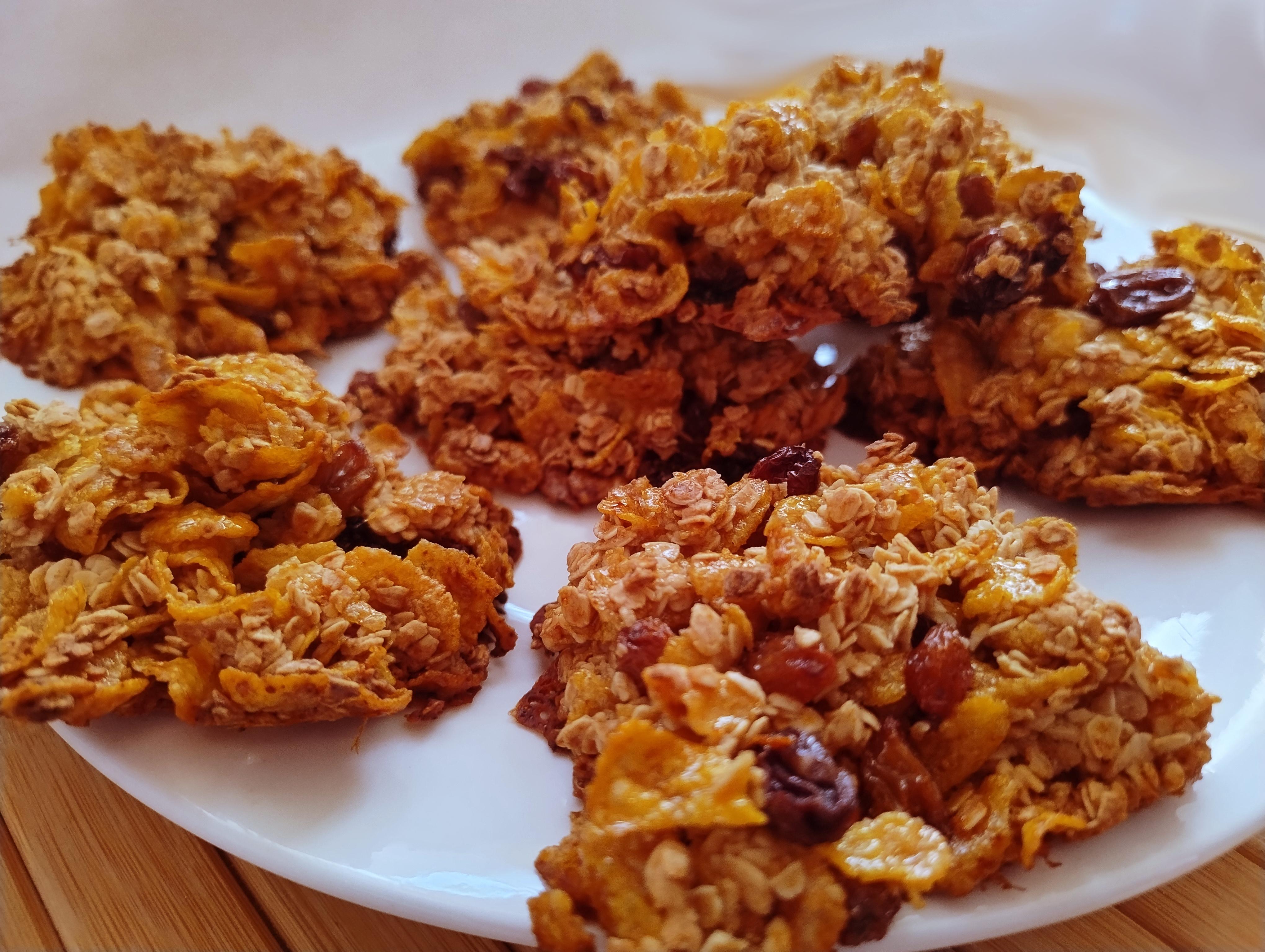
(Muesli Cookies) Ingredients:
- 1.5 cups of oats
- 1.25 cup of cornflakes
- 1/4 cup of sultanas/raisins
- 1/2 cup of honey (or other invert syrup)
- 1/4 cup of erythritol
- 1/4 cup of cornflour/cornstarch
- 1/2 bicarb soda/baking powder

Preheat oven to 175°C (350°F)
Mix honey and erythritol in a container and then microwave it for one minute, stirring once, and being very careful not to let it boil over. Mix it up again, making sure that the erythritol is fully dissolved.
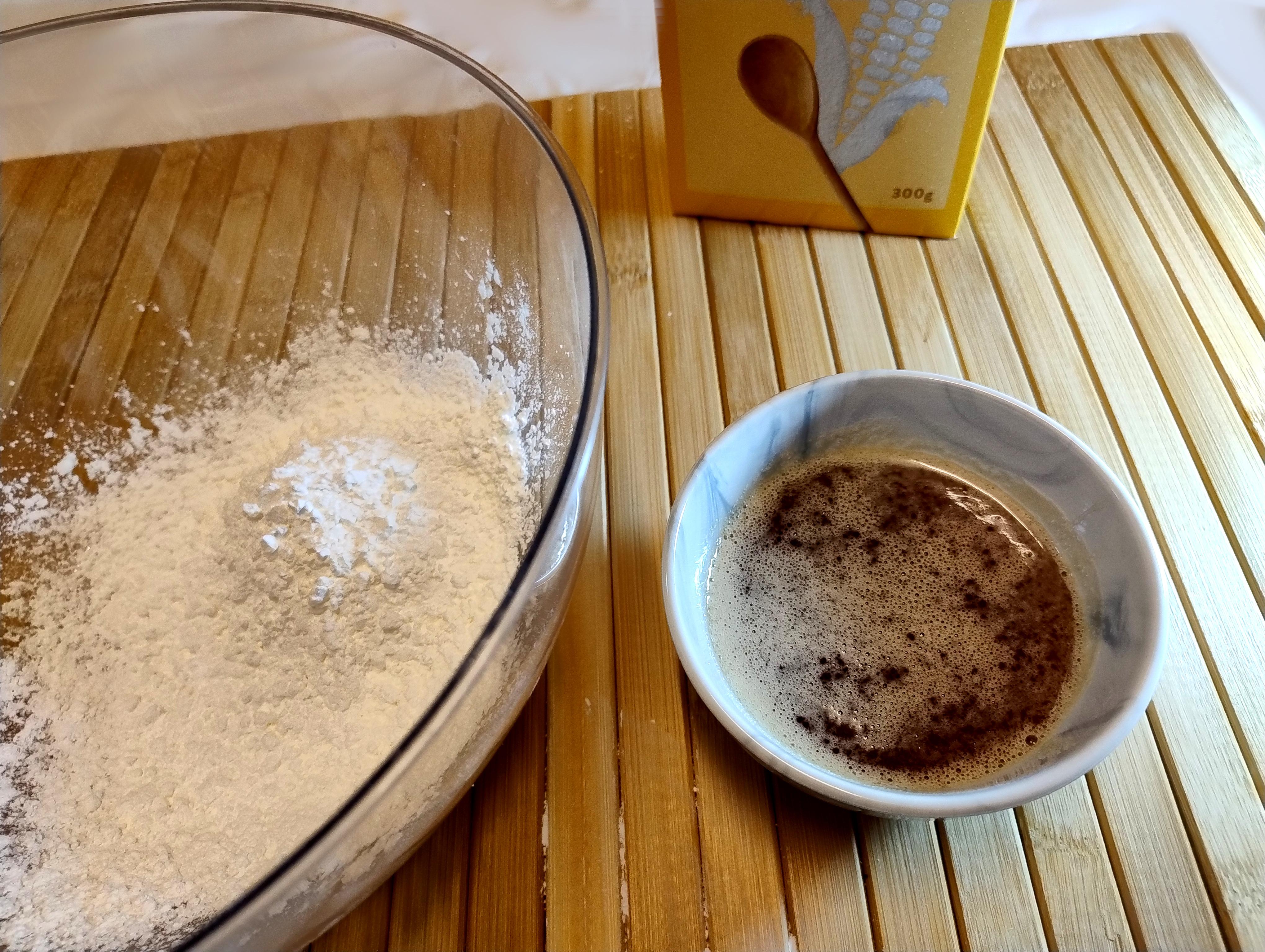

Place the cornflour and bicarb in a mixing bowl and pour the honey mix onto it, beat it all up together with a fork until there are no lumps.
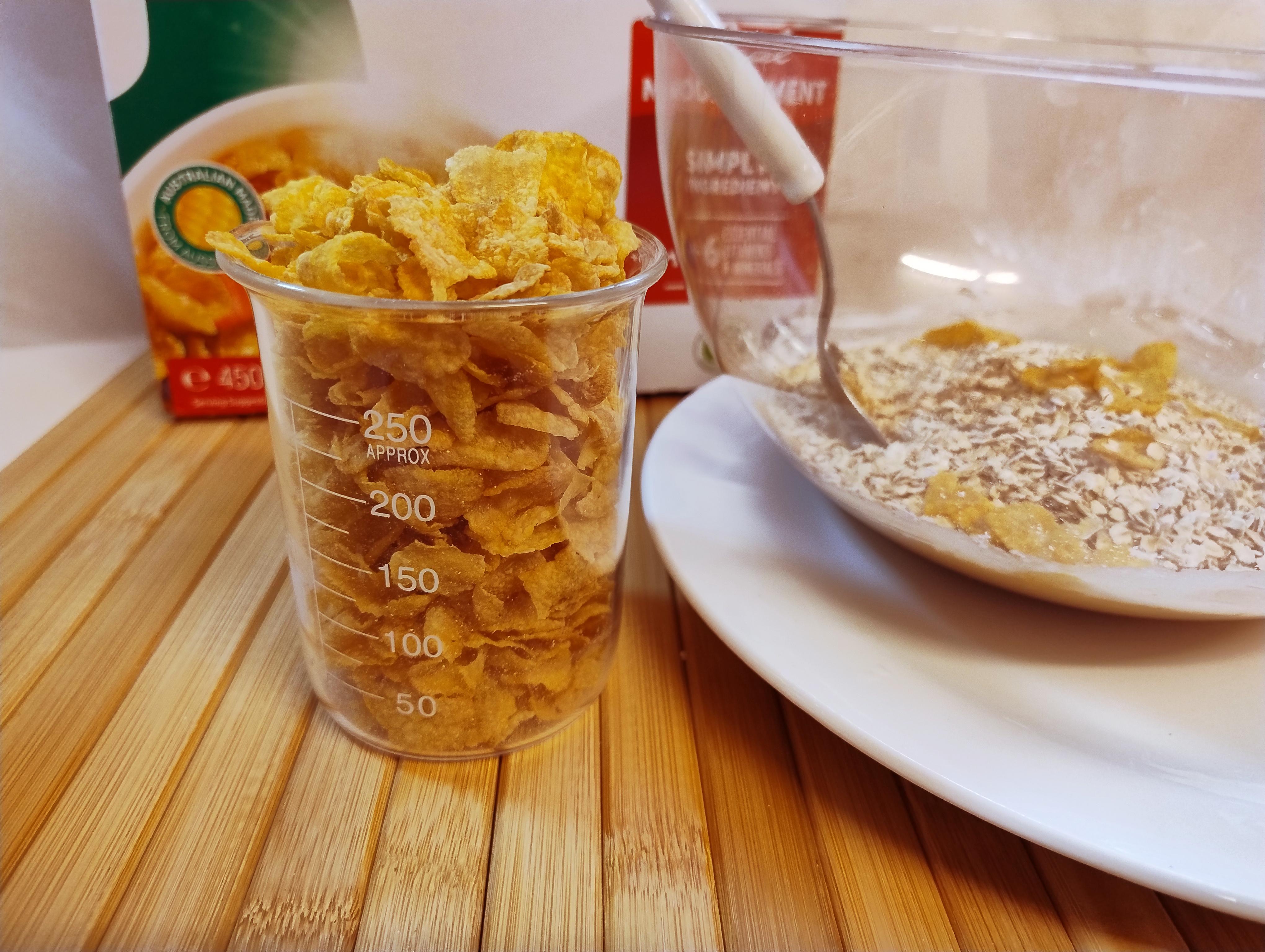
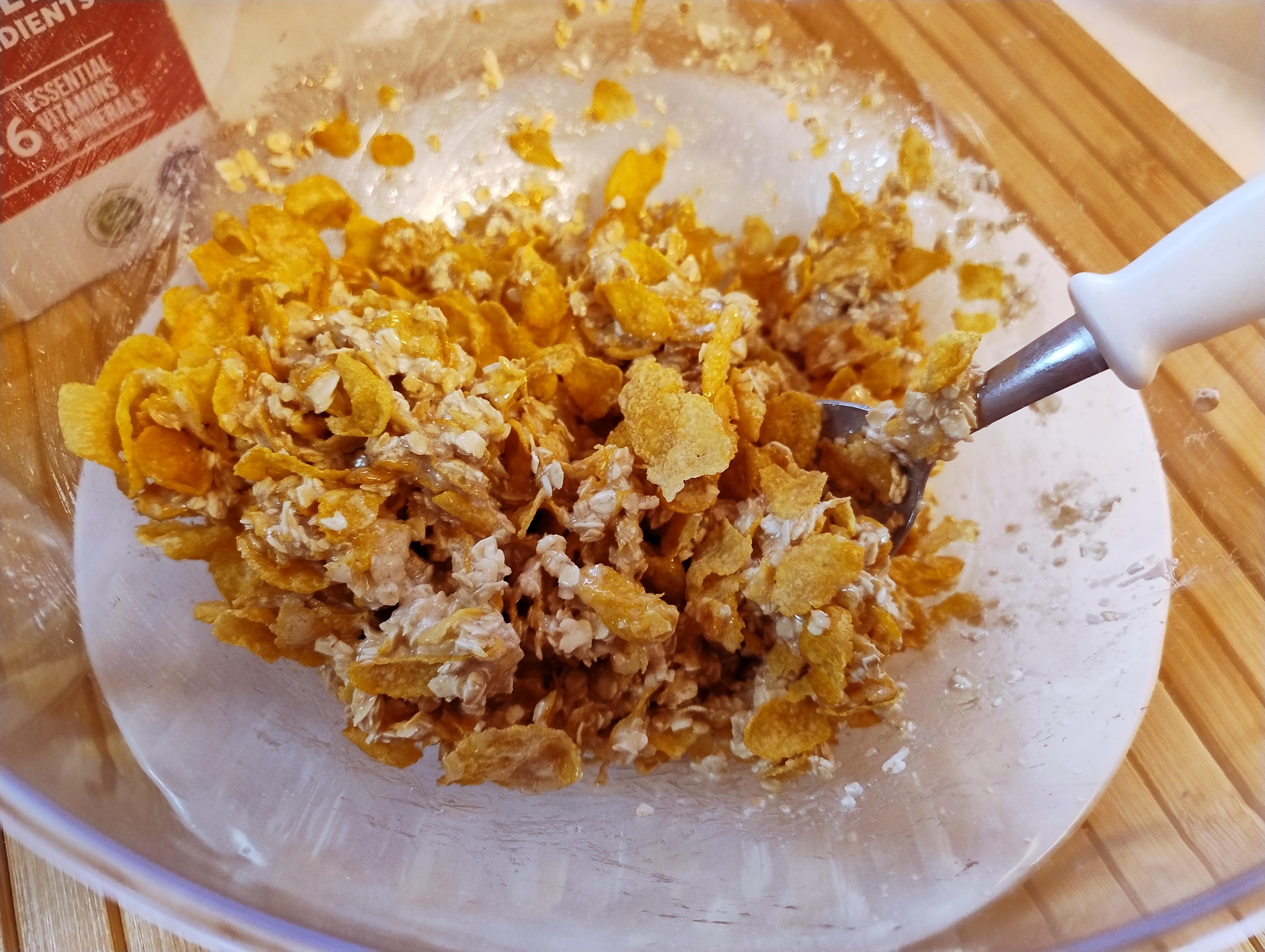
Add the oats and cornflakes and mix it all up.

Add the sultanas
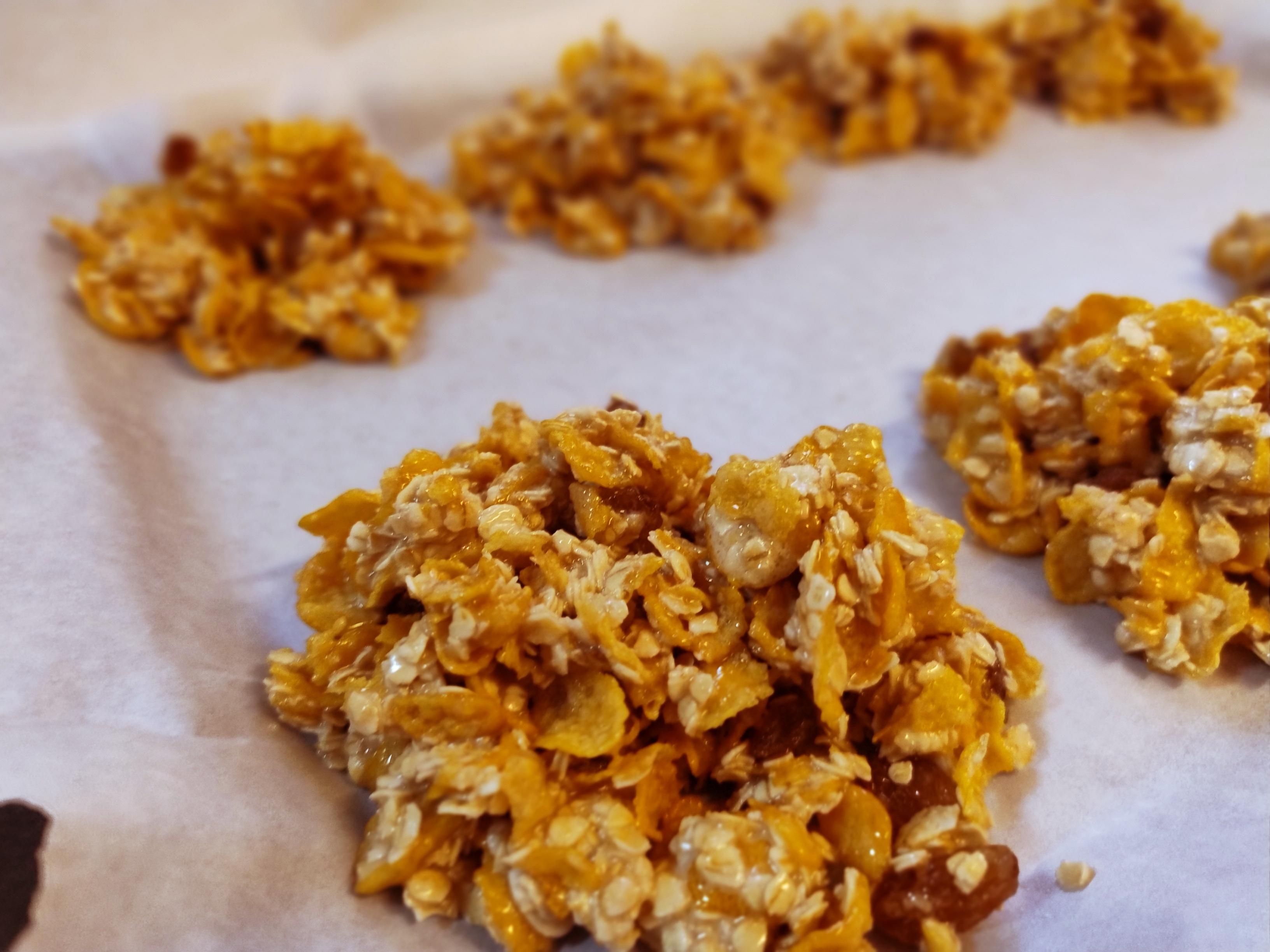
Don't worry if the dough doesn't seem to hold together - it will foam up and combine in the oven.
Spoon 10 equal amounts of batter onto baking paper.
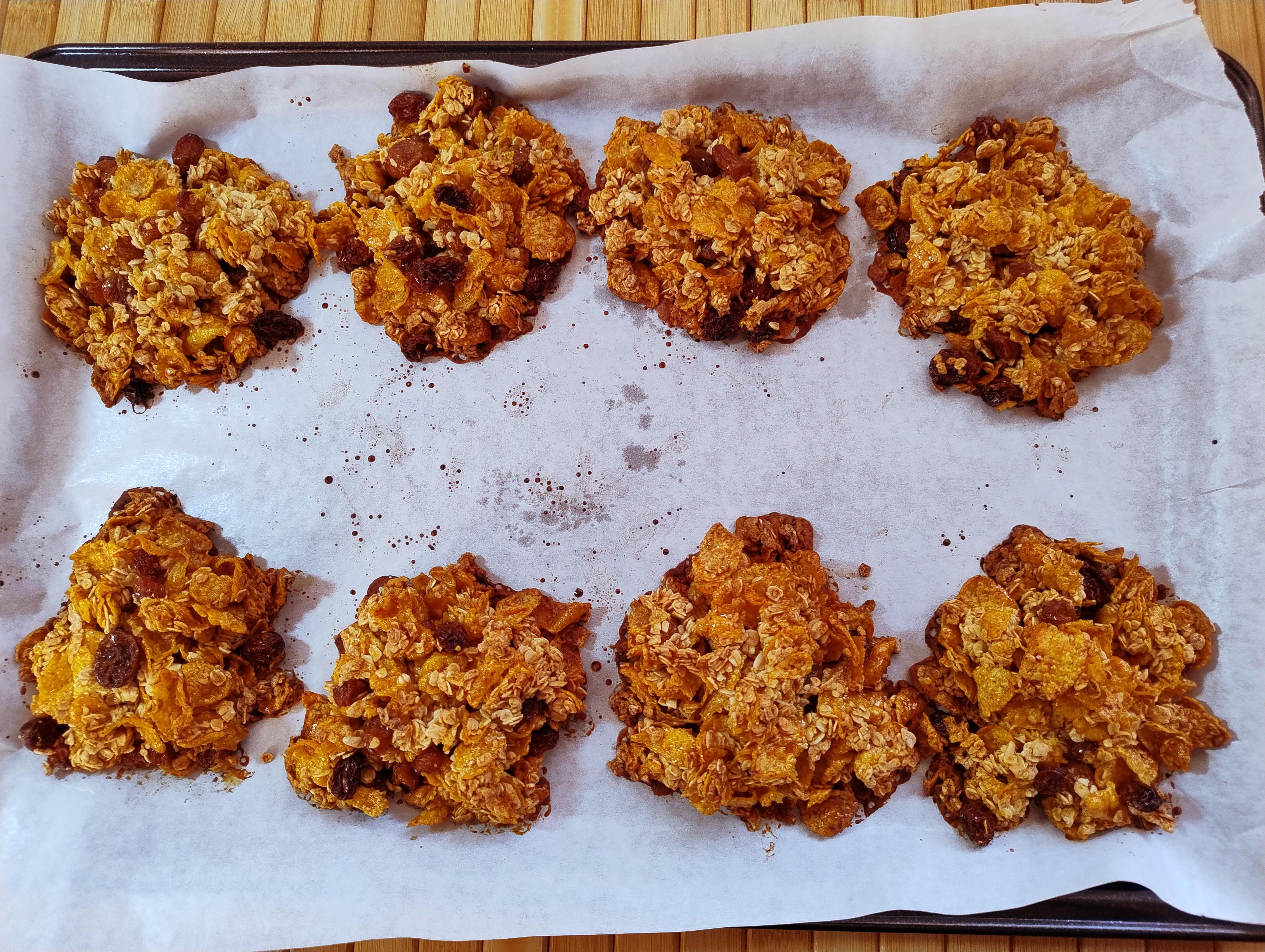
Cook for 8-12 minutes or until starting to brown.
As with some more traditional recipes, you can adjust how hard/chewy the final cookies are by altering cooking time and temperature (and also the honey/erythritol ratio)


I know that nothing is more tempting than cookies fresh out of the oven, but in this case they need to be allowed to fully cool to room temperature to harden properly. When they first come out of the oven, they'll be very soft and napalm-y.
These cookies in particular should probably be kept in a sealed container. Without the heavier oat flour, they seem to be quite hygroscopic (i.e. they easily absorb moisture from the air).
I once set some down to cool on the windowsill during a thunderstorm and the humidity left them noticeably moist in a bad way.
RECIPE 3: ANZAC BISCUITS

...That's right - biscuits.
In Australia, it's actually illegal to sell these as 'Cookies', something that I fully support.
In Australia and New Zealand, the recipe for this traditional biscuit is actually owned and strongly controlled by the Army.
The reason for this is very long and complicated, but seems to boil down to a 1919 cookbook misprint and a later attempt to prevent war profiteering.
Isn't this educational?
I publish this recipe knowing that doing so is dangerous: very soon someone from New Zealand will pop up and somehow claim to have published it first.
(ANZAC BISCUITS) Ingredients:
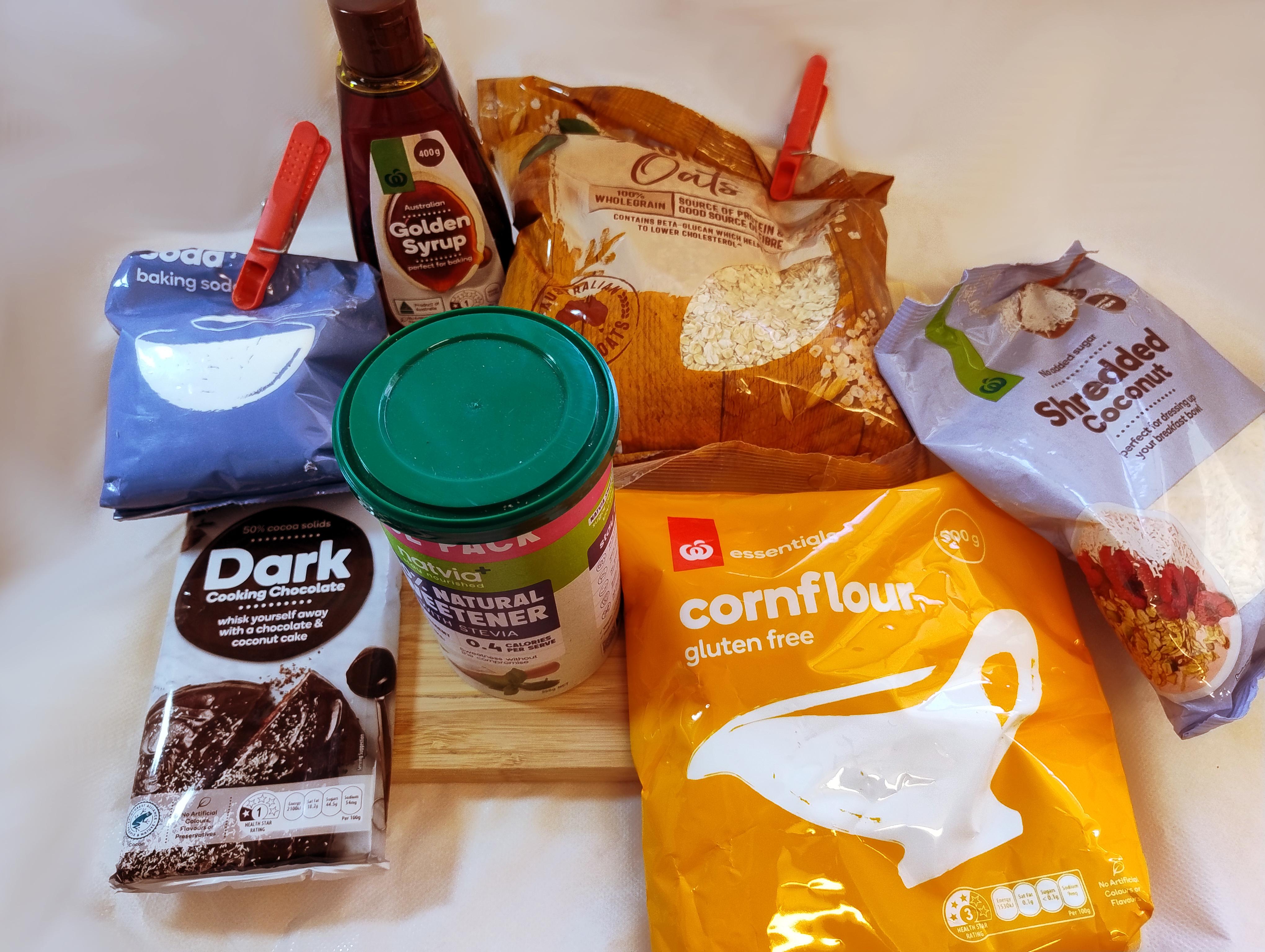
- 1.5 cups of oats
- 1 cup of desiccated coconut
- 1/4 cup of choc chunks
- 1/2 cup of golden syrup
- 1/4 cup of erythritol
- 1/2 cup of cornflour/cornstarch
- 1/2 bicarb soda/baking powder
...That's right, we're using golden syrup rather than honey - as is right for ANZAC Biscuits.
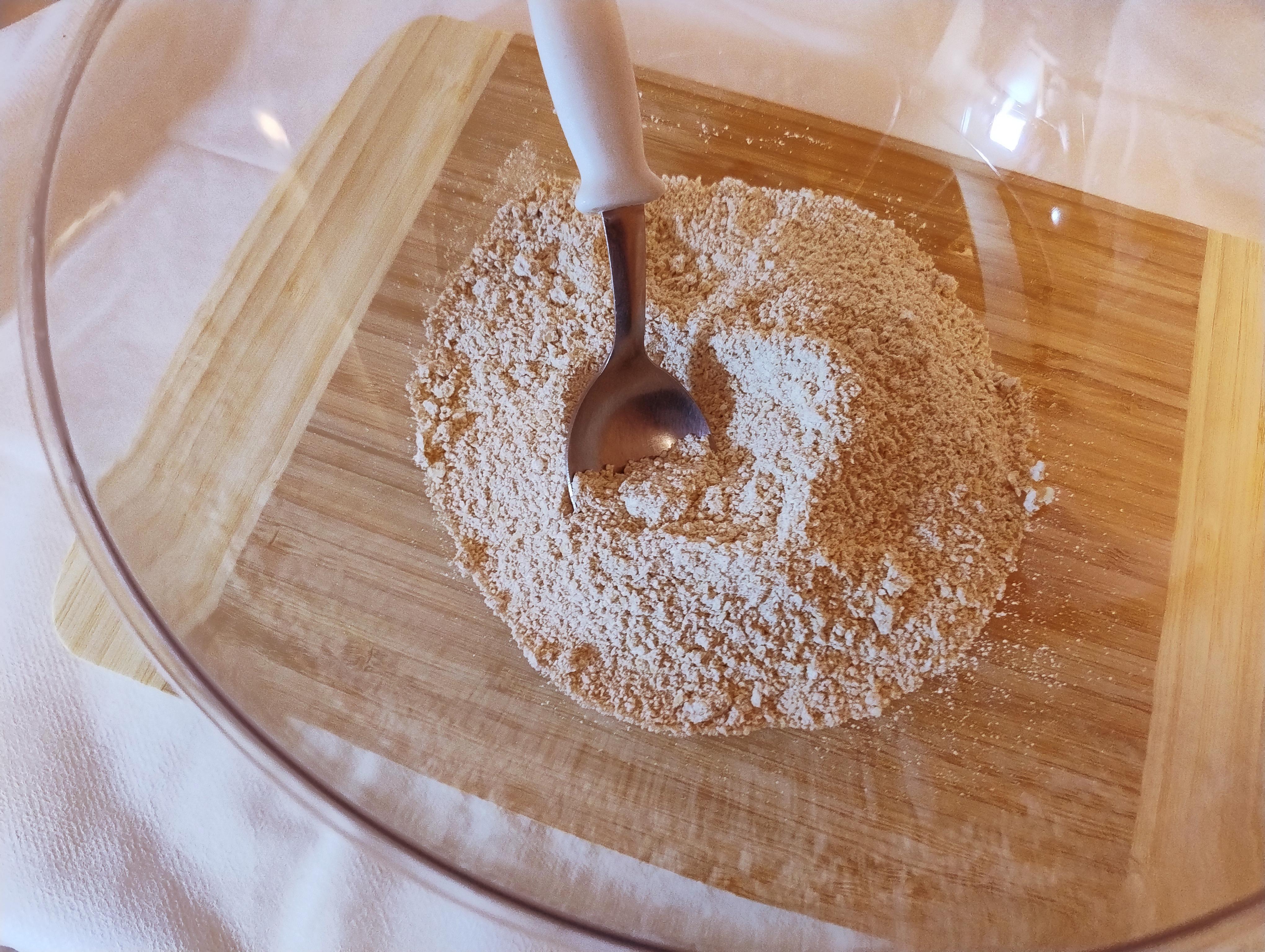
Preheat oven to 175°C (350°F)
Blend one cup of the oats into a rough flour - saving the other half cup of whole oats to add later for texture.
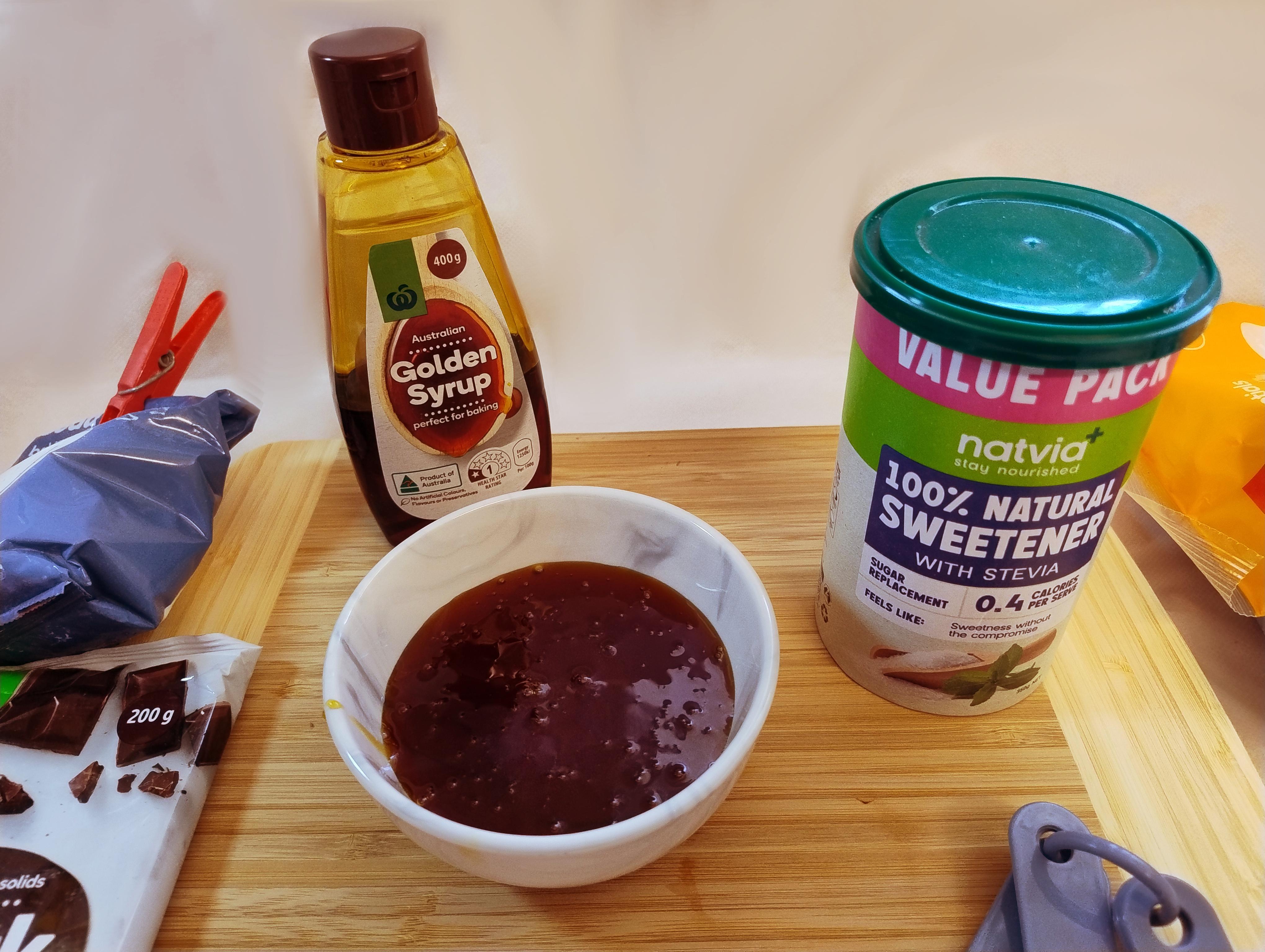

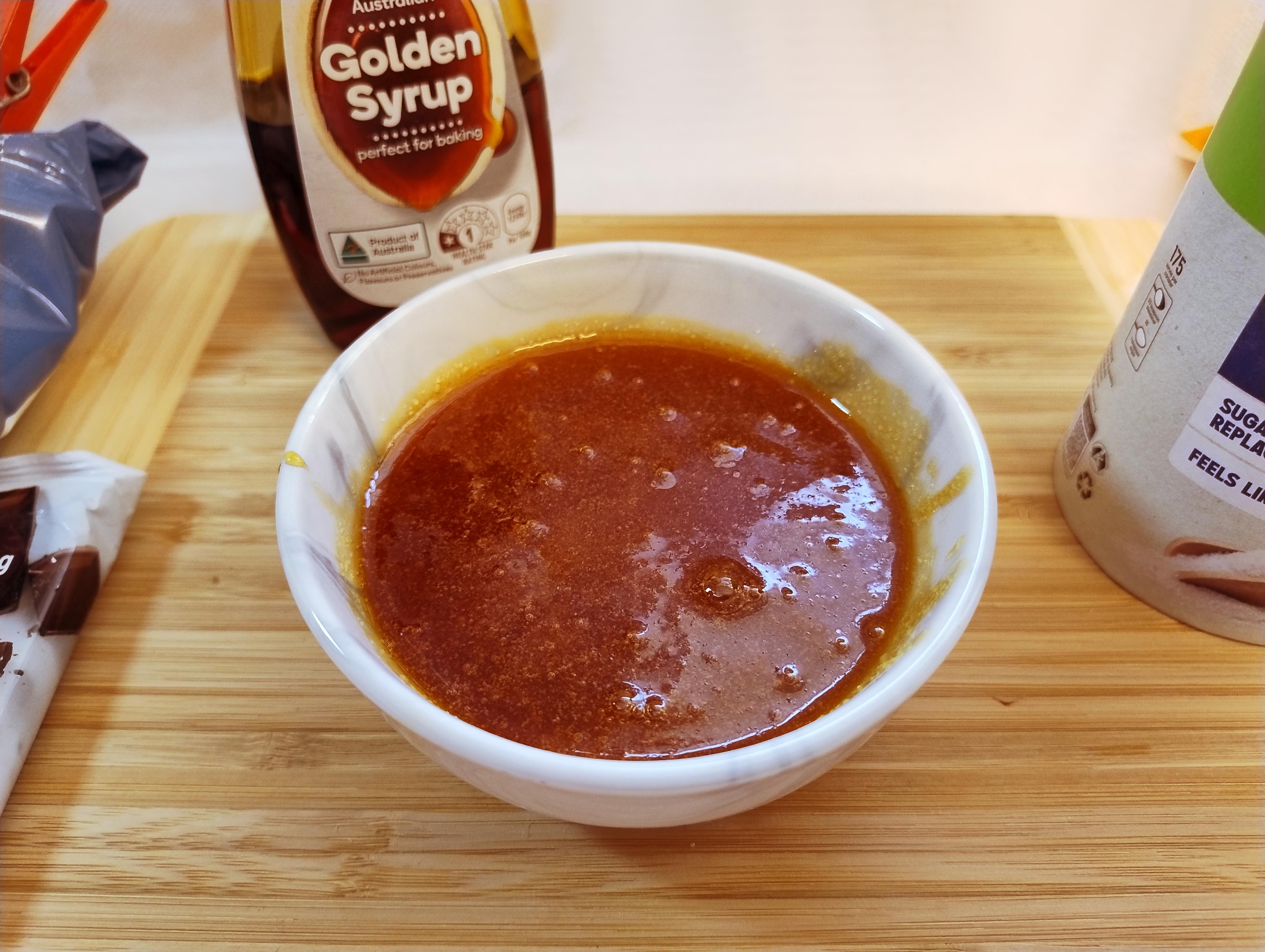
Mix golden syrup and erythritol in a container and then microwave it for one minute, stirring once, and being very careful not to let it boil over. Mix it up again, making sure that the erythritol is fully dissolved.

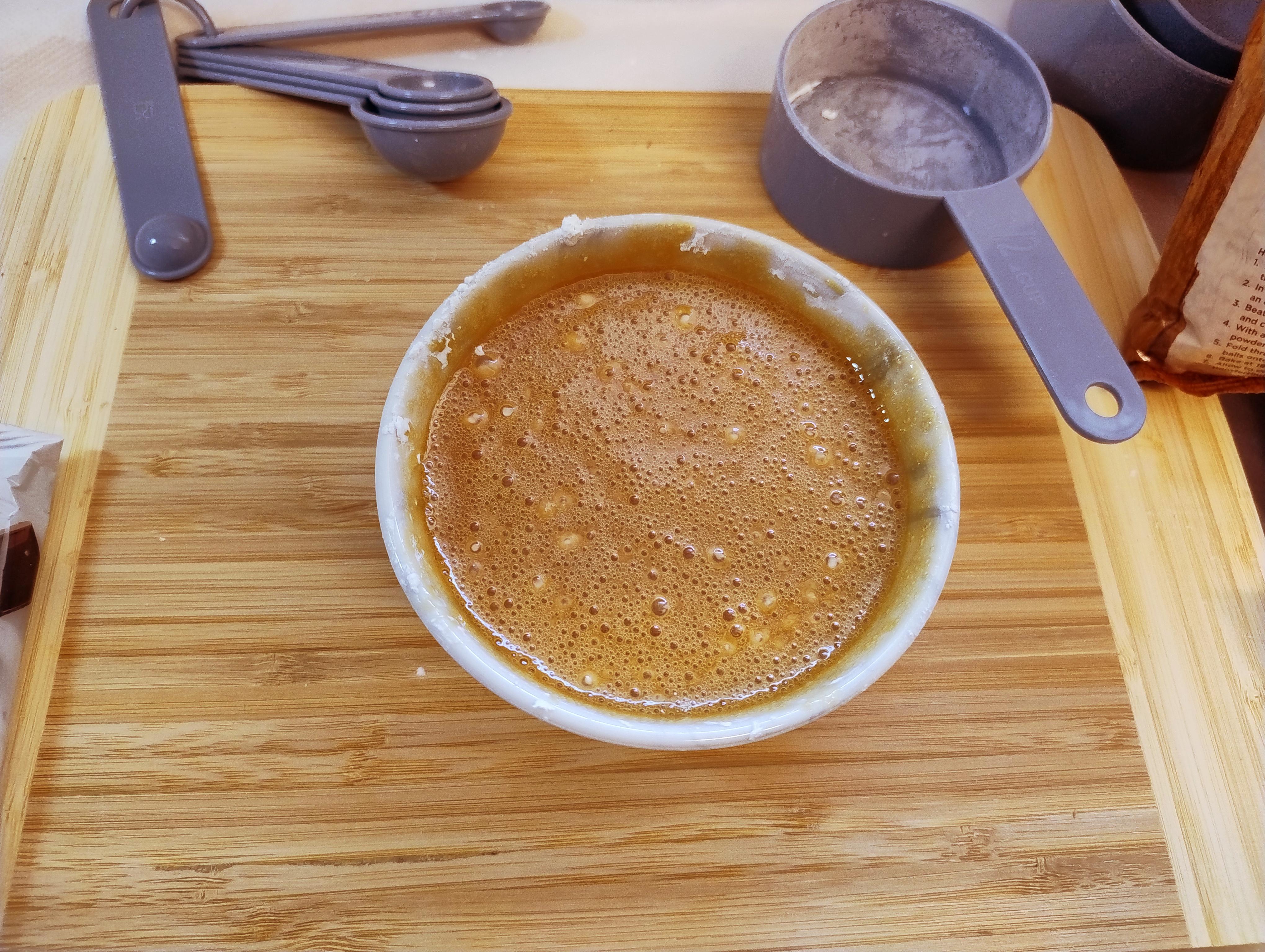
Mix in the cornflour and bicarb

Add this to a mixing bowl with the blended oat flour, the remaining half cup of whole oats, and the coconut.
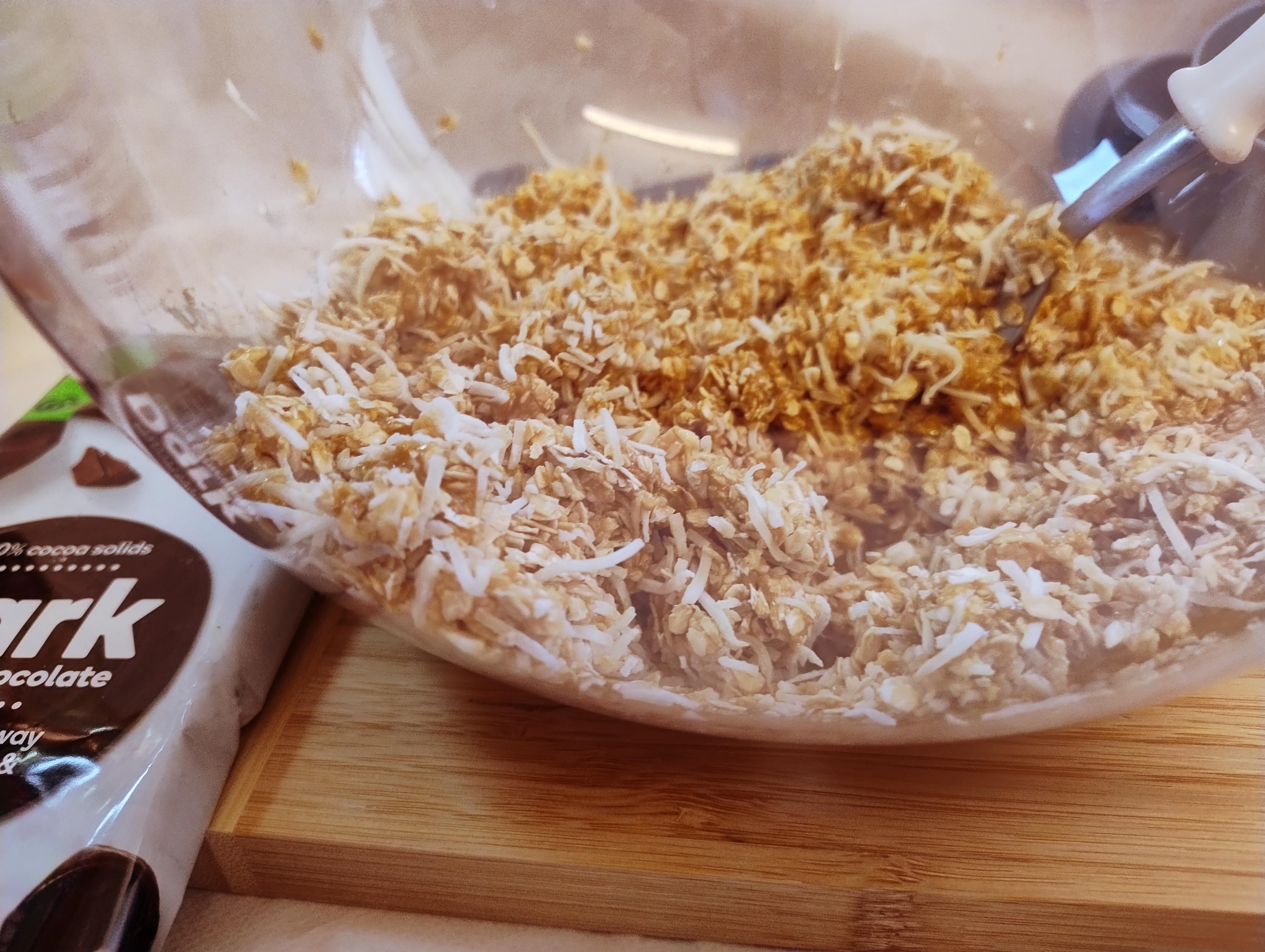
Mix it well.
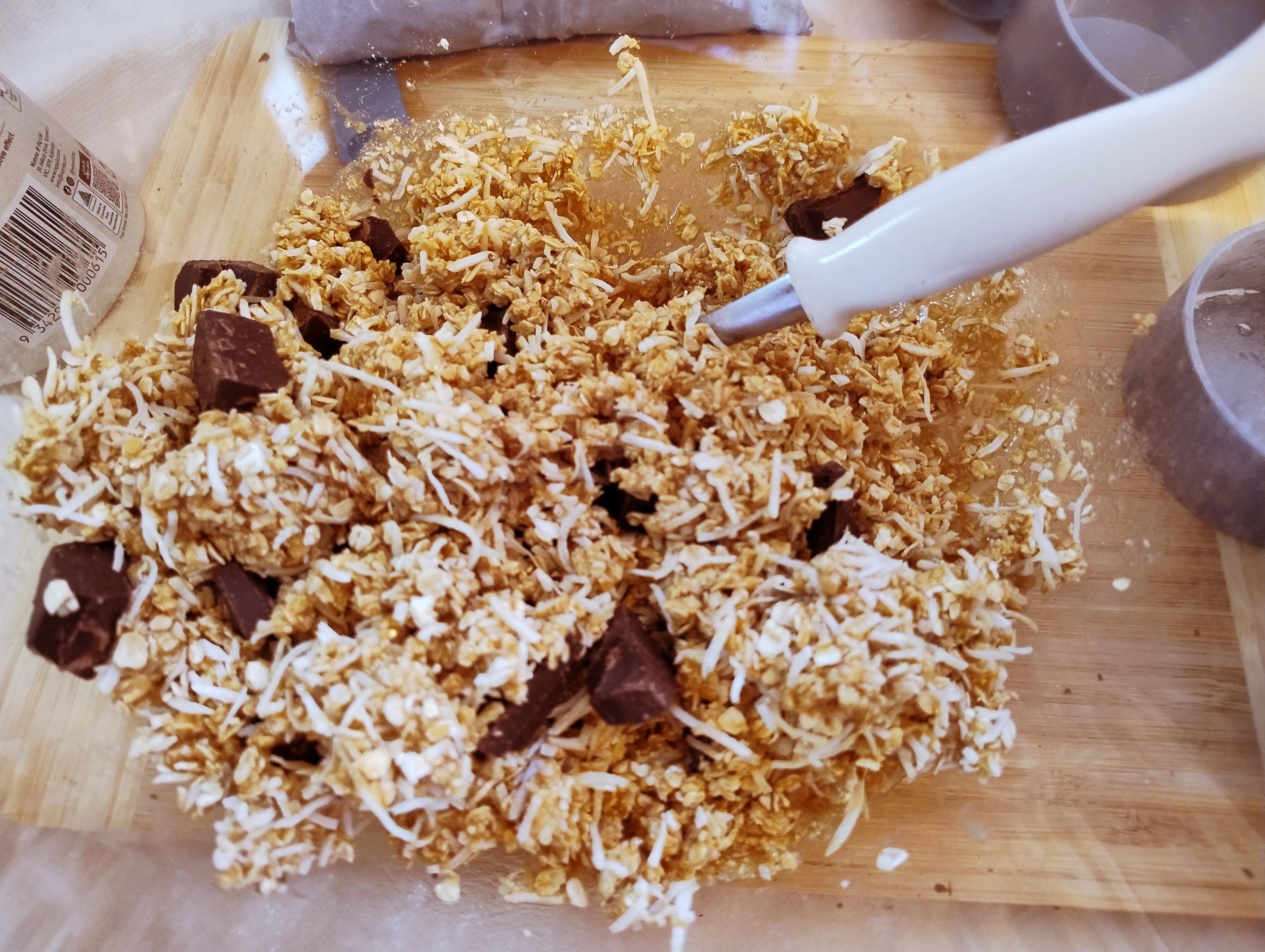
Add the choc chunks

Spoon ten equal amounts onto a tray. Don't worry if the batter doesn't seem to stick together and is too crumbly, it'll foam up and bind together as it cooks.
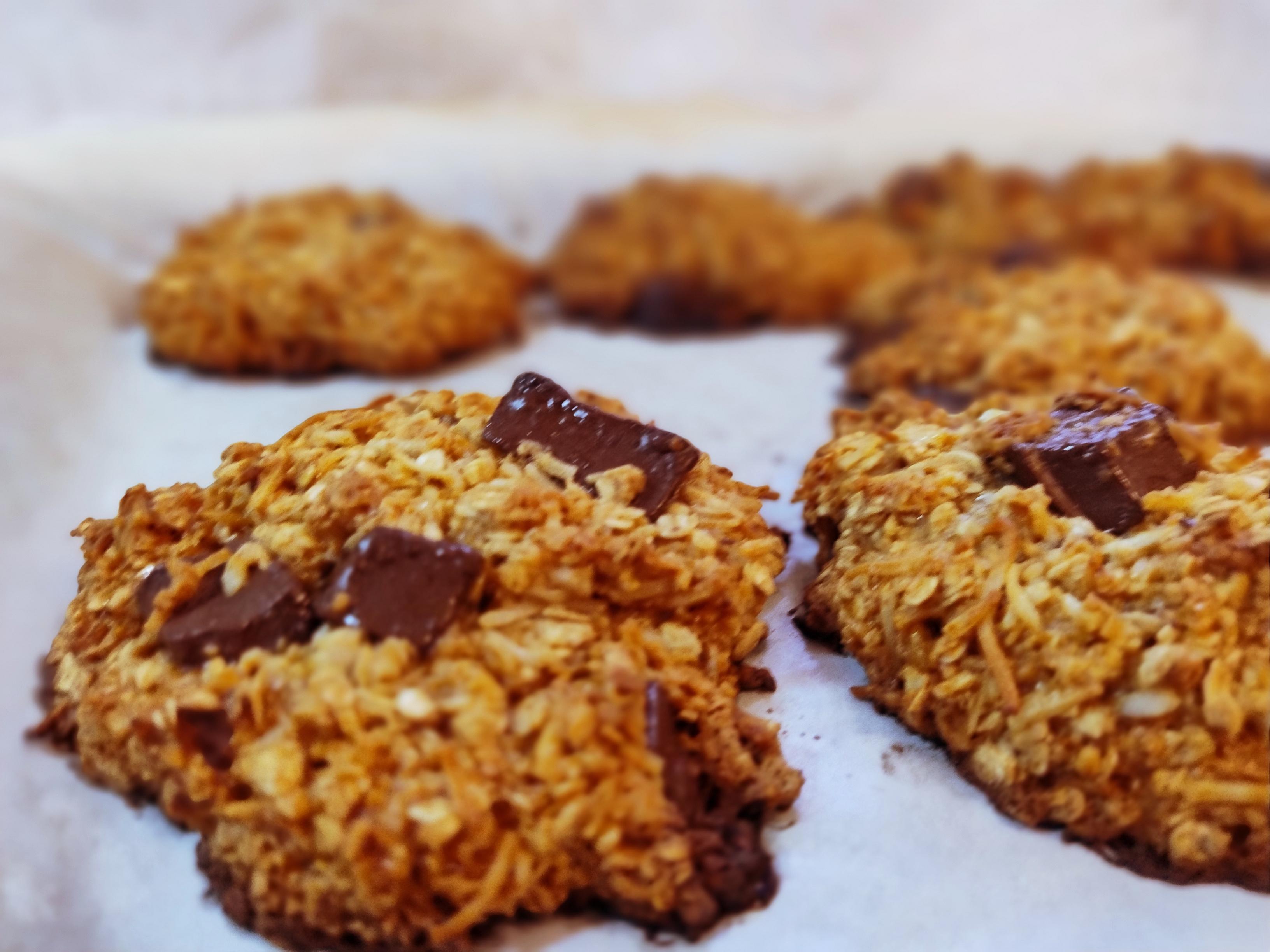
Cook for 8-12 minutes or until starting to brown.
As with some more traditional recipes, you can adjust how hard/chewy the final cookies are by altering cooking time and temperature (and also the golden syrup/erythritol ratio)
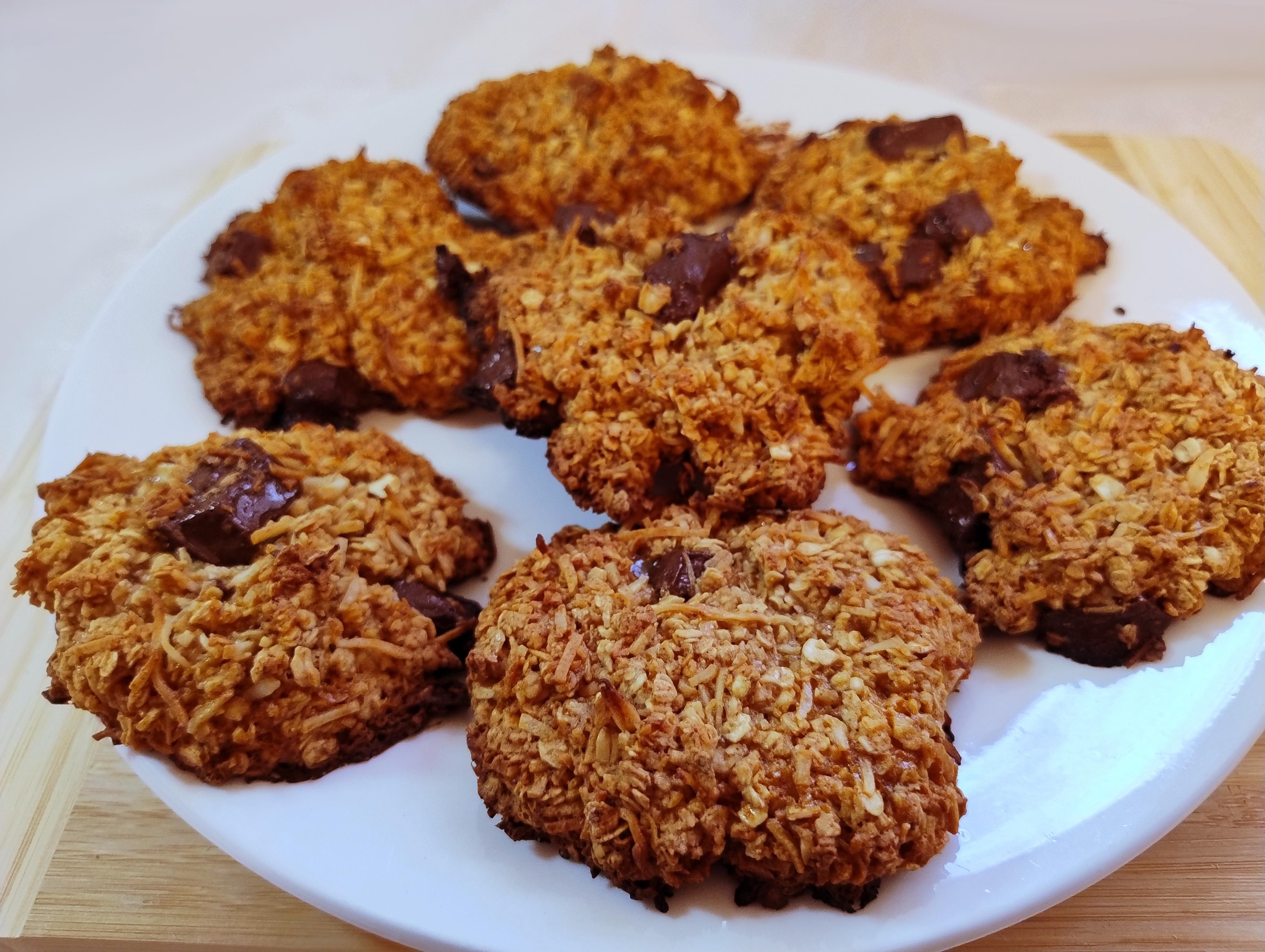
I know that nothing is more tempting than cookies fresh out of the oven, but in this case they need to be allowed to fully cool to room temperature to harden properly. When they first come out of the oven, they'll be very soft and napalm-y.
...AND THERE WE HAVE IT!

NATURE = VIOLATED
...Truly, we tamper in God's Domain