GoBabyGo Car - Trailer Attachment and Big Red Button Steering Wheel
by WSUGoBabyGo in Circuits > Assistive Tech
1415 Views, 4 Favorites, 0 Comments
GoBabyGo Car - Trailer Attachment and Big Red Button Steering Wheel
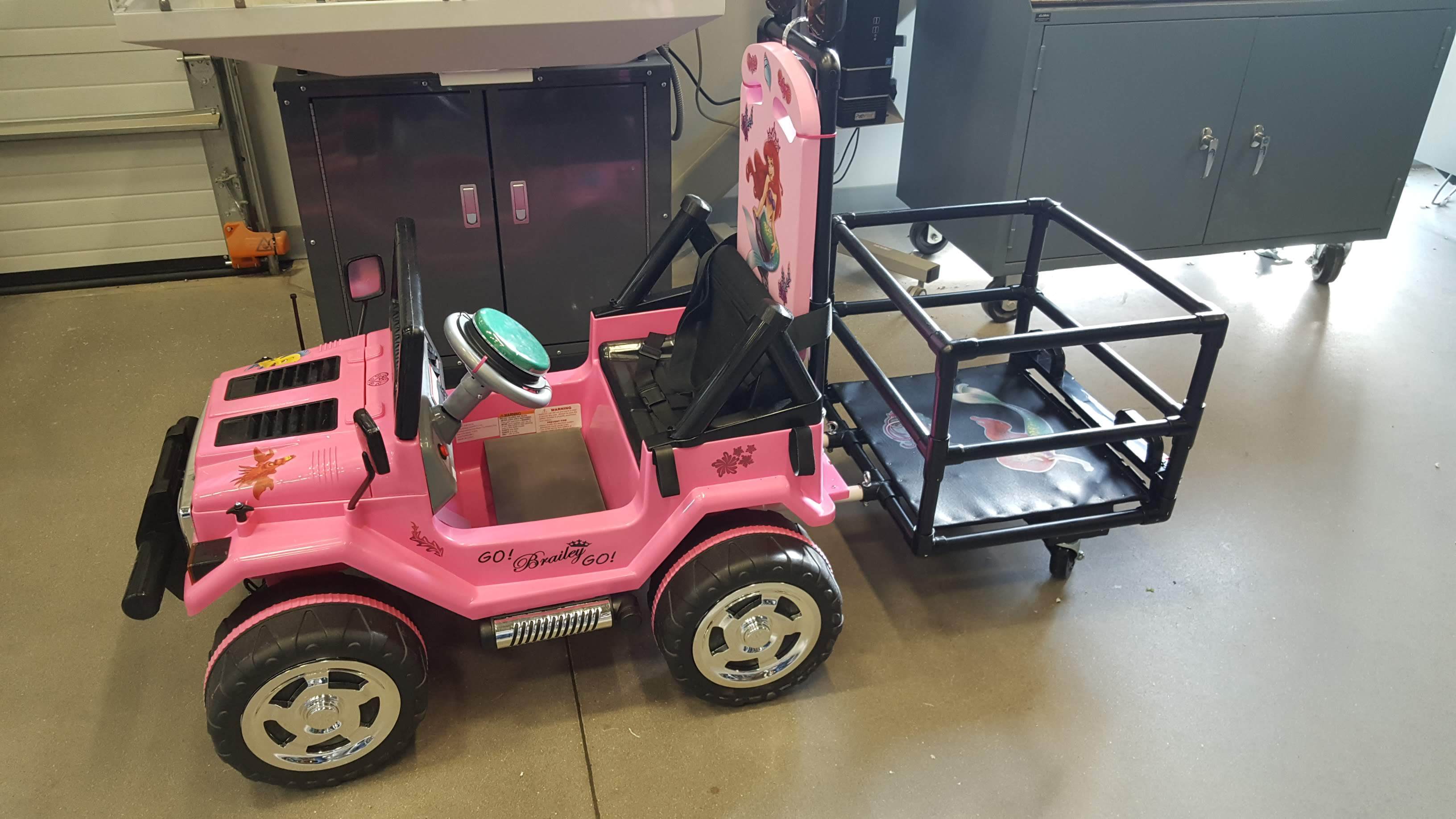
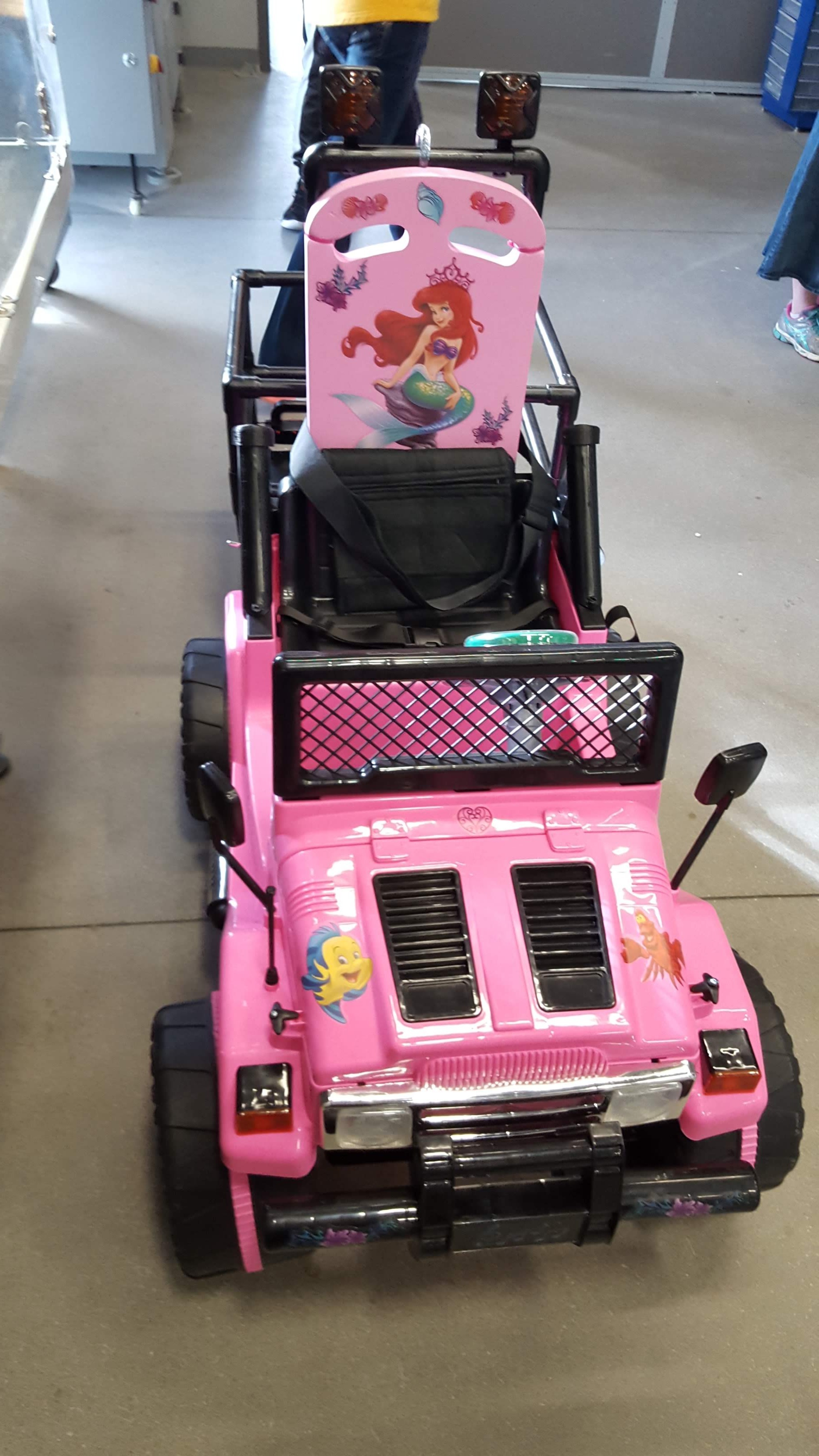

This project focuses on the custom modification of a 12V ride-on vehicle for Brailey, an adventurous two-year-old. To ensure Brailey can play safely while accommodating her specific medical needs, this build integrates support for a ventilator, suction machine, and enteral feeding supplies, alongside custom postural support.
The goal of this "GoBabyGo" modification was to merge complex medical necessity with the joy of independent mobility. By using a Fitnessclub 12V (Model HP001) as the base—chosen for its high weight capacity (88 lbs) and parental remote override—we created a platform that prioritizes both safety and autonomy.
Specialized Design Features:
- Medical Equipment Trailer: A custom-engineered trailer designed to securely house and transport a ventilator and feeding bag, ensuring medical stability during motion.
- Postural Support System: An adapted backrest utilizing a modified swim kickboard to provide the necessary upright stability for the user.
- Accessible Throttle Control: A steering-wheel-mounted push button replaces the standard foot pedal, allowing for easy, low-force activation.
- Dual-Layer Safety Overrides: Integration of a physical external emergency stop switch for immediate stops, paired with the vehicle's native 3-speed remote control for parental steering assistance.
- Personalized Aesthetics: Finished with custom Princess Ariel graphics to create a welcoming, personalized aesthetic that reflects the user’s personality.
Supplies
Materials
- Ride on car with remote control
- Ablenet ‘Big Red’ button
- Kickboard
- 20A SPST toggle switch
- Large Velcro Strap
- Small Velcro straps
- 2”x 4” Wood planks
- 2 - 4" Rubber Castor Wheels
- 5 ft -16 gauge wire
- ¼ “ plywood for the trailer
- ¾ “ PVC pipes
- ¾" 90 Degree elbow PVC joints
- ¾ “ 3 way Tee PVC joints
- ¾” 4 way Tee PVC joints
- ¾” Plus PVC joints
- PVC clamps
- Different sized Bolts and nuts
- Wire connectors
- Small nails
- Black 3-D printed vinyl end caps
- Ariel princess stickers
- Black leather ( black marine vinyl sheets)
- Zip ties
- Black spray paint
- Seat belt foam covers
- 3" long 1/4" eye pins
- Shower curtain hook
Equipment
- Standard wrenches, screwdrivers, ratchet and socket sets
- Jigsaw Sandpaper
- Hand drill
- Hammer
- 3-D printer
- Hot glue gun
- PVC pipe cutters
- Wire strippers
- Drill press
- Scissors
Assembly of Car
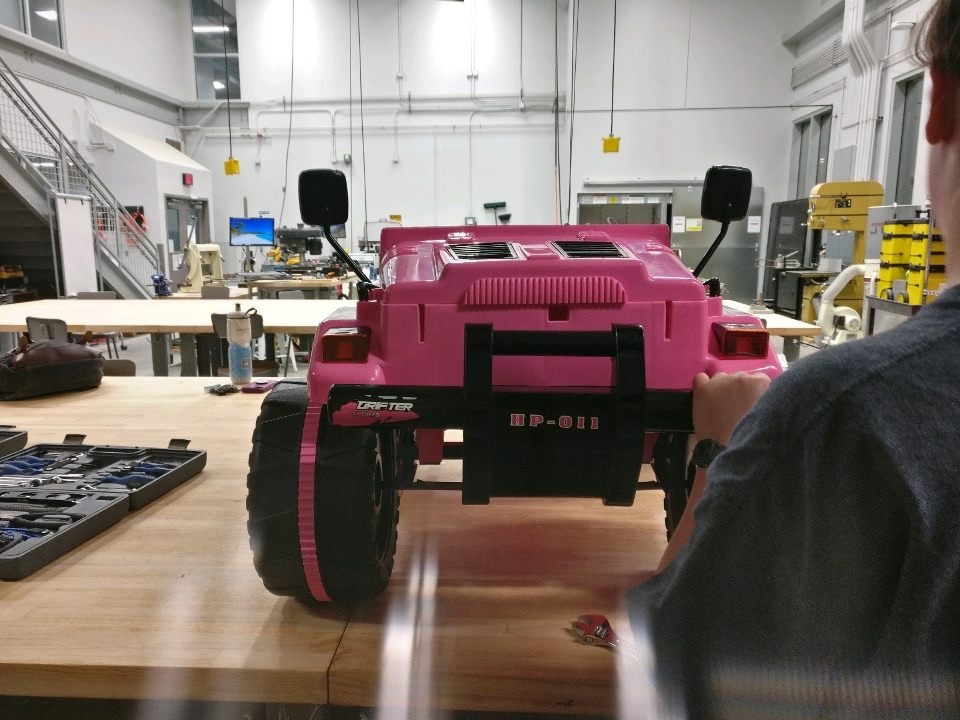

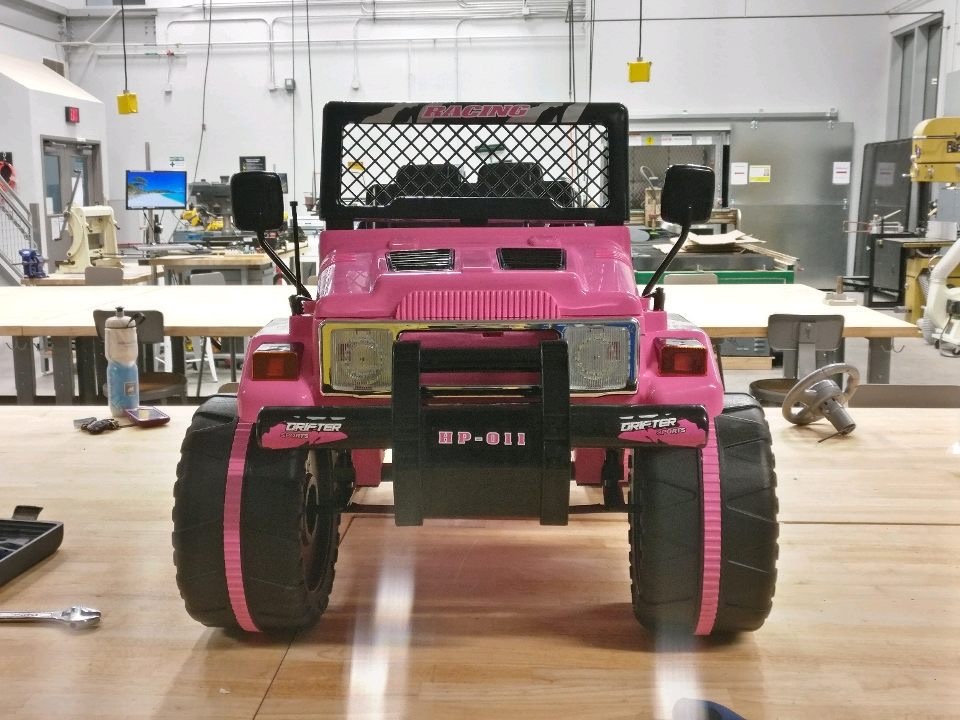
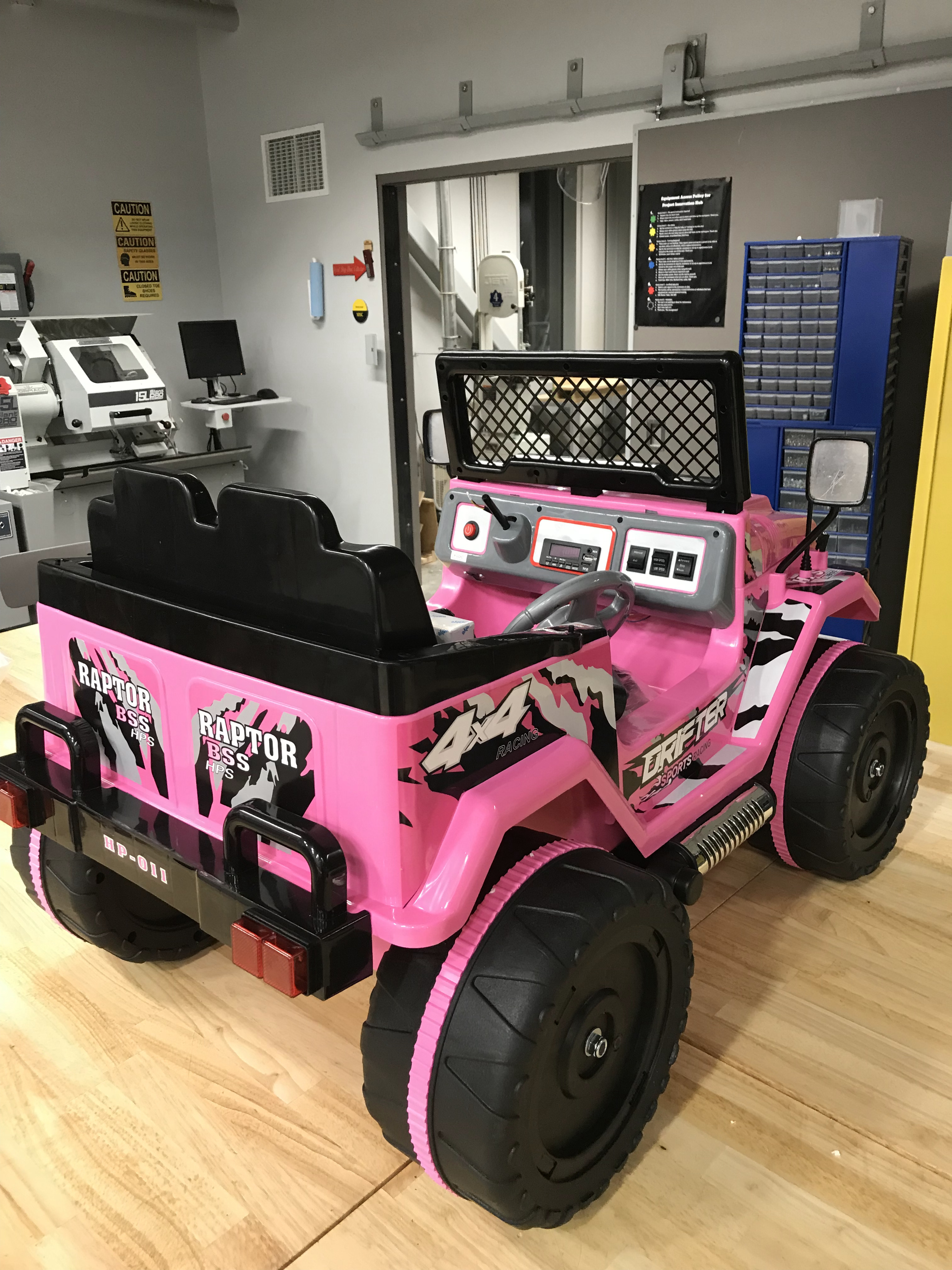
The car assembled according to the instructions that came with it, minus putting on the chrome wheel accessories (to avoid scratching them during the build), the lights (to be added at end of build), and the steering wheel (so that the Big Red button could be wired through the steering column).
Re-routing the Foot Pedal and Installing a Kill Switch

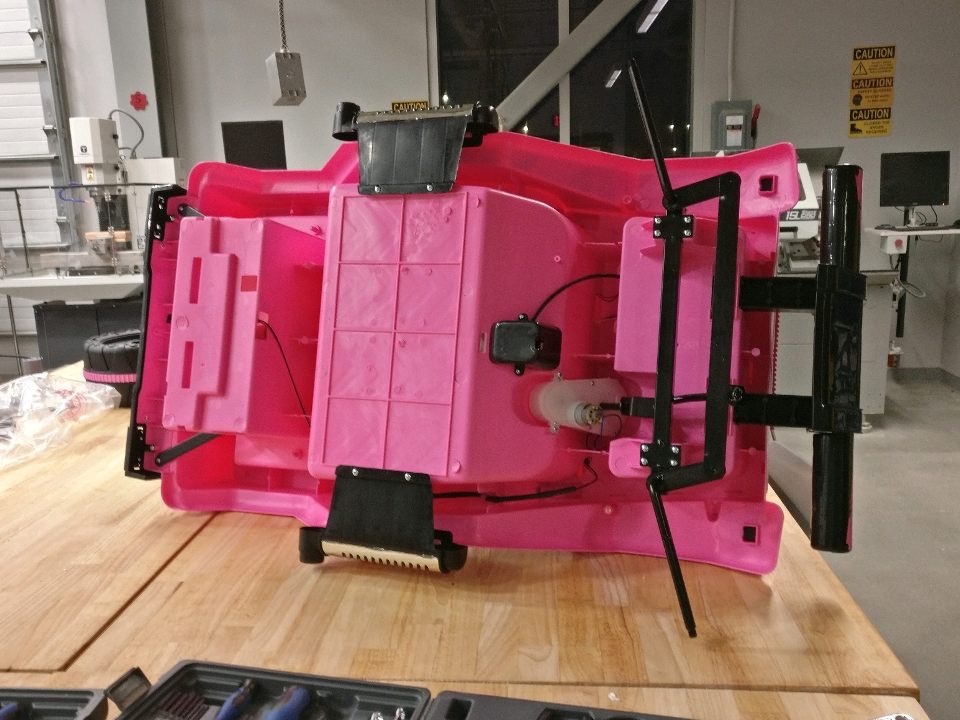


A kill switch is a standard modification to all WSU GoBabyGo cars. It is a safety switch for parents or caregivers to stop the Big Red Button controls in case of vehicle malfunction or a crash. A standard 20-amp toggle switch was used and mounted onto the side of the car near the rear. It was mounted onto the side instead of the back of the car because the trailer blocks easy access to the back of the car.
First you need to determine which of the wires off of the foot pedal reads 5V and which is the ground. To do this, strip part of both of the wires coming off the foot pedal and read each one with a multi-meter. Then cut the 5V wire and connect it into the kill switch. Then connect the ground of the kill switch into one of the wires of the Big Red button. We found it was best to run the wires through the steering column so that the button could be zip-tied to the steering wheel. Lastly connect the other wire from the Big Red button to the ground of the foot pedal. Running the kill switch and button loop in this way will allow the kill switch to only stop the function of the button and will not interfere with the battery of the car, preserving the battery life.
Adding Straps for Ventilator, Suction Machine, and Feeds Bag Tubing.
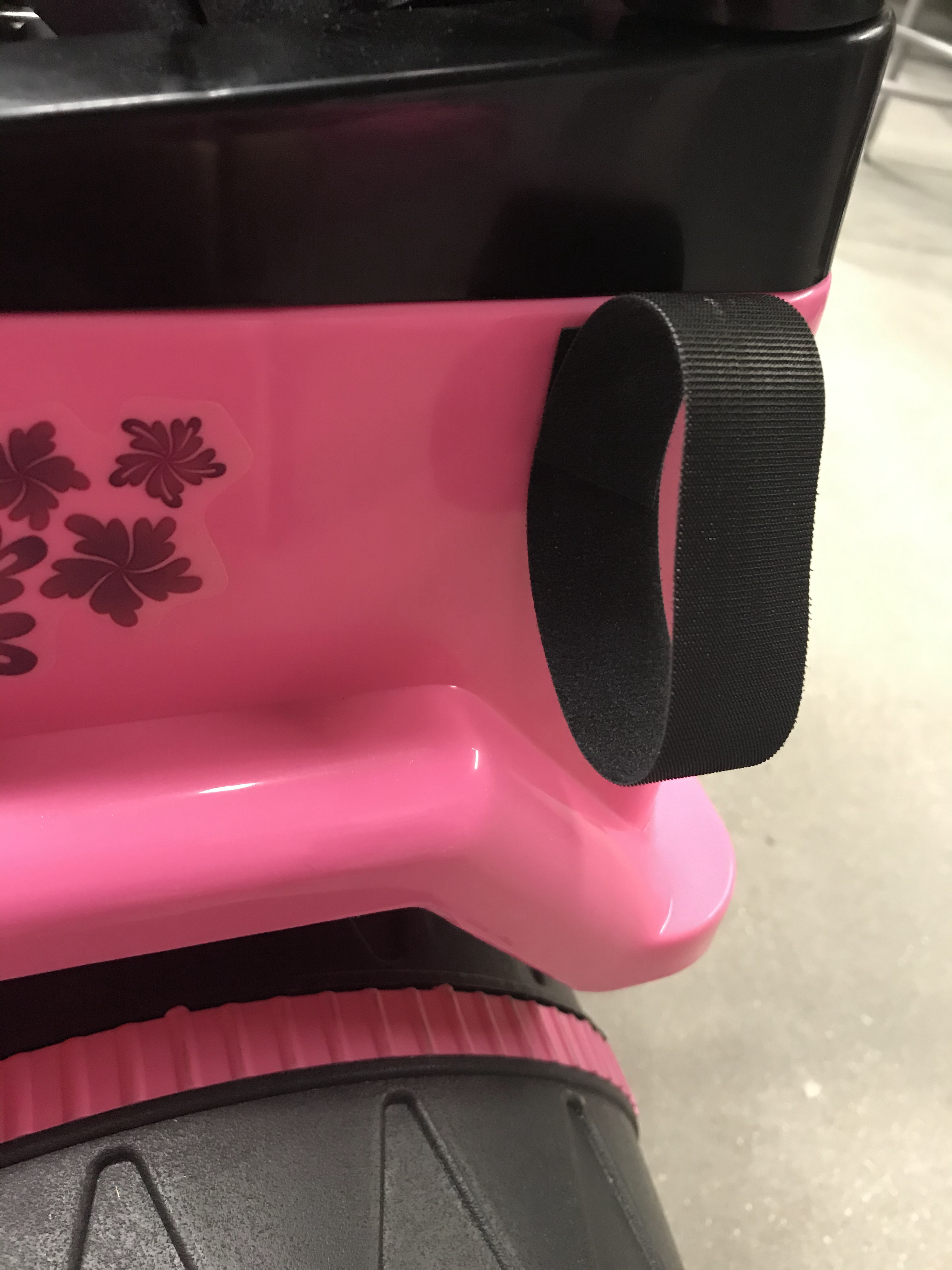
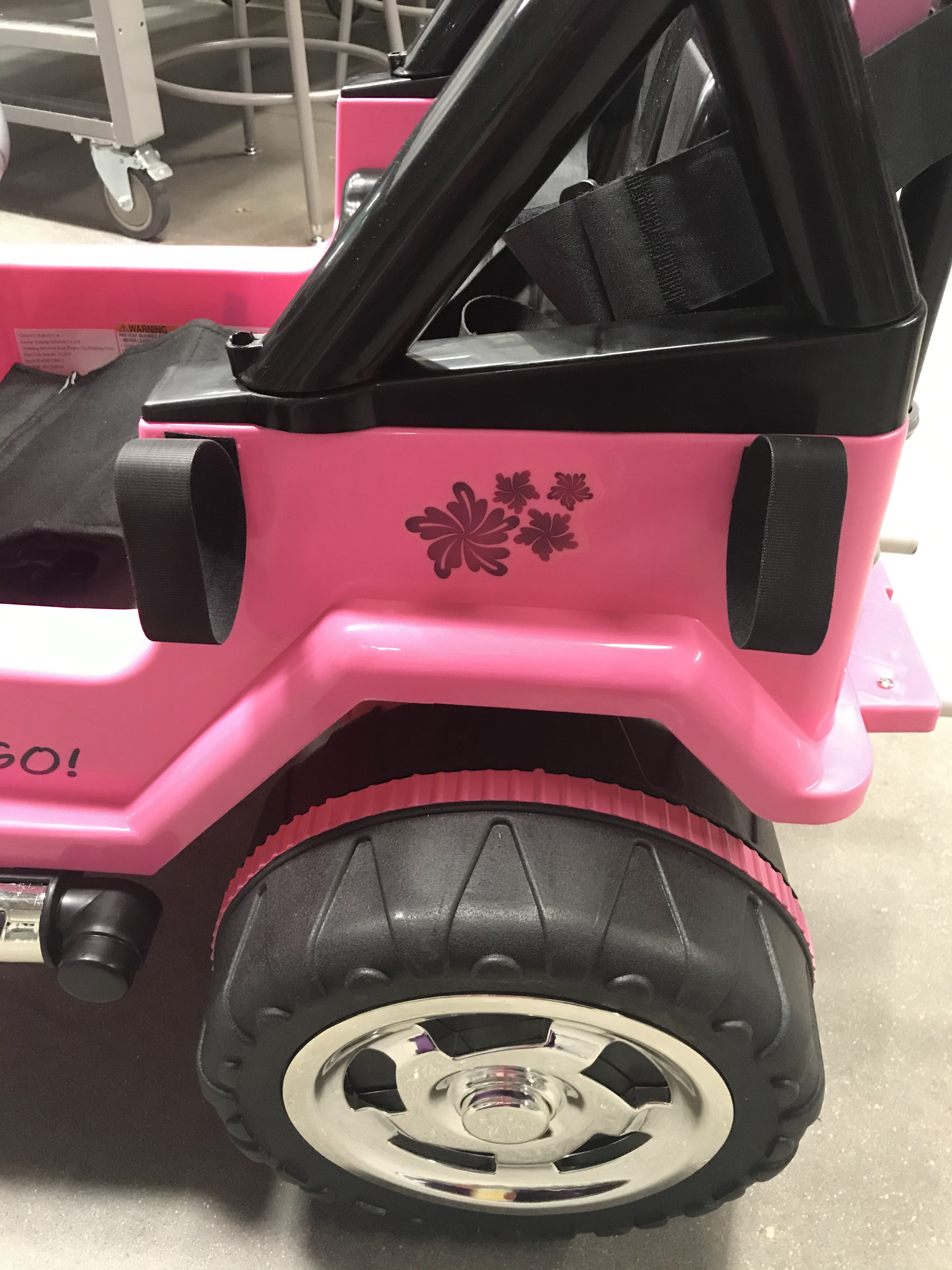
Velcro was used to attach two straps on the sides of the car, making sure her tubing won’t interfere with the tires. Hence her tubes will pass through the Velcro to the trailer, securing the safety of the passenger as shown in the image. The Velcro straps were attached with hot glue and a small screw was used to make sure they stayed attached to the car.
Adding Feet Support
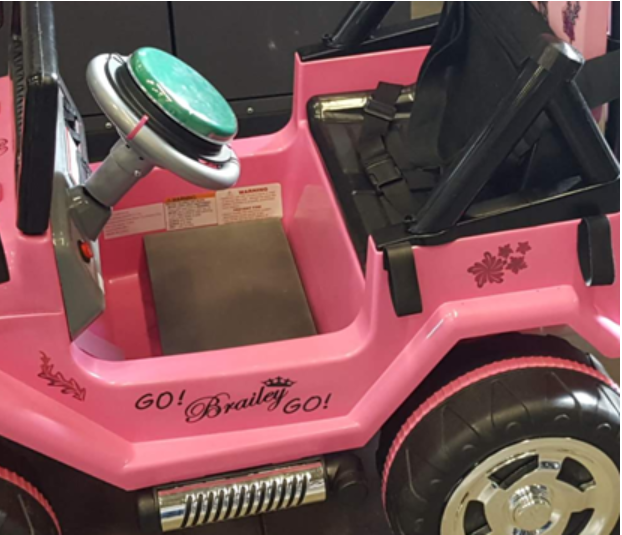
A foam is placed on the bottom of the driving area as a support, making sure the height is ideal that her feet reach the support. The foam makes it more comfortable when Brailey is driving around. This was a 22 x 18 cm^2 gray foam as shown below.
Seat Back Extension
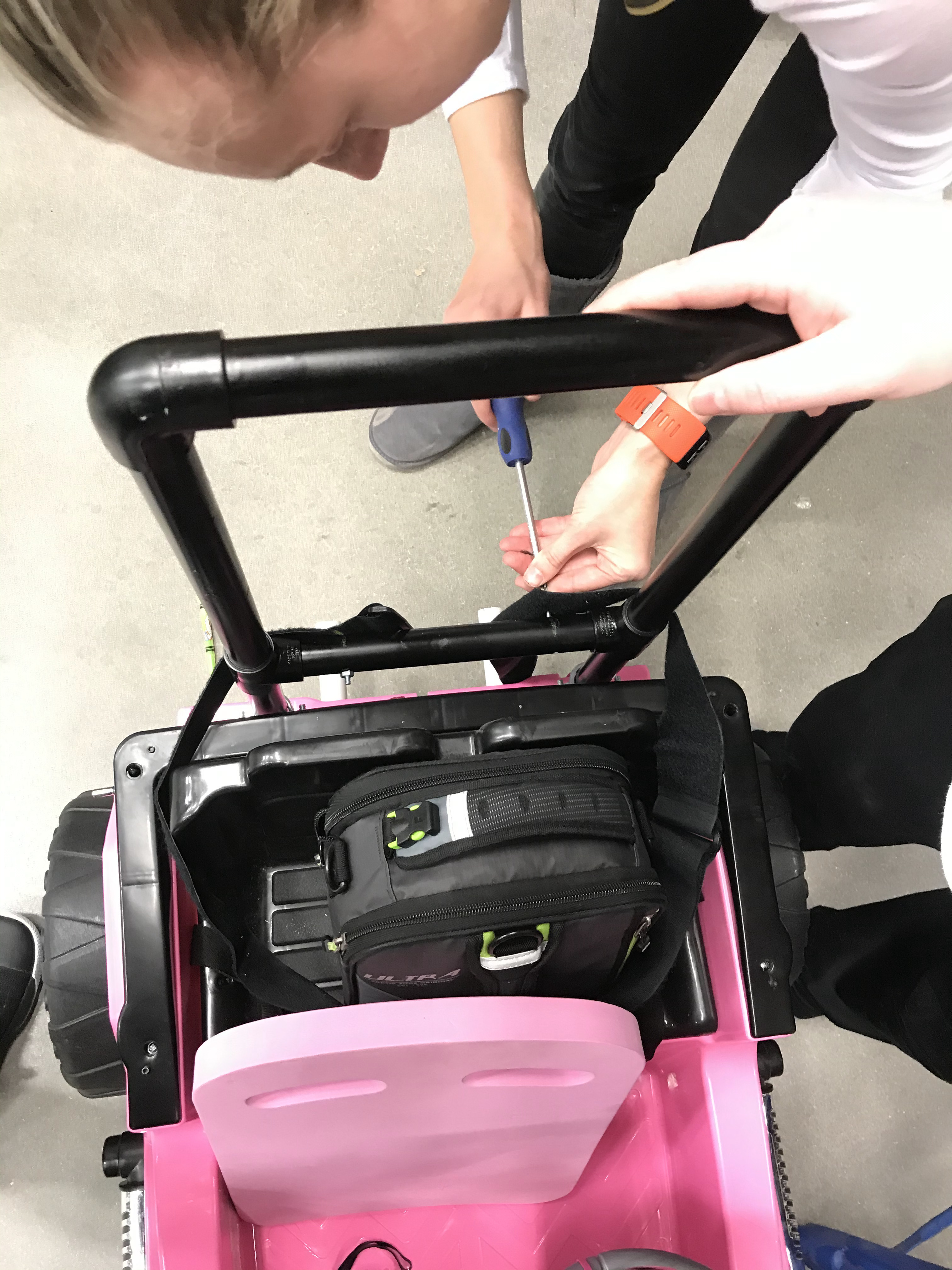


For added protection and support, a back rest was designed using a pink kickboard, ¾ in. PVC piping, ¾ in. PVC elbow joints and t-joints, ¾ in. PVC clamps, velcro padding, velcro straps, screws and joints, and zip ties.
Our design for the seat back extension was placed behind the seat of the car (approximately an inch behind the user) as the child in need was able to sit up on her own, but still desired the backrest for added protection. The design of the backrest used the kickboard as a soft cushion and the PVC piping as support to hold up the kickboard. An A-shaped design was crafted out of six ¾ in PVC pipes that were measured and cut to fit the height of our child and the size of the kickboard. The two supporting PVC pipes at the bottom of the A-shaped design were approximately 25 cm tall and were measured based on the distance from the armpit to the seat of our child. These two PVC pipes were secured just above the bumper of the car using a total of four ¾ in PVC clamps, two for each pipe approximately 2 in apart. A t-joint was then added to the tops of each of the bottom supporting PVC pipes for connecting both the top two PVC pipes and the horizontal cross of the A-shaped design. The top two PVC pipes were approximately the length of the kickboard which was roughly 40 cm tall. The two horizontal PVC pipes of the A-shaped design were measured to be the size of the width of the kickboard which was approximately 30 cm. The top horizontal PVC pipe was connected to the top two vertical PVC pipes using two ¾ in elbow PVC joints, while the bottom horizontal PVC pipe was connected to the middle opening of the t-joint already connecting the bottom and top vertical sections of the A-shaped backrest. Two zip ties were used to secure the kickboard to the A-shaped PVC design by securing through the holes of the kickboard to the outer top two PVC pipes. For storage of the feeds bag, a shower curtain hook was added to the top of the A-shaped PVC pipe design.
For further chest support, a Velcro strap was added to the first or bottom vertical PVC pipe of the A-shaped backrest which was strategically measured for the child using the armpit to seat dimensions taken during our first meet-and-greet with the child and her family. This strap was screwed securely to the first horizontal PVC pipe with the use of nuts and bolts for extra protection and security. A small cut that would fit the size of the screw was made in the Velcro strap ahead of time to prevent any potential damage to the strap. The sizing of the chest strap was measured based on the child’s chest depth of 11 cm and the width of the backrest. As the child was not with us during the design process, a lunch box of approximate size was used to help ensure that enough of the Velcro strap was available for proper placement on the child.
For comfort readily available seat belt foam covers were attached together using Velcro to provide some back support and cushion on the seat of the car. However, any readily available soft material such as a tiny blanket or cushion that does not take up too much of the seat space could be used instead.
And for fun the lights that came with the car were attached to the top of the seat back extension with screws.
Building the Trailer


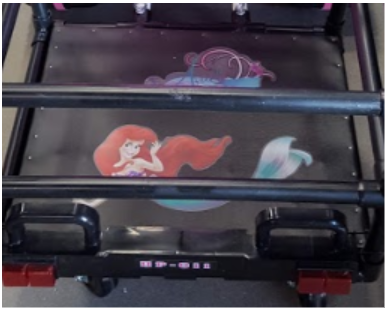


Step 01: Measure the dimensions of the under seat compartment In order to find the right dimension to attach the 2x4 wood which supports the trailer with two supporting pipes.
Drill 4 holes for on the wood and plastic of the car to attach the wooden block. Use screws, bolts and washers to attach wooden block to under seat compartment.
Step 02: On the outer side of the car that the bolt goes through, a hitch was attached with a clamp. The hitch consists of 10cm of ¾” PVC pipe closed with 90 degree elbow PVC joints. (This was changed from what is pictured.)
Step 03: Trailer PVC assembly and spray painting
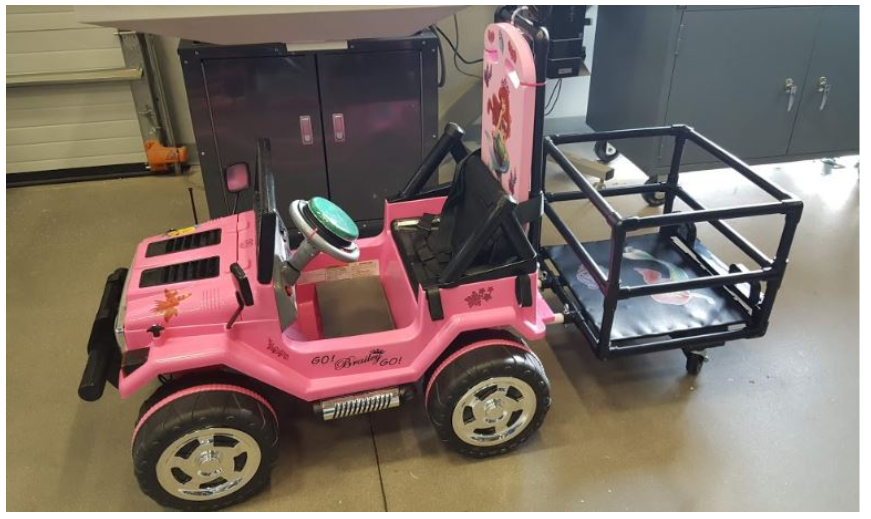
The trailer was built by 40cm x 50cm by pvc pipes surrounded, with a high of 2x15cm pvc staged which a total of 30cm high. A four total of 30cm high PVC pipes was connected with the pvc joints from base to the top on each side. Each end of the pipes was attached with a 3-way elbow joint. The middle and top of the elbow joint was connected with the 40 cm pipe to surround and form a trailer box. Two X joints was stuck at the bottom of the pvc pipe to attach the trailer and hitch (clamped to the car) with 2 PVC pipes together. Glue all the joints together with PVC cement. The whole trailer was then spray painted into black color to match with the color theme. The trailer picture was shown below.
Step 04: Trailer board
Trailer must have enough space to occupy suction machine, feeds bag and the ventilator which came around 50cm x 40cm. Cut a wooden board (¼ in thickness) for the above dimensions. To attach the Castor wheels to the trailer we used two wooden blocks of height 10cm to account for the height difference between the Caster wheels and the bottom of the trailer. For the wooden blocks, 3 wooden blocks should be glued together to get the required height. Then drill 4 holes in each of the wooden blocks using drill press to connect the Castor wheels. Next, drill holes on the wooden board where the 2 wooden blocks connect. Use 4 clamps and carriage bolts to connect the trailer board to the trailer PVC assembly. Drill 2 holes per each clamp which were equally spaced. The clamps connect to the two middle PVC tubes in the bottom of the PVC assembly. Then connect the two wooden blocks and clamps to the underside of the wooden board. Cover the wooden assembly with black marine vinyl sheet using nails. Make sure the nails do not stick out the other side for safety. Attach the castor wheels using 4.5” long carriage bolts and lock nuts.
Step 05: Assembly
Attach the trailer board assembly to the PVC assembly using the clamps connected to the underside of the trailer board using bolts and washers. Next, connect the trailer to the PVC hitch attached to the backside of the car. Use 2 eye pins of 1/4in thickness and 3in long for the connection part. Then connect the trailer to the 2 PVC pipes protruding from the hitch. Drill two holes that goes through the PVC pipe connection. Then put the eye pins through the drilled holes with washers and bolts and tighten them.
Step 06: The tail lights that came with the car were zip-tied to the back of the trailer to make it look more realistic.