Wall Art Chair Design

I live in a small, one bedroom apartment and am constantly struggling to find space for all of my hobbies to live in the room with me. Because of this, I am a big fan of multipurpose design. Here I created a piece that fills the empty space above my couch, while also providing a comfortable place for me to read, since the aforementioned couch is not deep enough to lay comfortably.
This Instructable covers how I created this chair, and mistakes I made along the way.
Supplies

Tools Needed:
- 3D Printer with a large build volume
- Jigsaw
- Sewing Machine
- Sander (Belt and/or Orbit)
Materials Needed:
- PLA filament
- 3d Gloop (superglue works too)
- 8x4 ft sheet of 15/32" plywood
- 3/4" wooden dowel
- 3 yards of corduroy upholstery fabric (60" wide)
- 1" cushion foam (24" x 72")
- Peel and stick, mirrored contact paper
- Black primer and spray paint
- Wood Glue
It also helps to have access to a laser cutter. This will help trace the exact shapes you would like , and prevent jigsaw tear out.
Create 3D Model


With whatever 3d modeling software you are comfortable with, create the 3d model of the chair. If you are 3d printing you could go for more abstract shapes.
I first started by measuring the width of my legs while criss cross and the depth at which I sit. These numbers (28" and 24") served as the basis for which I modeled the chair. I then found a comfortable angle for the chairs lean (110 deg) and worked that into the model too.
Notes:
- Make sure you create a solid base that can hold up a persons body weight.
- It is easiest to section everything off for 3d printing in the modeling software using the combine tool.
- I wanted the arms and legs to transform into a floor pillow, so I had to make sure the measurements lined up for that goal.
- Model for a 3/4" dowel along the horizontal sections for extra support.
3D Print the Legs/Arms

Place your sectioned pieces in the slicing program that works with your printer. I used a Bambu X1C for this project, so I sliced my model in BambuStudio.
Try to orient the individual sections the same way. If you do not then the light will reflect differently off the surface and make it look out of place.
My slicer settings are as follows:
- 0.4mm nozzle
- 0.28mm layer height
- 4 wall loops
- 5% gyroid infill
- Tree support
- Fuzzy skin
Overall, the arms and legs took a total of about 3 days and 4kg to print.
Spray Paint the Arms and Legs
I spray painted the arms and legs of the chair with matte black primer and used a semi-gloss black spray paint for the final coats.
Make Arm Rest


Using my 3d print, I traced and cut out a piece of cardboard that would fit in the slots of the chair arms and then covered it in 1" thick foam on each side.
I used spray adhesive and hot glue to make sure it stuck to the surface of the cardboard before "sewing" the fabric on.
I am not an experienced sewer, so instead of creating patterns for these shapes I traced the outline of the cardboard/cushion, cut it oversized, and tucked it under the foam, securing it with hot glue.
I used the sewing machine to stitch the side of the cushion that does not contact the cardboard, but that is it. It is not perfect, but it is good enough for my usage and has held up well!
Cut Back and Seat to Size
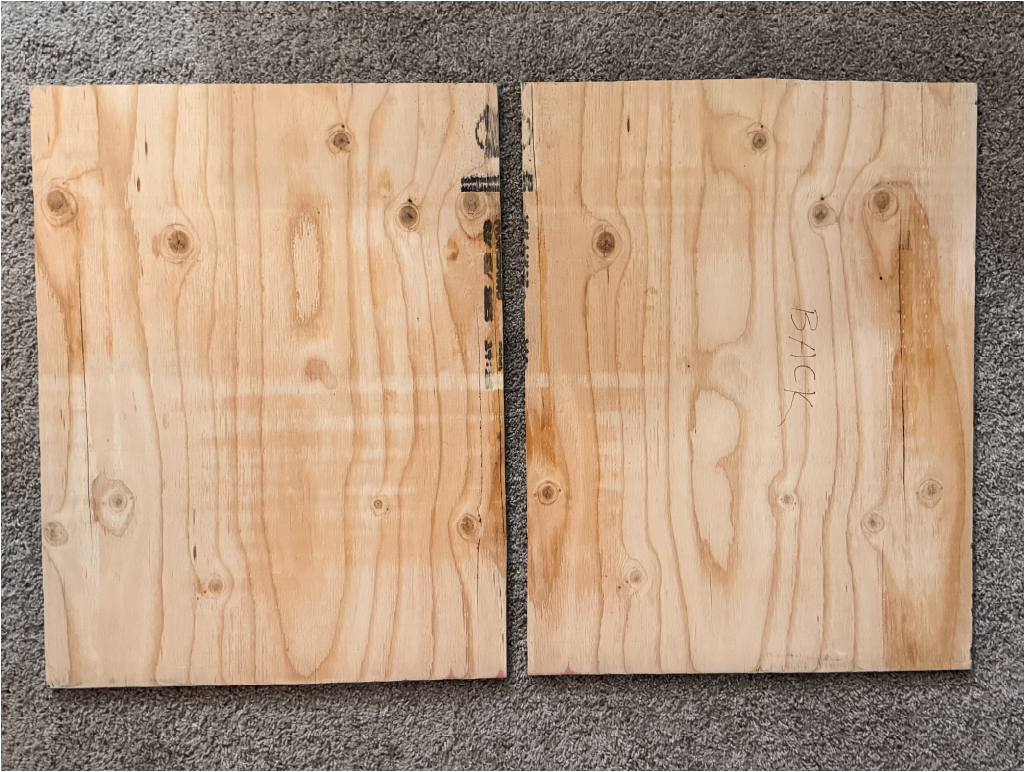
I cut the 15/32" plywood board down to two 21.5" x 28" panels using a circular saw. These will be the seat/back and art piece.
Cut and Glue Wood Design


First, I made a digital sketch of the artwork that will go on the back of the chair. I then brought that artwork into Illustrator and turned it into a vector file for laser cutting.
The laser cutter I used was not able to get through the entire thickness of the wood, so I simply scored the lines so I knew where to cut with the jigsaw.
- This helps with accuracy and reducing tear out.
Use a orbital or belt sander to round over/sculpt the edges of the cutouts to your liking.
Then glue the cutouts on top of the wooden boards that were cut in previous step.
One thing to keep in mind when designing your artwork is to leave room on the short edges for the wood to still slot into the groove on the 3d printed arms. I made the mistake of forgetting to do that and had to do a lot of work after the fact to carve those sections away.
I wish I got a picture of the laser cut and jigsaw work, but I was in a crowded makerspace and didn't think of it. However, from these photos you can see what that work should look like in the end.
Add Mirror Vinyl

Working section by section, I applied the vinyl and carefully cut around the edges of the cutout shapes with an x-acto knife.
Sew Fabric Around Foam Cushion
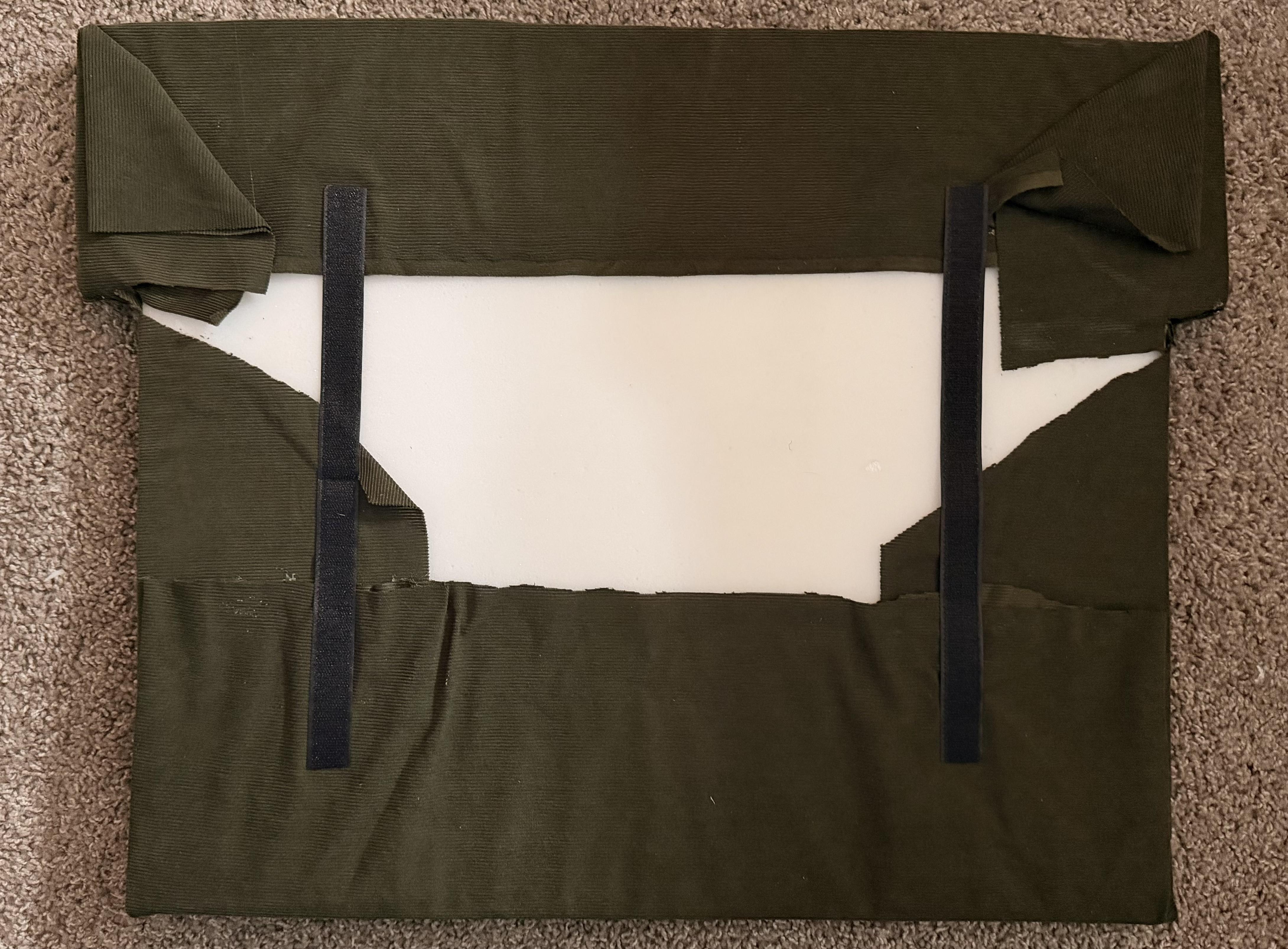
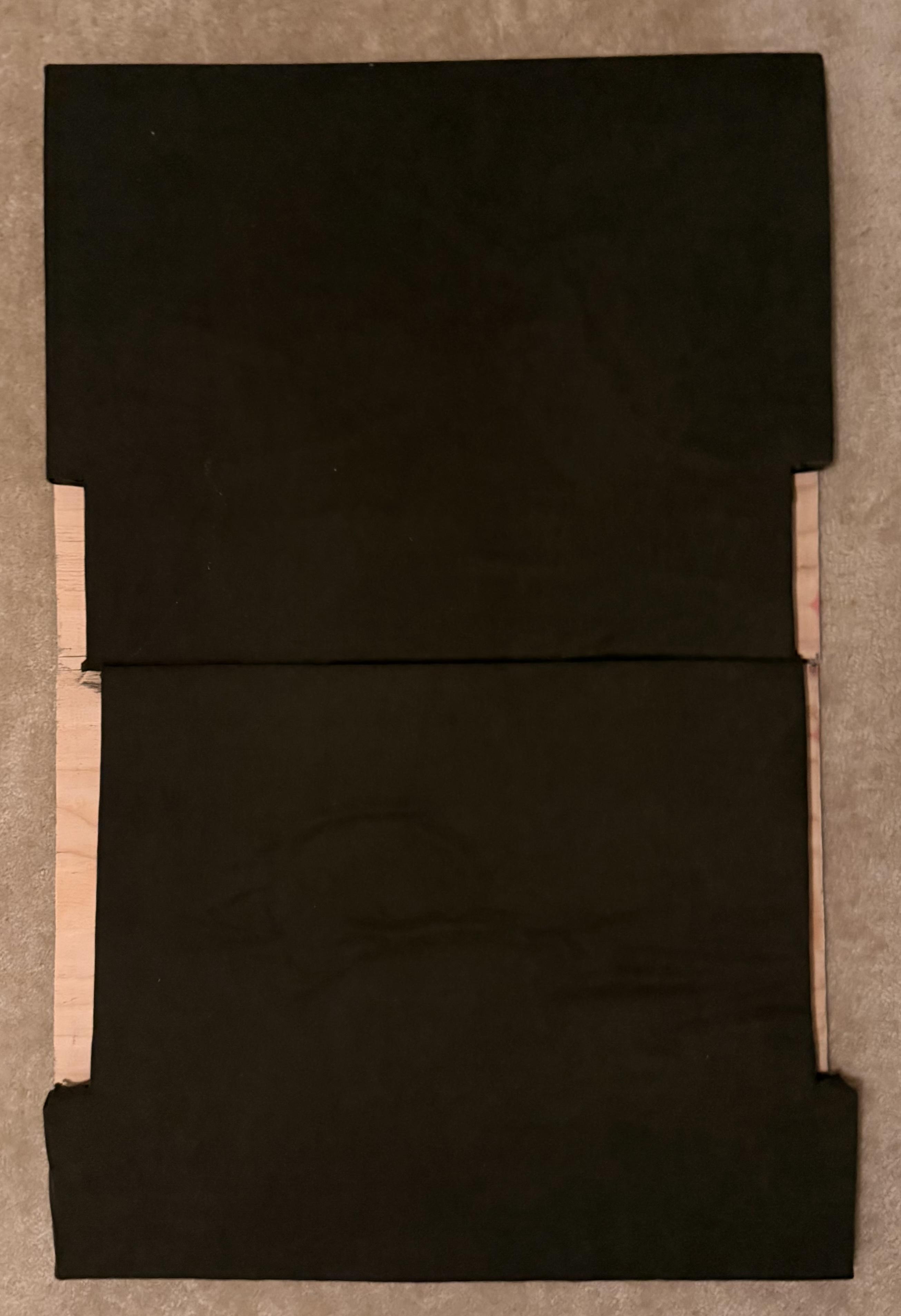
I first cut the cushion to match the exact size of the wood panels and then measured and cut out the spaces so the chair can still slot into the arms.
The rest is simple. I cut an oversized rectangle out, but from my fabric, and then pulled and glued it to the underside of the cushion.
You can now attach the cushion whichever way you see fit. I used velcro strips, but you can hot glue if you want a more permanent attachment.
Put It All Together


Since I live in an apartment, I am afraid of mounting heavy artwork to the wall. Because of this, I simply placed the artwork to rest on the back of my couch, and the floor pillow sits next to the window so my cat can comfortably look out of it.
When you are ready to sit in your chair, follow these steps for greater set up ease:
- Grab the floor pillow (you may have to disrupt your cat's peaceful bird watching).
- Attach the arms to the legs of the chair.
- Lay them flat on the floor (slots facing upwards).
- Remove the current artwork from the wall/couch.
- Place the artwork with the longer cushion cutout on the bottom part of the arm rest, cushion facing up (this will be the seat).
- Now place the other leg on the opposite side.
- Flip the chair so that it is standing up.
- Add the other half of the artwork as the back of the chair by sliding it into place.