Z8.5 Model = Bridge on Loudspeaker Resonator Guitar Z8.4 Improvement
244 Views, 3 Favorites, 0 Comments
Z8.5 Model = Bridge on Loudspeaker Resonator Guitar Z8.4 Improvement
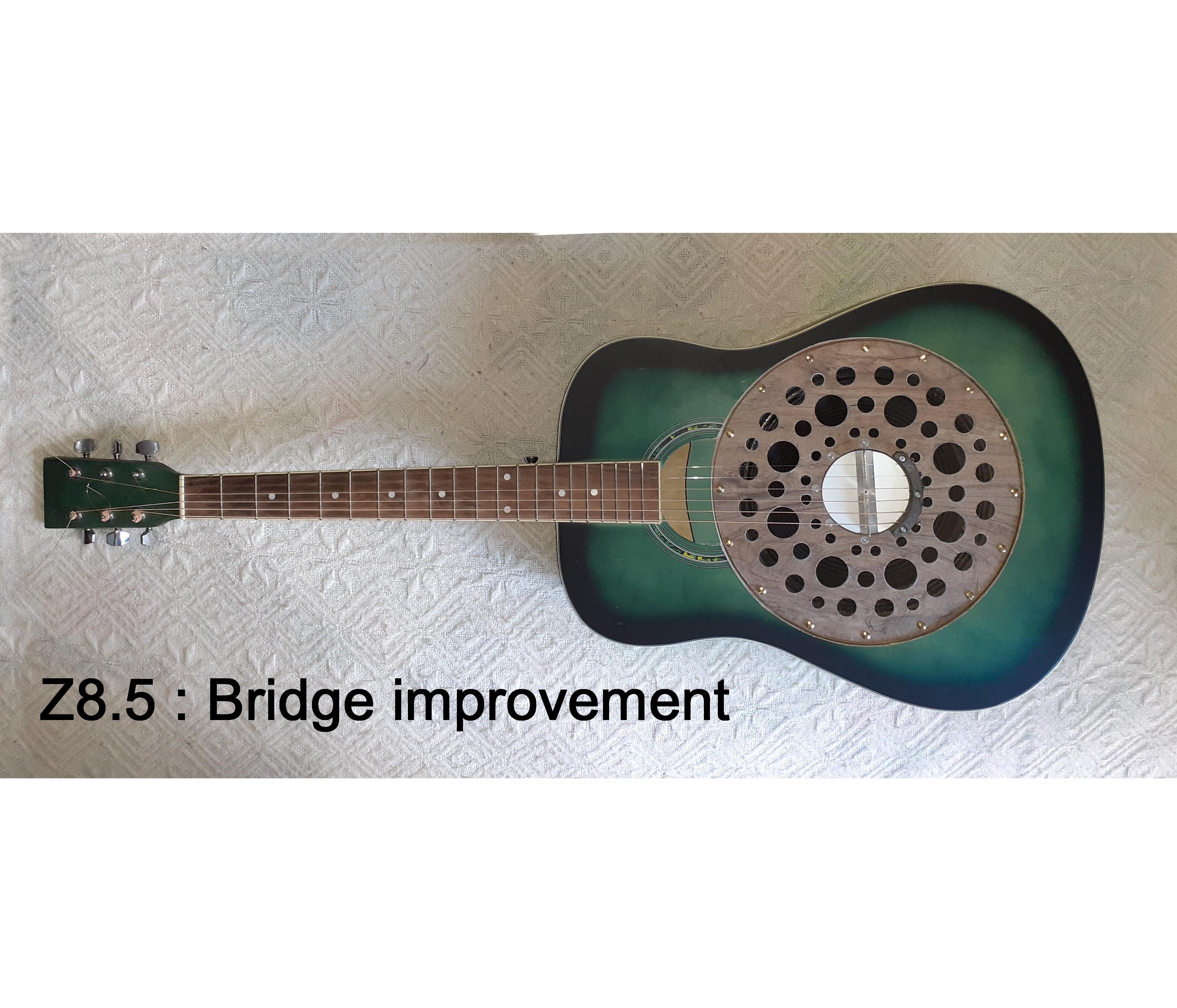
In principle, the bridge of the Z8.4 guitar is free and vibrates on a foam pad. The bridge's vibrations are then transmitted to a speaker cone, which vibrates and amplifies the sound.
Unfortunately, with use, this foam compresses (due to the pressure of the strings) and loses its elasticity, causing two major problems:
1- the bridge sinks and the saddle adjustment is damaged
2- the sound becomes muffled and loses its clarity.
I therefore decided to improve the bridge and replace the foam with a spring-mounted bridge.
Supplies
Materials:
- A cafeteria tray
- Two soda cans
- 6 springs, 8mm diameter, 10mm length, 1mm wire diameter (purchased from ali*****ss)
- Aluminum sheets (same as Z8.4 guitar )
- A 20x20mm aluminum T-piece (same as Z8.4 guitar )
Tools:
- Drill, saw, file, etc. Nothing extraordinary
Generalities
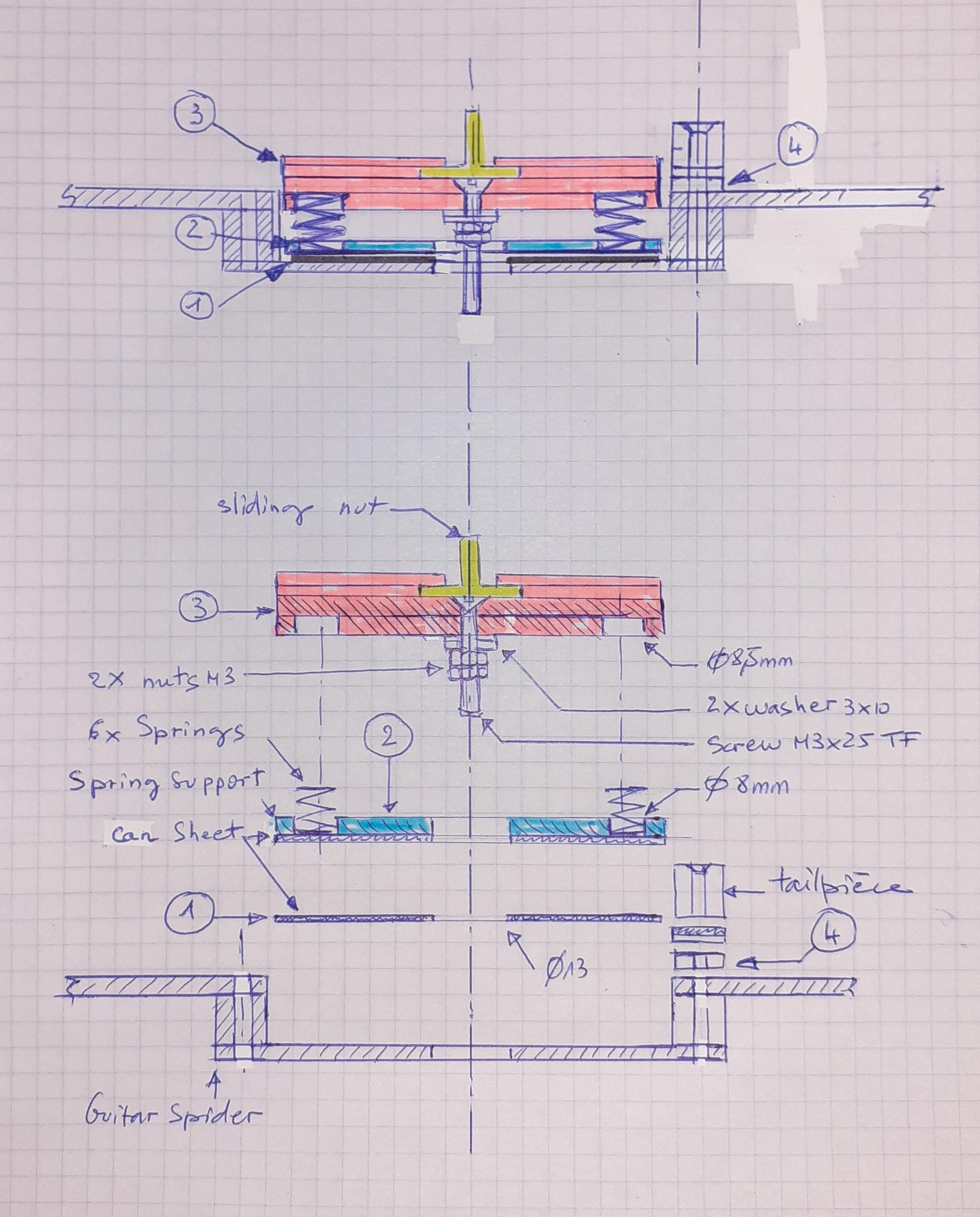
The longitudinal tension of the steel strings is approximately 80 kg. A very rough calculation shows that the vertical permanent pressure of the strings on the bridge is approximately 6 kg.
Therefore, I chose to use six springs with a diameter of 8 mm, a length of 10 mm, and a wire diameter of 1 mm, as their deformation and elasticity are unaffected by this weight.
The hole inside the spider of the Z8.4 guitar (which supports the bridge) measures 80 mm. The parts that will fit inside therefore have an outside diameter of 79 mm.
The main modification involves three parts:
Part 1: the bottom washer,
Part 2: the spring support
Part 3: the bridge support.
To ensure these parts fit together properly, I drilled through them whenever possible.
There is also a minor (comfort) modification to the tailpiece (washer under tailpiece = part4).
Part 1: the Bottom Washer,
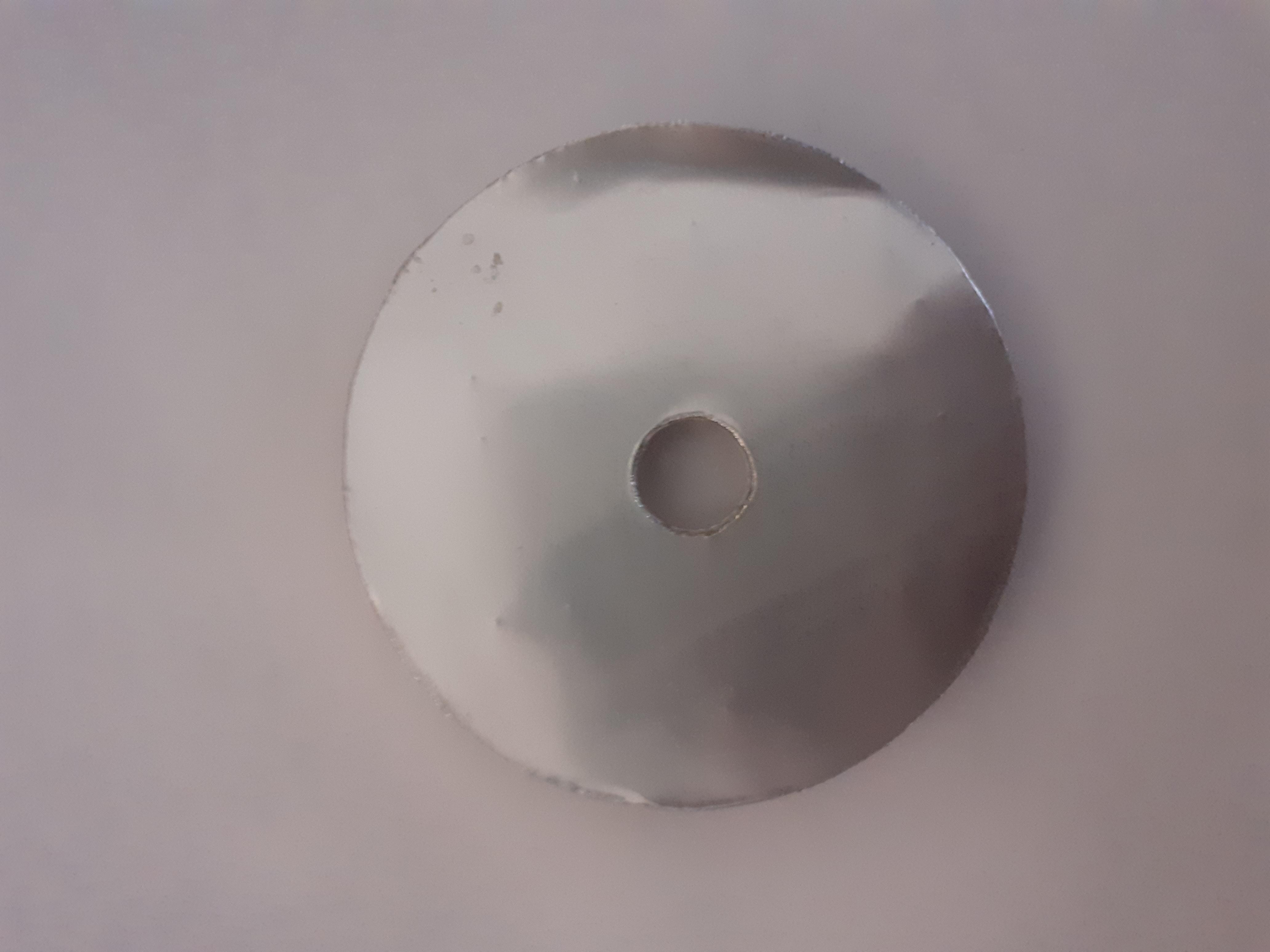
This washer is cut from a flattened Coca-Cola can.
It is designed to eliminate frictions with the upper part (which supports the springs).
Its outer diameter is 79mm, and the central hole is 13mm.
Part 2: the Spring Support
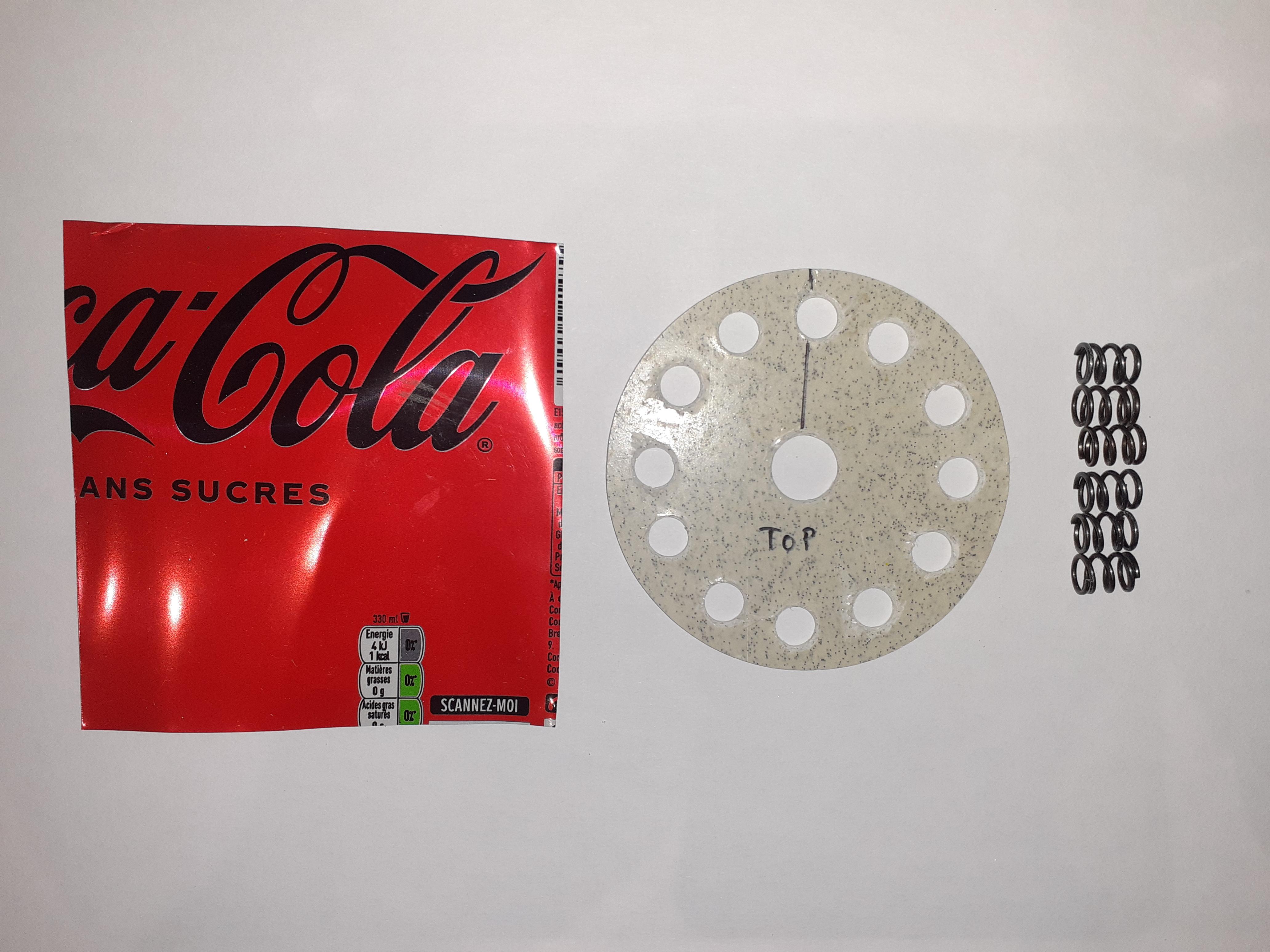


This part consists of 3 elements glued together with epoxy.
From bottom to top:
- 1 washer cut from a Coca-Cola can, 79mm in diameter, with a 13mm hole drilled in the center.
- 1 washer cut from a sheet of fiberglass (like cafeteria trays), 3mm thick, 79mm outer diameter, 13mm inner diameter, with 6 holes of 8mm each (see diagram).
- 6 springs, 8mm in diameter and 10mm high, glued into the holes with epoxy.
Note: The photo shows 12 holes because I had planned to add more springs if needed, but this wasn't necessary.
Part 3: the Bridge Support+nut
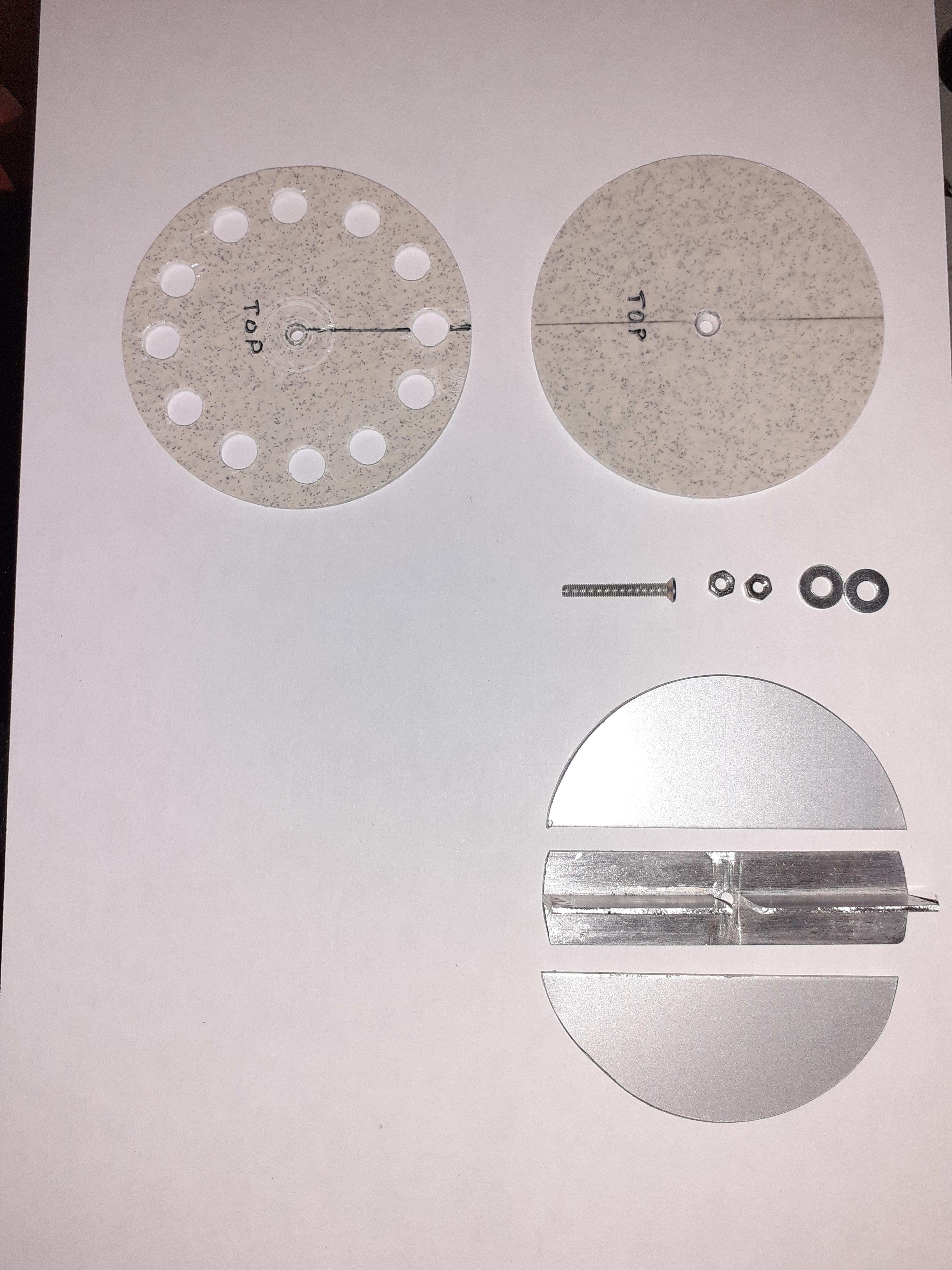
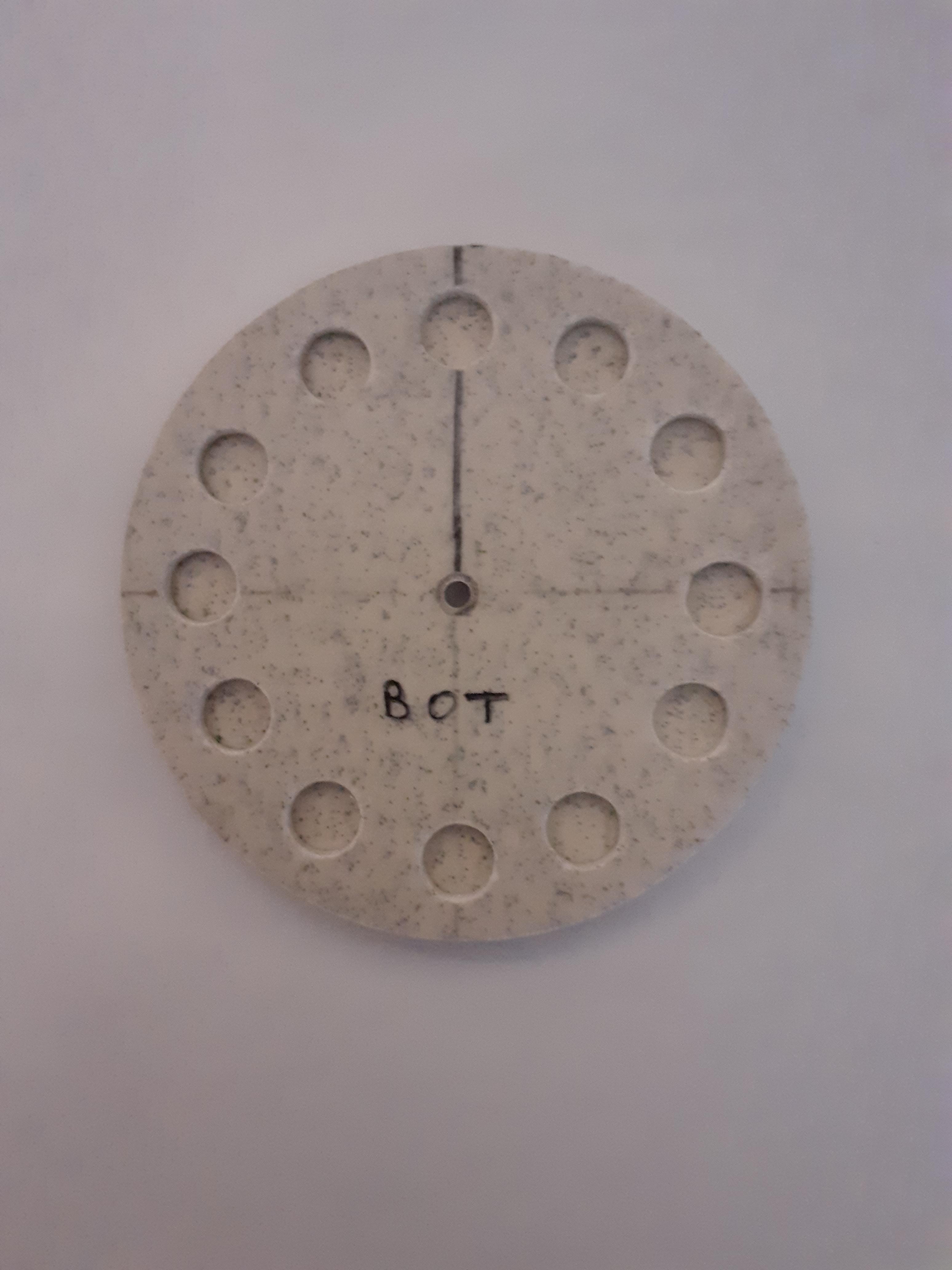
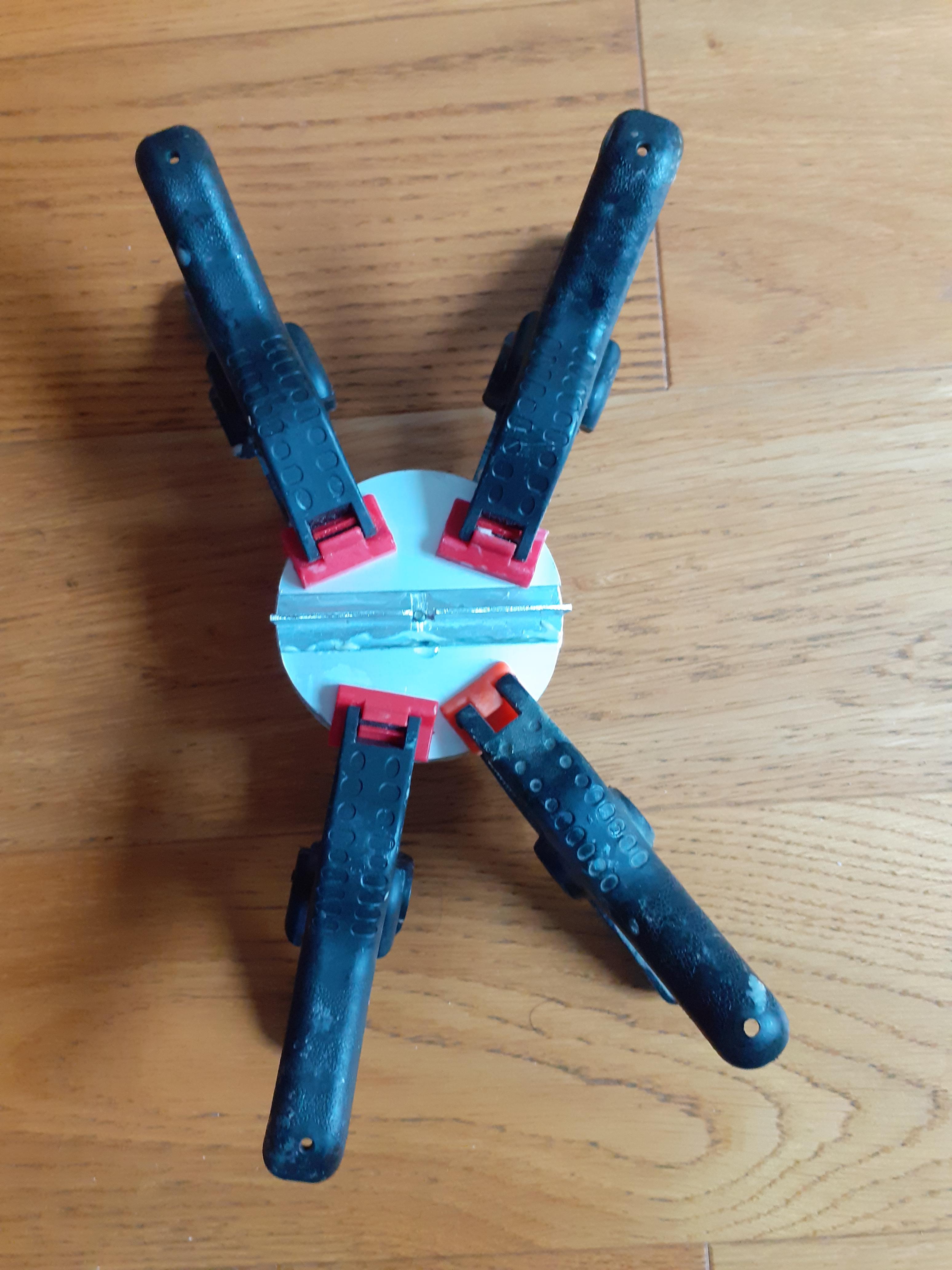
This part consists of four elements glued together with epoxy adhesive.
From bottom to top:
- 1 washer cut from a sheet of fiberglass (like cafeteria trays), 3mm thick, 79mm outer diameter, 3mm inner diameter, with six 8.5mm holes drilled around its circumference (see diagram)
- 1 washer cut from a sheet of fiberglass (like cafeteria trays), 79mm outer diameter, 3mm milled inner diameter, 3mm thick
- 2 aluminum sheet brackets that allow for mounting the nut (described in the Z8.4 Instructable)
- 1 aluminum T-profile that serves as the nut (described in the Z8.4 Instructable)
and a set of M3x20 countersunk head screws + 2 washers, + nut + locknut
The screw is designed to rotate freely (hence the presence of the 2 washers) to allow it to be screwed in on the speaker stand, while preventing it from moving too much or getting lost during assembly thanks to the nut and locknut,
Part 4 : Raising the Tailpiece
To facilitate stringing, the tailpiece was raised by 3mm using a spacer cut from a sheet of fiberglass.
This spacer was countersunk into the existing tailpiece.
Mounting
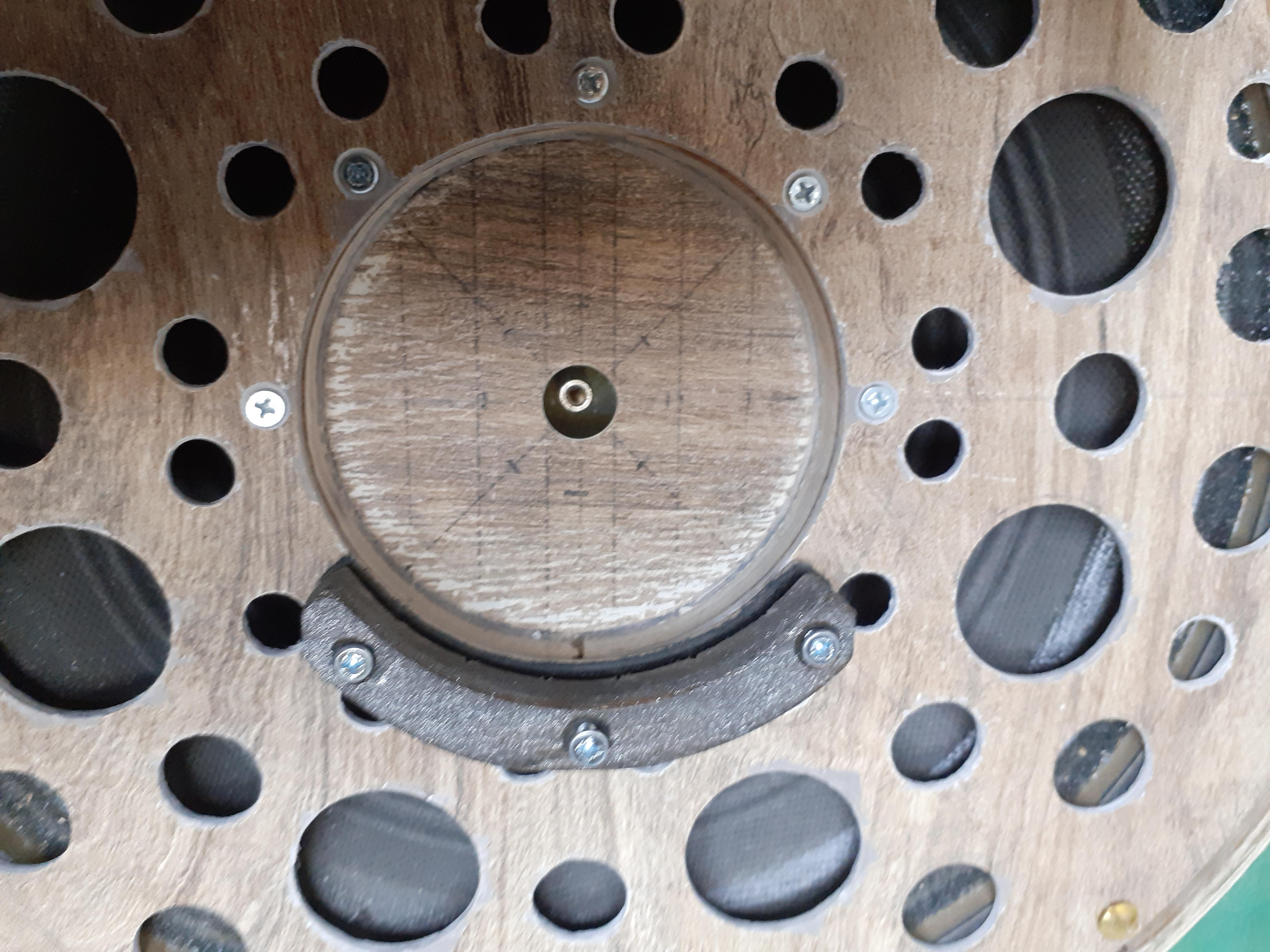
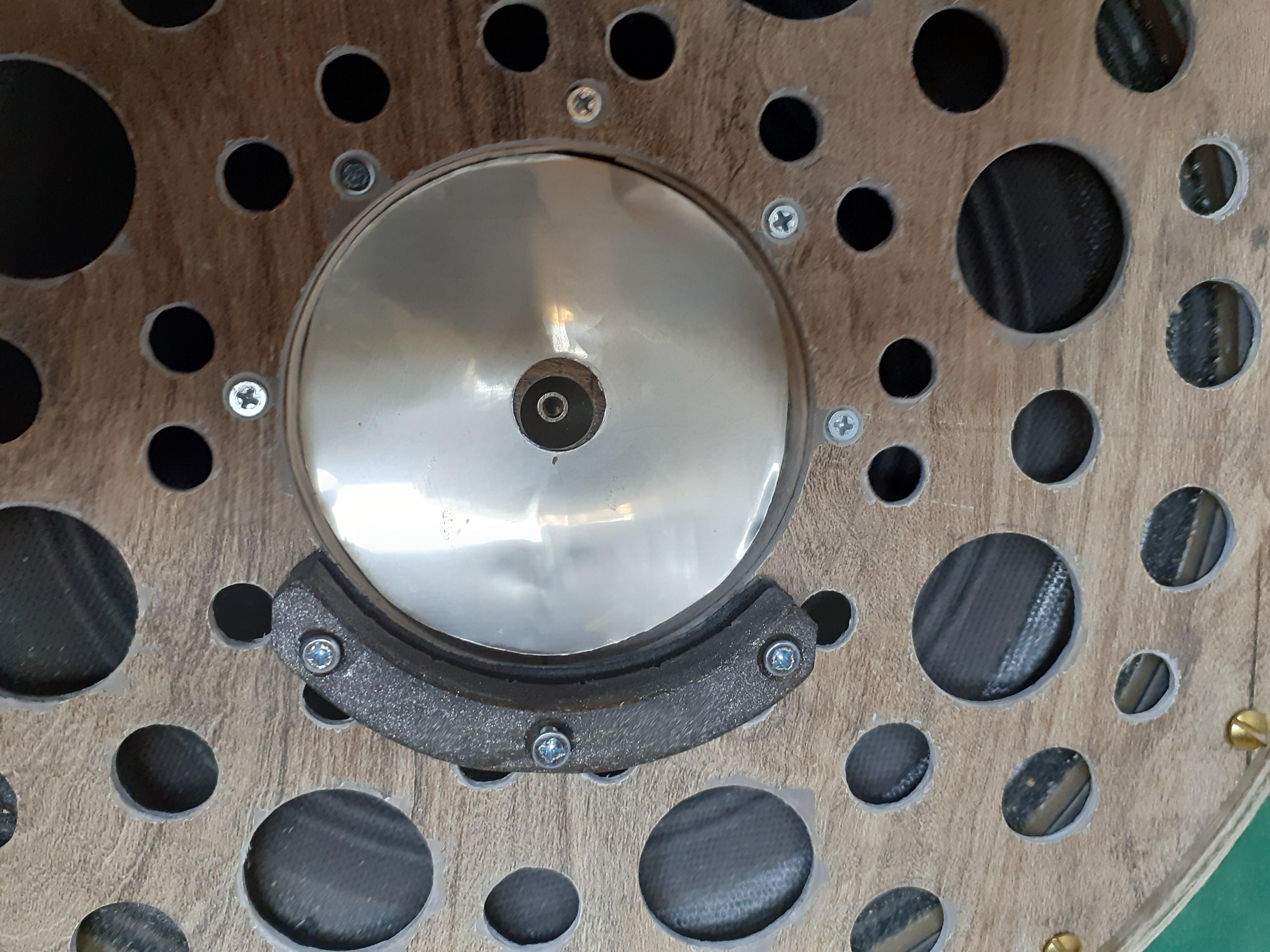
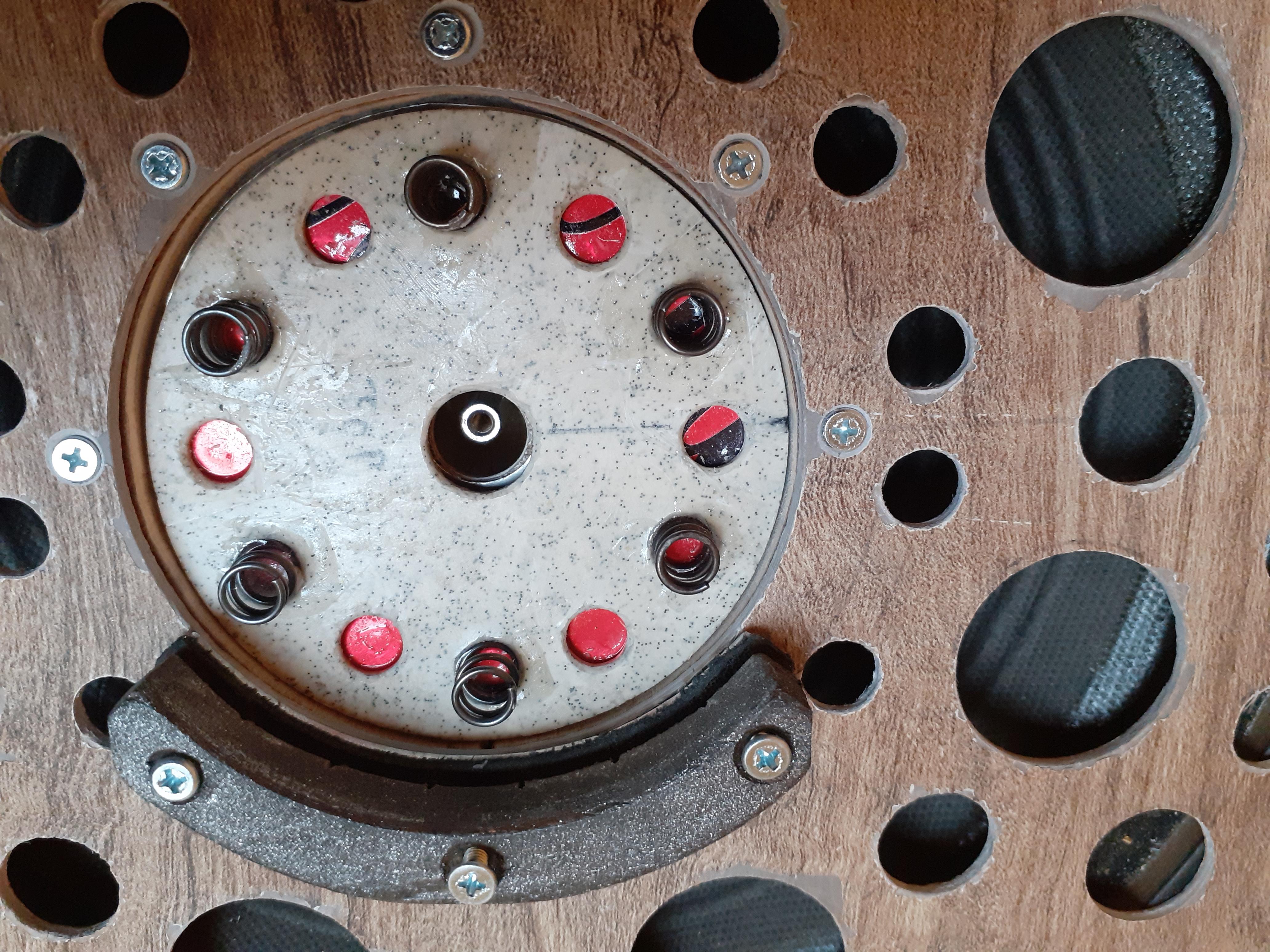
No particular problem.
Mount washer #1, then spring support #2, then center and mount bridge support #3, then screw the acoustic link screw onto the spacer connected to the speaker cone, then mount the nut
Tuning the Guitar
For the hight of the nut tuning, please refer to the Z8.4 guitar. For reference: string height = 2.5mm at the 12th fret.
Test
Autour de Victory rag. https://youtu.be/2Z4cJXdVSQI
Les Copains d'abord https://youtu.be/kM3NdlqjBrg
Conclusion
The idea of using foam on the bridge was interesting to explore, but in practice, this material couldn't withstand the constant pressure of the strings.
The spring system effectively corrects this weakness and shows no deformation since I implemented it.
This assembly is certainly more difficult to implement, but just as effective as the foam solution (before it collapsed).
Greetings from France! Bruno